Archive for ‘Chindia Alert’

18/05/2019

China’s 2nd Import Expo starts enrollment of supporting activities

SHANGHAI, May 17 (Xinhua) — The enrollment of supporting activities for the second China International Import Expo (CIIE) was launched Friday, the CIIE bureau said.

Activities related to policy interpretations, matchmaking sessions and new products displays as well as research report releases will make up at least 80 percent of the supporting activities.

The second CIIE, to be held in November in Shanghai, will also set up a special area for the debut of new products, technologies and services, according to the bureau.

More than 250 Fortune 500 companies and industry leaders have signed up for the event so far.

A total of 172 countries, regions and international organizations and more than 3,600 enterprises participated in the first CIIE, held Nov. 5 to 10 in Shanghai, with more than 370 supporting activities organized.

Source: Xinhua

18/05/2019

China hopes Iran nuclear deal “fully implemented”: FM

CHINA-BEIJING-WANG YI-IRAN-MEETING (CN)

Chinese State Councilor and Foreign Minister Wang Yi (R) meets with visiting Iranian Foreign Minister Mohammad Javad Zarif in Beijing, capital of China, May 17, 2019. (Xinhua/Yin Bogu)

BEIJING, May 17 (Xinhua) — China hopes to work with the Iranian side to eliminate complicated disturbing factors and make efforts for the full implementation of the Iran nuclear deal, Chinese State Councilor and Foreign Minister Wang Yi said on Friday.

Wang made the remarks when meeting with visiting Iranian Foreign Minister Mohammad Javad Zarif.

“China firmly opposes unilateral sanctions and the so-called ‘long-arm jurisdiction’ imposed by the United States on Iran,” Wang said, pledging to maintain the Joint Comprehensive Plan of Action, also known as the Iran nuclear deal, and safeguard the authority of the United Nations and basic norms governing international relations.

China welcomes Iran to actively take part in the joint building of the Belt and Road and hopes to strengthen mutually beneficial cooperation, Wang said.

Zarif praised China for its important role in defending the Iran nuclear deal and vowed to strengthen bilateral and multilateral coordination so as to safeguard multilateralism and common interests of the two countries.

Source: Xinhua

18/05/2019

Kevin Mallory: Ex-CIA agent jailed for spying for China

Kevin MalloryImage copyright ALEXANDRIA SHERIFF’S OFFICE
Image caption Kevin Mallory, 62, was convicted under the Espionage Act

A former CIA officer has been jailed for 20 years for disclosing military secrets to a Chinese agent, the US justice department says.

Kevin Mallory, 62, was found guilty of several spying offences following a two-week trial last June.

The fluent Mandarin speaker from Leesburg, Virginia, held top-level security clearance and had access to sensitive documents.

He was convicted of selling secrets to China for $25,000 (£19,600).

Evidence at his trial included a surveillance video which showed him scanning classified documents onto a digital memory card at a post office.

He also travelled to Shanghai to meet with a Chinese agent in March and April 2017, the justice department said.

“Mallory not only put our country at great risk, but he endangered the lives of [people] who put their own safety at risk for our national defence,” US attorney Zachary Terwilliger said in a statement.

“This case should send a message to anyone considering violating the public’s trust and compromising our national security,” he added. “We will remain steadfast and dogged in pursuit of these challenging but critical national security cases.”

The Justice Department said Mallory held a number of sensitive jobs with government agencies.

He had worked as a covert case officer for the CIA and as an intelligence officer for the Defense intelligence Agency (DIA).

“This case is one in an alarming trend of former US intelligence officers being targeted by China and betraying their country and colleagues,” Assistant Attorney General John Demers said following the sentencing.

Earlier this month, ex-CIA agent Jerry Chun Shing Lee pleaded guilty to spying for China. Prosecutors said the naturalised US citizen was paid to divulge information on US covert assets.

And last June, former US intelligence officer Ron Rockwell Hansen was also charged with attempting to spy for China.

He attempted to pass on information and received at least $800,000 (£600,000) for acting as a Chinese agent, the justice department said at the time.


CIA spy operation in China: Key dates

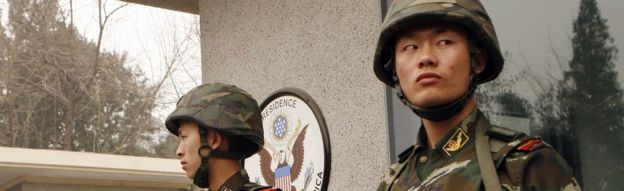
Three armed Chinese policemen guarding the US embassy in BeijingImage copyright AFP
Image caption Chinese police guard the US embassy in the capital, Beijing
  • 2010: Information gathered by the US from sources deep inside the Chinese government bureaucracy start to dry up
  • 2011: Informants begin to disappear. It is not clear whether the CIA has been hacked or whether a mole has helped the Chinese to identify agents
  • 2012: FBI begins investigation
  • May 2014: Five Chinese army officers are charged with stealing trade secrets and internal documents from US companies. Later that same month, China says it has been a main target for US spies
  • 2015: CIA withdraws staff from the US embassy in Beijing, fearing data stolen from government computers could expose its agents
  • April 2017: Beijing offers hefty cash rewards for information on foreign spies
  • May 2017: Four former CIA officials tell the New York Times that up to 20 CIA informants were killed or imprisoned by the Chinese between 2010 and 2012
  • June 2017: Ex-CIA officer Kevin Mallory is arrested and charged with giving top-secret documents to a Chinese agent
  • January 2018: Former CIA officer Jerry Chun Shing Lee is arrested
  • June 2018: Former US intelligence officer Ron Rockwell Hansen is charged with attempting to spy for China
  • Source: The BBC
18/05/2019

IMF’s Lagarde says U.S.-China trade war could be risk for world economic outlook

TASHKENT (Reuters) – The trade war between the United States and China could be a risk to the world economic outlook if it is not resolved, International Monetary Fund Managing Director Christine Lagarde told Reuters on Friday during a visit to Uzbekistan.

“Obviously, the downside risk that we have is continued trade tensions between the United States and China,” Lagarde said, referring to the IMF’s world economic outlook.

“And if these tensions are not resolved, that clearly is a risk going forward.”

The IMF last month cut its growth forecast for 2019 to 3.3%, down from the 3.5% it had previously predicted.

It warned at the time that growth could slow further due to trade tensions and a potentially disorderly British exit from the European Union.

“But we expect that at the end of 2019 and in 2020 it will bounce back,” Lagarde said of the world economic outlook on Friday.

The United States infuriated China this week when it announced it was putting Huawei Technologies Co Ltd, the world’s biggest telecoms equipment maker, on a blacklist that could make it hard to do business with U.S. companies.

On Friday Beijing suggested a resumption of talks between the world’s two largest economies would be meaningless unless Washington changes course.

Source: Reuters

17/05/2019

I M Pei, Louvre pyramid architect, dies aged 102

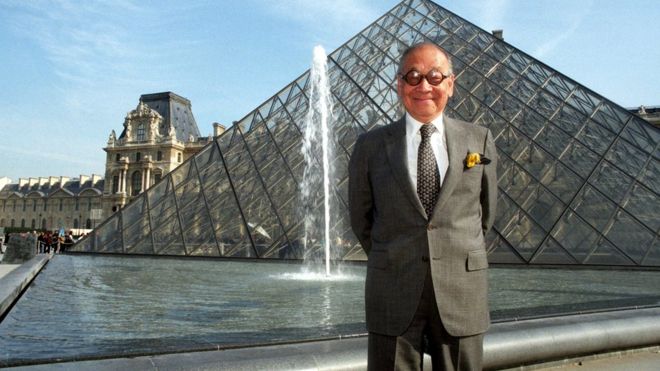
I M Pei on the 10th anniversary of The Pyramid of the Louvre, April 1999Image copyright AFP

I M Pei, the architect behind buildings including the glass pyramid outside the Louvre in Paris, has died aged 102.

Tributes have been pouring in, remembering him for a lifetime of designing iconic structures worldwide.

Pei’s designs are renowned for their emphasis on precision geometry, plain surfaces and natural light.

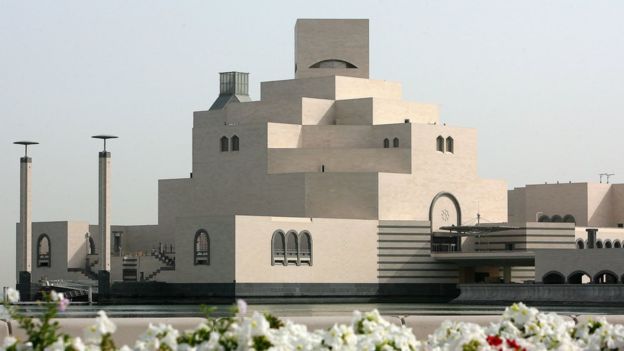
He carried on working well into old age, creating one of his most famous masterpieces – the Museum of Islamic Art in Doha, Qatar – in his 80s.

A pragmatic artist

Ieoh Ming Pei was born in Guangzhou in 1917, and moved to the US at the age of 18 to study at Pennsylvania, MIT and Harvard.

He worked as a research scientist for the US government during World War Two, and went on to work as an architect, founding his own firm in 1955.

One of the 20th Century’s most prolific architects, he has designed municipal buildings, hotels, schools and other structures across North America, Asia and Europe.

Qatar's Islamic Museum of ArtImage copyright GETTY IMAGES
Image caption Qatar’s Islamic Museum of Art is one of Pei’s most famous designs
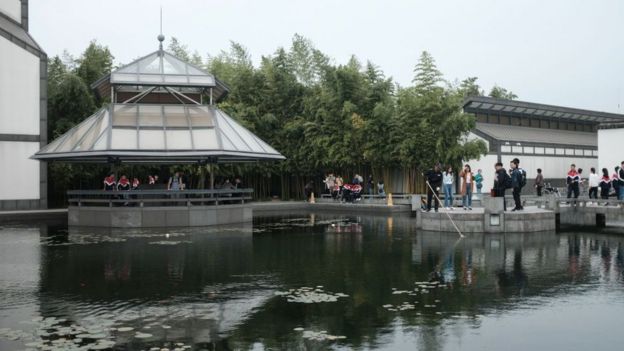
Suzhou Museum in ChinaImage copyright AFP/GETTY
Image caption The architect also designed the Suzhou Museum in China, which was completed in 2006

His style was described as modernist with cubist themes, and was influenced by his love of Islamic architecture. His favoured building materials were glass and steel, with a combination of concrete.

Pei sparked controversy for his pyramid at the Louvre Museum. The glass structure, completed in 1989, is now one of Paris’ most famous landmarks.

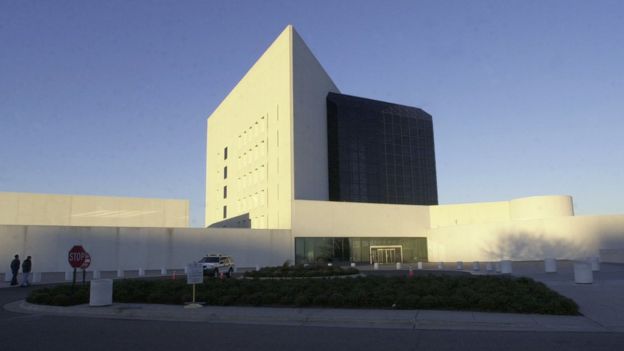
The John F. Kennedy Library and Museum in BostonImage copyright GETTY IMAGES
Image caption Pei designed Boston’s John F Kennedy Library and Museum
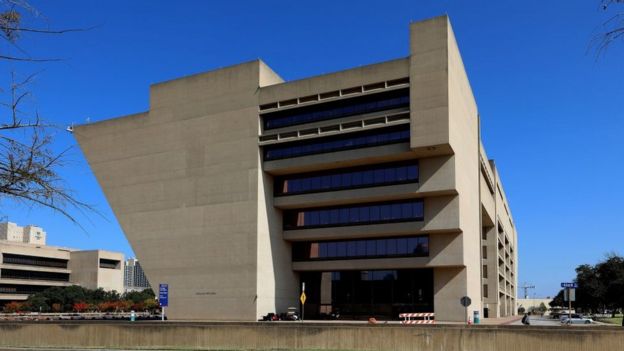
Dallas City Hall, designed by architects I M Pei and Theodore J MushoImage copyright GETTY IMAGES
Image caption I M Pei designed Dallas City Hall with fellow architect Theodore J Musho
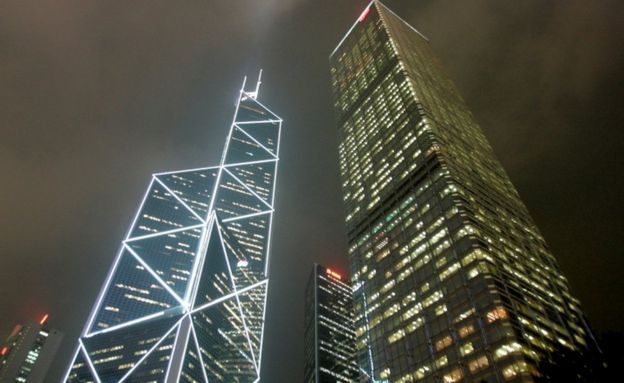
I M Pei's Bank of China tower (L) in Hong KongImage copyright REUTERS
Image caption I M Pei’s Bank of China tower (L) in Hong Kong

His other work includes Dallas City Hall and Japan’s Miho Museum.

“I believe that architecture is a pragmatic art. To become art it must be built on a foundation of necessity,” he once said.

He was won a variety awards and prizes for his buildings, including the AIA Gold Medal, the Praemium Imperiale for Architecture.

In 1983 Pei was given the prestigious Pritzker Prize. The jury said he had he “has given this century some of its most beautiful interior spaces and exterior forms”.

He used his $100,000 prize money to start a scholarship fund for Chinese students to study architecture in America.

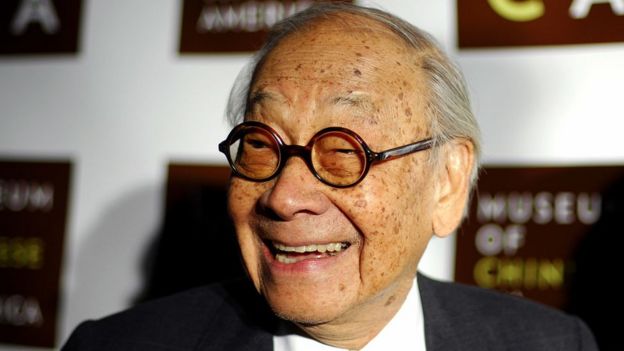
I M PeiImage copyright FILM MAGIC/GETTY
Source: The BBC
16/05/2019

Amazon faces backlash in India for selling shoes, rugs with images of Hindu gods

MUMBAI (Reuters) – Amazon.com faced a social media backlash in India on Thursday after toilet seat covers and other items emblazoned with images of Hindu gods were spotted on its website.

Thousands of Twitter users backed a call for a boycott of the U.S. retailer, making #BoycottAmazon India’s top trending topic on Twitter. Some tagged Indian Foreign Minister Sushma Swaraj, urging her to take action against the company.

Amazon, the world’s biggest online retailer, said it was removing the products from its online store.

“All sellers must follow our selling guidelines and those who do not will be subject to action including potential removal of their account,” the company said in a statement.

The episode is reminiscent of an incident in 2017 when the Indian government took Amazon to task after its Canadian website was spotted selling doormats resembling India’s flag.

Swaraj at the time threatened to rescind visas of Amazon employees if the doormats were not removed from its site.

Reuters found several listings of toilet seat covers, yoga mats, sneakers, rugs and other items depicting Hindu gods, or sacred Hindu symbols, on Amazon’s U.S. website.

Some of the items were no longer available for purchase.

“Until you hit these Hinduphobics Business hard they will keep on insulting your gods, your beliefs & your entire civilization,” tweeted Sumit Kandel, whose profile describes him as a film trade analyst.

Source:Reuters

13/05/2019

China not to compromise on major principles, capable to cope with challenges: think tanks

BEIJING, May 12 (Xinhua) — Facing U.S. tariff hike threats, China has adhered to its bottom line, defended national dignity and people’s interests, experts with domestic think tanks said Sunday at a symposium on China-U.S. trade relations.

Imposing new tariffs goes against the will of the people and the trend of the times. China has the resolution, courage and confidence to rise to all sorts of challenges, they said.

The United States on Friday increased additional tariffs on 200 billion U.S. dollars worth of Chinese imports from 10 percent to 25 percent.

At the 11th round of economic and trade consultations that ended in Washington the same day, the Chinese delegation made clear its consistent and resolute stance: problems can not be solved by increasing tariffs and cooperation is the only right choice for the two sides, but it has to be based on principles. China will never make concessions on major issues of principle.

RAISING TARIFFS MORE DETRIMENTAL TO U.S. ECONOMY

“Increasing tariffs will impact enterprises of both countries, but harm American businesses more,” said Gao Lingyun, a researcher with the Institute of World Economics and Politics under the Chinese Academy of Social Sciences (CASS).

The additional tariffs can not change U.S. demand for Chinese goods and will be eventually passed on to American consumers and retailers by U.S. importers, Gao said.

“If the United States insists on going its way to raise tariffs on all Chinese imports, its domestic prices would be dramatically pushed up, resulting in inflation,” Gao said.

A wide range of U.S. industry associations have expressed strong opposition to imposing additional tariffs on Chinese imports. Raising tariffs to 25 percent could cost nearly one million American jobs and increase volatility of financial market, said the Tariffs Hurt the Heartland campaign.

Of the Chinese goods already under higher tariffs, more than 70 percent are intermediates and investment goods. Such a higher proportion means that the tariffs will be eventually be passed on to American businesses, consumers and farmers, said Chen Wenling, chief economist with the China Center for International Economic Exchanges.

Chen said the trade war provoked by the United States is ineffective. The United States wanted to fix the problem of trade deficit but its trade deficits to China, European Union and other economies rose rather than fell. In addition, the corresponding industry chain restructuring did not benefit the U.S. either. Auto makers Tesla and Ford are moving to the Chinese market instead.

“Some U.S. enterprises may find it difficult to survive if quitting the Chinese market as a very large share of their profits come from China,” said Liang Ming, a researcher with a research institute of the Ministry of Commerce.

Based on an estimate of the effect of having additional tariffs on 200 billion U.S. dollars worth of Chinese goods, Liang said the United States still needs to import a majority of the goods from China. But most of the Chinese products involved are less dependent on the U.S. market, and can be exported to other markets, Liang noted.

Experts said that the spill-over effect of trade wars can reach the whole world, posing severe challenges to the global order, rules, trade systems, supply chains and even bringing negative impact on the peaceful development of the world.

“What China emphasizes, such as avoiding raising tariffs and a balance in the appeals of both sides, is not only the requests of China but also the rational choice for any country when facing unreasonable trade demand,” said Dong Yan, a researcher with the CASS’s Institute of World Economics and Politics.

Analysts agreed at Sunday’s symposium that cooperation benefits China and the Unites States, while conflicts hurt both; cooperation is always the right path to resolve the China-U.S. trade dispute.

NO YIELDING ON PRINCIPLES, FIGHT AND TALK ALTERNATELY

Experts said that the U.S. accusation of China’s “backtracking” for the unsuccessful talks is untenable and irresponsible as the two are still in the process of negotiation. As a matter of fact, the U.S. side is to blame for the negotiating setback as it has been exerting pressure on China and upping the ante.

“The U.S. requests involve China’s core interests and major concerns. They touch the bottom line and China will not compromise,” said Wei Jianguo, executive deputy director of the China Center for International Economic Exchanges.

He noted that a successful agreement must ensure both sides are satisfied for the most part and have both sides to make compromises.

If an agreement satisfies only one side with the concerns of the other side not respected or not taken care of, it can hardly sustain during the implementation and may even be revoked, he said.

After more than a year, both sides have conducted 11 rounds of economic and trade consultations, which experts said fully displays that the consultation is a continuing battle. Taking it easy is necessary while preparations must be fully made psychologically and at working level.

“It’s normal for major countries to have frictions. China must adapt to it,” said Wang Wen, executive dean of the Chongyang Institute for Financial Studies, Renmin University of China.

Chen Wenling said Chinese negotiators have stuck to their principles and stance during the consultation. “It will be normal for both sides to fight and talk alternately. China must not be vague in resolutely safeguarding its core national interests and major concerns and upholding national dignity,” Chen said.

Experts noted that China’s position on upholding the overall interests of the China-U.S. relations and consolidating bilateral economic and trade cooperation remains unchanged. The two countries should meet each other halfway in line with the principles of mutual respect, equality and mutual benefit and resolve their core differences through dialog rather than confrontation.

Dong Yan said that the Sino-U.S. economic and trade friction is a long-term problem, complicated and arduous. Before everything, China and the United States should continue to build mutual trust, step up coordination in bilateral and multilateral areas, and expand common interests.

“We believe that in the face of huge cooperative interests, the U.S. side is also very clear that a trade war will not solve the economic and trade differences between the two countries,” said Liang Ming.

Although the tariff escalation is regrettable, Liang said he believed both sides had hope for the future of their economic and trade relations. A win-win cooperation between China and the United States is in line with the aspirations of the two peoples and the world at large, Liang said.

FACING CHALLENGE WITH CONFIDENCE

“Above 8,000 meters, it is the stratosphere, where the air gets thin. For mountain climbers, this requires extra efforts to overcome, which is similar to the phase that China’s economy has to overcome in order to achieve high-quality development.”

Wang Wen, citing mountain climbing as a metaphor, said the current stage requires China to stay patient and make hard work persistently according to a set route.

With both solid strength and huge potential as well as a strong capability to cope with risks and strikes, China has the confidence, resolution and ability to face all kinds of risks and challenges, said Zheng Shuiquan, deputy secretary of the Party Committee of Renmin University of China.

“No matter how the situation goes in the future, we need to manage our own affairs well,” said Zhang Yansheng, chief research fellow with the China Center for International Economic Exchanges.

Since last year, a series of measures have been taken by the central government to consolidate the growth momentum of the Chinese economy. Wang Jinbin, deputy dean of School of Economics, Renmin University of China, said that stabilizing expectation and confidence is very essential.

Starting this year, transition towards new growth engines from the traditional ones has accelerated, with new industries and businesses constantly emerging, said Yan Jinming, executive director of the National Academy of Development and Strategy of the Renmin University of China.

He said that the Chinese economy has strong resilience and flexibility, a huge market and promising prospect.

“The key is to manage our own affairs now, so as to constantly increase the potential for economic development,” said Yan.

“A win-win cooperation is an unstoppable trend of development. Trade development needs to be aligned with major national strategies. By deepening Belt and Road economic cooperation, China will see its high-quality development path getting broader and broader,” said Chen.

Source: Xinhua

12/05/2019

North and South Korean musicians perform together in China

  • South Korean violinist and North Korean singer hold rare joint performance they hope will help bring the divided Koreas closer together
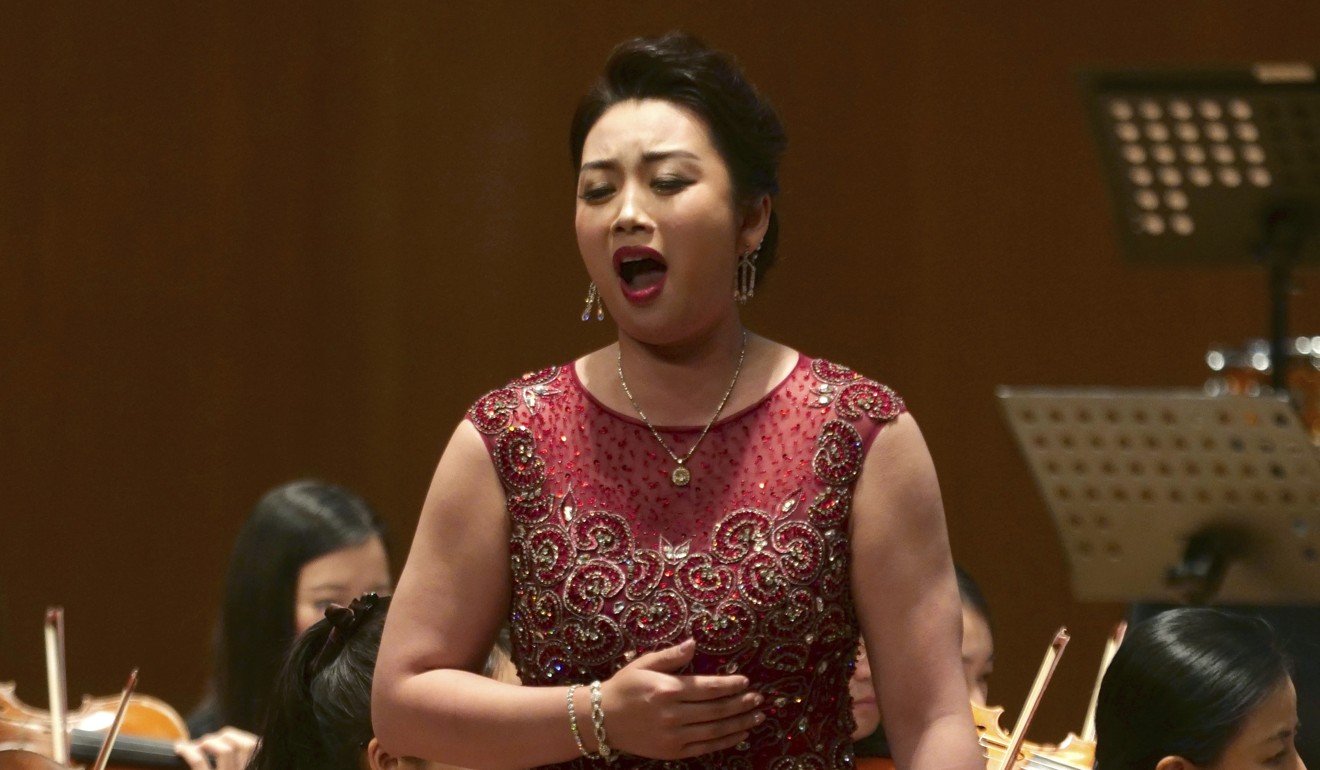
South Korean violinist Won Hyung Joon performs at the Shanghai Oriental Arts Centre in Shanghai on Sunday. Photo: AP
A South Korean violinist and a North Korean singer on Sunday held a rare joint performance they hope will help bring the divided Koreas closer together via music – especially at a time of emerging tensions amid deadlocked nuclear diplomacy.
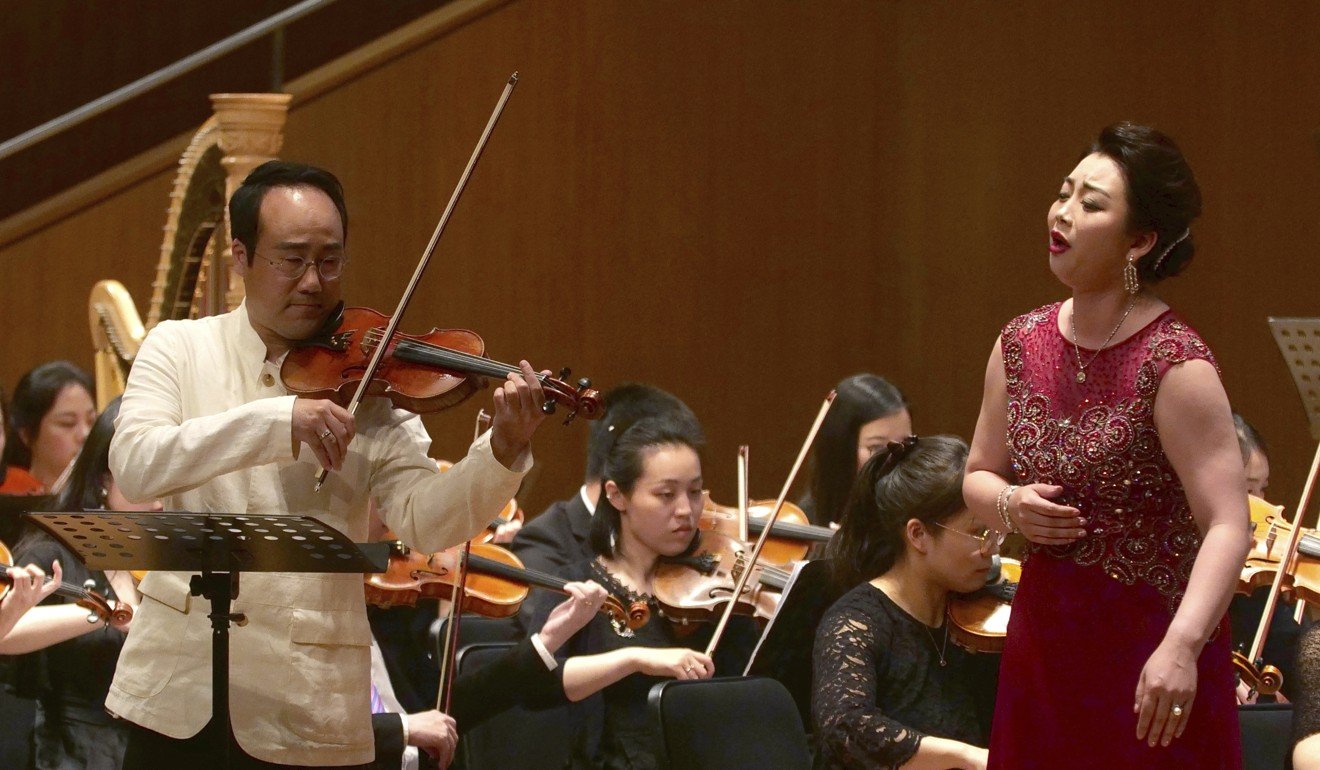
Violinist Won Hyung Joon and his North Korean soprano partner Kim Song Mi performed together at a Shanghai concert hall with a Chinese orchestra. Their concert came three days after North Korea fired two suspected short-range missiles in the second such weapons test in five days.
For both, it was their first concert with a musician from the other side of the Korean border, the world’s most heavily fortified. They met several times last year in Beijing and agreed on a joint performance to help promote peace on the Korean peninsula.
As a duet, Kim sang Antonin Dvorak’s Songs My Mother Taught Me while Won played the violin. Kim later sang Arirang, a Korean traditional folk tune beloved in both countries, while the Shanghai City Symphony Orchestra played the music.
North Korean soprano singer Kim Song Mi performs on Sunday. Photo: AP

“When I met her [Kim] for the first time, I felt like I was reuniting with an old friend who’s been on the same wavelength with me,” Won said before Sunday’s concert. “This performance shouldn’t be the end … and what’s important now is what other dreams we can have together.”

In a written interview, Kim said she “heartily wishes” that her songs would help bring back reconciliation mood.

North Korea’s missile testing is not a ‘breach of trust’, says Donald Trump

“I’m nervous and anxious about what inspiration the audience would have and what reaction North and South Korean compatriots would show to our joint performance,” she said.

North and South Korean musicians performing together is extremely rare as their governments do not even allow their citizens to exchange phone calls, letter and emails without special approvals. Last year saw an unusual wave of cross-border exchanges after North Korean leader Kim Jong-un abruptly entered talks on the fate of his advancing nuclear arsenal. A group of North Korean dancers and singers performed in South Korea during the Pyeongchang Winter Olympics, before South Korean K-pop stars flew to Pyongyang and sang in the presence of Kim and his young wife Ri Sol Ju. Both events were the first of their kind in more than 10 years.

Moon Jae-in begins third year in power
But such exchange programmes are now becoming a rarity again as North Korea is resuming provocative weapons tests in an apparent protest against the lack of progress in nuclear negotiations with the United States. Kim returned home empty-handed from his second summit with US President Donald Trump in Vietnam in February after Trump rebuffed his calls for major sanctions relief in return for his promise to conduct partial disarmament measures. No publicly known high-level meetings between Pyongyang and Washington have since been reported.
Won and Kim performed with a Chinese orchestra. Photo: AP

Sunday’s concert will not likely work as a breakthrough in the stalled nuclear diplomacy but it could still “establish an environment” that could make it easier to improve ties between the Koreas, said analyst Cho Han Bum at Seoul’s Korea Institute for National Unification.

Inspired by the West-Eastern Divan Orchestra founded in 1999 to bring together Arab and Israeli musicians together to promote mutual understanding, Won, 42, has been pushing for the establishment of an inter-Korean orchestra for nearly a decade. He’s contacted both governments on numerous occasions, and sometimes partnered with renowned foreign maestros such as Charles Dutoit and Christoph Poppen.

But his push for a Korean orchestra performance has never been realised and was often scrapped at the last minute due to the delicate nature of ties between the Koreas, which are still technically at war because an armistice that ended the 1950-53 has yet to be replaced with a peace treaty. Incidents that helped spike his past plans included the 2015 mine blasts that maimed two South Korean soldiers, and the 2011 tensions touched off by annual South Korean-US military drills that North Korean sees as an invasion rehearsal.

North Korean weapons test was ‘long-range strike’ drill, state media says
Sunday’s performance appeared less difficult to achieve as it involves just one person from each Korea, not dozens of musicians required for an orchestra, and it was happening in China, a third country and North Korea’s major ally but also South Korea’s biggest trading partner.
Jointly performing with the two Koreans is the Shanghai City Symphony Orchestra, the first and biggest amateur symphony orchestra in China. The orchestra earlier invited Won and Kim to its annual charity concert, Love In The City, Pyongyang Shanghai Seoul, before it and Won’s Lindenbaum Festival Orchestra decided to co-organise the event, according to Won.
In a response to questions last week, South Korea’s Unification Ministry said that it approved Won’s contact with Kim as part of efforts to promote diverse kinds of civilian exchanges between the rivals. The South Korean government is led by President Moon Jae-in, a liberal who espouses greater rapprochement with North Korea and has shuttled between Pyongyang and Washington ahead of two summits between Kim and Trump.
Facebook sues South Korean analytics company Rankwave
Kim, 33, a graduate of Pyongyang’s prestigious Kim Won Gyun University of Music, is the North Korean representative in China of the Korean Association for Art Exchange. She is been living in China since 2010. Known for her classical crossover singing technique, she has also released several music albums with North Korean and well-known pieces of classical music. South Korea media reported she is the first North Korean sent abroad as a singer.
Won said when he first met Kim last spring, he felt it was easier for him to communicate with her and explain his dream than when he dealt with North Korean diplomats.
“When I talked about music with [North Korean] diplomats, I had to explain why we need music and why music is good … But I didn’t need to do that when I met Kim, and we could just get to the point,” Won said.
Kim said Won’s works had led her think again about her “love” of the Korean people and that she was willing to contribute to any efforts to promote inter-Korean cooperation.

Won said he would work together with Kim Song Mi to realise similar joint performances on bigger world stages. But he also understood how difficult it had been for him to have a concert like Sunday’s.

“If we can do music together, that means we can understand each other,” Won said. “People are talking about unification, an inter-Korean railway, a peace treaty and the end of war declaration. But can we really do those while failing to do an easy thing like doing music together?”

Source: SCMP

11/05/2019

Islamic State claims ‘province’ in India for first time after clash in Kashmir

NEW DELHI/SRINAGAR, India (Reuters) – Islamic State (IS) claimed for the first time that it has established a “province” in India, after a clash between militants and security forces in the contested Kashmir region killed a militant with alleged ties to the group.

IS’s Amaq News Agency late on Friday announced the new province, that it called “Wilayah of Hind”, in a statement that also claimed IS inflicted casualties on Indian army soldiers in the town of Amshipora in the Shopian district of Kashmir.

The IS statement corresponds with an Indian police statement on Friday that a militant called Ishfaq Ahmad Sofi was killed in an encounter in Shopian.

IS’s statement establishing the new province appears to be designed to bolster its standing after the group was driven from its self-styled “caliphate” in Iraq and Syria in April, where at one point it controlled thousands of miles of territory.

IS has stepped up hit-and-run raids and suicide attacks, including taking responsibility for the Easter Sunday bombing in Sri Lanka that killed at least 253 people.

“The establishment of a ‘province’ in a region where it has nothing resembling actual governance is absurd, but it should not be written off,” said Rita Katz, director of the SITE Intel Group that tracks Islamic extremists.

“The world may roll its eyes at these developments, but to jihadists in these vulnerable regions, these are significant gestures to help lay the groundwork in rebuilding the map of the IS ‘caliphate’.”

Sofi had been involved in several militant groups in Kashmir for more than a decade before pledging allegiance to Islamic State, according to a military official on Saturday and an interview given by Sofi to a Srinagar-based magazine sympathetic to IS.

He was suspected of several grenade attacks on security forces in the region, police and military sources said.

“It was a clean operation and no collateral damage took place during the exchange of fire,” a police spokesman said in the statement on Friday’s encounter.

The military official said it was possible that Sofi had been the only militant left in Kashmir associated with IS.

Separatists have for decades fought an armed conflict against Indian rule in Muslim-majority Kashmir. The majority of these groups want independence for Kashmir or to join India’s arch-rival Pakistan. They have not, like Islamic State, sought to establish an empire across the Muslim world.

Nuclear powers India and Pakistan have fought two wars over Kashmir, and came to the brink of a third earlier this year after a suicide attack by a Pakistan-based militant group killed at least 40 paramilitary police in the Indian-controlled portion of the region.

A spokesman for India’s home ministry, which is responsible for security in Kashmir, did not respond to a request for comment.

Source: Reuters

07/05/2019

China, Japan to hold talks on maritime affairs

BEIJING, May 7 (Xinhua) — China and Japan will hold their 11th round of high-level consultations on maritime affairs in Otaru, Japan, from May 10 to 11, a foreign ministry spokesperson said Tuesday.

Spokesperson Geng Shuang told a routine news briefing that officials from foreign ministries, defense ministries, maritime law enforcement and management departments of both counties will attend the talks.

China expects to fully exchange views with Japan on maritime issues of common concern to strengthen mutual understanding and trust with Japan, Geng said.

The China-Japan high-level consultations on maritime affairs were established in 2012. The last round of consultations was held in Wuzhen of eastern China’s Zhejiang Province last December.

Source: Xinhua

Law of Unintended Consequences

continuously updated blog about China & India

ChiaHou's Book Reviews

continuously updated blog about China & India

What's wrong with the world; and its economy

continuously updated blog about China & India