Chindia Alert: You’ll be Living in their World Very Soon
aims to alert you to the threats and opportunities that China and India present. China and India require serious attention; case of ‘hidden dragon and crouching tiger’.
Without this attention, governments, businesses and, indeed, individuals may find themselves at a great disadvantage sooner rather than later.
The POSTs (front webpages) are mainly 'cuttings' from reliable sources, updated continuously.
The PAGEs (see Tabs, above) attempt to make the information more meaningful by putting some structure to the information we have researched and assembled since 2006.
Foreign Secretary Vijay Gokhale told the high commissioner that Pakistan must take “immediate and verifiable action” against the Jaish-e-Mohammed terror group that has claimed responsibility for Thursday’s attack in Kashmir.
India on Friday summoned Pakistan envoy Sohail Mahmood to lodge a strong protest over the suicide bombing in south Kashmir’s Pulwama by Pakistan-based terror group Jaish-e-Mohammad (JeM).
Foreign Secretary Vijay Gokhale told the high commissioner that Pakistan must take “immediate and verifiable action” against the Jaish-e-Mohammed terror group that has claimed responsibility for Thursday’s attack in Kashmir.
A Jaish suicide bomber on Thursday rammed a car packed with explosives into a CRPF convoy on the Jammu-Srinagar highway. The CRPF has confirmed 38 deaths in the suicide bombing, counted among the bloodiest in Kashmir. Initial reports, quoting security officials, had said 44 jawans were feared to have been killed in the attack.
The foreign secretary also told Pakistan that it must “immediately stop” groups or individuals linked to terrorism operating from its territories.
In the hours after Thursday’s attack, New Delhi had issued a strong statement that accused Pakistan of giving “full freedom” to the terror group to operate and expand its terror infrastructure to carry out attacks in India and elsewhere with impunity.
Islamabad responded with a two-line statement that said it had “always condemned heightened acts of violence” in Kashmir. Pakistan also said it will “strongly reject any insinuation by elements in the Indian government and media circles that seek to link the attack to the State of Pakistan without investigations”.
Foreign Secretary Gokhale rejected this statement by the Pakistan foreign office.
SHANGHAI, Feb. 13 (Xinhua) — China’s C919 large passenger aircraft project will see an overall accelerative test flight phase with the test fleet reaching six in 2019, according to its developer on Wednesday.
In 2019, three new airplanes will conduct their first test flights and then join the test fleet. The batch production ramp-up is also underway, said the Commercial Aircraft Corp. of China (COMAC).
The C919, China’s first self-developed trunk jetliner, conducted a successful maiden flight on May 5, 2017, at Shanghai Pudong International Airport.
By the end of 2018, three C919 airplanes have completed their test flights.
To date, another three are now in the final assembly, part assembly or large parts manufacturing phases respectively and are expected to join the fleet by the end of the year.
The flight test is a key verification phase for an aircraft model to validate its design and performance, especially the safety aspects.
The C919 airplanes will fly to various airports to undergo rigorous testing in complex weather conditions and a series of high-risk test flights, according to COMAC.
To date, COMAC has received 815 orders for the C919 from 28 customers worldwide.
Chinese Vice Premier Han Zheng, also a member of the Standing Committee of the Political Bureau of the Communist Party of China Central Committee, presides over a meeting of China National Committee for Biodiversity Conservation in Beijing, capital of China, Feb. 13, 2019. (Xinhua/Wang Ye)
BEIJING, Feb. 13 (Xinhua) — Chinese Vice Premier Han Zheng on Wednesday stressed solid efforts to further protect biological diversity.
Han, also a member of the Standing Committee of the Political Bureau of the Communist Party of China Central Committee, made the remarks when presiding over a meeting of China National Committee for Biodiversity Conservation.
Despite the substantial progress that has been made, more needs to be done to stop the current decline in biodiversity, he said.
In order to offer the highest level of protection for biodiversity, Han stressed establishing a management system for protected nature areas by establishing a network of national parks, nature reserves and parks.
He urged stepping up protection of wild fauna and flora with strengthened oversight and cracking down on related illegalities, adding that biodiversity should be supported with the optimal institutional and legal framework.
Han also called for making preparations to host the 15th meeting of the Conference of the Parties to the Convention on Biological Diversity in China next year.
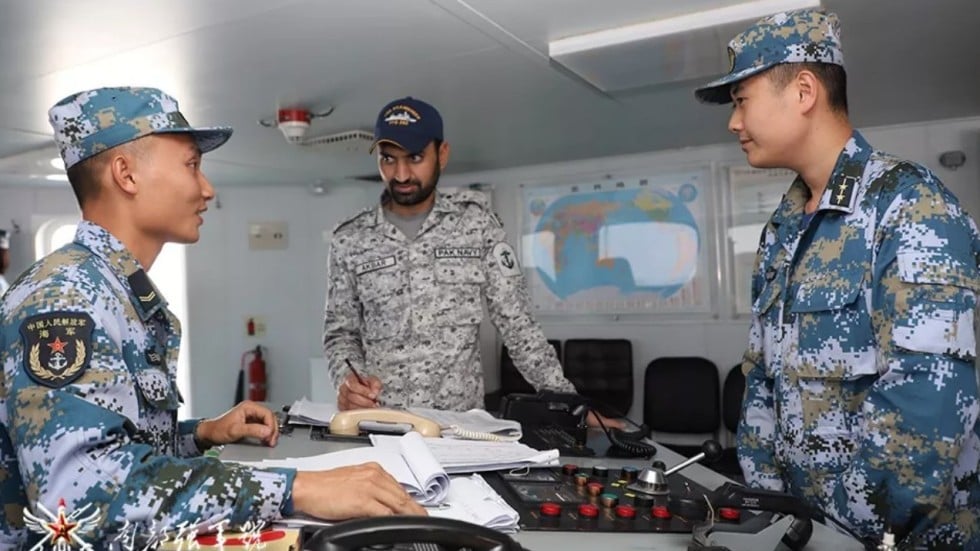
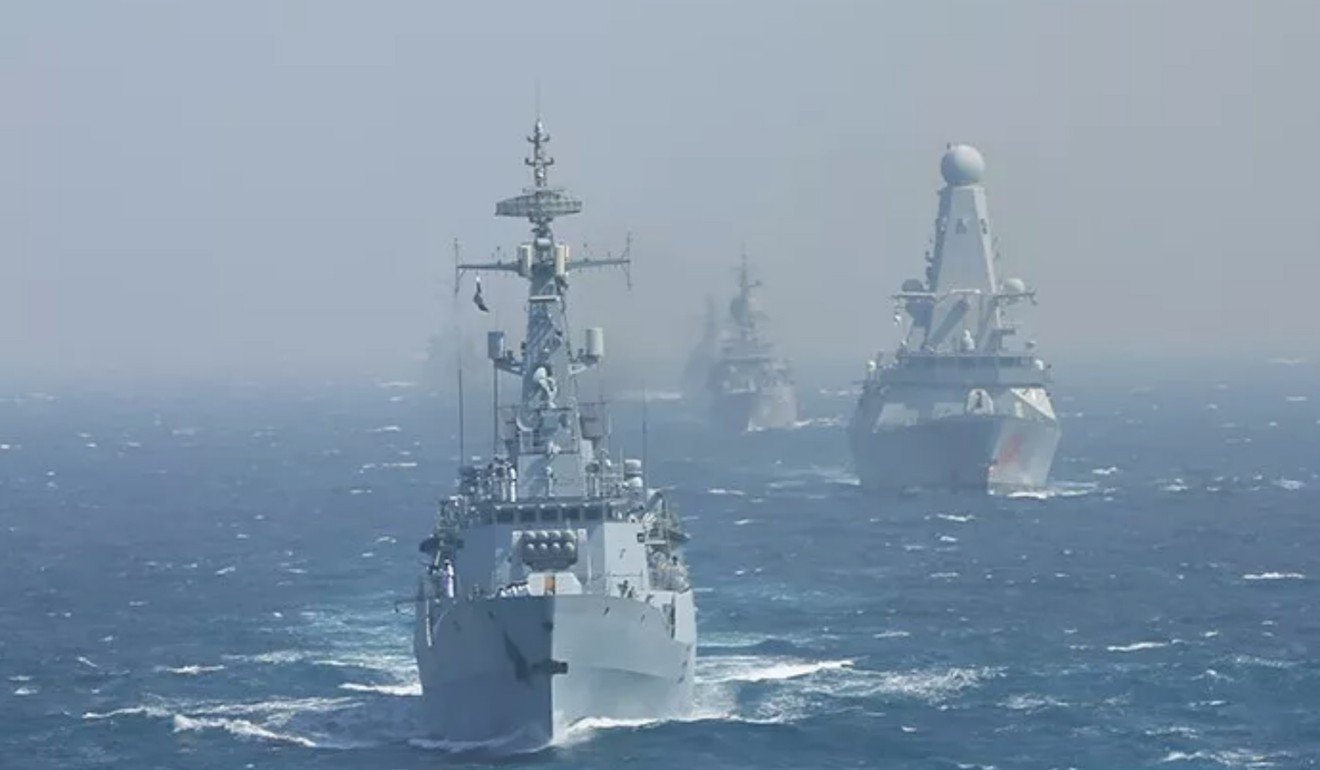
Pakistan’s multinational naval drill involving 46 nations has wrapped up in the Indian Ocean and, once again, India was not invited.
The Pakistan Navy has hosted the Aman – which means “peace” – exercises every two years since 2007 to promote regional cooperation and stability. India has never been invited, in a sign of the long history of strained ties between the neighbours.
China, Japan and the United States were among the countries taking part in Aman-19, from February 8 to 12, which included maritime conferences, seminars and cross-ship visits, as well as 23 sea operations with main-gun firing, formation movement and replenishment-at-sea.
Shao Shuguang, commander of the People’s Liberation Army Navy’s 998 Fleet, was quoted on a Chinese military social media account as saying the exercise had strengthened mutual understanding and trust between the participating navies.
China sent one of its biggest warships, the Kunlun Shan amphibious landing vessel, to the exercise, signalling its close relationship with Pakistan and the key role both nations hold in the Indian Ocean, according to analysts.
“The Pakistan-China relationship is very strong, and this is one more illustration of the strength of the Pakistan-China relationship,” said Madhav Das Nalapat, honorary director of the department of geopolitics and international relations at Manipal University in India.
“China is also now becoming an important maritime power, especially in the Indo-Pacific. By aligning with China, Pakistan hopes to get the synergy of that.
“India by itself cannot have any primacy in the Indian Ocean. But along with the United States, the two countries together can have primacy in the Indian Ocean. India is positioning itself to be allied with the US, but has not yet reached there.”
Tridivesh Singh Maini, assistant professor with the Jindal School of International Affairs in India, said the exercises should be a cause for alarm for India. “They will keep an eye on what’s going on, but they don’t need to be too concerned,” he said.
The military exercise also centred on maritime security to protect strategic economic projects such as the China-Pakistan Economic Corridor, as well as sea lanes from the Persian Gulf.
The US$62 billion China-Pakistan Economic Corridor (CPEC) is designed to connect China’s far west region of Xinjiang with Gwadar Port in Pakistan via a network of motorways, railways, oil pipelines and trading hubs.
The project is expected to be finished by 2030, and will provide China with an important trading route to the Middle East and Africa.
“India has very strenuously objected to the name CPEC being given to the part that goes through Pakistan-occupied Kashmir, but so far nothing has been done,” Nalapat said.
Kashmir has long been a hotbed for competing territorial claims between India and Pakistan. The two countries have fought three wars against each other since their independence from Britain in 1947, and two of those conflicts have centred on the Kashmir territorial dispute.
Image copyrightMANDALUYONG POLICE/FACEBOOKImage captionPhotos of Ms Zhang at a train station in Manila later went viral
A Chinese student who threw her cup of soybean pudding at a police officer in the Philippines has been charged with assault and disobedience.
Zhang Jiale was at a train station in Manila when she was stopped and told she had to finish her dessert before she could enter the station.
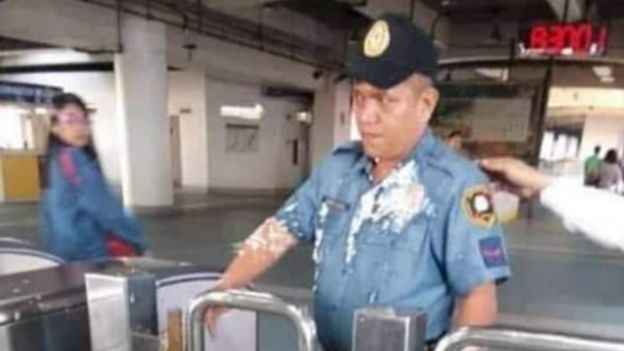
She responded by throwing the treat at the officer, and was later detained.
Ms Zhang could face deportation and eventual blacklisting from the Philippines.
‘I was in a bad mood’
The incident took place on 9 February at the Metro Rail Transit (MRT) in the Philippines’ capital of Manila.
The 23-year-old is currently a fashion design student in the Philippines.
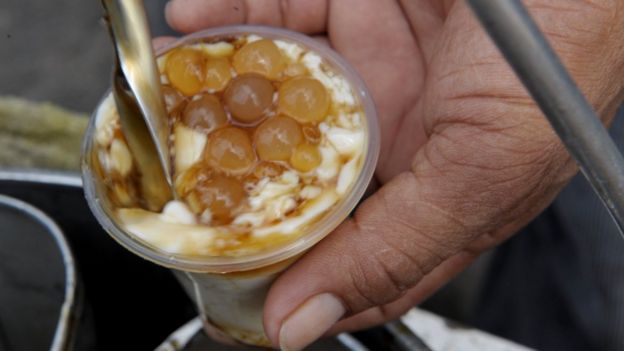
According to local media outlets, she was stopped by police officer William Cristobal from going onto the MRT station in Manila as she was holding a cup of “taho” – a local dessert of soybean pudding.
Image copyrightJAY DIRECTOImage captionTaho is a popular sweet dessert in the Philippines
Bottled drinks, water and liquid substances are banned from MRT stations in Manila.
Mr Cristobal told her she would have to finish her dessert or throw it away before she would be allowed to enter the platform.
Image copyrightMANDALUYONG POLICE/FACEBOOKImage captionMr Cristobal had a cup of taho thrown at him
Ms Zhang was later charged by the Mandaluyong City prosecutor’s office for direct assault, disobedience to an agent of a person in authority and unjust vexation.
The Mandaluyong City Police told the BBC that they were unable to comment on what punishment Ms Zhang would face if found guilty.
She posted bail but was later detained again by the Bureau of Immigration on a separate charge of violating immigration laws. She now remains in detention in Manila.
Image copyrightMANDALUYONG POLICE/FACEBOOKImage captionMs Zhang was later brought in by Mandaluyong police
“The incident showed her disrespect towards persons of authority which in turn shows her disrespect to the country.”
Ms Sandoval said Zhang may face deportation and eventually be blacklisted from the country altogether, adding that the court case would run “independent” from her immigration case.
“If found deportable, we will wait for the resolution of her court case before implementing the deportation.”
STOCKHOLM (Reuters) – Sweden said on Thursday it had replaced its ambassador to China after her “incorrect” handling of unauthorized meetings intended to help free dissident bookseller Gui Minhai.
The Hong Kong-based, Swedish publisher of books critical of China’s communist leaders was abducted in Thailand in 2015 and later appeared in custody in mainland China.
His daughter Angela Gui said this week she had met ambassador Anna Lindstedt and two businessmen in Stockholm in January, where she was advised to keep quiet about her father’s case while negotiations were proceeding.
Sweden’s Foreign Ministry said that was not an official meeting, and Lindstedt had now returned to Sweden with an interim envoy sent to Beijing during an inquiry.
“Neither the Foreign Ministry nor the Foreign Minister were informed until after the event,” ministry spokesman Rasmus Eljanskog said in an emailed statement.
“As a consequence of the incorrect manner in which the said meetings were handled, we are now conducting an internal investigation.”
Gui, 54, became a Swedish citizen after studying there in the 1980s. After the abduction, he was released in October 2017, but his whereabouts were unclear until January last year when his daughter said he was seized by Chinese agents on a Beijing-bound train in the presence of Swedish diplomats.
China later confirmed it had detained him again.
In her blog, Angela Gui said Lindstedt invited her to Stockholm to meet two businessmen who could help secure her father’s release.
“OUTRAGEOUS SCANDAL”
“The businessman said, ‘you care about Anna (Lindstedt), right? If you keep talking to the media it’ll damage her career. You don’t want her to come to any harm, do you?’”, she said in the post on blog portal Medium.
“In order for this to happen (negotiations), I was told I needed to be quiet. I wasn’t to tell anyone about this, or say anything publicly about the case,” she added.
“I’m not going to be quiet in exchange for … an arbitrary promise that my father ‘might’ be released. Threats, verbal abuse, bribes, or flattery won’t change that.”
China’s Foreign Ministry declined comment, with spokeswoman Hua Chunying saying she knew nothing about Gui’s latest situation. On its website, China’s embassy in Stockholm said it had not authorized anyone to “engage” with Gui’s daughter.
“The Chinese side handles the Gui Minhai case in accordance with law and legal procedure,” it said.
Gui’s original abduction – along with four others in the Hong Kong book trade – fed worries about interference from Beijing despite guarantees of wide-ranging freedoms for the former British colony which returned to Chinese rule in 1997.
The four others have since returned to Hong Kong. The United States and European Union have urged Gui’s release.
Sweden said it was continuing to seek Gui’s freedom, as Lindstedt faced scathing criticism for what the leader of Sweden’s Left Party called an “outrageous scandal”.
“A Swedish ambassador has done the bidding of a dictatorship and tried to silence the daughter of a Swedish political prisoner in China,” Jonas Sjostedt told local TV.
“I don’t think we have seen a worse scandal in Swedish foreign administration for decades.”
Lindstedt could not immediately be reached for comment.
NEW DELHI (Reuters) – India’s IndiGo Airlines, the country’s largest domestic carrier, said on Wednesday it would cut the number of flights it operates by 2 percent in February due to bad weather.
The Interglobe Aviation-owned company will also reduce some flights in March as a “proactive measure”, it said in a statement.
The airline told the country’s aviation regulator it had canceled 49 flights on Wednesday.
IndiGo, India’s largest airline by fleet size and number of passengers, canceled the flights as a precautionary measure as it experienced bad weather, it said in a statement.
“This resulted in extended duty times which then made it necessary to re-roster our crew,” IndiGo said.
IndiGo said it has informed all its passengers about the move in advance, and that its operations would be normalized by March 31.
This is the worst terror attack on security personnel since the Uri incident in September 2016 which left 18 soldiers dead.
SNS Web | New Delhi | February 14, 2019 4:52 pm
At least 13 jawans were killed on the spot and others succumbed in the hospital.
At least 20 security force personnel were killed and over 45 seriously injured in suicide blast when an explosive-laden car rammed into a bus in which they were travelling near Letapora of Pulwama in South Kashmir.
According to news agency ANI, gunshots were heard from the area following the high-intensity blast.
CRPF DG RR Bhatnagar said the convoy carrying the soldiers was travelling from Jammu to Srinagar when the attack occurred. Terrorists continued to fire at the convoy even after the bus was completely charred. The convoy consisted of 70 vehicles carrying about 2500 soldiers. Two CRPF vehicles were damaged in the attack.
The attack has reportedly happened on a heavily guarded highway.
The attack is being taken seriously as the highway particularly in South Kashmir is properly sanitised before movement of convoys of security forces. The Road Opening Parties (ROPs) also conduct thorough checking of the road for possible IEDs.
The DGP of J-K Police, Dilbag Singh, confirmed that it was a suicide attack in which an explosive-laden car was rammed into the CRPF bus.
The bus was completely destroyed and mutilated bodies of the jawans lay scattered on the road that also bore blood stains.
At least 13 jawans were killed on the spot and others succumbed in the hospital.
The injured jawans have been rushed to the 92 Base hospital of the Military and CRPF hospital.
Pakistan backed Jaish-e-Mohammed has claimed responsibility for the Pulwama terror attack, in a text message to Kashmiri News Agency GNS.
A spokesman of JeM claimed that the attack was carried out by their activist Aadil Ahmad of Gundi Bagh in Pulwama.
Former chief minister Mehbooba Mufti condemned the gruesome attack.Former chief minister Omar Abdullah also condemned the attack and extended his condolences to the families of the bereaved.
He further said the Jaish has claimed the blast as a suicide (fidayeen) attack reminiscent of the dark days of militancy pre-2004-05.
Army and CRPF jawans have cordoned off the area and launched search operations in the nearby residential locality.
The convoy was held up in Jammu for the past six days due to the closure of the Jammu-Srinagar highway because of snow and landslides and proceeded to Srinagar this morning only after the highway was opened for one way traffic.
The National Investigation Agency (NIA) is likely to be assigned the investigation of the attack.
This is the worst terror attack on security personnel since the Uri incident in September 2016.
Eighteen soldiers were killed and several others injured when heavily-armed militants stormed a battalion headquarters of the Indian Army in North Kashmir’s Uri town.
FRANKFURT (Reuters) – An escalation of tariff wars between China and the United States could dampen growth in international container shipping as operators pre-emptively brought forward business in the second half of last year, Germany’s Hapag Lloyd said.
“Many customers tried to get their goods through to the U.S. ahead of time in second half 2018, creating additional growth,” Rolf Habben Jansen, chief executive of the company that is the world’s fifth biggest shipping liner, told reporters in Hamburg on Tuesday.
“That points to some business having been brought forward,” he added.
However, with European activities being relatively stable, a direct crisis was not on the horizon, and only later this year would it be clear whether there would be sustained damage to business, he said.
Shipping is only slowly recovering from an oversupply of vessels that plunged the sector into an almost decade-long slump, forcing some players out of business and others to combine forces to seek economies of scale.
Elsewhere, freight rates were stable for the time being and further direction for the remainder of the year would emerge in the period from now up to the middle of May, Habben Jansen said.
On vessel supply, he said order books were low, representing 10 percent of the global fleet, with some scrapping activity being noticeable.
Preliminary results for 2018, due on Feb. 25, were likely to reflect growth in transport volumes above the market average and results should be “satisfactory”, Habben Jansen said.
The company in November said a later peak season in 2018 was likely to lift full year earnings.
It targets earnings before interest and tax (EBIT) in a corridor of 200-450 million euros ($226.4-509.4 million).
Hapag Lloyd is introducing a surcharge mechanism this year to account for cleaner fuel rules starting in 2020 under the watch of the International Maritime Organisation.
It was important to have “the right bunker clauses in all contracts”, Habben Jansen said.
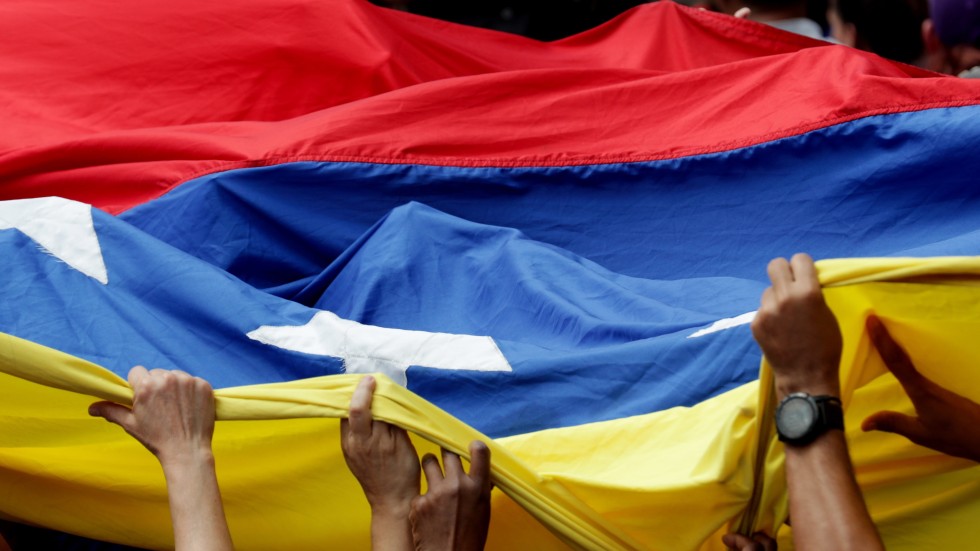
China has dismissed a newspaper report that its diplomats held talks with the political opposition in Venezuela to protect its investments in the Latin American country as “fake news”.
The Wall Street Journal said the diplomats, concerned about oil projects in Venezuela and almost US$20 billion that Caracas owes Beijing, had held talks in Washington with representatives of Juan Guaido, the opposition leader heading US-backed efforts to oust President Nicolas Maduro.
“In fact the report is false. It’s fake news,” Hua Chunying, spokeswoman for the Chinese Foreign Ministry, told reporters on Wednesday when asked about the article.
Venezuela’s “affairs” should be resolved via dialogue, Hua said, reiterating China’s previous stance.
Guaido invoked a constitutional provision to assume the presidency three weeks ago, arguing that Maduro’s re-election last year was a sham.
Most Western countries, including the United States, have recognised Guaido as Venezuela’s legitimate head of state, but Maduro retains the backing of Russia and China as well as control of state institutions including the military.
China has lent more than $50 billion to Venezuela through oil-for-loan agreements over the past decade, securing energy supplies for its fast-growing economy.
A change in government in Venezuela would favour the country’s two main foreign creditors, Russia and China, Guaido said in an interview last month.






COMMENTS: 3