Chindia Alert: You’ll be Living in their World Very Soon
aims to alert you to the threats and opportunities that China and India present. China and India require serious attention; case of ‘hidden dragon and crouching tiger’.
Without this attention, governments, businesses and, indeed, individuals may find themselves at a great disadvantage sooner rather than later.
The POSTs (front webpages) are mainly 'cuttings' from reliable sources, updated continuously.
The PAGEs (see Tabs, above) attempt to make the information more meaningful by putting some structure to the information we have researched and assembled since 2006.
Airport staff unload medical materials donated by China to Laos from a chartered plane at the Wattay International Airport in Vientiane, Laos, March 29, 2020. A team of Chinese medical experts, along with medical materials, arrived in Lao capital Vientiane by a chartered plane Sunday morning to assist Laos to fight the COVID-19 pandemic. (Photo by Kaikeo Saiyasane/Xinhua)
VIENTIANE, March 29 (Xinhua) — A team of Chinese medical experts, along with medical materials, arrived in Lao capital Vientiane by a chartered plane Sunday morning to assist Laos to fight the COVID-19 pandemic.
Somdy Douangdy, Lao deputy prime minister and chair of the Task Force Committee for COVID-19 Prevention and Control, and Chinese Ambassador to Laos Jiang Zaidong received the Chinese medical experts at the Wattay International Airport in Vientiane.
The Chinese medical team includes experts in various fields such as infection prevention and control, intensive care, epidemics, and laboratory testing. They also brought along with medical supplies.
The team came to Laos less than five days after the Lao side announced its first two confirmed COVID-19 cases and asked for assistance from China.
Laos has detected eight confirmed COVID-19 cases as of Saturday afternoon.
When welcoming the Chinese experts, Lao Deputy Prime Minister Somdy said that the Lao side is heartfully grateful for the Chinese medical expert team’s coming only in five days after Laos confirmed COVID-19 cases. China’s gesture reflects the profound friendship from the Chinese side to the Lao people, he said.
The medical team, made up of top experts in China’s southwestern Yunnan Province, brought Chinese experiences and solutions to Laos’ epidemic prevention and control, said the Lao deputy prime minister, adding that the Lao government will coordinate and ensure all possible conveniences for the Chinese medical expert team.
Somdy said the Lao side will make full use of the intellectual support and material assistance brought by the Chinese side, and will try its best to prevent COVID-19 from spreading.
“A friend in need is a friend indeed,” Jiang Zaidong said, adding that China will not forget in the early days of the outbreak, Laos donated money and multiple batches of anti-epidemic materials to China, and tried its best to successfully organize the China-ASEAN Special Foreign Ministers’ Meeting on Coronavirus Disease in Vientiane.
The Chinese people are always ready to return the kindness, sand Jiang. Currently, the number of confirmed cases in Laos is increasing, and the pressure on prevention and control is rising. As a community with a shared future, China will go through the difficulties with the Lao people, jointly strengthen epidemic prevention and control, and steadily push forward bilateral cooperation, the ambassador said.
Huang Xingli, the head of the Chinese medical expert team, said to Xinhua on arrival that the main tasks of the expert team are to share experiences and exchange with Lao local hospitals and experts, to introduce China’s anti-epidemic experience, to provide consultation to the Lao side on epidemic prevention and control, diagnosis and treatment and laboratory work, and to provide training and guidance for the Lao medical staff and community staff.
Along with the team also came medical treatment, protective supplies and a batch of Chinese and Western medicines donated by China’s Yunnan Province.
Laos announced it had detected the first two confirmed COVID-19 cases on March 24. The total number has risen to eight till Saturday.
JINAN, March 27 (Xinhua) — A shipment of medical supplies donated by Chinese companies in Shandong Province was delivered via a chartered flight on Friday morning from Jinan, the provincial capital, to Serbia to help with local coronavirus fight.
The supplies include 60,000 masks, 100 protective suites, 1,000 goggles and 2,000 boxes of medicine, donated by the Shandong High-speed Group and the First Company of China Eighth Engineering Division Ltd.
A batch of medical supplies donated by Chinese companies earlier, including the HBIS Group Co., Ltd., arrived in Serbia on Thursday with the help of the United Nations Development Programme and the European Union.
As of 3:00 p.m. Thursday local time, Serbia had reported 457 cases of COVID-19 and seven deaths.
CHANGSHA, March 26 (Xinhua) — Du Xu, a postgraduate from Central South University of Forestry and Technology (CSUFT), turned on his laptop and prepared for his dissertation pre-defense online.
While at home in eastern China’s Shandong Province, Du presented his dissertation to five professors for the first time through the remote video connection.
“Half a month ago, the university informed us to prepare an online pre-defense, find out the tutors’ opinions on the first draft and then revise it,” the 26-year-old said. Although he had experience with an opening thesis defense and other face-to-face forms, he was not familiar with the process of online defense, which made him feel nervous.
According to the CSUFT, all the postgraduate dissertations must be pre-defended before being submitted for examination to ensure the quality. The graduate school of the university adjusted the arrangement amid the epidemic. Online defense started on Feb. 10 to ensure that the graduate students could graduate on time.
“Since our defense is open and anyone can click the link to join, there were 55 students online when I spoke,” Du said. The open online defense can help us check missing key points and learn from each other. Some students also recorded the defense process to follow up on the comments of the tutor to further modify their dissertation, according to Du.
The university said the pre-defense would be submitted via the Internet, and the degree management office has set up an online platform for it.
Feng Jiajin, a graduate of the Hunan Railway Professional Technology College (HRPTC), who works as an intern at the Nanchang Railway Bureau in eastern China’s Jiangxi Province, also needs to demonstrate his graduation project through an online defense.
On March 18, Feng launched a video conference for his final project defense in the office via software on his mobile phone during his lunch break. More than 10 teachers from his college attended the meeting.
In front of the camera, Feng talked about his graduation project “Ultrasonic Ranging and Reversing System” and displayed the slides on the screen with explanations.
When displaying his final product, he showed the results of the graduation project in different situations.
“Vocational schools focus on students’ practical ability. Before the formal defense, the instructor first reviewed the students’ graduation projects and the statements. Only when the work is qualified are the students are allowed to participate in the defense and display,” said Xiong Yi with HRPTC.
According to the college, members of the dissertation defense committee ask questions about the relevant theoretical knowledge and the design methods, which the students should answer one by one. Finally, the members of the defense committee discuss the defense process and results. The results will be announced after a secret ballot. The entire process of the dissertation defense will be recorded, screenshot and saved as the defense record.
“The outbreak of coronavirus won’t affect the students’ graduation and seeking employment. Before the start of the new semester, the university will use online defense to ensure their graduation on time,” said Zhang Ying, vice president of HRPTC, adding that in March, the school will have more than 600 graduates participate in online defense.
Move will help air force with patrols and combat-readiness near Taiwan and in the East and South China seas, according to observers
Markings including national flag and service insignia will also be standardised under new guidelines
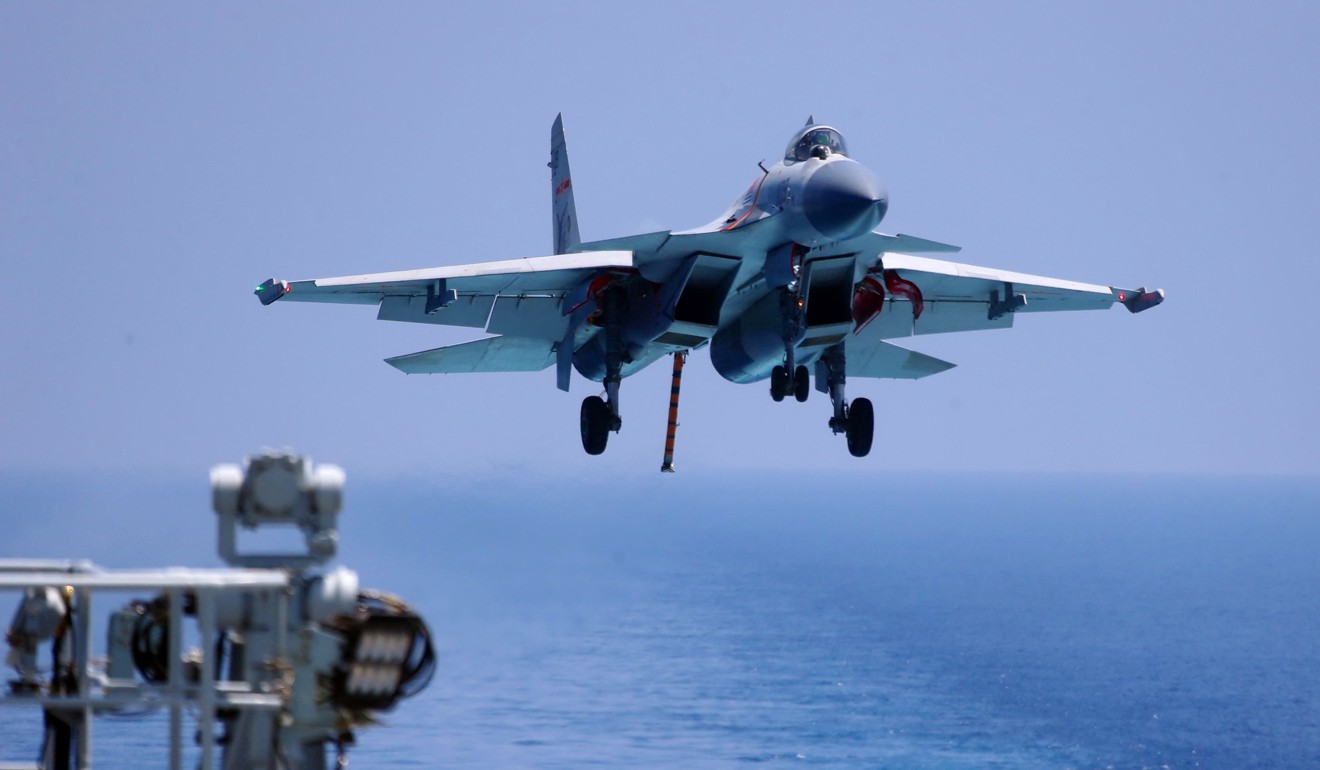
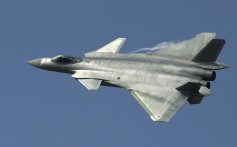
Chinese military aircraft will get “low observable” coatings and standardised markings. Photo: Xinhua
Chinese military aircraft are to be painted with “low observable” coatings and standardised markings under new guidelines, a move observers say will assist with operations near Taiwan and in the East and South China seas.
The guidelines require markings including the national flag and service insignia to be gradually standardised on both active and future warplanes, the official PLA Daily newspaper said earlier this month.
The move comes two years after the Chinese navy started experimenting with its J-16 strike fighter, using a dark grey low-visibility coating instead of blue-grey, and replacing its service insignia with a new design, according to military magazine Ordnance Industry Science Technology.
Some of the navy’s only active aircraft carrier-based fighter jets, the J-15s, have also been given new coatings and markings, according to the People’s Liberation Army’s official website.
PLA Daily said the move aimed to give Chinese warplanes a combat advantage as they “will be less likely to be detected by both the naked eye and military radar”. It said the new guidelines would be gradually implemented this year.
Some of the aircraft carrier-based J-15 fighter jets already have the new coatings. Photo: AFP
Macau-based military observer Antony Wong Dong said the move would help the air force improve patrols and combat-readiness as it carried out more drills near the Taiwan Strait and in the East and South China seas.
China’s air force and navy have sent warplanes including Su-35 fighter jets, H-6K strategic bombers and advanced KJ-2000 airborne early warning aircraft to conduct “encirclement” drills around Taiwan since 2018, as Beijing applies pressure on the self-ruled island that it sees as part of its territory. But none of the aircraft seen in photographs of the exercises had low-visibility coatings or standardised markings, as used on the navy’s J-16s and J-15s.
US spy plane pilots use China’s satellite navigation system as backup
9 Mar 2020
“Aircraft used by the PLA Air Force have different coatings and markings because they are still in a transitional period,” Wong said. “Its counterparts like Taiwan have learned from Western countries like the United States to standardise coatings and markings and designs [since the 1990s].”
Beijing insists that Taiwan, which split from the mainland in 1949, remains part of China and they will eventually be reunited – by force if necessary.
The PLA also regularly sends aircraft to monitor freedom of navigation operations by the US Navy in the South China Sea. Beijing has territorial disputes in the resource-rich waterway with countries including Vietnam, the Philippines, Malaysia and Brunei.
A military insider in Beijing said the US move to send hundreds of its new-generation F-35 stealth fighter jets to South Korea and Japan had also pushed the PLA to upgrade the coatings on its aircraft.
“These coatings are a highly technical area, and China puts a tremendous amount of resources into research on this every year,” said the insider, who requested anonymity due to the sensitivity of the issue. “The coating that’s used on China’s first stealth fighter jet, the J-20, is more advanced than they used on the Lockheed Martin F-22s, but it’s not yet at the level of the F-35s.”
Hong Kong-based military expert Song Zhongping said military aircraft used to have a bright red national flag and service insignia that made them more detectable on radar systems, or even with the naked eye.
“The red they used is striking, but it’s not in line with the ‘low observable’ requirement for all fighter jets,” said Song, who is a military commentator for Phoenix Television.
“All fighter jets must have stealth and low-visibility capabilities, and the coatings and markings on them are part of how they can do this and meet requirements for combat.”
, the People’s Liberation Army said on Friday, amid a growing number of patrols and exercises by US warships in the region.
The drill, which involved two aircraft, was conducted earlier this month, not long before the US naval and marine units took part in expeditionary strike force training in the disputed waters, the PLA Navy said in a report.
While acknowledging the difficulties involved in such an operation, the report said the aircraft successfully identified several suspicious objects.
“Anti-submarine exercises are like trying to find a needle in a haystack. It’s difficult, the underwater hydrological conditions are complex,” Yu Yang, the captain of one of the aircraft, was quoted as saying.
But by having two planes working together, it “increase[d] the probability of finding a submarine”, he said.
The anti-submarine exercise involved two aircraft from the PLA Navy. Photo: Handout
Wang Shelin, one of the commanders of the exercise, said that anti-submarine operations were not only dangerous but a real test of the pilots’ skills.
Successfully completing the mission demanded precise “control of the speed and altitude of the aircraft”, he said.
The publication of the PLA report came after the United States staged a four-day exercise in the South China Sea last week involving the Theodore Roosevelt Carrier Strike Group, the America Expeditionary Strike Group and the 31st Marine Expeditionary Unit.
At the end of last month, the US Navy accused the PLA of “unsafe and unprofessional” behaviour after a Chinese destroyer pointed a laser at an American maritime patrol aircraft flying over international waters west of Guam.
Collin Koh, a research fellow with the S Rajaratnam School of International Studies at Nanyang Technological University in Singapore, said the Chinese military was keen to promote its anti-submarine capabilities.
“This means we can expect to see more such exercises in the future, with no let up because of the coronavirus,” he said.
“You can also see this as a response not only to the [recent] carrier strike group operations, but the intensified US military presence in the South China Sea.
“And it would not be surprising if a nuclear attack submarine was in the vicinity of the carrier strike group,” he said.
Chinese and US defence chiefs discuss coronavirus crisis in phone call
4 Mar 2020
Song Zhongping, a Hong Kong-based commentator on military affairs, said that with the possibility of a military conflict growing in the South China Sea, it was important for the PLA Navy to increase its anti-submarine training.
“The rivalry between the great powers is getting more and more intense, and the PLA must strengthen its preparations,” he said.
Echoing commander Wang’s comments, Song said that the high volume of maritime traffic and sheer size and depth of the South China Sea made searching for submarines difficult.
“So the PLA is trying to enhance its capabilities by constantly installing and testing new anti-submarine equipment,” he said.
System analyses hundreds of images in seconds, then advises doctors what to do next
China has offered free use of the machine around the world, but US Centres for Disease Control says it does not recommend using scans to diagnose Covid-19
Chinese doctors are using AI to help them diagnose Covid-19 patients. Photo: AFP
A supercomputer in China offers doctors around the world free access to an artificial intelligence diagnostic tool for early identification of Covid-19 patients based on a chest scan.
The AI system on the Tianhe-1 computer can go through hundreds of images generated by computed tomography (CT) and gave a diagnosis in about 10 seconds, according to the National Supercomputer Centre in Tianjin, which hosts the machine.
An employee at the facility said the results could then be used to help medical professionals – especially those in areas that have limited test kits or are hit by a sudden increase in suspected cases – to quickly distinguish between patients infected with the novel coronavirus and those with common pneumonia or another illness.
The accuracy of the analysis was higher than 80 per cent “and increasing steadily every day”, he said.
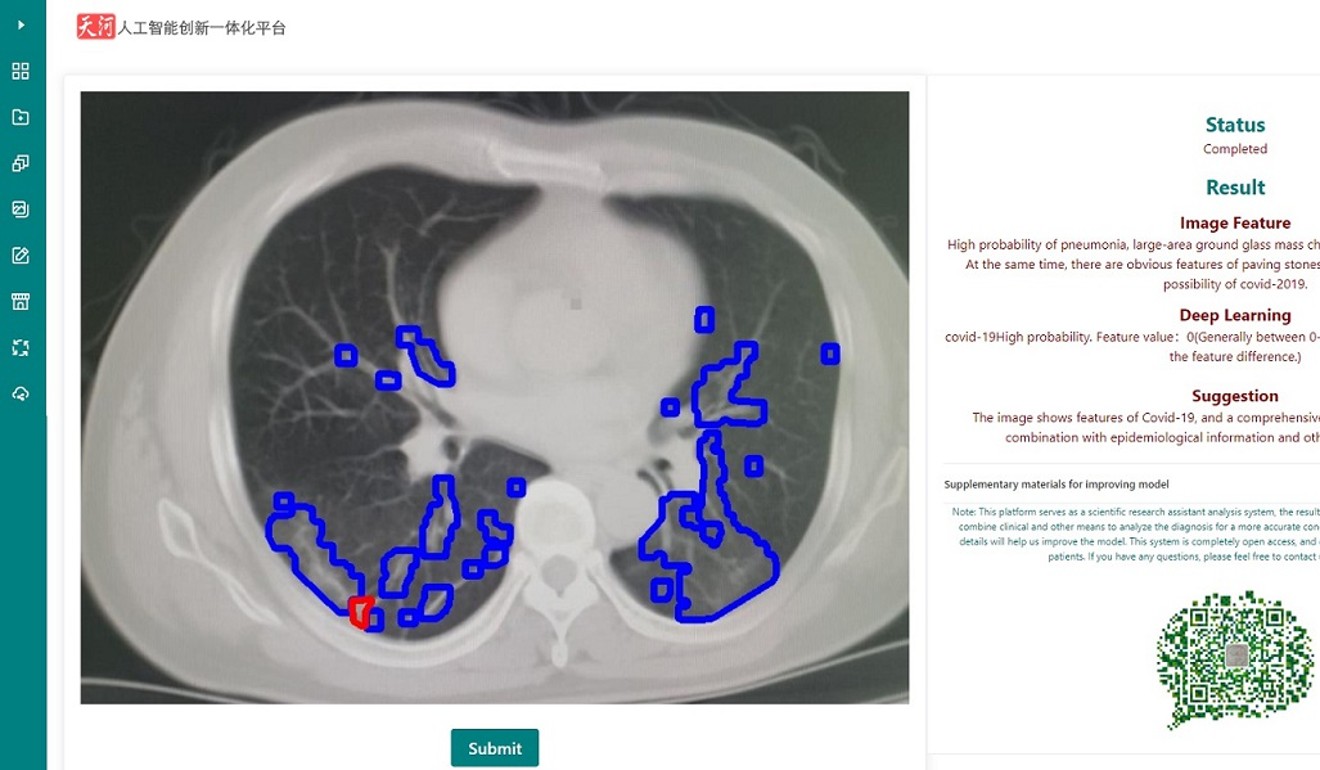
The system has an English interface and the reports it produces direct doctors to those areas of the patient’s lungs that require special attention by circling them in different colours.
It also provides an estimate of the likelihood of the person having contracted Covid-19, in a range from zero to 10, with lower numbers suggesting a higher probability of infection.
It even advises on what to do next, based on the experiences and lessons learned from doctors who have treated coronavirus patients.
Dr Xu Bo, a lead scientist on the project at Tianjin Medical University, said in an interview this week withScience and Technology Daily that the accuracy of the system was initially “rather poor”.
But the team worked round the clock to train the machine using the latest information from doctors with experience of Covid-19 and their clinical practices, he said.
The AI system directs doctors to those areas of the patient’s lungs that require special attention by circling them in different colours. Photo: Handout
As the number of samples increased, the AI’s performance improved significantly, and is now helping medical teams fighting the coronavirus in more than 30 hospitals in Wuhan and other cities.
Xu said that it would take an experienced doctor about 15 minutes to go through the 300 images generated by a CT scan, while the AI did the job in about 10 seconds.
The system could be accessed via a computer or even a mobile phone, he said.
The use of chest scans for diagnosis was first proposed by doctors fighting the Covid-19 epidemic in Wuhan. After the city went into lockdown, a large number of suspected patients appeared and testing them for infection using genetic methods took from several hours to several days. Many people are thought to have died while waiting for their results to come back.
In a series of studies, including a paper published in medical journal The Lancet, Chinese doctors showed that CT scans were a reliable tool because the lungs of coronavirus patients had features unseen in other diseases.
The Chinese government accepted their advice and said scan results could be used as credentials for treatment. Many scientists have said that decision played an important role in controlling the outbreak in the country.
But not all countries agree with that methodology. The US Centres for Disease Control, for instance, “does not currently recommend CXR or CT to diagnose Covid-19”.
It said the reason was that using scans would attract more suspected cases to hospitals and in turn raise the likelihood of them infecting other patients and staff.
The American College of Radiology said: “CT should not be used to screen for or as a first-line test to diagnose Covid-19.”
After the device was used on a suspected patient, it could take an hour to clean the test room, the college said on Wednesday.
A doctor working at a Beijing hospital treating Covid-19 patients said the CT machine could scan hundreds of patients a day in China, but because of the different protocols in some Western countries, the number there fell to just one or two.
“Governments should not let the CT sit idle during a major public health crisis,” she said.
“If you can’t give the people a test, give them a scan.”
Shen Cong, taken from the family home in Guangzhou 15 years ago, was found in a nearby city last week
He was one of nine children abducted by a gang, but police say there is no evidence of a woman alleged to be the go-between
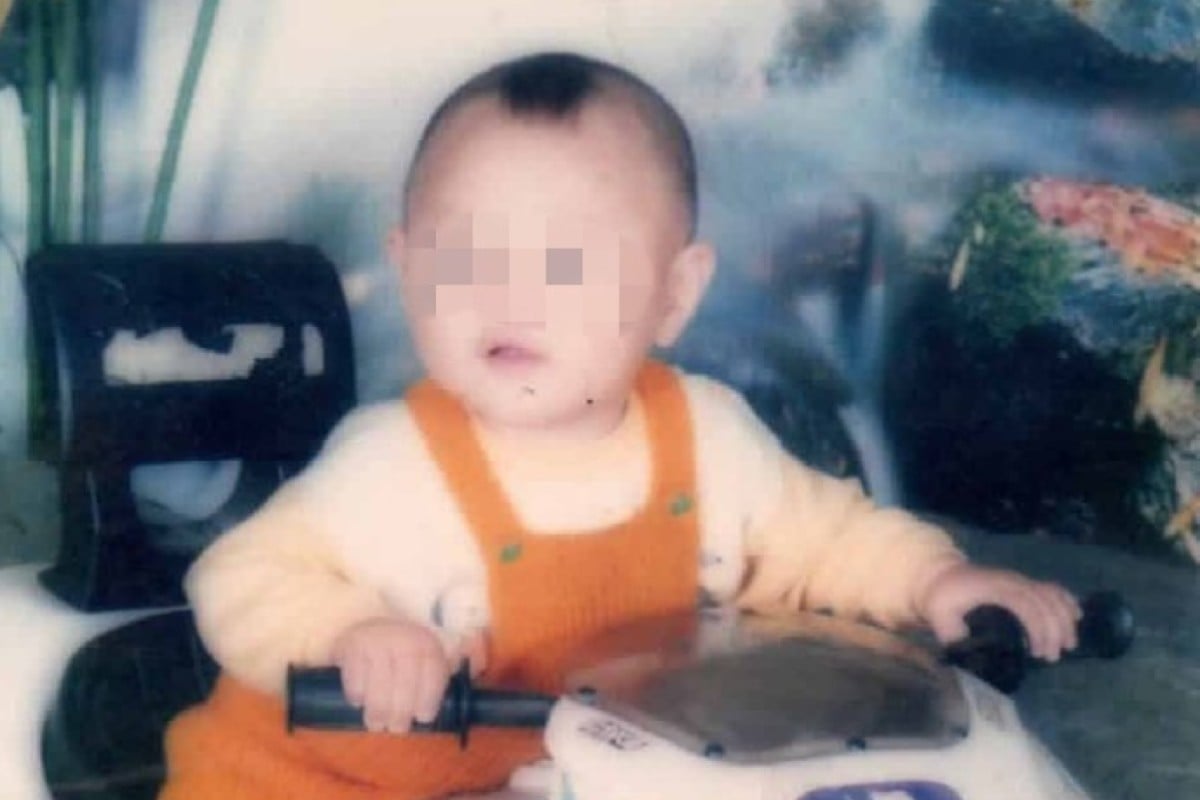
Shen Cong’s parents had been searching for him since he was abducted in 2005. Photo: Handout
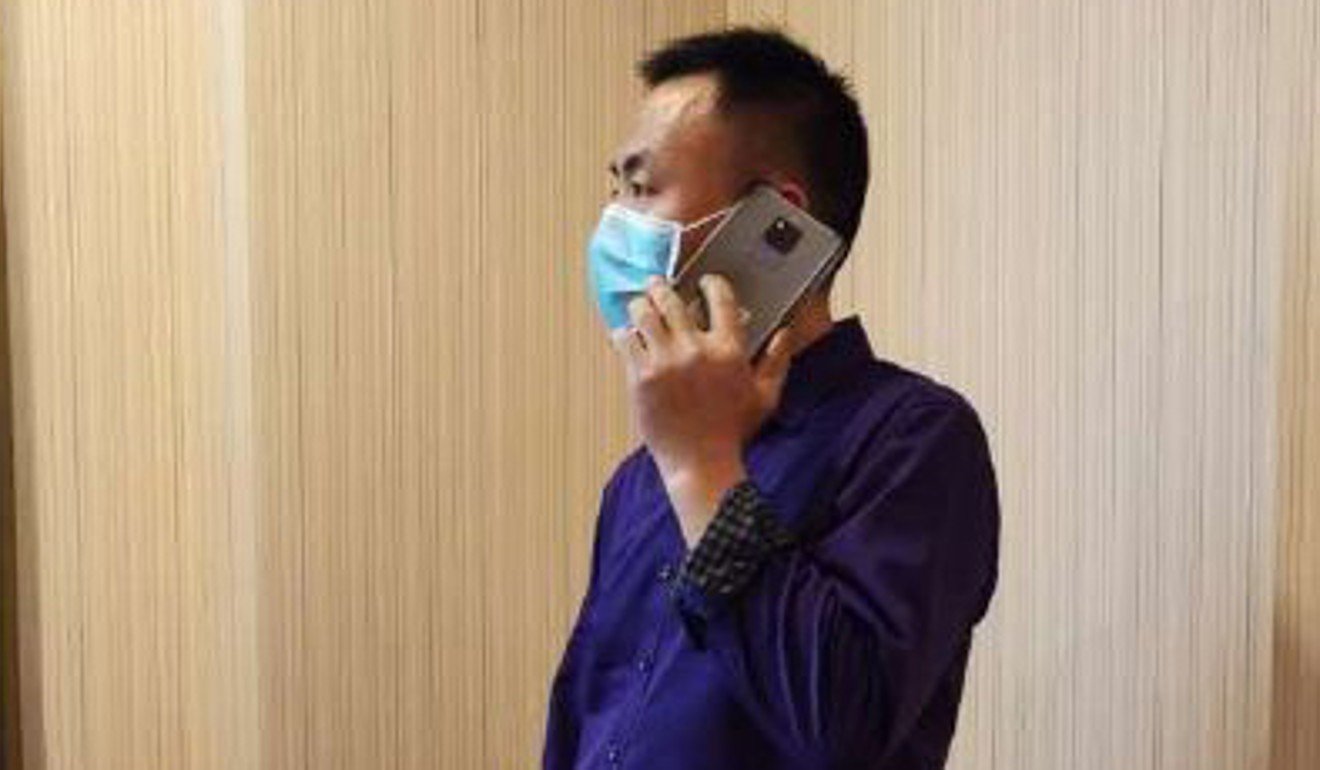
A teenage boy was reunited with his parents in the southern Chinese city of Guangzhou on Saturday after being kidnapped from their home as an infant, ending a 15-year search by his family.
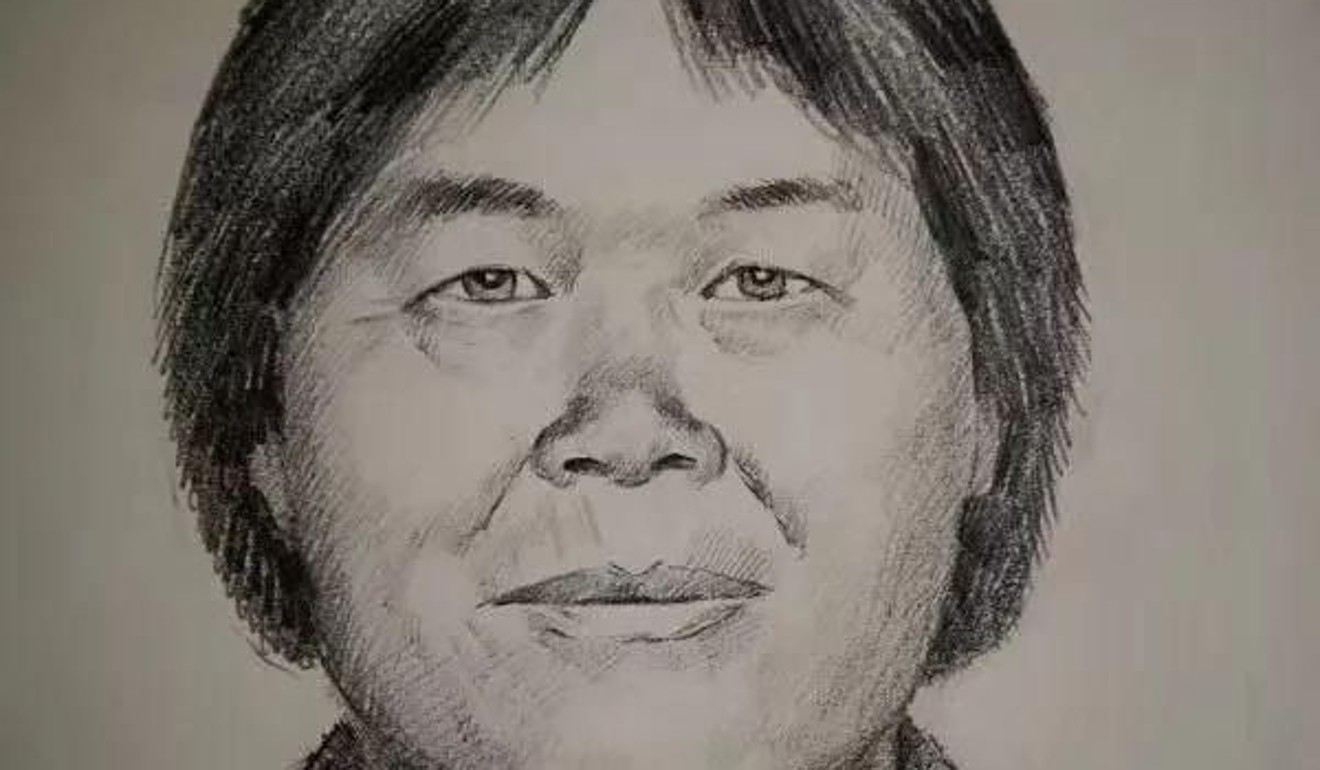
The boy was taken in 2005 – one of nine children abducted by a gang in Guangdong province around that time. In recent years the case has drawn attention on Chinese social media, particularly the alleged involvement of a shadowy go-between known as “Aunt Mei”, but Guangzhou police stressed there was no evidence such a person existed.
Police said 16-year-old Shen Cong had been found on Wednesday in Meizhou, a city about 400km (250 miles) away. DNA testing confirmed he was the missing child and police arranged the reunion with his parents, Shen Junliang and his wife, who was identified as Yu in the statement.
Police did not say what had led to the discovery of the boy, but they said his foster parents had been taken in for questioning.
His biological father Shen Junliang on Sunday said they were overjoyed to have their son back home, adding that he was healthy and a tall boy who loved sports.
“Before I met my son I’d been imagining what it would be like to talk to him. I didn’t think he would be this mature – he seems more mature than his peers and he has good manners,” the father wrote on Weibo, China’s Twitter. “We’ve spent the entire time together, from Saturday night until now. We’re getting along and he’s happy too.”
Shen Junliang said they were overjoyed to have their son back home at last. Photo: Handout
The parents are now getting to know their son, having not seen him since he was abducted from their rented flat in Zengcheng district on January 4, 2005.
That day, the child had been at home with his mother while his father was at work. Shen Junliang has alleged that two of their neighbours led two strangers into the flat at about 10.40am, and the two strangers drugged and tied up Yu before kidnapping the one-year-old boy.
His mum revealed she was abandoned as a kid. A film was born
21 Dec 2019
Shen Junliang had been searching for his boy ever since. He gave up his job and has travelled all over Guangdong province looking for him. He had more than 1 million posters printed with photos and a description of his son, offering a reward of 100,000 yuan (US$14,400) for any information on the case.
One of them read: “Shen Cong has birthmarks on the toe of his left foot, his right buttock and his right thigh. Anyone who has any leads … please contact me or Guangzhou police.”
Kidnapped: the Chinese parents desperately searching for missing children
He started posting about the case on Weibo in 2016, sharing every piece of news related to the kidnap and appealing for anyone with information to come forward.
In March that year, there was a development, with police arresting five suspects in the case.
Police said the lead suspect, Zhang Weiping, had confessed to selling Shen Cong to a couple in Heyuan, another city in Guangdong, for 13,000 yuan on January 6, 2005.
Zhang told police that an intermediary nicknamed Aunt Mei had been involved in that deal and the sale of eight other boys in the province from 2003 to 2005.
Zhang Weiping, who was sentenced to death for kidnapping children, alleged an intermediary known as Aunt Mei was involved in the case. Photo: Handout
Zhang and another gang member were sentenced to death for kidnapping children in 2018, two others were jailed for life, and a fifth person was jailed for 10 years.
Two of the other boys who had been abducted were found by police last year.
But Guangzhou police said they had not found any information leading them to the mysterious woman – apparently in her 60s and a Cantonese and Hakka speaker – Zhang alleged was the go-between.
“Police have checked all the details, all the people and places related to Zhang’s confession,” the statement said. “We’ve also received reports from people all over China since 2017 about Aunt Mei, but so far none of these tips have proved to be true.”
A first batch of 72 bookstores are launching on food delivery platform Meituan “as soon as next week”
Booksellers in China’s capital city have been struggling to stay afloat due to reduced footfall during the epidemic
For illustration: coffee and cake in front of a shelf of books at a bookstore. Photo: SCMP / Dickson Lee
Bookstores in Beijing, struggling to survive amid the coronavirus epidemic, are teaming up with a popular food delivery app to help get books into the hands of readers.
The initiative, co-launched by food delivery company Meituan Dianping and the municipal government of Beijing, will feature a first batch of 72 bookstores.
“Due to the epidemic, 80 per cent of physical bookstores are closed,” the publicity department of the Communist Party of China’s Beijing Municipal Committee told local media. “Although many of them try to launch online programmes to keep customers, it doesn’t make a substantial income for stores … companies want the government to coordinate more resources and platforms to help them.”
The bookstores will not have to pay a fee to join the programme, according to the Beijing publicity department.
Users will be able to purchase books on Meituan “as soon as next week”, the food delivery company said in a statement. “After the launch, we will support bookstores by charging them lower service fees, providing subsidies and launching reward plans to help them get on board quickly,” the company added.
China’s smartphone brands adapt to life under coronavirus restrictions
17 Feb 2020
Bookstores in China’s capital city have been hit hard by the coronavirus outbreak. About 60 per cent of 248 stores in Beijing said they expected their revenues to drop more than 50 per cent year-on-year, while only 48 per cent said their cash flows were sufficient to support operations for another one to three months, according to a report by the Beijing Institute of Culture Innovation and Communication.
With fewer customers patronising physical stores and pressure from rent and employee salaries, more bookstores are looking toward online channels to increase sales. Among those interviewed by the Beijing Institute of Culture Innovation and Communication, 21.8 per cent said they were now selling books only via online channels, 48 per cent had tried advertising on social media platforms like WeChat and Weibo, while 16.9 per cent are promoting books on video-sharing platforms like Douyin and Kuaishou.
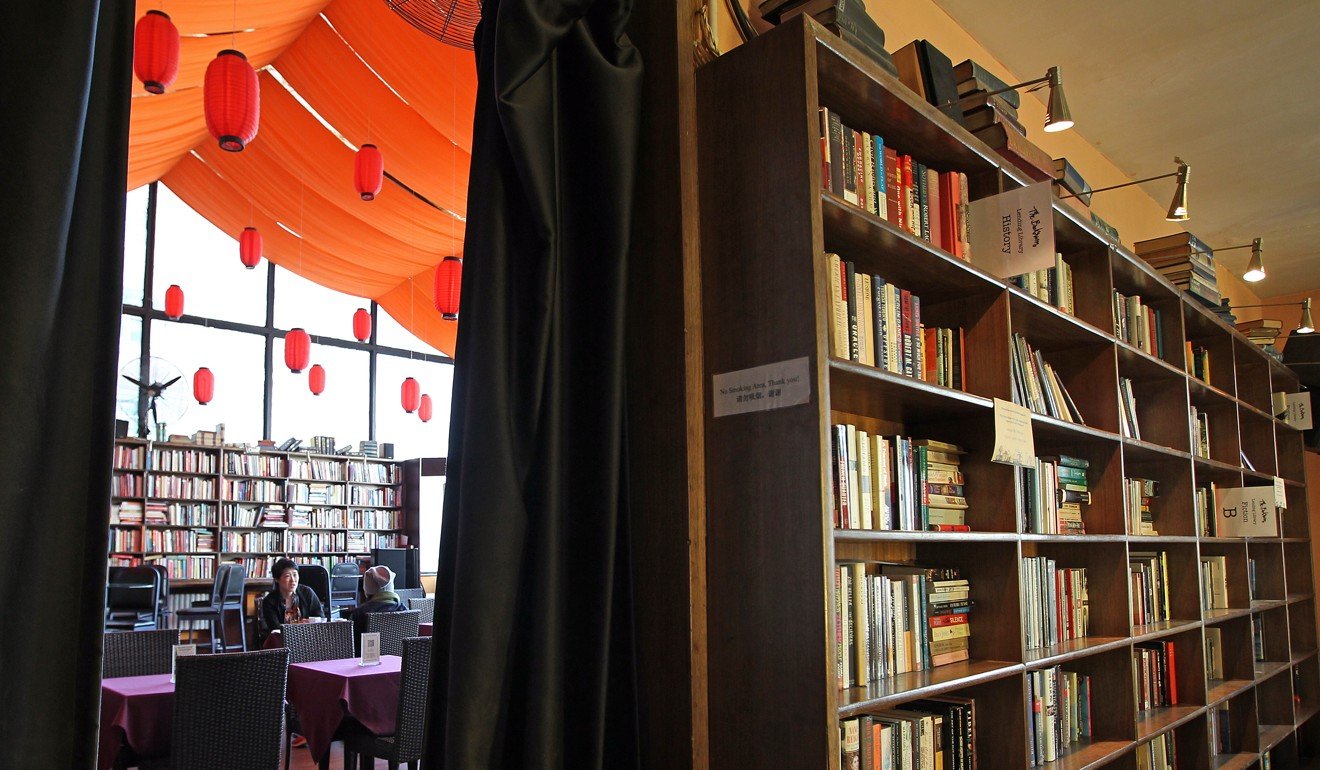
An interior view of a bookstore, Bookworm, at Sanlitun, Beijing. File photo: SCMP
Last week, Beijing-based bookstore chain OWSpace, which has 15 year history selling books and drinks, posted an appeal on its WeChat account for loyal customers to pay a 50 yuan to 8,000 yuan membership fee to help with its cash flow.
Among their four physical stores in China, only one in Beijing remains open and traffic is a tenth of what it was before the outbreak, it said.
“The store can only sell 15 books a day on average, and more than half are bought by our own staff. We expect our revenue in February to drop 80 per cent compared to other years,” OWSpace said in the post.
Wu Yanping, the general manager of OWSpace’s offline stores, said one of the chain’s stores in Beijing is joining Meituan’s book delivery platform. The store remains physically closed because it is located in an office park that prohibits anyone who travelled out of Beijing from entering before they complete the mandatory 14-day quarantine period.
“Our Dongfeng store is closed for now but even if it opens later, it will not have much traffic [because of the travel restrictions]. So we hope to sell books along with our coffee and drinks on the delivery platform even with the store closed,” Wu said.
Beijing has initiated a range of measures to help keep bookstores afloat, including subsidising their rent, rewarding stores that stay open during the epidemic and encouraging bookstores to expand their sales channels online.
Wu said that since OWSpace posted its appeal letter, it managed to reopen another store in Hangzhou, in the eastern province of Zhejiang, and traffic to both stores has been “gradually recovering to just under 50 per cent of a normal day [before the outbreak]”.
OWSpace also conducts live streams on Taobao three times a week to introduce books, encourage viewers to appreciate literature and sell the store’s peripheral products.
“Readers are quite enthusiastic about it. There were almost 10,000 people watching our last live stream” Wu said.
Taobao is an e-commerce platform operated by Alibaba Group Holding, which is the parent company of the Post.
US Pacific Fleet calls the action last week ‘unsafe and unprofessional’ and a breach of code of conduct
Analyst describes it as a ‘serious provocation’ that could have posed a navigational hazard
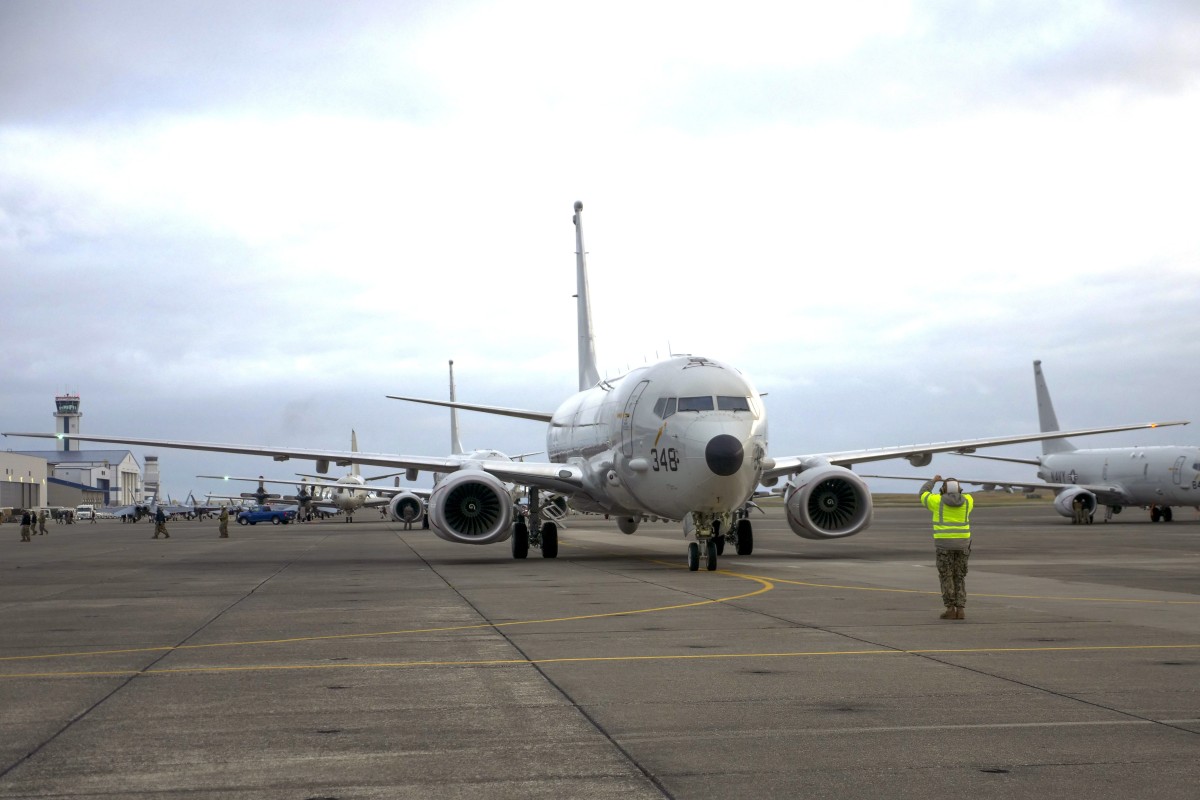
The US said a P-8A Poseidon maritime patrol aircraft was targeted as it flew over international waters in the western Pacific last week. Photo: AP
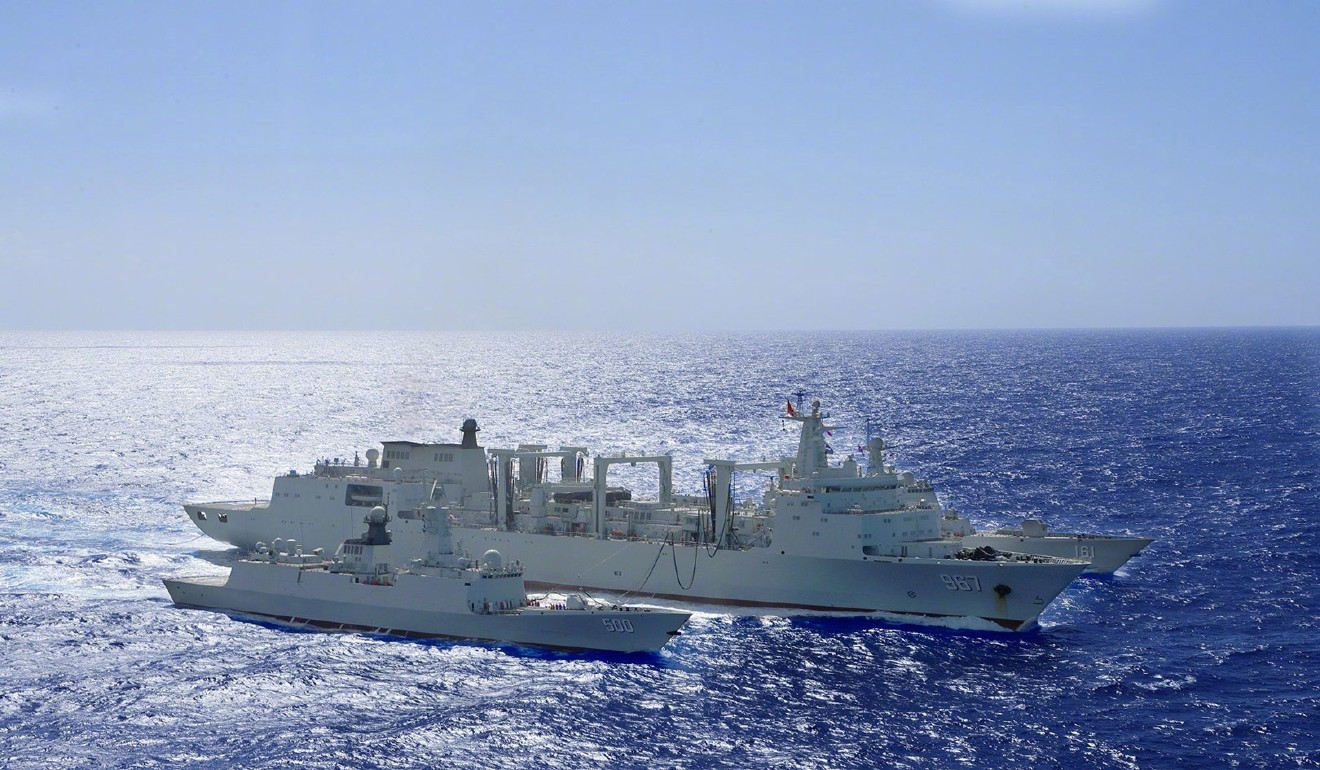
A Chinese destroyer pointed a laser at an American maritime patrol aircraft over the western Pacific Ocean last week, the US Navy said, calling the incident “unsafe and unprofessional”.
The US Pacific Fleet said in a statement on Friday that the destroyer targeted the P-8A Poseidon aircraft as it flew over international waters about 610km (380 miles) west of Guam on February 17.
“The laser, which was not visible to the naked eye, was captured by a sensor on board the P-8A,” the statement said. “Weapons-grade lasers could potentially cause serious harm to aircrew and mariners, as well as ship and aircraft systems.”
It said the action by the Chinese warship had breached the multilateral Code for Unplanned Encounters at Sea, which “specifically addresses the use of lasers that could cause harm to personnel or damage to equipment”.
China’s arms industry back in business despite disruption by coronavirus
23 Feb 2020
The action was also “inconsistent” with a memorandum of understanding reached between the US and Chinese defence ministries on rules of behaviour for safety during air and maritime encounters, the US Pacific Fleet said.
The P-8A is deployed to the Kadena Air Force Base in Okinawa, Japan, and is part of a squadron that conducts routine operations, maritime patrols and reconnaissance in the US 7th Fleet area of operations, according to the statement.
China and the United States have exchanged tough words as tensions simmer over their military activities in the Asia-Pacific region, particularly over the South China Sea and Taiwan.
A Chinese destroyer is said to have pointed a laser at a US Navy aircraft near Guam.
Photo: Weibo The Chinese South Sea Fleet completed a 41-day drill in the western Pacific earlier this week, according to state media, in a move to show its military exercises were continuing even as the country battles the coronavirus epidemic.
Collin Koh, a research fellow with the S Rajaratnam School of International Studies at Singapore’s Nanyang Technological University, said the latest incident was a “serious provocation”, noting that the Chinese military had also pointed lasers at the US in Djibouti.
The South China Sea dispute explained
“Use of lasers is as dangerous as manoeuvring one’s aerial or naval asset too close to another to cause the potential of collision – the lasers can pose a serious navigational hazard,” Koh said.
“While both [the Chinese and US navies] have the legitimate right to carry out their activities on the high seas out there in the western Pacific – including the use of these platforms to monitor each other – the use of lasers to endanger navigation in fact represents a serious provocation,” he said.
“The US Navy P-8A might have flown lower for closer observation, but I don’t think it went to the point of risking a collision with the [Chinese] warship.”
The incident was likely to further undermine trust and military stability between China and the United States, Koh said.
Conflict prevention in the South China Sea depends on China abiding by the existing rules of navigation
27 Feb 2020
“It also wouldn’t be the first time the [Chinese navy] formations would have had ‘company’ from US military assets keeping tabs on them,” he said.
But Hong Kong-based military commentator Song Zhongping rejected the US Navy’s claim that the Chinese warship had violated the code of conduct, saying its action was just a routine warning.
“The US is unhappy because the Chinese fleet was very close to Guam, and it saw the Chinese fleet as taking an unfriendly measure against the US,” he said.
“But it’s normal for a naval fleet and aircraft to send warnings to each other,” Song said. “If the other side’s reconnaissance plane gets too close to vessels, it can be a security risk. So they take self-defence measures.”
Following an appeal by the World Anti-Doping Agency (Wada) to the Court of Arbitration for Sport (Cas), the decision has been overturned.
An eight-year ban was imposed on Sun because this was his second offence.
He had served a three-month suspension in 2014 for taking prohibited stimulant Trimetazidine.
Sun told China’s Xinhua news agency that he plans to appeal against the decision.
He said: “This is unfair. I firmly believe in my innocence.”
Cas said its decision can be challenged before the Swiss Federal Tribunal within 30 days.
Sun had told an appeal hearing in November that he missed a test because testers failed to prove their identity when they arrived at his home.
He also denied a vial containing his blood samples was smashed with a hammer.
‘You’re a loser, I’m a winner’ – ugly scenes as GB’s Scott refuses to share podium with Sun
Cas said: “The athlete failed to establish that he had a compelling justification to destroy his sample collection containers and forego the doping control when, in his opinion, the collection protocol was not in compliance with the ISTI (international standard for testing and investigations).
“As the Cas panel noted, it is one thing, having provided a blood sample, to question the accreditation of the testing personnel while keeping the intact samples in the possession of the testing authorities; it is quite another thing, after lengthy exchanges and warnings as to the consequences, to act in such a way that results in destroying the sample containers, thereby eliminating any chance of testing the sample at a later stage.”
Wada welcomed the ruling, and added that it was “satisfied that justice in this case has been rendered”.
At the 2019 World Aquatics Championships in July, Sun won gold in the 200m freestyle but Britain’s Duncan Scott refused to share the podium with him.
Australian Mack Horton took a similar stance after the 400m freestyle, years after accusing him of being a “drug cheat”.
Scott said on Friday: “I fully respect and support the decision that has been made.
“I believe in clean sport and a level playing field for all athletes and I trust in Cas and Wada to uphold these values.”
Sun’s results prior to, during and after the championships will stand because he has not tested positive for doping.
He has won 11 world titles since 2011, including two golds at last year’s event in Gwangju, South Korea.
When Fina originally cleared him, it said that testers had breached several rules, including failing to produce authorisation letters and a nursing licence. Sun was subsequently issued with a warning.
The Cas appeal was heard in public. The only previous time that had happened was in 1999 when Ireland’s triple Olympic swimming champion Michelle Smith de Bruin failed with her appeal against a four-year ban for tampering with an anti-doping sample.
‘You’re disrespecting your country’ – reaction
Adam Peaty, British Olympic 100m breaststroke champion: “Very good. For anyone that’s been banned once, potentially it’s a mistake.
“You’re looking at it twice – you’re a fool. I believe that you’re disrespecting the sport, you’re disrespecting yourself and you’re disrespecting your country.”
Lizzie Simmonds, British two-time Olympian & former European champion: “I once called this man the Harry Houdini of doping control, but it seems that justice has finally been served.
“Imagine there will be a few very relieved freestylers waking up across the world.
“Given the damning length of this sentence, it seems inconceivable that he originally just received a slap on the wrist from Fina.
“A strong message to those who cheat, but I hope an even stronger message to those who seek to protect bureaucratic harmony over sporting integrity.”
James Guy, British four-time world swimming champion: “The truth always comes out.”











 CHINDIA ALERT: You'll be living in their world, very soon