Archive for ‘cooperation’

09/12/2019

China, Japan sign cooperation deals on energy saving, environmental protection

JAPAN-TOKYO-ENERGY SAVING-ENVIRONMENTAL PROTECTION-FORUM

Attendants from China and Japan exchange documents of cooperation projects at the 13th China-Japan Comprehensive Forum on Energy Saving and Environmental Protection in Tokyo, Japan, Dec. 8, 2019. Officials, entrepreneurs, experts and scholars from China and Japan discussed cooperation and inked agreements on 26 cooperation projects at the 13th China-Japan Comprehensive Forum on Energy Saving and Environmental Protection here on Sunday. (Xinhua/Du Xiaoyi)

TOKYO, Dec. 8 (Xinhua) — Officials, entrepreneurs, experts and scholars from China and Japan discussed cooperation and inked agreements on 26 cooperation projects at the 13th China-Japan Comprehensive Forum on Energy Saving and Environmental Protection here on Sunday.

Some 800 people attended the forum co-organized by the National Development and Reform Commission, Ministry of Commerce, Chinese embassy in Japan, and Japan’s Ministry of Economy, Trade and Industry, and the Japan-China Economic Association.

Deputy Director of the National Development and Reform Commission Zhang Yong briefed the attendants about China’s achievements in recent years in energy saving, emission reduction and development of environment-friendly industries.

Noting that this year marks the 70th anniversary of the founding of the People’s Republic of China, Zhang said China will continue to open up to the outside world at a higher level and improve the quality of the ecological environment at a new historical starting point.

He urged Japanese enterprises and institutions to take an active part in China’s energy conservation and environmental protection and work together to promote green and sustainable development.

China and Japan should strengthen policy communication and coordination, deepen bilateral practical cooperation, jointly explore the international market and boost people-to-people exchanges and cooperation, so as to deepen cooperation in energy conservation and environmental protection, he added.

Attendants held discussions on energy saving, circular economy, development of intelligent vehicle and new energy vehicle, clean coal technology and coal-fired power generation, as well as China-Japan long-term trade.

The two sides inked 26 cooperation projects in various areas, including energy saving, circular economy, pollution prevention and control, hydrogen energy and green technology innovation.

The China-Japan Comprehensive Forum on Energy Saving and Environmental Protection, first held in 2006, has seen agreement achieved on a total of nearly 400 cooperation projects and provides a good platform for enterprises, research organizations and local governments of the two countries to enhance cooperation.

Source: Xinhua

28/10/2019

Putin accepts Duterte invite, just before Manila-Beijing South China Sea oil talks. Coincidence?

  • The president is set to become the first Russian leader to make a state visit to the Philippines for more than 40 years, according to a former envoy
  • Moscow is aware of China’s entry into the Philippines, and could have its eye on some projects there, while the US is also watching developments
Russian President Vladimir Putin and Philippine President Rodrigo Duterte shake hands during a 2016 meeting in Peru. Photo: EPA
The timing of Moscow’s announcement over the weekend that President Vladimir Putin
has accepted an invitation to visit Manila has raised eyebrows, as it comes on the eve of crucial bilateral talks between the Philippines and China on joint oil exploration in the

South China Sea

.

In a statement immediately welcomed by the Philippine presidential palace, Igor Khovaev, Russia’s ambassador to the Philippines, on Saturday told reporters Putin had accepted Duterte’s invitation “with gratitude”.

No date has been set for the visit, with Khovaev only saying Moscow would “do our best to arrange this meeting as soon as possible”.

A steering committee with representatives from both Manila and Beijing is set to meet this week to discuss the joint oil exploration deal. China has proposed a 60 per cent-40 per cent split in favour of the Philippines, according to Hermogenes Esperon, 

Courting Russia with South China Sea oil is a ‘dangerous gamble’ for Duterte

Neither side has clarified if the split refers to ownership or revenue, and no other details were disclosed.

After an August meeting with Duterte, Chinese President Xi Jinping said the countries could take a “bigger step” in jointly developing oil and gas resources if they could properly handle their sovereignty dispute in the South China Sea.

But defence and security analysts say the Philippine president took a “dangerous gamble” on a visit to Russia last month, when he invited the Russian state oil company Rosneft to explore for oil in Philippine waters – which include parts of the South China Sea claimed by China.

The timing of Moscow’s announcement has not gone unnoticed.

A Chinese deepwater oil rig in the South China Sea. Photo: Weibo

“It’s a welcome and historic development. Some wise guy in the Duterte government thought about timing [the invitation to Putin around the oil talks with Beijing],” said retired Philippine ambassador Lauro Baja, who once served as president of the United Nations Security Council.

Baja told the Post that no Russian president had visited the Philippines during his more than 40 years with the Department of Foreign Affairs.

“The Philippines then was almost a nonentity as far as Russia was concerned, [but] maybe now Russia recognises the strategic importance of the Philippines [in terms of] regional politics,” he said.

Baja said Moscow was aware of China’s entry into the Philippines, and could have its eye on some projects there.

“For all their so-called alliance, China and Russia are fierce competitors for influence and other benefits. And I think Russia has some objectives in mind like selling armaments and [forging] technological agreements,” he said, while cautioning that the situation remained “nebulous”.

New Philippines military chief sees no ‘shooting war’ in South China Sea despite disputes

“It’s a fascinating development but things are still early … For now, this is [just] an invitation extended by Duterte and accepted in principle by Putin.”

The United States will also be monitoring developments in the Philippines, according to Greg Poling, director of the Washington-based Centre for Strategic and International Studies’ Asia Maritime Transparency Initiative.

“Russia is eager to boost its influence in the region, and doubtless doing so with a long-standing US ally is seen as a bonus by Moscow,” he said. “There is nothing that prevents the Philippines from engaging in security cooperation with Russia, but the devil will be in the details.”

Poling added that the US would be concerned if Russia-Philippine cooperation involved acquiring military platforms that were incompatible with the shared platforms and doctrines used by Washington and Manila, as well as the latter’s other major security partners, namely Australia, Japan and South Korea.

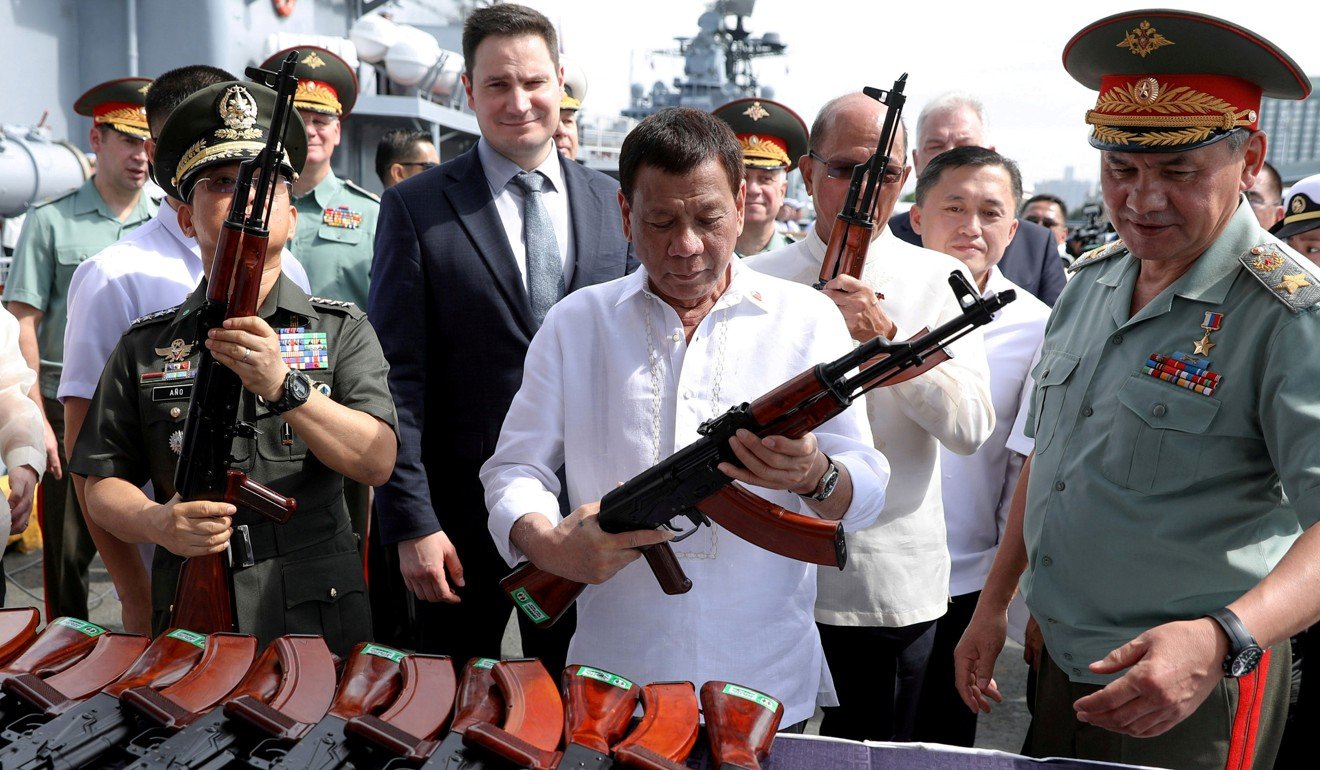
Philippine President Rodrigo Duterte inspects firearms donated by Russia in 2017. Photo: Reuters

“The US will also be concerned if any acquisitions or cooperation with Russia might threaten information security or intelligence cooperation between the US and the Philippines,” he said.

“And finally, any major platforms acquired from Russia would likely require the US to impose sanctions on the Philippines unless a waiver is granted, and the US government has been very stingy about awarding those waivers because they undermine the effectiveness of the sanctions regime.”

Moscow last week offered to help the Philippines produce its own arms for both domestic use and export with the help of Russian technology. Max Montero, an Australia-based Filipino security consultant, viewed that offer as “a swipe at the US”.

“Imagine a US stronghold and long-time ally and former colony becoming a manufacturing hub for Russian arms. And it makes it worse if [the Philippine armed forces] buys them too,” he said.

“Weakening the US alliances in Asia will benefit Russia [as it is] one of the US’ competitors in arms sales and geopolitics.”

Russia offers arms technology to the Philippines with ‘no conditions’ as US ties falter

The Philippines, Montero said, would benefit from such an arrangement since it is “a laggard in defence technology”. However, he pointed out that the country’s armed forces continue to buy weapons from the US and receive American arms as grants, potentially limiting the domestic market for Russian arms.

Navy cooperation has also been on the agenda, as Moscow and Manila discussed signing a new naval pact in March, while warships from each country have visited the other this year. Philippine naval vessels made their first-ever visit to Russia in October, while three Russian ships docked in the Philippines for a goodwill visit in January.

Russia is the top supplier of arms to Southeast Asia, and the No 2 global arms supplier, behind the US. Southeast Asia bought US$6.6 billion of Russian arms between 2010 and 2017, or more than 12 per cent of Russia’s sales, according to the Stockholm International Peace Research Institute, a Swedish think tank that publishes global arms tracking data.

Source: SCMP

06/10/2019

Xinhua Headlines: China’s Greater Bay Area busy laying foundation for innovation

As China aims to develop its Greater Bay Area into an international innovation and technology hub, innovation and entrepreneurship resources are shared in the area to provide more opportunities for young Hong Kong and Macao entrepreneurs.

The provincial government of Guangdong has stepped up efforts to improve basic research capability, considered the backbone of an international innovation and technology hub, by building large scientific installations and launching provincial labs.

by Xinhua writers Liu Yiwei, Quan Xiaoshu, Wang Pan, Jing Huaiqiao

GUANGZHOU, Oct. 5 (Xinhua) — Hong Kong man Andy Ng was surprised his shared workspace Timetable was rented out completely only six months after it had started operation in Guangzhou, capital of south China’s Guangdong Province.

While studying economics at City University of Hong Kong, Ng set up his first business, developing an online education platform, but soon realized the Hong Kong market was too small. After earning a master’s degree in the UK in 2017, Ng returned to China and chose Guangzhou as his new base.

Timetable is now accumulating popularity and even fans in Dianping.com, China’s major online consumer guide. Ng feels lucky that his business caught the implementation of the Guangdong-Hong Kong-Macao Greater Bay Area (GBA) development plan.

The bay area, covering 56,000 square km, comprises Hong Kong and Macao, as well as nine cities in Guangdong. It had a combined population of about 70 million at the end of 2017, and is one of the most open and dynamic regions in China.

Aerial photo taken on July 11, 2018 shows the Hong Kong-Zhuhai-Macao Bridge in south China. (Xinhua/Liang Xu)

In July 2017, a framework agreement on the development of the bay area was signed. On February 18 this year, China issued the more specific Outline Development Plan for the Guangdong-Hong Kong-Macao Greater Bay Area. One of its major aims is to develop the area into an international innovation and technology hub.

OPPORTUNITIES FOR YOUTH

The plan proposes that innovation and entrepreneurship resources be shared in the bay area to provide more opportunities for young Hong Kong and Macao entrepreneurs.

An incubator for entrepreneurship, Timetable is home to 52 companies, including 15 from Hong Kong and Macao, such as Redspots, a virtual reality company that won the Hong Kong Information and Communications Technology (ICT) Awards 2019.

“I persuaded them one by one to come here,” Ng said. “I told them of my own experience that the GBA is a great stage for starting a business with ever-upgrading technologies, ever-changing consumer tastes and a population 10 times that of Hong Kong.”

Timetable is a startup base of the Guangzhou Tianhe Hong Kong and Macao Youth Association, which has assisted 65 enterprises founded by Hong Kong and Macao young people since its establishment in October 2017.

The association and its four bases provide a package of services from training and registering to policy and legal consultation, said Chen Jingzhan, one of the association founders.

Tong Yat, a young Macao man who teaches children programming, is grateful the association encouraged him to come to Guangdong, where young people enjoy more preferential policies to start their own businesses.

“The GBA development not only benefits us, but paves the way for the next generation,” Tong said. “If one of my students were to become a tech tycoon in the future and tell others that his first science and technology teacher was me, I would think it all worthwhile.”

In the first quarter of this year, there were more than 980 science and technology business incubators in Guangdong, including more than 50 for young people from Hong Kong and Macao, said Wu Hanrong, an official with the Department of Science and Technology of Guangdong Province.

INNOVATION HIGHLAND

As the young entrepreneurs create a bustling innovative atmosphere, the Guangdong government has stepped up efforts to improve basic research capability, considered the backbone of an international innovation and technology hub, by building large scientific installations and launching provincial labs.

Several large scientific facilities have settled in Guangdong. China Spallation Neutron Source (CSNS) operates in Dongguan City; a neutrino observatory is under construction in Jiangmen City; a high intensity heavy-ion accelerator is being built in Huizhou City.

Aerial photo taken on June 23, 2019 shows the construction site of the Jiangmen Underground Neutrino Observatory (JUNO) in Jiangmen, south China’s Guangdong Province. (Xinhua/Liu Dawei)

Guangdong also plans to build about 10 provincial labs, covering regenerative medicine, materials, advanced manufacturing, next-generation network communications, chemical and fine chemicals, marine research and other areas, said Zhang Yan, of the provincial department of science and technology.

Unlike traditional universities or research institutions, the provincial labs enjoy a high degree of autonomy in policy and spending. A market-oriented salary system allows them to recruit talent from all over the world, and researchers from other domestic organizations can work for the laboratories without giving up their original jobs, Zhang said.

The labs are also open to professionals from Hong Kong and Macao. Research teams from the universities of the two special administrative regions have been involved in many of the key programs, Zhang said.

For example, the provincial lab of regenerative medicine and health has jointly established a regenerative medicine research institute with the Chinese University of Hong Kong, a heart research center with the University of Hong Kong, and a neuroscience research center with the Hong Kong University of Science and Technology (HKUST).

Photo taken on July 24, 2019 shows a rapid cycling synchrotron at the China Spallation Neutron Source (CSNS) in Dongguan, south China’s Guangdong Province. (Xinhua/Liu Dawei)

Guangdong has been trying to break down institutional barriers to help cooperation, encouraging Hong Kong and Macao research institutions to participate in provincial research programs, exploring the cross-border use of provincial government-sponsored research funds, and shielding Hong Kong researchers in Guangdong from higher mainland taxes.

NANSHA FOCUS

Located at the center of the bay area, Guangzhou’s Nansha District is designed as the national economic and technological development zone and national free trade zone, and is an important pivot in building the area into an international innovation and technology hub.

The construction of a science park covering about 200 hectares started on Sept. 26. Gong Shangyun, an official with the Nansha government, said the park will be completed in 2022.

Jointly built by the Guangzhou government and the Chinese Academy of Sciences (CAS), the science park will accommodate CAS research institutes from around Guangzhou, including the South China Sea Institute of Oceanology, the South China Botanical Garden (SCBG) and the Guangzhou Institute of Energy Conversion.

Ren Hai, director of the SCBG, is looking forward to expanding the research platforms in Nansha. “We will build a new economic plant platform serving the green development of the Pearl River Delta, a new botanical garden open to the public, and promote the establishment of the GBA botanical garden union.”

Wang Ying, a researcher with the SCBG, said the union will help deepen the long cooperation among its members and improve scientific research, science popularization and ecological protection. “Predecessors of our botanical garden have helped the Hong Kong and Macao counterparts gradually establish their regional flora since the 1950s and 1960s.”

HKUST also started to build a new campus in Nansha the same day as the science park broke ground. “Located next to the high-speed rail station, the Guangzhou campus is only a 30-minute journey from the Hong Kong campus. A delegation from the HKUST once paid a visit to the site and found it very convenient to work here,” Gong said.

Chief Executive of the Hong Kong Special Administrative Region (HKSAR) Carrie Lam hoped the new campus would help create a new chapter for the exchanges and cooperation on higher education between Guangzhou and Hong Kong, and cultivate more talents with innovative capabilities.

Nansha’s layout is a miniature of the provincial blueprint for an emerging international innovation and technology hub.

“We are seeking partnership with other leading domestic research institutions and encouraging universities from Hong Kong and Macao to set up R&D institutions in Guangdong,” said Zhang Kaisheng, an official with the provincial department of science and technology.

“We are much busier now, because research institutes at home and abroad come to talk about collaboration every week. The GBA is a rising attraction to global scientific researchers,” Zhang said.

Source: Xinhua

29/09/2019

China, Russia pledge to enhance extensive cooperation, legislative coordination

RUSSIA-CHINA-LI ZHANSHU-VISIT

Li Zhanshu, chairman of the Standing Committee of the National People’s Congress of China, meets with Russian President Vladimir Putin in Moscow, Russia, Sept. 25, 2019. Li paid an official goodwill visit to Russia from Sept. 25 to 28. (Xinhua/Pang Xinglei)

MOSCOW, Sept. 28 (Xinhua) — China’s top legislator Li Zhanshu and top Russian officials have agreed to further strengthen bilateral comprehensive cooperation and continue to promote legislative coordination for stronger ties.

Li, chairman of the Standing Committee of the National People’s Congress of China, on Saturday completed an official visit to Russia, during which he held talks with Russian President Vladimir Putin and the heads of both houses of the Russian parliament.

The Russian leaders congratulated China on the 70th anniversary of the founding of the People’s Republic of China and hailed the great achievements China has made in the past seven decades. The two sides also exchanged congratulations on the 70th anniversary of the establishment of diplomatic relations between China and Russia.

When meeting Putin, Li said, under the strategic guidance of the heads of state of the two countries, China-Russia relations have hit an unprecedented high and entered a new era of higher level and greater development.

Under the current international situation, China and Russia should strengthen mutual support, jointly build strategic support and security barriers between the two countries, and promote the construction of a new type of international relations and a community with a shared future for mankind, Li said.

He called on the two sides to bring their political mutual trust and strategic cooperation to a new height, and push economic and trade cooperation to a new level, so as to move forward their comprehensive strategic partnership of coordination for a new era.

For his part, Putin lauded Russia-China ties as a model of relations between the world’s major countries.

He said the comprehensive strategic partnership of coordination for a new era between the two countries, built in compliance with the international law, is in the interests of the two countries and the two peoples.

Noting that the current bilateral cooperation in various areas is steadily advancing towards the established goals, Putin urged the two countries to further strengthen all-round cooperation and develop their ties on the basis of existing achievements.

Li also met with Valentina Matviyenko, speaker of the Russian Federation Council, or the upper house of parliament, and Vyacheslav Volodin, speaker of the Russian State Duma, or the lower house of parliament.

During his talks with the heads of Russian parliament, Li said the cooperation between legislative bodies, as an important part of the China-Russia comprehensive strategic partnership of coordination for a new era, is expected to prioritize the implementation of the consensus reached by the two heads of state.

According to him, the two sides should promote communication and collaboration for the sake of the development of bilateral ties and, in particular, strengthen the exchanges of experience on foreign-related legal construction, so as to effectively deal with unilateralism and protectionism as well as defend the national sovereignty, security and interests of the two countries.

Li also called for better synergy between the China-proposed Belt and Road Initiative and the Russia-led Eurasian Economic Union, further cooperation in high-tech fields as well as sub-national cooperation and people-to-people exchanges.

For her part, Matviyenko said China’s development has proved to the world that a country can follow its own development path in line with its national conditions.

She said the people of the two countries work closely together and respect each other’s national interests, adding that no matter how the international situation changes, the long-term friendly cooperation between the two countries will remain unchanged.

The legislative bodies of the two countries should provide legal support and guarantee for the development of bilateral relations, Matviyenko said.

Volodin also urged the legislative bodies to make good use of existing cooperation mechanisms in a bid to promote cooperation in various fields, resist external interference and safeguard a fair and just international order.

Li and Volodin also attended the fifth meeting of the China-Russia committee for parliamentary cooperation.

In his speech, Li talked about China’s historic achievements in the past 70 years and spoke highly of the contribution of legislative cooperation to the development of bilateral relations.

He expressed hopes that both sides, after thorough studies, will come up with new ideas and new measures for legislative cooperation in a new era, better use the committee for parliamentary cooperation as a platform, and further enrich China-Russia relations.

While in Moscow, the top Chinese legislator also visited the Tomb of the Unknown Soldier and inspected the Moscow metro project of the China Railway Construction Corporation.

He also exchanged views on strengthening local cooperation with Rustam Minnikhanov, president of Russia’s Tatarstan Republic, in its capital of Kazan and visited the Kazan Helicopter Plant and Kazan Federal University.

Source: Xinhua

22/09/2019

Spotlight: China, Azerbaijan pledge to strengthen cooperation

AZERBAIJAN-BAKU-LI ZHANSHU-VISIT

Li Zhanshu (L), chairman of the Standing Committee of the National People’s Congress of China, meets with Azerbaijani President Ilham Aliyev in Baku, Azerbaijan, Sept. 19, 2019. Li paid an official goodwill visit to Azerbaijan from Sept. 19 to 21 at the invitation of Ogtay Asadov, speaker of the National Assembly of Azerbaijan. (Xinhua/Pang Xinglei)

BAKU, Sept. 21 (Xinhua) — Li Zhanshu, chairman of the Standing Committee of the National People’s Congress (NPC) of China, and top Azerbaijani officials have agreed here to strengthen bilateral cooperation in various areas.

During an official goodwill visit from Thursday to Saturday, Li met with Azerbaijani President Ilham Aliyev and conveyed Chinese President Xi Jinping’s cordial greetings to him.

Li briefed Aliyev on the great achievements of the People’s Republic of China since its founding 70 years ago, saying that the Communist Party of China is forging ahead on the road of socialism with Chinese characteristics in line with China’s national conditions.

The socialism with Chinese characteristics has now entered a new era, and China under the leadership of Xi is striving to achieve its “two centenary goals” and realize the Chinese dream of the great rejuvenation of the Chinese nation, Li told Aliyev.

China deems Azerbaijan as an important partner in Eurasia and is ready to implement the blueprint made by Xi and Aliyev on the development of bilateral ties, further cement political mutual trust, strengthen practical cooperation in various areas, and jointly safeguard the two countries’ security and development interests, Li said.

Aliyev asked Li to convey his best wishes to Xi and said he had witnessed the great changes in China with his own eyes during his repeated trips to the country and that he admired such achievements.

Azerbaijan-China relations are developing rapidly with a rosy future, he said, adding that his country firmly adheres to the one-China principle, and intends to combat jointly with China the “three forces” of terrorism, separatism and extremism, and improve their coordination and cooperation on international and regional issues.

LEGISLATIVE EXCHANGES

During a meeting with Ogtay Asadov, speaker of the National Assembly of Azerbaijan, Li said his visit was aimed at strengthening cooperation between the two legislatures and implementing the important consensuses reached by the two heads of state.

The Chinese top legislator suggested both sides increase interactions at various levels, exchange experience on governing the countries, and provide legal assurance for bilateral practical cooperation.

Every country has a unique history, national situation and culture, so different civilizations should coexist harmoniously and learn from each other, Li said.

The NPC of China is willing to work with the National Assembly of Azerbaijan to promote cultural and people-to-people exchanges between the two countries, learn from each other, and cement public support for bilateral relations, he said.

Asadov said Li was the first top Chinese legislator to visit Azerbaijan in 19 years and that the trip has injected new vitality into the development of bilateral relations and the interactions between the two legislatures.

Azerbaijan and China have signed many cooperation deals and the two legislatures should help to deliver on the agreements, Asadov said.

An increasing number of Azerbaijani people are interested in Chinese culture and there is a need to promote educational, cultural and youth exchanges, he said.

ECONOMIC COOPERATION

At a meeting with Azerbaijani Prime Minister Novruz Mammadov, Li said Azerbaijan is located at the junction of Europe and Asia and is an important country along the Belt and Road.

Li said China is ready to boost economic and trade exchanges with Azerbaijan and enhance cooperation with the country in jointly building the Belt and Road and achieve more cooperation outcomes in such fields as energy, agriculture, transportation, logistics, tourism and informatization.

He welcomed Azerbaijan to the second China International Import Expo to be held in early November in Shanghai.

Mammadov said his country was among the earliest participants in the Belt and Road Initiative and is ready to expand cooperation with China in various areas.

He welcomed more Chinese investments in Azerbaijan and expected cooperation with China on the construction of a Trans-Caspian International Transport Corridor so that more Chinese goods can hit the Eurasian market via Azerbaijan.

During his stay in Baku, Li also visited the Heydar Aliyev Center and a carpet museum, and laid a wreath at the tomb of former President Heydar Aliyev and the Eternal Flame.

Source: Xinhua

22/09/2019

China strengthens electric power cooperation with ASEAN

NANNING, Sept. 21 (Xinhua) — A forum on China-ASEAN cooperation in electric power was held Friday in Nanning City, capital of south China’s Guangxi Zhuang Autonomous Region, according to the organizer.

More than 160 experts from China and members of the Association of Southeast Asian Nations (ASEAN) gathered to discuss topics including investment, technology exchange and interconnection of infrastructure.

Chinese major electric power enterprises completed the investment of 1.8 billion U.S. dollars in 11 projects in the ASEAN countries and signed 9.91 billion U.S. dollars worth of contracts in 2018, according to China Electricity Council.

Cooperation between Chinese electric power enterprises and ASEAN countries covers hydropower, wind power, photovoltaic power and other fields, and has promoted local economic development and achieved win-win progress, said Yu Chongde, secretary general of the council.

China has rich experiences, advanced technology, and strong design and manufacturing capabilities in electric power, all of these are of great importance to ASEAN countries, said Yongyooth Horthong, an official from the Thai Ministry of Energy.

Source: Xinhua

21/09/2019

Interview: China, Azerbaijan enjoy promising prospects in co-building B&R, says Chinese ambassador

BAKU, Sept. 21 (Xinhua) — China and Azerbaijan enjoy promising prospects in co-building the Belt and Road, Chinese Ambassador to Azerbaijan Guo Min said in a recent exclusive interview with Xinhua.

With a sound and steady development of bilateral relations, Guo praised the advantages of the China-proposed Belt and Road Initiative (BRI) for both sides, emphasizing Azerbaijan’s full support for and involvement in the construction of the Belt and Road.

She said Azerbaijan sees the development of relationship with China as a diplomatic priority. “China and Azerbaijan have exchanged frequent high-level visits since the beginning of this year, with mutual political trust deepening even further.”

Azerbaijani President Ilham Aliyev attended the second Belt and Road Forum for International Cooperation held in Beijing in April, said Guo, adding “the leaders of the two countries reached important consensus to further develop bilateral relations and practical cooperation in various fields.”

“Cooperation in trade, energy, transportation, humanities and other fields has yielded fruits,” she said, noting bilateral trade reached 1.5 billion U.S. dollars from January to August, an increase of 104 percent from the same period last year.

“In recent years, the two nations have been promoting cooperation in a number of areas, including education, culture, health, sports and tourism on a continuous basis,” said the ambassador.

The two countries “have exchanged the visits of culture and art figures and held a wide range of film festivals, art exhibitions and other activities to actively promote unity, mutual understanding and friendly exchanges between the people,” according to Guo.

“At the next stage, the two nations should capitalize on the existing potential and focus on more points of interest,” the ambassador said.

She described the deep traditional friendship, high-level mutual political trust and the highly complementary practical cooperation as key foundations and effective guarantees for the stability and improvement of bilateral relations.

“China is willing to work together with Azerbaijan to push Sino-Azerbaijani friendship and cooperation to a new level and benefit the two countries and their peoples,” the ambassador added.

Source: Xinhua

10/09/2019

China’s border region to promote AI cooperation with ASEAN

NANNING, Sept. 9 (Xinhua) — South China’s Guangxi Zhuang Autonomous Region on Monday pledged to enhance cooperation with the Association of Southeast Asian Nations (ASEAN) on artificial intelligence (AI).

Chen Wu, chairman of the regional government, said at the First China-ASEAN AI Summit that Guangxi will actively promote technical cooperation, trade, investment and industrial exchange in the AI sector with the ASEAN countries.

Toward this end, the region will speed up the construction of platforms for infrastructure, information sharing and technical cooperation, among others, Chen said.

Guangxi, which boasts both sea and overland links with ASEAN, is building the China-ASEAN Information Harbour to boost digital cooperation with Southeast Asia.

“The summit has sounded the clarion call for the development of AI and big data industry in Guangxi,” said Wang Jingjing, Guangxi regional director of the Chinese AI firm iFlytek.

Hailing the region’s policy and geographical advantages on ASEAN cooperation, Wang said iFlytek hopes to set up an institute on ASEAN languages in Guangxi to facilitate communication between China and ASEAN countries

Source: Xinhua

04/09/2019

Chinese university says new classroom facial recognition system will improve attendance

  • Two classrooms on Nanjing campus were chosen for pilot project
  • Camera automatically captures students’ faces without their cooperation
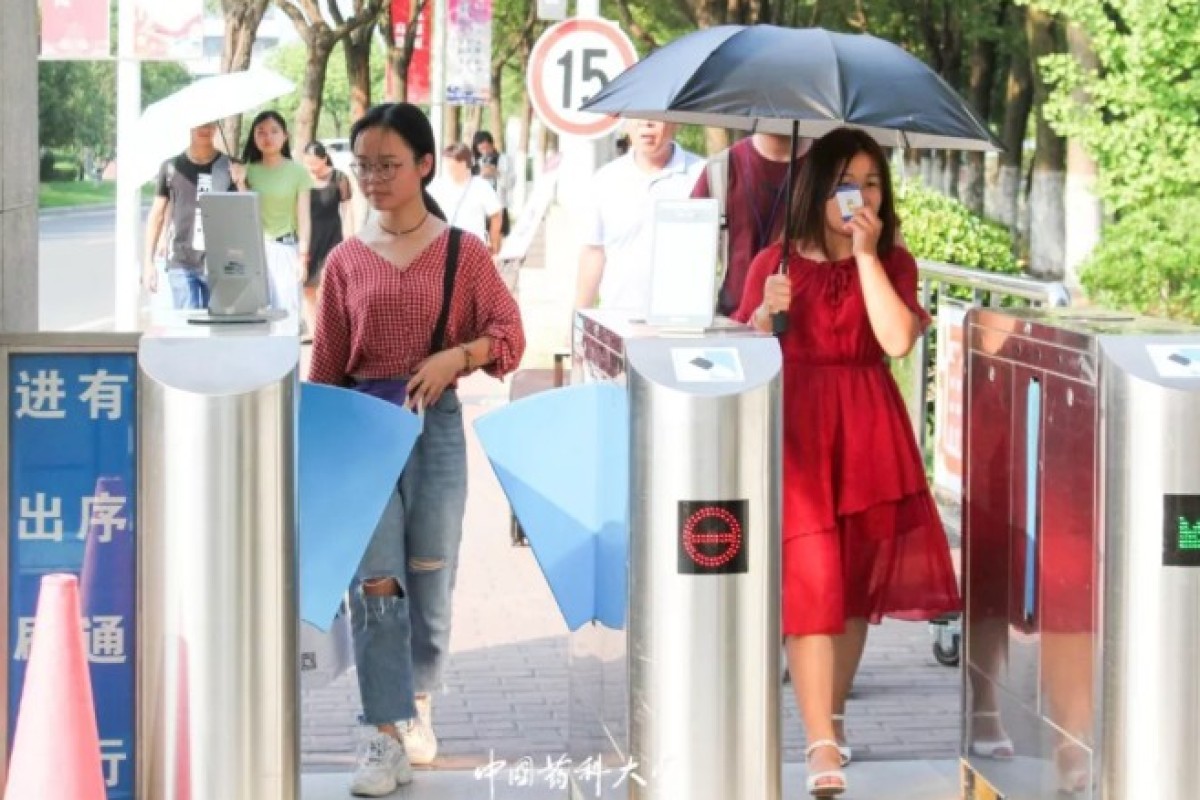
Students pass through a facial recognition turnstile at China Pharmaceutical University in Nanjing. Photo: Weibo

A university in eastern China has installed a facial recognition system at its entrance and in two classrooms to monitor the attendance and behaviour of students.

China Pharmaceutical University in Nanjing, Jiangsu province, announced on its website on Thursday that it was one of the first higher education institutions in the country to put such a system in place.

“It can effectively solve the management difficulties and low efficiencies in a traditional attendance system, and make it easier for managers to track their students,” Xu Jianzhen, director of the university’s library and information centre, told news website Thepaper.cn

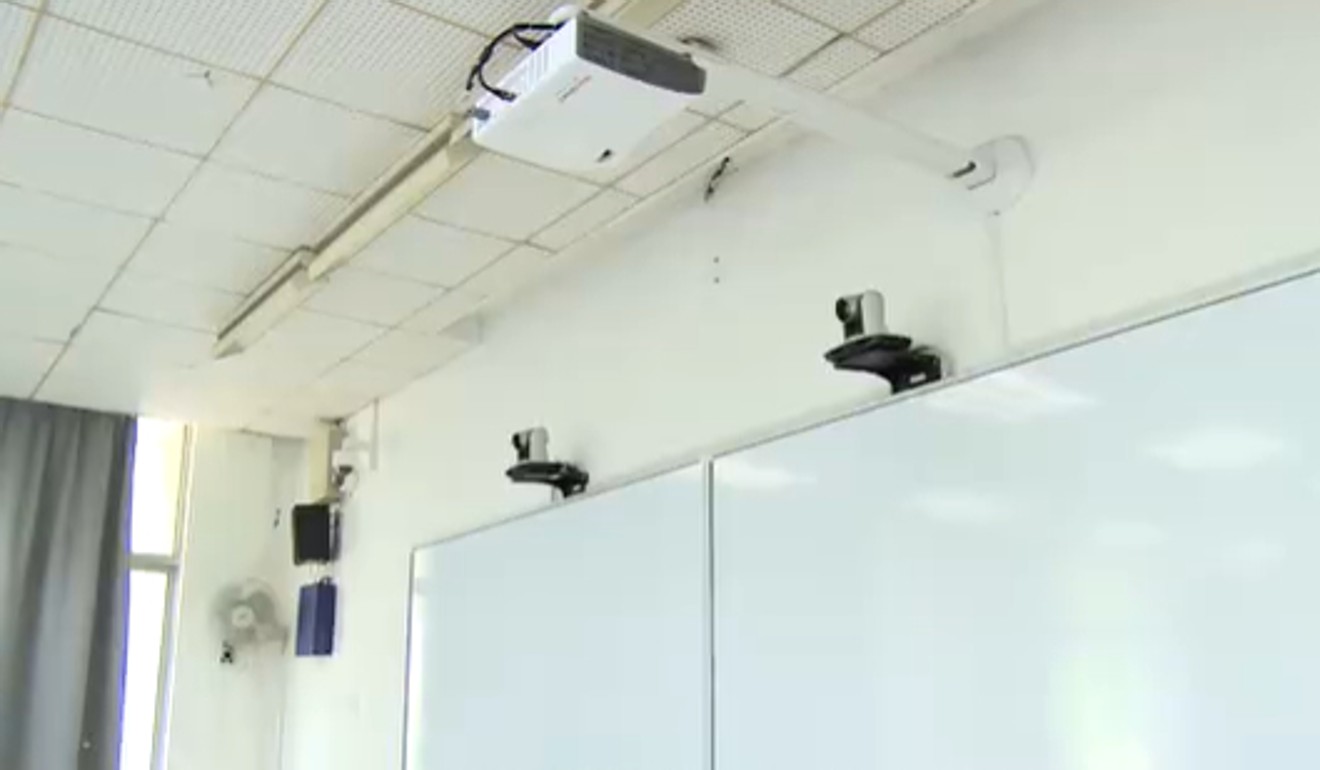
In a pilot project, two classrooms were equipped with an attendance system using facial recognition software, with a camera that automatically captured the faces of students in class without their cooperation, the university said.

“Besides attendance, the system installed in the classroom can provide surveillance of the students’ learning, such as whether they are listening to the lectures, how many times they raise their heads, and whether they are playing on their phones or falling asleep,” Xu told the news website.

“The school is taking action to cut down on students skipping class, leaving classes early, paying for a substitute to attend classes for them and not listening in class,” he said.

The plan was not well received online, with some critics raising privacy concerns for staff and students.

Why are Hong Kong protesters targeting lamp posts?
“What kind of talent are they trying to cultivate?” a user of the Twitter-style Weibo network asked. “I’ve never seen such a method.”

Another wrote: “If this system was being installed in Europe or America, they’d be sued and the school would have to close down.”

But Xu said the university had consulted the police and sought legal advice, and was told the system would not be considered an invasion of privacy as classrooms were public spaces.

“You are complaining about [a system] that’s meant to urge you to learn? Are you a student?” he told the news website.

A spokesman said China Pharmaceutical University was using a facial recognition system to improve class attendance. Photo: Weibo

The university would seek feedback from teaching staff before deciding whether to install facial recognition systems in all of its classrooms, according to the report.

In May last year, a school in Hangzhou, Zhejiang province, installed cameras to monitor pupils’ facial expressions and attentiveness in class as part of a “smart classroom behaviour management system” to give teachers real-time information on their students.

Elsewhere, facial recognition has been used to catch unlicensed drivers in the southern technology hub of Shenzhen, jaywalkers in Shanghai, and criminal suspects at public events across China.

Source: SCMP

15/08/2019

Cameroon official hails higher education cooperation with China

YAOUNDE, Aug. 14 (Xinhua) — Wilfred Gabsa Nyongbet, Secretary General of Cameroon’s Ministry of Higher Education, on Wednesday hailed as “excellent” the cooperation with China in higher education.

Nyongbet made the remarks during a ceremony to bid farewell to 128 Cameroonian students who will study in China with scholarships. “This is a true demonstration of the excellent bilateral friendship between our two countries,” he said.

“They are going to learn the type of technology that we need for the emergence of Cameroon… We are willing to continue the collaboration in the higher education sector,” Nyongbet added.

Among the 128 students, 45 benefit from the Chinese government scholarship, 83 from the Confucius Institute scholarship.

Speaking at the ceremony, Chinese ambassador Wang Yingwu said the number of Chinese scholarships awarded to Cameroon students in 2019 hit a record high since 2006. “China is ready to work with Cameroon to enhance cooperation in education to a higher level,” he said.

“China is advanced in technological sectors, and there is a transfer of know-how in its cooperation with Cameroon. The scholarship is an opportunity for me to study in China, and apply what I have learned back home,” a scholarship winner Francis Yonkeu Nya told Xinhua.

More than 3,000 Cameroonian students are now studying in China, among them about 300 are beneficiaries of Chinese government scholarship, according to the Chinese embassy to Cameroon.

Source: Xinhua

Law of Unintended Consequences

continuously updated blog about China & India

ChiaHou's Book Reviews

continuously updated blog about China & India

What's wrong with the world; and its economy

continuously updated blog about China & India