Chindia Alert: You’ll be Living in their World Very Soon
aims to alert you to the threats and opportunities that China and India present. China and India require serious attention; case of ‘hidden dragon and crouching tiger’.
Without this attention, governments, businesses and, indeed, individuals may find themselves at a great disadvantage sooner rather than later.
The POSTs (front webpages) are mainly 'cuttings' from reliable sources, updated continuously.
The PAGEs (see Tabs, above) attempt to make the information more meaningful by putting some structure to the information we have researched and assembled since 2006.
Image copyright PRESS INFORMATION BUREAUImage caption The area has become a hotspot in part because of a road India has built
The armies of the world’s two most populous nations are locked in a tense face-off high in the Himalayas, which has the potential to escalate as they seek to further their strategic goals.
Officials quoted by the Indian media say thousands of Chinese troops have forced their way into the Galwan valley in Ladakh, in the disputed Kashmir region.
Indian leaders and military strategists have clearly been left stunned.
The reports say that in early May, Chinese forces put up tents, dug trenches and moved heavy equipment several kilometres inside what had been regarded by India as its territory. The move came after India built a road several hundred kilometres long connecting to a high-altitude forward air base which it reactivated in 2008.
The message from China appears clear to observers in Delhi – this is not a routine incursion.
“The situation is serious. The Chinese have come into territory which they themselves accepted as part of India. It has completely changed the status quo,” says Ajai Shukla, an Indian military expert who served as a colonel in the army.
China takes a different view, saying it’s India which has changed facts on the ground.
Reports in the Indian media said soldiers from the two sides clashed on at least two occasions in Ladakh. Stand-offs are reported in at least three locations: the Galwan valley; Hot Springs; and Pangong lake to the south.
India and China share a border more than 3,440km (2,100 miles) long and have overlapping territorial claims. Their border patrols often bump into each other, resulting in occasional scuffles but both sides insist no bullet has been fired in four decades.
Their armies – two of the world’s largest – come face to face at many points. The poorly demarcated Line of Actual Control (LAC) separates the two sides. Rivers, lakes and snowcaps mean the line separating soldiers can shift and they often come close to confrontation.
The current military tension is not limited to Ladakh. Soldiers from the two sides are also eyeball-to-eyeball in Naku La, on the border between China and the north-eastern Indian state of Sikkim. Earlier this month they reportedly came to blows.
And there’s a row over a new map put out by Nepal, too, which accuses India of encroaching on its territory by building a road connecting with China.
Why are tensions rising now?
There are several reasons – but competing strategic goals lie at the root, and both sides blame each other.
“The traditionally peaceful Galwan River has now become a hotspot because it is where the LAC is closest to the new road India has built along the Shyok River to Daulet Beg Oldi (DBO) – the most remote and vulnerable area along the LAC in Ladakh,” Mr Shukla says.
India’s decision to ramp up infrastructure seems to have infuriated Beijing.
Image copyright AFPImage caption There have been protests in Nepal against Indi’s new road link
“According to the Chinese military, India is the one which has forced its way into the Galwan valley. So, India is changing the status quo along the LAC – that has angered the Chinese,” says Dr Long Xingchun, president of the Chengdu Institute of World Affairs (CIWA), a think tank.
Michael Kugelman, deputy director of the Asia programme at the Wilson Center, another think tank, says this face-off is not routine. He adds China’s “massive deployment of soldiers is a show of strength”.
The road could boost Delhi’s capability to move men and material rapidly in case of a conflict.
Differences have been growing in the past year over other areas of policy too.
The new federally-administered Ladakh included Aksai Chin, an area India claims but China controls.
Senior leaders of India’s Hindu-nationalist BJP government have also been talking about recapturing Pakistan-administered Kashmir. A strategic road, the Karakoram highway, passes through this area that connects China with its long-term ally Pakistan. Beijing has invested about $60bn (£48bn) in Pakistan’s infrastructure – the so-called China Pakistan Economic corridor (CPEC) – as part of its Belt and Road Initiative and the highway is key to transporting goods to and from the southern Pakistani port of Gwadar. The port gives China a foothold in the Arabian Sea.
In addition, China was unhappy when India initially banned all exports of medical and protective equipment to shore up its stocks soon after the coronavirus pandemic started earlier this year.
How dangerous could this get?
“We routinely see both armies crossing the LAC – it’s fairly common and such incidents are resolved at the local military level. But this time, the build-up is the largest we have ever seen,” says former Indian diplomat P Stobdan, an expert in Ladakh and India-China affairs.
“The stand-off is happening at some strategic areas that are important for India. If Pangong lake is taken, Ladakh can’t be defended. If the Chinese military is allowed to settle in the strategic valley of Shyok, then the Nubra valley and even Siachen can be reached.”
In what seems to be an intelligence failure, India seems to have been caught off guard again. According to Indian media accounts, the country’s soldiers were outnumbered and surrounded when China swiftly diverted men and machines from a military exercise to the border region.
This triggered alarm in Delhi – and India has limited room for manoeuvre. It can either seek to persuade Beijing to withdraw its troops through dialogue or try to remove them by force. Neither is an easy option.
“China is the world’s second-largest military power. Technologically it’s superior to India. Infrastructure on the other side is very advanced. Financially, China can divert its resources to achieve its military goals, whereas the Indian economy has been struggling in recent years, and the coronavirus crisis has worsened the situation,” says Ajai Shukla.
What next?
History holds difficult lessons for India. It suffered a humiliating defeat during the 1962 border conflict with China. India says China occupies 38,000km of its territory. Several rounds of talks in the last three decades have failed to resolve the boundary issues.
China already controls the Aksai Chin area further east of Ladakh and this region, claimed by India, is strategically important for Beijing as it connect its Xinjiang province with western Tibet.
Image copyright GETTY IMAGESImage caption India and China have a long history of border disputes
In 2017 India and China were engaged in a similar stand-off lasting more than two months in Doklam plateau, a tri-junction between India, China and Bhutan.
This time, too, talks are seen as the only way forward – both countries have so much to lose in a military conflict.
“China has no intention to escalate tensions and I think India also doesn’t want a conflict. But the situation depends on both sides. The Indian government should not be guided by the nationalistic media comments,” says Dr Long Xingchun of the CIWA in Chengdu. “Both countries have the ability to solve the dispute through high-level talks.”
Chinese media have given hardly any coverage to the border issue, which is being interpreted as a possible signal that a route to talks will be sought.
Pratyush Rao, associate director for South Asia at Control Risks consultancy, says both sides have “a clear interest in prioritising their economic recovery” and avoiding military escalation.
“It is important to recognise that both sides have a creditable record of maintaining relative peace and stability along their disputed border.”
The tech investment push is part of a fiscal package waiting to be signed off by the National People’s Congress, which convenes this week
This initiative will reduce China’s dependence on foreign technology, echoing objectives set forth previously in the ‘Made in China 2025’ programme
A conductor rehearses the military band on the sidelines of the National People’s Congress in Beijing’s Great Hall of the People in March of last year. China’s legislature is expected to sign off on a massive tech-led stimulus plan. Photo: AP
Beijing is accelerating its bid for global leadership in key technologies, planning to pump more than a trillion dollars into the economy through the roll-out of everything from next-generation wireless networks to artificial intelligence (AI).
In the master plan backed by President Xi Jinping himself, China will invest an estimated 10 trillion yuan (US$1.4 trillion) over six years to 2025, calling on urban governments and private hi-tech giants like Huawei Technologies to help lay 5G wireless networks, install cameras and sensors, and develop AI software that will underpin
and Huawei to SenseTime Group at the expense of US companies.
As tech nationalism mounts, the investment drive will reduce China’s dependence on foreign technology, echoing objectives set forth previously in the “Made in China 2025”
programme. Such initiatives have already drawn fierce criticism from the Trump administration, resulting in moves to block the rise of Chinese tech companies such as Huawei.
How will China’s annual legislative meetings affect the stock investor? Five key industries to watch
18 May 2020
“Nothing like this has happened before, this is China’s gambit to win the global tech race,” said Digital China Holdings chief operating officer Maria Kwok, as she sat in a Hong Kong office surrounded by facial recognition cameras and sensors. “Starting this year, we are really beginning to see the money flow through.”
The tech investment push is part of a fiscal package waiting to be signed off by China’s legislature, the National People’s Congress, which convenes this week. The government is expected to announce infrastructure funding of as much as US$563 billion this year, against the backdrop of the country’s worst economic performance since the Mao era.
The nation’s biggest purveyors of cloud computing and data analysis Alibaba, the parent company of the South China Morning Post, and Tencent Holding will be linchpins of the upcoming endeavour. China has already entrusted Huawei, the world’s largest telecommunications equipment supplier, to help galvanise 5G. Tech leaders including Pony Ma Huateng and Jack Ma are espousing the programme.
Maria Kwok’s company is a government-backed information technology systems integration provider, among many that are jumping at the chance. In the southern city of Guangzhou, Digital China is bringing half a million units of project housing online, including a complex three quarters the size of Central Park in New York City. To find a home, a user just has to log on to an app, scan their face and verify their identity. Leases can be signed digitally via smartphone and the renting authority is automatically flagged if a tenant’s payment is late.
China is no stranger to far-reaching plans with massive price tags that appear to achieve little. There is no guarantee this programme will deliver the economic rejuvenation its proponents promise. Unlike previous efforts to resuscitate the economy with “dumb” bridges and highways, this newly laid digital infrastructure will help national champions develop cutting-edge technologies.
“China’s new stimulus plan will likely lead to a consolidation of industrial internet
providers, and could lead to the emergence of some larger companies able to compete with global leaders, such as GE and Siemens,” said Nannan Kou, head of research at BloombergNEF, in a report. “One bet is on industrial internet-of-things (IoT) platforms, as China aims to cultivate three world leading companies in this area by 2025.”
China is not alone in pumping money into the technology sector as a way to get out of the post-coronavirus economic slump. Earlier this month, South Korea said AI and wireless communications would be at the core of it its “New Deal” to create jobs and boost growth.
Nothing like this has happened before, this is China’s gambit to win the global tech raceMaria Kwok, COO at Digital China Holdings
The 10 trillion yuan that China is estimated to spend from now until 2025 encompasses areas typically considered leading edge, such as AI and IoT, as well as items such as ultra-high voltage lines and high-speed rail, according to the government-backed China Centre for Information Industry Development. More than 20 of mainland China’s 31 provinces and regions have announced projects totaling over 1 trillion yuan with active participation from private capital, a state-backed newspaper reported on Wednesday.
Separate estimates by Morgan Stanley put new infrastructure at around US$180 billion each year for the next 11 years – or US$1.98 trillion in total. Those calculations also include power and rail lines. That annual figure would be almost double the past three-year average, the investment bank said in a March report that listed key stock beneficiaries including companies such as China Tower Corp, Alibaba, GDS Holdings, Quanta Computer and Advantech Co.
Beijing’s half-formed vision is already stirring a plethora of stocks, a big reason why five of China’s 10 best-performing stocks this year are tech plays like networking gear maker Dawning Information Industry and Apple supplier GoerTek. The bare outlines of the master plan were enough to drive pundits toward everything from satellite operators to broadband providers.
China’s telecoms carriers push to complete ‘political task’ of 5G network roll-out amid coronavirus crisis
6 Mar 2020
It is unlikely that US companies will benefit much from the tech-led stimulus and in some cases they stand to lose existing business. Earlier this year, when the country’s largest telecoms carrier China Mobile awarded contracts worth 37 billion yuan for 5G base stations, the lion’s share went to Huawei and other Chinese companies. Sweden’s Ericsson got only a little over 10 per cent of the business in the first four months. In one of its projects, Digital China will help the northeastern city of Changchun swap out American cloud computing staples IBM, Oracle and EMC with home-grown technology.
It is in data centres that a considerable chunk of the new infrastructure development will take place. Over 20 provinces have launched policies to support enterprises using cloud computing services, according to a March research note from UBS Group.
Tony Yu, chief executive of Chinese server maker H3C, said that his company was seeing a significant increase in demand for data centre services from some of the country’s top internet companies. “Rapid growth in up-and-coming sectors will bring a new force to China’s economy after the pandemic passes,” he told Bloomberg News.
From there, more investment should flow. Bain Capital-backed data centre operator ChinData Group estimated that for every one dollar spent on data centres another US$5 to US$10 in investment in related sectors would take place, including in networking, power grid and advanced equipment manufacturing. “A whole host of supply chain companies will benefit,” the company said in a statement.
There is concern about whether this long-term strategy provides much in the way of stimulus now, and where the money will come from. “It’s impossible to prop up China’s economy with new infrastructure alone,” said Zhu Tian, professor of economics at China Europe International Business School in Shanghai. “If you are worried about the government’s added debt levels and their debt servicing abilities right now, of course you wouldn’t do it. But it’s a necessary thing to do at a time of crisis.”
Digital China is confident that follow-up projects from its housing initiative in Guangzhou could generate 30 million yuan in revenue for the company. It is also hoping to replicate those efforts with local governments in the northeastern province of Jilin, where it has 3.3 billion yuan worth of projects approved. These include building a so-called city brain that will for the first time connect databases including traffic, schools and civil matters such as marriage registry. “The concept of smart cities has been touted for years but now we are finally seeing the investment,” said Kwok.
Nations may need help from China during virus outbreaks but remain wary of Beijing as adversary in disputed waters
Analysts say code of conduct negotiations are too sensitive and important for virtual meetings and may be delayed until coronavirus crisis is resolved
On April 18, the US Navy Ticonderoga-class guided missile cruiser USS Bunker Hill (front) and Arleigh-Burke class guided-missile destroyer USS Barry transit the South China Sea. The presence of both Chinese and American navy ships in the area in recent weeks worries Southeast Asian nations. Photo: US Navy
Negotiations between China and its Southeast Asian neighbours for a South China Sea
code of conduct have been postponed as the nations involved put their efforts into containing the Covid-19 pandemic, creating uncertainty about whether the two sides can work together amid rising tensions in the contested territory.
Southeast Asian nations are increasingly caught in a dilemma whether to maintain relations with Beijing during the pandemic while also fearing that tensions over the disputed waters are spiralling out of control. Both Chinese and United States navies are sending vessels to the area more frequently.
Indonesian Foreign Minister Retno Marsudi expressed concern over recent activities in the South China Sea, noting that they might potentially escalate tensions at a time when global collective effort to fight Covid-19 was essential.
Speaking on Wednesday, she called on all parties to respect international law, particularly the United Nations Convention on the Law of the Sea.
“While negotiation of the code of conduct is being postponed due to Covid-19, Indonesia calls on all relevant parties to exercise self-restraint and to refrain from undertaking action that may erode mutual trust and potentially escalate tension in the region,” she said.
Indonesia’s Foreign Minister Retno Marsudi. Photo: AP
Calls for a binding code of conduct surfaced in 1995 when China occupied Mischief Reef
, a maritime feature claimed by the Philippines. China did not agree to start talks until 1999, and subsequent negotiations led to a non-binding Declaration on Conduct in 2002.
The Association of Southeast Asian Nations (Asean) and China agreed in 2018 on a draft code laying the foundations for conduct in the disputed waters. At that time, Chinese Premier Li Keqiang said China hoped to complete the negotiation by the end of 2021, a move he said could show China and Asean could jointly maintain regional peace.
Named and claimed: is Beijing spoiling for a new fight in the South China Sea?
27 Apr 2020
But tensions over the South China Sea have not calmed and, in fact, have surged in recent months with both Beijing and Washington seen to be using the Covid-19 pandemic to create a stronger presence there.
This year, the US has conducted four freedom of navigation operations in the South China Sea and China has scrambled air and sea patrols to expel US vessels.
The confrontation between Beijing and Southeast Asian nations has also intensified. Last month, a Vietnamese fishing boat sank after a collision with a Chinese coastguard vessel near the Paracel Islands, known in China as the Xisha Islands, and in Vietnam as the Hoang Sa Islands.
On Saturday, the 35th escort fleet of the Chinese navy also conducted drills in the Spratly Islands chain – known as Nansha Islands in China – after completing an operation in the Gulf of Aden, off Somalia. Analysts said the drill aimed to boost far-sea training for combat ships and boost protection against piracy for Chinese merchant ships.
Collin Koh, a research fellow at the S. Rajaratnam School of International Studies, based at Nanyang Technological University in Singapore, said the code of conduct talks had been delayed because of the pandemic, but Beijing was consolidating its position in the South China Sea amid the outbreak.
“So it’s doing what it can now to consolidate and further enhance its position before talks restart, and by then these moves will raise Beijing’s leverage in the negotiations with its Asean counterparts,” he said.
“The current situation gives it a window of opportunity amid this interlude on the talks, to further advance its physical hold in the South China Sea, especially while Asean parties have their hands full on the pandemic”.
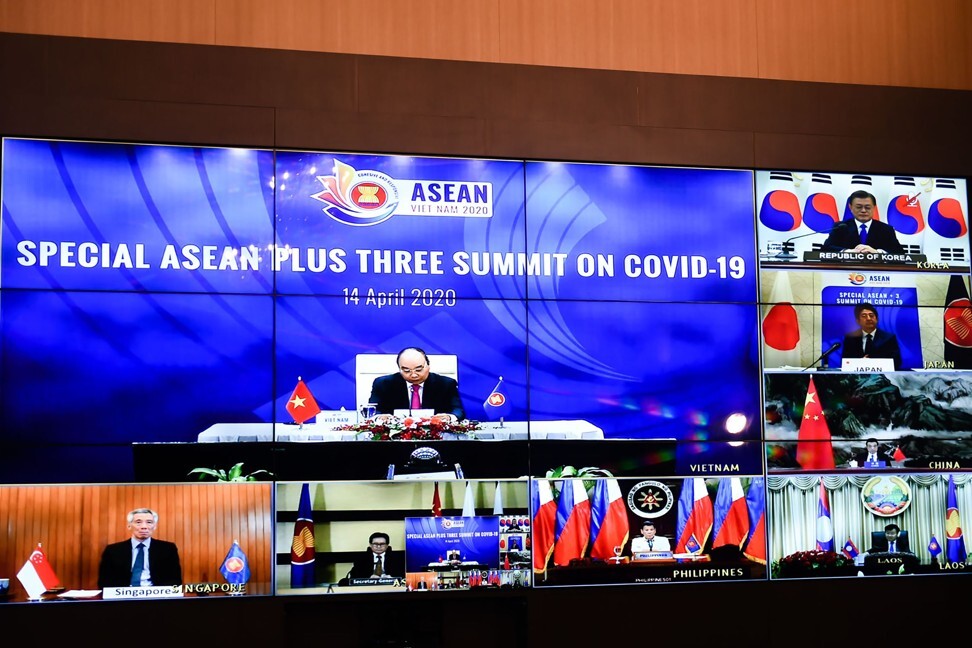
Asean nations have turned their attention to coping with coronavirus outbreaks in their own countries. On April 14, a live video conference for the special Asean Plus Three Summit on the coronavirus pandemic was held in Hanoi. Photo: AFP
Kang Lin, a researcher with Hainan University, said progress for the code of conduct would still go ahead, but it might be affected as face-to-face meetings between officials were disrupted.
“The negotiations involves multiple departments, such as diplomacy, maritime affairs, fisheries and even oil and gas-related departments,” he said, adding that those discussions might go online and might not be as effective.
“It is not easy to predict to what extent it will affect next year's goals. If the pandemic cannot be eliminated in the first half of next year, it may be longer than the three-year period we had previously scheduled,” he said.
Richard Heydarian, an academic and former Philippine government adviser, said video-conference meetings would be inadequate for negotiations about the future of the South China Sea.
“The problem with the negotiation of the code is that these are very sensitive, difficult negotiations. I don't think you can really do it just online, these are things that are done in the corridors of power,” he said. “It’s close to impossible to have that right now with the suspension of all international meetings in the Asean.”
Heydarian said Southeast Asian nations hoped to get help from China to contain the pandemic, but were showing unease about Beijing.
“I think there is a lot of resentment building against China,” he said. “There is also a lot of desperation to get assistance from China and, at the same time, complete helplessness with the fact that it is very hard to conduct any important extended international meeting on the level of Asean and beyond under current circumstances.”
Chinese Foreign Ministry spokesman Hua Chunying said on Thursday that China would push forward negotiations on the code of conduct, and hoped the code would be useful for peace and stability over the South China Sea.
BEIJING (Reuters) – Tang Yue, a 27-year-old teacher from the city of Guilin in southwest China, steam-presses a blue dress and takes dozens of photographs before picking one to clinch her 200th online sale.
For a growing number of Chinese like Tang, hit by job losses, furloughs and salary cuts, the consumer economy has begun to spin in reverse. They are no longer buying – they are selling.
Instead of emerging from the coronavirus epidemic and returning to the shopping habits that helped drive the world’s second-largest economy, many young people are offloading possessions and embracing a new-found ethic for hard times: less is more.
With Tang’s monthly salary of about 7,000 yuan ($988), the self-described shopaholic said she has bought everything from Chanel lipsticks to Apple’s (AAPL.O) latest iPad in the past three years.
But the adrenaline rush that comes with binge-shopping is gone, said Tang, whose wages have been slashed with the suspension of all the classes on tourism management she usually teaches.
“The coronavirus outbreak was a wake-up call,” she said. “When I saw the collapse of so many industries, I realised I had no financial buffer should something unfortunate happen to me.”
There is no guarantee that the nascent minimalist trend will continue once the coronavirus crisis is fully over, but if it does, it could seriously damage China’s consumer sector and hurt thousands of businesses from big retailers to street-corner restaurants, gyms and beauty salons.
To be sure, there are signs that pent-up demand will drive a rush of spending as authorities reopen malls, leisure venues and tourist spots. In South Korea, the first major economy outside of China to be hit by the virus, people thronged malls this weekend to go “revenge shopping” to make up for time lost in lockdown.,
There are some signs that a similar trend will take hold in China, where some upscale malls are starting to get busy, although luxury firm Kering SA (PRTP.PA) – which owns Gucci, Balenciaga and other fashion brands – has said it is hard to predict how or when sales in China might come back.
A recent McKinsey & Co survey showed that between 20% and 30% of respondents in China said they would continue to be cautious, either consuming slightly less or, in a few cases, a lot less.
“The lockdown provided consumers with a lot of time and reasons to reflect and consider what is important to them,” said Mark Tanner, managing director at Shanghai-based research and marketing consultancy China Skinny.
“With much more of their days spent in their homes, consumers also have more time and reasons to sort through things they don’t feel they need – so they’re not living around clutter that is common in many apartments.”
#DITCHYOURSTUFF
Tang made a spreadsheet to keep track of her nearly 200 cosmetic products and hundreds of pieces of clothing. She then marked a few essentials in red that she wanted to keep. In the past two months, she has sold items worth nearly 5,000 yuan on second-hand marketplaces online.
Bargain-hunting online has become a new habit for some Chinese as the stigma that once hung over second-hand goods has begun to fade.
Idle Fish, China’s biggest online site for used goods, hit a record daily transaction volume in March, its parent company Alibaba (BABA.N) told Reuters.
Government researchers predict that transactions for used goods in China may top 1 trillion yuan ($141 billion) this year.
Posts with the hashtag #ditchyourstuff have trended on Chinese social media in recent weeks, garnering more than 140 million views.
Jiang Zhuoyue, 31, who works as an accountant at a traditional Chinese medicine company in Beijing – one of the few industries that may benefit from the health crisis – has also decided to turn to a simpler life.
“I used to shop too much and could be easily lured by discounts,” said Jiang. “One time Sephora offered 20% off for all goods, I then bought a lot of cosmetics because I feel I’m losing money if I don’t.”
Jiang, the mother of a 9-month-old baby, said she recently sold nearly 50 pieces of used clothing as the lockdown gave her the opportunity to clear things out. “It also offered me a chance to rethink what’s essential to me, and the importance of doing financial planning,” she said.
Eleven Li, a 23-year-old flight attendant, said she used to spend her money on all manner of celebrity-endorsed facial masks, snacks, concert tickets and social media activity, but now has no way to fund her spending.
“I just found a new job late last year, then COVID-19 came along, and I haven’t been able to fly once since I joined, and I’ve gotten no salary at all,” said Li, who said she was trying to sell her Kindle.
Some are even selling their pets, as they consider leaving big cities like Beijing and Shanghai where the high cost of living is finally catching up with them.
NO RETURN TO OLD WAYS?
As the coronavirus comes under control in China, the government is gradually releasing cities from lockdown, easing transport restrictions and encouraging consumers to venture back into malls and restaurants by giving out billions-worth of cash vouchers, worth between 10 yuan and 100 yuan.
But many people say they are still worried about job security and potential wage cuts because of the struggling economy. Nationwide retail sales have plunged every month so far this year.
Xu Chi, a Shanghai-based senior strategic analyst with Zhongtai Securities, said some Chinese consumers may prove the ‘21 Day Habit Theory,’ a popular scientific proposition that it only takes that long to establish new habits.
“We believe people’s spending patterns follow the well-known theory, which means most people in China, having been cooped-up at home for more than a month and not having binge-shopped, may break the habit and not return to their old ways,” Xu said.
Jiang said she was determined not to return to her free-spending ways and planned to cook more at home.
“I’ll turn to cheaper goods for some luxury brands,” she said. “I’ll choose Huawei’s smartphone, because (Apple’s) iPhone has too much brand premium.”
Tang, who has recently used 100 yuan of shopping coupons to stock up on food, is going to hold the purse strings even tighter.
“I’ve set my monthly budget at 1,000 yuan,” she said. “Including one – and just one – bottle of bubble tea.”
MADRID, May 3 (Xinhua) — A Boeing 777 plane carrying 56 tons of sanitary material from China for Community of Madrid, one of the 17 autonomous communities of Spain, landed at Madrid-Barajas Airport late on Saturday night, the regional government has informed.
Among the equipment on the aircraft, which came from Shanghai, were 315 multi-parameter monitors, which are used in intensive care units.
The material was shipped to Pavilion 10 at the IFEMA exhibition center in Madrid, which is being used as a warehouse for sanitary equipment during the ongoing coronavirus crisis, and will subsequently be distributed among the region’s hospitals.
Saturday’s arrival was the sixth shipment of sanitary material which has arrived in Madrid from China since April 2, bringing a total of 18 million items, such as facemasks, protective gowns and shoe coverings.
Apart from the monitors, Saturday’s arrival contained 1.5 million face masks (including 560,000 FFP2 masks), 560,000 gloves and 158,000 protective gowns.
Madrid is the worst-hit region of Spain by the pandemic with over 62,000 confirmed cases of COVID-19 and 8,332 deaths.
NEW DELHI (Reuters) – Indian and Pakistani troops in disputed Kashmir are engaged in their most frequent cross-border fighting of at least two years, official data shows, even as both nuclear-armed rivals battle surging coronavirus outbreaks.
Kashmir has long been a flashpoint between the neighbours but tension was renewed after New Delhi withdrew the autonomy of the Himalayan region last August and split it into federally-administered territories.
Both countries claim the region in full, but rule only parts, and often accuse each other of breaching a 2003 ceasefire pact by shelling and firing across the Line of Control (LoC), an informal border in Kashmir, and of killing dozens every year.
Indian Army data reviewed by Reuters shows 411 ceasefire violations by Pakistan’s military in March, the highest number in a single month since at least 2018. That compares with 267 violations in March last year recorded by the Indian Army.
“(The) Pakistan Army never initiates ceasefire violations along LoC, but it has always responded befittingly to Indian Army’s unprovoked firing,” said Major-General Babar Iftikhar, of the public relations wing of the Pakistan Army.
Iftikhar said Pakistan’s military had recorded 705 ceasefire violations by the Indian Army since the beginning of the year.
The Indian Army data showed 1,197 Pakistani violations during the same period.
Reuters is not in a position to independently verify the competing claims.
Four Indian army officials said the heightened border activity was a cover to help militants from Pakistan-backed groups infiltrate into Indian Kashmir, as some troops help to run health camps and hand out food in the battle on the virus.
“The increase in ceasefire violations is an indication that Pakistan is trying to push militants into the Kashmir valley,” said one of the officials, who all sought anonymity because they were not authorised to speak to media.
India has 5,734 infections, including 166 deaths, while Pakistan has reported 4,072 cases and 58 deaths, with the military of each helping its government’s efforts against the virus.
As summer approaches, infiltration into Kashmir typically picks up. An Indian security official said between 250 and 300 militants were estimated to be ready to cross over from Pakistan, citing intelligence reports.
“This is the time when our (border) fence is the weakest,” with damage caused by winter snows, said the official, who sought anonymity.
On Monday, the Indian Army said in a statement it killed five Pakistan-backed militants at the LoC during a firefight in heavy snow, with five of its special forces soldiers also killed.
Pakistan denies giving material support to militants in Kashmir but says it provides moral and diplomatic backing for the self-determination of Kashmiri people.
Mainland China’s coronavirus outbreak exposed a huge digital divide, with some students from poorer regions lacking resources for online learning
Access to the internet is not considered a daily necessity at China’s policy level, unlike in European countries such as Norway and Iceland
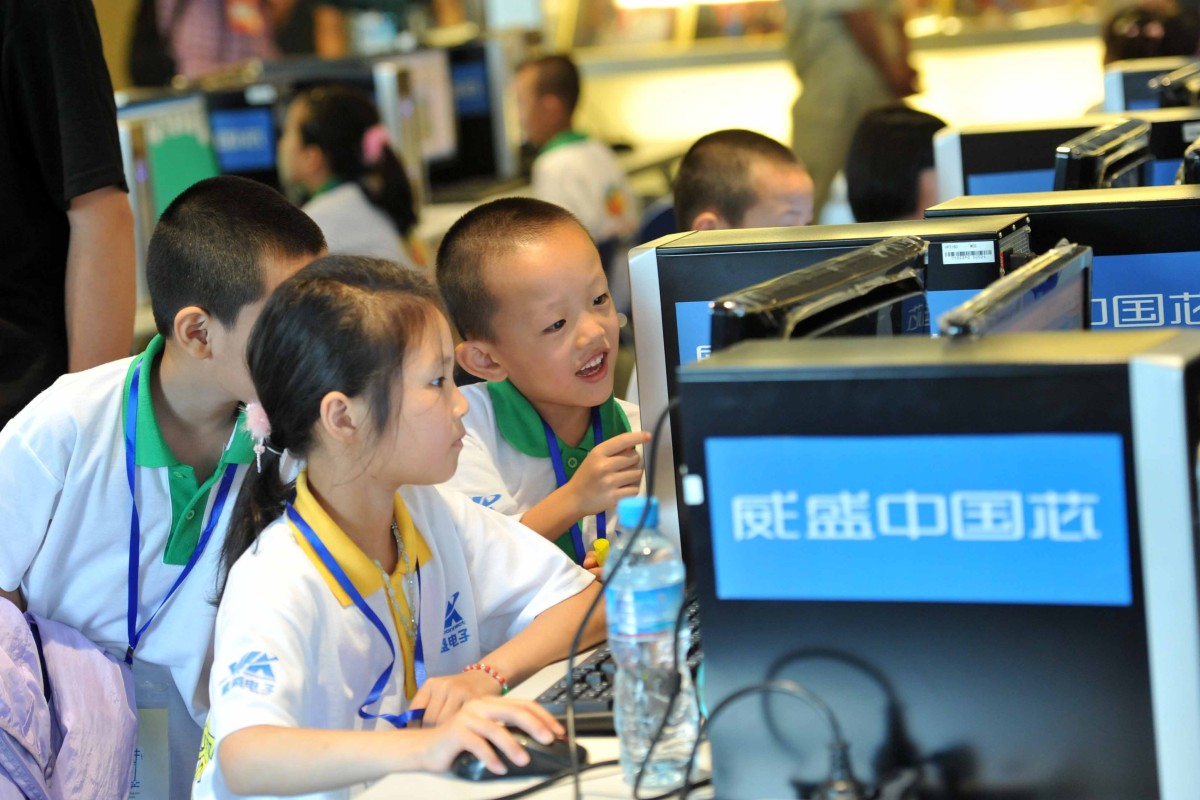
Chinese children attend a computer class in Beijing to learn how to properly use the internet. Those in poorer parts of the country lack sufficient access to the internet, as the switch to online teaching during the coronavirus outbreak in China showed. Photo: AFP
The coronavirus outbreak in mainland China highlighted the huge digital divide that exists between richer and poorer regions.
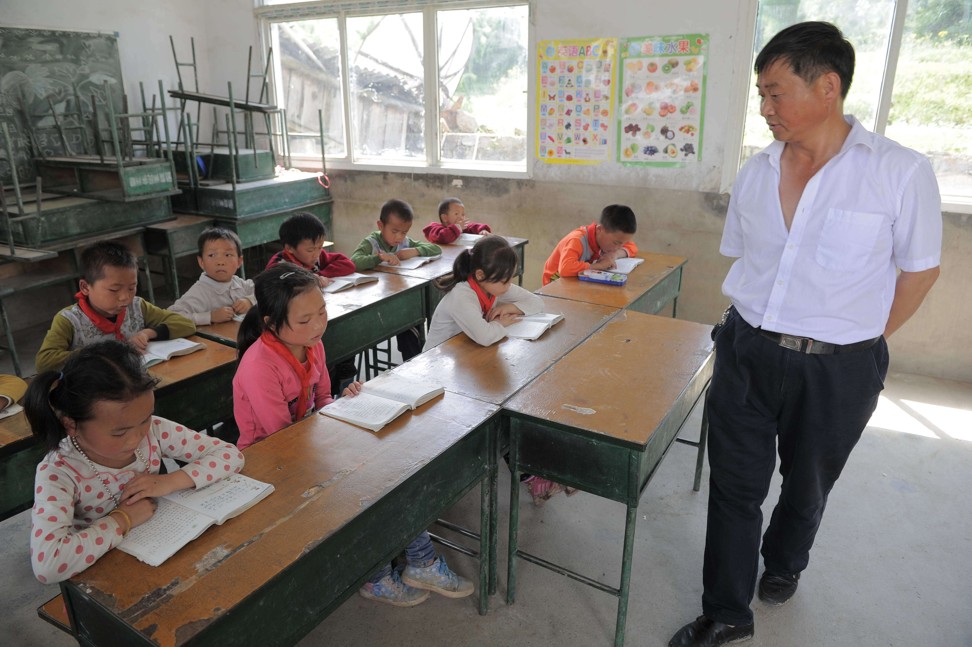
When schools shut and online learning was made compulsory, many students living in remote areas found they didn’t have sufficient internet access.
There were 1.6 billion mobile phone subscribers in China in 2019, with many people having more than one subscription, and optical fibre and 4G covered 98 per cent of the population, according to official data.
These figures fail to show the large regional disparity between the country’s rich and poor provinces, says Jack Chan Wing-kit, associate professor of the school of government at Sun Yat-sen University in Guangzhou province.
“In poor areas, a family [often] has to share one mobile phone among all members,” says Chan, who has done extensive research on China’s social problems.
It is easier for service providers to offer blanket coverage in densely populated cities where most people live in high-rise buildings, Chan explains.
“In rural areas, people live in bungalows that are widely spread out. It is not economically efficient for phone service providers like China Mobile to install transmission stations there, which explain their spotty coverage,” he says.
While the universal social security net in China covers people including the old and disabled, access to the internet is not considered a daily necessity at the policy level. That’s unlike European countries such as Norway and Iceland, who see the internet as a basic human right and ensure their entire populations have proper access to it.
Though some wealthier coastal cities within the Pearl River Delta recently conducted local surveys to identify less-well-off households and handed out tablet computers, inland provinces in central and western China cannot afford these measures, Chan says.
The Chinese government does not encourage [the setting up of] charities – Erwin Huang, founder of WebOrganic and EdFuture
Philanthropic efforts could help address this problem, as shown by Hong Kong’s experience in tackling the digital divide.
About 900,000 kindergarten, primary and secondary students in the city have been affected by school suspensions that are likely to last until at least April 20.
While families of disadvantaged students have received support from the government through Comprehensive Social Security Assistance and other welfare schemes, many children still lack digital resources as their parents don’t see it as a priority, says Erwin Huang, founder of both WebOrganic, a charity promoting computer access to such youngsters, and education alliance EdFuture.
That has left it up to charities to make sure all students have enough resources at home for online learning, Huang says. For instance, this month EdFuture worked with local mobile service provider SmarTone to give out free phone data SIM cards lasting two months to 10,000 students.
“It’s for those who live in subdivided flats and those who have to go to McDonald’s for Wi-fi access,” says Huang, who is also associate professor of engineering at the Hong Kong University of Science and Technology.
Many students in China’s poorer regions have been left at a disadvantage by the shift to online learning. Photo: Getty Images
The Hong Kong Jockey Club also recently launched a HK$42 million (US$5.4 million) scheme to provide free mobile internet data to 100,000 underprivileged primary- and secondary-school students to help with online learning while schools are closed.
Huang says while such charities help fill gaps in the provision of digital resources in Hong Kong, a similar philanthropic culture is lacking in China.
“The Chinese government does not encourage [the setting up of] charities,” he says.
Huang initiated several digital resources projects in China after the Sichuan earthquake in 2008, but says frequent media reports of scandals involving charities such as China’s Red Cross have made it harder forNGOs to operate in the country, with the government preferring to provide social services through its own departments.
Experts to visit Beijing, Guangdong and Sichuan but no word on whether Hubei is on the itinerary
Specialists say visit must include a trip to the outbreak’s epicentre to get a full picture
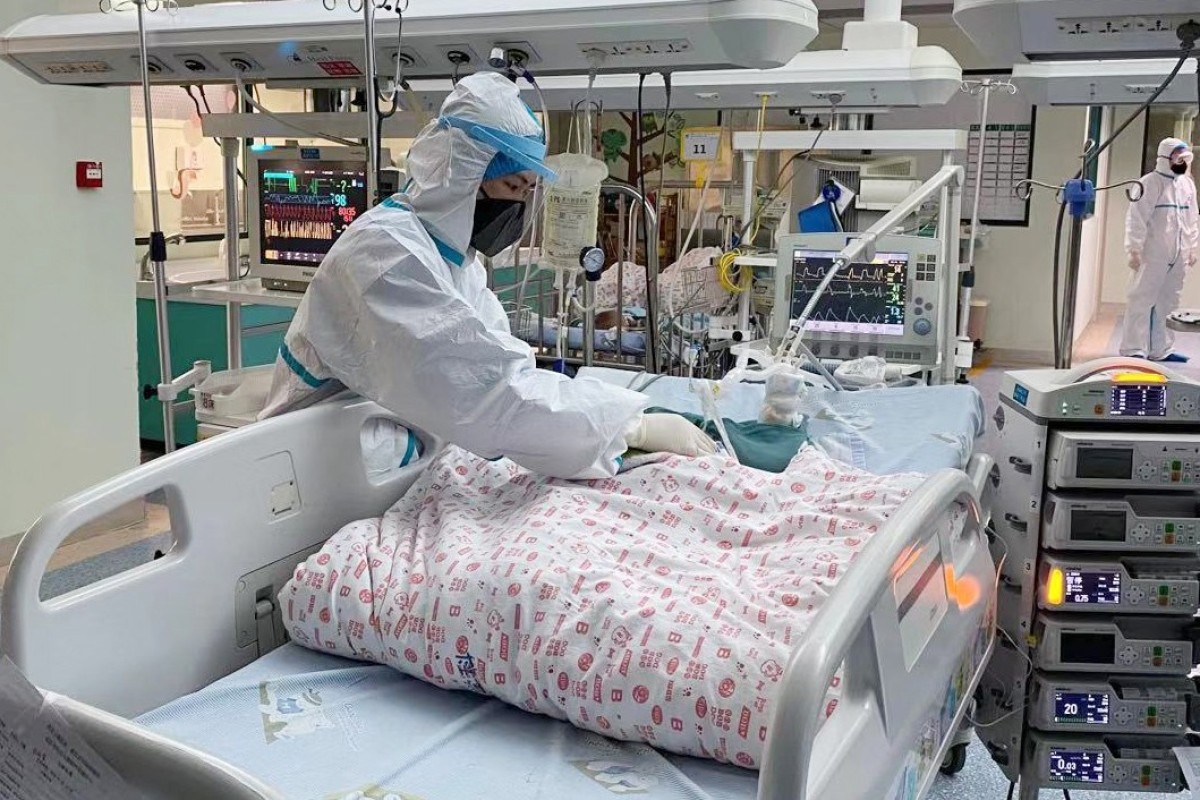
A nurse cares for a 14-month-old baby infected with the novel coronavirus in an ICU isolation ward of Wuhan Children’s Hospital in Wuhan, at the epicentre of the outbreak. Photo: Xinhua
A team of medical experts from the World Health Organisation (WHO), including specialists from the US, will visit Beijing and the Chinese provinces of Guangdong and Sichuan from Monday to assess the country’s efforts to contain the spread of a deadly coronavirus, according to the Chinese foreign ministry.
The death toll from the coronavirus had risen to 1,770 on mainland China as of Sunday, infecting 70,548 people, including more than 1,700 medical workers. Most of those confirmed with the disease, now known as Covid-19, are in Wuhan.
On Monday, the Ministry of Foreign Affairs said the WHO delegation would include Americans, but gave no further details.
The announcement came as a commentary in Communist Party mouthpiece People’s Daily accused Washington of dragging its feet on a funding pledge to help with the epidemic, saying it had a “dark mentality and taken dangerous action” during the outbreak.
WHO director general Tedros Adhanom Ghebreyesus said on Friday that the mission to China included 12 international medical specialists, and they would, with 12 Chinese experts, learn more about the transmission of the virus and the effectiveness of the measures in a bid to work out the next containment steps for China and the world.
An advance team of WHO medical experts arrived in Beijing last Monday, led by Canadian emergency expert Bruce Aylward, Tedros said.
China’s National Health Commission (NHC) said all of the delegation’s members arrived in Beijing over the weekend, and held talks with Chinese medical experts, public health officials and other government departments.
They exchanged views on virus containment, wildlife management and vaccine development, the NHC said.
Experts said the international team would be left with an “incomplete picture” of the outbreak if it did not go to Wuhan or Hubei.
“Unfortunately, this feeds into a narrative that China is trying to hide the true nature of the outbreak, so it would seem to be shortsighted and counterproductive to China’s efforts to say to the world that it is doing everything it can to contain this outbreak,” said Adam Kamradt-Scott, a specialist in global health security and international relations at the University of Sydney.
“We have seen in the past when we have external teams, they are often able to identify areas for improvement or to make recommendations for measures that national authorities may not have thought of – we’ve seen that through other examples where external expertise can be valuable in times of crisis.”
He said any impression of a cover-up would likely further strengthen the resolve of countries that had taken strict measures, including travel bans, to keep them in place or tighten them further.
“China has got a public relations campaign that it also needs to be mindful of in engaging with the international community, so there are the actual measures that the government needs to take in order to control the outbreak, but the government also needs to be seen to be doing everything that it can,” he said.


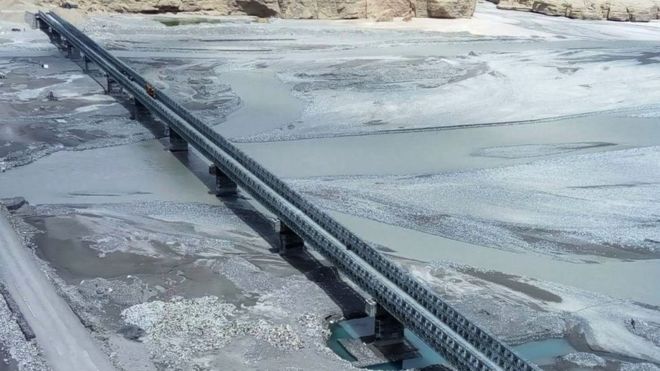 Image copyright PRESS INFORMATION BUREAU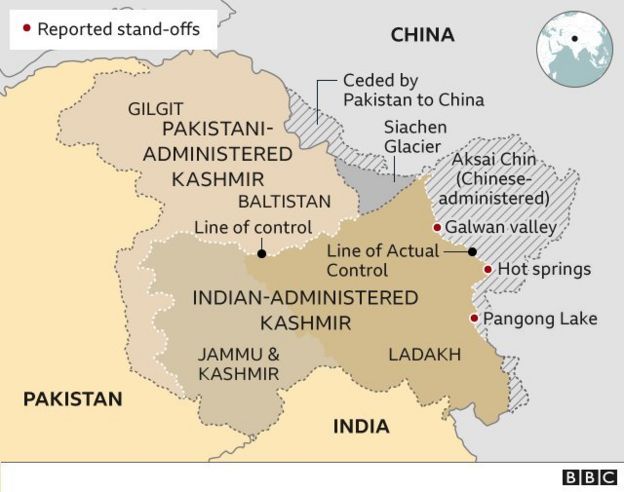
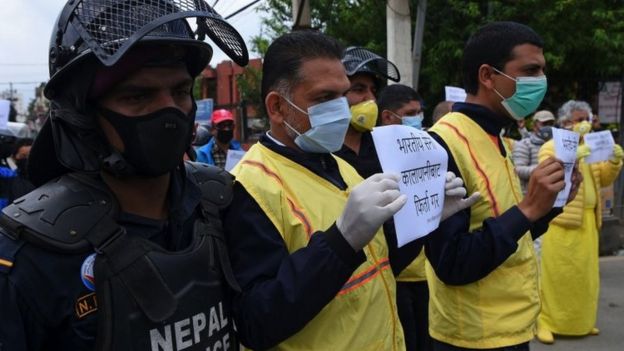 Image copyright AFP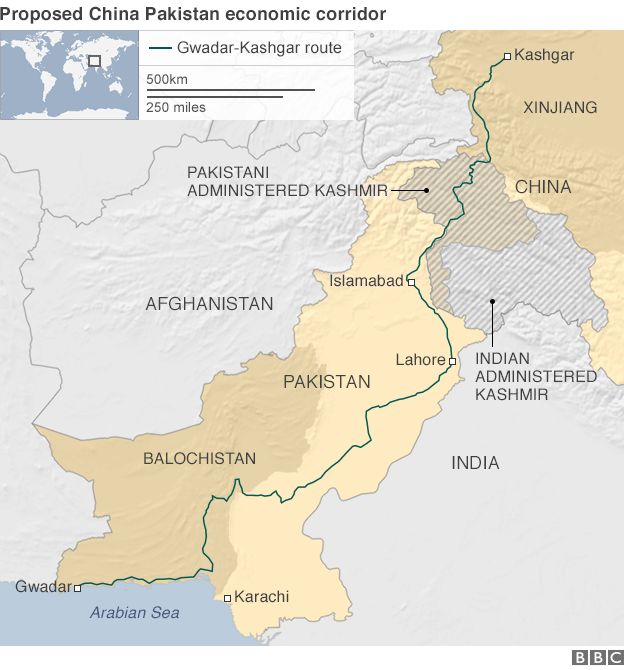
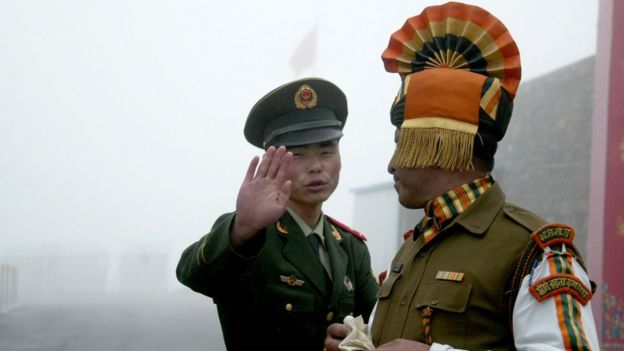 Image copyright GETTY IMAGES






 CHINDIA ALERT: You'll be living in their world, very soon