Archive for ‘countermeasures’

22/05/2020

Chinese government drops references to ‘peaceful’ reunification with Taiwan

  • The rhetoric towards the self-ruled island has hardened in Premier Li Keqiang’s annual work report
  • Beijing regards Taiwan as one of its core national interests and says it ‘resolutely opposes’ any separatist activity
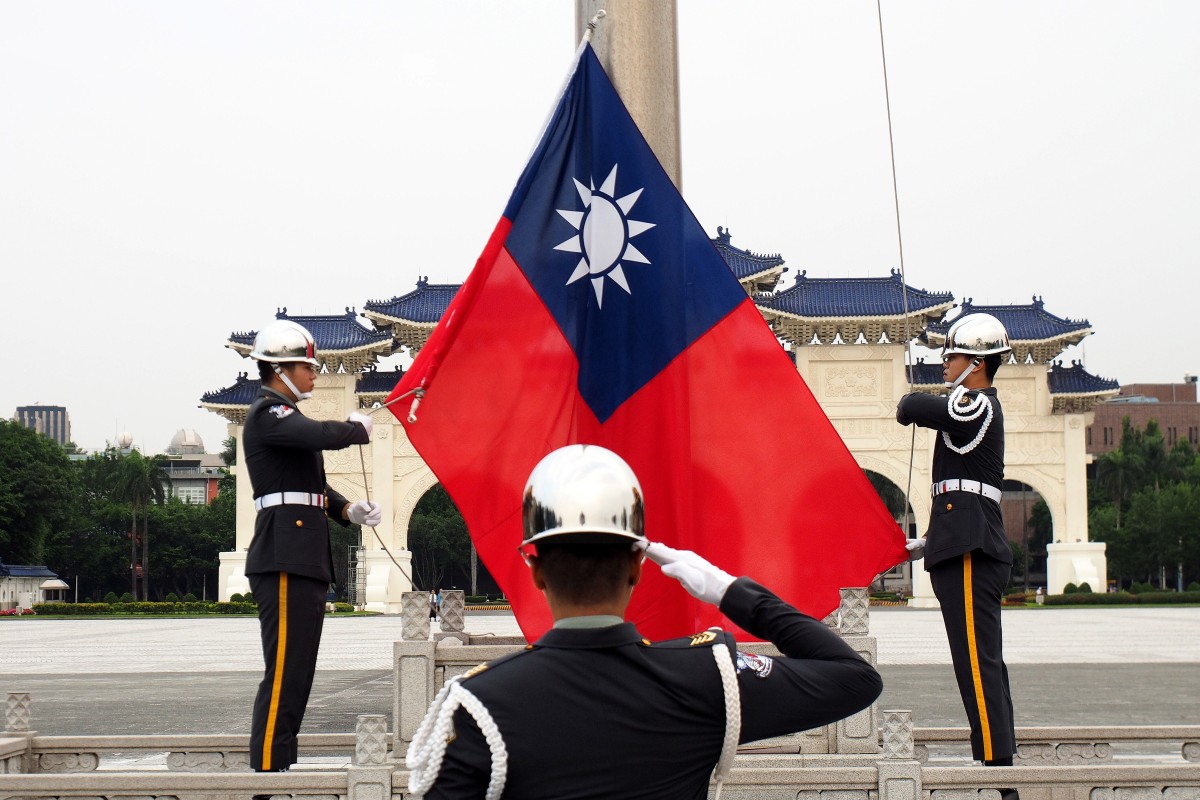
Beijing regards reunification with Taiwan as one of its core interests. Photo: EPA-EFE

Beijing has hardened its rhetoric towards Taiwan, removing references to “peaceful reunification”, in the government’s annual work report.

Observers said the change reflected the stronger stance Beijing would adopt in tackling the Taiwan issue, which it regards as one of its key national interests.

The past six work reports since President Xi Jinping took power in 2013 stressed peaceful reunification and the 1992 consensus – under which both sides tacitly agree there is only one China, but have different interpretations on what this means.

But the latest report from Premier Li Keqiang took a different tone, saying: “We will adhere to the major principles and policies on work related to Taiwan and resolutely oppose and deter any separatist activities seeking ‘Taiwan independence’.”

US to sell US$180 million worth of submarine-launched torpedoes to Taiwan

21 May 2020

“We will improve institutional arrangements, policies, and measures to encourage exchanges and cooperation between the two sides of the Taiwan Strait, further cross-strait integrated development, and protect the well-being of our compatriots in Taiwan,” the report said.

“We will encourage them to join us in opposing ‘Taiwan independence’ and promoting China’s reunification.

“With these efforts, we can surely create a beautiful future for the rejuvenation of the Chinese nation,” it said, dropping a clause that described the process as “peaceful”.

The 1992 consensus allows leeway for both parties to negotiate an agreement, but President Tsai Ing-wen has said the island would never accept it as the basis for cross-strait relations.

Taiwan’s Mainland Affairs Council said on Friday that the “one country, two systems” framework, touted by Beijing as a political basis for unification, had harmed cross-strait relations. It called for the two sides to work together to resolve their differences.

Tang Shao-cheng, an international relations specialist at Taiwan’s National Chengchi University, said the change in wording and tone of the Taiwan section of the work report could be seen as a warning to Tsai’s independence-leaning Democratic Progressive Party (DPP).

“Not mentioning ‘peace’ suggests Beijing is considering unification both by peaceful means and by force,” Tang said.

President Xi Jinping and Premier Li Keqiang at the National People’s Congress opening session on Friday. Photo: Kyodo
Derek Grossman, an analyst from US-based think tank Rand Corporation, said Beijing would continue to put pressure on the island using diplomatic, military, economic and psychological means.

“Beijing will continue to send military aircraft near the island … [it] could decide to end the Economic Cooperation Framework Agreement which has remained active in spite of Tsai’s election in 2016; Beijing could steal one or more diplomatic partners from Taipei. I would expect these types of actions to be on the table,” Grossman said.

How would mainland China attack Taiwan? A video outlines one scenario

22 May 2020

Sun Yun, director of the China programme at the Stimson Centre think tank in the US, said Beijing faced a dilemma on whether to continue economic integration with Taiwan because that had not had the political effect it wanted.

“The obstacles to unification are not economic, but political. Taiwan is unwilling to pursue unification with an authoritarian mainland. To solve that issue, presumably the mainland could pursue political reform. But in reality, the Chinese Communist Party is unwilling,” she said.

“If the economic and political approach doesn’t work, what’s left is the military approach. But with US intervention, the mainland will not prevail.”

Beijing recently warned Washington it would respond after US Secretary of State

Mike Pompeo congratulated Tsai on her second term of office

, and demanded that the US stop selling arms to the island.
Joshua Eisenman, a professor from the University of Notre Dame in Indiana, said Beijing was running out of countermeasures, since its actions had only hardened attitudes on the island and enhanced the sense of Taiwanese identity.
“As I see it, all that remains is for the [Chinese Communist Party[ to sit down and talk to the DPP without preconditions and establish a modus vivendi for cross-strait relations,” he said.
Source: SCMP
15/04/2020

Coronavirus: China launches study into asymptomatic cases and shared immunity

  • Residents of nine regions, including Wuhan, Beijing and Shanghai, to be sampled using both nucleic acid and antibody tests, state media reports
  • Research ‘very important as it will help us to direct our countermeasures in the future’, molecular virologist says
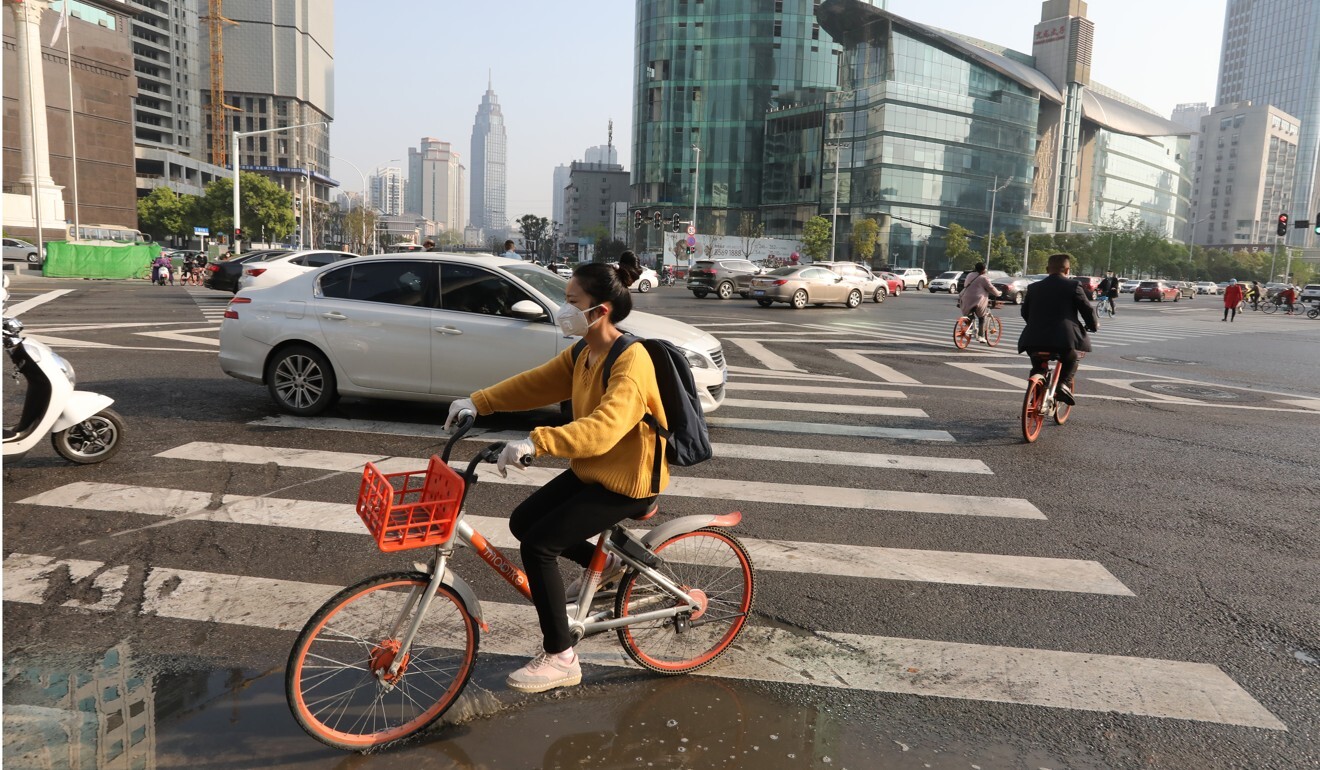
China is using dual testing to determine how many people have been infected with Covid-19 but recovered without showing symptoms. Photo: AP
China has begun a major survey to determine how many people might have been infected with the coronavirus and then recovered without ever showing symptoms, while also assessing immunity levels within different communities, state media reported.

The research will be conducted in six provinces, including Hubei which was the focus of the initial outbreak, as well as Beijing, Shanghai and Chongqing.

Wuhan

, the capital of Hubei and home to about 60 per cent of all infections reported in mainland China, is taking the lead in the study, which involves giving both nucleic acid and antibody tests to 11,000 of its 11 million residents, state news agency Xinhua reported on Wednesday.

Health workers collected throat swabs and blood samples from about 900 people randomly selected from eight subdistricts of the city on Tuesday, Ding Gangqiang, head of the Wuhan epidemiological survey team, was quoted as saying.

“The purpose is to learn about the immunity level in communities and provide scientific support on how we should adjust our disease control strategies,” he said.

Professor Lu Hongzhou, a specialist in infectious diseases who heads the Shanghai Public Health Clinical Centre where Covid-19 patients are being treated, said he supported the research though the collection of samples had yet to start in the city.

“We haven’t received notification from the top [to start],” he said. “The number of infections [in Shanghai] is not very big, but I think we’d better do this so as to have an idea of the scale of asymptomatic carriers.”

Professor Jin Dong-yan, a molecular virologist at the Li Ka Shing Faculty of Medicine at the University of Hong Kong, said that the use of both nucleic acid and antibody tests would enable scientists to determine those people who had been infected but recovered without medical aid and without showing symptoms.

The study into asymptomatic infections got under way in Wuhan in Tuesday. Photo: Simon Song
If a person tested positive in a nucleic acid test, it meant they were carrying the virus, and if positive in an antibodies test, it meant that they had contracted the virus and had recovered, he told the South China Morning Post.

“This is very important as it will help us to direct our countermeasures in the future,” Jin said.

“If we find, say 60 per cent, of the population has acquired immunity, then lockdowns will no longer be meaningful. If it turns out that there are many people with a high viral load but without symptoms, then we should be on high alert and take stricter measures.

“For people in Hubei, the tests can also save them from discrimination when they get back to work – those who prove to have developed immunity are very unlikely to get infected [again] for at least a year,” he said.

Wuhan hotel owners say they’re on the brink of going bust

15 Apr 2020
Beijing began adding asymptomatic cases

to the nation’s daily infections tally at the start of April amid concerns that such people could trigger a second outbreak once the widespread lockdowns in cities like Wuhan and elsewhere were lifted.

China reported 103 new coronavirus infections on Wednesday, of which 39 were imported. Of the total, 57 people had no symptoms, including three of the imported cases.

Since the outbreak began, China has reported 82,295 cases, of which 95 per cent have recovered and been discharged from hospital.

Source: SCMP

19/08/2019

Beijing warns US of ‘consequences’ after Donald Trump approves US$8 billion sale of fighter jets to Taiwan

  • President says sale of Lockheed Martin F-16Vs will go ahead if ratified by Senate
  • Military experts have said the jets would bolster Taiwan’s ability to counter the threat of air strikes from mainland China
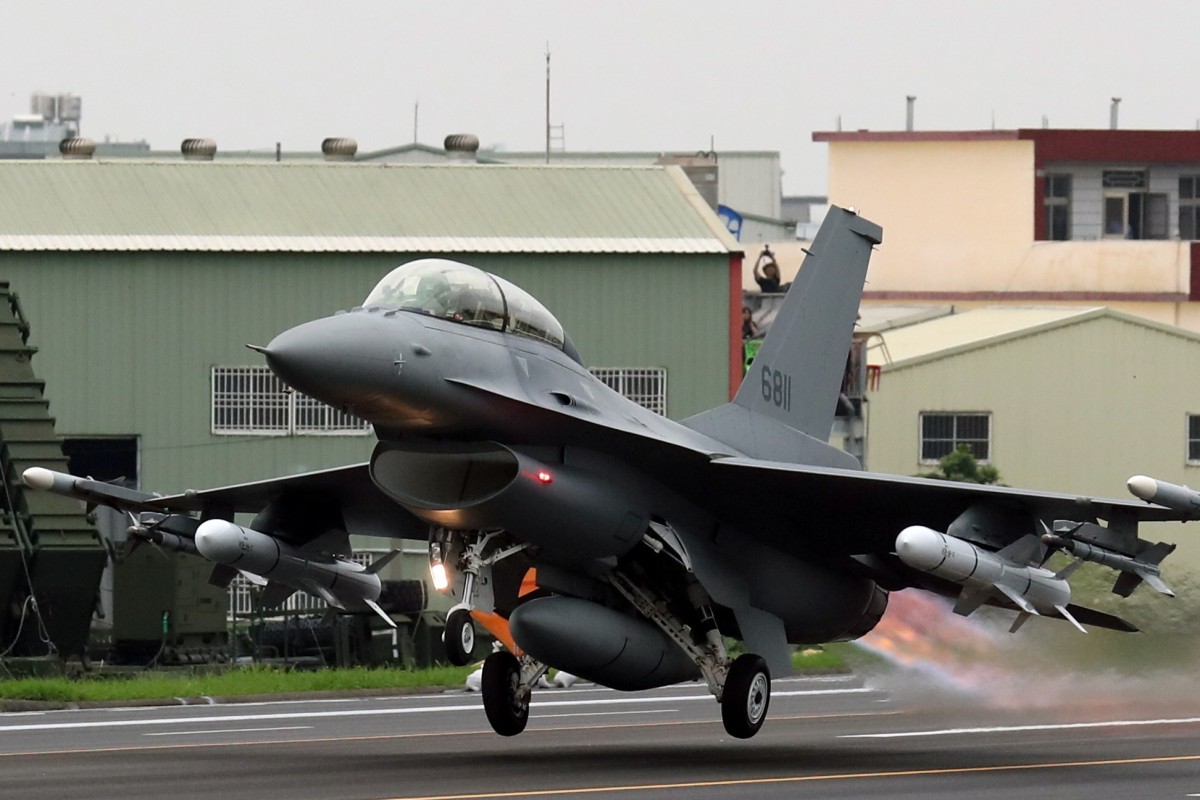
A Taiwan Air Force F-16V takes off during a drill in May. Photo: EPA-EFE
Beijing warned it would take countermeasures against Washington for selling 66 fighter jets to Taiwan after US President Donald Trump said he had approved the US$8 billion deal.
Chinese foreign ministry spokesman Geng Shuang on Monday said the sale of Lockheed Martin F-16V jets was a serious violation of the one-China principle.
“China has made numerous solemn representations to the US on the sale of F-16V jets to Taiwan,” Geng said in a press conference, adding that the United States should halt the sale.
“The US has to bear all the consequences triggered by the sale,” Geng said. “China will take necessary measures to defend its self-interest based on the development of the situation.”

Geng gave no details of the action China would take. In July, Beijing said it would impose sanctions on US firms involved in a deal to sell US$2.2 billion worth of tanks, missiles and related equipment to Taiwan, describing it as harmful to China’s sovereignty and national security.

Liang Yunxiang, an international relations expert from Peking University, said one countermeasure Beijing might use was to suspend military-to-military exchanges with the United States.

“And Beijing might also try to increase pressure on the island, including by conducting more military drills near or in the Taiwan Strait,” Liang saiOn Sunday, Trump said he had approved the proposed deal for the jets – a move set to significantly boost the self-ruled island’s defences against mainland China.

‘Fighter jets trump battle tanks’ in Taiwan’s US arms priorities

Speaking to reporters in New Jersey on Sunday, Trump said that the sale would need to be ratified by the US Senate but that he had approved it.

“It’s US$8 billion. It’s a lot of money. That’s a lot of jobs. And we know they’re going to use these F-16s responsibly,” he said.

If the deal is approved by Congress, it will be the first time since 1992 that the United States has sold F-16s to Taiwan. Previous requests were rejected by the Barack Obama administration, which instead offered to upgrade Taiwan’s existing fleet of about 140 F-16A/B Block 20 aircraft.

During months of slow progress since  the sale  was outlined earlier this year, some lawmakers and defence experts had suggested that Trump was using the proposed deal as leverage to secure a better agreement for the US in talks to resolve its year-long

trade war with China.
Taiwan’s presidential office and foreign ministry lauded Trump’s announcement, calling it a strong sign of the US’ commitment to its security and saying the deal would help to maintain regional stability.
“The new warplanes will greatly strengthen our anti-air defence capability and we will continue to be devoted to safeguarding peace and stability across the Taiwan Strait and in the region, thereby maintaining freedom and democracy in Taiwan,” presidential office spokesman Alex Huang said.
‘Fighter jets trump battle tanks’ in Taiwan’s US arms priorities
In a statement, Taiwan’s foreign ministry said persistent war games by the mainland around the island and in the East and South China Sea had not only sabotaged peace and stability in the region but also triggered grave concern from China’s neighbours.
It described Trump’s approval of the deal as a “strong indicator of the close and growing security partnership between the US and Taiwan”.
Opinion: Care needed over Taiwan arms deal
Military experts have said the new variant of the F-16, the Viper – which can carry a wide range of short and medium-range air-to-air missiles – is more able to counter the threat of an air strike from mainland China’s fourth-generation aircraft, such as the Su-35 and J-10.
Last week, Republican Senator Marco Rubio said the US administration had  made progress in advancing the deal, which he called “an important step in support of Taiwan’s self-defence efforts”.
In July, the US  also approved arms sales to Taiwan worth US$2.2 billion, including 108 M1A2T Abrams tanks and 250 Stinger portable surface-to-air missiles.
Beijing strongly opposes arms deals with Taiwan, which it considers a renegade province, but the US is obliged to help defend the self-governing island under the terms of its Taiwan Relations Act, effective since 1979.
Source: SCMP
10/08/2019

Collapse of intelligence pact between US, South Korea and Japan ‘will be symbolic victory for China’

  • Three-year-old security treaty between US and two key allies under threat as tensions between Seoul and Tokyo continue to escalate
  • End of General Security of Military Information Agreement risks undermining Washington’s influence in the region
South Korean protesters hold signs saying “No Abe” during a rally demanding the abolition of the General Security of Military Information Agreement. Photo: AP
The possible termination of a military information-sharing pact between South Korea and Japan would be a symbolic victory for China, a security analyst has warned.
Recent tension between the two countries recently threatened to spill over into the sphere of intelligence after Seoul signalled that it may pull out of the General Security of Military Information Agreement (GSOMIA) pact.

The agreement signed in 2016 enables three-way intelligence gathering between the US and its two allies and provides a crucial framework for coping with North Korea’s nuclear and missile threats.

But the escalating trade dispute between Seoul and Tokyo, prompted by a dispute about Japan’s colonial legacy, has left the future of the deal in jeopardy as the annual deadline for its renewal looms.

Japan approves first hi-tech exports to South Korea since start of ‘trade war’ – but with a warning

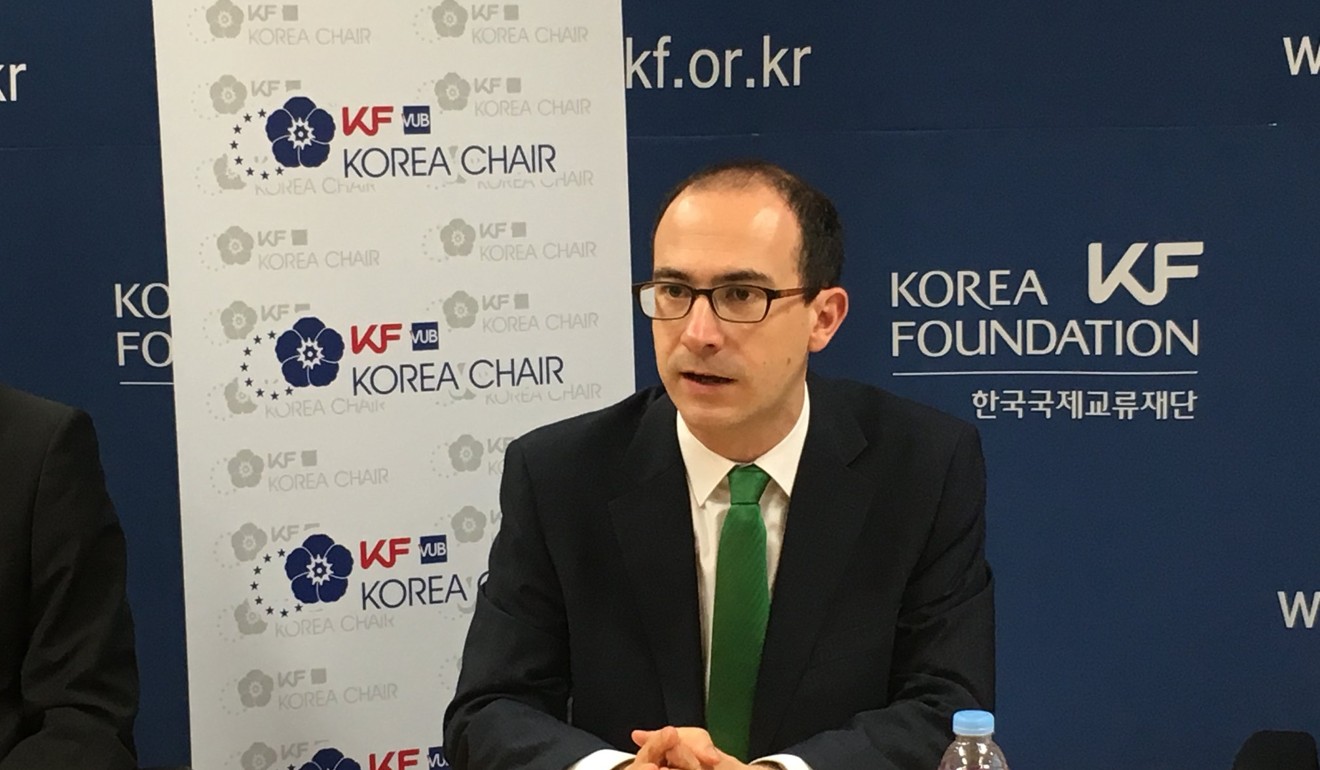
Ramon Pacheco Pardo, the first Korea chair at the Institute for European Studies at Vrije Universiteit Brussel in Belgium, said scrapping the pact would help strengthen China’s influence in the Asia-Pacific region at the expense of the US.

“It is undeniable that termination of GSOMIA would dent the US-South Korea-Japan alliance. The alliance system in northeast Asia will be weaker, strengthening China in relative terms in the process. “This could embolden China and Russia to strengthen their military cooperation in northeast Asia, said Pardo, a member of the non-governmental EU Council for Security Cooperation in the Asia-Pacific.

“Ending GSOMIA would signal that South Korea and Japan are not ready to follow Washington’s lead in the way the latter would like, given the political capital that successive US administrations spent in convincing both countries to share intelligence.”

Ramon Pacheco Pardo said the collapse of the pact would have a largely symbolic impact on China. Photo: Facebook

But Pardo also stressed that the intelligence alliance was not directly targeting China.

“While it is true that GSOMIA serves to connect the weakest link of the US-South Korea-Japan security triangle, ultimately South Korea’s security posture and the capabilities of each country independently mean that it is difficult to argue that the agreement is a concerted effort to contain China.”

“After all, Beijing does not share any significant information on North Korea’s nuclear and missile programmes with South Korea, Japan or the US.

“This is not going to change any time soon. So the good news for China would be symbolic rather than substantial.”

US missiles, jittery neighbours and South Korea’s big security dilemma

Beijing warned on Tuesday that it would take “countermeasures” if the US deployed ground-based missiles in either Japan or South Korea, and Pardo argued that scrapping the intelligence-sharing pact would expose the weaknesses in their co-ordinated approach towards China.

The security deal is automatically renewed every year unless one party decides to pull out. To do so, it must notify the others 90 days before its expiry – a deadline that falls on August 23.

The trade row was sparked by a recent South Korean court ruling that Japanese should compensate individual victims of wartime forced labour. Tokyo believes it settled all necessary compensation under a treaty signed in 1965, but Seoul believes that individual victims’ right to file a claim has not expired.

Relations between South Korea and Japan have deteriorated following a court ruling over forced labour in the wartime era. Photo: Shutterstock

Last week Japan said it would remove South Korea from its “white list” of countries with preferential trade status. Seoul has threatened to respond in kind, but also warned that it may reconsider whether to renew the intelligence-sharing pact.

Both the US and Japan have said they want the arrangement to continue, but Pardo said the effect of the termination would remain largely symbolic.

South Korea has already been investing in its own satellite and anti-submarine programmes to monitor the North’s activities, while Japan has also been developing its own intelligence programmes.

“This shows that neither South Korea nor Japan wants to rely on each other or third parties, namely the US, when it comes to monitoring North Korea’s military activities,” Pardo said.

But he argued that this behaviour already indicated that the alliance was weakening and suggested that terminating the treaty would increase China’s room for manoeuvre.

South Korea buys helicopters worth US$800 million after Trump seeks contribution for US presence

Since the 1990s successive US administrations have pushed for intelligence-sharing arrangements with Japan and South Korea to help build a framework to check Chinese and Russian military expansion in the Pacific.

“Beijing and Moscow are clearly moving in the direction of closer cooperation anyway. GSOMIA or not, military cooperation will continue … as long as Xi Jinping and Vladimir Putin lead each country and most probably even beyond then,” Pardo said.

China and Russia flexed their muscles in the region last month as the trade dispute between the two key allies intensified.

Russian and Chinese long-range military aircraft conducted their first-ever joint air patrol over the Sea of Japan – also known as the East Sea – and the East China Sea.

“The East Asian security landscape would be reshaped insofar that China, North Korea and Russia would see that their main opponent in the region – the US – is unable to convince its two key allies, South Korea and Japan, to cooperate on a key issue,” Pardo said.

“The current dispute between South Korea and Japan will need a negotiated solution … In any case, Japan will have to learn to live with the fact that former colonisers will, from time to time, receive criticism by many of their former colonies, criticism that sometimes will escalate.

“It happens to former European colonial powers, for example, and it is only logical because the interpretation of the past is always in flux.”

Source: SCMP

12/05/2019

Chinese vice premier urges China-U.S. cooperation, vows no compromise on major principles

WASHINGTON, May 11 (Xinhua) — Chinese Vice Premier Liu He said Friday that cooperation is the only right choice for China and the United States, but China will not compromise on major issues of principle.

China-U.S. relations are of great importance, Liu said in a group interview with Chinese media after the conclusion of the 11th round of high-level economic and trade consultations between the world’s top two economies, which took place on Thursday and Friday in Washington.

Economic and trade relations serve as the ballast and propeller of the overall China-U.S. relationship, and matter not only to bilateral ties, but also to world peace and prosperity, added Liu, also a member of the Political Bureau of the Communist Party of China (CPC) Central Committee.

Cooperation is the only right choice for the two sides, but it has to be based on principles, said the vice premier, who heads the Chinese side of the China-U.S. comprehensive economic dialogue.

China, he stressed, will never make concessions on major issues of principle.

The Chinese delegation came to Washington for the latest round of talks with sincerity, and held candid and constructive exchanges with the U.S. side, Liu said, adding that the two sides agreed to continue to push forward the consultations.

China strongly opposes U.S. tariff hikes, which are harmful not only to China and the United States, but to the world at large, and China will have to take necessary countermeasures, he added.

Stressing that any agreement must be equal and mutually beneficial, Liu said that the two sides have reached important consensus on many aspects, but there remain three core concerns of China that must be addressed.

The first is to remove all the additional tariffs, he said, adding that the levy of those tariffs is the starting point of the ongoing bilateral trade dispute, and must be totally revoked if the two sides were to reach a deal.

The second is that the amount of purchases should be realistic, he said, adding that the two sides reached consensus on the volume in Argentina, and should not change it randomly.

The third is to improve the balance of the wording of the text, he said, adding that every country has its dignity, the text must be balanced, and more discussions are needed on some critical issues.

Noting that it is just normal that there have been some ups and downs in bilateral consultations since last year, Liu pointed out that it is irresponsible to casually accuse one party of “backtracking” while the two sides are still in the process of negotiation.

As for China, the vice premier said the most important thing is to focus on its own business.

China enjoys huge domestic market demand, the implementation of the supply-side reform will comprehensively boost the competitiveness of Chinese products and enterprises, and there is still ample room for fiscal and monetary policy manoeuvres, he said, adding the Chinese economic prospect is very optimistic.

Liu pointed out that it is a good thing for a major country to encounter some twists and turns in its development, as they can serve as an ability test.

Under the strong leadership of the CPC Central Committee with Xi Jinping at the core, as long as the Chinese people have firm confidence and make joint efforts, China is not afraid of any difficulties, and will certainly be able to maintain the good momentum of sustained and sound economic development, he added.

Source: Xinhua

Law of Unintended Consequences

continuously updated blog about China & India

ChiaHou's Book Reviews

continuously updated blog about China & India

What's wrong with the world; and its economy

continuously updated blog about China & India