Chindia Alert: You’ll be Living in their World Very Soon
aims to alert you to the threats and opportunities that China and India present. China and India require serious attention; case of ‘hidden dragon and crouching tiger’.
Without this attention, governments, businesses and, indeed, individuals may find themselves at a great disadvantage sooner rather than later.
The POSTs (front webpages) are mainly 'cuttings' from reliable sources, updated continuously.
The PAGEs (see Tabs, above) attempt to make the information more meaningful by putting some structure to the information we have researched and assembled since 2006.
The United States suffered the most from the pandemic, with 1,305,199 cases and a death toll of 78,469.
NEW YORK, May 9 (Xinhua) — Global confirmed COVID-19 cases topped 4 million on Saturday, reaching 4,004,224 as of 4:32 p.m. (2032 GMT), according to the Center for Systems Science and Engineering at Johns Hopkins University.
According to the CSSE, a total of 277,860 people worldwide have died of the disease.
Police officers walk past closed retail stores along Broadway in New York, the United States, on May 8, 2020. (Photo by Michael Nagle/Xinhua)
The United States suffered the most from the pandemic, with 1,305,199 cases and a death toll of 78,469. Countries with over 150,000 cases included Spain, Italy, the United Kingdom, Russia, France and Germany, according to the CSSE data.
A customer buys products at a time-honoredfood store in east China’s Shanghai Municipality, April 26, 2020. (Xinhua/Wang Xiang)
Twelve cases were domestically transmitted, with 11 reported in Jilin Province and the other one in Hubei Province.
BEIJING, May 10 (Xinhua) — Chinese health authority said Sunday that it received report of 14 new confirmed COVID-19 cases on the Chinese mainland Saturday, of which two were imported cases reported in Shanghai.
Twelve cases were domestically transmitted, with 11 reported in Jilin Province and the other one in Hubei Province, the National Health Commission said in a daily report.
One new suspected case imported from abroad was reported in the Inner Mongolia Autonomous Region.
No deaths were reported Saturday on the mainland, according to the commission.
On Saturday, 74 people were discharged from hospitals after recovery, while the number of severe cases decreased by two to 13.
As of Saturday, the overall confirmed cases on the mainland had reached 82,901, including 148 patients who were still being treated, and 78,120 people who had been discharged after recovery.
Altogether 4,633 people had died of the disease, the commission said.
By Saturday, the mainland had reported a total of 1,683 imported cases. Of the cases, 1,568 had been discharged from hospitals after recovery, and 115 remained hospitalized with three in severe conditions. No deaths from the imported cases had been reported.
The commission said four people, all from overseas, were still suspected of being infected with the virus.
According to the commission, 5,840 close contacts were still under medical observation after 427 people were discharged from medical observation Saturday.
Also on Saturday, 20 new asymptomatic cases were reported on the mainland. One case was re-categorized as a confirmed case, and 61 asymptomatic cases, including 16 from overseas, were discharged from medical observation, according to the commission.
The commission said 794 asymptomatic cases, including 48 from overseas, were still under medical observation.
By Saturday, 1,044 confirmed cases including four deaths had been reported in the Hong Kong Special Administrative Region (SAR), 45 confirmed cases in the Macao SAR, and 440 in Taiwan including six deaths.
A total of 967 patients in Hong Kong, 40 in Macao, and 361 in Taiwan had been discharged from hospitals after recovery.
A COVID-19 patient is wheeled out from an EHPAD (Housing Establishment for Dependant Elderly People) in Epinay sur Seine near Paris, France, on April 22, 2020. (Photo by Aurelien Morissard/Xinhua)
The first suspected cases of COVID-19 infection in France could date back to Nov. 16 last year, a hospital in eastern France said. Before this announcement, the first COVID-19 infection cases officially recorded in France were on Jan. 24, 2020.
PARIS, May 8 (Xinhua) — The first suspected cases of COVID-19 infection in France could date back to Nov. 16 last year, some nine weeks earlier than the official record of the country’s first confirmed cases, a hospital in eastern France said Thursday.
“Doctor Michel Schmitt, head of the medical imaging department at the Albert Schweitzer hospital in Colmar, has reviewed 2,456 chest scans performed between Nov. 1 and April 30, for all reasons (cardiac, pulmonary, traumatic, tumor pathologies),” said the hospital in a press release.
A suspected patient of COVID-19 is transferred to an EHPAD in Epinay sur Seine near Paris, France, April 22, 2020. (Photo by Aurelien Morissard/Xinhua)
The typical scans compatible with COVID-19 infection have been also reviewed in a second then a third reading by two other experienced radiologists. According to this retrospective study, the first cases of contamination with COVID-19 were thus identified from Nov. 16 in this hospital, it said.
Albert Schweitzer hospital added that it has launched a collaboration with France’s National Center for Scientific Research to start an epidemiological exploitation of these results.
Before this announcement, the first case of COVID-19 infection in east France was officially identified in late February. It involved a 36-year-old man who returned from a trip to Lombardy, then hotspot of the epidemic in Italy.
A giant mask is seen on a residential building in Saint-Mande, near Paris, France, on May 2, 2020. (Photo by Aurelien Morissard/Xinhua)
The first COVID-19 infection cases officially recorded in France were on Jan. 24, 2020 relating to individuals who had recently arrived or returned from China.
France on Thursday registered 178 new deaths caused by the novel coronavirus, taking the tally to 25,987. As hospitalization data continued to slow, the government said on Thursday that the country would start to unwind the nearly-two-month anti-coronavirus lockdown from Monday.
City at centre of outbreak finally able to declare itself clear of disease after months in lockdown and thousands of deaths
Risk of infection remains, however, with some patients testing positive for coronavirus that causes disease without showing symptoms
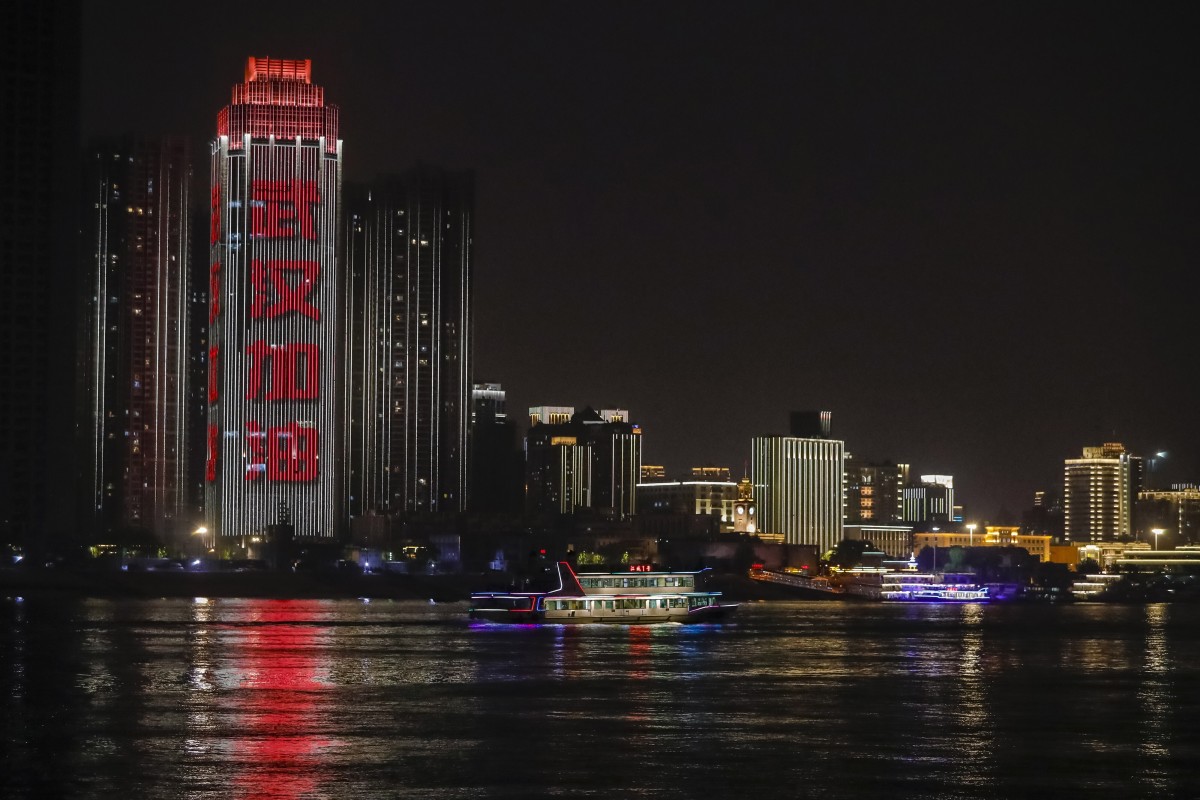
Ferries and other public transport services resumed in Wuhan last week. Photo: Xinhua
The city of Wuhan, the initial epicentre of the coronavirus pandemic, no longer has any Covid-19 patients in hospital after the last 12 were discharged on Sunday.
Their release ended a four-month nightmare for the city, where the disease was first detected in December. The number of patients being treated for Covid-19, the disease caused by a new coronavirus, peaked on February 18 at 38,020 – nearly 10,000 of whom were in severe or critical condition.
“With the joint efforts of Wuhan and the national medical aid given to Hubei province, all cases of Covid-19 in Wuhan were cleared as of April 26,” Mi Feng, a spokesman for the National Health Commission said on Sunday afternoon.
The announcement came only one day after the city discharged the last patient who had been in a severe condition. That patient also was the last severe case in Hubei province.
The last patient discharged from Wuhan Chest Hospital, a 77-year-old man surnamed Ding, twice tested negative for Sars-CoV-2, the virus that causes Covid-19, and was released at noon on Sunday.
“I missed my family so much!” Ding told Changjing Daily.
Another unidentified patient exclaimed as he left the hospital: “The air outside is so fresh! The weather is so good today!”
Wuhan faced a long journey to bring its patient count down to zero.
The city of 11 million, the capital of Hubei province and a transport hub for central China, was put under a strict lockdown on January 23 that barred anyone from entering or exiting the city without official approval for 76 days until it was officially lifted on April 8.
Coronavirus: Wuhan, Los Angeles officials discuss getting back to work after lockdown
22 Apr 2020
Residents were ordered to stay in their apartments as the city stopped public transport and banned private cars from city streets. As the epidemic worsened, more than 42,000 medical staff from across the country were sent to the city and to Hubei province to help ease the burden on the local health care system.
Wuhan was the hardest hit city in China, accounting for 50,333 of the 82,827 locally transmitted Covid-19 cases recorded in China. More than 4,600 died in the country from the disease.
On March 13, the city reported for the first time that there were no new suspected cases of the infection, and five days later there were no confirmed cases.
The number of discharged patients bottomed out at 39.1 per cent at the end of February, gradually climbing to 92.2 per cent by last Thursday.
“Having the patients in the hospital cleared on April 26 marks a major achievement for the city’s Covid-19 treatment,” the Wuhan Health Commission said in a statement.
However, having no severe cases in hospital does not mean all the discharged patients will require no further treatment as they may still need further care.
“Clearing all the severe cases marks a decisive victory for the battle to safeguard Wuhan,” health minister Ma Xiaowei told state broadcaster China Central Television on Saturday.
“Some patients who have other conditions are being treated in specialised hospitals. It has been properly arranged.”
Coronavirus: Chinese writer hit by nationalist backlash over diary about Wuhan lockdown
18 Apr 2020
Ten patients aged between 42 and 85 who have been declared coronavirus-free are still in intensive care at the city’s Tongji Hospital where they are being treated for kidney problems and other complications arising from Covid-19. Some still need ventilators to help them breathe.
These 10 patients are under 24-hour care, with 190 nurses on four-hour rotations. There are other patients in a similar condition in two other hospitals in Wuhan, according to the Hubei Broadcasting and Television Network.
However, the discharge of the last batch of Covid-19 patients does not mean that the risk of infection is gone.
The city reported 20 new cases of people testing positive for Sars-CoV-2, the official name for the coronavirus that causes the disease, but who do not yet show symptoms.
There are 535 such carriers under medical observation. Past data shows some of these asymptomatic carriers will develop symptoms, and so will be counted as Covid-19 patients under China’s diagnosis and treatment plan.
China’s coronavirus infection curve has flattened out with about 694 imported cases of Covid-19 on top of about 800 locally transmitted ones now under treatment.
The national health commission spokesman warned that people still need to be on high alert as the virus is continuing to spread around the globe, with no sign yet of a slowdown.
“[We] must not drop our guard and loosen up. [We] must discover cases in time and deal with them quickly,” Mi said, citing the continued pressure from cases imported by people returning from overseas.
“The next step will be to implement the requirements of the central government and continue to guard against imported cases and a rebound of domestic transmitted cases.”
BEIJING, March 31 (Xinhua) — Chinese health authority said Tuesday that no new domestically transmitted cases of the novel coronavirus disease (COVID-19) were reported on the Chinese mainland on Monday.
The National Health Commission received reports of 48 new confirmed cases on the mainland on Monday, all of which were imported.
By the end of Monday, 771 imported cases had been reported, said the commission.
Also on Monday, one death which was in Hubei Province, and 44 new suspected cases, all imported ones, were reported on the mainland.
On Monday, 282 people were discharged from hospitals after recovery, while the number of severe cases decreased by 105 to 528.
The overall confirmed cases on the mainland had reached 81,518 by Monday, including 2,161 patients who were still being treated, 76,052 patients who had been discharged after recovery, and 3,305 people who died of the disease.
The commission said that 183 people were still suspected of being infected with the virus, adding that 19,853 close contacts were still under medical observation. On Monday, 1,199 people were discharged from medical observation.
By Monday, 682 confirmed cases including four deaths had been reported in the Hong Kong Special Administrative Region (SAR), 39 confirmed cases in the Macao SAR, and 306 in Taiwan including five deaths.
A total of 124 patients in Hong Kong, 10 in Macao and 39 in Taiwan had been discharged from hospitals after recovery.
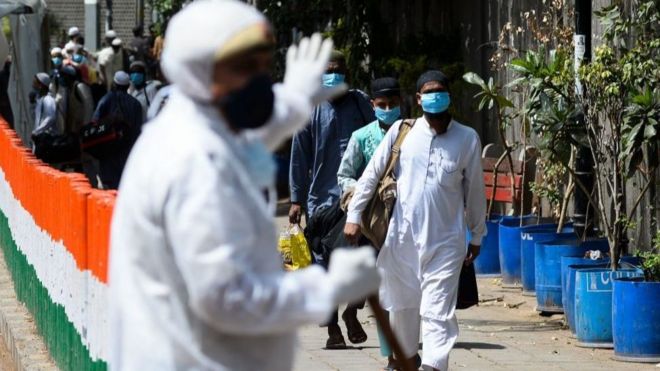
Image copyright GETTY IMAGESImage caption Hundreds have been leaving the mosque to be monitored or tested for the virus
Officials across India are searching for hundreds of people who attended a religious event in the capital that has set off several Covid-19 clusters.
At least six regions have reported cases that can be directly traced to the days-long congregation at a mosque.
Delhi officials are now clearing the building, where more than 1,000 people have been stranded since the government imposed a lockdown last week.
At least 24 have tested positive so far, the state health minister said.
They are among some 300 people who showed symptoms and have been moved to various hospital to be tested, he told the media. Another 700 have been shifted into quarantine centres, he added.
It is believed that the infections were caused by preachers who attended the event from Indonesia.
State officials have called for action to be taken against mosque officials, but they have denied any wrongdoing.
Local media reports say that Nizamuddin – the locality where the mosque is located – has been cordoned off and more than 35 buses carrying people to hospitals or quarantine centres.
The congregation – part of a 20th Century Islamic movement called Tablighi Jamaat – began at the end of February, but some of the main events were held in early March.
It’s unclear if the event was ticketed or even if the organisers maintained a roster of visitors as people attended the event throughout, with some staying on and others leaving. Even overseas visitors, some of them preachers, travelled to other parts of the country where they stayed in local mosques and met people.
Image copyright GETTY IMAGES
So officials have no easy way of finding out how many people attended the event or where they went. But they have already begun to trace and test.
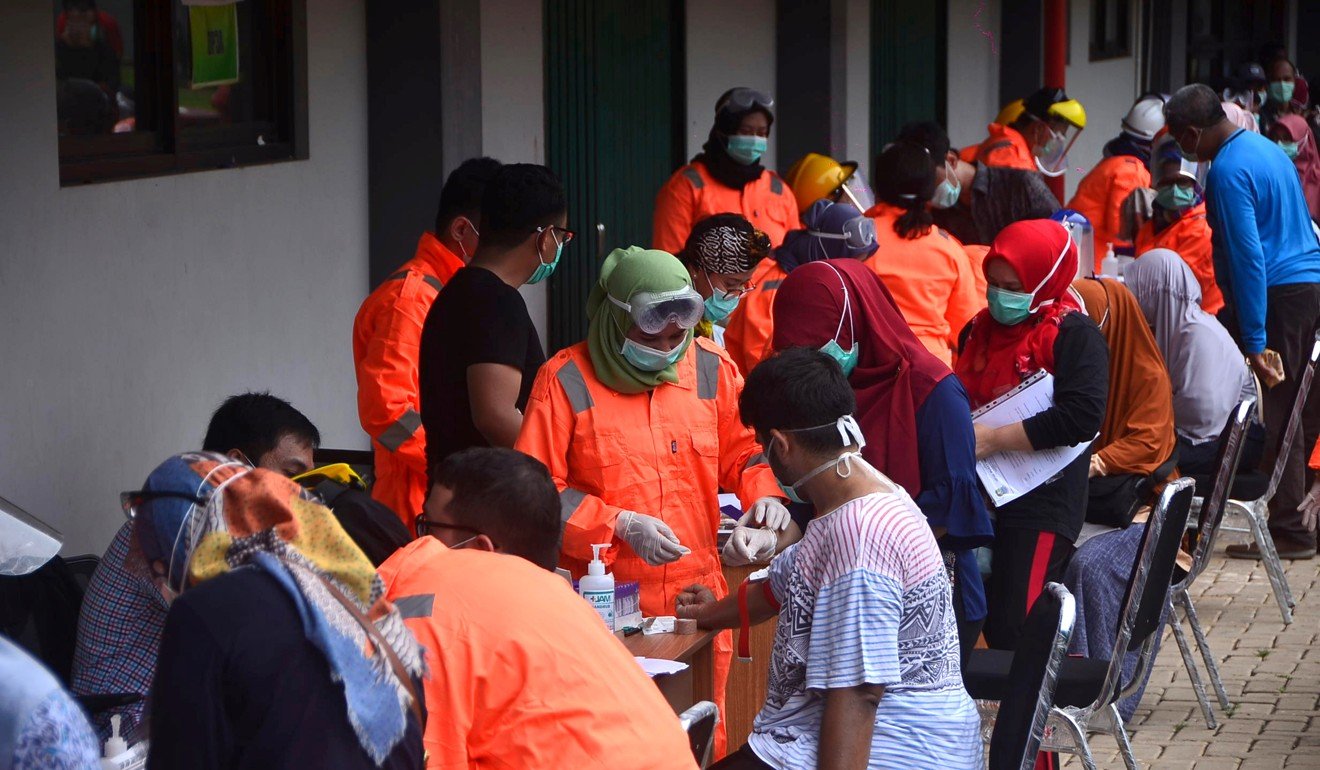
The southern state of Telangana reported on Sunday night that six people who had attended the event died from the virus. The state’s medical officer told the BBC that more than 40 of Telangana’s 71 cases were either directly or indirectly linked to the event.
Indian-administered Kashmir reported its first death from the virus last week – a 65-year-old who had been in Delhi for the congregation. Officials told BBC Urdu that more than 40 of the region’s 48 cases could be traced back to that one patient.
A cluster has even appeared in the distant Andaman and Nicobar Islands, where six of the nine who have tested positive, had returned from the Delhi event.
The southern states of Tamil Nadu, Telangana and Andhra Pradesh have said more than 3,000 people from their states had attended the event, and Tamil Nadu has traced 16 positive patients to it.
States have also asked other people who attended to come forward for testing.
Delhi Chief Minister Arvind Kejriwal has asked for a police complaint to be registered against the head of the mosque.
However, the event’s organisers have issued a statement, saying they had suspended the event and asked everyone to leave as soon as Prime Minister Narendra Modi announced that there would be a day-long national curfew on 22 March.
While many were able to leave, they say, others were stranded because states began to seal their borders the following day, and two days later, India imposed a 21-day lockdown, suspending buses and trains.
The mosque’s premises include dormitories that can house hundreds of people.
The organisers say they informed the local police about all of this and continued to cooperate with medical officers who came to inspect the premises.
The mosque, the statement says, “never violated any provision of law, and always tried to act with compassion and reason towards the visitors who came to Delhi from different states. It did not let them violate the medical guidelines by thronging ISBTs (bus stops) or roaming on streets.”
This is not the first time religious congregations have been blamed for the spread of coronavirus.
Tablighi Jamaat events have also been blamed for spreading cases in Indonesia and Malaysia.
And in South Korea, many positive cases were linked to the Schincheonji church, a secretive religious sect, that has since apologised for its role in the outbreak.
Throughout the world, overworked health care professionals are being infected with Covid-19, yet the Lion City has kept numbers low
Preparation, planning, patient ratios and protective equipment have all played a part. Still, even the best gear cannot guard against discrimination
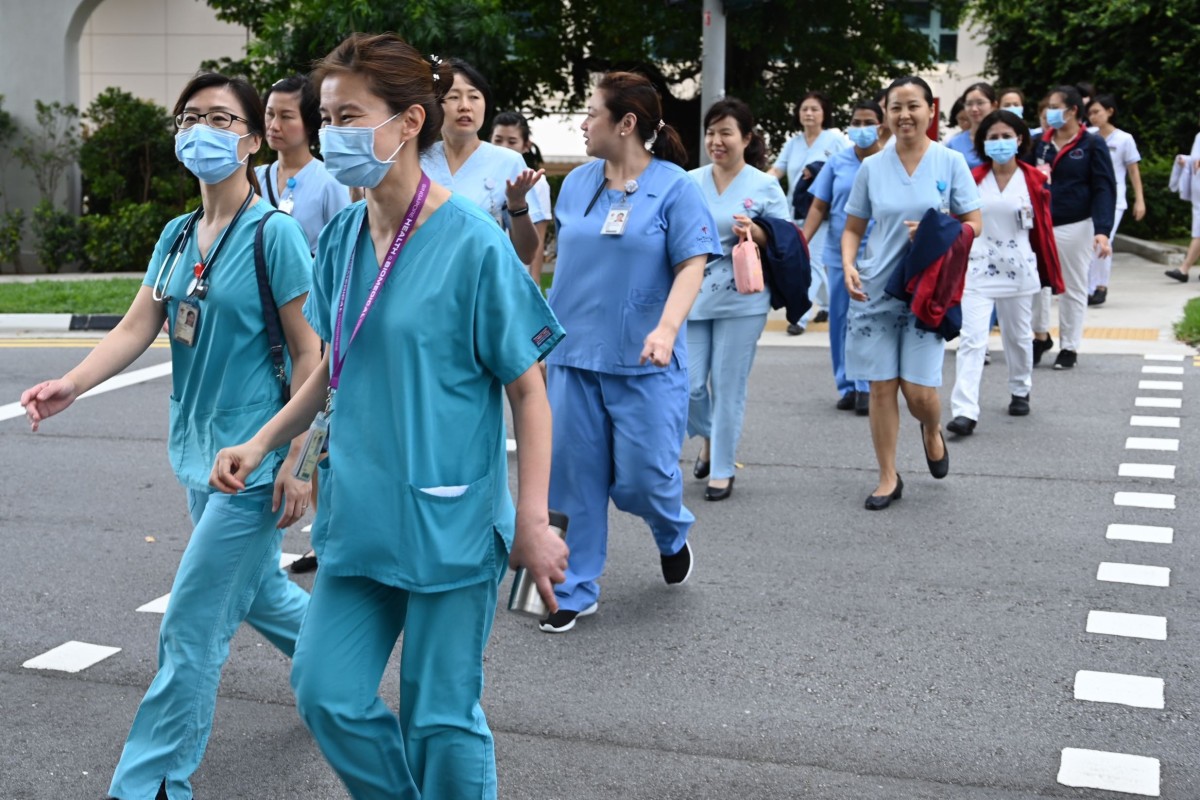
Medical staff walk to the National Centre for Infectious Diseases building at Tan Tock Seng Hospital in Singapore. Photo: AFP
Uncooperative patients, long hours and a lack of protective equipment are hampering health care workers across the world as they take the fight to the coronavirus, leading many to fall sick themselves.
In Malaysia, a pregnant woman who did not disclose that her father was infected tested positive after giving birth, leading to the shutdown of the entire hospital for cleaning. In the Philippines, nine doctors have died, two of whom had dealt with a patient who lied about her travel history.
In Spain, where more than 5,400 health care workers have been infected, accounting for about 14 per cent of the country’s patients, there are no longer enough workers to care for patients.
In Italy, which has more than 69,000 patients, the virus killed a doctor who had no choice but to work without gloves.
In the United States, which has surpassed China to become the world’s most infected nation with more than 83,000 people testing positive for Covid-19, hospitals are being overrun with patients.
Health care staff in the country say patients are packed into emergency wards and intensive care units (ICUs), further raising the risk of infections. They also report shortages of ventilators, face masks, gowns and shields.
The US Centres for Disease Control and Prevention on March 7 released interim guidelines saying health care workers exposed to the coronavirus could be asked to return to work as long as they wore face masks and were not showing symptoms, if their employers had no other manpower available.
Malaysian health workers at Kuala Lumpur International Airport. Photo: AFP
A REASON FOR OPTIMISM
However, amid all the gloom, Singapore’s experienceis being held up as a reason for optimism. The city state has reported more than 630 cases of infection, all of which are being treated in hospital, yet only a handful of its health care professionals have been infected. What’s more, even these cases, according to Vernon Lee, director of communicable diseases at the Ministry of Health, are thought to have been infected outside the health care setting.
Experts suggest this has been more than just luck, pointing to a case in which 41 health workers were exposed to the coronavirus in a Singapore hospital yet evaded infection.
The workers had all come within two metres of a middle-aged man with Covid-19 who was being intubated, a procedure which involves a tube being inserted into the patient’s trachea. The procedure is seen as being particularly hazardous for health workers as it is “aerosol generating” – patients are likely to cough.
The workers had not known at the time that the man had the virus and all were quarantined after he tested positive. However, on their release two weeks later, none of them had the virus.
Coronavirus: as Malaysia braces for third wave, doctors make their own face masks
27 Mar 2020
The case has come to widespread attention partly because the workers were wearing a mix of standard surgical masks and the N95 mask, which doctors see as the gold standard as it filters out 95 per cent of airborne particles.
The conclusion, published in The Annals of Internal Medicine this month, was this: “That none of the health care workers in this situation acquired infection suggests that surgical masks, hand hygiene, and other standard procedures protected them from being infected.”
Surgeon and writer Atul Gawande mentioned the case in an article for The New Yorker on how health care workers could continue seeing patients without becoming patients. He said there were things to learn from Asia and that some of the lessons came out of the “standard public health playbook”. In other words, there is much to be said for social distancing, basic hand hygiene and cleaning regimens.
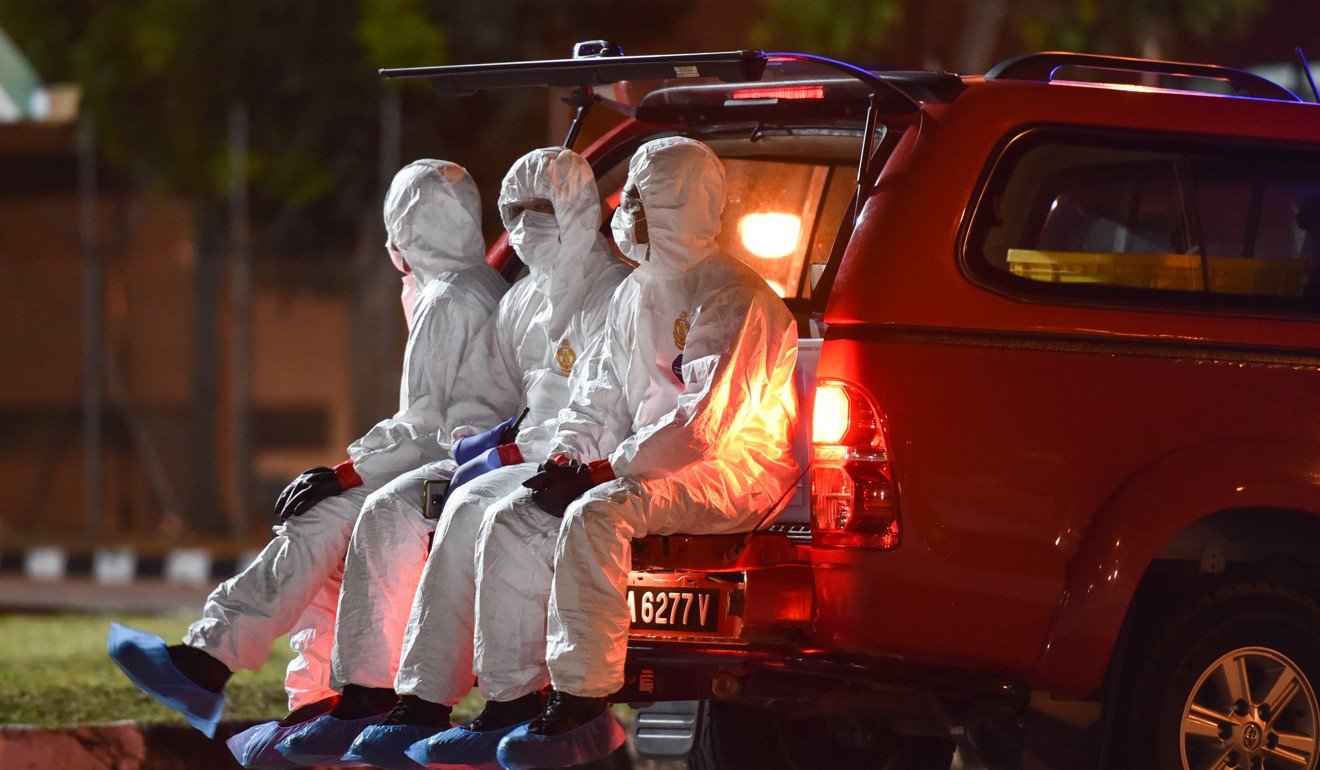
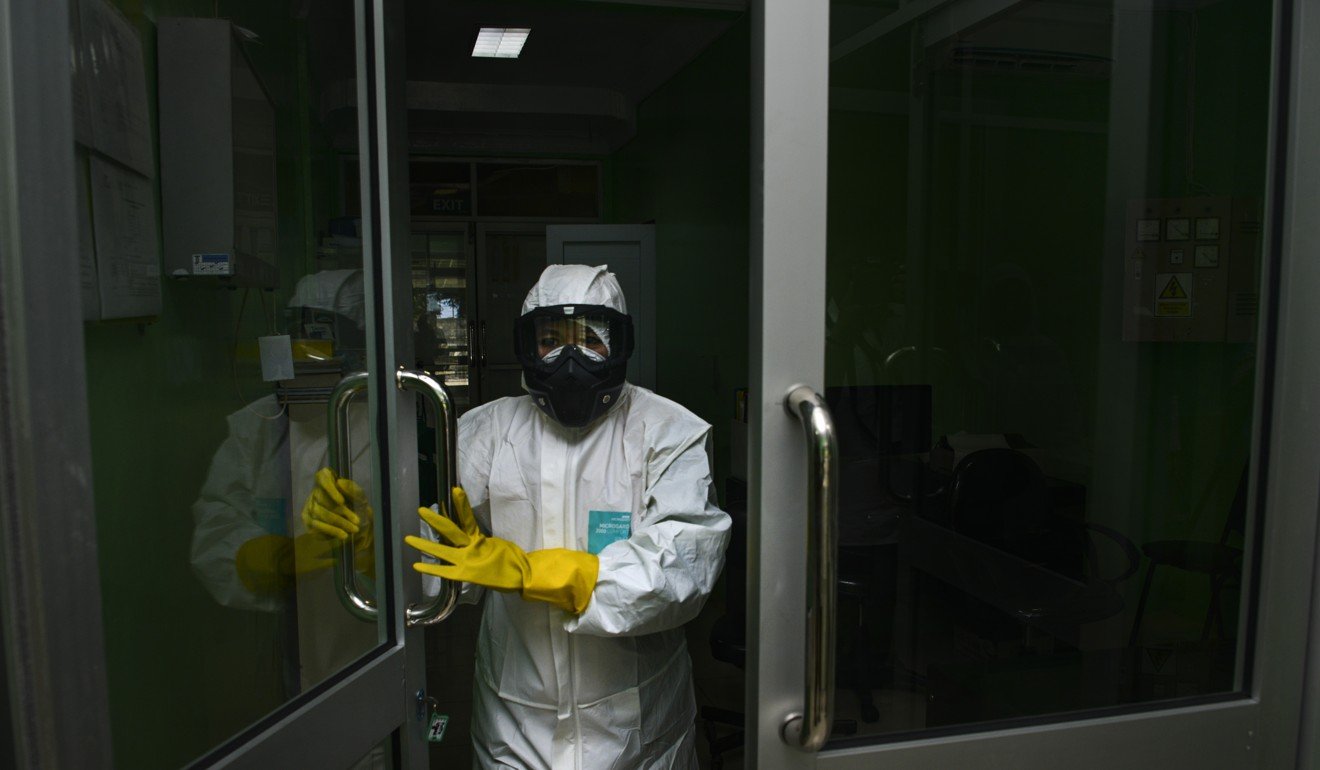
A health worker in protective gear walks into a quarantine room at a hospital in Banda Aceh, Indonesia. Photo: AFP
COMING TOGETHER
With critical supplies running short in many countries, experts say it is increasingly vital that countries share both knowledge and resources.
To this end, China has been donating personal protective equipment to places including the Philippines, Pakistan and Europe. China’s richest man Jack Ma is donating 1.8 million masks, 210,000 Covid-19 test kits and 36,000 pieces of protective clothing to 10 countries in Asia.
At the same time, doctors are encouraging the Western world to learn from Asia.
Infectious diseases expert Leong Hoe Nam said that being “bitten by Sars” (severe acute respiratory syndrome) in 2003 had prepared Asia for Covid-19, while Western countries were not similarly prepared and hence lacked sufficient protective equipment.
He pointed to how about 2,000 health care workers had fallen sick in China early in the outbreak because workers did not initially have protective gear. The trend reversed as equipment became available.
“Once the defences were up, there were very few health care workers who fell sick at work. Rather, they fell sick from contact with sick individuals outside the workplace,” he said.
Malaysia is a case in point. While it has reported 80 health care workers falling ill, most are thought to be community infections.
Coronavirus: Doctor explains the proper way to wash your hands and put on a face mask
In a webinar organised by Caixin Global on Thursday night, Peng Zhiyong, an intensive care specialist at Zhongnan Hospital of Wuhan University, shared how they managed a shortage of personal protective equipment early on in the outbreak by rationing workers to two sets of gear per shift.
Meanwhile, in the Philippines, doctors from Manila’s Chinese General Hospital held a video conference call with doctors in Zhejiang to learn from China’s experience of treating Covid-19 patients.
Crowdsourcing platforms have also been created to share advice. The Brigham and Women’s Hospital in Boston has released guidelines for treating critically ill patients and its website includes information from Chinese doctors.
Why Singapore’s coronavirus response worked – and what we can all learn
27 Mar 2020
The Jack Ma Foundation has also launched an online platform for doctors and nurses around the world to share knowledge on fighting the virus. “One world, one fight,” it said in a tweet.
Associate Professor Jeremy Lim from the global health programme at the Saw Swee Hock School of Public Health said it was crucial for countries to work together.
“Viruses don’t respect borders. Countries have to share information and help each other as we are only as strong as the weakest link. Any country can become a reservoir of disease and the world may then be forced to endure a ping-pong of outbreaks over and over again.”
And the advice of Lee, at Singapore’s Ministry of Health? “Practise good hygiene and wash hands regularly.”
Indonesian medical staff administer mass testing for Covid-19 in Bekasi, West Java. Photo: AFP
SINGAPORE, A CASE STUDY
Amid this sharing of advice, it is often Singapore that is held up as an example to replicate. Despite the country grappling with a rising load of Covid-19 patients, most of whom have recently returned to the city state from abroad, its health care system has continued to run smoothly. Doctors say this is because it has been preparing for a pandemic ever since Sars caught it by surprise. During the Sars outbreak, health care workers accounted for 41 per cent of Singapore’s 238 infections.
Consequently its hospitals swung into contingency planning mode early on in the coronavirus outbreak, telling staff to defer leave and travel plans after its first cases emerged.
Meanwhile, its hospitals swiftly split their workforces into teams to ensure there were enough workers if the outbreak worsened, and to ensure workers got enough rest.
Singapore has 13,766 doctors, or 2.4 doctors for every 1,000 people. That compares to 2.59 in the US, 1.78 in China and 4.2 in Germany. Places like Myanmar and Thailand have fewer than one doctor for every 1,000 people.
Coronavirus: Covid-19 could live on in Indonesia long after world recovers
22 Mar 2020
“The objective is that you can run essential services with the greatest amount of security. Make sure functional units have redundancy built in, and are separate from each other. It depends on what you feel is sufficient to carry on services if one team is affected, factoring in rest periods and some system of rotation,” said Chia Shi-Lu, an orthopaedic surgeon.
The key is to ensure a good doctor-to-patient ratio and ensure there are enough specialists for the critical work, such as doctors and nurses who can provide intensive care, and know how to operate mechanical ventilators or machines to pump and oxygenate a patient’s blood outside the body.
At the emergency department where paediatrics emergency specialist Jade Kua treats Covid-19 cases in addition to regular emergencies, doctors are split into four teams of 21. Each team takes alternate 12-hour shifts and does not interact with other teams.
“We are in modular teams so the teams move together. So you and I would both do morning, off, night, off, morning off. Together. And then the other teams would do the same and we don’t intermingle,” said Kua.
US now has world’s most coronavirus cases, surpassing China
Chia, who works at the Singapore General Hospital, said doctors had been split up according to their functions.
“We try not to meet at all with the other teams as much as possible. We’ll just say hi from across the corridor. Meals are the same. All our cafeterias and everything have got social distancing spaced in already,” said Chia, who is also a member of parliament and chairs a shadow committee on health.
Chia said the health care system could also tap on doctors in the private sector.
Not every country has a plan like this. Last year’s Global Health Security Index by the Economist Intelligence Unit found that 70 per cent of 195 countries scored poorly when it came to having a national plan for dealing with epidemics or pandemics. Almost three in 10 had failed to identify which areas were insufficiently staffed. In India, with a population of 1.3 billion, only about 20,000 doctors are trained in key areas such as critical care, emergency medicine and pulmonology.
Singapore, Hong Kong, Taiwan: the real coronavirus world leaders
19 Mar 2020
In contrast, Singapore published its first Influenza Pandemic Preparedness and Response Plan in June 2005 and has since honed it to a tee. Hospitals regularly war-game scenarios such as pandemics or terrorist attacks and the simulations are sometimes observed by the Ministry of Health, which grades the performance and recommends areas for improvement.
The plan also covers the need to stockpile equipment to avoid the sort of shortages many countries are now facing, another lesson inspired by Sars when masks, gloves and gowns were in short supply.
In a pandemic preparation paper published in 2008, Singapore public health specialist Jeffery Cutter wrote that Singapore’s stockpile was sufficient to cover at least 5 to 6 months’ use by all front-line health care workers.
During the Covid-19 outbreak, it has also told citizens to not wear masks so it can conserve supply for medical staff.
Having enough protective gear has reassured Singapore’s health care workers such as Kua, a mother of six who blogged about her experience fighting Covid-19. Kua said: “I’m safe and my family is safe.”
India’s poor hit hard by 21-day nationwide lockdown amid the coronavirus pandemic
SOMETHING YOU CAN’T GUARD AGAINST
Despite the many positives to emerge from the Lion City, its health care workers are struggling with another problem: discrimination.
While in France, Italy and Britain, residents cheer health care workers from their windows, in Singapore health care workers are seen by some people as disease carriers.
“I try not to wear my uniform home because you never know what kind of incidents you may encounter,” said one Singapore nurse. “The public is scared and wearing our uniforms actually causes quite a bit of inconvenience. One of my staff tried to book a private-hire car to the hospital for an emergency and she was rejected by five drivers.”
There is a similar stigma in India, where the All India Institute of Medical Sciences has appealed to the government for help after health workers were forced out of their homes by panicked landlords and housing societies.
“Many doctors are stranded on the roads with all their luggage, nowhere to go, across the country,” the institute said in a letter.
Lim, from the Saw Swee Hock School of Public Health, said the worst human impulses and “every man for himself” attitudes could emerge in crises and “that is exactly why governments have to step in”.
Discrimination could affect both the performance and motivation of health care workers, Lim warned.
Meanwhile, when health care workers are infected, it creates a “triple whammy” threat.
“It means one fewer professional in an already-strained system, another patient to care for and, potentially, a team of colleagues who need to be quarantined,” said Lim.
“We must do everything possible to keep our health care workforce safe and free from Covid-19.” ■
People enjoy sunset on a plank road at the East Lake in Wuhan, capital of central China’s Hubei Province, March 18, 2020. (Xinhua/Shen Bohan)
Arduous efforts have been made since Wuhan was locked down and the efforts have paid off, with the outbreak of the COVID-19 gradually brought under control in this once hardest-hit Chinese city. With sacrifices and persistence, a bright dawn is finally around the corner.
WUHAN, March 24 (Xinhua) — Xia Yongli starts a workday at dawn by having his temperature taken, disinfecting his bus and going through safety checks before hitting the road at 7:00 a.m. sharp.
Over the past eight weeks, the bus driver in the central Chinese city of Wuhan had not driven his familiar route, which is 14 km long and usually takes 40 minutes. Instead, he has been shuttling medics and delivering supplies to shops and supermarkets.
The city, with a population of over 10 million, pressed a “pause” button on Jan. 23 to contain the spread of the rampaging coronavirus behind the COVID-19 epidemic, with all public transport and outbound channels shut down and all residents staying indoors.
The streets of Wuhan are no longer bustling. Shopping blocks, pedestrian streets and other popular places where local people would stroll around are largely left to still figure sculptures.
Arduous efforts have been made since Wuhan was locked down and the efforts have paid off, with the outbreak of the COVID-19 gradually brought under control. Once hardest-hit, Wuhan only had one newly confirmed COVID-19 case reported for six consecutive days between March 18 and 23.
Wuhan had reported a total of 50,006 confirmed cases by March 23, and 43,214 patients had been cured and discharged from hospitals.
With sacrifices and persistence, a bright dawn is finally around the corner. People will be allowed to leave the city and the province from April 8, local authorities said Tuesday.
A staff member conducts disinfection at a subway station in Wuhan, central China’s Hubei Province, March 23, 2020. (Xinhua/Shen Bohan)
To reduce the risk of imported cases, all personnel coming to Wuhan from overseas have to be brought under closed-loop management, with timely quarantine and epidemiological surveys conducted, said Ying Yong, secretary of Hubei Provincial Committee of the Communist Party of China.
“Wuhan had pressed the pause button and is currently in urgent need of restoring its urban functions with safe and ordered operations,” Ying said.
More than 110 bus routes citywide have conducted no-load test runs. Disinfection has been carried out at local metro and railway stations. Checkpoints for epidemic control, 27 on cross-river bridges and nearly 80 others in main urban areas, have been removed.
Infrared thermometers have been installed at subway entrances, with posters of QR codes for real-name registration inside the stations and carriages.
Staff members conduct disinfection on a subway train in Wuhan, central China’s Hubei Province, March 23, 2020. (Xinhua/Xiao Yijiu)
“The traffic on the road is coming back,” said Hu Lijun, general manager of the Wuhan Zhengyuan Gaoli Optical Co., Ltd., a photoelectric encoder manufacturer, whose production capacity has been restored by 80 percent.
Traffic flow at highway exits is also increasing by about 10 percent per day due to a growing number of people returned as Wuhan speeds up resumption of work and production.
There were health staff, community workers and police in each lane at toll-gate checkpoints, scanning health codes and taking body temperatures of the returning workers, disinfecting their vehicles and making registrations.
“Drivers had to queue up at the highway exits in the past to spend five minutes filling a registration form,” said Dong Hongxiang, a police officer, noting that registration time has been cut short now by using PDA scanners.
On March 21, a special train arrived in Wuhan with 1,013 passengers on board, all of whom were employees of Dongfeng Honda, a local joint venture. They were picked up at the train station and sent directly to the factory or their residences.
Workers are busy on the production lines at the workshop of Dongfeng Passenger Vehicle Company in Wuhan, central China’s Hubei Province, March 24, 2020. (Xinhua/Xiao Yijiu)
Wuhan-based enterprises that are important to the national and global industry chains and those closely related to people’s livelihood are allowed to continue operation or resume work, said Cao Guangjing, deputy governor of Hubei.
Hubei serves as one of China’s major auto producers and phosphate fertilizers. Cao said that relevant companies play significant role in the production chains. Their resumption of operation counts.
Preferential measures have been taken to support restart of engine in the city. The State Grid Wuhan electric power company has rolled out new policies to cut or exempt electricity bills for local enterprises, an estimated reduction of 389 million yuan (about 55 million U.S. dollars) by the end of June.
People have also started to venture out, although they cannot go as far or wherever they want.
Wang Tan, a Wuhan resident, stepped out of his home for the first time in two months to get some medicine for his father-in-law at a nearby pharmacy Monday morning.
With a health code on WeChat, Wang said he could visit convenience stores, green groceries and drug stores close to his home and have some free time outdoors inside his residential community, which has been clear of COVID-19 cases for 14 days in a row.
The Guoxinyuan community in Jiang’an District has been epidemic-free for 26 consecutive days. There were kids skipping ropes and the gray-haired doing exercises in open public areas. People observed social distancing while reclaiming a long-lost conversation.
“The public space in our community is quite small, thus no more than 80 people are allowed to have outdoor activities at one time,” said Wei Jilai, who heads the neighborhood committee.
A woman purchases daily necessities at a convenience store in Wuhan, central China’s Hubei Province, March 19, 2020. (Xinhua/Shen Bohan)
As the epidemic recedes, more than 21,000 medical staff from across the country who had fought on the frontline in Wuhan and other places in Hubei are returning home. Before departure, some visited East Lake, one of the well-known tourist attractions in Wuhan, having group photos before cherry trees in blossom to mark the unforgettable days in the city.
Some are leaving, while others stand their ground. Ma Xin, vice president of the Huashan Hospital affiliated to Fudan University in Shanghai, stayed at Wuhan’s Tongji Hospital with his team, treating severe and critically ill patients.
“Most of them have underlying diseases and have to be treated for their complications,” Ma said, stressing that vigilance is still needed at present, especially against imported cases and relapse.
WUHAN, March 20 (Xinhua) — The central Chinese city of Wuhan, hit hard by the coronavirus outbreak, will reopen commercial outlets to residents in an orderly manner, local authorities said late Friday.
Commercial outlets in residential communities and villages without existing confirmed or suspected COVID-19 cases can resume business, according to the Wuhan municipal bureau of commerce.
Those outlets mainly include supermarkets, convenience stores, fresh food shops, fruit and vegetable shops and others that supply daily necessities.
Each household can send one person a day to go shopping with a one-time pass certificate or an electronic health code. Each shopping trip will be limited to within two hours.







 CHINDIA ALERT: You'll be living in their world, very soon