Archive for ‘Delhi’

19/03/2020

Coronavirus: Indian cities go eerily quiet as cases rise

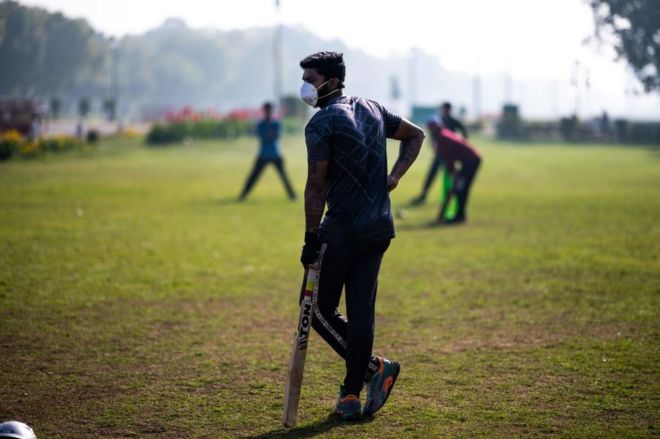
A youth (C) wearing a facemask as a preventive measure against the COVID-19 coronavirus plays cricket with his friends at a park in New Delhi on March 18, 2020.Image copyright GETTY IMAGES
Image caption Small groups of young people can be seen playing sports as schools, colleges and even gyms are shut.

Life in India has changed dramatically as the world’s second-most populous country grapples with the coronavirus outbreak.

Otherwise crowded and chaotic cities have quietened down as people stay home, traffic slows and even weddings shrink in size and scale.

India has confirmed 151 active cases and three deaths – but public health experts fear that the low count is the result of limited testing and under-reporting. The country has only conducted about 12,000 tests so far, partly because of a shortage of testing kits.

So it’s still unclear if and to what extent community transmission exists in India – community transmission means a patient had no known contact with another confirmed case or travelled from a country badly affected by the pandemic.

However, India’s central government, several state governments and city administrations have already responded with drastic measures.
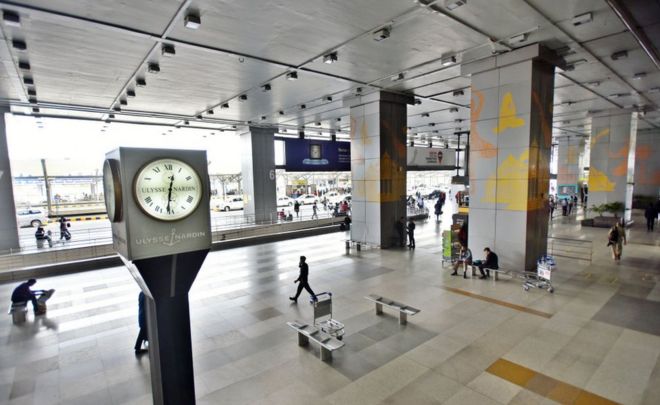
Low footfall seen at Indira Gandhi International (IGI) Airport amid rising coronavirus fear on March 16, 2020 in New Delhi, India.Image copyright GETTY IMAGES

The Indira Gandhi international airport in the national capital Delhi, is the country’s busiest airport but it appears deserted nowadays.

India has barred entry to everyone, including citizens, flying from certain countries, including the UK and most European nations. It has also cancelled most entry visas to people (excluding citizens) flying in from other countries.

This has led to numerous flight cancellations.

Airlines are also struggling as fewer people are flying even within India, wary that new regulations could see them stranded away from their homes. Two of India’s top airlines are reportedly considering grounding planes amid plummeting demand for flights.
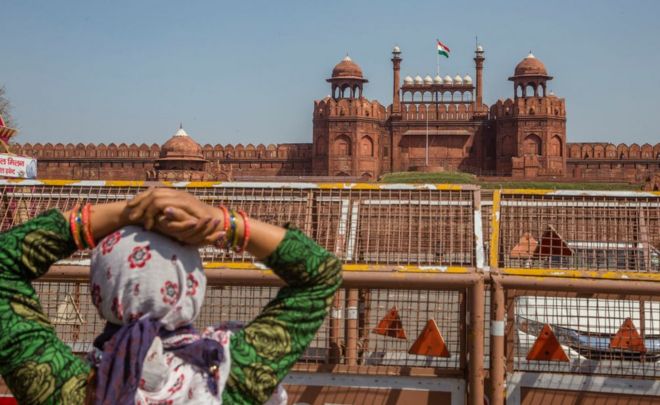
An Indian tourist disappointed to see the Red Fort, closed for tourists to prevent spread of Covid-19, as she look towards the ford on March 17, 2020 in New Delhi, India.Image copyright GETTY IMAGES

Popular Indian monuments – such as the 16th Century Red Fort in Delhi – have been shut to visitors to prevent large gatherings.

Taj Mahal, the country’s most iconic monument, closed its doors on Tuesday, along with more than 140 other monuments and museums.

With fewer people visiting and closures of public places likely to go up, tourism is expected to take a huge hit across India – the Taj alone draws as many as 70,000 people a day.
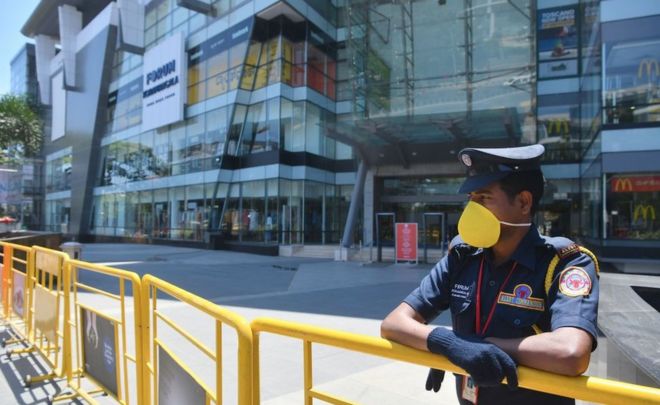
A security personnel stands guard in front of a closed shopping mall amid concerns over the spread of the COVID-19 novel coronavirus, in Bangalore on March 16, 2020.Image copyright GETTY IMAGES

Bangalore, an IT hub in southern India, is among the major cities that has shut down its malls – such as the one above – and schools, colleges, cinema halls and other public places have been closed since late last week. Other major cities such as Delhi, the financial hub Mumbai and Hyderabad in the south, have done the same.

City officials have also imposed restrictions on large gatherings such as weddings, cricket matches or any public ticketed events.
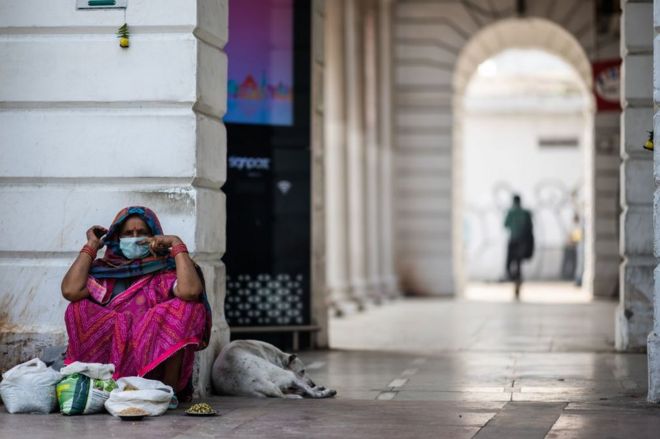
A bird feed vendor wearing a facemask as a preventive measure against the COVID-19 coronavirus waits for customers at a market area in New Delhi on March 19, 2020Image copyright GETTY IMAGES

Some of Delhi’s busiest spots, such as Connaught Place, are mostly empty.

There has also been a significant drop in the number of people using trains, which remain the most popular form of transport in India.
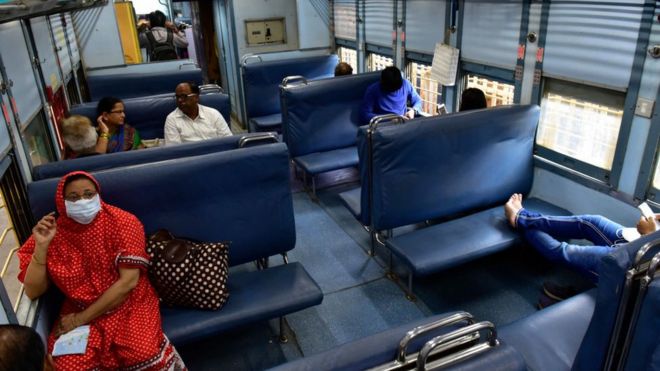
Around 25% to 30% drop of passenger traveling from Mumbai to Pune in Deccan Queen was observed after coronavirus outbreak, at CSMT, on March 16, 2020 in Mumbai, India.Image copyright GETTY IMAGES

The service from Mumbai to Pune city – which takes about three to four hours – has seen about a 30% fall in passenger traffic, according to some estimates.

The western state of Maharashtra, where both cities are located, has reported the highest number of cases in India so far. The central railways has already cancelled 23 long distance trains going to and from Mumbai – officials say the reason is both the virus and the lower number of passengers.

Overall, more than 150 trains have been cancelled across India. This number could increase in coming days.
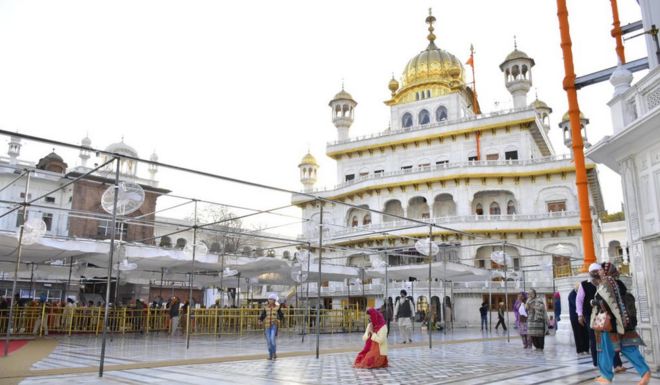
Low footfall of devotees seen at Golden Temple due to the spread of coronavirus (COVID-19) on March 17, 2020 in Amritsar, India.Image copyright GETTY IMAGES

Many holy sites, including the Golden Temple – one of the holiest shrines in Sikhism – remain open, although the footfall is much lower. It’s quite unusual to see such few people in what is one of India’s busiest shrines.

Tirumala Tirupati, the richest Hindu temple, has cancelled many of its daily rituals and is restricting the number of pilgrims for the first time.

Some major Hindu temples, such as the Siddhivinayak temple in the heart of Mumbai, and the Vaishno Devi cave shrine, have closed.
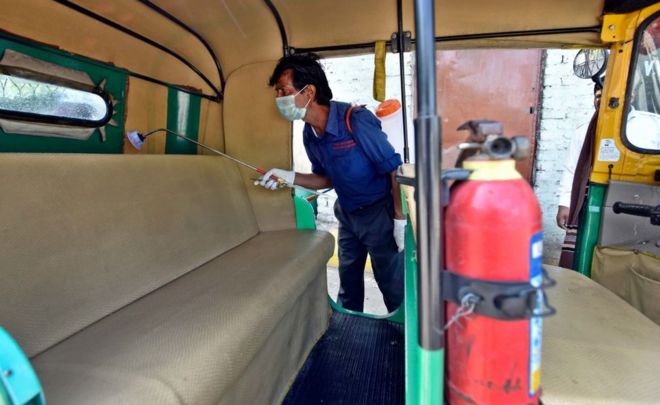
DTC cleaning staff chemically disinfect and sanitize auto rickshaw as a precautionary measure in view of coronavirus concerns, at Vasant Vihar Depot on March 17, 2020 in New Delhi, India.Image copyright GETTY IMAGES

City officials in Delhi have begun sanitising auto rickshaws and taxis to contain the spread of the virus.

Public transport poses a major challenge to containing the outbreak. But it continues to be used regularly across India, even as governments encourage people to stay home as much as possible.

But not all offices have work from home options, and this is especially a challenge for the millions who work in India’s informal sector – these include domestic help, street vendors and daily wage workers.
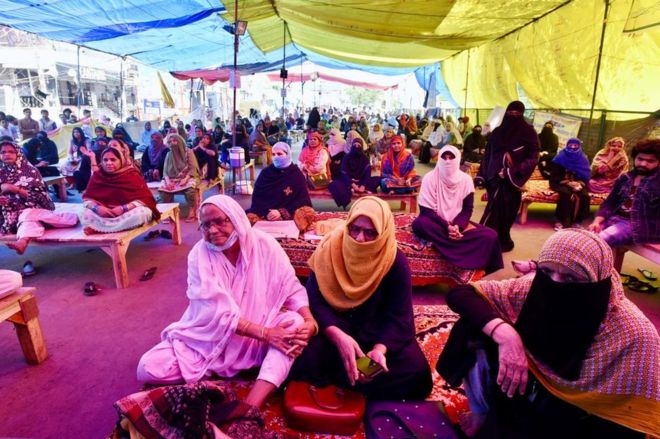
Women of Shaheen Bagh continue their sit-in protest against the CAA-NRC-NPR despite the Coronavirus advisory issued by Delhi government, at Shaheen Bagh on March 17, 2020 in New Delhi, India.Image copyright GETTY IMAGES

Surprisingly, sit-in protests against India’s controversial new citizenship law continue in some cities, including Delhi and Bangalore.

The most prominent of these, pictured above, is happening in Delhi’s Shaheen Bagh neighbourhood. Thousands of protesters, mostly Muslim women, have been demonstrating against the law, which critics say is anti-Muslim, since December.

But Delhi has shut down schools, colleges, gyms, night clubs, spas and swimming pools – and Chief Minister Arvind Kejriwal has said all social, political and religious gatherings with more than 50 people would be stopped.
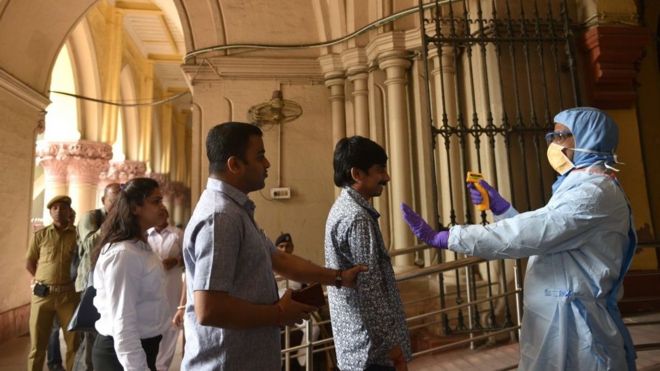
Doctor of West Bengal Health Government Department conduct thermal screening as prevention from coronavirus (COVID-19) infection at Kolkata High Court in Kolkata, India on Tuesday, March 17, 2020.Image copyright GETTY IMAGES

Temperature checks have become a common feature across cities – here, people are being screened before they enter the high court in the eastern city of Kolkata (formerly Calcutta).

This practice has been adopted at airports, corporate offices and several other places that remain open despite the restrictions.
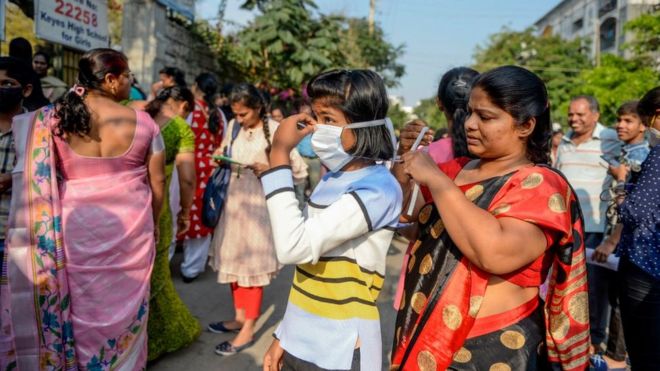
A mother ties a facemask on her daughter amid concerns over the spread of the COVID-19 coronavirus as she attends the first day of her tenth class examinations in Secunderabad, the twin city of Hyderabad, on March 19, 2020.Image copyright GETTY IMAGES

In the southern city of Hyderabad, students appeared for their school-leaving exams, but they came armed with masks.

Delhi, however, has postponed all school examinations.

Experts say India could impose more sweeping lockdowns as the toll climbs further.

Source: The BBC
16/03/2020

Mumbai is India’s most ‘forgetful’ city, says Uber

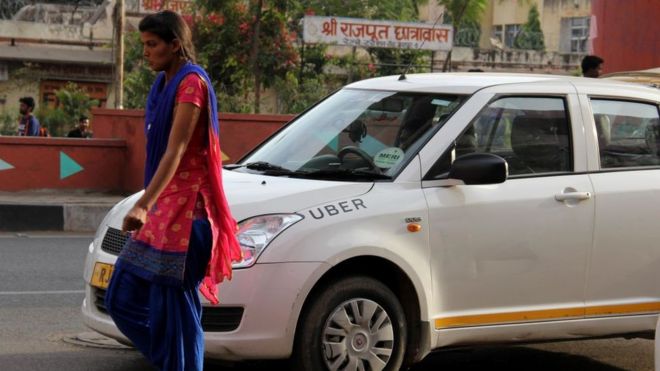
A lady walks past an Uber cab in IndiaImage copyright NURPHOTO
Image caption Uber’s annual Lost & Found Index lists items that passengers leave behind

Mumbai is India’s most “forgetful” city, according to Uber’s Lost & Found Index 2020, followed by Kolkata (formerly Calcutta) and Allahabad.

This is an annual database compiled by the cab aggregator, based on what passengers in different countries leave behind in Uber’s taxis.

Phones top the list in India, which also includes items as unusual as artificial acrylic teeth.

Uber found 3 August 2019 to be the “most forgetful” day in its survey.

India’s capital, Delhi, ranked fourth among the 10 most forgetful cities, followed by the southern city of Bangalore at number 5.

The list of the top 20 most unique lost items also includes mangoes, safari suits, brooms, military shoes and copies of Becoming, Michelle Obama’s memoir.

Uber found that Thursdays and Fridays are the most “forgetful” days of the week, and afternoons – between 13:00 and 15:00 – are the most likely hours when people lose things.

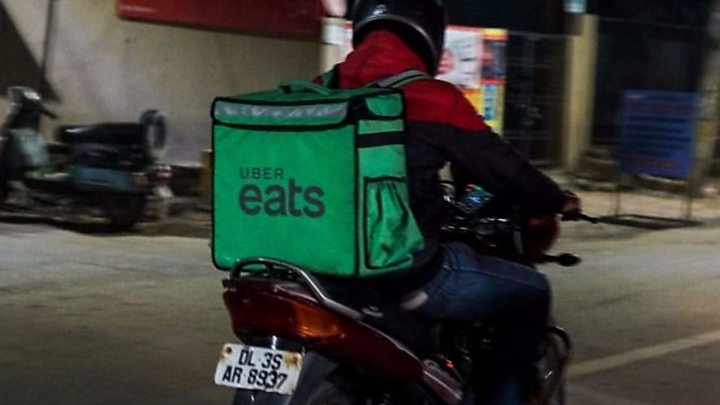
Media caption Why Uber Eats couldn’t deliver in India

The data suggests that people are most likely to leave behind a guitar on Saturdays and Sundays, and their lunch boxes on Tuesdays, Wednesdays and Thursdays.

Source: The BBC
15/03/2020

Coronavirus: Second death confirmed in India

Coronavirus advisory hangs at the entrance of the Infectious Diseases (ID) Hospital in Kolkata, India, 04 March 2020Image copyright EPA
Image caption India has stopped exports of masks to make sure there are ample domestic supplies

A 68-year-old woman from Delhi has been confirmed as the second Indian to die from the coronavirus.

The woman, who had underlying health conditions, is thought to have been infected by her son who travelled to Switzerland and Italy last month.

India’s first fatality from the virus was confirmed on Thursday.

The 76-year-old man, from the southern state of Karnataka, died after returning from a month-long visit to Saudi Arabia on 29 February.

People who came in contact with the man are being traced and quarantined, the state’s health minister said. India has 82 confirmed cases of the virus, the health ministry says.

The Delhi woman’s son was “initially asymptomatic but developed a fever and cough after one day”, a government statement said. The family were then screened and the mother and son admitted to hospital.

The 76-year-old Karnataka man was screened at the airport on his return but showed no symptoms at the time. After he developed difficulties last week, he was taken to hospital. He died on Tuesday but it was not reported until Thursday.

Banner image reading 'more about coronavirus'
Banner

India’s Supreme Court has said it will only hear urgent cases from Monday, and has restricted the number of people who can enter a courtroom.

Karnataka has banned all gatherings including weddings, sports events and conferences for a week as the country attempts to slow the spread of the virus.

Malls, movie theatres, pubs and night clubs have also been shut.

“The government will decide on further action after a week following a review,” the state’s chief minister BS Yediyurappa announced on Friday.

But he said that government offices would continue to function as normal.

India has taken a number of steps to halt the spread of Covid-19:

  • All visas, barring a select few categories, have been suspended for a month
  • Visa-free travel afforded to overseas citizens of the country has been suspended until 15 April and even those allowed in could be subject to 14 days of quarantine
  • Schools, colleges and movie theatres in the capital, Delhi, have been shut until 31 March
  • The Indian Premier League (IPL), featuring nearly 60 foreign players and scheduled to begin on 29 March, has been postponed to 15 April
  • Two one-day cricket matches between India and South Africa will be played behind closed doors

India’s health ministry says it was among the first countries in the world to prepare for an outbreak of the respiratory illness, and denied allegations that it was slow in testing suspected cases.

“Our surveillance system is strong and we are able to quickly identify any symptomatic patients,” RR Gangakhedkar from the Indian Council of Medical Research (ICMR) told reporters on Thursday.

However, there are concerns about whether the country will be fully equipped to prevent and treat an outbreak.

It would be near impossible for India to force its citizens into mass quarantine and hospitalise people in numbers like China, says the BBC’s Soutik Biswas.

Our correspondent says there are also concerns about the country’s poor healthcare data. India has a shoddy record in even recording deaths and disease – only 77% of deaths are registered, and doctors are more likely to get the cause of death wrong than right, according to a study the Toronto-based Centre for Global Research. There is patchy data for flu-related deaths.

Source: The BBC
06/03/2020

Manmohan Singh: Former PM says India situation ‘grim and morose’

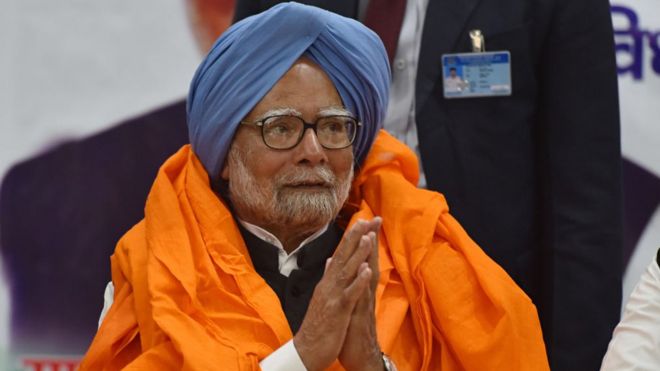
Manmohan SinghImage copyright GETTY IMAGES
Image caption Manmohan Singh was India’s PM from 2004 to 2014

Former Indian prime minister Manmohan Singh has warned of “social disharmony, economic slowdown and a global health epidemic” facing the country.

“The current situation is very grim and morose,” he wrote in a sharply critical op-ed in The Hindu newspaper.

The article comes in the wake of the most violent riots to take place in capital, Delhi, in decades.

Mr Singh also referred to slowing growth and the possibility of a coronavirus outbreak.

More than 50 Indians have died in recent religious riots sparked by clashes over a controversial citizenship law in Delhi.

“The India that we know and cherish is slipping away fast. Wilfully stoked communal tensions, gross economic mismanagement and an external health shock are threatening to derail India’s progress and standing,” Mr Singh wrote.

He said he worried deeply that “this potent combination of risks may not only rupture the soul of India but also diminish our global standing as an economic and democratic power in the world”.

Mr Singh, who belongs to the main opposition Congress party, was the prime minister from 2004 to 2014.

Mr Singh said it was “well accepted” that a lack of new investment from the private sector only highlighted a “floundering” economy.

“Social harmony, the bedrock of economic development, is now under peril. No amount of tweaking of tax rates, showering of corporate incentives or goading will propel Indian or foreign businesses to invest, when the risk of eruption of sudden violence in one’s neighbourhood looms large.”

India’s growth slumped to 4.7% last month – the slowest pace in years as drop in manufacturing affected overall economic health.

The former prime minister said a lack of investment meant fewer jobs and lower incomes, leading to diminished demand in the economy.

“A lack of demand will only further suppress private investments. This is the vicious cycle that our economy is stuck in.”

Media caption GDP: Why India’s growth rate is shrinking rapidly

Mr Singh also addressed the threat of coronavirus in India, saying the country needs a “full-scale operation” to deal with the health crisis. He warned that an outbreak would have a significant impact on Indian business.

“India’s economic growth was already tepid and this external health shock is bound to make things much worse.”

Mr Singh concluded his article with some advice to the ruling Hindu nationalist Bharatiya Janata Party (BJP) government, saying they must “reassure” the country.

He said the government should embark on a “three-point plan”: containing the coronavirus threat, withdrawing or amending the citizenship law and a fiscal stimulus to boost demand and revive the economy.

Source: The BBC
28/02/2020

Delhi riots: ‘Hero cop’ who braved a mob to save lives

Mr Jadaun wants the police force to become more professional to implement progressive ideasImage copyright ANKIT SRINIVAS
Image caption Neeraj Jadaun said he was only doing his duty

An Indian policeman is being hailed as a hero after he braved rioting mobs to save families during days of religious violence in the capital Delhi.

Riots in the city broke out on Sunday, killing 39 people and injuring more than 200.

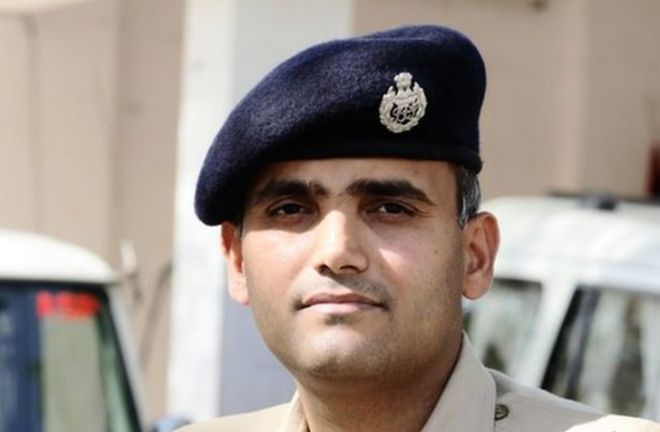
Neeraj Jadaun, a superintendent of police in neighbouring Uttar Pradesh state, told the BBC’s Vikas Pandey that he was patrolling a border checkpoint on 25 February when he heard sounds of gunfire coming from Karawal Nagar in Delhi – just 200m (650ft) away from him.

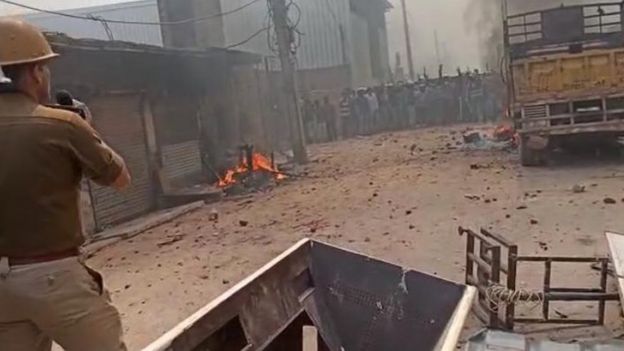
He saw a mob of 40-50 people setting vehicles on fire when one of them jumped into a house with a petrol bomb. At that point, Mr Jadaun decided to break with traditional police protocol and made a split-second decision to cross the state border into Delhi.

In India, police officers need explicit permission to cross state borders.

“I chose to cross. I was willing to go alone despite being aware of the danger and the fact that it was beyond my jurisdiction. Those were the most terrifying 15 seconds of my life. Thankfully, the team followed me, and my seniors also supported me when I informed them later,” he said.

“It was dangerous as we were outnumbered and the rioters were armed. We first tried to negotiate with them and when that failed, we told them that police would open fire. They retreated but seconds later, they threw stones at us and we also heard gunshots,” he added.

However, Mr Jadaun and his team held their positions and kept pushing back until the rioters finally left.

Richi Kumar, a reporter with the Hindi daily Amar Ujala, described Mr Jadaun’s decision as the “bravest act” he had ever seen.

“The situation was very dangerous. The rioters were fully armed and they were not ready to listen anybody. I can describe them as bloodthirsty. They were throwing stones at the police but Mr Jadaun did not back down. There was real danger of policemen being shot at by rioters,” he told the BBC.

Mr Jadaun facing a violent mob
Image caption Mr Jadaun took a split-second decision to cross state borders and stop a mob

The violence first broke out in north-east Delhi between protesters for and against a controversial citizenship law.

But they have since taken on communal overtones.

Mr Jadaun said the rioters he saw had come prepared for arson.

“The area had many shops with stocks of bamboo. A fire would have engulfed the whole area and had that been allowed to happen, the death toll in Delhi would have been much higher.”

But, Mr Jadaun is uncomfortable about being hailed as a hero.

“I am not a hero. I have taken oath to protect any Indian in danger. I was just doing my duty because I wasn’t willing to let people die under my watch. We were in a position to intervene and we did that,” he added.

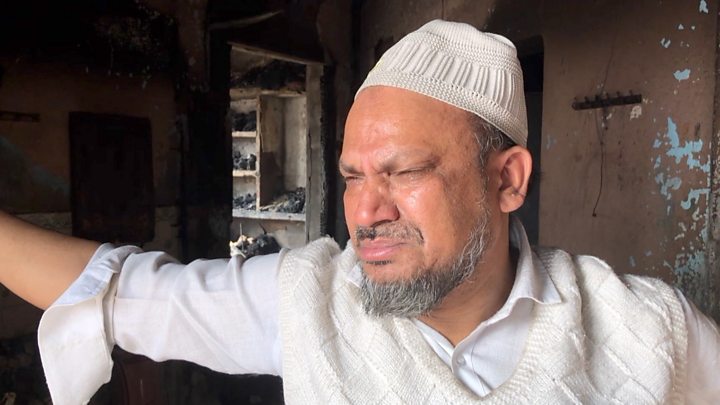
Media caption Delhi religious riots: ‘Mobs set fire to my house and shop’

Similar small acts of heroism – of Hindus and Muslims standing together – have also begun to emerge.

Subhash Sharma, from Ashok Nagar, one of the worst-affected areas, described how he ran to help after mobs set a mosque on fire.

“There were thousands of people in the mob and there were only a handful in the mosque. As soon as I saw it set on fire, I switched on the water pump in my house and ran there with a hose,” Mr Sharma told BBC Hindi.

Murtaza, a man from the same neighbourhood, said that he wanted to flee the area, but his Hindu neighbours told him not to leave.

“They assured us they would not let anybody harm us,” he said.

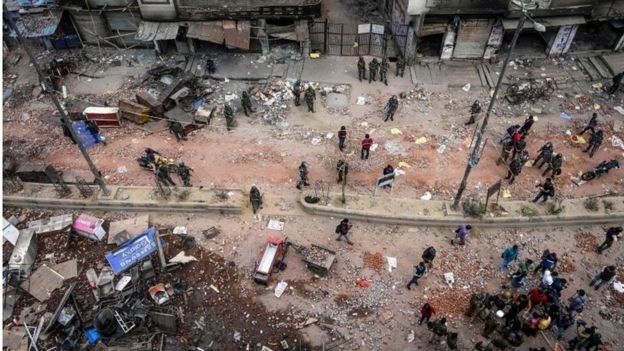
A general view of the riot-hit area following clashes between people supporting and opposing a cententious amendment to Indias citizenship law, in New Delhi on February 27, 2020Image copyright AFP
Image caption The religious violence has killed 38 people and injured more than 200

BBC Hindi’s Faisal Mohammed also spoke to two neighbours – a Hindu and a Muslim – from the Vijay park area in Maujpur, one of the areas worst-affected by the violence.

The two described how they rallied their neighbours to chase away a mob that had been burning vehicles and shattering windows in the vicinity.

“The next day we shut the main road and people from the neighbourhood gathered together and sat outside,” one of the men, Jamaluddin Saifi, said.

Residents there also set up a “peace committee” – made up of both Hindus and Muslims – who went from house to house telling people not to believe rumours and to keep children inside.

As the Indian capital struggles to pick up the pieces, it is these stories that are giving residents some hope that life can eventually go back to normal.

Source: The BBC
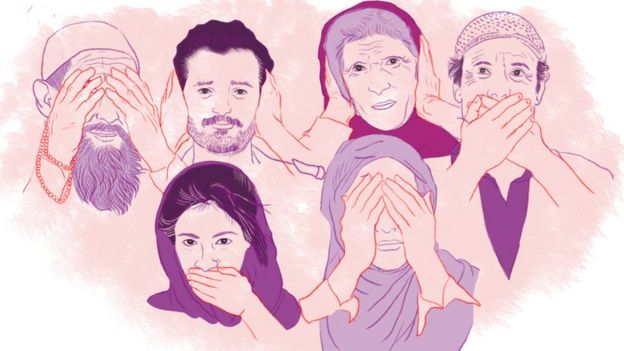
26/02/2020

Why Delhi violence has echoes of the Gujarat riots

Local residents look at burnt-out vehicles following clashes between people supporting and opposing a contentious amendment to India"s citizenship law, in New Delhi on February 26, 2020Image copyright AFP
Image caption Delhi remains on edge after three days of rioting

The religious violence which has roiled Delhi since the weekend is the deadliest in decades.

What began as small clashes between supporters and opponents of a controversial citizenship law quickly escalated into full-blown religious riots between Hindus and Muslims, in congested working class neighbourhoods on the fringes of the sprawling capital.

Armed Hindu mobs rioted with impunity as the police appeared to look the other way. Mosques and homes and shops of Muslims were attacked, sometimes allegedly with the police in tow. Journalists covering the violence were stopped by the Hindu rioters and asked about their religion. Videos and pictures emerged of the mob forcing wounded Muslim men to recite the national anthem, and mercilessly beating up a young Muslim man. Panicky Muslims began leaving mixed neighbourhoods.

On the other side, Muslim rioters have also been violent – some of them also armed – and a number of Hindus, including security personnel, are among the dead and injured.

Media caption Delhi religious riots: ‘Mobs set fire to my house and shop’

Three days and 20 deaths later, Prime Minister Narendra Modi tweeted his first appeal for peace. There were no commiserations for the victims. Delhi’s governing Aam Aadmi Party was criticised for not doing much either. Many pointed to the egregious failure of Delhi’s police – the most well-resourced in India – and the inability of opposition parties to rally together, hit the streets and calm tensions. In the end, the rioters operated with impunity, and the victims were left to their fate.

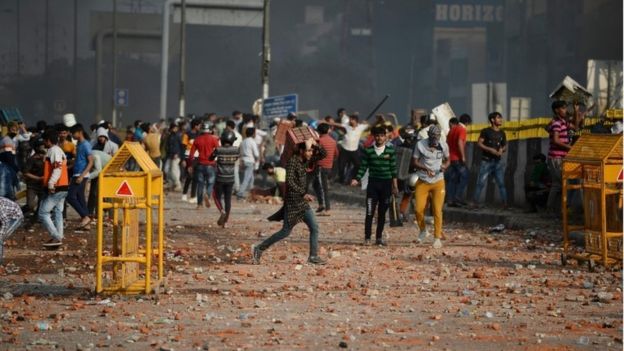
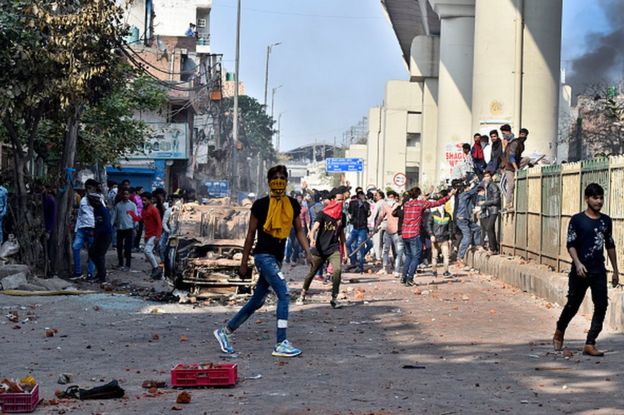
Demonstrators gather along a road scattered with stones following clashes between supporters and opponents of a new citizenship law, at Bhajanpura area of New Delhi on February 24, 2020Image copyright AFP
Image caption More than 20 people have been killed in the rioting

Not surprisingly, the ethnic violence in Delhi has drawn comparisons with two of India’s worst sectarian riots in living memory. Nearly 3,000 people were killed in anti-Sikh riots in the capital in 1984 after the then prime minister Indira Gandhi was assassinated by her Sikh bodyguards. And in 2002, more than 1,000 people, mostly Muslims, died after a train fire killed 60 Hindu pilgrims in Gujarat – Mr Modi was then the chief minister of the state. The police were accused of complicity in both riots. The Delhi High Court, which is hearing petitions about the current violence, has said it cannot let “another 1984” happen on its “watch”.

Ashutosh Varshney, a professor of political science at Brown University who has extensively researched religious violence in India, believes that the Delhi riots are beginning to “look like a pogrom” – much like the ones in 1984 and 2002.

Pogroms happen, according to Prof Varshney, when the police do not act neutrally to stop riots, look on when mobs go on the rampage and sometimes “explicitly” help the perpetrators. Evidence of police apathy in Delhi has surfaced over the past three days. “Of course, the violence thus far has not reached the scale of Gujarat or Delhi. Our energies should now focus on preventing further escalation,” he says.

Political scientist Bhanu Joshi and a team of researchers visited constituencies in Delhi ahead of February’s state elections. They found the BJP’s “perfectly oiled party machinery constantly giving out the message about suspicion, stereotypes and paranoia”. In one neighbourhood, they found a party councillor telling people: “You and your kids have stable jobs, money. So stop thinking of free, free. [She was alluding to free water and electricity being given to people by the incumbent government.] If this nation doesn’t remain, all the free will also vanish.” Such paranoia about the security of the nation at a time when India has been at its most secure has “widened” existing ethnic divisions and “made people suspicious”, Mr Joshi said.

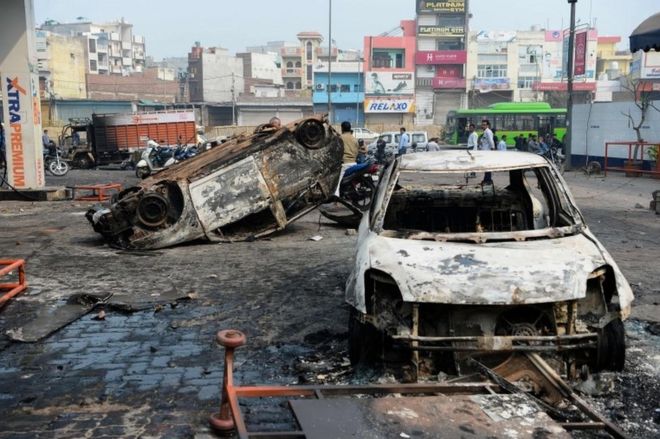
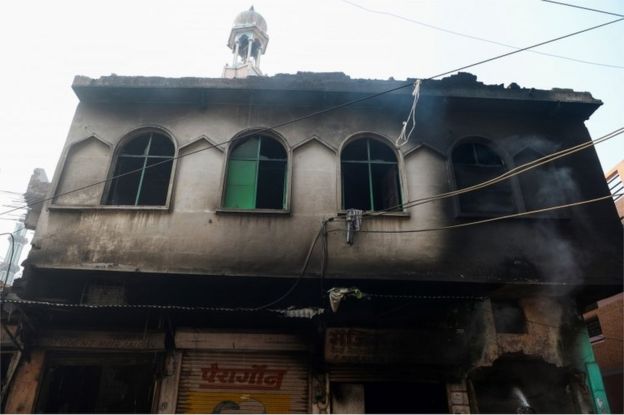
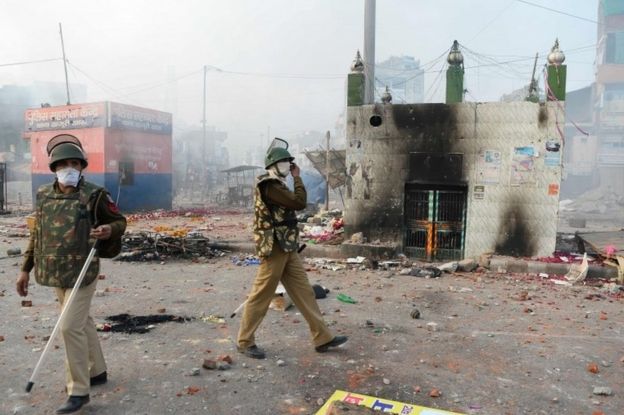
burnt-out mosque and shops are seen following clashes between people supporting and opposing a contentious amendment to India"s citizenship law, in New Delhi on February 26, 2020.Image copyright AFP
Image caption Mosques have been vandalised in the clashes

In the run-up to the Delhi elections Mr Modi’s party embarked on a polarising campaign around a controversial new citizenship law, the stripping of Kashmir’s autonomy and building a grand new Hindu temple on a disputed holy site. Party leaders freely indulged in hate speech, and were censured by poll authorities. A widely reported protest against the citizenship law by women in Shaheen Bagh, a Muslim-dominated neighbourhood in Delhi, was especially targeted by the BJP’s campaign, which sought to show the protesters as “traitors”.

“The repercussion of this campaign machine is the normalisation of suspicion and hate reflected in WhatsApp groups, Facebook pages, and conversations families have among themselves,” says Mr Joshi.

It was only a matter of time before Delhi’s fragile stability would be shaken. On Sunday a BJP leader issued a threat, telling the Delhi police they had three days to clear the sites where people had been protesting against the citizenship law and warned of consequences if they failed to do so. The first reports of clashes emerged later that day. The ethnic violence that followed was a tragedy foretold.

Source: The BBC
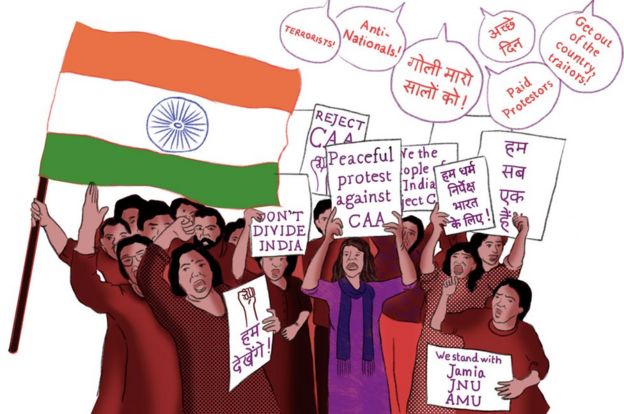
25/02/2020

Donald Trump in India: Seven killed in Delhi violence during visit

Seven people have been killed in Delhi in protests against India’s controversial new citizenship law, as US President Donald Trump made his first official visit to the country.

Violence has erupted again in parts of north-east Delhi, which saw deadly clashes between supporters and opponents of the law on Monday night.

Two journalists have been attacked and BBC reporters in the area say mobs are throwing stones and shouting slogans.

There are fears of further clashes.

Mobs in parts of north-east Delhi are throwing stones at each other, and the situation remains tense, according to BBC correspondents.

A policeman and six civilians have died in Delhi’s deadliest violence since the Citizenship Amendment Act (CAA) – which critics say is anti-Muslim – was passed last year.

Around 150 people, including 48 policemen, are reportedly injured.

Policemen stand on a vandalised road following clashes between supporters and opponents of a new citizenship law, at Bhajanpura area of New Delhi on February 24, 2020, ahead of US President arrival in New Delhi.Image copyright AFP

“There are around 200 people, some are holding the Indian flag in their hands, others are holding saffron flags, generally associated with right-wing Hindu groups. They are chanting Jai Shri Ram [hail Lord Ram],” BBC Hindi reporter Faisal Mohammed said.

The crowd was also shouting “shoot the traitors”, our reporter added.

Correspondents say the timing of the unrest is an embarrassment to Prime Minister Narendra Modi as he hosts the US president and the violence has taken the spotlight away from Mr Trump’s visit.

Where is the violence?

It broke out in three Muslim-majority areas in north-east Delhi on Sunday and has continued since.

The violence in the area has seen protesters firmly split along religious lines, BBC reporters at the scene say.

Both sides have blamed each other for starting the clashes.

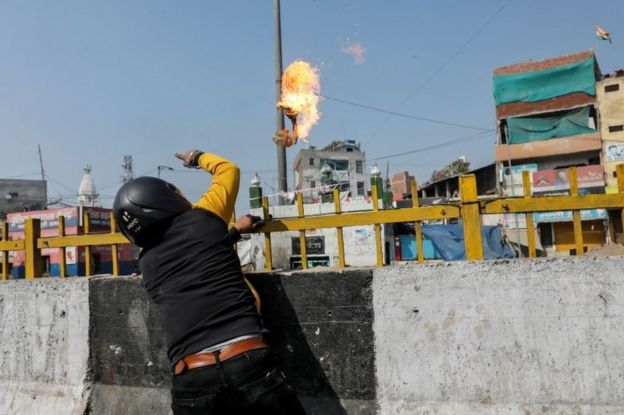
A man supporting a new citizenship law throws a petrol bomb at a Muslim shrine during a clash with those opposing the law in New Delhi India, February 24, 2020Image copyright REUTERS
Image caption The violence in the Muslim-majority areas in north-east Delhi began on Sunday

The violence has been linked to a BJP leader, Kapil Mishra, who had threatened a group of protesters staging a sit-in against the CAA over the weekend, telling them that they would be forcibly evicted once Donald Trump had left India.

The clashes spilled into Monday and police fired tear gas shells and led baton charges to disperse the stone-throwing crowds. TV footage showed flames and smoke billowing from buildings.

Eyewitnesses said they saw charred vehicles and streets full of stones in areas like Jaffrabad and Chand Bagh on Tuesday morning. Police were allowing people to enter only after checking their identity cards. Some Metro stations have also been shut.

Who are the dead and injured?

Six civilians and one policeman have been killed in the violence so far.

“One of the seriously injured is a senior police officer. He has now been moved to another hospital for specialised treatment,” an official said.

Two journalists belonging to the NDTV news channel were badly beaten while they were out reporting on Tuesday morning.

Shahid Alvi, an auto rickshaw driver, died because of a bullet injury he suffered during the protest. His brother Rashid told BBC Hindi that Shahid was married just a month ago.

“He was shot in the stomach and died while we were taking him to the hospital,” he said.

Another victim has been identified as Rahul Solanki.

His brother, Rohit Solanki, told BBC Hindi that he died after being shot as he tried to escape from a mob.

“He had gone out to buy groceries when he was suddenly surrounded. He was shot at point blank range. We tried taking him to four hospitals but we were turned away,” he said.

What are officials doing?

Delhi’s freshly re-elected Chief Minister Arvind Kejriwal, called on the federal government to restore law and order.

“There are not enough police on the streets [in the affected areas]. Local police are saying they are not getting orders from above to control the situation, and they are not able to take action,” he told reporters.

The capital’s police force reports directly to Mr Modi’s ruling Bharatiya Janata Party (BJP)-led government.

Home Minister Amit Shah, who is in-charge of Delhi’s police forces, is holding a meeting with Mr Kejriwal to discuss the situation.

Protesters seen during clashes between a group of anti-CAA protestors and supporters of the new citizenship act, near Maujpur and Jaffrabad metro station on February 24, 2020 in New DelhiImage copyright GETTY IMAGES
Image caption The police and protesters fought pitched battles on the streets of Delhi

What is the citizenship act about?

The Citizenship Amendment Act (CAA) grants amnesty to non-Muslim immigrants from three nearby Muslim-majority countries.

The new law has raised fears that India’s secular status is at risk.

Critics say it discriminates against Muslims. But the government says the protests are unnecessary as it only seeks to give amnesty to persecuted minorities.

Protests so far have been largely led by Muslim women and men, but a lot of Hindus have also joined them.

Media caption ‘Our son was shot dead by police’

Source: The BBC
25/02/2020

After raucous welcome in India, Trump clinches $3 billion military equipment sale

NEW DELHI (Reuters) – U.S. President Donald Trump said on Tuesday that India will buy $3 billion worth of military equipment, including attack helicopters, as the two countries deepen defence and commercial ties in an attempt to balance the weight of China in the region.

India and the United States were also making progress on a big trade deal, Trump said. Negotiators from the two sides have wrangled for months to narrow differences on farm goods, medical devices, digital trade and new tariffs.

Trump was accorded a massive reception in Indian Prime Minister Narendra Modi’s home state on Monday, with more than 100,000 people filling into a cricket stadium for a “Namaste Trump” rally.

On Tuesday, Trump sat down for one-on-one talks with Modi followed by delegation-level meetings to try and move forward on issues that have divided them, mainly the festering trade dispute.

After those meetings, Trump said his visit had been productive with the conclusion of deals to buy helicopters for the Indian military. India is buying 24 SeaHawk helicopters from Lockheed Martin equipped with Hellfire missiles worth $2.6 billion and also plans a follow-on order for six Apache helicopters.

India is modernising its military to narrow the gap with China and has increasingly turned to the United States over traditional supplier, Russia.

Trump said the two countries were also making progress on a trade deal, which had been an area of growing friction between them.

“Our teams have made tremendous progress on a comprehensive trade agreement and I’m optimistic we can reach a deal that will be of great importance to both countries,” said Trump in remarks made alongside Modi.

The two countries had initially planned to produce a “mini deal”, but that proved elusive.

Instead both sides are now aiming for a bigger package, including possibly a free trade agreement.

Trump said he also discussed with Modi, whom he called his “dear friend”, the importance of a secure 5G telecoms network in India, ahead of a planned airwaves auction by the country.

The United States has banned Huawei, arguing the use of its kit creates the potential for espionage by China – a claim denied by Huawei and Beijing – but India, where telecoms companies have long used network gear from the Chinese firm, is yet to make a call.

Trump described Monday’s rally in Ahmedabad and again praised Modi and spoke of the size of the crowd, claiming there were “thousands of people outside trying to get in..

“I would even imagine they were there more for you than for me, I would hope so,” he told Modi. “The people love you…every time I mentioned your name, they would cheer.”

In New Delhi, Trump was given a formal state welcome on Tuesday at the red sandstone presidential palace with a 21-cannon gun salute and a red coated honour guard on horseback on a smoggy day.

HUG GETS TIGHTER

India is one of the few big countries in the world where Trump’s personal approval rating is above 50% and Trump’s trip has got wall-to-wall coverage with commentators saying he had hit all the right notes on his first official visit to the world’s biggest democracy.

They were also effusive in their praise for Modi for pulling off a spectacular reception for Trump.

“Modi-Trump hug gets tighter,” ran a headline in the Times of India.

But in a sign of the underlying political tensions in India, violent protests broke out in Delhi on Monday over a new citizenship law that critics say discriminates against Muslims and is a further attempt to undermine the secular foundations of India’s democracy. They say the law is part of a pattern of divisiveness being followed by Modi’s Hindu nationalist Bharatiya Janata Party.

At least 7 people were killed and about 150 injured in the clashes that took place in another part of the capital, away from the centre of the city where Modi is hosting Trump.

In his speech on Monday, Trump extolled India’s rise as a stable and prosperous democracy as one of the achievements of the century. “You have done it as a tolerant country. And you have done it as a great, free country,” he said.

Delhi has also been struggling with high air pollution and on Tuesday the air quality was moderately poor at 193 on a government index that measures pollution up to a scale of 500. The WHO considers anything above 60 as unhealthy.

Source: Reuters

23/02/2020

Crossing Divides: What happens when pen pals reunite

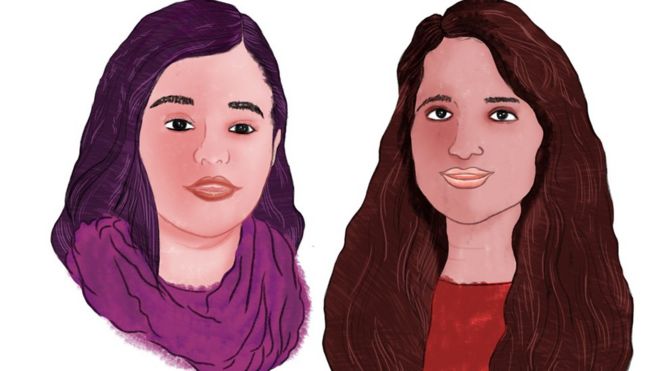
Illustration depicting Duaa and Saumya

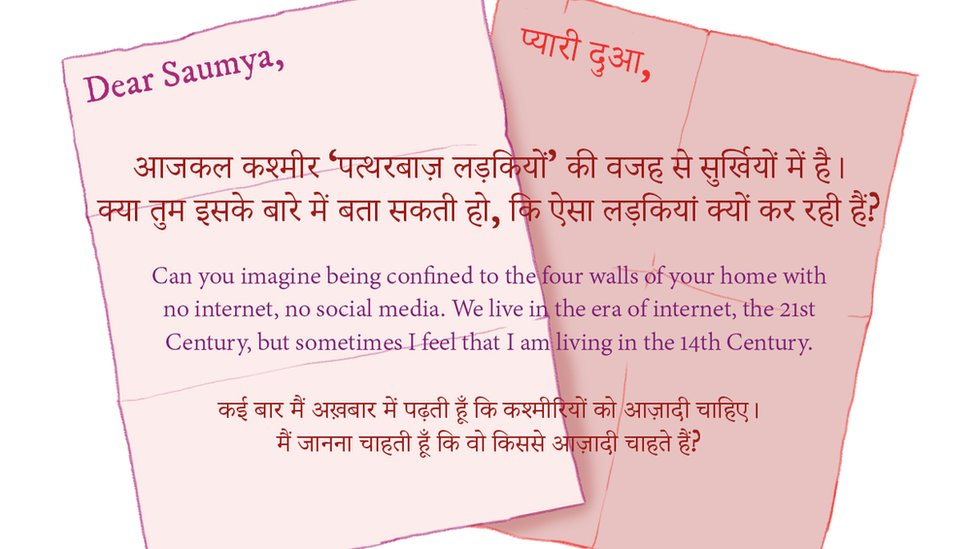
Duaa Bhat is a 17-year-old girl in Indian-administered Kashmir, one of the most heavily militarised zones in the world. Two years ago, she became pen pals with Saumya Sagarika, 18, from the country’s capital, Delhi, in a bid to understand the different worlds they were growing up in.

The army has been deployed in Kashmir, India’s only Muslim-majority region, since the rise of an armed rebellion in 1989. As Saumya discovered through her letters, Duaa’s studies were interrupted by strikes and school shutdowns. The problem was often compounded by the Indian government who would deliberately shut down or “snap” internet and social media.

Then, in August last year, the government removed Kashmir’s special status – which provided a degree of autonomy under article 370 of the country’s constitution – and imposed a communication clampdown. Schools were closed, thousands including politicians were placed under detention, and phone lines and internet were blocked.

Five months later, as the government began to ease communication restrictions, Saumya began writing to Duaa again. Here are edited excerpts from their letters.

Illustration depicting Duaa and Saumya's letters

Dear Duaa

A warm hello from Delhi. How are you? How is everyone in your family? We didn’t really continue our promise of staying “pen pals” after our last round of letters, but I am very happy to restart our conversation.

A lot must have changed in your life and the circumstances around you in the past two years too. I got to know that Section 370 was removed from Kashmir a few months back and for some time telecommunications were snapped there, and internet is probably still not working.

I am sure the situation must have changed. I hope everyone is safe there?

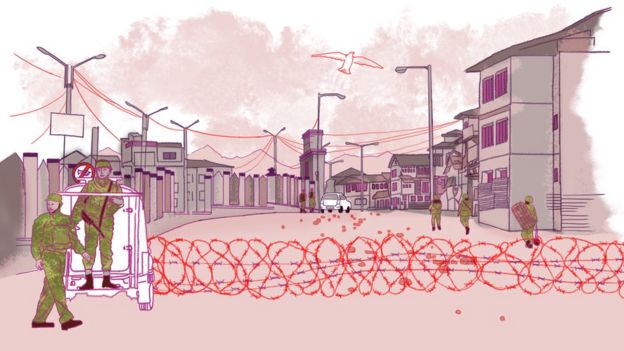
An illustration of a street with barbed wire across it

Dear Saumya

A chilling salaam from Kashmir.

Chilling because it is really, really cold here these days. I am good and, Allhamdullilah, everyone in my family is doing good. We didn’t continue being pen pals because the internet here is down most of the time and staying in touch with anyone outside the valley is a task in itself.

I was really happy to know that you’ve started college and your studies are going well. People like me have suffered the most in the past few months. We used to study ourselves with some help from the magic of the internet. Only the Almighty knows how we’ve completed our syllabus in time for exams.

People here are not happy with the removal of our special status. Personally, I feel depriving people of even talking to their near and dear ones is a violation of human rights.

Saumya, most people, including myself, do not understand the protests in the rest of the country. News channels here do not give us enough information to understand what the CAA (Citizenship Amendment Act) really is. Can you brief me about them?

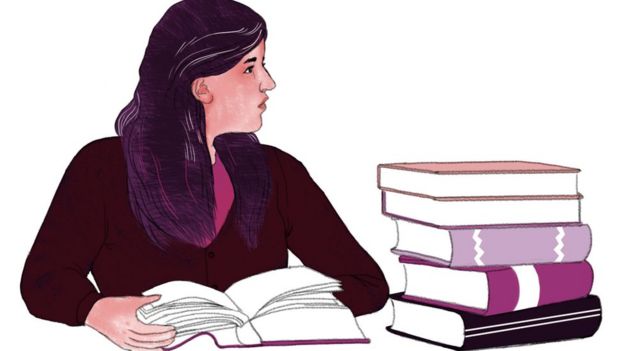
Illustration depicting Duaa with her books

In December, India’s parliament passed the CAA, which offers amnesty to non-Muslim illegal immigrants from the three nearby Muslim-majority countries – Pakistan, Afghanistan and Bangladesh. It sparked massive protests as many considered it discriminatory against Muslims, something the government denies. Saumya, a Hindu, joined the hundreds of mostly Muslim women in a Delhi street protest against the new citizenship laws.

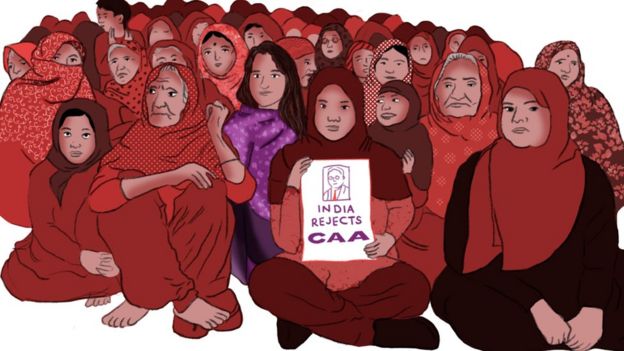
Illustration depicting the Shaheen Bagh protest

Dear Duaa

It is quite cold in Delhi too but the mood is really hot.

A few days back, I went to the protest at Delhi’s Shaheen Bagh. Women have been protesting against this act there for the past 26 days. These women are not university professors or activists but homemakers, women who remain in purdah, who have stepped out on to the streets to protest. They are fighting this battle so their children are able to lead their lives in peace.

After witnessing the enthusiasm among people at Shaheen Bagh, I’ll say people are prepared to fight this battle for our rights.

In your last letter, you wrote that you’d heard slogans like, “They wanted Kashmir to become like India but have made India into Kashmir”, were being chanted in Delhi. You are 100% right.

Since this protest movement started, all of Delhi is feeling like Kashmir. Like internet/phone shutdowns, section 144 (curfew) being imposed, stone-throwing and police lathi-charge (using long batons) during protests. So I can say that today I understand Kashmir and the situation facing people living there quite well.

Illustration depicting the shutdown in Kashmir

Dear Saumya

From what you said about CAA, I feel we are going back in time instead of moving forward. I still can’t believe that even in the 21st Century some people discriminate against others on the basis of caste, religion and, in some parts of society, even gender.

These protests are a proof that people still believe in taking a stand for each other and that humanity is still alive. Unlike other places in India, Kashmir has been really calm about this act. In our hearts we know this act is wrong but these days we Kashmiris couldn’t care less about what’s happening outside the valley. Our voices, our rights have been neglected in the past and are being neglected right now.

A couple of days ago, a Niti Aayog (a government think tank) member VK Saraswat defended the communication ban and he went as far as saying that Kashmiris do nothing but watch “dirty films” online. Even though he apologized later, these remarks cannot be just thrown out of our minds. Do people there really think that way about us? No one is talking about the problems we are facing right now due to the internet ban. Are we really invisible to the rest of the country?

Illustration depicting protests against the new citizenship laws

Religious identities come up repeatedly in Saumya and Duaa’s letters. In 1989-90, at the start of the rebellion, hundreds of thousands of Hindus – referred to as Pandits – were terrorised into leaving by Muslim militants. It tore apart the centuries-old harmony that existed between the two communities.

Dear Duaa

I feel that people here consider Kashmir a precious property of the country and don’t give any importance to its people. Just last week, there was a discussion on the film Shikara on TV. The film is based on Kashmiri Pandits. There has been no discussion of their plight for the past 30 years here. And I don’t think that people will go to watch this film or talk about it even now.

Through our letters I have been able to understand a lot about Kashmir and Muslims, which is different from common perceptions. We have lots of family friends who are Muslim but are unable to discuss such issues with them openly, lest we offend them. This CAA issue motivated me to protest, even though I am a Hindu.

As I have understood Kashmir through your letters, it has removed my apprehensions and made me even more curious about Kashmir and Kashmiris. Earlier I was afraid because of the image created by society and the media. But after our conversations, I am excited to go to Kashmir to understand and experience it myself. Is the Kashmir valley open for people from outside now?

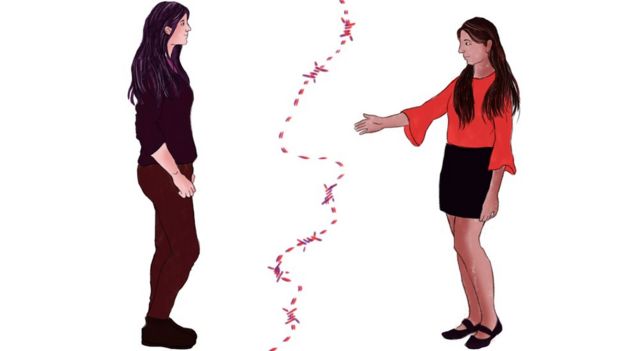
Illustration depicting Duaa and Saumya reaching out across barbed wire

Dear Saumya

I am writing this letter not from Kashmir, but from one of the most holy cities of the world – Mecca, Saudi Arabia. It’s an amazing feeling to watch Muslims from all around the world come to pray here.

I feel glad that you know the truth about Kashmir. The valley is open for tourists now (officially) but for us Kashmiris it was and will always be open for the people outside.

You know there is a place in the Khanyar area of Kashmir, where worshipping places of different religions are located on one hill. At the bottom is a Gurdwara (Sikh temple), in the middle a shrine and at the top a temple. My mother’s maiden home was near that area and they had Pandits as neighbours. In my childhood, my mother used to tell me various stories about the brotherhood between different communities.

Kashmir is a really beautiful place to live and I pray to the Almighty in this holy city of Mecca to make Kashmir a peaceful place again and to restore the brotherhood that was lost. I’m closing this letter with the hope that my dua (wish) comes true and you will come to Kashmir to meet me.

With lots of love

Duaa

22/02/2020

Trump in India: A brief history of US presidents’ trips

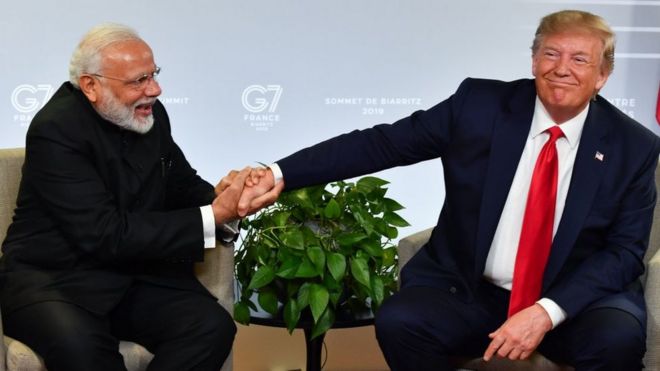
Indian Prime Minister Narendra Modi (L) and US President Donald Trump shakes hands as they speak during a bilateral meeting in Biarritz, south-west France on August 26, 2019.Image copyright GETTY IMAGES
Image caption Mr Trump is making his first official visit to India

US President Donald Trump is expecting a raucous welcome on his first official state visit to India on Monday and Tuesday.

He follows a long line of leaders who have made the journey. Some of his predecessors were greeted enthusiastically; others stumbled through diplomatic gaffes; one even had a village named after him.

Can history be a guide to how this diplomatic tryst might go? Here’s a brief look at past visits, ranked in order of how they went.

The good: President Eisenhower

Let’s begin at the beginning.

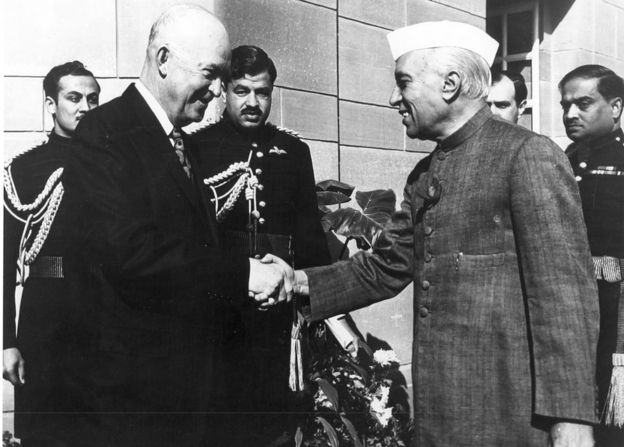
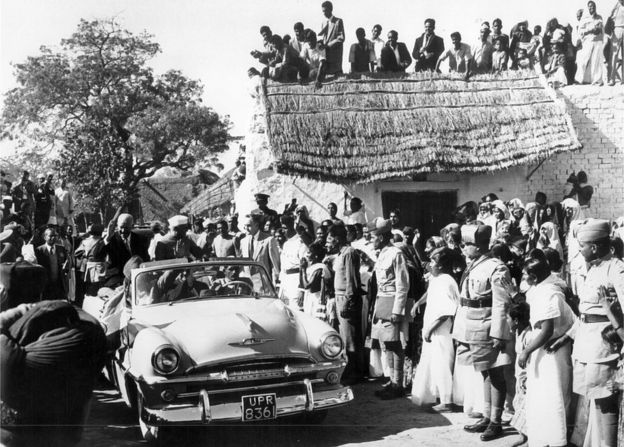
Dwight D Eisenhower, the first US president to visit India, was greeted with a 21-gun salute when he landed in the national capital, Delhi, in December 1959. Huge crowds lined the streets to catch a glimpse of the World War Two hero in his open-top car – Mr Trump is expecting a similar reception in Ahmedabad city, where he will be doing a road show.

President Eisenhower (L) with Prime Minister Jawaharlal NehruImage copyright US EMBASSY ARCHIVES
Image caption Dwight D Eisenhower, pictured with Prime Minister Jawaharlal Nehru, was the first US president to make the trip

The warmth between President Eisenhower and Indian Prime Minister Jawaharlal Nehru helped during what was a rocky phase in US-India ties. This was early in the Cold war, when the US and Pakistan had become become close allies, and India insisted on staying neutral or “non-aligned”. Like today, relations with China were at the core of the India-US equation, with Washington pressuring Delhi to take an aggressive stance with Beijing on the issue of Tibet.

But, on the whole, Eisenhower’s four-day trip was billed a success. And nearly every US president on a state visit to India has emulated his itinerary: he laid flowers at Mahatma Gandhi’s memorial, took in the splendour of the Taj Mahal, addressed parliament and spoke at Delhi’s iconic Ramlila grounds, which, according to one news report, attracted one million people.

When he left, Nehru said he had taken with him “a piece of our heart”.

President Eisenhower drove in open car to small village to get a glimpse of rural India on December 13, 1959.Image copyright US EMBASSY ARCHIVES
Image caption President Eisenhower was greeted by large crowds
Presentational white spaceThe game-changer: Bill Clinton

If there was a game-changing visit, it would be Bill Clinton’s in March 2000 with Prime Minister Atal Bihari Vajpayee. Mr Clinton’s arrival came after a two-decade lull – neither Ronald Reagan nor George Bush Snr made the journey East. It came at a tricky time as Washington had imposed sanctions on Delhi following its 1999 test of a nuclear bomb.

But, according to Navtej Sarna, a former Indian Ambassador to the US, the five-day trip was “a joyous visit”. It included stops in Hyderabad, a southern city that was emerging as a tech hub, and Mumbai, India’s financial capital. “He came and saw the economic and cyber potential of India, and democracy in action,” says Mr Sarna.

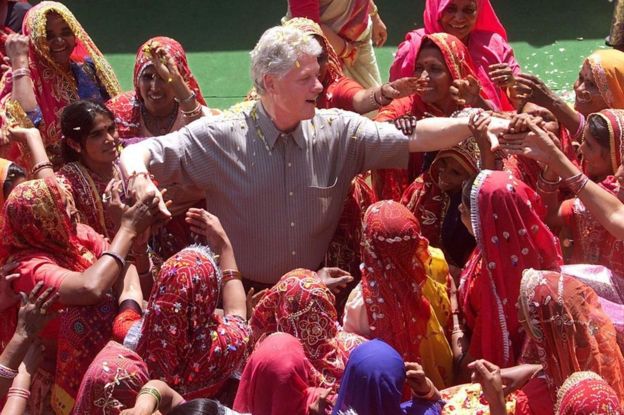
US President Bill Clinton shakes hands with local villagers after touring Nayla Village 23 March 2000.Image copyright GETTY IMAGES
Image caption Bill Clinton’s visit was described as “joyous”
Mr Clinton also danced with villagers, took a tiger safari and sampled Delhi’s famously creamy black dal (lentils) at a luxury hotel that has since been associated with the president.

The country’s reaction is perhaps best expressed in this New York Times headline: “Clinton fever – a delighted India has all the symptoms.”

The nuclear deal: George W Bush

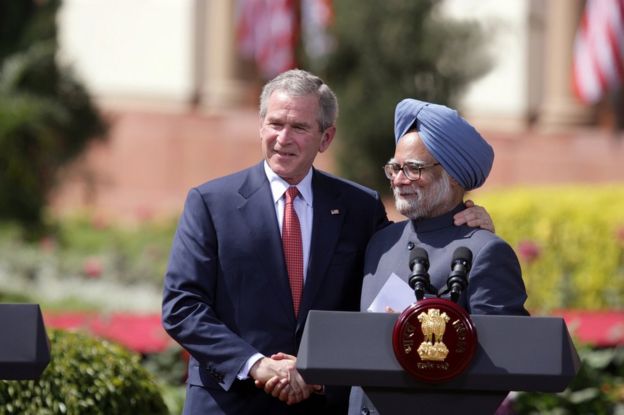
George W Bush, as Forbes magazine once put it, was the “best US president India’s ever had”. His three-day visit in March 2006 was a highlight in the two countries’ strategic relationship – especially in matters of trade and nuclear technology, subjects they have long wrangled over. His strong personal dynamic with Prime Minister Manmohan Singh was hard to miss – after he left office, Mr Bush, a keen artist, even painted a portrait of Mr Singh.

The two leaders are credited for a historic but controversial nuclear deal, which was signed during Mr Bush’s visit. It brought India, which had for decades refused to sign the Nuclear Non-Proliferation Treaty (NPT), out of isolation. Energy-hungry India got access to US civil nuclear technology in exchange for opening its nuclear facilities to inspection.

George W Bush (L) with Manmohan Singh (R)Image copyright US EMBASSY ARCHIVES
Image caption George W Bush and Manmohan Singh had a very good relationship
However, while the visit was substantive, it was not as spectacular as others – there was no trip to the Taj, nor an address to parliament. But the timing was important. Anti-US sentiment over the invasion of Iraq was running high – left-wing MPs had staged a protest against Mr Bush’s visit, and there were demonstrations in other parts of India.

Double visit: Barack Obama

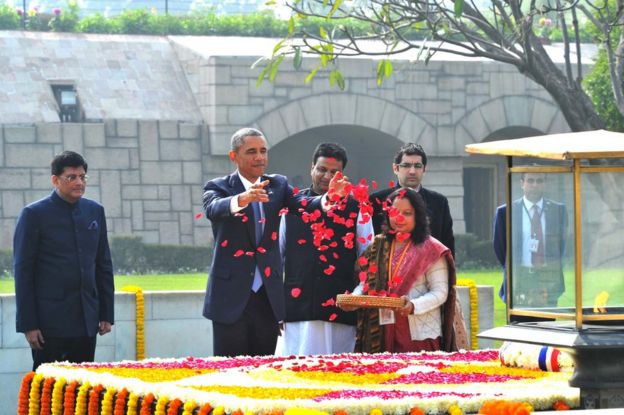
Barack Obama was the only president to make two official visits. First, in 2010 with Prime Minister Manmohan Singh, and then in 2015 with Prime Minister Narendra Modi.

On his first visit – in a break from the past – he landed in Mumbai, instead of Delhi, with a large trade delegation. This was not just about economic ties but a show of solidarity following the Mumbai terror attacks of 2008, which killed 166 people. Mr and Mrs Obama even stayed at the Taj Mahal hotel, one of the main targets.

It was significant that the US president declared support for India to join a reformed and expanded UN Security Council, says Alyssa Ayres, a former US deputy assistant secretary of state for South Asia. “That all these years later nothing has changed in the UN system is another matter, but that was a major policy shift for the United States.”

US President Barack Obama paying floral tributes at the samadhi of Mahatma Gandhi at Rajghat in Delhi.Image copyright US EMBASSY ARCHIVES
Image caption Barack Obama visited India twice
Mr Obama returned in 2015 as chief guest at India’s Republic Day celebrations, at PM Modi’s invitation. Trade, defence and climate change were at the heart of the talks. The trip also emphasised an Indo-Pacific strategy, where both leaders expressed unease over Beijing’s provocations in the South China Sea.

The not-so-good: Jimmy Carter

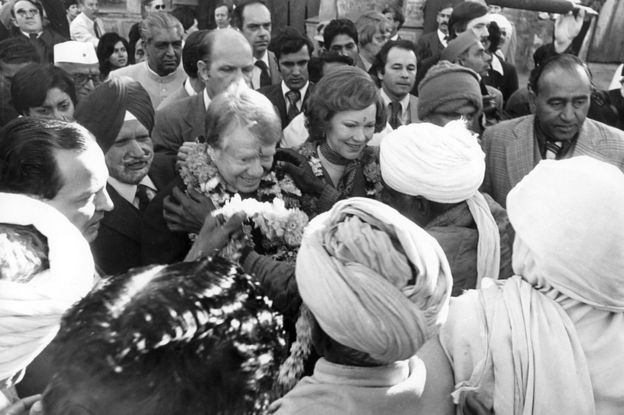
Although Jimmy Carter’s two-day visit in 1978 was a thaw in India-US relations, it was not free of hiccups.

With some 500 reporters in tow, Carter followed a packed itinerary: he met Prime Minister Morarji Desai, addressed a joint session of parliament, went to the Taj Mahal, and dropped by a village just outside Delhi.

The village, Chuma Kheragaon, had a personal connection: Carter’s mother, Lillian, had visited here when she was in India as a member of the Peace Corps in the late 1960s. So when Carter and his wife, Rosalynn, made the trip, they gave the village money and its first television set. It was even renamed “Carterpuri”, a moniker it still holds.

Jimmy Carter being greeted by villagers of 'Carterpuri'Image copyright US EMBASSY ARCHIVES
Image caption Jimmy Carter being greeted by villagers of ‘Carterpuri’
But beyond the photo-ops, India and the US were sparring. India was building its nuclear programme, and had conducted its first test in 1974. The US wanted India to sign the NPF, which sought to stop the spread of nuclear weapons. But India refused, saying the agreement discriminated against developing countries.

In a leaked conversation that made headlines and threatened to derail the visit, Mr Carter promised his Secretary of State, Cyrus Vance, a “very cold and very blunt” letter to Desai. The two leaders signed a declaration, promising greater global co-operation, but Carter left India without the assurances he had hoped for.

The ugly: Richard Nixon

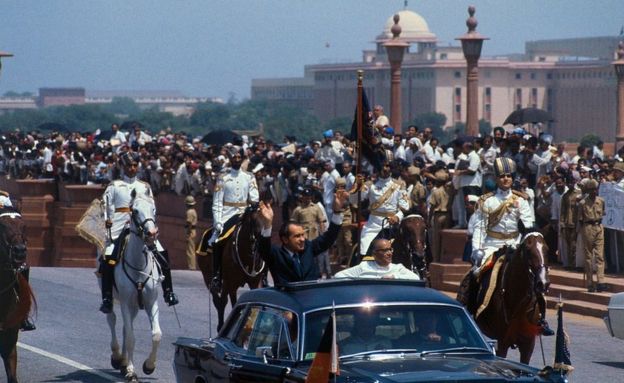
Richard Nixon was no stranger to India when he arrived in August 1969 for a day-long state visit. He had been here as vice-president in 1953, and before that on personal trips. But, by all accounts, he wasn’t a fan.

“Nixon disliked Indians in general and despised [Prime Minister] Indira Gandhi,” according to Gary Bass, author of Blood Telegram: Nixon, Kissinger and a Forgotten Genocide. And, he adds, the feeling was said to be mutual.

This was also at the height of the Cold War, and India’s non-alignment policy “appalled” American presidents. Mr Bass says that under Gandhi, India’s neutrality had turned into a “noticeably pro-Soviet foreign policy”.

President Richard Nixon waves to crowds as he rides in open car with the acting president of India, Mohammad Hidyatullah, in motorcade from airport upon arrival here July 31.Image copyright GETTY IMAGES
Image caption Richard Nixon waves to the crowds alongside Mohammad Hidyatullah, India’s acting president
The relationship only turned frostier after the trip as India backed Bangladesh (then East Pakistan) in its fight for independence from Pakistan, a close American ally. The differences were laid bare when Gandhi visited the White House in 1971. Declassified state department cables later revealed that Nixon referred to her as an “old witch”.

And the future: Donald Trump

The US and India have certainly had their ups and downs, but during the last official visit in 2015, Mr Obama and Mr Modi signed a declaration of friendship: “Chalein saath saath (Let’s move forward together)…” it began.

President Trump’s visit will take the relationship forward, but it’s unclear how.

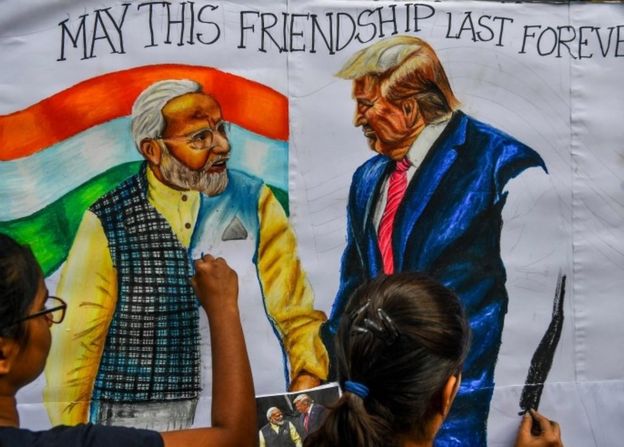
Students paint on canvas faces of US President Donald Trump (R) and India"s Prime Minister Narendra Modi, in the street in Mumbai on February 21, 2020, ahead of the visit of US President in IndiaImage copyright AFP

His arrival in Ahmedabad, the main city in PM Modi’s home state of Gujarat, followed by a big arena event, is expected to draw a massive crowd. It will echo President Eisenhower’s rally in Delhi years ago, perhaps cementing the personal ties between the two leaders.

But while Mr Trump’s trip will be packed with pageantry, it could be light on policy. Unlike other presidential visits, this one is not expected to yield concrete agreements, with the trade deal Mr Trump so badly wants looking unlikely.

Source: The BBC
Law of Unintended Consequences

continuously updated blog about China & India

ChiaHou's Book Reviews

continuously updated blog about China & India

What's wrong with the world; and its economy

continuously updated blog about China & India