Chindia Alert: You’ll be Living in their World Very Soon
aims to alert you to the threats and opportunities that China and India present. China and India require serious attention; case of ‘hidden dragon and crouching tiger’.
Without this attention, governments, businesses and, indeed, individuals may find themselves at a great disadvantage sooner rather than later.
The POSTs (front webpages) are mainly 'cuttings' from reliable sources, updated continuously.
The PAGEs (see Tabs, above) attempt to make the information more meaningful by putting some structure to the information we have researched and assembled since 2006.
Plunges in official and private sector purchasing managers’ indices amid the coronavirus outbreak prompted sharp revisions of economic forecasts
Analysts expect China to enact additional fiscal and monetary stimulus but stop short of massive support enacted after the global financial crisis in 2008
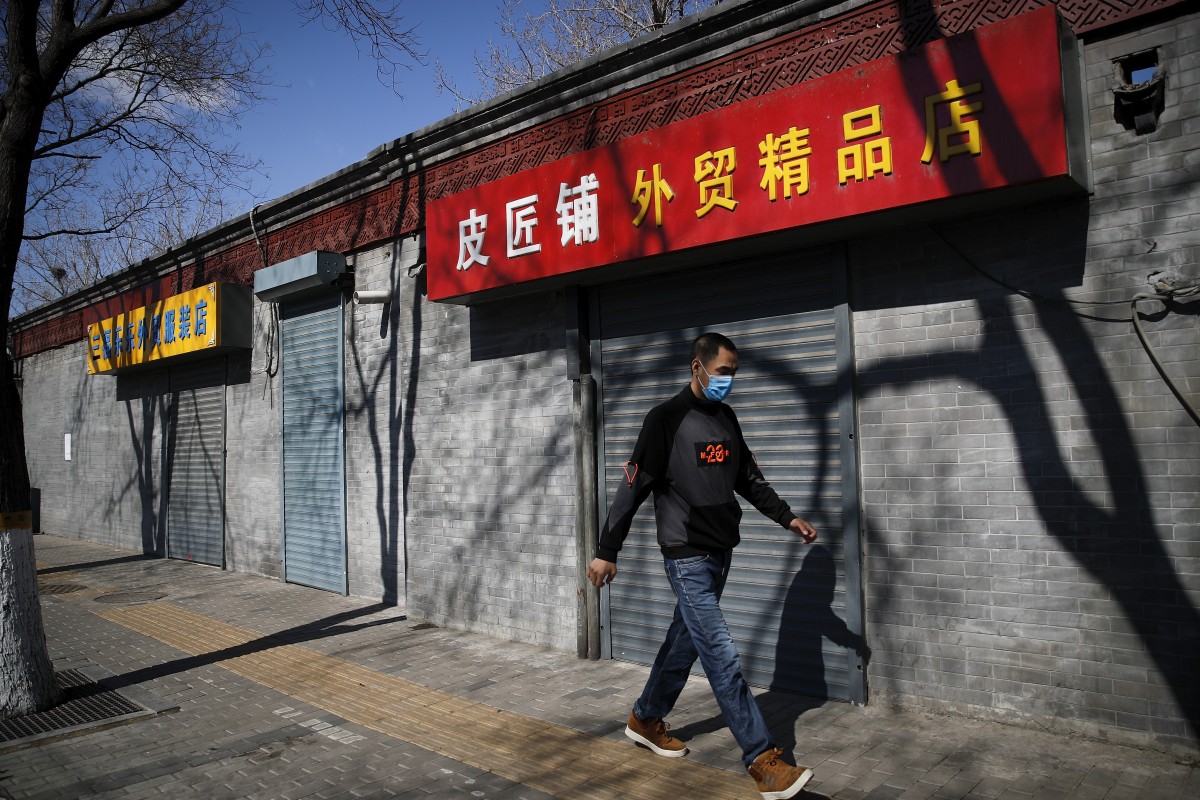
Due to the outbreak of the coronavirus, the once unthinkable scenario in which China’s economy posts a zero growth rate or even an absolute contraction compared to the previous quarter is now seen as a real possibility. Photo: AP
The odds are rising that China will report a sharp deceleration in growth – or even a contraction in the first quarter as a result of the impact of the coronavirus epidemic.
The outbreak has paralysed the country’s manufacturing and service sectors, putting Beijing in the difficult position of either forgoing its economic growth goal for 2020 or returning to its old playbook of massive debt-fuelled economic stimulus to support growth.
The larger-than-expected deterioration in the official and private sector purchasing managers’ indices for both the manufacturing and services sectors to all-time lows in February – the first available economic indicators showing the extent of the economic damage done by the epidemic – has prompted economists to slash their Chinese growth forecasts.
Several are even expecting the once unthinkable scenario in which China’s economy posts a zero growth rate or even an absolute contraction compared to the previous quarter, even though the weakness is likely to be only short-lived.
A contraction in first quarter growth would be the first since the end of the Cultural Revolution in 1976.
A report published by the East Asian Institute at the National University Singapore noted that China could report a contraction of 6.3 per cent in the first quarter from the first quarter of 2019, while the growth rate for 2020 is set to fall well short of the 5.6 per cent needed by Beijing to meet its economic goal.
If China still wants to achieve an average 5.6 per cent growth for 2020, it would have to engineer a growth rate of as high as 12.7 per cent in the second half of the year, according to the report by Bert Hofman, Sarah Tong and Li Yao.
“The question is whether this is feasible and whether the consequences in terms of increased debt and potentially less productive investment are worth the price,” according to the report.
What is gross domestic product (GDP)?
China’s headline year-over-year gross domestic product (GDP) growth rate has hovering in a narrow range between 6 per cent and 7 per cent for 18 consecutive quarters until the end of 2019, but a sharp dip in the otherwise steady growth trajectory in the world’s second largest economy would send fresh warning signs about the risks of relying excessively on China as a production base and consumption market, particularly for large multinationals from Hyundai to Apple.
An official recognition of an economic contraction, even a brief one, would break a long tradition of China reporting consistent growth to prove the Communist Party’s ability to manage the economy and to rally the whole country to achieve one historical milestone after another.
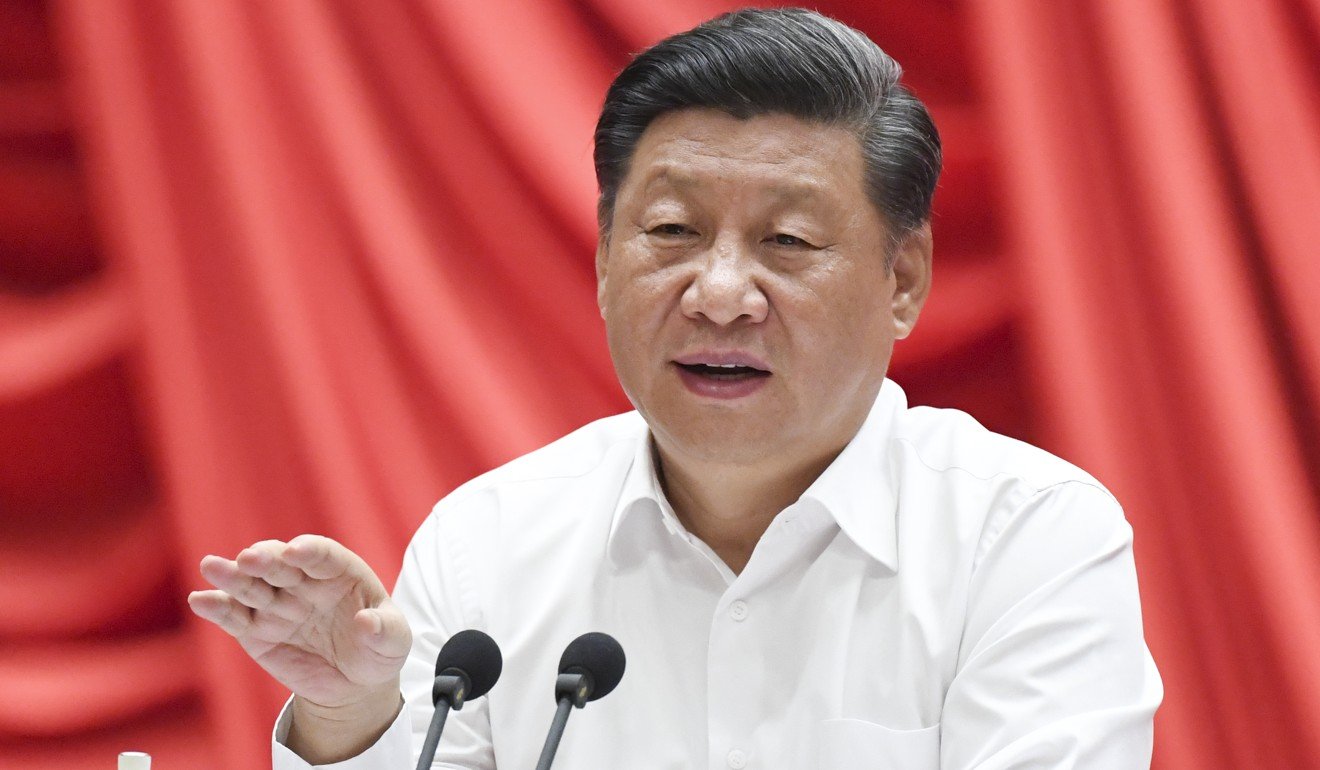
insisted last week that China would realise the vision of building up a “comprehensively well-off” society by 2020, an inheritance from China’s former paramount leader Deng Xiaoping and a major gauge of progress to realise Xi’s grand “Chinese dream” by the middle of the century.
One key but loosely defined parameter for achieving a “comprehensively well-off” society is that the size of the economy at the end of this year will be double that of 2010.
To achieve that, economists calculate that China must achieve a 5.6 per cent growth this year, although Beijing has been vague about the specific target, although this now seems out of reach barring massive stimulus or a redefinition of the goal.
Louis Kuijs, head of Asia economics at Oxford Economics, said his group has cut its forecast for the year-on-year growth rate to 2.3 per cent for the first quarter and 4.8 per cent for 2020 overall, adding that it would be next to impossible for China to make up the lost ground during the reminder of the year given the impact of the coronavirus
on the rest of the world, particularly South Korea, Japan and Italy, who are all major trading partners.
It will be extremely difficult, to say the least, to meet the annual growth targets for 2020 set previously. It would require massive, unreasonable amounts of stimulus, if it is at all possible, given the headwinds Louis Kuijs
“It will be extremely difficult, to say the least, to meet the annual growth targets for 2020 set previously. It would require massive, unreasonable amounts of stimulus, if it is at all possible, given the headwinds,” Kuijs said.
Instead, it would “make much more sense” for the Chinese leadership to play down the need to literally meet the previously set economic target,” he added.
Beijing’s social and economic development targets for this year have not yet been made public, even though Xi has pledged that the government would still achieve them despite the challenge posed by the virus outbreak.
The full-year targets covering growth, employment and inflation are usually released at the National People’s Congress, the ceremonial gathering of China’s legislature in early March, but this key annual event has been postponed due to the threat of the coronavirus, which has infected over 80,000 people and killed more than 2,900 in the country as of Tuesday.
China’s National Bureau of Statistics is due to publish first quarter GDP growth data in mid-April, with combined industrial production, retail sales and fixed-asset investment data for January and February due next week.
They will offer a clearer picture of how much the coronavirus epidemic has damaged China’s growth in the first two months of this quarter, although the damage it has caused in China and the rest of the world is hard to measure because the epidemic is still evolving.
Production among manufacturing companies across China, except in the virus epicentre of Wuhan, Hubei province, have been gradually returned to normal, with firms that have close ties to local governments and access to financial resources resuming production faster than the much larger number of small businesses.
Chinese diaspora fights coronavirus discrimination in the US
The latest data from China’s industry ministry showed that only 32.8 per cent of
had restarted production as of the middle of last week, an increase of just 3.2 percentage points from three days earlier. But even among the larger enterprises the government is trying to help, many are not running at full capacity due to disrupted logistics that have impeded the delivery of raw materials to factories and finished products to customers.
A shortage of workers due to travel barriers erected to stem the spread of the virus, or local regulations that prevent factories from resuming full operations until they have implemented sufficient health safeguards, are also hampering efforts.
Foxconn, which assembles most of Apple’s iPhones in China, said normal production is not expected to resume until the end of March.
China, though, has limited its economic aide policies to “targeted” fiscal and monetary moves, avoiding the massive stimulus it undertook in 2008 in response to the global financial crisis that led to the negative side-effects of high debt and unproductive investments.
[China] will be cautious about the scale of any intervention. The size of the stimulus will likely depend on how quickly economic activity recovers on its own Andy Rothman
Andy Rothman, a San Francisco-based strategist for investment fund Matthews Asia and a long-time watcher of the Chinese economy, said China will report a sharp fall in economic activity in the first quarter and that it “is prepared to implement a stimulus”.
“But [China] will be cautious about the scale of any intervention. The size of the stimulus
will likely depend on how quickly economic activity recovers on its own,” Rothman said.
China’s ruling Communist Party has never reported a contraction in economic growth since the country started the reform and opening up movement in 1978.
Even in 1990, when China was hit by Western sanctions following the crackdown on the 1989 pro-democracy movement, the country still reported an annual growth of 3.8 per cent.
The larger-than-expected fiscal and monetary policy stimulus will help make meeting the targets for 2020 less challengingLiu Li-Gang
In the history of quarterly GDP growth rates – China started to report such data in 1994 going back to 1992 – the lowest growth rate on record of 6.0 per cent was in the third and fourth quarters of 2019.
The most recent year that China admitted to an economic contraction was 1976, the final year of the Culture Revolution and the year when chairman Mao Zedong died.
Liu Li-Gang, the chief China economist for Citigroup Global Markets Asia in Hong Kong, said Beijing has the policy reserves to keep economic growth on track, including increasing the fiscal deficit and loosening monetary policy.
“The lower GDP growth [in the first quarter] means that larger fiscal and monetary policy easing will be needed,” Liu said. “The larger-than-expected fiscal and monetary policy stimulus will help make meeting the targets for 2020 less challenging.”
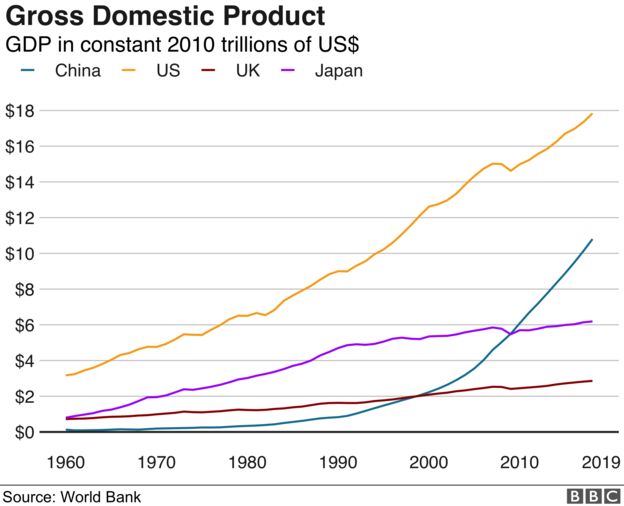
It took China less than 70 years to emerge from isolation and become one of the world’s greatest economic powers.
As the country celebrates the anniversary of the founding of the People’s Republic of China, we look back on how its transformation spread unprecedented wealth – and deepened inequality – across the Asian giant.
“When the Communist Party came into control of China it was very, very poor,” says DBS chief China economist Chris Leung.
“There were no trading partners, no diplomatic relationships, they were relying on self-sufficiency.”
Over the past 40 years, China has introduced a series of landmark market reforms to open up trade routes and investment flows, ultimately pulling hundreds of millions of people out of poverty.
The 1950s had seen one of the biggest human disasters of the 20th Century. The Great Leap Forward was Mao Zedong’s attempt to rapidly industrialise China’s peasant economy, but it failed and 10-40 million people died between 1959-1961 – the most costly famine in human history.
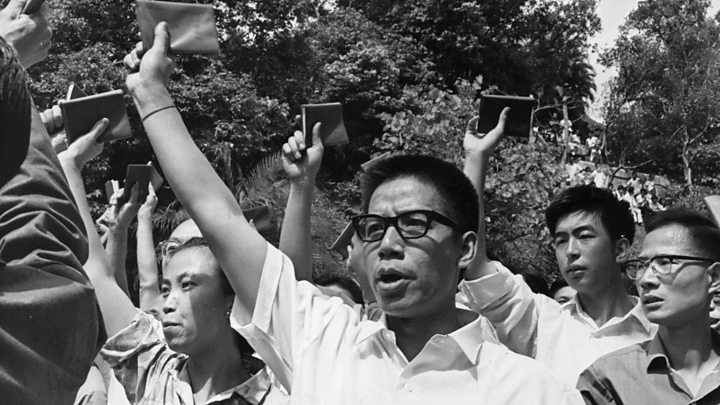
This was followed by the economic disruption of the Cultural Revolution in the 1960s, a campaign which Mao launched to rid the Communist party of his rivals, but which ended up destroying much of the country’s social fabric.
‘Workshop of the world’
Yet after Mao’s death in 1976, reforms spearheaded by Deng Xiaoping began to reshape the economy. Peasants were granted rights to farm their own plots, improving living standards and easing food shortages.
The door was opened to foreign investment as the US and China re-established diplomatic ties in 1979. Eager to take advantage of cheap labour and low rent costs, money poured in.
“From the end of the 1970s onwards we’ve seen what is easily the most impressive economic miracle of any economy in history,” says David Mann, global chief economist at Standard Chartered Bank.
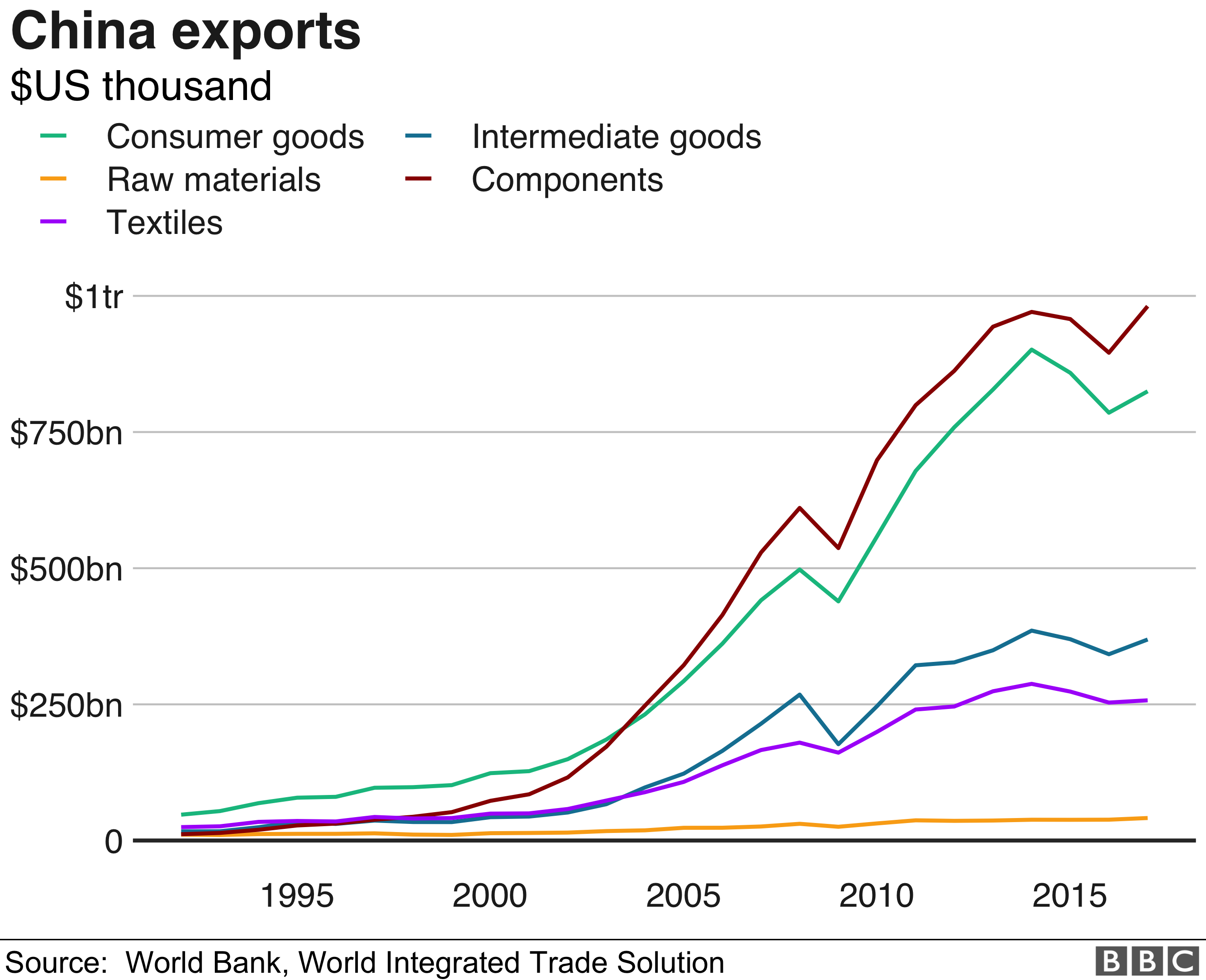
Through the 1990s, China began to clock rapid growth rates and joining the World Trade Organization in 2001 gave it another jolt. Trade barriers and tariffs with other countries were lowered and soon Chinese goods were everywhere.
“It became the workshop of the world,” Mr Mann says.
Take these figures from the London School of Economics: in 1978, exports were $10bn (£8.1bn), less than 1% of world trade.
By 1985, they hit $25bn and a little under two decades later exports valued $4.3trn, making China the world’s largest trading nation in goods.
Poverty rates tumble
The economic reforms improved the fortunes of hundreds of millions of Chinese people.
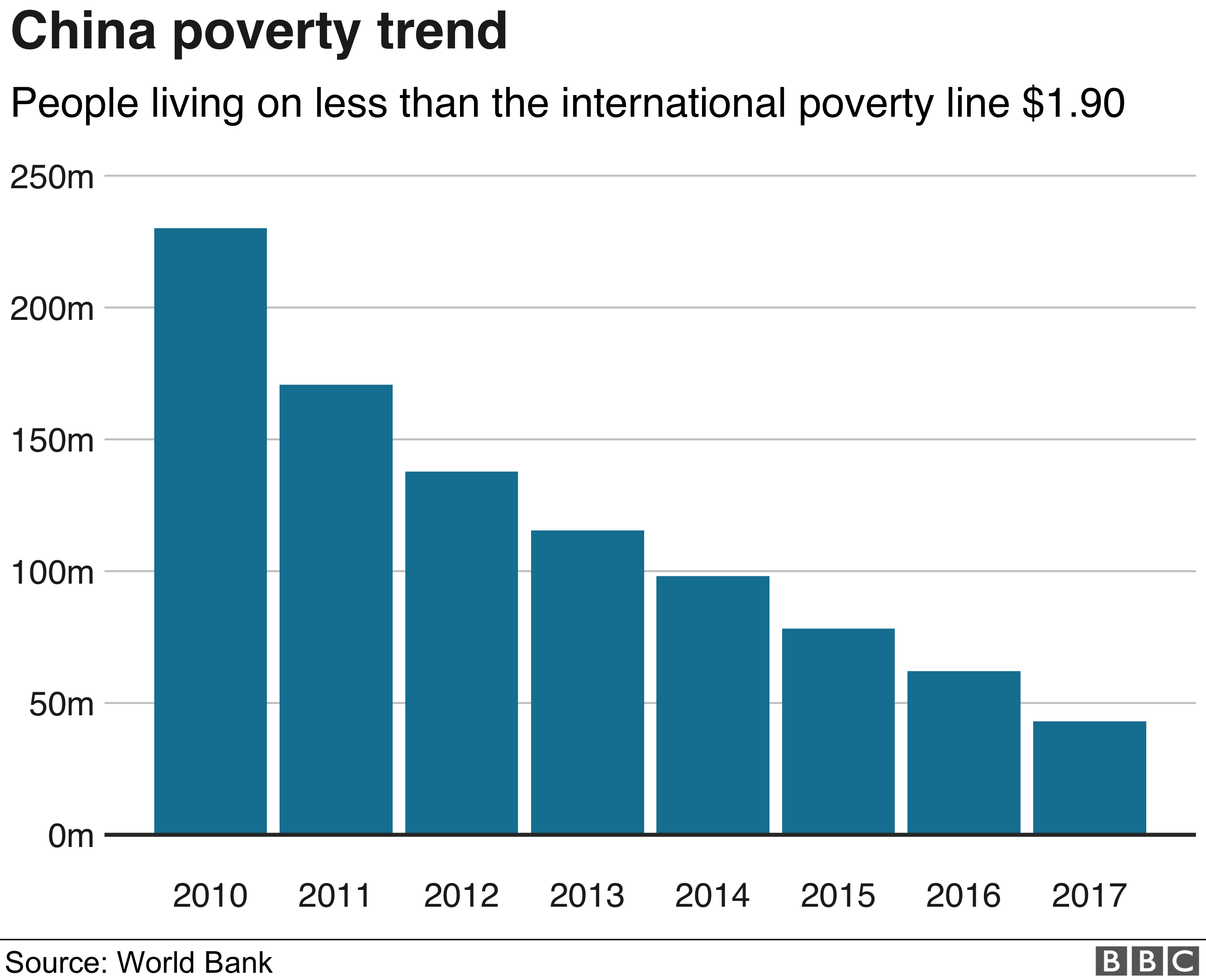
The World Bank says more than 850 million people been lifted out of poverty, and the country is on track to eliminate absolute poverty by 2020.
At the same time, education rates have surged. Standard Chartered projects that by 2030, around 27% of China’s workforce will have a university education – that’s about the same as Germany today.
Rising inequality
Still, the fruits of economic success haven’t spread evenly across China’s population of 1.3 billion people.
Examples of extreme wealth and a rising middle class exist alongside poor rural communities, and a low skilled, ageing workforce. Inequality has deepened, largely along rural and urban divides.
“The entire economy is not advanced, there’s huge divergences between the different parts,” Mr Mann says.
The World Bank says China’s income per person is still that of a developing country, and less than one quarter of the average of advanced economies.
China’s average annual income is nearly $10,000, according to DBS, compared to around $62,000 in the US.
Slower growth
Now, China is shifting to an era of slower growth.
For years it has pushed to wean its dependence off exports and toward consumption-led growth. New challenges have emerged including softer global demand for its goods and a long-running trade war with the US. The pressures of demographic shifts and an ageing population also cloud the country’s economic outlook.
Still, even if the rate of growth in China eases to between 5% and 6%, the country will still be the most powerful engine of world economic growth.
“At that pace China will still be 35% of global growth, which is the biggest single contributor of any country, three times more important to global growth than the US,” Mr Mann says.
The next economic frontier
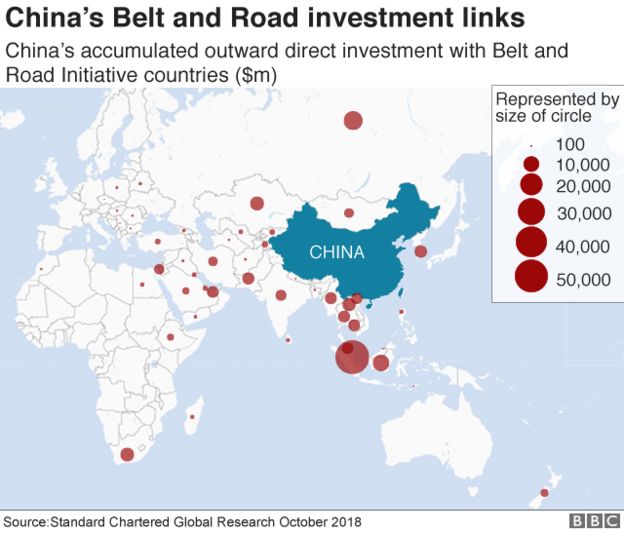
China is also carving out a new front in global economic development. The country’s next chapter in nation-building is unfolding through a wave of funding in the massive global infrastructure project, the Belt and Road Initiative.
The so-called new Silk Road aims to connect almost half the world’s populations and one-fifth of global GDP, setting up trade and investment links that stretch across the world.
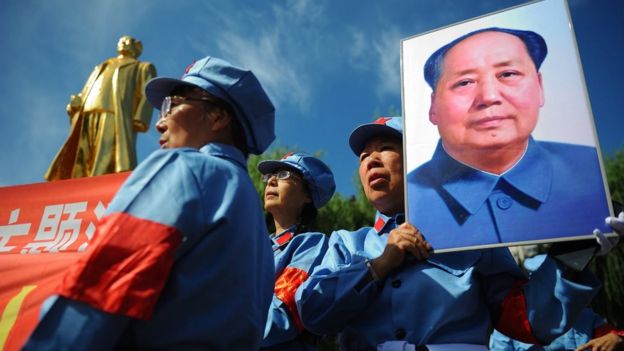
Image copyright GETTY IMAGESImage caption China’s version of its past is a story of prosperity, progress and sacrifice for the common good
China’s extraordinary rise was a defining story of the 20th Century, but as it prepares to mark its 70th anniversary, the BBC’s John Sudworth in Beijing asks who has really won under the Communist Party’s rule.
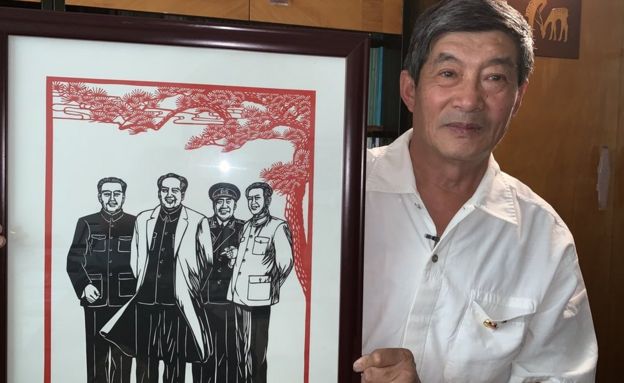
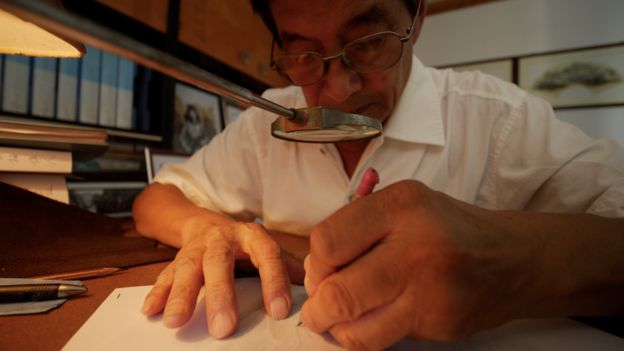
Sitting at his desk in the Chinese city of Tianjin, Zhao Jingjia’s knife is tracing the contours of a face.
Cut by delicate cut, the form emerges – the unmistakable image of Mao Zedong, founder of modern China.
The retired oil engineer discovered his skill with a blade only in later life and now spends his days using the ancient art of paper cutting to glorify leaders and events from China’s communist history.
“I’m the same age as the People’s Republic of China (PRC),” he says. “I have deep feelings for my motherland, my people and my party.”
Image caption For people like Zhao Jingjia, China’s success outweighs the “mistakes” of its leaders
Born a few days before 1 October 1949 – the day the PRC was declared by Mao – Mr Zhao’s life has followed the dramatic contours of China’s development, through poverty, repression and the rise to prosperity.
Now, in his modest but comfortable apartment, his art is helping him make sense of one of the most tumultuous periods of human history.
“Wasn’t Mao a monster,” I ask, “responsible for the deaths of tens of millions of his countrymen?”
“I lived through it,” he replies. “I can tell you that Chairman Mao did make some mistakes but they weren’t his alone.”
“I respect him from my heart. He achieved our nation’s liberation. Ordinary people cannot do such things.”
On Tuesday, China will present a similar, glorious rendering of its record to the world.
Beijing will tremble to the thunder of tanks, missile launchers and 15,000 marching soldiers, a projection of national power, wealth and status watched over by the current Communist Party leader, President Xi Jinping, in Tiananmen Square.
An incomplete narrative of progress
Like Mr Zhao’s paper-cut portraits, we’re not meant to focus on the many individual scars made in the course of China’s modern history.
It is the end result that matters.
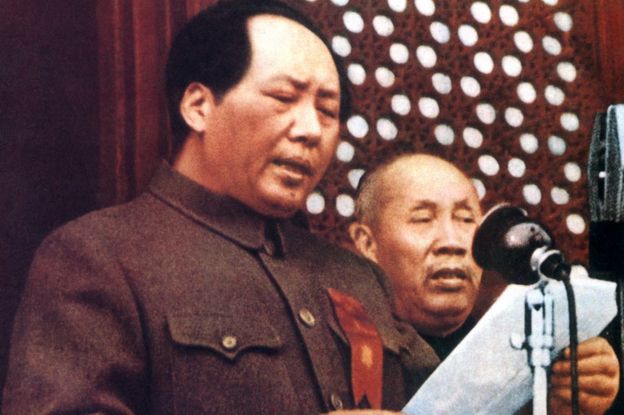
Image copyright XINHUA/AFPImage caption Mao Zedong pronounces the dawn of the People’s Republic of China on 1 October 1949
And, on face value, the transformation has been extraordinary.
On 1 October 1949, Chairman Mao stood in Tiananmen Square urging a war-ravaged, semi-feudal state into a new era with a founding speech and a somewhat plodding parade that could muster only 17 planes for the flyby.
This week’s parade, in contrast, will reportedly feature the world’s longest range intercontinental nuclear missile and a supersonic spy-drone – the trophies of a prosperous, rising authoritarian superpower with a 400 million strong middle class.
It is a narrative of political and economic success that – while in large part true – is incomplete.
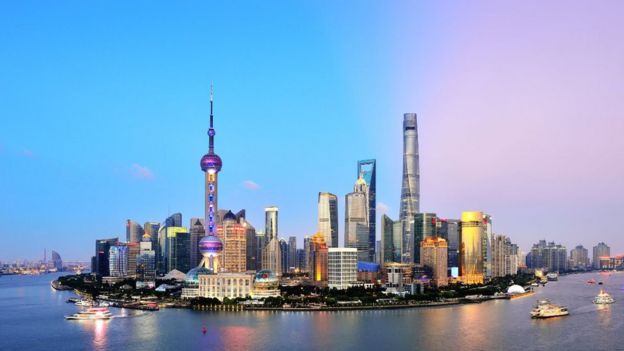
New visitors to China are often, rightly, awe-struck by the skyscraper-festooned, hi-tech megacities connected by brand new highways and the world’s largest high-speed rail network.
Image copyright GETTY IMAGESImage caption Those in China’s glittering cities may accept the trade-off of political freedom for economic growth
They see a rampant consumer society with the inhabitants enjoying the freedom and free time to shop for designer goods, to dine out and to surf the internet.
“How bad can it really be?” the onlookers ask, reflecting on the negative headlines they’ve read about China back home.
The answer, as in all societies, is that it depends very much on who you are.
Many of those in China’s major cities, for example, who have benefited from this explosion of material wealth and opportunity, are genuinely grateful and loyal.
In exchange for stability and growth, they may well accept – or at least tolerate – the lack of political freedom and the censorship that feature so often in the foreign media.
For them the parade could be viewed as a fitting tribute to a national success story that mirrors their own.
But in the carving out of a new China, the knife has cut long and deep.
The dead, the jailed and the marginalised
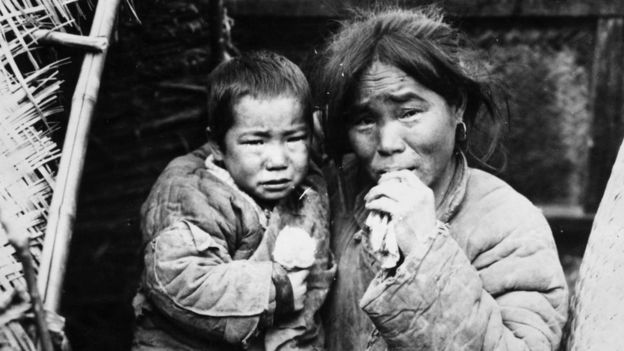
Mao’s man-made famine – a result of radical changes to agricultural systems – claimed tens of millions of lives and his Cultural Revolution killed hundreds of thousands more in a decade-long frenzy of violence and persecution, truths that are notably absent from Chinese textbooks.
Image copyright GETTY/TOPICALImage caption Tens of millions starved to death under Mao, as China radically restructured agriculture and society
After his death, the demographically calamitous One Child Policy brutalised millions over a 40-year period.
Still today, with its new Two Child Policy, the Party insists on violating that most intimate of rights – an individual’s choice over her fertility.
The list is long, with each category adding many thousands, at least, to the toll of those damaged or destroyed by one-party rule.
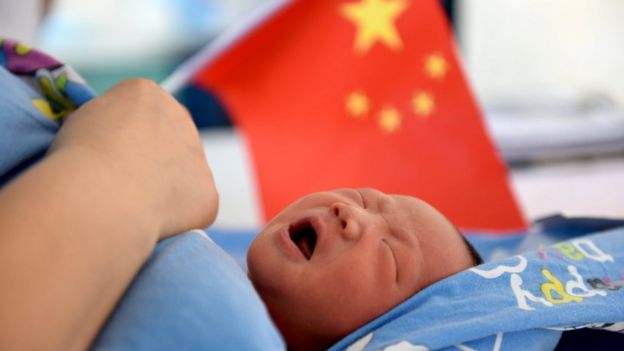
Image copyright GETTY IMAGESImage caption Beijing still regulates how many children families can have
There are the victims of religious repression, of local government land-grabs and of corruption.
There are the tens of millions of migrant workers, the backbone of China’s industrial success, who have long been shut out of the benefits of citizenship.
A strict residential permit system continues to deny them and their families the right to education or healthcare where they work.
And in recent years, there are the estimated one and a half million Muslims in China’s western region of Xinjiang – Uighurs, Kazakhs and others – who have been placed in mass incarceration camps on the basis of their faith and ethnicity.
China continues to insist they are vocational schools, and that it is pioneering a new way of preventing domestic terrorism.
The stories of the dead, the jailed and the marginalised are always much more hidden than the stories of the assimilated and the successful.
Viewed from their perspective, the censorship of large parts of China’s recent history is not simply part of a grand bargain to be exchanged for stability and prosperity.
Getty
Timeline of modern China
1949 Mao declares the founding of the People’s Republic of China
1966-76 Cultural Revolution brings social and political upheaval
1977 Deng Xiaoping initiates major reforms of China’s economy
1989 Army crushes Tiananmen Square pro-democracy protests
2010 China becomes the world’s second-largest economy
2018 Xi Jinping is cleared to be president for life
It is something that makes the silence of their suffering all the more difficult to penetrate.
It is the job of foreign journalists, of course, to try.
‘Falsified, faked and glorified’
But while censorship can shut people up, it cannot stop them remembering.
Prof Guo Yuhua, a sociologist at Beijing’s Tsinghua University, is one of the few scholars left trying to record, via oral histories, some of the huge changes that have affected Chinese society over the past seven decades.
Her books are banned, her communications monitored and her social media accounts are regularly deleted.
“For several generations people have received a history that has been falsified, faked, glorified and whitewashed,” she tells me, despite having been warned not to talk to the foreign media ahead of the parade.
“I think it requires the entire nation to re-study and to reflect on history. Only if we do that can we ensure that these tragedies won’t be repeated.”
Image copyright GETTY IMAGESImage caption Can progress really be attributed to the leadership?
A parade, she believes, that puts the Communist Party at the front and centre of the story, misses the real lesson, that China’s progress only began after Mao, when the party loosened its grip a bit.
“People are born to strive for a better, happier and more respectful life, aren’t they?” she asks me.
“If they are provided with a tiny little space, they’ll try to make a fortune and solve their survival problems. This shouldn’t be attributed to the leadership.”
‘Our happiness comes from hard work’
As if to prove the point about how the unsettled, censored pasts of authoritarian states continue to impact the present, the parade is for invited guests only.
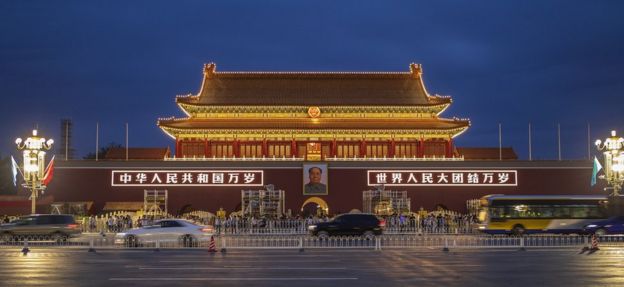
Image copyright GETTY IMAGESImage caption Mao’s portrait will, as it always is, be watching over the events in Tiananmen Square
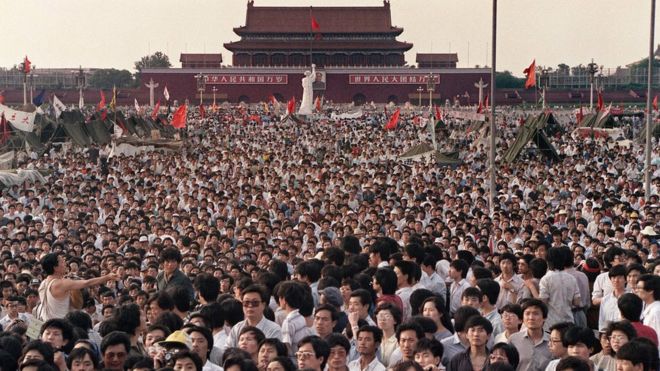
Another anniversary, of which Tiananmen Square is the centrepiece, is also being measured in multiples of 10 – it is 30 years since the bloody suppression of the pro-democracy protests that shook the foundations of Communist Party rule.
The troops will be marching – as they always do on these occasions – down the same avenue on which the students were gunned down.
The risk of even a lone protester using the parade to mark a piece of history that has largely been wiped from the record is just too great.
With central Beijing sealed off, ordinary people in whose honour it is supposedly being held, can only watch it on TV.
Back in his Tianjin apartment, Zhao Jingjia shows me the intricate detail of a series of scenes, each cut from a single piece of paper, depicting the “Long March”, a time of hardship and setback for the Communist Party long before it eventually swept to power.
“Our happiness nowadays comes from hard work,” he tells me.
It is a view that echoes that of the Chinese government which, like him, has at least acknowledged that Mao made mistakes while insisting they shouldn’t be dwelt on.
“As for the 70 years of China, it’s extraordinary,” he says. “It can be seen by all. Yesterday we sent two navigation satellites into space – all citizens can enjoy the convenience that these things bring us.”
Media caption What was China’s Cultural Revolution?
China Reconnects: Joining a Deep-rooted Past to a New World Order looks at how the Middle Kingdom is trying to build a modern civilisation without forgetting its heritage
The Scales of Justice and Lady Justice in front of China’s national flag. Photo: Alamy
China Reconnects: Joining a Deep-rooted Past to a New World Order is a new book by Australian historian Wang Gungwu. The book seeks to explain the new-found confidence among the Chinese in their capacity to learn all they need from the developed world while retaining enough from their past to build a modern civilisation. It does not employ theoretical frameworks to explain China’s rise, as Wang believes they are not appropriate to describe the changes sweeping the country. He calls for greater understanding of why history is particularly important to the Chinese state and its people, as the nation seeks the means to respond to a United States trying to preserve its dominant position in the international status quo.
Historian Wang Gungwu. Photo: Handout
Wang is university professor at the National University of Singapore and professor emeritus of the Australian National University. The book is published by World Scientific Publishing. Here are some excerpts.
CHINESE CHARACTERISTICS
Xi Jinping’s China inherited the policies that opened the country to the global economy. The policies created the conditions that made China prosperous and, to many, they put China on the world map again. At the same time, what Xi Jinping inherited also includes practices and lapses of discipline that led to corruption on an unprecedented scale. Deng Xiaoping might have expected some leakages in a more open system, but would not have thought that his party cadres could succumb to that extent.
China’s rise is peaceful, Xi Jinping tells foreign experts
Xi Jinping also inherited programmes from his predecessors “theories” like sange daibiao (Three Represents) and hexie shehuizhuyi shehui (Harmonious socialist society).
Given the pervasive corruption that he found in high places, he must have wondered how useful these theories were. The former was implicitly socialist, stressing productive forces, advanced culture and concern for the interests of the majority. The latter, however, was redolent of Confucian values, made even more explicit when Hu Jintao spoke of barong bachi, or “eight honours and eight disgraces”. Despite these exhortations, the corruption that accompanied them reminds us of conditions familiar to Chinese dynasties in decline.
Chinese President Xi Jinping inherited the policies that opened the country to the global economy. Photo: Xinhua
If the regime’s Chinese characteristics enabled officials to be corrupt and the rich to become excessively rich and selfish, where was the socialism? While no one would claim that everything in China’s past was desirable, surely there were better features that could have been chosen to inspire the present. Perhaps not all the corruption should be blamed on old feudal China; the open market economy with its capitalist characteristics is also known for creating the huge gap today between the super rich and the rest. If the capitalist mode is undermining socialist good intentions, are there Chinese characteristics that can protect China from that infection?
How China’s rise is revealing the cracks in US claims to legitimacy as global leader
Critics have been quick to attack as well as defend Confucian China and the market and no simple answer has been found. What Xi Jinping inherited was a collective leadership system that failed to police the Party. He thus reacted by asserting that the Party was in grave danger of collapse. The foremost patriotic act was to save the party. He has to find the socialism that could induce his comrades to rededicate themselves.
He turned to Karl Marx to emphasise its original inspiration and avoided the Russian duo, Lenin and Stalin. By stressing the importance of Marx’s world view and analytical methods, he could ignore the Soviet institutional baggage. Above all, Marx stood for the idea of progress, the modern import from the Enlightenment that has impressed generations of Chinese.
China’s modern story began by rebuilding a unified state. Those leaning towards socialism further agreed that the country had to have a strong centralised government, perhaps the most enduring feature of dynastic China. Sun Yat-sen had recognised that and wanted to be the leader with power to get things done. When Chiang Kai-shek seized power, he fought with every weapon available to maintain his supreme position. It was therefore not surprising that Mao Zedong thought that the Party leader should have full control. His victory over the Nationalists had put him in an unassailable position.
Thereafter, he could redefine the goals that fit his agenda. He was so successful that socialism in his hands became almost unrecognisable. Deng Xiaoping had a difficult time teaching another generation why socialism was progressive and why infusing it with Chinese characteristics would ensure its legitimacy.
China’s reform and opening must continue, 40 years after its ‘second revolution’
This was the background to the corrupted China that came so unexpectedly into Xi Jinping’s hands. From his appointment as party secretary in Shanghai to the Politburo Standing Committee and as vice-president, he had five years to prepare to become the leader of the country. Some of what went through his mind during that period may be gleaned from his writings when he served in Zhejiang, in the Zhijiang xinyu that he published in 2007, but more important was what he thought of a collective leadership that was headless.
Xi Jinping obviously believes that his anti-corruption campaign was vital to enable him to save the Party. His campaign also made him popular and he has tied the campaign to a new faith in socialism.
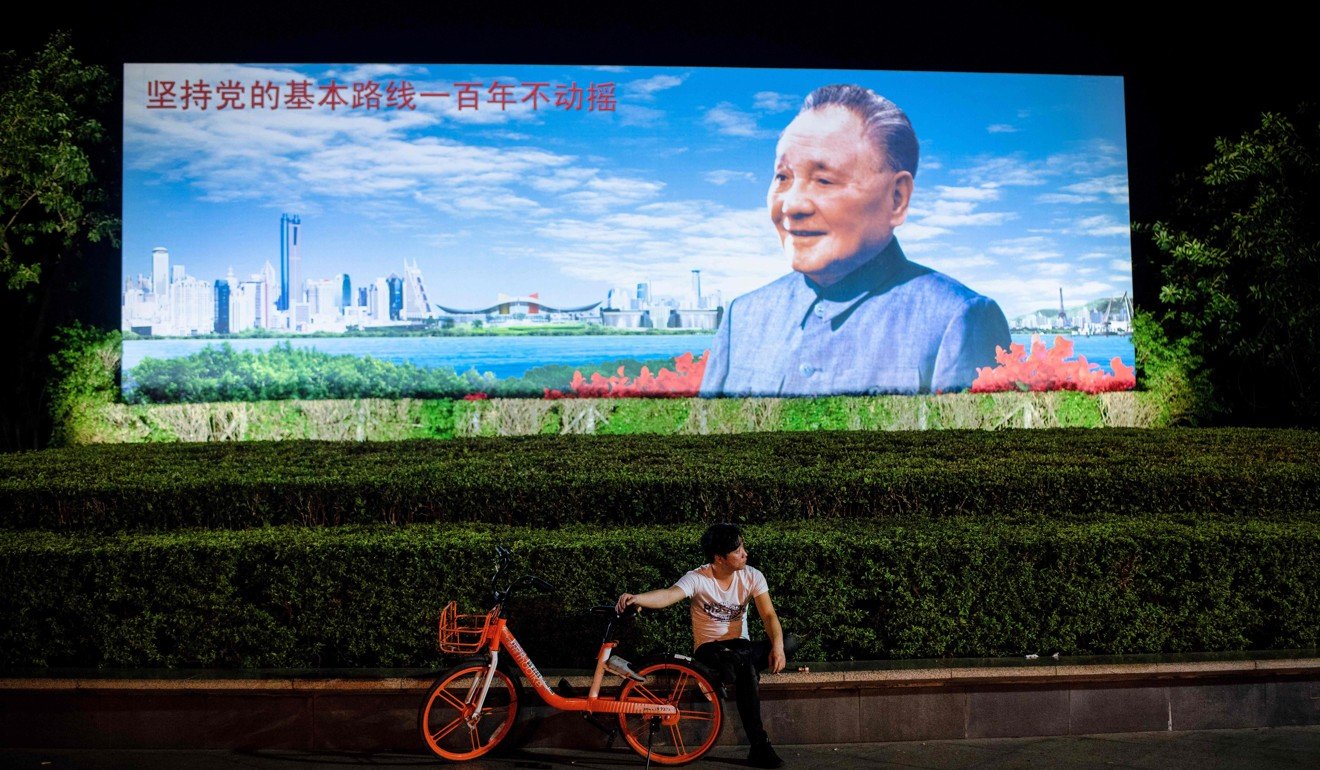
A poster of former Chinese leader Deng Xiaoping in Shenzhen. Photo: AFP
He has emphasised that Deng Xiaoping’s reforms saved the state and the Party and are integral to the power that he has inherited. He had worked dutifully in support of reform and this helped him rise to the highest office. His youthful experiences growing up with the peasants of the northwest taught him about failures as well as successes. That has led him to ask the Party to connect with the first 30 Maoist years as much as study the later years of reform. That way he confirmed the continuity of what he, his father and their comrades had committed their lives to serve. This attitude towards continuities in Chinese history has always looked to a strong state with powerful leaders. Xi Jinping discovered during his years of service what kind of power would be required to establish the caring and fair society that socialism stood for. When he became president, he not only knew that Mao Zedong as cult leader could not succeed but also that a leaderless collective endangered the Party. He has concluded that the Chinese way of doing socialism would have to be connected to the lessons learned throughout the Chinese past.
Where to now? 40 years after the big economic experiment that changed China
Only by recognising how relevant those lessons are can China confidently go forward to devise the modern state that it wants.
There is some truth in the French saying that the more things change the more things remain the same. The Chinese were even more directly paradoxical. They believed that change was inevitable and hence prepared for changes that could occur several times in a lifetime. When thus prepared, they hoped that each change would not destroy the things that were still valued. If the foundations survived, change could make the new become stronger.
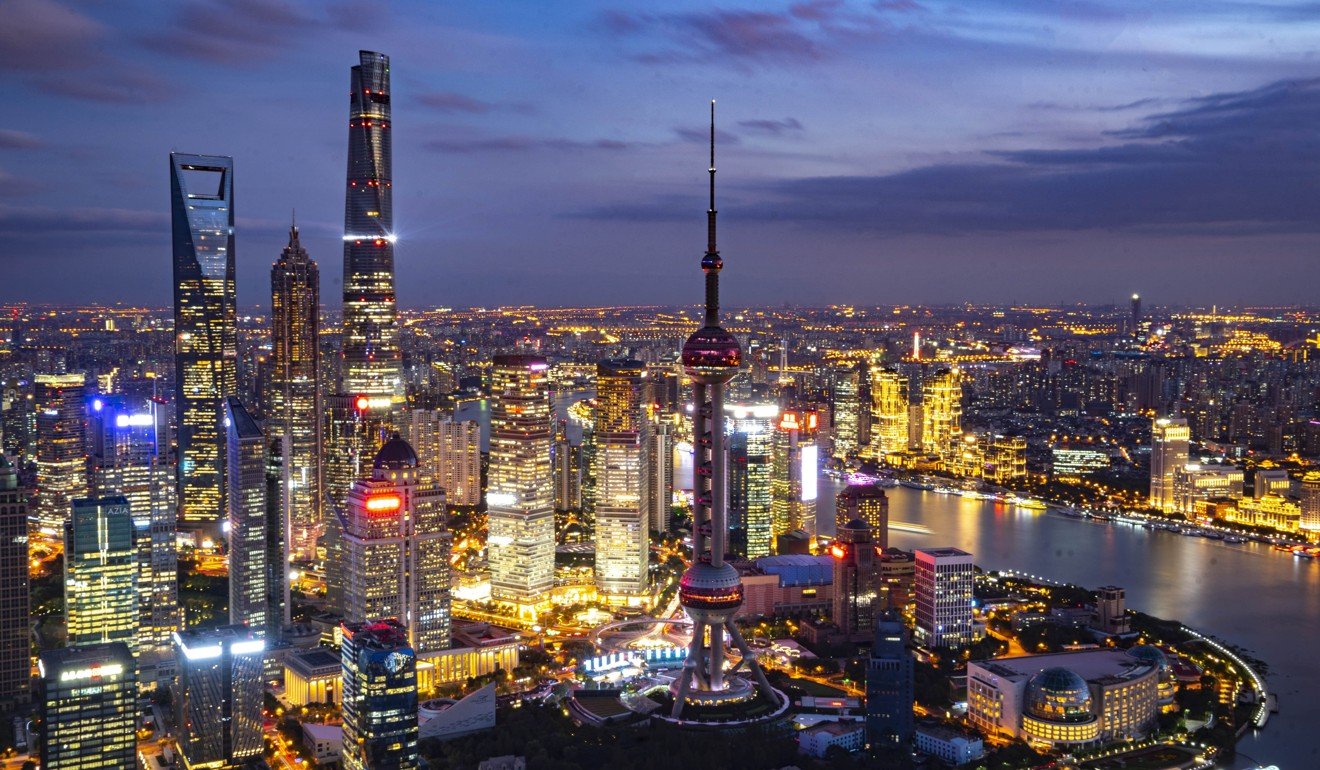
Shanghai is a showcase for China’s modernisation efforts. Photo: Xinhua
There are other ideas in the tradition that Xi Jinping understands. One is that of zhi and xing (knowing and acting) and zhixing heyi (combining knowledge with action). This had been highlighted since the days of Ming philosopher Wang Yangming.
In modern times, Sun Yat-sen advocated xing erhou zhi (act then you will know) as preferable to the safer and more conservative zhi erhou xing (know before acting) and Xi Jinping seems to share that view. When you act and make your choices, these add up so that you will really know. From that perspective, Mao Zedong’s choices taught hard lessons and the Chinese people now know what not to do. Another idea goes back to Confucius, who said shu er buzuo, or transmitting (tradition) and not doing (something new). In other words, without claiming newness or discovery, he transmitted wisdom and knowledge to those who followed. Xi Jinping seems to focus on drawing on past experiences that enable future generations to learn: with learning, something new would result.
Xi Jinping can dramatically reform China’s economy or maintain high growth – but he can’t do both
Xi Jinping may not need the word “new” for his socialism. His shehui zhuyi could be the accumulation of layers of modern experience that harmonise with selected bits of China’s history. Explaining the actions and reactions of generations of his predecessors could take his party-state to another level of development. Here a sage Marx symbolically as important as Confucius would add the goal of progress to inherited wisdom. Socialism could be “hard” in rational and disciplined action and “soft” in moral goals deeply rooted in people’s aspirations. A strong leader who knew how to link the past to a dream of the future could shape the socialism that his people could identify as the datong shehui in China’s heritage.
DIFFERENT HERITAGE
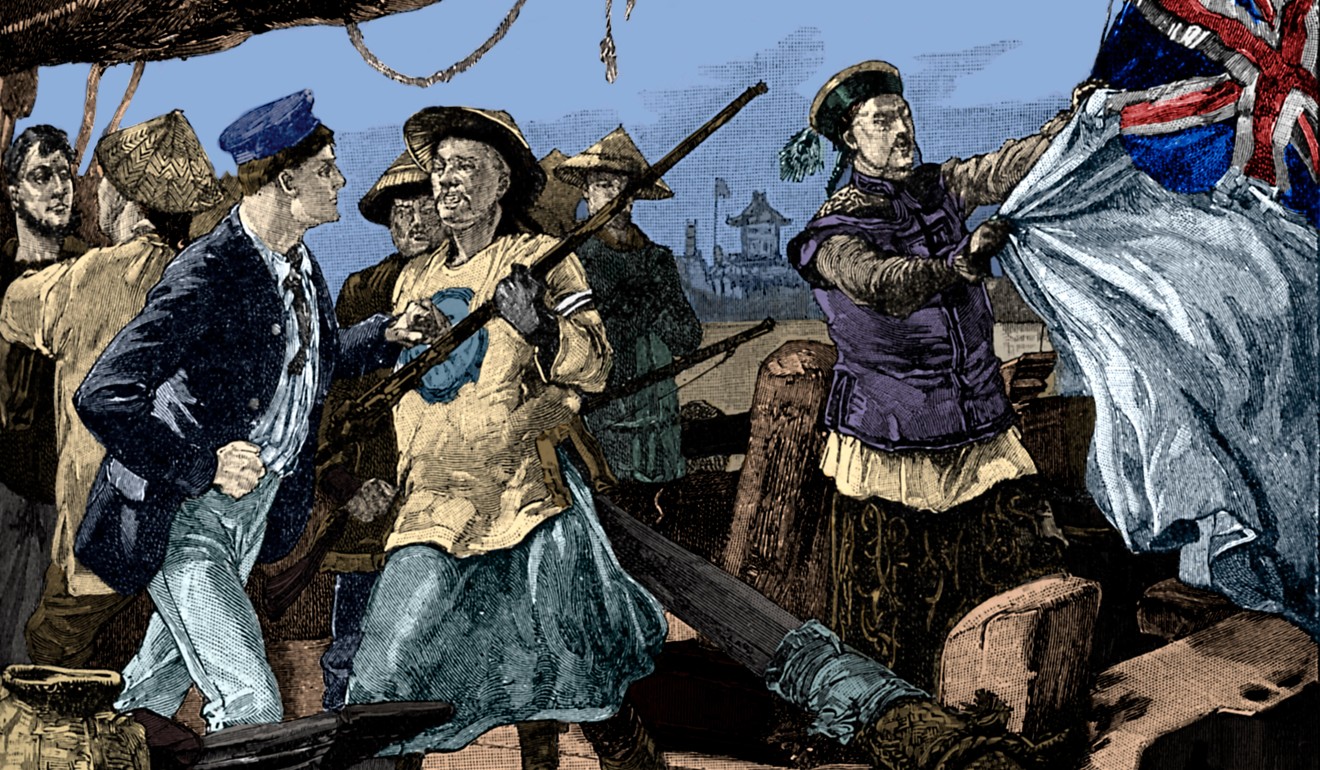
The distance between the legal systems in China and the West has long been a matter of regret. It began when Britain was no longer prepared to let Chinese law be used to punish British subjects; that issue became the cause célèbre in the Anglo-Chinese wars.
Despite the fact that China had, with the help of Anglo-American and other European legal scholars, reformed and modernised its legal system during the past 100 years, the gulf has remained and has continued to fuel an underlying lack of trust. This has once again surfaced in contemporary interstate relations wherever the People’s Republic is involved.
Chinese officials pull down a British flag on a ship in 1856. Photo: Alamy Stock Photo
The issue had become sensitive when the Western powers made it clear that their legal ideals were meant to cover the relations between civilised states, and China had been found wanting. The divide stemmed from the European assumption that international law was built on a common Christian heritage. The treaties that followed China’s several defeats led to extraterritorial jurisdictions by Western powers and Japan. These humiliated China for being so uncivilised that provisions were necessary for the protection of civilised people. The set of practices that diminished China’s sovereign rights remained a source of anger for 100 years and coloured Chinese attitudes towards all Western reference to the rule of law down to the present.
The different value given by China and the West to the role of law has deep roots. It originated from the different premises made about the relationship between man and nature, between those who moved from believing in many gods to faiths in one God, and those whose world views allowed them to live without reference to any God or gods.
Is reform dead in China? Trump’s trade war may be breathing life back into the cause
The single-god world emerged in the Mediterranean region (among Jewish, Christian or Islamic believers) while the mixed often-godless realm was developed in the Sinic cultural zone in eastern Asia.
When traced far back, what is significant is that, while there were great differences in conceptions, both godly and godless traditions paid respect to the role of law, albeit each in its own way. There was no question of not depending on law for securing order, especially the controls needed for political order. Whether the laws reached into private and family affairs, or were in the main varieties of civil and criminal law, all those in authority gave much thought to formulating them to bring out what was fair and most efficacious. And both European and Chinese rulers paid close attention to laws pertaining to governance, and specifically to their relations with their subjects.
The distance between legal systems in China and the West has long been a matter of contention. Photo: Xinhua
Where their respective heritage parted significantly was the way their rulers institutionalised their codes. Those in Europe believed that the rule of law was a higher principle that stood above other considerations; it was sanctified by the supernatural and therefore sacrosanct. The idea had grown out of customary law observed by tribal organisations as well as in the royal and canon laws promulgated in princely states or kingdoms. In time, they were extended to cover larger political units like nation states or empires. Law was therefore at the centre of all governance and remained steadfast whether the rulers were strong men or a group of oligarchs, or leaders who were democratically chosen. Whoever they were and wherever they came from, they could only rule through regulations and statutes that were seen as parts of God’s law. Thereafter, that conception of the rule of law led to questions being asked as to what would best serve those who are equal in the eyes of God. That led people to demand that law should protect people from abusive rulers. The key point was that, behind the respect for the law was religious doctrine and the Church. In certain contexts, God’s law had the power to send even the strongest leaders to the fires of hell. When this authority shifted following the Reformation, Christian Europe still maintained that each church embodied the spirit of God’s law.
To end the trade war, ‘China must deliver on its promises to reform and open up’
When the classics of the Greco-Roman period were given a new lease of life during the Renaissance, this ancient learning stimulated revolts within the Church. The Protestants reinterpreted their heritage and provided conditions whereby new ideas were allowed to grow. As a result, the advent of scepticism, rationalism and the scientific mind enabled an intense questioning of past assumptions that eventually led to a secular view of the world.
Western Europe largely moved away from church-determined ideas and went on to develop laws that have been described as rational and modern. That saw the beginning of a powerful legal system under which the ruler gave up most of his powers so that his subjects would have more say. Of course, who actually had a say was another matter.
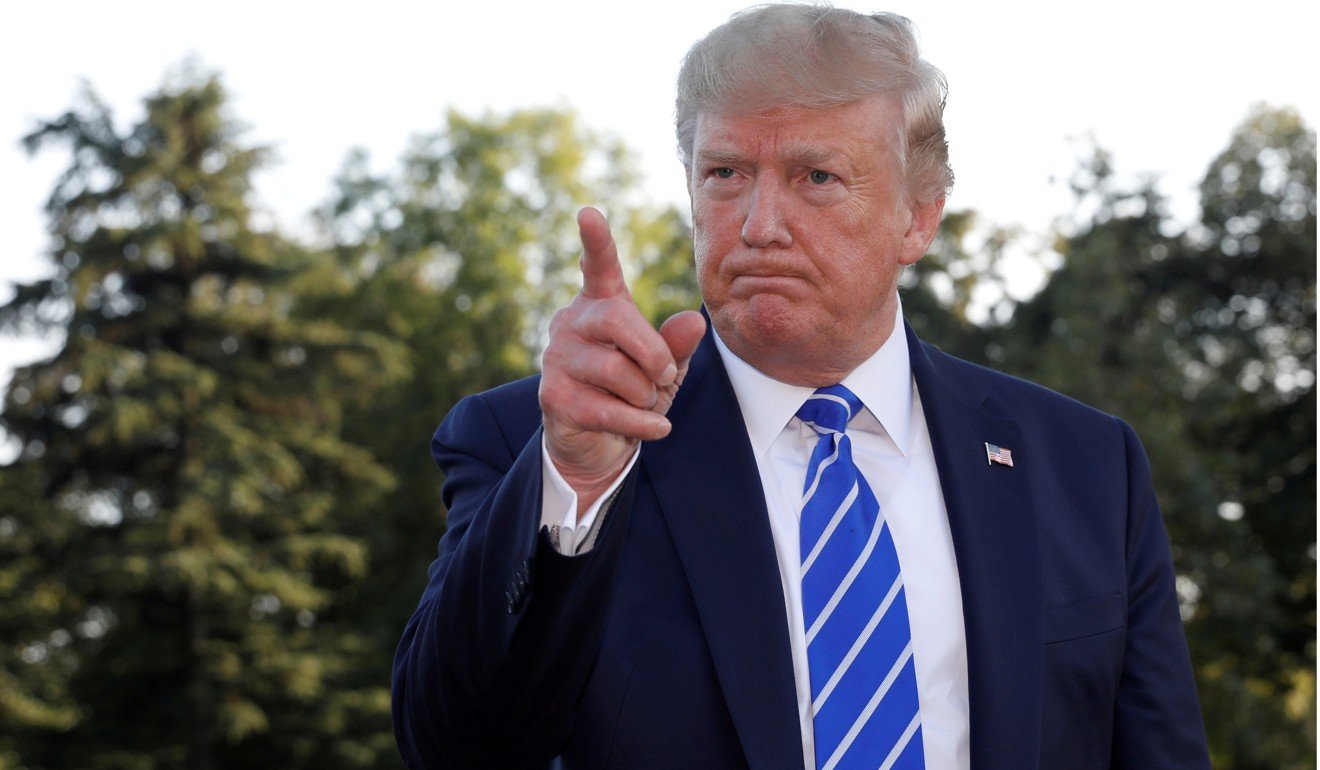
US President Donald Trump, who many Chinese believe is trying to contain China’s rise. Photo: Reuters
It took the British more than 100 years to let ordinary men have the vote, and the women did not get theirs until the 20th century. The British were unapologetic about that pace of development. They thought that the only people who should be allowed to vote were people who owned property and were well-educated. Nevertheless, the principle that people could control their own destiny was confirmed.
In one form or another, laws were obeyed in good conscience by God-fearing people and rational scientific-minded people alike. Even when the laws were obviously man-made and could be cruelly implemented, whether by kings, judges or elected legislators, it continued to be understood that a higher spirit rested behind their making. That belief gave the laws a special moral standing and placed the rule of law at the heart of Western political culture. In short, the ruler was always subject to God’s law.
In comparison, the Chinese have also long acknowledged that laws should be respected but the idea of the rule of law was only implicitly understood. Everyone was conscious that the laws demanded absolute obeisance; that was akin to fear of the ruler’s wrath. Those draconian laws had been given centrality by the state of Qin during the Warring States period. The legalists who drew them up enabled the Qin to defeat the rival states and use the laws to control, dominate and dictate in every respect. What was understood, and sometimes made explicit, was that the ruler would always employ the law to stay in power.
Beijing unveils detailed reform plan to make Shenzhen model city for China and the world
The idea that rules accompanied by harsh punishments made states strong attracted many of the warring lords from the fifth to the third century BC. It led them to challenge the Zhou dynasty’s claim that good governance came from the model rulers of a legendary Golden Age who embodied the principle that the right to rule had to be defined in moral terms. In that context, legitimacy was confirmed through rituals that demonstrate that the ruler had received the Mandate of Heaven.
The rulers of the state of Qin thought otherwise. They employed legalists who believed that power depended on total control through harsh laws and finally destroyed all rivals to establish a new dynasty. The new emperor made sure everyone knew that he was above the law and his laws must be obeyed.
This law was a revolutionary instrument used to destroy a decrepit ancient regime. However, the legalists were so extreme in their rejection of traditional moral and social norms that people rose in revolt and that enabled the Han dynasty to take over the empire. The Han rulers reformed the emperor-state system and experimented with other ideas.
But they retained the body of Qin laws that guided the centralised bureaucracy and brought in non-legalists to administer the empire.
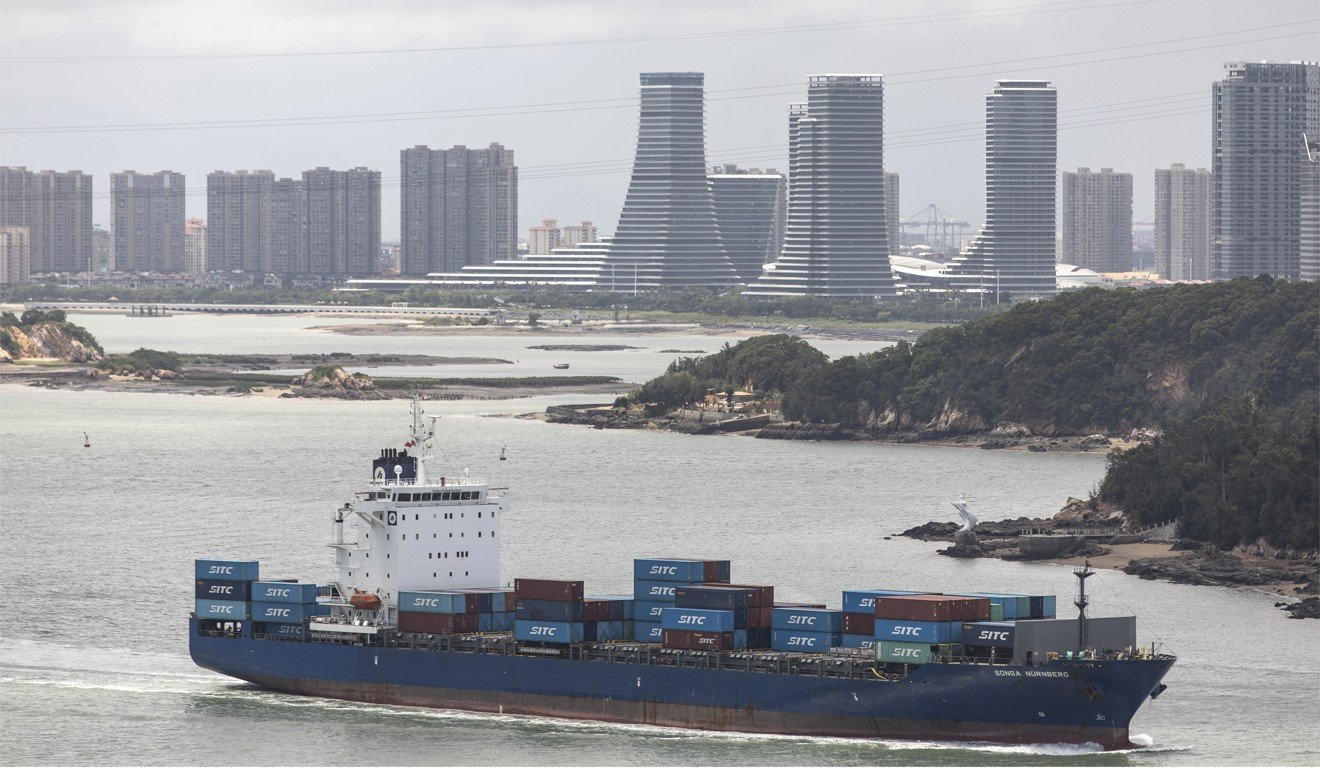
Xiamen in China’s Fujian province. Photo: Bloomberg
The fourth emperor, Han Wudi, then entrusted men of Confucian learning to balance the harsh laws with their moral ideals. The writings of Confucius had been torched and banned by the Qin. Now his disciples could practise what they preached.
The Han ideal thereafter was to educate rulers in the Confucian Classics that extolled them to be guided by responsible officials chosen for their learning and moral principles. The legal system was no longer upfront but remained there to be used by Confucian scholars whenever necessary. That set the tone of imperial governance even for the Central Asian tribal successors of the Han during the fifth and sixth centuries.
By the Tang dynasty, Confucian moral wisdom modified the law codes again, and these were further revised during the Ming-Qing dynasties.
In short, laws with deep roots in Confucian renzhi provided the foundations of the empire state for at least 1,500 years. As outlined earlier, God’s law in its secular form came to stand at the heart of the universalism promoted by the West and led by the United States and its European allies since the end of World War Two. In contrast, the idea of what was civilised in China had been particularistic and the laws guiding its modernisation process operate within its own framework.
Qin dynasty crossbow found at China’s Terracotta Army site may reveal secret of emperor’s success
The country has been prepared to learn from and even adopt Western law codes, but also wants to reconnect with the moral principles that had protected its heritage. This reminds us that law today has not only been a question of adapting modern law for China’s use but is also the source of tension in Sino-Western relations. The normative use of law extended by the West to apply to all interstate relations continues to provide a challenge. Chinese leaders closely observed how those legal institutions have worked in international relations. In particular, they noted how those institutions could not prevent the two wars that destroyed European supremacy. This has led them to believe that the system is not fair or stable and could be improved.
THE NANYANG CONNECTION
Today a new Southeast Asia can work through Asean. This regional organisation is a remarkable achievement, but it is still work in progress. Beginning with maritime interests, it now includes continental states with very different histories. Vietnam, for example, learnt the same lessons as the Chinese and now looks much more to the sea while Laos is totally landlocked. As for Cambodia and Myanmar, how they respond to maritime challenges is still unclear. As members of Asean, this may matter less as long as they can count on a united organisation to monitor the region’s naval concerns.
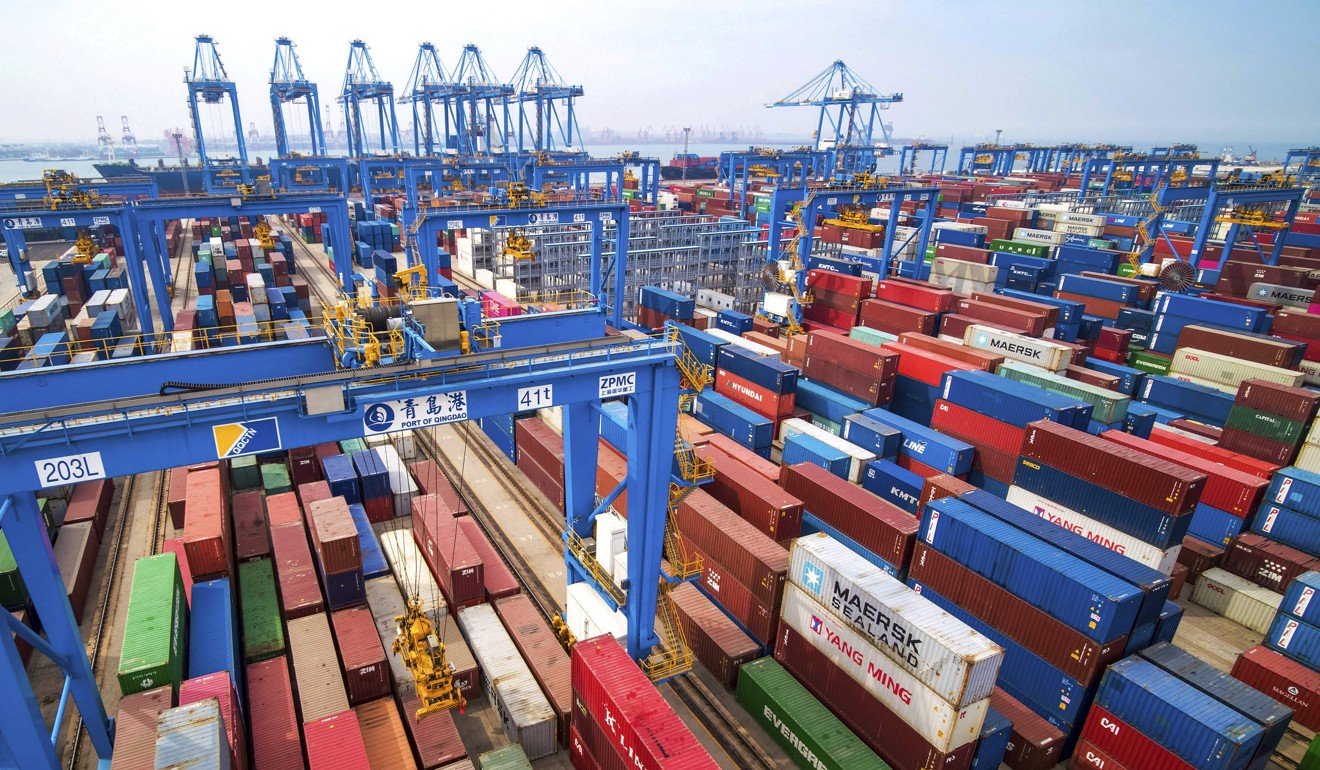
A container port in Qingdao, in China’s Shandong province. Photo: AP
Here Asean’s efforts could make it greater than its parts. The region’s location between the Indian and Pacific Oceans ensures that the great maritime powers of the world will always have a strategic interest in its well-being. But there are analogies with the Mediterranean world that may be relevant. Although on a smaller scale, naval power in that sea determined the fates of all the states involved, deep divisions between the states on its northern and southern coasts have lasted to this day. It is never a question of naval power alone. The states facing the sea have strong hinterlands and neither those of the north nor of the south could dominate the Mediterranean for long. That should remind us that Southeast Asia with its continental and maritime members could also be vulnerable to divisions when confronted by external forces coming from different directions and calling on each of its member states to choose sides.
Should China be worried about the US-Asean sea drill?
Another interesting question is why the South China Sea was never a zone of naval conflict the way the Mediterranean was. It is narrower in parts and wider in others and not well sealed like having Gibraltar at one end and Suez at the other. There are more openings to the ocean, as in the Taiwan Strait, the Sunda and Malacca Straits, as well as the passages leading into the South Pacific. In addition, unlike the Mediterranean where there were always powerful states on both sides of the sea, there was no power that could challenge the Chinese empire in the South China Sea. Had there been one, perhaps that sea would also have been a zone of tense and extended competition from ancient times.
That may be about to change. Today, the newly announced Indo-Pacific front has created a counter-power to face a rising China. At the same time, dynamic economic growth is moving from the Atlantic to this extended maritime space. Together, they have given new life to the Old World. Thus countries like China and India are building more credible navies to match those of Japan and the United States. In that way, the Indo-Pacific could serve as a larger Mediterranean in which the South China Sea acts as its strategic centre. That would make the double-ocean zone one of continuous tension in which powerful protagonists will keep the divisions permanent.
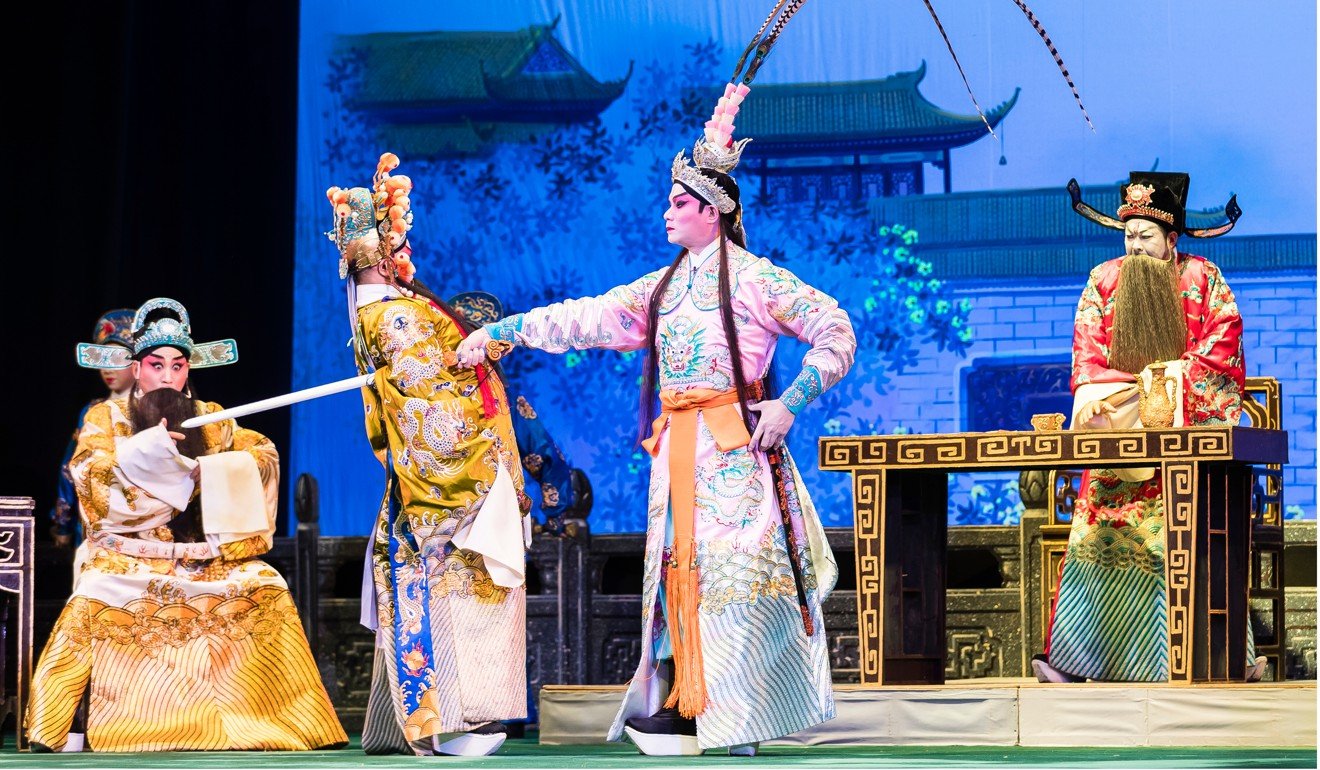
A Cantonese opera show. Can China hold on to its past as it builds a prosperous future? Photo: Handout
If Asean is divided underneath that overarching framework, it would be of little use to anybody. The region’s history renders it open to divisions, especially between the mainland and the archipelagic states that tend to look in different directions for their well-being. However, if these states can overcome their historical baggage, Asean could have a major role to play in the midst of the rapid changes in the relations between the New Global and Old World. If it is united on critical issues, it could provide a bridge that helps to make those relationships peaceful and constructive. That would not only help its members withstand the pressures put on them, but also demonstrate to all major powers that their interests are also best served by a truly united Asean.
Zhang Lin, a Beijing-based independent political economy commentator, questions why returnees are becoming ardent supporters of the government-directed model
China’s economic boom offers returnees far more advantages than Western societies could upon their graduation
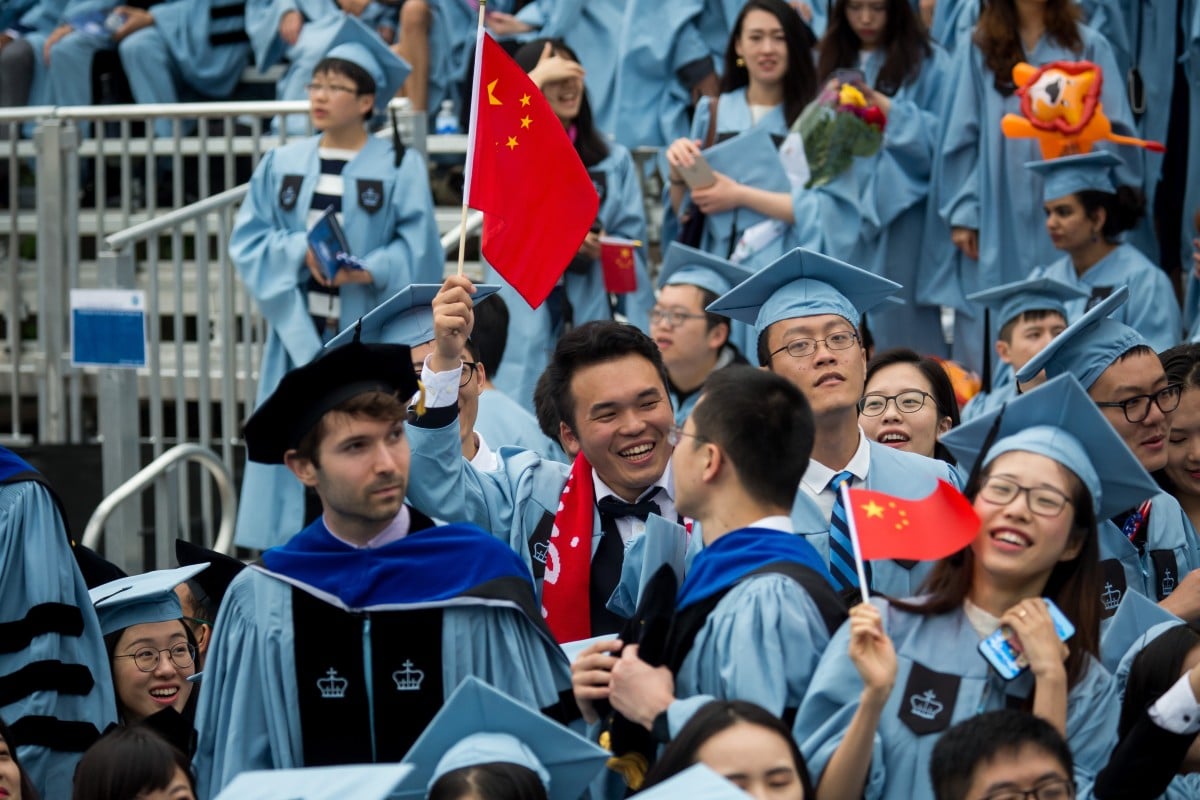
The number of Chinese students studying in the US and European schools soared, offering fresh hope that returnees with an overseas educational background would facilitate China’s transformation into a society that resembled the west. Photo: Xinhua
At the turn of the century, many people foresaw a “westernisation” process taking place in China – the development of a market economy and a freer society – especially after China joined the World Trade Organisation in 2001 with a clear commitment to reform its state-owned enterprises.
The number of Chinese students studying in the US and European schools soared, offering fresh hope that returnees with an overseas educational background would facilitate China’s transformation into a society that resembled the west.
But it has not turned out as expected, with more and more returnees who graduated from Western universities becoming ardent and vocal supporters of the Chinese government-directed model. It seems strange on the surface that young Chinese people, who have several years’ first-hand experience of Western democracy and freedom, would become big fans of an intrusive state.
One explanation is that the overseas students who worship the Western lifestyle never return to China.
In the 1980s and 1990s, Chinese students who studied abroad did not rely on wealth or family background, but excellent academic achievement, and most of the students who went abroad were funded by China’s Ministry of Education. After experiencing the huge gaps between China and the West at that time in terms of living standards and social development, many chose to stay after graduation.
China’s overseas study policy at that time dictated that these students needed to return back within five years, or else their families could have faced punishment. Despite this, according to statistics from 2002, 92 per cent of Chinese students who obtained doctorate degrees in the United States during the 1990s choose not to return to their homeland.
Things began to change in the late 1990s. China’s private businesses started to boom after Deng Xiaoping’s “southern tour” in 1992, with many government officials and local leaders quitting their public jobs to pursue private wealth, in a trend dubbed “smashing their and jumping into the sea”. Blessed by their connections to the state apparatus, many of them became filthy rich in the process.
These Chinese nouveau riche could suddenly afford foreign university tuition fees and started sending their children to study abroad. The Chinese government also relaxed its policy on overseas education, and most overseas Chinese students became “second generation” rich and powerful.
At the same time, western universities particularly in the US and Britain opened their arms to the flow of Chinese students who were willing to pay hefty tuition fees and sometimes willing to make sizeable donations.
Most of these returnees, whose families have made significant gains from China’s state-led market economy, were beneficiaries of the Chinese model
According to statistics from the “Report on the Survey of Overseas Students” covering the years 2000 to 2011, 1.9 million Chinese students studied abroad, with 91.3 per cent of them “self-funded”. By 2014, the proportion of overseas students who returned to China had risen to 51.4 per cent, according to the “2015 China Returnees Development Report”.
This report also pointed out that 32 per cent of returnees were willing to work for the government.
Most of these returnees, whose families have made significant gains from China’s state-led market economy, were beneficiaries of the Chinese model. The experience of studying abroad, ironically, only enhanced their understanding of their advantages and privileges back home.
China’s economic boom offered far more chances for this well-educated, and well-connected, group than Western societies could, upon their graduation. If they chose to stay in the Western country where they studied, they were faced with the prospect of starting from scratch, but if they chose to go back China, they could get a better job, probably earn more money, inherit the wealth of the previous generation and live as a member of the elite.
That China’s overseas returnees are supporters of the Chinese model indicates that the Western concept of freedom is not always a powerful incentive. If competition between countries is competition between elite groups, conflicts between the Chinese model and the US model may last for several generations and spread to more countries.
Many of those involved feel profound ‘guilt and shame’ over the lives lost in Beijing 30 years ago, according to two former PLA officers
Move to tone down language used to describe movement – as ‘political turmoil’ rather than a ‘counter-revolutionary rebellion’ – came from army
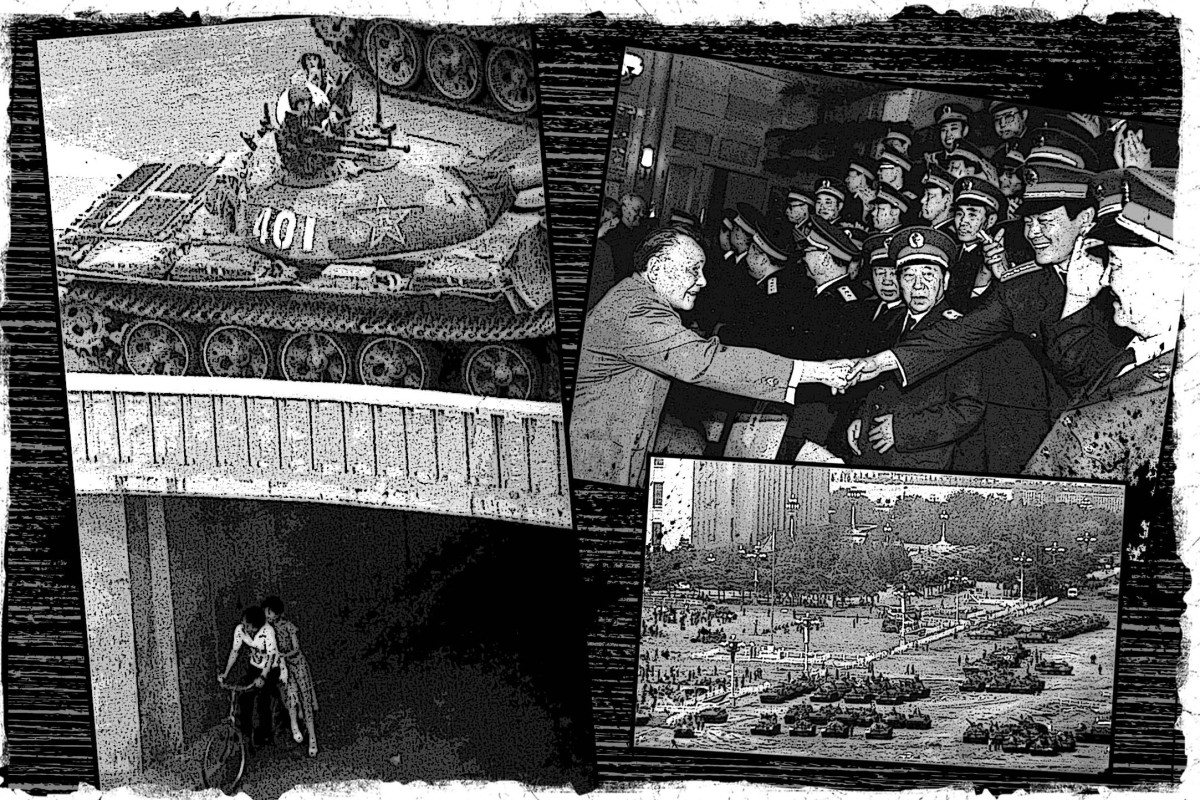
The brutal military crackdown on peaceful protesters in Beijing 30 years ago might have saved the Communist Party’s rule, but it has since become a cross to bear for the People’s Liberation Army.
Today, the world’s largest fighting force is still haunted by the
tragedy in 1989, despite efforts to rebuild its image. After the bloodshed, it was the military that suggested the pro-democracy student movement be referred to not as a “counter-revolutionary rebellion” but as a time of “political turmoil”, two former PLA officers told the South China Morning Post.
They said the move to tone down the language around the crackdown reflected the anxiety and shame felt by many rank-and-file officers over a fateful decision that has tainted the military’s reputation and legacy.
Up to that point, the PLA had been widely respected by the Chinese public. Even during the turbulent decade of the Cultural Revolution from 1966, the military was largely uninvolved. Rather, it was instrumental in bringing an end to the chaos and setting China on the path of reform and opening up.
The crackdown in 1989 was unprecedented for the PLA and dealt a crippling blow to its reputation and morale – and the question over the legitimacy of the decision to send in the tanks and open fire on the protesters remains.
“[I believe] the Tiananmen crackdown will be revisited one day – it’s just a matter of time. The ultimate responsibility will fall to those military leaders who directly implemented the decision,” a retired researcher with the PLA’s Academy of Military Science, who requested anonymity, told the Post.
PLA soldiers with automatic weapons eat ice creams as protesters plead with them to leave Tiananmen Square on June 3, 1989. Photo: Reuters
Throughout history and across cultures, following orders has been a fundamental principle of military service. But the absence of a written order on the mission from the commander in chief – late paramount leader Deng Xiaoping – puts its legality in doubt.
It is estimated that hundreds, or perhaps more than 1,000, civilians were killed during the crackdown that began on the night of June 3 and continued until the morning.
“No matter whether it is one or 10,000 people killed, it’s still wrong to shoot at unarmed civilians,” said a retired PLA officer who served in the army’s political department and also declined to be named. “But [the troops] had to do this dirty job because the party’s rule was in danger.”
According to the former military researcher, many commanders involved in the crackdown questioned the decision to use force to quell the protests, particularly since they had only been given a verbal order from above and never saw a written instruction from Deng, who was chairman of the Central Military Commission (CMC).
This was further complicated by the fact that Zhao Ziyang, the party’s general secretary at the time, openly opposed a military crackdown. Without the support and approval of the party’s chief, the operation violated the long-held principle of “the party commanding the gun”.
Even then CMC vice-chairman Yang Shangkun and Xu Qinxian, commander of the 38th Army Corps that had been sent to Beijing, had qualms about carrying out the verbal order, according to the former researcher.
It is not known how many troops were sent in to crush the protests, but the number could be as high as 200,000, according to a book by US-based scholar Wu Renhua.
Soldiers patrol Changan Avenue in Beijing on June 4, 1989. Photo: Jeff Widener/AP
The retired PLA political officer said the instruction to commanders was to “clear out Tiananmen Square by June 4 – and whoever stands in our way is an enemy of the state”.
“Most officers and soldiers were only trained to use heavy weapons like machine guns and tanks. They didn’t even know there were things like rubber bullets, tear gas or other kinds of non-lethal weapons for crowd control,” said the former officer.
“To meet the deadline to clean up the square, some commanders asked their troops to shoot into the air to scare away the crowds – that was the only thing they could think of doing,” he said.
But although they started off firing into the air, ricocheting bullets hit many protesters as they fled and in the chaos and bloodshed, inexperienced troops panicked and started firing into the crowd, according to the former officer.
The army’s clean image was destroyed overnight, and in the minds of many, renmin zidibing – the army of our sons – became the feared and reviled tool of a killing regime.
It also left a psychological scar on the military, which is reflected in the effort to tone down the narrative around the crackdown.
The former researcher said the push to use “political turmoil” instead of the more provocative “counter-revolutionary rebellion” to describe the movement first appeared in a military academy reference book, the Chinese Military Encyclopaedia, in 1997. He said it was proposed by military advisers who believed it could help soften attitudes towards the crackdown.
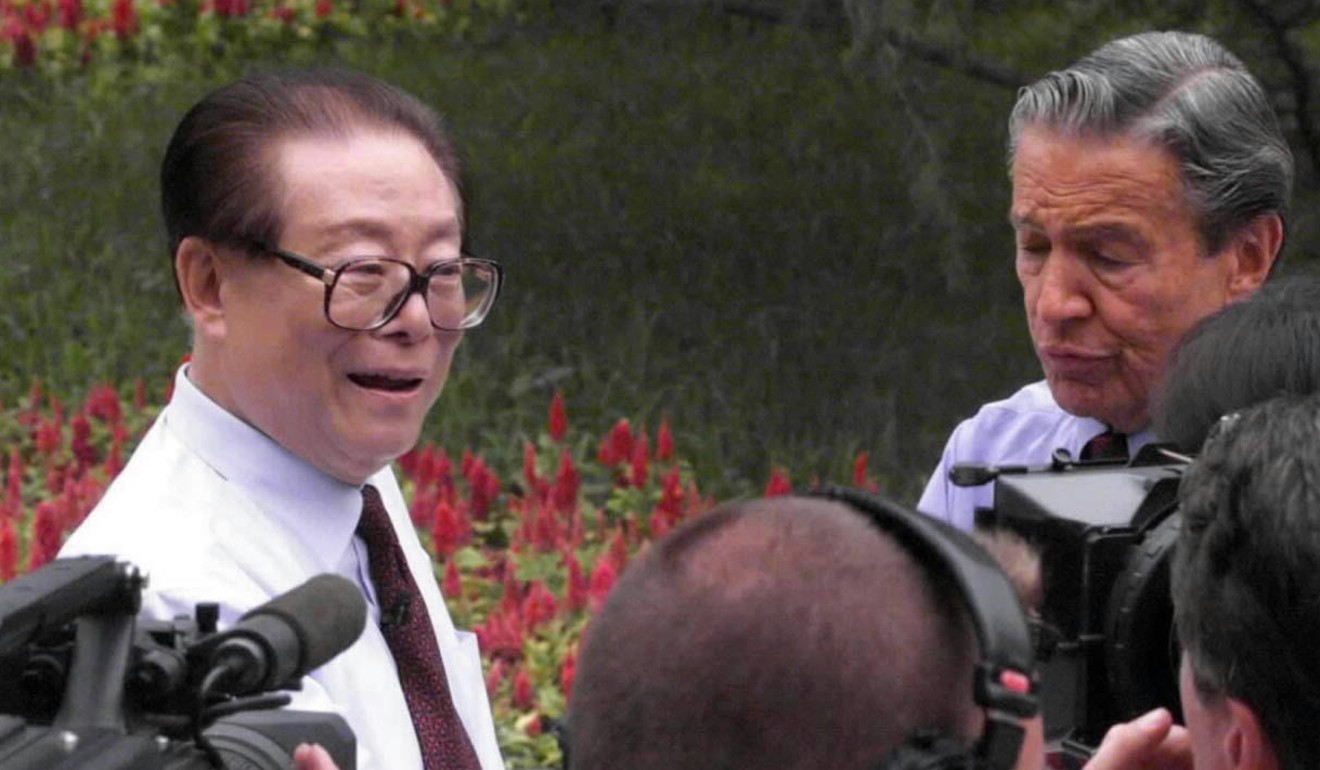
Then president Jiang Zemin with American journalist Mike Wallace during an interview in 2000. Photo: Xinhua
Former president Jiang Zemin spoke of the “political turmoil” in 1989 during an interview with American journalist Mike Wallace in 2000, and the wording has since been widely used by state media.
Meanwhile, the suppression of the protesters also prompted calls for a separation of the army and the party, so the PLA would be a “national” force rather than a political one.
, the idea was squashed by the top leadership in 2007, on the eve of the PLA’s 80th anniversary. It was labelled as a plot by hostile Western forces to topple communist rule in China and is now a taboo subject.
“But despite banning discussion of military nationalisation, the calls from within the PLA to rehabilitate the military and for a review of what happened with the student movement have never stopped,” the former PLA political officer said.
“Many senior military officers believe the students weren’t attempting to overthrow communist rule – they were just asking for a better political system. That’s why calling it a counter-revolutionary rebellion is wrong.”
Curious Beijing residents gather to look at the military hardware in Tiananmen Square on June 7, 1989. Photo: AP
On Sunday, days ahead of the 30th anniversary, Defence Minister General Wei Fenghe
, telling a regional defence forum that putting an end to the “political turbulence” had been the “correct policy”.
“Throughout the 30 years, China under the Communist Party has undergone many changes – do you think the government was wrong with the handling of June Fourth?
There was a conclusion to that incident. The government was decisive in stopping the turbulence,” Wei said at the Shangri-La Dialogue in Singapore.
But according to the former PLA researcher, military top brass involved in the crackdown still felt profound “guilt and shame” over the lives lost.
“None of those people in the PLA would feel a sense of honour for participating in the crackdown,” he said. “Instead they harbour a deep feeling of shame.”
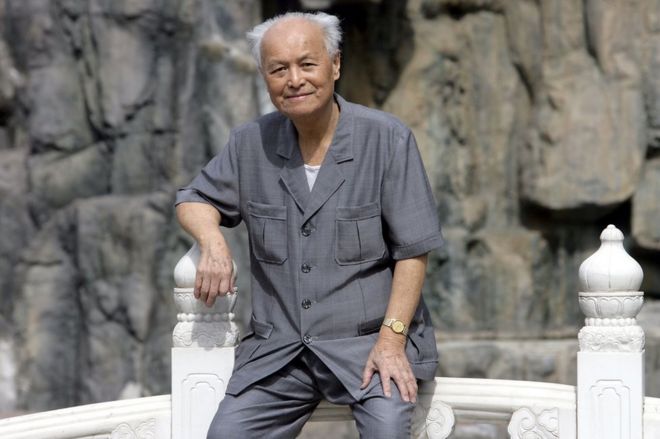
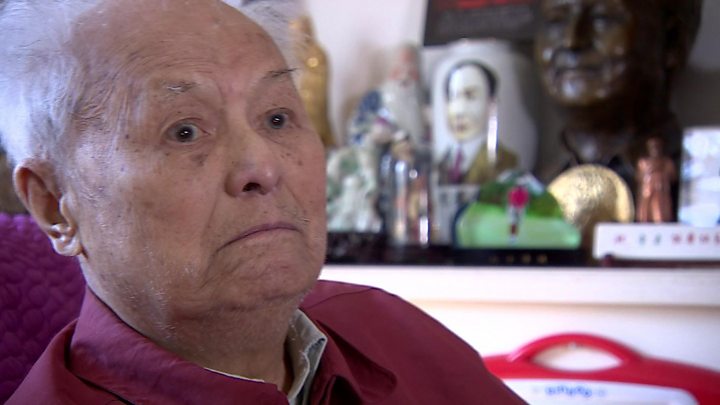
Image copyrightAFPImage captionLi Rui remained an activist and idealist until his death
“We are not allowed to talk about past mistakes.”
Li Rui said this in 2013, while reflecting on the similarities between China’s then-new leader Xi Jinping and the founding father of Communist China, Mao Zedong.
Mr Xi, he warned, was echoing Mao’s suppression of individual thought, and was trying to build a similar cult of personality – both things he had experienced at first hand.
Li Rui joined the Communist Party in 1937, at the start of the brutal Sino-Japanese war, and 12 years before the party won the civil war that established the People’s Republic. He was hand-picked by Mao to become his personal secretary in 1958.
Despite this turbulent history with the party, the fact that Mr Li was one of the original revolutionaries meant that he occupied a special place in contemporary China – one that allowed him a degree of freedom to talk about the ruling party’s many issues, and how he felt things should be done differently.
People may not be allowed to talk about past mistakes, but Mr Li did it anyway – and his work has helped historians understand the truth and scale of Mao’s atrocities.
Li Rui died in Beiijng on Saturday, aged 101.
An underground revolutionary
As a university student, Mr Li joined a group of idealistic Communist activists protesting against Japanese occupation. Shortly afterwards, at the age of 20, he officially joined the party. He was tortured for his communist activism.
But things changed when the party came into power in 1949, and by 1958 Mr Li had become the youngest vice minister in China.
It was also that year that he had a meeting with Mao that would change the course of his life. Mao, having seen Mr Li argue passionately against building the Three Gorges Dam on the Yangtze River, chose him to be his personal secretary.
Their relationship didn’t last long.
‘Mao put no value on human life’
In 1959, Mr Li openly criticised Mao’s Great Leap Forward – a policy that was supposed to boost China’s economic output, but instead unleashed widespread famine across the country.
For this transgression Mr Li was expelled from the Communist Party, and he was imprisoned for eight years in Qincheng, maximum security prison built for the detention of disgraced senior party officials.
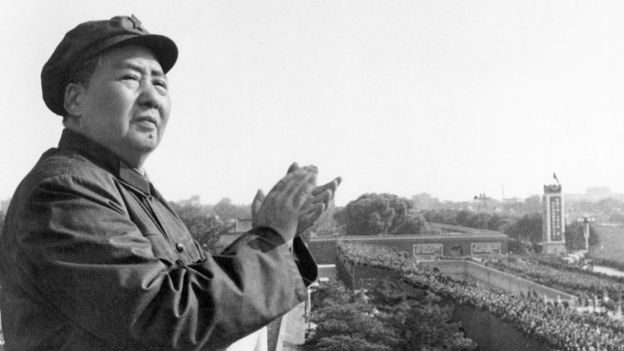
Image copyrightGETTY IMAGESImage captionLi Rui said Mao Zedong, pictured, “put no value on human life”
Following Mao’s death, the more pragmatic Deng Xiaoping came to power in 1978 and Mr Li was rehabilitated and allowed back into the party. He then became a strong advocate for political reform, and in his later years, threw himself into calling for China to move further towards a European socialist-style system.
He wrote five books on Mao, all of which were published overseas and banned in mainland China. His last book, published in 2013, called for the current “one-party, one-leader and one-ideology regime” to be overhauled. His daughter, Li Nanyang, has spoken of having her copies of his memoir confiscated at Beijing’s airport.
Aside from writing books, he worked right into his 90s as a patron of the reformist magazine Yanhuang Chunqiu – roughly translated as “China through the ages”.
The magazine was taken over in 2016. Its editor Wu Si was forced out, and its former staff released a statement warning that “anybody who publishes any periodicals with the title of Yanhuang Chunqiu will be nothing to do with [them]”.
Professor Steve Tsang, director of SOAS’s China Institute, tells BBC News that this affected Li Rui deeply.
“The single most important thing that Li Rui had, was the patronage that he gave to the magazine Yanhuang Chunqiu,” Professor Tsang says. “It does still exist, but it’s been completely changed it terms of management and focus. It’s practically a different magazine.”
The last idealist
But even though his writing was censored, Mr Li was not a dissident – he remained a party member until his death. And the fact that he was left to compose his memoirs from a prestigious apartment block in Beijing shows how, despite his outspoken criticism of the current leadership, he continued to be revered for his role as one of the country’s original revolutionaries.
But with Mr Li dies the idealism of the activist who joined his party eight decades ago, and spent the years since vigorously rebelling against leaders who abused their power.
“He was among the last of that generation of idealists who joined the Communist Party at the beginning, and who tried to hold the Communist Party to the rhetoric [they heard] when they were being recruited,” Prof Tsang says.
“There is probably nobody else who will hold the party now to what the party had originally said it was meant to do.”










 CHINDIA ALERT: You'll be living in their world, very soon