Chindia Alert: You’ll be Living in their World Very Soon
aims to alert you to the threats and opportunities that China and India present. China and India require serious attention; case of ‘hidden dragon and crouching tiger’.
Without this attention, governments, businesses and, indeed, individuals may find themselves at a great disadvantage sooner rather than later.
The POSTs (front webpages) are mainly 'cuttings' from reliable sources, updated continuously.
The PAGEs (see Tabs, above) attempt to make the information more meaningful by putting some structure to the information we have researched and assembled since 2006.
Joint mission will send two unmanned probes into orbit around the closest planet to the sun
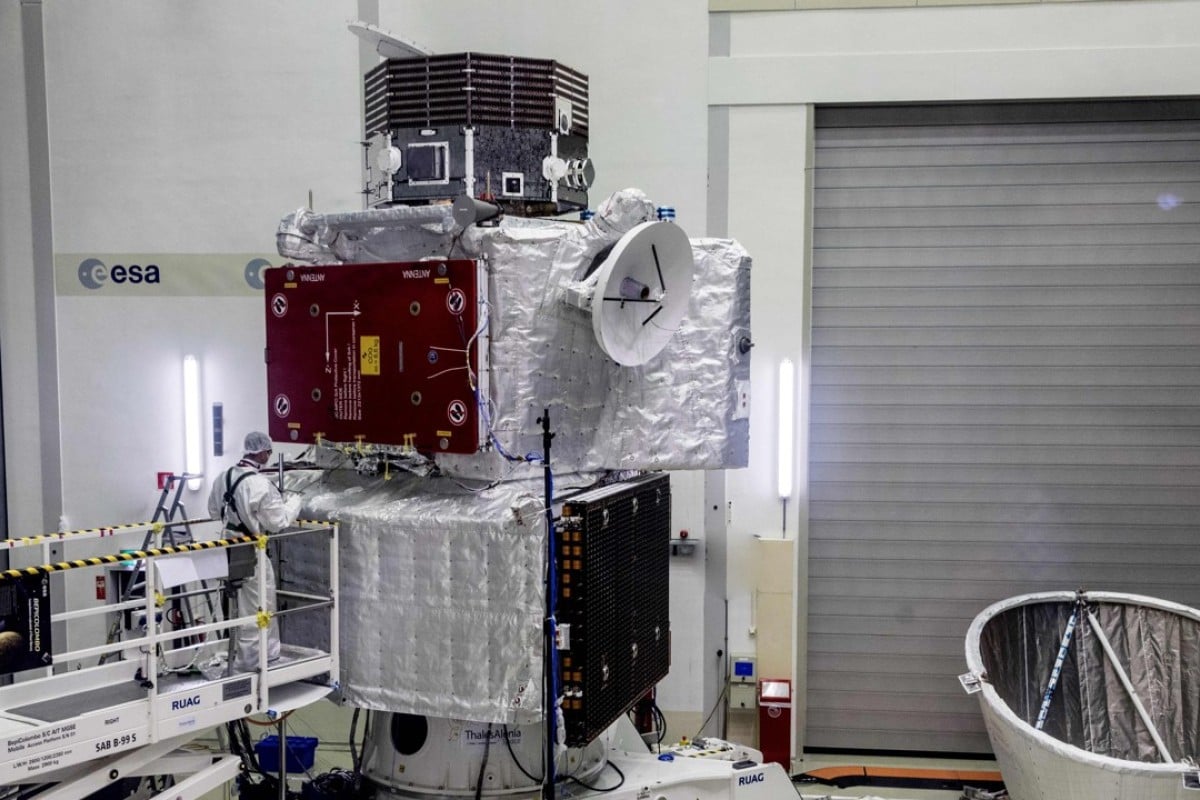
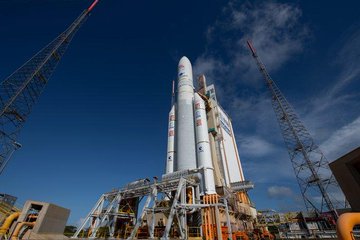
The BepiColombo standing in position at a test facility in Spijkenisse. Its mission to Mercury is scheduled for launch on an Ariane 5 from Europe’s Spaceport in Kourou, French Guiana on October 20. Photo: AFP Photo
Final preparations were underway on Friday for the launch of a joint mission by European and Japanese space agencies to send twin probes to Mercury, the closest planet to the sun.
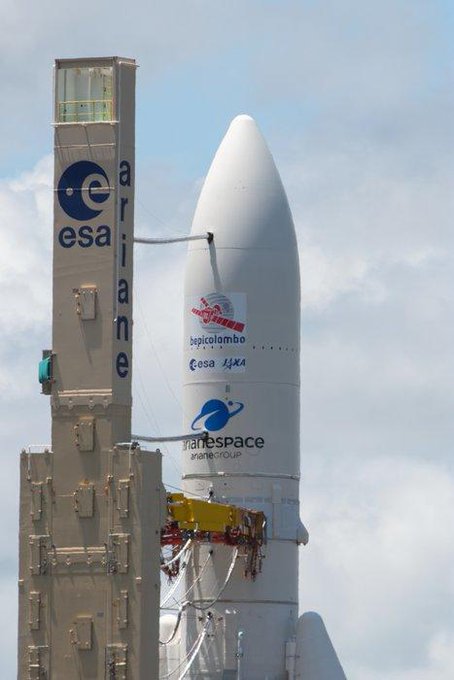
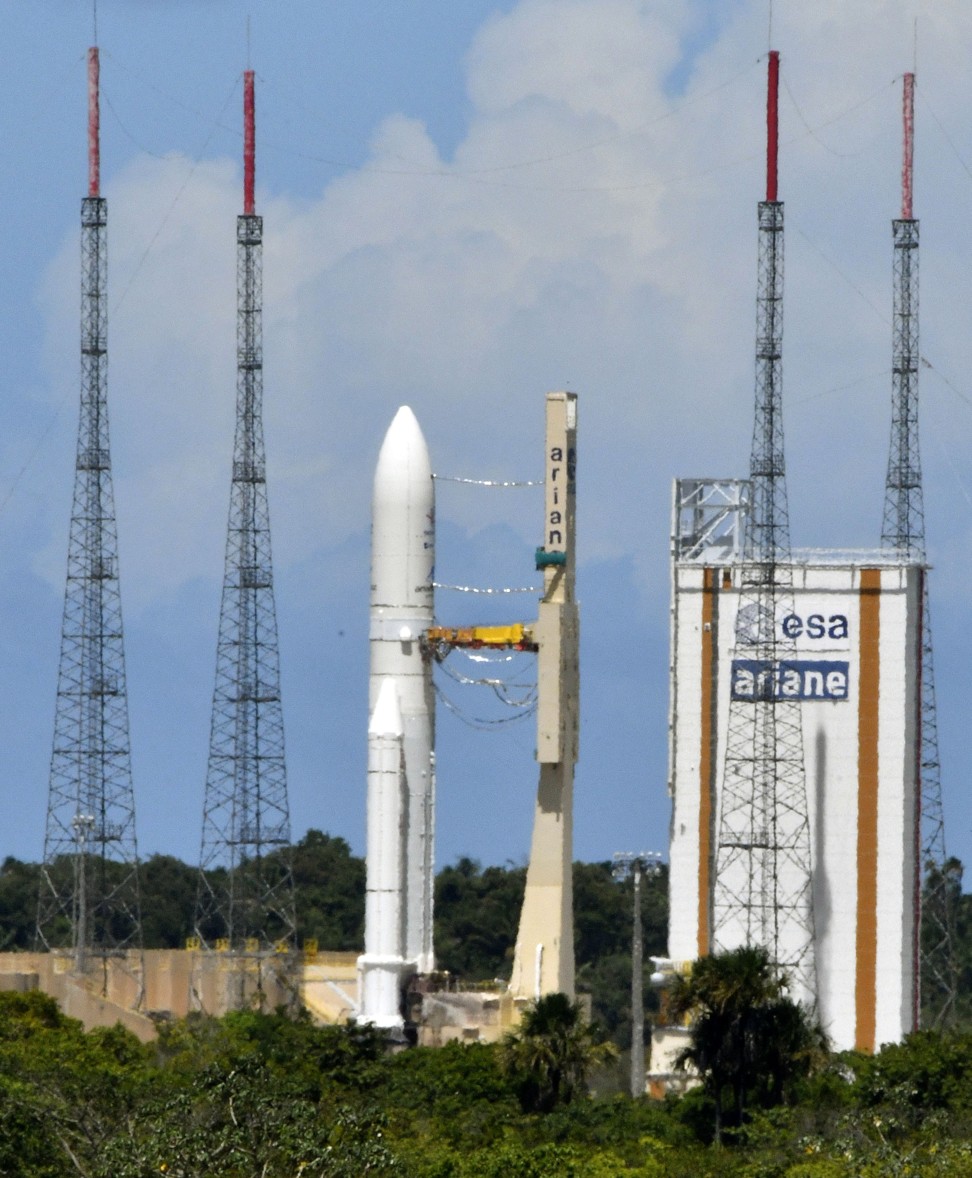
An Ariane 5 rocket is scheduled to lift the unmanned spacecraft into orbit from French Guiana shortly before midnight, the start of a seven-year journey to the solar system’s innermost planet.
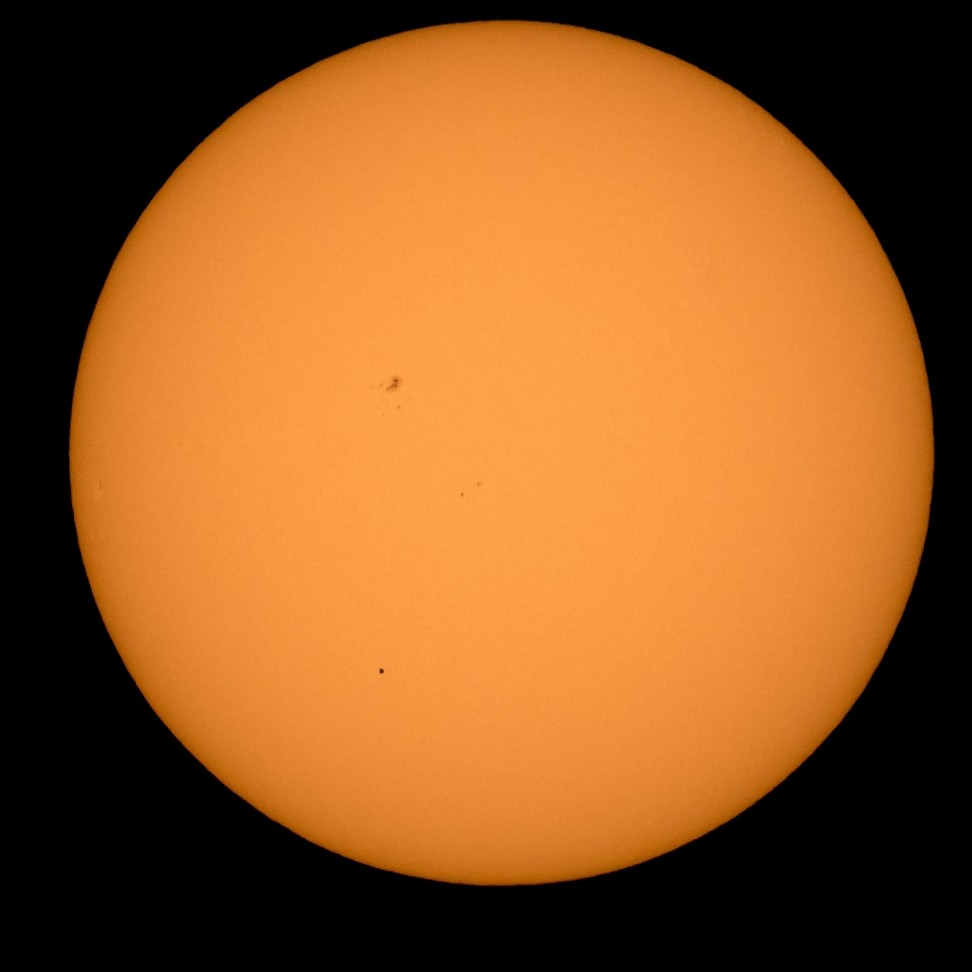
Mercury is seen in silhouette, lower third of image, as it transits across the face of the sun. Photo: AFP PHOTO / NASA / BILL INGALLS
The European Space Agency says the €1.3 billion (US$1.5 billion) mission is one of the most challenging in its history. Mercury’s extreme temperatures, the intense gravity pull of the sun and blistering solar radiation make for hellish conditions.
The BepiColombo spacecraft will have to follow an elliptical path that involves a fly-by of Earth, two of Venus and six of Mercury itself so it can slow down sufficiently before arriving at its destination in December 2025.
An Ariane-5 rocket is set for launch at the Guiana Space Centre in Kourou in French Guiana. Photo: Kyodo
Newly developed electrical ion thrusters will help nudge the spacecraft, which was named after Italian scientist Giuseppe “Bepi” Colombo, into the right orbit.
Aborted launch astronauts may head to International Space Station this year: Nasa head says
12 Oct 2018
When it arrives, BepiColombo will release two probes – Bepi and Mio – that will independently investigate the surface and magnetic field of Mercury. The probes are designed to cope with temperatures varying from 430 degrees Celsius (806F) on the side facing the sun, and -180 degrees Celsius (-292F) in Mercury’s shadow.
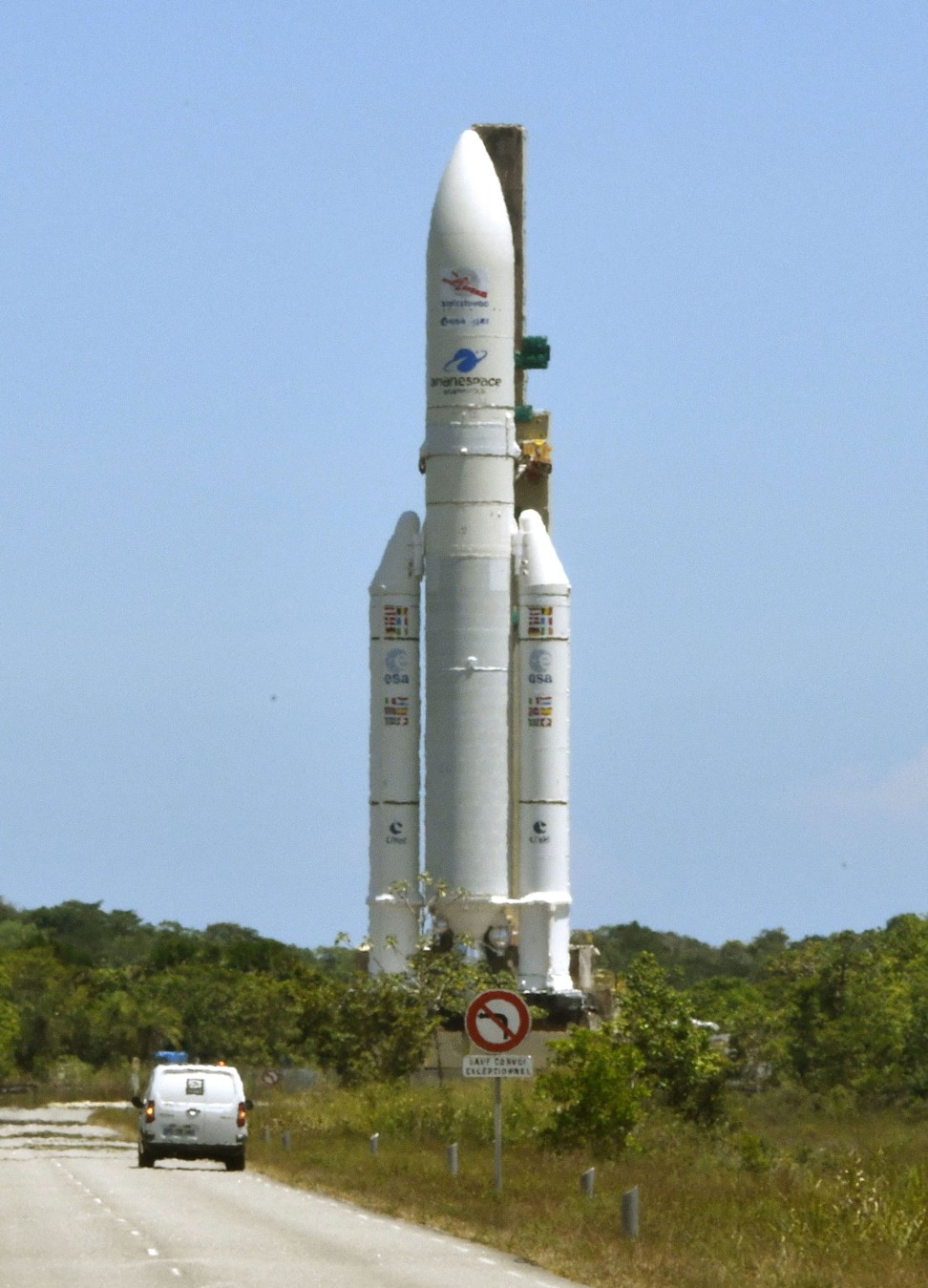
An Ariane-5 rocket is transported to its launch site at the Guiana Space Centre in Kourou. Photo: Kyodo
Scientists hope to build on the insights gained by Nasa’s Messenger probe, which ended its mission in 2015 after a four-year orbit of Mercury. The only other spacecraft to visit Mercury was Nasa’s Mariner 10 that flew past the planet in the mid-1970s.
Japanese space robots have landed on asteroid to carry out world-first survey
22 Sep 2018
Mercury, which is only slightly larger than Earth’s moon, has a massive iron core about which little is known. Researchers are also hoping to learn more about the formation of the solar system from the data gathered by the BepiColombo mission.
BEIJING (Reuters) – For Zhang Yu, who runs a cafe in one of Beijing’s top tourist spots, business has never been so bad.
To contain the spread of the coronavirus, bars and cafes in the Wudaoying hutong – a top Lonely Planet destination built around a narrow lane – are permitted to provide take-away services only. Non-residents must show proof they have an appointment to enter the area.
Added to which, tourism has plummeted.
“Don’t mention it! This is supposed to be the peak season,” said Zhang, who has run her cafe for five years. “But there are almost no customers as they (authorities) don’t want to have people hanging around here.”
While China’s manufacturing and retail sectors are starting to get back to work as the pace of new infections slows sharply, tourism sites in Beijing remain a shadow of their former and bustling self.
China’s capital city has maintained the highest level of emergency response to the outbreak, so tourist attractions like the Forbidden City remain closed. A 14-day quarantine for new arrivals has stifled travel.
As a result, small business owners running restaurants, souvenir shops and tourism agencies are struggling.
Only a little over 20% of tourism-related businesses in Beijing had resumed operation as of the three-day Qingming national holiday in early April, a survey by on-demand delivery service giant Meituan Dianping showed.
HANGING ON
The only people present in Wudaoying on a recent afternoon were a few elderly residents sitting outside to enjoy the spring sunshine. A cat made its way lazily through empty rooftop bars.
“We used to see more customers in one hour in pre-virus days than we see in a whole day right now,” said a worker at a sandwich restaurant in Wudaoying.
In another popular area, Khazzy, a 32-year-old doctoral student who opened a restaurant last October, has had only four customers all day.
“There are almost no tourists coming to Beijing and the remaining locals have concerns about eating out,” Khazzy said as sunset approached.
Khazzy said he has let five of his 13 staff go and has no idea how long he can stay afloat financially even though his landlord has agreed to waive one month’s rent on the property in Qianmen, near Beijing’s Tiananmen Square.
More than half of the shops in Qianmen remain closed. The manager of a state-backed noodle restaurant said most of the closed stores are privately owned small businesses that can’t secure enough business to support their daily operations.
She said revenues at the noodle restaurant have plunged more than 80%, but staff salaries have not been cut.
Zhang, the cafe owner in Wudaoying, reckoned small businesses could hold on for the next three months.
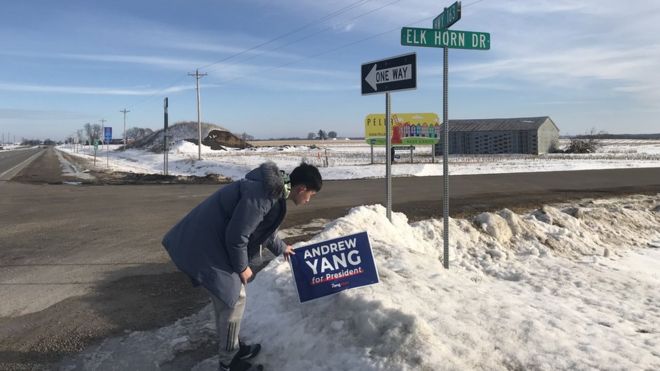
Image copyright SWALLOW YANImage caption A Chinese student puts up a yard sign of presidential candidate Andrew Yang in Des Moines, Iowa.
To some Americans, Iowa, a rural state in the middle of the US, is dismissively thought of as “fly-over country”.
Yet the Hawkeye state is well-known in China. Chinese President Xi Jinping has visited twice – before he took office in 2012, and in an earlier stay as a low-level local official on a 1985 trip to study farming technology.
Iowa was once again a destination for Chinese visitors last week, though those who descended upon the state were not there to study soybeans, but democracy in America.
Amid its chaos, young “democracy tourists” learnt first-hand that it can be a messy way to govern.
The results of Iowa’s caucuses were delayed for days because of a technical failure, causing political uproar in the US.
But the Chinese students didn’t seem to mind.
Over the weekend leading up to the 3 February contest – the first step in selecting the candidates who will stand in the November presidential election – they could be spotted at a rally for Andrew Yang, a Democratic hopeful.
The students, aged about 16, were part of a winter break tour of the US that included stops in Iowa to see democracy in action.
The trip cost $7,000 (£5,428) – a huge sum for the average Chinese household – but Liu Junhao, 16, thought it had been money well spent.
He’d experienced something unique and meaningful, unlike his classmates’ visits to typical American tourist attractions, he said.
“If I could vote, I would vote for Andrew Yang,” he said. Mr Liu could only hear half of the candidate’s speech, but stared at him awe, star-struck, for the whole event.
Some 360,000 Chinese students now study in the US. In the UK, the figure is more than 100,000. As Chinese people become more affluent and international education more accessible to them, an increasing number of young Chinese want to study in the West.
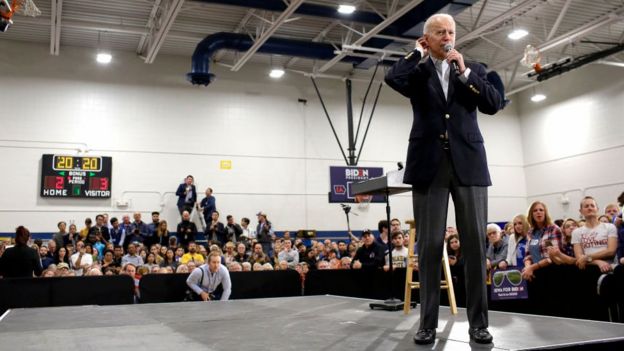
Image copyright GETTY IMAGESImage caption Chinese students attend multiple campaign rallies in Iowa, including former Vice-President Joe Biden’s event
Understanding democracy has now become part of that education.
Steven Hu, a Hubei native who attends high school in Boston, has canvassed for six months for Joe Biden, working for his campaign in Iowa and New Hampshire, the first two states to vote in the primaries.
Mr Hu, 17, had ambitions beyond promoting democracy, though.
He arrived at a Biden rally in Des Moines armed with a university recommendation letter- and hopes that the former vice-president would sign it for him.
“Steven has been very proactive in making a positive impact on my campaign,” said the letter, written by the student for Mr Biden to sign.
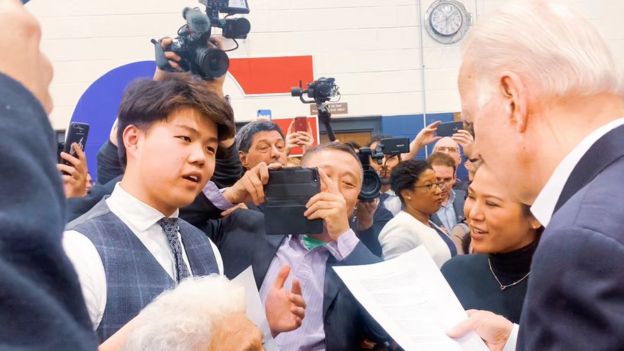
Image copyright STEVEN HUImage caption Chinese student Steven Hu meets presidential hopeful Joe Biden
Dressed up in a three-piece suit, the college hopeful stood waiting next to the aisle, poised to pounce when Mr Biden was to pass through after his speech.
The moment came. The silver-haired politician approached. Mr Hu seized the chance to tell Mr Biden about his canvassing work, and asked him to sign the letter.
“Thank you,” Mr Biden responded. Though he appeared to be puzzled by the paper presented to him, he signed it after taking a glimpse.
However, before Mr Hu could get the letter back, a Biden aide seized it and explained the candidate was in no position to sign such a document.
A disappointed Mr Hu took it in his stride. “I didn’t expect such a letter would be accepted by colleges anyway,” he said.
He said he just wanted proof that he had participated in the campaign.
Mr Hu viewed politics as a game that everyone in the US plays – a game with high participation but low efficiency, given America’s partisan gridlock.
But he still appreciates it. “The US is a great country,” he said, “because it successfully created a system that lets everyone be a part of it.”


 BepiColombo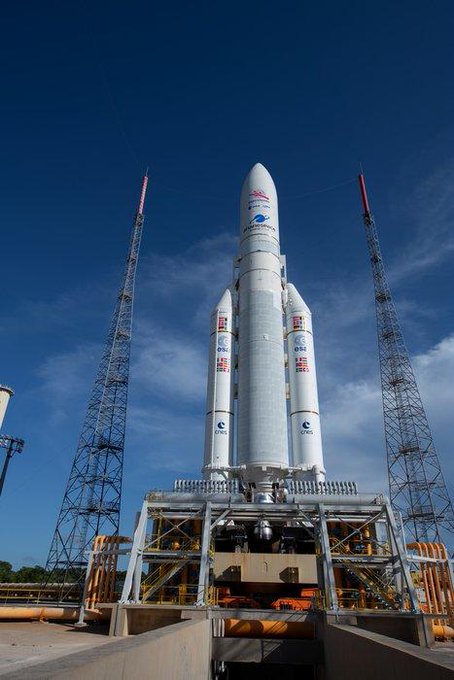


 CHINDIA ALERT: You'll be living in their world, very soon