29/04/2020
BEIJING (Reuters) – China announced on Wednesday that its parliament will open a key annual session on May 22, signalling that Beijing sees the country returning to normal after being reduced to a near-standstill for months by the COVID-19 epidemic.
During the gathering of the National People’s Congress in the capital, delegates will ratify major legislation, and the government will unveil economic targets, set defence spending projections and make personnel changes. The ruling Communist Party also typically announces signature policy initiatives.
The session was initially scheduled to start on March 5 but was postponed due to COVID-19, which has infected nearly 83,000 people and killed more than 4,600 on the mainland after emerging late last year in the central city of Wuhan.
As the epidemic has subsided, economic and social life gradually returned to normal, making it possible for the congress to convene, the official Xinhua news agency quoted the standing committee of the NPC, the legislature’s top decision-making body, as saying.
The committee also appointed Huang Runqiu as the new minister for ecology and environment, a post vacated when predecessor Li Ganjie became deputy Communist Party chief for Shandong province earlier this month, Xinhua reported.
Tang Yijun was also named as the new justice minister to replace Fu Zhenghua, who has reached the retirement age of 65 for ministers.
The Chinese People’s Political Consultative Conference (CPPCC), an advisory body to parliament, has proposed starting its annual session a day before the parliamentary session opens.
Analysts expect China to roll out additional fiscal stimulus in order to cushion the blow from COVID-19, which has developed in to a worldwide pandemic that some fear will trigger a severe global recession.
China’s economy contracted for the first time on record during the January-March period, when the government imposed severe travel and transport restriction to curb the spread of the epidemic.
Parliament is also expected to discuss the anti-government protests in Hong Kong, amid growing speculation that Beijing take steps to strengthen its grip on the city.
It is unclear how long parliament and its advisory body will meet for this time, and people familiar with the matter have told Reuters that this year’s annual sessions could be the shortest in decades due to COVID-19 concerns. Usually more than 5,000 delegates descend on Beijing from all over China for at least 10 days.
Beijing city plans to ease quarantine rules as early as Thursday, two sources familiar with the situation told Reuters, ahead of the key political meetings.
People arriving in the capital from other parts of China will no long have to be quarantined for two weeks unless they come from high-risk areas such as Heilongjiang in the north and some parts of Guangdong in the southeast, the sources said.
Source: Reuters
Posted in 22, 65, additional, advisory body, amid, analysts, announced, announces, annual, annual session, anti-government protests, appointed, arliamentary session, became, before, Beijing, blow, body, capital, central city, changes, China, China’s economy, Chinese People’s Political Consultative Conference (CPPCC), City, Communist Party, communist party chief, Congress, contracted, convene, Country, COVID-19, COVID-19 epidemic, curb, day, decision-making, defence spending, delegates, deputy, developed, due, during, earlier, Economic, economic targets, emerging, epidemic, expect, first time, fiscal stimulus, gathering, global recession, Government, gradually, grip, growing, Guangdong, Heilongjiang, Hong Kong, imposed, infected, initially, initiatives, January, justice minister, key session, killed, late last year, legislation, legislature’s, mainland, Major, make, making, March, May, minister for ecology and environment, ministers, months, more than, named, National People’s Congress, near-standstill, nearly, new, normal, on record, opens, order, parliament, parliamentary session, People, Period, personnel, policy, possible, Post, postponed, predecessor, projections, proposed, quarantine, quoted, ratify, reached, reduced, replace, reported, restriction, retirement age, returned, returning, roll out, ruling, saying, scheduled, session, set, severe, shandong province, signalling, signature, social life, speculation, spread, start, starting, strengthen, subsides, take steps, the standing committee of the NPC, this month, Thursday, to cushion, to open, top, Transport, travel, trigger, typically, Uncategorized, unclear, unveil, vacated, Wednesday, when, worldwide pandemic, Wuhan, Xinhua, Xinhua News Agency |
Leave a Comment »
17/04/2020
BEIJING, April 17 (Xinhua) — The lander and rover of the Chang’e-4 probe have resumed work for the 17th lunar day on the far side of the moon after “sleeping” during the extremely cold night.
The lander woke up at 1:24 p.m. Friday (Beijing time), and the rover awoke at 8:57 p.m. Thursday. Both are in normal working order, according to the Lunar Exploration and Space Program Center of the China National Space Administration.
The Chang’e-4 probe, launched on Dec. 8, 2018, made the first-ever soft landing on the Von Karman Crater in the South Pole-Aitken Basin on the far side of the moon on Jan. 3, 2019.
A lunar day equals 14 days on Earth, and a lunar night is the same length. The Chang’e-4 probe, switching to dormant mode during the lunar night due to the lack of solar power, has survived about 470 Earth days on the moon.
The rover Yutu-2, or Jade Rabbit-2, has worked much longer than its three-month design life, becoming the longest-working lunar rover on the moon.
Carrying scientific instruments such as panoramic camera, lunar penetrating radar, infrared imaging spectrometer and neutral atom detector, the rover will continue to move northwest to conduct scientific detection.
The scientific tasks of the Chang’e-4 mission include conducting low-frequency radio astronomical observation, surveying the terrain and landforms, detecting the mineral composition and shallow lunar surface structure and measuring neutron radiation and neutral atoms.
The Chang’e-4 mission embodies China’s hope to combine wisdom in space exploration with four payloads developed by the Netherlands, Germany, Sweden and Saudi Arabia.
Source: Xinhua
Posted in "sleeping", 14 days, 17th, 2018, 2019, 8, Beijing, Carrying, Chang'e-4, Chang'e-4 probe, China National Space Administration, China's, combine, conduct, conducting, day, Dec., detecting, developed, dormant mode, Earth, equals, extremely cold night, far side on the moon, first-ever, four, Friday, Germany, infrared imaging spectrometer, Jan. 3, lack of, lander, lander and rover, launched, longest-working, low-frequency radio astronomical observation, lunar, lunar day, Lunar Exploration and Space Program Center, lunar night, lunar penetrating radar, measuring, mineral composition, mission, neutral atom detector, neutral atoms, neutron radiation, normal working order, northwest, panoramic camera, payloads, probe, resumes, rover, Saudi Arabia, scientific detection, scientific instruments, scientific tasks, shallow lunar surface structure, solar power, South Pole-Aitken Basin, Space exploration, surveying, Sweden, terrain and landforms, the Netherlands, Thursday, Uncategorized, Von Karman Crater, wisdom, work |
Leave a Comment »
09/04/2020
MILAN/DETROIT (Reuters) – Global automakers reeling from the COVID-19 pandemic are accelerating efforts to restart factories from Wuhan to Maranello to Michigan, using safety protocols developed for China and U.S. ventilator production operations launched in recent weeks.
Certain safety measures differ from manufacturer to manufacturer. Italian sports car maker Ferrari NV (RACE.MI) said on Wednesday it would offer voluntary blood tests to employees who wanted to know if they had been exposed to the virus.
General Motors Co’s (GM.N) head of workplace safety, Jim Glynn, told Reuters on Wednesday GM is not persuaded blood tests are useful. But Glynn said GM has studied and adapted measures taken by Amazon.com Inc (AMZN.O) to protect warehouse workers, such as temperature screening to catch employees with fevers before they enter the workplace.
Auto manufacturers and suppliers are converging on a consensus that temperature screening, daily health questionnaires, assembly lines redesigned to keep workers 3 to 6 feet (0.9 m to 1.8 m) apart, and lots and lots of masks and gloves can enable large-scale factories to operate safely.
“We know the protocols to keep people safe,” Gerald Johnson, GM’s executive vice president for global manufacturing, told Reuters in an interview. GM has relaunched vehicle plants in China and kept factories running in South Korea, he said.
GM has not said when it will reopen assembly plants in the United States. Other automakers are putting dates out in public, even though health officials and federal and state policymakers are wary of lifting lockdowns too soon.
“You see vehicle manufacturers … putting a stake in the ground,” said Brian Collie, head of Boston Consulting Group’s automotive practice. By setting a public date to restart production, they signal suppliers to get ready to ramp up, he said.
The COVID-19 pandemic has thrown the global auto industry into the worst tailspin since the 2008-2009 financial crisis. Consumer demand for vehicles has collapsed as governments have enforced lockdowns in China, and then in Europe and the United States. For the Detroit automakers and their suppliers, the shutdown of profitable truck and sport utility vehicle plants in North America has choked off cash flow.
In Europe, major automakers have said they hope to begin building vehicles again in mid-to-late April. In the United States, several big automakers, including Fiat Chrysler Automobiles NV (FCHA.MI) (FCAU.N), Honda Motor Co Ltd (7267.T) and Toyota Motor Corp (7203.T), are aiming to restart production during the first week of May.
Fiat Chrysler (FCA) and unions are discussing plans for beefed-up health measures at Italian plants to pave the way for production to restart as soon as the government eases a national lockdown due to expire on April 13, unions said on Wednesday.
Among the proposals from Fiat Chrysler’s Italian unions: move meals to the end of shifts, allowing employees to chose to avoid canteens, eat their food elsewhere and leave half an hour earlier without losing pay.
FCA did not comment on specific measures.
In the United States, some non-union automakers have also said they hope to restart vehicle plants as soon as next week.
Tire maker Bridgestone said on Wednesday it plans to restart U.S. production on April 13.
But the Trump administration has said people should continue to practice social distancing until April 30.
VENTILATOR ASSEMBLY
For the Detroit automakers, the United Auto Workers union will play a key role in deciding when and how plants will restart.
UAW President Rory Gamble said in a statement on Wednesday the union is in “deep discussions with all three companies to plan ahead over the implementation of CDC [Centers for Disease Control and Prevention] safety standards and using all available technologies to protect all UAW members, their families and the public.”
Among the union’s concerns is that members who report being ill can take time away from work without penalty, Gamble added.
The UAW has supported GM and Ford Motor Co’s (F.N) efforts to launch production of ventilators in U.S. plants – operations that have allowed the companies and the union to road-test safety measures at small scale.
At GM’s ventilator assembly plant in Kokomo, Indiana, workers and managers have been fine-tuning details such as when employees are handed masks, and when they step in front of a temperature screening device.
At first, ventilator assemblers in training at Kokomo walked down a hall before getting a mask, said Debby Hollis, one of the UAW-represented workers. Last week, she said, “They met us at the door and had us get in the masks there.”
Source: Reuters
Posted in accelerating, Amazon.com Inc (AMZN.O), automakers, Bridgestone, China, Covid-19 pandemic, Detroit, developed, efforts, factories, Ferrari NV (RACE.MI), Fiat Chrysler (FCA), Ford Motor Co’s (F.N), General Motors Co’s (GM.N), global, Honda Motor Co Ltd (7267.T), Indiana, Italian unions, Kokomo, lockdowns, Maranello, masks, Michigan, Milan, plants, protect, push, reeling, reopen, restart, safety protocols, testing, Tire maker, U.S. ventilator production operations, Uncategorized, United Auto Workers, United States, warehouse, workers, Wuhan |
Leave a Comment »
09/10/2019
- Competition from China is not the primary reason for regional job losses in rich countries, new IMF research finds
- Study finds technological advancement is bigger driver of unemployment, undermining populist argument China is stealing manufacturing jobs
The IMF said automation displaced more jobs in rich countries than China’s growing productivity. Photo: SCMP
Automation rather than market competition from China can be blamed for regional job losses suffered in developed countries, including American rust belt states, according to new research by the International Monetary Fund released on Wednesday.
“Increases in import competition in external markets associated with the rise of China’s productivity do not have marked effects on regional unemployment,” the Washington-based fund said in an academic paper. “Only technology shocks tend to have lasting effects, with even larger unemployment rises for vulnerable lagging regions.”
The paper, which looked at regional disparities within advanced countries, undermines a key argument pushed by US President Donald Trump in the ongoing trade war
between Washington and Beijing – that China has been stealing American technology and jobs.
Although the research did not mention Trump, the IMF said the argument that market competition displaced jobs was flawed as imports from China could only cause job losses in the near term and such impact “quickly abates”.
The US goods trade deficit with China hit a record of US$419.2 billion in 2018, which the Trump administration has blamed for a decline in US manufacturing jobs.
In the paper, the IMF classified a region as “lagging” if two conditions were met – initial real gross domestic product (GDP) per capita was below the country’s median in 2000, and the region’s average growth between 2000 to 2017 was below average.
Labour productivity tended to be lower and employment in the agriculture sector higher in lagging regions, the IMF said. Within the United States, per capita GDP in the state of New York is 100 per cent higher than in Mississippi, parts of which are considered within the rust belt.
While increases in import competition tended to reduce labour force participation after one year, this impact faded quickly and did not have significant effects on regional unemployment on average, IMF analyst Weicheng Lian said.
The impact of technology was more far-reaching, however, with researchers pinpointing it as the main driver of rising unemployment in lagging regions.
translate into a decline in the cost of machinery and equipment, leading to more persistent rises in unemployment and declines in labour force participation in lagging regions, compared with less vulnerable regions, the study said.
Lian said that poorer regions tend to specialise in agriculture and manufacturing industries rather than high productivity service sectors such as information technology, communications and finance.
“We find that a negative technology shock … raises unemployment in all regions that are more vulnerable to automation, but lagging regions are particularly hurt,” she said.
US-China trade war could cost world economy US$700 billion by 2020: IMF
Read more
China tones down expectations ahead of US trade war talks
Read more

Kristalina Georgieva is the new IMF chief
Read more
China, US urged to ease tensions that are ‘weighing on global trade’
Read more
US-China trade war caused ‘self-inflicted’ damage to the global economy
Posted in Beijing, blamed, China alert, countries, developed, finds, IMF, job losses, Labour productivity, manufacturing jobs, Mississippi, New York, regional, rust belt, Technology, Uncategorized, US President Donald Trump, Washington |
Leave a Comment »
22/05/2019
NAIROBI, May 21 (Xinhua) — China and Kenya have deepened mutual political trust and expanded cooperation over the years, pushing their relations to the level of a comprehensive strategic cooperative partnership, Chinese Ambassador to Kenya Wu Peng said on Tuesday.
Wu said increased cooperation has seen China’s non-financial direct investment in Kenya record double-fold increase to about 520 million U.S. dollars in 2018.
“Now we have over 400 Chinese companies in Kenya, creating thousands of jobs for local community,” Wu said.
“Both sides enjoy frequent exchanges in education, science and culture. The China-Africa Joint Research Center and China-Kenya Joint Laboratory for Crop Molecular Biology have been operating smoothly in Kenya,” Wu said during the sixth press club meeting in Nairobi.
Since 2015, he said, China has provided over 67,000 training opportunities for Kenyans.
“Currently, over 2,400 Kenyan students are studying in China. In 2018, over 81,000 Chinese tourists traveled to Kenya for leisure and adventure,” he said.
Wu observed that China’s funding to Kenya and other developing countries is aimed at development.
“China always attaches high importance to debt sustainability. Before making decisions, Chinese companies and banks, even the third party, go through rigorous feasibility studies, evaluation, and review of a country’s credit rating,”said Wu, who used the occasion to discuss some hot topics about the China-Kenya partnership.
Huge infrastructural projects like the standard gauge railway (SGR) may take long to yield returns, but they are solid and valid assets, whose value will grow in time, he stressed.
The SGR, according to Wu, is a flagship project that showcases the fast speed and high quality of China-Kenya cooperation.
The building of Mombasa-Nairobi SGR has driven the Kenya’s economic growth by 1.5 percent and created 46,000 jobs for local residents.
He said the train shortened the Nairobi-Mombasa trip from over 10 hours to five hours. Since its launch in May 2017, with an average booking rate of 99 percent, over 2.77 million passengers have traveled by the SGR, and around 4.2 million tonnes of goods have been transported, said Wu.
In the first full year of operation, SGR earned nearly 10.33 billion Kenyan shillings (about 103 million dollars, which is very close to the operation cost of 120 million dollars a year, he said, adding that for an infrastructural project of SGR’s magnitude, it is not easy to achieve near break-even in one year.
China and Kenya are currently discussing the construction of the Mombasa Special Economic Zone and the Naivasha Industrial Park, said the ambassador.
“With the development of the industrial chain from railway transportation, port economy to industrial parks, we have every reason to believe that SGR will benefit Kenya’s efforts towards industrialization, and strongly boost Kenya’s GDP growth significantly.”
He noted that China does not pursue a policy of trade surplus with Kenya, adding it is paying great attention to Kenya’s desire to expand exports.
“We understand how important agricultural exports are to Kenya. Consequently, we have been working hard to expand China’s imports for Kenya’s agricultural produce,” said Wu.
Last year, China and Kenya signed an agreement on export of stevia to China. An agreement on the export of frozen avocados was also signed, which makes Kenya the first African country to export avocados to China, he added.
He said the two countries are working to seal the deal on export of fresh avocados, as well as working on other horticultural products.
Christopher Chika, head of Asia and Australasia affairs at Kenya’s Ministry of Foreign Affairs, said Kenya will continue to engage with China as long as the relationship is beneficial.
“Our relationship is based on mutual respect and equality. China plays a great role in stabilizing Africa and we shall work with the Chinese nationally, regionally and internationally,” Chika said.
Source: Xinhua
Posted in China alert, China-Africa Joint Research Center, China-Kenya Joint Laboratory for Crop Molecular Biolog, Chinese Ambassador to Kenya, Christopher Chika, deep roots, developed, head of Asia and Australasia affairs, Kenya, Ministry of Foreign Affairs, Mombasa Special Economic Zone, Mombasa-Nairobi SGR, Naivasha Industrial Park, relations, Uncategorized, Wu Peng |
Leave a Comment »
07/05/2019
- Inspired by early colour television, method can create thousands of alloys quickly
- Leader of Beijing team says a ‘revolution in material science’ is close to hand
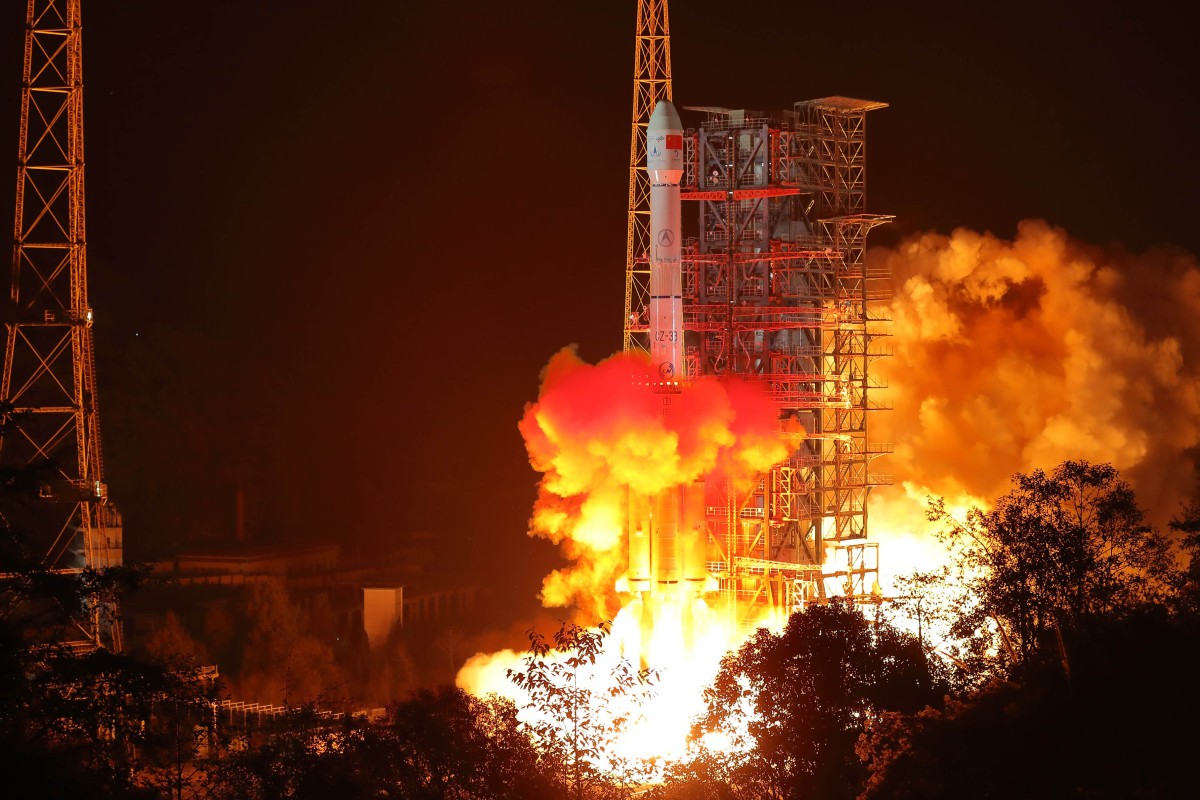
Speedy development of alloys may accelerate programmes to explore the harsh environments of space and ocean depths. Photo: Xinhua
Chinese physicists say they have developed a method that can cut the time involved in the discovery of alloys from years to hours.
The technique has led to the creation of high performance alloys, including the world’s toughest amorphous metal, or metallic glass, for use in extremely hot environments.
The search for an alloy typically takes years, but now it can be done in less than two hours, the Chinese researchers said.
Part of their findings was published in the journal Nature this month.
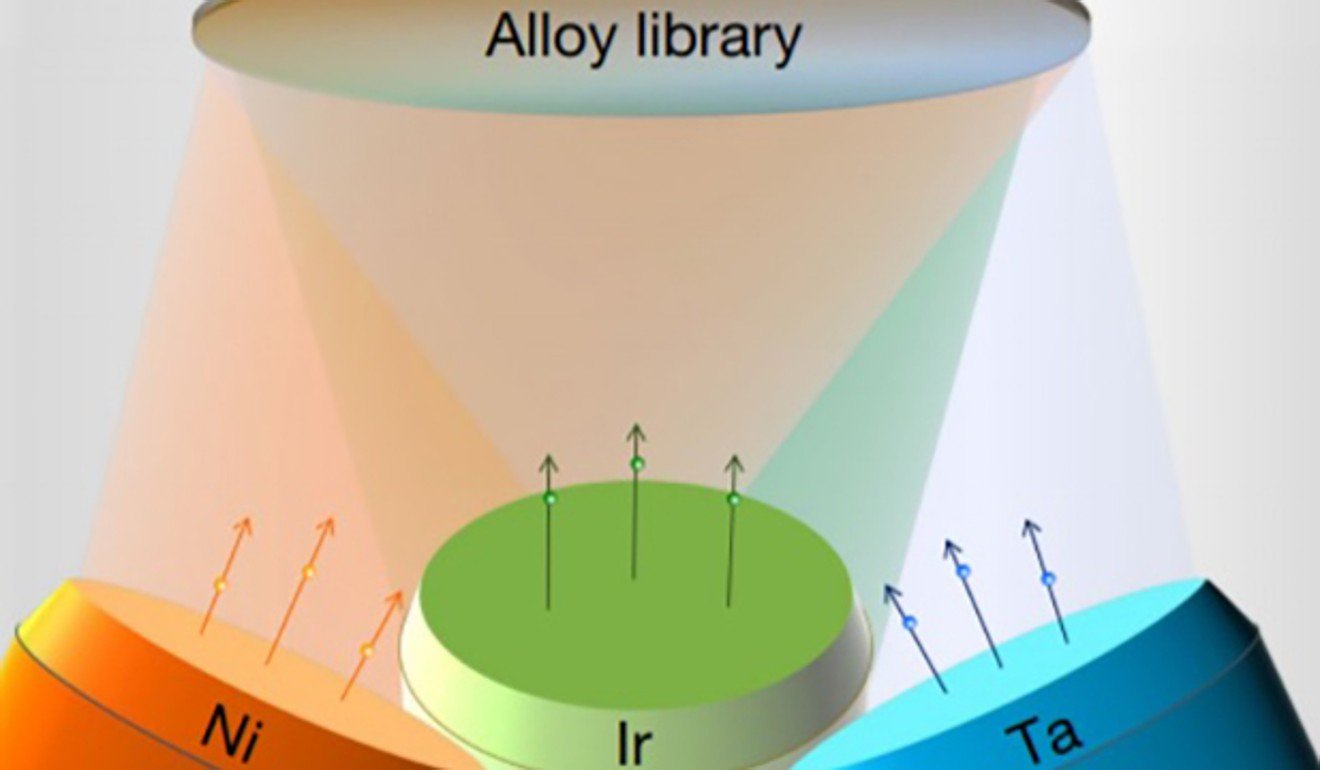
Inspired by the colour gun method used to create images for television sets, the Beijing
In the conventional method, metals needed to be weighed, melted to an alloy and tested for performance. To find the right formula, researchers might need to test more than a thousand combinations and each test might take a day or two.
Professor Wang Weihua, researcher with the institute of physics at the Chinese Academy of Sciences in Beijing and lead scientist of the study, said his team’s research was inspired by early colour televisions, which used three electric devices known as guns that fired red, green and blue light onto the back of the screen to create real-world colours for the viewer.
Wang’s team’s alloy technology also involved three guns, but instead of electronic pulses they fired “bullets” made of different metals. These struck a silicon board simultaneously and fused to form alloys.
Chinese University becomes first in world to build and test its own hypersonic plane
Sensors quickly measured the alloys’ properties and picked the most appropriate for the researchers.
This approach allowed scientists to create more than 1,000 samples, test their performance and select the most promising within a couple of hours.
“We proved it works,” Wang said. “It will increase people’s confidence. There will be a revolution in material science.”
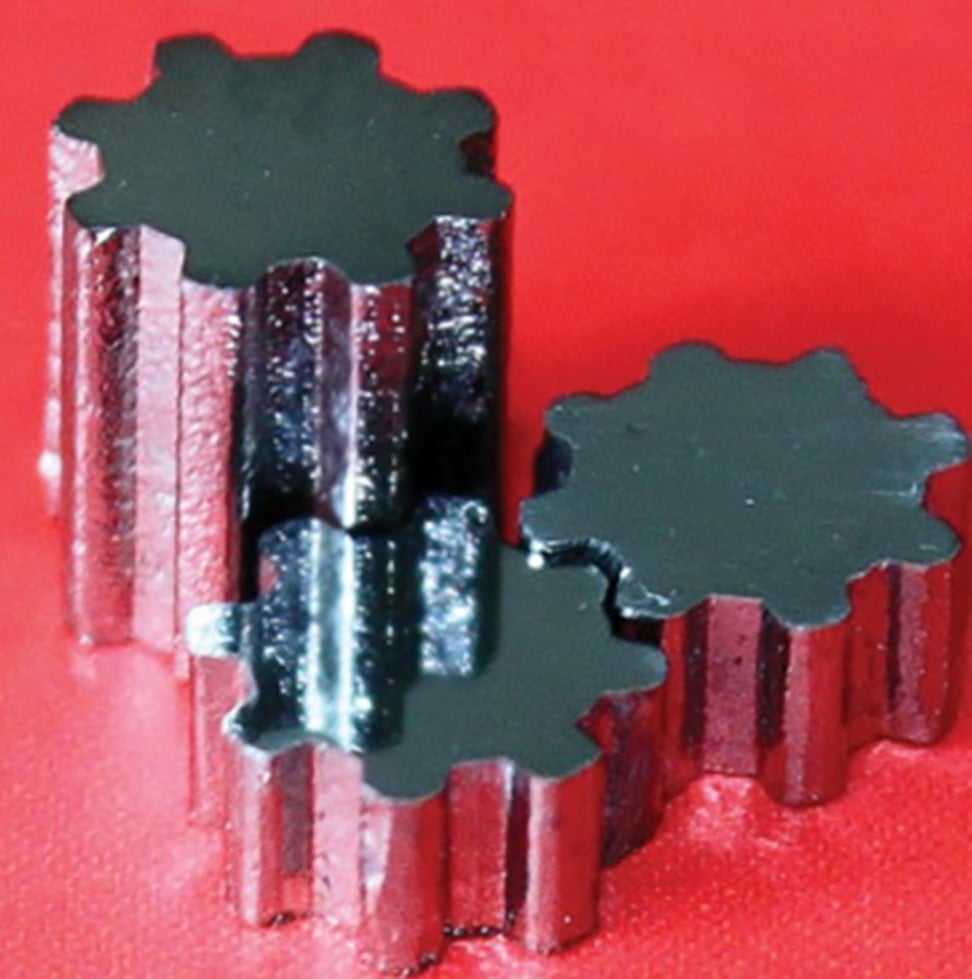
The alloy reported in the Nature paper contained iridium, nickel and tantalum. It had a distorted atomic structure similar to that of glass. Metallic glasses can be extremely strong but they usually weaken by temperatures of 400 degrees Celsius or more.
The Beijing team hopes artificial intelligence, in tandem with its technique, will start a materials revolution. Photo: Handout
The new alloy can maintain a tensile strength nearly eight times that of steel at more than 700 degrees Celsius, researchers said.
It can also remain intact for months in aqua regia, the mixture of nitric acid and hydrochloric acid that can dissolve gold and platinum.
Such properties make the alloy an ideal candidate material for manufacturing critical components for use in harsh environments such as space, ocean depths and battlefields.
“We are introducing artificial intelligence into the design and search for new amorphous metals,” Wang said. “It can further increase the speed of discoveries. In the near future, we may even be able to create material on demand.
“The potential application is almost unlimited.”
Source: SCMP
Posted in alloys, Beijing, Chinese Academy of Sciences, Chinese physicist, Chinese university, developed, nature, Professor Wang Weihua, revolutionary technique, Uncategorized |
Leave a Comment »



 CHINDIA ALERT: You'll be living in their world, very soon