Chindia Alert: You’ll be Living in their World Very Soon
aims to alert you to the threats and opportunities that China and India present. China and India require serious attention; case of ‘hidden dragon and crouching tiger’.
Without this attention, governments, businesses and, indeed, individuals may find themselves at a great disadvantage sooner rather than later.
The POSTs (front webpages) are mainly 'cuttings' from reliable sources, updated continuously.
The PAGEs (see Tabs, above) attempt to make the information more meaningful by putting some structure to the information we have researched and assembled since 2006.
An antibody engineered from the animal’s immune system was found to neutralise the virus that causes Covid-19
American and Belgian researchers hope the discovery may help protect humans from the deadly illness
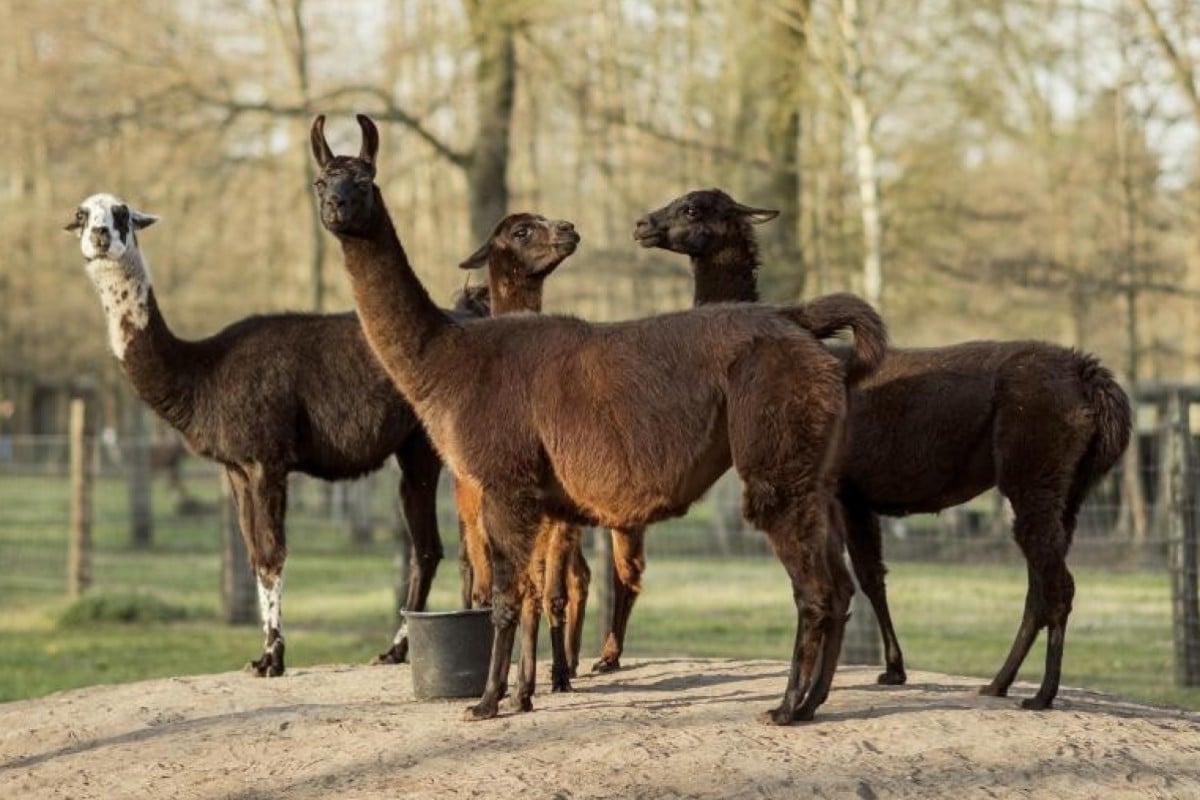
Winter the llama (front) lives on a farm operated by Ghent University’s Vlaams Institute for Biotechnology. Photo: Tim Coppens
A Belgian llama could hold the key to producing an antibody that neutralises the coronavirus that causes Covid-19.
More studies and clinical trials are needed to see if it can be used in humans to treat Covid-19, but the team of American and Belgian scientists who engineered the antibody said they were encouraged by their preliminary findings, which will be published in the journal Cell next week.
Jason McLellan, from the University of Texas at Austin and co-author of the study, described it as one of the “first antibodies known to neutralise Sars-CoV-2”, the official name for the virus.
“With antibody therapies, you’re directly giving somebody the protective antibodies and so, immediately after treatment, they should be protected,” he wrote in a press release.
“The antibodies could also be used to treat somebody who is already sick to lessen the severity of the disease.”
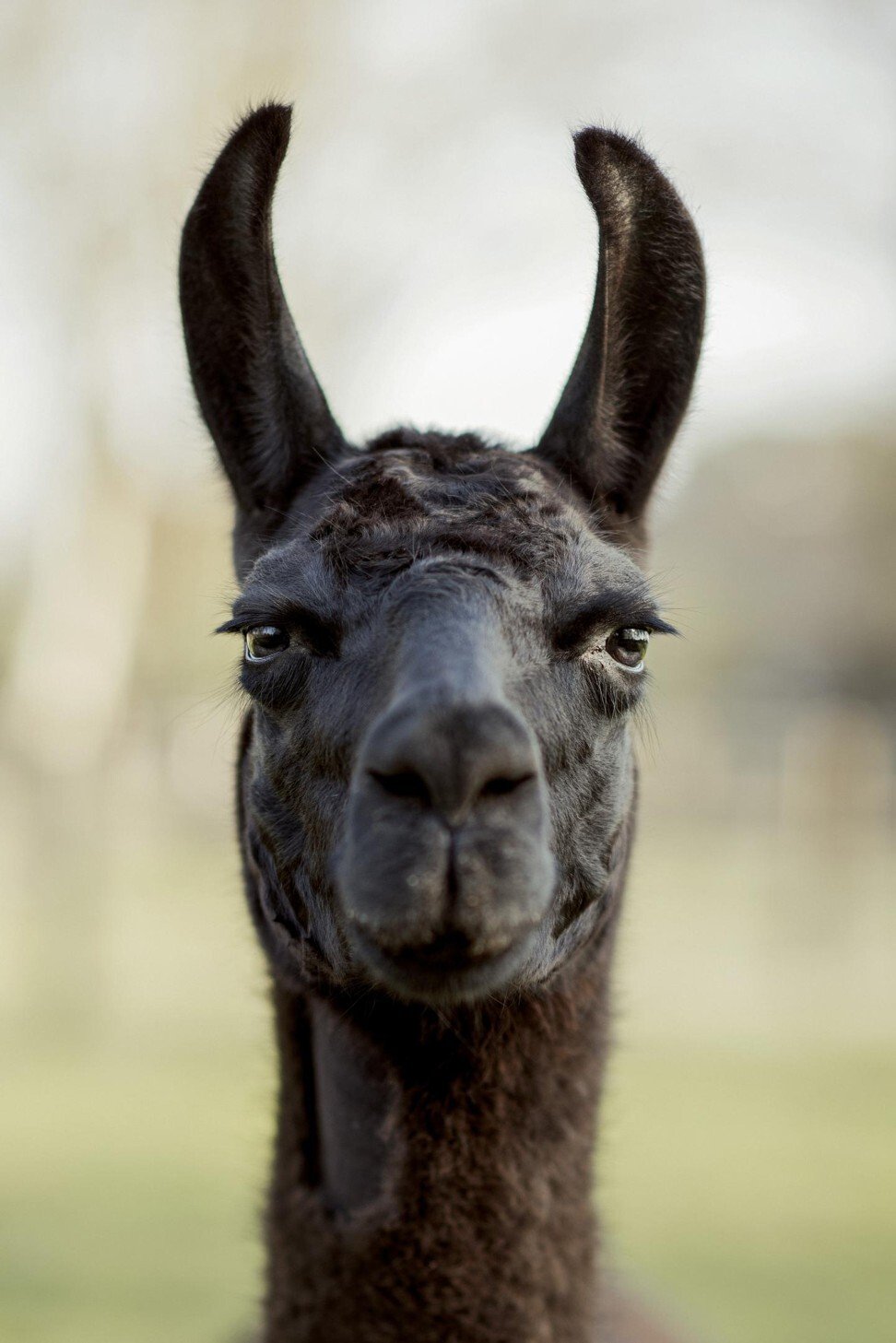
Winter the llama produced antibodies that proved effective against the Sars-CoV-2 virus. Photo: Tim Coppens
The scientists have been working on coronaviruses – including severe acute respiratory syndrome (Sars) and Middle East respiratory syndrome (Mers) – for years.
In 2016 they injected the llama, named Winter, with Sars and Mers in the hope of developing a treatment for the diseases.
“I thought this would be a small side project,” said Dorien De Vlieger from Ghent University in Belgium, who helped to isolate antibodies against coronaviruses from the llamas.
China’s race for a Covid-19 vaccine hits a hurdle – no outbreak at home
1 May 2020
“Now the scientific impact of this project became bigger than I could ever expect. It’s amazing how unpredictable viruses can be.”
A llama’s immune system produces two types of antibodies when it detects pathogens, one similar to human antibodies and one that is about a quarter of the size.
The antibodies produced by Winter were found to be effective in targeting the Sars virus’s spike protein, which allows it to bind to human cells.
Chinese firm ready to make 100 million Coronavirus vaccine doses if trials are successful
This year they decided to test the antibodies Winter had produced during the Sars experiment to see if it could prove effective against Covid-19.
Although it did bind itself to the Sars-CoV-2 virus it did so “weakly”, so the team then linked two copies of the antibody together to make it bind more effectively.
Oxford vaccine effective in monkeys, heading for mass production in India
30 Apr 2020
“That was exciting to me because I’d been working on this for years. But there wasn’t a big need for a coronavirus treatment then. This was just basic research,” said Daniel Wrapp from the University of Texas, a co-author of the study.
The smaller type of antibodies produced by llamas, called single-domain antibodies or nanobodies, can be used in an inhaler, according to Wrapp.
“That makes them potentially really interesting as a drug for a respiratory pathogen because you’re delivering it right to the site of infection,” said Wrapp.
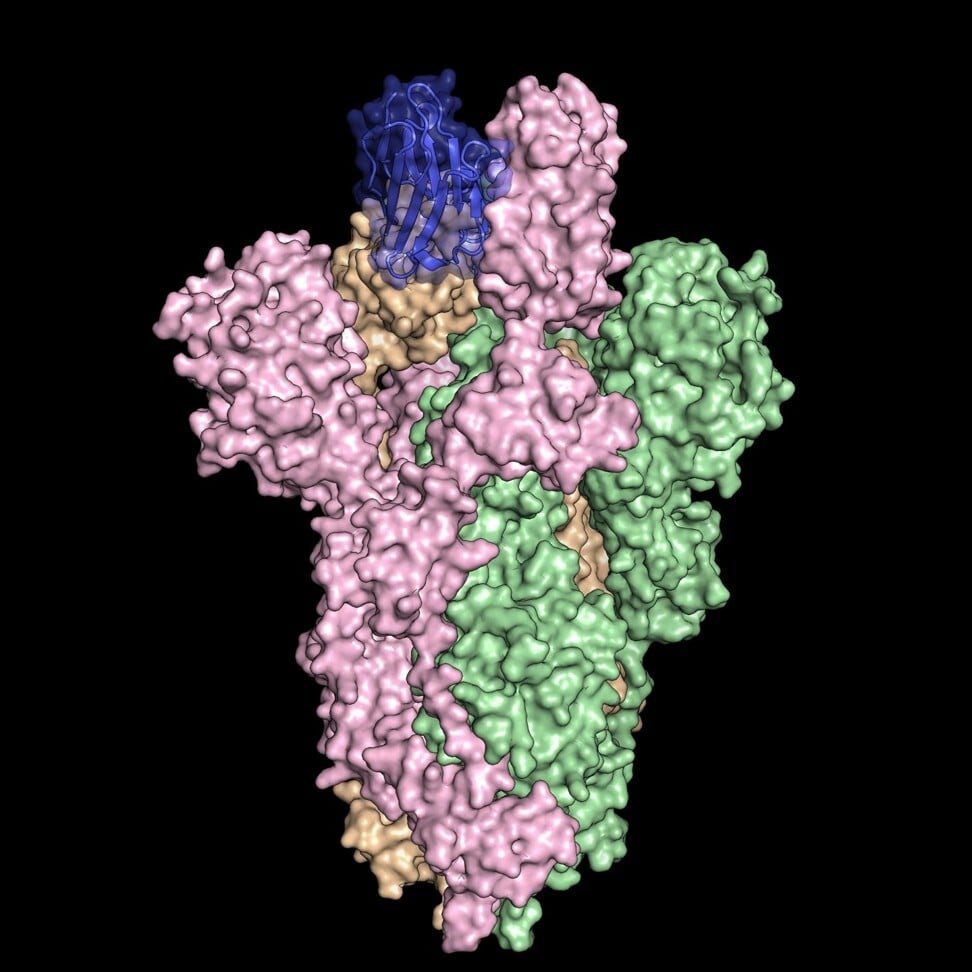
Researchers created an antibody dubbed VHH-72Fc (blue) that binds tightly to the Sars-CoV-2 spike protein (pink, green and orange), blocking the virus from infecting cells. Photo: University of Texas at Austin
The researchers are preparing for more trials with hamsters or primates to further test the antibody, before taking it to human trials.
The main subject of the study, Winter the llama, is now four years old and lives on a farm operated by Ghent University’s Vlaams Institute for Biotechnologym which said it has around 130 other llamas and alpacas at the facility.
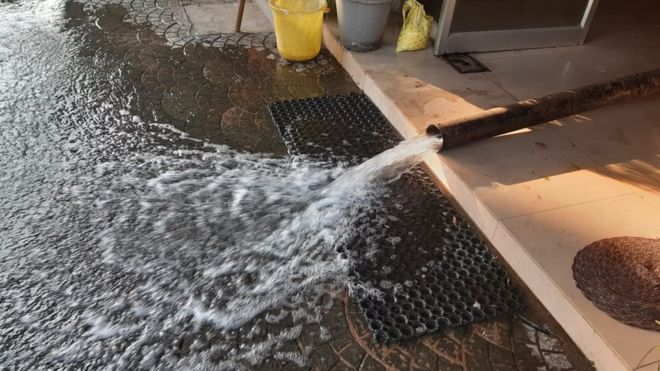
Image copyright JOSHY MALIYEKKALImage caption Drinking water reeking of alcohol started flowing out of the apartment taps
Residents of an apartment building in southern India were left in shock after a mix of beer, brandy and rum started gushing out of their taps.
The smelly, brown liquid began flowing from kitchen taps in the block of flats, in Kerala, on Monday morning.
Bemused residents then contacted the authorities for help, and discovered their water well had been contaminated by officials – albeit accidentally.
It emerged 6,000 litres of confiscated alcohol had been buried nearby.
The alcohol, which officials had placed in a pit after it was seized on court orders, had seeped through the soil and into a well – the same well which supplied the residents of the 18 flats in Thrissur district with drinking water.
“We were so shocked,” Joshy Malyiekkal, owner of the apartment complex, told BBC Hindi’s Imran Qureshi.
Luckily, the strong smell put people off consuming the water. However, the discovery meant there was not only no drinking water for the families, but they were also unable to wash.
“The children couldn’t go to school and even their parents couldn’t go to work,” Mr Malyiekkal said.
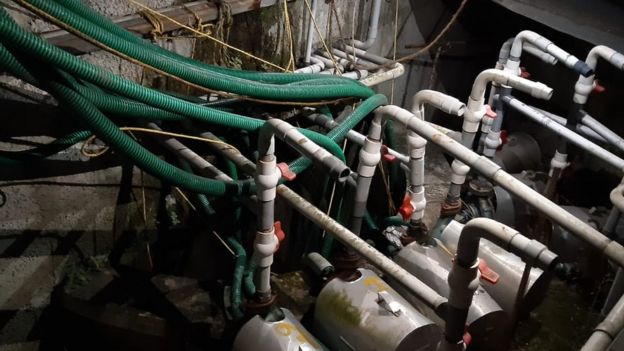
Image copyright JOSHY MALIYEKKALImage caption The contaminated water from the well being pumped out
After residents complained, officials acted to rectify the mistake.
But the process of pumping the well clean is likely to take a month, according to residents, leaving them reliant on deliveries from authorities.
“They’ve been supplying about 5,000 litres of water daily but it is not enough to cover all the families in our building,” Mr Malyiekkal said, pointing out the well was their main source of water.
Officials from the department did not respond to questions from the BBC.
The state of Kerala has the highest consumption of alcohol in the country.
Researchers at academy of science believe electromagnetic wave model is key that will herald new era in radar detection and avoidance for military ships and aircraft
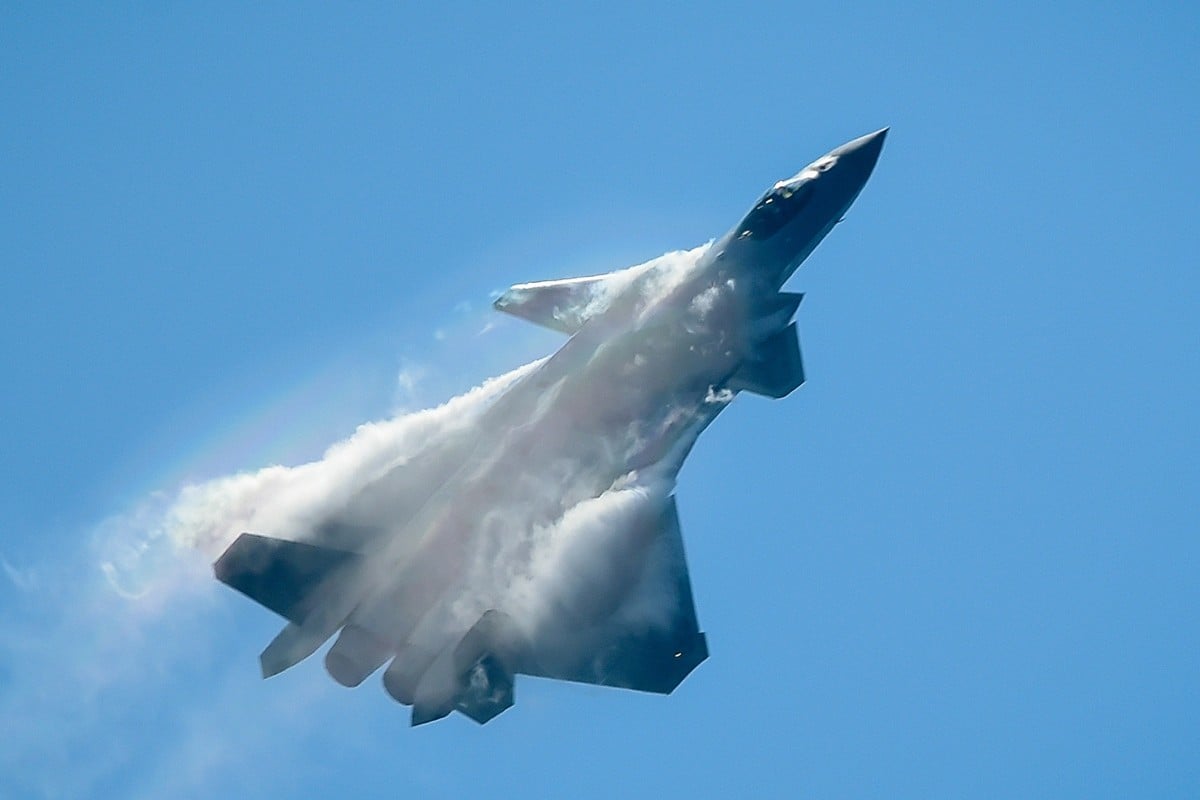
China’s J-20 stealth fighter. Photo: AFP
Chinese scientists have achieved a series of breakthroughs in stealth materials technology that they claim can make fighter jets and other weaponry lighter, cheaper to build and less vulnerable to radar detection.
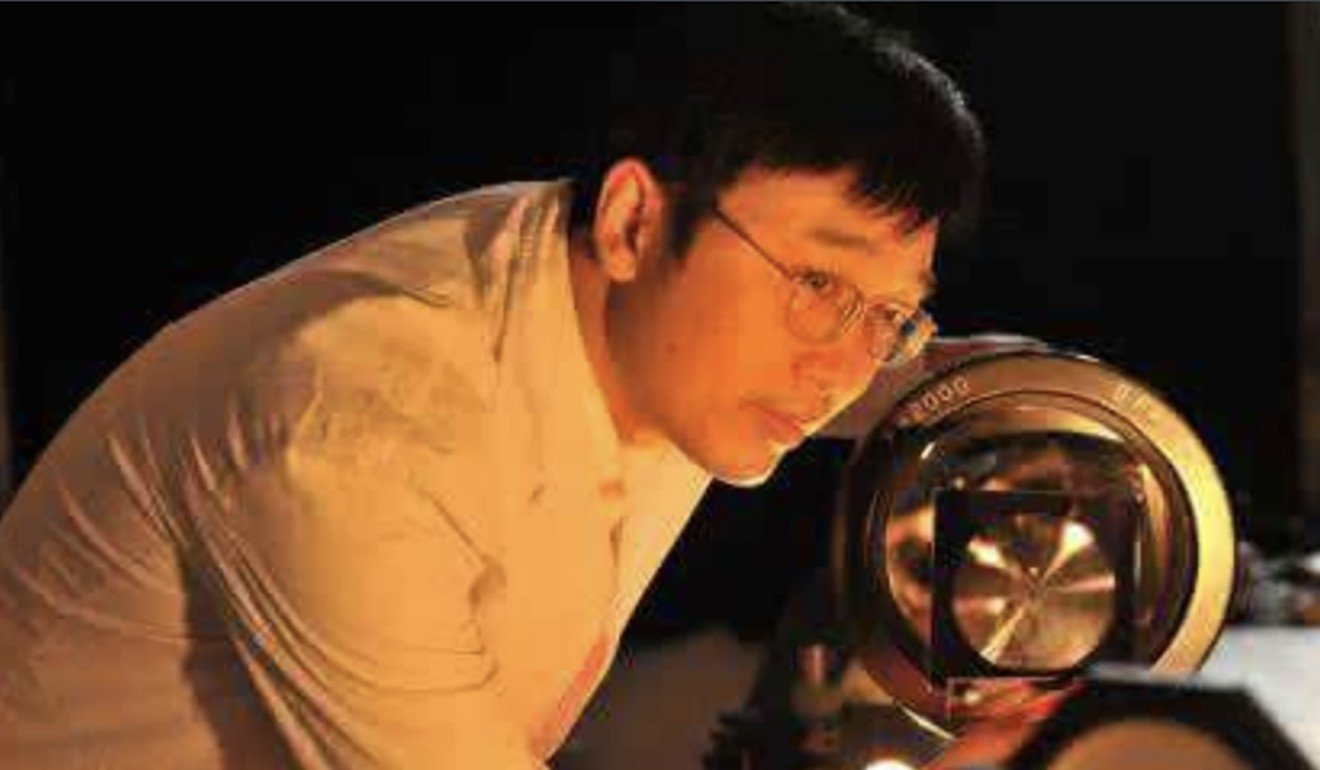
Professor Luo Xiangang and colleagues at the Institute of Optics and Electronics, Chinese Academy of Sciences in Chengdu, Sichuan province, said they had created the world’s first mathematical model to precisely describe the behaviour of electromagnetic waves when they strike a piece of metal engraved with microscopic patterns, according to a statement posted on the academy’s website on Monday.
With their new model and breakthroughs in materials fabrication, they developed a membrane, known as a meta surface, which can absorb radar waves in the widest spectrum yet reported.
At present, stealth aircraft mainly rely on special geometry – their body shape – to deflect radar signals, but those designs can affect aerodynamic performance. They also use radar absorbing paint, which has a high density but only works against a limited frequency spectrum.
In one test, the new technology cut the strength of a reflected radar signal – measured in decibels – by between 10 and nearly 30dB in a frequency range from 0.3 to 40 gigahertz.
A stealth technologist from Fudan University in Shanghai, who was not involved in the work, said a fighter jet or warship using the new technology could feasibly fool all military radar systems in operation today.
“This detection range is incredible,” the researcher said. “I have never heard of anyone even coming close to this performance. At present, absorbing technology with an effective range of between 4 and 18 GHz is considered very, very good.”
China’s new radar system could spot stealth aircraft from at long range
The lower the signal frequency, the longer a radar’s detection range. But detailed information about a moving target can only be obtained with higher frequency radio waves. Militaries typically use a combination of radars working at different frequencies to establish lines of defence.
The Medium Extended Air Defence System, Nato’s early warning radar, operates at a frequency range of 0.3 to 1 GHz. The American Terminal High Altitude Area Defence system, the missile defence radar that caught Beijing’s attention when it was deployed in South Korea in 2017, operates at frequencies around 10 GHz.
Some airports use extremely short-range, high-frequency radars running at 20 GHz or above to monitor vehicle and plane movements on the ground, but even they might not be able to see a jet with the new stealth technology until it is overhead.
“Materials with meta surface technology are already found on military hardware in China, although what they are and where they are used remains largely classified,” the Fudan researcher said.
Professor Luo Xiangang. Photo: Baidu
Luo and his colleagues could not be reached for comment. But according to the academy’s statement and a paper the team published in the journal Advanced Science earlier this year, the stealth breakthroughs were based upon a discovery they made several years ago.
They found that the propagation pattern of radio waves – how they travelled – in extremely narrow metallic spaces was similar to a catenary curve, a shape similar to that assumed by chains suspended by two fixed points under their own weight.
China tests stealth ‘invisibility cloaks’ on regular fighter jets
Inspired by catenary electromagnetics, the team developed a mathematical model and designed meta surfaces suitable for nearly all kinds of wave manipulation.
These included energy-absorbing materials for stealth vehicles and antennas that can be used on satellites or military aircraft.
Zhu Shining, a professor of physics specialising in meta materials at Nanjing University, said the catenary model was a “novel idea”.
“The Institute of Optics and Electronics in Chengdu has conducted long-term research in this area which paved a solid foundation for their discoveries. They have done a good job,” Zhu said.
“Scientists are exploring new features of metal materials, some of them are already in real-life applications.”
Yutu’s discovery of olivine helps pave the way for scientists to confirm existence of a mantle beneath the moon’s crust
Crystallised mineral likely came from a crater caused by a meteor strike
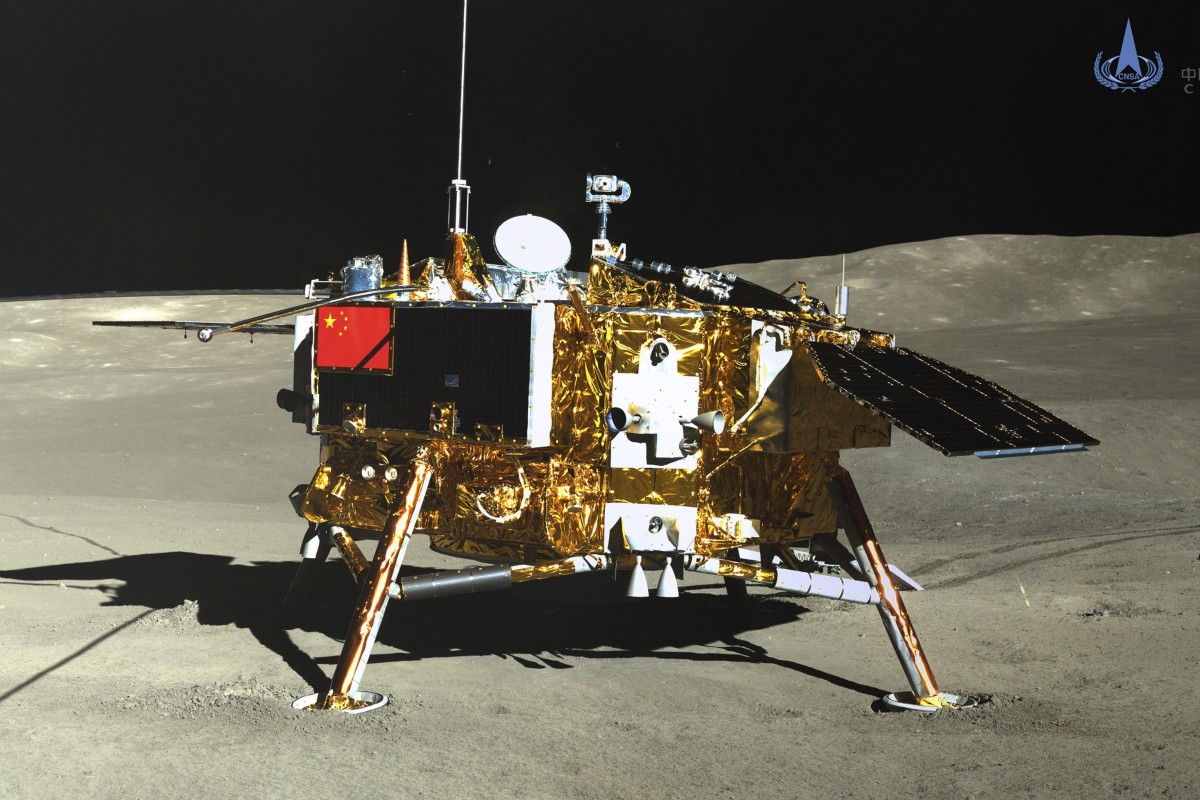
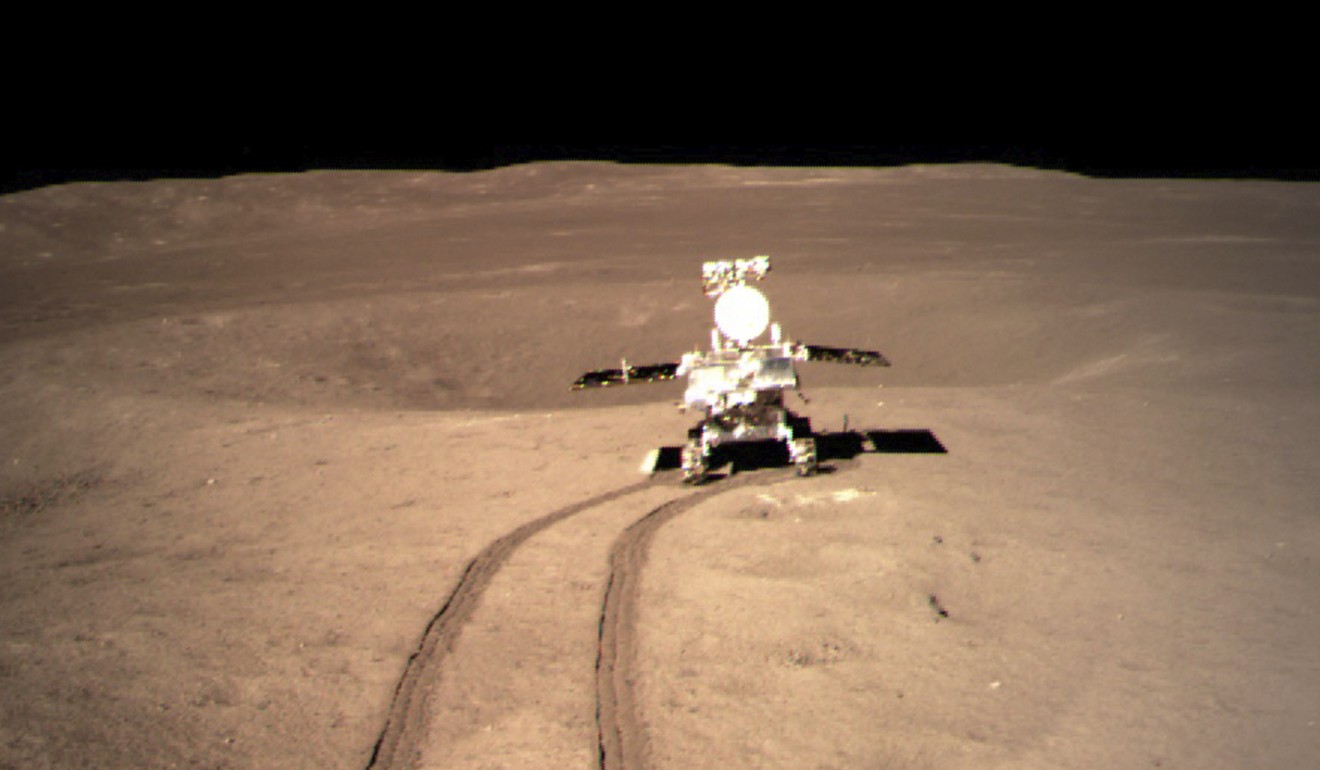
China’s lunar rover, Yutu, has made a groundbreaking discovery. Photo: Xinhua
China’s lunar rover, Yutu, has made a groundbreaking discovery that proves what scientists have been thinking for decades: that the moon has a mantle.
Scientists have long suspected that the moon has a mantle under its crust, just like the Earth, but for the past 60 years lunar explorations, including the US Apollo missions, have failed to provide proof. While there were clues, there was no direct evidence.
“Now we have it,” said Professor Li Chunlai, deputy director of the National Astronomical Observatory of China and a lead scientist on the Chang’e-4 mission that put Yutu, or Jade Rabbit as it is known in English, on the moon.
The findings, published in the latest issue of journal Nature on Thursday, answer some fundamental questions about the moon, such as its internal structure and history of its formation.
The rover discovered olivine in surface samples collected near its landing site. Photo: Xinhua
During its first mission on January 3, Yutu discovered olivine, a green, crystallised mineral usually found deep underground – like the upper mantle of the Earth – in surface samples collected near its landing site.
Further analysis showed that the olivine was not local, but had originated from a 72km diameter (45-mile) crater nearby.
The far side of the moon has more craters than the near side, which faces the Earth, and a meteor strike probably penetrated to the mantle and brought up materials to the surface.
What you need to know about Chang’e 4’s mission to the moon
Yutu’s landing site used to be littered by rocks, but cosmic rays and solar wind weathered them to dust, Li said.
“What we found is the first direct evidence of materials from deep below the lunar crust,” though how deep is still unknown, he said.
It is generally believed that the moon was once covered by oceans of molten rock. Lighter substances rose to the surface and formed a crust while heavier ones sank to form the mantle and core. The new findings support that theory.
China is the first country to land a rover on the far side on the moon and is planning to send a larger spacecraft there later this year to bring back samples.
The first Chinese astronauts will land on the moon between 2025 to 2030, according to Beijing’s latest schedule.
The Apollo missions brought back many rock samples, some of which contained olivine, but some scientists suspected they might have come from a volcanic eruption.
First photo of lunar rover leaving ‘footprints’ on moon
China, the United States and other nations have all announced plans to launch missions to exploit the moon’s resources within the next decade or two.
Yutu’s discovery could help scientists to draw a more accurate map of those resources, including the volume and distribution of minerals, researchers said.
In Chinese folklore, Yutu or Jade Rabbit as it is known in English, is a companion of the moon goddess Chang’e. Photo: Handout
US President Donald Trump gave Nasa an additional US$1.6 billion budget to put Americans back on the moon by 2024.
Li said Chinese scientists were willing to work with their colleagues in the US, but Washington had blocked any such collaboration.





 CHINDIA ALERT: You'll be living in their world, very soon