Chindia Alert: You’ll be Living in their World Very Soon
aims to alert you to the threats and opportunities that China and India present. China and India require serious attention; case of ‘hidden dragon and crouching tiger’.
Without this attention, governments, businesses and, indeed, individuals may find themselves at a great disadvantage sooner rather than later.
The POSTs (front webpages) are mainly 'cuttings' from reliable sources, updated continuously.
The PAGEs (see Tabs, above) attempt to make the information more meaningful by putting some structure to the information we have researched and assembled since 2006.
People’s Liberation Army has officially recorded no infections but disease fears have delayed recruitment, training and operations
Analysts say Sars experience guided military’s prompt response, but combat effectiveness has been affected
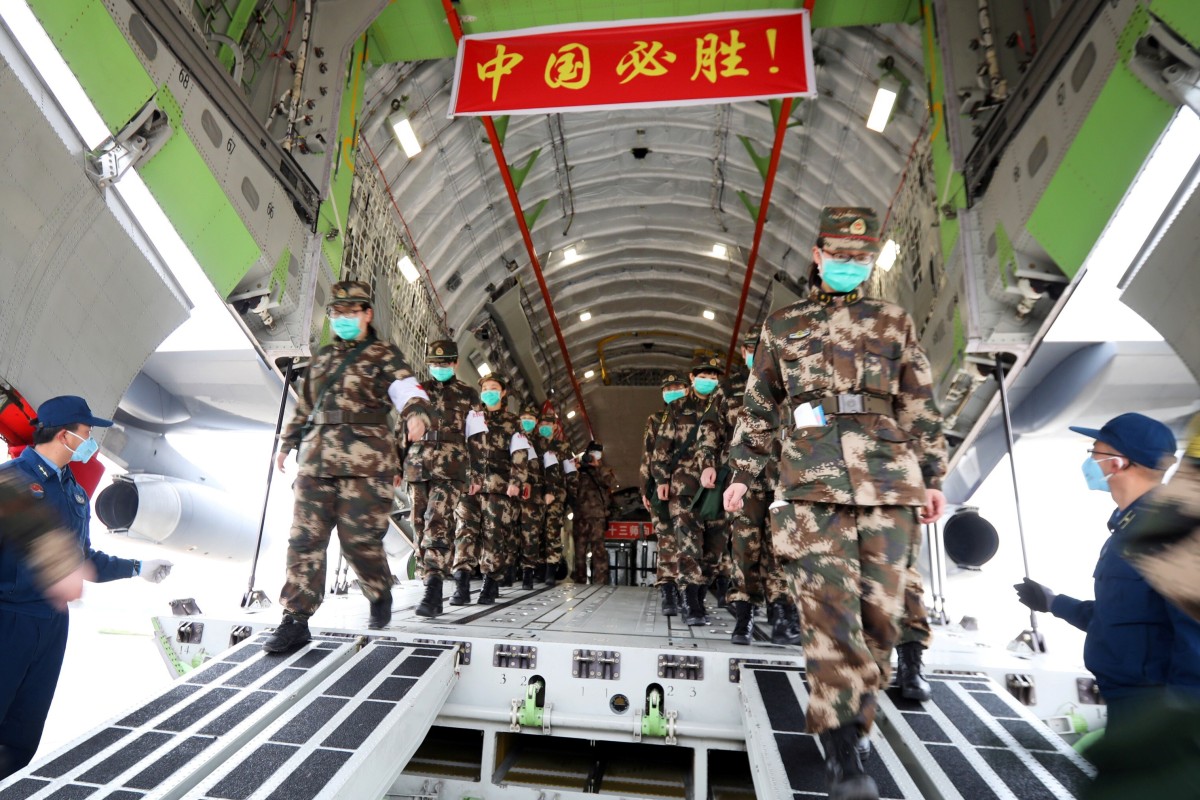
Chinese military medical personnel arriving in Wuhan in February to assist with the coronavirus outbreak response to the February. Photo: Reuters
China’s military may have been spared any coronavirus infections, but the global health crisis has slowed the progress of Chinese President Xi Jinping’s plan to transform the People’s Liberation Army into a modern fighting force capable of long-range power-projecting operations, experts say.
According to China’s defence ministry, the world’s largest armed force – with about 2.3 million personnel – has had zero confirmed cases of Covid-19. In contrast, the US and Russian militaries, ranked second- and third-largest in the world, have reported more than 4,000 and 1,000 respectively.
But the PLA has been affected in other ways by the disease, which was first reported in Wuhan in December before going on to infect 3.9 million people around the world to date.
Safety concerns delayed its annual spring recruitment programme – it has been rescheduled for August – while the PLA Navy was forced to change its training arrangements, switching to classroom study of military theory and tactics, according to Xinhua.
“The PLA is still a conscription army and, given its large turnover of soldiers every year and the late recruitment and training plan this year, the coronavirus pandemic has already affected combat effectiveness,” said Adam Ni, director of the China Policy Centre, an independent, non-profit research organisation based in Canberra, Australia.
China’s military budget will still rise despite coronavirus, experts predict
3 May 2020
The navy’s operations, in particular, would have been affected, according to Charlie Lyons Jones, a researcher from the Australian Strategic Policy Institute’s defence and strategy programme.
“The Chinese navy, short of highly effective disease control measures, is unlikely to avoid similar outbreaks of the novel coronavirus on board its warships,” he said.
“Therefore, even if the PLA Navy currently has zero personnel infected by the novel coronavirus, its position as a navy that can operate effectively in a period of higher-than-normal tension remains precarious at best,” Jones said. He also questioned Beijing’s claims that the military was virus-free.
“The PLA played an important role in China’s response to the coronavirus outbreak in Wuhan … The idea that none of these personnel working on the front lines in Wuhan became infected by the novel coronavirus would be inconsistent with the experiences of countries from around the world,” he said.
More than 4,000 military medical workers were sent to Wuhan as part of China’s effort to contain the outbreak at ground zero – which included the rapid-built emergency field facility, the Huoshenshan hospital – and their efforts were highlighted in a documentary screened recently by state broadcaster CCTV.
China opens coronavirus hospital built in 10 days
At the time, rumours were rampant that the Chinese military had been affected by the coronavirus, fuelled by a report on February 17 by the official PLA Daily that some soldiers had been placed in quarantine and Yu Qiusong, captain of the Changzhou type 054A frigate, was isolating in a guest house. The news report did not mention why the personnel were in quarantine.
But analysts said that whether the official numbers were accurate, the PLA’s closed management, fast response and past experience with severe acute respiratory syndrome (Sars) gave China’s military an advantage in keeping the coronavirus at bay.
Zhou Chenming, a Beijing-based military observer, said a key reason for the less serious hit to the PLA compared to other forces was its speed in recognising the severity of the situation.
“What’s more, the PLA has its own logistic support system that can help minimise its contact with the outside world, thus reducing the possibility of contracting the virus,” he said.
China’s long-range stealth bomber could make its debut this year
4 May 2020
According to Xinhua, the PLA’s Centre for Disease Control and Prevention drew up an emergency response plan and mobilisation arrangements on January 20, the same day Xi issued an instruction to the public that the virus must be “resolutely contained”.
Timothy Heath, a senior international defence research analyst with the Rand Corporation, a US think tank, said China’s military had benefited from its less international role, compared to US forces.
“The US is a globally distributed force while the Chinese military largely operates on the mainland. The US thus faces challenges in containing the disease that the Chinese military does not have to face … and the US military has a large range of missions and tasks it carries out to counter threats to its allies and partners, as well as to US security. This complicates efforts by the US military to carry out disease control measures,” he said.
Documentary puts China’s literary hero into context: there is Dante, there’s Shakespeare, and there’s Du Fu
Theatrical legend Sir Ian McKellen brings glamour to beloved verses in British documentary
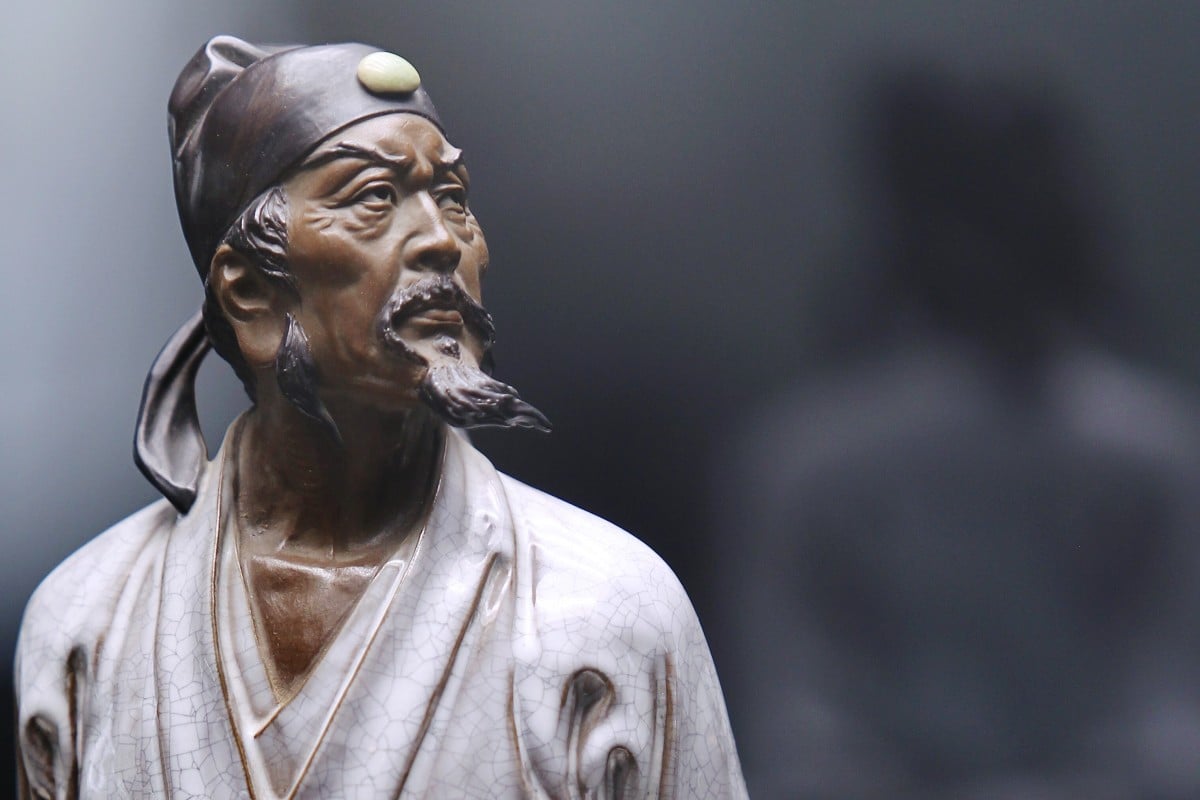
A ceramic figurine of Du Fu, a prominent Chinese poet of the Tang dynasty. Du is the subject of a new BBC documentary, thrilling devotees of his poetry. Photo: Simon Song
The resonant words of an ancient Chinese poet spoken by esteemed British actor Sir Ian McKellen have reignited in China discussion about its literary history and inspired hope that Beijing can tap into cultural riches to help mend its image in the wake of the coronavirus pandemic.
The BBC documentary Du Fu: China’s Greatest Poet has provoked passion among Chinese literature lovers about the poetic master who lived 1,300 years ago.
Sir Ian Mckellen read works of ancient Chinese poet Du Fu in Du Fu: China’s Greatest Poet. Photo: BBC Four / MayaVision International
The one-hour documentary by television historian Michael Wood was broadcast on television and aired online for British viewers this month but enthusiasm among Chinese audiences mean the trailer and programme have been widely circulated on video sharing websites inside mainland China, with some enthusiasts dubbing Chinese subtitles.
The documentary has drawn such attention in Du’s homeland that even the Communist Party’s top anti-graft agency has discussed it in its current affairs commentary column. Notably, Wood’s depiction of Du’s life from AD712 to 770 barely mentioned corruption in the Tang dynasty (618-907) government.
“I couldn’t believe it!!” Wood said in an email. “I’m very pleased of course … most of all as a foreigner making a film about such a loved figure in another culture, you hope that the Chinese viewers will think it was worth doing.”
Often referred to as ancient China’s “Sage of Poetry” and the “Poet Historian”, Du Fu witnessed the Tang dynasty’s unparalleled height of prosperity and its fall into rebellion, famine and poverty.
Writer, historian and presenter Michael Wood followed the footsteps of the ancient Chinese poet Du Fu in Yangtze River gorges. Photo: BBC Four / MayaVision International
Wood traced Du’s footsteps to various parts of the country. He interviewed Chinese experts and Western sinologists, offering historical and personal contexts to introduce some of Du’s more than 1,400 poems and verses chronicling the ups and downs of his life and China.
The programme used many Western reference points to put Du and his works into context. The time Du lived in was described as around the as the Old English poem Beowulf was composed and the former Chinese capital, Changan, where Xian is now, was described as being in the league of world cities of the time, along with Constantinople and Baghdad.
Harvard University sinologist Stephen Owen described the poet’s standing as such: “There is Dante, there’s Shakespeare, and there’s Du Fu.”
The performance of Du’s works by Sir Ian, who enjoyed prominence in China with his role as Gandalf in the Lord of the Rings movie series, attracted popular discussion from both media critics and general audiences in China, and sparked fresh discussion about the poet.
“To a Chinese audience, the biggest surprise could be ‘Gandalf’ reading out the poems! … He recited [Du’s poems] with his deep, stage performance tones in a British accent. No wonder internet users praised it as ‘reciting Du Fu in the form of performing a Shakespeare play,” wrote Su Zhicheng, an editor with National Business Daily.
A stone sculpture at Du Fu Thatched Cottage in Chengdu city, China. Photo: Handout
On China’s popular Weibo microblog, a viewer called Indifferent Onlooker commented on Sir Ian’s recital of Du’s poem My Brave Adventures: “Despite the language barrier, he conveyed the feeling [of the poet]. It’s charming.”
Some viewers, however, disagreed. At popular video-sharing website Bilibili.com, where uploads of the documentary could be found, a viewer commented: “I could not appreciate the English translation, just as I could not grasp Shakespeare through his Chinese translated works in school textbooks.”
Watching the documentary amid the coronavirus pandemic, some internet users drew comparisons of Du to Fang Fang, a modern-day award-winning poet and novelist who chronicled her life in Wuhan during the Covid-19 lockdown.
Shanghai pictured in April. Devastation wrought by the coronavirus pandemic has brought about a new suspicion of China. Photo: Bloomberg
The pandemic has infected more than 2.5 million people and killed more than 170,000. It has put the global economy in jeopardy, fuelling calls for accountability. British Foreign Secretary Dominic Raab last week called for a “deep dive” review and the asking of “hard questions” about how the coronavirus emerged and how it was not stopped earlier.
Steve Tsang, director of the SOAS China Institute at University of London, said the British establishment and wider public had changed its perception of Beijing as questions arose about outbreak misinformation and the political leverage of personal protective gear supply.
“The aggressive propaganda of the Chinese government is getting people in the UK to look more closely at China and see that it is a Leninist party-state, rather than the modernising and rapidly changing society that they want to see in China,” Tsang said.
On Sunday, a writer on the website of the National Supervisory Commission, China’s top anti-corruption agency, claimed – without citing sources – that the Du Fu documentary had moved “anxious” British audience who were still staying home under social distancing measures.
“If anyone wants to put the fear of the coronavirus behind them by understanding the rich Chinese civilisation, please watch this documentary on Du Fu,” it wrote, adding that promoting Du’s poems overseas could help “healing and uniting our shattered world”.
English-language state media such as CGTN and the Global Times reported on the documentary last week and some Beijing-based foreign relations publications have posted comments about the film on Twitter.
Wood said he had received feedback from both Chinese and British viewers that talked about “the need, especially now, of mutual understanding between cultures”.
“It is a global pandemic … we need to understand each other better, to talk to each other, show empathy: and that will help foster cooperation. So even in a small way, any effort to explain ourselves to each other must be a help,” Wood said.
He said the idea for producing a documentary about Du Fu started in 2017, after his team had finished the Story of China series for BBC and PBS.
Du Fu: China’s Greatest Poet first aired in Britain on April 7 on BBC Four, the cultural and documentary channel of the public broadcaster. It is a co-production between the BBC and China Central Television.
Wood said a slightly shorter 50-minute version would be aired later this month on CCTV9, Chinese state television’s documentary channel.
The film was shot in China in September, he said.
“I came back from China [at the] end of September, so we weren’t affected by the Covid-19 outbreak, though of course it has affected us in the editing period. We have had to recut the CCTV version in lockdown here in London and recorded two small word changes on my iPhone!” Wood said.
BEIJING, April 18 (Xinhua) — New media platforms are reshaping China’s documentary industry, ushering in a new era of vigorous development, said Zhang Tongdao, director of the Documentary Center with Beijing Normal University.
There is a rapid growth of new media companies in the documentary market, according to an annual study report of the development of Chinese documentary in 2020, which was released Saturday by the center, the China Intercontinental Communication Center and other institutions.
China’s total investment in documentary making was 5.04 billion yuan (about 710 million U.S. dollars) last year, and the country was blessed with 6.66 billion yuan in total output value, according to the report.
“More and more documentaries are broadcast on the internet, even only on the internet media, which complement those aired on television,” Zhang said.
Some documentaries, including “Flavorful Origins: Chaoshan Cuisine” by Tencent video and the second season of “The Story Of Chuaner” by video-sharing platform Bilibili, gained the brand value in 2019 through exclusive streaming on the platforms.
The report also showed that the documentary production capacity of new media companies reached a new height in 2019.
Last year, Tencent produced 23 documentaries on its own, accounting for about one-third of its total online projects throughout the year. Bilibili produced and launched 16 documentaries, totaling 55.6 hours, while iQiyi, also an online platform, produced or co-produced 15 documentaries, said the report.
The report added that documentary producers and streamers are also foraying into the short video field, varying versions such as shorter or longer in length for different platforms.
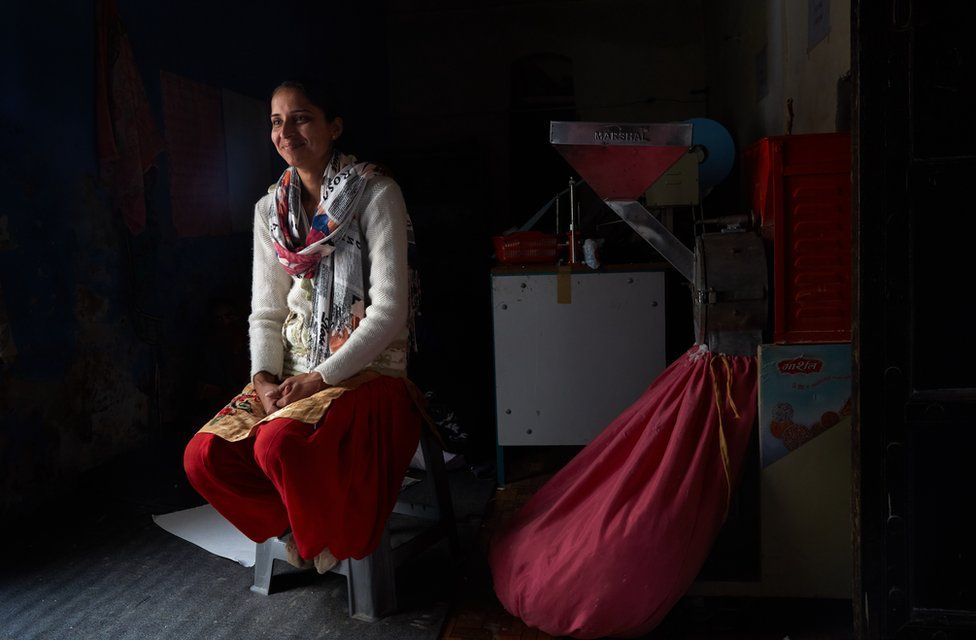
Image captionSneh, 22, attended the awards ceremony where the film won an Oscar
A film based on young women in an Indian village who make sanitary pads has won an Oscar for best documentary short. The BBC’s Geeta Pandey met with the women in their village before the ceremony.
Sneh was 15 when she started menstruating. The first time she bled, she had no idea what was happening to her.
“I was very scared. I thought I was sick with something very serious and began crying,” she told me when I visited her home in Kathikhera village not far from Delhi earlier this week.
“I didn’t have the courage to tell my mother so I confided in my aunt. She said: ‘You’re a grown woman now, don’t cry, it’s normal.’ It was her who told my mother.”
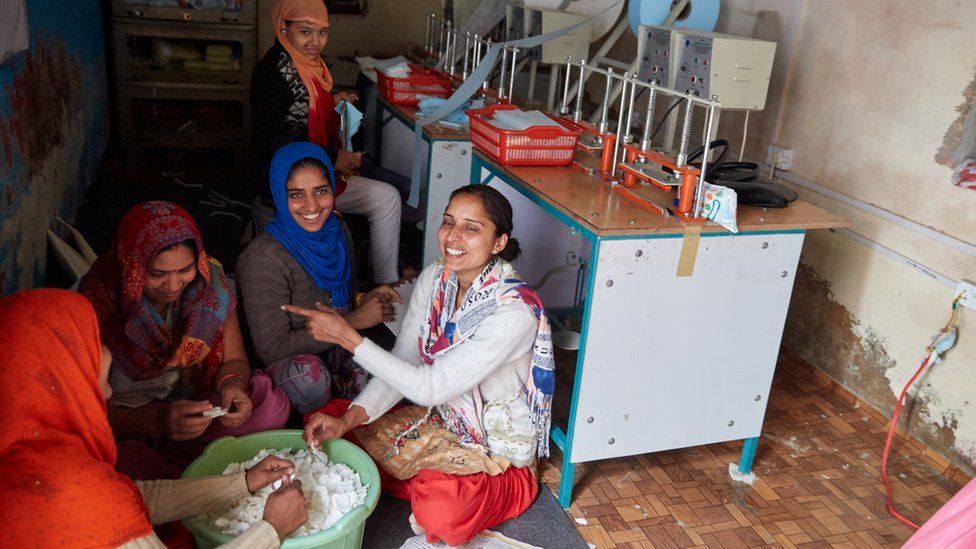
Sneh, now 22, has travelled a long way from that point. She works in a small factory in her village that makes sanitary pads and is the protagonist of Period. End of Sentence., a documentary that has been nominated for an Oscar. She will be attending Sunday’s ceremony in Los Angeles.
The film came about after a student group in North Hollywood used crowdfunding to send a pad-making machine – and Iranian-American filmmaker Rayka Zehtabchi – to Sneh’s village.
Just 115km (71 miles) from Delhi, Kathikhera village in Hapur district is a world far removed from the glitzy malls and high-rises of the Indian capital. Normally, it’s a two-and-a-half-hour drive from Delhi, but construction work on the highway slows it down to four hours for us. And the final 7.5km drive to the village from Hapur town is a crawl, on narrow winding roads lined with open drains on both sides.
The documentary is filmed in the farms and fields – and classrooms – of Kathikhera. Like in the rest of India, periods are a taboo topic; menstruating women are considered impure and barred from entering religious places and often excluded from social events too.
Image captionSneh says that previously, menstruation was not discussed – even among girls
With so much stigma surrounding the issue, it’s no surprise that Sneh had never heard of periods before she started getting them herself.
“It was not a topic that was discussed – even among girls,” she says.
But things began to change when Action India, a charity that works on reproductive health issues, set up a sanitary napkin manufacturing unit in Kathikhera.
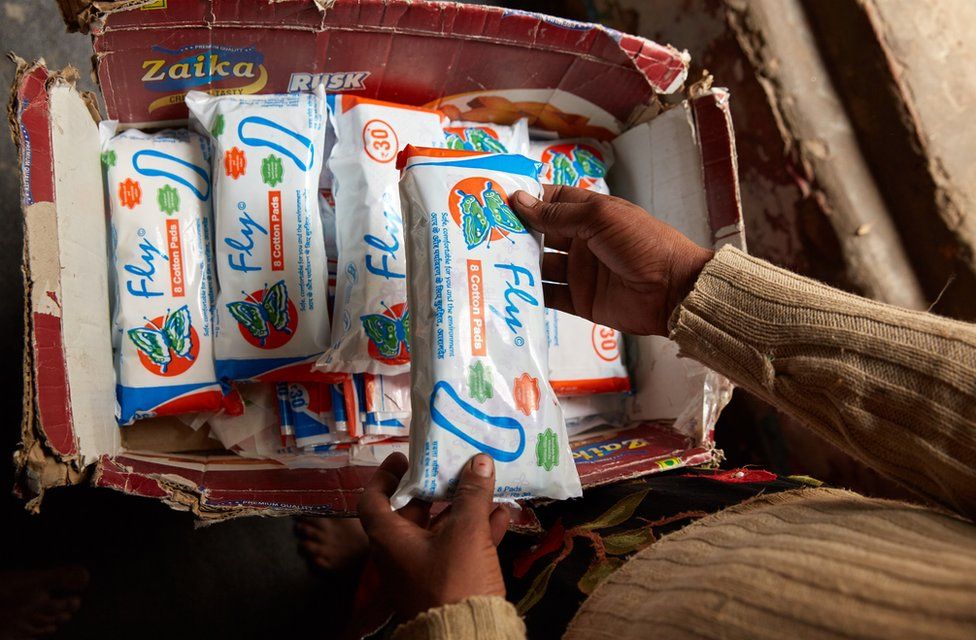
Image captionThe women employees work from 9-5 six days a weekImage captionA pack is priced at 30 rupees ($0.40; £0.30)
In January 2017, Sneh was asked by Suman, a neighbour who works with Action India, if she wanted to work in the factory.
A college graduate who dreams of working for the Delhi police one day, Sneh says she was excited. After all, there were “no other job opportunities” in the village.
“When I sought my mum’s permission, she said, ‘ask your father’. In our families, all important decisions are taken by men.”
She was too embarrassed to tell her father that she was going to be making pads so she told him that she would be making children’s diapers.
“It was two months into the job that mum told him that I was making pads,” she laughs. Much to her relief, he said, “That’s alright, work is work.”
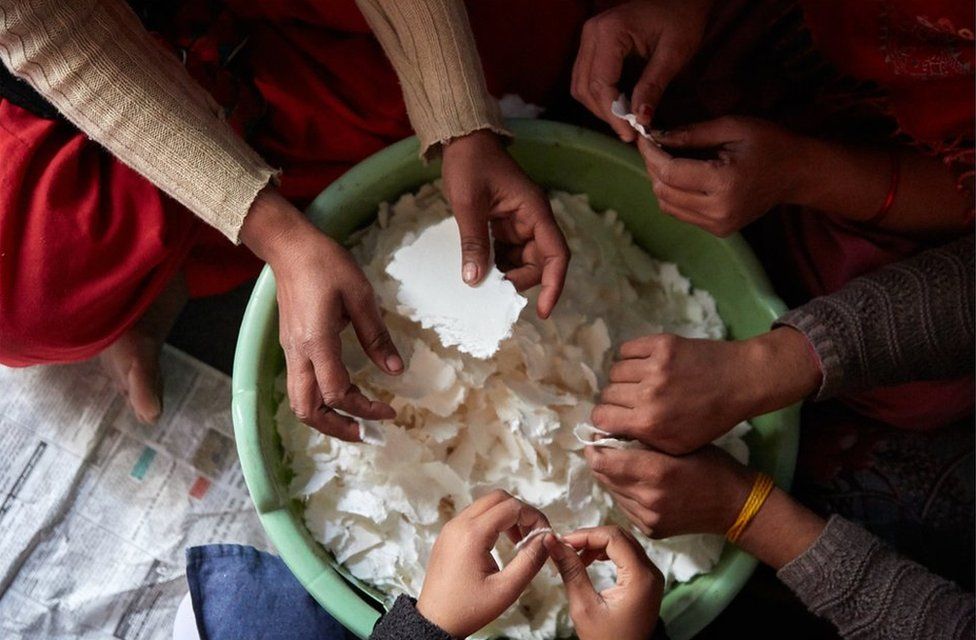
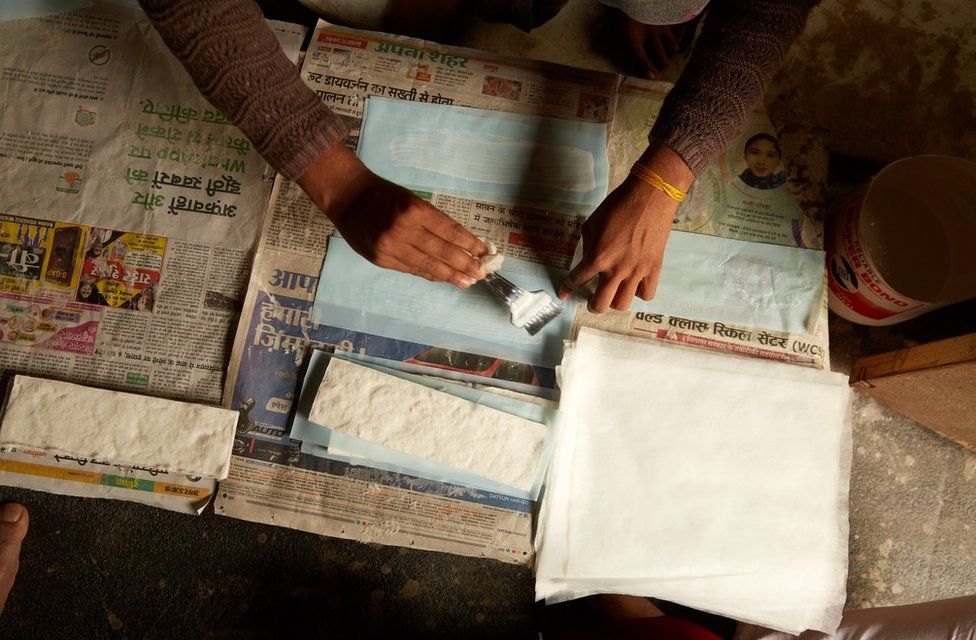
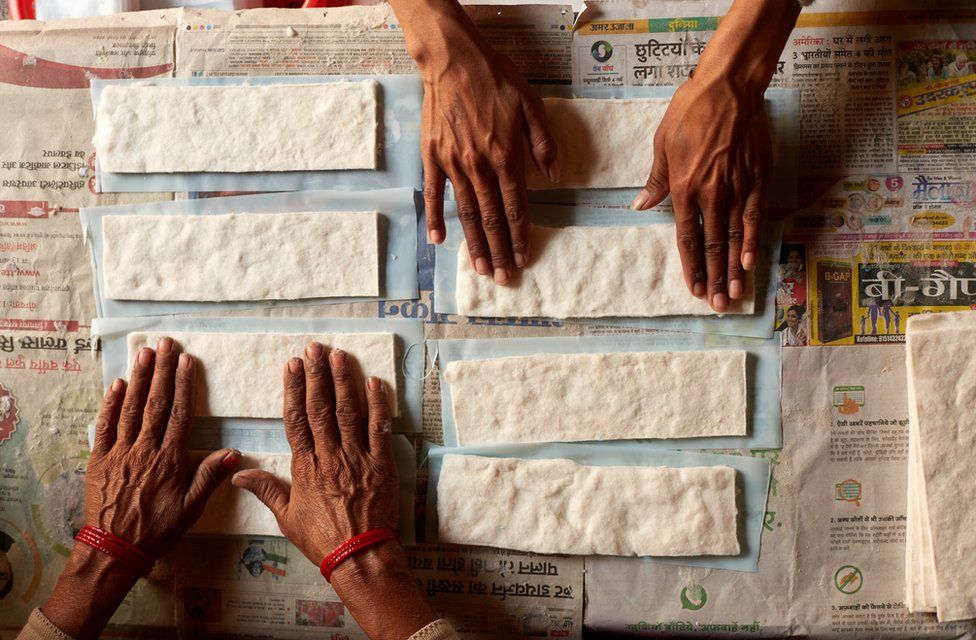
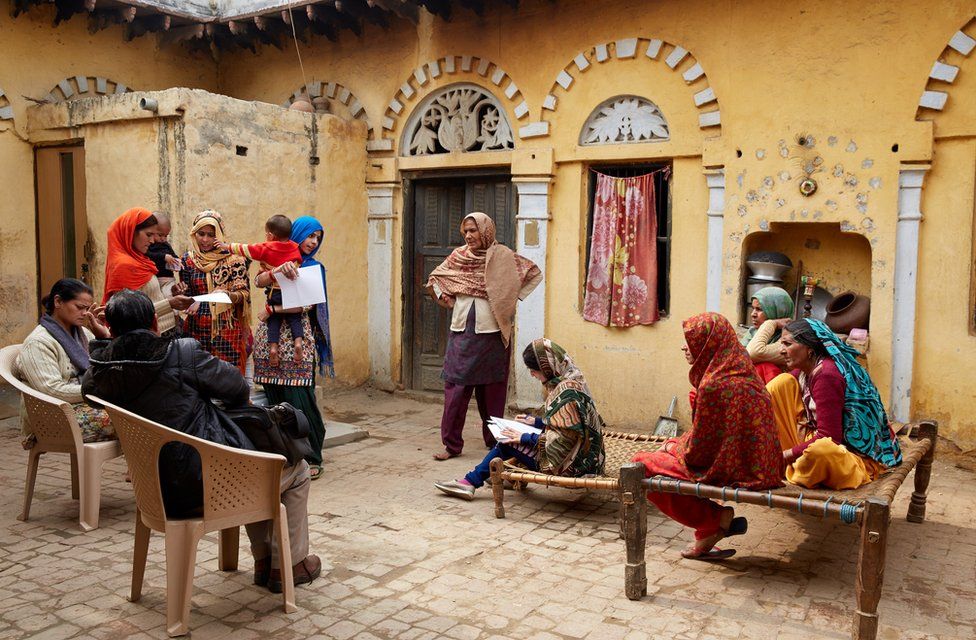
Today, the unit employs seven women, between 18 and 31 years of age. They work from 9-5, six days a week and are paid a monthly salary of 2,500 rupees ($35; £27). The centre produces 600 pads a day and they are sold under the brand name Fly.
Image captionThe centre produces 600 pads a dayImage captionMost women in the village used to use old clothes when they got their periods, now 70% use pads“The biggest problem we face is power cuts. Sometimes we have to come back at night to work when the power is back to meet the targets,” Sneh says.
This little business, run from two rooms in a village home, has helped improve feminine hygiene. Until it was set up most women in the village were using pieces of cloth cut out from old saris or bedsheets when they had their period, now 70% use pads.
It’s also de-stigmatised menstruation and changed attitudes in a conservative society in ways that were unimaginable just a couple of years ago.
Sneh says menstruation is now discussed openly among women. But, she says, it’s not been an easy ride.
“It was difficult at the start. I had to help my mother with housework, I had to study and do this job. Sometimes during my exams, when the pressure became too much, my mother went to work instead of me,” she says.
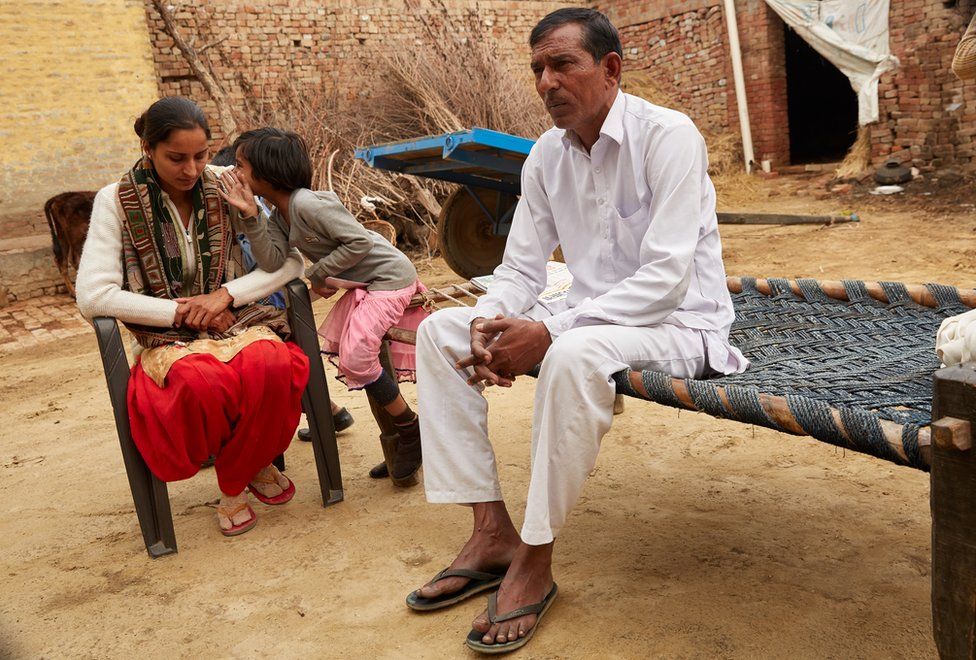
Her father, Rajendra Singh Tanwar, says he is “very proud” of his daughter. “If her work benefits the society, especially women, then I feel happy about it.”
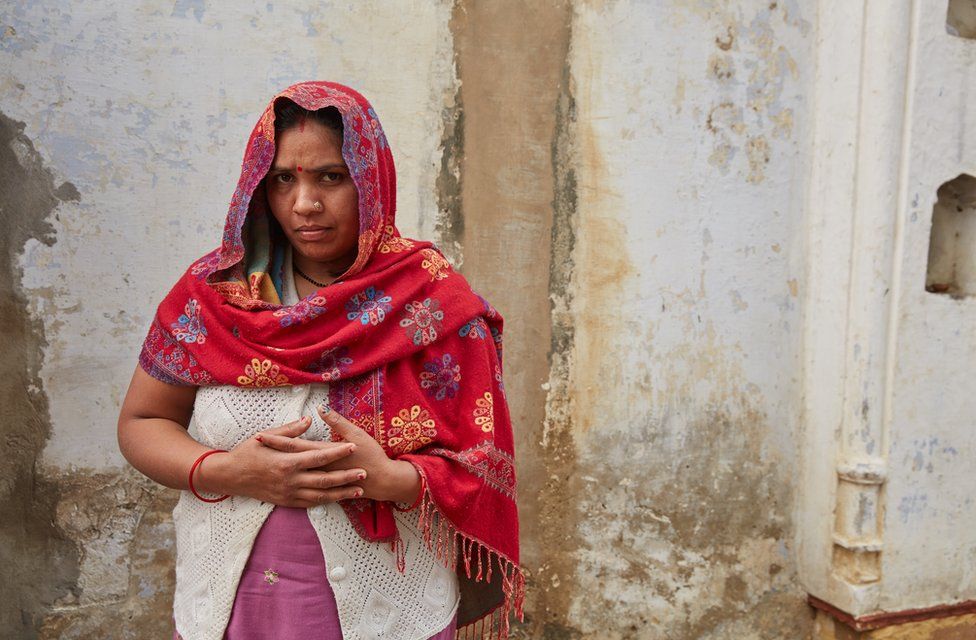
Image captionRajendra Singh Tanwar says he’s proud of what Sneh (left) has doneImage captionSushma Devi’s husband does not want her to work there – but she won’t give it up
Initially, the women faced objections from some villagers who were suspicious about what was happening at the factory. And once the film crew arrived, there were questions about what they were doing.
And some, like 31-year-old Sushma Devi, still have to fight daily battles at home.
The mother-of-two says her husband agreed to let her work only after Sneh’s mother spoke to him. He also insisted that she finish all the housework before going to the factory.
“So I wake up at 05:00, clean the house, do the laundry, feed the buffaloes, make dung cakes which we use as cooking fuel, bathe, and make breakfast and lunch before I step out. In the evening, I cook dinner once I get back.”
But her husband is still unhappy with the arrangement. “He often gets angry with me. He says there’s enough work at home, why do you have to go out to work? My neighbours too say it’s not a good job, they also say the salary is low.”
Two of Sushma’s neighbours had worked at the factory too, but left after a few months. Sushma has no intention of doing the same: “Even if my husband beats me up, I will not give up my job. I enjoy working here.”
Image captionAction India, a charity that works on reproductive health issues, set up the manufacturing unit two years ago
In the documentary, Sushma is heard saying she’d spent some of her earnings to buy clothes for her younger brother. “If I’d known this was going to go to Oscars, I would have said something more intelligent,” she says, laughing.
For Sushma, Sneh and their fellow workers, the Oscar nomination has come as a big boost. The film, which is available on Netflix, is nominated in the Best Short Documentary category.
As Sneh prepares to leave for Los Angeles, her neighbours are appreciative of the “prestige and fame” she has brought the village.
“No-one from Kathikhera has ever travelled abroad so I’ll be the first one to do so,” she says. “I’m now recognised and respected in the village, people say they are proud of me.”
Sneh says she had heard of Oscars and knew they were the biggest cinema awards in the world. But she had never watched a ceremony, and certainly didn’t think that one day she would be on the red carpet.
“I never thought I would go to America. Even now I can’t fully process what’s happening. For me, the nomination itself is an award. It’s a dream that I’m dreaming with my eyes open.”









 CHINDIA ALERT: You'll be living in their world, very soon