30/04/2020
WASHINGTON (Reuters) – President Donald Trump said on Wednesday he believes China’s handling of the coronavirus is proof that Beijing “will do anything they can” to make him lose his re-election bid in November.
In an interview with Reuters in the Oval Office, Trump talked tough on China and said he was looking at different options in terms of consequences for Beijing over the virus. “I can do a lot,” he said.
Trump has been heaping blame on China for a global pandemic that has killed at least 60,000 people in the United States according to a Reuters tally, and thrown the U.S. economy into a deep recession, putting in jeopardy his hopes for another four-year term.
The Republican president, often accused of not acting early enough to prepare the United States for the spread of the virus, said he believed China should have been more active in letting the world know about the coronavirus much sooner.
Asked whether he was considering the use of tariffs or even debt write-offs for China, Trump would not offer specifics. “There are many things I can do,” he said. “We’re looking for what happened.”
“China will do anything they can to have me lose this race,” said Trump. He said he believes Beijing wants his Democratic opponent, Joe Biden, to win the race to ease the pressure Trump has placed on China over trade and other issues.
“They’re constantly using public relations to try to make it like they’re innocent parties,” he said of Chinese officials.
He said the trade deal that he concluded with Chinese President Xi Jinping aimed at reducing chronic U.S. trade deficits with China had been “upset very badly” by the economic fallout from the virus.
A senior Trump administration official, speaking on condition of anonymity, said on Wednesday that an informal “truce” in the war of words that Trump and Xi essentially agreed to in a phone call in late March now appeared to be over.
The two leaders had promised that their governments would do everything possible to cooperate to contain the coronavirus. In recent days, Washington and Beijing have traded increasingly bitter recriminations over the origin of the virus and the response to it.
However, Trump and his top aides, while stepping up their anti-China rhetoric, have stopped short of directly criticizing Xi, who the U.S. president has repeatedly called his “friend.”
Trump also said South Korea has agreed to pay the United States more money for a defense cooperation agreement but would not be drawn out on how much.
“We can make a deal. They want to make a deal,” Trump said. “They’ve agreed to pay a lot of money. They’re paying a lot more money than they did when I got here” in January 2017.
The United States stations roughly 28,500 troops in South Korea, a legacy of the 1950-53 Korean War that ended in an armistice, rather than a peace treaty.
Trump is leading a triage effort to try to keep the U.S. economy afloat through stimulus payments to individuals and companies while nudging state governors to carefully reopen their states as new infections decline.
Trump sounded wistful about the strong economy that he had enjoyed compared with now, when millions of people have lost their jobs and GDP is faltering.
“We were rocking before this happened. We had the greatest economy in history,” he said.
He said he is happy with the way many governors are operating under the strain of the virus but said some need to improve. He would not name names.
Trump’s handling of the virus has come under scrutiny. Forty-three percent of Americans approved of Trump’s handling of the coronavirus, according to the Reuters/Ipsos poll from April 27-28.
But there was some good coronavirus news, as Gilead Sciences Inc said its experimental antiviral drug remdesivir was showing progress in treating virus victims.
Trump has also seeking an accelerated timetable on development of a vaccine.
“I think things are moving along very nicely,” he said.
At the end of the half-hour interview, Trump offered lighthearted remarks about a newly released Navy video purportedly showing an unidentified flying object.
“I just wonder if it’s real,” he said. “That’s a hell of a video.”
Source: Reuters
Posted in 1950-53 Korean War, 60,000, accelerated timetable, according, accused, acting, active, afloat, agreed, Americans, anonymity, another, anti-China, antiviral drug remdesivir, approved, April, armistice, at least, “will do anything they can”, Beijing, believed, believes, bid, bitter, China, China's handling, China’s, Chinese President Xi Jinping, chronic, companies, compared, considering, coronavirus, debt write-offs, decline, deep recession, defense cooperation agreement, democratic, development, early, economic fallout, enjoyed, enough, essentially, faltering, four-year term, GDP, global pandemic, handling, hopes, individuals, informal, Interest, jeopardy, jobs, Joe Biden, killed, leaders, legacy, letting, lost, meddling, millions, money, Navy video, new infections, November, now, nudging, often, opponent, origin, Oval Office, pay, peace treaty, People, phone call, prepare, President, President Donald Trump, pressure, progress, proof, putting, race, re-election, recriminations, reopen, Republican, Reuters, Reuters tally, Reuters/Ipsos poll, rhetoric, South Korea, specifics, spread, state governors, states, stations, stimulus payments, strong economy, tariffs, thrown, to lose, to make, tough, Trade, trade deficits, triage, troops, truce, Trump, Trump administration, two, U.S. economy, U.S. election, Uncategorized, unidentified flying object, United States, Vaccine, victims, Virus, wants, war of words, Washington, Wednesday, win, wistful, World |
Leave a Comment »
17/04/2020
- Fu Chengyu, the former chairman of China National Offshore Oil Corporation (CNOOC), says hostility towards Beijing will increase after the coronavirus
- US will try to ‘thwart China’s rise’ and economic fallout from Covid-19 will be worse than the global financial crisis, says Fu
Former Sinopec chairman Fu Chengyu says China will face a more hostile world post coronavirus. Photo: EPA
The world is set to become more hostile for China after the coronavirus as the risk of “black swan” events gathers for Beijing, a heavyweight in China’s state oil industry has warned, reflecting growing wariness about the geopolitical environment among political and business elites.
Fu Chengyu, the former chairman of both China National Offshore Oil Corporation (CNOOC) and Sinopec Group, painted an ominous picture of increasing antagonism from the United States and damaging unforeseen events, known as black swans, like Covid-19
at an online symposium organised by business magazine Caijing.
The US would “mercilessly” suppress China in the fields of economics, trade, finance and technology, and Washington was set on taking advantage of the coronavirus pandemic to “forge a less favourable international environment for” the nation, Fu said this week.
“We’ve smelled the odours and new plots against China are in formation,” he said.
After the epidemic, the external environment for our survival will be more severe – Fu Chengyu
“After the epidemic, the external environment for our survival will be more severe … we must prepare for the worst and do our best to achieve the best possible results.”
While Fu has retired from his posts at state companies, he is an influential voice in
with decades of experience and contacts in the US petroleum sector.
Fu was a counterpart of Rex Tillerson, who was chairman of ExxonMobil from 2006 to 2017, and served as US State Secretary under President Donald Trump until March 2018.
While at the helm of CNOOC in the early 2000s, he felt political heat from Washington over a US$18.5 billion takeover bid for the American oil company Unocal in 2005, which the company was subsequently forced to withdraw.
China says no evidence to suggest coronavirus virus came from Wuhan’s lab
“The crisis stemming from the coronavirus pandemic won’t be over in just one or two years … the impact will last longer than the 2008 global financial crisis,” he said.
He added that China would face numerous “black swan” risks in the future.
President Xi Jinping warned in 2019 that China must be on guard for black swan risks as well as “grey rhino” events, referring to an obvious threat that is often neglected.
Geopolitics is getting worse and worse, and we need to be very careful. The US will try various ways to thwart China’s rise, and energy is an important area
To respond to the economic fallout from the coronavirus, China must do more to create a self-sustaining domestic economy, Fu said, and in particular reduce input prices for gas and electricity and boost public services such as health care and education.
“Geopolitics is getting worse and worse, and we need to be very careful,” Fu said. “The US will try various ways to thwart China’s rise, and energy is an important area.”
The US could potentially form a new oil export alliance with Saudi Arabia and Russia to make it possible to cut oil supplies to China, he said.
“China must be prepared for such a scenario, and even when supplies are cut off, we can have some basic self-protection.”
Source: SCMP
Posted in "severe", 2005, 2006, 2008, 2017, 2018, 2019, advantage, against, American oil company, ‘thwart China’s rise’, “grey rhino”, “mercilessly”, Beijing, black swans, business magazine, Chairman, China, China National Offshore Oil Corporation (CNOOC), CNOOC, contacts, coronavirus, Coronavirus pandemic, COVID-19, crisis, cut, damaging, economic fallout, Economics, education, Electricity, energy, epidemic, experience, external environment, ExxonMobil, favourable, fields, Finance, forge, formation, gas, gathering, geopolitical environment, GeoPolitics, global financial crisis, global value chains, growing wariness, Health care, heightened tensions, hostility, increase, increasing antagonism, input prices, international environment, March, nation, neglected, new plots, obvious threat, odours, oil export alliance, oil industry, oil supplies, oil titan, ominous picture, on guard, online symposium, painted, pandemic, petroleum sector, political heat, prepared, President Donald Trump, President Xi Jinping, Public services, Rex Tillerson, Risks, Russia, Saudi Arabia, scenario, self-protection, self-sustaining domestic economy, Sinopec Group, smelled, suppress, survival, Technology, Trade, Uncategorized, unforeseen events, United States, Unocal, US, US State Secretary, warns, Washington, week, world trade landscape |
Leave a Comment »
13/04/2020
- China’s famed Yiwu International Trade Market, a barometer for the health of the nation’s exports, has been hammered by the economic fallout from Covid-19
- Export orders have dried up amid sweeping containment measures in the US and Europe and restrictions on foreigners entering China have shut out international buyers
The coronavirus pandemic has severely dented wholesale trade at the Yiwu International Trade Market in China. Photo: SCMP
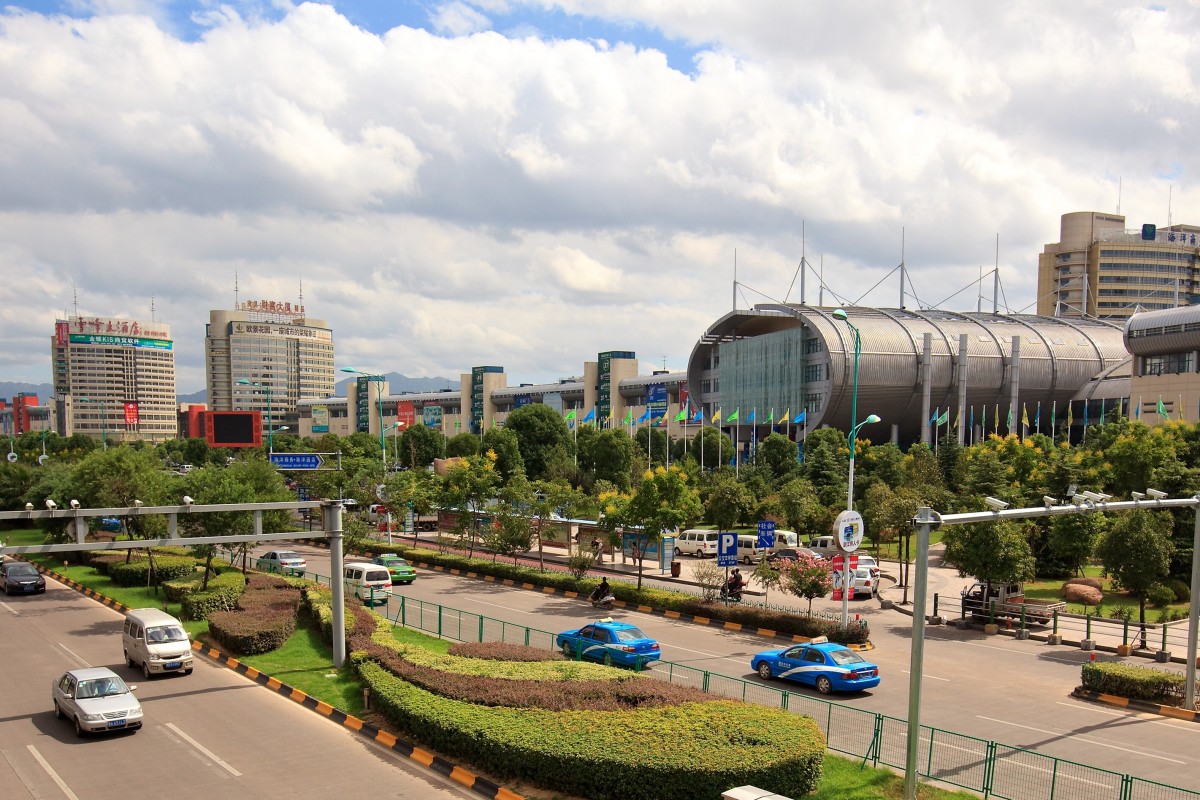
The Yiwu International Trade Market has always been renowned as a window into the vitality of Chinese manufacturing, crammed with stalls showcasing everything from flashlights to machine parts.
But today, as the coronavirus pandemic rips through the global economy, it offers a strikingly different picture – the dismal effect Covid-19 is having on the nation’s exports.
The usually bustling wholesale market, home to some 70,000 vendors supplying 1,700 different types of manufactured goods, is a shadow of its former self.
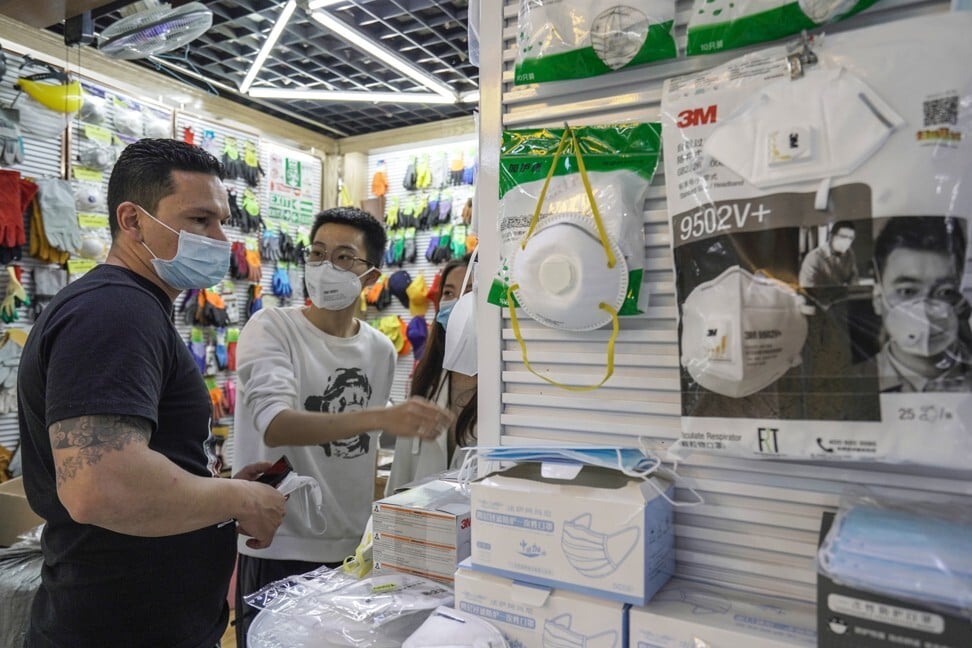
Only a handful of foreign buyers traipse through aisles of the sprawling 4-million-square-metre (43 million square feet) complex, while store owners – with no customers to tend to – sit hunched over their phones or talking in small groups.
A foreign buyer visits a stall selling face masks. Photo: Ren Wei
“We try to convince ourselves that the deep slump will not last long,” said the owner of Wetell Razor, Tong Ciying, at her empty store. “We cannot let complacency creep in, although the coronavirus has sharply hampered exports of Chinese products.”
Chinese exports plunged by 17.2 per cent in January and February combined compared to the same period a year earlier, according to the General Administration of Customs. The figure was a sharp drop from 7.9 per cent growth in December.
After riding out a supply shock that shut down most of its factories, China is now facing a
second wave demand shock, as overseas export orders vanish amid sweeping containment measures to contain the outbreak around the globe.
Nowhere is that clearer to see than in Yiwu. The city of 1.2 million, which lies in the prosperous coastal province of Zhejiang, was catapulted into the international limelight as a showroom for Chinese manufacturing when the country joined the World Trade Organisation in 2001.
Coronavirus: Is the gig economy dead, and should the self-employed worry?
Before the pandemic, thousands of foreign buyers would flock to the mammoth trade market each day to source all manner of products before sending them home.
But the outbreak, which has claimed the lives of more than 113,000 people and infected more than 1.9 million around the world, is proving a major test for the market and the health of the trade dependent city.
Imports and exports via Yiwu last year were valued at 296.7 billion yuan (US$42.2 billion) – nearly double the city’s economic output.
Businesses, however, are facing a very different picture in 2020. Most traders at the market say they have lost at least half their business amid the pandemic, which was first detected in the central Chinese city of Wuhan last year.
Just take a look at the situation in Yiwu and you will understand the extent of the virus’ effect on China’s trade with foreign countries – Tianqing
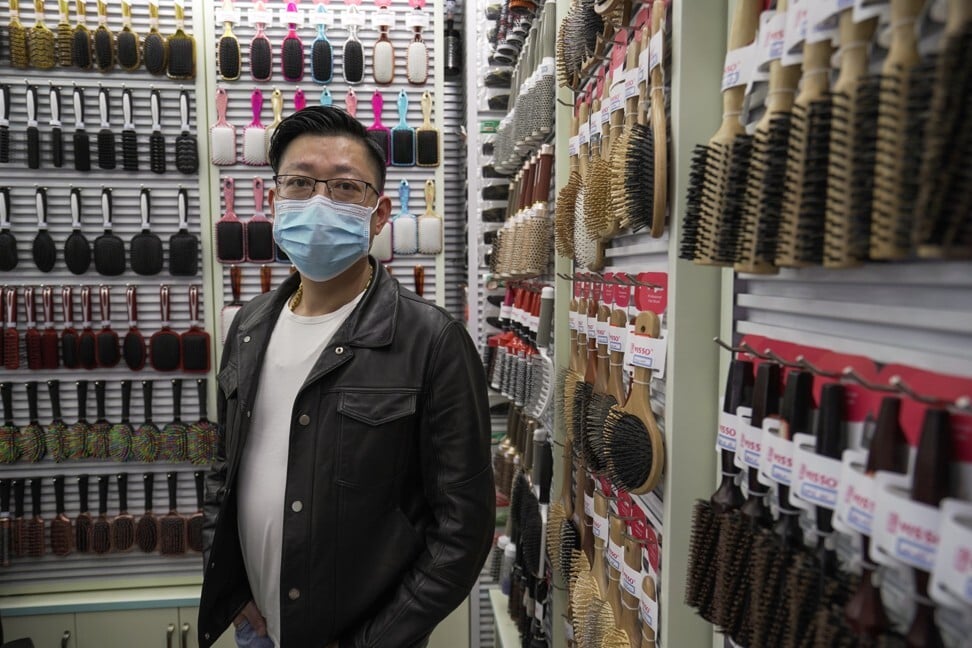
“Yiwu is the barometer for China’s exports,” said Jiang Tianqing, the owner of Beauty Shine Industry, a manufacturer of hair brushes. “Just take a look at the situation in Yiwu and you will understand the extent of the virus’ effect on China’s trade with foreign countries.”
Jiang said his business was only just hanging on thanks to a handful of loyal customers placing orders via WeChat.
“I assume it will be a drawn-out battle against the coronavirus,” he said. “We are aware of the fact that developed economies like the US and Europe have been severely affected.”
The Yiwu market reopened on February 18 after a one-month long hiatus following the Lunar New Year holiday and the government’s order to halt commercial activities to contain the spread of the outbreak.
Jiang Tianqing, owner of hair brush company Beauty Shine Industry. Photo: Ren Wei
But facing the threat of a spike in imported cases, Beijing banned foreigners from entering the country in late March – shutting out potential overseas buyers.
Despite the lack of business, local authorities have urged stall owners to keep their spaces open to display Yiwu’s pro-business attitude, owners said.
“For those bosses who just set up their shops here, it would be a do-or-die moment now since their revenue over the next few months will probably be zero,” said Tong. “I am lucky that my old customers are still making orders for my razors.”
The impact of the coronavirus is just the latest challenge for local merchants, who normally pay 200,000 yuan (US$28,000) per year for a 10-square-metre (108 square feet) stall at the market.
Traders were hard hit by the
trade war between China and the United States when the Trump administration imposed a 25 per cent tariff on US$200 billion of Chinese imports last year.
At the time, some Chinese companies agreed to slash their prices to help American buyers digest the additional costs.
“But it is different this time,” said Jiang. “Pricing does not matter. Both buyers and sellers are eager to seal deals, but we are not able to overcome the barriers [to demand caused by the virus].”
Even when businesses can secure orders, it is a struggle to deliver them
Ma Jun, a manager with a LED light bulb trading company, said the only export destination for her company’s products was war-torn Yemen because it was the only country with ports still open.
It is a public health crisis that ravages not just our businesses, but the whole world economy – Dong Xin
Dong Xin, an entrepreneur selling stationery products, said he could not ship the few orders he had because “ocean carriers have stopped operations”.
“It is a public health crisis that ravages not just our businesses, but the whole world economy,” he said. “The only thing can do is to pray for an early end to the pandemic.”
Most wholesale traders in the Yiwu market run manufacturing businesses based outside the city, so a sharp fall in sales has a ripple effect on their factories, potentially resulting in massive job cuts.
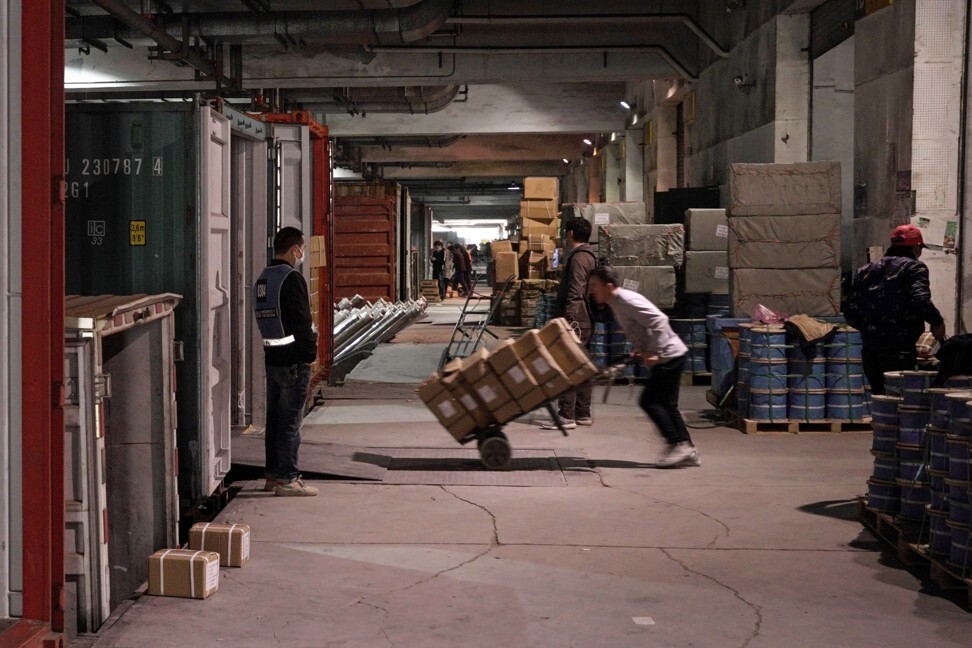
Workers pack containers at Yiwu Port, an inland port home to dozens of warehouses. Photo: Ren Wei
At Yiwu Port, an inland logistics hub full of warehouses where goods from the factories are unpacked and repacked for shipping abroad, container truck drivers joke about their job prospects.
“We used to commute between Shaoxing and here five times a week, and now it is down to twice a week,” said a driver surnamed Wang, describing the trip from his home to the shipping port, just over 100km away.
“At the end of the day, we may not be infected with the coronavirus, but our jobs will still be part of the cost of the fight against it.”
Source: SCMP
Posted in 2001, 25, abroad, aisles, banned, barometer, Beauty Shine Industry, Beijing, businesses, Buyers, catapulted, China, China’s, Chinese manufacturing, commute, complex, containers, containment, coronavirus, Coronavirus pandemic, Country, COVID-19, crammed, different picture, Dozens, dried up, economic fallout, entering, Entrepreneur, Europe, everything, export, export orders, face masks, factories, famed, February, flashlights, Foreigners, global, global economy, goods, grinds, hair brush company, halt, health, Home, imposed, infected, inland, international, International Trade Market, January, job cuts, jobs, joke, LED light bulb, limelight, logistics hub, Lunar New Year holiday, machine parts, mammoth, Manufacturing, March, massive, measures, ocean carriers, orders, outbreak, overseas, pack, pandemic, per cent, phones, Port, public health crisis, ravages, repacked, second wave, selling, Shaoxing, ship, shipping, shipping port, showcasing, Showroom, Stalls, stationery products, store owners, strikingly, sweeping, Tariff, trade war, traders, trading company, traipse, truck drivers, Trump administration, Uncategorized, United States, unpacked, vanish, vendors, warehouses, WeChat, whole, wholesale, workers, world economy., world trade organisation, Wuhan, Yemen, Yiwu Port, Zhejiang |
Leave a Comment »
07/04/2020
- Some 460,000 Chinese firms shut in the first quarter amid fallout from the coronavirus
- Registration of new firms between January and March fell 29 per cent from a year earlier
Many Chinese businesses are struggling from the economic fallout of the coronavirus. Photo: Reuters
More than 460,000 Chinese firms closed permanently in the first quarter as the coronavirus pandemic pummeled the world’s second largest economy, with more than half of them having operated for under three years, corporate registration data shows.
The closures comprised of businesses whose operating licenses had been revoked, as well as those who had terminated operations themselves, and included 26,000 in the export sector, according to Tianyancha, a commercial database that compiles public records.
At the same time, the pace of new firms being established slowed significantly. From January to March, around 3.2 million businesses were set up, a 29 per cent drop from a year earlier.
Most of these new companies were in traditional centres of economic power, such as Guangdong province in southern China, and close to half of them were in distribution or retail.
Coronavirus: Is the gig economy dead, and should the self-employed worry?
The number of business closures underlines the challenges facing China as it tries to revive its economy, which is at risk of a contraction in the first quarter for the first time since 1976.
“China has managed to get the Covid-19 outbreak largely under control and domestic supply disruptions have now mostly dissipated,” Yao Wei and Michelle Lam, economists from French bank Societe Generale, said in a recent note.
“However, there are signs of lasting damage to domestic demand, and on top of that the external shock resulting from widespread lockdowns in other major economies is arriving fast and furious.”
In
Dongguan, a once thriving industrial hub in the Pearl River Delta, rows of empty shops and closed factories are becoming a noticeable feature of the landscape as companies grapple with slumping international demand.
Coronavirus: Chinese companies cut salaries and staff in industries hit hardest by Covid-19
In March, a local export-oriented manufacturer of tote bags and toys in the city, Dongguan Fantastic Toy Company, collapsed after overseas orders dried up, leaving some workers with unpaid salaries, the local labour authority said last month. The government has ordered the factory’s landlord to pay the outstanding wages.
Chinese business owners who can no longer afford to maintain operations face a number of hurdles before they can walk away from a company.
If an insolvent firm wants to cancel its company registration, it needs to go through bankruptcy procedures or show a liquidation report confirming it had no unpaid debt or other obligations.
Once shareholders or creditors file for bankruptcy, it can take months for courts to accept the case, followed by a long process of verification, creditors’ meetings and asset sales, said Li Haifeng, a partner at Baker McKenzie FenXun.
A new phase of coronavirus blame game: what is the legacy of Covid-19 on global supply chains?
“I expect a surge shortly after the situation settles down. We know many enterprises are already on the verge of bankruptcy. It’s just that they don’t have to declare or file for bankruptcy immediately,” Li said, adding he had received many queries on the matter in recent months.
Given the costly nature of bankruptcy proceedings, particularly for small businesses
struggling with cash flow or without sufficient assets, the number of bankruptcy filings this year would not be high, said Zhu Bao, a Beijing-based lawyer.
Fears over a growing number of companies going bust also appears to have played some part in Chinese courts rejecting and delaying bankruptcy filings, according to lawyers and official documents.
Creditors who filed on behalf of suppliers that helped contain the coronavirus or companies on the brink of bankruptcy as a direct result of the pandemic usually had their claims knocked back, dozens of court documents filed over the past two months showed.
We know many enterprises are already on the verge of bankruptcy. It’s just that they don’t have to declare or file for bankruptcy immediately – Li Haifeng
The courts in these cases encouraged the creditors to reconcile with the struggling firms and ride out the difficulties.
This – along with disruptions to court proceedings due to virus lockdowns – helped slow the review of bankruptcies in Chinese courts to 1,770 in February and March, from 2,160 filings in January, according to the national enterprise bankruptcy information disclosure platform.
“The delay and rejection of taking corporate bankruptcy cases is certainly intended to keep the economy going. Too many bankruptcies cases do not do much to help economic recovery,” Zhu said.
China’s central leadership has maintained it wants to hit economic targets for this year, even as the country braces for a possible second wave virus outbreak.
The delay and rejection of taking corporate bankruptcy cases is certainly intended to keep the economy going – Zhu Bao
The odds of a first quarter economic contraction for China are growing, however, and economists are debating whether it still makes sense for Beijing to set a specific gross domestic product (GDP) growth target for 2020.
Ma Jun, an academic member of the People’s Bank of China’s monetary policy committee, is one prominent voice that has suggested Beijing drop a set target amid the uncertainty caused by the virus outbreak.
However, others like Yu Yongding, an economist from Chinese Academy of Social Sciences, said it was necessary to anchor the country’s economic expansion, though the government should be realistic about the goal, reported the Beijing-based financial media group Caixin.
Source: SCMP
Posted in Baker McKenzie FenXun, bankruptcy proceedings, batters, Caixin, Chinese Academy of Social Science, Chinese businesses, Chinese companies, Chinese courts, Chinese firms, close, closed factories, closed permanently, coronavirus, Coronavirus pandemic, cut salaries, Dongguan Fantastic Toy Company, economic fallout, economy, empty shops, fallout, gross domestic product (GDP), Guangdong, half a million, industrial hub, international demand, monetary policy committee, pandemic, Pearl River Delta, People’s Bank of China’s, registration, second largest economy, shut, slumping, Société Générale, staff, tote bags, toys, Uncategorized, virus outbreak, world’s |
Leave a Comment »



 CHINDIA ALERT: You'll be living in their world, very soon