Archive for ‘africa’

22/05/2019

Beyond the Yellow River: DNA tells new story of the origins of Han Chinese

  • Researchers say history of China’s biggest ethnic group is more complex than many believe
  • DNA study involving 20,000 unrelated people points to three river origins
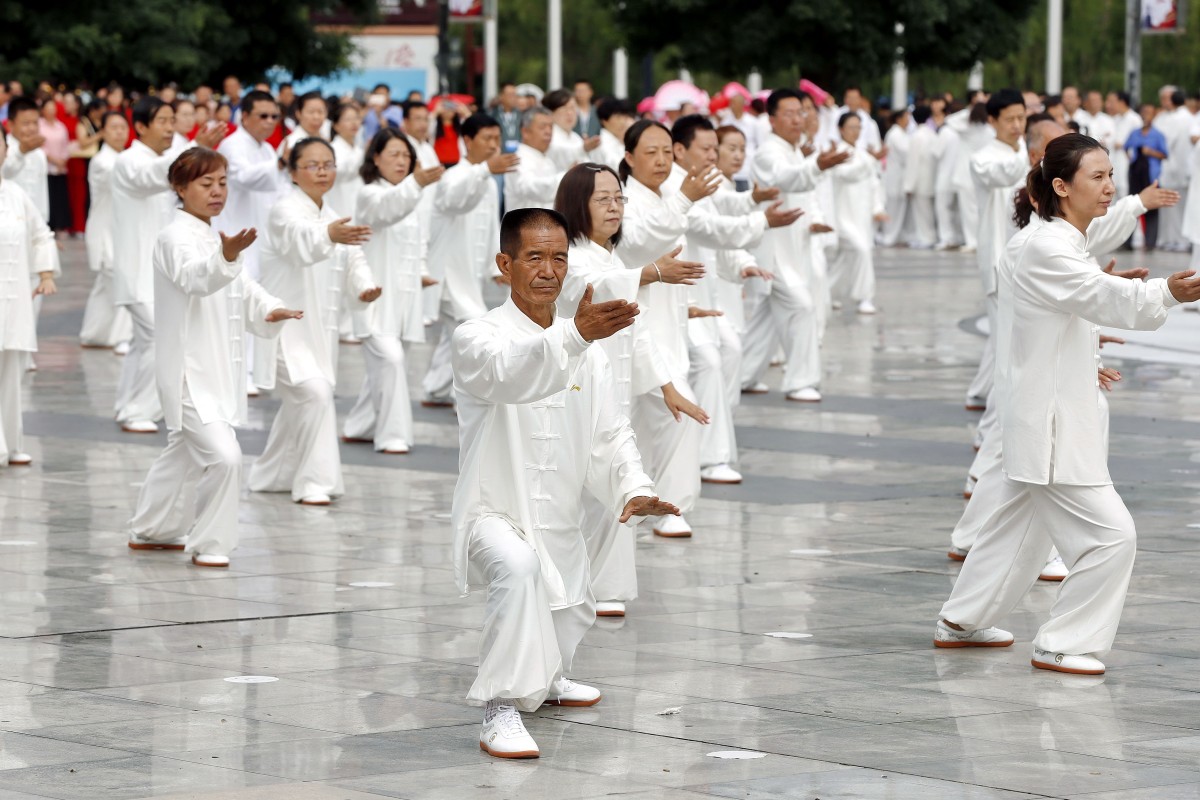
The study of Han DNA by the team from the Kunming institute challenges a long-held view of the early origins of Chinese civilisation. Photo: Xinhua
The origins of China’s biggest ethnic group can be traced back to three river valleys, deposing the Yellow River as the sole cradle of Chinese civilisation, according to a new study.
The Yellow has long been hailed as the mother river of Han Chinese, who make up nearly 92 per cent of the country’s population today.
But research published in the online journal Molecular Biology and Evolution on Wednesday said the Yangtze and Pearl rivers – as well as the Yellow – gave rise to genetically separate groups about 10,000 years ago. Those ancestors then mingled to become the largest ethnic group in the world today, it said.
“The history of Han Chinese is more sophisticated than thought,” said Professor Kong Qingdong, a researcher with the Kunming Institute of Zoology at the Chinese Academy of Sciences and lead scientist in the study. “Many details need investigation.”
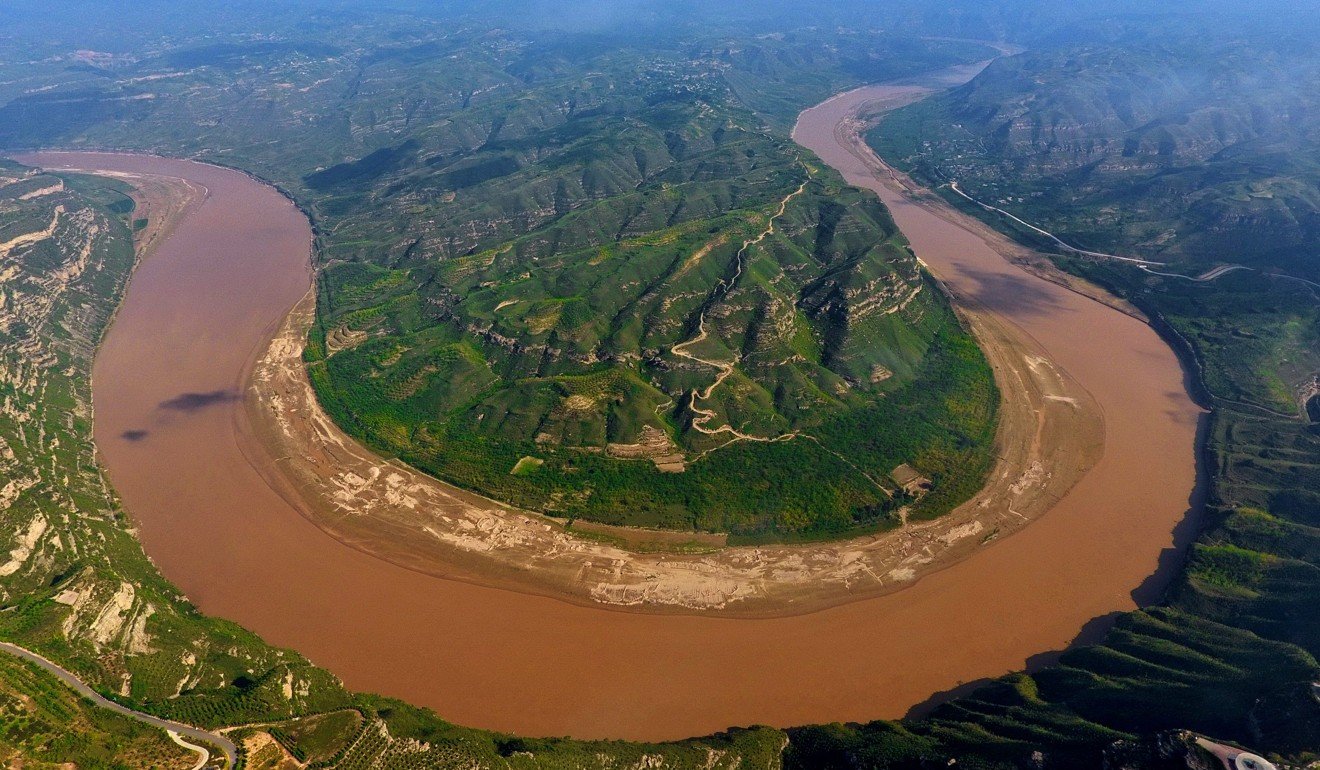
A DNA study suggests the Yellow River (above) may have to share its place as a cradle for Han Chinese with the Yangtze and the Pearl. Photo: Xinhua

After analysing DNA samples from more than 20,000 unrelated Han Chinese, examining their dialects and family geography and comparing those to archaeological DNA records, scientists concluded that the Yangtze and Pearl had equal claim with the Yellow to Han origins.

Progenitors from the three river valleys evolved independently, the Kunming team said, and distinctions found in the mitochondrial DNA (the mother’s line) of study volunteers added weight to their assertion.

Who are you? DNA tests help Chinese retrace ancient steps

About 0.07 per cent of the DNA examined in the Han Chinese study differed according to river valley origin. By comparison, the difference was much lower – 0.02 per cent – when the study volunteer data was assessed by dialect, the researchers said.

Earlier studies of genetic markers and microsatellite data that mapped the prevalence of DNA revealed that Han Chinese can be generally divided into two groups: North and South. The latest study found that the genetic variation between North and South Han Chinese is 0.03 per cent, considerably less significant than the distinction by rivers.

Dr Li Yuchun, lead author of the paper, said the findings helped trace the history of Han to the dawn of civilisation, the emergence of agriculture and the sustainable growth of population.

The earliest migrants from Africa to China arrived in what is now the southwest between 60,000 and 100,000 years ago, studies said. The genes of this group of hunter-gatherers were largely unchanged for tens of thousands years.

About 10,000 years ago, agricultural practices began to emerge in the valleys of the three rivers. Archaeologists found evidence of millet cultivation around the Yellow River, rice in the Yangtze, and roots and tubers in the Pearl.

The busy Yangtze River flows through Chongqing in southwest China. Photo: Xinhua

“Increasing food led to a population boom in these areas. We can see it in the separate path of gene evolution,” Li said.

The research also found that women were able to preserve their genetic story better than men as they stayed at home to tend the fields, while men went to explore, trade or wage war.

“Females are resilient to invasion,” she said.

The cultural significance of knowing one’s ancestry

The research team planned to examine the Y-chromosome, which passed from father to son, to study the expansion of the Han civilisation, Li said.

“It will be interesting to hear the story from a male perspective,” she said.

As the Han empires expanded, many ancient ethnic groups such as Huns, Siberians, Khitan in northern China and the Thai-Khadai speaking peoples in the south, passed from the record.

Some researchers think these minorities become extinct, but others believe they were absorbed into the Han Chinese population.

Source: SCMP

29/04/2019

Cambodian PM says China ready to help if EU imposes sanctions

PHNOM PENH (Reuters) – China will help Cambodia if the European Union (EU) withdraws special market access over its rights record, Cambodian Prime Minister Hun Sen said on Monday as he announced a 600 million yuan ($89 million) Chinese aid package for his military.

Hun Sen, who is on a five-day trip to China to attend a Belt and Road Initiative (BRI) forum in Beijing, held bilateral talks with President Xi Jinping and signed several agreements with Cambodia’s most important ally.

Cambodia benefits from the EU’s “Everything But Arms” trade scheme which allows the world’s least developed countries to export most goods to the EU free of duties.

But Cambodia risks losing the special access to the world’s largest trading bloc over its human rights records.

During a meeting with Chinese Prime Minister Li Keqiang, Li pledged to help Cambodia if the EU withdraws the market access, according to a post on Hun Sen’s official Facebook page.

“In this regard … Prime Minister Li Keqiang also confirmed his efforts to help Cambodia,” the post said.
China is Cambodia’s biggest aid donor and investor, pouring in billions of dollars in development aid and loans through the Belt and Road initiative, which aims to bolster land and sea links with Southeast Asia, Central Asia, the Middle East, Europe and Africa.
Unlike Western countries, China does not question Cambodia’s record on rights.
The EU, which accounts for more than one-third of Cambodia’s exports, including garments, footwear and bicycles, in February began an 18-month process that could lead to the suspension of the special market access.
Among the agreements Hun Sen struck in China was one for Huawei Technologies to help Cambodia develop a system for 5G technology. The Chinese tech giant has ambitions to build the next generation of data networks across the world and boasts 40 commercial 5G contracts worldwide.
China also agreed to import 400,000 tonnes of Cambodian rice, according to Hun Sen’s Facebook page.
“China will continue to support the national defence sector in Cambodia, and in this regard, the Chinese president announced that China will provide 600 million yuan to Cambodia’s defence sector,” the post said.
Source: Reuters
21/04/2019

BRI to address global infrastructure imbalance: AECOM

BEIJING, April 20 (Xinhua) — The Belt and Road Initiative (BRI) will be an efficient way to address the imbalance in global infrastructure development, according to U.S. engineering firm AECOM.

Under the BRI, financing platforms including the Asian Infrastructure Investment Bank and the Silk Road Fund have emerged, which will help narrow the development gap, said Ian Chung, chief executive of AECOM for Greater China.

“The BRI is an opportunity for all. It is open, inclusive, and will bring economic development to the next level,” Chung told Xinhua.

According to Chung, countries and regions of different development phases can all benefit from the BRI, especially in infrastructure.

For developing economies, such as some in Africa, the BRI will significantly improve local infrastructure connectivity and boost economic growth, Chung said.

For fast-growing economies such as some in Southeast Asia, Chinese firms could share their experience in high efficiency and green construction via the BRI to meet the rising demand for sustainable infrastructure, he said.

As for many other developed countries, the demand for infrastructure still abounds, as many existing facilities are becoming aged, he added.

The BRI has opened plenty of opportunities for AECOM, as the company has been partnering with Chinese firms on many overseas projects, offering consulting services on design, local regulations, environmental and safety standards.

“Chinese firms excel in construction and financing, while we share a competitive edge in project design, knowledge of local regulations, procedures as well as culture. It’s a win-win for all of us,” Chung said.

Seeing business opportunities from the BRI, the company set up a new department in its Beijing office three years ago to work with Chinese firms on BRI projects.

The firm just opened its new offices in Chengdu and Changsha, following the set-up of its China headquarters in Shanghai last year, another sign that shows the company’s confidence in China’s development, Chung said.

“I am very optimistic that we will have more value-added cooperation with Chinese firms under the BRI,” Chung said.

Source: Xinhua

07/03/2019

Chinese companies in Africa create great development opportunities

BEIJING, March 6 (Xinhua) — Chinese companies operating in Africa have created huge opportunities for the continent’s development, a senior political advisor said Wednesday at a press conference on the sidelines of the annual sessions of the top legislative and political advisory bodies.

There are more than 10,000 Chinese companies in Africa and over 90 percent of them are private businesses, said Nan Cunhui, a member of the Standing Committee of the Chinese People’s Political Consultative Conference National Committee, citing a recent survey.

These companies have built roads, railways, airports, ports and other infrastructure projects in Africa, addressing the bottleneck in development, said Nan, also a vice chairman of the All-China Federation of Industry and Commerce. They have also invested in green energy development, including photovoltaic power stations, to boost local power supply.

The Chinese companies have also brought advanced technologies, development concepts and management to the continent, Nan said.

Citing the operation of an industrial park in Egypt as an example, Nan said over 95 percent of the employees are locals who develop professional skills and gain managerial know-how through their work.

“Chinese companies in Africa have contributed a lot to the local economic development through infrastructure construction, job creation and tax payment,” Nan said. “I believe China-Africa cooperation will go from strength to strength.”

Source: Xinhua

02/03/2019

China’s private business hub to increase trade with Africa

HANGZHOU, March 1 (Xinhua) — East China’s Zhejiang Province plans to increase its trade volume with Africa to 40 billion U.S. dollars by the end of 2022 to account for at least 20 percent of the total Sino-Africa trade.

Zhejiang’s department of commerce issued an action plan revealing the details on Friday as China’s first provincial-level plan on economic cooperation with African countries.

The 40-billion-dollar target will mark a significant rise from the 30.1-billion-dollar trade between Africa and Zhejiang, home to many of China’s most successful private businesses, in 2018.

The plan also promises to increase investments in Africa’s industries of textiles, garments, chemicals, equipment manufacturing and pharmaceuticals to meet the continent’s development needs.

The province, however, will bar investments that are polluting and highly energy-consuming from going to Africa, said the plan, which also calls for more agricultural investments and cooperation.

The document also said the province would expand goods imports from Africa, especially in the non-resources category.

According to China Customs, China’s foreign trade with Africa reached 204.19 billion dollars in 2018, up 19.7 percent year-on-year and 7.1 percentage points higher than the growth of China’s overall foreign trade during the same period.

Specifically, the country’s exports to Africa rose 10.8 percent to 104.91 billion dollars in 2018, while its imports from Africa surged 30.8 percent to reach 99.28 billion dollars.

Source: Xinhua

05/02/2019

China firmly opposes mercenary activities in Africa, says Chinese envoy

UNITED NATIONS, Feb. 4 (Xinhua) — China firmly opposes mercenary activities in Africa, and will always support African nations’ pursuit of peace and prosperity, Chinese Ambassador to the United Nations Ma Zhaoxu said Monday.

Mercenary activities are a threat to peace and stability in African countries, and China calls for greater international efforts to address the problem, said Ma as Chinese President Xi Jinping’s special envoy at a UN Security Council high-level debate on mercenary activities in Africa.

Source: Xinhua

13/08/2016

Asia’s scramble for Africa | The Economist

IF THERE is a modern gateway from the east to Africa, it is arguably Addis Ababa’s airport. Passengers passing through its dusty terminals on their way to some far-flung capital will be surprised to find that getting an Ethiopian meal is remarkably difficult. Asian dumplings, however, are available at two different cafés. Signs marking the gates are in English, Amharic and Chinese, as are announcements.

Dozing gently on the beige loungers are untold numbers of young Chinese workers waiting for flights. They are part of a growing army of labourers, businessmen and engineers who can be seen directing the construction of roads, railways and ports across much of east Africa.

Concerns about China’s involvement in Africa are often overplayed. Accusations that it is buying up vast tracts of farmland, factories and mines, for instance, are blown out of proportion. Even so, its growing influence on the continent has nettled India and Japan, who are both boosting their engagement in response.

As with previous rounds of rivalry in Africa, such as during the cold war, at least some of this activity relates to access to bases and ports to control the sea. China’s involvement in Africa now includes a growing military presence. Thousands of Chinese soldiers have donned the UN’s blue helmets in Mali and South Sudan, where several have been killed trying to keep an imaginary peace. Chinese warships regularly visit African ports.

China maintains a naval squadron that escorts mostly Chinese-flagged vessels through the Gulf of Aden. But some diplomats fret that China has been using these patrols to give its navy practice in operating far from home, including in offensive actions. “You wouldn’t normally use submarines for counter-piracy patrols,” says one.

Patrolling for pirates has also given China an excuse to set up its first overseas base in Djibouti, next door to an existing American one. Yet the more alarmist worries about China—that it is planning to build naval bases in a “string of pearls” stretching from China to the Red Sea and as far as Namibia’s Walvis Bay on the Atlantic coast—have not materialised. The Walvis Bay rumour seems to be a red herring. China has used its ships and soldiers to protect its own citizens in Africa and the Middle East: in 2011 it evacuated 35,000 of them from Libya and last year one of its ships rescued 600 from Yemen. But its main naval focus remains the South China Sea.

Wary does it

Still, India is deeply suspicious of China’s presence in the Indian Ocean. A wide network of some 32 Indian radar stations and listening posts is being developed in the Seychelles, Madagascar and Mauritius, among other countries. This will enable India to monitor shipping across expanses of the ocean. It is also improving its ability to project power in waters it considers its own, and is arming friendly countries such as Mauritius. Among other things, India is building a naval and air base on Assumption Island, north of Madagascar and within easy reach of many of east Africa’s newly discovered offshore gasfields. “It’s the Indian Ocean, stupid,” quips one seasoned commentator in mimicry of Indian diplomats on its power projection. “They say it’s ‘our near abroad’.”

Japan has also been flexing its naval muscle but in a more limited manner. This month it pledged $120m in aid to boost counter-terrorism efforts in Africa. It has been a stalwart contributor to the multinational naval force policing the seas off Somalia’s coast. Sino-Japanese rivalry is fiercest in diplomacy and trade. Two prizes are on offer: access to natural resources and markets, and the continent’s 54 votes at the UN. Much of the effort to win the former was pioneered by Japan in the 1990s, when it helped build ports and railways. Akihiko Tanaka of the University of Tokyo, a former president of the Japan International Co-operation Agency, says that for years Japan’s aid to Africa was “qualitatively different” from that of other rich nations in part because it focused on infrastructure rather than the direct alleviation of poverty. “We were criticised a lot,” he says. “Now there is an almost unanimous view that you need to invest in infrastructure.”

Japan’s latest spending spree on infrastructure will speed economic growth on the continent; but there is a degree of one-upmanship and duplication. Japan recently handed over the keys to a new cargo terminal at Kenya’s main port in Mombasa. Meanwhile, a short hop down the coast at Bagamoyo, Tanzania is building east Africa’s biggest port—with Chinese cash.

On the diplomatic front both Japan and India are trying to make common cause with African states that want to reform the UN Security Council. They argue that Africa deserves permanent seats on it, as do they. China favours a permanent seat for an African country, and it doesn’t mind India having one. But in return it expects endorsement of its stand against Japan getting a seat.

Both Japan and China back up such diplomatic efforts with aid and, at least in China’s case, this seems to have helped win it friends. Countries that vote with China in the UN (for instance over Taiwan) usually get more cash from it, according to AidData, a project based at the College of William and Mary in Virginia.

China also makes African friends by selling arms. In the five years to 2015 it nearly doubled its share of weapons supplied to sub-Saharan Africa, from little more than a tenth of the total to almost a quarter, according to the Stockholm International Peace Research Institute, a think-tank. It has sold tanks and jets to Tanzania, armoured vehicles to Burundi and Cameroon, and missile launchers to Morocco, to name but a few. It also wins friends among the continent’s war criminals through its policy of “non-interference” in the internal affairs of other countries, for instance by opposing the International Criminal Court (ICC).

Japan, which until 2014 was prohibited by its constitution from selling weapons, and supports the ICC, has had a harder time. It has concentrated on dispensing aid and using soft power, such as awarding scholarships for study in Japan and free classes in akido and karate at its embassy in Nairobi. But even in this sphere it is outclassed by China, which has established some 46 Confucius Institutes in Africa to teach Chinese language and culture. China also flies thousands of Africa’s ruling-party officials, civil servants and trade unionists to attend political-training schools in China. This has worked so well in South Africa that the ruling African National Congress last year published a foreign-policy discussion document suggesting that China’s Communist Party “should be a guiding lodestar of our own struggle.”

Yet apart from South Africa, which has slavishly aligned itself with China (for instance by voting with it against a UN resolution to protect the right of people to hold peaceful protests), most African countries are good at playing off rivals against each other, says Alex Vines of Chatham House, a London think-tank. Many have diversified their diplomatic links by opening new embassies, including ones that cross previous divisions between rival powers in Africa. Countries including Burundi, Mauritania and Togo, that used to fall firmly within France’s sphere of influence have opened embassies in Britain. “This is a really great time for clever African countries to get really good deals,” says Mr Vines.

Source: Asia’s scramble for Africa | The Economist

Law of Unintended Consequences

continuously updated blog about China & India

ChiaHou's Book Reviews

continuously updated blog about China & India

What's wrong with the world; and its economy

continuously updated blog about China & India