Archive for ‘Bridge’

24/04/2020

India’s new bridge in Himalayas could potentially reignite China border dispute

  • The new bridge, which can bear 40 tons of weight, was built in Arunachal Pradesh in India’s remote northeast, a region claimed by China
  • Relations are already strained after China accused India of blocking its companies by tightening laws for foreign investment
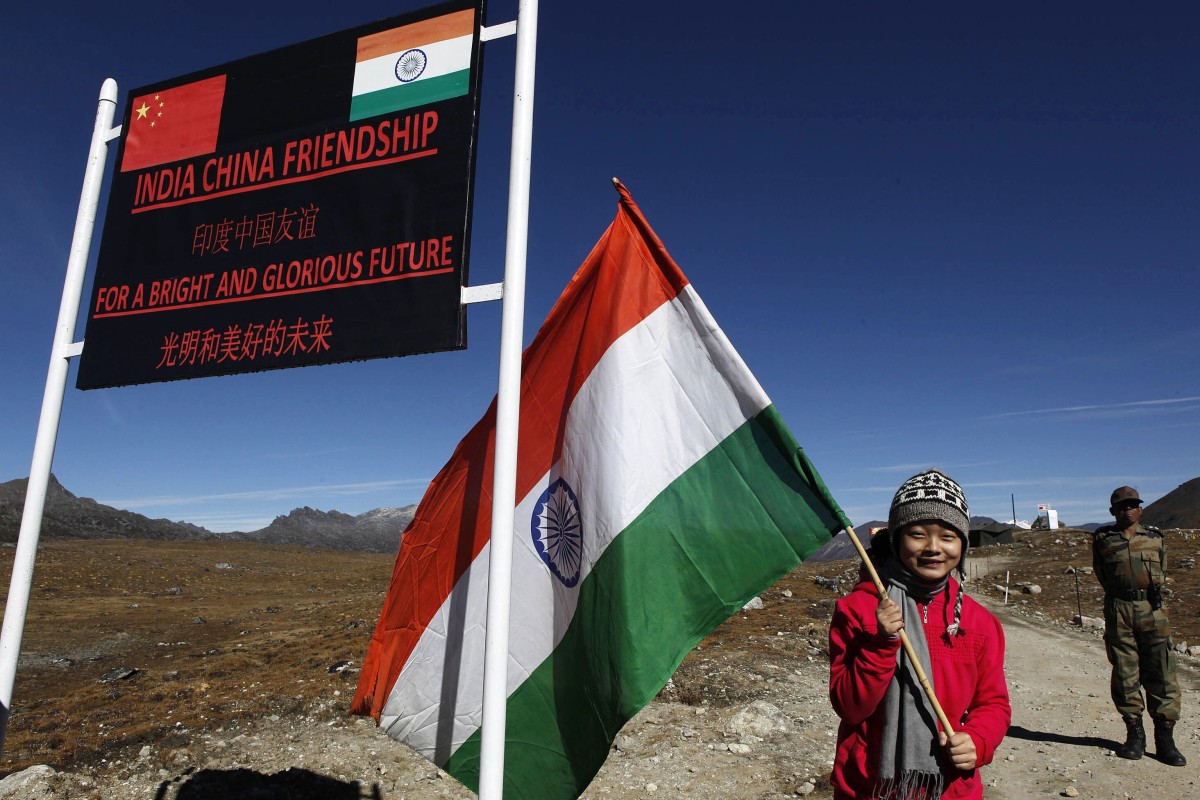
An Indian girl poses for photographs with an Indian flag at the Indo-China border in Arunachal Pradesh. Photo: AP
India

has opened a new all-weather access point in a disputed part of its border with China to enable faster movement of troops and artillery, another potential irritant in

relations between the two nuclear-armed neighbours

.

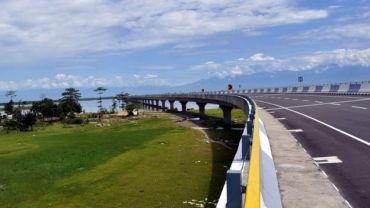
The new bridge, which can bear 40 tons of weight, was built in Arunachal Pradesh in India’s remote northeast, a region claimed by China that is near the scene of previous clashes. Border intrusions have risen 50 per cent in 2019 compared to the previous year, people with knowledge of the matter said.

“That part of the border has always had a tendency to friction point between India and China. Lack of reliable and all weather connectivity was vulnerability,” said Nitin Gokhale, a New Delhi-based strategic affairs expert. “The new bridge and improved road overcomes that and ensures uninterrupted supply to troops.”

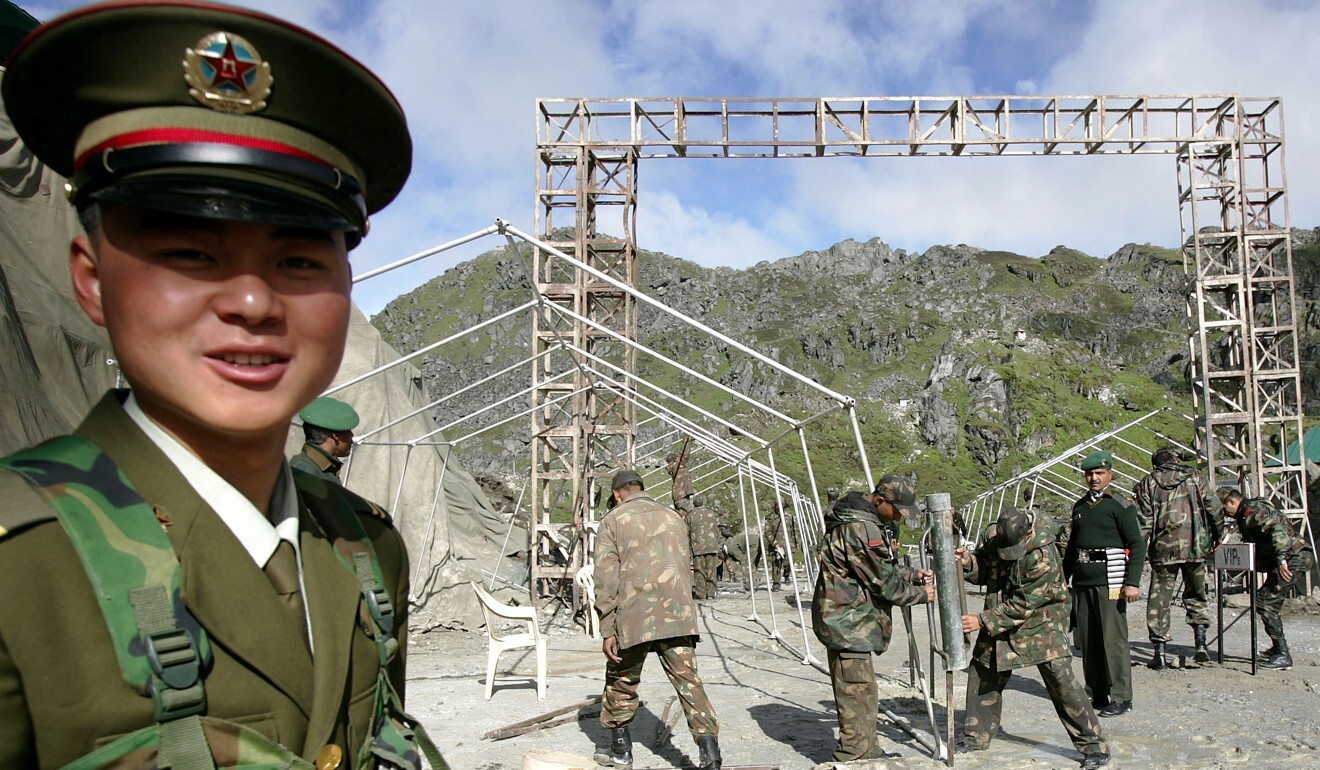
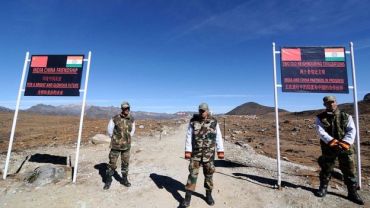
A Chinese soldier stands guard while Indian soldiers work near their shared border. Photo: AP
The new access along the border with China comes amid heightened tensions between the two nations after Beijing accused India of blocking its companies in the South Asian nation after New Delhi tightened laws for foreign investment. The bridge is located in a region that witnessed a months-long military stand-off in 2017 over the Doklam plateau, claimed by China and Bhutan, India’s ally. It was one of the most serious flare-ups since China won a border war with India in 1962.

China’s Ministry of Foreign Affairs did not respond to a message requesting comment.

India claims the Chinese army violated the 3,488km-long undemarcated border, parts of which are disputed, more than 600 times, the people said, asking not to be identified as the matter is not public.

“India and China have different perceptions of the border,” Indian Army spokesman Aman Anand said on Thursday. “Perceived transgressions are result of the perceived boundary.”

Under Prime Minister Narendra Modi, India is ramping up its infrastructure along the border, which it says isn’t aimed at any particular country, but rather the development of remote border areas. It has completed 74 strategic roads along the eastern border, with plans afoot to finish 20 more by next year, the people said. It will reduce time taken to move and material by half and help 431 villages that lie across the region during the Covid-19 outbreak.
its law on foreign investment

by making it mandatory for companies from countries that share a land border to acquire local firms only after seeking an approval from the government. The move, which cuts the risk of opportunistic takeovers as the coronavirus outbreak drives down valuations of Indian companies, had so far applied only to FDI from Bangladesh and Pakistan. India shares its land border with seven countries, including China.

The new bridge opened by the India also strides one of the main access routes of the Chinese Army into India from Tibet.

Source: SCMP

31/01/2020

Travellers beat China virus lockdown via bridge over the Yangtze

JIUJIANG, China (Reuters) – People are leaving and entering China’s Hubei province by foot over a bridge spanning the Yangtze river, despite a virtual lockdown on vehicle traffic due to a coronavirus epidemic that has killed more than 200 people.The Yangtze divides Jiujiang in Jiangxi province and Huanggang in neighbouring Hubei, one of the cities hardest hit by the coronavirus outbreak and now sealed off from the rest of China to try to contain it.

But the foot traffic over the Yangtze shows gaps in the lockdown, adding to doubts over its effectiveness and providing a glimpse of life inside the epicentre of what the World Health Organization (WHO) has called a global emergency.

Wu Minzhou, a 40-year-old business owner who was fishing near the bridge on the Jiangxi side, said he was worried about exceptions being made for people leaving Hubei.

“Because there’s an … incubation period at play here, if they head out, for example, to cities in the north of China, then it’s highly possible they will infect those areas too,” he said.

While vehicles are not allowed over the bridge, it is open to some pedestrians. Police explained that people were still entering Hubei and they could still get out, but only in “special circumstances”.

Those included people who were in Hubei but booked train tickets to leave from Jiujiang before the Lunar New Year.

“Everyone’s panicking right now, but I think things are not that bad,” migrant worker Guan, 45, told Reuters after crossing from Hubei.

A 40-year-old woman, who only gave her surname as Li, said she was heading back to her home in Huizhou, Guangdong province, with her son.

She had to show their train tickets at the checkpoint and get their temperatures taken on the Hubei side of the bridge before being allowed to make the long trek into Jiangxi.

Another man told Reuters that he had driven to the bridge from Jiujiang with his friend, who was going the other way home to Hubei, a province of about 60 million people.

“But once you get back you cannot come out again,” said the man, who gave his surname as Tian. “You have to stay there, stay at home. You can’t come out.”

The epidemic, believed to have originated in a seafood market in the Hubei provincial capital of Wuhan, prompted the WHO to declare a global emergency on Thursday, only the sixth time it has done so.

Trains and other public transportation have been suspended, roads have been sealed off and checkpoints established at tollgates around Wuhan. The special measures have been extended to other cities in Hubei province.

Though Jiujiang itself has not officially been locked down, its streets were mostly deserted and its tourist sites closed on what was officially the last day of China’s Lunar New Year celebrations on Thursday.

“This year … we are all just following what the government has asked us to do. That is, we’re at home almost all the time,” said local taxi driver Guo Dongbo, 59. “We don’t go out and nobody else is out on the streets either.”

In one of the residential areas of Jiujiang, a city of nearly five million people, a man carried a loudspeaker playing a recorded message ordering anyone who has been to Hubei recently to go and register with the local residents’ committee.

By Friday, the city had 42 confirmed cases of infection.

Elsewhere, shops were mostly shuttered, and the few restaurants that remained open were nearly empty.

“Normally at this time of year a lot of people come here. Now there’s nobody,” said a vegetarian restaurant owner near the Donglin Buddhist temple in Jiujiang.

Source: Reuters

25/09/2019

China Focus: China completes world’s longest cross-sea road-rail bridge

CHINA-FUJIAN-CROSS-SEA ROAD-RAIL BRIDGE-COMPLETION (CN)

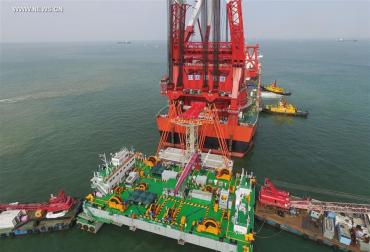
Aerial photo taken on Sept. 21, 2019 shows a steel girder being lifted by a crane at the construction site of the Pingtan Strait Road-rail Bridge in southeast China’s Fujian Province. China on Wednesday completed the main structure of the world’s longest cross-sea road-rail bridge in Fujian. The last steel girder, weighing 473 tonnes, was bolted on the Pingtan Strait Road-rail Bridge, another mega project in China, on Wednesday morning. With a staggering span of 16.34 km, the bridge connects Pingtan Island and four nearby islets to the mainland of Fujian Province. (Xinhua/Lin Shanchuan)

FUZHOU, Sept. 25 (Xinhua) — China on Wednesday completed the main structure of the world’s longest cross-sea road-rail bridge in its southeastern province of Fujian.

The last steel truss girder, weighing 473 tonnes, was bolted on the Pingtan Strait Road-rail Bridge, another mega project in China, on Wednesday morning.

Hundreds of bridge builders clad in orange overalls, as well as government officials, hailed the completion on the bridge deck, with several rounds of fireworks being set off to celebrate the moment.

With a staggering span of 16.34 km, the bridge connects Pingtan Island and four nearby islets to the mainland of Fujian Province.

The bridge, which is expected to open to traffic next year, can help shorten travel time from two hours to half an hour between Fuzhou, capital city of Fujian Province and Pingtan, a pilot zone set up to facilitate trade and cultural exchanges across the Taiwan Strait.

“Of all the bridges being built across the world, this is no doubt the most challenging,” said Wang Donghui, chief engineer of the project, adding that it is China’s first and the world’s longest cross-sea road-rail bridge.

The project has attracted worldwide attention from the start of construction in 2013 as it spans an area off the coast of southeast China long seen as a “no-go zone” for bridge-building.

The region has strong gales and high waves for most of the year and is known as one of the world’s three most perilous seas along with Bermuda and the Cape of Good Hope.

Workers had to battle the notoriously strong winds, choppy waters and rugged seabed in the region to drill 1,895 piles into the ocean.

MORE THAN MEGA PROJECT

The road-rail bridge has a six-lane highway on the top and a high-speed railway at the bottom, which is designed to support bullet trains traveling as fast as 200 km per hour. It is a part of the 88-km Fuzhou-Pingtan railway.

In the past, Pingtan was a backwater island of humble fisheries. It did not even have a bridge connecting it to the mainland until 2010 when the Strait Bridge began operating for cars only.

In 2010, China established the Pingtan Comprehensive Pilot Zone to facilitate cross-Strait exchange and cooperation, ramping up its efforts to improve the island’s infrastructure.

Today, skyscrapers are popping up all along the shoreline, with the glow of construction work filling the night sky. Meanwhile, thousands of Taiwan residents swarm into the booming island to live and start businesses.

The island has accommodated more than 1,000 shops and companies set up by Taiwan residents, according to government statistics.

Chen Chien-hsiang, a 29-year-old man who moved from Taiwan to Pingtan two years ago, believes that the new bridge will help attract more businesses to the island and further boost its economic development.

“The new bridge means more than a mere mega project,” Chen said. “It also promises a brighter future for people from Taiwan who chose to live and work here.”

INFRASTRUCTURE MANIAC

Huang Zhiwei, 22, found himself making history by lifting the last piece of the bridge girder from a ship about 80 meters below the bridge deck, an undertaking that he had never expected when he joined the project a year ago as an intern.

His parents, unhappy about their son’s career choice, felt relieved after several video chats during which their son showed them his working and living conditions at the construction site.

“With so many advanced technologies and safety measures, I am convinced that we will accomplish the mission, and I am very proud of my contribution,” said the young operator.

More than 1.24 million tonnes of steel have been used for the bridge, enough to build 190 Eiffel Towers, and 2.97 million cubic meters of cement, nine times the amount of cement used to build the Burj Khalifa towers in Dubai, the world’s tallest skyscraper.

“We could not possibly have realized the construction 15 years ago for lack of advanced construction technologies and equipment such as the drilling machine and ship cranes we have developed today,” said Xiao Shibo, an engineer of the China Railway Major Bridge Engineering Group Co., Ltd. The bridge has made history in many aspects, Xiao added.

China is dubbed as an “infrastructure maniac” for countless dazzling megaprojects, with the Chinese builders breaking their own world records.

China is home to the world’s highest bridge, longest cross-sea bridge and 90 out of the 100 highest bridges built this century.

From 2015 to 2020, China’s transportation investment is expected to exceed 15 trillion yuan (2.1 trillion U.S. dollars), with a substantial portion reserved for bridge construction.

Source: Xinhua

07/07/2019

China’s Sichuan earthquake death toll rises to 12, with 134 injured

  • Authorities report roads closed and 10,000 buildings damaged after magnitude 6.0 quake on Monday night
  • More than 100,000 people affected
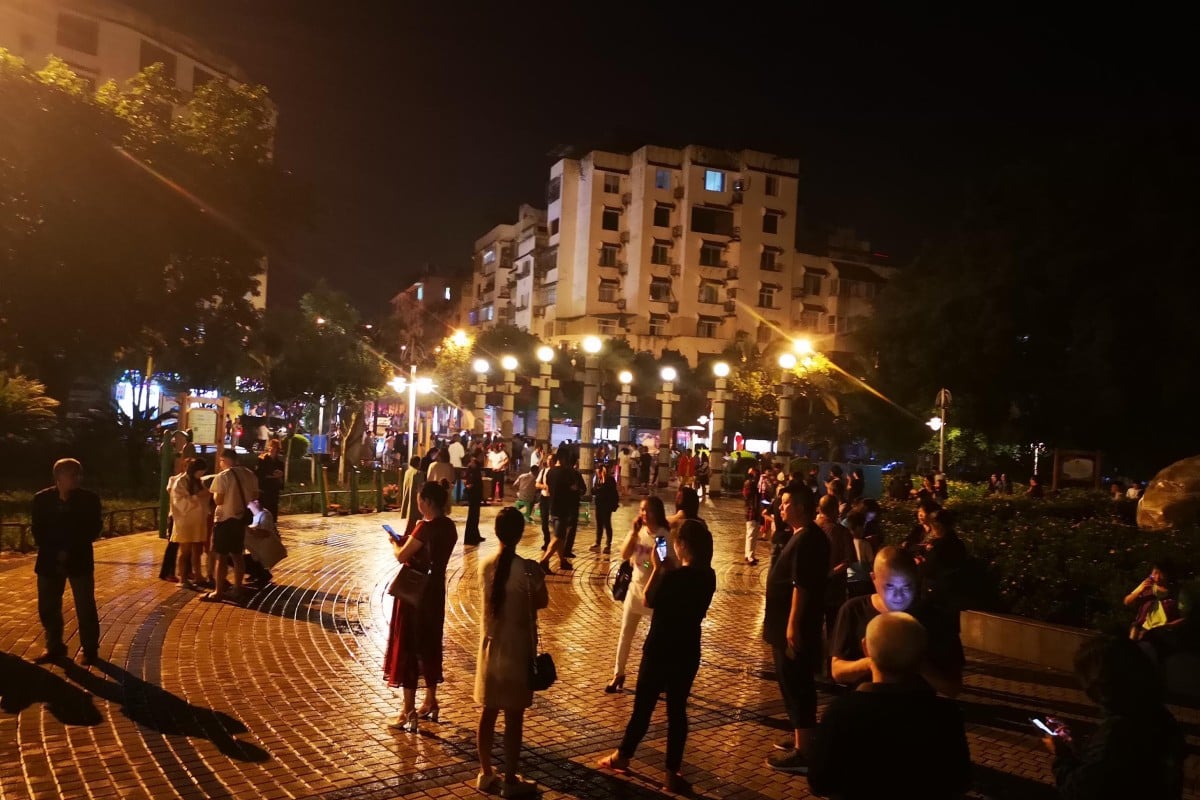
Residents gather in the open in Changning county on Monday night after a magnitude 6.0 hit the area. Photo: Xinhua
The death toll from a strong earthquake which hit the southern Chinese province of Sichuan late on Monday night has risen to 12, with 134 people injured.
More than 100,000 people were affected – mostly in the epicentre at Changning county in Yibin, while more than 10,000 buildings were damaged, according to a statement by the local government on Tuesday.
Land subsidence and a landslide caused by the magnitude 6.0 quake, blocked a highway, several major roads and numerous village roads, the statement said, while a major bridge in the area was also at risk.
The Yixu highway in Changning had been closed and authorities were assessing the Dongdi Bridge. The Yibin government statement also said workers had been sent to clear the affected village roads.

According to the US Geological Survey, the earthquake was centred at a fairly shallow depth of 10km (6 miles). Shallow earthquakes tend to cause more damage to buildings and infrastructure.

An aftershock measuring magnitude 5.2 later hit the same area, the USGS said.

More than 300 firefighters were sent to the scene overnight, as well as rescue personnel with 5,000 tents, 10,000 folding cots and other emergency supplies, according to state news agency Xinhua.

In 2008, China’s worst earthquake in recent years struck the mountainous western portion of Sichuan province, leaving 87,000 dead, 370,000 injured and 5 million people homeless. That earthquake was about 400km (249 miles) from Monday’s earthquake.

A 1976 earthquake centred in the northeastern city of Tangshan killed at least 250,000 people.

Source: SCMP

11/05/2019

China, BiH, Serbia to remake classic movie “The Bridge”

SARAJEVO, May 10 (Xinhua) — An agreement has been signed in Beijing on recording a remake of the 1969 movie “The Bridge” by the Sarajevo Film Center (SFC), Shanghai Huahua Culture Media Co. Ltd and Dandelion Productions Inc. of Serbia, SFC Director Jasmin Durakovic told Xinhua on Friday.

Directed by Hajrudin “Siba” Krvavac, “The Bridge” tells the story of partisans during World War II who send an elite team of explosive experts to blow up a strategically important bridge.

Durakovic emphasized that all movies directed by Krvavac are precious cultural assets in the Bosnia and Herzegovina’s (BiH) film archives.

He hopes that the remake of “The Bridge” — and possibly also of “Walter Defends Sarajevo” — will present the culture of BiH and the region through the global language of the film to today’s audiences.

Durakovic said he was highly confident that the remake will attract audiences in the countries of the former Yugoslavia, in other European countries and even in the United States.

In a telephone interview with Xinhua, Huahua Chief Executive Officer Kefei Wang, said his company will use cutting-edge film technology to present this period of history and its heroes “so as to revitalize the classics and live up to the profound expectations of the people of China, Serbia, and Bosnia and Herzegovina for movies.”

Production on the remake will begin in early 2020.

Source: Xinhua

10/05/2019

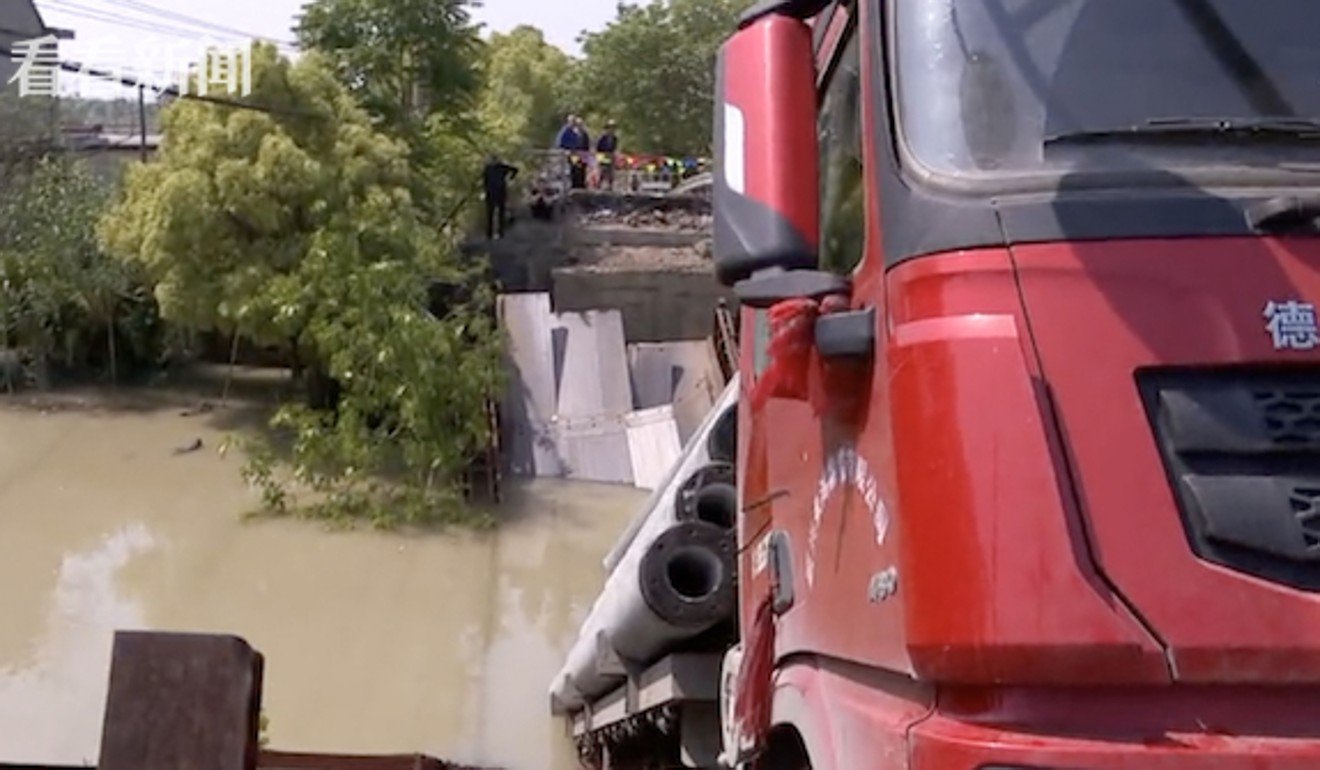
Chinese truck driver collapses steel bridge and dumps 100-tonne load of concrete pipes into river

  • Driver who used map app to find construction site sent to crossing for light traffic
  • Villagers say bridge was used by pedestrians and cars only
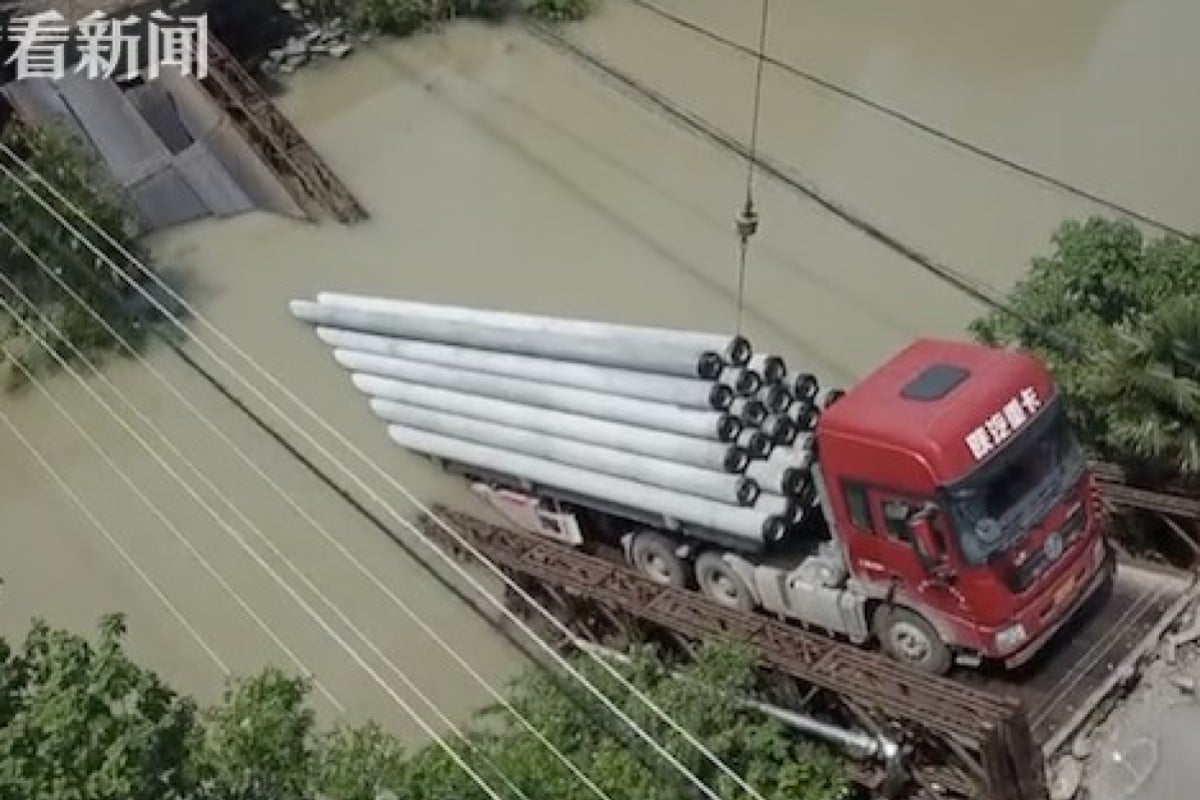
Recovery crews attempt to pull the truck and its load from the river in eastern Zhejiang province. Photo: Weibo
A trucker in eastern Zhejiang province collapsed a steel bridge by crossing it with a load weighing 50 times the bridge’s capacity.
The driver, surnamed Zhang, said he missed the two-tonne load warning sign when he tried to take dozens of concrete pipes to a construction site on Thursday morning, Kankannews.com reported.
He was not familiar with the area and used the bridge suggested by his digital map.
When the laden truck, weighing about 100 tonnes, was halfway across, the structure gave way, pitching the vehicle and its cargo into the water below. The driver managed to escape.
The truck’s load was 50 times the bridge’s breaking capacity. Photo: Weibo
Truck driver left hanging after crane smashes into bridge
Residents of a nearby village said a concrete bridge on the site fell into disrepair and was dismantled. It was replaced with a temporary steel structure a couple of years ago.

The new span was intended only for foot traffic and light vehicles, they said.

The pipes were recovered on Thursday evening.

Source: SCMP

09/04/2019

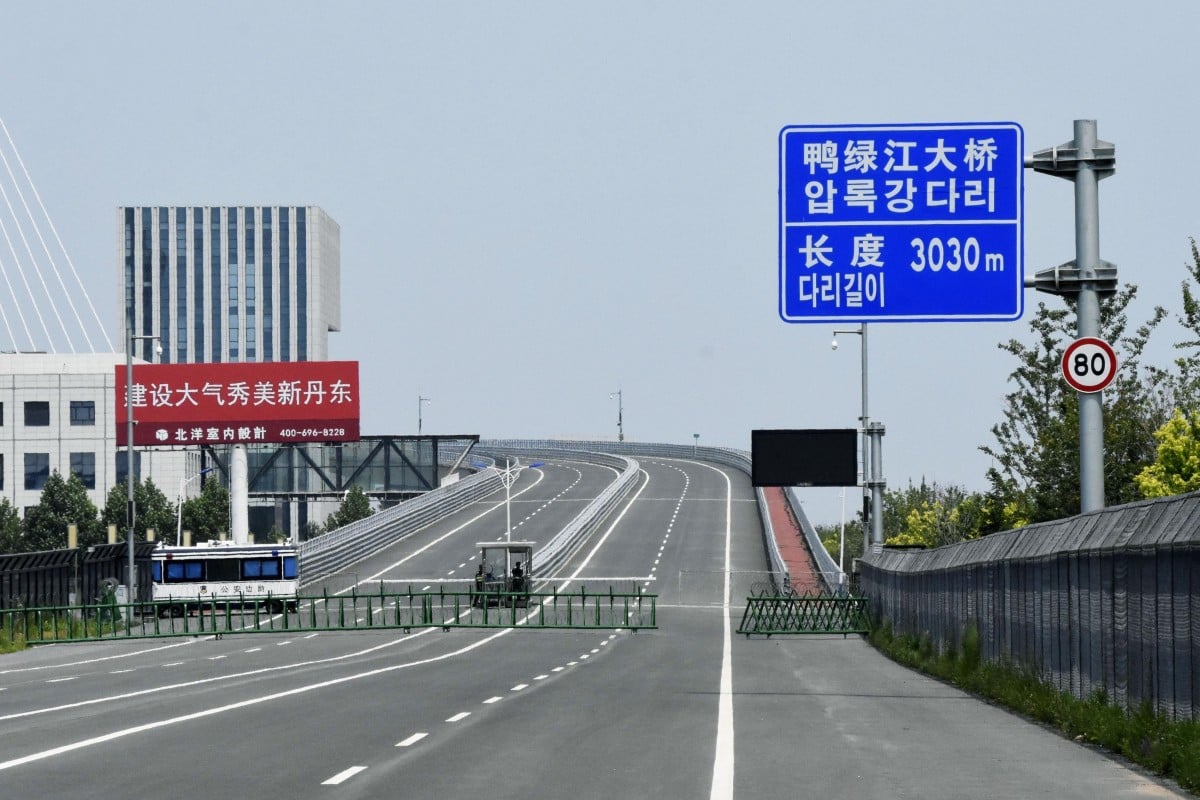
China’s bridge to North Korea opens 3 years after it was built – but why now?

  • Buses from the North make return trip to China on Monday, according to South Korean media
  • Opening of Jian-Manpo border crossing had been delayed during heightened tension over sanctions on the North
The bridge crosses the Yalu River on the border between China and North Korea. Photo: Kyodo
China and North Korea have finally opened a border bridge built between the two countries in 2016, in a potential boost to the North’s economy as Beijing tries to balance its concerns about its neighbour against ongoing international pressure for it to denuclearise.
A border checkpoint and bridge connecting the Chinese city of Jian with North Korea’s Manpo were open on Monday, following three years of delays since they were built.

Four buses crossed the border from North Korea in the morning and returned to the hermit kingdom about an hour later carrying about 120 people, who included tourists, according to South Korean media. It was not known whether the people travelled from North Korea or boarded the buses in China.

The bridge had remained closed on its completion in 2016, with Beijing taking a cautious approach at a time when it faced international scrutiny of whether it was fully implementing UN Security Council sanctions on the North.

to enforce the sanctions after a UN committee accused it and South Korea of being reluctant to enforce a ban on coal exports from the North.

But there has been a change in the status of the Jian-Manpo border crossing – built near to where Kim’s father, the former leader Kim Jong-il, was reported to have crossed the border in 2010 in a rare trip outside his country.

Kim’s second summit with Trump in February collapsed against a backdrop of continued economic struggles for North Korea. Beijing is wary of instability around the North Korean regime posing a threat to the security of China’s northeast, fearing an influx of refugees into one of its poorest regions.

North Korea’s trade has suffered to the extent that the Korea Development Institute said in February it had almost collapsed.

The North’s exports to China – which accounts for the bulk of its trade – plunged 87 per cent year-on-year in 2018, according to data compiled by South Korea’s Korea

International Trade Association, while there have been myriad other economic problems at a time when Kim has vowed to deliver on the economy.

In April last year, Kim announced that Pyongyang was moving away from its twin-track “byungjin” policy of developing nuclear weapons and the economy simultaneously to focus exclusively on rebuilding the economy.

Boo Seung-chan, adjunct professor at the Yonsei Institute for North Korean Studies in Seoul, said the bridge’s primary use would be to boost tourism in North Korea, which is not restricted by the UN sanctions.

“Tourism is the only sector left for the North Koreans to earn foreign revenue,” Boo said. “Besides, China can only offer its financial help through the tourism sector as it does not wish to violate UN sanctions.

“China’s Korean peninsula policy is to maintain the stability of the region. It may also be drawing a road map for when sanctions may be lifted, finding its means to accelerate its economic engagement to increase its sphere of influence.”

Source: SCMP

26/05/2017

India opens longest bridge on China border – BBC News

India has inaugurated a 9.15km (5.68-mile) bridge over the Lohit river, easily its longest ever, which connects the disputed state of Arunachal Pradesh with the north-eastern state of Assam.China claims Arunachal Pradesh as its own, and refers to it as “southern Tibet”.

Beijing recently strongly objected to India’s decision to allow Tibetan spiritual leader Dalai Lama to visit the state and has also protested against the development of military infrastructure there.

But India has defended its right to do so.”With China getting more and more aggressive, it is time we strengthened our physical infrastructure to defend our territory,” India’s junior Home Minister Khiren Rijiju, a native of Arunachal Pradesh, told journalists.China renames places disputed with India

Why India is planning a new road near the China border

China accused of Indian incursion

Mr Rijiju had earlier said that “Arunachal Pradesh is part of India and that reality will not change, regardless of who likes it or not”.

Construction of the Dhola Sadiya bridge began in 2011.

“It was real tough work, a major engineering challenge, and the speed was slightly affected by some compensation issues,” said an official from Navayuga Engineering, the company which constructed the bridge.

India has defended its right to upgrade its military defences along the border with China

However, it was completed on schedule.

Apart from the bridge, India is constructing a two-lane trans-Arunachal highway, upgrading a World War Two vintage road and undertaking a further four projects to widen roads.

Another project, to upgrade a chain of advance landing grounds for heavy lift transport aircraft, has also moved at some speed. This is expected to improve India’s strategic airlift capabilities.”We need infrastructure to move up troops and supplies if we have to fight the Chinese and this bridge is a great thing,” retired Major General Gaganjit Singh, who has commanded a division in the state, told the BBC.”India did not develop physical infrastructure in Arunachal Pradesh for two decades after the 1962 war as many stupidly believed the Chinese would use the roads if they attacked again. But now we are on the right track.

“India’s Home Minister Rajnath Singh has also stressed the importance of developing physical infrastructure in the state, as part of efforts to defend a long border with China.”We want peace, but peace with honour. We need to be capable of deterring anyone who may think we are weak,” Mr Singh told members of the Indo-Tibetan Border Police force that guards parts of the frontier with China.

His remarks followed Beijing’s strident protests against the “development of military infrastructure in a disputed province”.

Officials hope the bridge will also facilitate development and increase tourism

India has already raised two mountain divisions and is going ahead with raising a strike corps to beef up its defences against China.

“But troop strength is useless if we don’t have the roads and bridges to move them fast when we are threatened. Moving them with heavy equipment quickly to the battlefront holds the key to victory,” Major General Singh said.

A military engineer told the BBC that the Dhola-Sadiya bridge was capable of supporting 60-ton battle tanks.

Locals are also excited about the opening.

“It was unimaginable that this crossing could be bridged at a point where six rivers meet, all flowing into the mighty Brahmaputra,” Gunjan Saharia, a resident, told the BBC.

“I promise this will not just be a military thing, it will help develop the economy of remote regions of Assam and Arunachal, and it will attract tourists in large numbers,” Assam Chief Minister Sarbananda Sonowal said.

The bridge will also reduce travel time by as much as eight hours for communities on either side of the river.

“It will be great for us, as much as it will be great for the army,” Dimbeswar Gogoi of Sadiya told the BBC.

Source: India opens longest bridge on China border – BBC News

03/05/2017

China Focus: Key component of world’s longest cross-sea bridge installed – Xinhua | English.news.cn

Chinese engineers installed a 6,000-tonne key part of the world’s longest cross-sea bridge linking Hong Kong, Zhuhai and Macao.

A gigantic crane, which was transformed from a tanker, hoists a 6,000-ton key structure of the world’s longest cross-sea bridge linking Hong Kong, Zhuhai and Macao, May 2, 2017. The wedge, 12-meter-long and weighing more than 25 Airbus A380 jets, was lowered to connect the immersed tubes of the underground tunnel of the bridge. The 55-kilometer bridge connects Zhuhai in Guangdong Province with Hong Kong and Macao. It includes a 22.9-km bridge and 6.7-km underground tunnel. (Xinhua/Liu Dawei)

The wedge, 12 meters long, and weighing more than 25 Airbus A380 jets, was lowered to connect the tubes which will form the tunnel section of the bridge, said Lin Ming, chief engineer of the island and tunnel section of the bridge.

The 55-kilometer bridge connects Zhuhai in Guangdong Province with Hong Kong and Macao. It includes a 22.9-km bridge and 6.7-km tunnel.

Before the wedge was installed on Tuesday, 33 immersed tubes, each 180 meters long and weighing 80,000 tonnes, had been installed.

“There is only one wedge for a tunnel, and we cannot afford to fail in its installation. It took two years to prepare for today,” said Chen Yue, director of the chief engineer’s office of the bridge’s island and tunnel section. The installation procedure took more than 10 hours.

“The margin of error for the wedge is 1.5 centimeters. We have to measure precisely the influence of wind, current and buoyancy force,” said Lin.

“It is like putting a needle through a hole in the sea — a truly unprecedented event in the history of transportation,” Lin said.

A gigantic crane, which was transformed from a tanker, was used to hoist the wedge, lowering it to the desired destination between the tubes.The wedge will be welded and finished by June, Lin said.

By the end of the year, the bridge will be open to traffic, said Zhu Yongling, director of the bridge management bureau.

Construction began in December of 2009 at Zhuhai. The Y-shaped bridge connects Lantau Island in Hong Kong with Zhuhai and Macao.

Tan Guoshun, an expert in bridge construction who has participated in many big projects, told Xinhua that breakthroughs were made in construction management, technique, safety and environmental protection.

For instance, the bridge is designed to be used for 120 years. “Anticorrosion and quake-proof measures were improved so as to make the goal possible,” he said.

The bridge was pieced together with different parts built in different locations like building blocks. “The progress of China’s equipment manufacturing industry made this construction method possible,” said Zhong Huihong, deputy chief engineer of the bridge management bureau.

Take the floating crane as an example. In the 1990s, China’s floating cranes could only handle about one hundred tonnes. “Now their capacity has reached 10,000 tonnes,” Zhong said.

“Some foreigners believe that completion of the bridge marks a leap forward of China’s construction industry,” said Su Quanke, chief engineer of the bridge management bureau.

The bridge will cut land travel time between Hong Kong and Zhuhai from three hours on the road to a 30-minute drive.

“As economic exchanges between Hong Kong, Macao and Zhuhai deepen, an urban agglomeration has formed. The bridge will further boost the interconnection,” said Zheng Tianxiang, vice president of the Asia-Pacific Innovation Economic Research Institute.

Guo Wanda, executive vice president of the Shenzhen-based China Development Institute, believes that the bridge could also help boost the industrial gradient transfer of inland provinces like Guizhou, Yunnan, Hunan and Jiangxi.

“The area will become an important hub of the Belt and Road Initiative,” he said.

Source: China Focus: Key component of world’s longest cross-sea bridge installed – Xinhua | English.news.cn

03/09/2016

China tourism: Crossing the new glass bridges – BBC News

Tourism sites in the central Henan and Hunan provinces have been constructing vertigo-inducing skywalks in a bid to attract visitors.
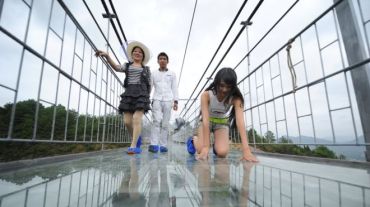
And it seems to have worked, attracting thrill-seeking tourists and locals, all wanting a chance to experience a bird’s eye view of the Chinese countryside.

One of them is student Li Shu Zhen, 19, from Hangzhou city.

She shared with the BBC her experience of climbing the Brave Man’s Bridge in Pingjiang county, Hunan province.

“You look down and feel a sense of fear, but you quickly recover from that and enjoy the scenery,” she said.

“It was beautiful, almost as if one was walking on air.”

Yoga has been one of the stranger activities performed on the Brave Man’s Bridge

An eating challenge was held on this bridge in Yueyang country – although you might lose your appetite if you look downT

he fully transparent bridge, which measures 300m long (984ft) and 180m high, first opened to the public in September.

It is one of the more popular bridges, with events – like mass yoga displays – often being staged on it.

Local officials say that glass panels were designed to withstand high winds and earthquakes, as well as the “weight of 800 visitors”.

Glass bridge fever has also spread to neighbouring Taiwan, where a 179m-high bridge opened in Nantou county.

Construction has already begun on a second glass bridge above Zhangjiajie valley in Hunan province

‘Even if the glass breaks’

Construction on the latest bridge, touted as the world’s longest glass-bottomed walkway, is also nearing completion.

Standing at 300m high and stretching 375m, the bridge will hang above the Zhangjiajie grand canyon, also in Hunan province.

Gearing up for the bridge’s 2016 opening, officials have even enlisted the public’s help in naming it.

One of its engineers, Yang Guohong, from state-owned China Railway Major Bridge Reconnaissance and Design Institute, said contractors had taken extra safety precautions.

“No matter how the tourists jump on the bridge, it will still be fine,” he told the People’s Daily newspaper.

“The steel structures beneath it are incredibly dense, so even if the glass breaks, visitors won’t fall through.”
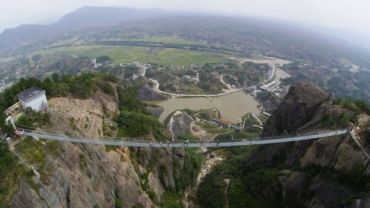
Would you dare to walk across?

But architects who spoke to the BBC said that such glass bridges were often “primarily a novelty, built as visitor attractions rather than commuter bridges”.

Architect Keith Brownlie, who was involved in a glass bridge for The London Science Museum, said that the appeal was “thrill”.

“It is the relationship between emotionally driven fear and the logical understanding of safety,” he said. “These structures tread the boundary between those two contrasting senses and people like to challenge their rational mind in relation to their irrational fear.

“Others felt that the bridges symbolised extravagance, especially in China.

“In architecture, glass has always been associated with luxury and often as a display of wealth,” said bridge designer Ezra Groskin.

“Glass floor panels, used in the creation of invisible architecture, are not a new phenomenon. However its use is often restricted due to cost and practicality.”

A terrifying incident last October sent visitors fleeing in fear after a section of a glass bridge in Yuntai mountain, Henan province, cracked

Shattered nerves

But how safe are China’s glass bridges?

An incident in October sent terrified visitors fleeing in fear after part of a glass skywalk in Henan province’s Yuntai Mountain Geological Park cracked, despite only being open for two weeks.

Park officials closed the walkway immediately, later saying there was “no reason for worry” and that the cracks had “no impact on safety”.

But experts questioned the use of glass in an exposed mountain environment.

“While a glass structure designed by a competent engineer and manufactured by a specialist contractor has no greater risk in terms of structural integrity than any other building material, glass can be prone to localised shocks,” noted architect Adam Holicska.

“The use of it in a mountain environment where there is a potential risk of rock impact can make it a questionable choice.

“Architect Keith Brownlie added that the cleaning of glass panels and lack of slip resistance should also be considered in such an environment.”One issue with glass decks is the problem of grip,” he said. “Glass is slippery and so anti-slip properties must be provided,”

The glass-bottomed Brave Man’s Bridge in Hunan province connects two mountains

“Please, no more such bridges,” commented a user on China’s popular micro-blogging site Weibo. “Judging from this incident, it is only a matter of time before more serious accidents and deaths occur.

“But glass bridge enthusiasts remain undeterred.

“I still would not hesitate to visit other glass bridges soon,” Ms Li admitted.

Other netizens on the site also expressed similar opinions.

“I am confident that officials will step up additional measures after that happened,” said one Weibo user.

“Thankfully deaths were avoided but one bad incident should not put one off from conquering such a spectacular bridge.”

Another compared it to other bridges of the world: “If Sydney’s Harbour Bridge experienced a crack, I doubt government officials would close it down. So we should not let such an episode affect our opinions about our unique Chinese structures.”

Source: China tourism: Crossing the new glass bridges – BBC News

Law of Unintended Consequences

continuously updated blog about China & India

ChiaHou's Book Reviews

continuously updated blog about China & India

What's wrong with the world; and its economy

continuously updated blog about China & India