Archive for ‘Environment’

21/06/2012

* Imagine if every resident of Mumbai had a car?

IT Decisions: “Professor Stéphane Garelli of IMD Business School and the University of Lausanne delivered one of the opening keynotes, describing the future of the world economy. One of the key points he made related to consumers in emerging economies creating ‘needs’ from what were previously ‘wants’.

“In China, everybody is buying a fridge. How many times have you bought a fridge? Once you have one then it lasts a long time before you replace it. You are living in a replacement economy where you are just upgrading what you already have. In China, you have no fridge, you want one. You have no TV set, you want one. You have no telephone, you want one…” he said.

The idea that enormous tranches of humanity are about to start consuming items they have never used before, such as cars, washing machines, fridges, and air conditioning, is a scary thought for environmental campaigners. Economic growth benefits those who are lifted from poverty, but how can the world really cope with billions of new drivers all expecting their own car?

Professor Garelli said: “The problem for the environment is that the infrastructure is not following [consumption].  For example in China, in 2020 they will buy 30m cars and only 15m will be sold in the USA. So everybody wants a car, but there are not enough roads for all of them. You need growth, you need traffic control, etc – the infrastructure has to grow in parallel.”

Professor Garelli went on to explain: “This means there is an enormous environmental impact and I think that this growth has to be checked. At a certain stage they will have to slow down some access. There are some countries where people can perhaps wait for a car – can you imagine if every single person in Mumbai has a car?”  …  “

via Imagine if every resident of Mumbai had a car? | IT Decisions.

31/05/2012

* Senior leader says to promote Xinjiang’s leapfrog development

Xinhua: “Vice Premier Li Keqiang on Wednesday called for more support to Xinjiang Uygur Autonomous Region to achieve leapfrog development and long-term stability in this westernmost region of China. Li made the remarks at the 3rd National Work Conference on “pairing assistance” projects to support Xinjiang’s development.

Maps of Xinjiang Uygur Autonomous Region of Ch...

Maps of Xinjiang Uygur Autonomous Region of China Español: Región autónoma de Xinjiang (Photo credit: Wikipedia)

President Hu Jintao met the delegates to the annual conference and thanked them for their efforts made in accelerating Xinjiang’s development. Premier Wen Jiabao and Vice President Xi Jinping, both members of the Standing Committee of the Political Bureau of the Communist Party of China CPC Central Committee, were present at the meeting.  Zhou Yongkang, also member of the Standing Committee of the Political Bureau of the CPC Central Committee, also met with the delegates and attended the conference.

Huge achievements have been made in the past two years under a large number of pairing assistance projects for Xinjiang, especially projects concerning Xinjiang people’s well-being, said Li, also a member of the Standing Committee of the Political Bureau of the CPC Central Committee.

Vast land, abundant resources and huge development potential make Xinjiang a major area to implement China’s strategy to expand domestic demand and the strategy to develop the country’s western regions, Li said, adding Xinjiang is also a key area to accommodate transfer of domestic industries. Xinjiang is one of the bridgeheads for China’s opening to central Asia and Europe, said Li, calling for speeding up the opening of China’s western border areas while enhancing the openness of its eastern coastal regions.

Li noted that assisting the development of Xinjiang is a long-lasting, arduous and imperative task. More efforts and higher effectiveness are needed to advance the programs concerning the well-being of local people, such as housing, employment, medical care and social insurance, while the infrastructure construction and environmental protection should be further improved, said Li. More support regarding technology, education, talented people and excellent cadres should be provided to Xinjiang, and the exchanges between Xinjiang and inland areas should be enhanced, Li added.”

via Senior leader says to promote Xinjiangs leapfrog development – Xinhua | English.news.cn.

Xinjiang and Tibet are the two areas where ethnic minorities do not see eye to eye with the Han majority. Interestingly, both are strong adherents of religion; Buddhism in the case of Tibet and Islam in the case of Xinjiang. Until and unless the central authorities can convince these minorities that they have some form of self-determination (after all both are called ‘autonomous regions’ of China), unrest will continue.

25/05/2012

* China to Spend $27 Billion on Emission Cuts, Renewables

Scientific American: “China’s central government plans to spend 170 billion yuan ($27 billion) this year to promote energy conservation, emission reductions and renewable energy, the Ministry of Finance said in a statement on its website on Thursday.

The ministry said China plans to promote more use of energy-saving products and low or no-emission power generation such as solar and wind. It also wants to accelerate the development of renewable energy, as well as energy-saving technologies, such as electric and hybrid cars.

China is the worlds biggest emitter of carbon dioxide CO2, followed by the United States. A report by the International Energy Agency IEA on Thursday said China spurred a jump in global CO2 emissions to their highest ever recorded level in 2011, offsetting falls in the United States and Europe.

However, its CO2 emissions per unit of GDP, or its carbon intensity, fell by 15 percent between 2005 and 2011, the IEA said, suggesting the world’s second-largest economy was finding less carbon-consuming ways to fuel growth.

Longer term, China is targeting cuts to its 2020 greenhouse gas emissions by 40-45 percent compared with 2003 levels and aims to boost its use of renewable energy to 15 percent of overall energy consumption.”

via China to Spend $27 Billion on Emission Cuts, Renewables: Scientific American.

Related pages/posts:

24/05/2012

* Landmark lawsuit demands compensation for pollution victims

Xinhua: “In a landmark lawsuit, two non-governmental organizations NGOs have demanded compensation of 10 million yuan (1.58 million U.S. dollars) from companies which dumped toxic chemicals in southwest China’s Yunnan Province.

Friends of Nature FON and the Chongqing Green Volunteer Association exchanged evidence with the defendant, Luliang Chemical Industry Co. Ltd. and Luliang Peace Technology Co. Ltd. in court on Wednesday. If the the NGOs win the case, the compensation will be used for environmental rehabilitation in the polluted areas in Qujing city, said Guo Jinghui, a spokeswoman of FON.

Qujing city’s environmental protection bureau also joined as plaintiff in the lawsuit, which was filed last September and accepted by the city’s Intermediate Peoples Court in October 2011. The court has set up a special environmental protection tribunal, but the trial date has not been confirmed, said Guo.”

via Landmark lawsuit demands compensation for pollution victims – Xinhua | English.news.cn.

Related posts: https://chindia-alert.org/2012/03/14/premier-wen-says-china-needs-political-reform-warns-of-another-cultural-revolution-if-without/

15/05/2012

* No storage space for bumper harvest, warns food ministry

Times of India: “Food Corporation of India FCI has warned that unless the government can distribute 750 lakh tonnes of food grain, there will be no storage space for the bumper harvest being currently procured, the food ministry told Rajya Sabha on Monday.

The crisis of plenty has been engaging the government for a while as it is under pressure to distribute food grain to the poor or intervene in some manner to cool inflation and the FCI alarm provides the clearest indication of the scale of the problem.”

via No storage space for bumper harvest, warns food ministry – The Times of India.

This problem is not new and once again the inability of the Indian government to anticipate and solve a recurring problem makes it hard to believe what some economists say that India will overtake China in economic terms in the latter half of this century.

Related posts: 

07/05/2012

* Foreign firms bullish about Chinese economy

China Daily: “Germany looking more to China than Europe for overseas investment

Germany has always been the cornerstone of the European economy but Europe is not as important to Germany as it used to be.

For the first time China has become German companies top foreign investment destination, totaling $1.36 billion by the end of last year, according to a survey by the Association of German Chambers of Industry and Commerce. The amount was more than the combined German investment in France, Spain and Italy.

The profound shift is visible in the case of Knauf Gips KG, a German-headquartered plasterboard manufacturer.When asked what helped turn the family-owned workshop into the world’s second-largest gypsum board maker, Mark Norris, the company’s China chief executive officer, said one particular factor stands out – China. After its entry into the Chinese market in the 1990s, Knauf built three plants in Beijing, Shanghai and Guangzhou. The initial investment soon gave Knauf a solid foothold in the country’s dry-wall market. Norris said he was quite bullish about the future and remained committed to continuing investment, despite decelerating economic growth in China, compounded by the European crisis and stagnation in the United States. “In relative terms, China remains a dynamic growth engine compared with places like Spain and Greece, where there is absolutely no growth,” he said. “And people seem to forget that the market is so big, the demand for good quality is there.” As we noticed over the past five years, a mid-to-upper class has emerged and the quality of life is increasing. People are prepared to pay for green building materials. Even though its not comparable to the European or US standard, it is catching up quick.””

via Foreign firms bullish about economy[1]|chinadaily.com.cn.

27/04/2012

* China Wants More Trade With Central and Eastern Europe

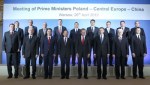
New York Times: “Prime Minister Wen Jiabao said Thursday that China wanted to double trade with the countries of Central and Eastern Europe to $100 billion a year by 2015, and pledged billions in loans to help promote investment in the region.

Mr. Wen made the announcement at a gathering in Warsaw that brought together business and political leaders of countries stretching from the Baltics to the Balkans that are eager to do business with China, even as they struggle to overcome stereotypes still held by many in the region who associate the Chinese as makers of inexpensive toys and designer knock-offs.

Infrastructure, high technology and green technology are target areas for growth, Mr. Wen said, announcing that Beijing would set up a $10 billion line of credit to support investment in these specific industries. He also pledged an additional $500 million in funds to be made available to Chinese companies seeking to make first-stage investment in the region.”

via China Wants More Trade With Central and Eastern Europe – NYTimes.com.

China continues to woo everyone. And Mr Wen is making himself very busy in his final year in office.

Related post: https://chindiapedia.wordpress.com/wp-admin/post.php?post=5753&action=edit

https://chindia-alert.org/political-factors/geopolitics-chinese/

27/04/2012

* Wen paints Europe green in 4-nation trip

China Daily: “Trade and investment deals and business cooperation have been the focus of Premier Wen Jiabao’s tour to four European nations this week. Such fare is common for such visits, but

Wen Jiabao (温家宝), Chinese Premier

Wen Jiabao (温家宝), Chinese Premier (Photo credit: Wikipedia)

there was a new ingredient in the latest trip: Wen and his delegation have been paying particular attention to green and innovative industries in almost every destination of the seven-day visit, which ends on April 29.

As China switches from high growth to sustainability in the current five-year plan and as the country’s foreign trade growth slows, politicians, businesses and industrial leaders from China and Europe are seeing more opportunities in each others markets. Before his scheduled arrival in Warsaw on April 27, Wen pressed for global action on sustainable development that strikes a balance between economic growth, social progress and environmental protection, instead of focusing exclusively on the environment, at the Stockholm+40 conference in Sweden.”

via Wen paints Europe green in 4-nation trip|News|chinadaily.com.cn.

This relatively new theme of ‘sustainability’ goes along with strenuous efforts to reduce carbon and increase renewable energy sources. Good for China and good for the world.

Related pagehttps://chindia-alert.org/economic-factors/greening-of-china/

23/04/2012

* Solar giant turns the desert green and blue in Gujarat

The Times, London: “Asia’s mightiest solar power farm has been switched on in the Indian desert state of Gujarat. It is part of a drive to transform the region into one of the world’s leading green energy producers and to provide electricity to some of the 400 million people who still have no access to it.

The Gujarat Solar Park, which spans a remote 3,000 acres near the border with Pakistan, started generating 214 megawatts of electricity, sufficient to power 90,000 British households, over the weekend. The huge array of solar panels outstrips China’s 200MW Golmud Solar Park as the biggest in Asia. An official said that eventually the facility would reach a capacity of 1,000MW (edit – equivalent to a nuclear power station), bigger than any other single existing solar power plant in the world.

India, which is heavily dependent on imported coal, oil and gas for its energy requirements, is still chronically short of electricity and is aiming to build 20,000 megawatts of solar capacity by 2020.”

via Solar giant turns the desert green and blue in Gujarat | The Times.

21/04/2012

* China’s Premier in Iceland, eyes on Arctic riches

extract from Reuters: “China signed accords on energy cooperation and the Arctic in Iceland on Friday as Premier Wen Jiabao started a tour of northern Europe that will focus on Chinese investment in a continent eager for funds and to trade with the rising world power.

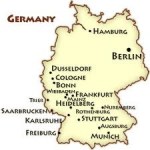
Centrepiece of the trip will be a visit to Germany, where Wen and Chancellor Angela Merkel will on Sunday and Monday burnish industrial ties that have done much for both economies. That the prime minister of the world’s most populous nation should stop first, however, on a remote island of just 320,000 has raised hopes for an injection of Chinese cash into an economy ravaged by the bursting of a financial bubble in 2008 – but also suspicion of Beijing’s hunger for natural resources. …

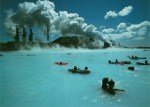
Over two days, Wen, who trained as a geologist, will see volcanic geysers and electricity plants where Iceland captures geothermal energy. Friday’s meetings between Wen and Icelandic Prime Minister Johanna Sigurdardottir resulted in agreements to cooperate in the Arctic region, in marine and polar science and in geothermal energy. Orka Energy Ltd – an Icelandic firm focused on producing geothermal energy – and China’s Sinopec Group also signed a deal to develop geothermal energy in China for heating houses and the production of electricity, though no figures were provided. …

But by starting with a full-scale visit to Iceland, Wen has fuelled European concern that China might be trying to exploit the country’s economic troubles to gain a strategic foothold in the North Atlantic and Arctic region. The area has big reserves of oil, gas, gold, diamonds, zinc and iron. And with global warming melting polar ice, it may offer world powers new shipping routes – and naval interests – for the trade between Asia, Europe and America’s east coast. “When it comes to the Arctic, we always have China on our mind,” said one European diplomat from the Nordic region, who spoke to Reuters this week on condition of anonymity.

But conspiracy theories over why such an Asian giant would be interested in such a small nation abound. “Given Chinas investment pattern around the globe, people have asked questions. Why are doing this? Is there some ulterior motive?” said Embla Eir Oddsdottir at the Stefansson Arctic Institute. “For next decade they are going to be battling some sort of suspicion as to their motive, because people have a tendency to link them to some type of regime.” …”

via UPDATE 3-Chinas Wen in Iceland, eyes on Arctic riches | Reuters.

Why the suspicion and conspiracy theory?  China has been wooing all sorts of countries in the recent past – see posts:

https://chindia-alert.org/2012/04/16/us-alert-as-chinas-cash-buys-inroads-in-caribbean/

https://chindia-alert.org/2012/12/31/question-who-did-china-woo-in-2012/

https://chindia-alert.org/political-factors/geopolitics-chinese/

It is part of China’s geopolitical plan to be friends wioth everyone – without prejudice to religion, race, politics, etc!

Law of Unintended Consequences

continuously updated blog about China & India

ChiaHou's Book Reviews

continuously updated blog about China & India

What's wrong with the world; and its economy

continuously updated blog about China & India