Archive for ‘Infrastructure’

15/02/2019

Pulwama attack: India will ‘completely isolate’ Pakistan

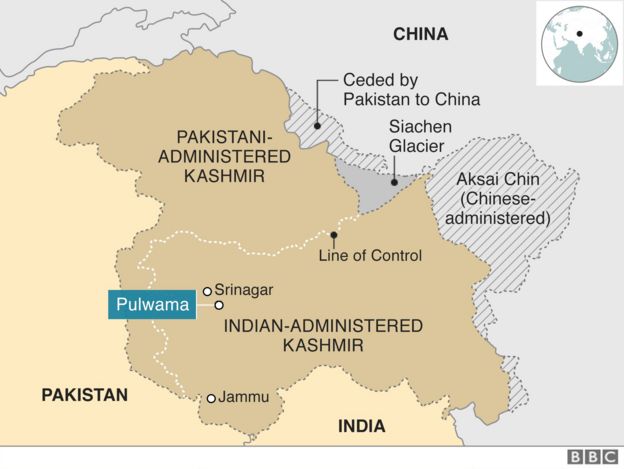
India has said it will ensure the “complete isolation” of Pakistan after a suicide bomber killed 46 soldiers in Indian-administered Kashmir.

Federal Minister Arun Jaitley said India would take “all possible diplomatic steps” to cut Pakistan off from the international community.

India accuses Pakistan of failing to act against the militant group which said it carried out the attack.

This is the deadliest attack to hit the disputed region in decades.

Both India and Pakistan claim all of Muslim-majority Kashmir but only control parts of it.

An insurgency has been ongoing in Indian-administered Kashmir since the late 1980s and there has been an uptick in violence in recent years.

How will India ‘punish’ Pakistan?

India says that Jaish-e-Mohammad, the group behind the attack, has long had sanctuary in Pakistan and accuses its neighbour of failing to crack down on it.

It has called for global sanctions against the group and has said it wants its leader, Masood Azhar, to be listed as a terrorist by the UN security council.

Although India has tried to do this several times in the past, its attempts were repeatedly blocked by China, an ally of Pakistan.

Mr Jaitley set out India’s determination to hold Pakistan to account when speaking to reporters after attending a security meeting early on Friday.

He also confirmed that India would revoke Most Favoured Nation status from Pakistan, a special trading privilege granted in 1996.

Pakistan said it was gravely concerned by the bombing but rejected allegations that it was in any way responsible.

But after Prime Minister Narendra Modi said in a speech that those behind the attack would pay a “heavy price”, many analysts expect more action from Delhi.

After a 2016 attack on an Indian army base that killed 19 soldiers, Delhi said it carried out a campaign of “surgical strikes” in Pakistan-administered Kashmir, across the de facto border. But a BBC investigation found little evidence militants had been hit.

However analysts say that even if the Indian government wants to go further this time, at the moment its options appear limited due to heavy snow across the region.
map

How did the attack unfold?

The bomber used a vehicle packed with explosives to ram into a convoy of 78 buses carrying Indian security forces on the heavily guarded Srinagar-Jammu highway about 20km (12 miles) from the capital, Srinagar.

“A car overtook the convoy and rammed into a bus,” a senior police official told BBC Urdu.

It stands as the deadliest militant attack on Indian forces in Kashmir since the insurgency began in 1989.

The bomber is reported to be Adil Dar, a high school dropout who left home in March 2018. He is believed to be between the ages of 19 and 21.

Soon after the attack Jaish-e-Mohammad released a video, which was then aired on the India Today TV channel. In it, a young man identified as Adil Dar spoke about what he described as atrocities against Kashmiri Muslims. He said he joined the banned group in 2018 and was eventually “assigned” the task of carrying out the attack in Pulwama.

He also said that by the time the video was released he would be in jannat (heaven).

Dar is one of many young Kashmiri men who have been radicalised in recent years. On Thursday, main opposition leader Rahul Gandhi said that the number of Kashmiri men joining militancy had risen from 88 in 2016 to 191 in 2018.

India has been accused of using brutal tactics to put down protests in Kashmir – with thousands of people sustaining eye injuries from pellet guns used by security forces.

What’s the reaction?

“We will give a befitting reply, our neighbour will not be allowed to de-stabilise us,” said Prime Minister Modi.

Mr Gandhi and two former Indian chief ministers of Jammu and Kashmir all condemned the attack and expressed their condolences.

The attack has also been widely condemned around the world, including by the US and the UN Secretary General.

The White House called on Pakistan to “end immediately the support and safe haven provided to all terrorist groups operating on its soil”.

Pakistan said it strongly rejected any attempts “to link the attack to Pakistan without investigations”.

What’s the background?

There have been at least 10 suicide attacks since 1989 but this is only the second suicide attack to use a car.

Prior to Thursday’s bombing, the deadliest attack on Indian security forces in Kashmir this century came in 2002, when militants killed at least 31 people at an army base in Kaluchak near Jammu, most of them civilians and relatives of soldiers.

At least 19 Indian soldiers were killed when militants stormed a base in Uri in 2016. Delhi blamed that attack on the Pakistani state, which denied any involvement.

The latest attack also follows a spike in violence in Kashmir that came about after Indian forces killed a popular militant, 22-year-old Burhan Wani, in 2016.

More than 500 people were killed in 2018 – including civilians, security forces and militants – the highest such toll in a decade.

India and Pakistan have fought three wars and a limited conflict since independence from Britain in 1947 – all but one were over Kashmir.

Who are Jaish-e-Mohammad?

Started by cleric Masood Azhar in 2000, the group has been blamed for attacks on Indian soil in the past, including one in 2001 on the parliament in Delhi which took India and Pakistan to the brink of war.

Most recently, the group was blamed for attacking an Indian air force base in 2016 near the border in Punjab state. Seven Indian security personnel and six militants were killed.

It has been designated a “terrorist” organisation by India, the UK, US and UN and has been banned in Pakistan since 2002.

However Masood Azhar remains at large and is reportedly based in the Bahawalpur area in Pakistan’s Punjab province.

India has demanded his extradition from Pakistan but Islamabad has refused, citing a lack of proof.

Source: The BBC

15/02/2019

Kashmir attack: Pak envoy summoned, ‘verifiable’ action against JeM sought

Foreign Secretary Vijay Gokhale told the high commissioner that Pakistan must take “immediate and verifiable action” against the Jaish-e-Mohammed terror group that has claimed responsibility for Thursday’s attack in Kashmir.

INDIA Updated: Feb 15, 2019 15:12 IST

HT Correspondent
HT Correspondent
Hindustan Times, New Delhi
PM Modi Jhansi,Modi Pulwama attack,Pulwama attack
Prime Minister Narendra Modi(PTI file photo)

India on Friday summoned Pakistan envoy Sohail Mahmood to lodge a strong protest over the suicide bombing in south Kashmir’s Pulwama by Pakistan-based terror group Jaish-e-Mohammad (JeM).

Foreign Secretary Vijay Gokhale told the high commissioner that Pakistan must take “immediate and verifiable action” against the Jaish-e-Mohammed terror group that has claimed responsibility for Thursday’s attack in Kashmir.

A Jaish suicide bomber on Thursday rammed a car packed with explosives into a CRPF convoy on the Jammu-Srinagar highway. The CRPF has confirmed 38 deaths in the suicide bombing, counted among the bloodiest in Kashmir. Initial reports, quoting security officials, had said 44 jawans were feared to have been killed in the attack.

The foreign secretary also told Pakistan that it must “immediately stop” groups or individuals linked to terrorism operating from its territories.

In the hours after Thursday’s attack, New Delhi had issued a strong statement that accused Pakistan of giving “full freedom” to the terror group to operate and expand its terror infrastructure to carry out attacks in India and elsewhere with impunity.

Islamabad responded with a two-line statement that said it had “always condemned heightened acts of violence” in Kashmir. Pakistan also said it will “strongly reject any insinuation by elements in the Indian government and media circles that seek to link the attack to the State of Pakistan without investigations”.

Foreign Secretary Gokhale rejected this statement by the Pakistan foreign office.

Source: Hindustan Times

07/02/2019

Spotlight: Cross-border infrastructure helps promote tourism in Hong Kong and Greater Bay Area

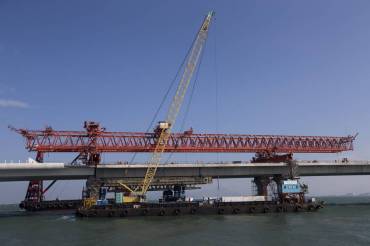
HONG KONG, Feb. 6 (Xinhua) — Benefiting from the Hong Kong section of the Guangzhou-Shenzhen-Hong Kong Express Rail Link and the Hong Kong-Zhuhai-Macao Bridge, China’s Hong Kong Special Administrative Region (SAR) witnessed a record high of tourist arrivals last year.

Data released by the Hong Kong Tourism Board showed that the overall tourist arrivals soared to around 65.1 million in 2018, up 11.4 percent from that of 2017. Among the overall growth, visitor arrivals from the mainland saw a rise of 14.8 percent to 51 million.

As the cross-border infrastructure further ties up the Hong Kong SAR and the mainland, Hong Kong will further promote tourism in the Guangdong-Hong Kong-Macao Greater Bay Area (Greater Bay Area), said tourism industry insiders.

“From the latter half of 2017, Hong Kong began to see an upturn in tourism, and witnessed a continuous increase in the number of tourists in 2018,” said Yiu Si-wing, member of the Legislative Council of the HKSAR.

“Since the operation of the Express Rail Link and the bridge, we see an apparent growth in visitor arrivals to Hong Kong.” Yiu pointed out.

He viewed tourists from the mainland as the driving force to push Hong Kong’s visitor arrivals to a new high. “It takes less time and fewer procedures for those visitors to Hong Kong via the Express Rail Link than before when they need to transfer to Hong Kong after first arriving at Shenzhen,” said Yiu.

Cross-border infrastructure has facilitated the transportation between the mainland and Hong Kong by integrating the SAR into the national high-speed railway network.

An increasing number of tourists traveled by the Express Rail Link to Hong Kong, and to meet their demand for in-depth tour, new routes featuring natural and cultural characteristics have been introduced, said Ng Hi-on from China Travel Service.

The Hong Kong Tourism Board has promoted “Old Town Central” and “Hong Kong Neighborhoods” as tailored tours for travelers to experience Hong Kong.

Besides, tourists can enjoy festivals and events in Hong Kong, such as night parade, horse racing and flower markets.

Cruise tour is another product the Hong Kong Tourism board has promoted. After the launch of the Express Rail Link in September 2018, the Dream Cruises company introduced a “rail cruise” route in November, welcoming more than 1,000 tourists from Hubei and Yunnan provinces and Guangxi Zhuang Autonomous Region to Hong Kong for a land-sea trip.

Tourism in the Greater Bay Area has huge potential, as cities in the area can work with one another to develop multi-destination travel with cross-border infrastructure, according to Anthony Lau, the executive director of the Hong Kong Tourism Board.

Yiu said that travelers can travel through cities in the Greater Bay Area via transport links and the tour pattern enriches their trip.

He called for more efforts by Guangdong Province, and the Hong Kong and Macao SARs to forge closer bonds so as to build the Greater Bay Area into a tourism brand.

Source: Xinhua

28/02/2017

Building Binge: ADB Calls for More Infrastructure Across Asia – China Real Time Report – WSJ

BEIJING–Asia needs at least $1.5 trillion of roads, bridges and other infrastructure annually between now and 2030 to maintain its growth momentum, a doubling of earlier projections, according to the Asian Development Bank.

In a report released Tuesday, the Manila-based development bank said the tab would run even higher if climate change is factored in: Upgrading power plants, transport systems and other facilities would boost regional investment by another $241 billion annually among some 45 Asia and Pacific countries.

Infrastructure has gained favor as a way to boost flagging growth following the 2009 global financial crisis. U.S. President Donald Trump has vowed to spend $1 trillion over a 10-year period rebuilding U.S. roads and bridges. China spent 15.2 trillion yuan [$2.2 trillion] in infrastructure fixed-asset investment in 2016 alone. The world’s second-biggest economy is promoting its infrastructure-led growth model, creating the Beijing-led Asian Infrastructure Investment Bank, which touts itself as a more efficient alternative to the likes of the World Bank and ADB.

Countries that fail to invest in infrastructure may see economic growth pinched by bottlenecks and lackluster job-creation. The ADB’s current projections represent a doubling of the $750 billion in annual infrastructure requirements the bank forecast in 2009 for the 2010-2020 period. The Asia-Pacific region currently invests around $880 billion annually in infrastructure, according to ADB.Governments currently pay around 92% of the cost of infrastructure in the region, the bank estimates in its report. Boosting spending levels, it said, is going to require tax, regulatory and institutional changes to draw in the private sector.

“Governments can get more bang out of their infrastructure investment,” said ADB economist Rana Hasan. Mr. Hasan acknowledged that the Asian region is unlikely to spend the full $1.7 trillion annually, but said the ADB hopes its recommendations can bring governments closer to those levels. “They need to make it more attractive for the private sector,” he said.

Of the estimated $26 trillion in projects required between 2016 and 2030 to bolster economic output, alleviate poverty and respond to climate change, $14.7 trillion is needed for the power sector, $8.4 trillion for transport, $2.3 trillion for telecommunications and $800 billion for water and sanitation projects, the report said.While acknowledging the need for better and more infrastructure, some economists caution that corruption and politics can significantly undercut the economic benefits of big building initiatives.

“Most developing countries could use more infrastructure. But the problem is not a lack of demand. It’s a lack of credibility,” said Guanghua School of Management professor Michael Pettis. “If your debt gets too high, you start running into debt-servicing problems, defaults and other problems.”China has relied on infrastructure investment as a form of economic stimulus since the global financial crisis in 2009. Since then, local government debt, much of it to fund infrastructure, has risen by two-thirds, according to Standard & Poor’s Financial Services LLC. That debt stood at more than 41% of economic output in 2015, according to Bank of America Merrill Lynch.Beijing has also struggled to attract private investors. Though it has strongly promoted public-private partnerships, some have stumbled during implementation, many due to mismatched expectations of private companies and the state sector.

More favorable reviews have been given to China’s ambitious plans to modernize the ancient Silk Road trade routes. Known as “One Belt, One Road,” the program envisions a network of ports, bridges, rail lines, industrial parks and telecommunication links linking China to the rest of Asia, Europe and points beyond.

The large sums have caught the attention of foreign engineering and equipment companies such as Caterpillar, ABB Group and Vermeer Corp., which are hoping for a slice of future projects.

Source: Building Binge: ADB Calls for More Infrastructure Across Asia – China Real Time Report – WSJ

Tags:
13/01/2017

Opinion is divided on China’s massive infrastructure projects | The Economist

CHINA is proud of its infrastructure: its cavernous airports, snaking bridges, wide roads, speedy railways and great wall. This national backbone (minus the wall) bears the weight of the world’s second-largest economy and its biggest human migration, as hundreds of millions of people move around the country during the lunar new-year holidays—the rush officially begins on January 13th.

Western leaders often shake their heads in disbelief at the sums China spends on its huge projects. And some analysts question how much of it has been wisely spent. In a widely circulated study published last autumn, Atif Ansar of Oxford University’s Saïd Business School and his co-authors say the world’s “awe and envy” is misplaced. More than half of China’s infrastructure projects have “destroyed economic value”, they reckon. Their verdict is based on 65 road and rail projects backed by the Asian Development Bank (ADB) or the World Bank since the mid-1980s. Thanks to the banks’ involvement, these projects are well documented.

One example is a 147-km, four-lane toll road in southern Yunnan province, which was built with the help of an ADB loan approved in 1999. The ADB expected the Yuanjiang-Mohei highway (Yuan-Mo for short) to cut travel times, reduce traffic accidents and lower the costs of fuelling and repairing vehicles, adding up to a compelling economic return of 17.4% a year. By 2004, however, traffic was 49% below projections and costs were more than 20% over budget, thanks to unforgiving terrain prone to landslides.

Were such setbacks enough to damn over half of the projects they examined? As a rule, the ADB and World Bank will approve an undertaking only if they expect its broad benefits (the economic gains from reduced travel times, fewer accidents, etc) to exceed its costs by a large margin, leaving ample room for error. Mr Ansar and his co-authors assume this margin is 40%: they posit a ratio of expected benefits to costs of 1.4 for every project. They scoured the banks’ review documents for examples of cost overruns and traffic shortfalls. Given these assumptions, a project becomes unviable if costs overrun by more than 40%, traffic undershoots by 29%, or some combination of the two. Of the 65 projects, 55% fell into this category. Yuan-Mo was one.

These projects may not be representative of China’s infrastructure-building as a whole. But there is little reason to think they are unusually bad. They are often managed with greater rigour, thanks to the involvement of outside lenders.The authors’ conclusion, however, rests on their assumption about the margin for error built into the projects they looked at. Take Yuan-Mo, for example. Its projected benefits, over its first 20 years of operation, were several times greater than its costs. But as often with roads, the costs arrive early; the benefits are spread thinly over many years. In the time it takes for an investment to pay off, the resources used could have been earning a return elsewhere. So it is necessary to reduce the future payoffs by some annual percentage, known as a “discount rate”. The higher this is, the lower the value placed today on tomorrow’s gains.

So a lot turns on what rate is chosen. For historical reasons, the ADB adopts a high one of 12%. At that rate, Yuan-Mo’s ratio of expected benefits to costs equals 1.5, roughly in line with the authors’ assumptions. But at a gentler rate of 9%, the ratio improves to about 2. At a rate of 5.3% (more in line with government borrowing costs) the ratio rises to 3. With these higher margins for error, many fewer elephants turn white. At a ratio of 2, the share falls to 28%. If the ratio is assumed to be 3, the proportion of duds falls to just 8%.

The authors also assume that any traffic shortfall persists throughout its life. That is not always the case. Traffic on Yuan-Mo, for example, has rebounded, according to the road’s operator. By 2015 it was 31% higher than the ADB projected back in 1999. Around last year’s lunar new-year holiday the road handled record numbers. Some white elephants turn grey with age.

Source: Opinion is divided on China’s massive infrastructure projects | The Economist

04/06/2016

This Spanish Company Says It Holds the Key to Speed on India’s Crooked Railways – India Real Time – WSJ

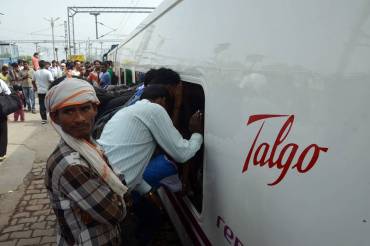
India’s trains are notoriously slow and outdated, but a Spanish train maker says it can change that with coaches that can squeeze much more speed out of the country’s crooked railways.

Talgo S.A. has been wooing India for years as the South Asian nation has one of the largest railway networks in the world and big plans to upgrade its rail infrastructure.

The Madrid-based company got its breakthrough this year when it got the go-ahead to test its coaches on few routes in India to prove its trains can slash travel times for the 13 million people who use the state-owned Indian Railways every day. Talgo claims its coaches can cut travel time by up to 30%.

The existing average maximum speed of Indian passenger trains is 110 kilometers per hour, according to Vijay Kumar, executive director for infrastructure and mechanical engineering at Indian Railways.

One of Indian Railways’ current fastest trains–the Rajdhani Express–travels between Delhi and Mumbai in around 16 hours. Talgo says the same journey with its coaches will take less than 11 hours.

India has traditionally built its own trains and Talgo is the first foreign train-manufacturer to be given permission to conduct trials, said Mr. Kumar.

The tests of the trains began last weekend between Bareilly and Moradabad in northern Indian state of Uttar Pradesh and will be expanded to two other routes.

The main selling point of the Talgo coaches is that India won’t need to change the tracks for them.

“For any conventional train you need a lot of investment in the existing infrastructure but with Talgo train you don’t need any investment in the infrastructure and it can start going at higher speed,” said Subrat Nath, director for India and Asia-Pacific region at Talgo.

Despite India’s dependence on its railways, the system has become outdated and overburdened.

“India is unique and alone among the major countries of the world in not having a single high-speed rail corridor,” said a document presented to the Indian Parliament in 2009 titled “Indian Railways Vision 2020.”

The Congress party-led government back then said it would upgrade the current tracks and build “state-of-the-art high-speed corridors” for the trains to run up to 350 kilometers, or 217 miles, per hour.

In the latest step in that direction, India launched its first “semi-high speed” train in April–the Gatimaan Express– between Delhi and Agra, home of the Taj Mahal. The train has a maximum speed of 160 kilometers, or 99 miles, per hour, cutting the fastest travel time between the capital and Agra by more than 15 minutes.

One of the biggest factors slowing down Indian Railways’ 7,000 passenger trains is the country’s long and winding railroads. There are 495 speed-killing curves in the tracks between Delhi and Mumbai alone, said Mr. Kumar at Indian Railways.

Straightening out existing tracks or building straight ones from scratch is too expensive, said Mr. Kumar, so the trains from Talgo and others which offer more speed on curvy lines could be the best option.

Talgo coaches use a “natural tilting mechanism” which allows them to go up to 20% faster on curves than conventional coaches, Mr. Kumar said.

He said the trials will test whether the trains perform as promised. India has not committed to ordering from Talgo yet.

Talgo’s Mr. Nath says the company is ready to build the coaches in India if it can get the orders.“India can be a key market for us,” he said.

Source: This Spanish Company Says It Holds the Key to Speed on India’s Crooked Railways – India Real Time – WSJ

30/12/2015

Historian praises China’s global infrastructure building, criticizes West’s destructive methods – Xinhua | English.news.cn

China, with its impressive international infrastructure initiatives, has injected impetus into global growth, a U.S.-German historian has said, while criticizing Washington’s hawkish attitude, as reported by Sputnik.

China is “leading an economic renaissance of a scale not seen in more than a century,” said F. William Engdahl, a historian and economic researcher, in his recent article for New Eastern Outlook. “Beijing is, with customary Chinese speed, linking its economy by land and by sea lanes to all Eurasia,” the historian wrote, previously saying that China is “moving forward with an impressive array of major international infrastructure projects” in various regions. “For my side, I infinitely prefer the peaceful building projects to the destroying ones,” Engdahl said.

During the Johannesburg Summit of the Forum on China-Africa Cooperation (FOCAC) in early December in South Africa, Chinese President Xi Jinping unveiled the 60-billion-U.S.-dollar aid package for Africa in the next three years. The package seeks to help Africa to industrialize, modernize its agricultural production, boost the skills of its workers, build infrastructure and improve its health care.

“Unlike NATO’s endless wars, construction of infrastructure — railways, water navigation, electric power grids, lifts people up and enhances peace and stability,” Engdahl said, pointing out that Xi’s offer benefits both Africa and China.

China is also establishing a more amicable, vibrant neighborhood and is deepening economic ties with European countries through its Belt and Road initiative. The Belt and Road initiative, comprising the Silk Road Economic Belt and the 21st Century Maritime Silk Road, was brought up by Xi in 2013, with the aim of building a trade and infrastructure network connecting Asia with Europe and Africa along the ancient Silk Road routes.

The initiative creates a “golden opportunity” for the countries of Central and Eastern Europe that are facing economic difficulties, linking the East and the West of the Eurasian continent through a vast network of high-speed railways and maritime routes, Engdahl said.

“China is the world address in rail infrastructure today, while the West, led by the pathetic rail construction record of the USA, falls farther and farther behind,” Engdahl said, referring to China’s planned construction of a Hungary-Serbia high-speed railway. The railway linking the capitals of Hungary and Serbia, Budapest and Belgrade, has a total length of 350 km, with 184 km in Serbia. It is designed for electric passenger and cargo trains with a maximum speed of 200 km per hour. Once complete, it will help create a fast lane for importing and exporting products between China and Europe.

Besides recognizing the export of “Chinese rail technology” to Europe, the researcher also mentioned Beijing’s intentions to invest in constructing and upgrading port facilities in the Baltic, Adriatic, and Black Seas.

Source: Historian praises China’s global infrastructure building, criticizes West’s destructive methods – Xinhua | English.news.cn

13/03/2015

India in pacts to develop infrastructure in Mauritius, Seychelles | Reuters

Curious: India not known for its own infrastructure is offering to help its neighbours!

Indian Prime Minister Narendra Modi has secured agreements to develop islands in Mauritius and Seychelles in an early success for his drive to wrest back influence in the Indian Ocean from China.

India's Prime Minister Narendra Modi speaks at the inaugural session of Re-Invest 2015, the first Renewable Energy Global Investors Meet & Expo, in New Delhi, February 15, 2015.  REUTERS/Adnan Abidi

China has invested millions of dollars in recent years building seaports and highways in countries stretching from the Maldives to Sri Lanka that lie on vital shipping lanes through which much of its energy supplies and trade passes.

India, alarmed at the prospect of China building a network of friendly ports in a “String of Pearls” across the Indian Ocean, has stepped up its diplomacy, offering a range of civil and military assistance.

On Wednesday, as Modi toured Mauritius, officials signed an agreement to upgrade sea and air links on the remote Agalega islands, offering India a foothold in an area hundreds of miles from its coast.”

via India in pacts to develop infrastructure in Mauritius, Seychelles | Reuters.

24/02/2015

Modi’s bid to ease land for companies could impact reforms | Reuters

A bid by Prime Minister Narendra Modi to make it easier for businesses to buy farm land for infrastructure and industry has sparked a backlash that could stymie his efforts to get reforms through a parliament session that began on Monday.

Labourers work along the construction site of a road at Ghilot in Rajasthan, October 1, 2014.  REUTERS/Adnan Abidi/Files

While the change is aimed at unlocking hundreds of billions of dollars worth of projects, which have been stuck for want of land, opposition parties and rights activists say it discriminates against farmers.

“We will protest and fight the government on this issue inside and outside parliament,” Ghulam Nabi Azad, a senior leader of the opposition Congress party, told the Indian Express.

Modi issued an ordinance in December to exempt projects in defence, rural electrification, rural housing and industrial corridors from provisions of a law enacted by the previous Congress party government that mandated the consent of 80 percent of affected landowners for any deal.

He had also ended the need for companies to conduct a social impact study of such projects, which would involve public hearings and, industry executives fear, drag on for years.

The ordinance is a temporary order and needs the approval of both houses of parliament to come into force. It will lapse if parliament does not ratify it this session.

via Modi’s bid to ease land for companies could impact reforms | Reuters.

25/11/2014

China’s Railroad Ventures Abroad Project Soft Power – Businessweek

Last week state-owned China Railway Construction Corp. (CRCC) signed a lucrative contract with Nigeria to build an 870-mile coastal railroad from Lagos to Calabar, two of the West African nation’s leading cities. The price tag: $12 billion. That makes it the largest single overseas engineering contract awarded to any Chinese company, according to state-run Xinhua newswire.

Chinese and Venezuelan construction workers build an elevated platform at China Railway Engineering Corporation's (CREC) Tinaco-Anaco railway project in Los Dos Caminos, Venezuela in 2012

Beijing hopes many more deals will follow. In recent months, Chinese leaders on overseas missions have often bragged of the country’s prowess in building railroads, including high-speed bullet trains.

In May, Li Keqiang made his first diplomatic trip as China’s premier to Africa, visiting Ethiopia, Nigeria, Angola, and Kenya. At the headquarters of the African Union in Addis Ababa, Ethiopia, he said he envisioned a bright future for the continent when African capitals would be connected by high-speed rail. And China, he added, according to Xinhua, could “help make this dream come true.”

In early November, a consortium of Chinese companies led by CRCC won a $3.7 billion contract to build a bullet train in Mexico; that contract was canceled a few days later due to suspected corruption on the Mexican side. But the aborted deal is still a sign of overseas demand for China’s rail technology.

Nor are rail deals limited to developing nations: In October, Boston’s transit authority signed a $567 million contract with China’s CNR Corp. to build 284 subway cars.

In addition to stimulating domestic manufacturing demand for steel and rail equipment exports, China’s leaders hope the flurry of railway deals will have soft power benefits as well. The Nigerian railroad will be “a mutually beneficial project,” as CRCC Chairman Meng Fengchao told Xinhua. He pledged to hire at least several thousand workers from Nigeria; in the past, Chinese companies have been criticized for bringing in Chinese workers to complete large engineering projects, thus denying work opportunities to local populations.

via China’s Railroad Ventures Abroad Project Soft Power – Businessweek.

Law of Unintended Consequences

continuously updated blog about China & India

ChiaHou's Book Reviews

continuously updated blog about China & India

What's wrong with the world; and its economy

continuously updated blog about China & India