Archive for ‘Economics’

14/12/2014

China Has a ‘New Normal’ Too – Businessweek

China’s Communist Party leaders are known for their turgid jargon, much of it dating back decades to when Mao Zedong still dominated dogma. But sometimes, apparently, they feel the need to borrow from less hoary, more capitalistic sources.

A technology and manufacturing facility in Shenzhen, China

That is what Xi Jinping has done with his “new normal” theory of the Chinese economy, now getting lots of play in the state media. The phrase, first popularized by Pacific Investment Management Co., or Pimco, the giant Newport Beach (Calif) bond fund manager, referred of course to the lackluster economic growth following the global financial crisis.

Earlier this year Xi used the then-already tired cliché while on a May inspection trip to Henan, the province southwest of the Chinese capital. Then it got a real airing during a speech he gave at the Asia-Pacific Economic Cooperation Forum last month. “A new normal of China’s economy has emerged with several notable features,” Xi said, speaking before more than 1,500 global business executives in Beijing, reported the Party-owned Global Times on Nov. 10.

“First, the economy has shifted gear from the previous high speed to a medium-to-high-speed growth. Second, the economic structure is constantly improved and upgraded. Third, the economy is increasingly driven by innovation instead of input and investment,” the paper wrote, paraphrasing Xi.

Translation: Yes, the economy will not grow at the hyper rates all of you had gotten used to—still, no need for alarm. We are making the transition to a healthier, more sustainable version, this one driven more by consumption, services, and, oh yes, innovation. “The ‘new normal’ theory elaborated by Chinese President Xi Jinping would be one of the hallmarks to be engraved in history,” the Global Times ambitiously predicted.

“We must understand the new normal, adjust to the new normal, and develop under the new normal—coming to terms with the new normal will be the ‘main logic’ for economic growth for some time,” the official Xinhua News Agency wrote today, in a report on the three-day, high-level Central Economic Work Conference that closed Thursday. “The new normal has not changed the strategic importance of a period that will see great achievements,” it promised.

via China Has a ‘New Normal’ Too – Businessweek.

12/12/2014

Christmas celebrations: Oh what fun | The Economist

CITIES across China blink with fairy lights, fancy hotels flaunt trees and tinsel, and glossy magazine covers display festive recipes and table settings. “Joy up!” reads a sign (in English) on three illuminated trees by a shopping mall in Beijing. The Chinese are doing just that.

In the first decades of Communist rule in China Christianity was banned, along with other religions. Now there are tens of millions of Christians in China and faiths of all kinds are blossoming. But this has little to do with the country’s fast-growing fascination with Christmas. In the West the holiday is a commercialised legacy of Christian culture; in China it is almost entirely a product of Mammon. Father Christmas is better known to most than Jesus.

Well before Christmas took hold in China’s cities, its factories were churning out Christmas essentials for consumption in the West. Industrially, China is now the Christmas king. According to Xinhua, a state-run news agency, more than 60% of Christmas trinkets worldwide last year came from a single “Christmas village”—Yiwu (in fact, a city), in the eastern province of Zhejiang.

But ever more of these goodies now stay in China, to satisfy a domestic craving. Some are tailored to Chinese tastes: Father Christmases playing the saxophone, for example, are a common decoration—no-one quite knows why. This year some shops are putting Santa hats on sheep; the Chinese new year in February, another excuse for hedonism, will be sheep-themed. A shop selling sex aids in Beijing displays a mannequin with a short Santa hot-pants suit, complete with white furry leg warmers.

Christmas in China never really ends. Decorations sometimes remain up year-round. In 2016 the south-western city of Chengdu will host Asia’s first “SantaPark”—a giant Christmas-themed amusement park modelled on a Finnish attraction. It will be known as the “official home of Santa Claus” (despite Chengdu’s sweltering summers and mild winters).

Family reunions are not part of Christmas tradition in China; for most people it is a chance to enjoy public displays of lights, and, for a growing number of younger Chinese, to exchange gifts with colleagues and friends (China’s home-grown festivals are not so centred around gift-giving). As elsewhere, Christmas in China is a merry time to shop.

via Christmas celebrations: Oh what fun | The Economist.

12/12/2014

China’s Construction Workers: Abused and Unpaid – Businessweek

China’s millions of migrant construction workers are building the country’s new highways, stadiums, shopping malls, and rail lines. They often get little in return—sometimes not even their paychecks.

Migrant workers in Beijing

A new survey of 4,329 construction workers by two Chinese nonprofits, the Beijing Practitioner Cultural Development & Research Center for Migrant Workers and iLabor, found that only 5 percent of migrant laborers are offered work contracts. Most take ad hoc jobs, relying on the word of site managers about when and how much they will be paid. The survey documented at least 138 cases over seven years of companies failing to pay any workers on a site.

Zhang Kejian has worked as a construction laborer for 14 years. Every year he has been on the job, he’s had to contend with late or unpaid wages, as he told Caixin magazine. “I hope our society can be aware of what we’re going through,” he said, “and help us with a contract instead of making us slaves of our bosses.”

via China’s Construction Workers: Abused and Unpaid – Businessweek.

12/12/2014

China’s Development of Xinjiang Spurs Resentment from Uighurs – Businessweek

Urumqi, the capital of Xinjiang in China, is a cold and forbidding place to visit in late November. The red and blue flashing lights of police vehicles are everywhere. Soldiers wearing black masks and carrying automatic weapons are spread across the city, often standing next to squat black and white armored vehicles. Every commercial building, hotel, and government office has a metal detector manned by a police officer at its entrance. Fliers scattered around the city explain why women should not wear veils.

Xinjiang’s first high-speed railway, which will be 1,776 kilometers long

Perched on the edge of Central Asia, the region of Xinjiang (“new frontier” in Mandarin) has long presented a dilemma for China’s leaders. It’s home to some of the country’s largest oil, gas, and coal reserves. But its ethnically Turkic, Uighur Muslim inhabitants have long chafed under Chinese rule: Many pro-independence fighters over the decades have attacked Chinese targets, and the violence—what some credit to a shadowy group called the East Turkestan Islamic Movement—continues to this day. Beijing labels the ETIM’s members as terrorists.

This year growing anger with Uighurs over what they say is economic discrimination and religious oppression sparked attacks, usually against Chinese residents, that have killed 200 people and undermined Beijing’s control over the region. On Dec. 8, authorities sentenced eight Uighurs to death for their role in two attacks killing 42 at a train station and an Urumqi market in the spring.

via China’s Development of Xinjiang Spurs Resentment from Uighurs – Businessweek.

12/12/2014

China opens key section of massive water project | Reuters

China on Friday opened a key section of a massive and ambitious plan to transport water from wetter central and southern parts of the country up to its arid north, including the capital Beijing, state media reported.


Embed from Getty Images

The $62 billion undertaking – dreamed up by former Communist Party leader Mao Zedong in the 1950s – is designed to supply China’s parched and pollution-ridden north, home to more than 300 million people and countless water-intensive businesses.

The latest section opened begins at Danjiangkou reservoir in central China’s Hubei province and runs for 1,432 km (890 miles), the official Xinhua news agency reported.

It can supply on average 9.5 billion cubic meters of water annually for about 100 million people in places like Beijing, Tianjin and the nearby provinces of Henan and Hebei, Xinhua said.

Some provinces in northern China have less freshwater per person than the desert countries of the Middle East. Of the country’s total, water-intensive industries such as clothing and electronics manufacturing consume a quarter – a share the think-tank 2030 Water Resources Group expects to grow to a third by 2030.

The first stage of China’s south-to-north transfer brought water to the industry-heavy northeast, but it was barely useable when it reached Tianjin because it picked up pollutants and sediment while flowing north through polluted soil.

That has raised concerns about the latest phase – a decade in the making – bringing water via a different, less polluted route.

Some experts have also voiced concern that the project’s extensive tapping of water from the Yangtze River and its tributaries may damage one of China’s most important water ways.

via China opens key section of massive water project | Reuters.

11/12/2014

New college graduates struggle find jobs – Xinhua | English.news.cn

The heart of China’s coal industry is shrinking. Coal companies in the northern province of Shanxi are cutting salaries and cutting jobs. Now the ripple effect is being felt most keenly among new college graduates with related majors, who are facing extremely tough odds to find work in the industry.

New college graduates struggle find jobs

Close to 10,000 college graduates stand in long lines in the early morning at one of the top universities in Shanxi province for the biggest job fair of the year.

They are among China’s record 7.3 million new graduates in 2014. But for those hoping to work in the coal industry, the prospect of finding a job are especially low.

“The coal industry is not doing well. They’re cutting jobs now. It’s very hard to find employment with any coal company,” Wang Hao, graduate from Taiyuan University Of Technology, said.

“I think coal companies need less people now. In the past job fair, a coal company would recruit over 20 people. Now they only recruit three to five people,” Ma Junwei, graduate from Taiyuan University Of Technology, said.

Over 200 companies are taking part in the job fair. Only two of them are major coal groups.

“Recruitment needs of local coal companies have severely dropped. Hiring decreased by 25% in 2013. This year it will be even less,” Yuan Qunfang, employment director of Taiyuan University Of Technology, said.

With coal companies hiring less people, many graduates with related majors have shifted their attention to other industries.

“Before, few of us would switch to jobs in other fields. But now some of my classmates are trying to get certification to become teachers, while some others are seeking jobs in banks,” Ma said.

Shanxi’s economy relies heavily on coal… and the downturn has placed great pressure on the job market. Education officials say college graduates should seek jobs in more fields, and that the local government should also provide more employment assistance.

via New college graduates struggle find jobs – Xinhua | English.news.cn.

11/12/2014

Alibaba Tries to Make a Visit to the Doctor Easier – Businessweek

China’s overburdened healthcare system is ripe for reform, and leading technology companies see opportunities in becoming part of the solution.

A Chinese nurse adjusts the infusion rate for a patient at a hospital in Xiangyang city, central China's Hubei province on Jan. 20, 2014.

Take the current system of booking time to see a physician, which is both inefficient and abusive. In order to see a doctor at a leading hospital in Beijing or another major Chinese city, a patient must queue up starting at around 5am and wait in line for several hours just to book an appointment for later that day. Sometimes the patient has the option of buying a hospital slot, typically at an exorbitant fee, from a professional scalper.

In July, Alipay, the popular e-payment system launched by Alibaba Group, began a pilot project to allow patients to book appointments at select hospitals through a smartphone app. A handful of hospitals in Hangzhou, Guangzhou, Kunming, Wenzhou, and Nanchang now participate. It sounds like a simple and intuitive step that should have been tried long ago; notably it’s a technology company, not a medical institution, that’s leading the change.

via Alibaba Tries to Make a Visit to the Doctor Easier – Businessweek.

11/12/2014

The Vladimir Putin and Narendra Modi Agreements in Full – India Real Time – WSJ

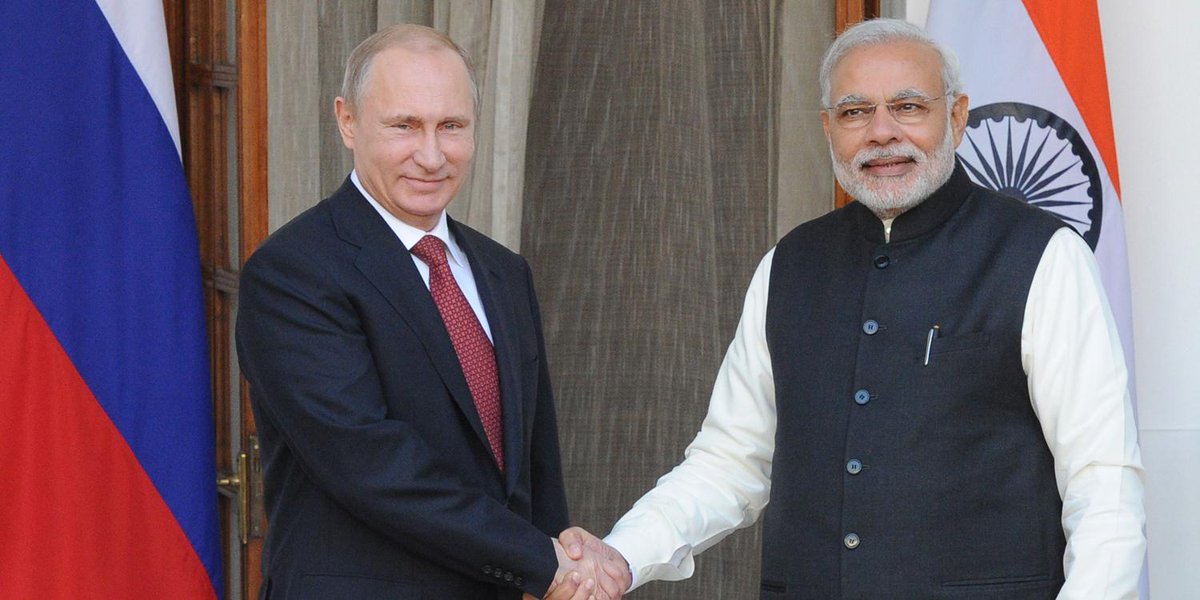
Indian Prime Minister Narendra Modi and Russian Prime Minister Vladimir Putin announced that their countries had signed 20 bi-lateral agreements including memorandums of understanding and commercial contracts on Thursday.

View image on Twitter

During Mr. Putin’s visit to India’s capital, the Russian leader said in a news conference that the documents placed an emphasis on trade and economic issues.

Eight of the agreements signed relate to nuclear power and energy production including a roadmap for bilateral cooperation in the civil nuclear energy sector over the next 20 years. Russia also agreed to supply “major equipment” to the Kudankulam nuclear power plant in Tamil Nadu.

India agreed to identify a second site apart from Kudankulam for Russian-designed nuclear power plants.

Mr. Modi said that they had “outlined an ambitious vision for nuclear energy” and would have “the highest standards of safety in the world.”

A list of the agreements signed is below as provided by India’s Ministry of External Affairs.

via The Vladimir Putin and Narendra Modi Agreements in Full – India Real Time – WSJ.

10/12/2014

World’s longest train journey reaches its final destination in Madrid – Xinhua | English.news.cn

The train, named “Yixinou” arrives in Madrid Abronigal railway station in Madrid, Spain, on Dec. 9, 2014. Madrid was the final destination on Tuesday for a train which has set the record for the longest train journey in history: 13,052 kilometers between the Chinese city of Yiwu and the Spanish capital. (Xinhua/Xie Haining)

MADRID, Dec. 9 (Xinhua) — Madrid was the final destination on Tuesday for a train which has set the record for the longest train journey in history; 13,052 kilometers between the Chinese city of Yiwu and the Spanish capital.

The train which arrived in Madrid at 11a.m. local time (1000GMT), departed from Yiwu on November 18th with 40 wagons, carrying 1,400 tons of cargo, consisting of stationary, craft products and products for the Christmas market and it will return to China filled with luxury Spanish produce such as cured ham, olive oil and wine.

The results of this first historic journey which will then be evaluated with the aim of opening a regular two-way rail link between China and Spain, which could commence operations in early 2015.

Two major advantages of rail travel are that the goods were transported much faster than would otherwise be possible by boat, arriving in Spain in half of the time a cargo vessel would need to cross from China to Spain, while the train produces 62 percent less carbon dioxide contamination less than a lorry making the same journey by road.

The marathon journey crossed China, Kazakhstan, Russia, Belarus, Poland, Germany and France, before arriving in Spain with 30 of the wagons it had originally set out with.

The 13,052 kilometers between Madrid and Yiwu is a greater distance than that between the north and south pole, although the distance was not covered using the same crew, nor the same engine.

The engine was changed approximately every 800 kilometers, while the crew changes with each country the train traversed. Meanwhile special stops were necessary at the frontier cities of Dostyk (Kazakhstan), Brest (Belarus) and Irun (Spain) in order to deal with the different railway gauges encountered along the route.

A host of dignitaries, such as Spain’s Public Works Minister Ana Pastor, the Mayor of Madrid Ana Botella, as well as the Director of Business at the Chinese Embassy in Madrid Mr. Huang Yazhong, and the Director of Commerce for the Government of Zhejiang Province Mr. Zhang Shuming.

Mr. Huang said the journey showed the great importance China gave to strengthening relations with Europe, while thanking all of the authorities which had helped to make such a historic trajectory possible, while Mrs Botella commented that the 13,053 of railway which had made the historic feat possible was like a “new silk road for the 21st century, except that now the commerce will travel in both directions.

via World’s longest train journey reaches its final destination in Madrid – Xinhua | English.news.cn.

10/12/2014

Need Financing to Build U.S. Property? Try Chinese Visa Seekers – China Real Time Report – WSJ

The giant trucks pumping concrete in Hudson Yards, New York’s biggest real-estate project in a generation, are being financed by an unlikely source: about 1,200 Chinese families in search of U.S. visas. As the WSJ’s Eliot Brown reports:

Developer Related Cos. says it has raised roughly $600 million from the families to build the foundation for three skyscrapers at the West Side project, a 17-million-square-foot colossus of office, retail and residential space set to open over the next decade.

To finance the concrete-steel platform, Related tapped a little-known and at times controversial federal visa program known as EB-5, which offers green cards to foreign families who invest at least $500,000 in U.S. projects that create at least 10 jobs per investor.

The amount brought in so far, which privately held Related hasn’t previously disclosed, is a record for the cash-for-visa program.

Related’s success shows how the once-obscure federal program has grown in popularity among developers and foreign investors since the recession.

Chinese nationals are the biggest source of EB-5 funds, making up more than 85% of visas approved in the 12 months ended in September. Many are investing for their children rather than for themselves, said Kenneth Li, a Houston real-estate broker who has offered advice to Chinese investing in EB-5 projects.

“For many of them, it’s for the next generation,” he said.

via Need Financing to Build U.S. Property? Try Chinese Visa Seekers – China Real Time Report – WSJ.

Law of Unintended Consequences

continuously updated blog about China & India

ChiaHou's Book Reviews

continuously updated blog about China & India

What's wrong with the world; and its economy

continuously updated blog about China & India