Chindia Alert: You’ll be Living in their World Very Soon
aims to alert you to the threats and opportunities that China and India present. China and India require serious attention; case of ‘hidden dragon and crouching tiger’.
Without this attention, governments, businesses and, indeed, individuals may find themselves at a great disadvantage sooner rather than later.
The POSTs (front webpages) are mainly 'cuttings' from reliable sources, updated continuously.
The PAGEs (see Tabs, above) attempt to make the information more meaningful by putting some structure to the information we have researched and assembled since 2006.
Image copyright GETTY IMAGESImage caption A model displays a car at the annual Indian Auto Expo
Chinese attendees are not welcome at India’s Auto Expo next week due to concerns about the coronavirus.
Chinese guests are prevented from attending the show because of “government policy” an Indian Society of Automobile Manufacturers (SIAM) spokeswoman said.
Yet Chinese cars will be on display.
Other events across Asia will be missing the large delegations that usually come from Chinese firms because of travel restrictions.
Changing car markets
India and China have much at stake in spurring domestic car sales as well as exports, making such industry events vital to drum up business.
New Indian car sales fell 16% last year and China, the world’s largest car market, saw an 8% dip as both markets saw increased turnover in used cars. However there is interest in newer models in the electric vehicle segment, according to Chinese market consultancy LMC Automotive and SIAM figures.
India’s Tata Motors, owner of the Land Rover and Jaguar brands, has developed electric car models for sale at home and abroad, while China’s SAIC Motor and Great Wall Motor also offer electric vehicles for the domestic and export markets. That makes auto shows like the one in India next week important venues to showcase the newest models.
Ripple effect
With hotels and conference fees paid in advance and lunch and dinner meetings arranged months earlier, missing a big industry show has a major ripple effect on economic activity. Events like the Auto Expo in suburban New Delhi, or the Singapore air show due to take place next week draw thousands of out-of-town guests.
In China, the conference circuit has come to a standstill with over 20,000 infections and more than 420 people dead as the virus spreads from the epicentre of the city of Wuhan.
In the case of the Singapore Airshow organisers have faced cancellations by vendors from China, including aircraft maker Comac, and reduced attendance by companies from elsewhere in the world concerned about the spread of the virus outside of China. Singapore has reported 24 cases. India to date has seen three coronavirus cases.
To mitigate the impact, both events have highlighted plans to screen throngs of guests for fever and ensure thorough sanitation measures as well as access to medical care to ensure they can carry on even at reduced attendance.
MOSCOW (Reuters) – Russia will begin delivering S-400 surface-to-air missile systems to India by the end of 2021, agency RIA Novosti on Wednesday quoted a Russian official as saying.
India signed a $5 billion deal for S-400 missiles in 2018, drawing warnings from the United States that such an acquisition would trigger sanctions as part of a wider programme against Russia.
“The contract is being implemented on schedule. The first shipment is due by the end of 2021,” Deputy Director of the Federal Service for Military-Technical Cooperation (FSMTC), Vladimir Drozhzhov, said at Defence Expo 2020 in Lucknow, India, according to RIA.
In November, the same agency cited the general director of Russian state arms exporter Rosoboronexport, Alexander Mikheev, as saying deliveries would start in September 2021.
Tokyo (Reuters) – Japan on Saturday moved to contain the economic impact of a coronavirus outbreak originating in China as strict new measures aimed at limiting the spread of the virus, including targeting foreign visitors, came into effect.
Japan had 17 confirmed cases as of Friday, including some without symptoms. One of the most recent was a bus guide who worked on a bus tour for tourists from China – the same tour as a bus driver who also came down with the virus.
Prime Minister Shinzo Abe told a Saturday meeting of a government task force coordinating Japan’s response to the virus to come up with steps aimed at easing the impact of the outbreak on Japan’s economy.
Abe has made tourism a key part of his economic policy, with a large proportion of foreign visitors from China, and major Japanese companies have a number of factories in China.
“I ask ministers to compile measures to use reserves (in the state budget) and implement them as soon as possible,” Abe was quoted by Kyodo news agency as saying.
“The new coronavirus is having a major impact on tourism, the economy and our society as a whole. The government will do its utmost to address the impact.”
No further details were given, though Abe stressed ensuring that Japanese residents have access to medical checkups and masks, which have been selling out around the nation.
New measures to fight the disease took effect on Saturday, including banning the entry of Chinese holding passports issued by Hubei, where the disease is thought to have originated, as well as all foreigners who had visited the province within two weeks, whether they show symptoms or not.
The government also brought forward implementing measures including compulsory hospitalisation and the use of public funds for treatment by six days to Saturday.
Of the 2.6 million tourists who came to Japan in December 2019, nearly 600,000 were Chinese, outnumbered only by South Koreans, government data shows. Japan aims to have 40 million tourists visit the country in 2020, up from 31.8 million in 2019.
On Friday, the president of Japanese airline ANA Holdings (9202.T) said it was considering suspending flights to China after February reservations plunged, Jiji news agency reported.
JTB Corporation, Japan’s largest travel agency, said it was suspending tours to China throughout February, Kyodo news agency reported.
NEW DELHI (Reuters) – India sought to boost growth in a federal budget on Saturday that raised spending on farms and expressways and offered cuts inpersonal taxes, but the measures fell short of market expectations and battered stocks.
Prime Minister Narendra Modi’s government is grappling with the country’s worst slowdown in a decade, with falling employment, consumption and investment ratcheting up the pressure to revive growth.
The government estimates growth this year to March 31 will slip to 5%, the weakest pace since the global financial crisis of 2008-09. It also warned an expected rebound the following year might entail a blow-out in fiscal deficit targets.
Finance Minister Nirmala Sitharaman, presenting the budget for the financial year beginning April 1, said 2.83 trillion rupees ($39.8 billion) will be allocated toward agriculture and allied activities, up 5.6 percent on the previous year.
RELATED COVERAGE
India raises import taxes in move set to spook some foreign firms
The funds will be deployed to help farmers set up solar power generation units as well as establish a national cold storage system to transport perishables.
Sitharaman also vowed to spend $50.7 billion in coming years on a federal water scheme to address challenges facing one of the world’s most water-stressed nations.
Agriculture accounts for near 15% of India’s $2.8 trillion economy and is a source of livelihood for more than half of the country’s 1.3 billion population.
Sitharaman announced a new personal tax system including cuts for those ready to give up a myriad of tax breaks. She also abolished payment of dividend distribution tax by companies to spur investment.
“People have reposed faith in our economic policy,” Sitharaman said to the thumping of desks in parliament. “This is a budget to boost their income and enhance their purchasing power.”
Opposition parties slammed the budget, saying it had failed to address the slowdown in consumer demand and investment. “The government is in complete denial that the economy faces a grave macro economic challenge,” said former finance minister P. Chidambaram.
But higher government spending has put pressure on public finances, prompting caution from rating agencies. Sitharaman said the fiscal deficit for the current year would widen to 3.8% of GDP, up from 3.3% targeted for the current year.
Gene Fang, associate managing director, sovereign risk at Moody’s, said: “India’s 2020/21 budget highlights the challenges to fiscal consolidation from slower real and nominal growth, which may continue for longer than the government forecasts.”
GOVERNMENT SPENDING
For fiscal 2020/21 Sitharaman set the fiscal deficit at 3.5 percent. Moody’s said India’s government debt is already significantly higher than the average for Baa-rated sovereigns, a product of persistent fiscal deficits.
To help finance government spending, Sitharaman set a target for selling stakes in state firms at 2.1 trillion rupees for 2020/21, more than three times the amount expected this year.
She said the government will sell a part of its holding in state-run Life Insurance Corp, the country’s biggest insurance company.
But many experts said the measures did not go far enough to address the slowdown and structural flaws.
“In a normal scenario this budget would have been considered as good providing tax benefit to the common man, corporate and focus on farmers’ incomes, but the situation required more,” said Vinod Nair, head of research at Geojit Financial Services in Kochi.
Indian shares slid to a more than three-month low after a special trading session on Saturday, dented by what analysts said was a lack of sufficient stimulus measures. The NSE Nifty 50 index .NSEI closed 2.5% lower while the benchmark S&P BSE Sensex .BSESN fell 2.4%
“Markets had very high expectations from the budget … these expectations have not been met,” said Deepak Jasani of HDFC Securities.
The government also announced higher duties on a host of imports from walnuts to phone parts. Taxes on imports of pre-assembled printed circuit boards were raised to 20% from 10% and there were new taxes on mobile phones ringers and display panels in a bid to boost local manufacturing.
In its annual economic report released on Friday the government predicted growth would rebound to 6.0% to 6.5% in the fiscal year beginning April 1.
Some economists say global trade tensions and the outbreak of coronavirus in China pose a new risk to economic recovery by hitting cross-border commerce and supply chains.
JIUJIANG, China (Reuters) – People are leaving and entering China’s Hubei province by foot over a bridge spanning the Yangtze river, despite a virtual lockdown on vehicle traffic due to a coronavirus epidemic that has killed more than 200 people.The Yangtze divides Jiujiang in Jiangxi province and Huanggang in neighbouring Hubei, one of the cities hardest hit by the coronavirus outbreak and now sealed off from the rest of China to try to contain it.
But the foot traffic over the Yangtze shows gaps in the lockdown, adding to doubts over its effectiveness and providing a glimpse of life inside the epicentre of what the World Health Organization (WHO) has called a global emergency.
Wu Minzhou, a 40-year-old business owner who was fishing near the bridge on the Jiangxi side, said he was worried about exceptions being made for people leaving Hubei.
“Because there’s an … incubation period at play here, if they head out, for example, to cities in the north of China, then it’s highly possible they will infect those areas too,” he said.
While vehicles are not allowed over the bridge, it is open to some pedestrians. Police explained that people were still entering Hubei and they could still get out, but only in “special circumstances”.
Those included people who were in Hubei but booked train tickets to leave from Jiujiang before the Lunar New Year.
“Everyone’s panicking right now, but I think things are not that bad,” migrant worker Guan, 45, told Reuters after crossing from Hubei.
A 40-year-old woman, who only gave her surname as Li, said she was heading back to her home in Huizhou, Guangdong province, with her son.
She had to show their train tickets at the checkpoint and get their temperatures taken on the Hubei side of the bridge before being allowed to make the long trek into Jiangxi.
Another man told Reuters that he had driven to the bridge from Jiujiang with his friend, who was going the other way home to Hubei, a province of about 60 million people.
“But once you get back you cannot come out again,” said the man, who gave his surname as Tian. “You have to stay there, stay at home. You can’t come out.”
The epidemic, believed to have originated in a seafood market in the Hubei provincial capital of Wuhan, prompted the WHO to declare a global emergency on Thursday, only the sixth time it has done so.
Trains and other public transportation have been suspended, roads have been sealed off and checkpoints established at tollgates around Wuhan. The special measures have been extended to other cities in Hubei province.
Though Jiujiang itself has not officially been locked down, its streets were mostly deserted and its tourist sites closed on what was officially the last day of China’s Lunar New Year celebrations on Thursday.
“This year … we are all just following what the government has asked us to do. That is, we’re at home almost all the time,” said local taxi driver Guo Dongbo, 59. “We don’t go out and nobody else is out on the streets either.”
In one of the residential areas of Jiujiang, a city of nearly five million people, a man carried a loudspeaker playing a recorded message ordering anyone who has been to Hubei recently to go and register with the local residents’ committee.
By Friday, the city had 42 confirmed cases of infection.
Elsewhere, shops were mostly shuttered, and the few restaurants that remained open were nearly empty.
“Normally at this time of year a lot of people come here. Now there’s nobody,” said a vegetarian restaurant owner near the Donglin Buddhist temple in Jiujiang.
NEW DELHI (Reuters) – India’s government has stepped up the purchase of air purifiers over the last two years, taking the number of devices in ministries to protect against deteriorating air quality to nearly 300, government data seen by Reuters showed.
Six federal ministries – including the health, foreign and home affairs – bought at least 159 air purifiers during 2018-2019 at a cost of 5 million rupees ($70,353), according to previously unpublished data obtained under a Right to Information (RTI) law.
That compares with at least 140 air purifiers bought for $55,000 during 2014-2017 for the six ministries and Prime Minister Narendra Modi’s office, as previously reported by Reuters. The latest data on purchases for Modi’s office was not available. (reut.rs/2ppjyBj)
The purchases come as the federal and city governments faced criticism for failing to address the problem of worsening air pollution, especially in the winter, and drew criticism from one activist.
“It’s absolutely criminal to spend taxpayers’ money in buying air purifiers for government officials,” said environmentalist Vimlendu Jha, who is a member of a government panel tasked with solving Delhi’s pollution crisis.
In November, the level of pollution in the capital forced authorities to shut schools, restrict the use of cars and declare a public health emergency.
A senior official at the environment ministry, which bears the most responsibility for tackling pollution, said there was no particular drive to buy purifiers to protect civil servants.
“The government is not spending a fortune by buying air purifiers. And it’s not that officials don’t get to inhale toxic air by confining themselves to their offices,” said the ministry official.
The six ministries and Modi’s office did not respond to requests for comment.
Air purifiers can cost up to nearly $1,000 and are too expensive for most Indians.
Per capita income in New Delhi, a city of more than 20 million, is about $400 a month and thousands of homeless people endure the cold and the toxic air while sleeping on the streets.
Reuters requested for data using the RTI law from the six ministries as it had comparable numbers previously reported in 2018. These were the ministries of foreign affairs, tourism, agriculture, health, home affairs and the federal think-tank Niti Aayog.
(Graphic: Modi’s government purifer purchases 2018-2019 link: here).
Of the total of 159 devices bought by the ministries, the home affairs ministry topped the list with 103 of them in 2018 and 2019, the data showed.
“All the air purifiers have been installed in various offices/rooms of this ministry,” the ministry said in its RTI response, adding the amount spent was 3.1 million rupees ($43,619).
In October and November, when New Delhi saw some its worst air pollution last year, the foreign ministry bought 12 purifiers. Four of them – bought for the minister’s office – were priced at nearly $1,000 each.
The federal health ministry bought 23 air purifiers in the last two years, including 14 in 2019, its highest annual purchases since 2015, the data showed.
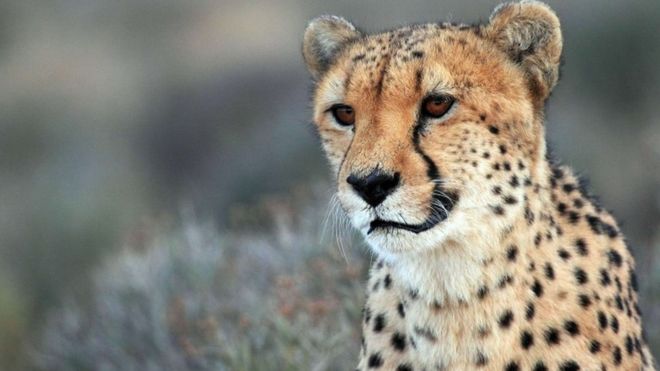
Image copyright AFPImage caption The majority of the 7,100 cheetahs left in the world are in Africa
India’s top court has said cheetahs can be reintroduced in the country, 70 years after they were wiped out.
Responding to a plea by the government, the Supreme Court said African cheetahs could be introduced to the wild in a “carefully chosen location”.
Cheetahs are an endangered species, according to the Convention on International Trade in Endangered Species (Cites).
Only 7,100 cheetahs are left in the wild, almost all of them in Africa.
The Asiatic cheetah, which once roamed parts of India, is now only found in Iran, where there are thought to be about 50 left.
India’s Supreme Court said the animal would have to be introduced on an experimental basis to find out if it could adapt to Indian conditions.
Studies show that at least 200 cheetahs were killed in India, largely by sheep and goat herders, during the colonial period. It is the only large mammal to become extinct after the country gained independence in 1947.
India’s former environment minister Jairam Ramesh welcomed the decision to reintroduce the animal.
Delighted that Supreme Court has just given OK to reintroducing cheetah from Namibia. This was something I had initiated 10 years ago. Cheetah which derives from the Sanskrit ‘chitra’ (speckled) is the only mammal hunted to extinction in modern India.
For more than a decade, wildlife officials, cheetah experts and conservationists from all over the world have discussed the reintroduction of the spotted big cat to India and have agreed that there is a strong case for it.
But leading conservationists have harboured doubts about the plan. They fear that in its haste to bring back the cheetah, India will end up housing the animals in semi-captive conditions in huge, secured open air zoos rather than allowing them to live free.
They add that without restoring habitat and prey base, and given the high chances of a man-animal conflict, viable cheetah populations cannot be established.
They have also pointed to India’s chequered record of reintroducing animals to the wild.
Lions were reintroduced in the Chandraprabha sanctuary in northern Uttar Pradesh state in the 1950s, but were then poached out of existence.
You may also be interested in…
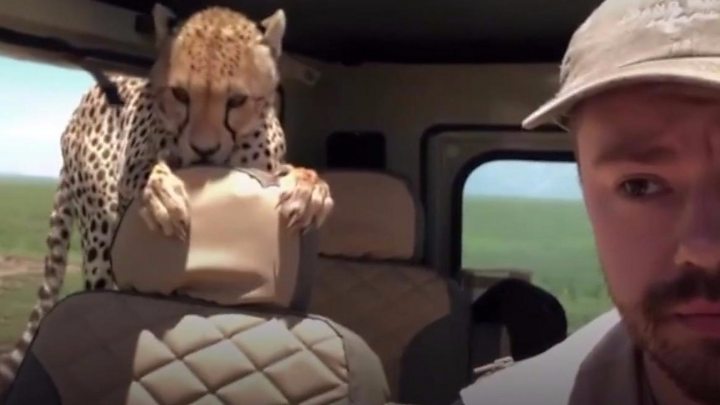
Media caption Curious cheetah joins safari group in Tanzania
However, conservationists who have led the initiative insist that these fears are unfounded. They say a decision will only be taken after shortlisted sites are fully examined for habitat, prey and potential for man-animal conflict.
The first cheetah in the world to be bred in captivity was in India during the rule of Mughal emperor Jahangir. His father, Akbar, recorded that there were 10,000 cheetahs during his time.
Much later, research showed that were at least 230 cheetahs in India between 1799 and 1968 – and the cat was reportedly sighted for the last time in the country in 1967-68.
(Reuters) – India and Brazil have signed 15 accords aimed at forging closer ties between the two emerging market giants across a range of sectors, especially defence, both countries’ leaders tweeted on Saturday.
Indian Prime Minister Narendra Modi and Brazilian President Jair Bolsonaro took to social media to hail the closer cooperation and agreements struck during Bolsonaro’s official visit to India.
“Several agreements signed in infrastructure, justice, science and technology, agriculture, oil exploration, mining, health, culture and tourism,” Bolsonaro tweeted, adding: “The world’s confidence in Brazil is back!”
For his part, Modi tweeted: “India and Brazil are focussing on expanding cooperation in the defence sector,” adding that the two countries share “immense synergies” on several key issues such as the environment and fighting terrorism.
Separately, Brazil’s foreign minister Ernesto Araujo tweeted that the 15 accords signed by the two countries represent a move “against the structures of globalist thought”.
“Brazil is rising to be a great among the greats,” he tweeted.
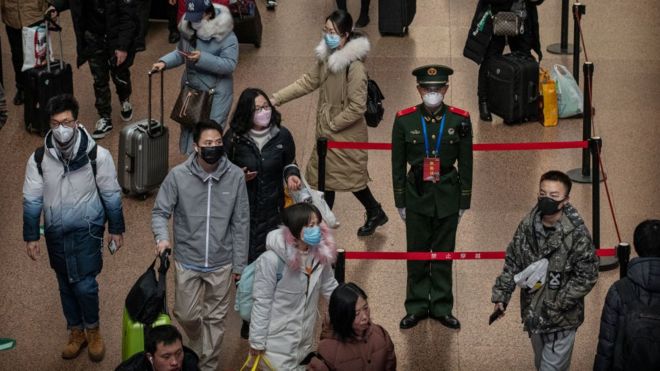
As public health concerns rise over a new virus, the impact is being felt by China’s travel and tourism sector.
More than 400m Chinese were expected to travel over the Lunar New Year which starts today, normally one of the busiest periods for airlines, hotels and tourist attractions.
Instead, flights and hotels are being cancelled as people face travel restrictions or choose to stay home.
The virus has already taken 25 lives, with more than 800 cases globally.
Many airlines have agreed to refund fares or let passengers rebook free of charge if affected, while major hotel chains are now following suit as more travel restrictions are announced.
After the Civil Aviation Administration of China announced that airlines should give refunds for cancelled flights, the country’s three major airlines, China Southern Airlines, China Eastern Airlines and China Air all saw their share prices take a dive. China Eastern Airlines has seen its value fall about 13% this week.
Hong Kong’s national carrier Cathay Pacific was among the first airlines to allow passengers scheduled to fly to or from Wuhan to reschedule for free while, at the same time, allowing cabin crew to wear surgical masks on flights.
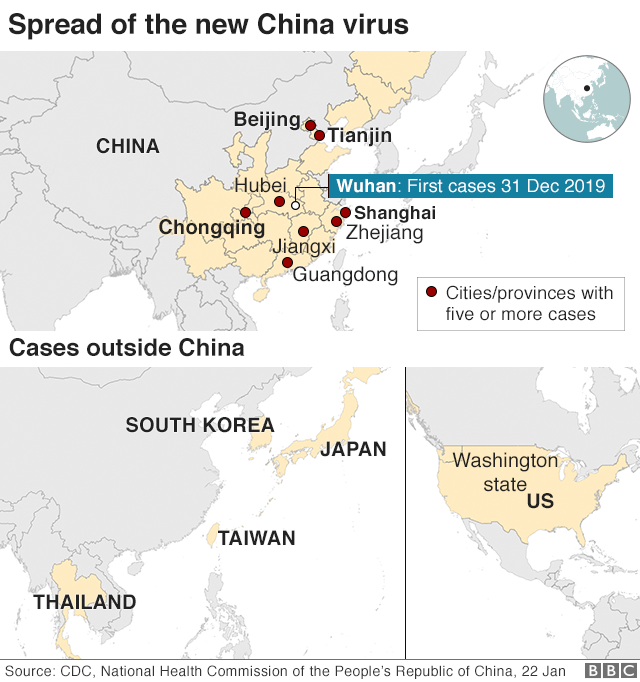
Wuhan is where the first cases in the outbreak were reported. The flu-like virus has since spread to several our parts of China and internationally with cases being confirmed in Singapore, Thailand and the US among others countries.
China’s biggest online travel agency, Trip.com, is also waiving cancellation fees on all hotels, car rentals and tickets for tourist attractions to Wuhan and is ”actively monitoring the situation to ensure the safety of all travellers”.
Hotels and casinos hit
Hotel groups are also paying out refunds to tourists who want to cancel trips to Wuhan and other parts of China.
Both InterContinental Hotels Group (IHG) and Hyatt will allow guests to change or cancel stays at the majority of their Chinese hotels over the Lunar New Year holiday. IHG has 443 hotels in China, Hong Kong, Macau and Taiwan under different brands, with four in Wuhan.
Casino operators have also seen shares fall, particularly those with businesses in Macau. The city is home to casinos owned by Las Vegas Sands and Wynn Resorts.
The release of seven movies over the Lunar New Year has also been postponed.
Blow to economy
Tourism has become an increasingly important part of the Chinese economy and is estimated to contribute about 11% of China’s economic growth and employ about 28 million people.
In 2018, 62.9 million tourists visited China, ranking it the fourth most popular tourist destination behind France, Spain and the US, according to the UN’s World Tourism Rankings.
Outside of China, luxury goods brands are also likely to take a battering as Chinese tourists stay at home rather than travel overseas for shopping sprees. LVMH, which owns the Burberry, Louis Vuitton and Hermes brands, saw its value slide this week.
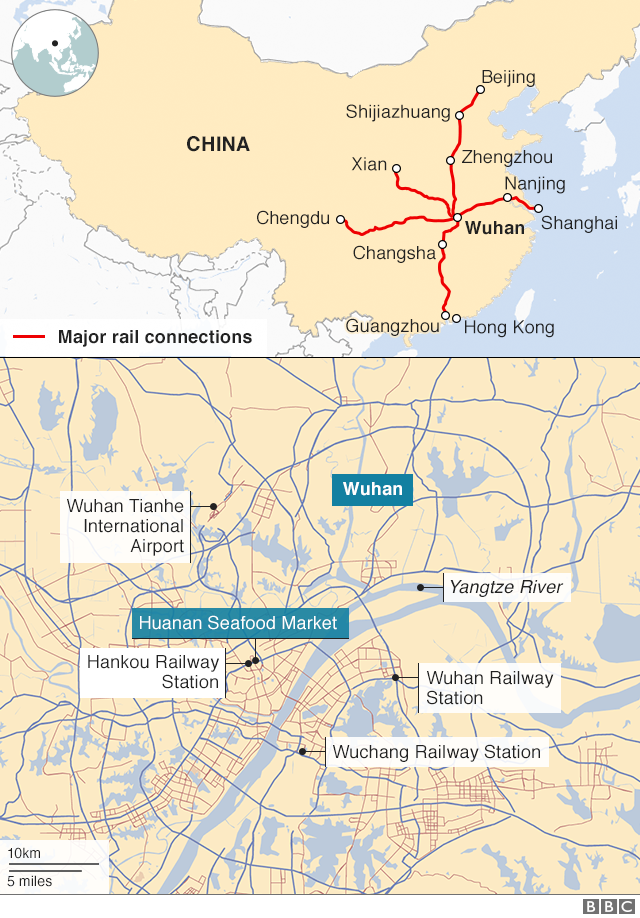
Wuhan, a Chinese city of eleven million people, has temporarily shut down its public transport as it tries to halt the outbreak of a new strain of virus.
Those living in the city have been advised not to leave, in a week when millions of Chinese are travelling for the upcoming Lunar New Year holiday.
The respiratory illness has spread to other parts of China, with some cases in other countries including the US.
There are more than 500 confirmed cases and 17 people have died.
Known for now as 2019-nCoV, the virus is understood to be a new strain of coronavirus not previously identified in humans. The Sars (severe acute respiratory syndrome) virus that killed nearly 800 people globally in the early 2000s was also a coronavirus, as is the common cold.
All the fatalities so far have been in Hubei, the province around Wuhan.
Meanwhile, after a day of discussions in Geneva, the World Health Organization’s (WHO) emergency committee has announced it will not yet declare a “global emergency” over the new virus.
Director general Dr Tedros Ghebreyesus said more information was needed about the spread of the infection. The committee of health experts will meet again on Thursday.
A global emergency is the highest level of alarm the WHO can sound and has previously been used in response to swine flu, Zika virus and Ebola.
What measures have been announced?
From Thursday, all flights and passenger train services out of Wuhan have been stopped.
Bus, subway and ferry services all shut down from 10:00 local time (02:00 GMT).
A special command centre in Wuhan set up to contain the virus said the move was meant to “resolutely contain the momentum of the epidemic spreading”.
Those living in Wuhan had already been told to avoid crowds and minimise public gatherings.
State news agency Xinhua said tourist attractions and hotels in the city had been told to suspend large-scale activities while libraries, museums and theatres were cancelling exhibitions and performances.
A Lunar New Year prayer-giving ceremony at the city’s Guiyuan Temple, which attracted 700,000 people last year, has also been cancelled.
The hashtag “Wuhan is sealed off” was trending on Chinese social media website Weibo.
One user said worries about food and disinfectant made it feel like “the end of the world”, while another said they were on the “verge of tears” when Chinese officials announced the shut-down.
The WHO’s Dr Ghebreyesus described the latest measures as “very strong” and said they would “not only control the outbreak, they will minimise spread internationally”.
Chinese officials said the country was now at the “most critical stage” of prevention and control.
“Basically, do not go to Wuhan. And those in Wuhan please do not leave the city,” said National Health Commission vice-minister Li Bin in one of the first public briefings since the beginning of the outbreak.
Like shutting down London before Christmas
By James Gallagher, BBC health and science correspondent
Wuhan is starting to look like a city in quarantine.
Officials had already warned residents not to leave the city and visitors not to come.
Now the reported public transport ban – which includes flights – slams many of the routes in and out of the city shut.
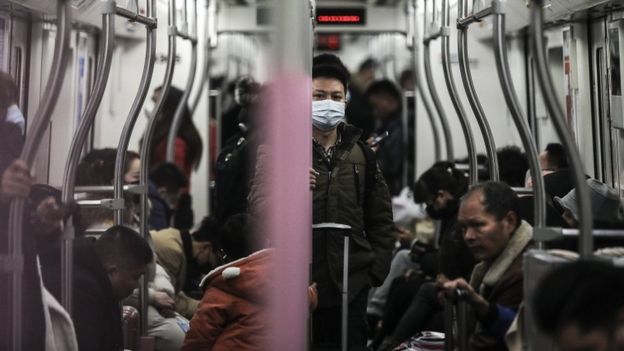
Image copyright GETTY IMAGESImage caption Subways in Wuhan will be temporarily shut
It is a significant attempt to stop the spread of this new virus, which we now know can spread from person to person.
Limiting transport will cut the chance of the virus reaching other cities in China and other countries around the world.
This all comes just as millions of people are travelling across China for the week-long holiday that is Lunar New Year.
If you’re struggling for context – imagine shutting down London in the week before Christmas.
The big question left is the roads – and whether any of Wuhan’s 11 million inhabitants will be able to simply drive away.
The patient in Macau is said to be a businesswoman who arrived from Wuhan over the weekend.
The first US case was confirmed on Tuesday. President Donald Trump said the situation was “totally under control” and that he trusted the information being provided by Chinese authorities.
There have been three cases in Thailand, one in Korea, one in Japan and one in Taiwan.
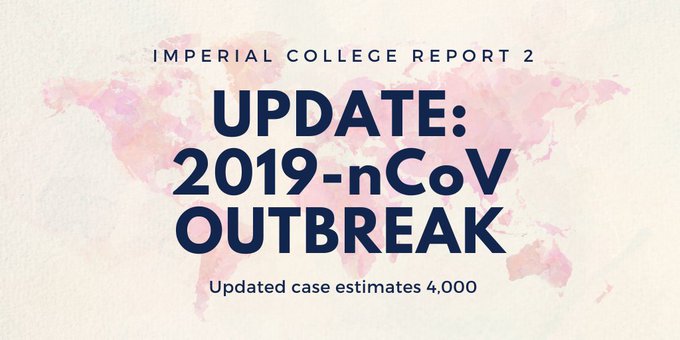
Although only about 500 cases have been confirmed, calculations by scientists at the MRC Centre for Global Infectious Disease Analysis at Imperial College London suggest there are 4,000 people sick with the virus in Wuhan.
Our estimate at 4,000 cases is more than double the past estimate due to increase of number of cases outside China. This should not be interpreted as implying the outbreak has doubled in size.
The virus originated in a seafood market in Wuhan that “conducted illegal transactions of wild animals”, authorities said. The market has since been shut down.


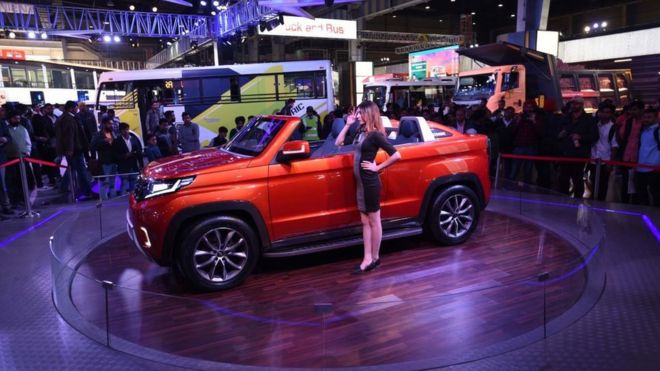 Image copyright GETTY IMAGES







 CHINDIA ALERT: You'll be living in their world, very soon