Archive for ‘Economics’

18/01/2020

Myanmar, China ink deals to accelerate Belt and Road as Xi courts an isolated Suu Kyi

NAYPYITAW (Reuters) – China and Myanmar inked dozens of deals on Saturday to speed up infrastructure projects in the Southeast Asian nation, as Beijing seeks to cement its hold over a neighbour increasingly isolated by the West.

But no major new projects were agreed during the two-day visit by President Xi Jinping, the first of any Chinese leader in 19 years. Analysts said Myanmar was generally cautious of investments by Beijing and was also being careful ahead of elections later this year.

Still, Xi and Myanmar leader Aung San Suu Kyi signed 33 agreements shoring up key projects that are part of the flagship Belt and Road Initiative, China’s vision of new trade routes described as a “21st century silk road”.

They agreed to hasten implementation of the China Myanmar Economic Corridor, a giant infrastructure scheme worth billions of dollars, with agreements on railways linking southwestern China to the Indian Ocean, a deep sea-port in conflict-riven Rakhine state, a special economic zone on the border, and a new city project in the commercial capital of Yangon.

They did not address a controversial $3.6 billion Beijing-backed mega dam, where work has been stalled since 2011, reflecting the contentiousness of Chinese investment in Myanmar, where many are uncomfortable with the sway Beijing has over its smaller neighbour.

“While a large number of different agreements have been signed, there is no Big Bang here,” said Richard Horsey, a Yangon-based analyst with the International Crisis Group.

“The overall impression is that Myanmar is being cautious about Chinese investment, especially ahead of elections planned later in the year, he said.

“China will be hoping that this is an incremental step towards realizing its mega-infrastructure goals, and that further progress can be locked in over the coming months,” he said.

‘DERAILED’ BY WEST

At a welcoming ceremony on Friday, Xi hailed a “new era” of relations between the countries.

“We are drawing a future roadmap that will bring to life bilateral relations based on brotherly and sisterly closeness in order to overcome hardships together and provide assistance to each other,” Xi said. He was scheduled to leave later on Saturday.

Suu Kyi called China “a great country playing an important role in the international affairs and the world economy” but urged for economic projects that avoid environmental degradation and benefit locals.

Xi also met leaders from political parties in ethnic areas riven with civil conflict where Chinese infrastructure projects are underway.

Sai Kyaw Nyunt, joint-secretary of the Shan Nationalities League for Democracy, one of the ethnic politicians invited to meet Xi, said it was only a handshake.

“Our country is very small and powerless,” he said, “So they treat us that way.”

The two countries have historically had a fraught relationship, but have moved closer since 2017, when Myanmar was internationally condemned for its treatment of minority Rohingya Muslims in Rakhine state.

More than 730,000 Rohingya were forced to flee western Myanmar after a military crackdown that the United Nations has said was executed with “genocidal intent”. China has defended the country on the global stage and is viewed as the biggest obstacle to a prosecution of its leaders at an international war crimes tribunal.

An article in Chinese state media ahead of the state visit said Myanmar had been “derailed” by its engagement with the West and only China was willing to “pull Myanmar from the sludge”.

“But after some turbulence, Myanmar realized there were double standards in the approach Western countries had taken on human rights issues and began to turn to China for diplomatic and economic help,” the article in the Global Times said.

Source: Reuters
29/12/2019

China ends forced labour for sex workers

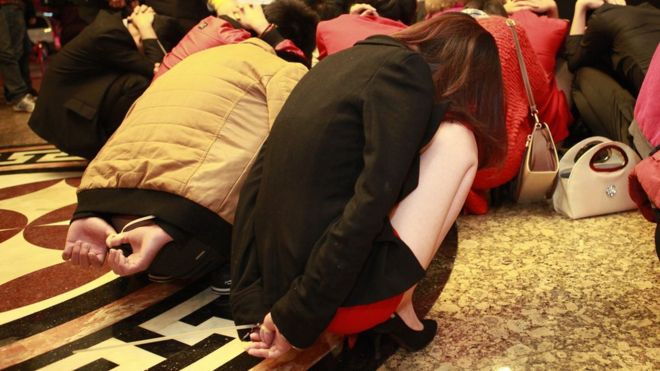
Sex workers and clients are rounded up in DongguanImage copyright AFP
Image caption Past detainees claim they were forced to work making toys and household goods

China is to end a punishment system for prostitution that allowed police to hold sex workers and their clients in custody for up to two years at so-called education centres.

Detainees were forced to work, allegedly making toys and household goods.

The detention system will come to an end on 29 December. Those still in custody will be released, according to Xinhua, China’s state media.

Prostitution remains illegal in China.

It carries punishments of up to 15 days in detention and fines of up to 5,000 yuan (£546).

China’s state media claims the “custody and education” system has helped to maintain a “good social atmosphere and public order” since it was introduced more than 20 years ago.

It added that over time, the system has become less and less appropriate.

A study by NGO Asia Catalyst in 2013 questioned whether this scheme was effective.

The report included interviews with 30 female sex workers from two cities.

It claimed detainees were unable to learn new skills during detention that could help them after their release. The report added that the detainees typically undertake manual labour.

It said: “All of the sex workers we interviewed returned to the sex trade immediately after release.”

A 2013 report by Human Rights Watch interviewed 140 sex workers, clients, police and specialists and found that many sex workers were beaten by police in an attempt to coerce confessions.

One worker claimed she had been deceived into signing a confession.

“The police told me it was fine, all I needed to do was sign my name and they would release me after four or five days,” she said.

“Instead, I was locked up in [a] Custody and Education centre for six months.”

Shen Tingting, director of Asia Catalyst, said the move to abolish forced labour detention centres is positive but only a small step towards safeguarding the rights of sex workers.

“Chinese law and policies focus on prohibition and cracking down on sex work, rather than providing a framework to ensure the health and safety of sex work as a profession,” she said.

In 2013, China announced it had abolished its system of “re-education through labour camps” for petty criminals.

That decision came after several high-profile miscarriages of justice, including a case where a mother was sent to a labour camp after demanding justice for her daughter who had been raped.

However, the abolition did not extend to the “custody and education” system affecting sex workers and their clients.

China isn’t totally abandoning the idea of re-education. Authorities in the country claim a number of camps in the north-west region of Xinjiang are voluntary education camps that help to combat extremism.

However rights groups claim many Chinese Uighur people have been rounded up into the camps and made to criticise or denounce their faith.

Source: The BBC

27/12/2019

China-Bangladeshi joint venture constructs mega expressway bypassing Dhaka

DHAKA, Dec. 27 (Xinhua) — A Chinese and Bangladeshi joint venture has started construction of a mega expressway bypassing Dhaka.

Sichuan Road and Bridge (group) Co., Ltd won the deal jointly with local Unique Dream Consultant and Shamim Enterprise Limited to construct the 48-km Dhaka Bypass Expressway.

A total of 40 billion taka will be spent for construction of the expressway within the next three years. The expressway will pave the way for vehicles to drive at a speed of 120 kmph.

The construction of the four-lane expressway which is expected to be completed by 2022.

Bangladeshi Road Transport and Bridges Minister Obaidul Quader on Thursday opened the groundbreaking work of the project at Purbachal on the outskirts of Dhaka under the country’s first major public private partnership (PPP) initiative.

Also on Thursday night, a project commencement ceremony was held in Dhaka with participation of senior officials and dignitaries from various sectors.

The expressway, connecting Joydevpur, Debugram, Vulta and Modonpur, will establish an easy link for the industrial belts around Dhaka with the seaport city Chattogram and northeastern Sylhet region bypassing the capital city.

In his speech at the groundbreaking ceremony, Chinese Ambassador to Bangladesh Li Jiming said the Dhaka bypass project will greatly improve the city’s transportation network, ease congestion problems, reduce logistics costs, and bring huge economic and social benefits.

Facility connectivity is the main focus of the China-proposed Belt and Road Initiative, and infrastructure is the key area of cooperation between China and Bangladesh, he said.

In addition to the bypass project, the ambassador said Chinese enterprises have engaged in investment and projects regarding road and bridge, tunnel and other sectors as well, such as the Padma Bridge, the Mujibur Rahman Tunnel under the Karnaphuli River, Payra 1,320-MW thermal power Plant.

“At present, these projects are progressing smoothly. I hope that the Chinese enterprises involved in these projects will make full use of China’s advantages in terms of capital, technology and management, and combine those with Bangladesh’s advantages in human resources, to achieve complementary effects, and smoothly carry out project construction operations,” he said.

Source: Xinhua

23/12/2019

Tesco Christmas card factory in China denies ‘forced labour’

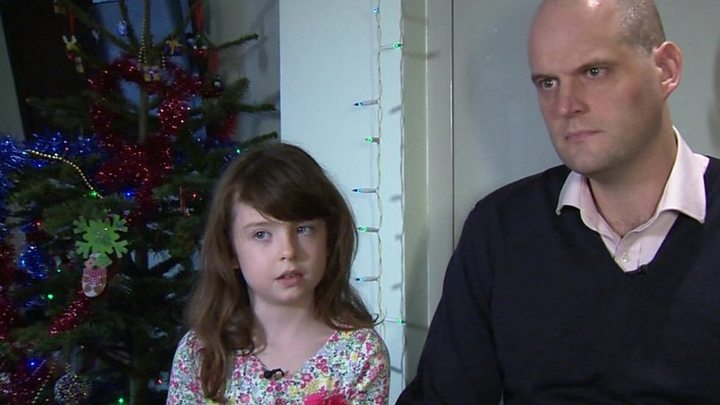
The card opened by Florence Widdicombe
Image caption The pack of cards cost £1.50 from Tesco

A factory in China has denied it used forced labour after a six-year-old girl found a message from workers inside a Tesco charity Christmas card.

The card supplier, Zhejiang Yunguang Printing, told China’s Global Times it had “never done such a thing”.

Tesco halted production at the factory on Sunday over the message, allegedly written by prisoners claiming they were “forced to work against our will”.

The Chinese foreign ministry said the allegation was “a farce”.

Speaking to the nationalist newspaper Global Times on Monday, a spokesman for the card supplier said: “We only became aware of this when some foreign media contacted us. We have never done such a thing.

“Why did they include our company’s name?”

The message – first reported by the Sunday Times – was found by Florence Widdicombe, who was writing cards to her school friends. She found that one of them – featuring a kitten with a Santa hat – had already been written in.

In block capitals, it said: “We are foreign prisoners in Shanghai Qingpu prison China. Forced to work against our will. Please help us and notify human rights organisation.”

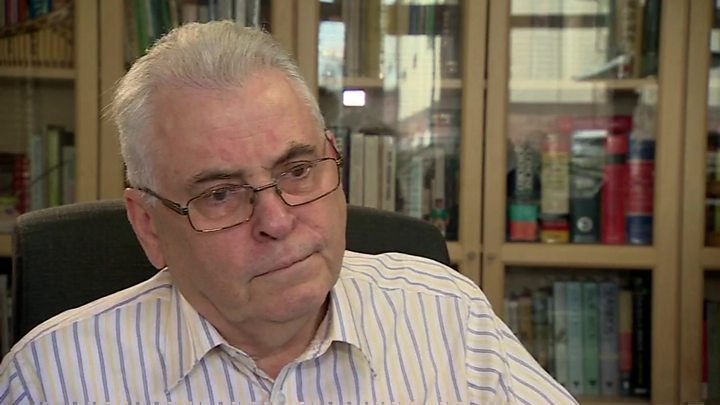
The message in the card asked whoever found the message to contact Peter Humphrey, a British journalist who was himself imprisoned there four years ago.

Chinese foreign ministry spokesman Geng Shuang told reporters on Monday the allegation was “a farce” created by Mr Humphrey.

“Shanghai’s Qingpu prison has no such foreign prisoners undergoing forced labour,” Mr Shuang said.

Zhejiang Yunguang Printing’s factory manager, Shu Yunjia, told the BBC it had not outsourced any of its work to the Qingpu prison.

Media caption Florence Widdicombe was writing the cards last Sunday when she discovered the message

Florence, from Tooting in south London, said she was writing her “sixth or eighth card” when she saw “somebody had already written in it”.

“It made me feel shocked,” she said, adding that when it was explained to her what the message meant she felt “sad”.

Tesco added that it would de-list Zhejiang Yunguang if it was found to have used prison labour.

A Tesco spokeswoman said: “We were shocked by these allegations and immediately halted production at the factory where these cards are produced and launched an investigation.”

The supermarket said it has a “comprehensive auditing system” to ensure suppliers are not exploiting forced labour.

The factory in question was checked only last month and no evidence of it breaking the ban on prison labour was found, it said.

Sales of charity Christmas cards at the company’s supermarkets raise £300,000 a year for the British Heart Foundation, Cancer Research UK and Diabetes UK.

Tesco has not received any other complaints from customers about messages inside Christmas cards.

‘Very bleak life’

The message in the card urged the recipient to contact Peter Humphrey, who was formerly imprisoned at Qingpu on what he described as “bogus charges that were never heard in court”.

After the Widdicombe family sent him a message via Linkedin, Mr Humphrey said he then contacted ex-prisoners who confirmed inmates had been forced to work.

Media caption Peter Humphrey: “I think I know who it was but I will never disclose the name”

Mr Humphrey told the BBC that the cell block of foreign prisoners has about 250 people in it, who are living a “very bleak daily life” with 12 prisoners per cell.

He added that when he was in there, manufacturing labour work was voluntary – to earn money to buy soap or toothpaste – but that work has now become compulsory.

Mr Humphrey told the BBC: “I spent two years in captivity in Shanghai between 2013 and 2015 and my final nine months of captivity was in this very prison in this very cell block where this message has come from.

“So this was written by some of my cellmates from that period who are still there serving sentences.

“I’m pretty sure this was written as a collective message. Obviously one single hand produced this capital letters’ handwriting and I think I know who it was, but I will never disclose that name.”

It is not the first time that prisoners in China have reportedly smuggled out messages in products they have been forced to make for Western markets.

In 2012, Julie Keith from Portland, Oregon, discovered an account of torture and persecution by a prisoner who said he was forced to manufacture the Halloween decorations she had purchased.

And in 2014, Karen Wisinska from Co Fermanagh in Northern Ireland, found a note on a pair of Primark trousers reading: “Our job inside the prison is to produce fashion clothes for export. We work 15 hours per day and the food we eat wouldn’t even be given to dogs or pigs.”

Under the UN’s guidance for human rights and prisons, prisoners “should not be subordinated merely to making a profit either for the prison authorities or for a private contractor”.

The standard minimum rules for the treatment of prisoners state: “Prison labour must not be of an afflictive nature.”


Source: The BBC

22/12/2019

Economic Watch: Smart economy fledging in China as AI empowers industries, individuals

BEIJING, Dec. 21 (Xinhua) — Ask the silver-haired residents of the elderly care community Yinheyuan in central Beijing what they know about artificial intelligence (AI), and they will probably throw the question to the smart speakers within their reach.

These smart speakers, capable of interacting with users with voice-recognition technologies, are also part of the answer. Via voice command, senior residents can control lights, TVs and other home appliances, order food or ask for help.

AI is no longer a technical term used exclusively by professionals in China. Both young and old are enjoying the benefits of the growing smart economy.

After personal computers (PC), PC internet and mobile internet, the growth focus of China’s digital economy is shifting to smart technologies like AI, said Baidu Chairman and CEO Robin Li at the World Internet Conference in October.

In the smart economy era, Li predicted a declining reliance on cellphones and a rising popularity of other smart devices. AI chips, cloud computing services, among others, would become the new digital infrastructure, while innovative businesses will flourish as transport, health, education and other sectors go smart.

Wearable devices, smart home appliances, autonomous driving and smart cities are among the fastest-growing fields in the smart economy.

China is the largest smart speaker market in the world, accounting for 36 percent of global shipments in the third quarter of 2019, according to global market firm Strategy Analytics. It found in a July and August survey that 63 percent of Chinese people without a smart speaker planned to buy one within the following year. Another 22 percent planned to make a purchase later on.

Chinese firms are stepping up investment in 5G, AI and the Internet of Things to gain a foothold in the emerging field. By end-June, China had over 1,200 AI-related enterprises, according to the Ministry of Industry and Information Technology.

Baidu launched its autonomous driving open platform ApollBo in 2017 to coordinate cross-sector efforts in this field. It has launched several L4 autonomous driving vehicles in partnership with leading automobile companies, and a fleet of Apollo-powered robotaxis are now taking test runs in central China’s Changsha.

Nurturing a smart economy is also on the government agenda. China has passed a guideline to boost the integration of AI and the real economy this year, and plans to build some 20 national AI innovative development pilot zones by 2023.

The country’s AI sector is forecast to be worth more than 160 billion yuan (about 22.83 billion U.S. dollars) in 2020, spurring related sectors to exceed 1 trillion yuan, said Lin Nianxiu, deputy director with the National Development and Reform Commission, citing industrial data.

Lin said China would focus on 100 firms dedicated to AI technologies and relevant applications, improve the industrial ecosystem, facilitate the deep integration of AI and the real economy, and intensify its international collaboration on AI technology, standards, industries, laws and regulations and ethics.

Source: Xinhua

18/12/2019

Chinese mines: At least 14 dead in latest disaster

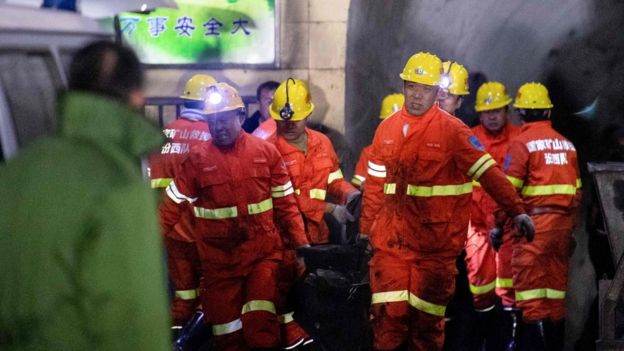
An explosion at a coal mine in south-west China has killed at least 14 people – the latest in a string of deadly mining accidents.

The local authorities said two people were still trapped underground at the mine in Guizhou province.

At least 37 people have died in five separate mining accidents in China since October.

The accidents are often due to poorly-enforced safety regulations.

The explosion at the Guanglong mine in Guizhou province happened in the early hours of Tuesday. Seven workers were lifted to safety.

On Saturday, flooding in a coal mine in south-west China’s Sichuan province killed five and trapped 13 miners underground.

Some 347 miners were working in the Shanmushu mine when the flood happened.

Rescuers carry a victim at the site of a coal mine explosion in Pingyao, early on November 19, 2019Image copyright AFP
Image caption A mine explosion in Pingyao, in China’s northern Shanxi province killed 15 people in November

On 25 November, one person died in an accident at a different mine in Guizhou province.

Before that, a blast in northern China’s Shanxi province killed 15 workers on 18 November.

At the time, officials said the accident was caused by “broken laws and regulations”.

In October, two people were killed in a blast in a mine in Shandong province in eastern China.

The poor safety record and high accident rate in China’s mining sector led to the government in November ordering a “crackdown” on safety issues, said the AFP news agency.

But – despite the string of deadly accidents – mine safety is generally improving.

Last year, 333 people died in Chinese mines – a decrease of 13% on the year before. Meanwhile, the “death per million tons of coal mined” fell to below 0.1 for the first time.

China mined three billion tonnes of coal over the first 10 months this year, according to official data cited by Reuters – up 4.5% from the same period in 2018.

Source: The BBC

17/12/2019

China and Europe are partners not rivals, says Chinese FM

BRUSSELS, Dec. 16 (Xinhua) — China and Europe are partners, not rivals, Chinese State Councilor and Foreign Minister Wang Yi said in a speech here on Monday evening.

“In recent years, we have heard an argument suggesting that China has become a rival of Europe in the economic field and should be subjected to all sorts of restrictions,” Wang said while speaking at an event hosted by the European Policy Center, a think tank.

“Although it is not the mainstream view, we must raise our vigilance and not allow it to go unchecked. In fact, any cool-headed person with an objective view will see that, for China and the EU, cooperation far outweighs competition, and our areas of consensus far exceed differences. We are partners, not rivals,” he said.

Over the years, Europe has benefited tremendously from cooperation with China, Wang said.

Between 2001 and 2018, EU’s exports to China grew by 14.7 percent on average each year, more than twice the EU’s average export growth, supporting about four million local jobs. Investment of Chinese companies in the EU has also been growing. As of the end of 2017, Chinese companies have set up over 2,900 ventures in EU countries through direct investment, creating 176,000 jobs for the local people, according to Wang.

Acquisition of Volvo by China’s automaker Geely injected new energy to the Volvo factory in Ghent, Belgium, retaining and creating over 6,000 jobs, said the senior Chinese official, noting that China is now the most profitable market for European companies — as many as 7 million cars, or nearly a quarter of all automobiles sold in China, are produced by European automakers.

Wang said that despite trade friction and the world economy in downward pressure, economic and trade cooperation between China and the EU has bucked the trend and kept growing.

He pointed out that in the first 11 months of this year, trade between China and the EU, according to statistics, was estimated to grow by 7.7 percent from last year. From January to July, EU investment in China was up by 18.3 percent year on year, and sixty percent of EU companies regard China as a leading destination of investment.

China, as a major developing country with some 1.4 billion people, a 900-million-strong labor force and 120 million market entities, has solid internal growth momentum, great resilience, and enormous economic potential, said Wang, adding that China is bound to offer a new round of cooperation opportunities and share the development dividend with countries in Europe.

Source: Xinhua

14/12/2019

Xi holds talks with Micronesian president

CHINA-BEIJING-XI JINPING-FEDERATED STATES OF MICRONESIA-PRESIDENT-TALKS (CN)

 Chinese President Xi Jinping holds a welcome ceremony for President of the Federated States of Micronesia David W. Panuelo before their talks at the Great Hall of the People in Beijing, capital of China, Dec. 13, 2019. (Xinhua/Wang Ye)

BEIJING, Dec. 13 (Xinhua) — Chinese President Xi Jinping on Friday held talks with visiting President of the Federated States of Micronesia David W. Panuelo, calling for joint efforts to advance bilateral ties and better benefit the two peoples.

The two sides should maintain exchanges at all levels, expand communication and exchanges between governmental departments and legislatures, and enhance mutual political trust, Xi said.

Xi welcomed Panuelo’s visit to China as the two countries celebrate their 30th anniversary of the establishment of diplomatic ties, and spoke highly of Panuelo’s commitment to developing bilateral ties and firmly upholding the one-China principle.

China sticks to the path of peaceful development, maintains that all countries, no matter big or small, are always equal, firmly opposes unilateralism and hegemony, and advocates that all countries should work jointly to build a community with a shared future for humanity, he said.

For the past 30 years since the establishment of diplomatic ties, the two countries have respected, trusted and supported each other, and carried out pragmatic cooperation on the basis of equality and mutual benefit, advancing bilateral ties and bringing tangible benefits to the two peoples, Xi noted.

China respects the Micronesian side’s right to take the development path that best suits its national conditions and supports Micronesia’s efforts in maintaining national independence and boosting development, Xi said.

He called on the two sides to complement each others’ advantages and further expand cooperation in such fields as trade, investment, agriculture, fisheries, infrastructure construction and tourism under the framework of the Belt and Road Initiative.

He also welcomed Micronesia to export more products with competitive advantages like tuna to China, make full use of the policies and measures China has announced on cooperation with and support for island countries, and carry out more pragmatic cooperation projects benefiting people’s livelihoods.

“China is willing to offer economic and technical assistance to Micronesia within its own capacity,” he said.

The two sides should take the signing of the visa exemption deal for those holding diplomatic and service passports as well as passports for public affairs as an opportunity to enhance people-to-people exchanges, deepen traditional friendship, and achieve more practical results on local cooperation, Xi said.

He also called on the two sides to strengthen communication and continue to step up coordination on major issues including climate change and marine affairs.

Panuelo said the Micronesian side spoke highly of Xi’s proposal of building a community with a shared future for humanity, which would play an important role in promoting world peace and stability.

Micronesia, as a small country, is appreciative of the equal treatment and respect offered by China, he said, noting that China was the first country to provide support to Micronesia’s national independence and liberation movement as well as assistance to its national development.

He reiterated Micronesia’s stance on abiding by the one-China principle and maintained that Hong Kong, Xinjiang and Tibet affairs are China’s internal affairs and brook no outside interference.

“I have had a personal experience of China’s time-honored history and remarkable development achievement during my visit,” he said, expressing his delight over China’s achievements and confidence in China’s bright future.

Hailing the two countries’ cooperation for the past 30 years, Panuelo pledged to further expand cooperation in economy and trade, infrastructure construction, agriculture, education, and jointly build the Belt and Road.

The Micronesian side spoke highly of China’s important role in global issues like tackling climate change, Panuelo said, hoping to continue strengthening coordination and cooperation with China and playing an active role in promoting ties between China and Pacific island countries.

The two heads of state witnessed the signing of several bilateral cooperation deals after their talks.

Panuelo is on a state visit to China from Dec. 11 to 18.

Source: Xinhua

10/12/2019

China, Sao Tome and Principe pledge to forge ahead ties

CHINA-BEIJING-LI ZHANSHU-SAO TOME AND PRINCIPE-TALKS (CN)

Li Zhanshu, chairman of the Standing Committee of the National People’s Congress, holds talks with president of the National Assembly of Sao Tome and Principe Delfim Neves in Beijing, capital of China, Dec. 9, 2019. (Xinhua/Liu Weibing)

BEIJING, Dec. 9 (Xinhua) — China’s top legislator Li Zhanshu held talks on Monday with visiting president of the National Assembly of Sao Tome and Principe Delfim Neves.

Li, chairman of the Standing Committee of the National People’s Congress (NPC), said China is willing to work together with Sao Tome and Principe to firmly support each other on issues concerning each other’s core interests and major concerns, and jointly safeguard the basis of the bilateral relationship of the one-China principle.

The two countries restored diplomatic relations in 2016 and therefore opened a new chapter for friendly cooperation between the two sides.

Li expressed China’s readiness to cement ties with African countries, including Sao Tome and Principe.

He also expected the two countries’ legislative bodies to advance exchanges and coordination.

Neves said Sao Tome and Principe will firmly adhere to the one-China principle, expressing the willingness to enhance cooperation in such areas as energy, infrastructure construction, fishery, health and culture.

Neves agreed to deepen friendly relations with China’s legislative bodies.

Source: Xinhua

10/12/2019

Bangalore: Dummies in police uniforms ‘control’ city traffic

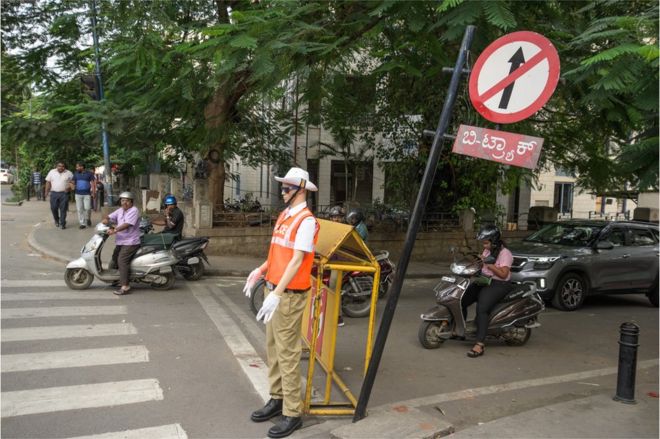
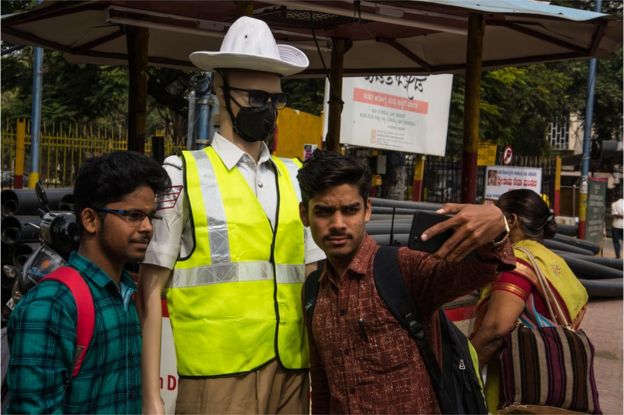
Traffic police mannequinImage copyright ASIF SAUD
Image caption The mannequins have been installed at major traffic crossings

One of India’s most gridlocked cities has come up with an unconventional solution to rein in errant drivers.

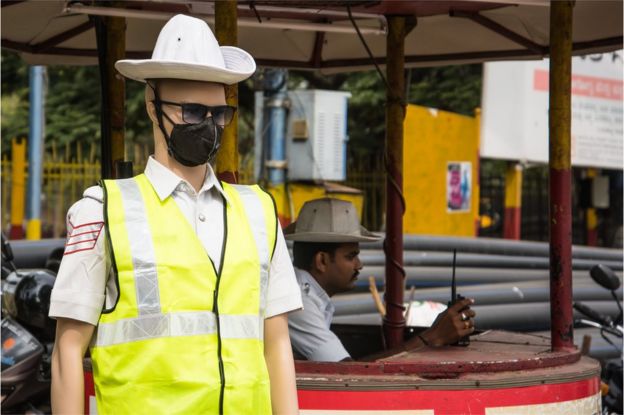
Mannequins dressed up as traffic police have been placed on roads in the southern city of Bangalore.

Dressed in police caps, white shirts and brown trousers, and wearing sunglasses, the mannequins are now on duty at congested junctions.

It’s hoped drivers will mistake them for real police and think twice about breaking the rules of the road.

Home to India’s IT industry, Bangalore has eight million registered vehicles on its streets. This number is expected to grow to more than 10 million by 2022.

At 18.7 km/h (11.61 mph) traffic speeds in the city are the second slowest in the country after Mumbai (18.5 km/h), according to a study by an office commute platform, MovinSync Technology Solutions. Cameras at traffic junctions have recorded more than 20,000 traffic violations every day.

But commuters have mixed feelings on whether mannequins can actually step in to help their real police counterparts.

Some feel they do.

“They look good. It is only when you look closely that you feel it is not a real police constable. So it is making people wear their helmets at traffic junctions and drive their two-wheelers,” says Gautam T, a college student.

Gautam and his college mate Talah Fazal had taken a selfie with one of the mannequins placed in the southern part of the city.

Asif SaudImage copyright ASIF SAUD

Similarly, Saravana – who goes by a single name – and drives a three-wheeled auto-rickshaw, had parked his vehicle near a no-parking sign board right next to a mannequin in the central business district. But he said: “It makes you not jump the traffic signal.”

On Twitter, the tone has been largely one of amusement and derision.

Presentational white space

Saleela Kappan, a public relations professional, said she found the concept “ridiculous”.

“These mannequins look too fit and fair compared to our Indian policemen to be posted on the road. I don’t think it will serve any purpose because people violate traffic rules even when policemen themselves are present at these junctions.”

Traffic police mannequinImage copyright ASIF SAUD

BR Ravikante Gowda, a senior traffic police officer in Bangalore, explaining the reasoning behind this initiatives said: “The idea of placing these mannequins at a different location every day is because people behave differently when there is a policeman present at the junction. When he is not there, their behaviour is different.”

A constable, who did not want to be named, said that police also confuse drivers by mixing things up.

“It’s been a couple of weeks since we got them here. There is some hesitancy in jumping the traffic lights. They are confused when we replace the mannequin daily with one of our colleagues.”

Source: Thr BBC

Law of Unintended Consequences

continuously updated blog about China & India

ChiaHou's Book Reviews

continuously updated blog about China & India

What's wrong with the world; and its economy

continuously updated blog about China & India