Chindia Alert: You’ll be Living in their World Very Soon
aims to alert you to the threats and opportunities that China and India present. China and India require serious attention; case of ‘hidden dragon and crouching tiger’.
Without this attention, governments, businesses and, indeed, individuals may find themselves at a great disadvantage sooner rather than later.
The POSTs (front webpages) are mainly 'cuttings' from reliable sources, updated continuously.
The PAGEs (see Tabs, above) attempt to make the information more meaningful by putting some structure to the information we have researched and assembled since 2006.
MUMBAI (Reuters) – Indian tax authorities are hoping for a windfall with the auction on Tuesday of rare oil paintings that were once part of fugitive billionaire jeweller Nirav Modi’s collection and have been seized by the government.
Auctioneers say the sale is the first of its kind in a country where tax authorities have usually auctioned property, gold and luxury items, but not art.
After a court order allowing the auction to take place, tax authorities, who are pursuing Modi over the country’s largest bank fraud, appointed professional auction house Saffronart.
The sale in Mumbai of some 68 works is expected to fetch anywhere between 300 million and 500 million rupees ($4.4 million-$7.3 million).
“Until a few years ago, the tax authorities really didn’t know the value of art,” said Farah Siddiqui, an art adviser who is advising clients eyeing Modi’s collection.
The 48-year-old Modi, whose diamonds have sparkled on Hollywood stars, is one of the prime accused in a $2 billion loan fraud at state-run Punjab National Bank. Modi denies the charges and believes they are politically motivated.
The auction comes just weeks before a national election and as Indian Prime Minister Narendra Modi faces pressure to bring back Nirav Modi (no relation), who fled the country last year and has been residing in the United Kingdom.
He was arrested last week by British authorities and remanded in custody after he appeared before a London court. India asked Britain last August to extradite Modi.
The auction includes works by Raja Ravi Varma, a 19th century painter considered among India’s finest, and V.S. Gaitonde, a modern artist known for his abstract and often monochromatic paintings.
“We believe that the collection’s intrinsic value will garner a positive response from collectors,” said Saffronart Chief Executive Dinesh Vazirani.
India Law Alliance, a law firm representing the company controlled by Modi that owns the artwork, said it was challenging the court order that allowed the auction. The case will be heard by the Bombay High Court on Wednesday, a lawyer at the firm told Reuters.
Vijay Aggarwal, a lawyer for Modi, declined to comment.
Rahul Ganghi at a rally in Sriganganagar, Rajastan, on Tuesday. (Congress/Twitter)
Congress president Rahul Gandhi on Tuesday said the promise of minimum income guarantee is his party’s “surgical strike on poverty” that will ensure there is no poor in the country after 2019. Gandhi said the Congress’s promise of minimum income guarantee is “an explosion”.
“It will set off a bomb…This is the Congress’s surgical strike on poverty. They (the BJP) tried to eliminate the poor. We will eliminate poverty,” said Gandhi at a public rally in Rajasthan’s Ganganagar.
‘Surgical strike on poverty’: Rahul Gandhi counters BJP on minimum income promise
A day after the Bharatiya Janata Party tried to discredit the Congress’ promise of a minimum income guarantee scheme in case it comes to power, Congress President Rahul Gandhi countered the BJP’s criticism.
Gandhi hit out at the Narendra Modi government in his speech alleging that the current regime has brought back people who were uplifted from the below poverty line by the Congress-led UPA rule. “The fact that 25 crore people are living in poverty in the 21st century India is a shame,” Gandhi said.
The Congress president said nowhere such a scheme has ever been implemented. “There should not be a single poor person in the country,” he said addressing the Congress’s Jan Sankalp Rally at Suratgarh in Ganganagar district.
On Monday, Gandhi promised that his party would, if it comes to power, guarantee an income of at least Rs 12,000 a month for 20 per cent of India’s poorest families by giving them Rs 6,000 a month. He said the minimum income guarantee scheme, named NYAY (standing for Nyuntam Aay Yojana) meaning justice, would cover 5 crore families or 25 crore people, who constitute the poorest 20 per cent of Indian households.
The scheme, if implemented, is expected to cost Rs 3.6 lakh crore, around 2 per cent of India’s GDP. Gandhi has insisted that it is fiscally prudent.
At his Rajasthan rally, Gandhi said Prime Minister Narendra Modi has tried to “create two Indias” in the last five years giving all the benefits of the government to select few rich people while insisting that if voted to power, the Congress will eradicate poverty completely.
“If Narendra Modi can give money to the rich, the Congress will give money to the poor,” said Gandhi, who also took a swipe at the prime minister’s chowkidar campaign. The Congress president said PM Modi is a chowkidar but “serves rich people like Anil Ambani instead of the poor”.
The BJP has rejected the minimum income guarantee promise of Gandhi with Union Finance Minister Arun Jaitley calling it a “bluff announcement” in his blog. Jaitley also said that the total promised by the Congress (Rs 72,000 a year) is just around two-thirds of what the NDA gives the poor.
LHASA, March 18 (Xinhua) — The State Grid’s Tibet branch announced that 25,000 more people in the plateau region will be covered by the main power grid by the end of this year.
In 2019, Tibet plans to build 140 electric substations of 35 kilovolts and above and 7,000 km of power transmission lines as the region continues to expand and upgrade its electricity infrastructure.
By the end of 2018, 2.76 million people in 63 counties, or over 80 percent of Tibet’s population, were covered by the main power grid, thanks to an investment of 8.89 billion yuan (about 1.3 billion U.S. dollars) in the year.
If the plan goes well, the figure will rise to 66 counties by the end of 2019.
A 16.2-billion-yuan power interconnection project was put into operation in Tibet last November, linking the region with the national grid network for the first time.
HONG KONG/SHANGHAI (Reuters) – Co-working space operators in China are shifting their focus from ambitious expansion plans to services such as customising offices for clients, as rising vacancy rates and tighter financing slow their exponential growth of the past two years.
The strategy shift marks a turn of fortunes for the Chinese co-working industry, whose rapid expansion has helped operators such as Ucommune, MyDreamPlus and Kr Space raise hundreds of millions of dollars.
The combined area of co-working space in four first-tier cities in China surged by almost 60 percent between the end of 2017 and October last year, according to industry association China Real Estate Chamber of Commerce.
However, 40 percent of the co-working centres were more than half empty as of October and 40 co-working brands had shut in the first 10 months of 2018, it added.
“There’s a shake-out in the flexible office space,” said Paul Salnikow, global CEO of The Executive Centre, which entered China in 2001 and currently operates 45 premium flexible working centres in nine Chinese cities.
“Since November, we’ve seen operators in China walking away from centres, trying to give it back to the landlord. We’ve been offered furniture from some of these people, saying they’re trying to raise money.”
A common solution for firms appears to be diversification into services that require less capital investment, such as office design and management.
“Our focus this year is ‘management output’,” Mao Daqing, founder of Ucommune, one of the largest co-working space operators in China, told Reuters.
The company expected to partner with enterprise clients and open another 30 flexible working centres for them this year, providing design and management services, from 15 currently, he said. Ucommune’s own branded centres would add five to 10 more to the over 200 already in place.
U.S.-based WeWork started providing such services in China last year and also plans to grow the business.
One industry executive who declined to be identified told Reuters the asset-light model helped to shift rental costs to clients, boosting income.
LANDLORDS AT RISK
A survey of Chinese flexible working space operators by real estate consultancy CBRE in January found that around 68 percent planned to slow or halt expansion this year.
But the rise in vacancy rates and operators dropping out of the business could also spell trouble for Chinese office landlords, especially in major cities like Shanghai where co-working is more common than the rest of Asia-Pacific.“Co-working operators need to go further asset-light and slow one-off CAPEX investment to stay in operation,” said Virginia Huang, CBRE Greater China managing director of advisory and transaction services.
“What this means is landlords also share some risks of this industry, not only the operators.”
Terms of underwriting co-operating operators are also changing, with landlords bearing more costs and risks.
Stanley Ching, Citic Capital’s head of property, said operators were increasingly seeking fit-out subsidies and leasing on profit-sharing models with landlords, as they become more reluctant to pay high rents to secure space.
LaSalle Investment Management, which rents space to co-working operators in China, said picking the right operators and limiting exposure was crucial.
“They’re not recession-proof yet; they haven’t gone through a recession, we don’t know who’s going to survive or who’s not,” said Elysia Tse, LaSalle IM Asia Pacific head of research and strategy.
“So we’ll make sure our portfolio of co-working tenants is a small minority portion.”
One positive trend for co-working operators is the growth in demand from larger corporates amid China’s broader economic slowdown.
“As companies’ outlook on the economy turns conservative and they want to save office costs, they turn to co-working space which provides flexibility,” said Ucommune’s Mao.
“Our clients for office design service also increased for this reason.”
JINAN, March 13 (Xinhua) — Transport authorities in east China’s Shandong Province announced that it plans to invest 162.2 billion yuan (about 24.2 billion U.S. dollars) on roads, railways, ports and airports this year.
The investment is aimed at building an integrated infrastructure network in the province, said Jiang Cheng, head of the provincial transport department.
Last year, fixed asset investment in Shandong’s transportation sector reached 160 billion yuan, among which 115.8 billion yuan was spent on roads, highways and waterways, up 28 percent year on year.
This year, 61 percent of the investment will be on roads, Jiang said.
Shandong has set a target for its expressway mileage to reach 7,400 km by 2020. By the end of this year, the total will hit 6,400 km, he said.
More roads, bridges, and stations will be built in rural areas, he added.
About 10 railway projects are under construction in the province this year, with a total planned investment of 32 billion yuan (4.7 billion dollars). Upon completion, the province will be better connected with big cities such as Beijing, Shanghai and Tianjin.
Shandong had a permanent population of 100.4 million at the end of 2018. It is one of the most populous provinces in China. An improved infrastructure network will better meet economic and social needs.
CWC meeting LIVE: Congress is launching its Lok Sabha election campaign from Ahmedabad in Gujarat, the home state of PM Narendra Modi and BJP president Amit Shah with a meeting of its top leaders, including Rahul Gandhi, Sonia Gandhi, Manmohan Singh.
The Congress is launching its Lok Sabha election campaign from Ahmedabad in Gujarat, the home state of Prime Minister Narendra Modi and BJP president Amit Shah with a meeting of its Congress Working Committee (CWC) and a public rally by its top leaders.
Congress president Rahul Gandhi, UPA chairperson Sonia Gandhi, former Prime Minister Manmohan Singh and party general secretaries, including Priyanka Gandhi, will be among the senior leaders of the party attending the meeting.
The Congress Working Committee, the highest decision-making arm of the party, would seek answers to failures and unfulfilled promises of the Modi government on governance, agrarian distress, economic issues, unemployment, national security and women’s safety, according to party leaders.
Hardik Patel, a prominent young leader of Patidars, who is leading a movement for reservation in jobs and education for their community, is likely to join Congress and contest the Lok Sabha elections on a party ticket, according to sources.
Foreign lifestyle experiences are becoming more popular as citizens seek to escape pollution, food and medicine safety worries and authoritarian government controls
Citizens encountering more barriers to their dreams of travelling abroad, with severe limits on moving money overseas and restrictions on visiting foreign countries
Thailand, including the likes of Chiang Mai, the United States, Australia, Canada, New Zealand are popular destinations for Chinese families. Photo: Shutteratock
Xu Zhangle and her husband and their two children are a typical middle-class couple from Shenzhen, and along with 60 other Chinese families, they are going on an extended holiday to Thailand in July, where they hope to enjoy an immigrant-like life experience.
The family have paid a travel agent around 50,000 yuan (US$7,473) for the stay in Chiang Mai in the mountainous north of the country, including transport, a three-week summer camp for their daughters at a local international school, rent for a serviced apartment and daily expenses.
Zhangle loves Chiang Mai’s relaxed lifestyle and easy atmosphere and wants to live as a local for a month or even longer, instead of having to rush through a short-term holiday.
“It would not be just [tourist] travelling but rather a life away from the mainland.” she said.
Recently, upper middle-class citizens have increased their efforts to safeguard their wealth and achieve more freedom by spending more time abroad.
They have invested considerable amounts of money in overseas properties and applied for long-stay visas, although many of their attempts have ended in failure.
Chinese citizens are encountering more barriers to their dreams of travelling abroad, with severe limits on moving money overseas and restrictions on visiting foreign countries.
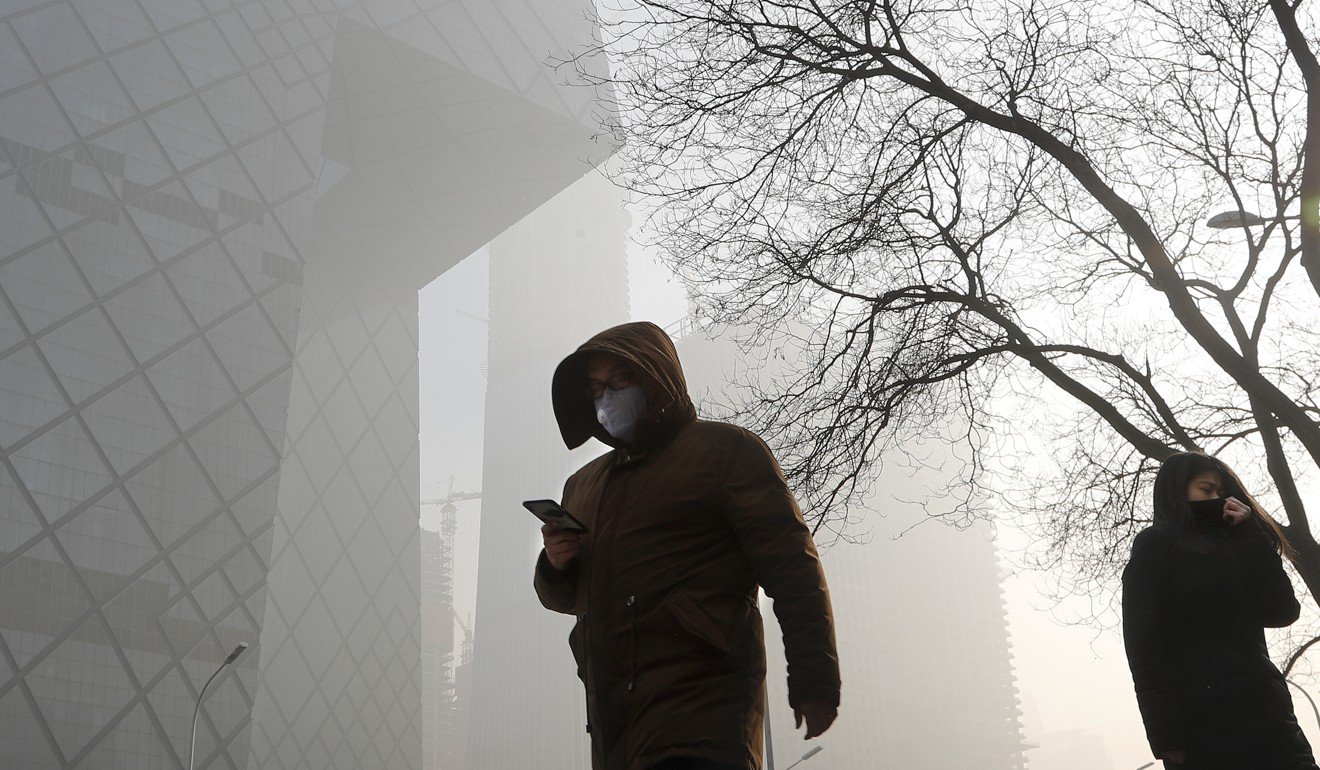
Still, growing anxieties about air pollution, food and medicine safety and an increasingly authoritarian political climate are pushing middle class families to look for new ways to circumvent the obstacles so they can live outside China.
Among the options, there is growing demand for sojourns abroad of a month or more, to enjoy a foreign lifestyle for a brief period to make up for the fact that their emigration dreams may have stalled.
“I think this is becoming a trend. Chinese middle-class families are facing increasing difficulties to emigrate and own homes overseas. On the other hand, they still yearn for more freedom, for a better quality of life than what is found in first-tier cities in China.
They are eager to seek alternatives to give themselves and their children a global lifestyle,” said Cai Mingdong, founder of Zhejiang Newway, an online tour and education operator in Ningbo, south of Shanghai.
“First, the availability of multiple-entry tourist visas and the sharp drop in air ticket prices have made it convenient and practical to stay abroad for from a few weeks to up to three months each year.”
Blacklist labels millions of Chinese citizens and businesses untrustworthy
Now, many well-to-do Chinese middle class families can get a tourist visa for five or even 10 years that allows them to stay in a number of countries — including the United States, Australia, Canada, New Zealand and other Asian countries — for up to six months at a time.
“In 2011, a round-trip air ticket from Shanghai to New Zealand cost 14,000 yuan (US$2,000), but now is about 4,000 (US$598),” added Cai.
This opens up the possibility for many middle-class families who are not eligible to emigrate, to live abroad for short periods of time.
Many wealthy Chinese middle class families can get a tourist visa for five or even 10 years that allows them to stay in several countries including the United States, Australia, Canada, New Zealand and other Asian countries, for up to six months at a time. Photo: AP
Chinese tourists made more than 140 million trips outside the country in 2018, a 13.5 per cent increase from the previous year, spending an estimated US$120 billion, according to the China Tourism Academy, an official research institute under the Ministry of Culture and Tourism.
“In [the Thai cities of] Bangkok and Chiang Mai, there are more and more Chinese who stay there to experience the local lifestyle, which is different from theirs in China. The life there is very different from that in China,” said Owen Zhu, who now lives in the Bangkok condo he bought last year.
“The freedom, culture and community are diversified. The quality of air, food and services are much higher than in first-tier cities in China, but the prices are more affordable.
“In Bangkok, in many international apartment complexes where foreigners live, the monthly rent for a one-bedroom [apartment] is about 2,000 (US$298) to 3,000 yuan.”
China’s richest regions are also home to the most blacklisted firms
A one-bedroom apartment in Shenzhen in southern China is twice as expensive, with rents continuing to rise rapidly.
There are global goods, and it is easy to socialise with different people from around the world,” Zhu added
“Many Chinese people around me, really, come to Thailand to live for a while and go back to China, but then come back again after a few months.”
Both Cai and Zhu said they discovered the new phenomenon among China’s middle class and decided it was a business opportunity.
Growing anxieties about air pollution, food and medicine safety and an increasingly authoritarian political climate are pushing middle class families to look for new ways to circumvent the obstacles so they can live outside China. Photo: AP
Zhu is in the process of registering a company in Bangkok and plans to build an online platform to service the needs of Chinese citizens living abroad who do not own property or have immigration status, especially members of the LGBT community.
Cai said dozens of Chinese families in the Yangtze River Delta had paid him to send their children to schools in New Zealand or Europe for around three or four weeks in the middle of the school year, while the parents rent villas in the area, with New Zealand and Toronto in Canada among the most popular destinations.
Last year, Zheng Feng, a single mother and freelance writer from Beijing, rented a small villa in Australia for a month for them, a friend and their children to escape Beijing’s pollution and experience life overseas.
“To be honest, I don’t have enough money to invest in a property or a green card in Australia. But it’s very affordable for me and my son to pay about 30,000 yuan (US$4,484) to live abroad for one or two months.” Zheng said.
China says 2018 growth was worth more than Australia’s whole GDP
Zheng will join the Xu family in Chiang Mai later this year and she is also planning a similar trip to England next year.
Zheng’s friend, Alice Yu, invested in an American EB-5 investor visa a few years ago, and plans to make one or two month-long trips abroad each year until her family is finally able to move to the United States.
Demand for the EB-5 investor visa in China seems to be waning given heightened uncertainty about the future of the programme and US immigration law in general under US President Donald Trump.
Approval for the visa can now take up to 10 years, resulting in a huge backlog that has further dampened interest and led to a significant dip in investment inflows into the US from foreign individuals.
A one-bedroom apartment in Bangkok can cost around bout 2,000 (US$298) to 3,000 yuan a month. Photo: AFP
“Maybe it will soon become standard for a real Chinese middle-class family to have the time and money to enjoy a long stay at a countryside villa overseas,” said Yu.
“Regardless of whether we can get a long-term visa for the United States, I want my children grow up in a global lifestyle and with more freedom than just growing up on the mainland. So do all wealthy and middle class Chinese families, I think.”
Karen Gao’s son started studying at an international school in Chiang Mai in June, at the cost of about 70,000 yuan (US$10,462) a year, after she quit her job as a public relations manager in Shenzhen and moved to Thailand on a tourist visa.
For better or worse? China’s complicated employment explained
“A few months each year for good air, good food and no censorship and internet control, but cheaper living costs compared to Beijing, it sounds like a really good deal to go,” said Gao, who has now been offered a guardian visa to accompany her son, who has already been given a student visa.
“In Shenzhen, I wasn’t able to get him into school because I had no [local] residence permit.
“It would be the best choice for us because we feel so uncertain and worried about investing and living in the mainland.”
Last year, Gao, like thousands of other private investors mostly middle class people living in first-tier cities, suffered significant losses when their investments in hotels and inns in Dali, Yunnan province, were demolished amid the local government’s campaign to curb pollution and improve the environment around Lake Erhai.
“We were robbed by the officials without proper compensation,” Gao said.
BEIJING (Reuters) – China’s central bank on Sunday pledged to further support the slowing economy by spurring loans and lowering borrowing costs, following data that showed a sharp drop in February’s bank lending due to seasonal factors.
The central bank is widely expected to ease monetary policy further this year to encourage lending especially to small and private firms vital for growth and job creation.
The central bank’s “prudent” monetary policy will emphasize on counter-cyclical adjustments, said People’s Bank of China (PBOC) Governor Yi Gang, using a phrase that implies the need to fight an economic slowdown.
“The global economy still faces some downward pressure and China faces many risks and challenges in its economy and financial sector,” Yi said at a press conference on the sidelines of the country’s annual meeting of parliament.
There is still some room for the PBOC to cut reserve requirement ratios (RRRs), although the amount of room is less compared with a few years ago, Yi said.
The PBOC has cut the amount of cash that commercial banks need to set aside as reserves five times in the past year to spur lending to small businesses in the private sector. The RRR for big banks is now at 13.5 percent and the ratio for small- to medium-size banks is at 11.5 percent.
Yi said lending rates for small firms are still relatively elevated due to higher risk premiums and the central bank will forge ahead with reforms to lower such risk premiums.
High risk premiums on loans to small firms reflect commercial banks’ traditional reluctance to extend credit to the sector because of concerns about their creditworthiness.
PBOC data on Sunday showed new bank loans in China fell sharply in February from a record the previous month, but the drop was likely due to seasonal factors, while policymakers continue to press lenders to help cash-strapped firms stay afloat.
A pull-back in February’s tally had been widely expected as Chinese banks tend to front-load loans at the beginning of the year to get higher-quality customers and win market share.
Chinese banks made 885.8 billion yuan ($131.81 billion) in net new yuan loans in February, down sharply from a record 3.23 trillion yuan in January, when several other key credit gauges also picked up modestly in response to the central bank’s policy easing.
Yi said combined January-February new loans and total social financing (TSF), a broad measure of credit and liquidity in the economy, could paint a more accurate picture as they showed a rise of 374.8 billion yuan and 1.05 trillion yuan from a year earlier, respectively.
DEBT DEFAULTS
Analysts say China needs to revive weak credit growth to help head off a sharper economic slowdown this year, but investors are worried about a further jump in corporate debt and the risk to banks as they relax their lending standards.
Corporate bond defaults hit a record last year, while banks’ non-performing loan ratio notched a 10-year high.
Pan Gongsheng, a vice governor at the PBOC, told the same briefing that China will control the amount of bond defaults in 2019, using both legal and market means.
Pan conceded that bond defaults increased last year, but the level of defaults was not high compared with China’s average bad loan ratio.
Premier Li Keqiang told parliament on Tuesday that monetary policy would be “neither too tight nor too loose”. Li also pledged to push for market-based reforms to lower real interest rates.
Chinese policymakers have repeatedly vowed not to open the credit floodgates in an economy already saddled with piles of debt – a legacy of massive stimulus during the global financial crisis in 2008-09 and subsequent downturns.
Sources have told Reuters the central bank is not ready to cut benchmark interest rates just yet, but is likely to cut market-based rates.
Yi said the downward trend in TSF has been initially curbed and broad M2 money supply growth will be more or less in line with nominal gross domestic product growth in 2019, Yi added.
Central bank data showed growth of outstanding TSF, a rough gauge of broad credit conditions, slowed to 10.1 percent in February from January’s 10.4 percent, versus a record low of 9.8 percent in December.
M2 money supply grew 8.0 percent in February from a year earlier, missing forecasts, the central bank data showed. Yi said China’s macro leverage ratio, or the amount of debt relative to GDP, was at 249.4 percent at the end of 2018, a fall of 1.5 percentage points from a year earlier, Yi said.
Analysts note there is a time lag before a jump in lending will translate into growth, suggesting business conditions may get worse before they get better.
Most economists expect a rocky first half before conditions begin to stabilize around mid-year as support measures begin to have a greater impact.
China’s economic growth is expected to cool to around 6.2 percent this year, a 29-year low, according to Reuters polls.
Growth slowed to 6.6 percent last year, with domestic demand curbed by higher borrowing rates and tighter credit conditions and exporters hit by the escalating trade war with the United States.
BEIJING, March 9 (Xinhua) — China will expand the mixed ownership reform to more than 100 state-owned enterprises (SOEs), an official with the country’s state-asset regulator said Saturday.
“There will be more than 100 SOEs in the fourth batch of mixed ownership reform, which will be pushed ahead in key areas,” Xiao Yaqing, head of the State-owned Assets Supervision and Administration Commission of the State Council, said at a press conference on the sidelines of the annual legislative session.
Since 2016, China has selected 50 SOEs in three batches to conduct the pilot reform in fields including power, energy, civil aviation, telecommunications, and defence.
The first three batches have done a good job in exploring and experimenting with the means, equity ratio and governance structure of mixed ownership, Xiao said.
Next, China will create a sound environment for the reform so that enterprises of all kinds of ownership can realize integrated and common development, he added.
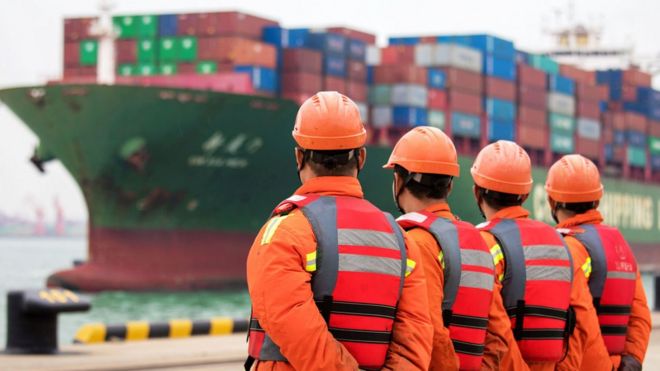
Even though officials have sounded more positive about negotiations with the US recently, failure to achieve a deal would see tariffs on $200bn (£152bn) of Chinese goods rise almost immediately and could see the US impose fresh tariffs.
Still, Mr Evans-Pritchard said “broader weakness in global demand means that, even if Trump and Xi finalise a trade deal soon, the outlook for exports remains gloomy.”





 CHINDIA ALERT: You'll be living in their world, very soon