Chindia Alert: You’ll be Living in their World Very Soon
aims to alert you to the threats and opportunities that China and India present. China and India require serious attention; case of ‘hidden dragon and crouching tiger’.
Without this attention, governments, businesses and, indeed, individuals may find themselves at a great disadvantage sooner rather than later.
The POSTs (front webpages) are mainly 'cuttings' from reliable sources, updated continuously.
The PAGEs (see Tabs, above) attempt to make the information more meaningful by putting some structure to the information we have researched and assembled since 2006.
Xie Haifeng’s story is one of luck and resilience and he has made it his mission to help others through adversity
Professional dancer owes part of his success to the city of Hong Kong and one of its doctors who helped survivors through recovery
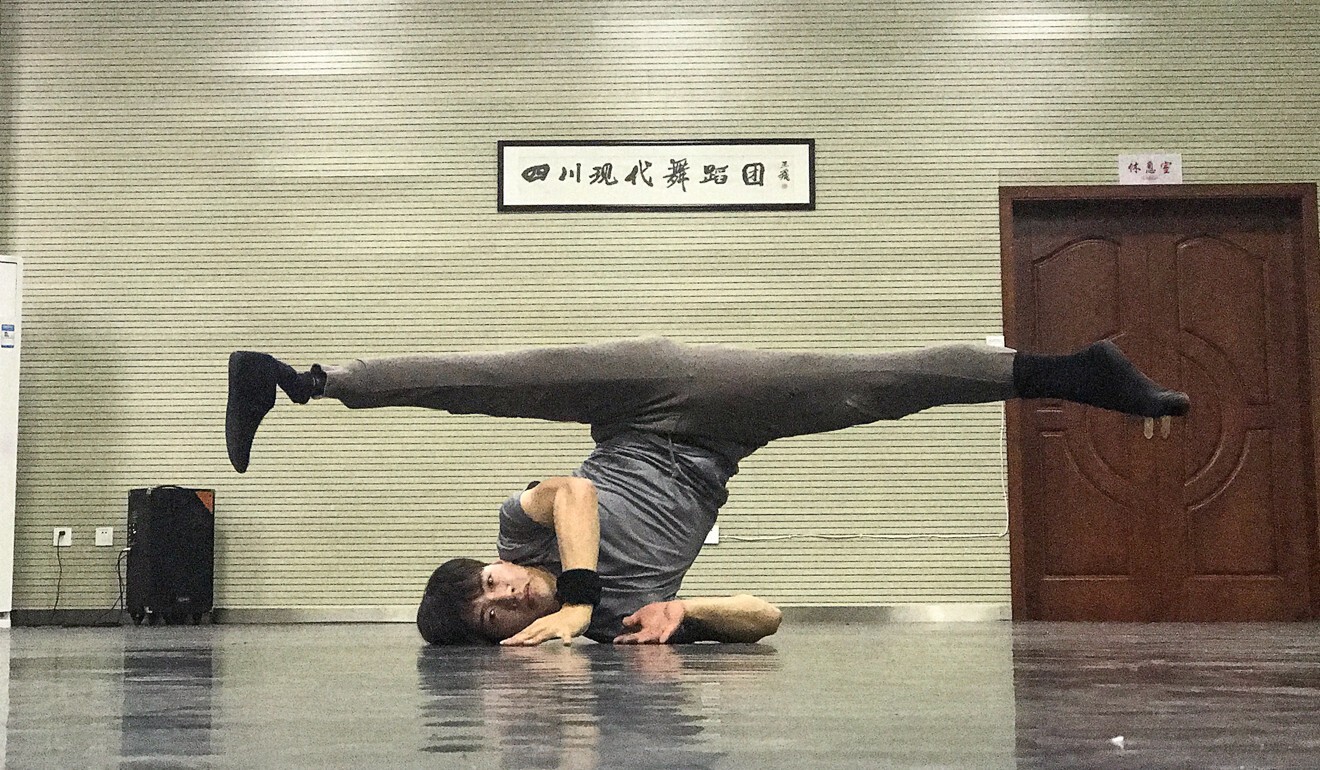
Xie Haifeng was 15 when he lost his leg in one of modern China’s most devastating disasters. Photo: Handout
When the rumbling began, Xie Haifeng thought someone was shaking his bed. Perhaps one of the other 800 children in the school dormitory was being naughty. Or maybe it was a small quake. Then came the unmistakable sound of screams.
Xie, then a 15-year-old pupil at Muyi Town Middle School in the southwestern Chinese province of Sichuan, started running. He fell as the dorm building collapsed around him. When he tried to stand up, he realised something was missing. His left leg was gone.
What Xie thought was a small quake turned out to be one of the most devastating disasters in modern Chinese history.
The Sichuan earthquake of May 2008 left at least 87,000 people dead and shook the country to its core. It was less than three month before Beijing would host its first Olympic Games, an opportunity to show the world its strength and ambition.
Instead, 7,444 schools had crumbled like tofu in an area known to be seismically active. Their rubble was a stark demonstration of the weak foundation of China’s progress and its tragic consequences. At Xie’s school, the shoddily built walls and ceilings crushed 600 children. Only 300 survived.
It still frightens me to recall the earthquake.Xie Haifeng, dancer
Xie considers himself lucky. “If I had run just one second more slowly, I would have been dead. If I had run one second faster, I would have been completely fine. But anyway, I am lucky to be alive,” he said. A dozen years later, his story is also one of resilience. Defying all the odds, Xie is now a professional dancer for a troupe in Sichuan and has made it his mission to help others through adversity.
The journey from his hospital bed to the stage was long and difficult and even though many years have passed, “it still frightens me to recall the earthquake”. But, he said: “I have forgiven fate and accepted the reality that I have only one leg.”
Xie’s trauma was a particularly difficult blow to his family. His older sister was already handicapped, after injuring her arm in an accident. When his mother, a migrant worker in the northwestern province of Gansu, arrived at the hospital a few days after the earthquake, she had no idea of the extent of Xie’s condition.
“When I woke up in the evening, I saw my mother weeping beside my bed. I told myself I should be strong,” Xie said, adding that his mother initially thought he had suffered only bruises. He was sent for treatment to a hospital in the prosperous southern city of Shenzhen, along with other survivors who had been left with disabilities by the earthquake.
Defying all the odds, Xie Haifeng is now a professional dancer. Photo: Handout
It was there that Xie was inspired to make the most of his life. A team of athletes visited the hospital and he was shocked to see one of them, a volleyball player, walking on a prosthetic leg.
Xie began to wear a prosthesis and after rehabilitation training returned to his hometown in 2009 where he was admitted to Qingchuan High School. At first, he was self-conscious and felt inferior to his peers. He did not dare to wear shorts in summer and said he seldom talked to the other students.
The following year he was introduced to members of the Chengdu Disabled People’s Art Troupe, where he found a new and welcoming home. Xie quit school and joined the troupe, despite his parents’ opposition. They were convinced study was the only way for rural students like their son to get out of poverty.
Xie learned Sichuan opera and was soon performing its art of bian lian, or
– a skill that requires rapid mask changes in a dazzling sleight of hand – on stage until the troupe was disbanded in 2011, leaving him unemployed for six months.
China marks 10-year anniversary of Sichuan earthquake
But the misfortune led to an improbable opportunity when he was hired by the Sichuan Provincial Disabled People’s Art Troupe and trained to dance. At 19, and with no experience, Xie found the training far more difficult than those who had started at the more usual age of five or six.
His body was too stiff, he said, and in the first months he spent 10 hours each day just stretching and building flexibility. It was just the beginning of a long and often arduous process.
“That agony is too much to be described,” Xie said about the pain of dancing on a prosthetic leg. “During the first six months’ training, I broke three artificial legs.”
More than once, he wondered whether he had chosen the right path. But, ultimately, his gruelling effort paid off and Xie has performed in Singapore, Hong Kong and Macau. In 2013, he won a gold medal at a national dancing competition for people with disabilities.
“My dances won me applause and recognition from the audience. I feel relieved and I think my heart belongs to the stage,” he said.
Xie broke three artificial legs during his first six months of dance training. Photo: Handout
Xie said he owed part of his success to Hong Kong which in 2008 donated HK$20 billion (US$2.5 billion) in aid to Sichuan and sent doctors to treat the injured. Among the volunteers was Poon Tak-lun, a Hong Kong orthopaedist who flew to Sichuan every two weeks from 2008 to 2013 to treat patients.
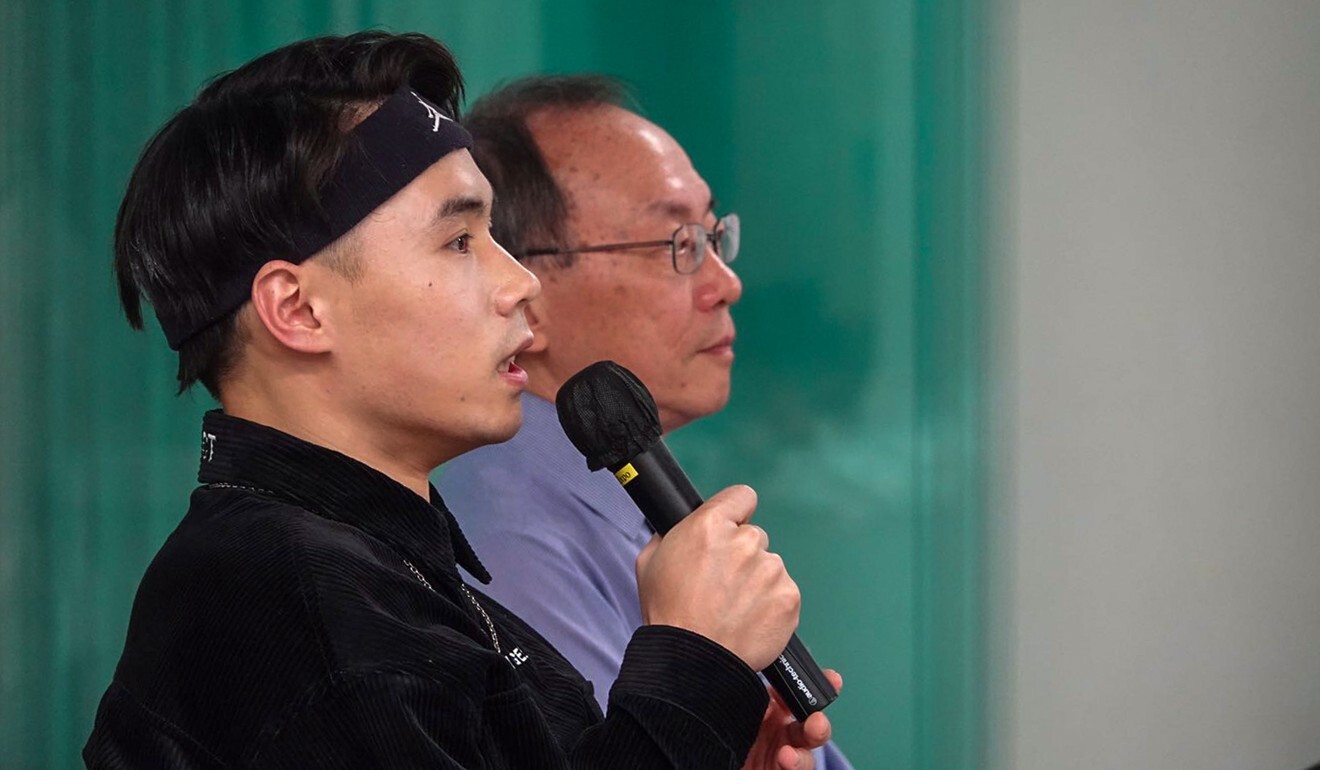
At a gala show in 2013 to express gratitude from the people of Sichuan to Hong Kong, Xie met Poon and the two became good friends, thanks to their common interest in the arts.
“Dr Poon promised to pay for all the costs of installing and repairing my artificial leg in the future. He told me to focus on dancing without worrying about the leg’s costs,” Xie said.
Xie Haifeng (pictured left with friend Poon Tak-lun) gives a speech to students in Hong Kong. Photo: Handout
Grateful for the help he received from Poon and Hong Kong, Xie has sought to return the favour by doing what he does best.
“I have no other skills except dancing and performing. So I thought of sharing my experience to encourage young students in Hong Kong,” he said.
Xie travels to Hong Kong about twice a year to perform and visit schools. In 2019, he visited the city four times, performing dances and Sichuan opera, and giving speeches at more than 10 primary and secondary schools.
“I encourage them to study hard. I said there are many people in this world who have more difficulties than them but still insist on pursuing their dreams, so they should not give up their dreams,” Xie said.
When he is not dancing and giving inspirational speeches, Xie said he lived a life like everyone else – climbing mountains, swimming and proudly walking on the leg he gained after almost losing everything in Sichuan’s deadly earthquake.
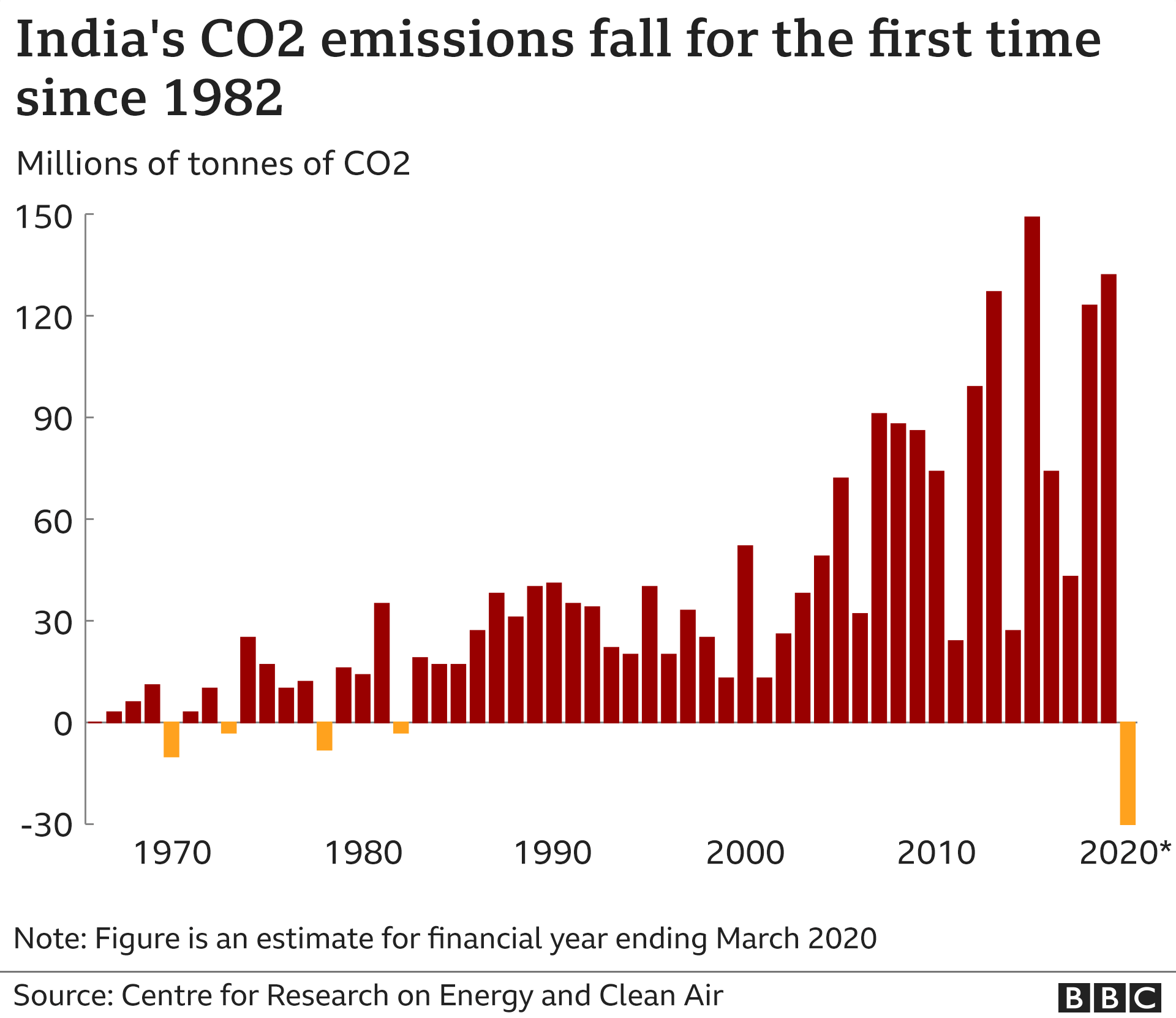
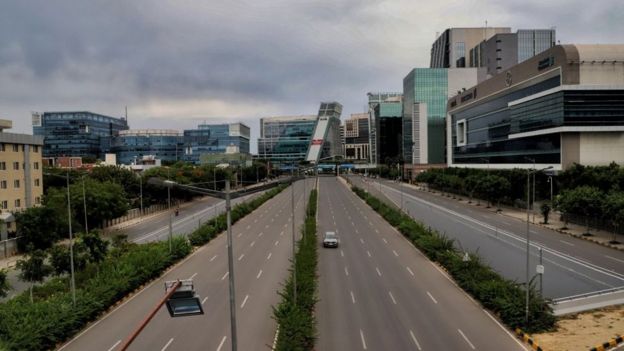
India’s CO2 emissions have fallen for the first time in four decades – and not just as a result of the country’s coronavirus lockdown.
Falling electricity use and competition from renewables had weakened the demand for fossil fuels even before the coronavirus hit, according to analysis by the environmental website, Carbon Brief. However, it was the sudden nationwide lockdown in March that finally tipped the country’s 37-year emissions growth trend into reverse.
The study finds that Indian carbon dioxide emissions fell 15% in March, and are likely to have fallen by 30% in April.
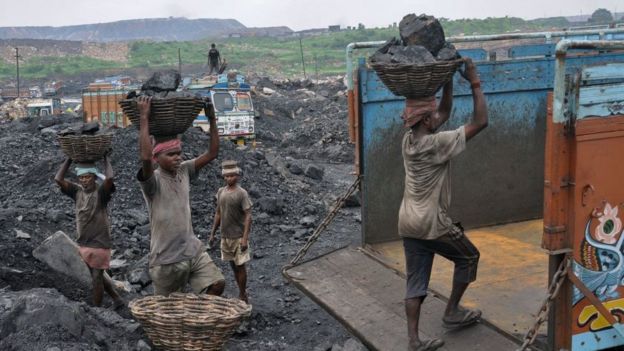
Virtually all of the drop-off in power demand has been borne by coal-fired generators, which explains why the emissions reductions have been so dramatic.
Coal-fired power generation was down 15% in March and 31% in the first three weeks of April, according to daily data from the Indian national grid.
But even before India’s sudden coronavirus lockdown, the demand for coal was weakening.
The study finds that in the fiscal year ending March 2020, coal deliveries were down by around 2%, a small but significant reduction when set against the trend – an increase in thermal power generation of 7.5% a year set over the previous decade.
Indian oil consumption shows a similar reduction in demand growth.
Image copyright GETTY IMAGESImage caption The nationwide lockdown finally tipped a 37-year emissions growth trend into reverse
It has been slowing since early 2019.
And, once again, the trend has been compounded by the impact of the Covid-19 lockdown measures on the transport industry.
Oil consumption was down 18% year-on-year in March 2020.
Meanwhile, the supply of energy from renewables has increased over the year and has held up since the pandemic struck.
This resilience the renewables energy sector shows in the face of the sudden reduction in demand caused by coronavirus is not confined to India.
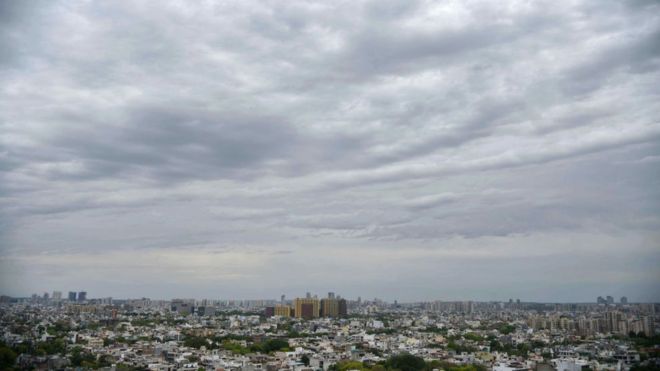
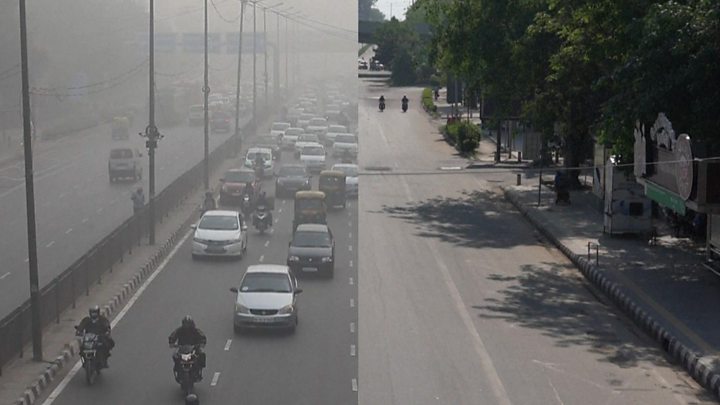
Media caption Delhi smog disappears during India’s lockdown
According to figures published by the International Energy Agency (IEA) at the end of April, the world’s use of coal was down 8% in the first quarter of the year.
By contrast, wind and solar power saw a slight uptick in demand internationally.
A key reason that coal has taken the brunt of the fall in electricity demand is that it cost more to run on a day-to-day basis.
Once you have installed a solar panel or a wind turbine, operating costs are very low and, therefore, tend to get priority on electricity grids.
Image copyright GETTY IMAGESImage caption India’s use of coal has plummeted, in line with that of other countries
Thermal power stations – those powered by coal, gas or oil – by contrast, require you to buy fuel in order to generate power.
But analysts warn that the decline in fossil fuel use may not last.
They say when the pandemic subsides, there is a risk that emissions will soar again as countries attempt to kick-start their economies.
The US has already started to relax environmental regulations and the fear is other nations could follow suit.
However, the analysis from Carbon Brief suggests there are reasons to think India could buck this trend.
The coronavirus crisis has brought the long-brewing financial troubles in the Indian coal sector to a head, and the Indian government is finalising a relief package which could top 900bn rupees ($12bn; £9.6bn).
But, at the same time, the government is talking about supporting renewable energy as part of the recovery.
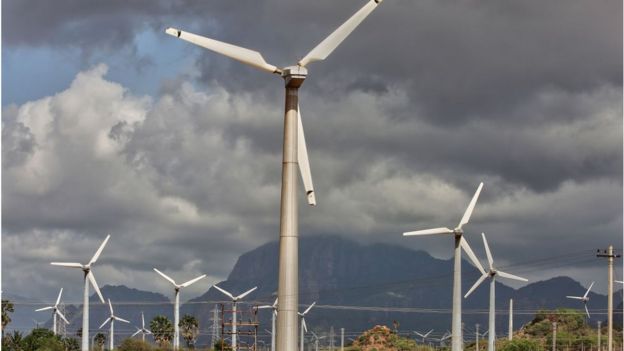
Image copyright GETTY IMAGESImage caption Renewables have the economic edge in India, offering far cheaper electricity than coal
Renewables have the economic edge in India, offering far cheaper electricity than coal.
The report claims that new solar capacity can cost as little 2.55 rupees per kilowatt hour, while the average cost for electricity generated from coal is 3.38 rupees per hour.
Investing in renewables is also consistent with the country’s National Clean Air Programme, launched in 2019.
Environmentalists hope the clean air and clear skies Indians have enjoyed since lockdown will increase public pressure on the government to clean up the power sector and improve air quality.
Staff members pose for a group photo to celebrate the timely finding of the return capsule of the trial version of China’s new-generation manned spaceship that successfully returned to the Dongfeng landing site in north China’s Inner Mongolia Autonomous Region, May 8, 2020. The return capsule successfully returned to the Dongfeng landing site at 1:49 p.m. (Beijing Time) Friday, according to the China Manned Space Agency (CMSA). (Photo by Wang Jiangbo/Xinhua)
by Xinhua writers Quan Xiaoshu, Yu Fei and Li Guoli
JIUQUAN, May 8 (Xinhua) — The return capsule of the trial version of China’s new-generation manned spaceship successfully returned to the Dongfeng landing site in north China’s Inner Mongolia Autonomous Region at 1:49 p.m. (Beijing Time) Friday, according to the China Manned Space Agency (CMSA).
The test was a complete success, the agency said.
Following the instructions from the Beijing Aerospace Control Center, the experimental spaceship applied the brake and entered the return orbit at 12:21 p.m., and its return capsule separated with its service capsule at 1:33 p.m.
After it re-entered the atmosphere and reached the designated altitude, the two deceleration parachutes and three main parachutes on the return capsule opened, slowing the flight speed of the spacecraft to the driving speed of an urban vehicle. Before touching down, its six airbags were deployed and inflated to help it land softly, according to the China Aerospace Science and Technology Corporation (CASC).
At 1:49 p.m., the return capsule landed safely. The search team found it in a timely manner and confirmed that the capsule structure was intact.
China launched the trial version of the new spaceship without a crew by the Long March-5B carrier rocket from the Wenchang Space Launch Center in southern China’s island province of Hainan on Tuesday.
The experimental spaceship flew in orbit for two days and 19 hours, during which it carried out a series of space science and technology experiments, including space 3D printing, said CMSA.
It also tested key technologies including the heat shielding and control during its re-entry into the atmosphere, as well as multi-parachute recovery and partial reuse, CMSA said.
The new-generation manned spaceship is an advanced space transport vehicle adapted to multiple tasks. It can be used not only in low-Earth orbit missions to support the construction of China’s space station but also for deep-space exploration, such as manned lunar exploration, CMSA said.
INNOVATIVE DESIGN
Developed by the China Academy of Space Technology (CAST) under the CASC, the test spaceship is nearly 9 meters tall and about 4.5 meters at its widest point. It weighs more than 20 tonnes.
Different from the three-capsule structure of Shenzhou spaceships currently in use, the new spacecraft comprises a return capsule, which is the command center and the living place for astronauts, and a service capsule, which provides power and energy, according to the CAST.
In Shenzhou spaceships, astronauts have to go back and forth between two smaller capsules for life and work. The return capsule of the new ship has a larger sealed space. In the future, it can be partitioned to set up a work area, entertainment area, dining area and bathroom, so as to provide a more comfortable living environment for astronauts.
The capsule can also be equipped with large screens for entertainment and display instruments connected with wearable devices so that astronauts can enjoy colorful space travel and be kept informed of the ship’s conditions.
The new design can also shorten the spaceship development cycle and cut the development costs, which will show a significant advantage in the future with space exploration activities more and more frequent, said Yang Qing, a designer of the experimental spaceship with the CAST.
Researchers have integrated the power supply, propulsion, fuel resources and other subsystems all into the service capsule, so that the same return capsule can be paired with different service capsules to meet variant needs of multiple tasks, including the space station operation and subsequent manned space missions.
The return capsule is designed to be reusable. Star sensors, computers and other high-value equipment have been moved from the service capsule to the return capsule so that they can be recycled after returning to Earth.
The return capsule is wrapped in two items of “clothing.” The inner layer is made of new metal materials and acts as a “wall” around the “driving cab.” The outer layer is made of a new type of light heat-resistant material, which can withstand ablation of thousands of degrees Celsius in the process of re-entry and return, according to Guo Bin, a member of the development team of the experimental spaceship with the CAST.
The new heat-resistant materials, adopted for the first time, are lighter than the traditional materials by 30 percent but have a greater heat-shielding capacity. They are also replaceable to improve the reusable rate of the capsule, Guo said.
The return capsule also uses a non-toxic propulsion system, consisting of 12 monopropellant-powered engines with the largest thrust in the world, which are applied for the first time in China to make the capsule safer and reusable, Guo said.
NEW DREAM SHIP
China started its manned space program in 1992 and has so far witnessed 11 astronauts enter space and return safely.
However, when the country eyes on the moon and the deeper space, Shenzhou spaceships and Tianzhou cargo spacecraft are no longer enough to meet its greater dreams.
Engineers started to create the new test spaceship from January 2017 and completed it in just three years after making many technological breakthroughs.
It can transport both people and goods, greatly expanding the capability and application of China’s manned spacecraft, Yang said.
It can be called a “space bus” as it is able to send six to seven astronauts at a time into low-Earth orbit. It can also be converted into a “space truck” according to new mission requirements, delivering a large number of supplies to the space station or bringing back space engineers’ test samples to Earth, Yang said.
The reliability, safety, comfort, economy and intelligence of the new spaceship have been greatly improved.
When in orbit, the ship’s “brain” — the guidance, navigation and control systems — can control the flight independently without relying on instructions from the ground. Through the combination of high-performance computers and sensors, the ship can fulfill emergency orbit entry, orbit raising and lift control autonomously, enabling it to cope with various emergencies quickly and calmly.
If a “health problem” occurs, the new spaceship can make a diagnosis itself through its intelligent system to locate the lesion and remove it temporarily or permanently. It will then share the work of the malfunctioning part by optimizing and recombining the functions of other parts, which can greatly simplify the ground control and support work.
In addition to the non-toxic monopropellant-powered engines, the new spacecraft adopts a series of advanced technologies, including the distributed integrated electronic system, solar cells with high conversion efficiency and multi-terminal human-computer interaction system, which improve its overall performance by leaps and bounds.
The engineers also installed a data acquisition system in the test spaceship, which will help provide scientific reference for the development and optimization of the follow-on versions of the new spaceship.
“The new and old spaceships will compliment each other. Just as trucks, buses and vans are all available on the road, there should be more transport means between space and Earth, and the new ship will enrich the selections,” Yang said.
SHANGHAI (Reuters) – Apple Inc’s (AAPL.O) discounts on the iPhone 11 in China and the release of a new low-price SE model have put the company in a better position than rivals to weather a coronavirus-related plunge in global smartphone demand.
While China, which accounts for roughly 15% of Apple’s revenue, appears to be a rare bright spot, investors will be keen to get a picture of global demand when the Cupertino, California-headquartered company reports second-quarter results on Thursday.
The iPhone maker has shut retail stores in the United States and Europe following the COVID-19 outbreak, and China is the only major market where it has been able to reopen all shops.
Consumer spending is expected to be muted as the pandemic has crippled economies and Apple, the world’s second-most valuable tech company, is better armed with the launch of its new price-conscious iPhone model, analysts said.
“Apple is better positioned than most to experience a rapid recovery in a post COVID world,” Evercore analyst Amit Daryanani said in a research note. “We see demand as pushed out, not canceled.”
He added that the launch of the $399 iPhone SE suggested that Apple’s supply chain was getting back on its feet after weeks of shutdown earlier this year.
Analysts expect Apple to report a 6% drop in revenue and an 11% fall in net income in its fiscal second quarter, according to Refinitiv data.
On the other hand, Chinese brands such as Oppo and Vivo who have steadily moved to offer high-end models to challenge iPhones, stand to lose marketshare as bargain hunters choose Apple.
Earlier this month, several online retailers in China slashed prices of the iPhone 11 by as much as 18% – a tactic Apple has used in the past to boost demand. And while initial social media reaction to the new iPhone SE was muted, analysts said they were seeing a pick up in demand.
The cheaper iPhone SE could tempt iPhone owners to opt for a newer device, something they might have otherwise delayed in a weak economy, said Nicole Peng, who tracks the smartphone sector at research firm Canalys.
“People want to avoid uncertainty in a downturn,” she said. “Having a brand like Apple that can showcase quality and make people less worried about breakdowns or after-sales service can bring in buyers.”
CHEAP IS GOOD
Early data suggests that the Chinese smartphone market is recovering rapidly in the aftermath of the virus, and Apple has emerged relatively unscathed.
Sales of iPhones in China jumped 21% last month from a year earlier and more than three fold from February, government data showed, meaning March-quarter sales in the country were likely to have slipped just 1%.
To be sure, a recovery in Chinese demand won’t offset sales lost in the United States and Europe. And the company is yet to launch a smartphone enabled with 5G wireless technology like those offered by Asian rivals, a disadvantage for Apple so far.
But those same expensive 5G models may not sell well in the current climate of frugality, analysts said.
“If there are no massive subsidies (in China), I doubt there will be many smartphone users who will be eager to upgrade to 5G,” said Linda Sui, who tracks the smartphone sector at research firm Strategy Analytics.
Sui expects iPhone shipments in 2020 to be down 2 percentage points at the most, versus double digit declines at Chinese firms.
Apple also has revenue from its services business to fall back on. It has leveraged its large iPhone customer base to boost services revenue from music, apps, gaming and video.
“Apple’s Services segment should remain resilient in today’s work-from-home environment, thereby demonstrating the durability of Apple’s model,” Cowen analyst Krish Sankar said.
BEIJING (Reuters) – China’s factory activity likely rose for a second straight month in April as more businesses re-opened from strict lockdowns implemented to contain the coronavirus outbreak, which has now paralysed the global economy.
The official manufacturing Purchasing Manager’s Index (PMI), due for release on Thursday, is forecast to fall to 51 in April, from 52 in March, according to the median forecast of 32 economists polled by Reuters. A reading above the 50-point mark indicates an expansion in activity.
While the forecast PMI would show a slight moderation in China’s factory activity growth, it would be a stark contrast to recent PMIs in other economies, which plummeted to previously unimaginable lows.
That global slump, caused by heavy government-ordered lockdowns, as well as the cautious resumption of business in China, suggests any recovery in the world’s second-largest economy is likely to be some way off.
“The recovery so far has been led by a bounce-back in production, however, the growth bottleneck has decisively shifted to the demand side, as global growth has weakened and consumption recovery has lagged amid continued social distancing,” Morgan Stanley said in a note.
“The expected slump in external demand has likely capped further recovery in industrial production.”
The latest official data showed 84% of mid-sized and small business had reopened as of April 15, compared with 71.7% on March 24.
Hobbled by the coronavirus, China’s economy shrank 6.8% in the first quarter from a year earlier, the first contraction since current quarterly records began.
That has left Chinese manufacturers with reduced export orders and a logistics logjam, as many exporters grapple with rising inventory, high costs and falling profits. Some have let workers go as part of the cost-cutting efforts.
A China-based brokerage Zhongtai Securities estimated that the country’s real unemployment rate, measured using international standards, could exceed 20%, equal to more than 70 million job losses and much higher than March’s official reading of 5.9%.
Sheng Laiyun, deputy head at the statistics bureau, said on Sunday migrant workers and college graduates are facing increasing pressures to secure jobs, while official jobless surveys show nearly 20% of employed workers not working in March.
Chinese authorities have rolled out more support to revive the economy. The People’s Bank of China earlier in April cut the amount of cash banks must hold as reserves and reduced the interest rate on lenders’ excess reserves.
(Reuters) – Consumer goods giant Unilever Plc (ULVR.L) (UNA.AS) withdrew its full-year forecast on Thursday, saying the hit from lockdowns in China and India, as well as lower ice cream sales, offset strong U.S. and European sales of cleaning items, sending its shares down 5%.
Underlying sales across Asia, the Middle East and Russia, fell 3.7%, as lockdowns in the quarter restricted restaurant visits and shopping in China and led to factory shutdowns that halted production in India.
In Europe, Turkey and Latin America, Unilever’s 3 billion euro ice cream business was hit by national efforts to prevent the spread of the coronavirus, deterring distributors in holiday destinations from buying stock.
“Many of our classic out-of-home retailers like leisure sites, travel hubs, beaches and tourist destinations were closed,” Chief Financial Officer Graeme Pitkethly said on a call.
These factors countered increased sales in the United States and Europe, where consumers stocked up on laundry detergents, Domestos bleach, Cif cleaning products and personal hygiene items, as the virus spread to those regions.
Overall, first-quarter turnover rose 0.2% to 12.40 billion euros ($13.42 billion), slightly missing the estimate of 12.77 billion euros based on analysts polled by Factset.
The company withdrew its sales performance targets for the year, which forecast growth at the lower end of a 3%-5% range, saying it could not “reliably assess the impact” of the virus, , although it said it would still pay its interim dividend.
Jefferies analysts said investors would be asking why Unilever “has apparently been hit so badly, and early, by the negative impacts of COVID-19 without seeing much of the positives. We expect a difficult day for the shares.”
Shares in Unilever, which joins spirits maker Diageo (DGE.L) and other consumer goods companies in withdrawing guidance, was down 5.5% at 4,008 pence in early trading.
The Anglo-Dutch company’s report follows results from larger U.S. rival Procter & Gamble (PG.N), which last week said its U.S. sales had seen their biggest rise in decades.
Unilever also said underlying sales grew strongly in North America, rising 4.8% as shoppers stocked up on personal hygiene products, Knorr soups and Hellmann’s dressings.
In Europe, sales growth was led by Germany and Britain, although prices across the region fell.
“We are adapting to new demand patterns and are preparing for lasting changes in consumer behaviour, in each country, as we move out of the crisis and into recovery,” Unilever Chief Executive Alan Jope said in a statement.
The company said it was directing a chunk of its 500 million euro package to support suppliers towards its ice cream distribution partners, which Pitkethly called the “jewel” in its supplier relationships.
BENGALURU (Reuters) – The Indian economy is likely to suffer its worst quarter since the mid-1990s, hit by the ongoing lockdown imposed to stem the spread of coronavirus, according to a Reuters poll, which predicted a mild and gradual recovery.
Over 2.6 million people tmsnrt.rs/3aIRuz7 have been infected by the coronavirus worldwide and more than 180,000 have died. Business and household lockdowns have disrupted supply chains globally, bringing growth to a halt.
The April 17-22 Reuters poll predicted the economy expanded at an annual pace of 3.0% last quarter but will shrink 5.2% in the three months ending in June, far weaker than expectations in a poll published last month for 4.0% and 2.0% growth, respectively.
The predicted contraction would be the first – under any gross domestic product calculation, which has changed a few times – since the mid-1990s, when official reporting for quarterly data began.
“The extended lockdown until early May adds further downside risk to our view of a 5% year-on-year GDP fall in the current quarter, the worst in the last few decades,” said Prakash Sakpal, Asia economist at ING.
“We don’t consider economic stimulus as strong enough to position the economy for a speedy recovery once the pandemic ends,” he said.
(Graphic: Reuters poll graphic on coronavirus impact on the Indian economy IMAGE link: here)
The Indian government announced a spending package of 1.7 trillion rupees in March to cushion the economy from the initial lockdown, which has been extended until May 3.
In an emergency meeting last week, the Reserve Bank of India cut its deposit rate again, after reducing it on March 27 and lowering the main policy rate by 75 basis points. It also announced another round of targeted long-term repo operations to ease liquidity.
But even with those measures, 40% of economists, or 13 of 32 – who provided quarterly figures – predicted an outright recession this year. Only one had expected a recession last month.
In the worst case, a smaller sample of respondents predicted, the economy would contract 9.3% in the current quarter. That compares with 0.5% growth in the previous poll’s worst-case forecast in late March, underscoring how rapidly the outlook has deteriorated.
The latest poll’s consensus view still shows the economy recovering again slowly in the July-September quarter, growing 0.8%, then 4.2% in October-December and 6.0% in the final quarter of the fiscal year, in early 2021.
But that compares with considerably more optimistic near-term forecasts of 3.3%, 5.0% and 5.6%, respectively, in the previous poll.
“A rebound in economic activity following the disruption is expected, but the low starting point of growth implies a gradual recovery,” said Upasana Chachra, chief India economist at Morgan Stanley.
“Indeed, before disruptions related to COVID-19, growth was slowing, with domestic issues of risk aversion in financial sector … (and) those concerns will likely stay after the COVID-19 disruptions have passed unless the policy response is much larger than expected,” she said.
The unemployment rate has tripled to 23.8% since the lockdown started on March 25, according to the Centre for Monitoring Indian Economy, a Mumbai-based research firm.
The Indian economy was now forecast to expand 1.5% in the fiscal year ending on March 31, 2021 – the weakest since 1991 and significantly lower than 3.6% predicted in late March. It probably grew 4.6% in the fiscal year that just ended.
Under a worst-case scenario, the median showed the economy shrinking 1.0% this fiscal year. That would be the first officially reported economic contraction for a 12-month period since GDP was reported to have contracted for calendar year 1979.
“Unless fiscal policy is also loosened aggressively alongside monetary policy, there is a big risk the drastic economic slowdown currently underway morphs into an annual contraction in output and that the recovery is hampered,” said Shilan Shah, senior India economist at Capital Economics.
All 37 economists who answered a separate question unanimously said the RBI would follow up with more easing, including lowering the repo and reverse repo rates and expanding the new long-term loans programme.
The RBI was expected to cut its repo rate by another 40 basis points to 4.00% by the end of this quarter. Already lowered twice over the past month by a cumulative 115 basis points, the reverse repo rate was forecast to be trimmed by another 25 points by end-June to 3.50%.
BEIJING, April 6 (Xinhua) — Bike riding, bird watching, or simply enjoying the natural scenery against the blue sky. A wild duck lake wetland in suburban Beijing has attracted urbanites during the traditional Qingming festival.
The park imposes a daily limit of 1,680 visitors and workers take body temperatures for visitors and ask them to show their health codes, which are common preventive measures in many scenic spots.
“Our tickets sold out one day in advance on the Internet, “said Liu Xuemei, a park management official. “Through the online booking of tickets, we strictly control the flow of tourists to protect wild birds as it is a season of bird migration.”
Besides paying tribute to the dead, outing is another tradition among Chinese during Tomb-sweeping Day, also known as Qingming Festival which fell on Saturday. Citizens enjoy a three-day holiday for the festival.
As China’s domestic COVID-19 situation continues its improving trend, more parks and scenic sites have reopened across the country, providing places for citizens to have spring outings amid tight prevention measures.
On Saturday, the Juyongguan section of the Great Wall and the Ming Tombs in Beijing reopened to the public after two months of closure in the prevention and control of COVID-19.
The famous Badaling section of the Great Wall in Beijing, which partly opened on March 24, hosted 12,000 tourists on Sunday alone.
Beijing’s major parks, which partly opened to the public, also adopted strict measures to control the number of tourists while cancelling some traditional spring activities such as enjoying flowers to avoid gathering.
Data from several domestic travel companies such as Qunar and Trip.com show that the domestic tourism industry is recovering and the booking volume of tickets for travel, hotels and scenic spots is on the rise.
Since March, some of the business activities of travel agencies have resumed in more than 10 provinces and municipalities. Tours around cities and 1-hour high-speed trips are popular, according to the travel platforms.
“I haven’t been out during the epidemic. It’s fine today. I brought my daughter to the mountain area to breathe fresh air and relax,” said a female tourist surnamed Liu, in the city of Wuhu, east China’s Anhui Province. Liu went to the suburban area of Wuhu with her daughter for an outing on Saturday and said she felt the epidemic prevention measures were reassuring.
At the Balihe scenic area in Yingshang County, Anhui, the number of tourists rose from 1,000 after it reopened on March 15 to about 8,000 per day during the Qingming holiday.
The scenic area implements online real-name booking. Its tourist service center has a body temperature detection area and provides wash-free disinfectant. Staff members wear masks and gloves, according to Wang Longtao, deputy general manager of a company in charge of the Balihe tourism development.
“I am optimistic about the recovery of domestic tourism. People have accumulated a strong desire to consume,” said Liang Jianzhang, co-founder and chairman of Trip.com Group.
Huangshan Mountain, a UNESCO world heritage site in Anhui Province, saw 20,000 tourists on Saturday and Sunday, as pictures of crowded tourists triggered concerns over epidemic prevention.
The scenic area authorities said Monday they increased 20 transfer buses and mobilized a total of 160 buses to prevent overcrowding.
Industry experts warn that as the COVID-19 epidemic has not ended domestically and the pressure of imported cases is growing, scenic spots should make people’s safety and health the top priority and take targeted measures as they reopen.
BEIJING, March 31 (Xinhua) — Chinese health authority said Tuesday that no new domestically transmitted cases of the novel coronavirus disease (COVID-19) were reported on the Chinese mainland on Monday.
The National Health Commission received reports of 48 new confirmed cases on the mainland on Monday, all of which were imported.
By the end of Monday, 771 imported cases had been reported, said the commission.
Also on Monday, one death which was in Hubei Province, and 44 new suspected cases, all imported ones, were reported on the mainland.
On Monday, 282 people were discharged from hospitals after recovery, while the number of severe cases decreased by 105 to 528.
The overall confirmed cases on the mainland had reached 81,518 by Monday, including 2,161 patients who were still being treated, 76,052 patients who had been discharged after recovery, and 3,305 people who died of the disease.
The commission said that 183 people were still suspected of being infected with the virus, adding that 19,853 close contacts were still under medical observation. On Monday, 1,199 people were discharged from medical observation.
By Monday, 682 confirmed cases including four deaths had been reported in the Hong Kong Special Administrative Region (SAR), 39 confirmed cases in the Macao SAR, and 306 in Taiwan including five deaths.
A total of 124 patients in Hong Kong, 10 in Macao and 39 in Taiwan had been discharged from hospitals after recovery.
AutoNavi’s latest data shows increase in offline traffic and searches of major business districts
Traffic data could signal that consumer activity in China has entered a recovery
AutoNavi’s mobile app users can search the names of malls and shops to see real-time traffic data. Photo: AP
Data from AutoNavi, the maps app operated by Alibaba Group Holding, shows that traffic in major shopping districts in China picked up by an average of 30 per cent over the past month, as consumer activity gradually returns to normal now that the coronavirus infection rate appears to have peaked in the country.
The early sign of increased consumer activity in China contrasts with the panic and economic uncertainty now engulfing Europe and the US, as the widening pandemic forces governments around the world to take lessons from China on how to tackle the spread of the disease with curfews and social distancing measures.
AutoNavi’s latest big data report, released on Monday, shows that traffic in and around shopping districts in several major cities in the country rose 30 per cent over the weekend of March 14-15 compared with the weekend of February 15-16, when the coronavirus in China was at its height and many areas in the country were under lockdown.
China’s Meituan Dianping to join maps service battle
15 Aug 2019
“Consumer confidence is starting to rebound as the coronavirus comes under control,” said Guo Ning, vice-president of AutoNavi. “We are seeing more and more people stepping out, with offline consumption slowly recovering.”
Alibaba is the owner of the South China Morning Post.
China’s nearly two-month lockdown has dealt a hammer blow to the economy, with retail sales – a key metric of consumption – down by 20.5 per cent across the combined two months of January and February, marking the first decline on record. The virus has however proved a boon for China’s e-commerce sector, as shoppers stuck at home buy even more online.
The new data appears to show that the country’s offline economy could now see a slow recovery. This does not mean that retail businesses can slack off on preventive measures – hand sanitiser, extra cleaning and temperature monitoring are likely to remain fixtures of everyday life in shopping malls.
AutoNavi’s mobile app users can search the names of malls and shops to see real-time traffic data – often used to avoid visiting malls at peak periods. AutoNavi said the average 30 per cent increase in traffic refers to the combined volume of people using the app to navigate the shopping destinations.
Alibaba’s AutoNavi crosses 100 million daily users
5 Oct 2018
AutoNavi has more than 400 million monthly active users, according to company data. It was the first domestic travel platform to exceed 100 million daily active users.
Digital maps have become a key tool in China’s attempts to control the coronavirus pandemic, with competitor map apps from Baidu and Tencent also launching features to track population flows and provide information on clinics able to test for and treat the disease.
Covid-19, as the novel coronavirus is known, has now killed over 3,200 people in China and infected just over 80,000, of which around 68,000 have recovered. There are now around 87,000 confirmed cases outside China, according to the latest figures from health authorities.








 CHINDIA ALERT: You'll be living in their world, very soon
