Chindia Alert: You’ll be Living in their World Very Soon
aims to alert you to the threats and opportunities that China and India present. China and India require serious attention; case of ‘hidden dragon and crouching tiger’.
Without this attention, governments, businesses and, indeed, individuals may find themselves at a great disadvantage sooner rather than later.
The POSTs (front webpages) are mainly 'cuttings' from reliable sources, updated continuously.
The PAGEs (see Tabs, above) attempt to make the information more meaningful by putting some structure to the information we have researched and assembled since 2006.
SEOUL (Reuters) – South Korean officials are calling for caution amid reports that North Korean leader Kim Jong Un may be ill or is being isolated because of coronavirus concerns, emphasising that they have detected no unusual movements in North Korea.
At a closed door forum on Sunday, South Korea’s Unification Minister Kim Yeon-chul, who oversees engagement with the North, said the government has the intelligence capabilities to say with confidence that there was no indications of anything unusual.
Rumours and speculation over the North Korean leader’s health began after he made no public appearance at a key state holiday on April 15, and has since remained out of sight.
South Korea media last week reported that Kim may have undergone cardiovascular surgery or was in isolation to avoid exposure to the new coronavirus.
Unification minister Kim cast doubt on the report of surgery, arguing that the hospital mentioned did not have the capabilities for such an operation.
Still, Yoon Sang-hyun, chairman of the foreign and unification committee in South Korea’s National Assembly, told a gathering of experts on Monday that Kim Jong Un’s absence from the public eye suggests “he has not been working as normally”.
“There has not been any report showing he’s making policy decisions as usual since April 11, which leads us to assume that he is either sick or being isolated because of coronavirus concerns,” Yoon said.
North Korea has said it has no confirmed cases of the new coronavirus, but some international experts have cast doubts on that claim.
On Monday, North Korean state media once again showed no new photos of Kim nor reported on his whereabouts.
However, they did carry reports that he had sent a message of gratitude to workers building a tourist resort in Wonsan, an area where some South Korean media reports have said Kim may be staying.
“Our government position is firm,” Moon Chung-in, the top foreign policy adviser to South Korean President Moon Jae-in, said in comments to news outlets in the United States.
“Kim Jong Un is alive and well. He has been staying in the Wonsan area since April 13. No suspicious movements have so far been detected.”
Satellite images from last week showed a special train possibly belonging to Kim at Wonsan, lending weight to those reports, according to 38 North, a Washington-based North Korea monitoring project.
Though the group said it was probably the North Korean leader’s personal train, Reuters has not been able to confirm that independently, or whether he was in Wonsan.
A spokeswoman for the Unification Ministry said on Monday she had nothing to confirm when asked about reports that Kim was in Wonsan.
Last week China dispatched a team to North Korea including medical experts to advise on Kim Jong Un, according to three people familiar with the situation.
Reuters was unable to immediately determine what the trip by the Chinese team signalled in terms of Kim’s health.
On Friday a South Korean source told Reuters their intelligence was that Kim Jong Un was alive and would likely make an appearance soon.
Experts have cautioned that Kim has disappeared from state media coverage before, and that gathering accurate information in North Korea is notoriously difficult.
North Korea’s state media last reported on Kim’s whereabouts when he presided over a meeting on April 11.
Kim, believed to be 36, vanished from state media for more than a month in 2014 and North Korean state TV later showed him walking with a limp.
BEIJING (Reuters) – For Zhang Yu, who runs a cafe in one of Beijing’s top tourist spots, business has never been so bad.
To contain the spread of the coronavirus, bars and cafes in the Wudaoying hutong – a top Lonely Planet destination built around a narrow lane – are permitted to provide take-away services only. Non-residents must show proof they have an appointment to enter the area.
Added to which, tourism has plummeted.
“Don’t mention it! This is supposed to be the peak season,” said Zhang, who has run her cafe for five years. “But there are almost no customers as they (authorities) don’t want to have people hanging around here.”
While China’s manufacturing and retail sectors are starting to get back to work as the pace of new infections slows sharply, tourism sites in Beijing remain a shadow of their former and bustling self.
China’s capital city has maintained the highest level of emergency response to the outbreak, so tourist attractions like the Forbidden City remain closed. A 14-day quarantine for new arrivals has stifled travel.
As a result, small business owners running restaurants, souvenir shops and tourism agencies are struggling.
Only a little over 20% of tourism-related businesses in Beijing had resumed operation as of the three-day Qingming national holiday in early April, a survey by on-demand delivery service giant Meituan Dianping showed.
HANGING ON
The only people present in Wudaoying on a recent afternoon were a few elderly residents sitting outside to enjoy the spring sunshine. A cat made its way lazily through empty rooftop bars.
“We used to see more customers in one hour in pre-virus days than we see in a whole day right now,” said a worker at a sandwich restaurant in Wudaoying.
In another popular area, Khazzy, a 32-year-old doctoral student who opened a restaurant last October, has had only four customers all day.
“There are almost no tourists coming to Beijing and the remaining locals have concerns about eating out,” Khazzy said as sunset approached.
Khazzy said he has let five of his 13 staff go and has no idea how long he can stay afloat financially even though his landlord has agreed to waive one month’s rent on the property in Qianmen, near Beijing’s Tiananmen Square.
More than half of the shops in Qianmen remain closed. The manager of a state-backed noodle restaurant said most of the closed stores are privately owned small businesses that can’t secure enough business to support their daily operations.
She said revenues at the noodle restaurant have plunged more than 80%, but staff salaries have not been cut.
Zhang, the cafe owner in Wudaoying, reckoned small businesses could hold on for the next three months.
BEIJING, April 13 (Xinhua) — Chinese authorities have released a circular, only allowing outdoor tourist attractions to reopen amid the COVID-19 epidemic.
The tourist sites that resume operation should receive no more than 30 percent of their daily visitor capacity, according to the circular jointly released by the Ministry of Culture and Tourism and the National Health Commission.
The reopened tourist attractions should take measures to prevent the number of visitors from exceeding the limit, said the circular, adding that indoor tourist sites should remain closed amid the epidemic.
The circular required tourist sites to encourage visitors to reserve visiting slots in advance to control visitor flows and prevent large gatherings of people.
While noting some tourist attractions have seen large crowds of tourists after resuming operation, which increased the risk of virus transmission, the circular demanded temperature checking at the entrance of tourist sites and major scenic spots.
US death toll passes 3,000 as New York’s hospitals are pushed to breaking point
Italy extends lockdown as cases exceed 100,000; UN Security Council votes by email for first time
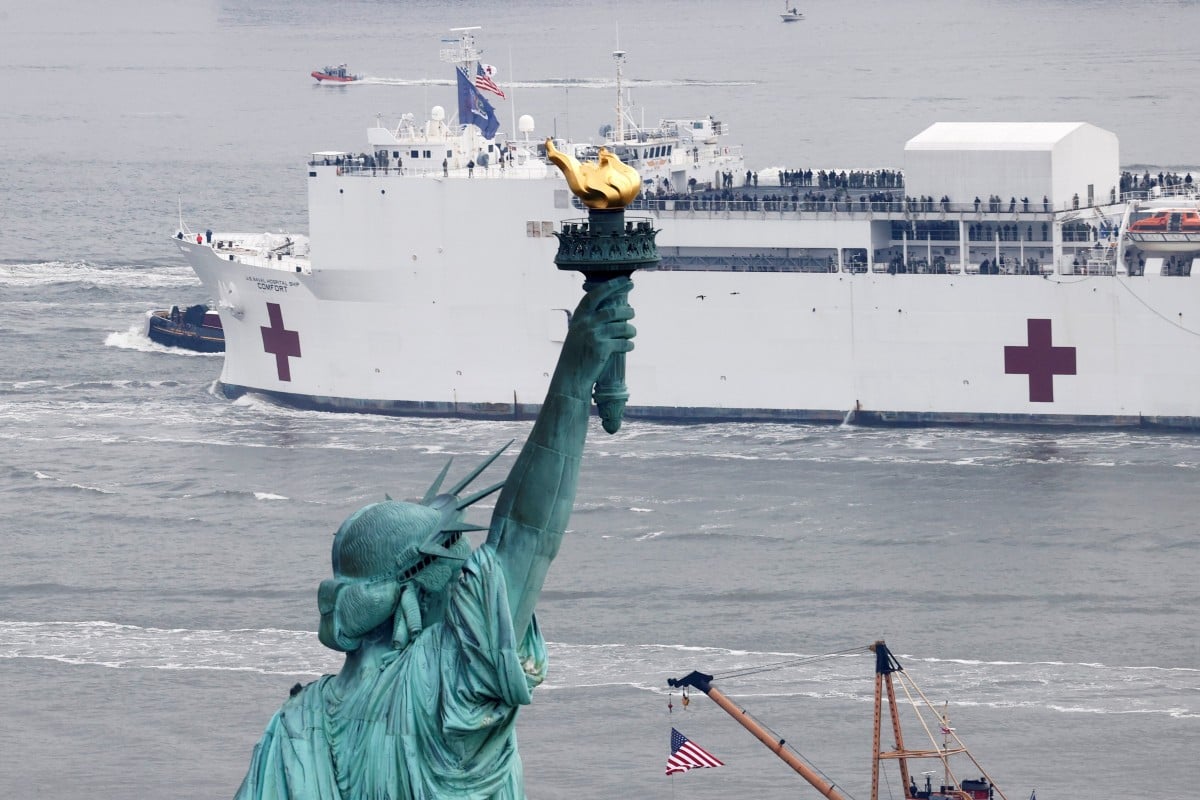
The USNS Comfort passes the Statue of Liberty as it enters New York Harbour on Monday. Photo: Reuters
Harsh lockdowns aimed at halting the march of the coronavirus pandemic extended worldwide Monday as the death toll soared toward 37,000 amid new waves of US outbreaks.
The tough measures that have confined some two-fifths of the globe’s population to their homes were broadened. Moscow and Lagos joined the roll call of cities around the globe with eerily empty streets, while Virginia and Maryland became the latest US states to announce emergency stay-at-home orders, followed quickly by the capital city Washington.
In a symbol of the scale of the challenge facing humanity, a US military medical ship sailed into New York to relieve the pressure on overwhelmed hospitals bracing for the peak of the pandemic.
France reported its highest daily number of deaths since the outbreak began, saying 418 more people had succumbed in hospital.
Spain, which announced another 812 virus deaths in 24 hours, joined the United States and Italy in surpassing the number of cases in China, where the disease was first detected in December.
On Tuesday, mainland China reported a rise in new confirmed coronavirus cases, reversing four days of declines, due to an uptick in infections involving travellers arriving from overseas.
Mainland China had 48 new cases on Monday, the National Health Commission said, up from 31 new infections a day earlier.
All of the 48 cases were imported, bringing the total number of imported cases in China to 771 as of Monday.
There was no reported new case of local infection on Monday, according to the National Health Commission. The total number of infections reported in mainland China stood at 81,518 and the death toll at 3,305. Globally, more than 760,000 have been infected, according to official figures.
Here are the developments:
Hospital ship arrives in New York
New York’s governor issued an urgent appeal for medical volunteers Monday amid a “staggering” number of deaths from the coronavirus, saying: “Please come help us in New York, now.”
The plea from Governor Andrew Cuomo came as the death toll in New York State climbed past 1,200 – with most of the victims in the big city – and authorities warned that the crisis pushing New York’s hospitals to the breaking point is just a preview of what other cities across the US could soon face.
Cuomo said the city needs 1 million additional health care workers.
“We’ve lost over 1,000 New Yorkers,” he said. “To me, we’re beyond staggering already. We’ve reached staggering.”
The governor’s plea came as a 1,000-bed US Navy hospital ship docked in Manhattan on Monday and a field hospital was going up in Central Park for coronavirus patients.
New York City reported 914 deaths from the virus as of 4:30pm local time Monday, a 16 per cent increase from an update six hours earlier. The city, the epicentre of the US outbreak, has 38,087 confirmed cases, up by more than 1,800 from earlier in the day.
Coronavirus field hospital set up in New York’s Central Park as city’s health crisis deepens
Gloom for 24 million people in Asia
The economic fallout from the coronavirus pandemic will prevent almost 24 million people from escaping poverty in East Asia and the Pacific this year, according to the World Bank.
In a report released on Monday, the Washington-based lender also warned of “substantially higher risk” among households that depend on industries particularly vulnerable to the impact of Covid-19. These include tourism in Thailand and the Pacific islands; manufacturing in Vietnam and Cambodia; and among people dependent on “informal labour” in all countries.
The World Bank urged the region to invest in expanding conventional health care and medical equipment factories, as well as taking innovative measures like converting ordinary hospital beds for ICU use and rapidly trining people to work in basic care.
Billionaire blasted for his Instagram-perfect isolation on luxury yacht
31 Mar 2020
Indonesia bans entry of foreigners
Indonesia barred foreign nationals from entering the country as the world’s fourth-most populous country stepped up efforts to contain the spread of the coronavirus pandemic.
The travel ban, to be effective soon, will also cover foreigners transiting through the country, Foreign Minister Retno Marsudi said after a cabinet meeting in Jakarta Tuesday. The curbs will not apply to holders of work permits, diplomats and other official visitors, she said.
The curbs on foreign citizens is the latest in a raft of measures taken by Indonesia to combat the deadly virus that’s sickened more than 1,400 people and killed 122. President Joko Widodo’s administration previously banned flights to and from mainland China and some of the virus-hit regions in Italy, South Korea and Iran. The president on Monday ordered stricter implementation of social distancing and health quarantine amid calls for a lockdown to contain the pandemic.
Indonesia has highest coronavirus mortality rate in Southeast Asia
First US service member dies
The first US military service member has died from the coronavirus, the Pentagon said on Monday, as it reported another sharp hike in the number of infected troops.
The Pentagon said it was a New Jersey Army National Guardsman who had tested positive for Covid-19 and had been hospitalised since March 21. He died on Saturday, it said.
Earlier on Monday, the Pentagon said that 568 troops had tested positive for the coronavirus, up from 280 on Thursday. More than 450 Defence Department civilians, contractors and dependents have also tested positive, it said.
US military has decided to stop providing more granular data about coronavirus infections within its ranks, citing concern that the information might be used by adversaries as the virus spreads.
The new policy, which the Pentagon detailed in a statement on Monday, appears to underscore US military concerns about the potential trajectory of the virus over the coming months – both at home and abroad.
School to resume in South Korea … online
South Korean children will start the new school year on April 9 with only online classes, after repeated delays due to the outbreak of the new coronavirus, the government said Tuesday.
Prime Minister Chung Sye Kyun said that despite the nation’s utmost efforts to contain the virus and lower the risk of infection, there is consensus among teachers and others that it is too early to let children go back to school.
The nation’s elementary schools, and junior and senior high schools were supposed to start the new academic year in early March, but the government has repeatedly postponed it to keep the virus from spreading among children.
The start was last postponed until April 6, but has now been delayed three more days to allow preparations to be made for online classes.
The nation now has 9,786 confirmed cases in total, with 162 deaths.
Italy extends lockdown as cases exceed 100,000
Italy’s government on Monday said it would extend its nationwide lockdown measures
against a coronavirus outbreak, due to end on Friday, at least until the Easter season in April.
The Health Ministry did not give a date for the new end of the lockdown, but said it would be in a law the government would propose. Easter Sunday is April 12 this year. Italy is predominantly Roman Catholic and contains the Vatican, the heart of the church.
Italians have been under lockdown for three weeks, with most shops, bars and restaurants shut and people forbidden from leaving their homes for all but non-essential needs.
Italy, which is the world’s hardest hit country in terms of number of deaths and accounts for more than a third of all global fatalities, saw its total death tally rise to 11,591 since the outbreak emerged in northern regions on February 21.
The death toll has risen by 812 in the last 24 hours, the Civil Protection Agency said, reversing two days of declines, although the number of new cases rose by just 4,050, the lowest increase since March 17, reaching a total of 101,739.
Deadliest day in Italy and Spain shows worst not over yet
28 Mar 2020
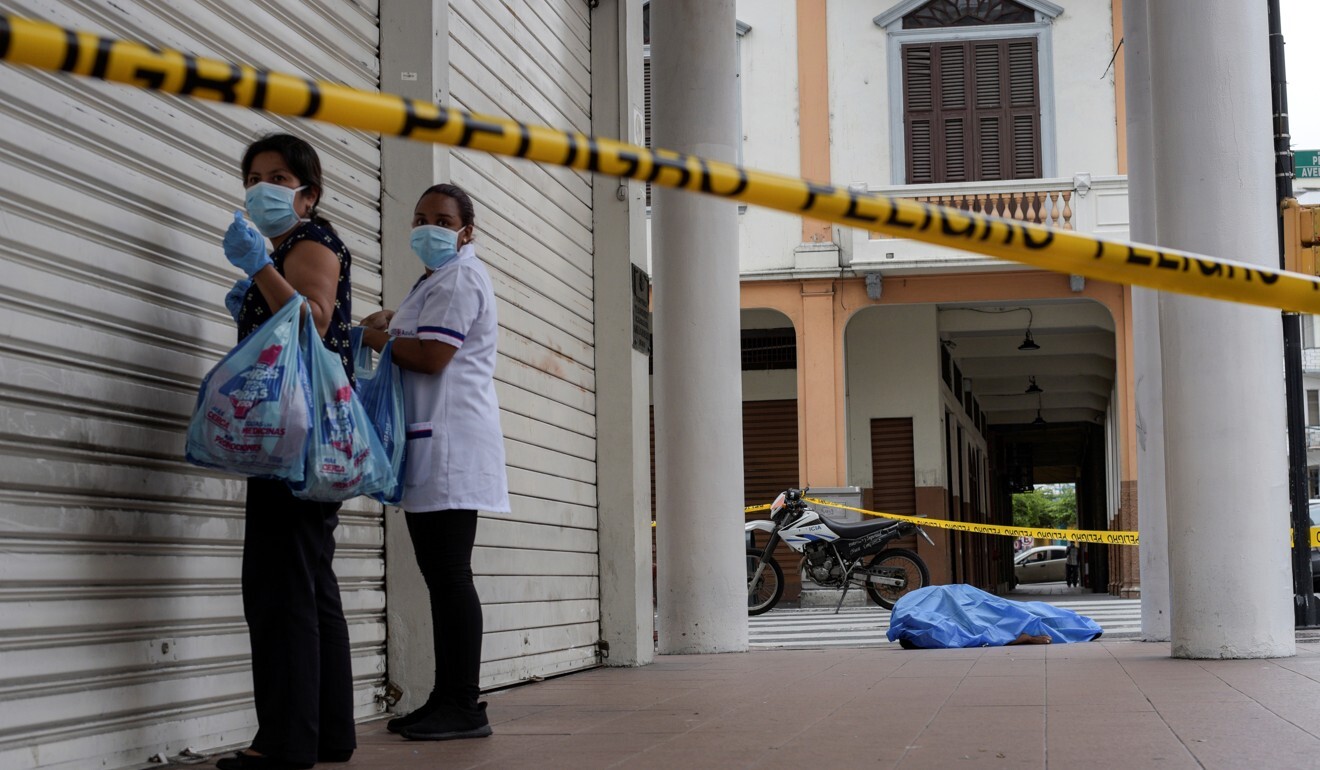
Women stand near the body of a man who died on the sidewalk in Guayaquil, Ecuador. Photo: Reuters
Ecuador struggles to collect the dead
Ecuadorean authorities said they would improve the collection of corpses, as delays related to the rapid spread of the new coronavirus has left families keeping their loved ones’ bodies in their homes for days in some cases.
Residents of Guayaquil, Ecuador’s largest city, have complained they have no way to dispose of relatives’ remains due to strict quarantine and curfew measures designed to prevent spread of the disease. Last week, authorities said they had removed 100 corpses from homes in Guayaquil.
But delays in collecting bodies in the Andean country, which has reported 1,966 cases of the virus and 62 deaths, were evident midday on Monday in downtown Guayaquil, where a man’s dead body lay on a sidewalk under a blue plastic sheet. Police said the man had collapsed while waiting in line to enter a store. Hours later, the body had been removed.
More than 70 per cent of the country’s coronavirus cases, which is among the highest tallies in Latin America, are in the southern province of Guayas, where Guayaquil is located.
Panama to restrict movement by gender
The government of Panama announced strict quarantine measures that separate citizens by gender in an effort to slow the spread of the novel coronavirus.
From Wednesday, men and women will only be able to leave their homes for two hours at a time, and on different days. Until now, quarantine regulations were not based on gender.
Men will be able to go to the supermarket or the pharmacy on Tuesdays, Thursdays and Saturdays, and women will be allowed out on Mondays, Wednesdays and Fridays.
No one will be allowed to go out on Sundays. The new measures will last for 15 days.
Police in Kenya use tear gas to enforce coronavirus curfew
Remote vote first for UN Security Council
The UN Security Council on Monday for the first time approved resolutions remotely after painstaking negotiations among diplomats who are teleworking due to the coronavirus pandemic.
The Security Council unanimously voted by email for four resolutions, including one that extended through April 2021 the expiring mandate of UN experts who are monitoring sanctions on North Korea, diplomats said.
The UN mission in Somalia was also prolonged, until the end of June, and the mission in Darfur until the end of May – two short periods decided due to uncertainty over the spread of the pandemic.
The Council also endorsed a fourth resolution aimed at improving the protection for peacekeepers.
The resolutions are the first approved by the Security Council since it began teleworking on March 12 and comes as Covid-19 rapidly spreads in New York, which has become the epicenter of the disease in the United States.
Congo ex-president dies in France
Former Republic of Congo president Jacques Joaquim Yhombi Opango died in France on Monday of the new coronavirus, his family said. He was 81.
Yhombi Opango, who led Congo-Brazzaville from 1977 until he was toppled in 1979, died at a Paris hospital of Covid-19, his son Jean-Jacques said. He had been ill before he contracted the virus.
Yhombi Opango was an army officer who rose to power after the assassination of president Marien Ngouabi.
Yhombi Opango was ousted by long-time ruler Denis Sassou Nguesso. Accused of taking part in a coup plot against Sassou Nguesso, Yhombi Opango was jailed from 1987 to 1990. He was released a few months before a 1991 national conference that introduced multiparty politics in the central African country.
When civil war broke out in Congo in 1997, Yhombi Opango fled into exile in France. He was finally able to return home in 2007, but then divided his time between France and Congo because of his health problems.
‘When I wake I cry’: France’s nurses face hell on coronavirus front line
31 Mar 2020
EU asks Britain to extend Brexit talks
The European Union expects Britain to seek an extension of its post-Brexit transition period beyond the end of the year, diplomats and officials said on Monday, as negotiations on trade have ground to a halt due to the coronavirus pandemic.
Europe has gone into a deep lockdown in a bid to curb the spread of the disease, with more than 330,000 infections reported on the continent and nearly 21,000 deaths.
In Britain, Prime Minister Boris Johnson and his health minister have both tested positive for the virus and the prime minister’s senior adviser Dominic Cummings – one of the masterminds behind Britain’s departure from the EU earlier this year – was self-isolating with symptoms.
London and the EU have been seeking to agree a new trade pact by the end of the year to kick in from 2021, even though the bloc has long said that such a time frame was extremely short to agree rules on everything from trade to security to fisheries.
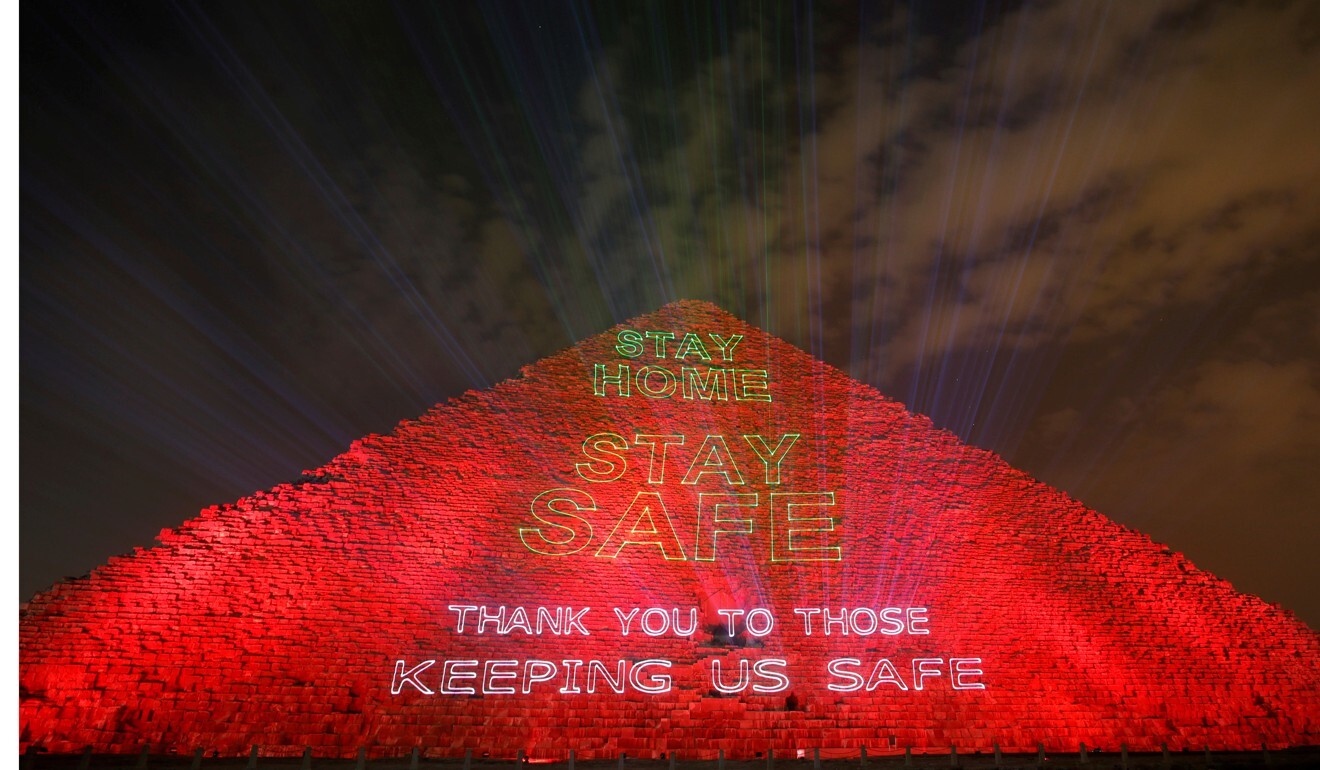
The pyramid of Khufu, the largest of the Giza pyramid complex. Photo: Reuters
Great Pyramid in Egypt lights up in solidarity
Egypt’s famed Great Pyramid was emblazoned Monday evening with messages of unity and solidarity with those battling the novel coronavirus the world over.
“Stay safe”, “Stay at home” and “Thank you to those keeping us safe,” flashed in blue and green lights across the towering structure at the Giza plateau, southwest of the capital Cairo.
Egypt has so far registered 656 Covid-19 cases, including 41 deaths. Of the total infected, 150 reportedly recovered.
Egypt has carried out sweeping disinfection operations at archaeological sites, museums and other sites across the country.
In tandem, strict social distancing measures were imposed to reduce the risk of contagion among the country’s 100 million inhabitants.
Tourist and religious sites are shuttered, schools are closed and air traffic halted.
Myanmar braces for ‘big outbreak’ after migrant worker exodus from Thailand
30 Mar 2020
Saudi king to pay for all patients’ treatment
Saudi Arabia will finance treatment for anyone infected with the coronavirus in the country, the health minister said on Monday.
The kingdom has registered eight deaths among 1,453 infections, the highest among the six Gulf Arab states.
Health Minister Tawfiq Al Rabiah said King Salman would cover treatment for citizens and residents diagnosed with the virus, urging people with symptoms to get tested.
“We are all in the same boat,” he told a news conference, adding that Crown Prince Mohammed bin Salman was overseeing containment efforts “night and day”.
Denmark eyes gradual reopening after Easter
Denmark may gradually lift a lockdown after Easter if the numbers of coronavirus cases and deaths remain stable, Prime Minister Mette Frederiksen said on Monday.
The Nordic country, which has reported 77 coronavirus-related deaths, last week extended until after Easter a two-week lockdown to limit physical contact between its citizens that began on March 11.
The number of daily deaths slowed to five on Sunday from eight and 11 on Saturday and Friday respectively. Denmark has reported a total of 2,577 coronavirus infections.
“If we over the next two weeks across Easter keep standing together by staying apart, and if the numbers remain stable for the next two weeks, then the government will begin a gradual, quiet and controlled opening of our society again, at the other side of Easter,” Frederiksen said.
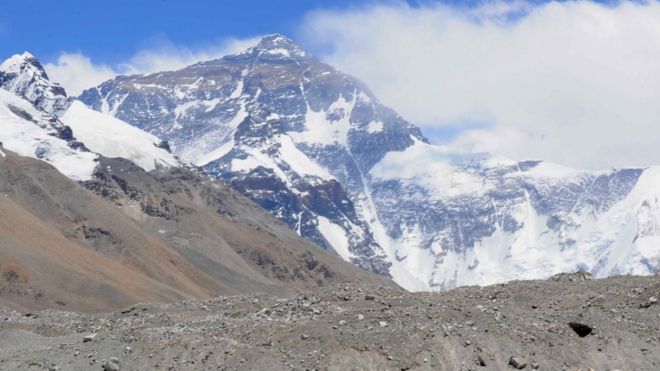
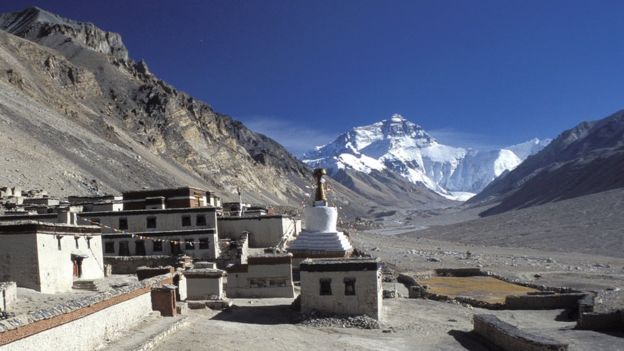
Image copyrightGETTY IMAGESImage captionMore and more people want to see the world’s tallest peak
China has closed the base camp on its side of Mount Everest to visitors who don’t have climbing permits.
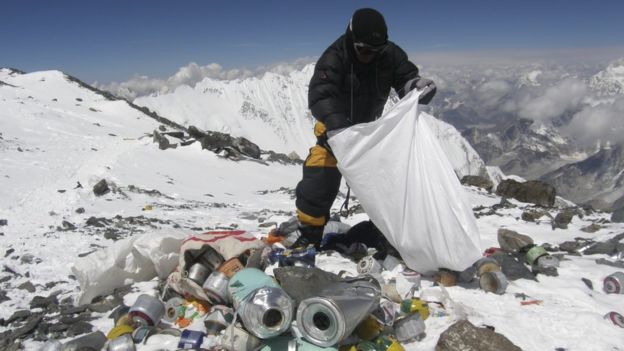
Authorities have resorted to the unusual move to deal with the mounting waste problem at the site.
The ban means tourists can only go as far as a monastery slightly below the 5,200m (17,060ft) base camp level.
More people visit the mountain from the southern side in Nepal, but over the past years numbers have been rising steadily on the Chinese side as well.
The Chinese base camp, located in Tibet, is popular as it is accessible by car – whereas the Nepalese camp can only be reached by a hike of almost two weeks.
The world’s highest peak has been struggling with escalating levels of rubbish for years, as the number of visitors rises.
The Chinese Mountaineering Association says 40,000 visited its base camp in 2015, the most recent year with figures. A record 45,000 visited Nepal’s base camp in 2016-7 according to Nepal’s Ministry of Forests and Soil Conservation.
Image copyrightGETTY IMAGESImage captionTourists are still allowed to go as far as the Rongbuk monastery
Ordinary tourists will only be banned from areas above Rongbuk monastery, which is around 5,000m above sea level, according to China’s state news agency Xinhua.
Mountaineers who have a permit to climb the 8,848m peak will still be allowed to use the higher camp.
In January, authorities announced that they would limit the number of climbing permits each year to 300.
On Chinese social media, claims have spread in recent days that its base camp will be permanently closed to tourists – but Xinhua cited officials denying that.
Image copyrightGETTY IMAGESImage captionThe temperature and high altitude make clean-up efforts on Everest a tough task
The official announcement about the closure was made in December, on the website of the Tibetan authorities.
It stated that three clean-up operations last spring had collected eight tonnes of waste, including human faeces and mountaineering equipment climbers had left behind.
This year’s clean-up efforts will also try to remove the bodies of mountaineers who have died in the so-called death zone above 8,000m, where the air is too thin to sustain life for long.
Due to the cold and high altitude, these bodies often remain on the mountain for years or even decades.
LHASA, Feb. 14 (Xinhua) — Mount Qomolangma National Nature Reserve in China’s Tibet Autonomous Region has banned ordinary tourists from entering its core zone to better conserve the environment of the world’s highest mountain.
But for travelers who have a climbing permit, the mountaineering activities will not be affected, according to the reserve which was set up in 1988.
Covering an area of around 33,800 square km including a 10,312-square km core zone, the reserve is home to one of the world’s most vulnerable ecosystems.
Recently, a report went viral online claiming the Qomolangma base camp was “permanently closed due to heavy pollution.” But local authorities denied the claim.
Kelsang, deputy director with the reserve’s administration, said ordinary tourists are banned from areas above Rongpo Monastery, around 5,000 meters above sea level. A new tent camp will be set up nearly two km away from the original one.
Between each April and October, villagers from Dingri County usually set up black tents at the foot of Mount Qomolangma, providing tourists accommodation as a means of earning money.
Though ordinary visitors can’t go beyond the monastery, it won’t affect them from appreciating the mountain.
“The new tent camp for ordinary tourists can still allow them to clearly see the 8,800-meter-plus mountain,” Kelsang said.
Travelers who have a climbing permit can go to the base camp at an altitude of 5,200 meters. Kelsang said the mountaineering activities have been approved by the regional forestry department.
Decades after the epic climb to the world’s peak, Tibetans at the foot of Mount Qomolangma have conquered poverty by receiving professional and amateur mountaineers and tourists, who have also posed an environmental challenge to the mountain.
To conserve the environment surrounding Mount Qomolangma, China carried out three major clean-ups at an altitude of 5,200 meters and above last spring, collecting more than eight tonnes of household waste, human feces and mountaineering trash.
This year, the clean-up will continue, and the remains of mountaineering victims above 8,000 meters will be centrally dealt with for the first time.
Meanwhile, the number of people who stay at the base camp will be kept under 300.
Currently, there are 85 wildlife protectors in the reserve, and 1,000 herders have part-time jobs patrolling and cleaning up garbage.
“These measures aim to strike a balance between various demands such as environmental protection, local poverty relief, mountaineering and education,” said Wang Shen, county chief of Dingri at the mountain foot.
IT’S HARD being a Chinese tourist. Reviled for bad behaviour one day and ripped off by everyone from taxi drivers to pickpockets the next, China’s newly minted travelling classes are having a tough year.
In typical fashion, the Chinese government appears intent on regulating away some of that pain. On October 1st China’s tourism industry came under a new set of rules, most intended to curb corruption in domestic travel and ease the burden on guides, groups and tourists travelling within the country. The law includes at least one clause that seems to have been inspired by a series of incidents that have revealed the apparently bad manners of Chinese tourists, on the mainland and overseas.
The number of Chinese travelling at leisure, both domestically and abroad, has grown tremendously in recent years, boosted by rising incomes, a less restrictive passport regime and softer limits on spending. The new tourism law aims to help the tourists themselves, mainly by preventing practices like the forced-march shopping excursions that are often led by ill-paid tour guides. The law also provides helpful advice to the many millions of mainland Chinese who do their pleasure-seeking abroad.
Section 13 advises Chinese tourists to behave themselves wherever they go in the world. The article is a nod to high-profile embarrassments like the one that a teenager caused by carving his mark—“Ding Jinhao was here”—into an ancient wall in the Egyptian ruins at Luxor earlier this year. Chinese tourists have drawn scorn after posting online snapshots of themselves hunting and devouring endangered sea clams in the Paracel islands, and others have produced fake marriage papers at resorts in the Maldives, in order to take advantage of free dinners. (Closer to home, the new law might have given pause to the group of Chinese tourists on Hainan island who inadvertently killed a stranded dolphin by using it as a prop in group portraits.) Spitting, shouting and sloppy bathroom etiquette have made the Chinese look like the world’s rudest new tourists, from London to Taipei and beyond.
A vice-premier, Wang Yang, made note of the problem a few months ago, calling on his countrymen to watch their manners when travelling abroad. The new regulations add legal force to his plea.
“Tourists shall respect public order and social morality in tourism activities, respect the local customs, cultural traditions and religious beliefs, take care of tourism resources, protect the ecological environment and respect the norms of civilised tourist behaviours,” as Section 13 instructs.
Although it might be difficult to regulate such sensitive matters by fiat, this kind of nudge can have an impact in China. These few headline-grabbing humiliations, along with an ongoing campaign that mainland visitors face in Hong Kong, have made many relatively seasoned Chinese travellers more careful about the way they comport themselves abroad. In Paris, ever a favourite destination for Chinese tourists and shoppers, polite French-speaking Chinese guides shepherd their flocks through the sites, apologising when any of their charges bumps into others.
SCMP: !Chinesetourists are seeking more exotic locales for their trips as the popularity of most of their top 20 destinations soars, TripAdvisor said on Tuesday, reflecting the boom by the world’s highest-spending group of travellers.
The travel website said its data on customer searches showed people from mainland China still love to go to nearby Hong Kong and Macau for getaways and shopping, but are increasingly adventurous, with holidays in Asia, Europe and North America.
This new generation of Chinese outbound travellers is making their own decisions LILY CHENG, TRIPADVISOR CHINAY
“This new generation of Chinese outbound travellers is making their own decisions about where to go, where to stay and what to do by doing their own research online, going beyond the old stereotype of big buses of group tourists,” Lily Cheng, managing director of TripAdvisor China, said in a statement.
Hong Kong was the most popular destination search in July to August, with interest from Chinese travellers rising 50 per cent from the same period of last year, TripAdvisor said.
Phuket, a beach resort in Thailand, was in second place, with 3.5 times as many searches than a year earlier. Taiwan was third (up 4.5 times), Bangkok was fourth (up 3.7 times) and Paris was fifth (up 4.6 times).
Other popular places in the Chinese top 20 included Dubai, Seoul, Singapore, the Indonesian island of Bali, Rome, New York and London.
Four destinations had booming growth, with searches up by more than six times: Jeju Island in South Korea, Kyoto in Japan, Kota Kinabalu in Malaysia and Vietnam’s capital, Hanoi.
While tourism spending is on the rise globally, Chinese travellers are the most avid consumers and a big target market for operators of hotels, shops and attractions.
Barclays analysts said in July that spending by Chinese tourists rose 22 per cent in the second quarter, compared with 20 per cent in the first three months of the year, as global tourism spending grew 14 per cent.
Last year, more than 83 million Chinese travelled abroad – a number expected to soar to 200 million by 2020. Chinese spending on overseas travel was the highest in the world last year at US$102 billion, according to the UN World Tourism Organisation.
China Daily: “The number of outbound tourists leaving China reached 37.92 million in the first five months this year, up 17.3 percent compared with the same period in 2012, according to China National Tourism Administration (CNTA) statistics.
However, the number of overnight inbound tourists dropped, the administration said.
Inbound overnight visitors reached 22.93 million between January and May, down 4.06 percent over the same period last year.
Domestic travelers reached 998 million in the first quarter, up 14.1 percent, with domestic travel revenue standing at 765.7 billion yuan ($123.92 billion), up 18.4 percent, according to the administration.
In the second half of this year, China will further promote key markets and foster potential ones to develop its inbound traveling sector, said Zhu Shanzhong, deputy director of the CNTA.
China has the world’s largest domestic tourism market and outbound Chinese tourists are the biggest spenders worldwide.”




 CHINDIA ALERT: You'll be living in their world, very soon
South Korean officials call for caution amid reports that North Korean leader Kim is ill
SEOUL (Reuters) – South Korean officials are calling for caution amid reports that North Korean leader Kim Jong Un may be ill or is being isolated because of coronavirus concerns, emphasising that they have detected no unusual movements in North Korea.
At a closed door forum on Sunday, South Korea’s Unification Minister Kim Yeon-chul, who oversees engagement with the North, said the government has the intelligence capabilities to say with confidence that there was no indications of anything unusual.
Rumours and speculation over the North Korean leader’s health began after he made no public appearance at a key state holiday on April 15, and has since remained out of sight.
South Korea media last week reported that Kim may have undergone cardiovascular surgery or was in isolation to avoid exposure to the new coronavirus.
Unification minister Kim cast doubt on the report of surgery, arguing that the hospital mentioned did not have the capabilities for such an operation.
Still, Yoon Sang-hyun, chairman of the foreign and unification committee in South Korea’s National Assembly, told a gathering of experts on Monday that Kim Jong Un’s absence from the public eye suggests “he has not been working as normally”.
“There has not been any report showing he’s making policy decisions as usual since April 11, which leads us to assume that he is either sick or being isolated because of coronavirus concerns,” Yoon said.
North Korea has said it has no confirmed cases of the new coronavirus, but some international experts have cast doubts on that claim.
On Monday, North Korean state media once again showed no new photos of Kim nor reported on his whereabouts.
However, they did carry reports that he had sent a message of gratitude to workers building a tourist resort in Wonsan, an area where some South Korean media reports have said Kim may be staying.
“Our government position is firm,” Moon Chung-in, the top foreign policy adviser to South Korean President Moon Jae-in, said in comments to news outlets in the United States.
“Kim Jong Un is alive and well. He has been staying in the Wonsan area since April 13. No suspicious movements have so far been detected.”
Satellite images from last week showed a special train possibly belonging to Kim at Wonsan, lending weight to those reports, according to 38 North, a Washington-based North Korea monitoring project.
Though the group said it was probably the North Korean leader’s personal train, Reuters has not been able to confirm that independently, or whether he was in Wonsan.
A spokeswoman for the Unification Ministry said on Monday she had nothing to confirm when asked about reports that Kim was in Wonsan.
Last week China dispatched a team to North Korea including medical experts to advise on Kim Jong Un, according to three people familiar with the situation.
Reuters was unable to immediately determine what the trip by the Chinese team signalled in terms of Kim’s health.
On Friday a South Korean source told Reuters their intelligence was that Kim Jong Un was alive and would likely make an appearance soon.
Experts have cautioned that Kim has disappeared from state media coverage before, and that gathering accurate information in North Korea is notoriously difficult.
North Korea’s state media last reported on Kim’s whereabouts when he presided over a meeting on April 11.
Kim, believed to be 36, vanished from state media for more than a month in 2014 and North Korean state TV later showed him walking with a limp.
Source: Reuters
Posted in "unusual", 11, 15, 2014, 36, 38 North, absence, alive and well, amid, anything, appearance, April, area, arguing, assume, avoid, because, began, being isolated, belonging, Building, call for, calling, capabilities, cardiovascular, cast, caution, Chairman, China, claim, closed door, comments, concerns, confidence, confirmed cases, coronavirus, detected, disappeared, dispatched, doubt, emphasising, engagement, experts, exposure, firm, foreign and unification committee, foreign policy adviser, forum, Friday, gathering, Government, gratitude, health, Hospital, ill, including, independently, indications, intelligence, international experts, isolation, key, Kim, Kim Jong Un, last week, leaders, lending weight, limp, media, medical experts, meeting, mentioned, message, minister, Monday, monitoring project, month, movements, National Assembly, new coronavirus, news outlets, Normally, North, North Korea, North Korean leader, North Korean state TV, officials, operation, out of sight, oversees, personal train, photos, policy decisions, presided, President Moon Jae-in, public appearance, public eye, remained, reported, reports, Resort, Reuters, Rumours, Seoul, showed, sick, signalled, since, South Korea’s, South Korean, South Korean President, special train, speculation, spokeswoman, state holiday, State media, staying, suggests, Sunday, surgery, team, tourist, Uncategorized, undergone, unification, Unification minister, Unification Ministry, United States, unusual, vanished, walking, Washington-based, whereabouts, Wonsan, workers, working | Leave a Comment »