Chindia Alert: You’ll be Living in their World Very Soon
aims to alert you to the threats and opportunities that China and India present. China and India require serious attention; case of ‘hidden dragon and crouching tiger’.
Without this attention, governments, businesses and, indeed, individuals may find themselves at a great disadvantage sooner rather than later.
The POSTs (front webpages) are mainly 'cuttings' from reliable sources, updated continuously.
The PAGEs (see Tabs, above) attempt to make the information more meaningful by putting some structure to the information we have researched and assembled since 2006.
Sales in April hit 2.07 million units in the world’s biggest car market, up 4.4 per cent from a year earlier, according to the country’s largest industry association
The number of new energy vehicles (NEVs) sold fell for a tenth straight month to
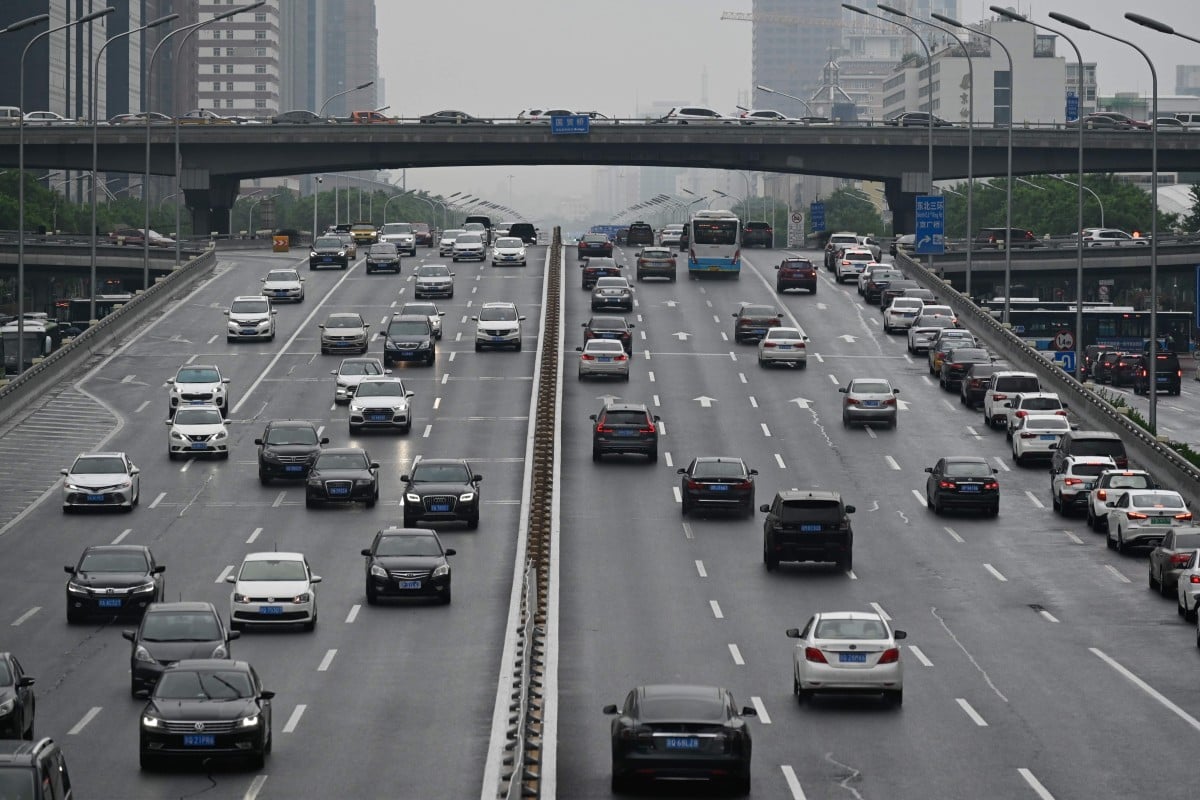
The global industry has been hit hard by the health crisis, but there is growing optimism of improvement in business in China as the country has largely contained the outbreak and started easing lockdown measures. Photo: AFP
China’s monthly car sales rose for the first time in almost two years in April, industry data showed, as more customers visited showrooms after the economy began to open up and authorities loosened coronavirus-related travel restrictions.
Sales in April hit 2.07 million units in the world’s biggest car market, up 4.4 per cent from a year earlier, according to data from the China Association of Automobile Manufacturers, the country’s largest industry association.
as the pandemic pummelled demand. Monthly sales in China last rose in June 2018.
The number of new energy vehicles (NEVs) sold fell for a tenth straight month to 72,000 units, the data showed. NEVs include battery-powered electric, plug-in hybrid and hydrogen fuel-cell vehicles.
The global industry has been hit hard by the health crisis, but there is growing optimism of improvement in business in China as the country has largely contained the outbreak and started easing lockdown measures.
Volkswagen reported positive China sales in April, while General Motors’ China ventures saw double-digit year-on-year growth last month.
Beijing’s Chaoyang district remains the last high-risk area in China, with virus preventive measures continuing to impact on travel and shopping plans
China faces the dilemma of preventing a re-emerge of the pandemic, while also pushing to get its economy back to normal
China’s continued pandemic prevention measures, coupled with still hesitant consumer demand, will inevitably lead to persistent limitations on the nation’s economic recovery, analysts said. Photo: Bloomberg
After nearly three months of being quarantined by herself in Beijing, Mary Zhao was looking forward to the upcoming long weekend at the start of May to be able to finally reunite with her parents.
But Zhao was forced to abandon her plan for the Labour Day holidays as Beijing’s upmarket Chaoyang district, where she lives, remains the only high-risk zone for coronavirus in the entire country.
If she travelled the five hours by car, or two hours via bullet train, to the neighbouring Hebei province, she would first have to undergo a 14-day quarantine before seeing her parents. Her parents would also have the same two week quarantine to look forward to once they returned home if they came to visit their daughter in Beijing.
These strict controls to prevent a re-emergence of the coronavirus outbreak are making a return to normal life impossible for many, and mean the final economic and social cost
from China’s draconian preventive measures could be much larger than expected.
Wuhan declares ‘victory’ as central Chinese city’s last Covid-19 patients leave hospital
It underscores the dilemma facing China’s leaders on how to balance the need to
and to avoid a fresh outbreak. On the surface, China may be able to declare victory as even Wuhan, the city where the virus was first detected, announced that the last Covid-19 patient had left hospital on Sunday. But fears of a renewed outbreak have kept the country’s cinemas and most schools closed, with travel between provinces discouraged.
China’s national borders also remain largely closed, with flights being cut to a minimum, and a mandatory 14-day quarantine for every arrival. In the number of places where new cases have been reported, quarantine requirements have been tightened, including Harbin and a few other cities near the border with Russia.
Chaoyang, the home to one of Beijing’s main business districts and most foreign embassies, changed its risk rating to high from low in the middle of April after three new cases were reported, dealing a fresh blow to the district’s
and forcing many of the 3.5 million residents to cancel their travel plans.
On the outskirts of Beijing, near Beijing Capital International Airport, returning migrant workers to Picun village were ordered to stop at entrance and could only be escorted inside by their landlord, with many villages and residential compounds remaining closed to outsiders.
In the high-end shopping district of Guomao, some shops also remain closed as there are few potential customers, while over in the popular Sanlitun area, metal barriers restrict access and temperature checkpoints are still required.
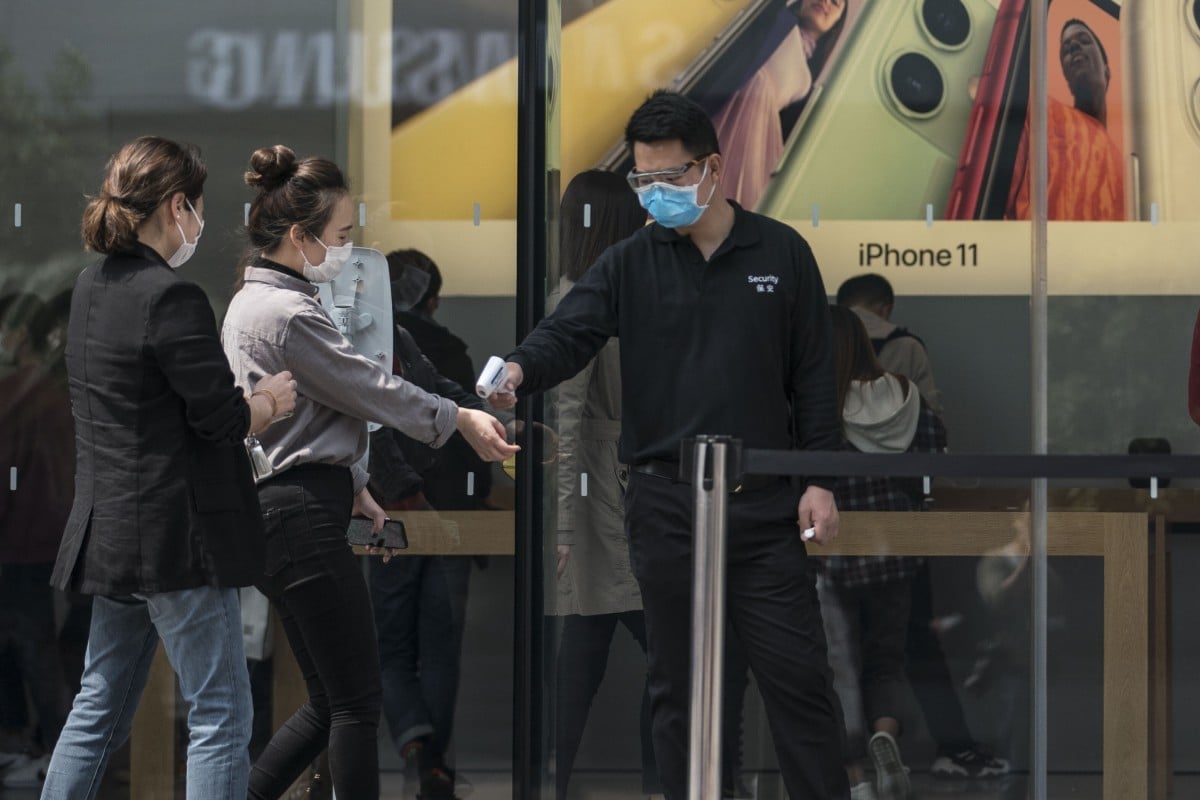
The landmark Apple Store in the popular Taikoo shopping centre is open, but with limited customers allowed inside, there are long queues outside. Customers are required to scan a QR code to check their movements over the last few days before entering.
Coronavirus: More schools reopen in China for students preparing for university entrance exams
“Why do I have to spend 20 minutes just to get into the Apple Store? The sun has almost melted me down,” one visitor complained to the security guards at the front of the shop.
China’s continued pandemic prevention measures, coupled with still hesitant consumer demand, will inevitably lead to persistent limitations on the nation’s economic recovery, analysts said.
Ernai Cui, an economist at research firm Gavekal Dragonomics, said on Monday that China’s cautious approach to lifting restrictions “points to a weak second quarter for consumer services”, adding additional pressure to the economic recovery.Mao Zhenhua, a researcher at the China Institute of Economics at Renmin University, said China’s preventive measures will inevitably be a drag on production, employment and exports.
BEIJING/SHANGHAI (Reuters) – China’s Inceptio Technology, a startup developing self-driving trucks, has raised $100 million in its latest funding round from logistics firm GLP, its key strategic investor G7 and other investors, two sources familiar with the matter told Reuters.
The proceeds from its series A funding round will be used to further develop its technologies and to start commercial trials, said the sources, who declined to be named as they were not authorised to speak to media.
The company, which aims to operate a freight network with autonomous driving trucks in China from 2022, has partnerships with Dongfeng Automobile Co Ltd (600006.SS), Sinotruk Hong Kong Ltd (3808.HK) and Foton (600166.SS).
The two-year-old firm is developing autonomous driving software and an in-car computing system while the truckmakers are responsible for the vehicles’ platforms.
Inceptio declined to comment. G7 and Singapore-based GLP did not immediately respond to requests for comment.
Inceptio focuses on level 3 and 4 technologies. A level 3 vehicle will enable drivers to turn their attention away from driving but they still need to take over if the car encounters a problem, while with level 4 technologies, there is no human intervention in most circumstances.
The trucking industry is expected to an earlier adopter of autonomous driving technology compared to passenger vehicle makers as driving on highways is more predictable than on busy city streets.
German automaker Daimler (DAIGn.DE) and U.S. postal giant United Parcel Service Inc (UPS.N) have invested in self-driving trucks.
CHANGSHA, March 30 (Xinhua) — Railway repair is well underway after a train derailed in the city of Chenzhou in central China’s Hunan Province Monday that killed one and injured 127.
The accident happened in Yongxing County at 11:40 a.m. when the train ran into a landslide, leaving five carriages derailed. The power generation car caught on fire.
The fire has been put out and all of the injured have been sent to hospital, with four in serious condition, local authorities said.
There were 691 people on board the train when the derailment occurred, rescuers said. Except for those injured that were sent to hospital, other passengers took shelter in a nearby primary school until buses were sent to deliver them to a high-speed railway station.
“We volunteered to cook noodles and dress the wounds of several hundred passengers in the school until they were picked up,” said Liu Guijiao, a local villager.
He Zhiwen from China Railway Guangzhou Group told Xinhua that about 380 meters of tracks need repair. The engineering department has prepared 450 meters of tracks and 1,600 railroad ties.
Carriages will be removed after the repairs are completed, but the time for the traffic to resume has not been decided yet.
He said over 1,000 workers have been sent along with seven excavators, six railcars, two large tampers and three relief trains.
“We will try our best to resume traffic as soon as possible,” said an engineer on site.
The train, T179, was running from the city of Jinan, east China’s Shandong Province, to Guangzhou in south China’s Guangdong Province.
The group said 88 trains on the southern section of the Beijing-Guangzhou railway have been affected, including 54 suspensions, 22 returns and 12 detours.
Television report shows how drivers are willing to pay more than US$20,000 for a sham marriage with someone who has a valid registration
City authorities ration the number of plates that allow people to use their cars in the capital as part of efforts to tackle pollution and congestion
Beijing has started limiting the number of plates issued as part of its efforts to tackle the city’s notorious pollution and congestion. Photo: EPA-EFE
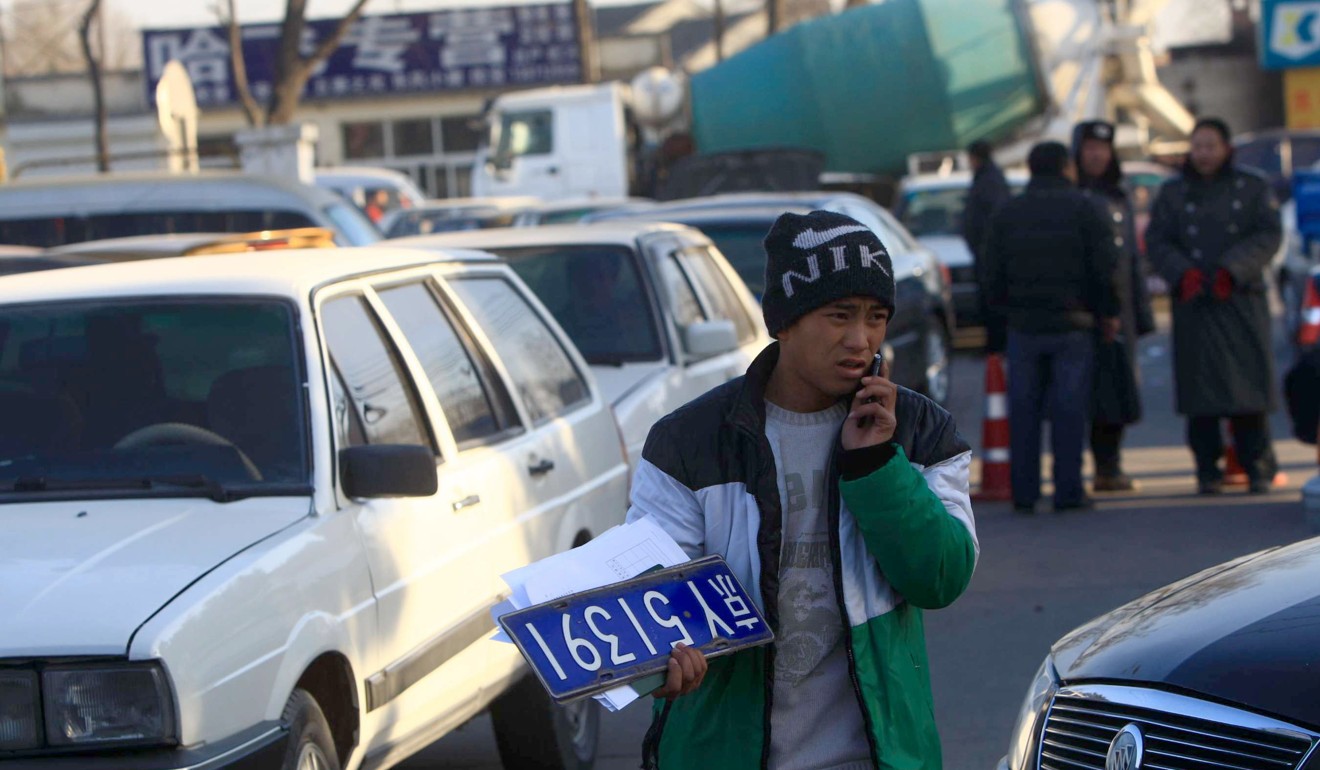
Some desperate Beijing motorists are resorting to sham marriages to get round strict licence plate rules that are designed to limit the number of cars allowed on the city’s congested roads.
A report by state broadcaster CCTV that aired on Sunday night claimed that some drivers were willing to pay the equivalent of tens of thousands of US dollars to marry someone with one of the prized plates, have it transferred into their name and then get divorced.
Specialist agencies charge over 160,000 yuan (US$22,700) to help their clients obtain a licence this way for a petrol-driven car, or over 110,000 yuan for an electric-powered one, according to the report.
The scam is the result of a licence lottery first introduced in 2011 to tackle the Chinese capital’s notorious congestion and pollution.
Chinese driver arrested for doctoring number plate to spell out obscene phrase
Because of the strict limits on the number of Beijing number plates issued, there are now 2,600 applicants for every one issued for petrol-powered vehicles. Those who wanted a licence for an electric car may have to wait until 2028, the report said.
The government has also been steadily lowering the annual quota for new local licences from 240,000 in 2013 to 100,000 last year.
The owners of locally registered cars are also banned from using them on one day a week, which is determined according to the plate number.
Cars that do not have a Beijing licence plate face severe limits on driving in the city. The owners of these cars must apply for a permit that only allows them to use their cars for seven days at a time – and as of this month they are only allowed 12 permits a year.
A man carries a number plate at a used car market in Beijing. Photo: AFP
The result is that many drivers have been looking for legal ways to get round the limits – with the sham marriages being one of the most extreme examples.
“We receive at least three or four clients a day asking to get a licence via fake marriages,” a manager at one agency told a CCTV reporter.
A staff worker helps go through all the procedures and if a suitable match is found, the process can be completed within 20 days.
Another loophole some are taking advantage of is to buy a car in the name of someone who has won the licence lottery, according to the agency.
Chinese police do U-turn on traffic crash after online crowd doubt official account
The actual user pays for the car in full, registers it under the licence owner’s name, and pays the latter a sum of money for using the licence – typically 20,000 yuan a year, 49,000 yuan for three years or 69,000 for a five-year deal.
In many cases, the two parties sign an agreement to limit the risk of a protracted dispute, but one judge warned that this was still a risky business.
Wang Lidan, a judge at Haidian District People’s Court in the northwest of the capital, told the programme makers that he knew of one case where a woman had paid a man with a Beijing licence to marry her, only for him to vanish after receiving the money.
Not only did the woman miss out on getting the licence but she faced an extra legal headache in getting a divorce.
Under Chinese law she had to first publish a notice about his disappearance in a newspaper and then wait three months before the divorce could go through the courts.
Record price for Beijing’s cubicle home shows desperation for hukou
Read more
Congestion or consumption? Beijing ponders trade-off on car purchases
Read more
Pollution alarm as tourism contaminates home of China’s hairy crab
Team from Dalian Institute of Chemical Physics says its goal is to ‘develop an all-season battery that is low cost but high safety for consumer products’
Researchers make breakthrough by using hard carbon and lithium vanadium phosphate
Chinese researchers say they have made a breakthrough in the development of small lithium batteries that can withstand low temperatures. Photo: Xinhua
Chinese researchers say they have found a way to produce a tiny, lightweight lithium battery for use in mobile phones and electric cars that can hold up to 80 per cent of its charge in temperatures as low as minus 40 degrees Celsius.
The breakthrough came by using a combination of a new material called hard carbon along with lithium vanadium phosphate, the team from the Dalian Institute of Chemical Physics said in a paper published in this month’s edition of the scientific journal Nano Energy.
“Our goal is to develop an all-season battery that is low-cost but high-safety for consumer products,” said Song Zihan, its lead author.
It was an unprecedented approach, but “we proved it works”, he said.
The idea of a battery that can withstand extreme cold is not new. Photo: Shutterstock
The idea of a battery that can withstand extreme cold is not new, and they are already in use in space and in the Arctic and Antarctic.
But they tend to be very bulky because of the heating system and large amount of insulation they need to function properly at sub-zero temperatures.
Such measures are neither physically nor economically viable for applications like smartphones, cameras, laptops or electric cars. The trick, Song said, was replacing the soft graphite in normal lithium batteries with hard carbon.
Graphite is a good conductor and often used for the anode at the bottom of a battery, where electrons are generated. But the performance of graphite drops as the mercury slides.
How military tech sparked a robot revolution in firework factories
Song said that hard carbon was a new material that had attracted a lot of research interest in recent years, and compared with graphite, it had a much higher tolerance for the cold.
That was because of its highly irregular and “almost messy” structure, comprising layers of carbon atoms that are interconnected with each other, he said.
However, hard carbon also caused a rapid depletion of the lithium ions that served as an agent carrying the electric flow in battery, he said.
The researchers want to make battery suitable for use in consumer products. Photo: EPA-EFE
In the past, researchers have tried adding lithium powders or flakes to improve battery life, but the approach has proven costly and dangerous, mostly because pure lithium is highly reactive.
So Song and his colleagues used a composite material called lithium vanadium phosphate as the positive cathode on top of the battery.
The composite was capable of providing enough extra lithium ions for the hard carbon’s need without increasing the risk of fire or explosion, and it was cheap, he said.
“The pairing of hard carbon and lithium vanadium phosphate worked a charm,” Song said.
But the technology is still a long way from being commercially viable.
The battery Song’s team made is far too small for any real-life applications, and enlarging it would require some “innovative engineering solutions”, he said.
Another scientist involved in the project said the team was working with battery manufacturers to see if the technology could be commercialised.
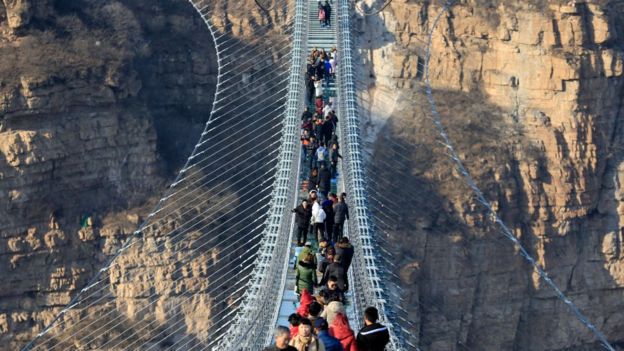
The Zhangjiajie bridge in Hunan province – which was the highest and longest glass-bottomed bridge in the world when it opened in 2016 – arguably kicked off the craze.
But earlier this year, one tourist died and six others were injured after they fell off a glass slide in Guangxi province.
Rain had made the glass extra slippery, causing the man to crash through the guardrail, and fly off the slide. He died from severe head injuries.
The Hongyagu glass bridge – which until May this year held the title of world’s longest glass bridge – was among those shut in Hebei province.
Image copyright GETTY IMAGESImage caption The Hongyagu bridge in Hebei province
The closures have not just affected Hebei province – across the country, a number have been shut.
Earlier this year, the government called for local tourism authorities to carry out “comprehensive safety assessments” of glass bridge projects.
On social media site Weibo, many applauded the closures, with one saying it was “about time safety was addressed”.
Others criticised the sheer number of glass bridges built over the past few years.
Media caption Thousands wobble over the world’s longest glass bridge in Hebei province, China
“I don’t really understand why there are so many glass bridges recently. It’s a waste of money,” said one commenter.
The death in Guangxi province was not the only glass attraction fatality. In 2017, a tourist died after an accident on a glass slide in Hubei.
And in 2016, someone was injured after being hit by falling rocks while walking on a glass walkway in the city of Zhangjiajie.
In 2015, a glass skywalk in Henan province cracked despite being open for only two weeks, sending tourists fleeing.
Thirty-six others were hurt, with nine being treated for serious injuries
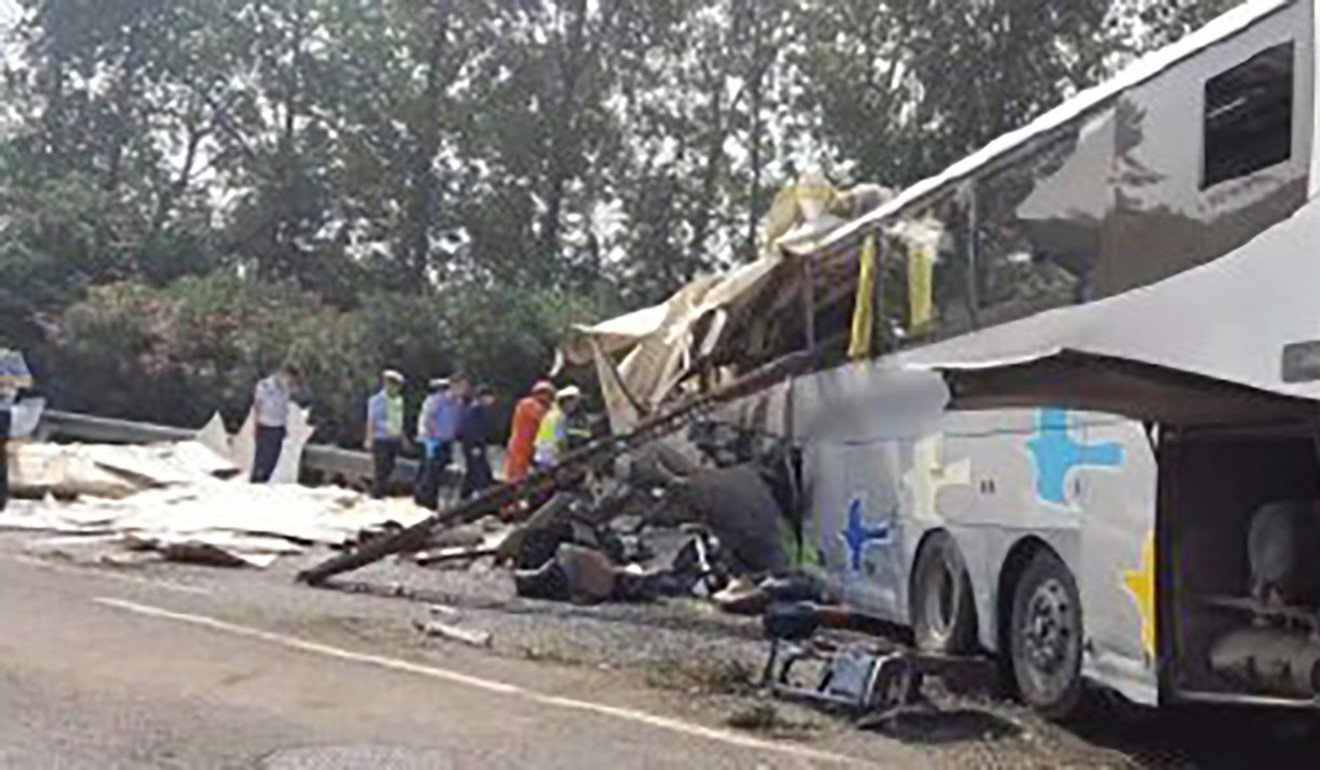
Bus had a tyre blowout and collided with road divider before slamming into truck in the opposite lane in Yixing, Jiangsu province, police say
The expressway reopened after a rescue operation of more than eight hours. Photo: Weibo
Thirty-six people were killed and another 36 injured when a coach had a tyre blowout and crashed into a truck on an expressway in eastern China on Saturday.
The coach, which had 69 passengers on board, collided with a road divider before slamming into a truck in the opposite lane at about 7am, the Yixing municipal police department said in a statement on Sunday.
There were three people in the truck.
The accident happened on the Yixing section of the Changchun-Shenzhen Expressway in Jiangsu province.
A rescue operation took more than eight hours, and the injured were taken to hospitals in nearby Yibing.
Nine people were seriously injured, 26 were being treated for minor injuries and one had been discharged from hospital, according to the statement.
A tyre blowout may have caused the accident on Saturday morning. Photo: Weibo
Police are still looking into the crash but said “according to our preliminary investigation, the accident was caused by a blowout of one of the coach’s front tyres”.
ahead of National Day and the week-long holiday marking it, as all levels of government try to make sure nothing goes wrong.
This month, local governments were told to check factories, restaurants, rental accommodation, scenic spots close to water and roads for safety hazards and to take measures to prevent fire, crashes or other accidents, according to media reports.
Traffic accidents are common in China, where about 200,000 people lose their lives on the roads every year, according to the World Health Organisation.
Visually spectacular and with the latest technology, the Chinese capital’s second international airport is open for business
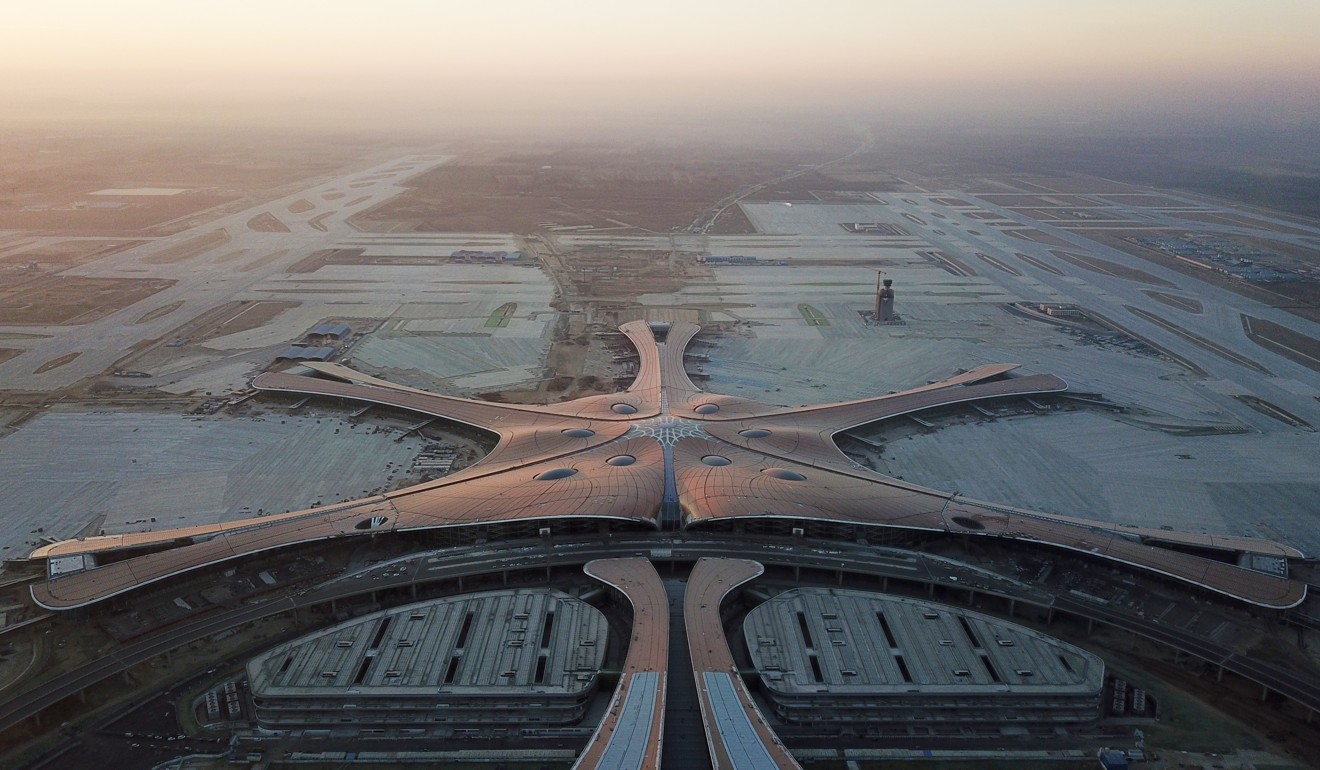
The terminal building at Beijing Daxing International Airport, which has officially opened. Photo: Xinhua
At 4.23pm on Wednesday a China Southern Airlines A380 left Beijing for Guangzhou – on the first commercial flight out of the world’s latest and largest airport terminal at Daxing, five years after construction began on the ambitious project.
The 80 billion yuan (US$11 billion) Beijing Daxing International Airport was officially opened by Chinese President Xi Jinping on Wednesday morning.
China Southern Airlines, the mainland’s largest carrier, has 40 per cent of the flight slots at the new airport. It is one of 16 airlines which will be operating out of Beijing Daxing International Airport, the visually spectacular new facility at the southern end of the Chinese capital.
Six other flights, including China Eastern Airlines for Shanghai and Air China for Chengdu, took off before 5pm in the afternoon. These domestic airlines will have part of their operations moving to Daxing for the upcoming winter-spring season, according to the mainland’s aviation authority. No Hong Kong airlines were listed.
British Airways has announced its whole operation will be moved to Daxing, while some foreign airlines, such as Ethiopian Airlines, Polish Airlines, Malaysia Airlines, Royal Air Maroc and Finnair, will operate at both airports.
Spanning 47 sq km (18 square miles) – almost 50 per cent larger than the city of Macau – Daxing, with its 700,000 square metre (7.5 million sq ft) terminal is a spectacular sight. Its futuristic shape, resembling a giant hexagonal starfish or – as some internet users have dubbed it – an alien base, not only handles more aircraft, it also keeps passengers’ walks
From the centre of the security check to the furthest end gate in each wing is about 600 metres (1,970 feet), or less than an eight-minute walk.
Beijing’s new 7-runway, star-shaped Daxing airport opened by Xi Jinping
According to Xinhua, more than 70 restaurants, tea shops and coffee houses will operate in the airport, along with 36 international brands, including Louis Vuitton, Gucci and Bottega Veneta.
Daxing is designed to take pressure off the overcrowded Beijing Capital International Airport (BCIA) and, by 2021, is expected to handle 45 million passengers a year, rising to 72 million by 2025.
Located at the south of the capital, 46km (28.5 miles) from the central Tiananmen Square, the airport was once frowned upon for its less than optimal location, with its southern end at the border with Hebei province. But it may not be as time-consuming for travellers as originally thought.
The design of the airport means passengers will walk a much shorter distance to the check-in and security check.Hu Haiqing, China Southern Airlines
Hu Haiqing, deputy general manager of China Southern Airlines’ operation control centre, told Global Times that “although Daxing is further away from downtown Beijing than the Capital airport, there are still some advantages, especially for our airline”.
With most of its bases in the south of the country, China Southern Airlines flights to Daxing will be 10 to 15 minutes shorter than to the Capital airport. A further 15 to 20 minutes taxiing time will also be saved, thanks to its position in the new airport.
“The design of the airport also means passengers, once they leave their car or train, will walk a much shorter distance to the check-in and security check,” Hu said.
According to Xinhua, Daxing’s design also makes transit much quicker, with transfers between international and domestic flights up to 90 minutes shorter than from the Capital airport.
The futuristic shape of Daxing airport not only handles more aircraft, it also keeps passengers’ walks to a minimum. Photo: Xinhua
Public transport will be the quickest way to reach the new airport from downtown Beijing – 20 minutes from West Beijing railway station once the Beijing-Xiongan high-speed rail officially opens. The airport express service will also take passengers from Caoqiao station to the airport in 19 minutes.
There is no underground rail service or airport express connecting the Capital airport in the north with Daxing, but passengers can change trains at Caoqiao for downtown Beijing or other stations which connect with BCIA’s airport express service.
Waiting times at the new airport will be greatly reduced by the use of facial recognition technology for self-service check-in and smart security checks, according to Wang Hui, manager of Daxing’s terminal management department.
The technology does away with the need for a paper boarding pass and passengers can check-in, with or without luggage, and go through the security check by themselves.
Beijing is the window for China to go global … Daxing airport makes it possible to open more global routes.China Eastern Airlines pilot
“The airport has more than 400 self-service check-in kiosks, which means more than 80 per cent of check-ins will be self-service. That shortens each passenger’s queuing time to no more than 10 minutes,” Wang told Global Times.
“The smart security check channels are able to handle 260 passengers per hour, 40 per cent faster than using traditional means,” he said.
The opening of Daxing Airport could be a great boost for the mainland – and even the global – aviation industry by easing pressure on the Capital airport and making new routes possible, said a veteran China Eastern Airlines pilot who declined to be named.
5 things we know about Beijing’s new Daxing International Airport
Opening new flight routes from BCIA was almost impossible, he pointed out, because the centre of Beijing was a no-fly zone for security reasons. Daxing airport’s location at the southern end of the city, however, avoided the problem of planes having to bypass the restricted space, leaving room to open more routes for domestic and international flights.
“Beijing is the window for China to go global but the Capital airport’s schedule is saturated and unable to open new routes. Daxing airport makes it possible to open more global routes,” the pilot said.
He said the runway design at Daxing also meant fewer delays, because the four runways of phase one – more than any other airport in China – included one which was perpendicular to the other three, allowing flights to land and take off regardless of wind direction.
Two people from the circus have been detained after the animal managed to get out of its cage and run towards nearby cornfields on Friday evening
It was found the next morning and police used a tranquilliser to subdue the tiger but it died on the way to the zoo, which believes it had been hit by a car
Video footage shows circus handlers using sticks to try to coax the tiger back inside the cage after it escaped on Friday night. Photo: Thepaper.cn
A circus tiger that escaped from its cage during a show in central China was captured by police after an overnight search, but died while it was being transported to a nearby zoo, according to media reports.
Two people from the circus where the tiger was raised in the county of Yuanyang, Henan province, have been detained, Beijing Youth Daily reported, without elaborating. It said the tiger escaped during the circus’ first public show, which had not been registered with the local authorities.
The tiger was part of a performance for a local school on Friday evening when it managed to get out of its cage and run towards nearby cornfields.
A video posted by news site Thepaper.cn shows the moment it escaped from the cage, with its handlers using sticks to try to coax the animal back inside. The scene is chaotic, as people scream and run from the venue.
A tranquilliser dart was used to subdue the tiger on Saturday morning and it was transported to a zoo in Xinxiang. Photo: Thepaper.cn
The police were called in, and officers used drones, police dogs and thermal imaging equipment to hunt for the tiger, according to the local government.
The authorities also put out an emergency advisory telling residents to stay indoors and contact police if they had any information on the tiger’s whereabouts.
It was spotted the following morning, and a tranquilliser dart was used to subdue the animal at about 10.30am on Saturday. The tiger was then transported to a zoo in the city of Xinxiang.
According to one of its zookeepers, the animal had already died by the time it was delivered to the zoo, China Youth Daily reported on Sunday.
The \jsq, surnamed Feng, said the tiger was hit by a car after it escaped and may have sustained internal injuries. The zoo is conducting an autopsy.
Chinese circus tiger attacks two children after breaking out of cage in middle of performance
Thousands of social media users expressed their sympathy for the tiger’s plight, saying it must have suffered greatly, with many people calling for animal circuses to be banned in China.
“Tigers don’t belong in cages, they belong in the wilderness,” one person wrote on microblog site Weibo.
Chinese circus defends using rare animals in its acts despite poor crowds at shows and criticism of its methods.















 CHINDIA ALERT: You'll be living in their world, very soon
Chinese self-driving truck startup Inceptio raises $100 million – sources
BEIJING/SHANGHAI (Reuters) – China’s Inceptio Technology, a startup developing self-driving trucks, has raised $100 million in its latest funding round from logistics firm GLP, its key strategic investor G7 and other investors, two sources familiar with the matter told Reuters.
The proceeds from its series A funding round will be used to further develop its technologies and to start commercial trials, said the sources, who declined to be named as they were not authorised to speak to media.
The company, which aims to operate a freight network with autonomous driving trucks in China from 2022, has partnerships with Dongfeng Automobile Co Ltd (600006.SS), Sinotruk Hong Kong Ltd (3808.HK) and Foton (600166.SS).
The two-year-old firm is developing autonomous driving software and an in-car computing system while the truckmakers are responsible for the vehicles’ platforms.
Inceptio declined to comment. G7 and Singapore-based GLP did not immediately respond to requests for comment.
Inceptio focuses on level 3 and 4 technologies. A level 3 vehicle will enable drivers to turn their attention away from driving but they still need to take over if the car encounters a problem, while with level 4 technologies, there is no human intervention in most circumstances.
The trucking industry is expected to an earlier adopter of autonomous driving technology compared to passenger vehicle makers as driving on highways is more predictable than on busy city streets.
German automaker Daimler (DAIGn.DE) and U.S. postal giant United Parcel Service Inc (UPS.N) have invested in self-driving trucks.
Source: Reuters
Posted in $100 million, 2022, aims, attention, authorised, autonomous driving, autonomous driving technology, away from, busy, car, China, Chinese, circumstances, city streets, comment, commercial, Company, compared, computing system, DAIMLER (DAIGn.DE), declined, developing, Dongfeng Automobile Co Ltd, drivers, driving, earlier adopter, encounters, expected, firm, focuses, Foton, freight network, funding, funding round, further develop, G7, German automaker, GLP, Highways, human intervention, immediately, in-car, Inceptio Technology, investors, key strategic investor, latest, level 3 and 4, level 3 vehicle, level 4 technologies, logistics firm, Makers, media, most, named, partnerships, passenger vehicle, predictable, problem, proceeds, raised, respond, responsible, round, self-driving truck, self-driving trucks, series A, Sinotruk Hong Kong Ltd, software, sources, speak, start, startup, take over, technologies, to operate, to requests, trials, trucking industry, truckmakers, trucks, turn, two-year-old, U.S. postal giant, Uncategorized, United Parcel Service Inc (UPS.N), used, vehicles’ platforms, while, will enable | Leave a Comment »