Chindia Alert: You’ll be Living in their World Very Soon
aims to alert you to the threats and opportunities that China and India present. China and India require serious attention; case of ‘hidden dragon and crouching tiger’.
Without this attention, governments, businesses and, indeed, individuals may find themselves at a great disadvantage sooner rather than later.
The POSTs (front webpages) are mainly 'cuttings' from reliable sources, updated continuously.
The PAGEs (see Tabs, above) attempt to make the information more meaningful by putting some structure to the information we have researched and assembled since 2006.
Chinese State Councilor Wang Yong (C, back) speaks at a meeting ahead of the central government’s tour of inspection on provincial governments in production safety and fire control in Beijing, capital of China, April 10, 2019. (Xinhua/Ding Haitao)
BEIJING, April 10 (Xinhua) — Chinese State Councilor Wang Yong stressed Wednesday that major accidents must be prevented and contained.
Efforts should be made to stabilize and improve production safety and fire control, Wang said at a meeting ahead of the central government’s tour of inspection on provincial governments in these fields.
The tour of inspection is an important institutional arrangement that focuses on the implementation of the central authorities’ decisions and plans in production safety and fire control, Wang said.
Local governments which failed to rectify their problems and saw recurring accidents will be strictly held accountable, Wang said.
A specific inspection will be held for work related to dangerous chemical products, while checks will be made in coal and non-coal mines, transport, construction and fire control.
Local governments should live up to their supervision duties and take effective prevention measures to fundamentally keep safety accidents from happening, Wang said.
Foreign lifestyle experiences are becoming more popular as citizens seek to escape pollution, food and medicine safety worries and authoritarian government controls
Citizens encountering more barriers to their dreams of travelling abroad, with severe limits on moving money overseas and restrictions on visiting foreign countries
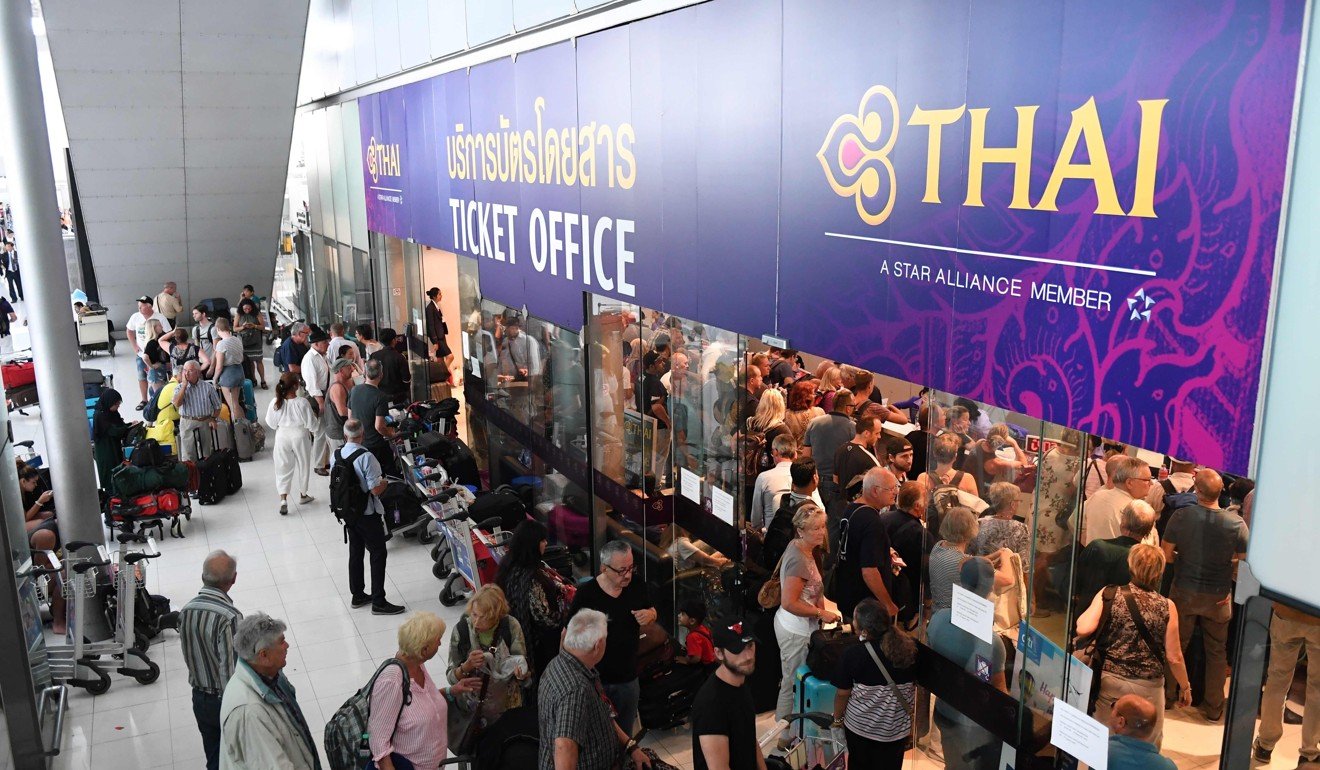
Thailand, including the likes of Chiang Mai, the United States, Australia, Canada, New Zealand are popular destinations for Chinese families. Photo: Shutteratock
Xu Zhangle and her husband and their two children are a typical middle-class couple from Shenzhen, and along with 60 other Chinese families, they are going on an extended holiday to Thailand in July, where they hope to enjoy an immigrant-like life experience.
The family have paid a travel agent around 50,000 yuan (US$7,473) for the stay in Chiang Mai in the mountainous north of the country, including transport, a three-week summer camp for their daughters at a local international school, rent for a serviced apartment and daily expenses.
Zhangle loves Chiang Mai’s relaxed lifestyle and easy atmosphere and wants to live as a local for a month or even longer, instead of having to rush through a short-term holiday.
“It would not be just [tourist] travelling but rather a life away from the mainland.” she said.
Recently, upper middle-class citizens have increased their efforts to safeguard their wealth and achieve more freedom by spending more time abroad.
They have invested considerable amounts of money in overseas properties and applied for long-stay visas, although many of their attempts have ended in failure.
Chinese citizens are encountering more barriers to their dreams of travelling abroad, with severe limits on moving money overseas and restrictions on visiting foreign countries.
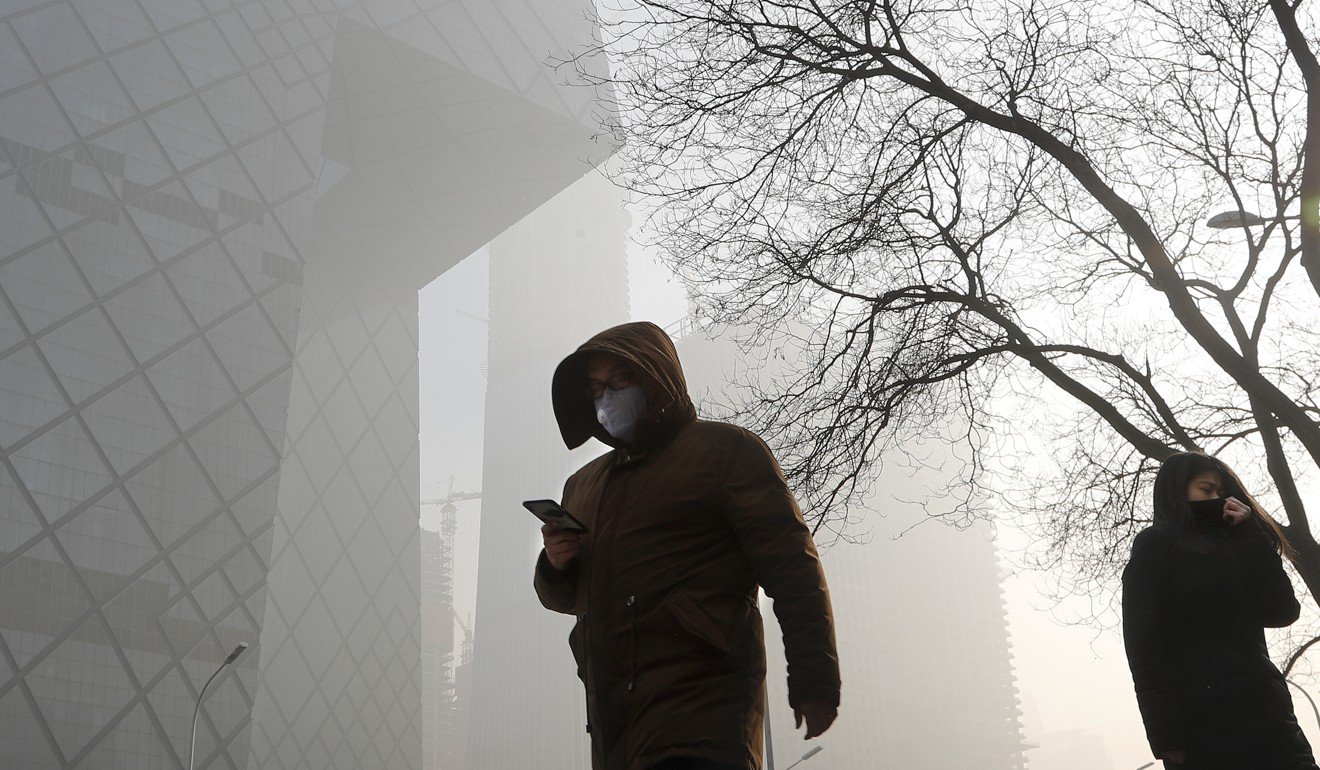
Still, growing anxieties about air pollution, food and medicine safety and an increasingly authoritarian political climate are pushing middle class families to look for new ways to circumvent the obstacles so they can live outside China.
Among the options, there is growing demand for sojourns abroad of a month or more, to enjoy a foreign lifestyle for a brief period to make up for the fact that their emigration dreams may have stalled.
“I think this is becoming a trend. Chinese middle-class families are facing increasing difficulties to emigrate and own homes overseas. On the other hand, they still yearn for more freedom, for a better quality of life than what is found in first-tier cities in China.
They are eager to seek alternatives to give themselves and their children a global lifestyle,” said Cai Mingdong, founder of Zhejiang Newway, an online tour and education operator in Ningbo, south of Shanghai.
“First, the availability of multiple-entry tourist visas and the sharp drop in air ticket prices have made it convenient and practical to stay abroad for from a few weeks to up to three months each year.”
Blacklist labels millions of Chinese citizens and businesses untrustworthy
Now, many well-to-do Chinese middle class families can get a tourist visa for five or even 10 years that allows them to stay in a number of countries — including the United States, Australia, Canada, New Zealand and other Asian countries — for up to six months at a time.
“In 2011, a round-trip air ticket from Shanghai to New Zealand cost 14,000 yuan (US$2,000), but now is about 4,000 (US$598),” added Cai.
This opens up the possibility for many middle-class families who are not eligible to emigrate, to live abroad for short periods of time.
Many wealthy Chinese middle class families can get a tourist visa for five or even 10 years that allows them to stay in several countries including the United States, Australia, Canada, New Zealand and other Asian countries, for up to six months at a time. Photo: AP
Chinese tourists made more than 140 million trips outside the country in 2018, a 13.5 per cent increase from the previous year, spending an estimated US$120 billion, according to the China Tourism Academy, an official research institute under the Ministry of Culture and Tourism.
“In [the Thai cities of] Bangkok and Chiang Mai, there are more and more Chinese who stay there to experience the local lifestyle, which is different from theirs in China. The life there is very different from that in China,” said Owen Zhu, who now lives in the Bangkok condo he bought last year.
“The freedom, culture and community are diversified. The quality of air, food and services are much higher than in first-tier cities in China, but the prices are more affordable.
“In Bangkok, in many international apartment complexes where foreigners live, the monthly rent for a one-bedroom [apartment] is about 2,000 (US$298) to 3,000 yuan.”
China’s richest regions are also home to the most blacklisted firms
A one-bedroom apartment in Shenzhen in southern China is twice as expensive, with rents continuing to rise rapidly.
There are global goods, and it is easy to socialise with different people from around the world,” Zhu added
“Many Chinese people around me, really, come to Thailand to live for a while and go back to China, but then come back again after a few months.”
Both Cai and Zhu said they discovered the new phenomenon among China’s middle class and decided it was a business opportunity.
Growing anxieties about air pollution, food and medicine safety and an increasingly authoritarian political climate are pushing middle class families to look for new ways to circumvent the obstacles so they can live outside China. Photo: AP
Zhu is in the process of registering a company in Bangkok and plans to build an online platform to service the needs of Chinese citizens living abroad who do not own property or have immigration status, especially members of the LGBT community.
Cai said dozens of Chinese families in the Yangtze River Delta had paid him to send their children to schools in New Zealand or Europe for around three or four weeks in the middle of the school year, while the parents rent villas in the area, with New Zealand and Toronto in Canada among the most popular destinations.
Last year, Zheng Feng, a single mother and freelance writer from Beijing, rented a small villa in Australia for a month for them, a friend and their children to escape Beijing’s pollution and experience life overseas.
“To be honest, I don’t have enough money to invest in a property or a green card in Australia. But it’s very affordable for me and my son to pay about 30,000 yuan (US$4,484) to live abroad for one or two months.” Zheng said.
China says 2018 growth was worth more than Australia’s whole GDP
Zheng will join the Xu family in Chiang Mai later this year and she is also planning a similar trip to England next year.
Zheng’s friend, Alice Yu, invested in an American EB-5 investor visa a few years ago, and plans to make one or two month-long trips abroad each year until her family is finally able to move to the United States.
Demand for the EB-5 investor visa in China seems to be waning given heightened uncertainty about the future of the programme and US immigration law in general under US President Donald Trump.
Approval for the visa can now take up to 10 years, resulting in a huge backlog that has further dampened interest and led to a significant dip in investment inflows into the US from foreign individuals.
A one-bedroom apartment in Bangkok can cost around bout 2,000 (US$298) to 3,000 yuan a month. Photo: AFP
“Maybe it will soon become standard for a real Chinese middle-class family to have the time and money to enjoy a long stay at a countryside villa overseas,” said Yu.
“Regardless of whether we can get a long-term visa for the United States, I want my children grow up in a global lifestyle and with more freedom than just growing up on the mainland. So do all wealthy and middle class Chinese families, I think.”
Karen Gao’s son started studying at an international school in Chiang Mai in June, at the cost of about 70,000 yuan (US$10,462) a year, after she quit her job as a public relations manager in Shenzhen and moved to Thailand on a tourist visa.
For better or worse? China’s complicated employment explained
“A few months each year for good air, good food and no censorship and internet control, but cheaper living costs compared to Beijing, it sounds like a really good deal to go,” said Gao, who has now been offered a guardian visa to accompany her son, who has already been given a student visa.
“In Shenzhen, I wasn’t able to get him into school because I had no [local] residence permit.
“It would be the best choice for us because we feel so uncertain and worried about investing and living in the mainland.”
Last year, Gao, like thousands of other private investors mostly middle class people living in first-tier cities, suffered significant losses when their investments in hotels and inns in Dali, Yunnan province, were demolished amid the local government’s campaign to curb pollution and improve the environment around Lake Erhai.
“We were robbed by the officials without proper compensation,” Gao said.
URUMQI, March 2 (Xinhua) — Farmers at a small village in western Xinjiang hardly had any days off this winter. Production at a walnut processing factory is going full throttle to meet demand.
Yusup Tursun and his wife are walnut farmers in Kupchi Village in Yecheng County on the edge of the Taklimakan Desert. The couple has been hired by a new walnut processing facility in the village, with the husband a quality inspector and his wife working part-time cracking nuts.
As a main base for walnut production, Yecheng has over 38,000 hectares of high-quality thin-shell walnut groves.
“It used to be quite difficult to sell the walnuts. The factories, with so many products, have made it easier for the sales,” Yusup said.
Seven companies make products from the nuts — walnut milk, walnut candies and edible oil. The shells are made into coloring agent and pollutant-absorbing carbon.
Diversity in the walnut products pushed the industry output to a new high of 2 billion yuan (about 299 million U.S. dollars). Three in every five people work in the walnut industry in Yecheng, where 550,000 people live.
Across Xinjiang, processing facilities are established to add value to agricultural products. Transport and logistical services are improved to boost the sales of Xinjiang’s signature agricultural products such as Hami melons, Korla pears and Turpan grapes.
UP THE VALUE CHAIN
Xinjiang is also moving up the value chain in two of its traditional industries — cotton and coal.
As one of the main cotton production bases in China, Xinjiang holds sway in the textile industry. By making full use of its cotton resources and geographical advantages as a portal for opening up, the region no longer sees itself as just a production base for raw materials. Starting from 2014, China’s leading garment and apparel makers including Ruyi Group, HoDo Group, and Huafu Fashion Co. Ltd invested in the region and built factories.
These factories have produced added benefits and created jobs for the local people. Xinjiang produces 1.5 million tons of yarn and over 40 million ready-made garments every year. More than 400,000 people work in the industry.
In the eastern part of the coal-rich Junggar Basin, workers have found that the snow is cleaner than before. The Zhundong Economic Technological Development Park, about 200 km west of Urumqi, is home to China’s largest coal field.
A stringent environmental requirement is applied to the park, said Ren Jianpin, director of the management committee of the park. Coal enterprises are required to control coal dust, install equipment to recycle water and coal slags are processed into construction materials, he said.
The park is focused on boosting high-end industries in aluminum and silicon materials, which generate more value and have less impact on the environment, he said.
GOING HI-TECH
Last year, a large-scale bio-based plant went into operation in Usu City to turn corn into nylon. The Cathay Industrial Biotech, a Shanghai-based biotech company, is the investor.
Nylon is usually made from petroleum, and the use of crops such as corn and wheat to make recyclable and environment-friendly nylon has promising business prospects, said Wang Hongbo, vice general manager of the company’s Usu branch.
The Usu branch will have an annual output of 100,000 tons of bio-based polyamide, and it is expected to boost the development of downstream industries in the future, he said.
The oil-rich city of Karamay has also received a hi-tech boost as cloud computing firms eye the dry and cold weather in the area. Karamay is home to many key state-level projects and IT-industry leaders, including a global cloud service data center for Huawei, data centers for the China National Petroleum Corp. (CNPC) and China Mobile.
Xinjiang is making new breakthroughs in precision machining, new materials, manufacturing and textiles.
Data from the regional statistics bureau show that the value added of the hi-tech manufacturing in Xinjiang rose by 32.1 percent year-on-year in 2018.
FURTHER OPENING UP
As a core area on the Silk Road Economic Belt, Xinjiang has maintained solid growth momentum in foreign trade. Foreign trade volume between Xinjiang and 36 countries and regions along the Belt and Road (B&R) totaled about 291.5 billion yuan (43.5 billion U.S. dollars) in 2018, up 13.5 percent year on year.
Economic observers say that there is still much room for Xinjiang to scale up its processing trade to raise the level of imports and exports.
Xinjiang will further develop an export-oriented economy in 2019 and participate in economic exchanges with neighboring countries, according to the regional government’s work report released in January.
Passengers are seen at the station hall of Nanchangxi Railway Station in east China’s Jiangxi Province, Feb. 10, 2019. Railway trips in China reached 60.3 million during the week-long Spring Festival holiday from Feb. 4 to Feb. 10, data from the national railway operator showed Monday. (Xinhua/Peng Zhaozhi)
BEIJING, Feb. 11 (Xinhua) — Railway trips in China reached 60.3 million during the week-long Spring Festival holiday from Feb. 4 to Feb. 10, data from the national railway operator showed Monday.
On Feb. 10, some 12.6 million passenger trips were made by rail, up 4.4 percent year on year, according to the China Railway Corporation (CRC).
Hundreds of millions of Chinese went back to their hometowns to celebrate the Chinese Lunar New Year with their families. The annual travel rush around the festival, known as “chunyun,” often puts the country’s transportation system to the test.
This year’s Spring Festival travel rush started from Jan. 21 and will last till March 1, with railway trips expected to hit 413 million in total, up 8.3 percent.
BEIJING, Feb. 6 (Xinhua) — The national railway operator has predicted the number of passengers to continue to grow during the Spring Festival holiday due to rising short-distance travel demand.
The China Railway Corporation said it will add 208 trains on Wednesday to handle a total of 7.67 million railway trips expected, up 8.5 percent year on year.
Local railway bureaus have increased services in remote towns and villages, worked to help passengers transfer to buses and subways, offered better Wifi access and allowed fast security checks for the elderly and disabled.
Around 4.22 million railway trips were made Tuesday, up 9.6 percent year on year.
Hundreds of millions of Chinese go back to their hometowns to celebrate the Chinese Lunar New Year each year, creating an annual travel rush around the festival that often puts the transport system to the test.
This year’s Spring Festival travel rush started from Jan. 21 and will last till March 1, with railway trips expected to hit 413 million in total, up 8.3 percent.
BEIJING, Feb. 6 (Xinhua) — Railway passenger trips in China rose 8.6 percent year on year to 143 million during the first 15 days of the annual travel rush around the Spring Festival.
On Jan. 26, more than 10.49 million passenger trips were made by rail, a daily record for the travel rush, data from the China Railway Corporation (CRC) showed.
Hundreds of millions of Chinese are going back to their hometowns to celebrate the Chinese Lunar New Year with their families.
The annual travel rush (chunyun) around the festival often puts the transport system to the test.
As more trains have been put into operation, railway transport capacity improved by 5.3 percent this year during the travel rush, according to the CRC.
The Spring Festival travel rush started from Jan. 21 and will last till March 1, with railway trips expected to hit 413 million in total, up 8.3 percent.
Failure to strike a deal would have seen tariffs on $200bn worth of Chinese goods rise from 10% to 25% at the start of next year, and would have opened the way for tariffs on additional Chinese goods.
On Monday, China’s foreign ministry said the presidents of China and the US had instructed their economic teams to work towards removing all tariffs following the G20 meeting,
But it didn’t say if that was a plan with specifics or something that was merely desirable.
Asian markets rallied after news of the trade war truce. In China, Hong Kong’s Hang Seng index climbed 2.5% and the Shanghai Composite index jumped 2.6%. Japan’s Nikkei 225 index rose 1%.
The gains spread to Europe, with the UK’s FTSE 100 index, the Cac 40 in France and Germany’s Dax index all up by about 2% in early trade.
The trade war has seen the US and China hit each other with escalating tariffs in an attempt to make their domestically made goods more competitive.
The US says its tariff policy is a response to China’s “unfair” trade practices and accuses it of intellectual property theft.
Since July, the US has hit China with tariffs on $250bn (£195.9bn) worth of goods. China has retaliated with duties on some $110bn of US goods over the same period.
As part of this, the US imposed a 25% tariff on Chinese cars, on top of the 2.5% already in place.
In July, China, which is the world’s largest market for cars, imposed a 40% tariff on US vehicle imports. The rate is much higher than the 15% it places on other trading partners and forced many carmakers to raise prices.
In his tweet, President Trump said Beijing had “agreed to reduce and remove tariffs on cars coming into China from the US”.
He did not provide a new level for the Chinese tariffs, and Beijing did not immediately confirm the statement.
What was agreed at the G20?
In a statement, the White House said US tariffs on Chinese goods would remain unchanged for 90 days, but added: “If at the end of this period of time, the parties are unable to reach an agreement, the 10 percent tariffs will be raised to 25 percent.”
Image captionThe US manufactures cars for export to China, the world’s largest car market
The US said China agreed to “purchase a not yet agreed upon, but very substantial, amount of agricultural, energy, industrial, and other products from the United States to reduce the trade imbalance between our two countries”.
Both sides also pledged to “immediately begin negotiations on structural changes with respect to forced technology transfer, intellectual property protection, non-tariff barriers, cyber intrusions and cyber theft”, according to the White House.
Chinese Foreign Minister Wang Yi told reporters after the talks that “the principal agreement has effectively prevented further expansion of economic friction between the two countries”.
Are tariffs still in place?
Yes. The truce prevents raising tariffs as planned on $200bn worth of Chinese goods.
But it does not remove tariffs that apply to a total of $250bn of Chinese goods targeted since July.
The truce also does not affect the existing duties China has imposed on $110bn of US goods in a tit for tat retaliation.
Will this resolve the dispute?
While the result of the G20 meeting was better than expected, it is unclear how the two countries will manage to resolve their underlying differences.
“There should be no wishful thinking that the truce would end the trade war between the world’s two largest economies,” DBS strategist Philip Wee wrote in a research note.
He said it “remains to be seen if real progress could be achieved during this narrow window to resolve the contentious issues, not just on trade, but also intellectual property”.
Louis Kuijs, head of Asia economics at Oxford Economics, said while the agreement itself was “positive” the next steps remained unclear.
“Whether we will see further de-escalation or whether it is temporary reprieve continues to be very much up to a political decision in Washington DC – that will continue to make this uncertain,” Louis Kuijs, head of Asia economics at Oxford Economics said.
A cargo train loaded with 41 containers of electronic products departed from Chengdu, capital of southwest China’s Sichuan Province, for the Netherlands on Wednesday.It brings the total number of cargo trains from Chengdu to Europe to 1,000 this year, and 1,700 since the city launched the service in 2013.The city has rail routes to 14 European countries.”Rail freight is one of the fields where the Sino-European cooperation has made very important progress and will continue to do so in the future,” said Filippo Nicosia, Italy Consul General in Chongqing.In 2018, at least 1,000 cargo trains are expected to run from Chengdu to Europe.Demand for rail cargo between China and Europe, an alternative to slower and riskier sea freight and much costlier air cargo, has exploded in recent years.About 35 Chinese cities run cargo trains to Europe.
Mostly funded by a $17bn loan from Japan, the bullet train will run between Ahmedabad and Mumbai
Japan’s Prime Minister Shinzo Abe has launched work to build India’s first high-speed train in Prime Minister Narendra Modi’s home state of Gujarat.Mostly funded by a $17bn (£12.78bn) loan from Japan, the bullet train will run between Ahmedabad city and Mumbai.
When the service starts operating in five years’ time, the 500km (310-mile) journey time is expected to be cut to three hours from the current eight.
Mr Abe is making a two-day visit to India, a close ally of Japan.
“My good friend Prime Minister Narendra Modi is a far-sighted leader. He took a decision two years ago to bring high-speed train in India and to create a new India,” he said, after laying the foundation stone on Thursday.
“I hope to enjoy the beautiful scenery of India through the windows of the bullet train when I come back here in a few years.”
The 750-seat train is scheduled to run from August 2022.
Does India need bullet trains?
Japan and India sign bullet train deal amid closer ties
India’s railway system carries more than 22 million passengers a day and much of the equipment is out of date, leading to frequent accidents and chronic delays.
It is part of the government’s ambition to link major cities with high-speed trains, but critics say passengers would be better served if investments were made to improve safety on the current, ageing rail network.
Supporters of the project say high speed trains will lead to improved commuter convenience, reduced congestion in big cities, more business, and improved infrastructure along the route.
Mr Modi has promised to make vast improvements to the network, and the bullet train was one of his key promises in the 2014 election.
India’s bullet train
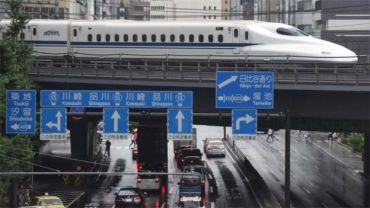
Japan is a pioneer in high-speed rail transport
It will travel a distance of 500km (310 miles), cutting the journey time from Ahmedabad to Mumbai from eight to three hours.
There will be 12 stations on the route.
The majority of the route will be elevated. A part of it will run through a 7km long undersea tunnel.
It will have top speeds of up to 350km/h (217mph), more than double the maximum speed offered by the fastest trains running in India.
Japan is a pioneer in high-speed rail transport and some of their trains are ranked among the fastest in the world.
“This technology will revolutionise and transform the transport sector,” Indian Railways Minister Piyush Goyal was quoted as saying by Reuters news agency.
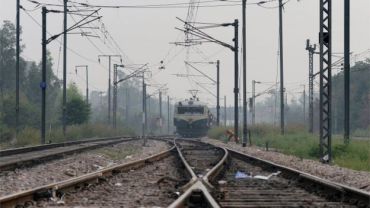
India’s railway tracks need to be modernised
Mr Modi recently replaced his railway minister after a series of accidents, including one last month which killed at least 23 passengers in the northern state of Uttar Pradesh.
A previous accident in the same state last November killed 150 people, while one the year before killed 39.
Mr Modi and Mr Abe are expected to sign several agreements during the visit, and also inaugurate a Japanese industrial park. Gujarat already hosts Japanese automobile plants.The two leaders enjoy a close friendship – Mr Modi chose Japan as the destination for his first bilateral visit outside South Asia as prime minister.
Both countries are in territorial disputes with China, and their close ties are seen by some as a response against China’s growing influence in the region.






 CHINDIA ALERT: You'll be living in their world, very soon