Chindia Alert: You’ll be Living in their World Very Soon
aims to alert you to the threats and opportunities that China and India present. China and India require serious attention; case of ‘hidden dragon and crouching tiger’.
Without this attention, governments, businesses and, indeed, individuals may find themselves at a great disadvantage sooner rather than later.
The POSTs (front webpages) are mainly 'cuttings' from reliable sources, updated continuously.
The PAGEs (see Tabs, above) attempt to make the information more meaningful by putting some structure to the information we have researched and assembled since 2006.
Researchers conclude that the virus was circulating undetected in France in February
Findings highlight the difficulties governments face in tracing the source of coronavirus outbreaks
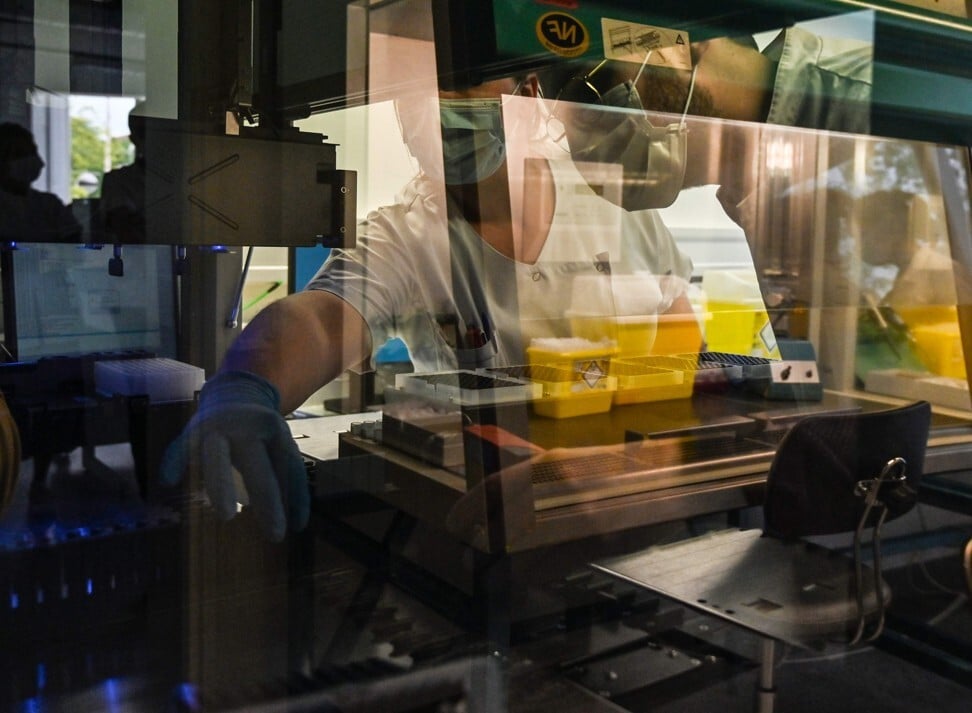
Researchers in France have carried out genetic analysis and found that the dominant types of the viral strains in the country did not come from China or Italy. Photo: AP
The coronavirus outbreak in France was not caused by cases imported from China, but from a locally circulating strain of unknown origin, according to a new study by French scientists at the Institut Pasteur in Paris.
Genetic analysis showed that the dominant types of the viral strains in France belonged to a clade – or group with a common ancestor – that did not come from China or Italy, the earliest hotspot in Europe.
“The French outbreak has been mainly seeded by one or several variants of this clade … we can infer that the virus was silently circulating in France in February,” said researchers led by Dr Sylvie van der Werf and Etienne Simon-Loriere in a non-peer reviewed paper released on bioRxiv.org last week.
The Covid-19 pandemic has infected more than 128,000 people in France and caused more than 23,000 deaths.
France detected the virus in late January, before any other country in Europe. A few patients with a travel history that included China’s Hubei province were sampled on January 24 and tested positive.
The Covid-19 pandemic has infected more than 128,000 people in France and caused more than 23,000 deaths. Photo: AFP
The French government took quick and decisive measures to trace contacts of the infected people and shut down the chance of further infection.
However, these strains were not found in patients tested after the initial imported cases, suggesting “the quarantine imposed on the initial Covid-19 cases in France appears to have prevented local transmission”, the researchers said.
The Pasteur institute collected samples from more than 90 other patients across France and found the strains all came from one genetic line. Strains following this unique path of evolution had so far only been detected in Europe and the Americas.
Singapore Covid-19 cases to rise as not all migrant workers being tested
28 Apr 2020
The earliest sample in the French clade was collected on February 19 from a patient who had no history of travel and no known contact with returned travellers.
Several patients had recently travelled to other European countries, the United Arab Emirates, Madagascar and Egypt but there was no direct evidence that they contracted the disease in these destinations.
To the researchers’ surprise, some of the later strains collected were genetically older – or closer to the ancestral root – than the first sample in this clade.
Spanish official cries reading names of health workers killed by coronavirus
A possible explanation, according to the authors, was that local transmission had been occurring in France for some time without being detected by health authorities.
The French government may have missed detecting the transmission. According to the researchers, a large proportion of those patients might have had mild symptoms or none at all.
The researchers also found that three sequences later sampled in Algeria were closely related to those in France, suggesting that travellers from France might have introduced the virus to the African country and caused an outbreak.
China says US politicians are lying as Trump calls for Covid-19 damages
29 Apr 2020
Benjamin Neuman, professor and chair of biological sciences with the Texas A&M University-Texarkana, said the French strains might have come from Belgium, where some sequences most closely related to the original strain from China were clustered.
“Since the earliest European strains of [the coronavirus] Sars-CoV-2 seem to be associated with Belgium, the idea that the virus spread from Belgium to both Italy and France at around the same time seems plausible, as this paper contends,” he said.
France is the latest in a growing number of countries and areas where no direct link between China and local outbreaks could be established.
The dominant strains in Russia and Australia, for instance, came from Europe and the United States, respectively, according to some studies.
These findings have drawn fire from some politicians who have tried to deflect domestic anger over their handling of the crisis by blaming China.
Is this the next big hotspot for the ‘little flu’?
28 Apr 2020
“So now the Fake News @nytimes is tracing the CoronaVirus origins back to Europe, NOT China. This is a first!” he tweeted on April 11, referring to a story about the studies in the The New York Times’ science section.
The findings also highlight the difficulties governments face in tracing the source of coronavirus outbreaks.
Less-developed countries may never know where their strains came from due to inadequate testing and sequencing capability.
India, for example, has released the genetic sequence of fewer than 40 samples to the public so far, a small number considering its huge population.
Most of the strains sampled in 35 early cases came from clades that could be traced to Italy and Iran, with only a few from China, according to a recent study. But researchers were not able to track further because of the lack of data.
A scientist on the study, Dr Mukesh Thakur, of the Zoological Survey of India, said it was too early to rule out China as the source of outbreaks in India because the number of samples at hand was limited.
A 20-year-old student studying medicine in Wuhan, for instance, might have come in contact with many people on the way home before she was tested positive on January 30.
Thakur said local media reported that the Indian government quarantined 3,500 people possibly linked to three positive cases imported from Wuhan.
“God knows how many of them tested positive in the subsequent stages,” Thakur said in an email response to the Post’s queries on Tuesday.
Some prominent scientists, including Francis Collins, director of the US National Institutes of Health, said the virus might have been spreading quietly in humans for years, or even decades, without causing a detectable outbreak.
The virus had thus adapted well to the human body. Some genes regulating its binding to host cells were similar, or even identical, to those found in some other highly infectious human viruses, such as HIV and Ebola.
According to some estimates, the ancestor of Sars-CoV-2, the virus causing Covid-19, might have left bats between 50 and 70 years ago. A recent study by a team of geneticists in Oxford University estimated the first outbreak of the current pandemic could have occurred as early as September last year.
They found that the dominant strains circulating in China and Asia were genetically younger than some popular strains in the United States.
Anyone caught breaking Singapore’s social distancing rules could be jailed from Friday, as the city state ramped up its coronavirus defence and announced the introduction of distance learning for schools.
Under updates to its powerful infectious diseases law, anyone who intentionally sits less than 1 metre away from another person in a public place or on a fixed seat demarcated as not to be occupied, or who stands in a queue less than a metre away from another, will be guilty of an offence.
Offenders can be fined up to S$10,000 (US$6,990), jailed for up to six months, or both. The rules, in place until April 30, can be applied to individuals and businesses.
The news was followed later by an announcement from the education ministry that starting from April, schools will start conducting one day of home-based learning for students per week.
Singapore’s new social distancing laws send needed signal, experts say
27 Mar 2020
“The recent spike in imported cases signals a new phase in our nation’s fight against Covid-19. To support further safe distancing, schools will progressively transit to a blended learning model, starting with one day of home-based learning a week,” the ministry said in a statement.
It added schools will remain open for students whose parents are not able to secure alternative childcare arrangements.
Hundreds of thousands of students in Singapore returned to class on Monday after a week of school holidays, despite growing calls for schools to be closed.
Singapore is one of the few jurisdictions in the region that has yet to suspend schools, unlike Hong Kong, Thailand, Indonesia, and Malaysia.
Education Minister Ong Ye Kung had earlier cited scientific evidence, saying that the pneumonia-like Covid-19 illness does not affect the young as much as adults.
Authorities in the city state, however, have said that suspending schools and closing workplaces are among the next steps to be taken should the situation worsen. Singapore has confirmed 683 cases so far, of which 172 have recovered and two died.
Global condom shortage looms amid virus lockdowns
A global shortage of condoms is looming, the world’s biggest producer said, after a coronavirus lockdown forced it to shut down production.
Malaysia’s Karex makes one in every five condoms globally. It has not produced a single condom from its three Malaysian factories in the past 10 days because of the lockdown imposed by the government to halt the spread of the virus.
That’s already a shortfall of 100 million condoms, normally marketed internationally by brands such as Durex, supplied to state health care systems such as Britain’s NHS or distributed by aid programmes such as the UN Population Fund.
“We are going to see a global shortage of condoms everywhere, which is going to be scary,” Karex Chief Executive Goh Miah Kiat said this week.
“My concern is that for a lot of humanitarian programmes deep down in Africa, the shortage will not just be two weeks or a month. That shortage can run into months.”
The other major condom-producing countries are China, where the coronavirus led to widespread factory shutdowns, and India and Thailand, which are seeing infections spiking only now.
Goh said Karex was in the process of appealing to the government for an exemption to operate under specific conditions. Malaysia is approving other essential goods producers to operate with half of their workforce.
“The good thing is that the demand for condoms is still very strong because like it or not, it’s still an essential to have,” Goh said. “Given that at this point in time people are probably not planning to have children. It’s not the time, with so much uncertainty.”
China to ban most foreign arrivals
China has banned most foreigners from entering the country in an effort to block the spread of the coronavirus through imported cases.
With several exceptions, including transit visas and foreigners arriving via Hong Kong and Macau with short-term entry permits, entry visas issued to foreigners will be suspended as an “interim measure”, according to a statement late on Thursday by the country’s foreign ministry.
“In view of the rapid spread of the new coronavirus epidemic worldwide, China has decided to temporarily suspend entry of foreigners with currently valid visas and residence permits in China,” the ministry said.
“This is an interim measure that China has to take in order to respond to the current epidemic situation, with reference to the practice of many countries,” it added. “The Chinese side will adjust the above measures according to the epidemic situation through separate announcements.”
Pakistan aid workers lack basic kit
Pakistan’s biggest charity, famous for its emergency services for the poor, is kitting staff out in raincoats and rubber boots in the battle against the coronavirus as it can’t get hold of proper personal protective equipment, the organisation says.
Pakistan has reported the highest number of coronavirus infections in South Asia, with 1,179 cases and nine deaths, but health experts say there is a lack of public awareness about the virus and the cash-strapped government is ill-prepared to tackle it.
The Edhi Foundation has for decades stepped in to help when government services fail communities and it runs the country’s largest ambulance service.
Now it has had to train dozens of staff on how to handle suspected coronavirus patients. But providing them with proper protection is a problem given a nationwide shortage of the equipment.
“We’ve compromised on certain things and use alternatives,” Facial Edhi, head of the Edhi Foundation, said at his office in Karachi, Pakistan’s biggest city, on Thursday.
“Full aprons are in short supply in the market.”
He said he was confident the raincoats would work just as well.
South Korea pleads with residents to stay indoors
Authorities in South Korea pleaded with residents on Friday to stay indoors and avoid large gatherings as new coronavirus cases hovered close to 100 per day.
South Korea reported 91 new infections on Friday, taking the national tally to 9,332, the Korea Centres for Disease Control and Prevention said. The country has reported similar daily numbers for the past two weeks, down from a high of over 900 in late February.
The government has sought to convince a restless public that several more weeks of social distancing and self-isolation may be needed to allow health authorities to tamp down the smaller but still steady stream of new cases.
“As the weather is getting nicer, I know many of you may have plans to go outside,” said Yoon Tae-ho, director general for public health policy at the health ministry. “But social distancing cannot be successful when it’s only an individual, it needs to be the whole community.”
Coronavirus: California officials alarmed by rate of infection
27 Mar 2020
Italy reports 662 new deaths, with uptick in new cases
Italy is reporting an uptick in new novel coronavirus infections, after four consecutive days in which new cases had decreased.
The country now has 62,013 active cases, a daily increase of 4,492, the Italian Civil Protection Agency said in its bulletin.
On Wednesday the daily variation was 3,491, on Tuesday 3,612, on Monday 3,780, on Sunday 3,957, and on Saturday a record 4,821.
There are also 662 new fatalities, bringing the total death toll to 8,165, while overall infections, including deaths and recoveries, have risen to 80,539, a daily increase of 8.3 per cent.
Recoveries are up by around 11 per cent to 10,361, while the number of intensive care patients – a closely watched figure given the shortage of hospital beds – has risen by 3.5 per cent, to 3,612.
Russia closes all restaurants nationwide
Russia is temporarily closing restaurants nationwide for a nine-day period starting on Saturday to prevent the spread of the coronavirus.
Restaurants will still be able to provide delivery services during that time, according to the decree by Prime Minister Mikhail Mishustin, published on his website on Friday.
Russia has reported more than 800 cases of coronavirus, predominantly in Moscow, which has seen at least two virus-related deaths. Mayor Sergei Sobyanin has warned that the actual number of cases is probably “significantly more”.
The country has already prohibited regular international flights, and imposed strict quarantine measures for anyone entering the country and anyone who could have been exposed to someone infected with the virus – though has not yet opted to impose lockdown measures like those seen elsewhere.
Coronavirus containment measures spark prison protests across Italy as nation goes into lockdown
First casualty in Kenya
Kenya has recorded its first coronavirus death as a rapid rise in confirmed cases puts Africa’s fragile health systems to the test.
Kenyan Health Cabinet Secretary Mutahi Kagwe said a 66-year-old Kenyan man died on Thursday afternoon despite treatment in an intensive care unit.
Kagwe said the man, who arrived into the country on March 13 from South Africa via Swaziland, was a diabetic. Also on Thursday, three women aged between 30 and 61 tested positive for Covid-19, the disease caused by the coronavirus, taking the country’s total to 31.
Kenya is the second country in East Africa and the 15th on the continent to confirm a coronavirus-related death. Algeria has the highest death toll in Africa with 25 fatalities, while Egypt has reported 24 and Morocco 11.
About a week ago, the continent of 54 countries had reported fewer than 300 cases. But by Friday Africa had 3,221 confirmed cases and 87 deaths. WHO regional director for Africa Matshidiso Moeti said on Thursday that the situation in Africa was “evolving very quickly in terms of geographic spread and the increasing number of cases”.
Australian military to enforce quarantine
The Australian military will help enforce the quarantine of travellers returning to the country, with the prime minister unveiling strict new measures and door-to-door checks on Friday to rein in the spread of Covid-19.
With some two-thirds of Australia’s 3,000 Covid-19 cases still linked to overseas travel, Scott Morrison said 14-day home quarantines would now be actively policed with the help of the military.
Thousands of citizens and residents are still arriving in Australia every day and there have been instances of return travellers repeatedly breaking a promise to stay at home.
Morrison said all returnees arriving after midnight Saturday would now be kept in hotels in the city of arrival for the duration of their quarantine.
Those already on Australian soil and under orders to self-quarantine for two weeks will face active checks, he said.
Quarantine measures will be getting “a lot tougher and a lot stricter,” Morrison said, adding the Australian Defence Force would “assist in the compliance with these arrangements.”
Afghanistan to release 10,000 prisoners
Afghanistan will release at least 10,000 prisoners over the age of 55 in an attempt to prevent the spread of the coronavirus, officials said on Thursday.
“The president has issued a decree that several thousand prisoners will be released soon due to coronavirus,” an official in President Ashraf Ghani’s office said.
Those released will not include members of Islamist militant groups the Taliban or Islamic State, and the process will be completed within 10 days, said two government officials.
Afghanistan has reported 91 cases of coronavirus and three deaths. The country’s western Herat province has recorded at least 54 of the 75 total cases reported in the last week.
International aid groups in recent weeks have raised concerns about the possibility of the coronavirus spreading in prisons across Afghanistan.
Woman becomes angry over long delay on tarmac waiting for health assessments
Customs official says that Shanghai is stepping up medical checks as precaution against imported infection but that travellers need only wait one or two hours
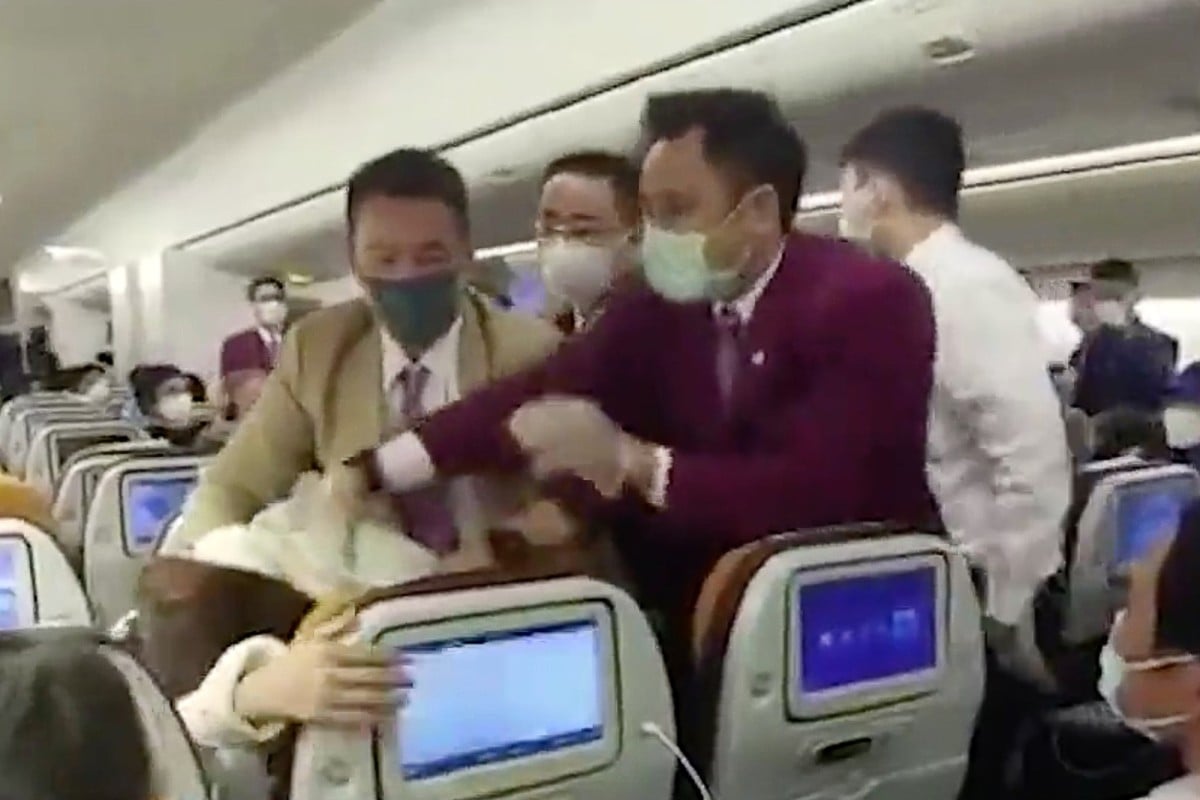
Video taken on board a Thai Airways flight at Shanghai on Friday purports to show flight attendants trying to control a passenger who coughed on one of their colleagues. Photo: Handout
Thai Airways staff had to restrain a Chinese woman after she coughed at a flight attendant while passengers waited for hours to get acoronavirus check upon landing in Shanghai from Bangkok.
The carrier said the woman coughed deliberately at the attendant because she was angered about the long wait for a check on Friday. It said the passengers had to wait seven hours to be screened at Shanghai Pudong International Airport Thai Airways said that after the passenger coughed at the woman attendant, some of her colleagues approached the passenger to stop her “inappropriate” behaviour. They then explained the situation to her and asked her to cooperate and calm down, the airline said.
The woman had to be subdued and no further action was taken, the airline said in a statement.
In footage posted online, the woman is subdued by at least one male attendant, who presses her into her seat by her neck as two more male attendants stand nearby, saying “sit down” to her in English.
The woman then yells “What have I done?” in Chinese.
Thai Airways said that every passenger arriving in Shanghai or flying through the airport from countries with a high incidence of coronavirus cases such as Italy, South Korea, Japan and Iran must be examined by medical staff on the aircraft. Planes that were not checked were not permitted to open their doors to let passengers off.
The airline said the length of wait depended upon the number of passengers coming from those “key areas”.
An official from Shanghai Customs said that passengers on the flight had to be checked because some had transferred from Iran, where more than 7,000 cases and 230 fatalities have been reported.
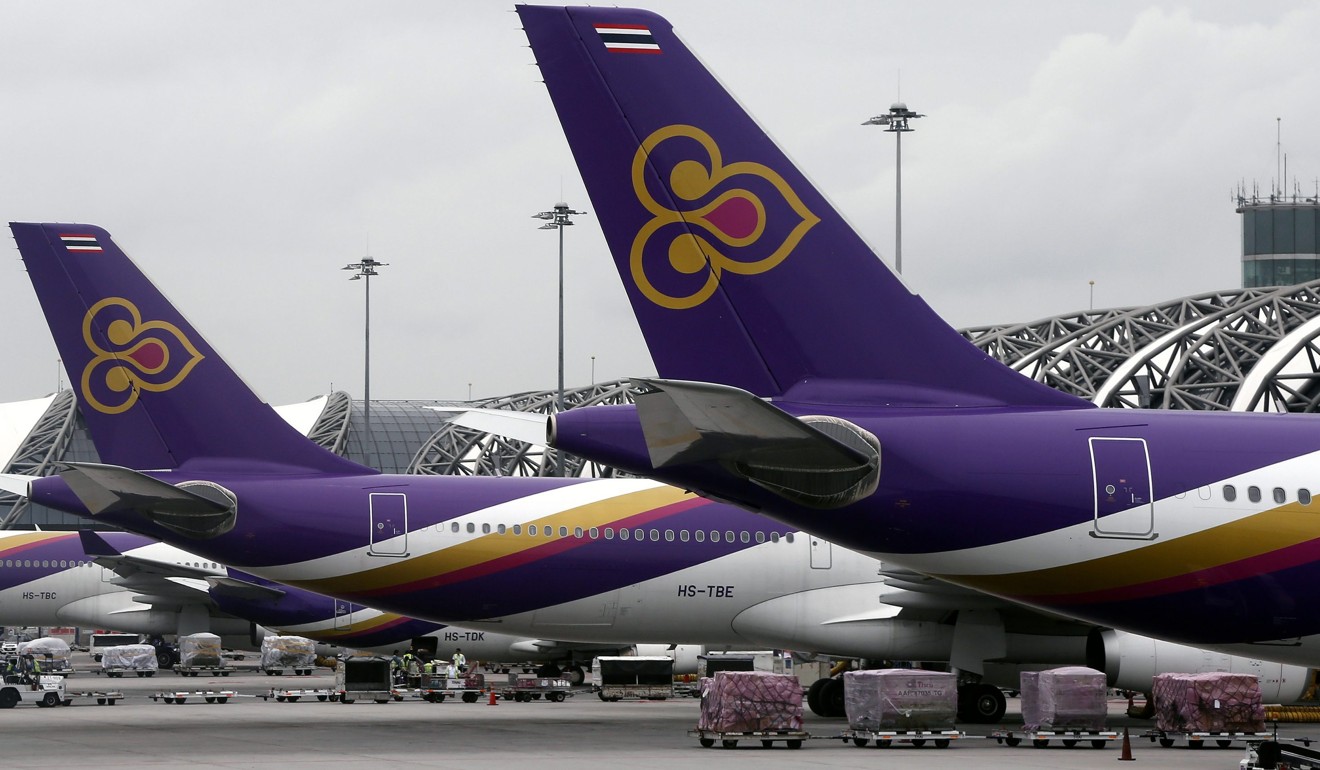
The Thai Airways flight was on the ground at Shanghai for seven hours pending medical checks on passengers and crew. Photo: EPA
The woman’s behaviour divided opinion on social media.
“Shame on her!” a user of Weibo, China’s Twitter-like service, wrote. “It’s so shameful for her to act like that in front of foreigners.”
“I think the flight attendants were fairly gentlemanly,” another user wrote. “She should have been taken away.”
Coronavirus update: Xi Jinping makes first visit to Wuhan since outbreak began
10 Mar 2020
A Weibo user who claimed to be on the plane at that time said it was not right for “three men” to subdue the woman.
“I don’t want to see my compatriot be bullied,” she wrote. “The attendants only stopped their action after two Chinese passengers stood up to intervene.”
Shanghai’s two airports have tightened medical checks on travellers from overseas, leading to complaints about long waiting times.
Health workers check passengers’ temperatures, screen their health disclaimer cards and check their travel histories.
Music video about Covid-19 safety released by rail operator in Thai capital Bangkok
Each passenger arriving from “key areas”, where there are a lot of infections, have to have their temperature checked twice after they get off the plane. Some may have to undergo simple physical checks.
Passengers who travelled to those key areas in the past 14 days, no matter their nationality, would be sent to designated places for 14 days of medical observation, authorities said.
The Shanghai Customs official said passengers were disembarked in batches to avoid crowding, making the examination process longer.
Egypt reports first coronavirus death; Iran toll jumps by nearly 50
9 Mar 2020
She said that after the authorities allocated more than 300 customs staff to support monitoring at border ports at the end of last week, the examination process now took one to two hours.
“Many people blamed us for low speed and low efficiency, but didn’t ask why,” she said, adding that people’s messy handwriting on their health disclaimer cards and poor memory of where they had been in the past 14 days also complicated the clearance process.
“As a citizen, shouldn’t they cooperate in this critical moment?” she said.
Image copyright GETTY IMAGESImage caption Cases of coronavirus have risen sharply in South Korea, where the outbreak is worsening
The head of the World Health Organization (WHO) has expressed concern at the number of coronavirus cases with no clear link to China or other confirmed cases.
Dr Tedros Adhanom Ghebreyesus said the window of opportunity to contain the virus was “narrowing”.
Chinese health authorities reported a decrease in deaths and new cases of the coronavirus on Saturday.
But cases are on the rise in South Korea, Italy, Iran and other countries.
Outside China, more than 1,200 cases of the virus have been confirmed in 26 countries and there have been eight deaths, the WHO says.
They include two deaths in South Korea, which has the biggest cluster of confirmed cases apart from China and a cruise ship quarantined in Japan.
On Saturday, South Korea reported 142 new confirmed cases of the coronavirus, bringing the national tally to 346.
On Friday, doctors in Italy said a 78-year-old man became the first person in the country to die from the new coronavirus, Ansa news agency reported.
Earlier Italy had announced 16 more cases and its health minister said schools and offices would be closed and sports events cancelled in the affected regions.
China has reported 76,288 cases including 2,345 deaths. The new virus, which originated last year in Hubei province in China, causes a respiratory disease called Covid-19.
What did the WHO chief say?
Dr Tedros said the number of coronavirus cases outside China was “relatively small” but the pattern of infection was worrying.
“We are concerned about the number of cases with no clear epidemiological link, such as travel history to or contact with a confirmed case,” he said.
The new deaths and infections in Iran were “very concerning”, he said.
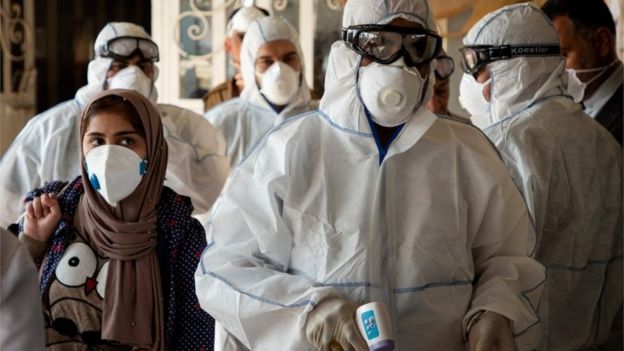
Image copyright AFPImage caption Iraq has been checking people at its border with Iran
But he insisted that the measures China and other countries had put in place meant there was still a “fighting chance” of stopping further spread and called on countries to put more resources into preparing for possible outbreaks.
What is the latest in South Korea?
Prime Minister Chung Sye-kyun declared a public health emergency as the total number of cases surpassed 300 on Saturday.
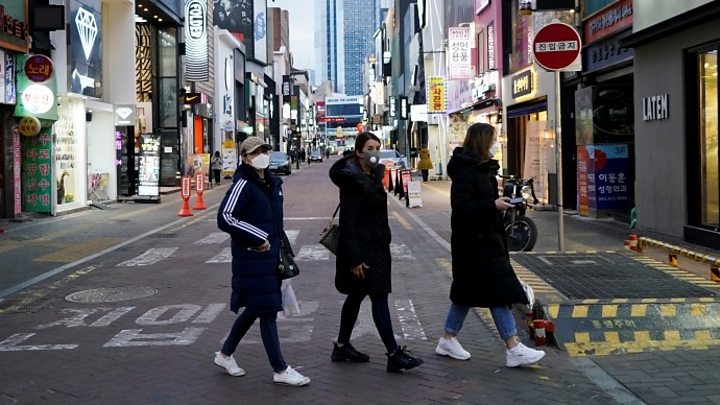
The southern cities of Daegu and Cheongdo have been declared “special care zones”. The streets of Daegu are now largely abandoned.
The nation’s capital, Seoul, banned demonstrations in central areas.
Two cases were also reported in Busan, South Korea’s second-largest city, and one on the Island of Jeju on Saturday – the first in both places.
Media caption People in Daegu have voiced concern over the spread of the virus
All military bases are in lockdown after three soldiers tested positive.
The authorities suspect the current outbreak in South Korea originated in Cheongdo, pointing out that a large number of sect followers attended the funeral of the founder’s brother from 31 January to 2 February.
The sect – known as Shincheonji – which has been accused of being a cult, said it had now shut down its Daegu branch and that services in other regions would be held online or individually at home.
As of Friday, more than 400 members of the church were showing symptoms of the disease, though tests were still ongoing, the city mayor said.
Can we answer your question on the coronavirus?
Here’s what others have been asking
Once you’ve had coronavirus, will you be immune?
Could the coronavirus become a pandemic?
Is the coronavirus worse than flu or Sars?
Hand sanitizers and warning signs
By Hyung Eun Kim, BBC Korean Service, Seoul
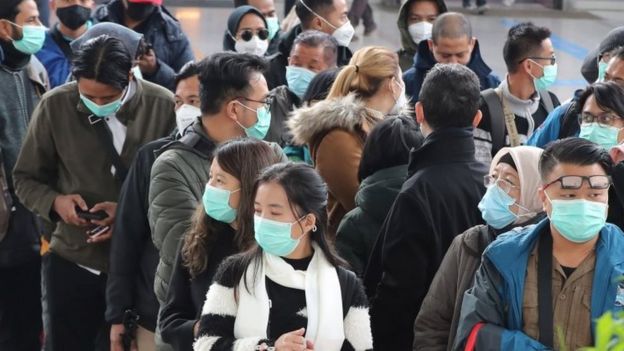
Many people in South Korea are wearing masks on a daily basis.
Hand sanitizers have been placed at public transport stops and building entrances.
Warning government signs are everywhere. They say: “Three ways to prevent further infection: wear a mask at all times; wash your hands properly with soap for more than 30 seconds; and cover yourself when coughing.”
Image copyright EPAImage caption New norm: Mask-wearing crowd in Seoul
Koreans have also developed several apps and websites that tell you how much risk you face where you are. They show where the infected people are within a 10km radius.
“I can’t miss work, what I can do is minimise contact with others and stay at home during the weekend,” Seung-hye Lim, a Seoul resident, told the BBC.
“I do wonder if we reacted too laxly initially or if it really is because of the specific service practices of the Shincheonji sect.”
So-young Sung, a mother of two in Seoul, told the BBC: “It feels like my daily life is collapsing.”
She said she was struggling to find pharmacies that had masks.
She added that checking coronavirus-related alarms from her children’s schools and kindergartens was now a daily routine for her.
What about the Iran cases?
In Iran the outbreak is centred on the holy city of Qom, south of the capital Tehran, which is a popular destination for Shia Muslims in the region.
Iran reported two more deaths in Qom on Friday, adding to the two deaths it reported on Thursday. A total of 18 cases have been confirmed in the country.
Lebanon has reported its first confirmed case – a 45-year-old woman who was detected as she arrived in Beirut from Qom. The UAE, Israel and Egypt have also reported cases.
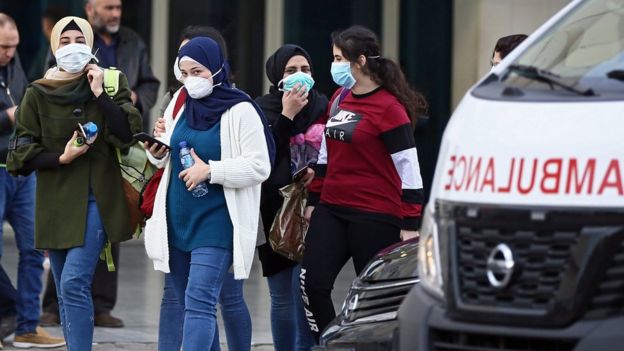
Image copyright EPAImage caption Lebanon has confirmed its first case – a woman returning from the Iranian city of Qom
Meanwhile Canadian officials said one of the nine cases there was a woman who had recently returned from Iran.
WHO officials said both Iran and Lebanon had the basic capacity to detect the virus and the WHO was contacting them to offer further assistance.
But Dr Tedros said the organisation was concerned about the virus’s possible spread in countries with weaker health systems.
What about China and elsewhere?
The virus has now hit the country’s prison system, with more than 500 inmates confirmed infected.
They include 230 patients in a women’s prison in Wuhan. More cases have been found in a prison in the eastern province of Shandong and the south-eastern province of Zhejiang.
Some 36 people at a hospital in Beijing have also tested positive.
Senior officials have been sacked for mishandling management of the outbreak.
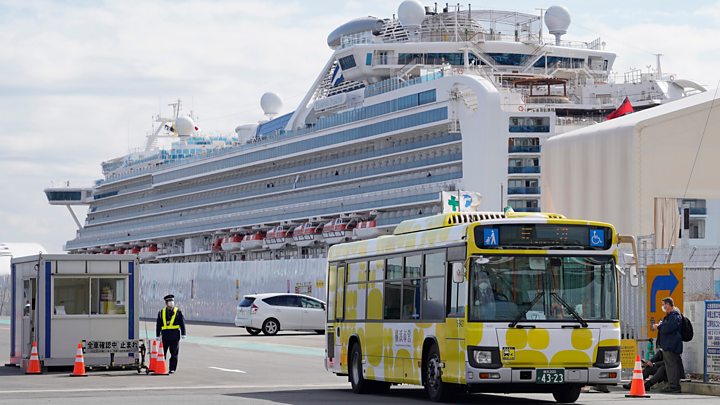
Passengers of the Diamond Princess cruise ship who have tested negative continue to disembark the ship in Yokohama after more than 14 days quarantined on board.
However, 18 American evacuees from the ship tested positive after arriving in the US, officials said. More than 300 other US nationals have arrived back in the US after disembarking.
Media caption Coronavirus: Quarantined passengers released from Japan ship
More than 150 Australian passengers have been evacuated from the ship and have already arrived in Darwin, where they will begin two more weeks of quarantine.
Australian officials said on Friday that six people had reported feeling unwell on arrival in Darwin and were immediately tested. Two of those people tested positive despite having received negative tests before leaving Japan.
The first batch of people from Hong Kong have also flown back to the city, where they will similarly be quarantined.
Forty countries will be able to diagnose the disease, and the Africa CDC is training health workers
Until two weeks ago, there were only two laboratories on the continent that could test for the virus, in Senegal and South Africa
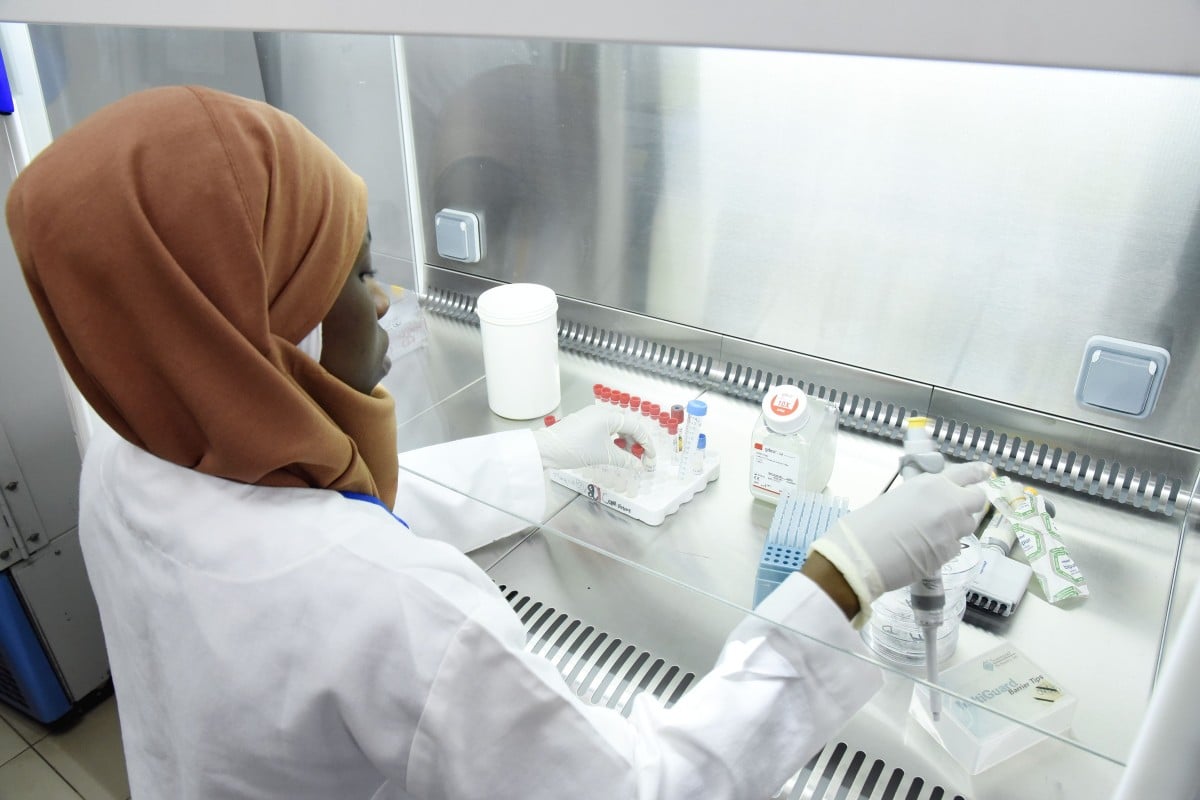
A scientist researches the coronavirus at the Pasteur Institute in Dakar, Senegal, which until two weeks ago was one of just two labs in Africa that could test for the disease. Photo: AFP
Forty countries in Africa will be able to test for the deadly new coronavirus
by the end of the week, the WHO said, after Egypt confirmed the first case on the continent last week.
The World Health Organisation said many of those nations had been sending samples elsewhere for testing and waiting several days for results.
“Now they can do it themselves, within 24 to 48 hours,” WHO director general Tedros Adhanom Ghebreyesus said in a media briefing on Tuesday.
Until about two weeks ago, there were only two laboratories in the continent of 54 countries – in Senegal and South Africa – with the reagents needed to test for the virus. That meant dozens of nations that had quarantined suspected patients were sending samples to South Africa or Senegal to be tested.
The WHO earlier this week sent reagent kits for coronavirus diagnosis to more than 20 countries in Africa to step up diagnosis of the virus, which causes a disease now known as Covid-19. The global health body said more countries in Africa were expected to receive testing kits this week.
In addition, the WHO last week sent testing kits to Cameroon, Ivory Coast, the Democratic Republic of Congo, Egypt, Ethiopia, Gabon, Ghana, Kenya, Morocco, Nigeria, Tunisia, Uganda and Zambia.
Coronavirus: WHO urges caution over study showing ‘decline’ in new Covid-19 cases in China
Tedros said some countries in Africa, including the Democratic Republic of Congo, were using systems developed to test for the deadly Ebola virus to now test for the coronavirus.
“This is a great example of how investing in health systems can pay dividends for health security,” Tedros said.
Several countries, including Ethiopia and South Sudan, were prioritising surveillance and monitoring at ports of entry, he said. “We’re also working with partners in some of the most fragile contexts, from Syria to the Central African Republic, to prepare countries for the arrival of the virus,” he said.
The WHO and Egyptian health officials on Friday confirmed that a 33-year-old foreigner had tested positive for the coronavirus. Egypt’s health ministry said the patient had tested positive for the virus without any symptoms, raising concern that there could be undetected cases on the continent, as countries scramble to equip labs to test for the disease.
The asymptomatic patient in Egypt was identified through contact screening of an index case who travelled to Cairo on a business trip from January 21 to February 4 and tested positive for the virus on February 11 in China, the WHO regional office said.
The new virus strain has killed more than 2,000 people and infected over 74,000 since the outbreak began in central China in December. It has spread to more than 20 countries.
Screening measures have been stepped up across Africa, including quarantining all passengers arriving from Chinese cities, amid fears that poorer countries with weaker health systems may struggle to cope if the virus spreads on the continent. More than a dozen countries still do not have the capacity to test for the pneumonia-like illness.
There are concerns that Africa’s close links with China put it at high risk for the spread of the new virus. Africa has become home to millions of Chinese since Beijing started looking to the continent for raw materials for its industries and markets for its products. China has been Africa’s largest trading partner since 2009, after it overtook the United States, with two-way trade standing at US$108 billion last year, according to China’s commerce ministry.
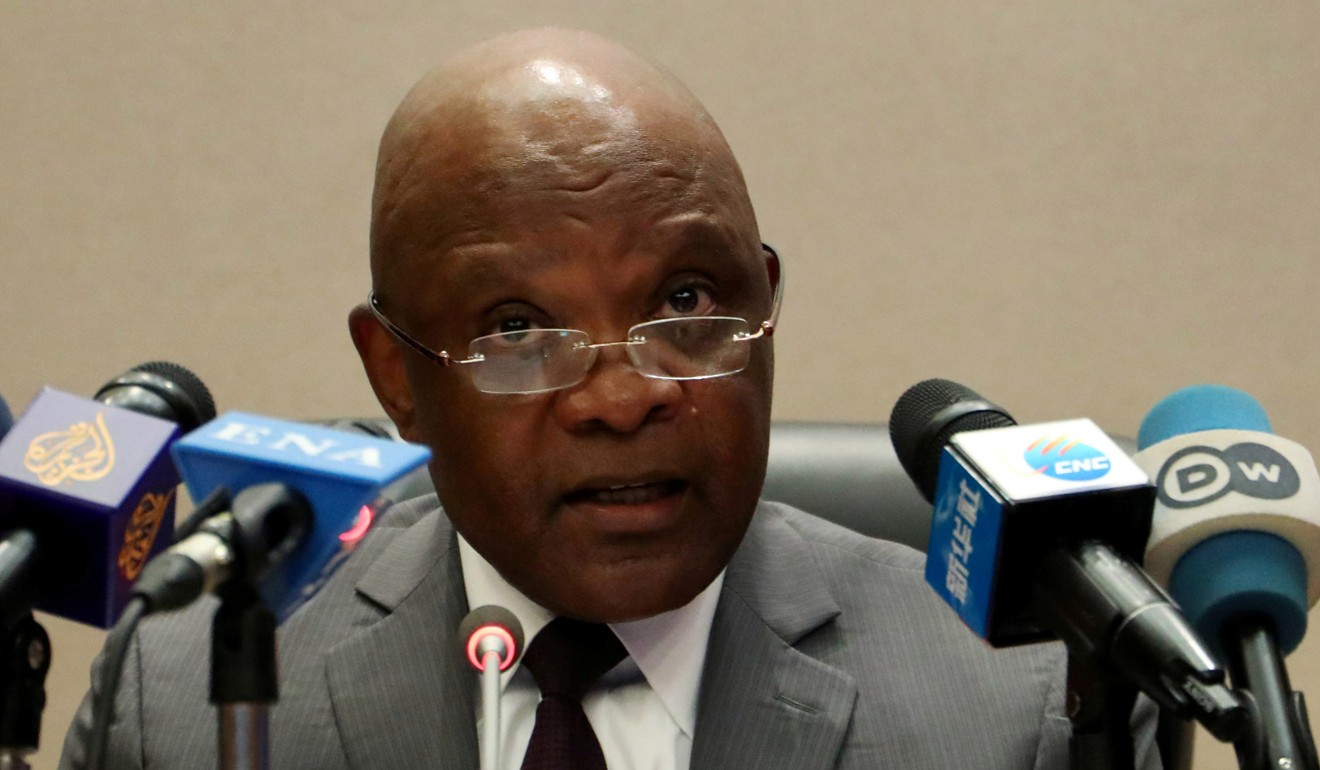
Africa CDC director John Nkengasong said it had been “investing in preparedness and response to the disease”. Photo: Reuters
John Nkengasong, director of the Africa Centres for Disease Control and Prevention (Africa CDC), said it was working closely with the WHO and other partners to ensure that Egypt had the diagnostic tools it needed, and that the right actions were taken to contain the spread of the virus.
“We anticipated that the Covid-19 outbreak would inevitably impact Africa. That is why the Africa CDC has been working actively with African Union member states and partners in the past four weeks and investing in preparedness and response to the disease,” he said.
“[Last week in Dakar, Senegal] we conducted training and supplied test kits to 16 African laboratories, including from Egypt. Egypt also received additional test kits from the WHO,” Nkengasong said.
The Africa CDC would train 40 health workers from nine countries, including Egypt, in Nairobi this week, he said, on “enhancing detection and investigation of Covid-19 at points of entry”.
The Chinese medical workers on the front line of the coronavirus fight in Wuhan
On Monday, Ethiopia, home to one of the continent’s busiest airports, said it had received equipment and reagents for virus detection and control. “We are working hard day and night with the government to improve the critical measures needed to ensure that the country is ready to effectively respond to an outbreak of Covid-19,” said Boureima Hama Sambo, the WHO representative in Ethiopia.
despite pressure for it to suspend services to the country. Many countries on the continent have restricted travel to and from mainland China, while six out of eight African airlines with Chinese routes have halted flights until the virus is contained, including EgyptAir.
Egypt has suspended all flights to and from the mainland until the end of the month and has evacuated more than 300 Egyptians from Wuhan, the epicentre of the epidemic.
Communist Party mouthpiece releases internal speech given to Politburo Standing Committee on February 3 with presidential orders to contain disease
Xi makes ‘rare’ disclosure move as he comes under heavy domestic and international pressure, analyst says
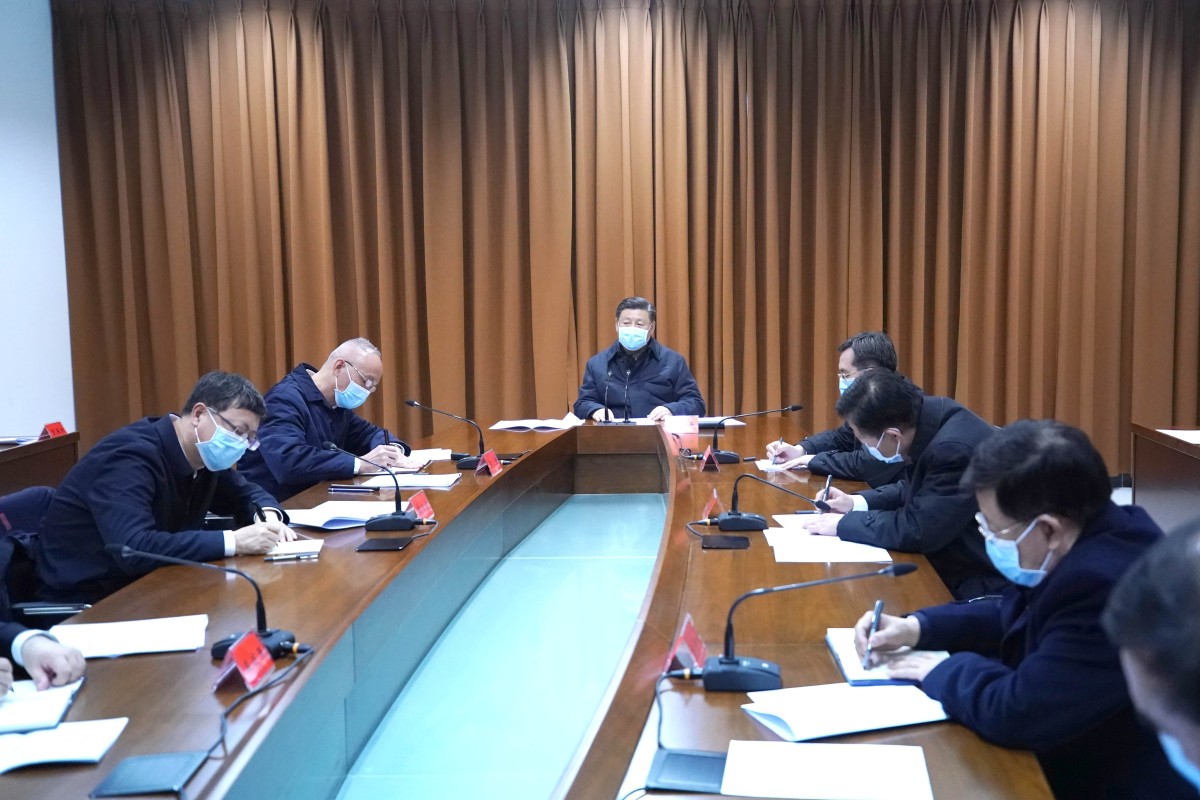
President Xi Jinping presides over a meeting and listens to report on epidemic prevention and control work in Beijing on February 10. Photo: Xinhua
President Xi Jinping told the Communist Party’s top echelon to tackle an outbreak of a previously unknown coronavirus almost two weeks before Chinese authorities announced that there had been human-to-human transmission of the disease, according to an internal speech released on Saturday.
In the speech to the party’s most powerful body, the Politburo Standing Committee, Xi outlined a contingency plan to respond to a crisis that he said could not only hamper the health of people in China, but also jeopardise the country’s economic and social stability – even its open-door policy.
The speech was delivered on February 3 and published in the party’s bimonthly journal Qiushi on Saturday. It was also featured on state television and other official mouthpieces.
The release comes as Xi tries to rally support to counter the biggest crisis in his tenure, including an outpouring of public anger over the death a week ago of ophthalmologist Li Wenliang, who was reprimanded by police for alerting his friends about the virus in its early days.
In his speech, Xi also accused local officials of not carrying out edicts from the central government, vowing to punish incompetent officials.
“I issued demands during a Politburo Standing Committee meeting on January 7 for work to contain the outbreak. On January 20, I gave special instructions about the work to prevent and control the outbreak and I have said we have to pay high attention to it,” he said.
The document did not say whether the Politburo was aware of human-to-human transmission of the disease at the time but research published by Chinese scientists said such infections occurred as early as December.
How China-US mistrust pushed the WHO into a coronavirus corner
15 Feb 2020
The speech by Xi also indicated his desire to win international understanding and support through propaganda and diplomacy.
“We have to liaise and communicate with other countries and regions, to share information about the outbreak and containment strategies to win international understanding and support,” he said.
The disease has spread to multiple continents, including Africa, which reported its first case – in Egypt – on Friday and France, which reported the first death in Europe.
In terms of domestic stability, Xi stressed the need to stabilise food and energy supplies to boost public confidence. He also ordered police to increase their presence on the streets.
“[We must] ensure societal control and security by stepping up law enforcement, mobilising public security and armed police in joint efforts,” Xi said.
1,716 frontline Chinese medics infected with Covid-19 in battle against coronavirus
The authorities should also update the public on their efforts to help boost public confidence, he said.
“[We must] inform the people of what the party and government is doing and what is our next step forward to strengthen the public’s confidence,” he said.
He said the government would encourage companies and scientific institutes to speed up research on drugs and vaccines for the outbreaks and they should share their information with the science sector.
At the same time, Xi stressed that national economic goals set for this year, such as achieving “moderate prosperity”, would remain.
This would be achieved by resuming production, boosting consumption and investment in infrastructure, particularly 5G communications.
“There should not be any thought that we can wait a bit [because of the epidemic],” he said.
Coronavirus: infected Chinese tourist in France dies, in Europe’s first death
16 Feb 2020
Wu Qiang, a Beijing-based political analyst who specialises in analysing Xi’s speeches, said the president’s address was a “rare and interesting” shift from the past.
“The speech was made at a time when Xi is facing heavy domestic and diplomatic pressure,” Wu said.
“This is unprecedented. It sounds like he is defending and explaining how he has done everything in his capacity to lead epidemic prevention.”
Meanwhile, a panel of experts from the World Health Organisation began to arrive in Beijing on a trip that will take in three provinces.
Fang Bin is second Chinese citizen journalist to vanish while reporting from coronavirus epicentre
National Health Commission spokesman Mi Feng said the panel’s mission would include inspecting outbreak prevention work in urban and rural areas, and assessing viral analytics work before making recommendations to China.
Speaking publicly for the first time since being sent to Wuhan, NHC deputy director Wang Hesheng said he would make sure that there “would not be another Wuhan” in Hubei province. Nine medical centres with a combined capacity of nearly 7,000 beds had opened in the city and the province was planning to open more to treat patients with mild symptoms.
Various cities near Wuhan have stepped up quarantine. On Saturday, the small centre of Wuxue announced that with the exception of people working to contain the epidemic, anyone seen walking the streets would be sent to a stadium for “study sessions”.
Beijing has also appointed two senior firefighting commanders to the Ministry of Emergency Management’s leading group – Xu Ping, head of the ministry’s Forest Fire Bureau, and Qiong Se, director of its Fire and Rescue Bureau.
Zhou Xuewen and Liu Wei, two of the ministry’s existing leading party members, have been appointed deputy ministers for emergency management.
Authorities say a foreigner tested positive without any symptoms and has been isolated in hospital in stable condition
WHO is racing to equip laboratories so they can test for the virus and avert an outbreak on the continent, which has close ties with China
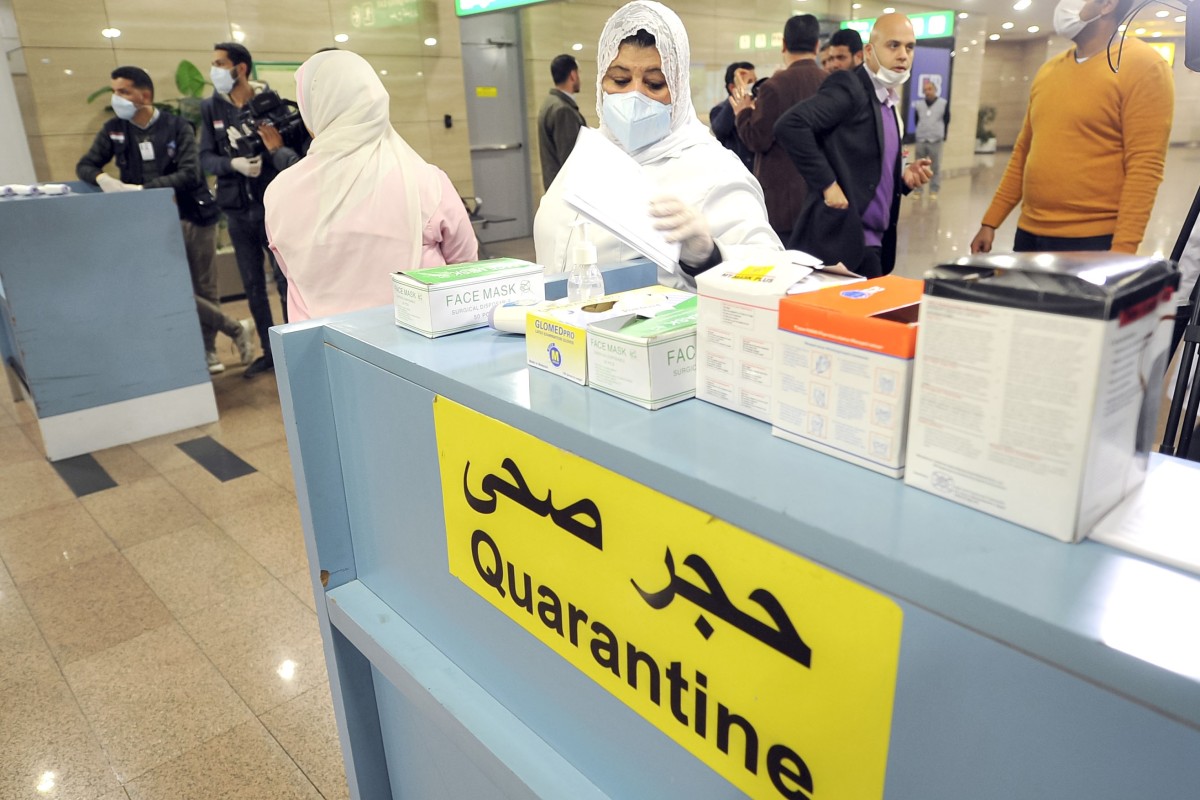
Egyptian quarantine officers prepare to screen travellers arriving at Cairo’s airport. The country has reported its first coronavirus case. Photo: AFP
Africa has reported its first case of the new coronavirus that has so far claimed more than 1,600 lives, with Egypt’s health ministry confirming that a foreigner had tested positive there.
Health experts and African leaders have expressed concern that poorer countries may struggle to cope if the virus spread to the continent. Fears for nations with weaker health systems prompted the World Health Organisation to declare the outbreak of the virus – which originated in China – a global public health emergency in January.
Its director general Tedros Adhanom Ghebreyesus last week said the WHO was racing to equip laboratories in vulnerable African countries with the “capacity to rapidly diagnose cases” to avert an outbreak.
The WHO and Egypt’s health ministry on Friday confirmed the country’s first case was a foreign national who had been isolated in hospital and was in stable condition. Health ministry spokesman Khaled Megahed said the patient had tested positive for the virus without any symptoms, and the WHO had been informed and measures taken to limit its spread.
The WHO said its Egypt office was working closely with health officials in the North African nation, taking “outbreak investigation and response actions”.
The country’s Eastern Mediterranean neighbour, the United Arab Emirates, had reported eight cases, the WHO said.
The Chinese medical workers on the front line of the coronavirus fight in Wuhan
The virus, which causes a disease known as Covid-19, has infected more than 68,000 people since the outbreak began in the Chinese city of Wuhan in December, and it has spread to more than 20 countries.
The first case in Africa comes as countries on the continent have stepped up screening at border checkpoints to prevent the spread of the pneumonia-like illness. Many countries have imposed restrictions on travel to and from mainland China, while six out of eight African airlines with Chinese routes have halted flights until the virus is contained, including EgyptAir.
Egypt has suspended all flights to and from China until the end of the month and has evacuated more than 300 Egyptians from Wuhan.
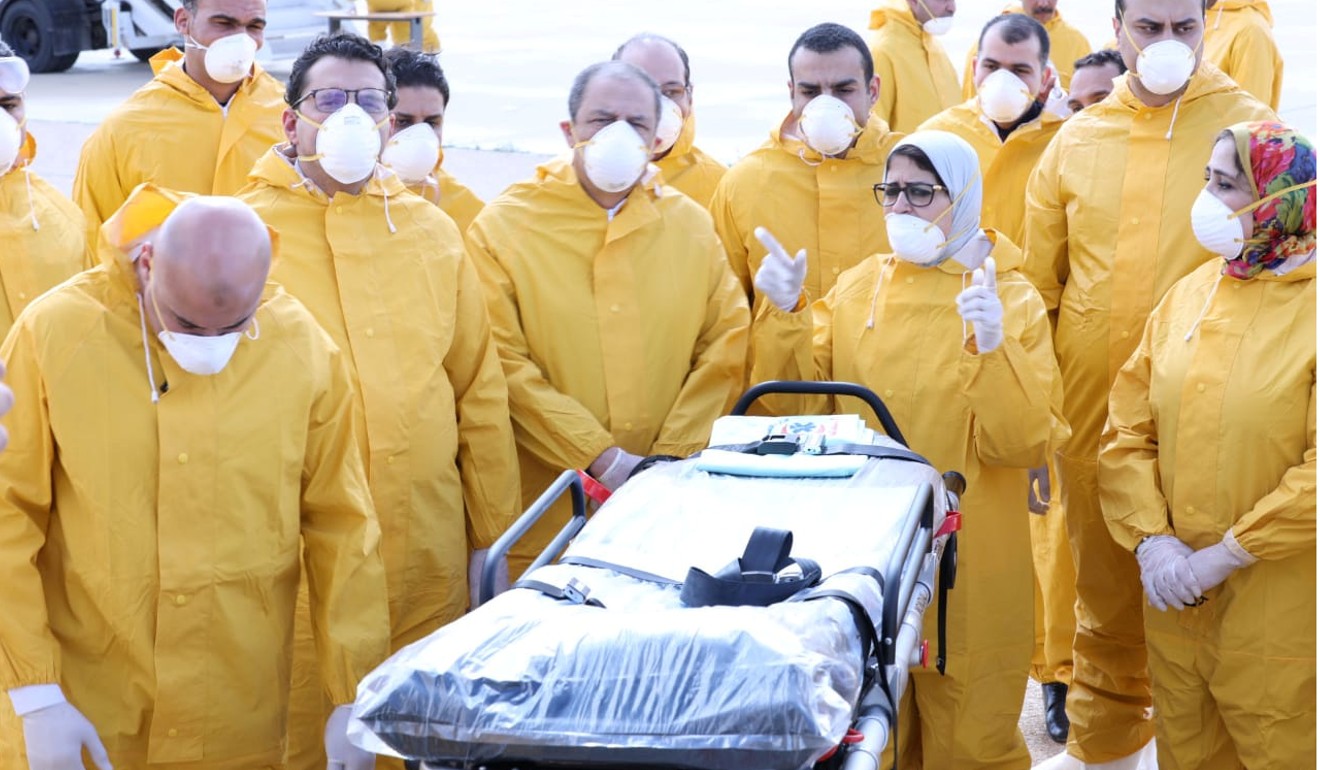
Egyptian Health Minister Hala Zayed waits with a medical team at Alexandria’s airport to meet passengers evacuated from Wuhan on February 3. Photo: Reuters
John Nkengasong, director of the Africa Centres for Disease Control and Prevention (Africa CDC), said the Addis Ababa-based organisation was “on standby to work closely with the government of Egypt to rapidly contain the spread of the virus”.
How to lower the risk of catching a virus while on a flight
15 Feb 2020
African nations are also equipping laboratories so that they can test for the virus, with the help of the WHO and others.
Until about two weeks ago, there were only two laboratories in the continent of 54 countries – in Senegal and South Africa – with the reagents needed to test for the coronavirus.
That meant dozens of countries that had quarantined suspected patients were sending samples to South Africa or Senegal to be tested. Since then, four more labs have been equipped – in Ghana, Nigeria, Madagascar and Sierra Leone – to test for the virus, according to the WHO.
The global health body has also sent testing kits to Cameroon, Ivory Coast, the Democratic Republic of Congo, Egypt, Ethiopia, Gabon, Ghana, Kenya, Morocco, Nigeria, Tunisia, Uganda and Zambia.
Tedros on Monday said the WHO’s immediate “objective remains containment. We call on all countries to use the window of opportunity we have to prevent a bigger fire”.
The Africa CDC has trained health workers from 12 countries in early detection and prevention in Senegal, using testing kits sent by the WHO. Further training would take place in South Africa next week, Tedros said.
“Without vital diagnostic capacity, countries are in the dark as to how far and wide the virus has spread – and who has coronavirus or another disease with similar symptoms,” Tedros said.
Coronavirus: desperate times drive some Chinese to take desperate measures
15 Feb 2020
Many countries in Africa are still reeling from the 2014-16 outbreak of Ebola, which killed 11,325 people and infected 28,600. The deadly virus is yet to be contained, with new cases reported in the Democratic Republic of Congo last week.
China disinfects entire cities to fight coronavirus outbreak, some twice a day
There are concerns that Africa’s close links with China put it at high risk for the spread of the new coronavirus. Africa has become home to millions of Chinese since Beijing started looking to the continent for raw materials for its industries and markets for its products, and China has been Africa’s largest trading partner since 2009, after it overtook the United States.
Ethiopian Airlines refuses to bow to pressure to halt flights to China
14 Feb 2020
China is also a major trading partner of Egypt, with two-way trade standing at US$13.8 billion in 2018, according to the China Africa Research Initiative at the Johns Hopkins University School of Advanced International Studies. Beijing is pouring billions of dollars into infrastructure projects in the country, including building a business district in its new administrative capital, 50km east of Cairo. Chinese firms are also investing billions of dollars in the Egyptian Suez Canal Economic Zone, a project under Beijing’s sprawling trade and infrastructure scheme the Belt and Road Initiative.
According to the 2019 Global Diplomacy Index, released by the Lowy Institute in Australia on Wednesday, China has 276 embassies, consulates and other missions globally, surpassing the US with 273 missions. France was third on 267.
Bonnie Bley, the index report’s lead researcher, said that while a country’s total did not equate to diplomatic influence, “diplomatic infrastructure is still important”
“China’s newly held lead serves as a telling metric of national ambition and international priorities,” Bley said.
Beijing has 169 embassies or high commissions, while Washington has 168. However, China had 96 consulates while the US had 88, suggesting that Beijing’s diplomatic expansion was closely linked to its economic interests, she said.
Beijing bulks up diplomacy budget as China extends global reach
Renmin University international relations professor Shi Yinhong said China had close and growing trade and investment ties with many developing countries, especially those taking part in the Belt and Road Initiative, increasing the need for consulates.
“One of the consulates’ main goals is to serve the citizens and businesses located in those countries,” Shi said.
Beijing has also expanded its reach at Taipei’s expense. Since 2016, when the index was first published, Taiwan’s total number of embassies fell from 22 to 15, the biggest drop among the 61 places ranked.
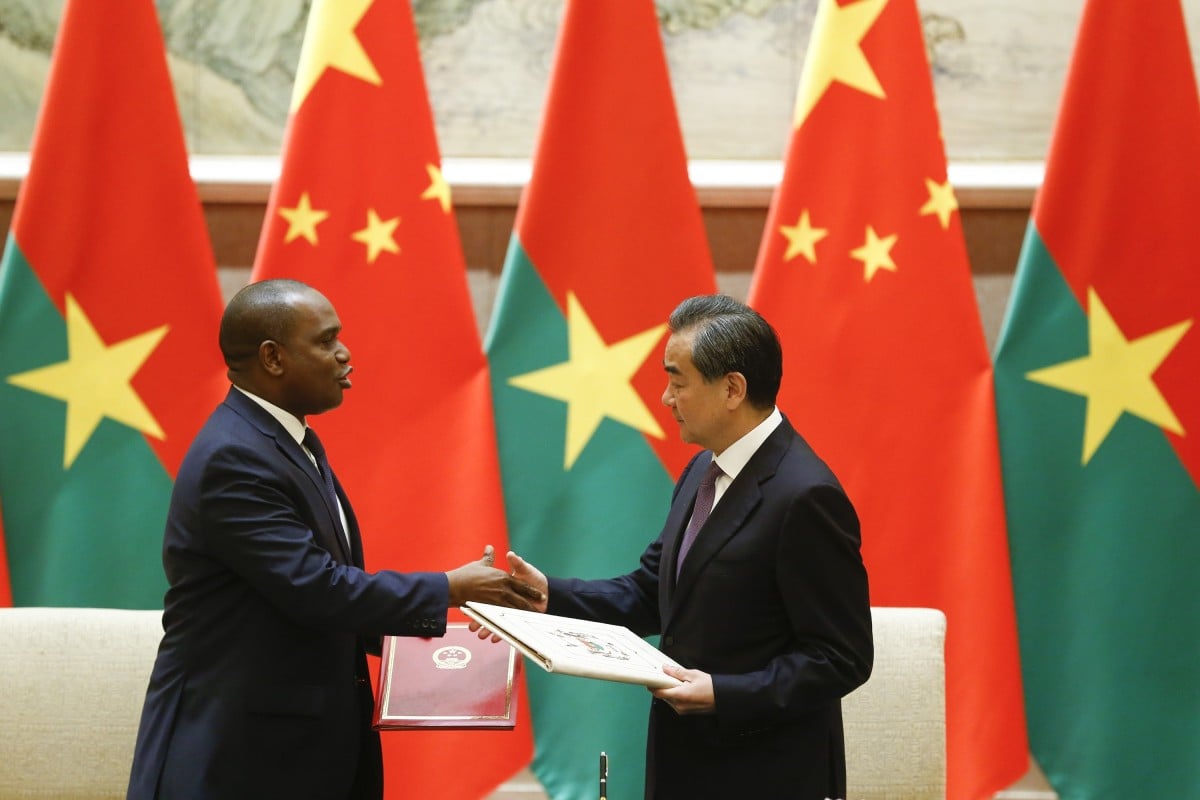
China opened five new embassies – in El Salvador, Burkina Faso, Gambia, São Tomé and Príncipe and the Dominican Republic – countries that severed official diplomatic ties with Taiwan. This directly contributed to China’s lead over the US, the report said.
Beijing’s diplomatic expansion also comes as the US, under the administration of President Donald Trump, is taking an “America first” approach to foreign policy.
Sri Lanka rejects fears of China’s ‘debt-trap diplomacy’ in belt and road projects
Trump has sought to cut funding to the US State Department and the White House has not appointed US ambassadors for at least 17 countries, including Brazil and Egypt, according to the American Foreign Service Association.
“Even though the US has a strong diplomatic base but it is not so proactive any more. It has fewer consulates and fewer foreign service workers,” Shi said.
“For the long term, China is in a more advantageous position.”
But a country’s diplomatic ability and influence did not rest on the number of foreign service postings and the US still held more international diplomatic sway than China, he added.
Some of China’s biggest diplomatic missions include Islamabad in Pakistan, Washington and London.
Wang Yang, chairman of the National Committee of the Chinese People’s Political Consultative Conference (CPPCC), meets with Egyptian President Abdel-Fattah al-Sisi in Egypt, Nov. 11, 2019. Invited by Speaker Ali Abdel-Aal of the Egyptian Parliament, Wang paid an official visit to Egypt from Nov. 10 to 13. (Xinhua/Yan Yan)
CAIRO, Nov. 13 (Xinhua) — China and Egypt agreed to enhance cooperation and further promote bilateral ties as China’s top political advisor Wang Yang visited the North African country from Nov. 10 to 13.
During his meeting with Egyptian President Abdel-Fattah al-Sisi, Wang, chairman of the National Committee of the Chinese People’s Political Consultative Conference (CPPCC), hailed the robust development of bilateral ties.
Wang conveyed Chinese President Xi Jinping’s cordial greetings and best wishes to Sisi, noting that, under the guidance of the two heads of state, Sino-Egyptian relations have achieved historical development.
He said China stands ready to work with Egypt to increase high-level exchanges, deepen political mutual trust, actively promote practical cooperation under the framework of the Belt and Road Initiative (BRI), enhance coordination over regional and global affairs, strengthen anti-terrorism cooperation, and push the Sino-Egyptian comprehensive strategic partnership for greater development.
Wang said that the just-concluded fourth plenary session of the 19th Communist Party of China Central Committee has constructed a reliable mechanism for the modernization of China’s national governance system and capacity, as well as realization of national rejuvenation, which also provides Chinese wisdom and solutions to the institutional civilization of humanity.
Wang said China is ready to work with Egypt to strengthen exchanges of experience on governance and support Egypt’s choice of a development path that suits its own national conditions.
For his part, Sisi asked Wang to convey his cordial greetings to Xi, while expressing his heartfelt congratulations to China on its great achievements made in the past 70 years.
Applauding the unprecedented level and depth of Sino-Egyptian relations, Sisi said Egypt supports the BRI and welcomes Chinese enterprises to increase investment in Egypt.
The Egyptian leader also expressed the hope that China will give full play to its influence to promote peace and stability in the Middle East.
Egypt is willing to enhance exchanges and mutual learning on de-radicalization, he added.
At his meeting with Egyptian Parliament Speaker Ali Abdel-Aal, Wang said that political mutual trust is the foundation of Sino-Egyptian relations and the BRI has become the new focus of cooperation between the two countries.
Wang appreciated Egypt’s firm support on the issues concerning China’s core interests, adding that China is ready to work with Egypt to enhance coordination on development strategies, implement major cooperation projects, and boost cooperation in tourism and people-to-people exchanges.
He said that the CPPCC is willing to increase exchanges with Egyptian parliament at all levels, with an aim to increase each other’s capabilities of fulfilling own duties.
Abdel-Aal expressed his country’s firm support for the one-China principle and the measures adopted by China to safeguard its territorial and sovereign integrity and national stability.
He said Egypt supports the two sides to enhance friendly exchanges between legislative and consultative bodies.
Abdel-Aal hoped that more Egyptian agricultural products will enter China’s market, while pledging to offer convenience for Chinese enterprises to expand investment in Egypt.
When meeting with Egyptian Prime Minister Mostafa Madbouly, Wang said that Egypt, which boasts huge market potential and demographic dividend at a crucial stage of industrialization and urbanization, is China’s natural partner in BRI development.
Wang said China is willing to positively participate in Egypt’s strategic planning including the Suez Canal Corridor development, encourage competitive Chinese enterprises to invest in Egypt, explore conducting Africa-oriented tripartite cooperation, and facilitate the access to China’s market by high-quality Egyptian agricultural products.
Madbouly said China has become Egypt’s largest trading partner and the Sino-Egyptian ties are taking a leap forward.
He said that Egypt is willing to learn from China’s advanced experience in technological innovation, and enhance mutually beneficial cooperation and mutual support on cyber security and anti-terrorism.
Egypt also looks forward to working with China to jointly promote the interconnection and intercommunication between China and Africa, Madbouly added.
During his stay in Egypt, Wang also had in-depth exchanges with Grand Imam of al-Azhar Ahmed el-Tayeb and Governor of Luxor Moustafa Mohamed Alham Khaled, inspected Chinese telecom company Huawei’s innovation exhibition center in North Africa, and attended the inauguration ceremony of Luxor University’s Confucius classroom.
BEIJING, Nov. 7 (Xinhua) — China’s top political advisor Wang Yang will pay official visits to Egypt, Oman and Laos, Foreign Ministry spokesperson Geng Shuang announced here Thursday.
Invited by Speaker Ali Abdel-Aal of the Egyptian Parliament and Chairman Yahya bin Mahfoudh Al Manthri of State Council of Oman, Wang Yang, chairman of the National Committee of the Chinese People’s Political Consultative Conference (CPPCC), will pay official visits to Egypt and Oman from Nov. 10 to 16, Geng said.
Invited by member of the Political Bureau of the LPRP Central Committee and President of the Lao Front for National Construction Saysomphone Phomvihane, Wang, also a member of the Standing Committee of the Political Bureau of the Communist Party of China (CPC) Central Committee, will pay an official visit to Laos from Nov. 16 to 19, Geng added.












 CHINDIA ALERT: You'll be living in their world, very soon