02/05/2020
BEIJING/SHANGHAI (Reuters) – A northeastern Chinese city of 10 million people struggling with currently the country’s biggest coronavirus cluster shut dine-in services on Saturday, as the rest of China eases restrictions designed to hamper the spread of the disease.
Harbin, the provincial capital of Heilongjiang and its biggest city, said it temporarily suspended dine-in services for all eateries, reported the official CCTV citing an emergency epidemic prevention notice.
Catering services operating in the city, such as barbecue eateries and those selling skewers, shabu shabu, and stew, shall suspend dine-in meals until further notice and in accordance with changes in the epidemic situation, the notice said.
While mainland China reported only one case on Saturday and crowds returned to some of its most famous tourist attractions for the 5-day May holiday, the northern province of Heilongjiang is hunkering down to prevent further clusters from forming.
Of the 140 local transmissions in mainland China, over half have been reported as from Heilongjiang, according to a Reuters tally.
Heilongjiang province borders Russia and has become the frontline in the fight against a resurgence of the coronavirus epidemic, with many new infections from citizens entering from Russia.
The province has already banned entry to residential zones by non-locals and vehicles registered elsewhere. It had also ordered isolation for those arriving from outside China or key epidemic areas.
On the back of the outbreak, deputy secretary of the Provincial Party Committee Wang Wentao said at a Friday meeting “we deeply blame ourselves”, according to local media.
“We had an inadequate understanding of epidemic prevention and control,” said Wang, adding that the failure to carry out testing in a timely manner contributed to the clusters.
Source: Reuters
Posted in 5-day, accordance, arriving, banned entry, Barbecue, Beijing, biggest, biggest city, borders, Catering services, CCTV, changes, China, Chinese city, citing, Citizens, cluster, coronavirus, coronavirus epidemic, country’s, crowds, curbs, currently, deputy secretary, designed, Disease, ease, eateries, elsewhere, emergency, entering, epidemic areas, epidemic prevention, epidemic prevention and control, epidemic situation, fight, forming, Friday, frontline, hamper, Harbin, Heilongjiang, Heilongjiang province, hunkering down, inadequate understanding, isolation, key, local transmissions, Mainland China, May holiday, meals, meeting, million, most famous, new infections, non-locals, Northeastern, northern province, notice, Official, operating, ordered, outbreak, outside, People, prevent, provincial capital, Provincial Party Committee, registered elsewhere, reported, residential zones, rest of, restrictions, resurgence, returned, Reuters tally, Russia, Saturday, selling, Shanghai, shut, shuts, skewers, spread, stew, struggling, suspended, temporarily, tourist attractions, Uncategorized, vehicles |
Leave a Comment »
26/04/2020
- City at centre of outbreak finally able to declare itself clear of disease after months in lockdown and thousands of deaths
- Risk of infection remains, however, with some patients testing positive for coronavirus that causes disease without showing symptoms
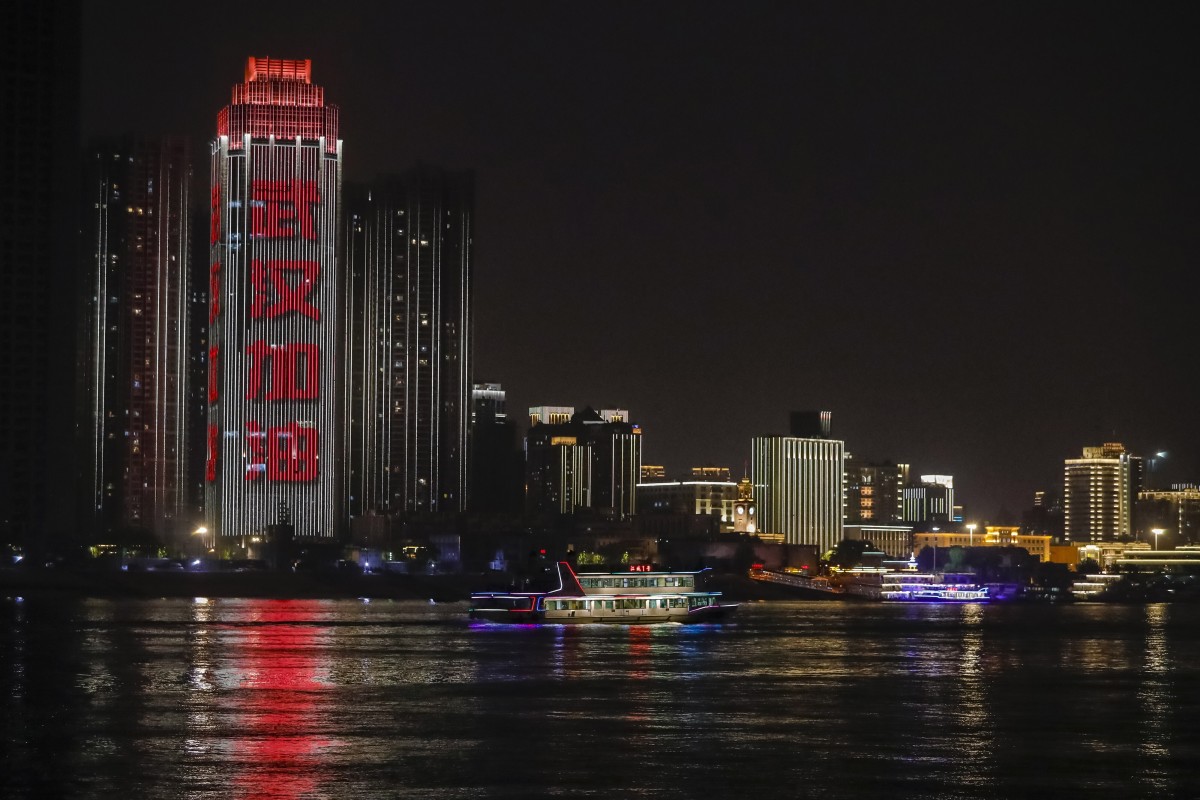
Ferries and other public transport services resumed in Wuhan last week. Photo: Xinhua
The city of Wuhan, the initial epicentre of the coronavirus pandemic, no longer has any Covid-19 patients in hospital after the last 12 were discharged on Sunday.
Their release ended a four-month nightmare for the city, where the disease was first detected in December. The number of patients being treated for Covid-19, the disease caused by a new coronavirus, peaked on February 18 at 38,020 – nearly 10,000 of whom were in severe or critical condition.
“With the joint efforts of Wuhan and the national medical aid given to Hubei province, all cases of Covid-19 in Wuhan were cleared as of April 26,” Mi Feng, a spokesman for the National Health Commission said on Sunday afternoon.
The announcement came only one day after the city discharged the last patient who had been in a severe condition. That patient also was the last severe case in Hubei province.
The last patient discharged from Wuhan Chest Hospital, a 77-year-old man surnamed Ding, twice tested negative for Sars-CoV-2, the virus that causes Covid-19, and was released at noon on Sunday.
“I missed my family so much!” Ding told Changjing Daily.
Another unidentified patient exclaimed as he left the hospital: “The air outside is so fresh! The weather is so good today!”
Wuhan faced a long journey to bring its patient count down to zero.
The city of 11 million, the capital of Hubei province and a transport hub for central China, was put under a strict lockdown on January 23 that barred anyone from entering or exiting the city without official approval for 76 days until it was officially lifted on April 8.
Coronavirus: Wuhan, Los Angeles officials discuss getting back to work after lockdown
22 Apr 2020
Residents were ordered to stay in their apartments as the city stopped public transport and banned private cars from city streets. As the epidemic worsened, more than 42,000 medical staff from across the country were sent to the city and to Hubei province to help ease the burden on the local health care system.
Wuhan was the hardest hit city in China, accounting for 50,333 of the 82,827 locally transmitted Covid-19 cases recorded in China. More than 4,600 died in the country from the disease.
On March 13, the city reported for the first time that there were no new suspected cases of the infection, and five days later there were no confirmed cases.
The number of discharged patients bottomed out at 39.1 per cent at the end of February, gradually climbing to 92.2 per cent by last Thursday.
“Having the patients in the hospital cleared on April 26 marks a major achievement for the city’s Covid-19 treatment,” the Wuhan Health Commission said in a statement.
However, having no severe cases in hospital does not mean all the discharged patients will require no further treatment as they may still need further care.
“Clearing all the severe cases marks a decisive victory for the battle to safeguard Wuhan,” health minister Ma Xiaowei told state broadcaster China Central Television on Saturday.
“Some patients who have other conditions are being treated in specialised hospitals. It has been properly arranged.”
Coronavirus: Chinese writer hit by nationalist backlash over diary about Wuhan lockdown
Ten patients aged between 42 and 85 who have been declared coronavirus-free are still in intensive care at the city’s Tongji Hospital where they are being treated for kidney problems and other complications arising from Covid-19. Some still need ventilators to help them breathe.
These 10 patients are under 24-hour care, with 190 nurses on four-hour rotations. There are other patients in a similar condition in two other hospitals in Wuhan, according to the Hubei Broadcasting and Television Network.
However, the discharge of the last batch of Covid-19 patients does not mean that the risk of infection is gone.
The city reported 20 new cases of people testing positive for Sars-CoV-2, the official name for the coronavirus that causes the disease, but who do not yet show symptoms.
There are 535 such carriers under medical observation. Past data shows some of these asymptomatic carriers will develop symptoms, and so will be counted as Covid-19 patients under China’s diagnosis and treatment plan.
China’s coronavirus infection curve has flattened out with about 694 imported cases of Covid-19 on top of about 800 locally transmitted ones now under treatment.
The national health commission spokesman warned that people still need to be on high alert as the virus is continuing to spread around the globe, with no sign yet of a slowdown.
“[We] must not drop our guard and loosen up. [We] must discover cases in time and deal with them quickly,” Mi said, citing the continued pressure from cases imported by people returning from overseas.
“The next step will be to implement the requirements of the central government and continue to guard against imported cases and a rebound of domestic transmitted cases.”
Source: SCMP
Posted in 10, 10,000, 12, 13, 18, 190, 2020, 22, 23, 24-hour, 26th, 76, 8, 800, able, across the country, after, afternoon, against, air, all cases, announcement, another, Anyone, apartments, approval, April, around the globe, arranged, asymptomatic, banned, barred, bottomed out, breathe, burden, capital, care, carriers, causes, Central China, Central government, centre, Changjing Daily, China Central Television, City, city streets, clear, climbing, complications, condition, conditions, confirmed cases, continuing, coronavirus, Coronavirus pandemic, Country, COVID-19, COVID-19 cases, critical, curve, days, deaths, December, declared, detected, develop, diagnosis and treatment plan, died, discharged, discover, discuss, Disease, domestic, drop, ease, end, ended, entering, epicentre, epidemic, exclaimed, exiting, Family, February, ferries, finally, first time, five days, flattened, four-hour, four-month, free, fresh, from, getting back, given, good, gradually, high alert, Hospital, hospitals, However, Hubei Broadcasting and Television Network, hubei province, implement, imported cases, infection, initial, intensive care, itself, January, joint efforts, kidney problems, last, last week, later, leave, left, lifted, local health care system, locally transmitted, lockdown, longer, loosen up, Los Angeles, March, medical observation, medical staff, million, missed, months, more than, National Health Commission, national medical aid, nearly, negative, new coronavirus, nightmare, no sign, noon, number, nurses, Official, officially, officials, one day, or, ordered, other, our guard, outbreak, outside, overseas, Past data, patients, peaked, People, positive, pressure, private cars, public transport, public transport services, put under, quickly, rebound, recorded, release, released, remains, requirements, residents, resumed, returning, Risk, rotations, Saturday, sent, severe, showing, slowdown, some, specialised, spokesman, spread, statement, stay, stopped, strict lockdown, struggle, Sunday, suspected cases, symptoms, testing, The National Health Commission, their, Thousands, Thursday, to help, to work, Today, Tongji Hospital, transmitted cases, transport hub, treated, twice, Uncategorized, unidentified, ventilators, warned, weather, whom, without, worsened, Wuhan, Wuhan Chest Hospital, Wuhan Health Commission, yet |
Leave a Comment »
22/04/2020
SEOUL/BEIJING (Reuters) – China has allowed 200 employees from South Korea’s Samsung Electronics Co Ltd (005930.KS) to enter the country to work on an expansion of the firm’s NAND memory chip factory, the company said on Wednesday.
The move came after China said on Tuesday that it was in talks with some countries to establish fast-track procedures to allow travel by business and technical personnel to ensure the smooth operation of global supply chains.
China said it has reached a consensus on such an arrangement with South Korea, without elaborating on the terms, including whether individuals entering China will be subject to quarantine.
China, where the virus first emerged late last year, blocked entry last month for nearly all foreigners in an effort to curb risks of coronavirus infections posed by travellers from overseas. After bringing the local spread under control with tough containment measures, it is trying to restart its economic engines after weeks of near paralysis.
A chartered China Air Ltd (601111.SS) plane flew in the Samsung Electronics employees on Wednesday, a company spokeswoman said.
Samsung said its employees will follow the local government’s policy upon arrival, without elaborating.
Shaanxi province, where Samsung’s NAND memory chip plant is located, requires people travelling from overseas to undergo a 14-day quarantine, according to South Korea’s foreign ministry.
“Samsung employees will not be exempted from the 14-day quarantine rule imposed by the Shaanxi province. They will get coronavirus tests at the airport upon arrival and will be transported to a local hotel designated by Chinese authorities,” an official at the Consulate General of South Korea in Xi’an told Reuters.
Samsung Electronics in December increased investment at its chip factory in China by $8 billion to boost production of NAND flash memory chips.
Source: Reuters
Posted in $8 billion, 14-day quarantine, 200, according, after, Airport, allow, allowed, allows, Arrangement, arrival, Beijing, billion, blocked, boost, bringing, Business, came, chartered, China, China Air Ltd, chinese authorities, chip factory, Company, consensus, Consulate General, containment, control, coronavirus infections, coronavirus tests, countries, Country, curb, December, designated, economic engines, effort, elaborating, emerged, employees, ensure, enter, entering, entry, establish, exempted, expansion, Factory, fast-track, firms, flash memory chips, flew, Foreign Ministry, Foreigners, from, from overseas, global supply chains, including, increased, individuals, Investment, last month, late last year, local governments, local hotel, local spread, located, measures, memory chip, move, NAND, near, nearly, Official, operation, overseas, paralysis, People, personnel, plane, Plant, policy, posed, procedures, production, quarantine, reached, requires, restart, Reuters, Risks, rule, Samsung Elec, Seoul, shaanxi province, smooth, South Korea, South Korea’s, spokeswoman, staff, subject, talks, technical, terms, tough, transported, travel, travellers, travelling, trying, Tuesday, Uncategorized, undergo, upon, Virus, Wednesday, weeks, whether, without, work, Xi'an |
Leave a Comment »
13/04/2020
- China’s famed Yiwu International Trade Market, a barometer for the health of the nation’s exports, has been hammered by the economic fallout from Covid-19
- Export orders have dried up amid sweeping containment measures in the US and Europe and restrictions on foreigners entering China have shut out international buyers
The coronavirus pandemic has severely dented wholesale trade at the Yiwu International Trade Market in China. Photo: SCMP
The Yiwu International Trade Market has always been renowned as a window into the vitality of Chinese manufacturing, crammed with stalls showcasing everything from flashlights to machine parts.
But today, as the coronavirus pandemic rips through the global economy, it offers a strikingly different picture – the dismal effect Covid-19 is having on the nation’s exports.
The usually bustling wholesale market, home to some 70,000 vendors supplying 1,700 different types of manufactured goods, is a shadow of its former self.
Only a handful of foreign buyers traipse through aisles of the sprawling 4-million-square-metre (43 million square feet) complex, while store owners – with no customers to tend to – sit hunched over their phones or talking in small groups.
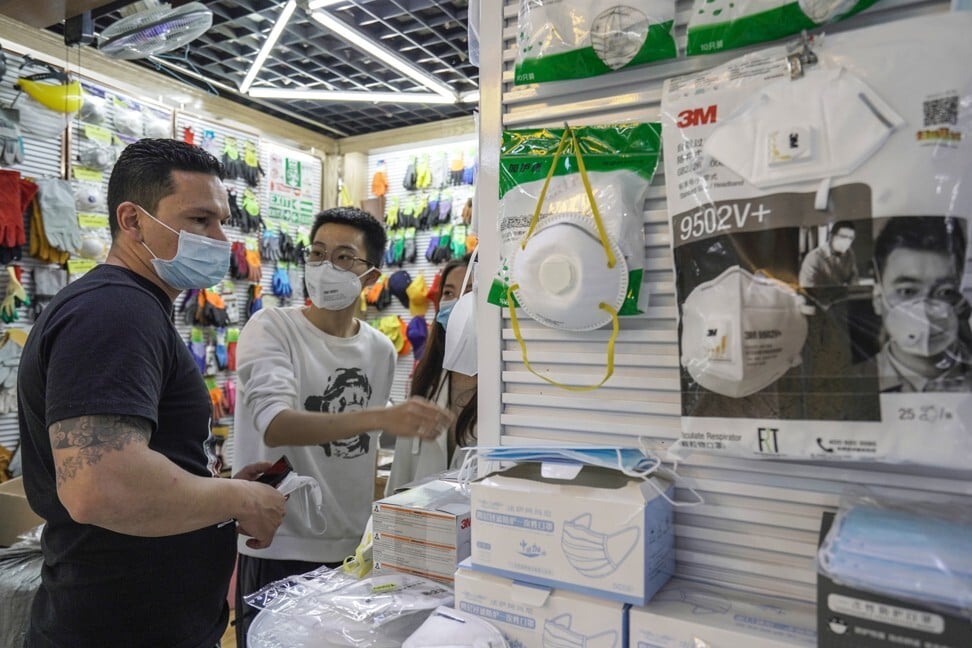
A foreign buyer visits a stall selling face masks. Photo: Ren Wei
“We try to convince ourselves that the deep slump will not last long,” said the owner of Wetell Razor, Tong Ciying, at her empty store. “We cannot let complacency creep in, although the coronavirus has sharply hampered exports of Chinese products.”
Chinese exports plunged by 17.2 per cent in January and February combined compared to the same period a year earlier, according to the General Administration of Customs. The figure was a sharp drop from 7.9 per cent growth in December.
After riding out a supply shock that shut down most of its factories, China is now facing a
second wave demand shock, as overseas export orders vanish amid sweeping containment measures to contain the outbreak around the globe.
Nowhere is that clearer to see than in Yiwu. The city of 1.2 million, which lies in the prosperous coastal province of Zhejiang, was catapulted into the international limelight as a showroom for Chinese manufacturing when the country joined the World Trade Organisation in 2001.
Coronavirus: Is the gig economy dead, and should the self-employed worry?
Before the pandemic, thousands of foreign buyers would flock to the mammoth trade market each day to source all manner of products before sending them home.
But the outbreak, which has claimed the lives of more than 113,000 people and infected more than 1.9 million around the world, is proving a major test for the market and the health of the trade dependent city.
Imports and exports via Yiwu last year were valued at 296.7 billion yuan (US$42.2 billion) – nearly double the city’s economic output.
Businesses, however, are facing a very different picture in 2020. Most traders at the market say they have lost at least half their business amid the pandemic, which was first detected in the central Chinese city of Wuhan last year.
Just take a look at the situation in Yiwu and you will understand the extent of the virus’ effect on China’s trade with foreign countries – Tianqing
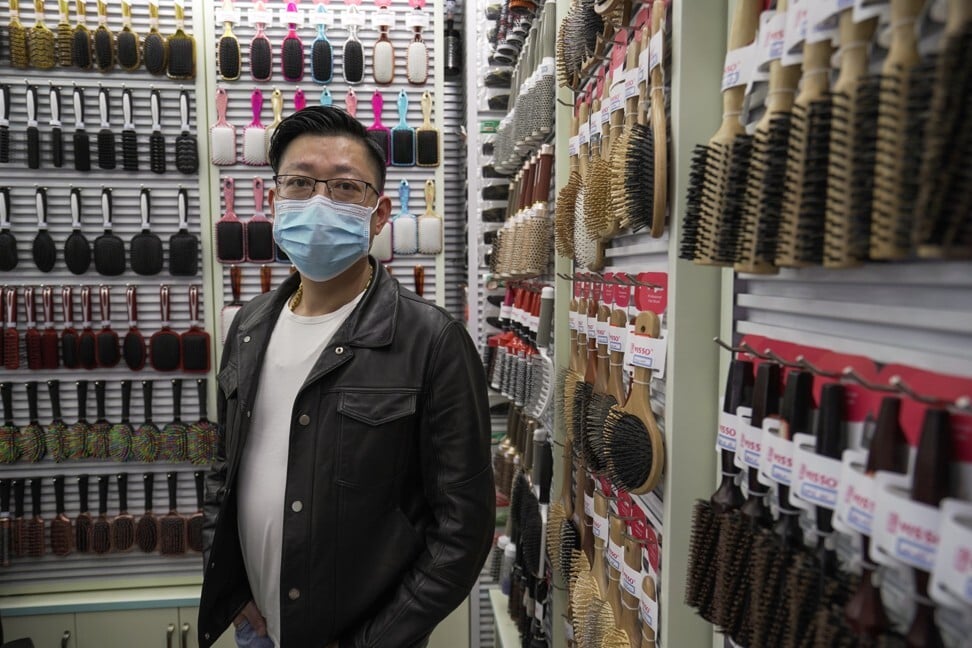
“Yiwu is the barometer for China’s exports,” said Jiang Tianqing, the owner of Beauty Shine Industry, a manufacturer of hair brushes. “Just take a look at the situation in Yiwu and you will understand the extent of the virus’ effect on China’s trade with foreign countries.”
Jiang said his business was only just hanging on thanks to a handful of loyal customers placing orders via WeChat.
“I assume it will be a drawn-out battle against the coronavirus,” he said. “We are aware of the fact that developed economies like the US and Europe have been severely affected.”
The Yiwu market reopened on February 18 after a one-month long hiatus following the Lunar New Year holiday and the government’s order to halt commercial activities to contain the spread of the outbreak.
Jiang Tianqing, owner of hair brush company Beauty Shine Industry. Photo: Ren Wei
But facing the threat of a spike in imported cases, Beijing banned foreigners from entering the country in late March – shutting out potential overseas buyers.
Despite the lack of business, local authorities have urged stall owners to keep their spaces open to display Yiwu’s pro-business attitude, owners said.
“For those bosses who just set up their shops here, it would be a do-or-die moment now since their revenue over the next few months will probably be zero,” said Tong. “I am lucky that my old customers are still making orders for my razors.”
The impact of the coronavirus is just the latest challenge for local merchants, who normally pay 200,000 yuan (US$28,000) per year for a 10-square-metre (108 square feet) stall at the market.
Traders were hard hit by the
trade war between China and the United States when the Trump administration imposed a 25 per cent tariff on US$200 billion of Chinese imports last year.
At the time, some Chinese companies agreed to slash their prices to help American buyers digest the additional costs.
“But it is different this time,” said Jiang. “Pricing does not matter. Both buyers and sellers are eager to seal deals, but we are not able to overcome the barriers [to demand caused by the virus].”
Even when businesses can secure orders, it is a struggle to deliver them
Ma Jun, a manager with a LED light bulb trading company, said the only export destination for her company’s products was war-torn Yemen because it was the only country with ports still open.
It is a public health crisis that ravages not just our businesses, but the whole world economy – Dong Xin
Dong Xin, an entrepreneur selling stationery products, said he could not ship the few orders he had because “ocean carriers have stopped operations”.
“It is a public health crisis that ravages not just our businesses, but the whole world economy,” he said. “The only thing can do is to pray for an early end to the pandemic.”
Most wholesale traders in the Yiwu market run manufacturing businesses based outside the city, so a sharp fall in sales has a ripple effect on their factories, potentially resulting in massive job cuts.
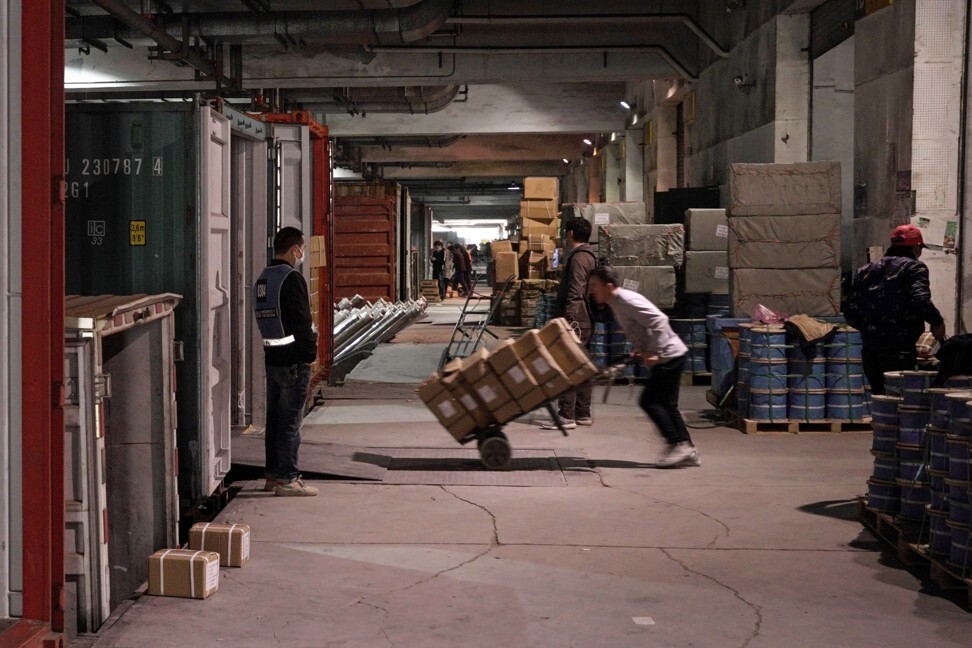
Workers pack containers at Yiwu Port, an inland port home to dozens of warehouses. Photo: Ren Wei
At Yiwu Port, an inland logistics hub full of warehouses where goods from the factories are unpacked and repacked for shipping abroad, container truck drivers joke about their job prospects.
“We used to commute between Shaoxing and here five times a week, and now it is down to twice a week,” said a driver surnamed Wang, describing the trip from his home to the shipping port, just over 100km away.
“At the end of the day, we may not be infected with the coronavirus, but our jobs will still be part of the cost of the fight against it.”
Source: SCMP
Posted in 2001, 25, abroad, aisles, banned, barometer, Beauty Shine Industry, Beijing, businesses, Buyers, catapulted, China, China’s, Chinese manufacturing, commute, complex, containers, containment, coronavirus, Coronavirus pandemic, Country, COVID-19, crammed, different picture, Dozens, dried up, economic fallout, entering, Entrepreneur, Europe, everything, export, export orders, face masks, factories, famed, February, flashlights, Foreigners, global, global economy, goods, grinds, hair brush company, halt, health, Home, imposed, infected, inland, international, International Trade Market, January, job cuts, jobs, joke, LED light bulb, limelight, logistics hub, Lunar New Year holiday, machine parts, mammoth, Manufacturing, March, massive, measures, ocean carriers, orders, outbreak, overseas, pack, pandemic, per cent, phones, Port, public health crisis, ravages, repacked, second wave, selling, Shaoxing, ship, shipping, shipping port, showcasing, Showroom, Stalls, stationery products, store owners, strikingly, sweeping, Tariff, trade war, traders, trading company, traipse, truck drivers, Trump administration, Uncategorized, United States, unpacked, vanish, vendors, warehouses, WeChat, whole, wholesale, workers, world economy., world trade organisation, Wuhan, Yemen, Yiwu Port, Zhejiang |
Leave a Comment »
11/04/2020
BEIJING (Reuters) – China reported on Saturday a rise in new coronavirus cases, as authorities try to head off a second wave of infections, particularly from imported and asymptomatic cases, as curbs on cities and travel are lifted.
The National Health Commission said 46 new cases were reported on Friday, including 42 involving travellers from abroad, up from 42 cases a day earlier.
In its statement the commission added that 34 new asymptomatic cases were reported, down from 47 the previous day.
Mainland China’s tally of infections now stands at 81,953. The death toll rose by three to 3,339.
Tough curbs imposed since January helped rein in infections sharply from the height of the pandemic in February. But policymakers fear a second wave triggered by arrivals from overseas or asymptomatic patients.
Northeastern Heilongjiang recently reported a spike in new cases because of Chinese nationals entering the province from Russia, which has seen a surge of cases.
Provincial health officials said it had 22 new imported cases on Friday, all Chinese nationals coming from Russia, and one new local case, in its capital of Harbin.
Inner Mongolia had a daily tally of 27 new imported cases by Saturday morning, all from Russia, the region’s health authority said.
The central province of Hubei, where the virus emerged late last year, reported no new cases for a seventh successive day.
A rise in virus infections has prompted authorities in Guangzhou to step up scrutiny of foreigners, ordering bars and restaurants not to serve clients who appear to be of African origin, the U.S. consulate in the southern city said.
Anyone with “African contacts” faces mandatory virus tests followed by quarantine, regardless of recent travel history or previous isolation, it said in a statement.
It advised African-Americans or those who feel they might be suspected of contact with nationals of African origin to avoid the city.
Since the epidemic broke out in the provincial capital of Wuhan, it has spread around the world, infecting 1.6 million people and killing more than 100,000.
Source: Reuters
Posted in 100,000, 42, 46, abroad, advised, African, African Americans, Anyone, around the world, Arrivals, asymptomatic, authorities, “African contacts”, bars, capital, cases, central province, China, China’s, Chinese nationals, cities, clients, commission, coronavirus cases, curbs, day, death toll, earlier, emerged, entering, epidemic, February, followed by, Foreigners, Friday, from, Guangzhou, Harbin, head off, Health officials, Heilongjiang, History, Hubei, imported, infecting, infections, Inner Mongolia, isolation, January, killing, late last year, lifted, Mainland China, mandatory, million, morning, National Health Commission, new, Northeastern, ordering, origin, overseas, pandemic, particularly, People, policymakers, previous, province, Provincial, provincial capital, quarantine, recent, regardless, reported, reports, restaurants, rise, Russia, said, Saturday, scrutiny, second wave, seventh, southern city, spike, spread, statement, successive, surge, tally, travel, travellers, triggered, try, U.S. consulate, Uncategorized, up from, Virus, virus tests, Wuhan |
Leave a Comment »
29/03/2020
- Chinese president is fighting ‘two tough battles’ to reboot industry and defeat Covid-19, Xinhua says
- Choice of industrial powerhouse for official visit shows the importance Xi gives to reviving the economy, observers say
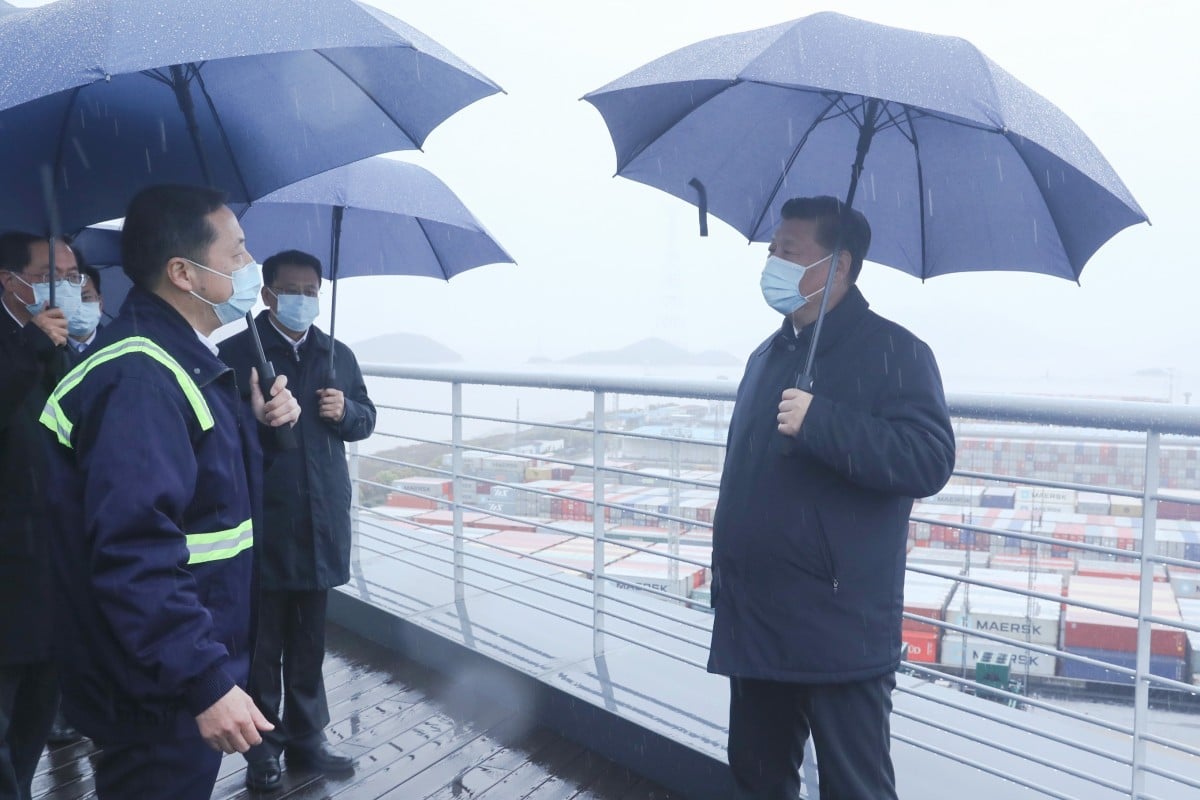
Chinese President Xi Jinping chats to workers and officials at Ningbo port in east China on Sunday. Photo: Xinhua
visited the industrial powerhouse of Zhejiang province on Sunday in a move state media described as a clear message the country was ready to get the economy back on track amid the “new normal” of dealing with the coronavirus.
The trip, to Ningbo – one of the world’s busiest ports and a trade hub for eastern China – was Xi’s first outside Beijing since he visited Wuhan, the initial epicentre of the Covid-19 outbreak, earlier in the month.
As well as a visiting the port, he spoke to workers at an industrial zone for car part manufacturers, where he learned about the latest efforts to restart production, Xinhua said in a brief report.
The visit came after two months of almost total lockdown in many parts of the country that disrupted businesses, transport and people’s daily lives, and ground the economy to a near standstill.
While local transmissions of the coronavirus in China appear to be under control, Beijing has implemented strict measures to prevent imported cases, including slashing international flights and banning most foreigners from entering the country.
In a separate report, Xinhua said Xi’s visit sent “a clear message” that China was resuming its industrial production and social activities, and described the fight against the coronavirus as the “new normal”.
Reviving the economy and battling a deadly disease were Xi’s “two tough battles”, it said.
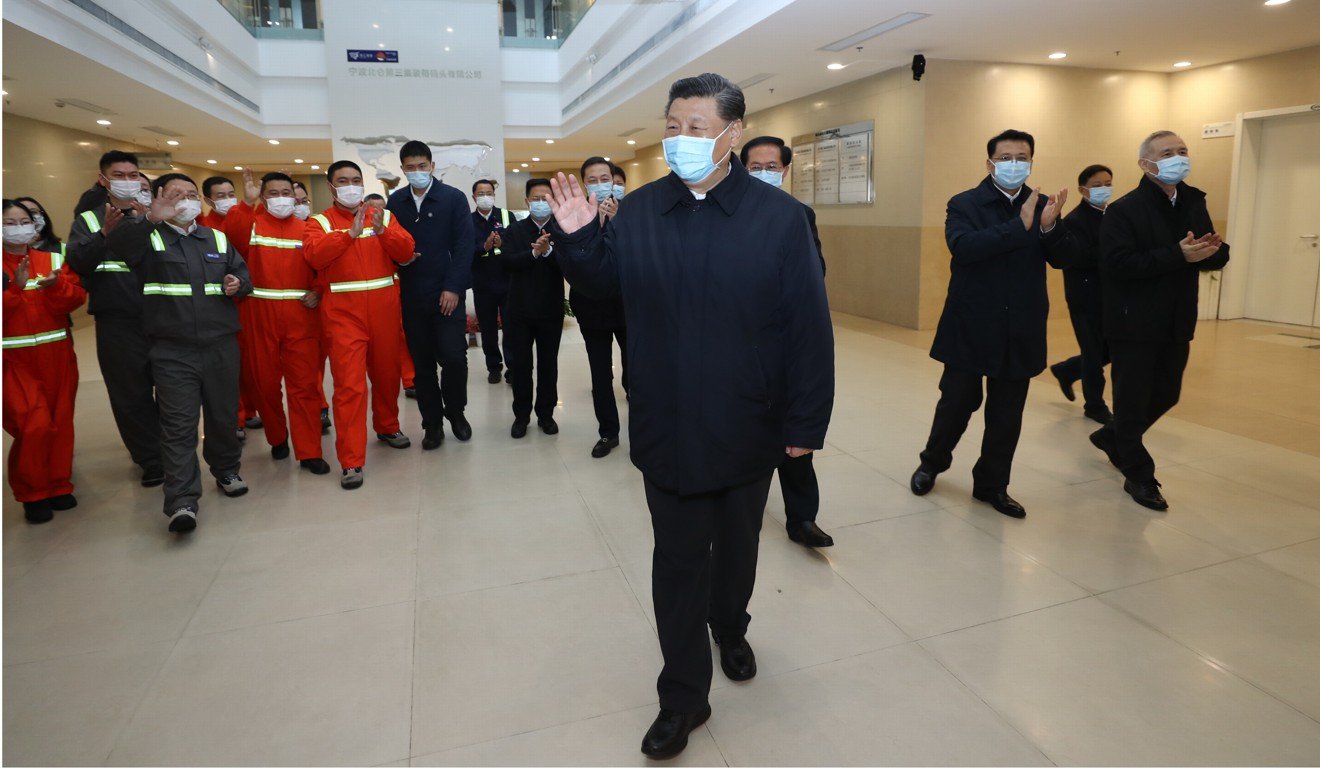
Xi’s choice of destination was a clear message that restarting the economy is a top priority. Photo: Xinhua
Zhejiang is something of a power base for Xi, who spent nearly five years there during his climb through the ranks of the Communist Party.
One of the country’s biggest trading hubs, the province generated 3 trillion yuan (US$423.2 billion) in foreign trade last year, or more than 13 per cent of the national total, according to official figures.
“It’s a highly export-oriented economy … which has made it crucial not only to China’s development plan but also to safeguarding the stability of the global supply chain,” Xinhua said.
Observers said Xi’s visit was evidence of Beijing’s determination to get the economy back up and running as soon as possible.
Zhao Xijun, an economics professor at Renmin University, said Ningbo was a key part of the export economy and a base for many local and foreign entrepreneurs.
“It is a clear signal that China, after getting domestic infections under control, is now prioritising economic growth,” he said.
“It also shows the country will keep developing its economy and opening up its markets.”
But hopes of a quick recovery for the Chinese economy have been dashed by the spread of the coronavirus across Europe and the United States, causing a sharp decline in demand for Chinese goods.
Xi spent five years in Zhejiang while climbing the ranks of the Communist Party. Photo: Xinhua
In a meeting on Friday, the Communist Party’s Politburo said it would step up macroeconomic policy adjustments and pursue a more proactive fiscal policy while optimising measures to control the coronavirus to speed up the restoration of production, doing whatever it could to “minimise the losses caused by the epidemic”.
“China has successfully reopened much of its economy from the extremes of the coronavirus lockdown, but now faces a new problem: an impending collapse in demand for its exports as its customers go into lockdowns of their own,” Gavekal Dragnomics said in a research report.
“That shock to industry and manufacturing employment means that China will not enjoy the hoped-for V-shaped recovery in growth.”
Source: SCMP
Posted in 'total lockdown', ‘clear message’, ‘two tough battles’, back on its feet, banning, Beijing, Beijing’s, busiest ports, businesses, car part manufacturers, Chinese economy, Chinese goods, Communist Party, Communist Party’s Politburo, coronavirus, Country, COVID-19 outbreak, dashed, decline, defeat Covid-19, demand, determination, disrupted, economics professor, economy, employment, entering, epicentre, Europe, export-oriented, Foreigners, Gavekal Dragnomics, global, global supply chain, growth, industrial powerhouse, industrial zone, industry, international flights, it’s time, local transmissions, macroeconomic policy, Manufacturing, Ningbo, observers, optimising measures, people’s daily lives, power base, proactive fiscal policy, production, reboot industry, Renmin University, restart, Safeguarding, sends, stability, standstill, trade hub, Transport, Uncategorized, United States, V-shaped recovery, visit, workers, Wuhan, Xi, Xi Jinping’s, Xinhua, zhejiang province |
Leave a Comment »
03/10/2019
NEW DELHI (Reuters) – Indian Prime Minister Narendra Modi called on the nation to work toward ending the consumption of single-use plastics by 2022, in a speech on Wednesday.
“Hygiene, protection of environment and protection of life were of keen interest to Gandhi,” said Modi, speaking on the anniversary of the freedom movement leader’s birth. “Plastic is dangerous to all these three goals. So we need to reach the goal of ending single-use plastic by 2022.”
Meanwhile, India held off a plan to impose a blanket ban on single-use plastics as it was seen as a measure too disruptive for industry at a time when India is dealing with an economic slowdown and job losses, officials told Reuters on Tuesday.
In a tweet on Wednesday, India’s environment ministry however, denied that it had planned to issue a ban.
“India, today is on the verge of starting a historic movement against #SingleUsePlastic, setting an example for the world. At such a time, discovering a shelved ban, when none was planned is indeed misleading & doesn’t do justice to its fight against single use plastic,” the ministry said in a tweet.
Reuters had in August reported that India was set to impose a nationwide ban on plastic bags, cups and straws on Oct. 2, in a sweeping measure to stamp out single-use plastics from cities and villages that rank among the world’s most polluted.
Concerns are growing worldwide about plastic pollution, especially in oceans, where nearly 50% of single-use plastic products end up, killing marine life and entering the human food chain, studies have shown.
Source: Reuters
Posted in #SingleUsePlastic, 2022, anniversary, birth, blanket ban, cities, consumption, dangerous, disruptive, economic slowdown, end usage, entering, exhorts, freedom movement leader, Gandhi, goals, held off, historic movement, human food chain, hygiene, impose, India’s Environment Ministry, Indian Prime Minister Narendra Modi, industry, job losses, killing, marine life, measure, most polluted, nation, nationwide ban, oceans, plan, plastic, plastic bags, plastic cups, plastic straws, protection of environment, protection of life, Reuters, single-use plastics, stamp out, sweeping measure, tweet, Uncategorized, villages |
Leave a Comment »




 CHINDIA ALERT: You'll be living in their world, very soon