Chindia Alert: You’ll be Living in their World Very Soon
aims to alert you to the threats and opportunities that China and India present. China and India require serious attention; case of ‘hidden dragon and crouching tiger’.
Without this attention, governments, businesses and, indeed, individuals may find themselves at a great disadvantage sooner rather than later.
The POSTs (front webpages) are mainly 'cuttings' from reliable sources, updated continuously.
The PAGEs (see Tabs, above) attempt to make the information more meaningful by putting some structure to the information we have researched and assembled since 2006.
A pedestrian waits to cross a street in Brussels, Belgium, May 6, 2020. (Xinhua/Zhang Cheng)
— New single-day COVID-19 deaths continue to drop in France
— Italy sees fewer COVID-19 patients, number of active infections falls to 70,187
— New deaths from COVID-19 keep falling in Spain as PM seeks final extension of State of Alarm
— Deaths from coronavirus top 9,000 in Belgium
BRUSSELS, May 16 (Xinhua) — The following are the latest developments of the COVID-19 pandemic in European countries.
A man makes a phone call near the Eiffel Tower at the Trocadero Palace, Paris, France, May 15, 2020. (Xinhua/Gao Jing)
PARIS — France had registered 96 new deaths from COVID-19 over the past 24 hours, fewer than the previous two 24-hour periods, while the balance of the coronavirus-related hospitalization remains negative, France’s Health Ministry said on Saturday.
According to the ministry, the 96 new single-day deaths were lower than 104 registered on Friday and 351 on Thursday. So far, 27,625 people have succumbed to the coronavirus-caused disease across France.
Meanwhile, France is now the world’s fourth worst-hit country in terms of human loss caused by COVID-19 after the United States, Britain and Italy.
As of Saturday, the country had recorded 142,291 confirmed cases, a single-day increase of 372, slower than Friday’s 563. A total of 61,066 patients had recovered and returned home since early March.
People wait in line outside a cocktail bar in Rome, Italy, May 12, 2020. (Xinhua/Cheng Tingting)
ROME — The number of COVID-19 hospitalizations and intensive care (ICU) patients dropped in Italy over the past 24 hours, according to the latest tally posted by the Civil Protection Department on Saturday.
Recoveries rose by 2,605 from a day earlier, bringing the total to 122,810.
Nationwide, the number of active infections fell to 70,187, down from 72,070 on Friday.
Of those who tested positive for the new coronavirus, 775 are in intensive care, down by 33 from Friday, and 10,400 are hospitalized with symptoms, down by 392.
The death toll on Saturday was 153, bringing the total to 31,763 since the outbreak was first recorded in Italy’s northern Lombardy region in February.
The total number of COVID-19 cases combining infections, fatalities and recoveries has risen to 224,760, up from 223,885 on Friday.
A security guard offers disinfectant gel to a woman at the entrance of a building in Barcelona, Spain, on May 11, 2020. (Photo by Sergi Camara/Xinhua)
MADRID — The Spanish Ministry of Health, Consumer Affairs and Social Welfare confirmed on Saturday falls in the number of new deaths from COVID-19 as well as new cases.
The total number of deaths in Spain rose to 27,563 after 102 people lost their lives to COVID-19 in the 24-hour period until 21:00 hours local time on Friday.
This was the lowest number of deaths in a 24-hour period since March 16, with 50 of the deaths in the regions of Madrid and Catalonia.
The same period also saw a slight fall in the number of new cases. The Health Ministry reported 539 new infections, down from 549 reported 24 hours earlier, taking the total number of confirmed cases to 230,698.
Also on Saturday, Spanish Prime Minister Pedro Sanchez said he will seek a fifth and final extension of the State of Alarm, which was imposed on March 15 to control the spread of the coronavirus.
Speaking in a televised speech, Sanchez said the upcoming final State of Alarm, which will come into effect on May 24 if approved, will be “different” from others.
“It is expected to be the last State of Alarm. We are going to request in the Congress of Deputies that it should last for a month,” he said. All the previous four extensions have been 15 days.
Few people are seen at the Saint-Hubert Royal Galleries shopping street in Brussels, Belgium, May 6, 2020. (Xinhua/Zhang Cheng)
BRUSSELS — With an increase of 47 deaths reported in the last 24 hours, the novel coronavirus had caused a total of 9,005 deaths in Belgium since the beginning of the epidemic, said the public health institute Sciensano on Saturday.
Of the 9,005 deaths, 48 percent took place in hospitals, 51 percent in nursing homes, and about 0.6 percent elsewhere, according to Sciensano. Deaths in hospitals were all confirmed COVID-19 cases. Of the fatalities in nursing homes, 23 percent were confirmed by test while the other were presumed by symptoms.
Also in the past 24 hours, 345 new cases of COVID-19 have been confirmed, raising the cumulative cases to 54,989 in Belgium.
Hungarian Foreign Minister Peter Szijjarto tells Chinese counterpart, Wang Yi, that his country ‘always upholds the one China principle’
Wang also speaks to foreign ministers of Estonia and Bosnia and Herzegovina ahead of World Health Assembly, which starts on Monday
Chinese Foreign Minister Wang Yi spoke to three European foreign ministers on Thursday. Photo: AP
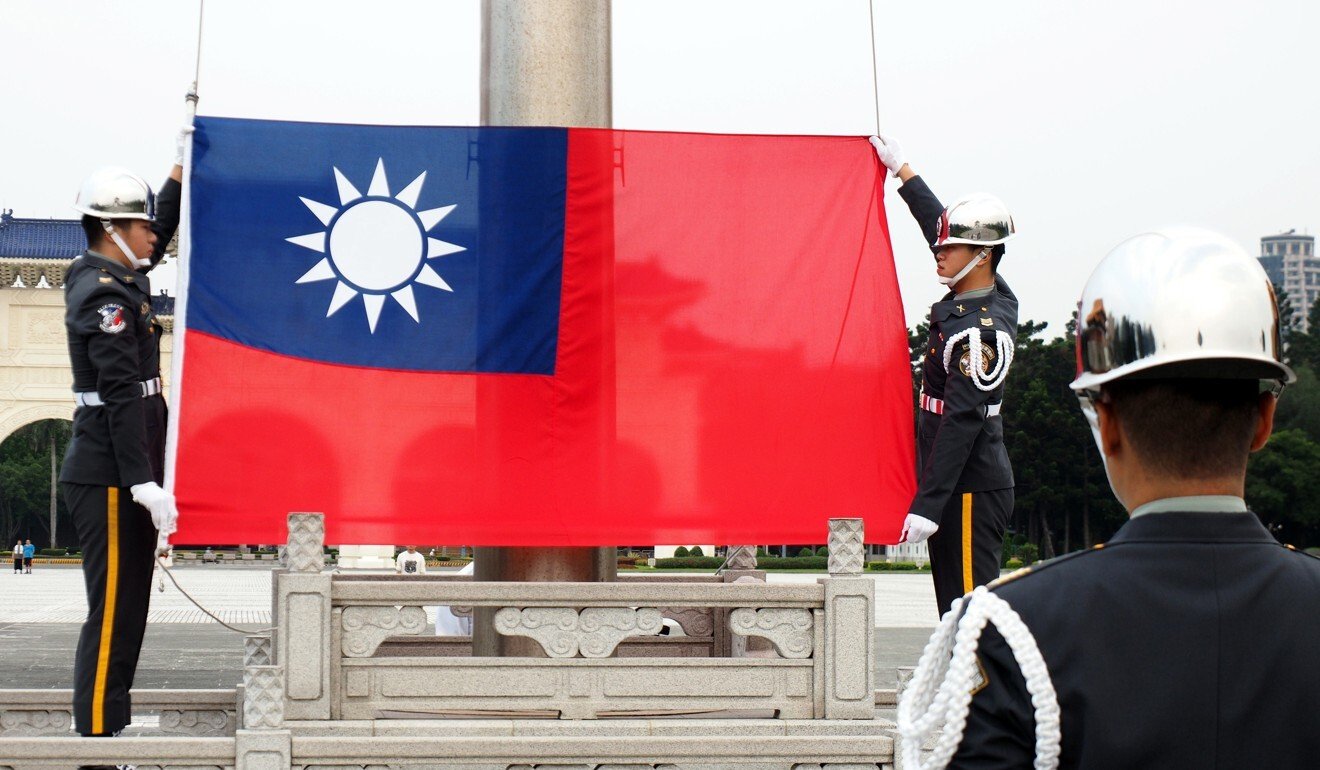
Hungary supports Beijing’s efforts to prevent Taiwan taking part in the upcoming World Health Assembly (WHA), according to a Chinese statement issued after a telephone conversation between the two countries’ foreign ministers.
China’s Foreign Minister Wang Yi called his European counterpart, Peter Szijjarto, on Thursday, the foreign ministry in Beijing said.
During the call, Szijjarto told Wang that Budapest would not support Taiwan’s accession to the World Health Organisation (WHO) ahead of the annual gathering of health ministers from around the world that starts in Geneva on Monday and which Taipei is keen to attend.
Hungary “always upholds the one China principle”, Szijjarto was quoted as saying.
A report about the ministers’ call by the Hungarian foreign ministry, however, made no mention of Taiwan.
It said that Szijjarto thanked Wang for the medical supplies China had sent to Hungary board 121 flights since the start of the Covid-19 pandemic.
The pair also discussed cooperation on 5G and the development of a rail project between Budapest and the Serbian capital, Belgrade, it said.
Beijing opposes Taiwan’s involvement in the WHO. Photo: EPA-EFE
As well as speaking to Szijjarto, Wang called the foreign ministers of Estonia and Bosnia and Herzegovina on Thursday to discuss the Covid-19 pandemic, but Taiwan was not mentioned, the Chinese statement said.
Taipei donated 80,000 face masks to Estonia in April, and last week, Urmas Paet, an Estonian member of the European parliament urged Budapest to support Taiwan’s membership of the WHO and “not allow itself to be manipulated by China”.
Taiwan has long campaigned to regain observer status at the WHO and has ramped up those efforts since the start of the global health crisis. Despite the devastation caused by Covid-19, Taiwan has reported just 440 confirmed cases and seven deaths.
Taiwan attended the WHA meetings as an observer between 2009 and 2016, unopposed by Beijing as at the time the island was led by president Ma Ying-jiu from the mainland-friendly Kuomintang.
However, relations between Taipei and Beijing have soured since 2016 and the election of President Tsai Ing-wen, from the pro-independence Democratic Progressive Party, who won a second term of office in January.
WHO put nations at risk by excluding Taiwan from knowledge sharing, US report says
13 May 2020
Taiwan has not been alone in its campaign to regain its WHO status, with the United States, Australia, New Zealand, Canada and several European countries backing the move.
Last week, US Secretary of State Mike Pompeo called on all nations to support Taipei’s participation as an observer at the WHA, and urged WHO director general Tedros Adhanom Ghebreyesus to allow it.
Despite the support, Taiwan’s Vice-Premier Chen Chien-jen said on Thursday that because of the pressure from Beijing there was now little chance of Taiwan attending the WHA.
China’s foreign ministry spokesman Zhao Lijian said last week it was “resolutely opposed” to New Zealand’s support for Taiwan.
In his calls to Europe, Wang also said that cooperation between Beijing and 17 central and eastern European nations – under the “17+1” banner – would not be affected by the health crisis and that further talks would be held once it had been brought under control.
BEIJING, May 2 (Xinhua) — The number of China-Europe freight trains hit a record monthly high of 979 in April, up 46 percent year on year, the China State Railway Group said Saturday.
A total of 88,000 TEUs (20-foot equivalent units) of cargo were transported by the trains, up 50 percent from a year earlier.
From January to April, a total of 2,920 China-Europe freight trains transported cargo of 262,000 TEUs, up 24 percent and 27 percent from a year earlier, respectively.
The number of departing trains rose 36 percent year on year to 1,638 during the first four months, while the number of returning trains climbed 11 percent to 1,282.
China-Europe cargo train services have become an important logistics channel to ensure smooth trade as air, sea and road transportation have been severely affected by the novel coronavirus epidemic, the company said.
The freight trains have also been playing a crucial role in helping with the fight against the pandemic in Europe as massive quantities of medical supplies were sent by them.
From March 21 to the end of April, anti-epidemic supplies totaling 660,000 items and weighing 3,142 tonnes were sent by the freight trains to European countries such as Italy, Germany, Spain and the Czech Republic.
Researchers conclude that the virus was circulating undetected in France in February
Findings highlight the difficulties governments face in tracing the source of coronavirus outbreaks
Researchers in France have carried out genetic analysis and found that the dominant types of the viral strains in the country did not come from China or Italy. Photo: AP
The coronavirus outbreak in France was not caused by cases imported from China, but from a locally circulating strain of unknown origin, according to a new study by French scientists at the Institut Pasteur in Paris.
Genetic analysis showed that the dominant types of the viral strains in France belonged to a clade – or group with a common ancestor – that did not come from China or Italy, the earliest hotspot in Europe.
“The French outbreak has been mainly seeded by one or several variants of this clade … we can infer that the virus was silently circulating in France in February,” said researchers led by Dr Sylvie van der Werf and Etienne Simon-Loriere in a non-peer reviewed paper released on bioRxiv.org last week.
The Covid-19 pandemic has infected more than 128,000 people in France and caused more than 23,000 deaths.
France detected the virus in late January, before any other country in Europe. A few patients with a travel history that included China’s Hubei province were sampled on January 24 and tested positive.
The Covid-19 pandemic has infected more than 128,000 people in France and caused more than 23,000 deaths. Photo: AFP
The French government took quick and decisive measures to trace contacts of the infected people and shut down the chance of further infection.
However, these strains were not found in patients tested after the initial imported cases, suggesting “the quarantine imposed on the initial Covid-19 cases in France appears to have prevented local transmission”, the researchers said.
The Pasteur institute collected samples from more than 90 other patients across France and found the strains all came from one genetic line. Strains following this unique path of evolution had so far only been detected in Europe and the Americas.
Singapore Covid-19 cases to rise as not all migrant workers being tested
28 Apr 2020
The earliest sample in the French clade was collected on February 19 from a patient who had no history of travel and no known contact with returned travellers.
Several patients had recently travelled to other European countries, the United Arab Emirates, Madagascar and Egypt but there was no direct evidence that they contracted the disease in these destinations.
To the researchers’ surprise, some of the later strains collected were genetically older – or closer to the ancestral root – than the first sample in this clade.
Spanish official cries reading names of health workers killed by coronavirus
A possible explanation, according to the authors, was that local transmission had been occurring in France for some time without being detected by health authorities.
The French government may have missed detecting the transmission. According to the researchers, a large proportion of those patients might have had mild symptoms or none at all.
The researchers also found that three sequences later sampled in Algeria were closely related to those in France, suggesting that travellers from France might have introduced the virus to the African country and caused an outbreak.
China says US politicians are lying as Trump calls for Covid-19 damages
29 Apr 2020
Benjamin Neuman, professor and chair of biological sciences with the Texas A&M University-Texarkana, said the French strains might have come from Belgium, where some sequences most closely related to the original strain from China were clustered.
“Since the earliest European strains of [the coronavirus] Sars-CoV-2 seem to be associated with Belgium, the idea that the virus spread from Belgium to both Italy and France at around the same time seems plausible, as this paper contends,” he said.
France is the latest in a growing number of countries and areas where no direct link between China and local outbreaks could be established.
The dominant strains in Russia and Australia, for instance, came from Europe and the United States, respectively, according to some studies.
These findings have drawn fire from some politicians who have tried to deflect domestic anger over their handling of the crisis by blaming China.
Is this the next big hotspot for the ‘little flu’?
28 Apr 2020
“So now the Fake News @nytimes is tracing the CoronaVirus origins back to Europe, NOT China. This is a first!” he tweeted on April 11, referring to a story about the studies in the The New York Times’ science section.
The findings also highlight the difficulties governments face in tracing the source of coronavirus outbreaks.
Less-developed countries may never know where their strains came from due to inadequate testing and sequencing capability.
India, for example, has released the genetic sequence of fewer than 40 samples to the public so far, a small number considering its huge population.
Most of the strains sampled in 35 early cases came from clades that could be traced to Italy and Iran, with only a few from China, according to a recent study. But researchers were not able to track further because of the lack of data.
A scientist on the study, Dr Mukesh Thakur, of the Zoological Survey of India, said it was too early to rule out China as the source of outbreaks in India because the number of samples at hand was limited.
A 20-year-old student studying medicine in Wuhan, for instance, might have come in contact with many people on the way home before she was tested positive on January 30.
Thakur said local media reported that the Indian government quarantined 3,500 people possibly linked to three positive cases imported from Wuhan.
“God knows how many of them tested positive in the subsequent stages,” Thakur said in an email response to the Post’s queries on Tuesday.
Some prominent scientists, including Francis Collins, director of the US National Institutes of Health, said the virus might have been spreading quietly in humans for years, or even decades, without causing a detectable outbreak.
The virus had thus adapted well to the human body. Some genes regulating its binding to host cells were similar, or even identical, to those found in some other highly infectious human viruses, such as HIV and Ebola.
According to some estimates, the ancestor of Sars-CoV-2, the virus causing Covid-19, might have left bats between 50 and 70 years ago. A recent study by a team of geneticists in Oxford University estimated the first outbreak of the current pandemic could have occurred as early as September last year.
They found that the dominant strains circulating in China and Asia were genetically younger than some popular strains in the United States.
SHENYANG, April 23 (Xinhua) — With trucks standing bumper to bumper and large cranes loading containers on the train, work returned to normal at a logistics base in northeast China’s Liaoning Province.
The base, where the China-Europe freight trains are set to depart in Shenyang, the provincial capital, has seen stable departures since early April as the novel coronavirus epidemic ebbs away.
With the global supply chain being affected by restrictions in air, land, and port travel due to the global pandemic, China-Europe railway has been playing a more important role, experts say.
“The train was operated by staff in different sections, which means it does not require cross-border personnel health inspections, giving it advantages during the pandemic,” said Shan Jing, an industry insider who wrote a book on China-Europe freight trains.
In March, a total of 809 China-Europe freight trains carrying 73,000 containers were sent across China. Both numbers hit a monthly record.
At the Shenyang logistics base, trains depart to travel through Russia, Belarus, Poland and finally reach Germany in around 18 days. As of April 13, a total of 130 trains carrying 11,200 standard containers had departed from the base.
“The province sends a stable number of five trains each week,” said He Ruofan, a business manager with the Shenyang branch of China Railway Container Transport Corp., Ltd, operator of the trains.
The stable operation has made the route a top choice for many Chinese enterprises, said Yao Xiang, a manager with logistics group Sinotrans’s northeast company.
“Many shipping routes have been canceled, and the rest are more and more expensive amid the epidemic,” said Yao, noting the price for air cargo surged 5 to 10 times the normal price as flights decreased from China to Europe.
With increasing departing trains, returning trains on the route have also been increasing, Yao said.
Among the 130 trains that have been sent from the Shenyang base so far this year, 33 returned, carrying construction materials, car parts, mechanical equipment, and daily products.
“These goods provide supplies to large companies like BMW and Michelin’s Shenyang factories,” Yao said.
Medical supplies have also been sent to hard-hit Europe to fight against the coronavirus pandemic.
As of April 18, a total of 448,000 pieces of medical supplies weighing 1,440 tonnes had been sent to European countries via the route, according to China State Railway Group Company, Ltd.
“China-Europe freight trains have shown great service capabilities during the epidemic,” said Shan, the industry insider. “It serves as a new choice for European enterprises, and I believe more people will come to realize the importance of the route.”
Mainland China’s coronavirus outbreak exposed a huge digital divide, with some students from poorer regions lacking resources for online learning
Access to the internet is not considered a daily necessity at China’s policy level, unlike in European countries such as Norway and Iceland
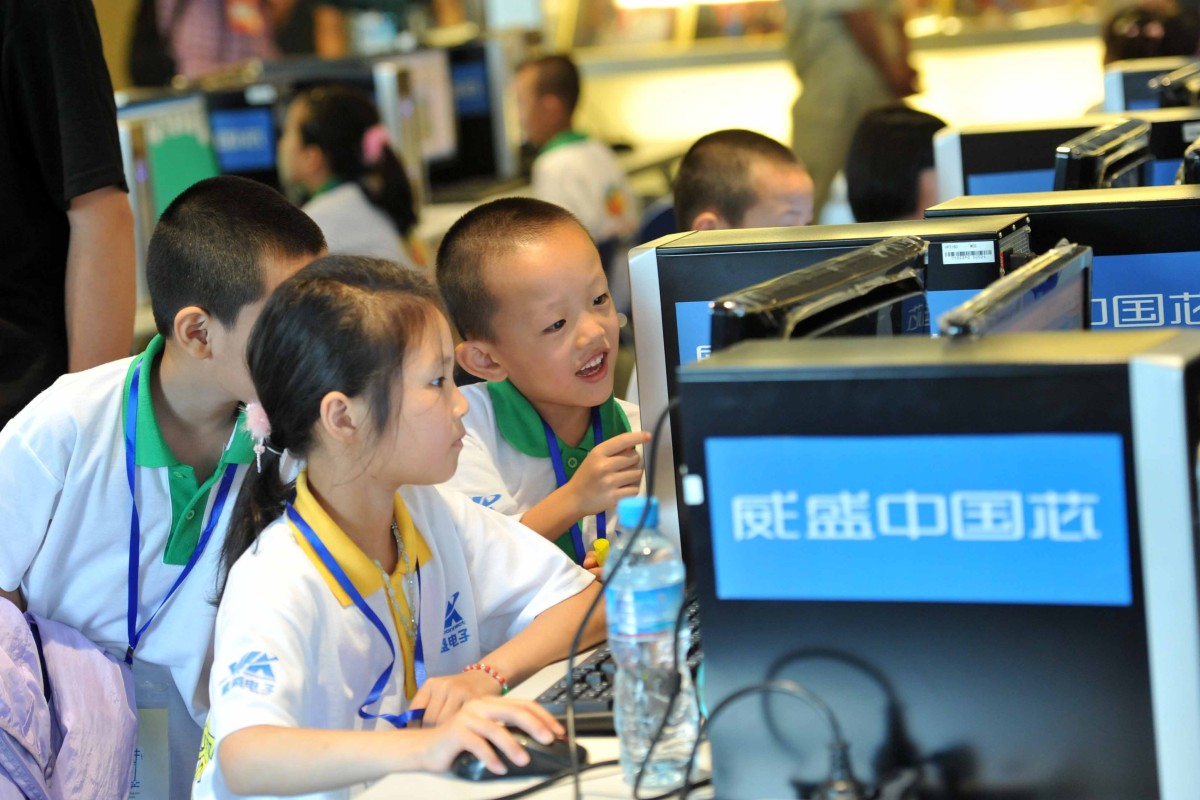
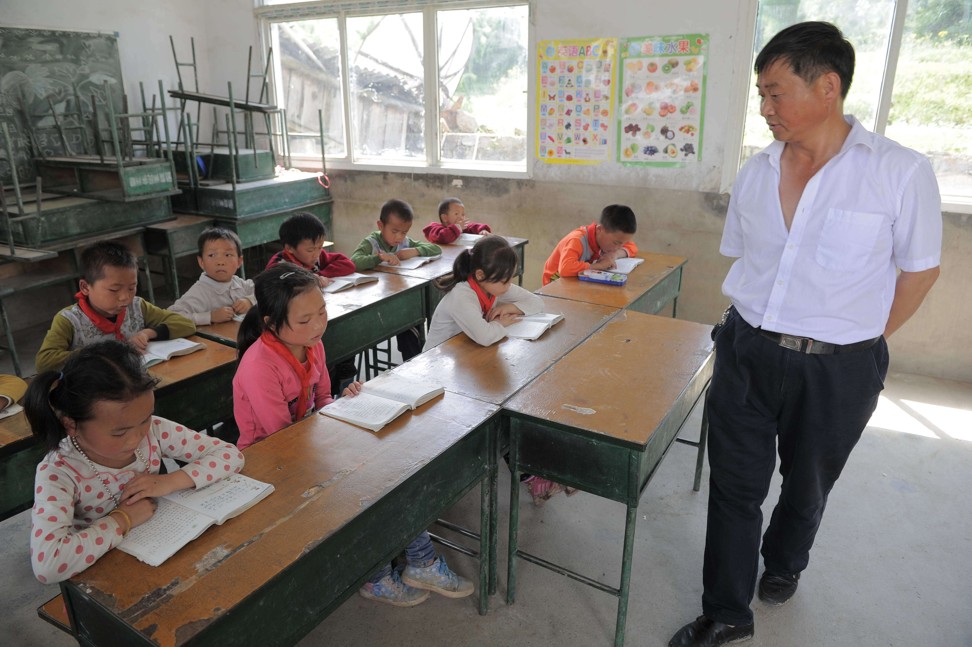
Chinese children attend a computer class in Beijing to learn how to properly use the internet. Those in poorer parts of the country lack sufficient access to the internet, as the switch to online teaching during the coronavirus outbreak in China showed. Photo: AFP
The coronavirus outbreak in mainland China highlighted the huge digital divide that exists between richer and poorer regions.
When schools shut and online learning was made compulsory, many students living in remote areas found they didn’t have sufficient internet access.
There were 1.6 billion mobile phone subscribers in China in 2019, with many people having more than one subscription, and optical fibre and 4G covered 98 per cent of the population, according to official data.
These figures fail to show the large regional disparity between the country’s rich and poor provinces, says Jack Chan Wing-kit, associate professor of the school of government at Sun Yat-sen University in Guangzhou province.
“In poor areas, a family [often] has to share one mobile phone among all members,” says Chan, who has done extensive research on China’s social problems.
It is easier for service providers to offer blanket coverage in densely populated cities where most people live in high-rise buildings, Chan explains.
“In rural areas, people live in bungalows that are widely spread out. It is not economically efficient for phone service providers like China Mobile to install transmission stations there, which explain their spotty coverage,” he says.
While the universal social security net in China covers people including the old and disabled, access to the internet is not considered a daily necessity at the policy level. That’s unlike European countries such as Norway and Iceland, who see the internet as a basic human right and ensure their entire populations have proper access to it.
Though some wealthier coastal cities within the Pearl River Delta recently conducted local surveys to identify less-well-off households and handed out tablet computers, inland provinces in central and western China cannot afford these measures, Chan says.
The Chinese government does not encourage [the setting up of] charities – Erwin Huang, founder of WebOrganic and EdFuture
Philanthropic efforts could help address this problem, as shown by Hong Kong’s experience in tackling the digital divide.
About 900,000 kindergarten, primary and secondary students in the city have been affected by school suspensions that are likely to last until at least April 20.
While families of disadvantaged students have received support from the government through Comprehensive Social Security Assistance and other welfare schemes, many children still lack digital resources as their parents don’t see it as a priority, says Erwin Huang, founder of both WebOrganic, a charity promoting computer access to such youngsters, and education alliance EdFuture.
That has left it up to charities to make sure all students have enough resources at home for online learning, Huang says. For instance, this month EdFuture worked with local mobile service provider SmarTone to give out free phone data SIM cards lasting two months to 10,000 students.
“It’s for those who live in subdivided flats and those who have to go to McDonald’s for Wi-fi access,” says Huang, who is also associate professor of engineering at the Hong Kong University of Science and Technology.
Many students in China’s poorer regions have been left at a disadvantage by the shift to online learning. Photo: Getty Images
The Hong Kong Jockey Club also recently launched a HK$42 million (US$5.4 million) scheme to provide free mobile internet data to 100,000 underprivileged primary- and secondary-school students to help with online learning while schools are closed.
Huang says while such charities help fill gaps in the provision of digital resources in Hong Kong, a similar philanthropic culture is lacking in China.
“The Chinese government does not encourage [the setting up of] charities,” he says.
Huang initiated several digital resources projects in China after the Sichuan earthquake in 2008, but says frequent media reports of scandals involving charities such as China’s Red Cross have made it harder forNGOs to operate in the country, with the government preferring to provide social services through its own departments.
BEIJING, March 21 (Xinhua) — Chinese State Councilor and Foreign Minister Wang Yi said on Friday that the Chinese side is willing to join hands with the British side as the country is in a tough fight against the novel coronavirus epidemic.
Wang made the remarks during his telephone conversation with British Foreign Secretary Dominic Raab.
He said that the epidemic is breaking out in many parts of the world, and the number of confirmed cases in European countries such as Britain is increasing, for which China expresses sincere sympathies with the British side and believes that the British people can come together and ultimately overcome the epidemic.
“When the Chinese people are facing the severe challenges of the epidemic, the British side has extended a helping hand, which we will remember in our hearts,” said Wang, adding that at this difficult time when Britain is fighting the epidemic, China is also ready to join hands with Britain.
China still faces an arduous epidemic prevention and control task, but it will manage to provide a batch of medical supplies to the British side and help facilitate the purchasing through commercial means, he said.
He also said that the top priority for China’s epidemic prevention and control is to avoid a rebound, adding that China is willing to carry out joint prevention and control with Britain, and hopes Britain can strengthen border control, maintain the essential cross-border flow between the two countries, and prevent cross-infection to the greatest extent.
Wang said that the Chinese side has been sharing epidemic-related information and carrying out anti-epidemic cooperation with the international community in an open, transparent and responsible manner since the beginning of its fight against the outbreak, adding that the country is currently providing various forms of support to nearly 100 countries in need.
What is alarming is that some people are trying to politicize the epidemic, label the virus and stigmatize China, Wang noted, adding that such detrimental acts will undermine the solidarity and cooperation of the international community and hinder the joint efforts of all parties to combat the epidemic.
Wang said he believes that all countries, including Britain, will uphold an objective and fair attitude and resist this narrow-minded approach.
Noting that many overseas Chinese, including Chinese students, work, study and live in Britain, Wang called them bridges of friendship between the two countries.
It is hoped that the British side will attach great importance to and protect their health and safety, and provide timely and necessary medical care, he added.
Raab spoke highly of China’s notable achievements in fighting the epidemic, and thanked China for its sympathies with Britain, and for providing medical supplies and facilitating procurement.
Noting that the British side attaches great importance to China’s experience in the COVID-19 fight, Raab said his country stands ready to strengthen coordination with China and other countries in epidemic prevention and control, vaccine research and development, and in assisting countries with fragile medical systems, so as to promote international cooperation and strive for an early victory over the epidemic.
The British government will spare no effort to ensure the health and safety of overseas Chinese in his country, he added.
Voicing opposition to politicizing the epidemic, Raab stressed that the British side totally agrees with China’s position that the origin of the virus is a scientific issue that requires scientific and professional opinions.
He also urged that all sides work together to overcome the hardship amid the epidemic.
Chinese Foreign Minister Wang Yi wraps up tour of Brazil and Chile, as Colombian president heads for Beijing
Ecuador president tells US Secretary of State Mike Pompeo ‘smaller countries pay when the big ones fight’
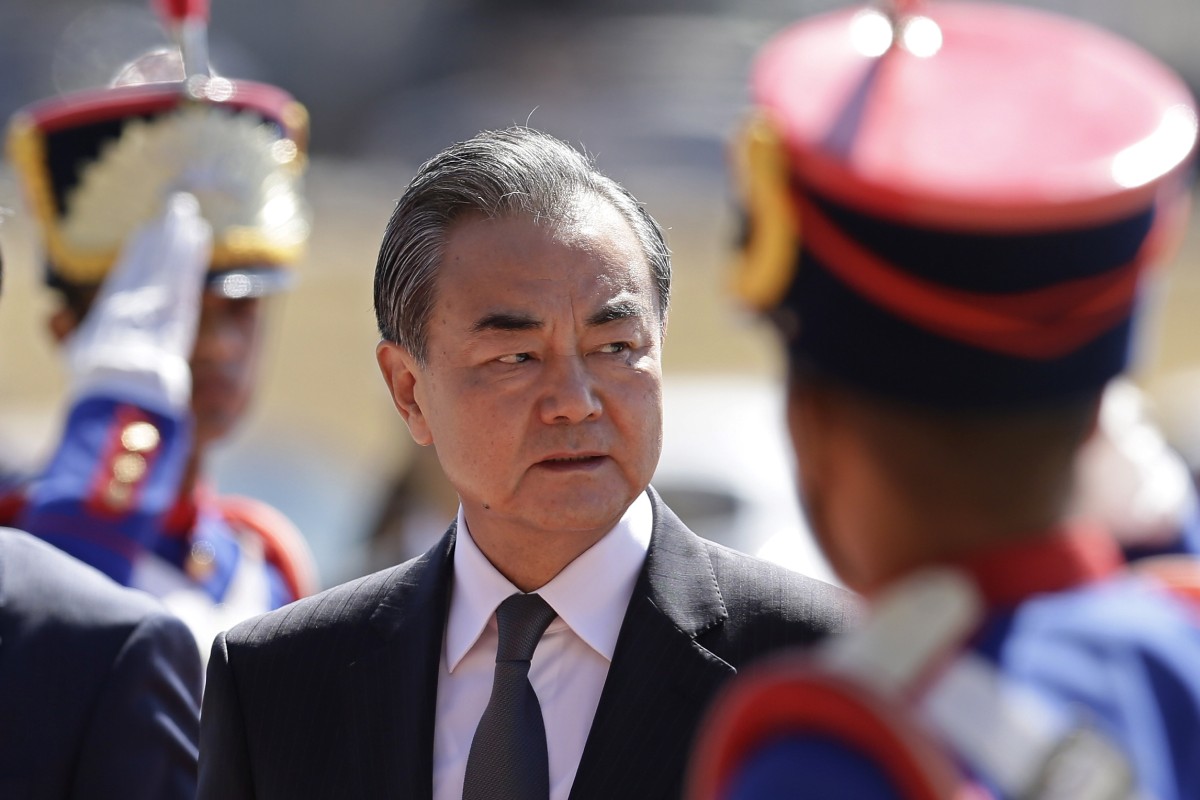
Chinese Foreign Minister Wang Yi is greeted by an honour guard as he arrives at the Itamaraty Palace for a meeting with his Brazilian counterpart Ernesto Araujo on Thursday. Photo: AP
Latin American countries are caught in the middle of a geopolitical tug of war between Beijing and Washington as China boosts its ties in the region in a bid to counterbalance the effects of its trade war with the US.
China’s Foreign Minister Wang Yi wraps up a tour of Latin America on Sunday which began last week in Brazil and ended with an official visit to Chile. He returns to Beijing on the same day Colombia’s President Ivan Duque Marquez arrives for a three-day state visit to China which will include a meeting with Chinese President Xi Jinping.
Wang was in Brazil for the latest summit of foreign ministers from the BRICS countries – an association of emerging countries made up of Brazil, Russia, India, China and South Africa – as well as the third China-Brazil foreign ministers’ comprehensive strategic dialogue with Brazilian Foreign Minister Ernesto Araujo.
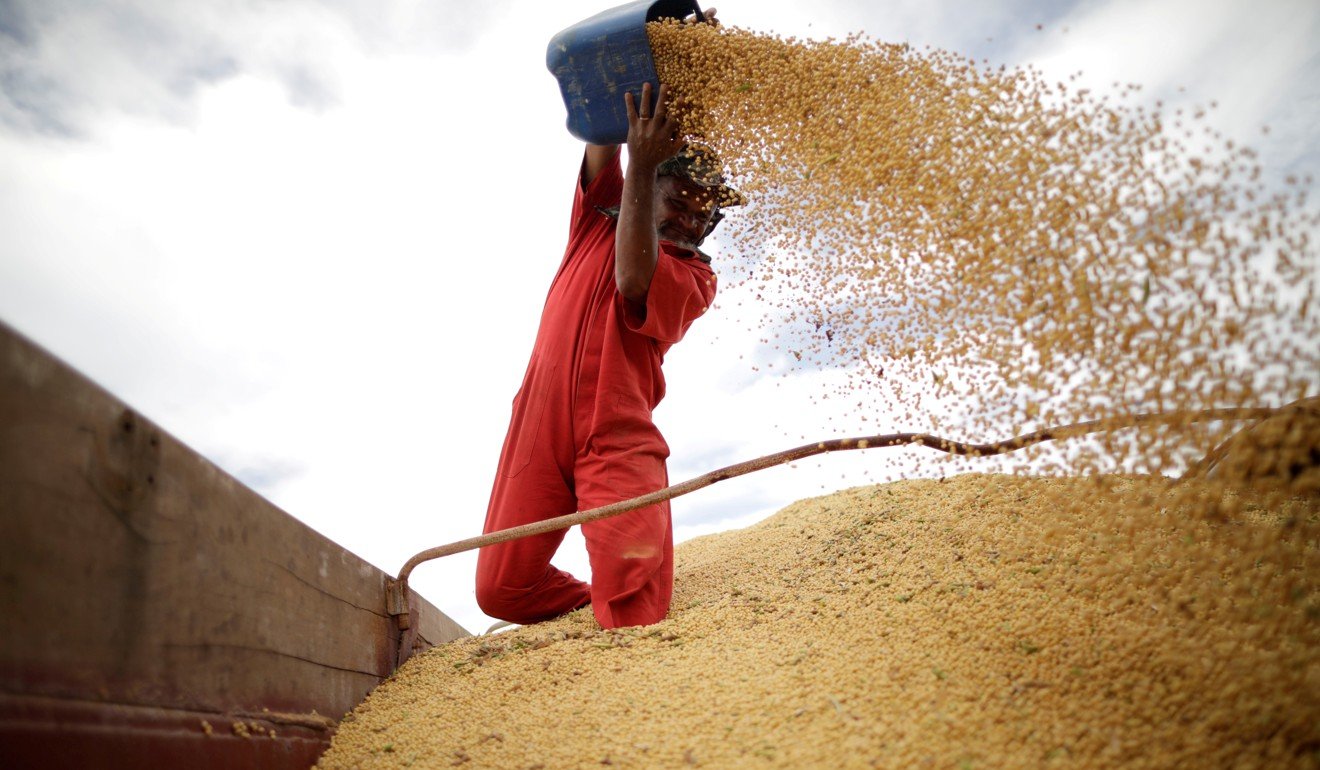
China has overtaken the US as Brazil’s largest trading partner, with Brazilian soybeans – one of the country’s biggest exports – and other agricultural products replacing American imports since the start of the US-China trade war a year ago.
Brazilian soybeans – one of the country’s biggest exports – and other farm products are being sold to China as a result of the trade war. Photo: Reuters
The growing importance of China to Brazil’s economy has created a difficult position for President Jair Bolsonaro, who accused Beijing of trying to buy Brazil during his election campaign, but changed tack on assuming office in January.
In March, Bolsonaro called China his country’s “main partner, politically as well as economically and commercially” and announced plans to travel to Beijing this year, a visit which was confirmed on Tuesday for late October.
China is now Latin America’s second largest trading partner with bilateral trade at US$307.4 billion, growing 18.9 per cent over the previous year, according to China’s ministry of commerce, in a relationship focused on commodity imports, including mining products like copper and energy, as well as soybeans and other agricultural goods.
While the US and China have tentatively agreed to resume talks in Shanghai next week, China and Latin American countries are likely to continue deepening their trade relations as production chains realign as a result of the trade war, according to Gustavo Oliveira, assistant professor of global and international studies at the University of California, Irvine.
“This means Chinese imports of Latin American agricultural and mineral commodities, and Latin American imports of Chinese manufactured products and hi-tech, might contribute to China’s ability to stand its ground against US pressure,” he said.
China in Latin America: partner or predator?
Oliveira said domestic contradictions in most Latin American countries complicated relations with China, as few leaders had the capacity to press or leverage China for much. “Unfortunately, therefore, most in this crop of Latin American leaders are basically placing themselves as junior partners or pawns in the geopolitical tug of war between the US and China.”
US Secretary of State Mike Pompeo put the pressure on Latin American countries over their relationship with China during his four-day tour of the region last weekend, when he visited Argentina, Ecuador, Mexico, and El Salvador.
In a joint interview with Pompeo during the visit, Ecuador’s new President Lenin Moreno defended the country’s China ties, and urged Washington and Beijing to resolve their conflicts for the benefit of other nations in the region.
“We hope that the US and China, the greatest powers in the world now, will find agreement easily because, unfortunately, when the big ones are discussing or fighting and have conflicts, the ones that are paying for all of that are the smaller countries,” he said.
“Now, when two elephants fight, the ones who lose are the insects who are of course being crushed by the elephants in the attempt to evade them.”
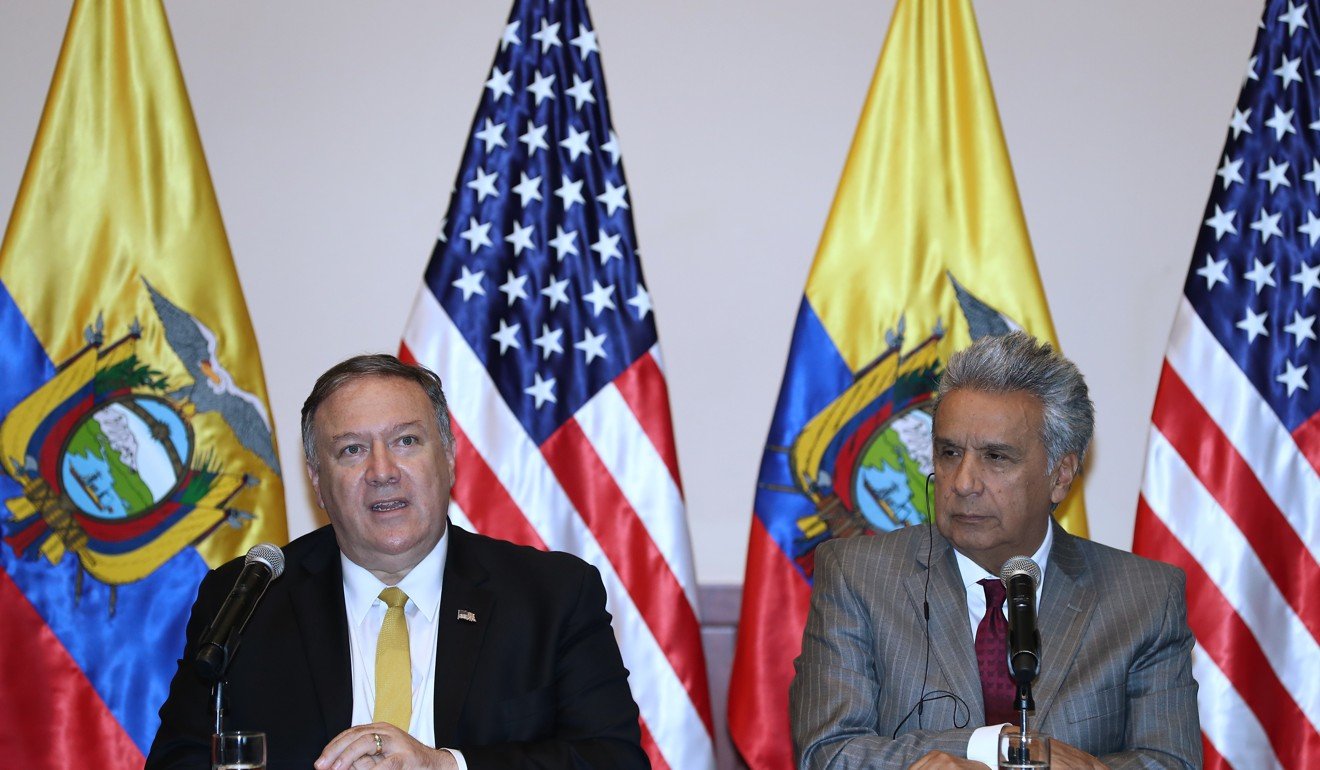
US Secretary of State Mike Pompeo (left) and Ecuadorian President Lenin Moreno hold a joint press conference during Pompeo’s tour of Latin America on July 20. Photo: EPA-EFE
Pompeo blasted China’s role in the region during a previous tour of South America in April, when he singled out Beijing’s support for President Nicolas Maduro of Venezuela. Maduro is backed by Beijing, Russia and other allies, while the US and many European countries have supported opposition leader Juan Guaido as legitimate president since elections in January.
Speaking from Chile on that tour, Pompeo said Beijing’s calls for non-intervention in Venezuela were “hypocritical” and aimed at protecting Beijing’s investments in the country, as well as debts owed to China by Venezuela.
Pompeo also accused Beijing of “sowing discord” in the region through debt traps. “When China does business in places like Latin America, it often injects corrosive capital into the economic bloodstream, giving life to corruption and eroding good governance,” he said.
Professor Cui Shoujun of Renmin University in Beijing said Washington’s concerns about “debt trap diplomacy” in Latin America reflected concerns that China’s growing involvement in financing infrastructure and development projects would make the region more pro-China.
“China’s interests in Latin America go beyond raw materials extraction,” he said. “The biggest point of tension between the US and China in the region is perhaps that China presents an alternative model for development that is very different from the Western model.”
‘Mr Pompeo, you can stop’: China hits back over Latin America criticism
While the US was drumming up tensions about China across the world, Beijing was not openly retaliating but responding with investment and trade for global partners, said Kevin Gallagher, researcher on China-Latin America ties, and professor at Boston University.
“The US points fingers and makes angry speeches in the region as China cuts investment deals and helps address infrastructure needs,” he said.
“Latin American countries’ governments are rightly keeping their heads down on the broader geopolitical winds, and are getting down to business with their largest trading partner.”
SARAJEVO, May 10 (Xinhua) — An agreement has been signed in Beijing on recording a remake of the 1969 movie “The Bridge” by the Sarajevo Film Center (SFC), Shanghai Huahua Culture Media Co. Ltd and Dandelion Productions Inc. of Serbia, SFC Director Jasmin Durakovic told Xinhua on Friday.
Directed by Hajrudin “Siba” Krvavac, “The Bridge” tells the story of partisans during World War II who send an elite team of explosive experts to blow up a strategically important bridge.
Durakovic emphasized that all movies directed by Krvavac are precious cultural assets in the Bosnia and Herzegovina’s (BiH) film archives.
He hopes that the remake of “The Bridge” — and possibly also of “Walter Defends Sarajevo” — will present the culture of BiH and the region through the global language of the film to today’s audiences.
Durakovic said he was highly confident that the remake will attract audiences in the countries of the former Yugoslavia, in other European countries and even in the United States.
In a telephone interview with Xinhua, Huahua Chief Executive Officer Kefei Wang, said his company will use cutting-edge film technology to present this period of history and its heroes “so as to revitalize the classics and live up to the profound expectations of the people of China, Serbia, and Bosnia and Herzegovina for movies.”
Production on the remake will begin in early 2020.







 CHINDIA ALERT: You'll be living in their world, very soon