02/05/2020
- Inmates who have undergone compulsory re-education programme to be moved to other parts of China under job placement scheme delayed by Covid-19 outbreak
- Critics have said the camps are a move to eradicate cultural and religious identity but Beijing has defended them as way of boosting job opportunities and combating Islamic radicalisation
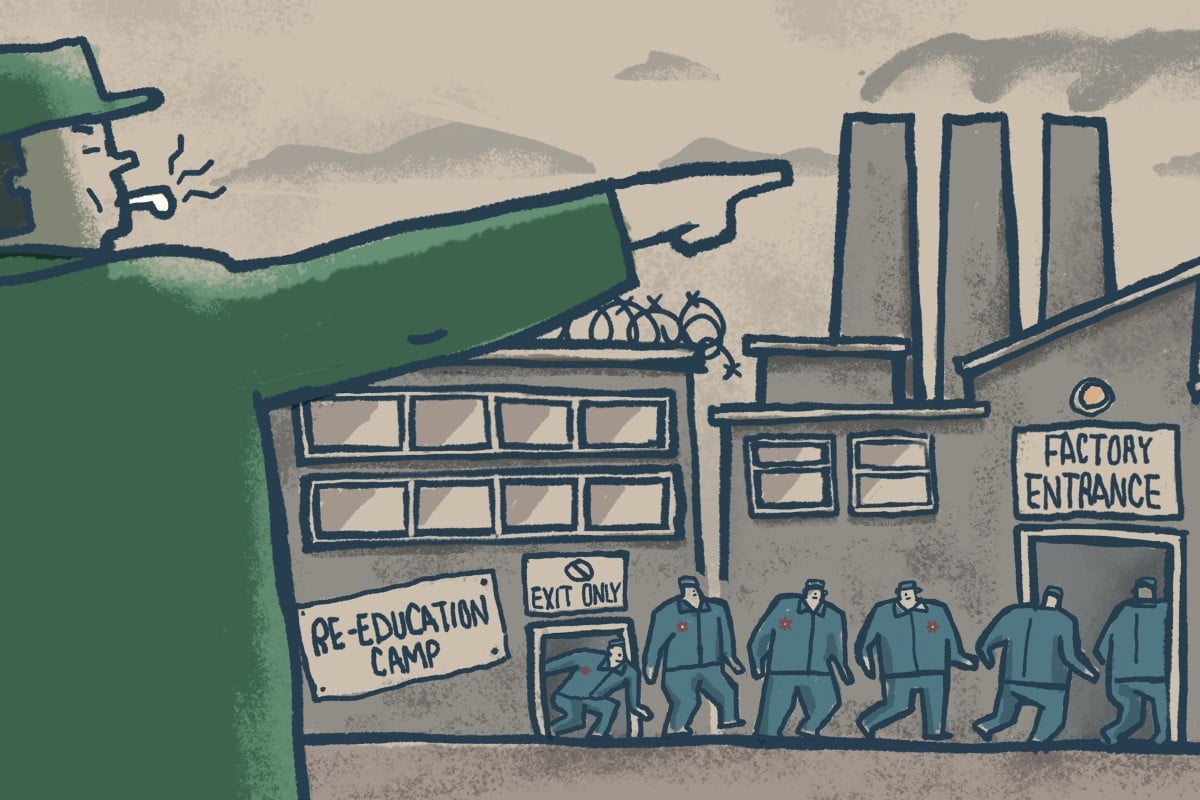
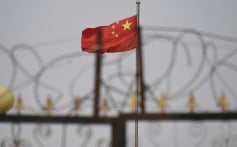
Illustration by Perry Tse
The Chinese government has resumed a job placement scheme for tens of thousands of Uygur Muslims who have completed compulsory programmes at the “re-education” camps in the far-western region of Xinjiang, sources said.
The plan, which includes a quota for the numbers provinces must take, was finalised last year but disrupted by the outbreak of Covid-19.
The delay threatens to undermine the Chinese government’s efforts to justify its use of internment camps in Xinjiang.
Critics have said these camps were part of the measures designed to eradicate the ethnic and cultural identity of Uygurs and other Muslim minorities and that participants had no choice but to undertake the re-education programme.
Beijing has repeatedly dismissed these criticisms and said the camps are to give Uygurs the training they need to find better jobs and stay away from the influence of radical fundamentalism.
First Xinjiang, now Tibet passes rules to promote ‘ethnic unity’
Now with the disease under control, the Chinese government has resumed the job placement deal for other provinces to absorb Xinjiang labourers, sources said.
Despite the devastating impact of the disease on its economy and job markets, the Chinese authorities are determined to go ahead with the plan, which they believe would
, a source said.
“Excellent graduates were to be taken on as labourers by various inland governments, in particular, 19 provinces and municipalities,” said the source. It is unclear what constitutes “excellent graduates”.
Some sources earlier said that the programme may be scaled back in light of the new economic reality and uncertainties.
But a Beijing-based source said the overall targets would remain unchanged.
“The unemployment problem in Xinjiang must be resolved at all costs, despite the outbreak,” the source said.
The South China Morning Post has learned that at least 19 provinces and cities have been given quotas to hire Muslim minorities, mostly Uygurs, who have “graduated” from re-education camps.
As early as February, when the daily number of infections started to come down outside Hubei province, China already begun to send Uygur workers to their new jobs.
A photo taken in February showed thousands of young Uygurs, all wearing face masks and with huge red silk flowers pinned to their chests, being dispatched to work in factories outside their hometowns.
By the end of February, Xinjiang alone has created jobs for more than 60,000 Uygur graduates from the camps. A few thousand were also sent to work in other provinces.
Many have been employed in factories making toys and clothes.
Xinjiang’s new rules against domestic violence expand China’s ‘extremism’ front to the home
Sources told the Post that the southern city of Shenzhen – China’s hi-tech manufacturing centre – was given a target last year to eventually resettle 50,000 Uygurs. The city is allowed to do this in several batches, with 15,000 to 20,000 planned for the first stage.
Shaoguan, a less developed Guangdong city
where a deadly toy factory brawl between Uygurs and Han Chinese broke out in 2009, was also asked to take on another 30,000 to 50,000 Uygur workers.
In Fujian province, a government source also said they had been told to hire “tens of thousands of Xinjiang workers”.
“I heard the first batch of several thousands would arrive soon. We have already received official directives asking us to handle their settlement with care,” said the source.
He said the preparation work includes providing halal food to the workers as well as putting in place stronger security measures to “minimise the risks of mass incidents”. It is not known whether they will be given access to prayer rooms.
There are no official statistics of how many Uygurs will be resettled to other provinces and the matter is rarely reported by the mainland media.
But in March, Anhui Daily, the province’s official newspaper, reported that it had received 1,560 “organised labourers from Xinjiang”.
The Uygur workers on average could earn between 1,200 yuan (US$170) to 4,000 yuan (US$565) a month, with accommodation and meals provided by the local authorities, according to Chinese media reports.
However, they are not allowed to leave their dormitories without permission.
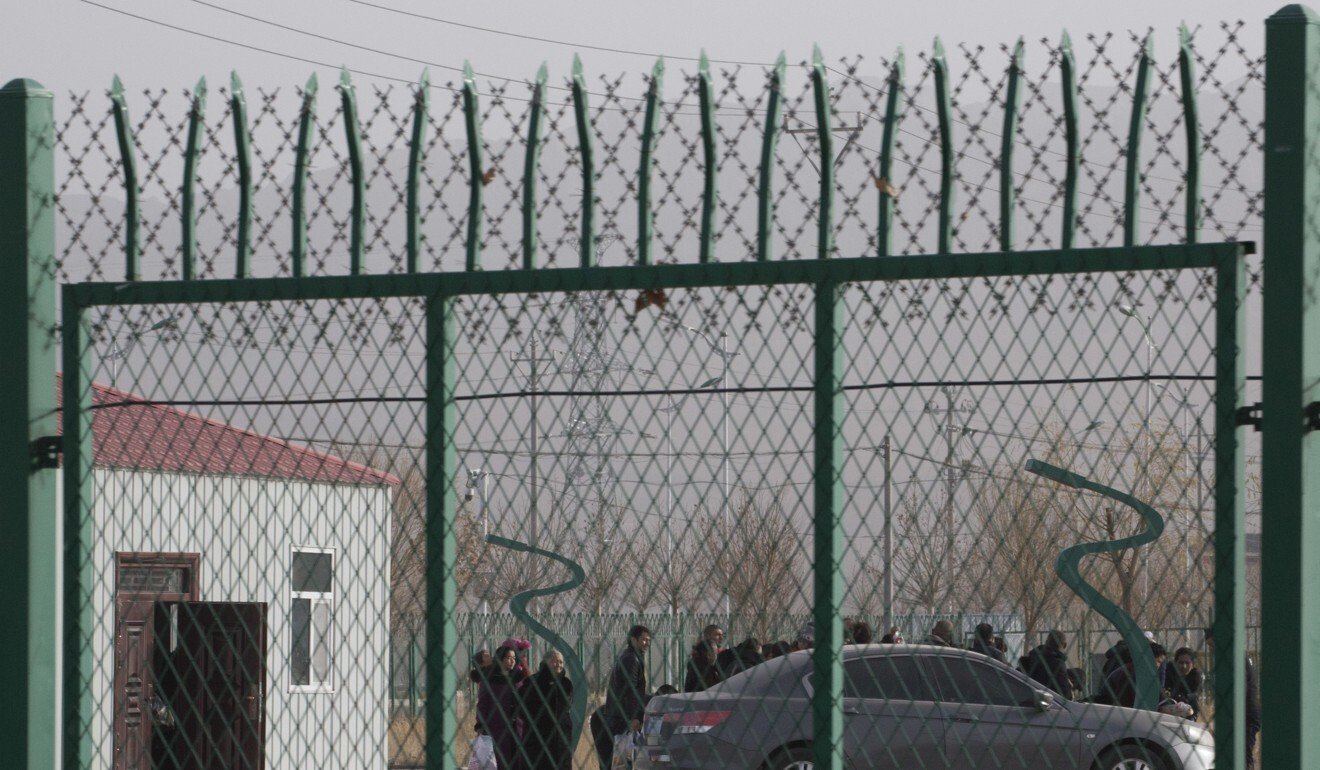
The UN has estimated that up to a million Muslims were being held in the camps. Photo: AP
Xinjiang’s per capita disposable income in 2018 was 1,791 yuan a month, according to state news agency Xinhua. But the salary level outside the region’s biggest cities such as Urumqi may be much lower.
The official unemployment rate for the region is between 3 and 4 per cent, but the statistics do not include those living in remote rural areas.
Mindful of the potential risks of the resettlement, Beijing has taken painstaking efforts to carefully manage everything – from recruitment to setting contract terms to managing the workers’ day-to-day lives.
Local officials will go to each Uygur workers’ home to personally take them to prearranged flights and trains. On arrival, they will be immediately picked up and sent to their assigned factories.
US bill would bar goods from Xinjiang, classifying them the product of forced labour by Uygurs
Such arrangements are not unique to Uygurs and local governments have made similar arrangements for ethnic Han workers in other parts of China.
After screening them for Covid-19, local governments have arranged for workers to be sent to their workplaces in batches. They are checked again on arrival, before being sent to work.
China is accelerating such placement deals on a massive scale to offset the impact of the economic slowdown after the outbreak.
Sources told the South China Morning Post that the job placement deal was first finalised by governments in Xinjiang and other provinces last year.
The aim is to guarantee jobs for Uygur Muslim who have “completed vocational training” at the re-education camps and meet poverty alleviation deals in the region, one of the poorest parts of China.
The training they receive in the camps includes vocational training for various job types such as factory work, mechanical maintenance and hotel room servicing. They also have to study Mandarin, Chinese law, core party values and patriotic education.
Xinjiang’s massive internment camps have drawn widespread international condemnation.
The United Nations has estimated that up to 1 million Uygur and other Muslim minority citizens are being arbitrarily detained in the camps, which Beijing insists are necessary to combat terrorism and Islamic radicalisation.
Late last year, Xinjiang’s officials announced that all the inmates of these so-called vocational training centres had “graduated” and taken up employment.
Before this labour placement scheme was introduced, it was extremely difficult for Uygurs to find jobs or live and work in inland regions.
The 2009 brawl at the factory in Shaoguan was one of the factors that triggered a deadly riot in Xinjiang’s capital Urumqi, that left 192 people dead and more than 1,000 wounded.
Muslim ethnic minorities, Uygurs in particular, have been subjected to blatant discrimination in China and the situation worsened after the 2009 clashes.
Earlier this month, the Australian Strategic Policy Institute released a report saying more than 80,000 Uygurs had been moved from Xinjiang to work in factories in nine Chinese regions and provinces.
It identified a total of 27 factories that supplied 83 brands, including household names such as Google, Apple, Microsoft, Mitsubishi, Siemens, Sony, Huawei, Samsung, Nike, Abercrombie and Fitch, Uniqlo, Adidas and Lacoste.
‘Psychological torture’: Uygurs abroad face mental health crisis over plight of relatives who remain in Xinjiang
The security think tank concluded that the Chinese government had transferred Uygur workers “under conditions that strongly suggest forced labour” between 2017 and 2019, sometimes drawing labourers directly from re-education camps.
The report also said the work programme represents a “new phase in China’s social re-engineering campaign targeting minority citizens”.
Workers were typically sent to live in segregated dormitories, underwent organised Mandarin lessons and ideological training outside working hours and were subject to constant surveillance, the researcher found.
They were also forbidden from taking part in religious observances, according to the report that is based on open-source documents, satellite pictures, academic research and on-the-ground reporting.
Chinese foreign ministry spokesman Zhao Lijian criticised the report saying it had “no factual basis”.
Source: SCMP
Posted in 2009, Abercrombie and Fitch, accommodation, Adidas, Anhui Daily, Apple, Ürümqi, Beijing, boosting, camps, China, chinese authorities, chinese government, choice, cities, combat terrorism, combating, completed, compulsory, Country, COVID-19 outbreak, Critics, cultural and religious identity, defended, delayed, demonstrate, despite, determined, devastating, Disease, dispatched, Domestic violence, dormitories, economy, ethnic unity, extremism, face masks, factories, far-western region, February, Fujian Province, go ahead, Google, graduated, Guangdong, halal food, hi-tech manufacturing centre, hometowns, Huawei, hubei province, huge, impact, infections, Inmates, internment camps, Islamic radicalisation, JOB MARKETS, job opportunities, job placement, labourers, Lacoste, Mandarin, meals, Microsoft, Mitsubishi, Muslim minorities, new jobs, Nike, official newspaper, other parts, participants, permission, photo, plans, promote, provinces, quotas, re-education, re-education camps, red silk flowers, resettle, resumed, rules, Samsung, scheme, security measures, Shenzhen, Siemens, Sony, south china morning post, target, Tens of thousands, Tibet, to be moved, to eradicate, to hire, to send, to work, toys and clothes, Uncategorized, undergone, Uniqlo, United Nations, Uygur Muslims, Uygurs, wearing, workers, Xinjiang |
Leave a Comment »
20/04/2020
KATHMANDU, April 19 (Xinhua) — A German scholar has recently found that the right to education for Uygurs and people of other ethnic groups is well protected in China’s Xinjiang region, as young people there enjoy increasingly better opportunities.
Michael Heinrich, who has been teaching German in Minzu University of China for more than five years, said in an article published on Online Khabar news website in March that he has “paid close attention to the development of Chinese education in recent years, especially the education situation in ethnic minority areas.”
Heinrich said he has taught a Xinjiang Uygur student, who often talks with him about the education situation in her hometown and appreciates government policies on education.
The Uygur student has told Heinrich that she lives in a place where she receives Islamic religious education and China’s nine-year compulsory education, and the Uygur students in Xinjiang can enjoy preferential policies, such as extra points in college entrance examination, special policies for college admissions, and employment policy support.
In recent years, the Chinese government has intensified policy support on education in Xinjiang Uygur Autonomous Region, and increased investment in educational resources, especially those on vocational education, the article read.
“Through vocational education, more Uyghur Muslim students can enhance their survival skills and work harder by themselves and improve their living standards with these hands,” it said.
For some time, Xinjiang has been plagued by terrorism, religious extremism and separatism, according to the passage, and carrying out vocational education and training in Xinjiang is an effective measure to promote the rule of law and a practical action to protect the vital interests of people of all ethnic groups there.
It is also a just move in fighting extremism and terrorism to contribute to the stability in Xinjiang, it added.
Some Western media outlets as well as some U.S. politicians often slander the Chinese government under the guise of “human rights,” which does not only disregard the facts but also interferes with China’s sovereignty, Heinrich pointed out.
The situation in Xinjiang that they saw was completely different from the stories told by some Western politicians and media, Heinrich quoted some people who have visited Xinjiang and witnessed its development as saying.
The rights to life and development of people of all ethnic groups in Xinjiang are protected to the largest extent, Heinrich added.
Source: Xinhua
Posted in action, admissions, all ethnic groups, appreciates, areas, article, better, but also, China, China's, China’s sovereignty, Chinese education, chinese government, close attention, college entrance examination, completely different, compulsory education, contribute, development, disregard, education, educational resources, Educational situation, employment, enhance, enjoy, especially, ethnic groups, ethnic minority, extra points, extremism, facts, fighting, five years, German, government policies, guise, hands, harder, her, hometown, Human rights, improve, increasingly, intensified, interferes, Investment, Islamic religious education, just move, Kathmandu, living standards, March, media, Michael Heinrich, more than, much improved, nine-year, not only, Online Khabar, opportunities, other, paid, People, plagued, pointed out, policy support, practical, preferential policies, promote, protect, published, receives, recent, region, religious extremism, right to education, rights to life, Rule of law, Scholar, separatism, situation, slander, special policies, stability, stories, Student, students, survival skills, teaching, terrorism, themselves, there, told, U.S. politicians, Uncategorized, under, Uyghur Muslim, Uygurs, vital interests, Vocational education, well protected, Western media outlets, Western politicians, witnessed, work, Xinjiang, Xinjiang Uygur Autonomous Region, years, young people |
Leave a Comment »
22/09/2019
Li Zhanshu (L), chairman of the Standing Committee of the National People’s Congress of China, meets with Azerbaijani President Ilham Aliyev in Baku, Azerbaijan, Sept. 19, 2019. Li paid an official goodwill visit to Azerbaijan from Sept. 19 to 21 at the invitation of Ogtay Asadov, speaker of the National Assembly of Azerbaijan. (Xinhua/Pang Xinglei)
BAKU, Sept. 21 (Xinhua) — Li Zhanshu, chairman of the Standing Committee of the National People’s Congress (NPC) of China, and top Azerbaijani officials have agreed here to strengthen bilateral cooperation in various areas.
During an official goodwill visit from Thursday to Saturday, Li met with Azerbaijani President Ilham Aliyev and conveyed Chinese President Xi Jinping’s cordial greetings to him.
Li briefed Aliyev on the great achievements of the People’s Republic of China since its founding 70 years ago, saying that the Communist Party of China is forging ahead on the road of socialism with Chinese characteristics in line with China’s national conditions.
The socialism with Chinese characteristics has now entered a new era, and China under the leadership of Xi is striving to achieve its “two centenary goals” and realize the Chinese dream of the great rejuvenation of the Chinese nation, Li told Aliyev.
China deems Azerbaijan as an important partner in Eurasia and is ready to implement the blueprint made by Xi and Aliyev on the development of bilateral ties, further cement political mutual trust, strengthen practical cooperation in various areas, and jointly safeguard the two countries’ security and development interests, Li said.
Aliyev asked Li to convey his best wishes to Xi and said he had witnessed the great changes in China with his own eyes during his repeated trips to the country and that he admired such achievements.
Azerbaijan-China relations are developing rapidly with a rosy future, he said, adding that his country firmly adheres to the one-China principle, and intends to combat jointly with China the “three forces” of terrorism, separatism and extremism, and improve their coordination and cooperation on international and regional issues.
LEGISLATIVE EXCHANGES
During a meeting with Ogtay Asadov, speaker of the National Assembly of Azerbaijan, Li said his visit was aimed at strengthening cooperation between the two legislatures and implementing the important consensuses reached by the two heads of state.
The Chinese top legislator suggested both sides increase interactions at various levels, exchange experience on governing the countries, and provide legal assurance for bilateral practical cooperation.
Every country has a unique history, national situation and culture, so different civilizations should coexist harmoniously and learn from each other, Li said.
The NPC of China is willing to work with the National Assembly of Azerbaijan to promote cultural and people-to-people exchanges between the two countries, learn from each other, and cement public support for bilateral relations, he said.
Asadov said Li was the first top Chinese legislator to visit Azerbaijan in 19 years and that the trip has injected new vitality into the development of bilateral relations and the interactions between the two legislatures.
Azerbaijan and China have signed many cooperation deals and the two legislatures should help to deliver on the agreements, Asadov said.
An increasing number of Azerbaijani people are interested in Chinese culture and there is a need to promote educational, cultural and youth exchanges, he said.
ECONOMIC COOPERATION
At a meeting with Azerbaijani Prime Minister Novruz Mammadov, Li said Azerbaijan is located at the junction of Europe and Asia and is an important country along the Belt and Road.
Li said China is ready to boost economic and trade exchanges with Azerbaijan and enhance cooperation with the country in jointly building the Belt and Road and achieve more cooperation outcomes in such fields as energy, agriculture, transportation, logistics, tourism and informatization.
He welcomed Azerbaijan to the second China International Import Expo to be held in early November in Shanghai.
Mammadov said his country was among the earliest participants in the Belt and Road Initiative and is ready to expand cooperation with China in various areas.
He welcomed more Chinese investments in Azerbaijan and expected cooperation with China on the construction of a Trans-Caspian International Transport Corridor so that more Chinese goods can hit the Eurasian market via Azerbaijan.
During his stay in Baku, Li also visited the Heydar Aliyev Center and a carpet museum, and laid a wreath at the tomb of former President Heydar Aliyev and the Eternal Flame.
Source: Xinhua
Posted in agriculture, Asia, Azerbaijan, Azerbaijan-China relations, Azerbaijani Prime Minister, Belt and Road (B&R), Belt and Road Initiative, Belt and Road Initiative (BRI), blueprint, carpet museum, chairman of the Standing Committee of the National People's Congress (NPC) of China, China alert, China International Import Expo, China International Import Expo (CIIE), Chinese goods, Chinese President Xi Jinping, Communist Party of China, cooperation, cultural, educational, energy, Eurasia, Europe, extremism, Heydar Aliyev Center, informatization, Li Zhanshu, logistics, Novruz Mammadov, Ogtay Asadov, one-China principle, People's Republic of China, pledge, President Ilham Aliyev, promote, rejuvenation, separatism, Shanghai, Socialism with Chinese characteristics, speaker of the National Assembly of Azerbaijan, strengthen, terrorism, the Eternal Flame, tomb, Tourism, Trans-Caspian International Transport Corridor, transportation, two centenary goals, Uncategorized, wreath, youth exchanges |
Leave a Comment »
29/08/2019
Chinese President Xi Jinping meets with visiting Uzbek Prime Minister Abdulla Aripov at the Great Hall of the People in Beijing, capital of China, Aug. 28, 2019. (Xinhua/Yao Dawei)
BEIJING, Aug. 28 (Xinhua) — Chinese President Xi Jinping met with visiting Uzbek Prime Minister Abdulla Aripov here on Wednesday, calling on the two countries to jointly push forward the high-quality construction of the Belt and Road.
Xi asked Aripov to convey his sincere regards to Uzbek President Shavkat Mirziyoyev.
The key to the constant leap-forward development of China-Uzbekistan relations is that both sides always adhere to the spirit of good-neighborliness, mutual benefit and mutual assistance, according to Xi.
Xi stressed that he attaches great importance to the development of the China-Uzbekistan comprehensive strategic partnership, which is in line with the fundamental interests of the two countries and their peoples.
Hailing the achievements of the fifth meeting of the China-Uzbekistan intergovernmental committee of cooperation, Xi said that the cooperation goals set by the two sides will certainly be realized as long as the bilateral relationship stays on the right track.
Xi called on both countries to further promote the high-quality construction of the Belt and Road, enhance synergy between national development strategies, strengthen connectivity through cross-border roads and railways, expand cooperation in trade, investment, high and new technology, energy and other fields, as well as foster new highlight in people-to-people and cultural exchanges.
China is willing to increase imports of Uzbek quality agricultural products, Xi said, adding that Uzbekistan is welcome to attend the second China International Import Expo as guest of honor later this year.
In addition, Xi said that the two sides should work together to combat the “three evil forces” of terrorism, separatism and extremism, fight against drug trafficking and other transnational organized crimes.
The rejuvenation of the Chinese nation is to seek happiness for the Chinese people and will also benefit world peace and human progress, Xi said, stressing that China will absolutely not follow the old path of “a strong country must seek hegemony.”
China is ready to enhance coordination with Uzbekistan on international affairs, safeguard common interests of the two countries, uphold multilateralism and promote democracy in international relations, Xi said.
He also called on the two countries to work with other members of the Shanghai Cooperation Organization (SCO) to raise the awareness of a community with a shared future and lift cooperation in various fields, so as to promote further development of the SCO and benefit peoples of various countries in the region.
Aripov conveyed President Mirziyoyev’s sincere greetings and lofty respect to President Xi and his warm congratulations on the 70th anniversary of the founding of the People’s Republic of China.
President Mirziyoyev sincerely hopes China will achieve greater prosperity and early national rejuvenation under the leadership of President Xi, according to Aripov.
Calling China “the closest and most reliable neighbor and partner” of Uzbekistan, Aripov said that Uzbekistan will work with China to firmly implement the important consensus reached by the two heads of state.
Mirziyoyev has appointed a special agency to synergize development strategies with the Chinese side, actively promote cooperation with China on the construction of the Belt and Road, and expand people-to-people and cultural exchanges, according to Aripov.
Uzbekistan firmly supports China in safeguarding its sovereignty, security and unity, and will continue to actively work with China to combat the “three evil forces” of terrorism, separatism and extremism, said Aripov.
Aripov is paying an official visit to China from Tuesday to Thursday at the invitation of Chinese Premier Li Keqiang.
Source: Xinhua
Posted in Abdulla Aripov, Belt and Road construction, China alert, China International Import Expo, China International Import Expo (CIIE), China-Uzbekistan intergovernmental committee of cooperation, China-Uzbekistan relations, Chinese premier Li Keqiang, comprehensive strategic partnership, cross-border roads, drug trafficking, energy, extremism, founding of the People's Republic of China (PRC), good-neighborliness, hegemony, high and new technology, Investment, mutual assistance, mutual benefit, President Mirziyoyev, President Xi Jinping, railways, rejuvenation, separatism, Shanghai Cooperation Organization (SCO), Shavkat Mirziyoyev, terrorism, Trade, transnational organized crimes, Uncategorized, Uzbek President, Uzbek Prime Minister, Uzbek quality agricultural products, Uzbekistan |
Leave a Comment »
30/07/2019
BEIJING, July 29 (Xinhua) — The attempt of some Western countries to tarnish the image of the Xinjiang Uygur Autonomous Region is doomed to fail, and the fight against terrorism and extremism in Xinjiang should be supported and respected, a Chinese foreign ministry spokesperson said Monday.
Recently, ambassadors from 50 countries to the United Nations Office at Geneva (UNOG) have sent a joint letter to the President of the UN Human Rights Council (UNHRC) and the High Commissioner for Human Rights to voice their support for China’s position on issues related to Xinjiang.
The 50 ambassadors, who are from countries including Russia, Pakistan, Saudi Arabia, Algeria and Cuba, have collectively stated for the first time that the counter-terrorism and de-radicalization measures, including the establishment of vocational education and training centers, have effectively safeguarded basic human rights in Xinjiang, spokesperson Hua Chunying told a press briefing.
According to media reports, 24 members of the UNHRC have previously signed a letter criticizing China’s position on relevant issues.
“The 24 members, with a total population of no more than 600 million, are all developed Western countries, none of them being an Islamic or developing country. While of the 50 countries that support China are from Asia, Africa, Latin America and Europe, with a total population of nearly 2 billion, 28 are members of the Organization of the Islamic Cooperation, and their population is more than twice that of the 24 members that criticized China,” Hua said. “So it’s obvious who is right and who is wrong on the matter of Xinjiang,” she added.
Hua said many of the ambassadors who supported China’s Xinjiang policy have visited Xinjiang and witnessed the truth.
As the ambassadors pointed out, those who had visited Xinjiang found what they saw and heard was completely different from what was described in Western media reports, according to Hua.
“The ambassadors also appreciated China’s achievements in human rights, believed that Xinjiang’s establishment of vocational education and training centers, as well as other counter-terrorism and de-radicalization measures, effectively guaranteed basic human rights and urged relevant countries to stop their unfounded accusations against China,” said the spokesperson.
“This fully shows that the international community has its fair judgment on the development of Xinjiang,” said Hua, adding that attempt to smear Xinjiang and put pressure on China in the name of “human rights” will never succeed.
Pointing out that the current problem in Xinjiang is the issue of counter-terrorism and extremism rather than religious and human rights issues, Hua said the counter-terrorism and de-radicalization struggle in Xinjiang deserve support, respect and understanding.
“Faced with severe threats of terrorism and extremism, the Xinjiang Uygur Autonomous Region has taken a series of counter-terrorism and de-radicalization measures according to law, including the establishment of vocational education and training centers,” said Hua, adding that those measures have turned the situation around.
“In almost three years, not a single violent or terrorist incident took place in Xinjiang. The region now enjoys social stability and unity among all ethnic groups. People there are living a happy life with a stronger sense of fulfillment and security. They endorse the government’s policies and measures wholeheartedly,” said the spokesperson.
Noting that many of the 24 countries that denounce China’s Xinjiang policy have been victims of terrorism, Hua said relevant people and officials from these 24 countries are welcome to visit Xinjiang to learn about Xinjiang’s counter-terrorism and de-radicalization experience.
Hua said China is working with all parties to ensure that multilateral human rights mechanisms stick to the purposes and principles of the UN Charter. Human rights issues should be dealt with in an objective, fair and non-selective way. “We need to advance international human rights cause in a sound manner through constructive dialogue and cooperation.”
“We resolutely oppose any country’s act of using the Human Rights Council and other mechanisms to interfere in other countries’ internal affairs and wantonly criticize, smear and pressure others. We urge the relevant countries to correct their mistakes at once, not to politicize the relevant issue or practice double standards, and stop meddling in other countries’ domestic affairs,” she added.
Source: Xinhua
Posted in africa, Algeria, Asia, Cuba, double standards, Europe, extremism, Fight against terrorism, High Commissioner for Human Rights, Latin America, meddling, Organization of the Islamic Cooperation, Pakistan, respected, Russia, Saudi Arabia, supported, U.N. Human Rights Council, UN Charter, UN Human Rights Council (UNHRC), Uncategorized, United Nations Office at Geneva (UNOG), Xinjiang, Xinjiang Uygur Autonomous Region |
Leave a Comment »
27/07/2019
GENEVA, July 27 (Xinhua) — Ambassadors from 50 countries to the United Nations Office at Geneva (UNOG) have co-signed a letter to the President of the UN Human Rights Council (HRC) and the High Commissioner for Human Rights to voice their support for China’s position on issues related to its Xinjiang Uygur Autonomous Region.
Earlier on July 12, a number of ambassadors in Geneva sent the joint letter to show their support for China, and as of Friday evening, more ambassadors had joined, the Chinese Mission to the UNOG revealed.
In a statement issued on Friday night, the Chinese mission said that some other countries had also expressed their support in separate letters or press statements.
In the joint letter, the ambassadors commend China for its economic and social progress, effective counter-terrorism and de-radicalization measures, and strong guarantee of human rights.
They appreciate the opportunities provided by China for diplomatic envoys, officials of international organizations, and media professionals to visit Xinjiang, and point to the contrast between Xinjiang in the eyes of those who have visited it and the one portrayed by some western media.
The ambassadors also urge a certain group of countries to stop using uncorroborated information to make unfounded accusations against China.
“I was surprised that some people call these vocational training and education centers concentration or internment camps,” Vadim Pisarevich, deputy permanent representative of Belarus to the UNOG, told Xinhua.
“They’re nothing of the kind. They look like ordinary educational facilities and even I said that they are more than this because they provide life skills training to the students,” Pisarevich said.
They are “very useful institutions for addressing the problems of terrorism, extremism and separatism,” he said.
“Terrorism and extremism are an intractable challenge across the world. In the face of its grave threat, Xinjiang Uygur Autonomous Region responded with a number of lawful steps, including setting up vocational education and training centers, to prevent and combat terrorism and extremism,” the Chinese Mission to the UNOG said in its statement.
“Facts speak louder than words, and justice cannot be overshadowed. The great diversity of countries co-signing the letter — from Asia, Africa, Latin America, and Europe, especially the OIC (Organization of Islamic Cooperation) — makes it clear that the international community has drawn a fair conclusion about Xinjiang’s human rights achievement and counter-terrorism and de-radicalization outcome,” the statement said.
“Those that seek to use human rights as an excuse to slander and pressure China have only themselves to deceive,” it added.
“We oppose any attempt to use human rights issues as a cover for interference in a country’s internal affairs. We urge those who are doing so to change course, refrain from politicization and double standards, and stop interfering in the internal affairs of other countries under the pretext of human rights,” it said.
At a press conference on Friday, China’s Ambassador to the UNOG Chen Xu also rebuked some Western nations for slandering China over Xinjiang, noting that China doesn’t accept these “groundless accusations.”
Jamshed Khamidov, head of Tajikistan’s mission in Geneva, said his government opposes any attempts to use the Human Rights Council for particular political purposes, and efforts should be made to avoid any politicization of the Human Rights Council.
“We know the situation in the Xinjiang region. We know how much the government of China is doing … and what kind of measures were implemented in this region to support its peace, security and development,” he said.
In visits to the vocational training and education centers in Xinjiang’s Urumqi and Kashi, Zenon Mukongo Ngay, head of the Democratic Republic of Congo’s mission in Geneva, said he was impressed with the “level of development” in Xinjiang and how the people in the centers receive education for getting a job.
The Chinese mission also said that together with all parties, China is committed to promoting the healthy development of the international human rights cause by encouraging multilateral human rights institutions to stick to the purpose and principles of the UN Charter, handle human rights issues in an objective, impartial and non-selective manner, and engage in constructive dialogues and cooperation.
Source: Xinhua
Posted in 50 countries, africa, ambassadors, Asia, Ürümqi, China's position, Democratic Republic of Congo, Europe, extremism, Geneva, High Commissioner for Human Rights, human rights issues, Kashi, Latin America, OIC (Organization of Islamic Cooperation), President of the UN Human Rights Council (HRC), support, Tajikistan, terrorism, U.N. Human Rights Council, UN Charter, Uncategorized, United Nations Office at Geneva (UNOG), Xinjiang, Xinjiang Uygur Autonomous Region |
Leave a Comment »
22/05/2019
Visiting Chinese State Councilor and Foreign Minister Wang Yi (L) and Kyrgyz Foreign Minister Chyngyz Aidarbekov attend a signing ceremony of the Cooperation Program from 2020 to 2021 between Chinese Foreign Ministry and Kyrgyz Foreign Ministry in Bishkek, Kyrgyzstan, on May 21, 2019. (Xinhua/Li Yong)
BISHKEK, May 21 (Xinhua) — Visiting Chinese State Councilor and Foreign Minister Wang Yi on Tuesday held talks with Kyrgyz Foreign Minister Chyngyz Aidarbekov in Bishkek, vowing to enhance cooperation in various fields between the two countries.
Wang noted that China and Kyrgyzstan are friendly neighbors and comprehensive strategic partners linked by mountains and rivers. The two heads of states reached a wide range of consensuses on further developing bilateral comprehensive strategic partnership on the sidelines of the second Belt and Road Forum of International Cooperation in Beijing in April.
Taking the opportunity of jointly building the Belt and Road, China is ready to pursue coordination of the development strategies between China and Kyrgyzstan and effectively implement the key projects for the benefit of the two peoples, the Chinese state councilor said during the meeting.
To this end, the two sides should work to build closer people-to-people ties, promote local-level cooperation, further strengthen security cooperation ties and expand cooperation in fighting the “three forces” of terrorism, separatism and extremism, transnational crime and drug trafficking, said Wang, adding that China fully supports Kyrgyzstan in hosting the summit of the Shanghai Cooperation Organization in June to promote further cooperation among the member states.
Wang stressed that the sustained, steady and sound development of bilateral relations serves the fundamental interests of the two peoples. China appreciates Kyrgyzstan’s firm support on some major issues concerning Taiwan and Xinjiang, and will resolutely support Kyrgyzstan’s independent choice of development path as well as its internal and external policies to maintain national independence, sovereignty and security.
For his part, Aidarbekov extended warm congratulations on the 70th anniversary of the founding of the People’s Republic of China and expressed sincere admiration for China’s great achievements during the 40 years of reform and opening up.
He noted that Kyrgyzstan attaches great importance to the comprehensive strategic partnership between the two countries, fully supports the Belt and Road Initiative, and is ready to further promote bilateral cooperation in the fields of trade, investment, energy, transportation, agriculture and disaster relief.
The Kyrgyz foreign minister stressed that his country firmly upholds the one-China policy, fully supports China’s stance on its internal affairs including Taiwan and Xinjiang issues and hopes the mutual political trust between the two countries can be further strengthened.
Following their talks, the two officials signed the Cooperation Program from 2020 to 2021 between Chinese Foreign Ministry and Kyrgyz Foreign Ministry and jointly met with the press.
Source: Xinhua
Posted in Belt and Road (B&R), Belt and Road Forum of International Cooperation, Bishkek, Chyngyz Aidarbekov, extremism, founding, Kyrgyz Foreign Minister, Kyrgyzstan, People's Republic of China (PRC), separatism, Taiwan, terrorism, Uncategorized, Wang Yi, Xinjiang |
Leave a Comment »
20/02/2019
MoUs on tourism, cooperation in the field of housing, International Solar Alliance among others were exchanged between the two countries.
SNS Web | New Delhi | February 20, 2019 2:52 pm
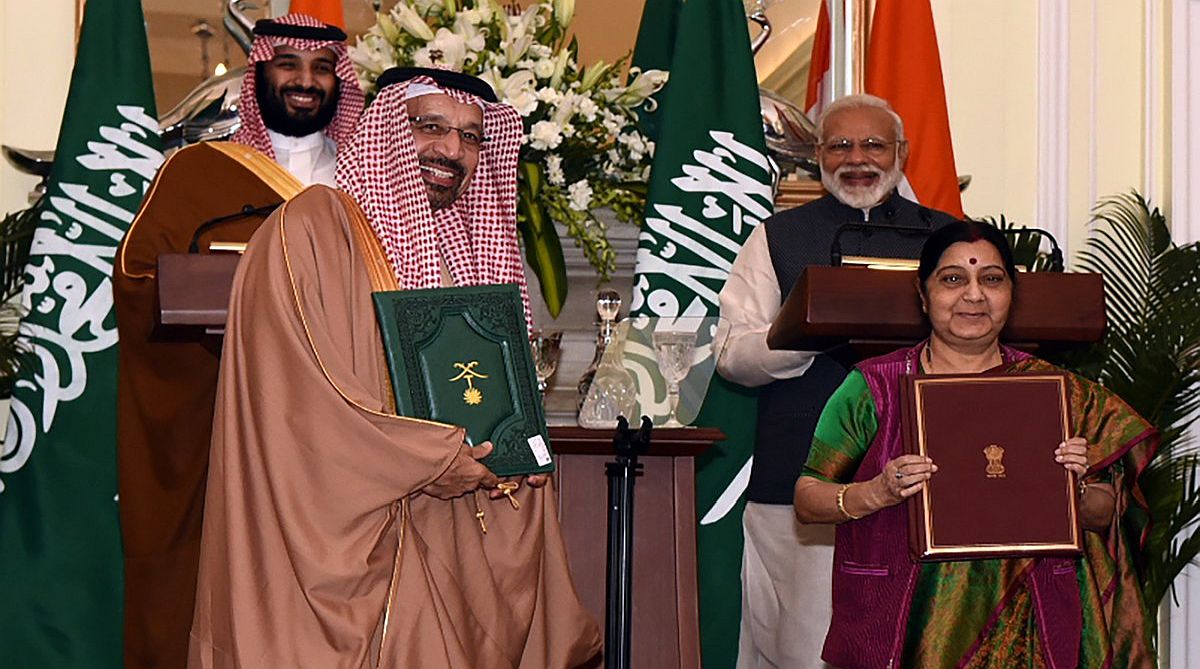
Prime Minister Narendra Modi and Saudi Arabia Crown Prince Mohammed bin Salman witnessing the Exchange of Agreements between India and Saudi Arabia at Hyderabad House, New Delhi. (Photo: Twitter | PIB India)
MoUs on tourism, cooperation in the field of housing, International Solar Alliance among others were exchanged between the two countries.
On his first state visit to the country, Prime Minister Narendra Modi welcomed the Saudi Crown Prince saying that Saudi Arabia was India’s “close friend”.
India and Saudi Arabia have a longstanding relationship, PM Modi said adding that in the 21st century, Saudi Arabia was among India’s most important strategic partners.
The Prime Minister, in a joint press conference with Crown Prince Mohammed bin Salman, also welcomed Saudi investment in Indian infrastructure.
In a major development, Saudi Arabia also joined the International Solar Alliance, informed PM Modi adding that the two leaders also discussed how to further strengthen the defence cooperation between the two nations.
“We have agreed to strengthen their cooperation in the areas of renewable energy. We welcome Saudi Arabia to the International Solar Alliance. The peaceful use of nuclear energy, especially water desalination and health, will be another dimension of our cooperation,” PM Modi said.
Speaking on the Pulwama terror attack that killed at least 44 CRPF personnel, the Prime Minister said the two leaders agreed on the need to destroy the infrastructure of terror and clamp down on countries supporting terror.
“We have also vowed to increase pressure on any country that promotes terror activities,” the Prime Minister said.
This comes after Salman’s high-profile tour of Pakistan on January 17 where he said dialogue was the only way to resolve “outstanding issues” between India and Pakistan.
Addressing the joint press conference, Saudi Arabia Crown Prince Mohammed bin Salman said his country shares India’s concerns over terror.
“Terrorism is a common concern. We will cooperate with India in every way, like intelligence sharing. India has played a positive role,” he said.
He also thanked the people of India and the Government for the warm welcome.
“The relationship between India and Saudi Arabia is over thousands of years old. It is even older than history, and this relationship has grown stronger in the last 50 years. Our objectives are similar be it in energy, agriculture or technology,” he added.
Salman also called for common planning between the two nations to tackle various issues and said that “Saudi Arabia has invested $44 billion in India”.
Earlier in the day, PM Modi and Salman held delegation-level talks on key areas of mutual interest such as trade and investment, energy, defence and security, nuclear and space, civil aviation, renewables, counter-terrorism, community welfare and regional challenges.
External Affairs Minister Sushma Swaraj also met Salman and discussed ways to add further momentum to the strategic ties between the two nations besides deepening engagement in areas of trade and investment.
Earlier on Wednesday, the Saudi Crown Prince was accorded a ceremonial reception at the Rashtrapati Bhawan by President Ram Nath Kovind.
After meeting President Ram Nath Kovind, the Saudi Arabia Crown Prince said, “Today we want to be sure that this relation is maintained and improved for the sake of both countries. With the leadership of the President and the Prime Minister, I am sure we can create good things for Saudi Arabia and India”.
Earlier on Tuesday, in a special gesture, Prime Minister Narendra Modi broke the protocol to personally receive the Saudi prince and welcomed him with a warm hug at the Palam airport.
External Affairs Ministry spokesperson Raveesh Kumar had said that the first state visit of the Saudi Crown Prince marks a “new chapter in bilateral relations between the two countries”.
Salman’s visit comes in the backdrop of the escalating tension between India and Pakistan following the Pulwama terror attack carried out by Pakistan-based Jaish-e-Mohammad (JeM) terror group in which at least 44 CRPF personnel were killed.
Saudi Arabia had on Friday said it stood with India’s fight against terrorism and extremism and denounced as “cowardly” the attack.
India’s bilateral trade with Saudi Arabia was USD 27.48 billion in 2017-18, making Saudi Arabia its fourth largest trading partner.
Saudi Arabia is also a key pillar of India’s energy security, being a source of 17 per cent or more of crude oil and 32 per cent of LPG requirements of India.
The Crown Prince is expected to travel to China from India.
Source: The Statesman
Posted in agriculture, bilateral relations, China alert, Civil aviation, community welfare, Counter-terrorism, cowardly, CRPF, Defence, energy, Exchange of Agreements, external affairs minister, External Affairs Ministry, extremism, Hyderabad House, India alert, Indian infrastructure, International Solar Alliance, LPG, Mohammed bin Salman, New Delhi, nuclear, Pakistan, PM Narendra Modi, President Ram Nath Kovind, protocol, Pulwama, Rashtrapati Bhawan, Raveesh Kumar, regional challenges, renewables, Saudi crown prince, security, Space, strategic partners, strategic ties, Sushma Swaraj, Technology, terrorism, trade and investment, Uncategorized |
Leave a Comment »






 CHINDIA ALERT: You'll be living in their world, very soon