Archive for ‘face mask’

01/03/2020

Coronavirus: how China’s face mask shortage inspired people to learn to make their own

  • Materials can bought cheaply online and combined to filter out germs, while people exchange tips in online chat groups
  • Urgent demand has forced individuals and hospitals alike to get to work to meet the shortfall
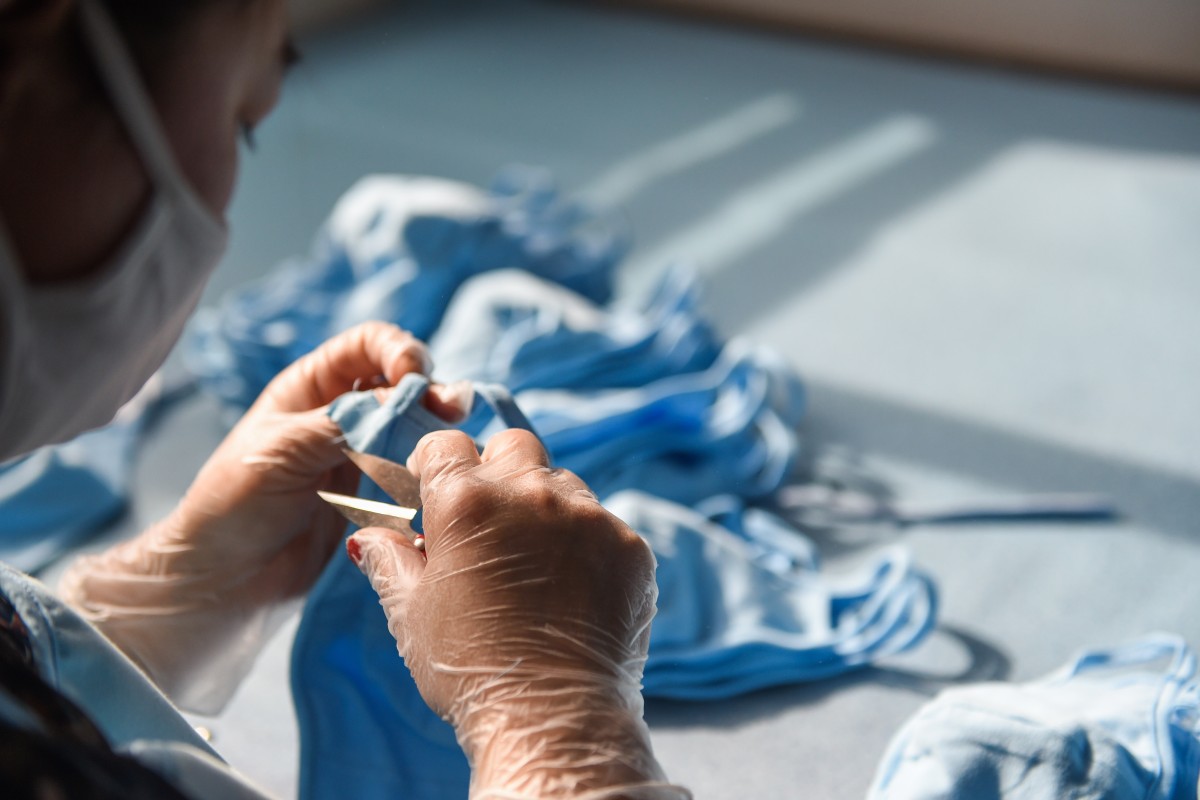
A worker in northern China makes a face mask as companies strive to match demand – but some people are buying similar materials to assemble at home. Photo: Xinhua
Living in the scenic Puer city in southwestern China’s Yunnan province, 30-year-old Zhang Jianing had thought the coronavirus outbreak in Hubei was far away and irrelevant, until cases were confirmed in her province and then her city at the end of January.
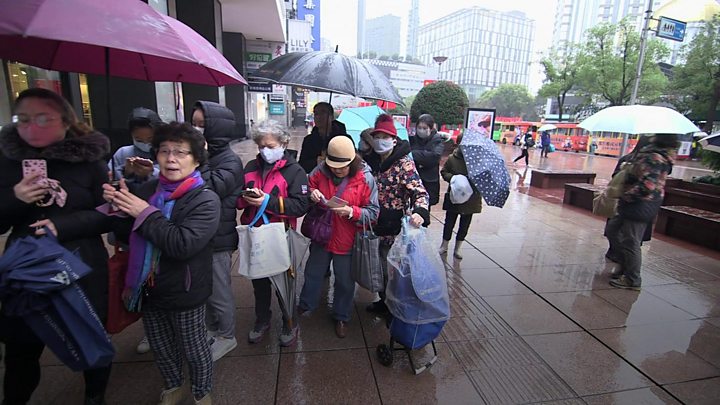
Heeding the warnings to protect herself, Zhang rushed out to buy masks, only to find them all snapped up. When she plucked up the courage to go out to buy groceries, she realised she needed to have a mask on to be allowed to enter shops.
After doing some research online, Zhang made a mask herself: two layers of cotton on the outside, with a sheet of plastic food wrap inside.
“The mask fit my face well and protected me from droplets,” Zhang said. “There was just one thing: it was too difficult to breathe through.”
Experts devise do-it-yourself face masks to help people battle coronavirus
When a nation of 1.4 billion people was suddenly alerted and in many cases ordered to wear masks not only in public indoor places but also in the open air, the huge demand quickly exhausted supply.
Mask production capacity in China was 22 million a day – insufficient for the country’s population. There were hopes that the supply of masks would pick up after a Lunar New Year holiday that was extended to help prevent further spread of infection, but things did not look promising after factories reopened. By Monday, despite mask manufacturers making 10 per cent more than in early February, masks remained a rare commodity.

Making DIY masks became the top trending topic on Chinese online shopping site Taobao for several days. Materials became much sought-after, from nose bars to the non-woven fabric used in disposable surgical masks to filter out viral droplets. An online shop based in Fujian, southeast China, said it had sold more than 5,500 packages of DIY mask materials that can make 50 to 200 surgical masks apiece.

Surgical masks ‘protect more from germs on fingers than viruses in the air’
16 Feb 2020

Zhang spent 200 yuan (US$29) on materials online, from which she made 60 surgical masks when they arrived last week. She is a qipao designer and has a sewing machine at home. The outer layer was a blue waterproof non-woven fabric, over a layer of melt-blown fabric that can filter out most germs and droplets. The inner layer was made with a face flannel.

Hongkongers make reusable fabric masks as Covid-19 epidemic leads to shortages and sky-high prices
“I sent some to my parents and relatives,” Zhang said. “I am not sure how protective they are, but the good thing is our city hasn’t had any new cases for a long time.”

DIY mask production is being taken very seriously, spawning online chat groups to discuss reliability of materials and disinfection methods as people try to make theirs as safe and professional as possible.

Alex Zhang, an office worker in Shanghai, donated her N95 masks to Wuhan, the epicentre of the coronavirus outbreak, when hospitals in the city appealed to the public for protective gear amid an acute shortage – but soon found herself short of masks herself.

Shanghai companies begin production of first reusable face masks
25 Feb 2020

The Shanghai government allowed households to buy a certain number of surgical masks, but it was not enough for her family. Taking apart an N95 mask to see what it was made of, she felt assembling the layers of fabric required no special technique, and decided to do it herself.

Zhang spent 45 yuan on two square metres of melt-blown fabric to stop viruses, and sandwiched it with two layers of nonwoven fabric and an air pad. She sewed the layers together and put them in an electric oven at 70 degrees Celsius (158 Fahrenheit) for a minute, for disinfection. The finished mask is attached using a plastic band.

“Each mask cost about 3 yuan [43 US cents] and was almost like an N95 filter,” Zhang said. “I didn’t find it difficult. I am quite satisfied with my masks and feel very safe to wear them in crowded places.”

How to properly remove and discard face masks to reduce the risk of infection

She later bought nursing pads, which are already disinfected, to replace the layer closest to the face.

DIY masks have also been used where large amounts of protective gear are needed. Garment manufacturer Shenzhou International, in the coastal Zhejiang province, assigned 100 staff to make masks with melt-blown non-woven fabric to meet the needs of its factory workforce of nearly 15,000, who needed two masks each per day, according to a report by Ningbo Daily.

Hospitals short of masks have mobilised nurses to make their own using a non-woven fabric used to wrap disinfected medical products. At least three hospitals, in Xian in central China and in Jinhua, Zhejiang, have tried making masks for medical staff not serving on the front line, according to media reports.

DIY handmade face masks in Hong Kong

The World Health Organisation has said that wearing masks alone is not sufficient protection against the coronavirus, and should be combined with precautions including hand-washing with soap or an alcohol-based hand rub.

However, facing a shortage that will not end any time soon, health authorities have changed from saying people should discard masks every four hours to advising recycling them when possible.

A guideline issued by the National Health Commission said healthy people could wear masks repeatedly and for a longer time.
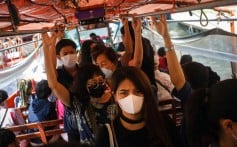
Chinese driver wears 12 face masks amid coronavirus outbreak
“Masks for repeat use can be hung in clean, dry and airy places or put in a clean paper bag,” its guidelines said. “The masks must be placed separately to avoid contact with other masks.”
Making masks with layers of cotton bandage is acceptable, because they can stay dry when breathed on, but plastic wrap is not recommended, because it blocks the ability to breathe entirely, according to Cai Haodong, an infectious diseases specialist at Beijing’s Ditan Hospital.
Coronavirus: Thais urged to make their own masks, sanitisers due to shortage
7 Feb 2020

Cai said her hospital did not have surgical masks, nor N95s, during the severe acute respiratory syndrome (Sars) outbreak in 2003, and hospital staff made masks for use by front-line medics, disinfecting them with boiling water and drying them in the sun.

“The key is to keep the mask dry,” Cai said. “Self-made masks offer some degree of protection and it is better to wear them than nothing.”

Source: SCMP
23/02/2020

Korea raises alert to highest level as coronavirus cases jump

SEOUL/SHANGHAI (Reuters) – South Korea raised its disease alert to the highest level on Sunday after a surge in coronavirus infections and two more deaths, while China state media warned the outbreak there had yet to reach a turning point despite some signs of easing.

South Korea’s president said he was putting the country on “red alert” due to the rapid rise in new cases, which are largely being traced back to church services. Health officials reported 169 new infections, bringing the total to 602, having doubled from Friday to Saturday.

The escalation in the alert level allows the government to send extra resources to Daegu city and Cheongdo county, which were designated “special care zones” on Friday.

South Korea’s Yonhap News Agency said it also enables the government to forcibly prevent public activities and order the temporary closure of schools, though the government gave no immediate details on what steps could be taken.

In China, the health commission confirmed 648 new infections – higher than a day earlier – but only 18 were outside of Hubei province, the lowest number outside of the epicenter since authorities started publishing data a month ago and locked down large parts of the country.

But the number of cases continued to climb elsewhere.

Japanese Prime Minister Shinzo Abe instructed government agencies on Sunday to urgently prepare medical provisions and draft a comprehensive plan to curb the spread of the virus, after it reported 27 more cases a day earlier.

The U.S. State Department raised its travel advisory level one notch for South Korea and Japan to Level 2 on a scale of 1 to 4.

Concern about the reach and rapid spread of coronavirus also grew in Europe and the Middle East.

Cases in Italy, Europe’s worst hit country, more than quadrupled to 79 on Saturday, with two deaths.

Iran reported a total of 43 infections, with eight deaths – all since Tuesday – forcing some of its neighbors to announce travel and immigration curbs.

The World Health Organization on Saturday stressed that the number of cases outside of China was still relatively few, but it was worried by the detection of infections without a clear link to China.

The disease has spread to some 26 countries and territories outside China, killing more than a dozen people, according to a Reuters tally. It has been fatal in 2% of reported cases, with the elderly and ill the most vulnerable, according to the WHO.

The potential economic impact of coronavirus was prominent at a meeting of G20 finance ministers in Riyadh, at which the International Monetary Fund chief said China’s 2020 growth would likely be lower at 5.6%, down 0.4 percentage points from its January outlook, with 0.1 percentage points shaved from global growth.

Graphic: Online site for coronavirus news here

Graphic: Tracking the novel coronavirus here

CHURCH CONTAGION

The last time South Korea raised the alert to the highest was 11 years ago during the Influenza A or H1N1 outbreak.

Many of South Korea’s new cases were linked to the Shincheonji Church of Jesus congregation in Daegu after a 61-year-old woman known as “Patient 31” tested positive for the virus last week. The woman had no recent record of overseas travel.

Catholic churches in Daegu and Gwangju have suspended mass and other gatherings, while churches elsewhere saw declines in attendance on Sunday, especially among the elderly.

“If the situation gets worse, I think we’ll need to take more measures. Currently, we’re limiting personal gatherings within the church except for Mass,” said Song Gi-young, 53, wearing a face mask at church.

Heo Young-moo, 88, expressed frustration.

“Devotees shouldn’t go to any risky places … Hasn’t it become so widespread because those people didn’t get checked?”,” he said.

Outside of the church was a sign that said: “All Shincheonji followers are strictly prohibited from entering”.

The foreign ministry said South Koreans aboard a plane to Israel had been denied entry there on Saturday due to concerns about the virus spread.

China said the number of new deaths on Saturday from COVID-19, as the disease caused by the virus is known, was 97, all but one of which were in Hubei.

Eighty-two of those were in the provincial capital Wuhan, where Xinhua news agency said nucleic tests were being carried out on the backlog of cases to try to contain the spread.

In total, China has reported 76,936 cases, and 2,442 deaths. The WHO says the virus is severe or critical in only a fifth of infected patients, and mild in the rest.

Graphic: Reuters graphics on the new coronavirus here

NOT OVER YET

Beijing, Zhejiang, Sichuan had no new infections on Feb. 22 for the first time since the outbreak was detected. There were signs of street life in Shanghai, with some cafes serving take-out food and families wearing masks walking their dogs.

State run television on Sunday urged people to avoid complacency, drawing attention to people gathering in public areas and tourist spots without wearing masks.

Analysts have been closely watching out for any signs of a secondary wave of infections as transport restrictions are eased and many migrant workers return to factories and offices. Business activity in the world’s second-biggest economy is only gradually returning to normal after widespread disruptions.

Japan’s health minister apologized on Saturday after a woman who was allowed to leave the coronavirus-struck Diamond Princess cruise ship tested positive despite having underwent quarantine.

At least 623 cases have been reported on the vessel, the biggest outbreak outside China, involving more than a dozen nationalities.

In Italy, schools and universities were closed and some soccer matches postponed in Lombardy and Veneto, the country’s industrial heartland.

Saudi Arabia, Kuwait, Iraq have travel and immigration curbs on Iran, while Oman on Sunday urged its citizens to steer clear of countries with high infection rates and said arrivals from those nations would be quarantined.

Source: Reuters

30/01/2020

Coronavirus Wuhan diary: Living alone in a city gone quiet

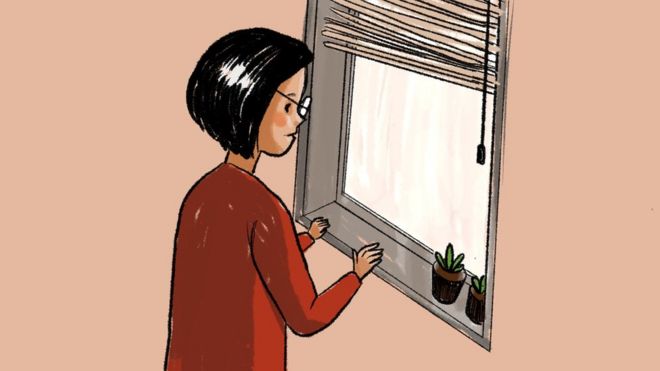
Illustration of a woman looking out of a window

Guo Jing lives in Wuhan, the Chinese city at the heart of the outbreak of a new virus which has got the world worried.

Wuhan has been under lockdown since 23 January, to try to contain the infection. Transport is shut down, most shops and businesses closed, and people are being advised to stay at home.

Jing is a 29-year-old social worker and rights activist who lives on her own. For the past week, she has kept a diary, which she shares here with the BBC.

Thursday 23 January – the day of the lockdown

I didn’t know what to do when I woke up and learned about the lockdown. I don’t know what it means, how long it will last and what kind of preparations I should make.

There are a lot of infuriating comments [on social media]: that many patients cannot be hospitalised after diagnosis [because of a lack of places], that patients with fever are not properly treated.

Many more people are wearing masks. Friends have told me to stock up on supplies. Rice and noodles have almost sold out.

Media caption Fears over coronavirus in China trigger face mask shortage

A man was buying lots of salt, and someone asked him why he was buying so much. He replied: “What if the lockdown lasted for a whole year?”

I went to a pharmacy and it was already limiting the number of shoppers. It had already sold out of masks and alcohol disinfectant.

After stocking up on food, I am still in shock. Cars and pedestrians are dwindling, and the city has come to a stop all out of a sudden.

When will the city live again?

Friday 24 January – a silent New Year’s Eve

The world is quiet, and the silence is horrifying. I live alone, so I can only tell there are other human beings around from the occasional noises in the corridor.

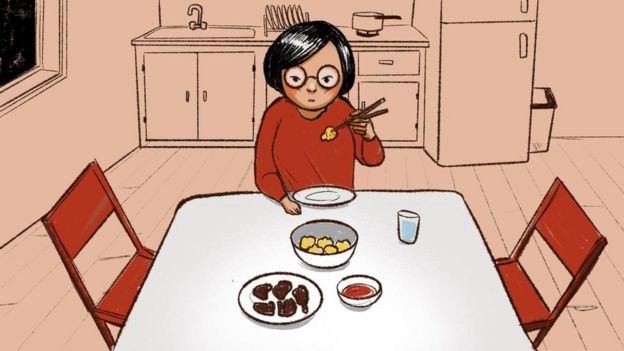
Illustration of a woman eating alone

I have a lot of time to think about how to survive. I don’t have any resources or connections.

One of my goals is not to fall sick, so I have to make myself exercise. Food is crucial to survival too, so I have to know whether there is enough supply.

The government hasn’t said how long the lockdown will last, nor how we can carry on functioning. People are saying it might last until May.

The pharmacy and the convenience store downstairs were closed today, but it was comforting to see that couriers are still out delivering food.

Noodles are all sold out in the supermarkets, but there is some rice. I also went to the market today. I bought celery, garlic shoots and eggs.

After going home, I washed all my clothes and took a shower. Personal hygiene is important – I think I am washing my hands 20 to 30 times a day.

Going out makes me feel that I am still connected to the world. It’s very difficult to imagine how elderly citizens living alone and people with disabilities will get through this.

I didn’t want to cook less than usual, because it was the last night of the year of the pig – it was supposed to be a meal of celebration.

Over dinner, I was on a video call with my friends. There was no escaping talk of the virus. Some people are in towns near Wuhan, some chose not to go home because of the disease, some still insist on gathering despite the outbreak.

A friend coughed during the call. Someone jokingly told her to hang up!

We chatted for three hours and I thought I could then fall asleep with happy thoughts. But when I closed my eyes, memories of the past few days came in flashbacks.

Tears fell. I felt helpless, angry and sad. I thought about death, too.

I don’t have many regrets, because my job is meaningful. But I don’t want my life to end.

Saturday 25 January – Chinese New Year alone

Today is Chinese New Year. I never have much interest in celebrating festivals, but now new year feels even more irrelevant.

In the morning, I saw some blood after I sneezed, and I was scared. My brain was filled with worries about sickness. I was wondering if I should go out or not. But I had no fever and a good appetite, so I went out.

I wore two masks even though people say it’s pointless and unnecessary. I am worried about [poor quality] fakes, so a double mask makes me feel safer.

It was still very quiet.

A flower shop was open, and the owner had placed some chrysanthemums [often used as funeral flowers] at the door. But I didn’t know if that meant anything.

In the supermarket, the vegetable shelves were empty and almost all dumplings and noodles were sold out. There were only a few people queuing.

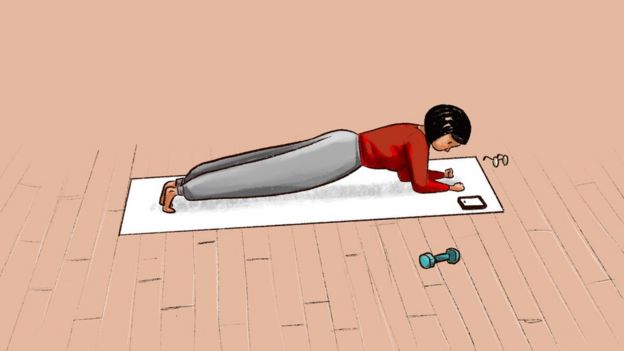
Illustration of a woman doing exercise

I keep having this urge to buy lots during each visit to the shop. I bought another 2.5 kg of rice, even though I have 7kg of rice at home. I also couldn’t help buying some sweet potatoes, dumplings, sausages, red beans, green beans, millet and salted eggs.

I don’t even like salted eggs! I will give them to friends, after the lockdown is lifted.

I have enough food for a month, and this compulsive buying seems crazy. But under such circumstances, how could I blame myself?

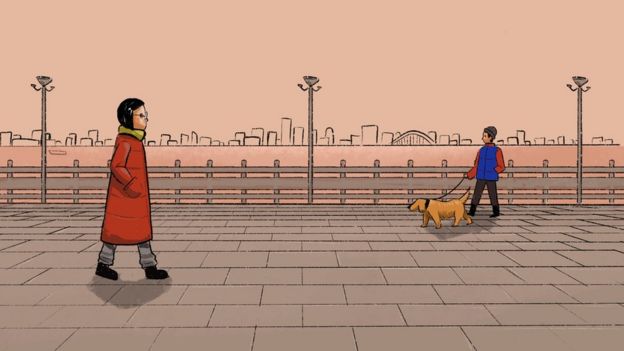
I went for a walk by the river. Two snack shops were open and some people were out walking their dogs. I saw some others were taking a stroll as well – I guess they also didn’t want to be trapped.

I’d never walked along that road before. It felt like my world had expanded just a little bit.

Sunday 26 January – making your voice heard

It not just the city that’s trapped. It’s also the voices of the people.

On the first day of the lockdown, I couldn’t write [anything about it] on social media [because of censorship]. I couldn’t even write on WeChat. Internet censorship has existed for a long time in China, but now it feels even more cruel.

When your life is turned upside down, it’s a challenge to build up your daily life again. I keep exercising in the mornings, using an app, but I can’t focus because my brain is occupied.

Media caption“Wuhan, add oil!”: Watch residents shouting to boost morale in quarantined city

I left home again today and tried to count how many people I met – I met eight during my walk to a noodle shop some 500m away from my home.

I didn’t want to go home. I wanted to explore more. It’s only two months since I moved to Wuhan. I don’t have many friends here, and I don’t know the city very well.

I guess I saw about 100 people today. I have to keep making myself heard and break the shackles. I hope everyone stays hopeful. Friends, I hope that we will meet and talk in the future.

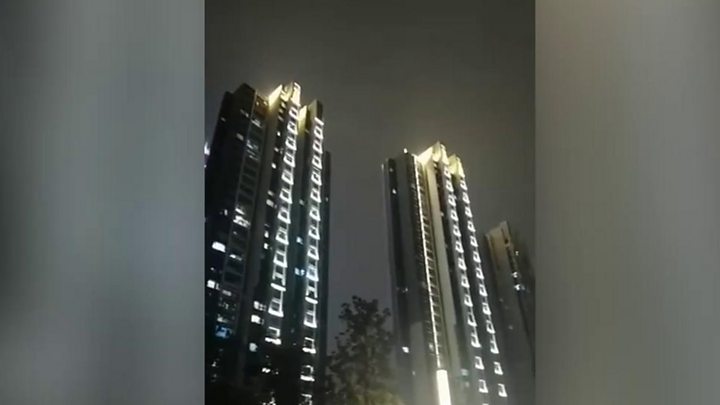
Around 8pm I heard the shouts of “Go, Wuhan!” from people’s windows. The collective chanting is a form of self-empowerment.

Tuesday 28 January – finally sunlight

Panic has driven a wedge between people.

In many cities, people are required to wear a face mask in public. On the face of it, the measure is to control the pneumonia outbreak. But actually it could lead to abuse of power.

Illustration of a woman walking past someone walking a dog

Some citizens without a mask have been thrown off public transport. We don’t know why they didn’t wear a mask. Perhaps they couldn’t buy any, or they didn’t know about the notice. No matter what, their rights to go out should not be taken away.

In some videos circulating online, some people had sealed up the doors of people who’d self-quarantined themselves. People from Hubei province [where Wuhan is] were driven out of their homes and had nowhere to go.

But at the same time, some people are offering accommodation to Hubei people.

There are a lot of ways the government could encourage people to stay home. It has to ensure that every citizen has enough face masks, or even give cash rewards to citizens who stay home.

Today, there’s finally sunlight – just like my mood. I saw more people in my complex and there were a few community workers. They appeared to perform temperature checks on non-residents.

It is not easy to build trust and bonds under a lockdown. The city is worn down by heaviness.

In the midst of all this, I can’t help but becoming more on-guard.

My anxiety about survival has been slowly dissipating. Walking further in the city will be meaningless if I don’t make any connections with people here.

Social participation is an important need. Everyone has to find a role in society and makes one’s life meaningful.

In this lonely city, I have to find my role.

Source: The BBC

Law of Unintended Consequences

continuously updated blog about China & India

ChiaHou's Book Reviews

continuously updated blog about China & India

What's wrong with the world; and its economy

continuously updated blog about China & India