Chindia Alert: You’ll be Living in their World Very Soon
aims to alert you to the threats and opportunities that China and India present. China and India require serious attention; case of ‘hidden dragon and crouching tiger’.
Without this attention, governments, businesses and, indeed, individuals may find themselves at a great disadvantage sooner rather than later.
The POSTs (front webpages) are mainly 'cuttings' from reliable sources, updated continuously.
The PAGEs (see Tabs, above) attempt to make the information more meaningful by putting some structure to the information we have researched and assembled since 2006.
This is the third instalment in a four-part series examining the brewing US-China tech war over the development and deployment of artificial intelligence tech
The US is home to five of the world’s top 10 universities in the AI field, which includes computer vision and machine learning, while China has three
For those Chinese with long-term plans to stay in the US, a major obstacle lies in getting work visas, especially in the current trade war environment. Illustration: Perry Tse
After working in the United States for more than a decade, Zheng Yefeng felt he had hit a glass ceiling. He also saw that the gap in artificial intelligence between China and the US was narrowing.
Last year Zheng, who worked as a researcher at Siemens Healthcare in New Jersey, made a decision that addressed both problems. He accepted an offer to head up the medical research and development team at Tencent’s YouTu artificial intelligence lab in Shenzhen, known as China’s Silicon Valley.
“There was almost no room for promotion if I stayed in the US,” he said, expressing a common dilemma faced by experienced Chinese tech workers in America.
With the US-China trade war leading to tighter scrutiny of Chinese nationals working in the US tech industry, people like Zheng are moving back to China to work in the burgeoning AI sector, especially after Beijing designated AI a national priority. The technology’s varied applications have attracted billions of dollars of venture capital investment, created highly valued start-ups like SenseTime and ByteDance, and sparked a talent war among companies.
That has created an odd symbiotic relationship between the two countries vying for AI supremacy. The US, with its superior higher education system, is the training ground for Chinese AI scientists like Zheng, who obtained a PhD from the University of Maryland after earning bachelor’s and master’s degrees at China’s premier Tsinghua University.
“Many professors in China have great academic ability, but in terms of the number [of top professors], the US is ahead,” said Luo Guojie, who himself accepted an offer from Peking University to become an assistant professor after studying computer science in the US.
Among international students majoring in computer science and maths in US universities, Chinese nationals were the third largest group behind Indians and Nepalese in the 2018-2019 academic year, representing 19.9 per cent, according to the Institute of International Education.
[To build] the best universities is not easy. The university is a free speech space, whereas in China, this is not the case Gunther Marten, a senior official with the European Union delegation to China
The South China Morning Post spoke with several Chinese AI engineers who decided to stay and work in the US after their studies. They only agreed to give their surnames because of the sensitivity of the issues being discussed.
A 25-year-old Beijinger surnamed Lin graduated from one of China’s best engineering schools in the capital before heading to a US university for a master’s degree in computer science in 2017. Like some of his peers, he found the teaching methods in China to be outdated.
“It’s hard to imagine that a final exam of a coding course still asked you to hand write code, instead of running and testing it on a computer,” said Lin, who now works as a software engineer for Google in Silicon Valley.
“Although we still had to take writing tests [in the US], we had many practical opportunities in the lab and could do our own projects,” he added.
A Facebook software engineer surnamed Zhuang had a similar experience at his university in Shanghai.
“Many engineering students [in China] still get old-school textbooks and insufficient laboratory training,” he said. “Engineering practices for AI have been through a fast iteration over the past few decades, which means many Chinese students are not exposed to the most updated knowledge in the field, at least not in the classroom.”
Zhuang also noted out that many classes in China are taught in Chinese, meaning engineering graduates are not fluent in English, the preferred language of the global AI research community.
The US is home to five of the world’s top 10 universities in the AI field, which includes computer vision and machine learning, while China has three. Carnegie Mellon University (CMU) in Pennsylvania ranks No 1 while China’s Tsinghua University is No 2, according to CSrankings, which bases the list on papers published since 2009.
US tech chief: China is threatening US’ lead in global AI race
With its top institutions and an open culture that encourages freedom of speech, including unfettered internet access, the US has become a magnet for the brightest AI students the world over.
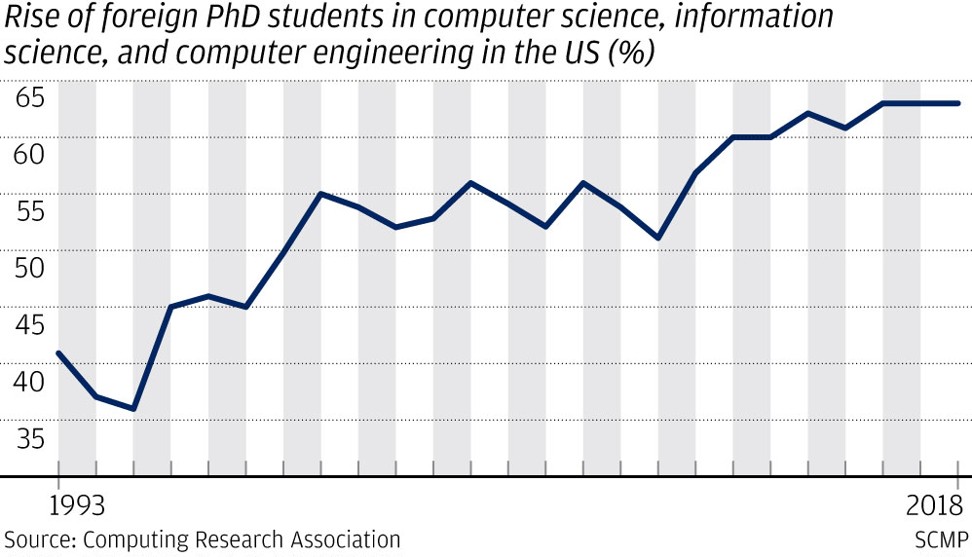
In 2018, 62.8 per cent of PhD degrees and 65.4 per cent of master’s degrees in computer science, information science and computer engineering programmes in the US were granted to “non-resident aliens”, according to a survey by the Computing Research Association.
“[To build] the best universities is not easy,” Gunther Marten, a senior official with the European Union delegation to China, said on the sidelines of the World Internet Conference in Wuzhen in October. “The university is a free speech space, whereas in China, this is not the case.”
When these US-educated AI scientists finish studying, most take advantage of a rule allowing them to stay in the country for three years to gain work experience.
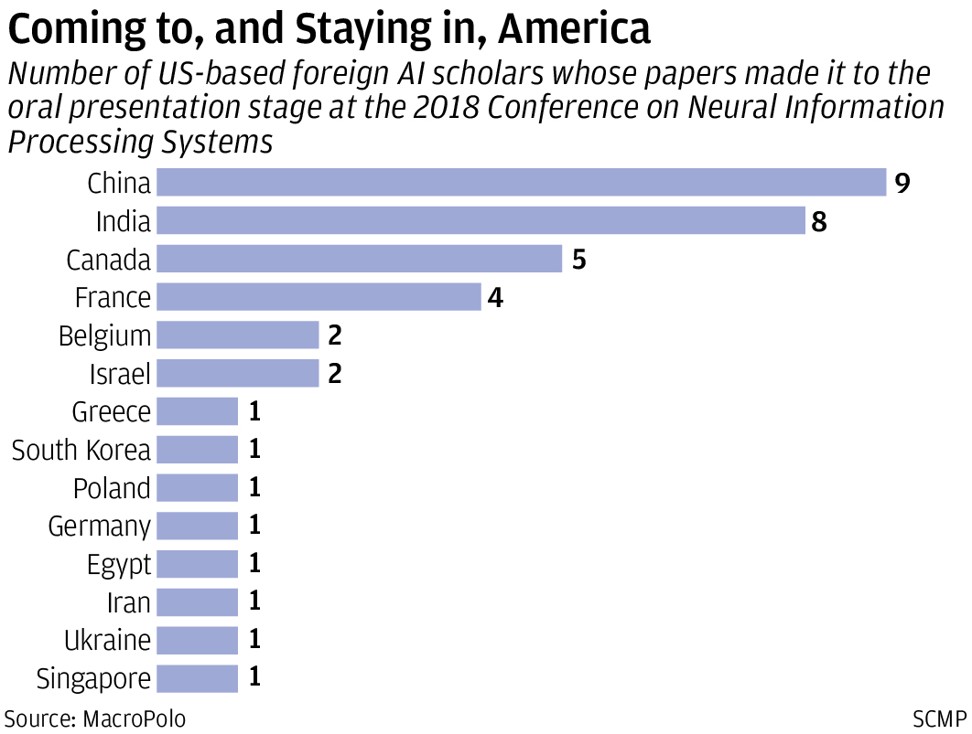
Of the foreign nationals taking part in last year’s Conference on Neural Information Processing Systems (NIPS), a major machine learning event for AI professionals, 87 per cent of those whose papers made it to the oral presentation stage went to work for American universities or research institutes after earning their PhD, according to MacroPolo, a think tank under the Paulson Institute.
“China has many great universities and companies, especially in certain subfields of AI such as computer vision, but many people remain hesitant to move to China due to the political environment, quality of life concerns and workplace issues,” said Remco Zwetsloot, a research fellow at Georgetown University’s Center for Security and Emerging Technology (CSET).
China’s PhD students miserable, yet hopeful: survey
Some of the US-trained Chinese AI engineers told the Post they were scared off by China’s “996” working culture: 9am to 9pm, six days a week. Tech firms in China typically expect their employees to work long hours to prove their dedication.
Lin, the Beijinger who now works for Google, used to be an intern at one of China’s largest internet giants. “I worked from the time I woke up until going to bed,” he said, “At Google, I’ve been confused because many people here only work till 5pm but Google is still a global leader.” Lin said he would be happy to return to China if the 996 work culture eases.
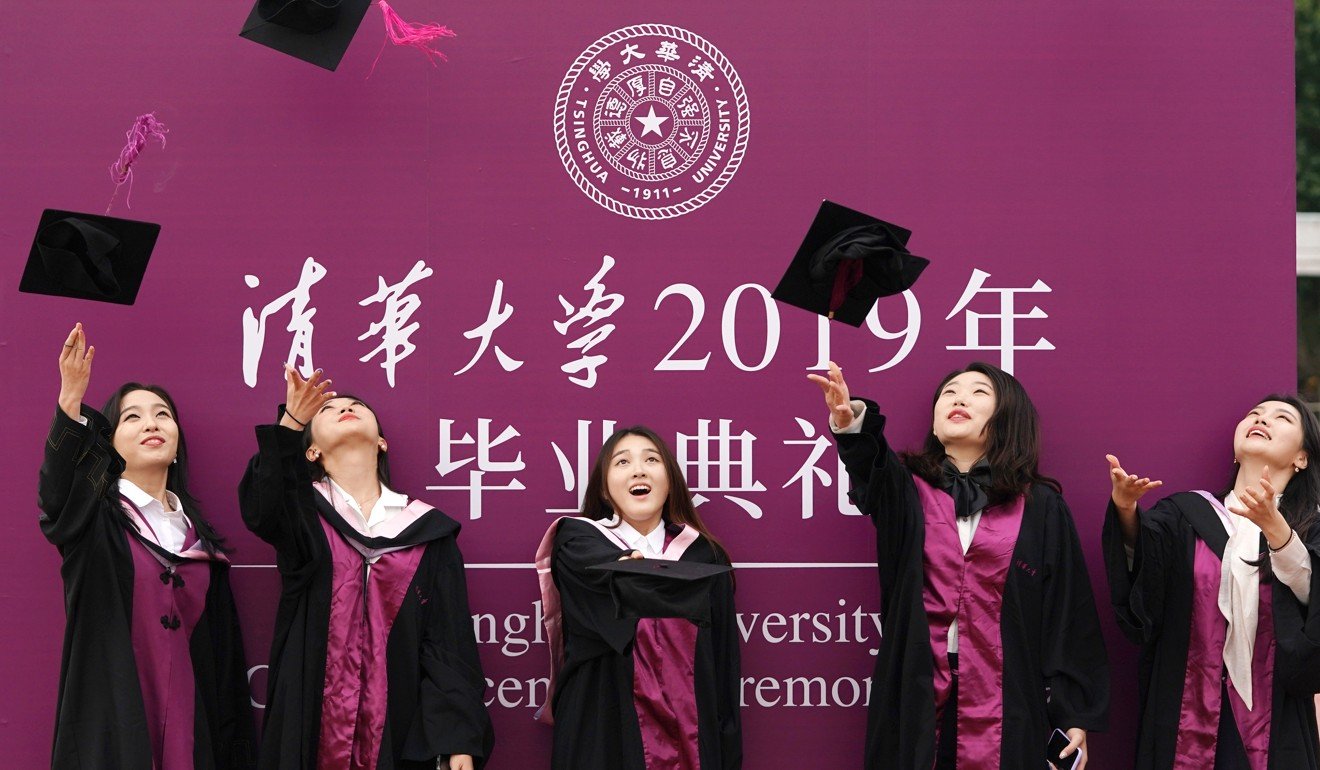
Graduates throw their caps in the air as they pose for a group photo during the 2019 commencement ceremony of Tsinghua University in Beijing. Tsinghua ranks as China’s top university for AI. Photo: Xinhua
Chen, a female postgraduate student at Carnegie Mellon, who recently accepted a job offer from Google, once interned at Beijing-based AI unicorn SenseTime, where she worked from 10am to between 8pm and 10pm most days.
A SenseTime spokesperson said the company has adopted flexible working hours for its employees.
Besides a better work-life balance, Chinese graduates look for jobs in Silicon Valley because of the higher pay.
“If you include pre-tax income, many of us get offers that pay more than 1 million yuan (US$142,000) a year but in China the salaries offered to the best batch of fresh undergraduates are about 200,000 to 300,000 yuan (US$28,000 to US$43,000),” Chen said.
Still, for those Chinese with long-term plans to stay in the US, a major obstacle lies in getting work visas, especially in the current trade war environment. Most AI-related workers are on H-1B visas that allow US companies to employ non-US nationals with expertise in specialised fields such as IT, finance and engineering.
However, the number of non-immigrant H-1B visas granted has started to fall since 2016, when it peaked at 180,000, according to the US Department of State, and US tech companies have complained that a policy shift by the Trump administration has made the approval process longer and more complicated.
In 2017, President Donald Trump requested an overhaul of the H-1B visa programme, saying he did not want it to enable US tech companies to hire cheaper foreign workers at the expense of American jobs. He also wants to give priority to highly skilled people and restrict those wanting to move to the US because of family connections.
Science graduates from overseas countries can stay in the US with their student visas for up to three years while competing for the hard to get work visas, which are granted based on undisclosed mechanisms. Overseas students already working in the US can apply for so-called green cards, which offer permanent residency.
After working for a major US tech company for almost three years on a student visa, one Chinese software engineer, who spoke to the Post on condition of anonymity, said she was relocated to the US firm’s Beijing office last year after failing to obtain a H-1B work visa.
“While there might be individual cases, it seems like the current tensions have not – at least as of a few months ago – led to noticeable changes in the overall number of Chinese students staying in the US after graduating,” said CSET’s Zwetsloot.
Some Chinese AI scientists use Twitter to announce their decision to stay. Chen Tianqi, who just obtained a PhD at the University of Washington in Seattle, and Jun-Yan Zhu, a CMU and UC Berkeley alumnus currently working at Adobe, each tweeted that they would join Carnegie Mellon as assistant professors next year.
To achieve the goal of turning China into “the world’s primary AI innovation centre” by 2030, according to a 2017 blueprint issued the State Council, the central government has stepped up efforts to attract US-educated talent.
The Thousand Talents Plan has seen more than 6,000 overseas Chinese students and academics return since its was established in 2008, but because of escalating tensions with the US, Beijing has played down the initiative.
Longer term, Beijing’s willingness to invest significant sums into the AI sector could see more Chinese return for the better employment opportunities. Between 2013 and the first quarter of 2018, China attracted 60 per cent of global investment in AI, according to a Tsinghua University report.
China’s spending on AI may be far lower than people think
Chinese authorities are investing heavily in the sector, with the city of Shanghai setting up a 10 billion yuan (US$142 million) AI fund in August and Beijing city government announcing in April it would provide a 340 million yuan (US$48 million) grant to the Beijing Academy of Artificial Intelligence.
“More and more senior people like me have come back, and some start their own businesses,” said Zheng, the Siemens Healthcare researcher who joined Tencent. “It’s easier for Chinese to seek venture capital in China than in other countries.”
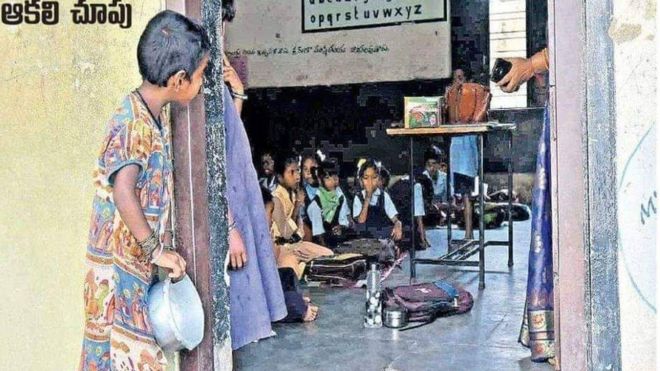
Image copyright EENADU NEWSPAPER/A SRINIVASImage caption The photo that sparked an outcry
A five-year-old in the southern city of Hyderabad was enrolled in school after a photo of her peeking into a classroom sparked an outcry. BBC Telugu’s Deepthi Bathini reports on why the photo doesn’t tell the full story.
Divya is something of a local celebrity in the slum where she lives. The shy five-year-old was the subject of a recent photo which went viral – it showed her clutching a bowl and peeking into a classroom at the local government school.
The touching image was published in a Telugu newspaper on 7 November with a caption that translates from the Telugu as “hungry gaze”.
It quickly grabbed people’s attention: a children’s rights activist shared it on Facebook, lamenting that yet another child was being denied the right to food and education.
It had such an impact, the school enrolled Divya the following day.
But her father, M Lakshman, says the photo and the outcry it provoked was in fact unfair to him and his wife, Yashoda, who works as a sweeper.
Image caption Five-year-old Divya enrolled in school after a photo of her in a newspaper went viral
“I felt sad when I saw the photo,” he told the BBC. “Divya has parents and we are working so hard to give her a good future – but she was portrayed as a hungry orphan.”
Mr Lakshman says he was waiting for Divya to turn six so he could enrol her in a government hostel where his other two daughters are studying. The couple also have a son, who has finished school and is now applying to college while helping Mr Lakshman, who works as a rag picker.
Breaking the cycle
Divya and her parents live in a one-room hut in a shanty town in the heart of Hyderabad. The slum is about 100 metres from the government school, where Divya was photographed. Most of the 300 families living here are daily wage labourers and their children attend the school nearby.
The home is sparse and plastic and glass are piled outside, ready to be sold for recycling. He says between him and his wife, they earn about 10,000 rupees ($139; £108) a month, which pays for their food and clothes. Education, however, is free for the children, since they are all enrolled in government-run schools.
Mr Lakshman knows what it is to struggle: he himself grew up without parents and always battled to earn a decent living. “I never wanted my children to have the life I had. So I made sure they all go to school.”
The photo, he adds, was especially hurtful because he has also been taking care of his brother’s five children.
Image caption Divya’s father said the outcry over the photo was “unfair” to his family
“My brother and sister-in-law passed away sometime ago. I didn’t want their five children to grow up as orphans. So, I enrolled all of them in a hostel and I take care of them.”
When asked why Divya had gone to the government school with a bowl in hand, Mr Lakshman explains that a lot of the younger children from the slum go there around lunch time to take advantage of the free midday meal – a government programme which provides cooked meals to children in more than a million schools – which they know about because their older brothers and sisters are already enrolled.
“Divya doesn’t go every day but she happened to go on that day and someone photographed her,” he explained.
This was confirmed by teachers at the school who told the BBC that some children brought lunch from home, so leftovers over from the free meal scheme would be given to the younger children who had not yet joined.
“Children are children. And there is no day-care centre, so a lot of these children hang around the school anyway,” says one teacher, who spoke on the condition of anonymity.
Image caption Divya says she’s excited to go to school
Mr Lakshman and his neighbours acknowledged the lack of an anganwadi, or government-sponsored day-care centre, in the neighbourhood was a major problem as parents had no place to leave their children so they could go to work.
The local school inspector, SU Shivram Prasad, says he hopes the attention generated by the Divya’s photo will hasten the process of setting up one up.
“It will help the parents and the children can eat a nutritious meal,” he adds.
Teachers at the school also hope that the media spotlight will improve facilities. They say there is an acute shortage of staff and teaching materials, and the school did not even have a compound wall, which meant they have to constantly watch the children during their breaks.
Divya, however, is excited to be going to school. She insists on taking her school bag with her everywhere, even to the playground. Other than saying her name, she does not answer any questions.
“She is a very calm child,” says Mr Lakshman, as his daughter holds his hand and kisses it.
And he admits that despite everything, the photo did do some good.
“Now other children who are Divya’s age are also enrolling in school. So that makes me happy.”
Mainland social media users come out in strong support for the officer, compounding extensive coverage of vandalism of businesses with ties across the border
Hong Kong’s police force has gained support from online commenters on the mainland. Photo: Nora Tam
As Monday morning’s police shooting of a protester triggered a wave of shock and outrage in Hong Kong, across the border in mainland China, the response online was just as swift – but in support of the force.
“Support Hong Kong police opening fire! Clean up Hong Kong’s cockroaches!” one popular financial blogger on Weibo, China’s Twitter-like platform, said as he shared footage of the incident.
In the video, an officer grapples with a protester and points his gun towards another approaching protester. The second protester reaches out towards the gun, the officer dodges, steps back and shoots him in the torso.
“It feels great [to watch]! Kill them all, these trash and tumours of society,” a Weibo user replied to the video, with a thumbs-up emoji.
“Hongkong’s loser youth, [police] should totally open fire!! It would be best to shoot them in the head,” another post read.
These comments, and many others like them flooding social media in mainland China, highlight the deep divisions in views on each side of the border as Hong Kong’s political crisis drags into its sixth month.
Despite some initial sympathy, mainland public sentiment towards Hong Kong has hardened since July, amid state propaganda painting the protesters as a separatist movement plotted by “Western black hands”.
In recent weeks, the rancour from the mainland has only appeared to deepen, with photos and videos of protesters vandalising businesses with ties to the mainland spreading online.
Last month, a mainland Chinese banker was assaulted in a confrontation with protesters during his lunch break in Central, drawing the wrath of many mainlanders and renewed online calls for military intervention.
Extensive media coverage of the vandalism and attack, as well as a series of inflammatory commentaries, have further fanned the anger.
On Monday, the social media account of state-run Beijing Daily ran the story of the shooting under the headline: “This morning, a gunshot in Hong Kong, to the applause of citizens!”
“At such a critical moment, the police officer acted so bravely and restrained,” the report said.
“After the police fired the shot and subdued the rioters, some citizens at the scene directly applauded the police. The reaction of the public directly shows that the officer fired not only in a legal and reasonable way, but also in line with the will of the people.”
In the video, a man in a dark blue jumper claps his hands at a nearby traffic light, as police officers pin the protesters to the ground.
The Beijing Daily report did not refer to angry bystanders condemning the officers as “murderers”.
Hong Kong police officer who shot protester receives death threats against children after personal details released online, force says
Hu Xijin, editor-in-chief of nationalist tabloid Global Times, and a regular – and hugely popular – commentator on Hong Kong’s unrest, also weighed in.
“As a media worker, I resolutely support this Hong Kong police officer gunning down the attacking rioters,” he wrote to his 2 million fans on Weibo in a post that included video of the shooting.
Hu accused Hong Kong and Western media of “focusing their coverage on the police shooting and diluting the illegal, criminal and evil deeds of the rioters”.
“Such guiding of public opinion is disgusting,” he wrote.
Hu ended his post with a message to Hong Kong police: “Don’t you be afraid of anything, resolutely defend Hong Kong’s law and order, be strong and be tough. You’re not alone on the front lines. Behind you there are not only the [patriotic] Hong Kong public and the nation, but also the country’s paramilitary police and the People’s Liberation Army Hong Kong garrison, who can enter Hong Kong and offer support in accordance with the Basic Law when needed.”
The post was liked more than 26,000 times in six hours.
Scores of Chinese students flee Hong Kong over fears they will be attacked as anti-mainland sentiment sweeps through protesters in city
Meanwhile, Taiwanese President Tsai Ing-wen called on the Hong Kong government to give a detailed response to the Hong Kong people’s calls for democracy and freedom, which she described as “the only path to return to stability and order”.
“Governments should not fire upon unarmed people, this will only exacerbate the problem,” she wrote on her official Facebook account. “Beijing and the Hong Kong government should respond to the Hong Kong people, not with bullets but with the promise of democracy and freedom.”
Taipei’s Mainland Affairs Council, which oversees the island’s policies on Beijing, called on all sides to give up their arms and aggressive actions to make way for peaceful conversation.
Chan is accused of supporting Beijing’s so-called nine-dash line, which is its historical justification for its territorial claims in the resource-rich sea
Vietnam, Malaysia, the Philippines, Taiwan and Brunei all have competing claims in the waterway that overlap with China’s
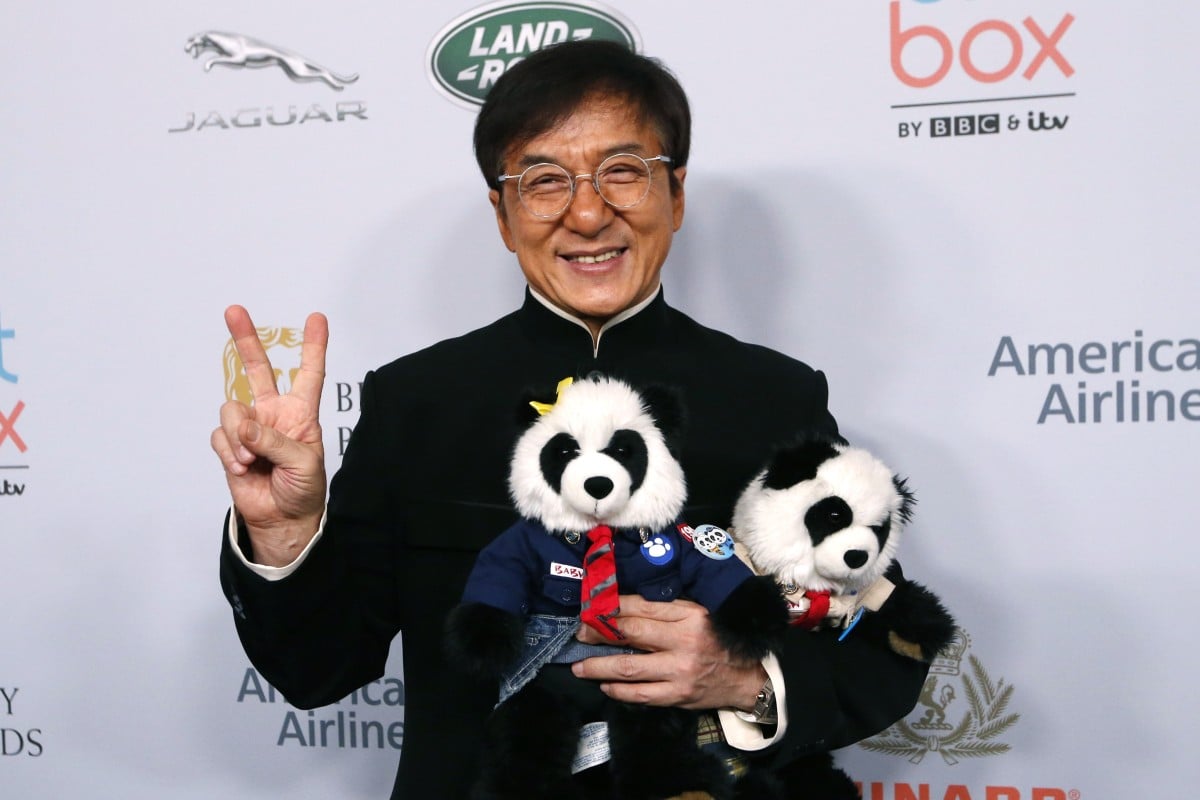
Film star Jackie Chan. Photo: Reuters
Martial arts film star Jackie Chan’s planned visit to Vietnam for a charity has been cancelled following an online backlash related to Beijing’s expansive claims in the disputed South China Sea.
The Hong Kong-born actor was set to visit Hanoi on November 10 to support Operation Smile, a charity that gives free surgery to children with facial disfigurements.
Jackie Chan says he wants to make films in Saudi Arabia
But the plans were scrapped after thousands of angry Facebook users flooded the charity’s official page when his visit was announced last week.
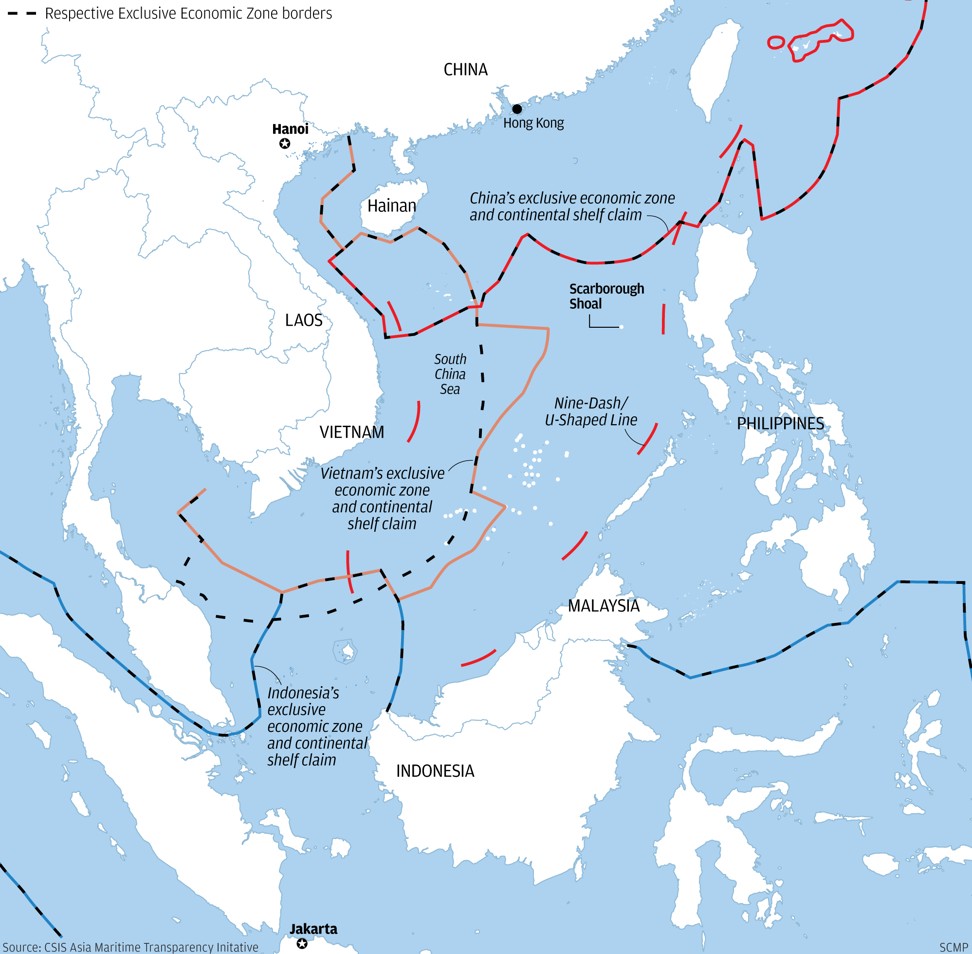
Some of their comments claimed Chan had spoken in support of China’s so-called nine-dash line – its historical justification for its territorial claims in the resource-rich sea.
A map showing claimant countries’ exclusive economic zones in the South China Sea.
However, Chan has not explicitly expressed public support for the controversial maritime assertion.
Vietnam, Malaysia, the Philippines, Taiwan and Brunei all have competing claims in the waterway that overlap with China’s – long a source of tension in the region.
Issuing a mea culpa on Friday for failing “to predict the reaction” of the Vietnamese public, the charity asserted that their work is “non-political”.
“We are very sorry … Operation Smile will not organise any activities with [Chan’s] involvement” in Vietnam, they said.
A Chinese coastguard ship sails by a Vietnamese vessel off the coast of Vietnam in 2014. Photo: Reuters
Vietnam is one of Beijing’s most vocal critics over the flashpoint South China Sea issue.
The foreign ministry on Thursday repeated its usual proclamation on the sea, citing the country’s “full legal basis and true evidence to affirm Vietnam’s sovereignty”, deputy spokesperson Ngo Toan Thang said.
Chan has in the past been accused of siding with China over Hong Kong’s democracy protests after calling the unrest in his hometown “sad and depressing”.
The comment sparked ire in Hong Kong but was warmly received by many in China where he has a massive fan base.
Abominable has been criticised for a scene showing the nine-dash line. Photo: DreamWorks
Beijing claims most the South China Sea through the vague delineation, which is based on maps from the 1940s as the then-Republic of China snapped up islands from Japanese control.
Top law enforcement body starts campaign to rally mainland support for officers amid anti-government protests
Maxim’s described as ‘company that loves the country and loves Hong Kong’ after condemnation of unrest by daughter of founder
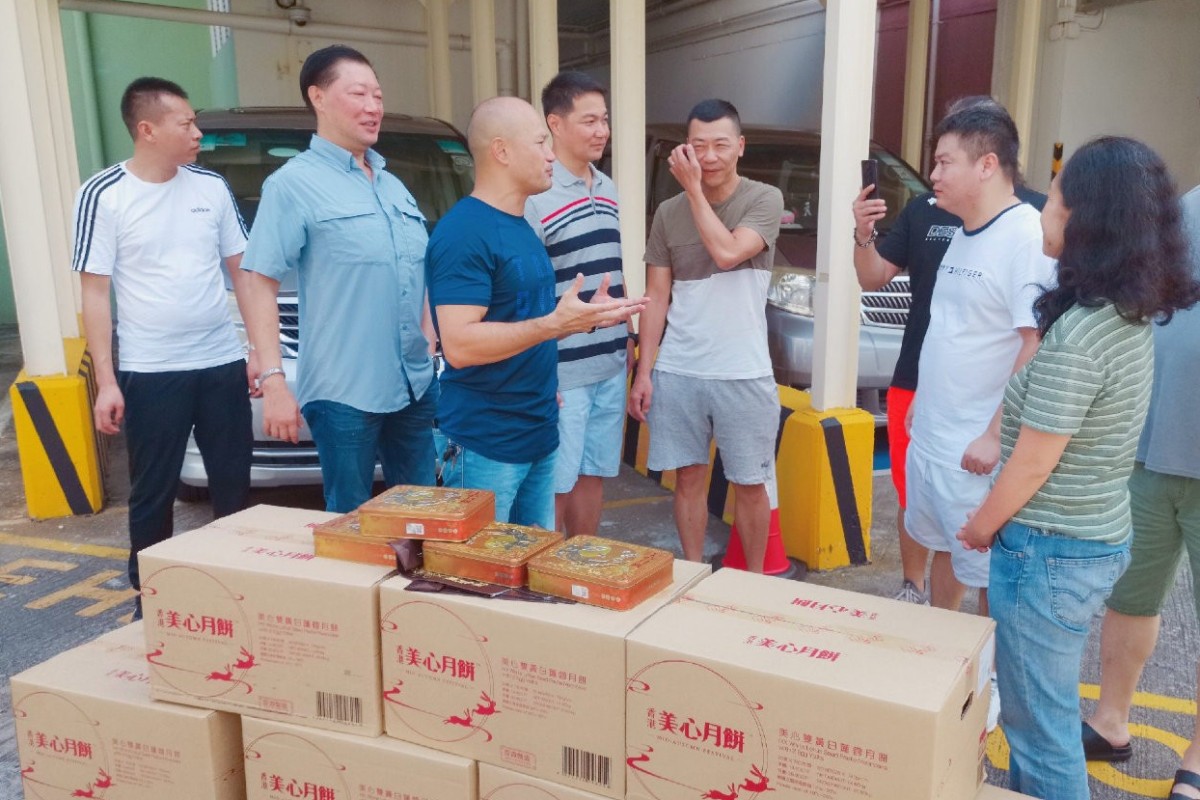
Officer Lau (third from left) and police colleagues receive a delivery of mooncakes. Photo: Weibo
China’s top law enforcement agency has shown its support for Hong Kong’s embattled police by delivering 650 boxes of mooncakes to the force’s dormitories and stations ahead of Friday’s Mid-Autumn Festival.
The festive gifts were sent after an online campaign titled “I want to send hometown delicacies to Hong Kong Police”, launched last Friday by Chang An Jian, an official social media account of the Central Political and Legal Affairs Commission, Beijing’s top political body responsible for law and order.
The commission – a Communist Party organ, rather than a government body that police report to – said in a blog post that seven people had donated about 150,000 yuan (US$21,000) between them.
The campaign represents the latest display of mainland support for the force, with no end in sight to mass protests in Hong Kong triggered in June by opposition to an
that would have allowed the transfer of criminal suspects to mainland China. Hong Kong police have faced numerous accusations of excessive use of force during the unrest.
But the mooncake delivery was complicated by customs regulations, with most major Chinese courier services unwilling to take deliveries containing processed meat and egg yolk across the border with Hong Kong.
“[We] were panicking because a lot of enthusiastic netizens had their salted duck and mooncake deliveries to Hong Kong rejected by couriers!” a Chang An Jian blog post said on Wednesday night.
In the end, 650 boxes of mooncakes that were bought from Hong Kong were sent to police dormitories and stations on Wednesday evening.
Mid-Autumn Festival is the second most important traditional Chinese holiday after Lunar New Year.
“[The mooncakes] were from Maxim’s, a company that loves the country and loves Hong Kong!” the blog post also said.
Annie Wu Suk-ching, whose father co-founded the Maxim’s chain, last week
She was lauded by Communist Party mouthpiece People’s Daily for “clearly adhering to the one country principle” – referring to “one country, two systems”, the principle under which Hong Kong was guaranteed a high degree of autonomy after it was handed over from British to Chinese rule in 1997.
One of Maxim’s biggest rival mooncake manufacturers in Hong Kong, Taipan Bread and Cake, had its products removed from shops across the Chinese mainland and from its biggest e-commerce sites, Tmall.com and JD.com, after the son of its founder was vilified by People’s Daily for a Facebook post that the newspaper said showed he backed the protests.
Recipients of the mooncakes included a police officer who in July was hailed as a hero by Chinese state media and nicknamed “bald sergeant Lau Sir” after pointing a shotgun at protesters who had besieged a police station. Lau has since been invited by Beijing to attend a grand celebration on October 1 for the 70th anniversary of the founding of the People’s Republic of China.
Mooncake importer says stock will be destroyed after mainland backlash
Beijing has focused attention on the violent elements of the Hong Kong protests in its social media posts and media coverage, while businesses have been carefully monitored and expected to toe Beijing’s line on condemning violence and supporting one country, two systems.
“Hong Kong Police have been having a very difficult time,” said one mainlander, surnamed Lu, in a video posted by Chang An Jian. “We want to cheer them up.”
‘Forbes’ magazine reported that China’s central bank will launch its own sovereign digital currency to coincide with the Singles’ Day online shopping festival
The People’s Bank of China is seeking to address financial risks and counter the current dominance of the US dollar
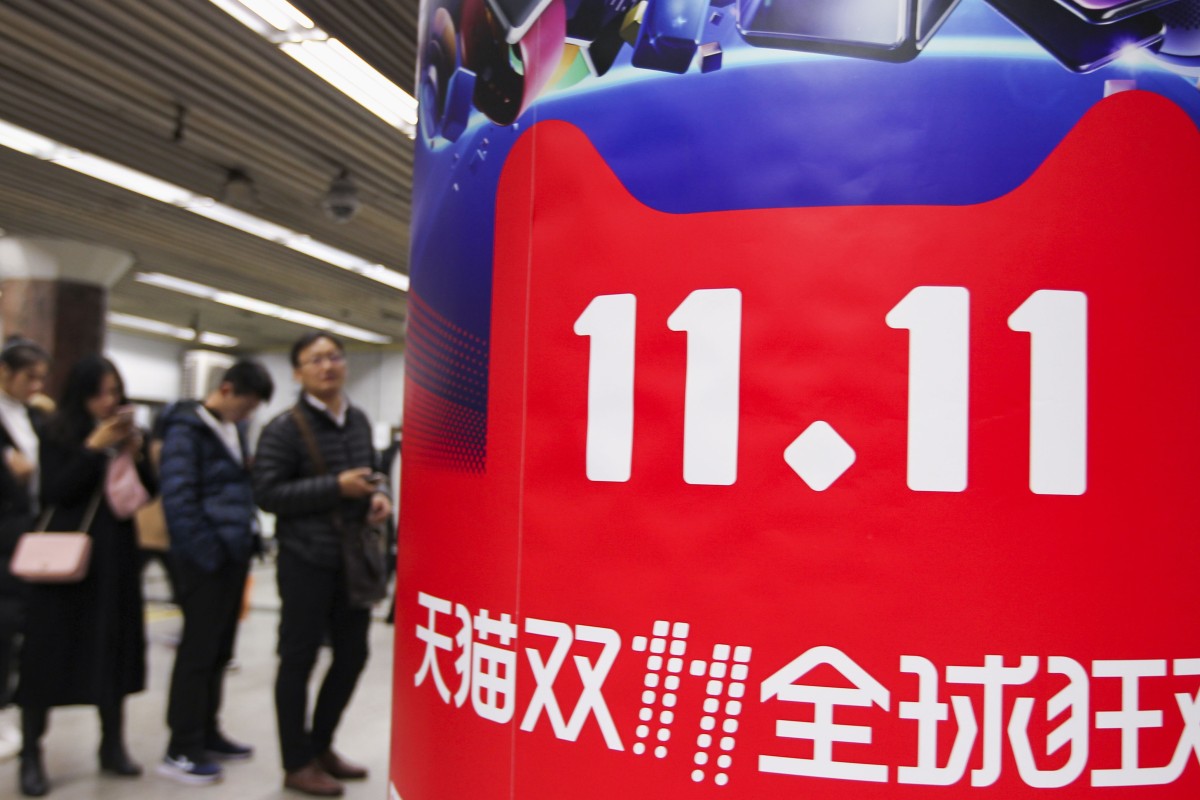
The Singles’ Day is a holiday celebrated in China on November 11 and has become the largest online shopping day in the world. Photo: Simon Song
China’s desire to launch the world’s first government-backed digital currency could see the possible rival to Facebook’s Libra be launched in time for November’s Singles’ Day online shopping festival despite a Chinese media report playing down the timing as “inaccurate speculation”.
Several central bank officials have publicly spoken out over the past several weeks about the need for China to launch its own digital currency since Facebook unveiled its plans for Libra, and the People’s Bank of China (PBOC) appear to be making rapid progress ahead of an expected launch.
Forbes magazine reported this week, citing a source who previously worked for the Chinese government, that China’s central bank could launch the digital currency as soon as November 11 as its bids to address financial risks and to counter the current dominance of the US dollar.
The PBOC did not respond to a faxed request for comment on the Forbes story, although Sina.com said that the report was “inaccurate speculation” citing an unnamed source close to the central bank.
China’s central bank is expected to distribute its digital currency through the big four state-owned banks – the Industrial and Commercial Bank of China, China Construction Bank, the Agricultural Bank of China, and the Bank of China – and mobile payments systems Alipay and WeChat Pay, as well as UnionPay, the state-supported credit card provider, according to the Forbes report. Alibaba is the owner of the South China Morning Post.
Ma Changchun, deputy chief of the Payment and Settlement Division of the PBOC, said at the start of August that a digital currency prototype existed and that the central banks’ Digital Money Research Group had already fully adopted blockchain architecture to ensure its use in retail transactions.
“The People’s Bank digital currency can now be said to be ready,” said Ma on August 11.
The People’s Bank digital currency can now be said to be ready Ma Changchun
Former central bank governor Zhou Xiaochuan said last month that, in addition to central banks, “commercial entities” should be allowed to issue banknotes backed by their own private currency assets, although he did not elaborate on what kind of “commercial entities” might be appropriate to issue a digital currency in China.
China is also ready to make Shenzhen a pilot zone for digital currency as part of plans for the city to become a socialist model city, according to a statement summarising a meeting between the Shenzhen party secretary Wang Weizhong and central bank governor Yi Gang released on Thursday.
The PBOC implemented a blanket crackdown in China on trading of cryptocurrency, including bitcoin, which are not backed by any government, viewing them as risks to China’s financial stability and security. At the same time, in 2014 the central bank created its own academy to study digital currencies and the related blockchain technology.
Neil Woodfine, director of marketing at blockchain start-up Blockstream, said a digital currency created by the PBOC would be “just like cash” and “would be fully controlled by the central bank.”
“If it’s digital instead of physical, they can close accounts and monitor all activities [in the entire financial system]. Commercial bank deposits are difficult for them to monitor, control or pull information out of for verification because the numbers are in each bank’s data centre,” Woodfine said.
Wang Xin, director of the central bank’s research bureau, said last month that
to create its own digital currency have pushed Beijing to speed up its own digital currency plan as Libra could potentially pose a challenge to Chinese cross-border payments, monetary policy and even financial sovereignty.
Leonhard Weese, the president of the Bitcoin Association of Hong Kong, said that a government-backed digital currency may enhance the PBOC’s control of China’s monetary system, cutting reliance on commercial banks to transmit changes in monetary policy.
“It would be similar to just killing the commercial banks,” Weese said.
which would be a non-sovereign digital currency controlled by a Swiss-based company, has come under intense scrutiny by regulators and central banks worldwide. Last month, the Group of Seven industrialised nations, known as the G7, called for urgent regulatory measures and other types of action to address serious concerns over Libra.
Central banks, however, have expressed interest in launching their own digital currencies to counter the US dollar and to gain more control of their own monetary systems.
Mark Carney, governor of the Bank of England, argued last week that the US dollar, the current dominant reserve currency, could be replaced by a global digital alternative to tackle ultra-low interest rates.
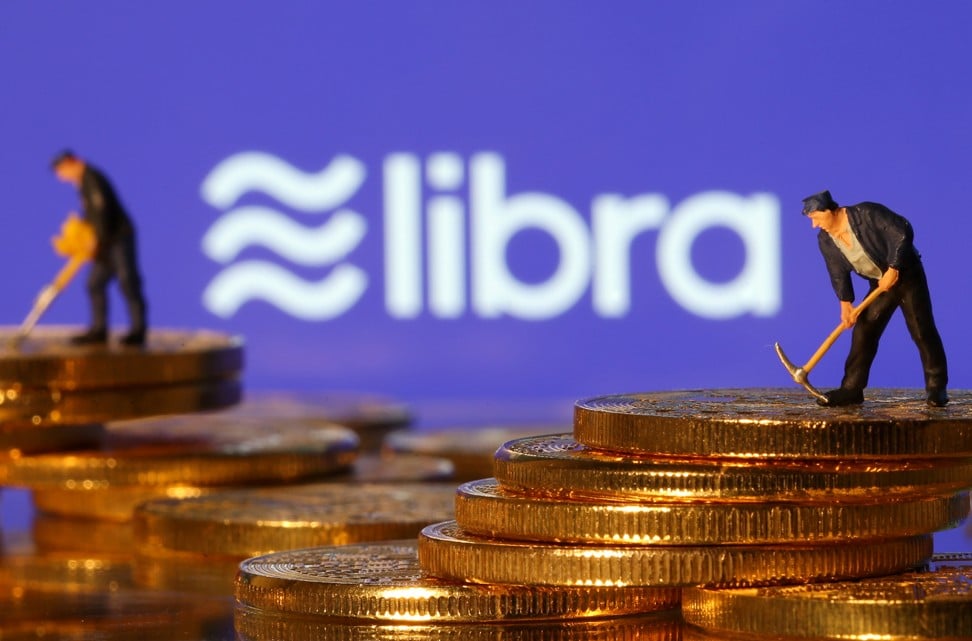
Facebook’s Libra, which is expected to be launched next year, will be pegged to a basket of convertible currencies – so it could serve as a stable online currency – while its payments will be endorsed by Visa and Mastercard. Photo: Reuters
A digital currency “could dampen the domineering influence of the US dollar on global trade”, Carney said last week at the US Federal Reserve’s annual conference, adding that a digital currency has the edge to counter shocks emanating from the US through trade and exchange rates.
Daniel Wang, chief executive and co-founder of blockchain start-up Loopring, said that a Chinese government-backed digital currency may provide a new way for the yuan to compete globally.
“If the central bank wants to increase the global competitiveness of the yuan through its digital currency, only an open and standard-based competitor carries any hope,” said Wang.
A digital yuan would “remain a sovereign currency under a centralised sovereign,” continuing to require the trust from users in the Chinese central bank and government institutions behind it, Wang added.
Alfred Schipke, senior resident representative for China at the International Monetary Fund (IMF), said that the bank is “open” to digital currencies, including the one being developed by China’s central bank.
The IMF in principle is looking at these things favourably. It’s a two-way process where we learn from China, which is often at the forefront of development. Alfred Schipke
“We don’t have a specific view on a particular currency, we haven’t looked at the details of the latest proposals from China,” Schipke said on Thursday. “The IMF in principle is looking at these things favourably. It’s a two-way process where we learn from China, which is often at the forefront of development.”
Blockstream’s Woodfine said that Beijing’s move also reflects a growing concerns among central banks that a financial disaster is on the horizon.
The 30-year US Treasury bond yield fell to an all-time low 1.976 per cent on Thursday, while yields around the world also plunged to multi-year or record low, triggering rising fears over a global recession.
Central banks around have also been driving down interest rates, with the PBOC recently unveiling a key interest rate reform that effectively cuts borrowing costs for companies to boost its slowing economy.
“We’ll see a move by governments and central banks to take back control over the financial system and use that power to direct their economies, continuing to pump money into the system to keep it afloat,” Woodfine added.
“A digital currency would be the perfect channel for helicopter money,” he said in reference to the idea that a central bank could stimulate the economy by giving out large quantities of money to the public, as if dumped from the sky. “They can send out free money to consumers.”
South Korean violinist and North Korean singer hold rare joint performance they hope will help bring the divided Koreas closer together
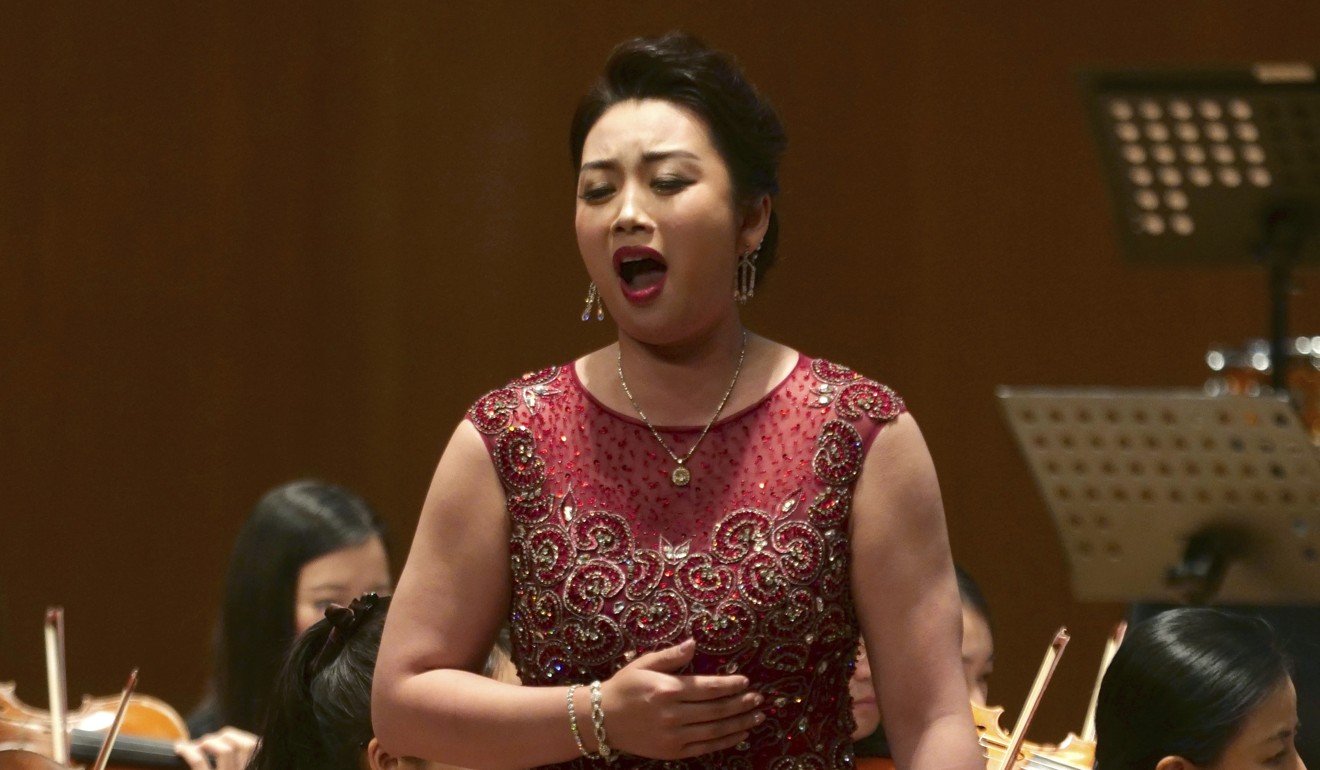
South Korean violinist Won Hyung Joon performs at the Shanghai Oriental Arts Centre in Shanghai on Sunday. Photo: AP
A South Korean violinist and a North Korean singer on Sunday held a rare joint performance they hope will help bring the divided Koreas closer together via music – especially at a time of emerging tensions amid deadlocked nuclear diplomacy.
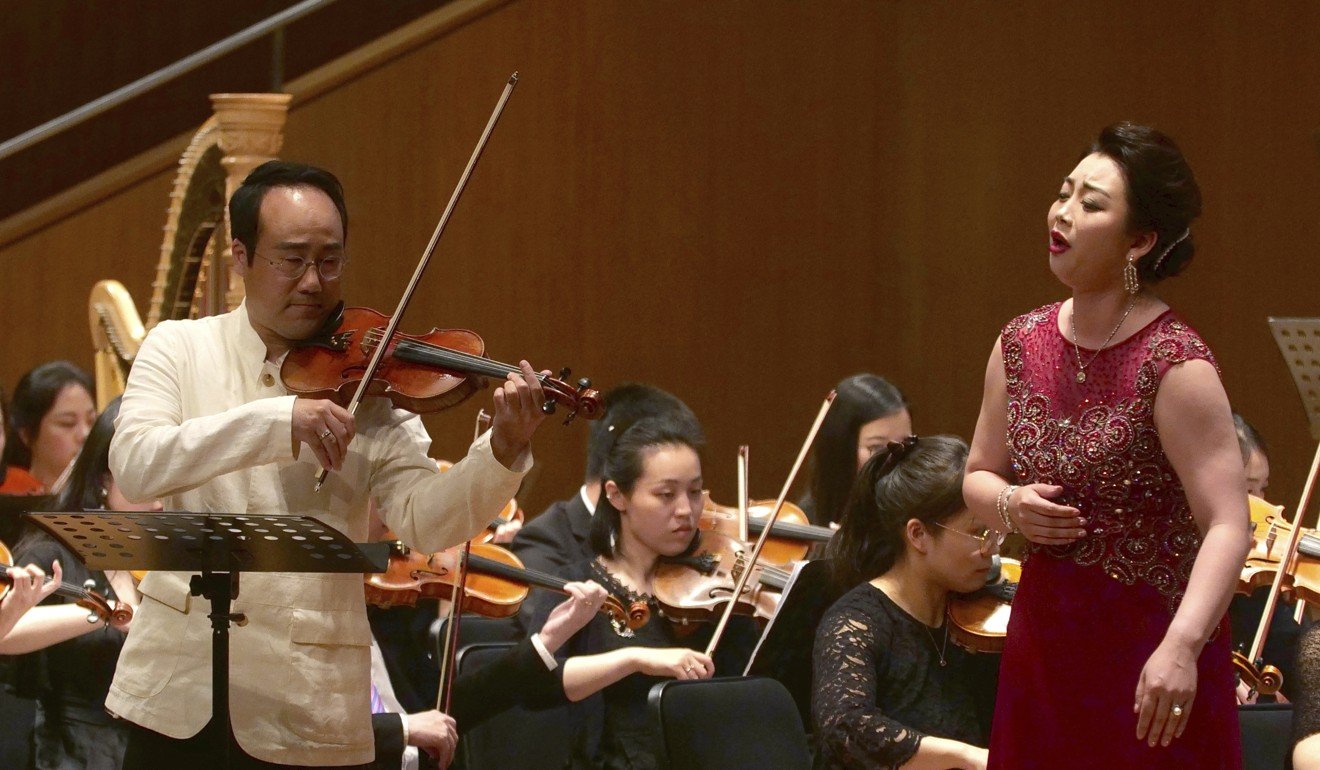
Violinist Won Hyung Joon and his North Korean soprano partner Kim Song Mi performed together at a Shanghai concert hall with a Chinese orchestra. Their concert came three days after North Korea fired two suspected short-range missiles in the second such weapons test in five days.
For both, it was their first concert with a musician from the other side of the Korean border, the world’s most heavily fortified. They met several times last year in Beijing and agreed on a joint performance to help promote peace on the Korean peninsula.
As a duet, Kim sang Antonin Dvorak’s Songs My Mother Taught Me while Won played the violin. Kim later sang Arirang, a Korean traditional folk tune beloved in both countries, while the Shanghai City Symphony Orchestra played the music.
North Korean soprano singer Kim Song Mi performs on Sunday. Photo: AP
“When I met her [Kim] for the first time, I felt like I was reuniting with an old friend who’s been on the same wavelength with me,” Won said before Sunday’s concert. “This performance shouldn’t be the end … and what’s important now is what other dreams we can have together.”
In a written interview, Kim said she “heartily wishes” that her songs would help bring back reconciliation mood.
North Korea’s missile testing is not a ‘breach of trust’, says Donald Trump
“I’m nervous and anxious about what inspiration the audience would have and what reaction North and South Korean compatriots would show to our joint performance,” she said.
North and South Korean musicians performing together is extremely rare as their governments do not even allow their citizens to exchange phone calls, letter and emails without special approvals. Last year saw an unusual wave of cross-border exchanges after North Korean leader Kim Jong-un abruptly entered talks on the fate of his advancing nuclear arsenal. A group of North Korean dancers and singers performed in South Korea during the Pyeongchang Winter Olympics, before South Korean K-pop stars flew to Pyongyang and sang in the presence of Kim and his young wife Ri Sol Ju. Both events were the first of their kind in more than 10 years.
Moon Jae-in begins third year in power
But such exchange programmes are now becoming a rarity again as North Korea is resuming provocative weapons tests in an apparent protest against the lack of progress in nuclear negotiations with the United States. Kim returned home empty-handed from his second summit with US President Donald Trump in Vietnam in February after Trump rebuffed his calls for major sanctions relief in return for his promise to conduct partial disarmament measures. No publicly known high-level meetings between Pyongyang and Washington have since been reported.
Won and Kim performed with a Chinese orchestra. Photo: AP
Sunday’s concert will not likely work as a breakthrough in the stalled nuclear diplomacy but it could still “establish an environment” that could make it easier to improve ties between the Koreas, said analyst Cho Han Bum at Seoul’s Korea Institute for National Unification.
Inspired by the West-Eastern Divan Orchestra founded in 1999 to bring together Arab and Israeli musicians together to promote mutual understanding, Won, 42, has been pushing for the establishment of an inter-Korean orchestra for nearly a decade. He’s contacted both governments on numerous occasions, and sometimes partnered with renowned foreign maestros such as Charles Dutoit and Christoph Poppen.
But his push for a Korean orchestra performance has never been realised and was often scrapped at the last minute due to the delicate nature of ties between the Koreas, which are still technically at war because an armistice that ended the 1950-53 has yet to be replaced with a peace treaty. Incidents that helped spike his past plans included the 2015 mine blasts that maimed two South Korean soldiers, and the 2011 tensions touched off by annual South Korean-US military drills that North Korean sees as an invasion rehearsal.
North Korean weapons test was ‘long-range strike’ drill, state media says
Sunday’s performance appeared less difficult to achieve as it involves just one person from each Korea, not dozens of musicians required for an orchestra, and it was happening in China, a third country and North Korea’s major ally but also South Korea’s biggest trading partner.
Jointly performing with the two Koreans is the Shanghai City Symphony Orchestra, the first and biggest amateur symphony orchestra in China. The orchestra earlier invited Won and Kim to its annual charity concert, Love In The City, Pyongyang Shanghai Seoul, before it and Won’s Lindenbaum Festival Orchestra decided to co-organise the event, according to Won.
In a response to questions last week, South Korea’s Unification Ministry said that it approved Won’s contact with Kim as part of efforts to promote diverse kinds of civilian exchanges between the rivals. The South Korean government is led by President Moon Jae-in, a liberal who espouses greater rapprochement with North Korea and has shuttled between Pyongyang and Washington ahead of two summits between Kim and Trump.
Facebook sues South Korean analytics company Rankwave
Kim, 33, a graduate of Pyongyang’s prestigious Kim Won Gyun University of Music, is the North Korean representative in China of the Korean Association for Art Exchange. She is been living in China since 2010. Known for her classical crossover singing technique, she has also released several music albums with North Korean and well-known pieces of classical music. South Korea media reported she is the first North Korean sent abroad as a singer.
Won said when he first met Kim last spring, he felt it was easier for him to communicate with her and explain his dream than when he dealt with North Korean diplomats.
“When I talked about music with [North Korean] diplomats, I had to explain why we need music and why music is good … But I didn’t need to do that when I met Kim, and we could just get to the point,” Won said.
Kim said Won’s works had led her think again about her “love” of the Korean people and that she was willing to contribute to any efforts to promote inter-Korean cooperation.
Won said he would work together with Kim Song Mi to realise similar joint performances on bigger world stages. But he also understood how difficult it had been for him to have a concert like Sunday’s.
“If we can do music together, that means we can understand each other,” Won said. “People are talking about unification, an inter-Korean railway, a peace treaty and the end of war declaration. But can we really do those while failing to do an easy thing like doing music together?”
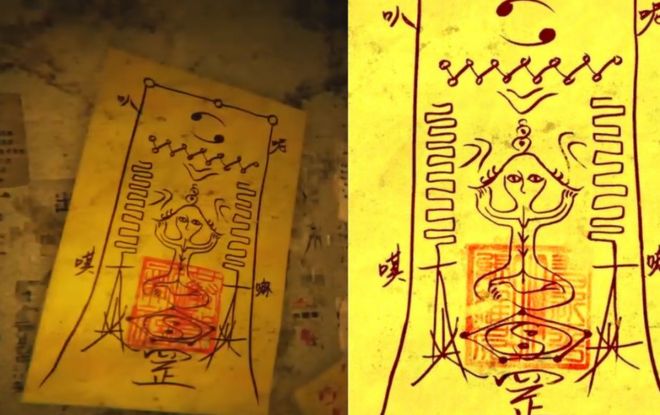
Image copyrightRED CANDLE GAMES/DEVOTIONImage captionWhen players interact with the poster (L), the poster (R) appears – with the words “Winnie the Pooh” and “Xi Jinping”
A Taiwanese games company has had its latest release pulled from mainland China, after players noticed subtle references mocking Chinese President Xi Jinping, including comparing him to Winnie the Pooh.
Red Candle Games released Devotion, a first-person horror game set in 1980s Taiwan, on games platform Steam on 19 February.
The game quickly went viral after players spotted so-called “easter eggs” and publicised them. However online discussion has since been censored.
An “easter egg” is a hidden message or joke in a computer game, normally only picked up by some players paying close attention.
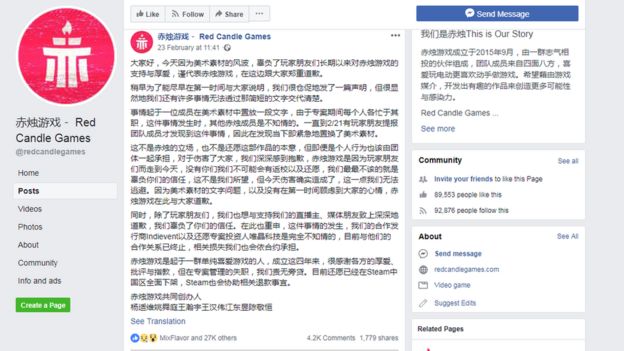
Red Candle Games has apologised, saying it will refund offended users.
Taiwan is an island that is for all practical purposes independent, but China sees it as a rebel region and insists that other countries should not have diplomatic relations with it.
Taiwan’s current president has sparred with Beijing over the island’s political future. In January, Xi Jinping said Taiwan “must and will be” reunited with China.
Hidden messages
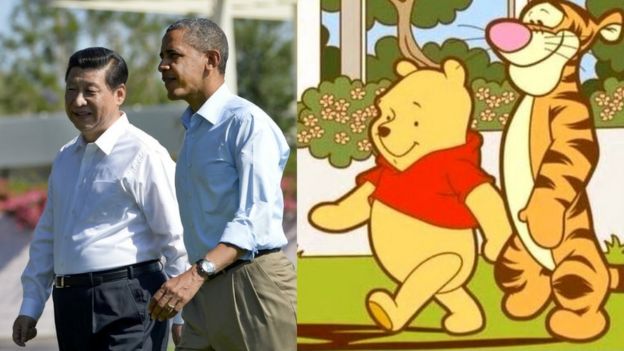
One of the easter eggs in Devotion is a poster containing the words “Xi Jinping” next to “Winnie the Pooh”, in an ancient style of writing. Winnie the Pooh has been censored on Chinese search engines and social media since 2017, after bloggers began comparing Mr Xi to the children’s story book and film character.
Gamers have also spotted an old newspaper in Devotion that refers to an individual who has received a prison sentence, nicknamed “baozi” or “steamed bun”.
Image copyrightAFP/WEIBOImage captionThis meme showing Xi Jinping and former US President Barack Obama began circulating in 2013
“Steamed bun” is another sensitive term in China, as social media users have used it to refer to the president and evade government censors.
It said that it was aware some players may have been offended by the images, and said that it was in touch with Steam to ensure that such players could obtain a full refund.
“We sincerely hope that this ends with Red Candle, and please do not take it out on all of our innocent partners.”
Taiwanese Vice Premier Chen Chi-mai has praised the game, saying: “Only in countries with democracy and freedom can creation be free from restrictions.”
Image copyrightFACEBOOKImage captionRed Candle Games apologised and confirmed the game had been removed from Steam China
Chinese online censors, meanwhile, are trying to scrub references to the game and its hidden messages.
Searches for both “Red Candle Games” and “Devotion” in Chinese on Weibo are showing no results.
But on Monday, a search of the hashtag #Devotion showed only four posts, none of which refer to the game.
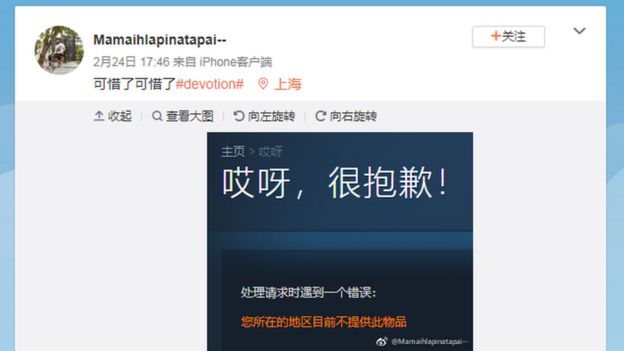
Posts that mention the game’s title in English, which the censors are often lax in censoring, show that China-based users are receiving messages on Steam saying that the game is “no longer available” to play in their country.
Meanwhile Red Candle’s account on China’s Twitter-like Sina Weibo service has been suspended, preventing the company from publicising its game in the mainland.
Image copyrightSINA WEIBOImage captionWeibo users shared posts saying they were no longer able to play the game
In Taiwan, where social media is not government-controlled, thousands of social media users are joking about the easter eggs.
Some on Facebook are posting pictures and gifs of Winnie the Pooh, and others are showing printouts of the offending poster.
Gaming in China
The episode has raised questions as to whether Steam will be the latest overseas online platform to be blocked in mainland China.
Technically, Steam has not gained official approval to operate in the country, but it remains accessible. Some 30m people are estimated to use it in China.
The platform allows China-based users to download and play games that have not received official authorisation.
Over the last decade, the government has banned games if their content is considered to be violent, or anti-Beijing. However many recent releases have never made it to China anyway because of a years-long backlog of games that regulators are yet to examine.
The top media regulator has also just announced that it will not be granting any new licences to gaming companies until the backlog is cleared.
The result is that wildly popular games such as PlayerUnknown’s Battlegrounds and Fortnite, both of which were released in 2017, remain neither banned, nor authorised in the country.
MUMBAI (Reuters) – With India and Pakistan standing on the brink of war this week, several false videos, pictures and messages circulated widely on social media, sparking anger and heightening tension in both countries.
The video of an injured pilot from a recent Indian air show and images from a 2005 earthquake have been taken out of context to attempt to mislead tens of millions on platforms like Twitter, Facebook and its messenger service, WhatsApp.
The spurt of fake news comes after New Delhi this week launched an air strike inside Pakistan, the first such move in over more than decades. India says the attack destroyed a militant camp run by the group that claimed responsibility for killing 40 paramilitary troops in Indian Kashmir on Feb 14. Pakistan denied there had been any casualties in the attack.
Tensions between the nuclear-armed nations peaked with both sides claiming they’d shot down each other’s fighter jets on Wednesday, and Pakistan capturing an Indian pilot.
As claims and counter claims poured in from both sides, social media became a hotbed of unverified news, pictures and video clips, according to fact checkers.
Partik Sinha, co-founder of one such fact-checking website, Alt News, said it had received requests to verify news from journalists and people on social media.
“It’s been crazy since Tuesday. There is so much out there that we know is fake, but we’re not able to fact-check all of it,” Sinha said.
A Facebook group that says it supports Amit Shah, the chief of India’s ruling Bharatiya Janata Party (BJP), posted images on Tuesday of the alleged destruction caused inside Pakistan by the Indian air strike.
Three photos posted on the group page showed debris from a destroyed building and bodies and have been shared hundreds of times.
Alt News said the pictures were from a 2005 earthquake in Kashmir.
India, where roughly 450 million people have smartphones, is already struggling with a huge fake news problem with misinformation having led to mass beatings and mob lynchings.
Facebook, WhatsApp and Twitter have begun to take steps to combat the issue, but as India heads toward general elections, due by May, fake news is getting more intensely politicized.
Another message circulated on a WhatsApp group supporting the BJP claimed the Indian jet was not shot down, but crashed due to a technical snag and blamed the opposition Congress party for failing to upgrade the jets during its tenure.
Similarly in Pakistan, a purported video of a second captured Indian pilot was being widely circulated. Fact-checking website Boom noted the clip was from an air show in the southern Indian city of Bengaluru, where two planes crashed on Feb. 19.
“Everyone has a role to play in ensuring misinformation doesn’t spread on the internet and we encourage people who use Twitter not to share information unless they can verify that it’s true,” a spokeswoman for Twitter said.








 CHINDIA ALERT: You'll be living in their world, very soon