Chindia Alert: You’ll be Living in their World Very Soon
aims to alert you to the threats and opportunities that China and India present. China and India require serious attention; case of ‘hidden dragon and crouching tiger’.
Without this attention, governments, businesses and, indeed, individuals may find themselves at a great disadvantage sooner rather than later.
The POSTs (front webpages) are mainly 'cuttings' from reliable sources, updated continuously.
The PAGEs (see Tabs, above) attempt to make the information more meaningful by putting some structure to the information we have researched and assembled since 2006.
Image copyright GETTY IMAGESImage caption India has an estimated 48,000 ventilators and most of them are already in use
In an 8,000 sq ft (743 sq m) facility in the western Indian city of Pune, a bunch of young engineers are racing against time to develop a low-cost ventilator that could save thousands of lives if the coronavirus pandemic overwhelms the country’s hospitals.
These engineers – from some of India’s top engineering schools – belong to a barely two-year-old start-up which makes water-less robots that clean solar plants.
Last year, Nocca Robotics had a modest turnover of 2.7 million rupees ($36,000; £29,000). The average age of the mechanical, electronic and aerospace engineers who work for the firm is 26.
India, by most estimates, only has 48,000 ventilators. Nobody quite knows how many of these breathing assistance machines are working. But it is a fair assumption that all those available are being used in intensive care units on existing patients with other diseases.
About one in six people with Covid-19 gets seriously ill, which can include breathing difficulties. The country faces seeing its hospitals hobbled as others around the world have been, with doctors forced to choose who they try to save.
At least two Indian companies make ventilators at present, mostly from imported components. They cost around 150,000 ($1,987; £1,612) rupees each. One of them, AgVa Healthcare, plans to make 20,000 in a month’s time. India has also ordered 10,000 from China, but that will meet just a fraction of the potential demand.
The invasive ventilator being developed by the engineers at Nocca Robotics will cost 50,000 rupees ($662). Within five days of beginning work, a group of seven engineers at the start-up have three prototypes of a portable machine ready.
They are being tested on artificial lungs, a prosthetic device that provides oxygen and removes carbon dioxide from the blood. By 7 April, they plan to be ready with machines that can be tested on patients after approvals.
Image copyright GETTY IMAGESImage caption India is beefing up isolation beds in hospitals
“It is most certainly doable,” said Dr Deepak Padmanabhan, a cardiologist at Bangalore’s Jayadeva Institute of Cardiovascular Sciences and Research, and a key advisor on this project. “The simulations on artificial lungs have been done and seem to work well.”
Inspiring story
The race to develop this inexpensive, home-grown invasive breathing machine is an inspiring story of swift coordination and speedy action involving public and private institutions, something not common in India.
“The pandemic has brought us all together in ways I could never imagine,” says Amitabha Bandyopadhyay, a professor of biological sciences and bioengineering at Indian Institute of Technology (IIT), Kanpur, and a key mover of the project.
The young engineers mined open source medical supplies groups on the internet to find information on how to make the ventilators. After securing permissions, it took them exactly eight hours to produce the first prototype. Of particular use, say doctors, were some designs by engineers at MIT. With imports stalled, the engineers picked up pressure sensors – a key component of the machine that helps supply oxygen to lungs at a pressure that doesn’t cause injury – from those used in drones and available in the market.
Image copyright AFPImage caption India needs thousands of ventilators to cope with a possible rush of patients
Local authorities helped open firms that stock components – each machine needs 150 to 200 parts – and made sure that a bunch of engineers who had returned home to Nanded after the lockdown were still able to travel 400km (248 miles) back to Pune to work on the machine.
Some leading Indian industrialists, including a major medical device-making company, have offered their factories to manufacture the machines. The plan is to make 30,000 ventilators, at around 150-200 a day, by the middle of May.
Social media influencers joined the effort. Rahul Raj, a lithium battery-maker and an IIT alumnus, crowd-sourced a group called Caring Indians to “pool resources and experience” to cope with the pandemic. Within 24 hours, 1,000 people had signed up. “We tweeted to the local lawmaker and local police in Pune to help the developers, and made contacts with people who would be interested in the project,” Mr Raj said.
‘No-frills machine’
Expat Indian doctors and entrepreneurs who went to the same school – IIT is India’s leading engineering school and alumni include Google chief Sundar Pichai – held Zoom meetings with the young developers, advising them and asking questions about the machine’s development. The head of a US-based company gave them a 90-minute lecture on how to manage production. A former chief of an info-tech company told them how to source the components.
Lastly, a bunch of doctors vetted every development and asked hard questions. In the end, more than a dozen top professionals – pulmonologists, cardiologists, scientists, innovators, venture capitalists – have guided the young team.
Doctors say the goal is to develop a “no-frills” breathing machine tailored to Indian conditions.
Ventilators depend on pressurised oxygen supply from hospital plants. But in a country where piped oxygen is not available in many small towns and villages, developers are seeing whether they can also make the machine run on oxygen cylinders. “In a way we are trying to de-modernise the machine to what it was barely 20 years ago,” says Dr Padmanabhan.
“We are not experienced. But we are very good at making products easily. The robots that we make are much more complex to make. But this is a life-saving machine and carries risk, so we have to be very, very careful that we develop a perfect product which clears all approvals,” said Nikhil Kurele, the 26-year-old co-founder and chief executive officer of Nocca Robotics.
In just a week’s time, India will learn whether they pulled off the feat.
WUHAN, China (Reuters) – China reported a drop in new coronavirus infections for a fourth day as drastic curbs on international travellers reined in the number of imported cases, while policymakers turned their efforts to healing the world’s second-largest economy.
The city of Wuhan, at the centre of the outbreak, reported no new cases for a sixth day, as businesses reopened and residents set about reclaiming a more normal life after a lockdown for almost two months.
Smartly turned out staff waited in masks and gloves to greet customers at entrances to the newly-reopened Wuhan International Plaza, home to boutiques of luxury brands such as Cartier and Louis Vuitton.
“The Wuhan International Plaza is very representative (of the city),” said Zhang Yu, 29. “So its reopening really makes me feel this city is coming back to life.”
Sunday’s figure of 31 new cases, including one locally transmitted infection, was down from 45 the previous day, the National Health Commission said.
As infections fall, policymakers are scrambling to revitalise an economy nearly paralysed by months-long curbs to control the spread of the flu-like disease.
On Monday, the central bank unexpectedly cut the interest rate on reverse repurchase agreements by 20 basis points, the largest in nearly five years.
The government is pushing businesses and factories to reopen, as it rolls out fiscal and monetary stimulus to spur recovery from what is feared to be an outright economic contraction in the quarter to March.
China’s exports and imports could worsen as the pandemic spreads, depressing demand both at home and abroad, Xin Guobin, the vice minister of industry and information technology, said on Monday.
The country has extended loans of 200 billion yuan (22.75 billion pounds) to 5,000 businesses, from 300 billion allocated to help companies as they resume work, Xin said.
Authorities in Ningbo said they would encourage national banks to offer preferential credit of up to 100 billion yuan to the eastern port city’s larger export firms. The city government will subsidize such loans, it said in a notice.
VIRUS CONCERNS
While new infections have fallen sharply from February’s peak, authorities worry about a second wave triggered by returning Chinese, many of them students.
China cut international flights massively from Sunday for an indefinite period, after it began denying entry to almost all foreigners a day earlier.
Average daily arrivals at airports this week are expected to be about 4,000, down from 25,000 last week, an official of the Civil Aviation Administration of China told a news conference in Beijing on Monday.
The return to work has also prompted concern about potential domestic infections, especially over carriers who exhibit no, or very mild, symptoms of the highly contagious virus.
Northwestern Gansu province reported a new case of a traveller from the central province of Hubei, who drove back with a virus-free health code, national health authorities said.
Hubei authorities say 4.6 million people in the province returned to work by Saturday, with 2.8 million of them heading for other parts of China.
Most of the departing migrant workers went to the southern provinces of Guangdong and Fujian, the eastern provinces of Zhejiang and Jiangsu, and northeast China.
In Hubei’s capital of Wuhan, more retail complexes and shopping streets reopened.
Electric carmaker Tesla Inc has also reopened a showroom in Wuhan, a company executive said on Weibo.
Shoppers queued 1-1/2 metres (5 ft) apart for temperature checks at Wuhan International Plaza, while flashing “green” mobile telephone codes attesting to a clean bill of health.
To be cleared to resume work, Wuhan residents have been asked to take nucleic acid tests twice.
“Being able to be healthy and leave the house, and meet other colleagues who are also healthy is a very happy thing,” said Wang Xueman, a cosmetics sales representative.
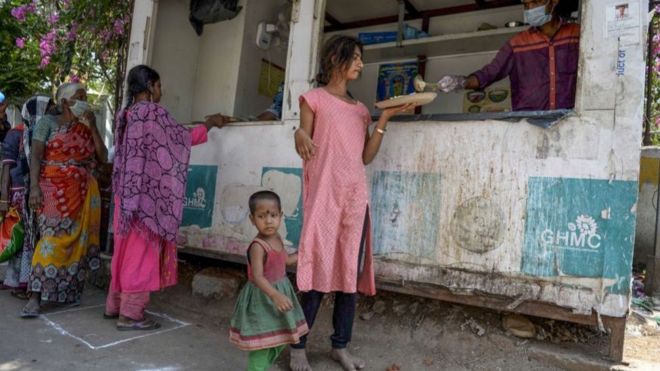
Image copyright GETTY IMAGESImage caption Many Indians face losing their income and some say they could starve
India has announced a $22bn (£19bn) bailout for the country’s poor to help counter the economic effects of the Covid-19 outbreak.
“We don’t want anyone to remain hungry, and we don’t want anyone to remain without money in their hands,” finance minister Nirmala Sitharaman said.
The package, which includes free food and cash transfers, was for “those who need immediate help”, she said.
She also said health workers would get medical insurance of up to $66,500.
Correspondents point out that this amounts to just 1% of India’s GDP – in stark contrast to the US and Singapore which are spending about 10% of their GDP on similar packages.
However, this could be just stage one, with similar packages set to be announced later, they added.
India’s economy was already in the midst of a severe slowdown before the country went into lockdown, shutting workplaces, factories and affecting millions of daily-wage and informal workers.
They form India’s vast informal sector, which constitutes a large part of its workforce. The lockdown and social distancing have left many of them with no viable means of getting any income, and many have expressed fears that they could starve.
Growth had slumped to 4.7% last month – the slowest pace in years – as a steep drop in manufacturing affected overall economic health.
Barclays said the total shutdown cost to India would be around $120bn, or 4% of the country’s GDP.
Ms Sitharaman, who is also the head of an economic task force announced by the prime minister, said that workers under an employment guarantee scheme would get a wage increment, and that recipients of other welfare schemes would also get benefits, like free gas cylinders instead of just subsidised ones.
BEIJING (Reuters) – China on Sunday reported 46 new cases of coronavirus, the fourth straight day with an increase, with all but one of those imported from overseas, and further stepped up measures to intercept cases from abroad as the outbreak worsens globally.
While China says it has drastically reduced the number of domestically transmitted cases – the one reported on Sunday was the first in four days – it is seeing a steady rise in imported cases, mostly from Chinese people returning from overseas.
In a sign of how seriously China is taking the threat of imported cases, all international flights due to arrive in Beijing starting Monday will first land at another airport, where passengers will undergo virus screening, government agencies said on Sunday, in an expansion of existing measures.
International flights that were scheduled to arrive in the capital will land instead at one of 12 airports. Passengers who clear screening will then be permitted to reboard the plane, which will then fly to Beijing, the regulator said.
Separately, Shanghai and Guangzhou both announced that all arriving international passengers will undergo an RNA test to screen for coronavirus, expanding a program that previously only applied to those coming from heavily-hit countries.
RELATED COVERAGE
Emirates airline adds Beijing and Seattle to flight suspensions
Among the new cases from abroad reported on Sunday, a record 14 were in the financial hub of Shanghai and 13 were in Beijing, a decline from 21 the previous day.
The new locally transmitted case was in the southern metropolis of Guangzhou and was also the first known case where the infection of a local person was linked to the arrival of someone from overseas, according to Guangdong province.
Hu Xijin, the editor-in-chief of the Global Times newspaper, called for all cities in China to implement 14-day quarantines for people arriving from abroad.
He also called for quarantine policies to apply to people from Hong Kong and Macau as well, he said on his Weibo account on Sunday.
“I am worried that there are similar cases to the Guangzhou one existing in other parts of the country. There were reports previously that people coming back from abroad returned to their homes in Shanghai without any obstacles,” Hu said.
“It matters to the overall situation of China’s next prevention and control efforts if we can plug the leaks.”
The Global Times is a tabloid published by the Ruling Communist Party’s People’s Daily.
The latest figures from China’s National Health Commission bring total reported coronavirus cases in the country to 81,054, with 3,261 deaths, including six on Saturday. On Saturday, China reported 41 new coronavirus cases for the previous day, all of them imported.
Of all 97 imported cases as of end-Saturday, 92 of them are Chinese nationals and 51 are Chinese students returning from studying abroad, said Gao Xiaojun, spokesman for the Beijing Municipal Health Commission during a press conference on Sunday.
The Beijing health commission announced separately on its website it had two more imported cases on Sunday, bringing the city’s total number of imported cases to 99 as of Sunday noon.
BACK TO A KIND OF NORMAL
China is trying to revive an economy that is widely expected to contract deeply in the current quarter, with life slowly returning to normal in cities such as Beijing and Shanghai, albeit with everyone wearing masks in public.
Still, numerous shops and restaurants remain shut – many have gone out of business – and factories and other workplaces are still not operating at full capacity.
On Sunday, a central bank official called for stepped-up global policy coordination to manage the economic impact of the pandemic. He said China’s recent policy measures were gaining traction, and it has capacity for further action.
Chen Yulu, a deputy governor at the People’s Bank of China (PBOC), also said he expects significant improvement in the Chinese economy in the second quarter.
And while the virus will continue putting upward pressure on near-term consumer prices, there is no basis for long-term inflation or deflation, he told a news briefing.
Globally, roughly 275,000 people have been infected with the virus, and more than 11,000 have died, according to a Reuters tally, with the number of deaths in Italy recently surpassing those in China.
“Now I think the epidemic has been controlled. But this definitely doesn’t mean that it’s over,” said a 25-year-old woman surnamed He who works in the internet sector and was visiting the vast Summer Palace complex in Beijing on Saturday.
“I’m willing to come out today but of course I am still afraid,” she told Reuters.
The central province of Hubei, where the outbreak first emerged late last year in its capital Wuhan, reported its fourth straight day of no new cases.
China has used draconian measures to contain the spread of the virus, including locking down Hubei province.
LONDON/BEIJING (Reuters) – The world’s wealthiest nations poured unprecedented aid into the traumatized global economy on Thursday as coronavirus cases ballooned in the current epicentre Europe even as they waned at the pandemic’s point of origin, China.
With almost 219,000 infections and more than 8,900 deaths so far, the epidemic has stunned the world and drawn comparisons with painful periods such as World War Two, the 2008 financial crisis and the 1918 Spanish flu.
“This is like an Egyptian plague,” said Argentinian hotelier Patricia Duran, who has seen bookings dry up for her two establishments near the famous Iguazu Falls.
“The hotels are empty – tourist activity has died.”
RELATED COVERAGE
Factbox: Latest on the spread of coronavirus around the world
What you need to know about the coronavirus right now
Tourism and airlines have been particularly battered, as the world’s citizens hunker down to minimize contact and curb the spread of the flu-like COVID-19. But few sectors have been spared by a crisis threatening lengthy global recession.
On markets, investors have dumped assets everywhere, many switching to U.S. dollars as a safe haven. Other currencies hit historic lows, with Britain’s pound near its weakest since 1985.
Policymakers in the United States, Europe and Asia have slashed interest rates and opened liquidity taps to try to stabilise economies hit by quarantined consumers, broken supply chains, disrupted transport and paralysed businesses.
The virus, thought to have originated from wildlife on mainland China late last year, has jumped to 172 other nations and territories with more than 20,000 new cases reported in the past 24 hours – a new daily record.
Cases in Germany, Iran and Spain rose to over 12,000 each. An official in Tehran tweeted that the coronavirus was killing one person every 10 minutes.
LONDON LOCKDOWN?
Britain, which had sought to take a gradual approach to containment, was closing dozens of underground stations in London and ordering schools shut from Friday.
Some 20,000 military personnel were on standby to help and Queen Elizabeth was due to leave Buckingham Palace in the capital for her ancient castle at Windsor. Britain has reported 104 deaths and 2,626 cases, but scientific advisers say the real number of infections may be more than 50,000.
Italian soldiers transported corpses overnight from an overwhelmed cemetery in Europe’s worst-hit nation where nearly 3,000 people have died. Germany’s military was also readying to help despite national sensitivities over its deployment dating back to the Nazi era.
Supermarkets in many countries were besieged with shoppers stocking up on food staples and hygiene products. Some rationed sales and fixed special hours for the elderly.
Solidarity projects were springing up in some of the world’s poorest corners. In Kenya’s Kibera slum, for example, volunteers with plastic drums and boxes of soap on motorbikes set up handwashing stations for people without clean water.
Russia reported its first coronavirus death on Thursday.
Amid the gloom, China provided a ray of hope, as it reported zero new local transmissions in a thumbs-up for its draconian containment policies since January. Imported cases, however, surged, accounting for all 34 new infections.
The United States, where President Donald Trump had initially played down the coronavirus threat, saw infections close in on 8,000 and deaths reach at least 151.
Trump has infuriated Beijing’s communist government by rebuking it for not acting faster and drawn accusations of racism by referring to the “Chinese virus”.
“EXTRAORDINARY TIMES”
In a bewildering raft of financial measures around the world, the European Central Bank launched new bond purchases worth 750 billion euros ($817 billion). That brought some relief to bond markets and also halted European shares’ slide, though equities remained shaky elsewhere.
“Extraordinary times require extraordinary action,” ECB President Christine Lagarde said, amid concerns that the strains could tear apart the euro zone as a single currency bloc.
The U.S. Federal Reserve rolled out its third emergency credit programme in two days, aimed at keeping the $3.8 trillion money market mutual fund industry functioning.
China was to unleash trillions of yuan of fiscal stimulus and South Korea pledged 50 trillion won ($39 billion).
The desperate state of industry was writ large in Detroit, where the big three automakers – Ford Motor Co (F.N), General Motors Co (GM.N) and Fiat Chrysler Automobiles NV (FCHA.MI) (FCAU.N) – were shutting U.S. plants, as well as factories in Canada and Mexico.
With some economists fearing prolonged pain akin to the 1930s Great Depression but others anticipating a post-virus bounceback, gloomy data and forecasts abounded.
In one of the most dire calls, J.P. Morgan economists forecast the Chinese economy to drop more than 40% this quarter and the U.S. economy to shrink 14% in the next.
There was a backlash against conspiracy theories and rumours circulating on social media, with Morocco arresting a woman who denied the disease existed.
And in Brazil, where President Jair Bolsonaro initially labelled the virus “a fantasy”, more members of the political elite fell ill. At night, housebound protesters banged pots and pans, shouting “Bolsonaro out!” from their windows.
TOKYO (Reuters) – Toyota Motor Corp (7203.T) on Friday said production at all of its China plants would remain suspended through Feb. 16, joining a growing number of automakers facing stoppages due to supply chain issues as the coronavirus spreads.
The Japanese automaker, which operates 12 vehicle and components factories in China, said it would extend its production stoppage “after considering various factors, including guidelines from local and region governments, parts supply, and logistics.
“For the week of Feb. 10, we will be preparing for the return to normal operation from Feb. 17 and beyond,” it said in a statement.
The decision extends Toyota’s initial plans to suspend operations through Sunday, and comes as the threat from the coronavirus crisis closes in on the global auto industry.
South Korea’s Hyundai Motor (005380.KS) and affiliate Kia Motors (000270.KS) said on Friday that they plan to restart production at their Chinese factories on Feb. 17, from a previously planned Feb.9.
“We will take preventive measures against infection at factories,” a spokeswoman said.
A growing number of car makers, including those who do not make cars in China, are flagging the possibility that their global operations could take a hit if they cannot access parts supplies from the country, where there are transportation bans to stop the virus spreading.
Suzuki Motor Corp said it was looking at the possibility of procuring “made in China” car parts from other regions if it cannot access parts due to ongoing stoppages.
The Japanese automaker does not produce or sell any cars in China, but procures some components there for its plants in India, where it controls around half of the passenger vehicle market via its local unit Maruti Suzuki India Ltd (MRTI.NS).
Fiat Chrysler Automobiles NV (FCHA.MI) on Thursday said one of its European plants could close within two to four weeks if Chinese parts suppliers cannot get back to work soon, while Hyundai Motor Co (005380.KS) earlier this week suspended production at its South Korean plants due to a shortage of China-made parts.
Parts made in China are used in millions of vehicles assembled elsewhere, and China’s Hubei province – the epicentre of the coronavirus outbreak – is a major hub for vehicle parts production and shipments.
To limit the spread of the virus, Chinese authorities have announced an extended holiday period in Hubei and 10 other provinces, which account for more than two-thirds of the country’s vehicle production.
IHS Automotive projects plant closures through Feb. 10 would result in a 7% cut in vehicle production in China for the first quarter.
In a note, its analysts said extended closures into March may result in lost production of over 1.7 million vehicles for the period, a decline of roughly one-third of pre-virus output expectations.
“If the situation lingers into mid-March, and plants in adjacent provinces are also idled, the China-wide supply chain disruption caused by parts shortages from Hubei, a major component hub, could have a wide-reaching impact,” they said.
Other industry experts said suppliers had built up a cushion of parts in inventory and in-transit ahead of the long Lunar New Year holiday in late January. Those will start to run out if factories cannot get back to work next week, or if flights to and from China remain limited.
Toyota said its plants outside China were operating as normal for the moment but it has said it was also considering the possibility of manufacturing parts commonly made in China in other regions.
Tokyo (Reuters) – Japan on Saturday moved to contain the economic impact of a coronavirus outbreak originating in China as strict new measures aimed at limiting the spread of the virus, including targeting foreign visitors, came into effect.
Japan had 17 confirmed cases as of Friday, including some without symptoms. One of the most recent was a bus guide who worked on a bus tour for tourists from China – the same tour as a bus driver who also came down with the virus.
Prime Minister Shinzo Abe told a Saturday meeting of a government task force coordinating Japan’s response to the virus to come up with steps aimed at easing the impact of the outbreak on Japan’s economy.
Abe has made tourism a key part of his economic policy, with a large proportion of foreign visitors from China, and major Japanese companies have a number of factories in China.
“I ask ministers to compile measures to use reserves (in the state budget) and implement them as soon as possible,” Abe was quoted by Kyodo news agency as saying.
“The new coronavirus is having a major impact on tourism, the economy and our society as a whole. The government will do its utmost to address the impact.”
No further details were given, though Abe stressed ensuring that Japanese residents have access to medical checkups and masks, which have been selling out around the nation.
New measures to fight the disease took effect on Saturday, including banning the entry of Chinese holding passports issued by Hubei, where the disease is thought to have originated, as well as all foreigners who had visited the province within two weeks, whether they show symptoms or not.
The government also brought forward implementing measures including compulsory hospitalisation and the use of public funds for treatment by six days to Saturday.
Of the 2.6 million tourists who came to Japan in December 2019, nearly 600,000 were Chinese, outnumbered only by South Koreans, government data shows. Japan aims to have 40 million tourists visit the country in 2020, up from 31.8 million in 2019.
On Friday, the president of Japanese airline ANA Holdings (9202.T) said it was considering suspending flights to China after February reservations plunged, Jiji news agency reported.
JTB Corporation, Japan’s largest travel agency, said it was suspending tours to China throughout February, Kyodo news agency reported.
Li Keqiang tells senior officials to step up efforts to channel water from Yangtze River to arid regions
Impact of pollution and rising population has prompted increased efforts to improve efficiency and supply
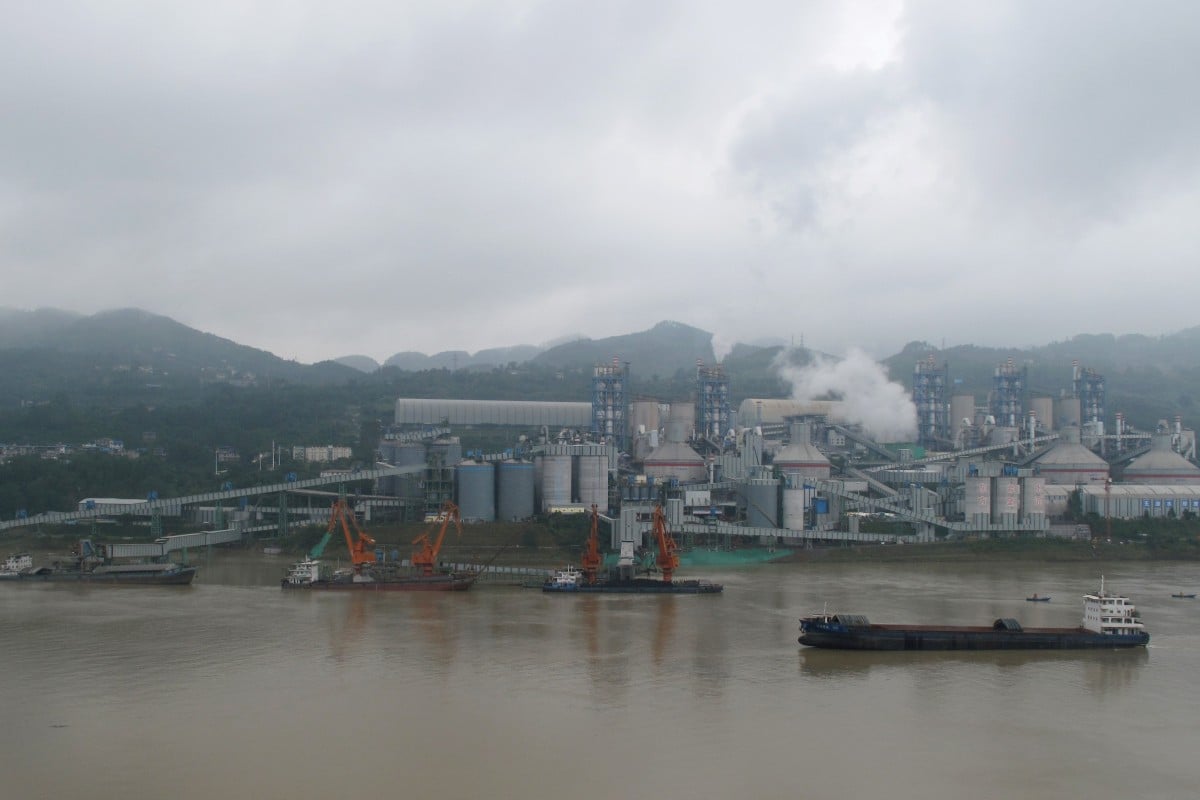
A cement plant on the banks of the Yangtze in Chongqing. The authorities are now trying to stop further development along the river. Photo: Reuters
China needs to divert more water to its arid northern regions and invest more in water infrastructure as shortages get worse because of pollution, overexploitation and rising population levels, Premier Li Keqiang has said.
China’s per capita water supplies are around a quarter of the global average. With demand still rising, the government has sought to make more of scarce supplies by rehabilitating contaminated sources and improving efficiency.
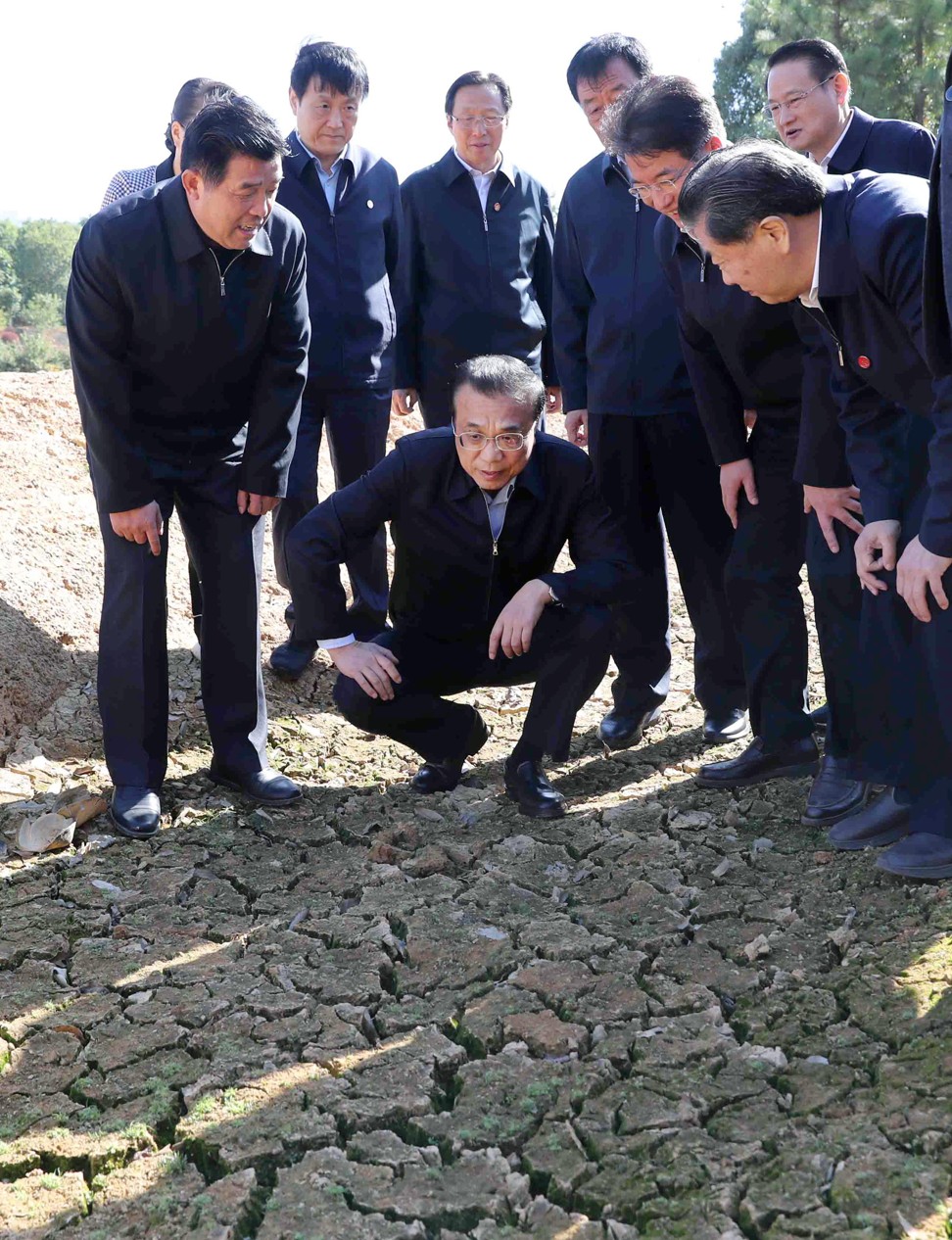
Water remained one of China’s major growth bottlenecks, and persistent droughts this year underlined the need to build new infrastructure, Li told a meeting of senior Communist Party officials on Monday. An account of the meeting was published by China’s official government website.
Local government bonds should be “tilted” in the direction of water infrastructure, he said, and innovative financing tools were also needed.
He also called for research into new pricing policies to encourage conservation.
Li said China’s water supply problems had been improved considerably as a result of the South-North Water Diversion Project, a plan to divert billions of cubic metres of water to the north by building channels connecting the Yangtze and Yellow rivers.
World ‘woefully unprepared’ for climate change’s effects on drinking water supplies drawn from mountains
He said opening up more channels to deliver water to regions north of the Yangtze River Delta would support economic and social development and optimise China’s national development strategy, according to a summary of the meeting on the government website.
China is in the middle of a wide-reaching programme to clean up the Yangtze River, its biggest waterway, and put an end to major development along its banks.
Chinese Premier Li Keqiang inspects an empty reservoir during a visit to Jiangxi province last week. Photo: Xinhua
Local governments have been under pressure to dismantle dams, relocate factories and even ban fishing and farming in ecologically fragile regions.
But experts say the ongoing campaign to divert the course of the Yangtze to other regions is still causing long-term damage to the river’s environmental health.
Many cities that had polluted their own water sources had drawn replacement supplies from the Yangtze, exceeding the river’s environmental capacity, said Ma Jun, founder of the Institute of Public and Environmental Affairs, which monitors water pollution.
Beijing already relied on diversion channels from the Yangtze to supply 70 per cent of its water, but had done little to improve conservation or reduce per capita consumption, which was higher than many Western countries, he said.
“[Diversion] has caused so much suffering and needs so many dams to keep up supply, and that has impacted biodiversity,” he said.
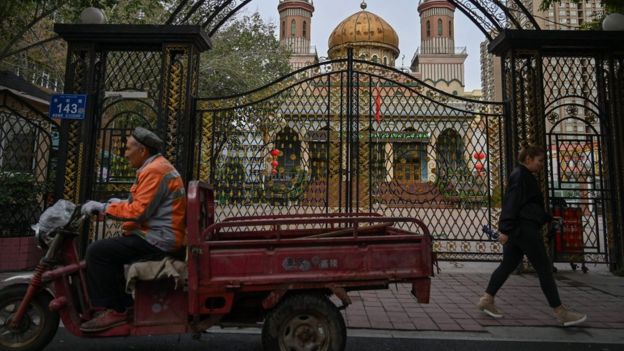
Global retailers are facing scrutiny over cotton supplies sourced from Xinjiang, a Chinese region plagued by allegations of human rights abuses.
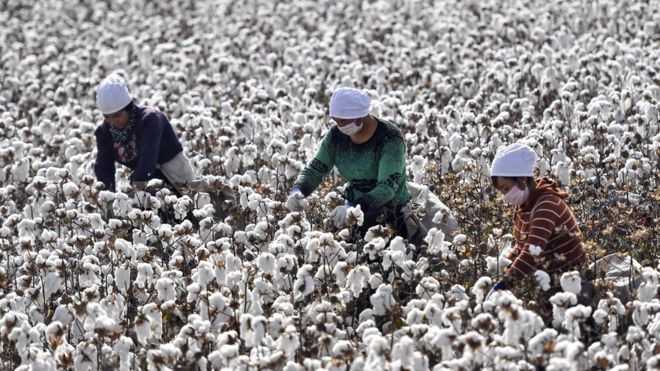
China is one of the world’s top cotton producers and most of its crop is grown in Xinjiang.
Rights groups say Xinjiang’s Uighur minority are being persecuted and recruited for forced labour.
Many brands are thought to indirectly source cotton products from the Xinjiang region in China’s far west.
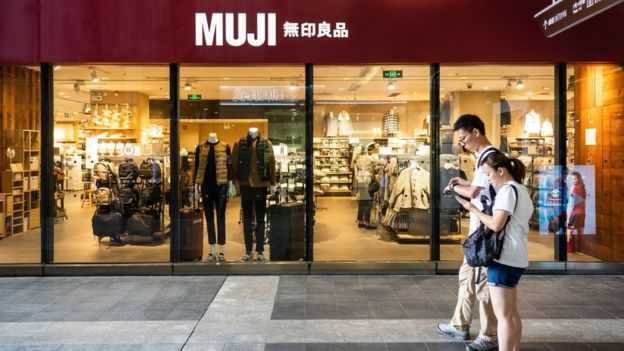
Japanese retailers Muji and Uniqlo attracted attention recently after a report highlighted the brands used the Xinjiang-origin of their cotton as a selling point in advertisements.
“You can’t be sure that you don’t have coerced labour in your supply chain if you do cotton business in China,” said Nathan Ruser, researcher at the Australian Strategic Policy Institute.
“Xinjiang labour and what is almost certainly coerced labour is very deeply entrenched into the supply chain that exists in Xinjiang.”
What is happening in Xinjiang?
UN experts and human rights groups say China is holding more than a million Uighurs and other ethnic minorities in vast detention camps.
Rights groups also say people in camps are made to learn Mandarin Chinese, swear loyalty to President Xi Jinping, and criticise or renounce their faith.
China says those people are attending “vocational training centres” which are giving them jobs and helping them integrate into Chinese society, in the name of preventing terrorism.
What is produced in Xinjiang?
The Xinjiang region is a key hub of Chinese cotton production.
Last year, 84% of Chinese cotton came from Xinjiang, the report said.
That has raised concerns over whether forced labour has been used in the production of cotton from the region.
Image copyright GETTY IMAGESImage caption The Uighurs are mostly Muslims, and number about 11 million in China’s Xinjiang region
Nury Turkel, chairman of the Uighur Human Rights Project in Washington, said the Uighurs were being “detained and tormented” and “swept into a vast system of forced labor” in Xinjiang.
In testimony to US congress, he said it was becoming “increasingly hard to ignore the fact” that the goods manufactured in the region have “a high likelihood” of being produced with forced labour.
Which brands use Xinjiang cotton?
Amy Lehr, director of CSIS Human Rights Initiative, said in many cases Western companies aren’t buying directly from factories in Xinjiang.
“Rather, the products may go through several stages of transformation after leaving Xinjiang before they are sent to large Western brands,” she said.
Some, like Muji, are very open about sourcing material from Xinjiang.
“Uniqlo does not have any production partners located in the Xinjiang region. Moreover, Uniqlo production partners must commit to our strict company code of conduct.
“To the best of our knowledge, this means our cotton comes only from ethical sources,” the spokesperson told the BBC.
Many of the companies looked into the allegations, including those without clear links to the Huafu mill.
In a statement to the BBC, Adidas said: “While we do not have a contractual relationship with Huafu Fashion Co., or any direct leverage with this business entity or its subsidiary, we are currently investigating these claims.”
“We advised our material suppliers to place no orders with Huafu until we have completed those investigations,” the Adidas spokesperson said.
Esprit, which also does not source cotton directly from Xinjiang, said it had made several inquiries earlier this year.
“We concluded that a very small amount of cotton from a Huafu factory in Xinjiang was used in a limited number of Esprit garments,” the firm said in a statement.
The company has instructed all suppliers to not source Huafu yarn from Aksu, the statement said.
H&M said it does not have “a direct or indirect business relationship” with any garment manufacturer in the Xinjiang region.
“We have an indirect business relationship with Huafu’s spinning unit in Shanyu, which is not located in the Xinjiang region, and according to our data, the vast majority of the yarn used for our garment manufacturing comes from this spinning unit,” a spokesperson for H&M said.
“Since we have an indirect business relationship with the yarn supplier Huafu, we also asked for access to their spinning facilities in Aksu. Our investigations showed no evidence of forced labor.”
Thirty-six others were hurt, with nine being treated for serious injuries
Bus had a tyre blowout and collided with road divider before slamming into truck in the opposite lane in Yixing, Jiangsu province, police say
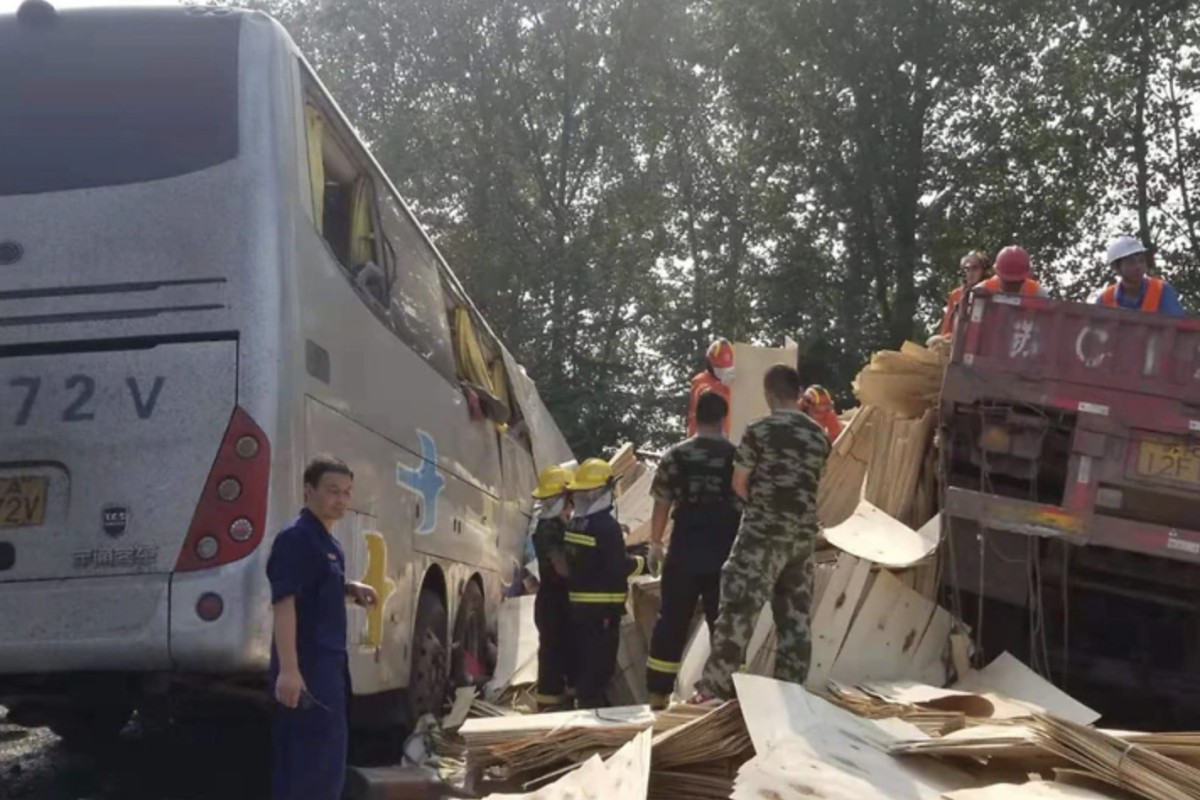
The expressway reopened after a rescue operation of more than eight hours. Photo: Weibo
Thirty-six people were killed and another 36 injured when a coach had a tyre blowout and crashed into a truck on an expressway in eastern China on Saturday.
The coach, which had 69 passengers on board, collided with a road divider before slamming into a truck in the opposite lane at about 7am, the Yixing municipal police department said in a statement on Sunday.
There were three people in the truck.
The accident happened on the Yixing section of the Changchun-Shenzhen Expressway in Jiangsu province.
A rescue operation took more than eight hours, and the injured were taken to hospitals in nearby Yibing.
Nine people were seriously injured, 26 were being treated for minor injuries and one had been discharged from hospital, according to the statement.
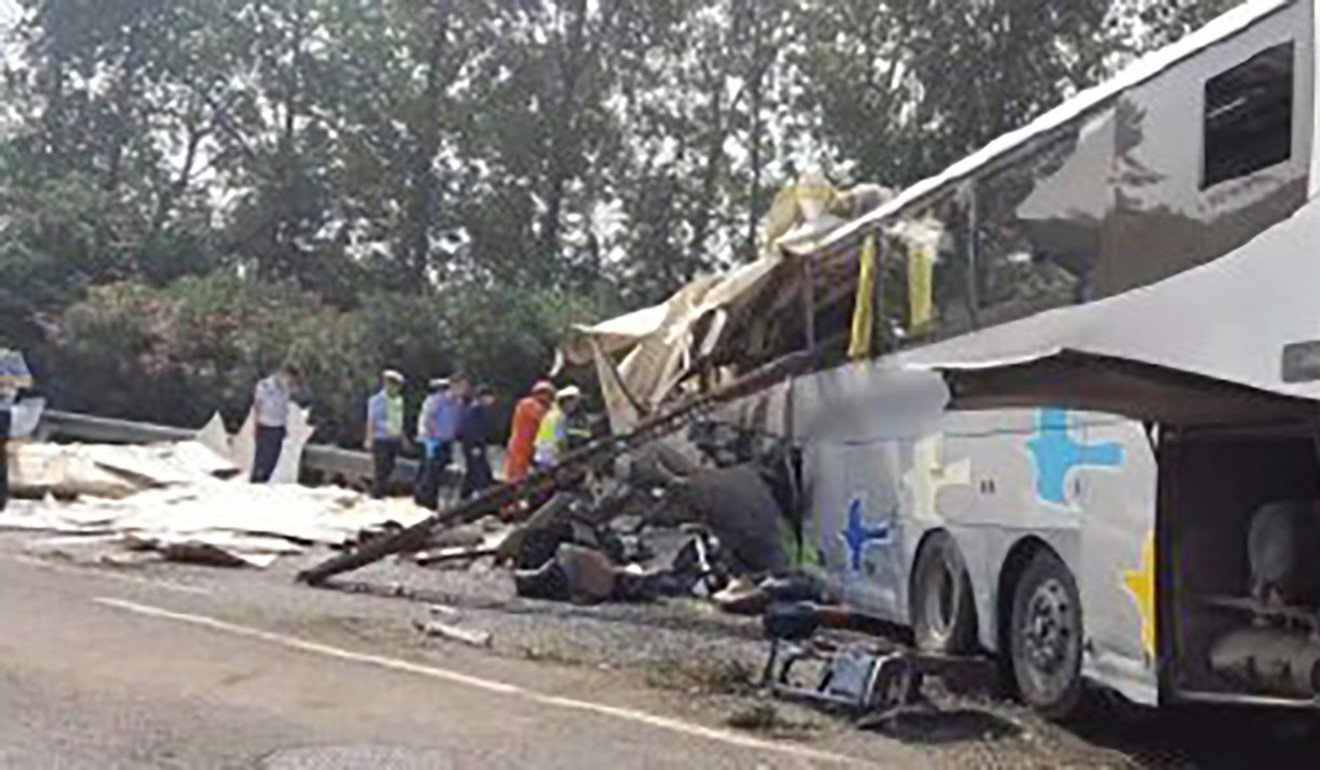
A tyre blowout may have caused the accident on Saturday morning. Photo: Weibo
Police are still looking into the crash but said “according to our preliminary investigation, the accident was caused by a blowout of one of the coach’s front tyres”.
ahead of National Day and the week-long holiday marking it, as all levels of government try to make sure nothing goes wrong.
This month, local governments were told to check factories, restaurants, rental accommodation, scenic spots close to water and roads for safety hazards and to take measures to prevent fire, crashes or other accidents, according to media reports.
Traffic accidents are common in China, where about 200,000 people lose their lives on the roads every year, according to the World Health Organisation.


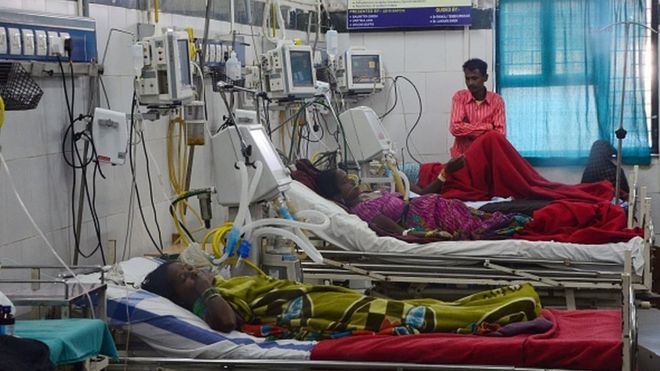 Image copyright GETTY IMAGES
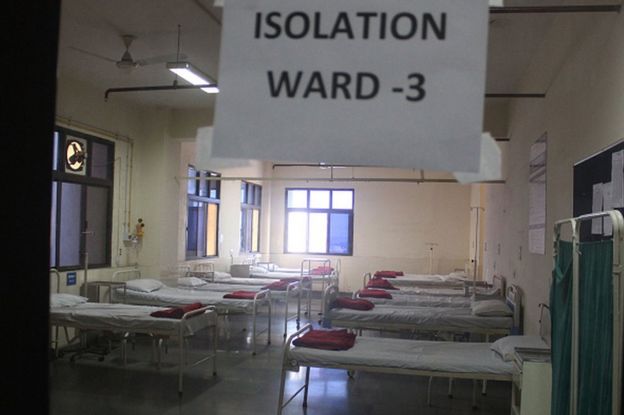 Image copyright GETTY IMAGES
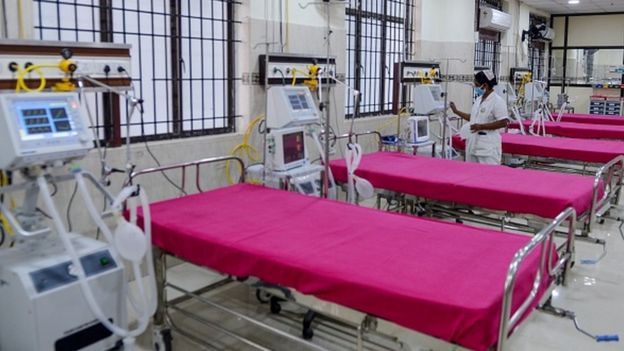 Image copyright AFP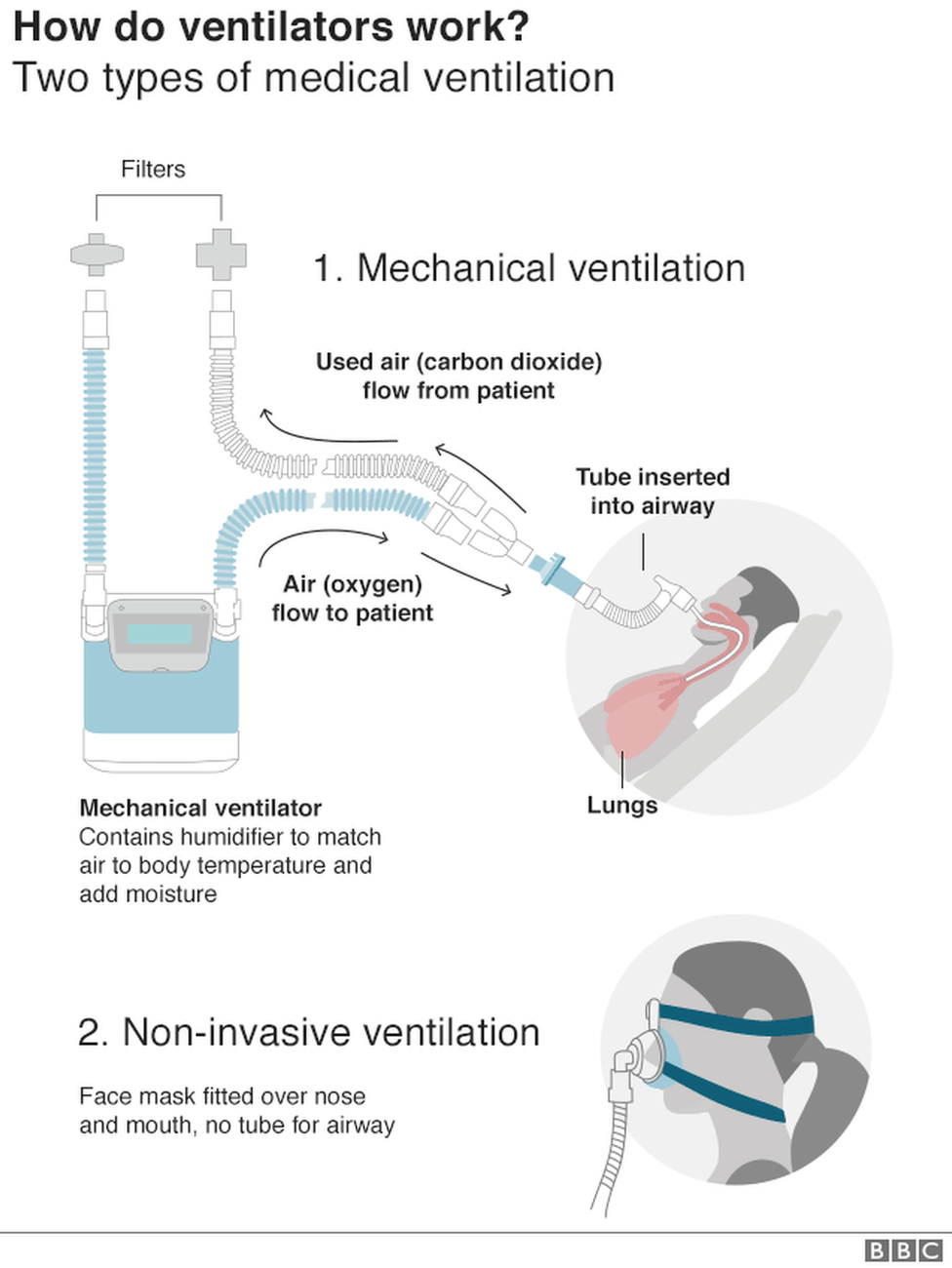


 CHINDIA ALERT: You'll be living in their world, very soon