Archive for ‘Fighters’

26/03/2020

U.S. playing dangerous game, China says, after warship sails through Taiwan Strait

TAIPEI (Reuters) – China accused the United States on Thursday of playing a dangerous game with its support for Taiwan, after a U.S. warship passed through the sensitive Taiwan Strait following heightened military tension between China and Taiwan.

China has been angered by the Trump administration’s stepped-up support for the island it considers its own, such as more arms sales, U.S. patrols near Taiwan and last month’s visit to Washington by Taiwan Vice President-elect William Lai.

Anthony Junco, a spokesman for the U.S. Seventh Fleet, said the guided-missile destroyer USS McCampbell conducted “a routine Taiwan Strait transit” on March 25, in line with international law.

“The ship’s transit through the Taiwan Strait demonstrates the U.S. commitment to a free and open Indo-Pacific,” he added. “The U.S. Navy will continue to fly, sail and operate anywhere international law allows.”

Taiwan’s defence ministry said the ship sailed north through the waterway and was monitored by Taiwan’s armed forces, on what it called an “ordinary mission”, adding there was no cause for alarm.

In Beijing, Chinese defence ministry spokesman Ren Guoqiang denounced “continued negative actions” by the United States on Taiwan, including sailings through and flights over the Taiwan Strait.

“U.S. moves have seriously interfered in China’s internal affairs, severely harmed peace and stability in the Taiwan Strait and poisoned Sino-U.S. military ties,” Ren told a monthly news conference.

The actions were “extremely dangerous”, he added.

Taiwan is China’s most sensitive territorial and diplomatic issue and Beijing has never ruled out the use of force to bring the island under its control. The narrow Taiwan Strait that separates the island from China is a frequent source of tension.

In recent weeks China’s air force has conducted several exercises close to Taiwan, prompting its mostly U.S.-equipped military to scramble fighters to intercept and warn away the Chinese aircraft.

Taiwan has called the drills provocative, and urged China to pay more attention to fighting a coronavirus pandemic, rather than menace it.

The United States, like most countries, has no official relations with Taiwan, but is the island’s most important international supporter and main source of arms.

In January another U.S. warship sailed through the Taiwan Strait less than a week after President Tsai Ing-wen won re-election by a landslide on a platform of standing up to China.

Source: Reuters

10/02/2020

Chinese warplanes make second Taiwan incursion in space of two days

  • Taiwan sends fighters to intercept mainland military aircraft after they cross dividing line in Taiwan Strait
  • Incursion comes at end of visit to Washington by vice-president-elect William Lai that angered Beijing
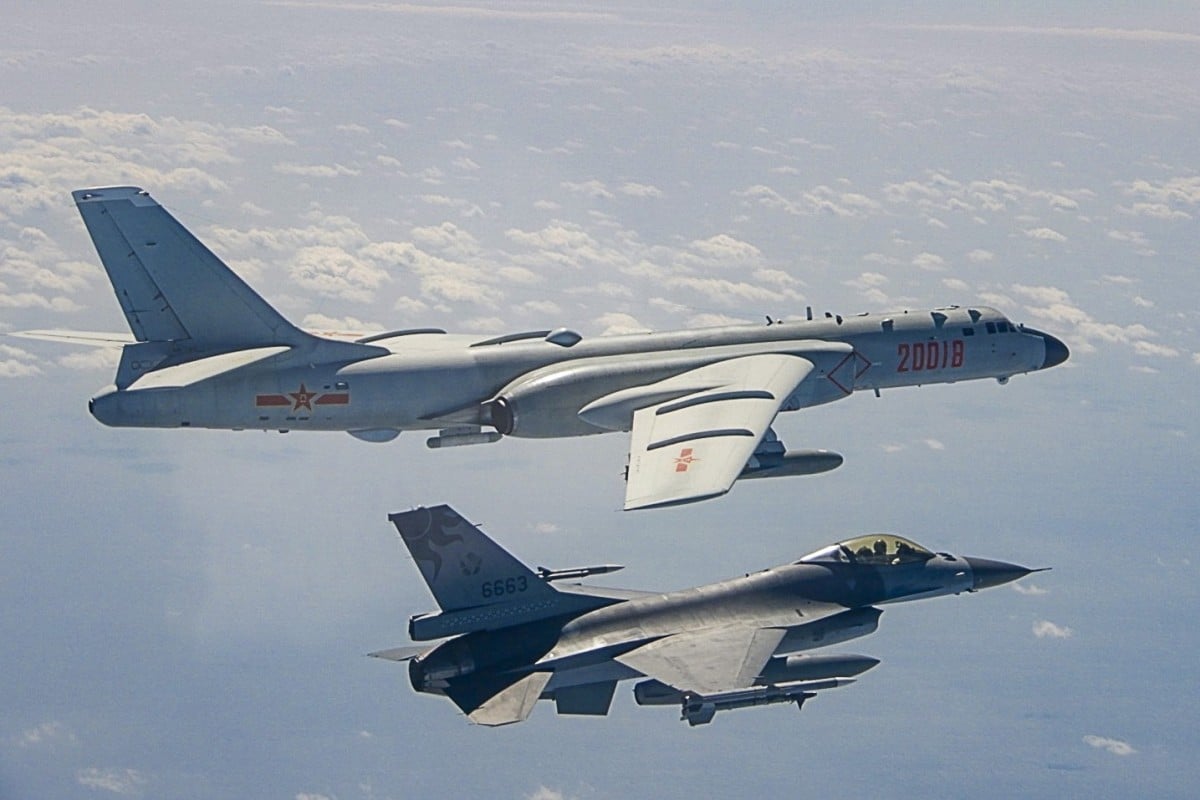
A Taiwanese fighter jet shadows a mainland Chinese bomber over the Taiwan Strait on Monday. Photo: Military News Agency, ROC

Taiwan sent warplanes to intercept a group of mainland Chinese jets that had briefly approached the island on Monday, the second such incident in two days.

The incident came as the island’s vice-president-designate William Lai Ching-te concluded an eight-day visit to the US that had angered Beijing.

The mainland warplanes, including H-6 bombers, briefly crossed the median line in the Taiwan Strait on their way to the western Pacific through the Bashi Channel in the morning for long-haul training exercises, Taiwan’s defence ministry said in a statement on Monday.

“Our air force scrambled fighter jets to shadow, intercept and disperse the communist warplanes through radio broadcasting,” the ministry said, adding the mainland planes later left the area.

The mainland warplanes later returned to their home base after their morning drill, the military said.

It was the second day in a row that the mainland warplanes flew past Taiwan after a group of aircraft, including J-11 fighter jets, KJ-500 early warning aircraft and H-6 bombers, flew over the Bashi Channel on Sunday before returning to their bases via the Miyako Strait northeast of Taiwan, the ministry said.

“The military has full surveillance and control of the communist long-haul training activities and the public can rest assured of our capability to uphold security or our national territory,” it said.

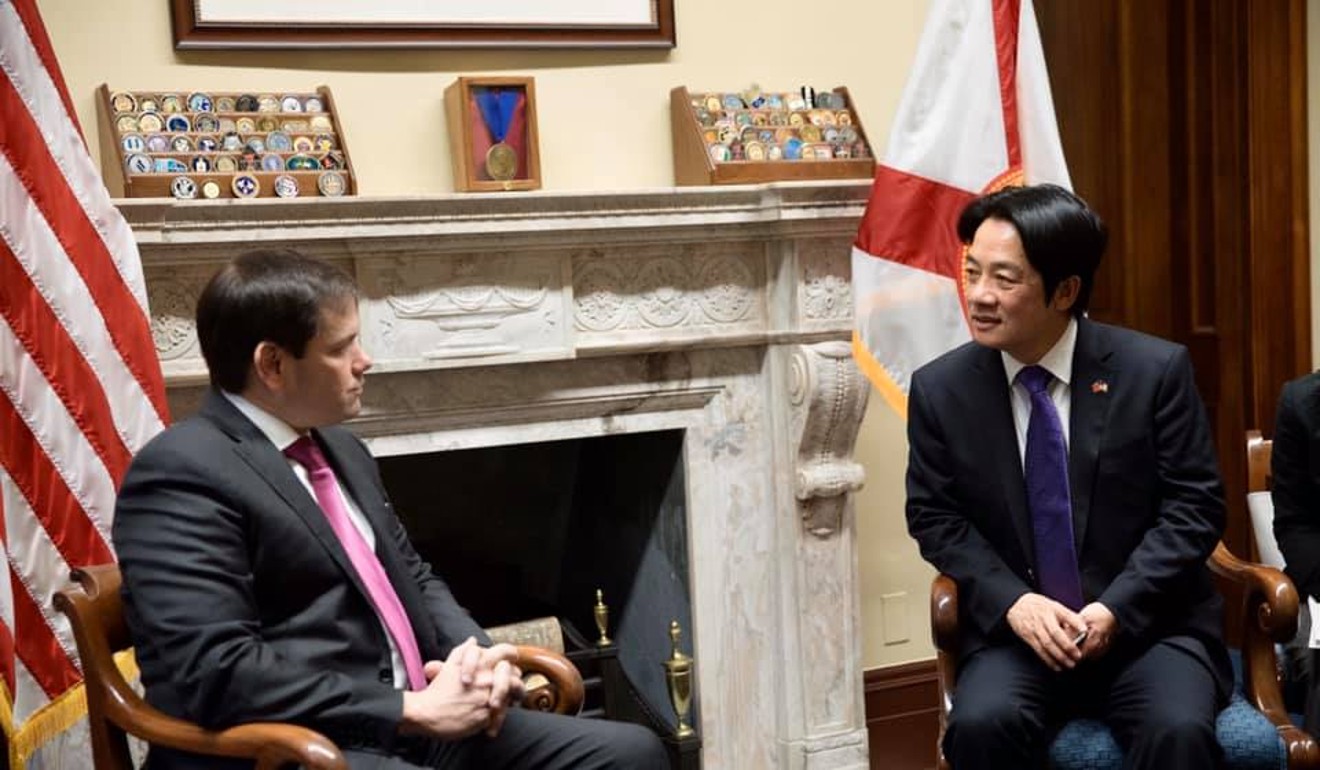
Meanwhile, Lai completed his eight-day “private” visit to Washington, during which he met the National Security Council and other US officials and senators.

Lai, who left for the US last Sunday to attend the National Prayer Breakfast – an annual gathering of political and religious leaders in Washington – was considered the highest-level Taiwanese official to meet with National Security Council officials since the US switched diplomatic recognition to Beijing from Taipei in 1979.

The visit was hailed as a diplomatic breakthrough for the island because until now Washington has been reluctant to allow such exchanges for fear of angering Beijing, which has repeatedly demanded that the US adhere to the “one-China” policy.

Taiwan scrambles jets as mainland Chinese air force flies around island

9 Feb 2020

Beijing views Taiwan as a wayward province that must be brought back to the mainland fold – by force if necessary.

It has suspended official exchanges with Taiwan since Tsai Ing-wen of the independence-leaning Democratic Progressive Party was first elected president in 2016 and refused to accept the one-China principle as the basis for cross-strait exchanges.

Since then, Beijing has staged war games close to the island and poached seven of Taiwan’s allies to heap pressure on the president, who was reelected last month.

A People’s Liberation Army spokesperson said on Sunday the flight was a “necessary action” under “current security situation across the Taiwan Strait”.

Vice-President-elect William Lai Ching-te met National Security Council officials on his visit to the White House. Photo: Facebook
Observers said Lai’s US visit was made possible due to a new US policy to allow high-level official and military exchanges with Taiwan, which has been included in the US security alliance to counter the mainland’s military expansion in the Indo-Pacific region.

They said Lai is still technically a civilian until he takes office in May, and the US can always use this status to defend its move, although the visit has prompted strong protests from the Chinese foreign ministry.

Observers also said Taiwan’s efforts in seeking to join the World Health Organisation amid the deadly coronavirus outbreak have also riled Beijing, which has repeatedly said the island is a mainland province with no right to join international bodies which require statehood for membership.

Taipei complains to World Health Organisation after coronavirus case is classed as ‘Taiwan, China’

23 Jan 2020

On Monday, Ma Xiaoguang, a spokesman for the mainland’s Taiwan Affairs Office, warned the Tsai government against “playing with fire” by “trying to use its strengthening ties with the US to plot independence”.

“This is a sheer provocation,” Ma said, adding what the People’s Liberation Army did was to protect the national sovereignty and territorial integrity of the mainland and to maintain cross-strait peace.

Song Zhongping, a military commentator for Hong Kong Phoenix Television, said the patrol was aimed at the separatist movement on the island.

“Such a patrol is for war-preparedness … and has become a routine practice and a resolution to effectively attack the pro-independence force,” said Song, a former instructor for the PLA’s Second Artillery, the predecessor of the Rocket Force.

A Beijing-based military source close to the PLA, who requested anonymity, said the warplanes were equipped with missiles, which has become a standard procedure for PLA’s air drills.

Source: SCMP

31/07/2019

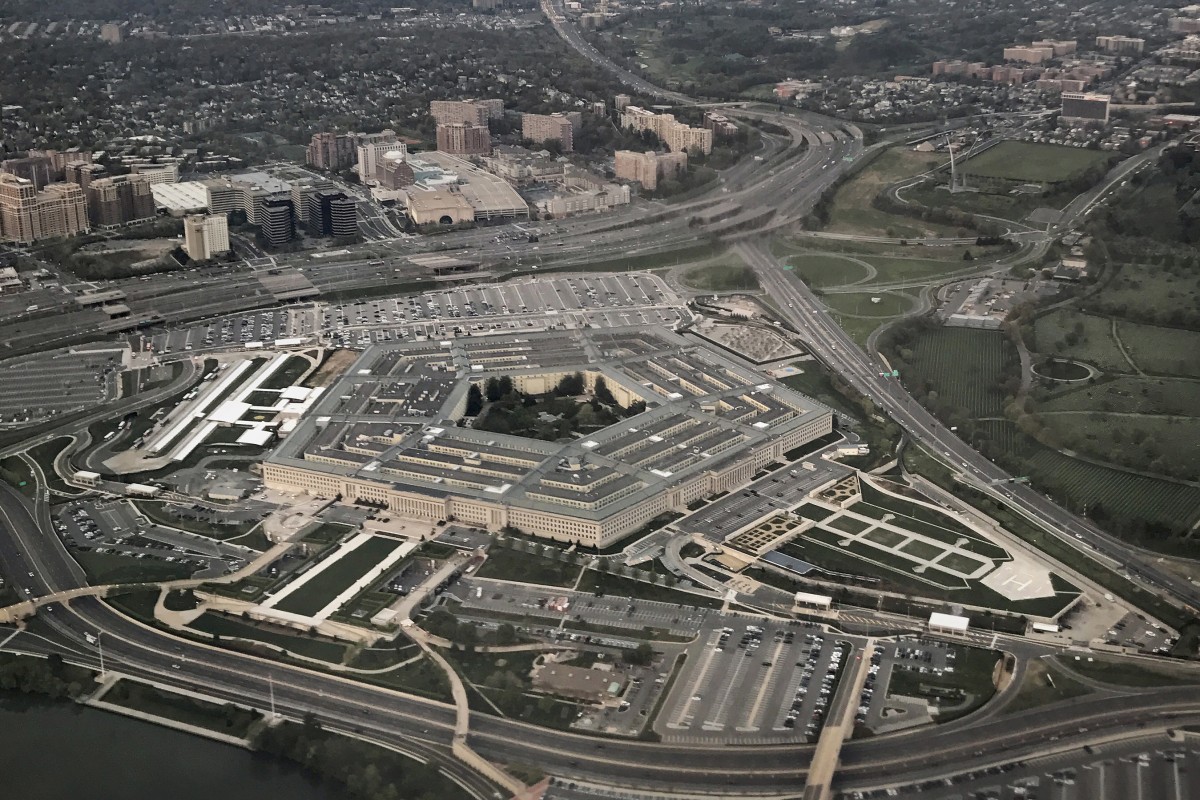
Pentagon rejecting recruits over Chinese relatives and other foreign ties – despite need for foreign language skills

  • Some of those weeded out had been recruited under programme to use immigrants’ vital skills
  • New vetting process has delayed enlistments by years, turning more than 1,000 recruits into unlawful immigrants with expired credentials
The Pentagon needs recruits with foreign language skills. Photo: Washington Post
In the past month, the Pentagon booted two Chinese recruits from the enlistment process because of their dead grandfathers, who had lived very different lives.
One recruit’s grandfather, whom he never met, served in China’s Communist Party military. Another recruit was removed from the programme after drilling for three years because of the polar opposite – Zicheng Li’s grandfather fought against, and was tortured by, Communist Party agents, defence officials wrote.
Screening documents obtained by The Washington Post detailing reasons that these and other foreign recruits were removed from the military reveal a pattern of cancelled enlistments and failed screenings for rather innocuous fact-of-life events and, often, simply for existing as foreigners.

Immigrant enlistees have been cut loose for being the children of foreign parents or for having family ties to their native country’s government or military.

I’m shocked and numb. They use anything they can to kick us outZicheng Li, US Army recruit

In some cases, they have relatives who served in militaries closely allied with the United States. Those removals raise questions about the Pentagon’s screening process and why it has weeded out precisely the recruits defence officials said they needed.

The Pentagon programme they were recruited under embraced a simple idea: the military would enlist immigrants to make use of strategic language and medical abilities in short supply among US-born troops, designating the skills of immigrants a national security imperative.

The programme was even named in that fashion – Military Accessions Vital to the National Interest, or Mavni, which enlisted more than 10,400 foreign-born troops in the past decade, with the promise of fast-tracked naturalisation that would take weeks. Speakers of Mandarin, Russian, Arabic and other languages have been in demand by defence officials.

But then denials began to quicken since stricter screening was instituted in late 2016, a lawyer for immigrant recruits said, pointing to family ties as a common reason.

He’s an illegal Chinese immigrant – and a US soldier on Mexico border

Li, who arrived in Minnesota from China in 2012 to study aerospace engineering, said that his US Army enlistment processing had crawled since February 2016. In that time, he attended drills as a selected reservist and received his uniform and an ID card that grants him access to army installations.

Then this month, after three years of waiting, an enlistment denial justification letter arrived in his postbox, containing two sentences about family history.

Li told investigators that his since-deceased grandfather’s torture decades ago by Chinese Communists prompted worry of reprisals if the Chinese government learned of Li’s enlistment.

“You revealed that you fear for your family’s safety,” officials wrote in a letter, saying his suitability for enlistment was adverse, documents show.

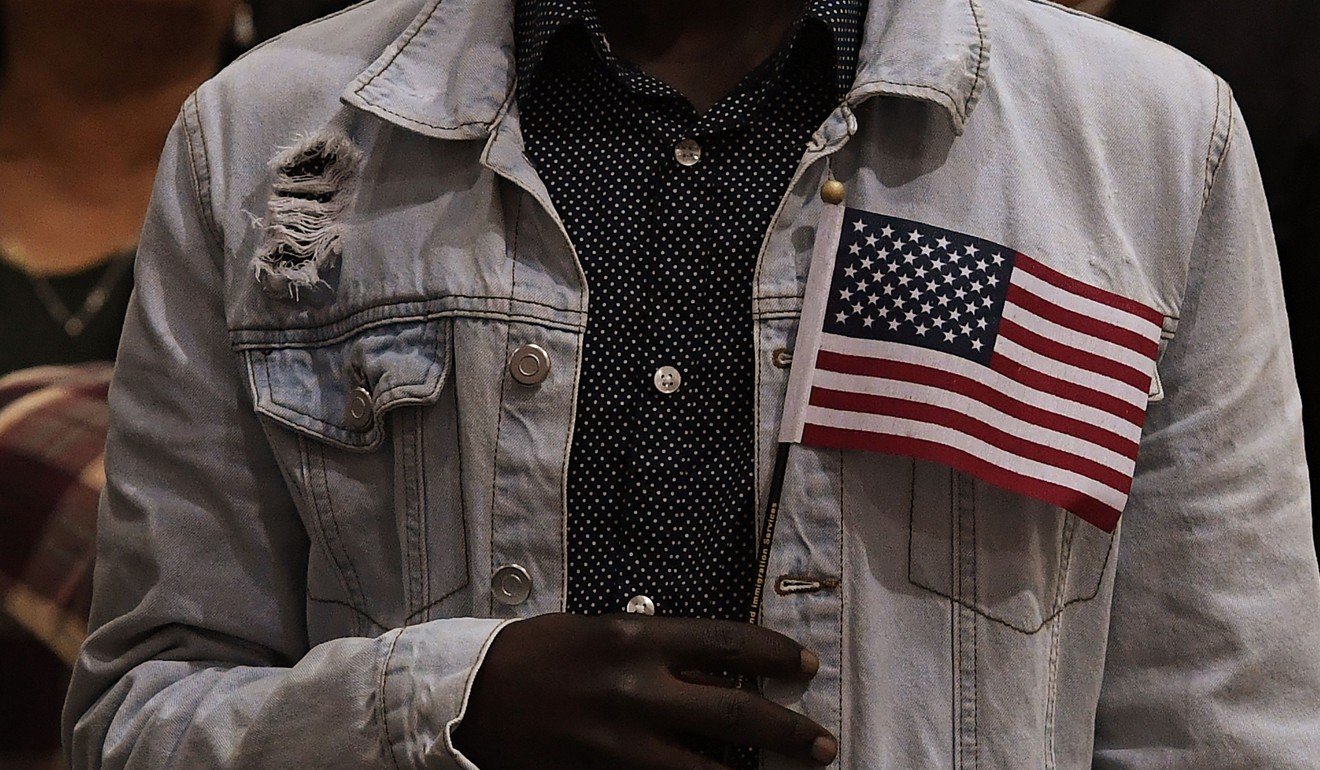
A new citizen pledging allegiance to the United States at a naturalisation ceremony in Los Angeles. Photo: AFP

“I’m shocked and numb,” Li said. “They use anything they can to kick us out.”

The new vetting process has delayed enlistments by years, and the wait has turned more than 1,000 recruits – who enlisted as legal immigrants with visas – into unlawful immigrants whose credentials expired as their screenings tumbled into bureaucratic limbo.

The Pentagon has acknowledged in court filings that none of the thousands of recruits who later naturalised from the programme have been charged with espionage-related crimes, though one Chinese recruit has been accused of failing to register as a foreign agent. The new vetting procedures did not play a role in his detection, court filings said.

It is unclear how many immigrant recruits have been turned away as recruits or discharged as soldiers in recent months. In a spate of lawsuits alleging misconduct and violation of equal protection laws, the Pentagon has reversed decisions and halted discharges.

Chinese women join US Army to obtain green cards

Defence officials have not offered public insight into how the vetting works or what kind of oversight exists. The results are typically explained in one or two sentences.

Another Chinese-born recruit, who declined to provide his name out of fear of reprisal to his family by the Chinese government, said he was denied enlistment last month because his father and grandfather served in the Communist military, though the report about his relatives’ positions was inaccurate, he said.

His grandfather died before the recruit was born.

“I don’t know what’s the harm for me to finish my contract and gain my citizenship,” he said.

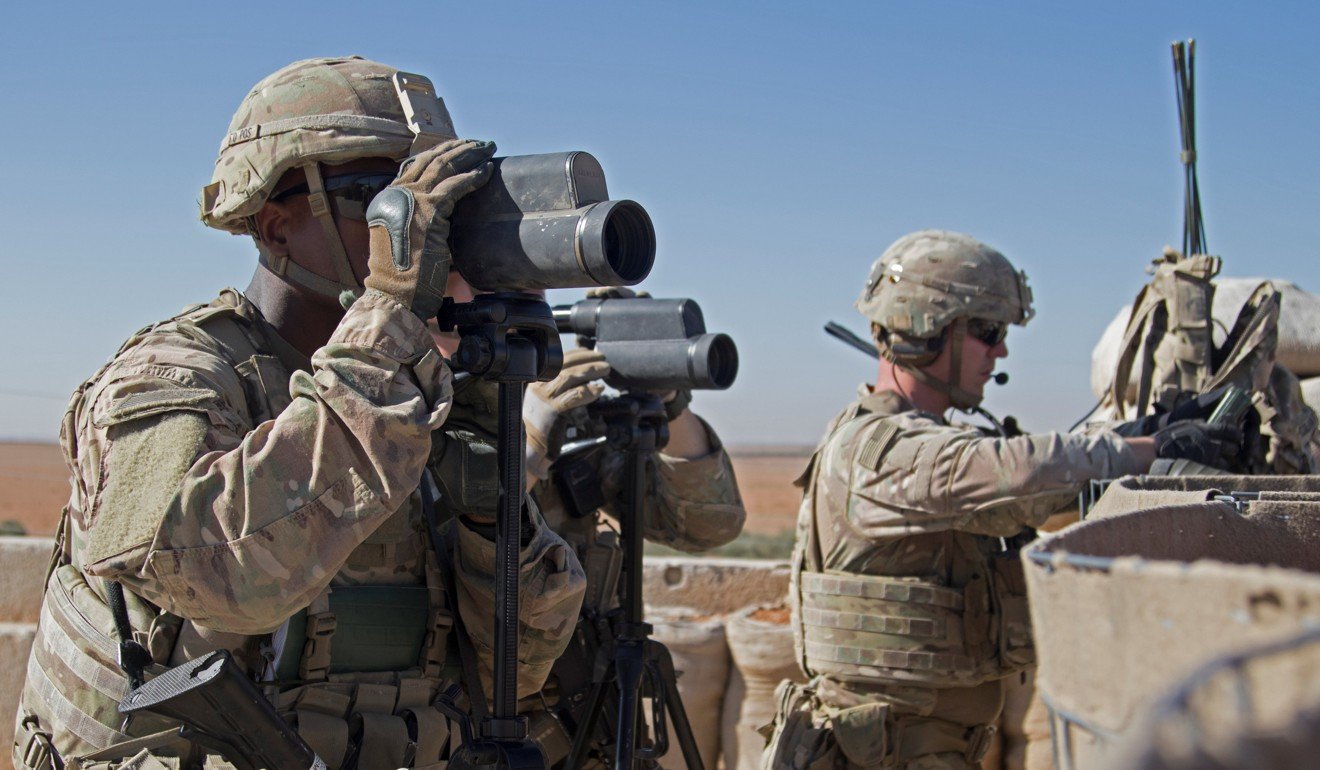
The US has recruited more than 10,000 foreign-born troops in the last decade. Photo: US Army via Reuters

Mavni screening can be “time-consuming due to our limited ability” to verify information from home countries, said Jessica Maxwell, a Pentagon spokeswoman. She declined to address questions about the process itself and whether screeners adjust expectations of foreign ties if they are screening foreign-born recruits.

She also declined to say how many Mavni recruits are still waiting for their screening to finish, citing litigation and privacy limitations.

Margaret Stock, an immigration lawyer who has represented Mavni recruits, including Li, said the Pentagon has scuttled millions of dollars and years of time to produce unclear reasons why it separates immigrants the Defence Department itself determined it needed.

“This is what they come up with? Your grandfather served in a foreign army before you were born?” Stock asked. “What is the threat to national security? They can’t articulate it here.”

New Pentagon chief’s mission: confront foreign threats, manage Trump

Other rejections point to speculative or seemingly benign information for immigrants living typical lives.

“You revealed that you maintain routine contact with your father and mother who are citizens of and reside in China,” said one document.

An Indian-born recruit was cut loose after an investigation determined that family members “work for or have worked for the Indian army”, according to one document, even thought India and the United States share a defence relationship.

Recruits from South Korea, a key US defence ally, have been penalised because their fathers are required by conscription to serve, Stock said.

Maxwell declined to say why a family member’s involvement in a friendly military would raise suspicions.

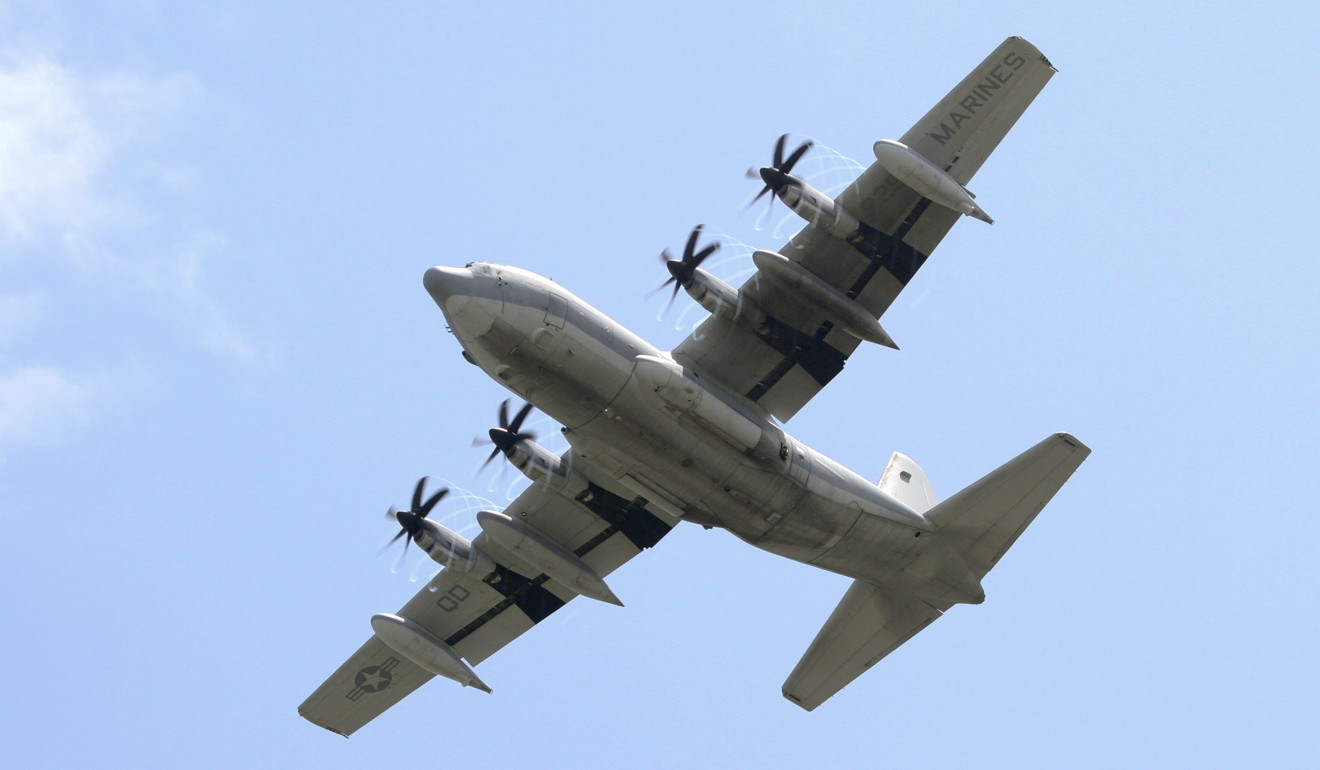
Zicheng Li is hoping to become a Hercules pilot. Photo: EPA

Another enlistee was rejected for “multiple wire transfers” through US banks, though the screening review did not describe the nature of the transfers or whether they were unlawful.

One recruit, a Chinese doctoral student, was turned away because a screener with no medical experience said that the recruit had Asperger syndrome – on the basis that the screener once observed a family member with autism, The Post previously reported.

Potential persecution of Li’s family could be aided by the US military itself. US Army recruiters inadvertently exposed the private information of hundreds of Chinese-born recruits, heightening the risk that Chinese government officials would target their families, a lawmaker said.

Pentagon poised to report on US military’s dependence on China

Those disclosures and enlistment delays have forced several recruits to apply for US asylum protection, including Li while he fights the army’s determination that he is unsuitable for service.

Li said he wants to bring his family to the United States. Until then, he has taken a rather American path: he helps design grain enclosures and spreaders for a farm equipment company in Minnesota, with an eye to eventually transitioning from the US Army to the Air Force.

Li said he hopes to become a pilot, perhaps for the C-130 Hercules transport aircraft.

Fighters can be flashy, he said. But the Hercules can get him more time in the cockpit on missions across the world.

Source: SCMP

Law of Unintended Consequences

continuously updated blog about China & India

ChiaHou's Book Reviews

continuously updated blog about China & India

What's wrong with the world; and its economy

continuously updated blog about China & India