Chindia Alert: You’ll be Living in their World Very Soon
aims to alert you to the threats and opportunities that China and India present. China and India require serious attention; case of ‘hidden dragon and crouching tiger’.
Without this attention, governments, businesses and, indeed, individuals may find themselves at a great disadvantage sooner rather than later.
The POSTs (front webpages) are mainly 'cuttings' from reliable sources, updated continuously.
The PAGEs (see Tabs, above) attempt to make the information more meaningful by putting some structure to the information we have researched and assembled since 2006.
NEW YORK/SAN FRANCISCO (Reuters) – Amazon.com Inc (AMZN.O) has bought cameras to take temperatures of workers during the coronavirus pandemic from a firm the United States blacklisted over allegations it helped China detain and monitor the Uighurs and other Muslim minorities, three people familiar with the matter told Reuters.
China’s Zhejiang Dahua Technology Co Ltd (002236.SZ) shipped 1,500 cameras to Amazon this month in a deal valued close to $10 million, one of the people said. At least 500 systems from Dahua – the blacklisted firm – are for Amazon’s use in the United States, another person said.
The Amazon procurement, which has not been previously reported, is legal because the rules control U.S. government contract awards and exports to blacklisted firms, but they do not stop sales to the private sector.
However, the United States “considers that transactions of any nature with listed entities carry a ‘red flag’ and recommends that U.S. companies proceed with caution,” according to the Bureau of Industry and Security’s website. Dahua has disputed the designation.
The deal comes as the U.S. Food and Drug Administration warned of a shortage of temperature-reading devices and said it wouldn’t halt certain pandemic uses of thermal cameras that lack the agency’s regulatory approval. Top U.S.-based maker FLIR Systems Inc (FLIR.O) has faced an up to weeks-long order backlog, forcing it to prioritize products for hospitals and other critical facilities.
Amazon declined to confirm its purchase from Dahua, but said its hardware complied with national, state and local law, and its temperature checks were to “support the health and safety of our employees, who continue to provide a critical service in our communities.”
The company added it was implementing thermal imagers from “multiple” manufacturers, which it declined to name. These vendors include Infrared Cameras Inc, which Reuters previously reported, and FLIR, according to employees at Amazon-owned Whole Foods who saw the deployment. FLIR declined to comment on its customers.
Dahua, one of the biggest surveillance camera manufacturers globally, said it does not discuss customer engagements and it adheres to applicable laws. Dahua is committed “to mitigate the spread of the COVID-19” through technology that detects “abnormal elevated skin temperature — with high accuracy,” it said in a statement.
The U.S. Department of Commerce, which maintains the blacklist, declined comment. The FDA said it would use discretion when enforcing regulations during the public health crisis as long as thermal systems lacking compliance posed no “undue risk” and secondary evaluations confirmed fevers.
Dahua’s thermal cameras have been used in hospitals, airports, train stations, government offices and factories during the pandemic. International Business Machines Corp (IBM.N) placed an order for 100 units, and the automaker Chrysler placed an order for 10, one of the sources said. In addition to selling thermal technology, Dahua makes white-label security cameras resold under dozens of other brands such as Honeywell, according to research and reporting firm IPVM.
Honeywell said some but not all its cameras are manufactured by Dahua, and it holds products to its cybersecurity and compliance standards. IBM and Chrysler’s parent Fiat Chrysler Automobiles NV (FCHA.MI) did not comment.
The Trump Administration added Dahua and seven other tech firms last year to the blacklist for acting against U.S. foreign policy interests, saying they were “implicated” in “China’s campaign of repression, mass arbitrary detention, and high-technology surveillance against Uighurs, Kazakhs, and other members of Muslim minority groups.”
More than one million people have been sent to camps in the Xinjiang region as part of China’s campaign to root out terrorism, the United Nations has estimated.
Dahua has said the U.S. decision lacked “any factual basis.” Beijing has denied mistreatment of minorities in Xinjiang and urged the United States to remove the companies from the list.
A provision of U.S. law, which is scheduled to take effect in August, will also bar the federal government from starting or renewing contracts with a company using “any equipment, system, or service” from firms including Dahua “as a substantial or essential component of any system.”
Amazon’s cloud unit is a major contractor with the U.S. intelligence community, and it has been battling Microsoft Corp (MSFT.O) for an up to $10 billion deal with the Pentagon.
Top industry associations have asked Congress for a year-long delay because they say the law would reduce supplies to the government dramatically, and U.S. Secretary of State Mike Pompeo said last week that policies clarifying the implementation of the law were forthcoming.
FACE DETECTION & PRIVACY
The coronavirus has infected staff from dozens of Amazon warehouses, ignited small protests over allegedly unsafe conditions and prompted unions to demand site closures. Temperature checks help Amazon stay operational, and the cameras – a faster, socially distant alternative to forehead thermometers – can speed up lines to enter its buildings. Amazon said the type of temperature reader it uses varies by building.
To see if someone has a fever, Dahua’s camera compares a person’s radiation to a separate infrared calibration device. It uses face detection technology to track subjects walking by and make sure it is looking for heat in the right place.
An additional recording device keeps snapshots of faces the camera has spotted and their temperatures, according to a demonstration of the technology in San Francisco. Optional facial recognition software can fetch images of the same subject across time to determine, for instance, who a virus patient may have been near in a line for temperature checks.
Amazon said it is not using facial recognition on any of its thermal cameras. Civil liberties groups have warned the software could strip people of privacy and lead to arbitrary apprehensions if relied on by police. U.S. authorities have also worried that equipment makers like Dahua could hide a technical “back door” to Chinese government agents seeking intelligence.
In response to questions about the thermal systems, Amazon said in a statement, “None of this equipment has network connectivity, and no personal identifiable information will be visible, collected, or stored.”
Dahua made the decision to market its technology in the United States before the FDA issued the guidance on thermal cameras in the pandemic. Its supply is attracting many U.S. customers not deterred by the blacklist, according to Evan Steiner, who sells surveillance equipment from a range of manufacturers in California through his firm EnterActive Networks LLC.
“You’re seeing a lot of companies doing everything that they possibly can preemptively to prepare for their workforce coming back,” he said.
BEIJING/SHANGHAI (Reuters) – China’s Inceptio Technology, a startup developing self-driving trucks, has raised $100 million in its latest funding round from logistics firm GLP, its key strategic investor G7 and other investors, two sources familiar with the matter told Reuters.
The proceeds from its series A funding round will be used to further develop its technologies and to start commercial trials, said the sources, who declined to be named as they were not authorised to speak to media.
The company, which aims to operate a freight network with autonomous driving trucks in China from 2022, has partnerships with Dongfeng Automobile Co Ltd (600006.SS), Sinotruk Hong Kong Ltd (3808.HK) and Foton (600166.SS).
The two-year-old firm is developing autonomous driving software and an in-car computing system while the truckmakers are responsible for the vehicles’ platforms.
Inceptio declined to comment. G7 and Singapore-based GLP did not immediately respond to requests for comment.
Inceptio focuses on level 3 and 4 technologies. A level 3 vehicle will enable drivers to turn their attention away from driving but they still need to take over if the car encounters a problem, while with level 4 technologies, there is no human intervention in most circumstances.
The trucking industry is expected to an earlier adopter of autonomous driving technology compared to passenger vehicle makers as driving on highways is more predictable than on busy city streets.
German automaker Daimler (DAIGn.DE) and U.S. postal giant United Parcel Service Inc (UPS.N) have invested in self-driving trucks.
SEOUL (Reuters) – South Korean officials are calling for caution amid reports that North Korean leader Kim Jong Un may be ill or is being isolated because of coronavirus concerns, emphasising that they have detected no unusual movements in North Korea.
At a closed door forum on Sunday, South Korea’s Unification Minister Kim Yeon-chul, who oversees engagement with the North, said the government has the intelligence capabilities to say with confidence that there was no indications of anything unusual.
Rumours and speculation over the North Korean leader’s health began after he made no public appearance at a key state holiday on April 15, and has since remained out of sight.
South Korea media last week reported that Kim may have undergone cardiovascular surgery or was in isolation to avoid exposure to the new coronavirus.
Unification minister Kim cast doubt on the report of surgery, arguing that the hospital mentioned did not have the capabilities for such an operation.
Still, Yoon Sang-hyun, chairman of the foreign and unification committee in South Korea’s National Assembly, told a gathering of experts on Monday that Kim Jong Un’s absence from the public eye suggests “he has not been working as normally”.
“There has not been any report showing he’s making policy decisions as usual since April 11, which leads us to assume that he is either sick or being isolated because of coronavirus concerns,” Yoon said.
North Korea has said it has no confirmed cases of the new coronavirus, but some international experts have cast doubts on that claim.
On Monday, North Korean state media once again showed no new photos of Kim nor reported on his whereabouts.
However, they did carry reports that he had sent a message of gratitude to workers building a tourist resort in Wonsan, an area where some South Korean media reports have said Kim may be staying.
“Our government position is firm,” Moon Chung-in, the top foreign policy adviser to South Korean President Moon Jae-in, said in comments to news outlets in the United States.
“Kim Jong Un is alive and well. He has been staying in the Wonsan area since April 13. No suspicious movements have so far been detected.”
Satellite images from last week showed a special train possibly belonging to Kim at Wonsan, lending weight to those reports, according to 38 North, a Washington-based North Korea monitoring project.
Though the group said it was probably the North Korean leader’s personal train, Reuters has not been able to confirm that independently, or whether he was in Wonsan.
A spokeswoman for the Unification Ministry said on Monday she had nothing to confirm when asked about reports that Kim was in Wonsan.
Last week China dispatched a team to North Korea including medical experts to advise on Kim Jong Un, according to three people familiar with the situation.
Reuters was unable to immediately determine what the trip by the Chinese team signalled in terms of Kim’s health.
On Friday a South Korean source told Reuters their intelligence was that Kim Jong Un was alive and would likely make an appearance soon.
Experts have cautioned that Kim has disappeared from state media coverage before, and that gathering accurate information in North Korea is notoriously difficult.
North Korea’s state media last reported on Kim’s whereabouts when he presided over a meeting on April 11.
Kim, believed to be 36, vanished from state media for more than a month in 2014 and North Korean state TV later showed him walking with a limp.
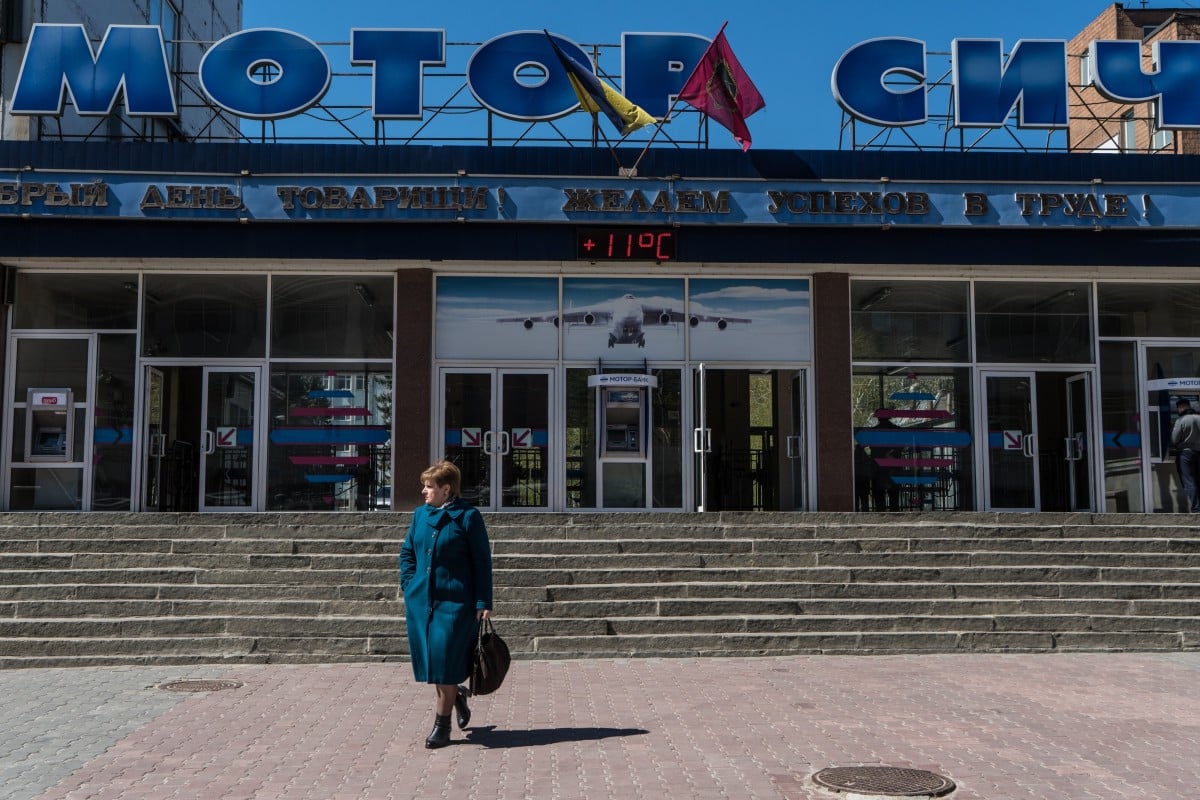
China’s Skyrizon Aircraft Holdings bought a majority stake in Motor Sich, but the shares were frozen in 2017 pending an investigation by Ukraine’s security service
Washington and Beijing have competed for influence in Ukraine since its relations with Moscow soured when Russia annexed the Crimea peninsula in 2014
Chnia’s Skyrizon says it will appeal a Kiev court’s decision to block its purchase of Ukrainian aircraft engine maker Motor Sich. Photo: Getty Images
A court in Kiev has rejected an appeal by Chinese investors to unfreeze the shares of a Ukrainian aircraft engine maker, a setback for the Chinese company that sought to buy the Ukrainian firm in a deal opposed by the United States.
China’s Skyrizon Aircraft Holdings bought a majority stake in Motor Sich, but the shares were frozen in 2017 pending an investigation by Ukraine’s security service (SBU). Washington wants the deal scrapped.
The US and China have competed for influence in Ukraine since its relations with Moscow soured when Russia annexed the Crimea peninsula in 2014.
In its ruling, the court kept the shares frozen, citing the SBU investigation into whether selling Motor Sich sabotages national security by allowing sensitive technology into foreign hands. The ruling was dated March 13, shared with the parties this week.
Skyrizon plans further appeals, said a lawyer involved in the case, speaking anonymously due to the political sensitivity of the case. Zelensky’s office, the US embassy and the Chinese embassy did not respond to requests for comment. Motor Sich and the SBU declined to comment.
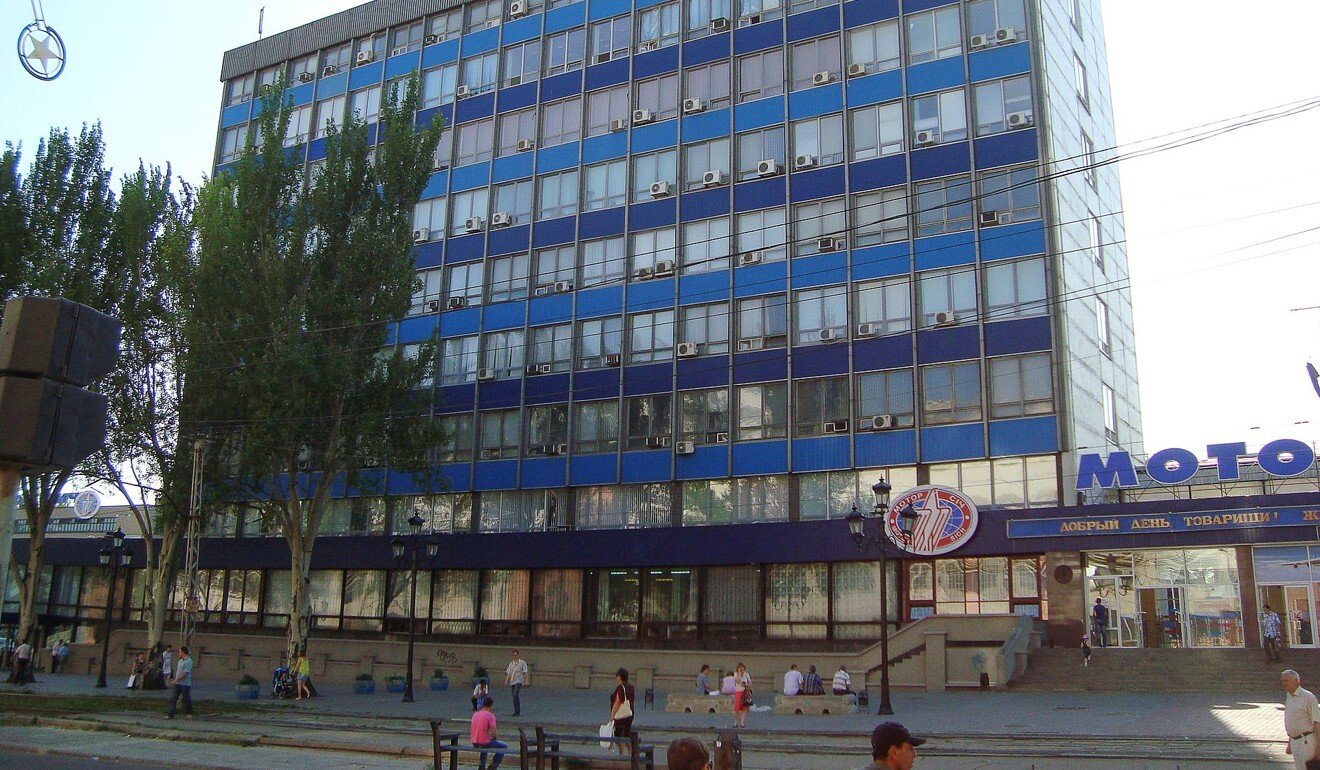
Motor Sich severed ties with Russia after the annexation of Crimea. Photo: Wikipedia
Motor Sich severed ties with Russia, its biggest client, after the annexation of Crimea. The wrangle over its future has held up efforts to find new markets, and supporters of a quick resolution say it is now operating at less than half capacity.
“Motor Sich has become a hostage to the geopolitical situation,” former prime minister Anatoliy Kinakh, chairman of an industrial union which has called for the government to resolve the dispute quickly, said.
The state’s anti-monopoly committee has launched its own investigation and says it is waiting to receive more documents before deciding whether to sanction the sale.
President Volodymyr Zelensky’s administration has had to balance strengthening ties to Beijing with keeping the United States, its biggest military aid donor, onside. In recent weeks, Beijing and Washington have both offered aid to Ukraine to fight the coronavirus.
At the moment it is a very difficult task when we have the biggest powers in the world and their interests are in conflict in Ukraine,” Oleksandr Danylyuk, a former top security official under Zelensky, said.
(Reuters) – Asian companies dominate the market for electric vehicle (EV) batteries and they are expanding their production capacity in Europe, China and the United States in a fight to win lucrative contracts from global automakers.
Some carmakers worry, however, there won’t be enough batteries for all the EVs they plan to launch in the coming years and a bitter row between South Korea’s SK Innovation and LG Chem risks exacerbating the potential shortfall.
Below are details of the world’s leading EV battery makers with details of their customers and expansion plans:
CATL
China’s Contemporary Amperex Technology (CATL), the world’s biggest EV battery maker, counts BMW (BMWG.DE), Volkswagen (VOWG_p.DE), Daimler (DAIGn.DE) – which makes Mercedes cars – Volvo, Toyota Motor Corp (7203.T) and Honda Motor Co (7267.T) among its customers.
The company emerged as a major force partly thanks to Beijing’s policy of only subsidising vehicles equipped with Chinese batteries in the world’s biggest EV market. Beijing is phasing out EV subsidies next year.
CATL, which operates factories in China, is building its first overseas plant in Germany and is considering a U.S. factory.
Japan’s Panasonic, a supplier of U.S. EV pioneer Tesla (TSLA.O), said it has installed equipment to ramp up production at Tesla’s Nevada plant to 35 GWh from its current production of around 30 GWh as of late October. Panasonic has said it is investing about $1.6 billion in the factory.
Panasonic also produces EV batteries in Japan, China and plans to shift some of its plants to a new joint venture with Toyota. Panasonic’s clients also include Honda and Ford Motor Company (F.N).
China’s BYD, which is backed by U.S. investor Warren Buffett, is also one of the world’s biggest EV battery makers. It mainly uses them in-house for its own cars and buses. BYD said last year it is was considering cell production in Europe.
The South Korean firm was an early industry mover, winning a contract to supply General Motor’s (GM.N) Volt in 2008. It also supplies Ford, Renault (RENA.PA), Hyundai Motor (005380.KS), Tesla, Volkswagen and Volvo.
It is investing 3.3 trillion won ($2.8 billion) to build and expand production facilities near Tesla’s plant in Shanghai. It has a joint venture (JV) in China with Geely Automobile Holdings (0175.HK), which makes Volvos, and is in talks with other carmakers about JVs in major markets.
The firm is considering building a second U.S. factory in addition to its facility in Michigan and is expanding its plant in Poland.
SAMSUNG SDI CO LTD (006400.KS) Samsung SDI an affiliate of South Korean tech giant Samsung Electronics (005930.KS), has EV battery plants in South Korea, China and Hungary, which supply customers such as BMW (BMWG.DE), Volvo and Volkswagen. Samsung SDI is investing about 1.2 billion euros ($1.3 billion) to expand its factory in Hungary though the EU is investigating whether Budapest’s financial support complies with the bloc’s state aid rules.
Samsung started production last year on the Hungary plant, which will produce batteries for 50,000 EVs a year.
SK INNOVATION CO LTD (096770.KS) LG Chem’s cross-town rival SK Innovation supplies batteries to Volkswagen, Daimler and Kia Motors (000270.KS), as well as Jaguar Land Rover [TAMOJL.UL] and Ferrari (RACE.MI).
An oil refiner that came to the battery industry late, SKI is investing about $3.9 billion to build three plants in the United States, China and Hungary, with a goal of expanding its annual production capacity to 33 GWh by 2022.
SKI currently operates one battery factory in South Korea, with a capacity of 4.7 GWh annually.
It set up a joint venture with Beijing Automotive Industry Corporation (BAIC) of China in August 2018 and another Chinese partner. It is in talks with Volkswagen about another battery JV and is building a $1.7 billion factory in the U.S. state of Georgia, not far from Volkswagen’s Chattanooga plant.
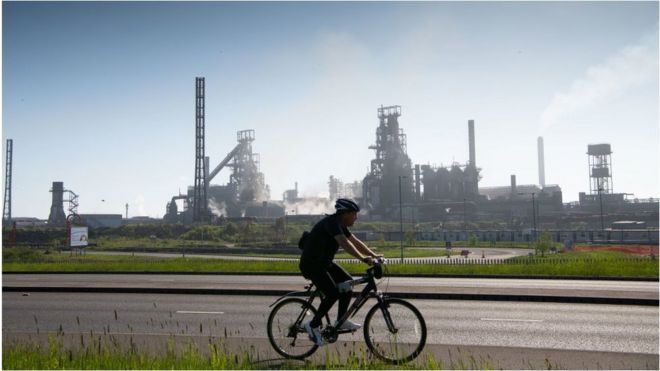
Image copyright GETTY IMAGESImage caption Port Talbot employs just under half of Tata’s 8,385 UK workforce
Tata Steel plans to cut as many as 3,000 jobs across its European business in another bid to come to terms with a “severe” international steel market.
The company wants to focus on higher-value products, it said, adding there would be no plant closures.
About two thirds of the job cuts will be office-based, it added.
The announcement comes after a merger with German rival Thyssenkrupp was blocked during the summer. Bosses had hoped the deal could reduce costs.
“Today we are highlighting important proposals towards building a financially strong and sustainable European business,” said Henrik Adam, chief executive of Tata Steel in Europe.
“We plan to change how we work together to enable better cooperation and faster decision-making. This will help us become self-sustaining and cash positive in the face of unprecedented severe market conditions, enabling us to lead the way towards a carbon-neutral future.”
The business employs about 20,000 people and is owned by India’s Tata.
Port Talbot steelworks employs just under half of Tata’s 8,385-strong workforce in the UK.
Wales’ economy minister Ken Skates said: “I am seeking an urgent conversation with Tata to establish what this means for workers in Wales and how we can support those affected by this announcement.”
It also said it would seek to “preserve thousands of jobs in a key foundation industry for the UK” but did not put a number on how many would be saved.
British Steel employs about 4,000 people in Scunthorpe and Teesside.



 CHINDIA ALERT: You'll be living in their world, very soon
Chinese self-driving truck startup Inceptio raises $100 million – sources
BEIJING/SHANGHAI (Reuters) – China’s Inceptio Technology, a startup developing self-driving trucks, has raised $100 million in its latest funding round from logistics firm GLP, its key strategic investor G7 and other investors, two sources familiar with the matter told Reuters.
The proceeds from its series A funding round will be used to further develop its technologies and to start commercial trials, said the sources, who declined to be named as they were not authorised to speak to media.
The company, which aims to operate a freight network with autonomous driving trucks in China from 2022, has partnerships with Dongfeng Automobile Co Ltd (600006.SS), Sinotruk Hong Kong Ltd (3808.HK) and Foton (600166.SS).
The two-year-old firm is developing autonomous driving software and an in-car computing system while the truckmakers are responsible for the vehicles’ platforms.
Inceptio declined to comment. G7 and Singapore-based GLP did not immediately respond to requests for comment.
Inceptio focuses on level 3 and 4 technologies. A level 3 vehicle will enable drivers to turn their attention away from driving but they still need to take over if the car encounters a problem, while with level 4 technologies, there is no human intervention in most circumstances.
The trucking industry is expected to an earlier adopter of autonomous driving technology compared to passenger vehicle makers as driving on highways is more predictable than on busy city streets.
German automaker Daimler (DAIGn.DE) and U.S. postal giant United Parcel Service Inc (UPS.N) have invested in self-driving trucks.
Source: Reuters
Posted in $100 million, 2022, aims, attention, authorised, autonomous driving, autonomous driving technology, away from, busy, car, China, Chinese, circumstances, city streets, comment, commercial, Company, compared, computing system, DAIMLER (DAIGn.DE), declined, developing, Dongfeng Automobile Co Ltd, drivers, driving, earlier adopter, encounters, expected, firm, focuses, Foton, freight network, funding, funding round, further develop, G7, German automaker, GLP, Highways, human intervention, immediately, in-car, Inceptio Technology, investors, key strategic investor, latest, level 3 and 4, level 3 vehicle, level 4 technologies, logistics firm, Makers, media, most, named, partnerships, passenger vehicle, predictable, problem, proceeds, raised, respond, responsible, round, self-driving truck, self-driving trucks, series A, Sinotruk Hong Kong Ltd, software, sources, speak, start, startup, take over, technologies, to operate, to requests, trials, trucking industry, truckmakers, trucks, turn, two-year-old, U.S. postal giant, Uncategorized, United Parcel Service Inc (UPS.N), used, vehicles’ platforms, while, will enable | Leave a Comment »