Chindia Alert: You’ll be Living in their World Very Soon
aims to alert you to the threats and opportunities that China and India present. China and India require serious attention; case of ‘hidden dragon and crouching tiger’.
Without this attention, governments, businesses and, indeed, individuals may find themselves at a great disadvantage sooner rather than later.
The POSTs (front webpages) are mainly 'cuttings' from reliable sources, updated continuously.
The PAGEs (see Tabs, above) attempt to make the information more meaningful by putting some structure to the information we have researched and assembled since 2006.
SHANGHAI, Sept. 14 (Xinhua) — As the 2019 Shanghai Tourism Festival opened Saturday evening, the festival, which began in 1990, has been a witness to China’s development and citizens’ consumption upgrade over the past few decades.
Twenty-five floats, which represent China’s well-known tourist destinations such as Nanjing and Suzhou cities in Jiangsu Province, and 32 performance groups from 19 countries and regions, including Germany, Switzerland and France, participated in the dance and music show in downtown Shanghai, attracting some 300,000 spectators.
The festival, which will last until Oct. 6, will feature 100 activities including some for overseas travelers. A folk culture exhibition on Belt and Road countries will also be held. Dozens of tourist sites, museums and galleries in Shanghai will offer half-price admissions during the event.
The first tourism festival in Shanghai attracted half a million tourists from home and abroad. The 2018 festival attracted 12.7 million visitors. As people’s living standards have improved remarkably, tourism is not a luxury any more, but a necessity for many citizens.
“In 1995, the company rewarded me with a trip to Hainan. I was so proud and cherished it very much,” recalled a Shanghai taxi driver surnamed Guo, 54. “Now, our income has increased a lot, travel becomes a routine for most people who are willing to pay their own money to relax.”
Thirty years ago, ideal tourism resources were lacking, said Lu Guojun, a clerk with Shanghai Huangpu River Cruise Group Co., Ltd, citing the swaths of croplands along the eastern coast of the river which flows through the city center.
In recent years, with improved infrastructure and rapid development of service economy, more companies have joined the development of the river tourism, Lu said.
Dai Bin, president of the China Tourism Academy in Beijing, said people’s aspirations for a better life lead to their high expectations of tourism quality.
In August, China issued a guideline to unleash the cultural and tourism consumption potential, urging efforts to deepen supply-side reform in cultural and tourism industries.
On Friday, Shanghai signed agreements with six cities and regions including Budapest, Phnom Penh and Bangkok to boost culture and tourism exchange.
Culture and tourism promote mutual friendship and understanding, said Yu Xiufen, head of the Shanghai Municipal Administration of Culture and Tourism.
In 2018, domestic tourists made 5.54 billion trips, up 10.8 percent year on year, and the total number of inbound and outbound tourists reached 291 million, up 7.8 percent. The total tourism revenue reached 5.97 trillion yuan (842.7 billion U.S. dollars) last year, up 10.5 percent, data of the Ministry of Culture and Tourism showed.
Researchers will conduct tests at site in Gansu to see whether it will make a viable facility to store highly radioactive waste safely
Scientists say China has the chance to become a world leader in this field but has to find a way to ensure it does not leak
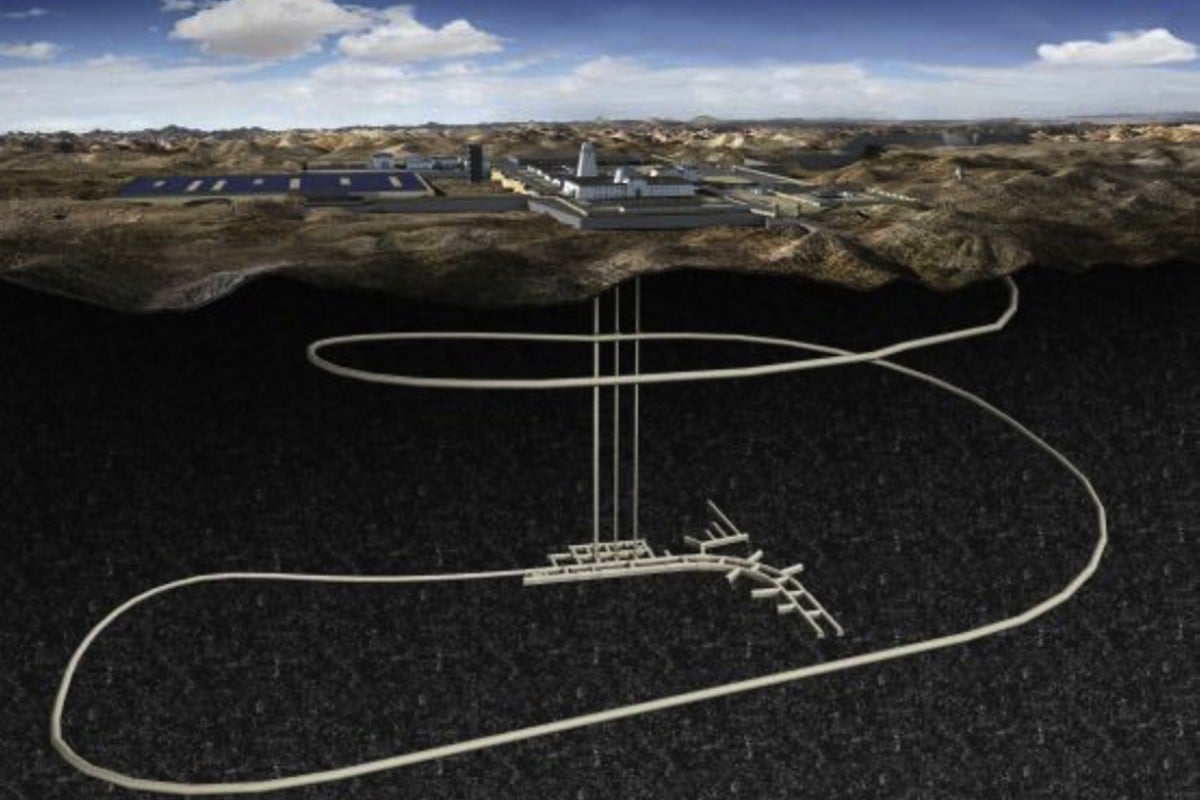
A preliminary design for the Beishan Underground Research Laboratory. Photo: Handout
China has chosen a site for an underground laboratory to research the disposal of highly radioactive waste, the country’s nuclear safety watchdog said on Wednesday.
Officials said work will soon begin on building the Beishan Underground Research Laboratory 400 metres underground in the northwestern province of Gansu.
Liu Hua, the head of the Chinese National Nuclear Safety Administration, said work would be carried out to determine whether it would be possible to build a repository for high-level nuclear waste deep underground.
“China sees radioactive waste disposal as a very important part [of the development nuclear energy],” said Liu. “To develop nuclear energy, we must have safe storage and disposal of nuclear waste.”
China condemns US blacklisting of nuclear firms and says American companies could be hurt as a result
The Chinese authorities see nuclear power an important source of energy that will help to curb carbon emissions and pollution as well as reducing its dependence on fuel imports.
But while the country has made great strides in the development of nuclear power, it needs to find a safe and reliable way of dealing with its growing stockpiles of nuclear waste.
Liu said the Gansu site had been identified as a possible location for a deep nuclear waste store after years of searching.
Once the laboratory is built, scientists and engineers will start experiments to confirm whether it will make a viable underground storage facility.
“Based on the data of the experiments, we can then decide if we are going to pick this as the final site,” he added.
China ‘actively promoting’ nuclear fuel processing plant with French Areva
Chinese officials usually stay tight-lipped about how nuclear waste is disposed of mainly because of fears that any discussion of the topic would trigger safety fears, although in recent years more efforts have been made to inform the public to win support.
Scientists say that nuclear waste can be divided into three categories depending on the level of radioactivity.
Low-level waste consists of minimally radioactive materials such as mop heads, rags, or protective clothing used in nuclear plants, while intermediate-level waste covers things such as filters and used reactor components.
High-level waste, however, is generated by the reprocessing of spent nuclear fuel and scientists generally agree that the safest way to dispose of it is to bury it deep underground in areas where the geology means it will have a minimal impact on the environment while it decays over thousands of years.
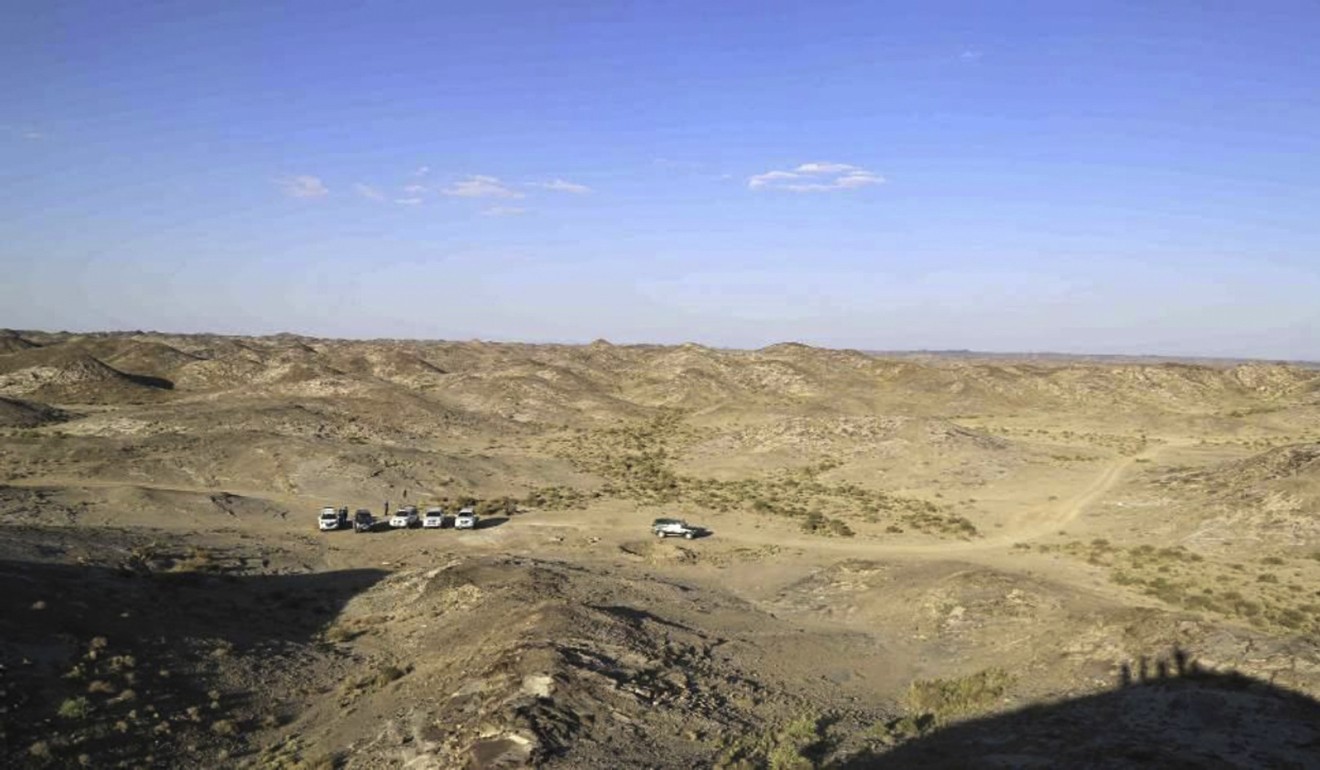
The facility will be built in a remote part of Gansu province. Photo: Handout
Some Chinese scientists said the country had the chance to lead the world in this area of research but others have expressed concerns about safety.
Jiang Kejun, a senior researcher at the Energy Research Institute of China’s National Development and Reform Commission, said that very few countries in the world are studying this form of nuclear waste disposal.
“It gives China an opportunity to be a leader in research in this area, plus China has the technology and financial means,” he said.
About a dozen countries including France, Switzerland, Japan, and the United States have carried out research in this area, but in recent years most have abandoned or scaled back their programmes.
At present there are storage sites operating in Finland and the US, but other countries such as Germany have abandoned plans to build similar facilities.
Washington blacklists Chinese nuclear firms for ‘helping military acquire US technology’
But despite broad scientific support for underground disposal, some analysts and many members of the public remain sceptical about whether it is really safe.
Lei Yian, an associate professor at the School of Physics at Peking University, said there was no absolute guarantee that the repositories would be safe when they are come into operation.
“Leakage has happened in [repositories] in the US and the former Soviet Union … it’s a difficult problem worldwide,” he said. “If China can solve it, then it will have solved a global problem.”
China is also building more facilities to dispose of low and intermediate level waste. Officials said new plants were being built in Zhenjiang, Fujian and Shandong, three coastal provinces that currently lack disposal facilities.
At present, two disposal sites for low and intermediate-level waste are in operation in Gansu and Guangdong provinces.
US retailer Costco was forced to close early on its opening day in China, after the store was swamped with shoppers.
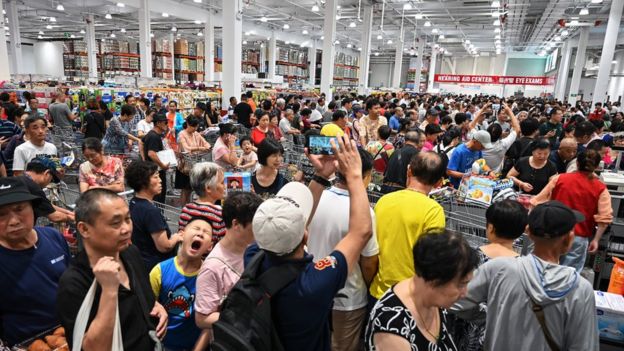
Buyers battled long queues and traffic chaos, before the Shanghai store was shut hours early due to “overcrowding”.
Costco’s push into China comes as other foreign retailers have struggled to compete with local rivals.
It also comes at a time of rising tensions between the US and China over trade.
Costco is a discount warehouse store that sells a range of goods, from fresh foods to household electronics.
Some customers spent two hours lining up to pay for their purchases, while some had to wait three hours for parking, state news agency Xinhua reported.
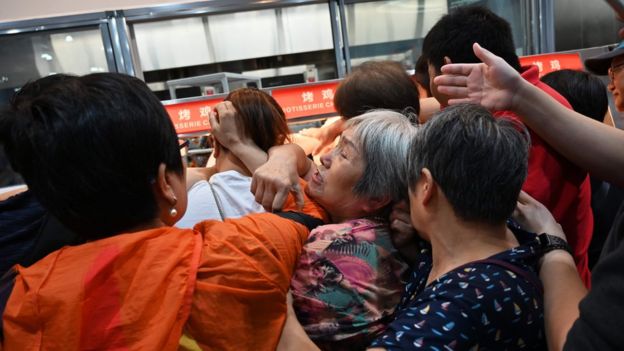
Image copyright AFPImage caption Images from the store show customers caught up in heavy crowds
One video showed people pushing through heavy crowds to get their hands on roast chickens.
“Due to overcrowding in the market, and in order to provide you with a better shopping experience, Costco will temporarily close on the afternoon of August 27. Please avoid coming,” the retailer in a notice on its official app, according to AFP.
Image copyright GETTY IMAGESImage caption Some customers reportedly spent two hours lining up to pay for their goods
Costco has had an online presence in China since 2014, through a partnership with e-commerce giant Alibaba.
The firm’s first store in the country comes as other international retailers battle tough competition in China.
Earlier this year, Amazon said it was downsizing its operations in China and France’s Carrefour agreed to sell 80% of its China business to local retailer Suning.com after a series of losses.
The world’s two largest economies have been fighting a trade war for the past year, and tensions have escalated with the threat of more tariffs from both sides.
BEIJING, Aug. 10 (Xinhua) — Chinese President Xi Jinping has led new advances in the development of major country diplomacy with Chinese characteristics.
Xi had a packed diplomatic schedule in the first half of 2019. In April-May, he chaired or attended three events China hosted in a row in just more than half a month. In June, he made four overseas visits and attended four important international meetings in a month.
Amid immense changes in the international situation, the head-of-state diplomacy has led the way forward.
FORGING GLOBAL PARTNERSHIP NETWORK
Xi made his first overseas visit this year in March to three European countries: Italy, Monaco and France, injecting strong impetus into the China-EU comprehensive strategic partnership.
Major-country relations continued to grow. In June, Xi paid a state visit to Russia where he and Russian President Vladimir Putin elevated the China-Russia ties to a comprehensive strategic partnership of coordination for a new era. It was Xi’s eighth visit to Russia and his 31st meeting with Putin since he took office as the Chinese president in 2013.
Friendly exchanges with neighboring countries were deepened. In June, he paid a state visit to the Democratic People’s Republic of Korea (DPRK), opening a new chapter for China-DPRK friendship. Also in June, Xi visited Kyrgyzstan and Tajikistan and met with Japanese Prime Minister Shinzo Abe in the Japanese city of Osaka. All in all, Xi met or held talks with more than 30 leaders of neighboring countries in the first half of the year.
Common progress with the vast majority of developing countries was advanced. Xi congratulated the inauguration of the China-Africa Institute, the opening of the Coordinators’ Meeting on the Implementation of the Follow-up Actions of the Beijing Summit of the Forum on the China-Africa Cooperation, and the first China-Africa Economic and Trade Expo.
Xi also chaired a China-Africa leaders’ meeting on the sidelines of the G20 summit in Osaka, at which leaders reached a broad consensus on a range of issues.
LEADING GLOBAL OPENNESS, COOPERATION
Xi has said a few anti-globalization movements that have emerged in the world cannot stop the tide of globalization.
Thinking in big-picture terms, a Chinese poem says, helps one dispel the clouds to see the sun.
At the G20 summit in Osaka, Xi announced China’s further opening-up measures which have since strengthened the confidence of the global economy.
On the sidelines of the G20 summit, Xi met with U.S. President Donald Trump. They agreed to advance a China-U.S. relationship featuring coordination, cooperation and stability.
China is playing a more positive role in the multilateral trading system, taking globalization toward the direction of more inclusiveness and benefit for all, said World Trade Organization Director General Roberto Azevedo.
Meanwhile, the China-proposed principle of extensive consultation, joint contribution and shared benefits is gaining worldwide recognition.
In April, the Second Belt and Road Forum for International Cooperation was attended by about 6,000 participants from 150 countries and 92 international organizations.
A study published by the World Bank found that fully implementing deeper policy reforms of the Belt and Road Initiative would lift 32 million people out of moderate poverty, increase global trade by up to 6.2 percent and increase global income by as much as 2.9 percent.
WORKING TOGETHER FOR BETTER FUTURE
The Chinese president has called on countries around the world to make concerted efforts and jointly shape the future of humanity.
In various occasions ranging from the global governance forum co-hosted by China and France to the Conference on Dialogue of Asian Civilizations, Xi put forward China’s approaches on global governance and encouraged all parties to build consensus on upholding multilateralism.
China has been committed to firmly upholding the international system with the United Nations at its core and international law as its foundation, and standing on the side of justice as China plays an active role in endeavors such as advancing the political settlement of the Korean Peninsula issue and supporting maintaining the Iran nuclear deal.
China has become a strong pillar of international cooperation and multilateralism, according to UN Secretary-General Antonio Guterres.
At the three events China hosted in the first half of the year, Xi expounded on the concept of building a community with a shared future for humanity from different perspectives: help developing countries break growth bottlenecks, tackle environmental challenges and look to culture and civilization to play their role.
All won broad recognition.
Under Xi’s leadership, the major country diplomacy with Chinese characteristics is sailing towards a brighter future.
Islam was forced on ethnic group ‘by religious wars and the ruling class’, Beijing says in latest report defending its actions in far western region
Uygurs’ ancestors were enslaved by the Turks, document says
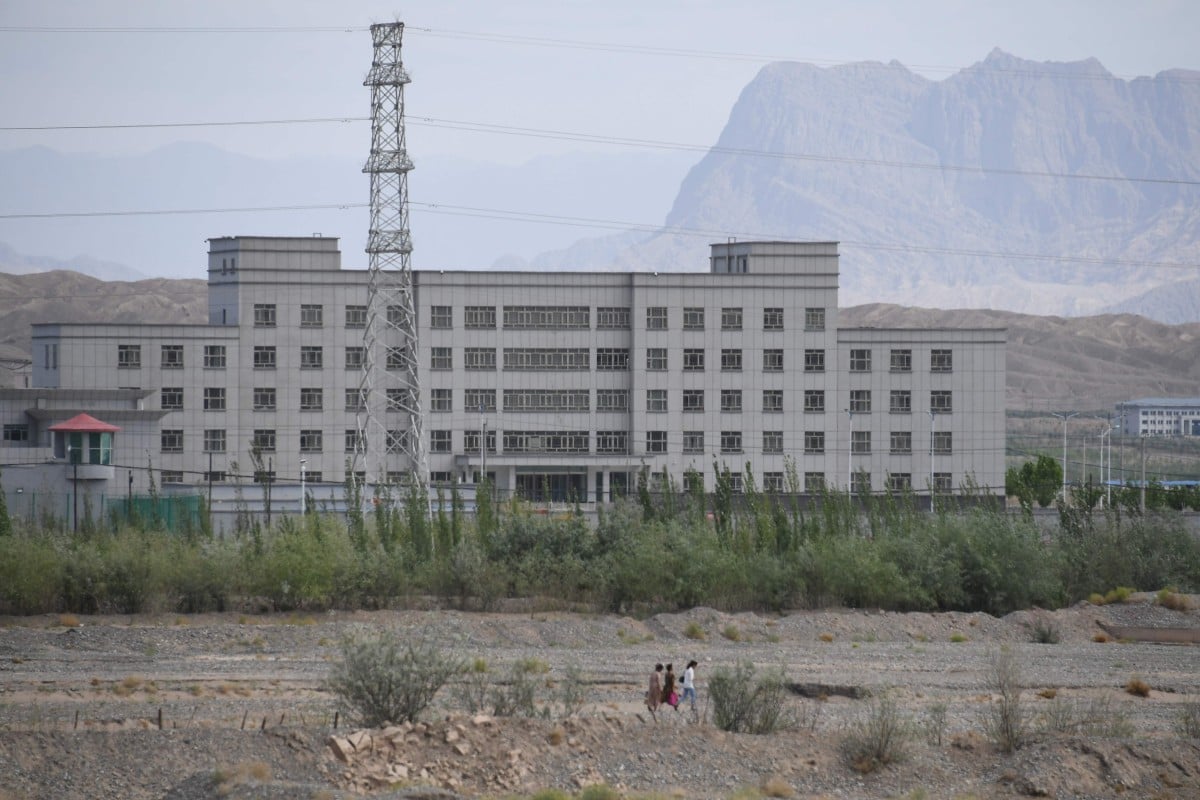
Beijing has issued a white paper seemingly designed to defend its actions in Xinjiang where as least 1 million Uygurs are being held in detention centres. Photo: AFP
Uygurs became Muslims not by choice but by force, and Islam is not their only religion, Beijing said in a white paper published on Sunday, as it continued its propaganda campaign to justify its controversial policies in the far western province of
“The Uygur people adopted Islam not of their own volition … but had it forced upon them by religious wars and the ruling class,” according to the document released by the State Council Information Office.
Islamic beliefs were forced on the Uygurs during the expansion of Arabic states. This is a historical fact, the report said, though that did not undermine the Uygurs’ religious rights now.
The report said also that there are Uygurs who hold to faiths other than Islam, and others who do not practise any religion at all.
The paper also took aim at the Uygurs’s historic links with Turkey.
“Historically, the Uygurs’ ancestors were enslaved by the Turks,” it said, citing a history of conflicts between the two groups dating back to the 8th century.
China promotes Xinjiang as tourist idyll
The white paper was issued amid a campaign by Beijing to justify its policies in the restive region, which is home to more than 10 million Uygurs, most whom are Muslim.
Earlier this month, the ambassadors of 22 countries signed a letter calling on Beijing to halt its mass detention of Uygurs in Xinjiang, the first such joint move on the issue at the UN Human Rights Council.
The signatories included envoys from Britain, France, Germany, Australia, Canada, Japan and Switzerland. The United States, which quit the forum a year ago, did not sign the letter.
China responded by issuing a letter signed by the ambassadors of 37 countries, including several Muslim majority states like Saudi Arabia and Pakistan, backing its policies in the region.
Beijing said the show of support was “a powerful response to the groundless accusations made against China by a small number of Western countries”.
UN experts and activists say at least 1 million Uygurs and other Muslims are currently being held in detention centres in Xinjiang. China describes the facilities as training and education centres that aim to stamp out religious extremism and provide people with useful skills. It has never said how many people are being detained in them.
The United States has repeatedly criticised Beijing over its policies in Xinjiang.
On Wednesday, US President Donald Trump met victims of religious persecution from around the world, including Jewher Ilham, a Uygur woman whose father Ilham Tohti was sentenced to life imprisonment in 2014 after being found guilty of promoting separatism.
“That’s tough stuff,” Trump said after hearing Ilham’s account of her father’s ordeal.
China describes the detention camps in Xinjiang as training and education centres. Photo: AFP
In January, US lawmakers nominated the imprisoned economist, writer and former professor at Minzu University in Beijing, for the 2019 Nobel Peace Prize in a bid to pressure China to stop its crackdown on the minority group.
Sunday’s white paper is the latest in a string of similar documents published recently by Beijing as it seeks to defend the legitimacy of its policies in Xinjiang. In a document issued in March, it said that over the past five years it had arrested nearly 13,000 “terrorists” in the region.
Xinjiang camps defended at UN human rights forum
Neither the March report nor Sunday’s white paper mentioned Beijing’s other controversial policies in the region, such as the collection of DNA samples and extensive surveillance on local people.
“Xinjiang has borrowed from international experiences, combined them with local realities, and taken resolute measures against terrorism and extremism,” it said.
The measures have been effective, it said, though did not elaborate.
Over the past year, China has increased its efforts to defend the camps, including organising strictly controlled visits by selected diplomats and journalists to see the people who live in them.
State media has also released videos showing seemingly happy and healthy people inside the camps in a bid to counter accounts of harsh conditions and abuse published by the Western media.
China’s three biggest airlines are demanding compensation from Boeing over its grounded 737 Max fleet.
Air China, China Southern and China Eastern have filed claims for payouts, according to state media reports.
China’s regulator was the first to ground the fleet in the wake of two deadly crashes involving the US-made aircraft.
It comes on the eve of a meeting of global aviation regulators that will provide an update on the troubled jets.
The Chinese airlines are seeking compensation for losses incurred by the grounded fleet, as well as delayed deliveries of the 737 Max jets, according to reports.
China operates the largest fleet of Boeing 737 Max aircraft and was the first country to take the jets out of service after the Ethiopian Airlines 737 Max 8 crash in March.
The disaster killed all 157 people on board. In October, 189 people were killed in a Lion Air crash involving the same model.
Both crashes were linked to the jet’s Manoeuvring Characteristics Augmentation System, a new feature on 737 Max planes, which was designed to improve the handling of the jet and to stop it pitching up at too high an angle.
The planemaker’s entire global fleet of 737 Max aircraft has been grounded since March and the firm is anxious to prove it is safe to return to the skies.
The move by China’s top airlines to seek compensation comes ahead of a closely watched summit of aviation regulators in Texas on Thursday.
The US Federal Aviation Administration (FAA) is due to provide an update on reviews of Boeing’s software fix and new pilot training.
The meeting in Texas will involve 57 agencies from 33 countries, including China, France, Germany and the UK, as well as the European Union Aviation Safety Agency.
But it is unclear if the planes will be back in the air before the end of the critical summer travel season.
Foreign Minister Wang Yi tells French counterpart Jean-Yves Le Drian the two sides should ensure ties ‘continue to develop in a healthy way’
Meeting comes after Paris angers Beijing by sending a warship through the sensitive Taiwan Strait
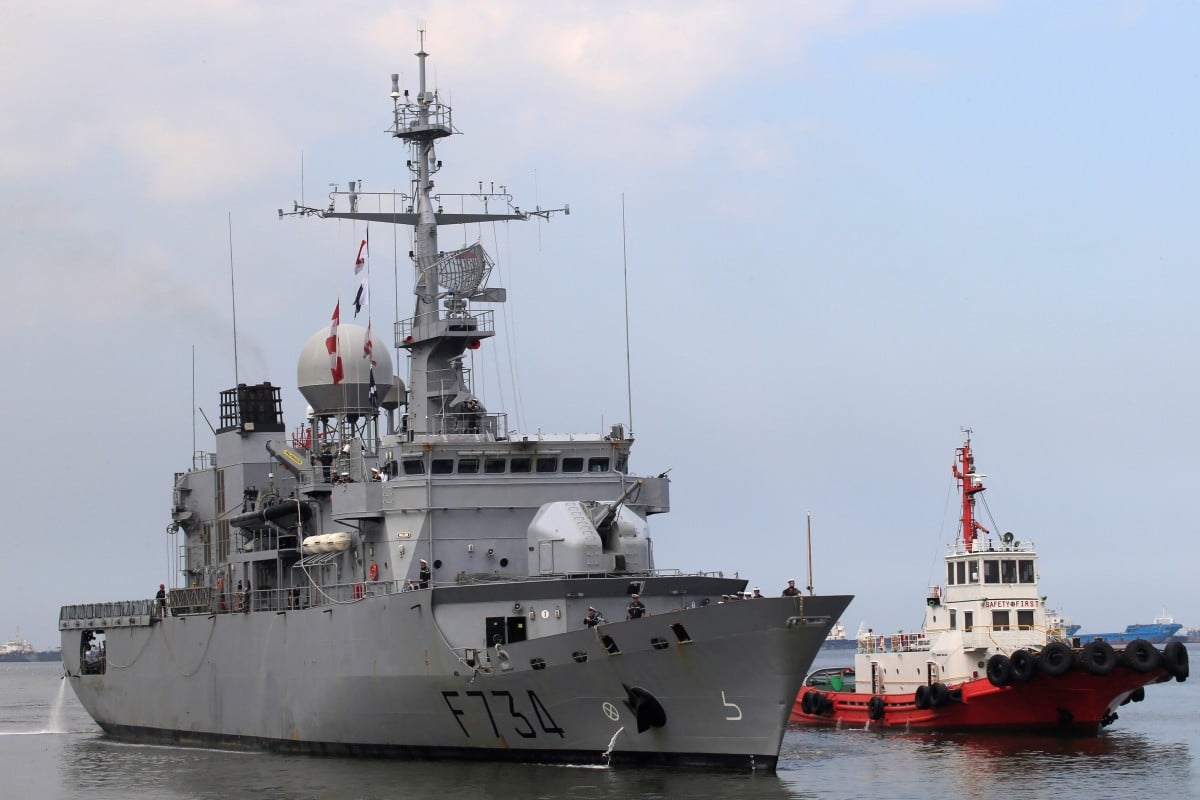
Paris upset Beijing earlier this month by sending its frigate Vendémiaire through the Taiwan Strait. Photo: Reuters
France and China should value their strong relationship and not take actions that disrupt it, China’s foreign minister told his French counterpart on Thursday, just days after
at Paris for sending a warship through the Taiwan Strait earlier this month.
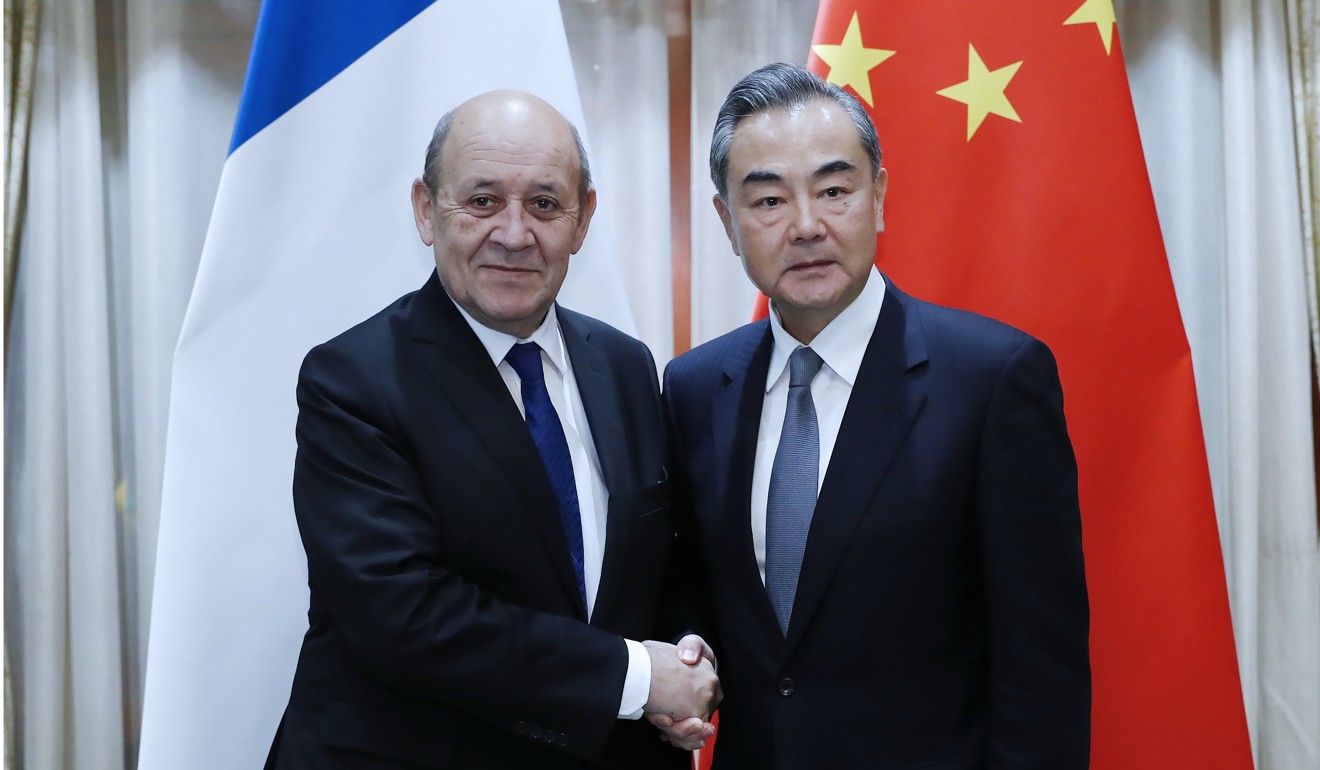
Speaking at a meeting on the sidelines of the Belt and Road Forum in Beijing, Wang Yi told Jean-Yves Le Drian that the two nations “should cherish their hard-won and good relations”.
“[We should] avoid unnecessary disruptions and ensure that bilateral relations continue to develop in a healthy and progressive way,” he was quoted as saying in a statement issued on Friday by the Chinese foreign ministry.
Le Drian responded by saying France was willing to cooperate with China to “maintain the growth momentum of bilateral relations”, according to the statement.
French Foreign Minister Jean-Yves Le Drian told his Chinese counterpart Wang Yi that Paris was willing to cooperate with Beijing. Photo: Xinhua
passed through the Taiwan Strait on April 6. It had been expected to take part in a naval parade on Tuesday to celebrate the 70th anniversary of China’s navy, but Beijing withdrew the invitation in response to the action.
The defence ministry in Paris said this week it had been “in close contact with the Chinese authorities” about the incident.
EU’s connectivity plan ‘more sustainable’ than belt and road
A spokesman for the European Union said the trading bloc was committed to a rules-based maritime order based on international law, including freedom of navigation, and that it was in regular contact with the member states.
Chinese academics said that after the transit by the French warship it was likely that more Western countries would make their presence known in the region and that Beijing should remain vigilant.
“France wants to show that as a great power it has a broader concern in Asia-Pacific beyond trade and other ‘soft’ fields,” said Shi Yinhong, an international relations professor at Renmin University of China in Beijing.
“And it will exert its right to free navigation in any international waters regardless of China’s position or sensitivities.”
The Taiwan Strait is about 160km (100 miles) wide and divides mainland China from Taiwan, which Beijing regards as a breakaway province awaiting reunification, by force if necessary. The US, meanwhile, is bound by law to help the self-ruled defend itself and frequently sends warships through the strait in a show of support.
Shi said that US President Donald Trump’s Indo-Pacific strategy, which regards China as a “strategic competitor”, might draw “opportunistic associates” – like France and Britain – into the region.
“Some other states could be encouraged by the French action to do the same,” he said. “But [they] may also be deterred by China’s probable military and diplomatic responses, which would be determined on a case-by-case basis.”
Putin gets behind Xi’s belt and road plan in face of US hostility
Zhu Feng, a professor of international relations at Nanjing University, said France’s conduct was intended to show the “shared concern of Western allies” regarding the security aspect of cross-strait relations.
“China must be vigilant to the new tendency [for nations] to internationalise the Taiwan Strait issue,” he said, though added that the transit of the French warship was “more of a symbolic gesture than actual action”.
Philippe Le Corre, a senior fellow at the Carnegie Endowment for International Peace in Washington and former special assistant for international affairs to the French defence minister, said the Taiwan Strait did not belong to any one nation and, therefore, ships were within their rights to sail through it without prior authorisation.
“From Paris’s point of view, like the rest of the EU, the principles of freedom of navigation are critical to the world economy and trade, therefore there is no reason why European navies or even commercial ships should not be allowed to cross the Taiwan Strait,” he said.
“This is EU policy, not just France or the UK. It has nothing to do with the US, it is international law.”
BEIJING (Reuters) – Major European Union countries want to deal with China as a group rather than sign bilateral agreements as individual states, German Economy Minister Peter Altmaier said on Friday, attending a summit in Beijing on China’s Belt and Road plan.
European countries have generally signalled their willingness to participate in China’s programme to re-create the old Silk Road joining China with Asia and Europe.
But key states like France and Germany have said China must in turn improve access and fair competition for foreign firms.
Italy in March became the first major Western government to back China’s initiative, even as some EU leaders cautioned Rome against rushing into the arms of Beijing.
Nonetheless, Altmaier said Germany, France, Spain and the United Kingdom had shown at the Belt and Road Forum in Beijing on Friday that the EU was “in its great majority” united in its belief that “we can only implement our positions together.”
“In the big EU states we have agreed that we don’t want to sign any bilateral memorandums but together make necessary arrangements between the greater European Economic Area and the economic area of Greater China,” Altmaier said when asked if he could see Germany signing a similar bilateral agreement to Italy.
A spokesman for Altmaier’s office later said he was talking about general arrangements and not specifically the Belt and Road.
The minister said he was encouraged by Chinese President Xi Jinping’s pledge to pursue free trade, multilateralism and sustainability as part of Belt and Road.
“We will take this promise seriously” and make suggestions on how to achieve these goals in both Asia and Europe, he said.
China is a partner and a competitor at the same time and the EU must define its interests, Altmaier said.
“And for that we need an industry strategy. For that we need our own connectivity strategy,” he added.
WASHINGTON (Reuters) – A French warship passed through the strategic Taiwan Strait this month, U.S. officials told Reuters, a rare voyage by a vessel of a European country that is likely to be welcomed by Washington but increase tension with Beijing.
The passage, which was confirmed by China, is a sign that U.S. allies are increasingly asserting freedom of navigation in international waterways near China. It could open the door for other allies, such as Japan and Australia, to consider similar operations.
The French operation comes amid increasing tensions between the United States and China. Taiwan is one of a growing number of flashpoints in the U.S.-China relationship, which also include a trade war, U.S. sanctions and China’s increasingly muscular military posture in the South China Sea, where the United States also conducts freedom of navigation patrols.
Two officials, speaking on condition of anonymity, said a French military vessel carried out the transit in the narrow waterway between China and Taiwan on April 6.
One of the officials identified the warship as the French frigate Vendemiaire and said it was shadowed by the Chinese military. The official was not aware of any previous French military passage through the Taiwan Strait.
The officials said that as a result of the passage, China notified France it was no longer invited to a naval parade to mark the 70 years since the founding of China’s Navy. Warships from India, Australia and several other nations participated.
China said on Thursday it had lodged “stern representations” with France for what it called an “illegal” passage.
“China’s military sent navy ships in accordance with the law and the rules to identify the French ship and warn it to leave,” defence ministry spokesman Ren Guoqiang told a regularly scheduled media briefing, while declining to say if the sailing had led to the withdrawal of France’s invitation to the parade of ships this week.
“China’s military will stay alert to firmly safeguard China’s sovereignty and security,” he said.
Colonel Patrik Steiger, the spokesman for France’s military chief of staff, declined to comment on an operational mission.
The U.S. officials did not speculate on the purpose of the passage or whether it was designed to assert freedom of navigation.
MOUNTING TENSIONS
The French strait passage comes against the backdrop of increasingly regular passages by U.S. warships through the strategic waterway. Last month, the United States sent Navy and Coast Guard ships through the Taiwan Strait.
The passages upset China, which claims self-ruled Taiwan as part of its territory. Beijing has been ramping up pressure to assert its sovereignty over the island.
Chen Chung-chi, spokesman for Taiwan’s defence ministry, told Reuters by phone the strait is part of busy international waters and it is “a necessity” for vessels from all countries to transit through it. He said Taiwan’s defence ministry will continue to monitor movement of foreign vessels in the region.
“This is an important development both because of the transit itself but also because it reflects a more geopolitical approach by France towards China and the broader Asia-Pacific,” said Abraham Denmark, a former U.S. deputy assistant secretary of defence for East Asia.
The transit is a sign that countries like France are not only looking at China through the lens of trade but from a military standpoint as well, Denmark said.
Last month, France and China signed deals worth billions of euros during a visit to Paris by Chinese President Xi Jinping. French President Emmanuel Macron wants to forge a united European front to confront Chinese advances in trade and technology.
Tesla said it is investigating a video on Chinese social media that appears to show one of its vehicles bursting into flames in Shanghai.
In a statement, the carmaker said it had sent a team to investigate the matter, and that there were no reported casualties.
The video, which has not been verified by the BBC, showed a stationary car erupting into flames in a parking lot.
Tesla did not confirm the car model but social media identified it as Model S.
“After learning about the incident in Shanghai, we immediately sent the team to the scene last night,” according to a translation of a Tesla statement posted on Chinese social media platform Weibo.
“We are actively contacting relevant departments and supporting the verification. According to current information, there are no casualties.”



 CHINDIA ALERT: You'll be living in their world, very soon