Chindia Alert: You’ll be Living in their World Very Soon
aims to alert you to the threats and opportunities that China and India present. China and India require serious attention; case of ‘hidden dragon and crouching tiger’.
Without this attention, governments, businesses and, indeed, individuals may find themselves at a great disadvantage sooner rather than later.
The POSTs (front webpages) are mainly 'cuttings' from reliable sources, updated continuously.
The PAGEs (see Tabs, above) attempt to make the information more meaningful by putting some structure to the information we have researched and assembled since 2006.
A COVID-19 patient is wheeled out from an EHPAD (Housing Establishment for Dependant Elderly People) in Epinay sur Seine near Paris, France, on April 22, 2020. (Photo by Aurelien Morissard/Xinhua)
The first suspected cases of COVID-19 infection in France could date back to Nov. 16 last year, a hospital in eastern France said. Before this announcement, the first COVID-19 infection cases officially recorded in France were on Jan. 24, 2020.
PARIS, May 8 (Xinhua) — The first suspected cases of COVID-19 infection in France could date back to Nov. 16 last year, some nine weeks earlier than the official record of the country’s first confirmed cases, a hospital in eastern France said Thursday.
“Doctor Michel Schmitt, head of the medical imaging department at the Albert Schweitzer hospital in Colmar, has reviewed 2,456 chest scans performed between Nov. 1 and April 30, for all reasons (cardiac, pulmonary, traumatic, tumor pathologies),” said the hospital in a press release.
A suspected patient of COVID-19 is transferred to an EHPAD in Epinay sur Seine near Paris, France, April 22, 2020. (Photo by Aurelien Morissard/Xinhua)
The typical scans compatible with COVID-19 infection have been also reviewed in a second then a third reading by two other experienced radiologists. According to this retrospective study, the first cases of contamination with COVID-19 were thus identified from Nov. 16 in this hospital, it said.
Albert Schweitzer hospital added that it has launched a collaboration with France’s National Center for Scientific Research to start an epidemiological exploitation of these results.
Before this announcement, the first case of COVID-19 infection in east France was officially identified in late February. It involved a 36-year-old man who returned from a trip to Lombardy, then hotspot of the epidemic in Italy.
A giant mask is seen on a residential building in Saint-Mande, near Paris, France, on May 2, 2020. (Photo by Aurelien Morissard/Xinhua)
The first COVID-19 infection cases officially recorded in France were on Jan. 24, 2020 relating to individuals who had recently arrived or returned from China.
France on Thursday registered 178 new deaths caused by the novel coronavirus, taking the tally to 25,987. As hospitalization data continued to slow, the government said on Thursday that the country would start to unwind the nearly-two-month anti-coronavirus lockdown from Monday.
PARIS/BEIJING (Reuters) – French automaker Renault SA (RENA.PA) is ditching its main passenger car business in China following poor sales at the loss-making venture with Dongfeng Motor Group (0489.HK).
A slowdown in Chinese automotive sales, which is expected to worsen this year due to the coronavirus crisis, has heaped pressure on carmakers that were already struggling to establish a big presence in China, the world’s biggest vehicle market.
Renault, which entered the Dongfeng joint venture in 2013 and began producing gas-powered cars under the tie-up in Wuhan three years later, is one of the few global carmakers to exit a major project in China in recent years, however.
The carmaker, which will retain a presence in China with other ventures, including in electric vehicles, is trying more broadly to find cost savings and pull out of businesses where it is struggling to make its mark and turn a profit.
This is part of Renault’s efforts to make the most of its alliance with Japanese partner Nissan (7201.T), and the two are due provide a strategy update by mid-May.
Dongfeng had been anticipating Renault’s potential exit from the Chinese joint venture as long as a year ago, a banking source familiar with the matter said. Sales were under pressure long before the coronavirus crisis walloped demand further, another source with knowledge of the situation said.
The venture sold only 18,607 cars in 2019, far below its annual capacity of 110,000 and reported an operating loss of more than 1.5 billion yuan ($212 million).
Dongfeng, which will take on Renault’s 50% stake in their venture, plans to revamp and upgrade the business’s existing car plants, which will no longer make Renault-branded cars, a spokeswoman for the Chinese automaker said on Tuesday.
Dongfeng will arrange positions for staff at the venture within its wider group operations, she added.
Financial terms of the transaction were not disclosed.
‘NEW CHAPTER’
Renault said it would focus on its light commercial vehicle business with Brilliance China Automotive Holdings (1114.HK). That venture plans to roll out five new models before 2023 and is planning export cars to other markets.
Another focus is electric vehicles, which will be built by its venture with Jiangling Motors Corporation Group.
Renault and Dongfeng also said they would continue to cooperate on “connected vehicles” and work with common partner Nissan Motor Co Ltd (7201.T) on new generation engines.
“We are opening a new chapter in China. We will concentrate on electric vehicles and light commercial vehicles, the two main drivers for future clean mobility and more efficiently leverage our relationship with Nissan,” Francois Provost, chairman of the China region for Renault, said in a statement.
That could include relying on Nissan dealers rather than Renault ones in the longer term, a source familiar with the matter said.
Renault and Nissan, which both reported losses for 2019 even before the global pandemic hit, are looking to rebalance a relationship strained by the 2018 arrest and subsequent flight of former alliance supremo Carlos Ghosn.
The ex-boss-turned-fugitive, accused of financial misconduct, denies any wrongdoing.
Other international carmakers have struggled in China too.
In 2018, Japanese automaker Suzuki Motor Corp (7269.T) sold its stake in a venture with Changan Automobile (000625.SZ).
Renault’s French rival PSA (PEUP.PA), meanwhile, is exiting a small joint venture with China’s Chongqing Changan Automobile (000625.SZ) and said in February it had suffered 700 million euros in losses last year in the country.
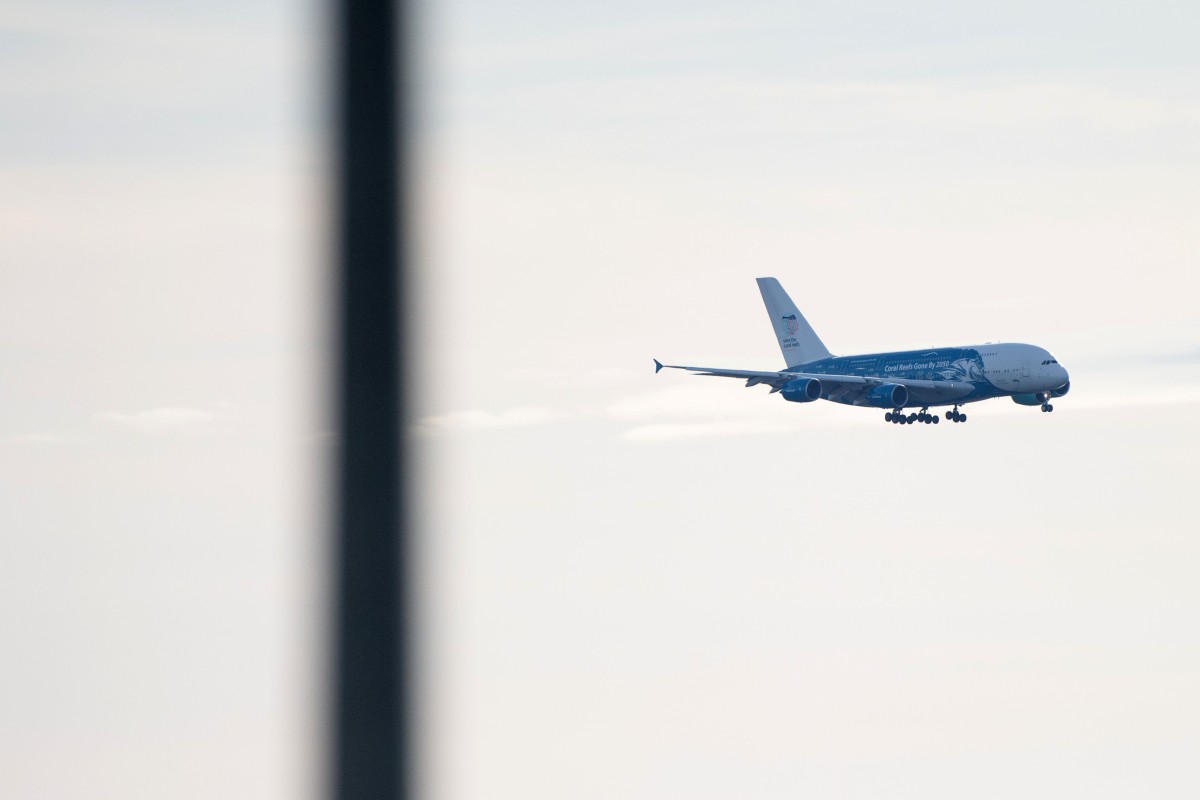
An Airbus A380 landed at the military base of Istres in the southern French region of Bouches-du-Rhone on Sunday
Of the 180 French people who were flown back from Wuhan on Friday, one showed symptoms of being infected with the virus
An Airbus A380-84, believed to be carrying European citizens flown out from the coronavirus zone in Wuhan, approaches the Istres-Le Tube Air Base near Istres. Photo: AFP
A second French-chartered plane carrying 300 evacuees from China flew to France on Sunday as more foreigners fled China’s rapidly developing virus.
The Airbus A380 landed at the military base of Istres in the southern French region of Bouches-du-Rhone. A first French plane landed Friday.
Officials said that when this latest flight left the central Chinese city of Wuhan, none of the passengers had symptoms of coronavirus. They include French, Belgians, Dutch, Danes, Czechs, Slovaks and some citizens of African countries.
Authorities said the plane would drop off most of its passengers at Istres before leaving for Belgium with several dozen people from northern Europe. Authorities haven’t said if the travellers arriving at Istres will be put into quarantine.
Of the 180 French people who were flown back from Wuhan on Friday, one showed symptoms of being infected with the virus and was sent to a Marseille hospital for testing, French Health Minister Agnes Buzyn said.
The other passengers were being quarantined for 14 days at a large, isolated Mediterranean resort not far from Marseille near Carry-le-Rouet.
German Health Minister Jens Spahn said that two people who were flown back to Germany on Saturday were found to be infected with the virus. That brought the total of cases in Germany to 10. Spahn said the two had been symptom-free when they left Wuhan and when they arrived in Frankfurt, and that they were “doing well at the moment” in quarantine at a Frankfurt hospital.
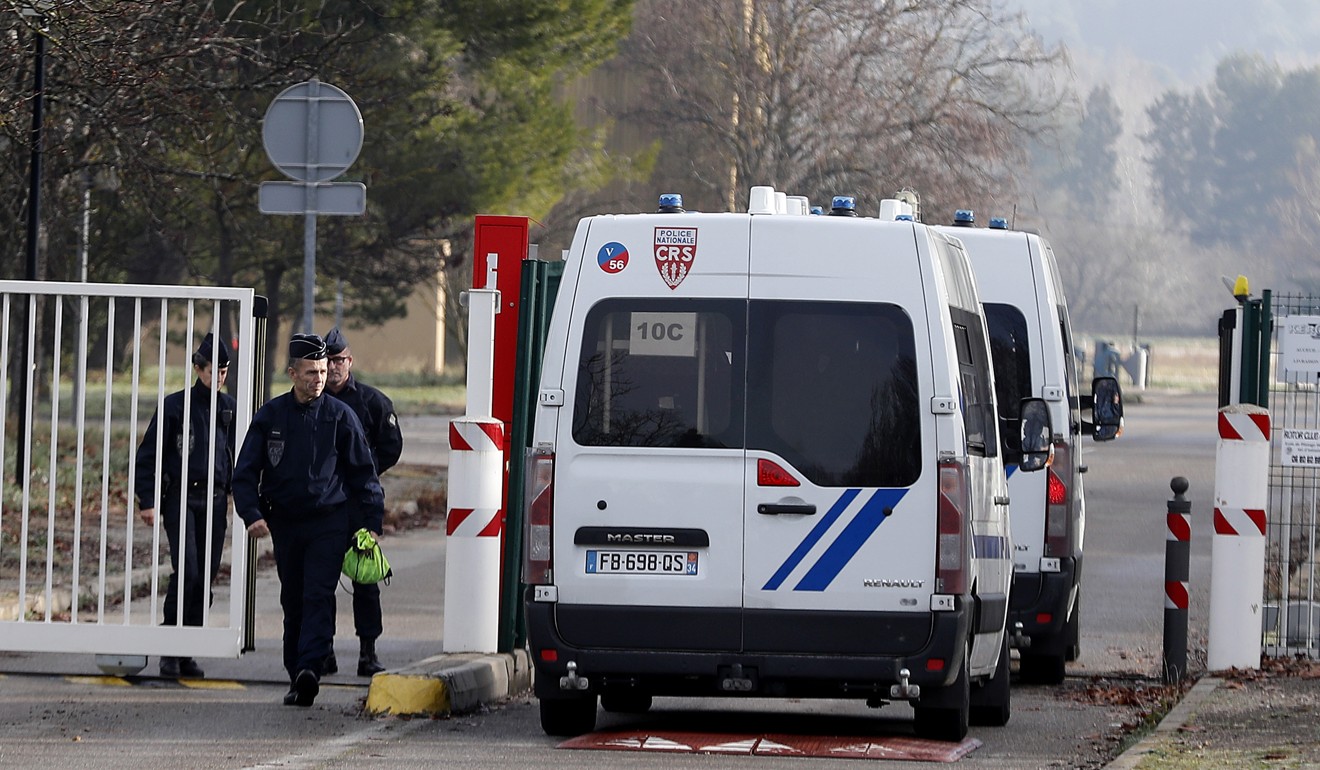
French police officers gather at the entrance gate of the ENSOSP (French National Fire Officers Academy) where French citizens will be quarantined after their repatriation from Wuhan. Photo: EPA-EFE
Europe has 25 reported cases of people who have been infected with the virus that emerged from Wuhan: Germany has 10; France has six; Russia, Italy and the U.K have two each and Finland, Sweden and Spain each have one.
The Italian foreign ministry said permission had been given for cargo flights to fly between Italy and China.
Separately, the special commissioner in charge of coordinating Italy’s efforts during the viral outbreak said consideration was being given to letting a handful of Chinese commercial airliners fly to Italy to pick up Chinese tourists and other Chinese citizens stranded in Italy by the suspension of commercial flights.
The commissioner, Angelo Borrelli, was quoted by Italian media as saying that Italy would like those flights, if approved, not to fly to Italy empty, but instead to bring back Italians from China. There are an estimated 500 other Italians in China who have apparently expressed an interest in returning home during the outbreak, but nothing firm had been decided on those flight possibilities.
Meanwhile, an estimated 3,000 tourists and others from China are stranded in Italy and want to return to home, according to Italian media.
Coronavirus: Indonesia evacuates citizens, stops flights from China
2 Feb 2020
The death toll in China climbed Sunday to 304 and the number of infections rose to 14,380. In addition, the Philippines on Sunday reported the first death from the virus outside China.
On Saturday night, a Turkish military transport plane carrying 42 people arrived in Ankara from Wutan. The 32 Turkish, six Azerbaijani, three Georgian and one Albanian nationals will remain under observation in a hospital for 14 days, Health Minister Fahrettin Koca said.
Twenty Turkish personnel who took part in the evacuation will also be kept in quarantine.
The Egyptian government said 306 of its nationals would return home from Wuhan on a chartered plane later Sunday and will be subject to a 14-day quarantine. The online news outlet Masrawy reported that authorities prepared a hotel in the northwestern city of Marsa Matruh where the returnees would be quarantined.
The new coronavirus has been declared a global emergency by the World Health Organization, as the outbreak continues to spread outside China.
“The main reason for this declaration is not what is happening in China but what is happening in other countries,” said WHO chief Tedros Adhanom Ghebreyesus.
The concern is that it could spread to countries with weaker health systems.
Meanwhile, the US has told its citizens not to travel to China.
The state department issued a level four warning – having previously urged Americans to “reconsider” travel to China – and said any citizens in China “should consider departing using commercial means”.
China has said it will send charter plans to bring back Hubei province residents who are overseas “as soon as possible”.
A foreign ministry spokesman said this was because of the “practical difficulties” Chinese citizens have faced abroad. Hubei is where the virus emerged.
At least 213 people in the China have died from the virus, mostly in Hubei, with almost 10,000 cases nationally.
The WHO said there had been 98 cases in 18 other countries, but no deaths.
Most international cases are in people who had been to Wuhan in Hubei.
However in eight cases – in Germany, Japan, Vietnam and the United States – patients were infected by people who had travelled to China.
Getty Coronavirus outbreak outside China
18 The number of countries with cases
14 Cases in Thailand and Japan
13 Singapore
11 South Korea
8 Australia and Malaysia
5 France and USA
Source: WHO and local authorities
Speaking at a news conference in Geneva, Dr Tedros described the virus as an “unprecedented outbreak” that has been met with an “unprecedented response”.
He praised the “extraordinary measures” Chinese authorities had taken, and said there was no reason to limit trade or travel to China.
The US Commerce Secretary, Wilbur Ross, has said the outbreak could “accelerate the return of jobs to North America”.
Preparing other countries
What happens if this virus finds its way into a country that cannot cope?
Many low- and middle-income countries simply lack the tools to spot or contain it. The fear is it could spread uncontrollably and that it may go unnoticed for some time.
Remember this is a disease which emerged only last month – and yet there are already almost 10,000 confirmed cases in China.
The 2014 Ebola outbreak in West Africa – the largest in human history – showed how easily poorer countries can be overwhelmed by such outbreaks.
And if novel coronavirus gets a significant foothold in such places, then it would be incredibly difficult to contain.
We are not at that stage yet – 99% of cases are in China and the WHO is convinced the country can control the outbreak there.
But declaring a global emergency allows the WHO to support lower- and middle-income countries to strengthen their disease surveillance – and prepare them for cases.
How unusual is this declaration?
The WHO declares a Public Health Emergency of International Concern when there is “an extraordinary event which is determined… to constitute a public health risk to other states through the international spread of disease”.
It has previously declared five global public health emergencies:
Swine flu, 2009 – The H1N1 virus spread across the world in 2009, with death toll estimates ranging from 123,000 to 575,400
Polio, 2014 – Although closer than ever to eradication in 2012, polio numbers rose in 2013
Zika, 2016 – The WHO declared Zika a public health emergency in 2016 after the disease spread rapidly through the Americas
Ebola, 2014 and 2019 – The first emergency over the virus lasted from August 2014 to March 2016 as almost 30,000 people were infected and more than 11,000 died in West Africa. A second emergency was declared last year as an outbreak spread in DR Congo
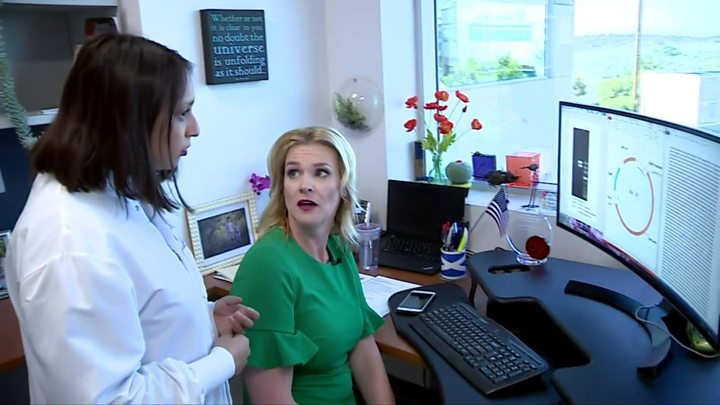
Media caption Inside the US laboratory developing a coronavirus vaccine
How is China handling the outbreak?
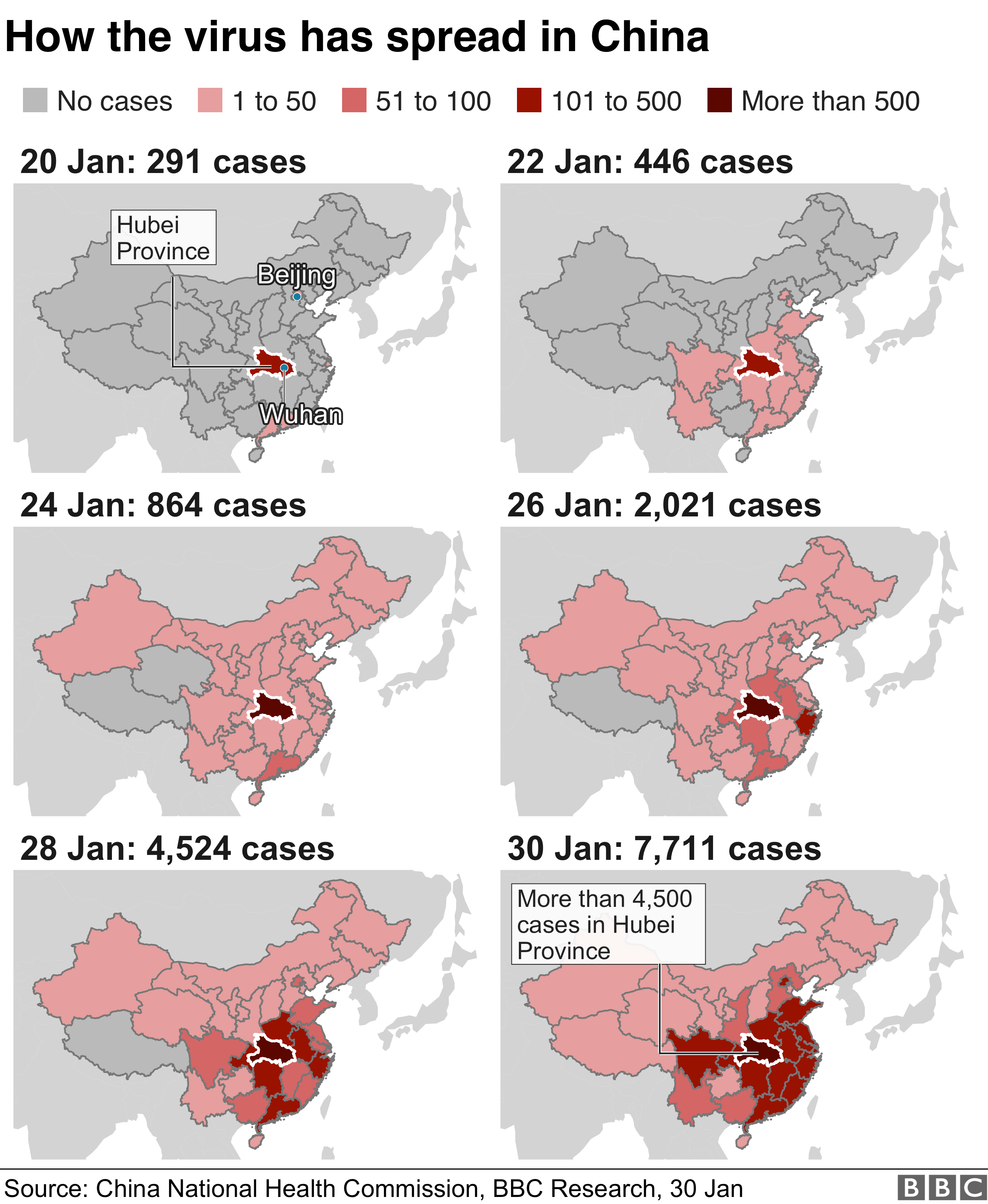
A confirmed case in Tibet means the virus has reached every region in mainland China. According to the country’s National Health Commission, 9,692 cases have tested positive.
The central province of Hubei, where nearly all deaths have occurred, is in a state of lockdown. The province of 60 million people is home to Wuhan, the heart of the outbreak.
The city has effectively been sealed off and China has put numerous transport restrictions in place to curb the spread of the virus.
People who have been in Hubei are also being told to work from home until it is considered safe for them to return.
The virus is affecting China’s economy, the world’s second-largest, with a growing number of countries advising their citizens to avoid all non-essential travel to the country.
How is the world responding?
Voluntary evacuations of hundreds of foreign nationals from Wuhan are under way.
The UK, Australia, South Korea, Singapore and New Zealand are expected to quarantine all evacuees for two weeks to monitor them for symptoms and avoid contagion.
Australia plans to quarantine its evacuees on Christmas Island, 2,000km (1,200 miles) from the mainland in a detention centre that has been used to house asylum seekers.
In other recent developments:
Italy suspended flights to China after two Chinese tourists in Rome were diagnosed with the virus; earlier 6,000 people on board a cruise ship were temporarily barred from disembarking
In the US, Chicago health officials have reported the first US case of human-to-human transmission. Around 200 US citizens have been flown out of Wuhan and are being isolated at a Californian military base for at least 72 hours
Russia has decided to close its 4,300km (2,670-mile) far-eastern border with China
Two flights to Japan have already landed in Tokyo. Japan has now raised its infectious disease advisory level for China
Some 250 French nationals have been evacuated from Wuhan
India has confirmed its first case of the virus – a student in the southern state of Kerala who was studying in Wuhan
Israel has barred all flight connections with China
Papua New Guinea has banned all visitors from “Asian ports”
French leader calls for restraint and says he raised the topic ‘on several occasions’ during his visit
Two sides find common ground on need to defend free trade and fight climate change as Donald Trump starts process of pulling US out of Paris Climate Agreement
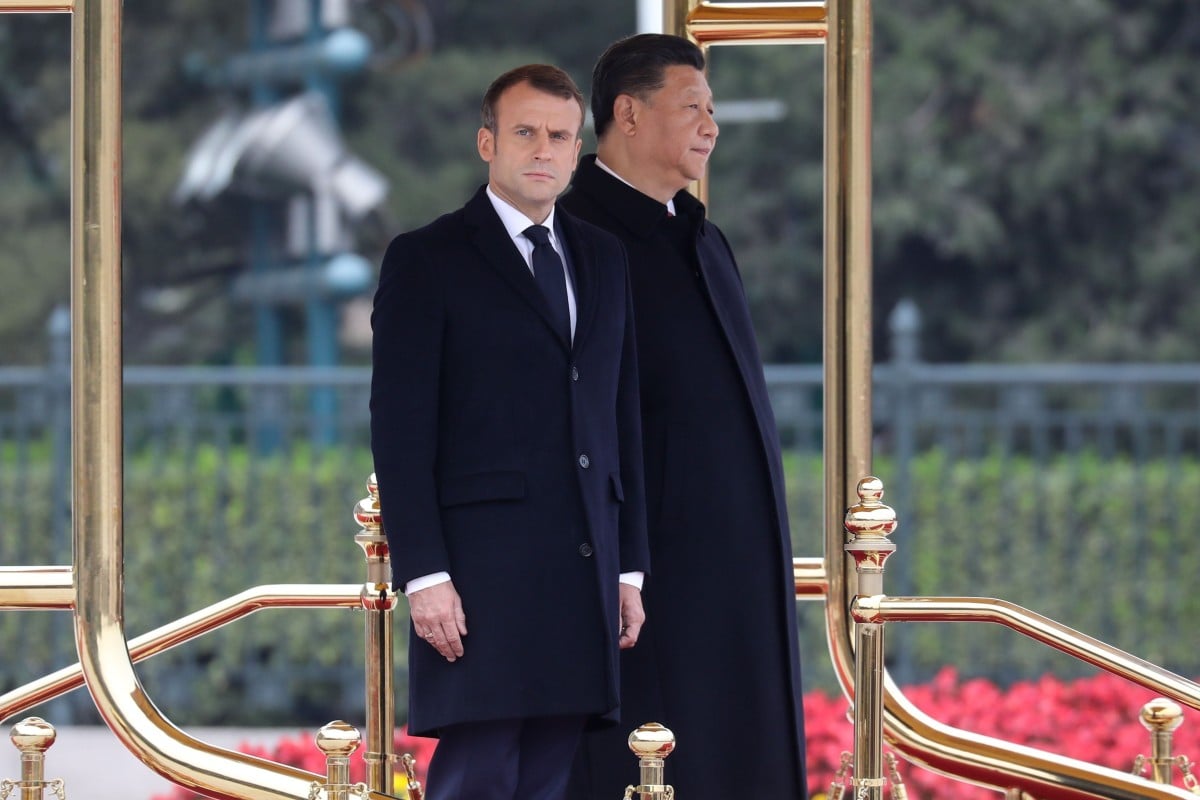
Xi Jinping and Emmanuel Macron at a welcome ceremony ahead of their talks in Beijing on Wednesday. Photo: AFP
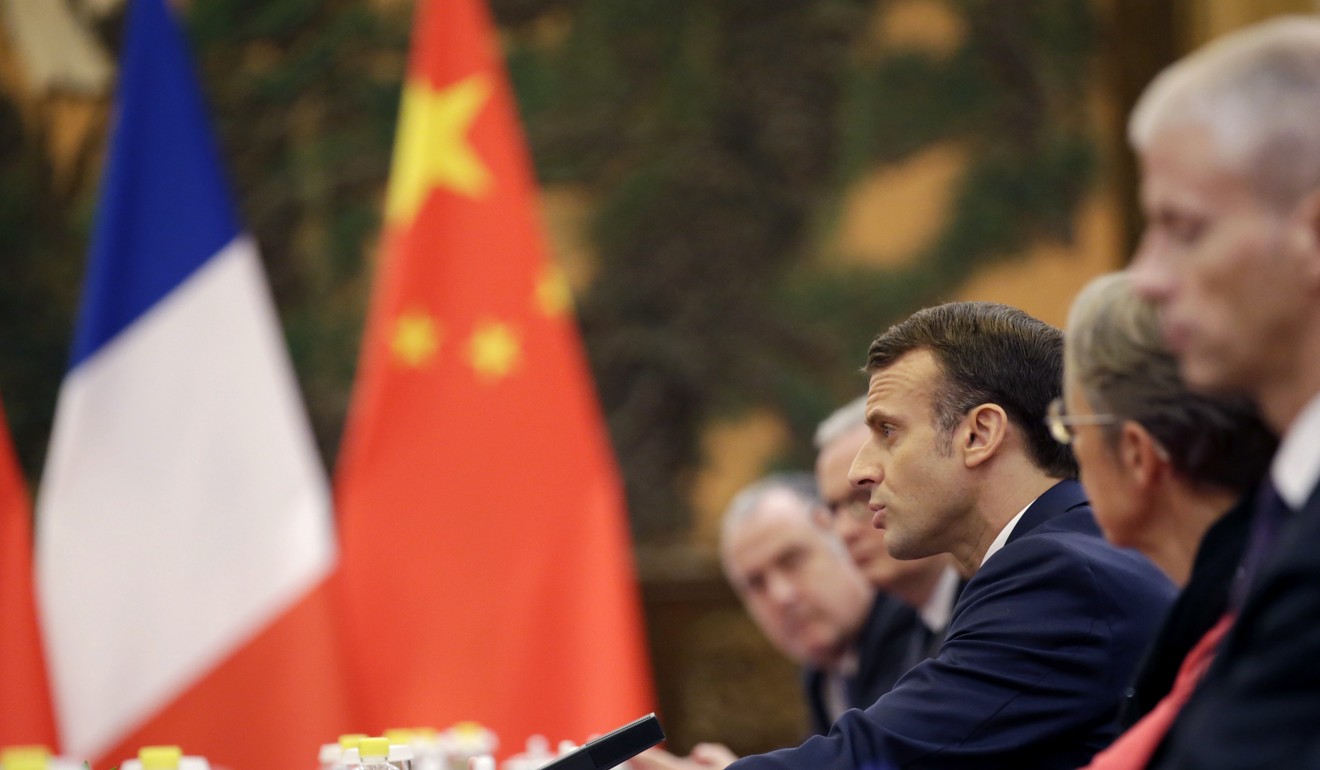
French President Emmanuel Macron said he raised human rights and the Hong Kong situation during his talks with his Chinese counterpart Xi Jinping on Wednesday.
Macron’s visit to China concluded with pledges to work together on climate change, but the French leader also said he also called for a de-escalation of the situation in the city through dialogue after months of protests.
Macron, who had promised to raise “taboo” topics during the visit, told a press conference: “I obviously raised this with President Xi Jinping on several occasions.
“We have repeatedly called on the parties involved to [engage in] dialogue, to show restraint, to de-escalate.”
The discussion followed Xi’s meeting with Hong Kong’s embattled Chief Executive Carrie Lam Cheng Yuet-ngor in Shanghai on Monday, where he expressed “high trust” in her and “fully affirmed” support for her response to the unrest that has gripped the city since June.
Earlier the French and Chinese leaders had restated their commitment to protect free trade and pledged their continued support for the Paris Agreement as the United States begins the process of formally withdrawing from the global climate deal.
Macron expressed “regret” over “some countries’ negative attitude” towards environmental protection and the fight against climate change and pledged to work with China to halt the loss of biodiversity.
The French president’s office also released a statement on Wednesday that reaffirmed France and China’s joint support for the “irreversible” Paris Agreement.
Macron points to common ground with China on tariffs and climate action
With the European Union, China and Russia backing the pact, he added, “the isolated choice of one or another is not enough to change the course of the world. It only leads to marginalisation.”
The two countries also agreed to work together to develop joint nuclear power projects and signed a series of contracts worth US$15 billion.
The deals covered aeronautics, energy and agriculture, including approval for 20 French companies to export poultry, beef and pork to China.
An additional action plan released after the talks said French utility giant EDF and China General Nuclear Power should be encouraged to cooperate on projects in China or third countries, citing the joint efforts by the two companies to build nuclear reactors at the Hinkley Point C station in Britain as an example.
The two sides also committed to signing a contract for the construction of a nuclear fuel recycling plant in China, which would involve French energy giant Orano, by January 31.
Xi took what appeared to be a veiled swipe at the United States, which is still embroiled in a protracted trade war and other confrontations with Beijing.
“We advocate for mutual respect and equal treatment, and are opposed to the law of the jungle and acts of intimidation,” Xi said.
“We advocate for openness, inclusion and for mutually beneficial cooperation, and are opposed to protectionism and a zero-sum game.”
Macron said China and the European Union should work in partnership as the world became more unstable, calling on the two sides to further open up market access.
“We call again for trade multilateralism to respond to distortions that have appeared in the global economy, which have led to a profound rise in inequalities and imbalances that explain the surge of challenges to the international systems,” he said.
“China and Europe also share the same views that the trade war only leads to loss.”
Macron kicks off China visit with deal to protect wine and cheese from counterfeiting
Chinese state news agency Xinhua said the two countries agreed to work together to push forward with plans to assemble Airbus’s A350 model in China.
Meanwhile, Beijing Gas Group and French utility firm Engie will collaborate on a liquefied natural gas terminal and storage in the northern city of Tianjin, while France’s Total will set up a joint venture with China’s Shenergy Group to distribute liquid nitrogen gas by truck in the Yangtze River Delta.
The two countries also agreed to reach an agreement by the end of January 2020 on the cost and location of a nuclear fuel reprocessing facility to be built by Orano, formerly known as Areva.
Wu Libo a professor and director of the Centre for Energy Economics and Strategies Studies at Fudan University, said there was “great potential” for further cooperation between the two countries on nuclear energy.
“France has many useful experiences in the operation and management of nuclear power plants and its plants have long-term safe and stable operation records,” she said.
The two sides agreed to work together on joint nuclear power projects. Photo: AP
Jiang Kejun, a senior researcher at the Energy Research Institute of China’s National Development and Reform Commission, said China’s cooperation with France would add credibility to potential third-country projects.
“China has advanced third-generation technology but it’s still a new member in the nuclear power market, while France has developed nuclear energy for a long time, and its EPR reactors – a technology designed and developed in France – are in business operation,” he said.
Jiang said possible markets for the joint projects included Argentina and India, while some Middle Eastern states – such as Saudi Arabia and Qatar – had expressed interest in nuclear energy.
China’s ambassador hits out at Macron’s team for backing ‘hypocritical’ EU stance on Hong Kong
Tong Jiadong, professor of international trade at Nankai University, said that the deals between the two sides helped show that France and China could work together to counteract US unilateralism.
“Objectively speaking, this will form, or at least imply, an opposition to US unilateralism,” Tong said. “China hopes the cooperation between these two countries produces demonstrable effects for other EU member states.”
Ding Chun, a professor of European Studies at Fudan University, said he did not think the EU wanted to “choose a side” between the US and China.
But Ding continued: “If we are talking about free trade and multilateralism, there’s no doubt that the EU and China share a common view and can balance Donald Trump’s unilateralism.”
‘There’s no need for a confrontation in technology because science has no borders,’ says the founder of CloudMinds
Huang has watched from up close as the US gradually descended from its telecoms supremacy and China caught up
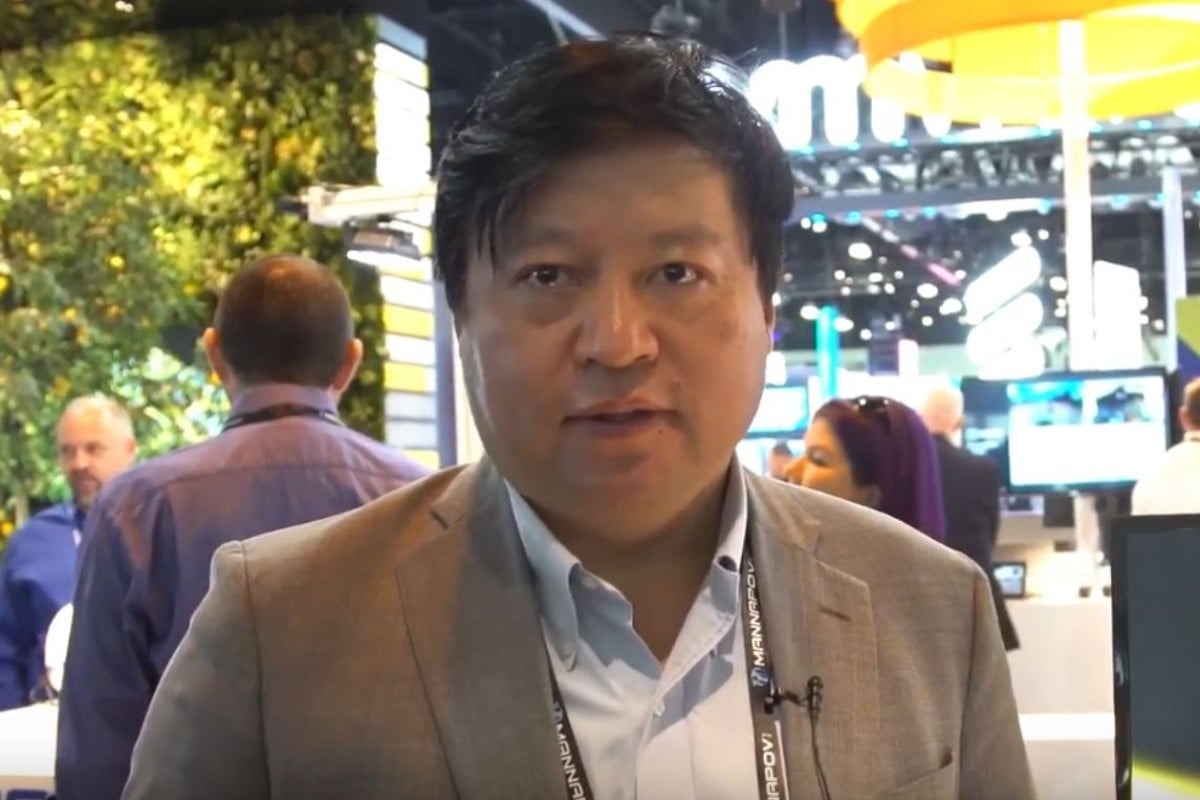
Bill Huang in 2018. Photo: YouTube
Bill Huang, a Chinese-American telecoms industry veteran, used to target China and its vast, untapped market with the technological know-how he had learned in the US.
But over the past few years, the tables have turned. In his latest business endeavour, the engineer turned entrepreneur is relying on China for a key technology that would transform mobile communication for the next decade – and it is a technology the US has fallen behind on.
As one of the first young mainland Chinese to attend graduate school in the US after diplomatic relations were resumed 40 years ago, and as one of the early participants in Beijing’s global recruitment programme to attract top talent in science and technology, Huang has a unique perspective on the current bilateral stand-off that centres on technology.
CloudMinds Technology, a privately held robotics sector company he founded in 2015, needs the superfast 5G network to support its cloud-based platforms for operating intelligent robots. The next-generation wireless technology has become a flash point in the escalating US-China tech rivalry, and Huang is at the forefront of it all.
“It’s kind of like a one-sided rivalry. Because the US doesn’t have the [5G] technology,” Huang said on the sidelines of a recent conference on China in Philadelphia.
For months, the US government has waged a campaign to block the Chinese telecoms giant Huawei from dominating global 5G networks, lobbying allies to shun the company for what it says are risks of espionage or sabotage by Beijing.
Huawei is already ahead of its European rivals in market share thanks in part to its lower prices. But so far no companies in the US – which has long led the telecoms industry – can make the equipment needed to build the next generation of networks.
Huang, 57, who spent three decades in the mobile communication sector, has watched from up close as the US gradually descended from its telecoms supremacy and China quietly caught up.
Technology is not like martial arts, or Shakespeare’s book, it’s not like everything is copyrighted Bill Huang, CEO of CloudMinds Technology
In its heyday, US giants like AT&T sold network equipment to countries around the world. Huang himself once worked at AT&T’s research hub Bell Labs, a dominant leader in telecoms innovation known as “the idea factory” and arguably the most innovative scientific institution for a long stretch of the 20th century.
“In the last 20 years, the US went from [being] No 1 in the telecommunications industry to now almost exiting telecommunications equipment manufacturing,” Huang said, citing the acquisition of Lucent and Motorola by European counterparts.
It was a decline Huang witnessed with an initial sense of sadness. As a veteran of Bell Labs, he said, he had felt extremely proud of the company’s contribution not only to America, but to telecoms technology worldwide.
“But secondly I also felt a level of pride for China,” he said, “because it went from nothing in telecommunications to lead the world in telecommunications in less than 30 years.”
Huawei was under secret US surveillance, US fraud hearing told
Glenn O’Donnell, an analyst at Forrester Research, said the decline of major US telecoms providers had little to do with politics, but was a function of inadequate interest in innovatation because of their dominance in the field.
“The long lease cycles and until recently the relative maturity of the market really didn’t lend itself well for real innovation,” he said.
“And that’s now changing, and all of those players that decided not to play in telecommunications are now wishing they had a stake because there’s a lucrative new market.”
Also drastically different today is the state of relations between China and the US. As they fight their costly trade war, tensions and acrimony have spilled into other aspects of bilateral relations, from technology, defence and geopolitics to ideology. There are even warnings of “decoupling” – something almost unimaginable to Huang, whose personal trajectory has been shaped by the intertwined ties between his homeland and his adopted country.
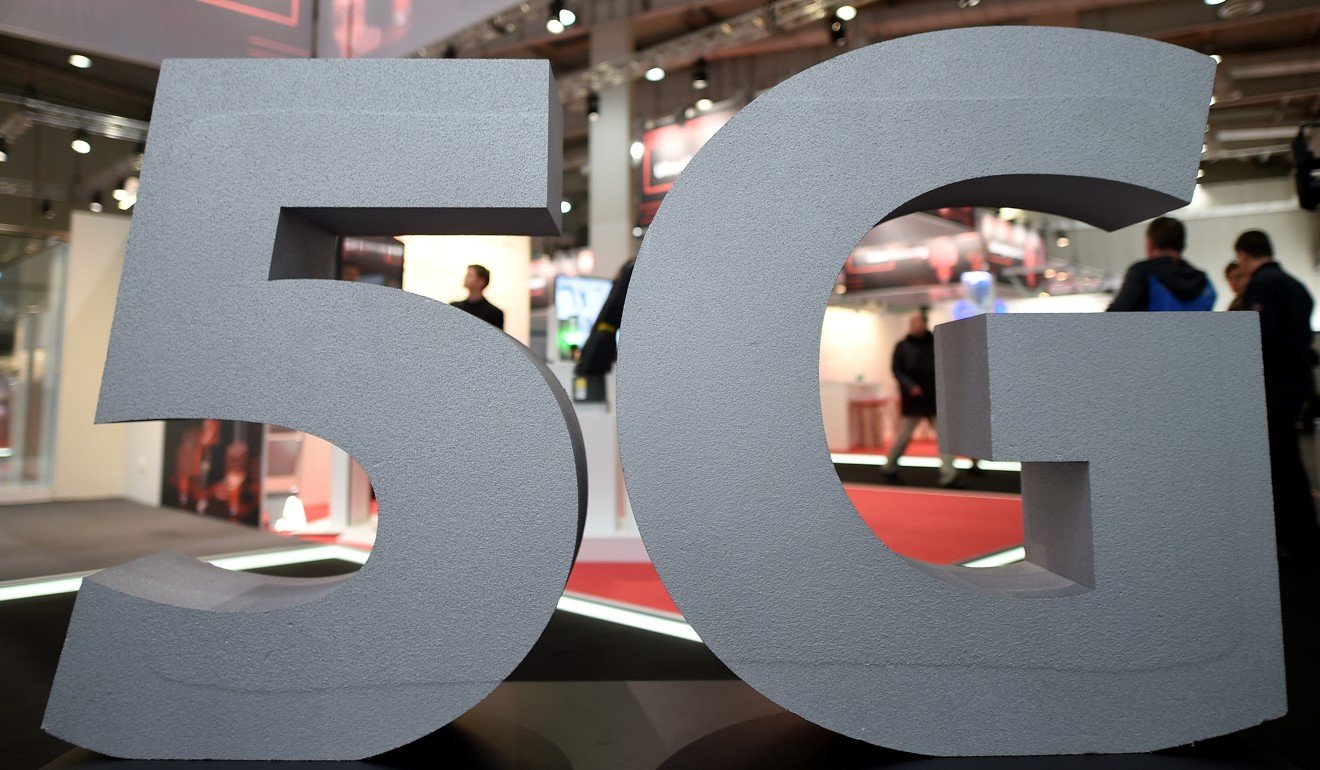
Fifth-generation mobile telecommunications technology, or 5G, enables data to be transferred at a speed that is 20 times faster than current standards. Photo: Reuters
He calls himself “a product of China-US relations”. Such was his proud conviction that he gave his son the middle name “Nixon”, after the president who put relations with China back on track in 1972 with a historic trip to Beijing that ended over two decades of antagonism and isolation since the Chinese Communist Party took power.
The visit by Richard Nixon – who died in 1994, the same year Huang’s son was born – not only mended bilateral relations, but created an opportunity for Huang and many others like him: to learn the most advanced science and technology from the world’s leading innovation powerhouse.
Born in 1962 into an intellectual family in southwestern China, Huang spent most of his childhood in the turmoil of the Cultural Revolution.
“As professors, my parents had a very difficult time during the Cultural Revolution. But they insisted that we spend time to study,” he said.
Huang recalled being a “wild kid”, going to school to “have fun”. But when the time came to study, he was able to pick up the pace, which he attributed to the academic minds that run in his family.
Hailed as a “child prodigy”, he passed the country’s first university entrance exam in a decade at the age of 15. A year later, in 1978, he was in the first batch of students to enter university after the disruptions of the decade-long upheaval. He chose to major in electrical engineering, following in his father’s footsteps.
In his sophomore year at the Huazhong Institute of Technology, his parents told him to apply for graduate programmes in the US.
“They think the US has the best technology in the world, and they wanted me to come here to study,” he said. “I read everything about the US … and I was very eager to come.”
Arriving at the University of Illinois’ Chicago campus in 1982, at age 20, Huang was one of the first new Chinese graduates to further their studies in the US after the re-establishment of diplomatic relations in 1979. He did not speak English (although he could read it), and had to enrol in a three-month language training program before he could attend lectures.
He studied computer science in addition to electrical engineering, working day and night on projects in the lab – a time he looks back on with fondness.
“It was some of the most intense time in my life, I suppose,” Huang said. “But I was young and relentless, and I could go on for three days without sleep. … I thoroughly enjoyed it.”
US to speed up 5G development plans as race with China accelerates
Despite their vastly different cultural backgrounds, Huang made friends with his American classmates and fellow foreign students, some of whom were from India and what was then the Soviet Union.
“I experienced zero racial prejudice,” he said. “That was Chicago in the 1980s. I don’t know what happened today, [but back then] it was thoroughly what I thought was the ‘melting pot’.”
In his computer science classes, Huang learned Unix – a state-of-the-art operating system developed by Bell Labs – from adjunct professors who had helped create the program.
Little did he know he would later become a researcher at Bell Labs. “That was the holy ground of telecommunications,” he said, still beaming with pride when speaking of his former employer, which invented, among other things, the communications satellite and the cellular telephone system.
Bill Huang as a graduate student in Chicago in the early 1980s. Photo: CCTV
In 1994, Huang joined 10 other former Bell Labs engineers at a California-based telecoms infrastructure provider that targeted the vast and underserved Chinese market. A year later, the company merged with a telecoms software company to become UTStarcom, with Huang as its co-founder and chief technology officer.
UTStarcom tapped into the fast-growing Chinese telecoms market with a low-cost, limited-range wireless service known as the Personal Access System (PAS). It went public on the Nasdaq exchange five years later. In 2001, China passed the US as having the most mobile phone customers. The rapidly expanding market propelled UTStarcom’s growth; its revenues increased tenfold between its IPO and 2003, when it controlled 60 per cent of China’s PAS market.
In 2007, having lived in the US for longer than he did in China and having become an American citizen, Huang moved from Silicon Valley to Beijing with his wife and son. China Mobile, the country’s largest telecoms operator, had asked him to help build a “Bell Labs for China” – a request he readily accepted.
“It was not only a simple job, but a responsibility, a challenge I thought I should accept no matter what,” he told Chinese state broadcaster CCTV in 2017.
Smartphone screen with resolution million times higher than iPhone: Chinese researchers make technology breakthrough
As the head of the China Mobile Research Institute, Huang led the carrier’s leap from 3G to 4G, and he was also at the centre of 5G research. “We put a lot of effort into researching what standards are required for the future network,” he said.
His return to China preceded the “Thousand Talents Plan”, a state-backed recruitment drive to lure the world’s brightest scientists and experts – especially those with roots in China – with lavish grants. But when the plan was set up in 2008, Huang was among the first batch of researchers to be enlisted.
“I express my heartfelt thanks to the state and the people for giving me such a good opportunity and condition to return home and serve the country,” Huang was quoted as saying at a forum for recipients of Thousand Talents awards hosted by People’s Daily in 2010.
“I worked for over 20 years abroad, and all my work was in the field of technology. I hope to bring the whole set of things I know back to China,” he added.
The recruitment scheme, much celebrated at the time, has become a sensitive subject today as tensions between the US and China escalate. It has drawn growing scrutiny and suspicion from the US, where investigators are looking for any connection to theft of American intellectual property. In response, China hushed up or deleted references to the programme in universities, companies and cyberspace.
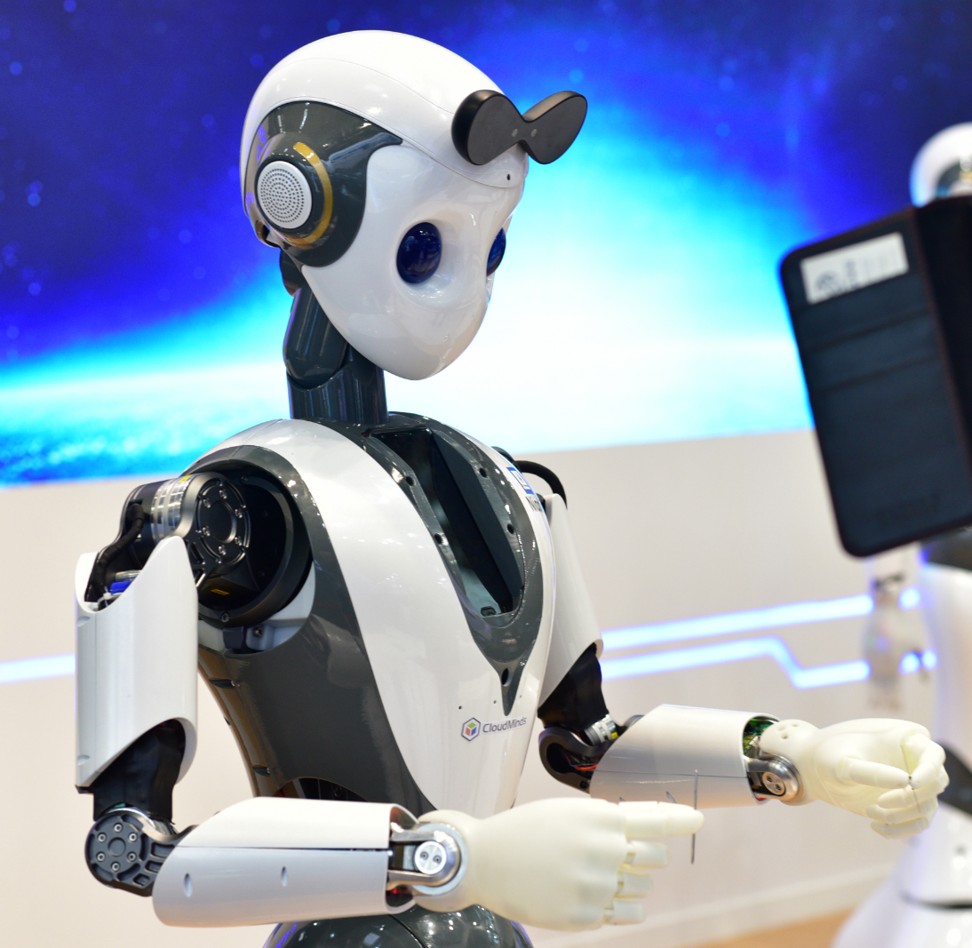
A robot made by CloudMinds Technology showcased at the Mobile World Congress Barcelona in February. Photo: Handout
When asked about US complaints regarding China’s alleged technology theft, Huang gave a vehement defence of China.
“I think these are just basically blatant accusations with no ground,” he said. “Ninety-nine per cent [of the technologies] are not stolen. There are industrial espionage cases … but they’re not systematic cases, and they’re not [the result of the] rivalry between China and the US – they’re the result of competition.”
Huang also dismissed accusations that Chinese scientists and experts have “stolen” US technology.
“Technology is not like martial arts, or Shakespeare’s book, it’s not like everything is copyrighted,” he said.
“Everyone in Silicon Valley in the last 50 years started from somewhere, and then they become an entrepreneur and they move [on] to start their own companies. So in the early days, everyone took a little bit from what they have worked on.”
“It was customary, and then it became very litigious. Then people started saying: wait a minute, you can do that? So there were many exemplary cases, then it became more and more refined in what you can take and what you cannot take; what is protected and what is not protected. All of these things are happening industry-wide, it’s not a single US and China issue.”
Can China meet US demands over IP theft and forced technology transfer?
But intellectual property theft is not the only American grievance. Many US companies have accused China of forced technology transfers, with foreign businesses required to hand over technology to their Chinese partners in exchange for access to the market.
Huang said that complaint “has been there since day one”.
“Chinese companies will always complain about American companies. American companies will always complain about Chinese companies. The reason is very simple: every company would want to use regulations and law to their advantage,” he said.
A trained engineer, Huang holds a “globalist” view of technology – at odds with the national security perspective that has become prevalent in Washington.
“There’s no need for a confrontation in technology because science has no borders,” he said.
“In Huawei labs, there are many American engineers. In Intel and Qualcomm’s labs, I can assure you there are many Chinese engineers, and there are many German, French, Swedish engineers in all of these organisations. The fact they’re sold by a Chinese company or they’re sold by an American company has no meaning because behind the technologies is an international effort.”
To make his point, Huang calls the technology created by CloudMinds a “US and China technology”.
“I mean, how do you categorise it? Is it created by China or the US? It’s created by both. Because we have engineers in Silicon Valley, and we have engineers in Beijing.”
Protecting IP in China is hard, but awareness is rising, thanks to Trump
The company has dual headquarters, with its global operation based in Santa Clara, California, and its China operation based in Beijing – a structure Huang says now “makes perfect sense”.
“That was by design, by our lawyers. They kind of foresaw, if there [are] going to be trade tensions, this would be the right way to do it.”
But Huang questions if these tensions – a large part of which he said had been “politicised” – are so deeply embedded in every corner of society.
“I come to the United States very often, and I talk to the industry. I still feel it is the same America.”
“I encountered no scrutiny, no warning, and everyone is encouraging us, both from the US and from China, to continue our practice,” he said, adding that he only felt the tension when speaking to lawyers and government officials.
“But I am worried by all these stories. I think that’s why I said earlier: in the media it all looks very scary, but in practice, it’s all business as usual.”
With a defence budget second only to the US, China is amassing a navy that can circle the globe and developing state-of-the-art autonomous drones
The build-up is motivating surrounding countries to bolster their own armed forces, even if some big-ticket military equipment is of dubious necessity
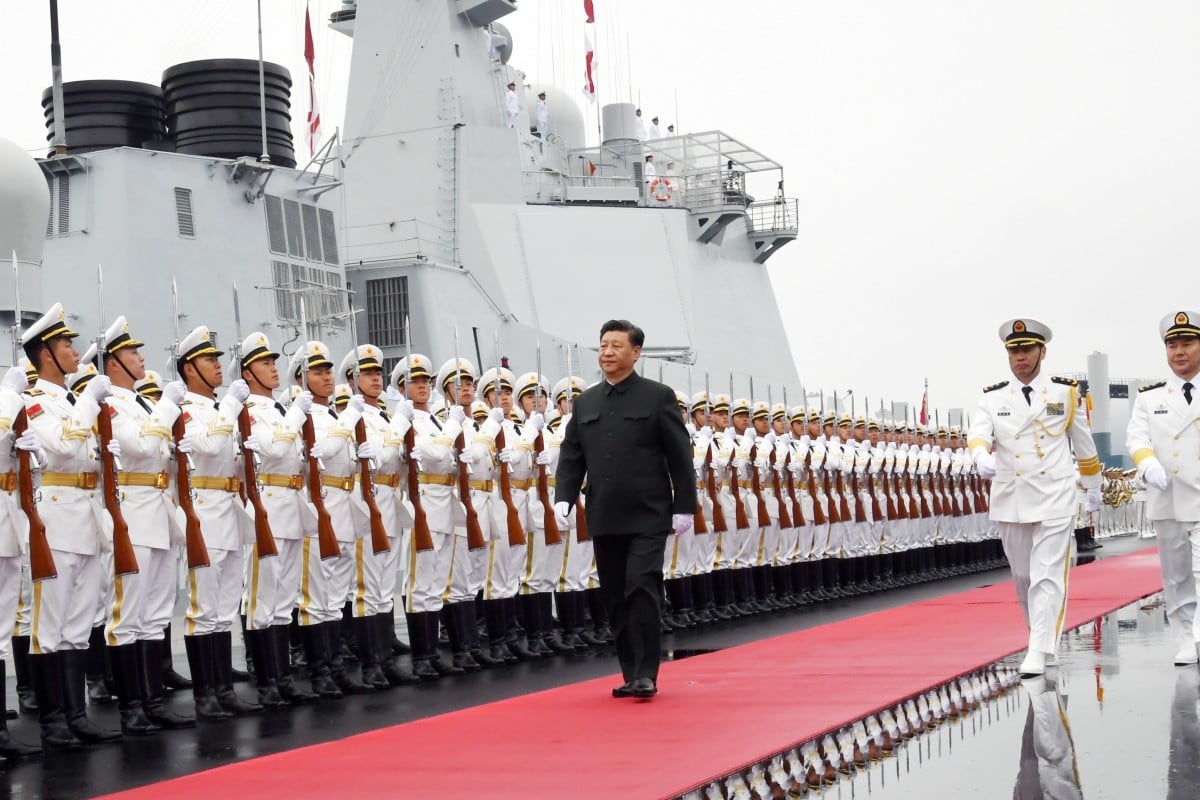
Chinese President Xi Jinping reviews an honour guards before a naval parade in Qingdao. Photo: Xinhua
The Asia-Pacific region is one of the fastest-growing markets for arms dealers, with economic growth, territorial disputes and long-sought military modernisation propelling a 52 per cent increase in defence spending over the last decade to US$392 billion in 2018, according to the Stockholm International Peace Research Institute.
The region accounts for more than one-fifth of the global defence budget and is expected to grow. That was underscored last week by news of
, China is amassing a navy that can circle the globe and developing state-of-the-art autonomous drones. The build-up is motivating surrounding countries to bolster their armed forces too – good news for purveyors of submarines, unmanned vehicles and warplanes.
Opinion: How the Shangri-La Dialogue turned into a diplomatic coup for China
Kelvin Wong, a Singapore-based analyst for Jane’s, a trade publication that has been covering the defence industry for 121 years, has developed a niche in infiltrating China’s opaque defence industry by attending obscure trade shows that are rarely advertised outside the country.
He said the US is eager to train allies in Asia and sell them arms, while also stepping up its “freedom of navigation” naval operations in contested waters in the
In his speech at the Shangri-La Dialogue, acting US Defence Secretary Patrick Shanahan touted American advancements in technology “critical to deterring and defeating the threats of the future” and said any partner could choose to win access to that technology by joining the US defence network.
Wong said the message was clear: “Buy American.”
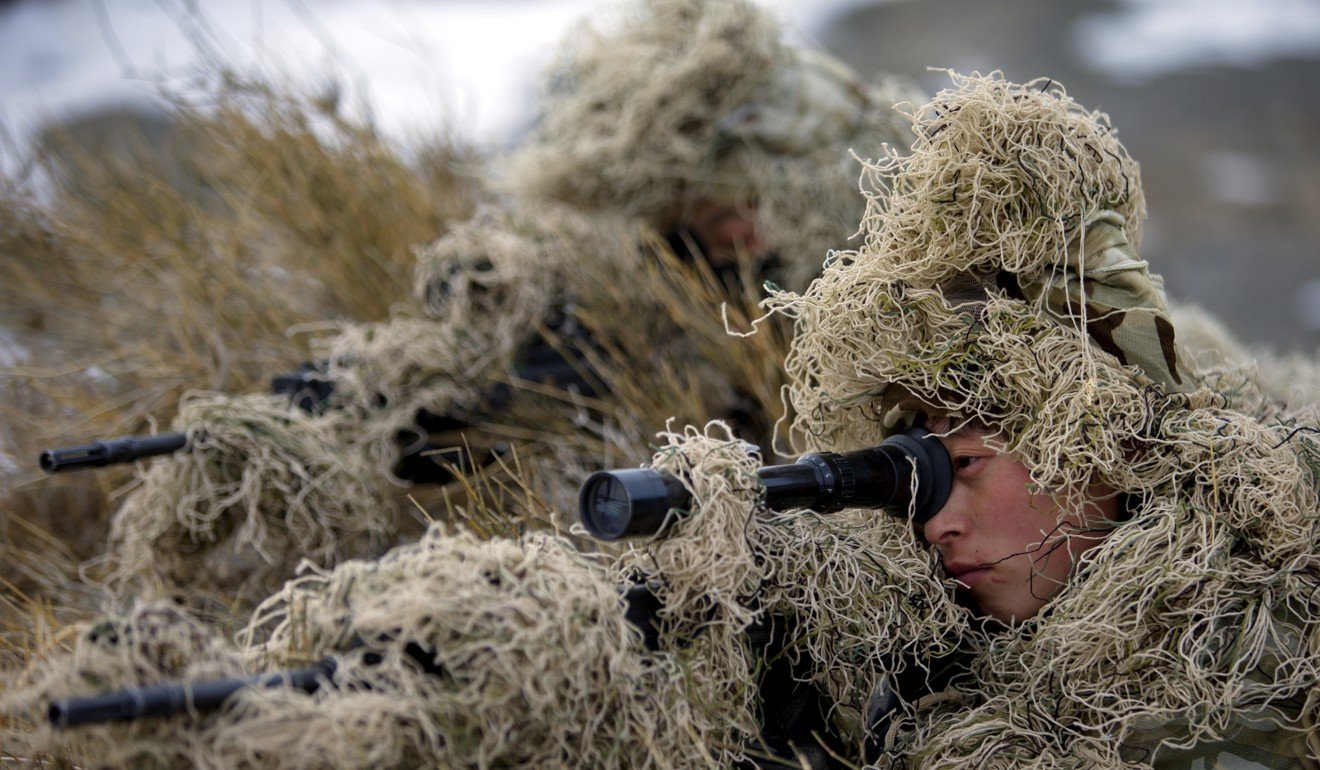
Analysts say Chinese soldiers have less training, motivation and lower morale than their Western counterparts. Photo: Reuters
The analyst said there is a growing admission among the Chinese leadership that the
He said one executive at a Chinese defence firm told him: “The individual Chinese soldier, in terms of morale, training, education and motivation, (cannot match) Western counterparts. So the only way to level up is through the use of unmanned platforms and
To that end, China has developed one of the world’s most sophisticated drone programmes, complete with custom-built weapon systems. By comparison, Wong said,
US drones rely on weapons originally developed for helicopters.
Wong got to see one of the Chinese drones in action two years ago after cultivating a relationship with its builder, the state-owned China Aerospace Science & Technology Corporation. He viewed a demonstration of a 28-foot-long CH-4 drone launching missiles at a target with uncanny ease and precision.
“Everyone knew they had this,” Wong said. “But how effective it was, nobody knew. I could personally vouch they got it down pat.”
China unveils its answer to US Reaper drone – how does it compare?
That is what Bernard Loo Fook Weng, a military expert at Singapore’s S. Rajaratnam School of International Studies, told the author Robert Kaplan for his 2014 book, Asia’s Cauldron, about simmering tensions in the South China Sea.
He was describing the competition for big-ticket military equipment of dubious necessity.
submarines it could not figure out how to submerge.
“It’s keeping up with the Joneses,” Wong said. “There’s an element of prestige to having these systems.”
Submarines remain one of the more debatable purchases, Wong said. The vessels aren’t ideal for the South China Sea, with its narrow shipping lanes hemmed in by shallow waters and coral reefs. Yet they provide smaller countries with a powerful deterrence by enabling sneak attacks on large ships.
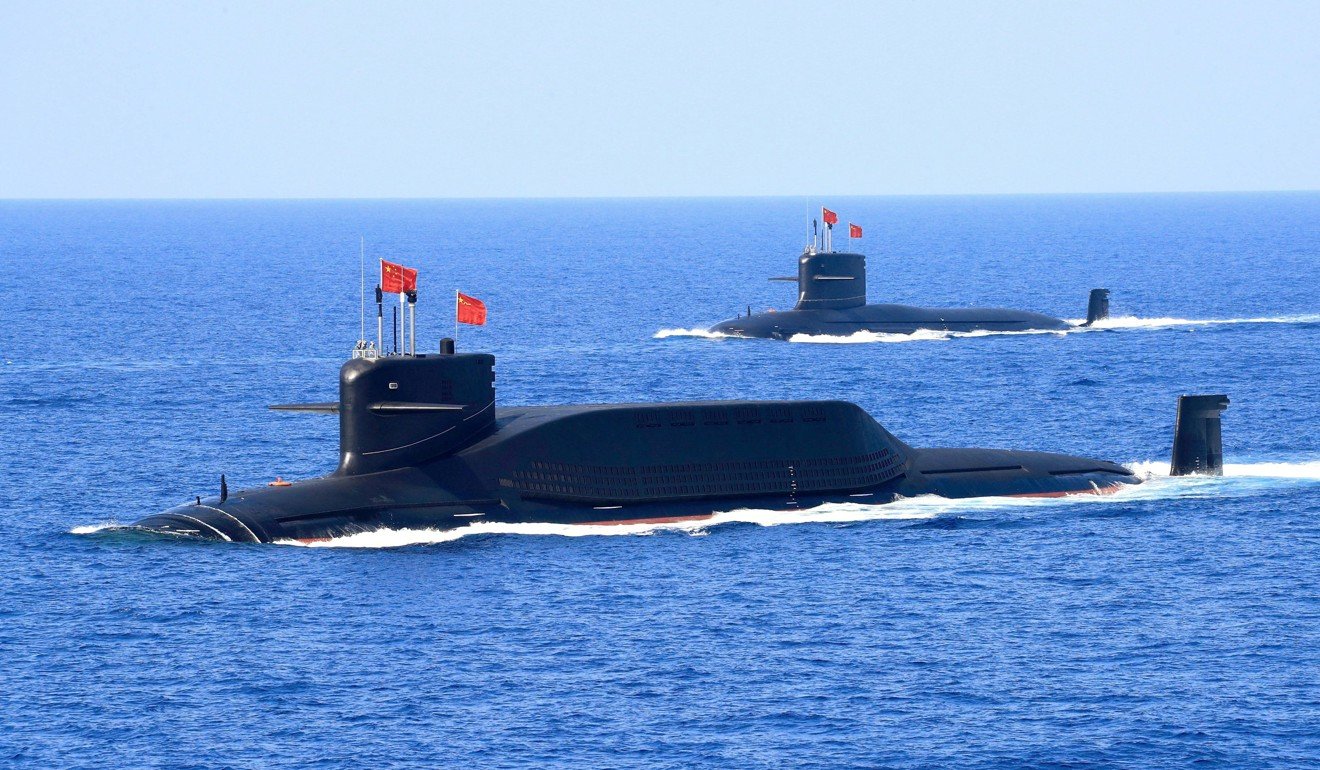
Nuclear-powered PLA Navy ballistic missile submarines in the South China Sea. Photo: Reuters
Type 218 submarines with propulsion systems that negate the need to surface more frequently. If the crew did not need to eat, the submarine could stay under water for prolonged periods. Wong said the craft were specially built for Asian crews.
“The older subs were designed for larger Europeans so the ergonomics were totally off,” he said.
Singapore, China deepen defence ties, plan larger military exercises
Tiny Singapore plays a crucial role securing the vital sea lanes linking the Strait of Malacca with the South China Sea. According to the
the country dedicates 3.3 per cent of its gross domestic product to defence, a rate higher than that of the United States.
State-of-the-art equipment defines the Singapore Armed Forces. Automation is now at the centre of the country’s military strategy, as available manpower is shrinking because of a rapidly ageing population.
Wong said Singapore is investing in autonomous systems and can operate frigates with 100 crew members – 50 fewer than they were originally designed for.
“We always have to punch above our weight,” he said.






 CHINDIA ALERT: You'll be living in their world, very soon