Chindia Alert: You’ll be Living in their World Very Soon
aims to alert you to the threats and opportunities that China and India present. China and India require serious attention; case of ‘hidden dragon and crouching tiger’.
Without this attention, governments, businesses and, indeed, individuals may find themselves at a great disadvantage sooner rather than later.
The POSTs (front webpages) are mainly 'cuttings' from reliable sources, updated continuously.
The PAGEs (see Tabs, above) attempt to make the information more meaningful by putting some structure to the information we have researched and assembled since 2006.
TAIPEI (Reuters) – Taiwan waded into the hotly contested politics of the Pacific on Wednesday, donating face masks and thermal cameras to its four diplomatic allies there to combat the coronavirus in a region where China is challenging traditional power of the United States.
The small developing nations lie in the highly strategic waters of the Pacific, dominated since World War Two by the United States and its friends, who have been concerned over China’s moves to expand its footprint there.
Democratic Taiwan has faced intense pressure from China, which claims the island as its territory with no right to state-to-state ties, and is bent on wooing away its few allies.
Taiwan has only 15 formal allies left worldwide after losing two Pacific nations, the Solomon Islands and Kiribati, to China in September.
Beijing has ramped up its diplomatic push into the Pacific, pledging virus aid and medical advice.
In its own aid programme, Taiwan has donated 16 million masks to countries around the world.
“We are a very small country, so it’s easier for us to work with Taiwan than mainland China,” Neijon Edwards, the Marshall Islands ambassador to Taiwan, told Reuters at the donation ceremony in Taipei.
China has been too overbearing, she added.
“It’s pressing too much, and it’s been trying to come to the Marshall Islands, several times, but up to this time we haven’t even opened the door yet.”
While the masks presented at the ceremony are going to Taiwan’s Pacific allies, all its 15 global allies are sharing the thermal cameras.
“Today’s ceremony once again shows that Taiwan is taking concrete actions not only to safeguard the health of Taiwanese people but also to contribute to global efforts to contain COVID-19,” said Foreign Minister Joseph Wu.
Though Pacific Island states offer little economically to either China and Taiwan, their support is valued in global forums such as the United Nations and as China seeks to isolate Taiwan.
China has offered to help developing countries including those of the Pacific, and many see Chinese lending as the best bet to develop their economies.
But critics say Chinese loans can lead countries into a “debt trap”, charges China has angrily rejected.
The debt issue was a serious problem and would only lead to the spread of Chinese influence regionwide, said Jarden Kephas, the ambassador of Nauru.
“They will end up dominating or having a lot of say in those countries because of the amount of debt,” he told Reuters, wondering how the money could ever be repaid. “We are not rich countries.”
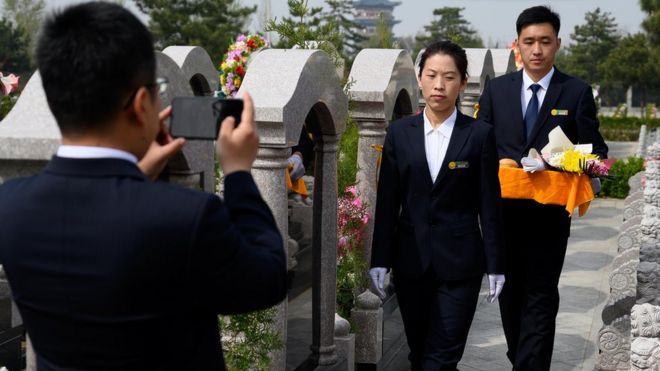
Image copyright GETTY IMAGESImage caption Staff film a tomb sweeping ceremony for a customer
People in China are paying their respects to dead ancestors digitally as the country continues to face the coronavirus outbreak.
The Qingming festival, also known as Tomb Sweeping Day, is usually a time when people visit the graves of friends and family, sprucing up the area and making offerings to their spirits.
But amid fears of another outbreak, the government has advised people to stay away and maintain social distancing.
That’s led to some cemeteries allowing people to come as long as they’ve booked a slot, while others are banning visits completely.
But other companies and burial places have turned to modern technology as they look for ways for families to continue the centuries-old tradition.
Li Quanxi, an official at Beijing’s civil affairs bureau, said: “We want to encourage people to transform social traditions amid the coronavirus outbreak.”
What is Qingming festival?
Qingming festival is one of the most important events in the calendar to commemorate ancestors who are no longer with you.
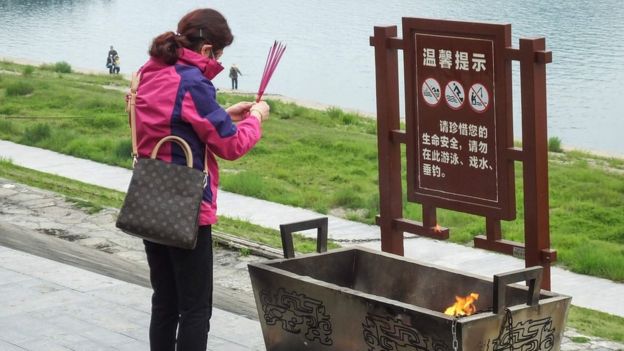
People clean the graves and burn items such as joss sticks and paper offerings – sometimes quite large ones – to honour the dead and transmit money and other goods to loved ones in the afterlife.
Image copyright AFPImage caption A woman burns incense ahead of the tomb sweeping festival
The tomb sweeping period falls between 28 March and 12 April.
Making offerings online
It is not completely unknown for pay their respects online, however, with the spread of Covid-19, there are now people who have no other option.
“Cloud tomb sweeping” allows people to “virtually” clean graves and make offerings to spirits.
One website providing this service is Heavenly Cemetery. On the surface, the website looks like any usual shopping site, although it also allows people to have their own memorial halls for their loved one so family and friends can join.
Relatives can light a candle, burn money and offer objects such as Chinese rice wine and beer. There is even an option for online tomb cleaning.
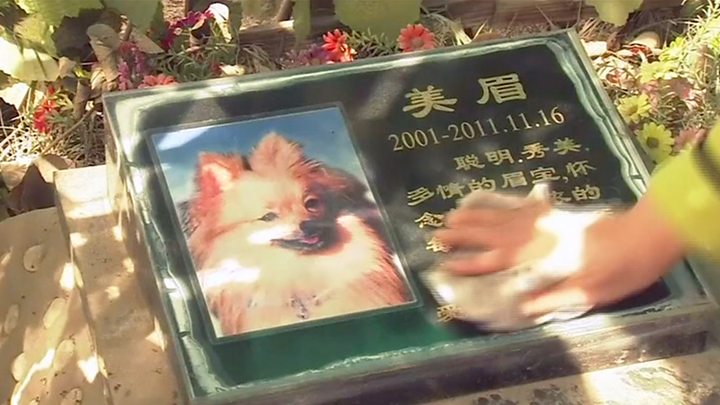
Media caption Watch: People pay respect to their deceased pets ahead of Tomb Sweeping Day
Funeral company Fu Shou Yuan International launched its own online tomb sweeping service on 12 March. It operates in more than 30 Chinese cities. In its first week, its website had about 87,000 visitors.
George Chen, whose grandparents are buried in Shanghai, visits their tombs every year but will be marking this year’s Tomb Sweeping Day online for the time being.
He told Shanghai Daily: “Old traditions are deeply rooted, but it is quite understandable because it is a special period. I will pay virtual respect and visit the scene once the epidemic ends.”
Getting someone to do it for you via livestream
While taking part in “cloud tomb sweeping” does mean you get to send offerings, it does not include the physical cleaning of a loved one’s tomb.
So some burial spots are now offering relatives a chance to watch a member of staff clean the tomb via a live stream. Others will send you photographs of the cleaned grave.
One cemetery in Shanghai is offering packages where a “valet sweep” starts from as little as 35 yuan (£4).
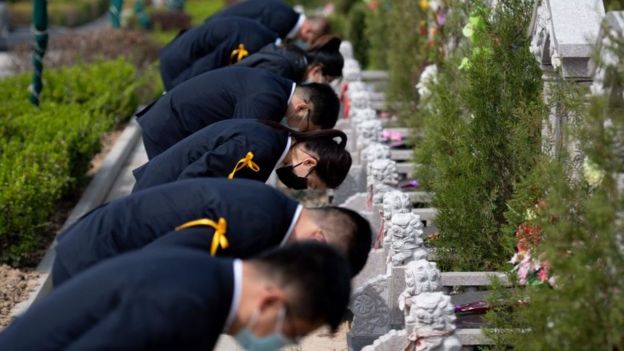
Image copyright GETTY IMAGESImage caption Staff hold a ceremony on behalf of a customer
Babaoshan funeral parlour, in Beijing, also offers live stream services.
Zhou Weihua, deputy director of the parlour, told Chinese news agency Xinhua that live streaming could become a future trend.
“Helping clients sweep tombs and holding online commemorative activities not only meets the demand in this special period but also offers more options for people to remember their deceased family members in the future.”
What about Wuhan?
China reported 3,199 deaths from coronavirus with 2,559 of those in Wuhan, where the first cases were recorded late last year.
The city is still in a lockdown which is expected to end on 8 April, and the government has announced that cemeteries will remain closed until 30 April.
Wuhan’s civil affairs department said it would make “unified arrangements to organise staff at cemeteries to hold a collective ceremony to pay tribute to the deceased”.
Millions of Chinese children are raised by their grandparents but some seniors are demanding compensation
For generations in China grandparents have provided childcare, but some are no longer willing to do so for free. Photo: Shutterstock
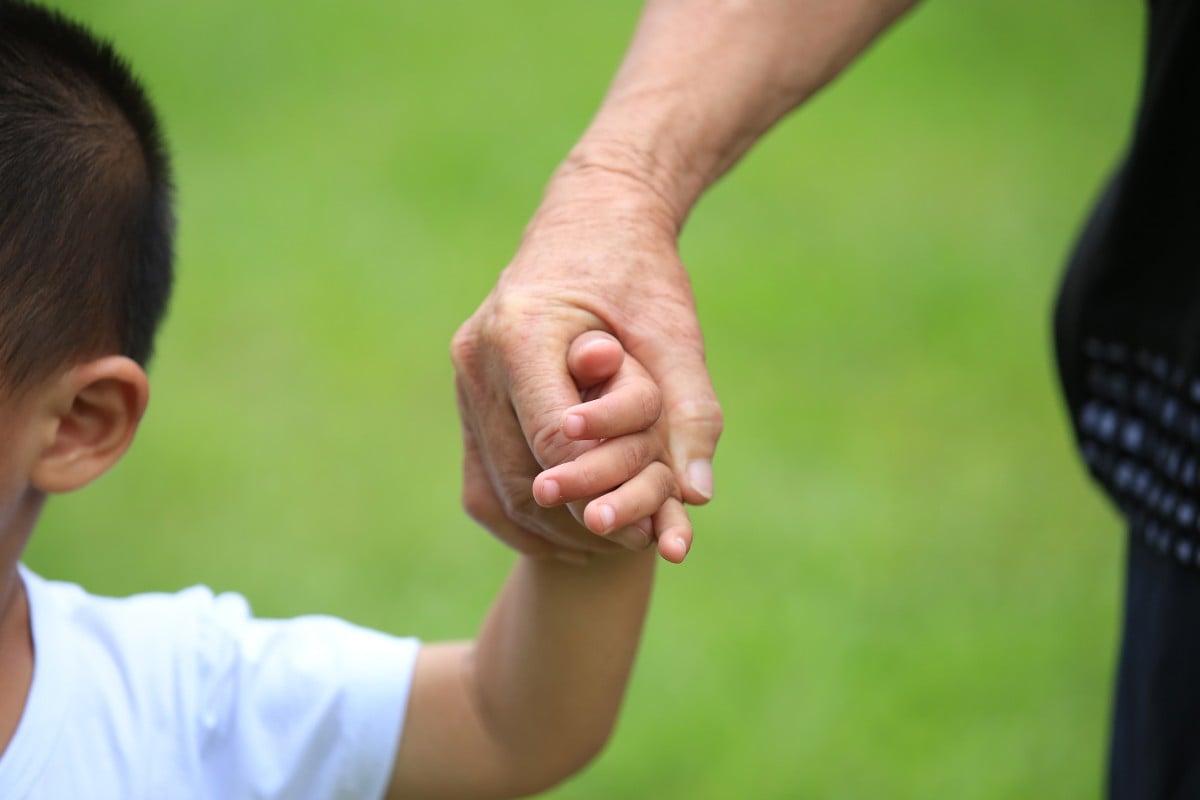
The traditional role of grandparents in caring for China’s children has been called into question with two recent lawsuits sparking debate about whether seniors should be paid for their efforts.
Two grandmothers took their demands for compensation to court in separate cases which have highlighted the reliance of Chinese workers on their parents to provide childcare while they pursue professional advancement.
A woman in Mianyang, in the southwestern province of Sichuan, was awarded more than 68,000 yuan (US$9,500) by a local court after she sued her son and daughter-in-law for the costs of raising her nine-year-old grandchild, according to Red Star News.
The woman, identified only by her surname Wang, had been the child’s full-time carer for eight years after his parents left home to seek better-paid jobs elsewhere. Wang said she had taken care of most of her grandson’s living expenses and had decided to seek compensation when his parents said they were considering a divorce.
They should respect our contribution. Grandmother Wang, Sichuan province
“I only want to let them know through this lawsuit that it’s their obligation to raise their children,” she was reported as saying. “The young ones should not take it for granted that old people ought to look after their grandchildren. They should respect our contribution.”
Despite winning the case, she has not received a penny and the boy still lives with her.
In another case, three months ago, a Beijing court supported a woman’s demand for compensation for helping to raise her granddaughter since her birth in 2002.
The stories of the two women generated a public reflection on the Chinese way of childcare which, for generations, has involved leaving most – if not all – of the burden on grandparents.
One of 60 million: life as a ‘left-behind’ child in China
From a cultural perspective, it has been a matter of course in a country with a long history of several generations living under one roof, for grandparents to participate in child rearing, according to Xu Anqi, a researcher specialising in family studies at the Shanghai Academy of Social Sciences.
“Today, as people face fierce competition and great pressure from work, it’s still common to rely on their old parents to look after their children,” she said.
While rapid urbanisation in recent decades has broken up multi-generational households, Chinese elderly still take an active role in child rearing, with many relocating to their children’s cities to take on the job.
Millions more families do it the other way round – with parents leaving children in their hometown with the grandparents while they seek better paying jobs in the cities. In August last year, according to the Ministry of Civil Affairs, China had nearly 7 million “left behind kids”, as they are known.
My little granddaughter is adorable, and generally I enjoy doing all this.Li Xiujuan, grandmother
“Many grandmothers like me would joke that we are ‘unpaid nannies’, but at the same time we feel it’s our responsibility to help them out – they would be in financial stress if one of them quit or they hired a nanny,” said Li Xiujuan, who relocated from her hometown in the central province of Henan to Shanghai two years ago to help look after her granddaughter.
“I’m a 24-hour nanny for my grandkid. I prepare food for her, wash her clothes, attend early childhood classes with her, take her for a walk in the park twice a day, sleep beside her at noon and night …” she said.
“I never cared for my daughter when she was little like I do her daughter now. You know, it was also her grandmother who mainly took care of her daily life when she was young,” Li said, laughing.
“My little granddaughter is adorable, and generally I enjoy doing all this. The hard part is that I miss my friends and relatives back home. We don’t have friends here. I have plenty of things to do at home, but here, nothing but babysitting. People are polite, but it’s difficult to make new friends,” she said.
‘Left behind’ sisters cry when parents leave home to go to work
In a 2017 study of about 3,600 households in six major cities including Beijing and Guangzhou, the Chinese Society of Education found almost 80 per cent of surveyed households had at least one grandparent as carer before children began primary school.
The study also showed that 60 per cent of parents still relied on help from grandparents after children were old enough for primary school at the age of six.
Whether grandparents should be compensated for their efforts split a poll of 49,000 users conducted by social media platform Weibo in late June, with half believing that the older generation should be paid for raising their grandchildren. Only 2.3 per cent said babysitting grandchildren was “an unalterable principle” for the elderly.
“This arrangement could be well managed and improve blood ties if children reward the elderly in their own ways, such as sending gifts on holidays and taking them on trips,” Shanghai researcher Xu said.
I think what they need more is words of appreciation, which many of us have neglected. David Dai, Beijing parent
Grandmother Li agreed: “I think regular payment is a little awkward, but I do expect some kind of reward, like cash gifts on festivals and daily necessities as presents.”
David Dai, a 30-year-old white collar worker in Beijing, said how to reward grandparents for their contribution depended on the financial situation of each household.
“My parents are farmers – they are in good shape and not so old – in their late 50s, and if they didn’t come all the way from my hometown in Anhui to Beijing to look after my son, they would still be taking some odd jobs,” he said.
“Therefore, besides covering their living costs at my place, I give them cash gifts on their birthdays, the Spring Festival and other important occasions, because babysitting their grandchild means they lose the opportunity to work,” he added.
“In some families, the grandparents might have retired and have a good pension. They don’t lack money and enjoy spending time with their grandkids. I don’t think they need to be paid. I think what they need more is words of appreciation, which many of us have neglected,” Dai said.
China boosts childcare and maternal health services in bid to lift birth rate
But for those who never show any gratitude, their parents have every reason not to offer child rearing help or to demand payment, Xu said.
Zhang Tao, a lawyer at the Hiways Law Firm in Shanghai, noted that as long as at least one parent of a child was living, the grandparents had no obligation to help with childcare.
“The grandparents should be compensated for the money they have paid for the child’s education, medical fees, and accommodation from the beneficiary,” he said.
But whether they should be paid has become the latest controversy as more grandparents find it a burden.



 CHINDIA ALERT: You'll be living in their world, very soon