Archive for ‘G20 summit’

10/08/2019

Xi Focus: China’s head-of-state diplomacy breaks new ground

BEIJING, Aug. 10 (Xinhua) — Chinese President Xi Jinping has led new advances in the development of major country diplomacy with Chinese characteristics.

Xi had a packed diplomatic schedule in the first half of 2019. In April-May, he chaired or attended three events China hosted in a row in just more than half a month. In June, he made four overseas visits and attended four important international meetings in a month.

Amid immense changes in the international situation, the head-of-state diplomacy has led the way forward.

FORGING GLOBAL PARTNERSHIP NETWORK

Xi made his first overseas visit this year in March to three European countries: Italy, Monaco and France, injecting strong impetus into the China-EU comprehensive strategic partnership.

Major-country relations continued to grow. In June, Xi paid a state visit to Russia where he and Russian President Vladimir Putin elevated the China-Russia ties to a comprehensive strategic partnership of coordination for a new era. It was Xi’s eighth visit to Russia and his 31st meeting with Putin since he took office as the Chinese president in 2013.

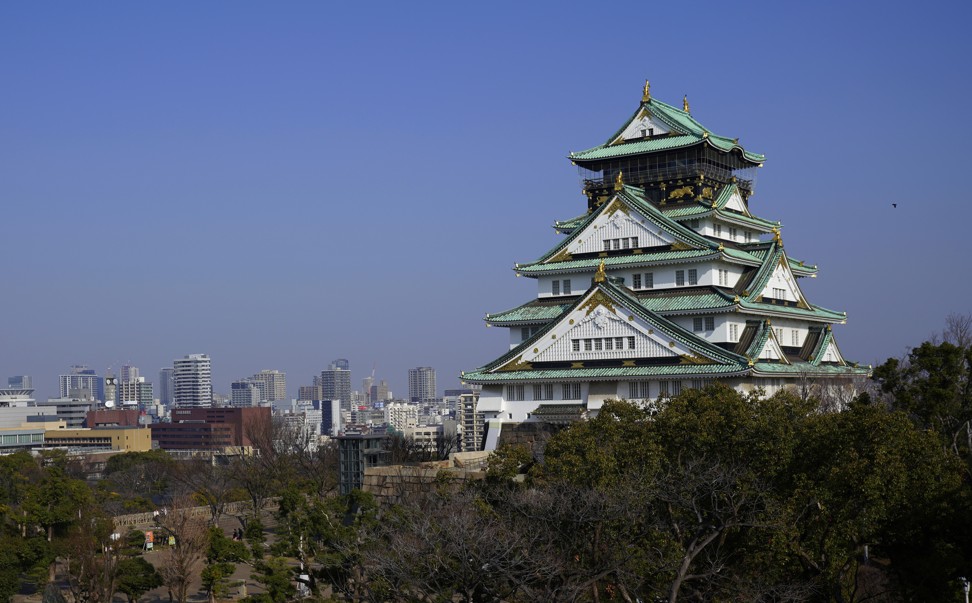
Friendly exchanges with neighboring countries were deepened. In June, he paid a state visit to the Democratic People’s Republic of Korea (DPRK), opening a new chapter for China-DPRK friendship. Also in June, Xi visited Kyrgyzstan and Tajikistan and met with Japanese Prime Minister Shinzo Abe in the Japanese city of Osaka. All in all, Xi met or held talks with more than 30 leaders of neighboring countries in the first half of the year.

Common progress with the vast majority of developing countries was advanced. Xi congratulated the inauguration of the China-Africa Institute, the opening of the Coordinators’ Meeting on the Implementation of the Follow-up Actions of the Beijing Summit of the Forum on the China-Africa Cooperation, and the first China-Africa Economic and Trade Expo.

Xi also chaired a China-Africa leaders’ meeting on the sidelines of the G20 summit in Osaka, at which leaders reached a broad consensus on a range of issues.

LEADING GLOBAL OPENNESS, COOPERATION

Xi has said a few anti-globalization movements that have emerged in the world cannot stop the tide of globalization.

Thinking in big-picture terms, a Chinese poem says, helps one dispel the clouds to see the sun.

At the G20 summit in Osaka, Xi announced China’s further opening-up measures which have since strengthened the confidence of the global economy.

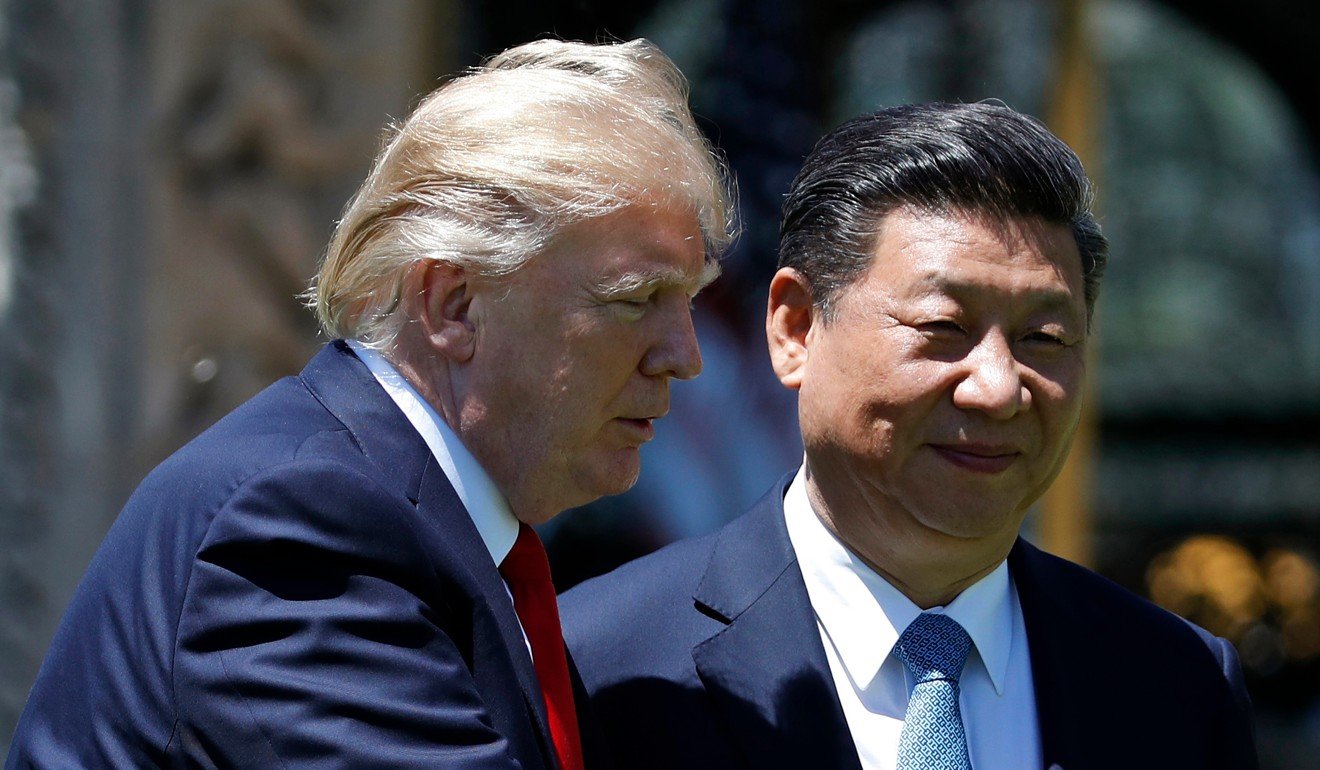
On the sidelines of the G20 summit, Xi met with U.S. President Donald Trump. They agreed to advance a China-U.S. relationship featuring coordination, cooperation and stability.

China is playing a more positive role in the multilateral trading system, taking globalization toward the direction of more inclusiveness and benefit for all, said World Trade Organization Director General Roberto Azevedo.

Meanwhile, the China-proposed principle of extensive consultation, joint contribution and shared benefits is gaining worldwide recognition.

In April, the Second Belt and Road Forum for International Cooperation was attended by about 6,000 participants from 150 countries and 92 international organizations.

A study published by the World Bank found that fully implementing deeper policy reforms of the Belt and Road Initiative would lift 32 million people out of moderate poverty, increase global trade by up to 6.2 percent and increase global income by as much as 2.9 percent.

WORKING TOGETHER FOR BETTER FUTURE

The Chinese president has called on countries around the world to make concerted efforts and jointly shape the future of humanity.

In various occasions ranging from the global governance forum co-hosted by China and France to the Conference on Dialogue of Asian Civilizations, Xi put forward China’s approaches on global governance and encouraged all parties to build consensus on upholding multilateralism.

China has been committed to firmly upholding the international system with the United Nations at its core and international law as its foundation, and standing on the side of justice as China plays an active role in endeavors such as advancing the political settlement of the Korean Peninsula issue and supporting maintaining the Iran nuclear deal.

China has become a strong pillar of international cooperation and multilateralism, according to UN Secretary-General Antonio Guterres.

At the three events China hosted in the first half of the year, Xi expounded on the concept of building a community with a shared future for humanity from different perspectives: help developing countries break growth bottlenecks, tackle environmental challenges and look to culture and civilization to play their role.

All won broad recognition.

Under Xi’s leadership, the major country diplomacy with Chinese characteristics is sailing towards a brighter future.

Source: Xinhua

24/07/2019

China’s choice of Shanghai for US trade talks emphasises commercial rather than political focus, analysts say

  • Switching first face-to-face gathering since G20 summit from Beijing sends message that ‘trade should be trade, and politics should be politics,’ analyst says
  • Trade representative Robert Lighthizer and Treasury Secretary Steven Mnuchin are set to meet counterparts Vice-Premier Liu He and Commerce Minister Zhong Shan
Shanghai is China’s global financial hub, while Beijing is viewed as more of a political centre. Photo: Bloomberg
China’s decision to hold next week’s negotiations with the United States in Shanghai could be a fresh sign that Beijing is revising its strategy as it prepares for a protracted trade war, analysts said.
By choosing global financial hub Shanghai rather than the political centre of Beijing, China is trying to play down the political aspects of the talks and emphasise the commercial elements, analysts suggested.
The meeting will be the first face-to-face gathering of the two countries’ trade negotiators since talks collapsed in May without a deal as the US blamed China for renegading on earlier promises, while China blamed the US for being too demanding.
The trade teams have held two phone conversations in July, although neither Washington or Beijing have confirmed the venue or schedule for the talks next week.
Shen Jianguang, the chief economist at JD Digits and a veteran Chinese economy watcher, said China is changing the location of the talks to send a message that “trade should be trade, and politics should be politics”.
He added that the choice of Shanghai implies that China is trying to focus on the technical issues such as the US relaxation of sales restrictions to 
Huawei Technologies

and China’s purchase of US farm products instead of political issues that will be more difficult to resolve.

“The Shanghai talks will only result in a small step,” Shen said.

Trade representative Robert Lighthizer

and Treasury Secretary Steven Mnuchin are expected to lead the US delegation to meet their Chinese counterparts headed by Vice-Premier Liu He and Commerce Minister Zhong Shan, the South China Morning Postreported earlier this week.

The Shanghai talks will only result in a small stepShen Jianguang

Bloomberg and The Wall Street Journal reported on Wednesday that the talks will take place in Shanghai, and a source confirmed the location to the Post. Hua Chunying, China’s foreign ministry spokeswoman, said on Wednesday that she had no information to provide on the location of the talks.
Chang Jian, chief China economist at Barclays, said that the choice of Shanghai is a sign that the initial goal of the talks would be “smaller”, focusing more on specific import and export arrangements rather than wholesale institutional changes in China’s economic model.
“It shows that China is preparing for a protracted trade talks for years to come,” Chang said. “For China, a precondition for a grand deal is that the US has to lift all tariffs, which the US will find very hard to do.”
Aidan Yao, a senior emerging Asia economist at AXA Investment Managers, said the fact that it took almost a month after the ceasefire agreement reached between President Xi Jinping and US counterpart Donald Trump at the G20 summit in Japan for a face-to-face meeting to take place is already a confirmation of “the deep divide” that remains.
“Without a clear strategy to tackle them, I doubt anyone should hold their breath for a breakthrough” despite certain goodwill gestures in recent days, Yao said.

Without a clear strategy to tackle them, I doubt anyone should hold their breath for a breakthroughAidan Yao

The initial arrangements for the meeting came after the US announced that it would offer exemptions to 110 Chinese products, including medical equipment and key electronic components, from import tariffs. China, meanwhile, said that several companies would buy American agricultural products having already applied for exemptions from the tariffs imposed by Beijing.
Liao Qun, the chief economist at China Citic Bank International, said a change of location could pump “fresh air” into the talks.

“Shanghai is the window of China’s reform and opening up and the country’s economic heart,” Liao said. “It could be a positive change”.

Larry Hu, chief China economist of Macquarie Capital, noted that Shanghai has played a unique role in US-China relations.

“The important Shanghai Communiqué was inked in the city,” Hu said, referring to the diplomatic document signed between China and US in 1972 during president Richard Nixon’s visit to China to meet Chinese chairman Mao Zedong.

The document, which is part of the Three Joint Communiqués, paved the way for Beijing and Washington to establish official diplomatic relationships later that decade.

The Three Joint Communiqués are a collection of joint statements made by the governments of the US and China from 1972, 1979 and 1982.

Source: SCMP

04/07/2019

Samsung and other South Korean companies’ exodus from China sets an example to Western firms fleeing trade war tariffs

  • Lotte, Kia and Hyundai are also gradually winding down their China business due to political risks, tariffs and losing market share
  • Western companies fleeing Donald Trump’s tariffs may not have luxury of a managed exit, but should look at the South Korean case studies closely, experts say
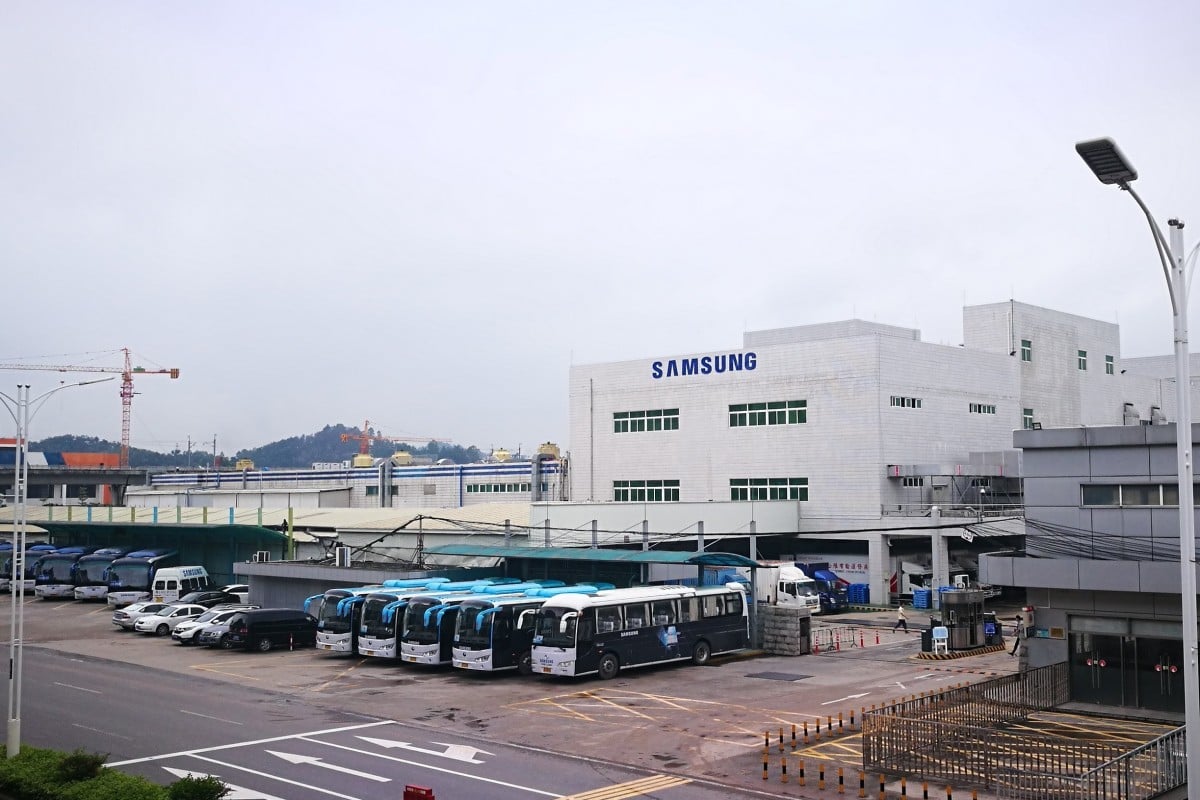
Samsung’s last mobile phone production line remaining in China in Huizhou is winding down, implementing a voluntary retirement programme. Photo: He Huifeng
Upon landing in Australia in 2017 to attend a seminar, a senior politician with South Korea’s parliamentary defence committee was greeted by Julie Bishop, then Australia’s foreign minister, who had a burning question: “How are you dealing with the China threat?”
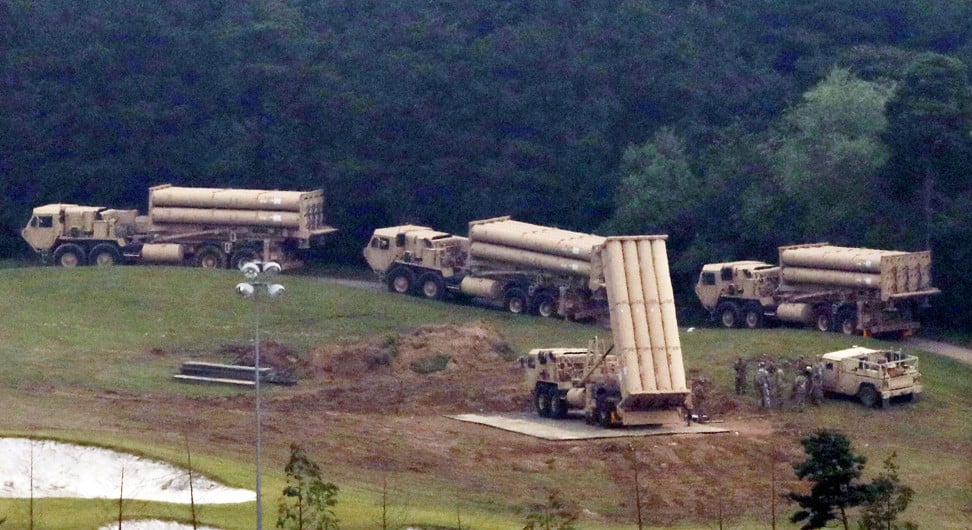
Bishop was referring to the treatment of South Korean firms in China, which escalated after Seoul agreed in 2016 to a long-standing request from the United States to allow the deployment of the Terminal High Altitude Area Defence system (THAAD) on South Korean soil.
Lotte Corporation, one of Korea’s chaebol conglomerates that dominate its economy, had sold a plot of land in Seongju county to the South Korean government, on which the system’s radar and interceptor missiles were set up. While both Washington and Seoul said it was meant to counter threats from North Korea, Beijing viewed THAAD as a security risk, since its radar had the range to monitor China’s nearby military facilities.
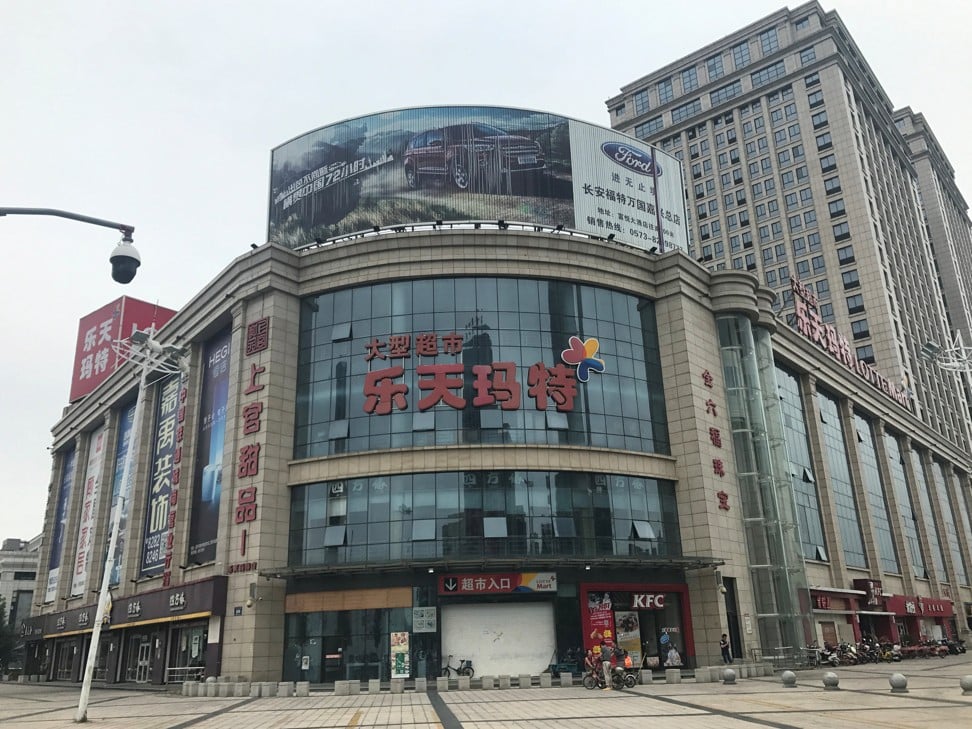
After it was deployed in 2017, THAAD triggered widespread boycotts of Lotte’s retail operations in China, with the state-owned media acting as aggressive cheerleaders. The company was sanctioned by Beijing, with its expansion plans in China grinding to a halt on the orders of the Chinese government.
The Terminal High Altitude Area Defence (THAAD) arrived in Seongju in September 2017. Photo: Reuters

Australia – like South Korea – is heavily dependent on trade with China, but is also closely bound to the US in defence and political terms, and Bishop feared that should Australia fall out of favour with Beijing, Australian companies could face similar risks, and so she sought the counsel of the politician, who asked not to be named.

The case of Canadian canola and meat exports being banned from China, reportedly in retaliation for the arrest of Huawei chief financial officer Meng Wanzhou, also known as Sabrina Meng and Cathy Meng, is an example of how third nations can be drawn into the modern day superpower rivalry.

Many analysts say the efforts of South Korean firms in China should be essential study material for Western governments and businesses about the political risks of doing business in the mainland, which are growing as the US-China trade war threatens to draw in other nations and expand into a broader geopolitical struggle.

But large South Korean firms have been gradually withdrawing from China for a number of years – even before the THAAD crisis – and have been able to leave on a managed basis. They are leaving to avoid a repeat of the political crisis that ruined Lotte’s China business, and to avoid tariffs on exports of their China-made products to the US.

Lotte have been forced to close retail operations in China. Photo: Reuters

But they are also leaving because Chinese firms have become much more competitive in the domestic market that South Korean companies had found so fruitful for more than a decade – a fate that could easily befall Western companies that are eyeing China’s burgeoning middle-class consumer market. Now, while American firms are considering exiting China and setting up in nations that have lower tariff access to the US, South

Korean competitors have had a few years’ head start.

“In a way, all the problems that some South Korean companies had since 2017 might be a blessing in disguise. It meant that they started all of this [supply chain shift] two years before all the other companies,” said Andrew Gilholm, Seoul-based director of analysis for China and Korea at political risk advisory, Control Risks.

Another chaebol, Samsung Electronics, opened its first plant in Vietnam in 2008 and this long-term presence has enabled it to build a supply chain of South Korean companies, which in turn makes it easier for other South Korean firms to establish a base in the Southeast Asian nation.

We have experienced some of the worst situations in China over the past few years and learnt that the political risk there wouldn’t just simply go away overnight Ex-Lotte Shopping manager

As a result, South Korean investment into Vietnam climbed to US$1.97 billion in the first half of 2018, exceeding the country’s investment in China of US$1.6 billion over the same period for the first time, according to the Export-Import Bank of Korea.

Overall in 2018, South Korea’s total investment to the Southeast Asian country totalled US$3.2 billion. Its exports to Vietnam also increased to US$48.6 billion, 121 times that of 1992, when the two countries established diplomatic relations, and the trend is expected to continue.

“We have experienced some of the worst situations in China over the past few years and learnt that the political risk there wouldn’t just simply go away overnight,” said a former manager of Lotte Shopping, the chaebol’s retail arm, who spoke on condition of anonymity.

“China may pass all the legislation ensuring the safety of foreign investments and the rights of multinational companies, but the chance of it swinging away again when there is another political confrontation is just too high … we cannot afford to take any more risk.”

China eventually lifted its economic sanctions on Lotte in April, and the municipal government of Shenyang, the capital of Liaoning province in Northeastern China, gave the company permission in May to resume work on the US$2.6 billion Lotte Town shopping and leisure development.

But according to a person close to the project, Lotte is considering selling the complex after its completion, as it does not wish to continue its retail business in China. A Lotte spokesman declined to comment, saying the situation is “complicated”.

On one hand, its eagerness to leave China reflects the volatility in the market, but on the other, its decision to complete the construction of project before leaving suggests an unwillingness to burn bridges in the process, analysts said.

Samsung is another South Korean giant downsizing its Chinese manufacturing presence after it closed its Shenzhen production line in May 2018, followed by its Tianjin factory in December.

Samsung has been very aware of the potential issues around those closuresJason Wright

Its last remaining mobile phone production line in

China, in Huizhou, is also winding down,

implementing a voluntary retirement programme. Samsung is also considering moving some television manufacturing from China to Vietnam, according to a company insider.

However, it too, is carefully managing its exit strategy, said Jason Wright, founder of Hong Kong-based intelligence firm Argo Associates, who is advising a growing number of South Korean companies seeking to leave China. Samsung is still a large supplier of microchips to Chinese companies like Huawei, and to exit on negative terms could disrupt its ongoing business.
“Samsung has been quite generous in the packages that have been offered [to workers in the factories that it has closed],” Wright said. “Samsung has been very aware of the potential issues around those closures.”
As well as the political risks and tariffs, Samsung has seen its mainland market share in several product queues shrink dramatically due to competition from Chinese rivals. Its share of China’s smartphone market, for example, fell from 20 per cent in 2013 to just 0.8 per cent last year, according to Strategy Analytics, a market research firm.
Over the same period, it has been moving its supply chain out of China in a “subtle and imperceptible” way, according to Julien Chaisse, a professor of trade law at City University of Hong Kong who has advised, among others, Lotte on its plans to relocate to Vietnam.
Samsung Electronics opened its first plant in Vietnam in 2008. Photo: Cissy Zhou
As stories emerged in June that Apple was considering a partial exit of China, it was impossible not to see parallels. iPhone sales in China fell 30 per cent in the first quarter of 2019, according to research firm Canalys, while smartphones will be among those facing a potential tariff of up to 25 per cent, although this has been at least delayed after the trade war truce agreed by

US President Donald Trump

and Chinese President Xi Jinping at the

G20 summit in Osaka.

Meanwhile, South Korean car companies Kia and Hyundai’s combined market share in China fell to 2.7 per cent last year, from about 10 per cent at the beginning of the decade. Both companies, which have shared ownership, are downsizing their Chinese operations.

“In the past, China was just a great market, but for Korea, now China has become a competitor. So that is really a change in the dynamic over the last five years. China was not really able to compete with Korea in most areas,” said Wright from Argo Associates.

City University of Hong Kong professor Chaisse traces the exodus of South Korean firms back to 2014, before THAAD and before the trade war, and highlighted an arcane arbitration case at the United Nations’ dispute settlement courts as a turning point. After that case, South Korean companies in China faced an increasingly hostile environment.

Filed in 2014 and settled in 2017, the case emerged after South Korean company Ansung Housing had been forced to sell a golf resort it was developing in Eastern China after a change in the country’s real estate legislation.

Ansung took the case to an arbitration panel, claiming it breached a Sino-Korean investment treaty. The company won – only the second defeat for China in two decades of participation in the court, but this ushered in a “change in atmosphere” for South Korean firms.

“My take is that while the Korean case is unique for a number of reasons, it highlights what is going to happen to many other foreign companies operating in China,” Chaisse said.

“I think very soon even European companies will be reconsidering their businesses in China. Every time it will be a different story: different countries, different companies, in different economic sectors will have different reaction times and the magnitude of their withdrawal may vary.”

But for those now fleeing trade war tariffs, they may not have the luxury of long-term planning that companies like Samsung and Lotte have had, said Gilholm from Control Risks.

“Long term, I think the Korean firms that are moving out of China have had it easier because they haven’t had to do it under quite such pressured and scrutinised circumstances as a company which starts to move things now,” he said.

Source: SCMP

28/06/2019

Japan’s Abe and China’s Xi Jinping meet amid trade war fears

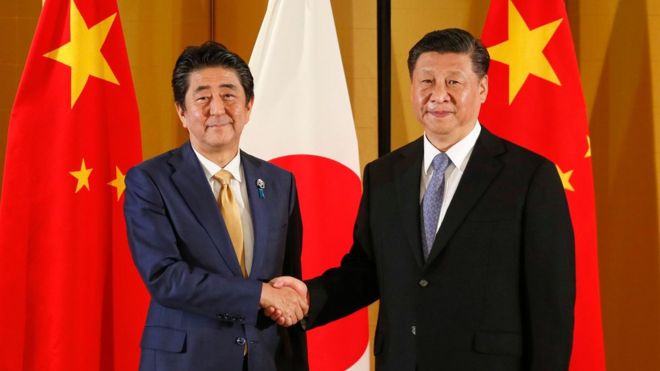
Japanese Prime Minister Shinzo Abe (R) shakes hands with Chinese President Xi JinpingImage copyright AFP

Chinese President Xi Jinping has met Japanese Prime Minister Shinzo Abe at a time of warming ties between the two nations.

Relations have historically been strained, but concerns over US trade policy and North Korea’s nuclear programme have shifted them closer.

The two leaders met on the sidelines of the forthcoming G20 summit in Japan.

“I want to open up a new age of Japan-China relations hand in hand with President Xi,” Mr Abe told reporters.

The pair agreed to work together to promote “free and fair trade” following a “very frank exchange”, a Japanese official said.

It is the first official visit Mr Xi has made to Japan since becoming president in 2013. At the outset of their talks on Thursday, Mr Abe invited him to return on a state visit next year.

“Around the time of the cherry blossoms next spring, I would like to welcome President Xi as a state guest to Japan,” he said. “[I] hope to further elevate ties to the next level.”

What did the leaders discuss?

Japan and China are by far Asia’s largest economies and the talks on Thursday focused strongly on business.

Last year, the two sides signed a deal to maintain annual dialogue and to co-operate on innovation. This time around, officials say, they pledged to develop a “free and fair trading system” in a “complicated” global economic landscape.

Media caption North Korea has been called out for evading UN sanctions

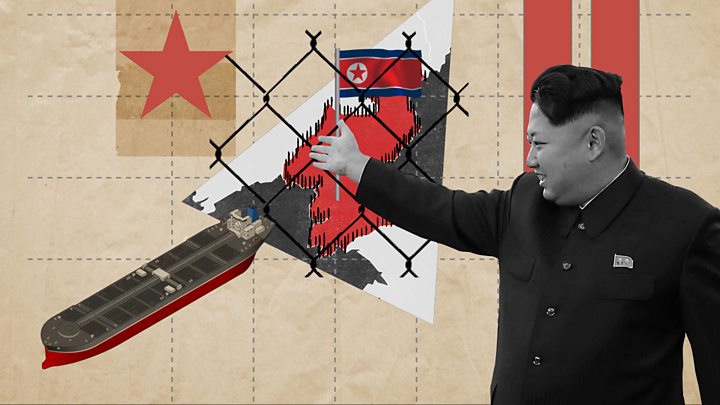
Another topic on the schedule would probably have been North Korea. While China is North Korea’s biggest trading partner, both Tokyo and Beijing want it to abandon its nuclear programme.

Mr Abe has only very limited leverage on the matter and will try to sway both the US and China to keep Tokyo’s interests in mind in any negotiations.

The G20 summit will begin on Saturday, but the main meeting is likely to be overshadowed by the many bilateral talks that are set to happen on the sidelines.

For example, Mr Xi will meet President Trump as China and the US try to resolve their trade dispute.

Do Japan and China get along?

In the past, relations have been tense. While the two countries do have close trade ties, politically things have been much more fragile.

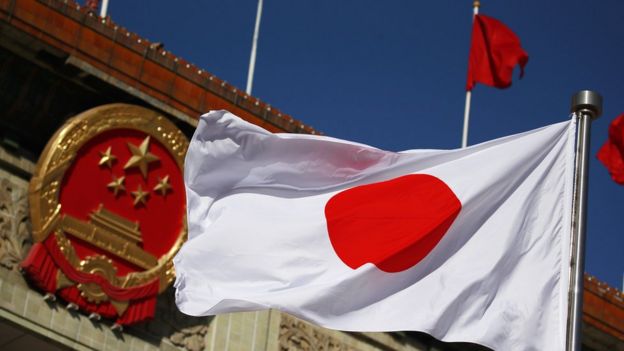
Japanese and Chinese flagsImage copyright EPA
Image caption Japan and China have not always had warm relations

Japan’s World War Two occupation of parts of China remains a very emotional issue. There are also several ongoing territorial disputes between Tokyo and Beijing.

But tensions with Washington over its protectionist trade policy have driven Japan and China into an unlikely friendship.

In 2018, Mr Abe hailed his high-profile visit to Beijing as an historic turning point. Both leaders have since promised to establish positive, constructive, relations.

Source: The BBC

26/06/2019

Pompeo meets India PM Modi for talks on trade, defence

NEW DELHI (Reuters) – U.S. Secretary of State Mike Pompeo met India’s Prime Minister Narendra Modi on Wednesday for talks on trade and defence issues that have strained ties between the countries.

Just days before Pompeo’s visit, India slapped higher retaliatory tariffs on 28 U.S. products following Washington’s withdrawal of key trade privileges for New Delhi.

Indian broadcasters showed footage of Pompeo exchanging handshakes with Modi at the prime minister’s official residence in the capital New Delhi on Wednesday morning. Neither side released details of the meeting.

India’s relations with Russia and Iran – both under U.S. sanctions – are also a sore point.

Under U.S. pressure, India has stopped buying oil from Iran, one of its top suppliers. The United States has also stepped up pressure on India not to proceed with its purchase of S-400 surface-to-air missile systems from Russia.

Pompeo is scheduled to have lunch with foreign minister Subrahmanyam Jaishankar, followed by a news conference at 1400 local time (0930 GMT), the foreign ministry said.

He is expected to round off the trip with a policy speech hosted by the U.S. Embassy on Wednesday evening, before departing on Thursday for the G20 summit in Japan.

Source: Reuters

23/06/2019

India rejects U.S. report on attacks on minority Muslims

NEW DELHI (Reuters) – India on Sunday rejected a U.S. State Department’s annual report on religious freedom that raised questions about the government’s inability to curb violent attacks on the country’s minority Muslims.

Preparing for a visit by U.S. Secretary of State Mike Pompeo on Tuesday, India’s foreign ministry issued a stiff rejoinder to the U.S. criticism.

“India is proud of its secular credentials, its status as the largest democracy and a pluralistic society with a longstanding commitment to tolerance and inclusion,” Raveesh Kumar, the ministry’s spokesman, said in a statement.

The State Department report, released on Friday, said some senior officials from Prime Minister Narendra Modi’s ruling Hindu nationalist Bharatiya Janata Party (BJP) last year had made “inflammatory speeches” against religious minorities.

Kumar said India’s constitution guarantees fundamental rights and religious freedom of all citizens, including its minority communities. Muslims make up 14 percent of India’s 1.3 billion people.

“We see no locus standi for a foreign entity to pronounce on the state of our citizens’ constitutionally protected rights,” Kumar said.

The U.S. State Department report examined attacks on minorities during 2018.

“Mob attacks by violent extremist Hindu groups against minority communities, especially Muslims, continued throughout the year amid rumours that victims had traded or killed cows for beef,” the report said.

It also noted reports by non-governmental organisations that the government sometimes failed to act on mob attacks on religious minorities, marginalized communities, and critics of the government.

While in New Delhi, Pompeo is expected to hold talks aimed at laying the ground for a meeting between U.S. President Donald Trump and Modi during a Group of 20 summit in Japan later next week.

Source: Reuters

23/06/2019

China confirms President Xi Jinping’s three-day trip to Japan this week

  • Leader will arrive on Thursday, ahead of G20 summit in Osaka, foreign ministry says
  • He is expected to hold talks with Donald Trump on sidelines of meeting
China has confirmed that President Xi Jinping will travel to japan this week. Photo: AFP

China on Sunday confirmed that President Xi Jinping will attend the G20 summit in Osaka this week.

Xi will spend three days in Japan – his first visit to the country since coming to power in 2013 – the foreign ministry said.

He will travel to Japan on Thursday and is expected to meet his US counterpart Donald Trump on the sidelines of the meeting of leading and emerging economies, which runs from Friday to Saturday, it said.

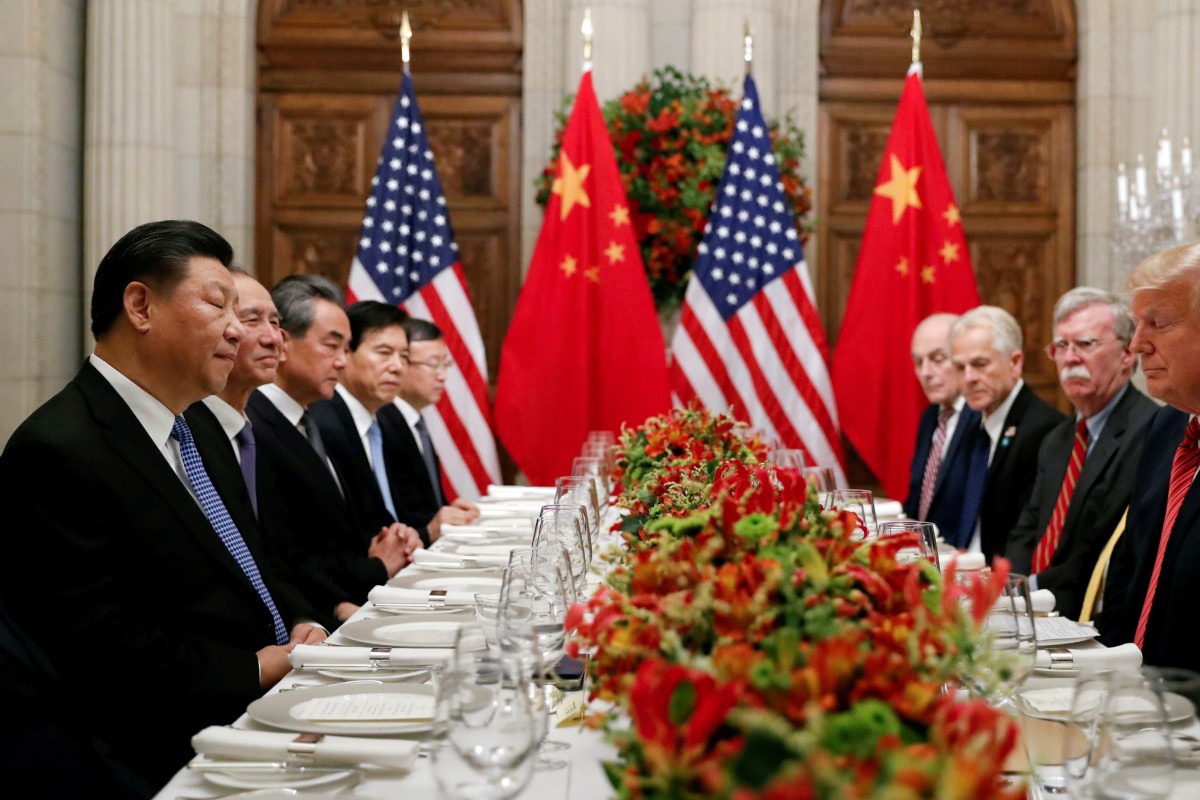
It is possible the pair will hold formal negotiations over dinner, as they did in Argentina in December at the last G20 summit.
Presidents Xi and Trump are expected to hold talks over dinner, as they did in Argentina in December. Photo: Kyodo

On Saturday, People’s Daily, the mouthpiece of China’s Communist Party said in a commentary that the trade war between China and the US could be resolved only through “equal conversation”.

“For the talks to resume … the key is to address the primary concern of the other side. The tariffs already in place must be revoked,” it said.

Trade deal ‘within reach if Xi and Trump show courage’

Meanwhile, state broadcaster CCTV on Friday criticised Washington’s decision to add five Chinese companies to its list of entities considered a threat to national security.

“The US made this move to put more pressure China ahead of the trade talks,” it said, adding that it might produce a result opposite to the one desired by Washington.

The report came after the US commerce department said it had added five Chinese firms that manufacture supercomputers and their components to the entity list, restricting their ability to do business with the US.

The blacklist effectively bars American firms from selling technology to the Chinese organisations without government approval. Last month, the commerce ministry added telecoms giant 

Huawei

to the list, heightening tensions with Beijing.

Xi told Trump on Tuesday he was willing to meet in Japan. Photo: AP

In a telephone conversation on Tuesday, Xi told Trump he was willing to meet in Japan and said he “agreed that the two countries’ trade delegations should keep communications going to solve their differences”, CCTV reported.

Kong Xuanyou, China’s new envoy to Japan, said on Friday that he hoped Xi would make an official visit to the country soon, ideally during the cherry blossom season next spring. The foreign ministry statement made no mention of such a visit.

Source: SCMP

19/06/2019

Xi Jinping and Donald Trump to broaden agenda beyond US-China trade war for meeting at G20 summit in Osaka

  • Osaka summit intended to pull bilateral ties away from brinkmanship that has dragged relations to lowest point in decades
  • Trade war just one of the items on the agenda, analysts say, along with principles of relationship, North Korea, and Huawei
The last time the US President Donald Trump and China’s President Xi Jinping met was in Buenos Aires in December. Analysts are confident that their meeting at the G20 Summit in Osaka this month can yield a freeze in the escalation of the trade war. Photo: Reuters
When Chinese President Xi Jinping meets his US counterpart Donald Trump in Japan at the end of the month they are expected to discuss a broad range of issues, including the trade war, in an effort to stop the relationship from tilting towards sustained confrontation, analysts said.
Neither side has provided an agenda for the meeting on the sidelines of the G20 leaders summit in Osaka, despite confirmation coming from both sides that it was to take place, after weeks of speculation.
A summary of Tuesday’s phone conversation between Xi and Trump published by Xinhua, however, implied that the leaders would cover more strategic issues, leaving the nuts and bolts of a trade deal to their negotiating teams. Meanwhile, China’s foreign ministry spokesperson Lu Kang said at a regular press conference on Wednesday that the two leaders would discuss the overall direction of bilateral relations, but he did not elaborate further.
Both China and the United States have confirmed that their leaders will meet in Osaka at the end of June, at a time when US-China relations have nosedived. Photo: AP
Wei Jianguo

, a former vice-minister at China’s Ministry of Commerce, predicted that Beijing would use the meeting to make clear a few principles regarding the bilateral relationship.

“It’s inevitable [for China and the US] to have problems in certain fields, but both sides should resolve the problems through dialogue on an equal footing rather than opting for a trade war, a tech war, or a financial war,” said Wei, now a vice-chair at the state-backed China Centre for International Economic Exchanges, a think tank.
He added that China would try to convince the US that it had no intention of challenging its global hegemony, but that China’s own “core interests”, including its sovereignty, territorial rights and room to develop, “must be respected”.

A government official in Beijing, who declined to be identified, said China was pinning its hopes on the leaders’ summit to ease general tensions between Beijing and Washington, even though the chances of the leaders reaching any concrete agreements in Osaka was small.

“Without a leaders’ summit, it would be difficult to push ahead the work [to reach agreements] at the ministerial or lower levels,” the source said.

Wei Jianguo, a former vice-minister at China’s Ministry of Commerce, predicted that Beijing would use the meeting to make clear a few principles regarding the bilateral relationship. Photo: Handout

The last summit between Trump and Xi in Buenos Aires in December resulted in a tariff truce and negotiations that continued until early-May. But the talks failed to achieve a deal to end the conflict, resulting in the US more than doubling tariffs on US$200 billion of Chinese imports and threatening tariffs on almost all remaining Chinese imports, valued at US$300 billion by the US government.

Tuesday’s telephone call, in which 

Xi told Trump

he was willing to exchange views with Trump on “the fundamental issues” affecting China-US relations, came at a low point in recent China-US relations.

The tariff increase followed the collapse of trade talks in early-May, while hostile rhetoric has spread into the political and military spheres. The US labelled China a “strategic competitor” and accused Beijing of conducting sustained espionage to impede US’s national security, while China blamed the US for trying to thwart China’s development by targeting Huawei and infringing on China’s sovereignty over Taiwan and Hong Kong.
Zhou Rong, a senior fellow from the Chongyang Institute for Financial Studies at the Renmin University of China, said the two leaders have a long list of issues to talk about this time in addition to trade, including Taiwan, the South China Sea, as well as the treatment of Chinese companies in the US. China can offer to help on some issues but “the US should not force China to swallow bitter fruit it cannot digest”, Zhou said.
Ni Feng, a specialist in Sino-US relations at the Chinese Academy of Social Sciences, said they would discuss the “overall direction” of their bilateral relationship, including where the two nations could engage in “competition and cooperation”.
He added that North Korea may be on the agenda because “China and the US share the same goal of the denuclearisation of the Korean peninsula.” 
Xi is set to start

 a two-day state visit to Pyongyang on Thursday.

Another source in the Chinese government, who wished to remain anonymous, said Xi was very likely to bring up the US’ blacklisting of Huawei, China’s leading technology firm. Washington has effectively banned American companies from providing key components to the Shenzhen-based company.
Meng Wanzhou, Huawei’s chief financial officer and the daughter of founder Ren Zhengfei, is currently on bail in Canada awaiting extradition to the US to face charges that both she and Huawei violated US sanctions on Iran.
During Tuesday’s call, Xi told Trump that China “hopes the US side can treat Chinese businesses fairly”, Xinhua reported.
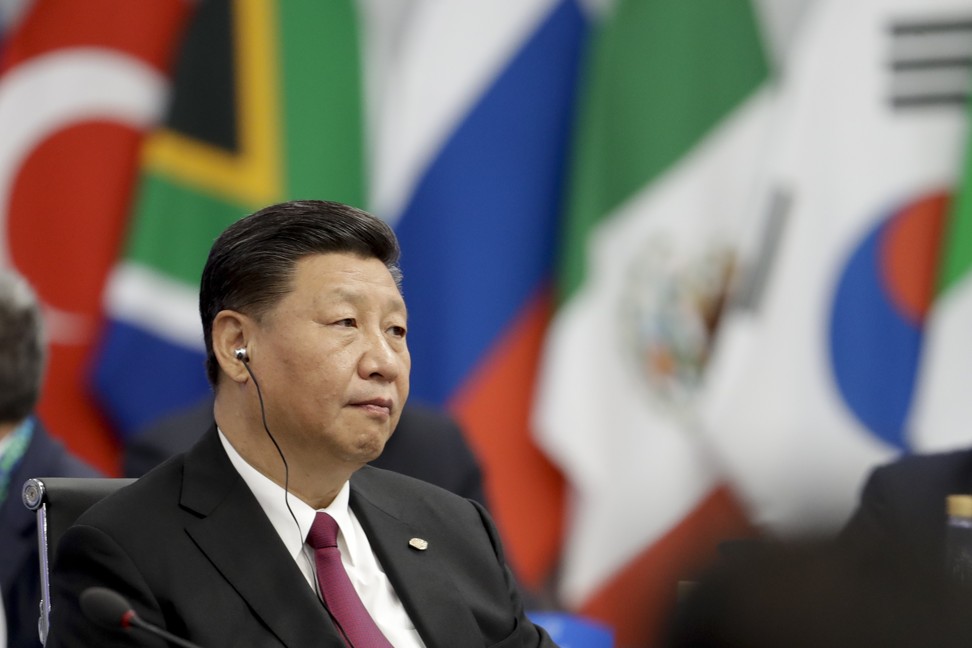
China's President Xi Jinping waits for the start of the G20 summit in Buenos Aires, Argentina, Friday, Nov. 30, 2018. Photo: AP
China’s President Xi Jinping waits for the start of the G20 summit in Buenos Aires, Argentina, Friday, Nov. 30, 2018. Photo: AP

At the same time, Trump and Xi agreed that the two countries’ trade negotiators would start to talk again before the meeting in Japan, raising prospects for a second truce in the trade war, or even a deal to end the conflict.

Matthew Goodman, a researcher at the Centre for Strategic and International Studies in Washington, wrote in a note that a Trump-Xi deal on trade-in Osaka “is certainly possible”.

The most likely outcome is similar to the one reached in Buenos Aires in December last year, when Trump and Xi “agreed to a temporary truce while trade negotiators work to hammer out a deal”, Goodman wrote. “This would postpone the worst effects of the current escalation but is unlikely to solve the deepening and dangerous rift in US-China relations”.

The South China Morning Post previously reported that the Osaka summit meeting, which is likely to take place on Saturday June 29, could also be a sit-down dinner between Trump, Xi and their top economic and security aides, as occurred in Buenos Aires. Trump tweeted Tuesday night that he would have an “extended” meeting with Xi in Japan.

Source: SCMP

19/06/2019

US-China trade war: Officials to resume talks before G20

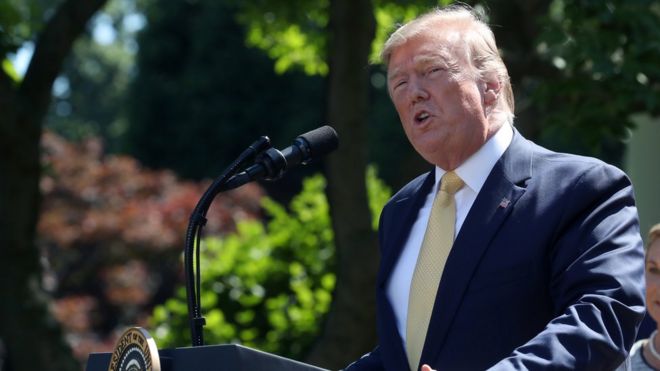
U.S. President Donald Trump speaks about expanding healthcare coverage for small businesses in the Rose Garden of the White House on June 14, 2019 in Washington, DCImage copyright GETTY IMAGES

US and China will resume trade talks ahead of a meeting between their leaders at a G20 summit next week, US President Donald Trump has said.

Mr Trump said on Twitter he had a “very good” call with Chinese President Xi Jinping and their teams would start talks before they met in Japan.

The US escalated tensions with tariff hikes in May, derailing months of talks between the economic powerhouses.

The two countries have been fighting a damaging trade war over the past year.

The Chinese president said he was prepared to meet with Mr Trump at the G20 meeting next week, according to state media Xinhua.

Mr Trump said he would have an “extended meeting” with his Chinese counterpart at the summit in Japan.

Trade talks grinded to a halt last month when Mr Trump accused China of reneging on its promises and raised tariffs on $200bn (£159.2bn) worth of Chinese goods.

The move came as a surprise to many who had thought the US and China were nearing a trade deal. China retaliated with its own tariff hikes.

The Trump administration has threatened to impose tariffs on another $300bn worth of Chinese products if the two sides can’t reach an agreement on trade.

Tariffs on billions of dollars worth of goods from the US and China imposed over the past year have weighed on the global economy and hit financial markets.

Many businesses have urged Mr Trump to end the trade war, and public hearings on the potential impact of additional duties on Chinese goods are underway in Washington.

Companies ranging from retailers to electronics firms have made submissions to the US trade department warning that more tariffs will hurt their business and consumers.

Still, in his latest comments the US president appeared more optimistic about striking a trade deal.

“I think we have a chance. I know that China wants to make a deal. They don’t like the tariffs, and a lot of companies are leaving China in order to avoid the tariffs,” Mr Trump told reporters at the White House on Tuesday.

Despite moves to resume talks, recent comments from both sides suggest they still remain far apart on many issues.

Sticking points in trade negotiations have included how to enforce a deal and how fast to roll back tariffs.

Source: The BBC

Law of Unintended Consequences

continuously updated blog about China & India

ChiaHou's Book Reviews

continuously updated blog about China & India

What's wrong with the world; and its economy

continuously updated blog about China & India