Archive for ‘German’

31/05/2020

China says 2 new coronavirus cases, asymptomatic case on German charter

BEIJING (Reuters) – China announced on Sunday two new confirmed cases of coronavirus and four new asymptomatic cases, including one person without symptoms of COVID-19 on a chartered flight from Germany.

The two confirmed cases in Shandong province on Saturday compared with four cases the day before, data from the country’s health authority showed.

The National Health Commission (NHC) confirmed three new asymptomatic cases on Saturday.

On Sunday, the Chinese city of Tianjin confirmed one asymptomatic person, a passenger arriving from Frankfurt on a chartered Lufthansa flight, LH342, to Tianjin. This case was discovered between midnight and 6 a.m. local time on Sunday, the city’s daily statements show.

These charter flights are part of an accelerated entry procedure offered by Beijing as China and Germany seek to reignite their economies after months of lockdown. The flight to Tianjin carried about 200 passengers, mostly German business executives.

Lufthansa has another charter flight scheduled for Shanghai on Wednesday.

A 34-year-old German engineer tested positive for the coronavirus after arriving in Tianjin but he does not have any symptoms, the Tianjin government said on its official social media platform Weibo.

The asymptomatic patient has been transferred to a local hospital to be placed under medical observation, the Tianjin government said, adding that the whole process was a “closed loop”, meaning posing no great risk to the Chinese public.

Source: Reuters

17/05/2020

Lufthansa Cargo adds more flights to mainland China, ferrying urgent supplies to Europe

  • There has been strong demand for air freight services since April, when Chinese factories got back to work
  • Cargo flights have become critical in moving protective health equipment across the globe
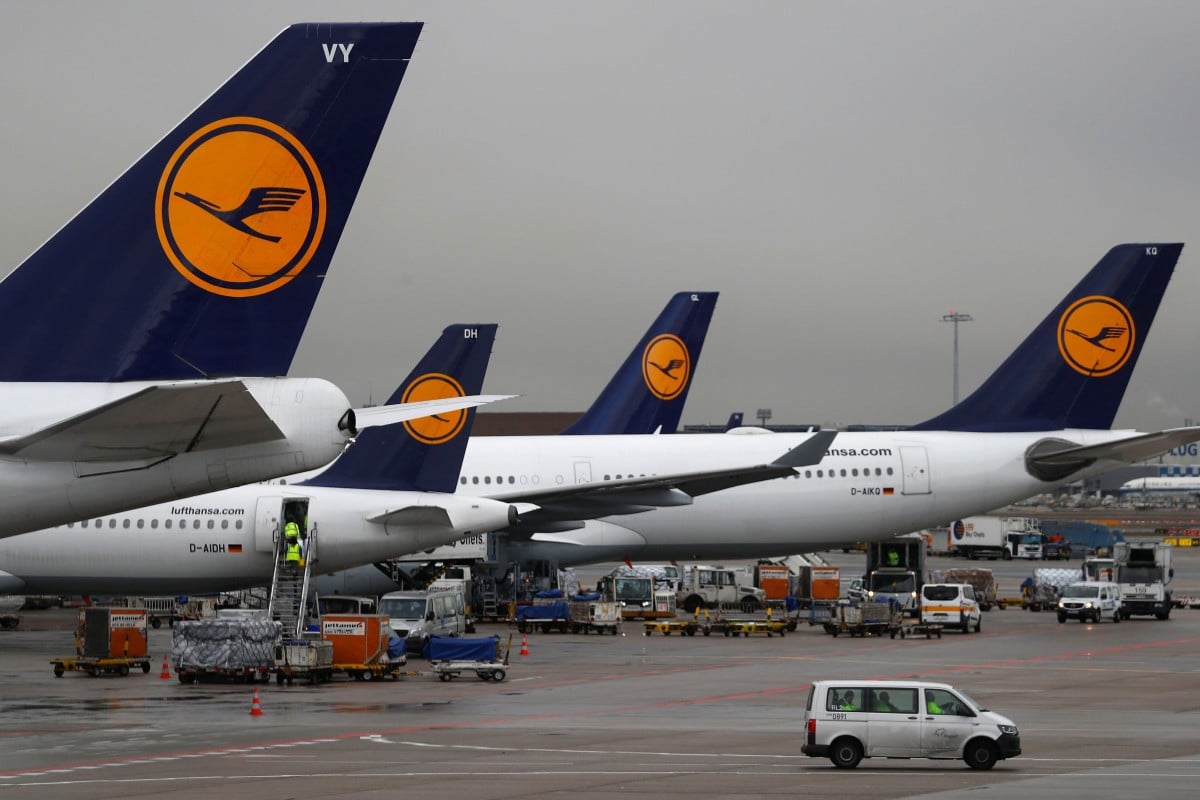
Planes of German air carrier Lufthansa at the country’s largest airport in Frankfurt. Photo: Reuters

German freight carrier Lufthansa Cargo is expanding in China, surpassing 100 weekly flights for the first time, and adding new flights to Shenzhen.

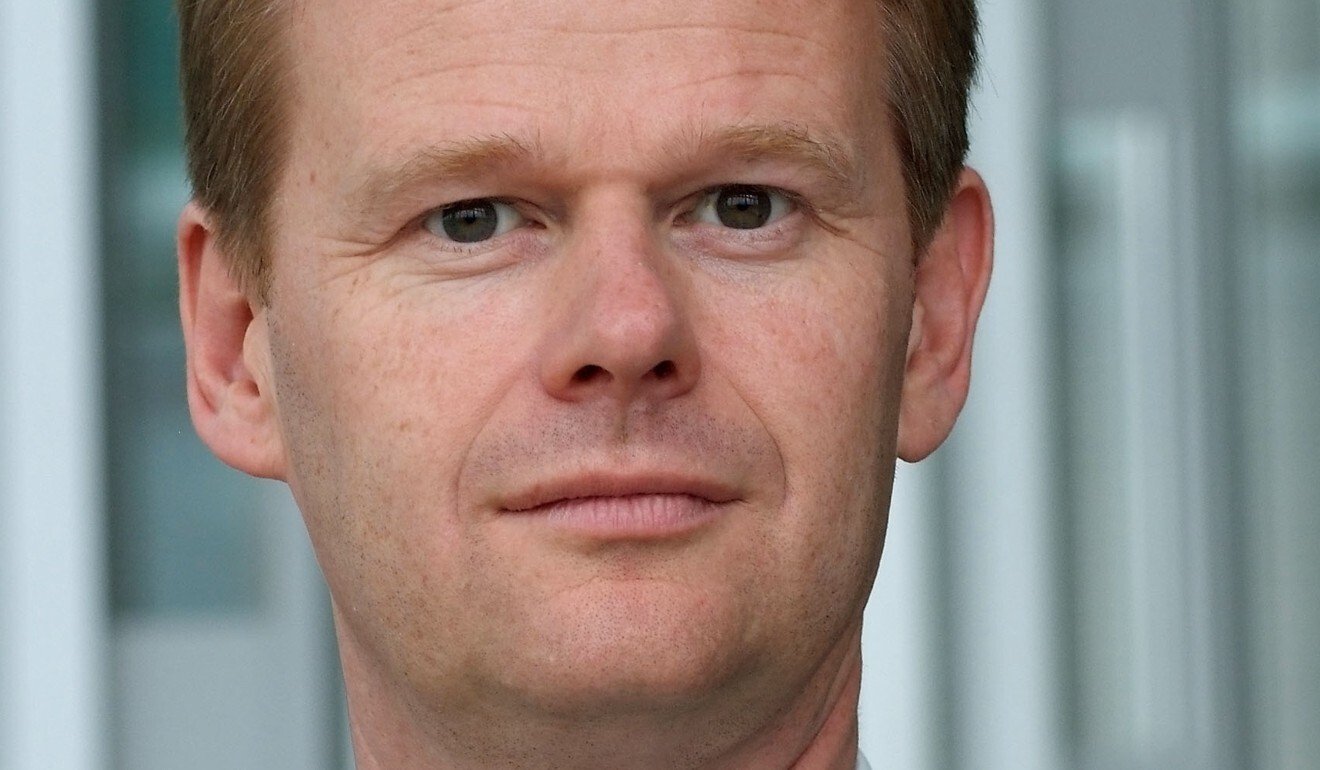
Peter Gerber, CEO of Europe’s largest cargo airline, said there had been heavy demand for its services, though this might cool by the peak of summer.

“At the moment, cargo demand is very, very strong,” he told the Post. “It started to get strong in April, when Chinese industries got back to work, and after that we have seen a constant, heavy demand, a real peak.”

Cathay Pacific and Cathay Dragon report combined HK$4.5 billion loss for start of 2020

15 May 2020
Global air freight capacity has been squeezed as two-thirds of the world’s aircraft have been grounded by the Covid-19 pandemic.
The collapse of air travel has practically put a stop to passenger flights, which typically carry half of all air cargo.

Since the pandemic, cargo flights have been critical in moving protective health equipment across the globe. From sending masks and other supplies to China in February, the German carrier is now taking urgent supplies from the mainland back to Europe.

Peter Gerber says Lufthansa Cargo has a high responsibility in maintaining supply chains, for both global health and world trade. Photo: Handout
“We have a high responsibility in maintaining supply chains in these unprecedented times for both global health and world trade,” Gerber said.

With the addition of Shenzhen, Lufthansa Cargo will fly to five destinations in China. It serves more than 300 destinations in 100 countries.

The cargo carrier is part of the Lufthansa Group and coordinates all the freight that goes into the passenger planes of its sibling brands, including Lufthansa, Swiss and Austrian.

Coronavirus: South Africa asks Hong Kong to remove its citizens from government quarantine list

16 May 2020

By next week, Lufthansa Cargo will be running more freight flights to China than the 72 passenger flights the group flew weekly before the pandemic to Beijing, Shanghai, Shenyang, Nanjing and Qingdao.

Lufthansa Cargo has a fleet of seven Boeing 777 Freighters (777Fs), with two new 777Fs arriving this year as part of its strategy to operate a fleet with a single aircraft type.

It also has six McDonnell Douglas-11Fs that Gerber said would still be retired as planned at the end of 2020, despite the extra demand for cargo capacity.

Its additional flights to China will make use of “preighters” – passenger aircraft flying cargo only. Gerber felt the trend of using empty passenger planes as “preighters” had peaked, pointing out that they cost the same to operate as freighters but carry only a fraction of the cargo.

Although he did not rule out future expansion, he said: “Demand will gradually come down in the next two or three months because a lot of equipment would have been shipped by then and some shipments will go on rail or ocean shipping.”

Coronavirus: Cathay Pacific could get cash injection from shareholder Qatar Airways

13 May 2020

He said some uncertainty remained over continued demand for airfreighted cargo, given the battered state of the world economy. Airlines would have to consider longer-term demand before deciding to invest more in cargo aircraft. “It depends how it looks beyond the next year,” he said.

Gerber said no decision had been taken yet on whether to convert some of the group’s orders for Boeing’s newest widebody 777X passenger aircraft into cargo planes.

He added that future plane orders would be balanced against the wider needs and spending decisions at Lufthansa Group, which is currently negotiating a government pandemic bailout package in the region of 9 billion (US$9.7 billion).

Source:SCMP

20/04/2020

Educational situation in China’s Xinjiang much improved: scholar

KATHMANDU, April 19 (Xinhua) — A German scholar has recently found that the right to education for Uygurs and people of other ethnic groups is well protected in China’s Xinjiang region, as young people there enjoy increasingly better opportunities.

Michael Heinrich, who has been teaching German in Minzu University of China for more than five years, said in an article published on Online Khabar news website in March that he has “paid close attention to the development of Chinese education in recent years, especially the education situation in ethnic minority areas.”

Heinrich said he has taught a Xinjiang Uygur student, who often talks with him about the education situation in her hometown and appreciates government policies on education.

The Uygur student has told Heinrich that she lives in a place where she receives Islamic religious education and China’s nine-year compulsory education, and the Uygur students in Xinjiang can enjoy preferential policies, such as extra points in college entrance examination, special policies for college admissions, and employment policy support.

In recent years, the Chinese government has intensified policy support on education in Xinjiang Uygur Autonomous Region, and increased investment in educational resources, especially those on vocational education, the article read.

“Through vocational education, more Uyghur Muslim students can enhance their survival skills and work harder by themselves and improve their living standards with these hands,” it said.

For some time, Xinjiang has been plagued by terrorism, religious extremism and separatism, according to the passage, and carrying out vocational education and training in Xinjiang is an effective measure to promote the rule of law and a practical action to protect the vital interests of people of all ethnic groups there.

It is also a just move in fighting extremism and terrorism to contribute to the stability in Xinjiang, it added.

Some Western media outlets as well as some U.S. politicians often slander the Chinese government under the guise of “human rights,” which does not only disregard the facts but also interferes with China’s sovereignty, Heinrich pointed out.

The situation in Xinjiang that they saw was completely different from the stories told by some Western politicians and media, Heinrich quoted some people who have visited Xinjiang and witnessed its development as saying.

The rights to life and development of people of all ethnic groups in Xinjiang are protected to the largest extent, Heinrich added.

Source: Xinhua

09/04/2020

Pass the salt: The minute details that helped Germany build virus defences

MUNICH (Reuters) – One January lunchtime in a car parts company, a worker turned to a colleague and asked to borrow the salt.

As well as the saltshaker, in that instant, they shared the new coronavirus, scientists have since concluded.

That their exchange was documented at all is the result of intense scrutiny, part of a rare success story in the global fight against the virus.

The co-workers were early links in what was to be the first documented chain of multiple human-to-human transmissions outside Asia of COVID-19, the disease caused by the coronavirus.

They are based in Stockdorf, a German town of 4,000 near Munich in Bavaria, and they work at car parts supplier Webasto Group. The company was thrust under a global microscope after it disclosed that one of its employees, a Chinese woman, caught the virus and brought it to Webasto headquarters. There, it was passed to colleagues – including, scientists would learn, a person lunching in the canteen with whom the Chinese patient had no contact.

The Jan. 22 canteen scene was one of dozens of mundane incidents that scientists have logged in a medical manhunt to trace, test and isolate infected workers so that the regional government of Bavaria could stop the virus from spreading.

That hunt has helped Germany win crucial time to build its COVID-19 defences.

The time Germany bought may have saved lives, scientists say. Its first outbreak of locally transmitted COVID-19 began earlier than Italy’s, but Germany has had many fewer deaths. Italy’s first detected local transmission was on Feb. 21. By then Germany had kicked off a health ministry information campaign and a government strategy to tackle the virus which would hinge on widespread testing. In Germany so far, more than 2,100 people have died of COVID-19. In Italy, with a smaller population, the total exceeds 17,600.

CHART: Contrasting curves reut.rs/3c2UZA4

“We learned that we must meticulously trace chains of infection in order to interrupt them,” Clemens Wendtner, the doctor who treated the Munich patients, told Reuters.

Wendtner teamed up with some of Germany’s top scientists to tackle what became known as the ‘Munich cluster,’ and they advised the Bavarian government on how to respond. Bavaria led the way with the lockdowns, which went nationwide on March 22.

Scientists including England’s Chief Medical Officer Chris Whitty have credited Germany’s early, widespread testing with slowing the spread of the virus. “‘We all know Germany got ahead in terms of its ability to do testing for the virus and there’s a lot to learn from that,’” he said on TV earlier this week.

Christian Drosten, the top virologist at Berlin’s Charite hospital, said Germany was helped by having a clear early cluster. “Because we had this Munich cohort right at the start … it became clear that with a big push we could inhibit this spreading further,” he said in a daily podcast for NDR radio on the coronavirus.

Drosten, who declined to be interviewed for this story, was one of more than 40 scientists involved in scrutiny of the cluster. Their work was documented in preliminary form in a working paper at the end of last month, intended for The Lancet. The paper, not yet peer-reviewed, was shared on the NDR site.

ELECTRONIC DIARIES

It was on Monday, Jan. 27, that Holger Engelmann, Webasto’s CEO, told the authorities that one of his employees had tested positive for the new coronavirus. The woman, who was based in Shanghai, had facilitated several days of workshops and attended meetings at Webasto’s HQ.

The woman’s parents, from Wuhan, had visited her before she travelled on Jan. 19 to Stockdorf, the paper said. While in Germany, she felt unusual chest and back aches and was tired for her whole stay. But she put the symptoms down to jet lag.

She became feverish on the return flight to China, tested positive after landing and was hospitalised. Her parents also later tested positive. She told her managers of the result and they emailed the CEO.

In Germany, Engelmann said he immediately set up a crisis team that alerted the medical authorities and started trying to trace staff members who had been in contact with their Chinese colleague.

The CEO himself was among them. “Just four or five days before I received the news, I had shaken hands with her,” he said.

Now known as Germany’s “Case #0,” the Shanghai patient is a “long-standing, proven employee from project management” who Engelmann knows personally, he told Reuters. The company has not revealed her identity or that of others involved, saying anonymity has encouraged staff to co-operate in Germany’s effort to contain the virus.

The task of finding who had contact with her was made easier by Webasto workers’ electronic calendars – for the most part, all the doctors needed was to look at staff appointments.

“It was a stroke of luck,” said Wendtner, the doctor who treated the Munich patients. “We got all the information we needed from the staff to reconstruct the chains of infection.”

For example, case #1 – the first person in Germany to be infected by the Chinese woman – sat next to her in a meeting in a small room on Jan. 20, the scientists wrote.

Where calendar data was incomplete, the scientists said, they were often able to use whole genome sequencing, which analyses differences in the genetic code of the virus from different patients, to map its spread.

By following all these links, they discovered that case #4 had been in contact several times with the Shanghai patient. Then case #4 sat back-to-back with a colleague in the canteen.

When that colleague turned to borrow the salt, the scientists deduced, the virus passed between them. The colleague became case #5.

Webasto said on Jan. 28 it was temporarily closing its Stockdorf site. Between Jan. 27 and Feb. 11, a total of 16 COVID-19 cases were identified in the Munich cluster. All but one were to develop symptoms.

All those who tested positive were sent to hospital so they could be observed and doctors could learn from the disease.

Bavaria closed down public life in mid-March. Germany has since closed schools, shops, restaurants, playgrounds and sports facilities, and many companies have shut to aid the cause.

HAMMER AND DANCE

This is not to say Germany has defeated COVID-19.

Its coronavirus death rate of 1.9%, based on data collated by Reuters, is the lowest among the countries most affected and compares with 12.6% in Italy. But experts say more deaths in Germany are inevitable.

“The death rate will rise,” said Lothar Wieler, president of Germany’s Robert Koch Institute for infectious diseases.

The difference between Germany and Italy is partly statistical: Germany’s rate seems so much lower because it has tested widely. Germany has carried out more than 1.3 million tests, according to the Robert Koch Institute. It is now carrying out up to 500,000 tests a week, Drosten said. Italy has conducted more than 807,000 tests since Feb. 21, according to its Civil Protection Agency. With a few local exceptions, Italy only tests people taken to hospital with clear and severe symptoms.

Germany’s government is using the weeks gained by the Munich experience to double the number of intensive care beds from about 28,000. The country already has Europe’s highest number of critical care beds per head of the population, according to a 2012 study.

Even that may not be enough, however. An Interior Ministry paper sent to other government departments on March 22 included a worst-case scenario with more than 1 million deaths.

Another scenario saw 12,000 deaths – with more testing after partial relaxation of restrictions. That scenario was dubbed “hammer and dance,” a term coined by blogger Tomas Pueyo. It refers to the ‘hammer’ of quick aggressive measures for some weeks, including heavy social distancing, followed by the ‘dance’ of calibrating such measures depending on the transmission rate.

The German government paper argued that in the ‘hammer and dance’ scenario, the use of big data and location tracking is inevitable. Such monitoring is already proving controversial in Germany, where memories of the East German Stasi secret police and its informants are still fresh in the minds of many.

A subsequent draft action plan compiled by the government proposes the rapid tracing of infection chains, mandatory mask-wearing in public and limits on gatherings to help enable a phased return to normal life after Germany’s lockdown. The government is backing the development of a smartphone app to help trace infections.

Germany has said it will re-evaluate the lockdown after the Easter holiday; for the car parts maker at the heart of its first outbreak, the immediate crisis is over. Webasto’s office has reopened.

All 16 people who caught COVID-19 there have recovered.

Source: Reuters

18/03/2020

Coronavirus: Germany’s Angela Merkel plays down China’s providing medical supplies to hard-hit European countries

  • ‘What we are seeing here is reciprocity,’ the German leader says, referencing the EU’s aiding stricken China earlier this year
  • But critics dismissed China’s show of largesse as propaganda designed to deflect US claims that the contagion originated in China
The colours of the Italian flag are projected onto the Palazzo Senatorio building on Capitoline Hill in Rome on Tuesday as a “sign of hope in this difficult and delicate moment”, Rome’s mayor stated. Photo: AFP

German Chancellor Angela Merkel has downplayed concerns over China’s provision of medical supplies to European countries hit hardest by the Covid-19 pandemic, calling the move a gesture of reciprocity.

The European Union continued to face criticism over its slow reaction to calls for medical supplies from Italy and Spain, amid the encouraging news that new cases in Italy were seeing their slowest rate of increase since the contagion came to light in late February.

“The European Union sent medical equipment to China [when] China asked for help at that time,” Merkel said at a Tuesday press conference, referring to the outbreak’s start earlier this year. “What we are seeing here is reciprocity.”

“As we are having a crisis at this time, we cannot expect everything to be provided in the framework of the EU. We are very pleased about [China’s provision],” Merkel said.

Chinese President Xi Jinping has guaranteed that China will provide Italy and Spain – the two most severely hit European countries – with medical equipment such as face masks, ventilators and protective equipment for medical professionals.

Critics, however, called China’s action part of a propaganda campaign designed to deflect US claims that the coronavirus originated in China.

Spanish Prime Minister Pedro Sanchez reached out to Xi for help obtaining medical supplies in a phone call on Tuesday.

Speaking to reporters, Sanchez confirmed that the matter had come up during the call, just days after the Spanish government had ordered an unprecedented national lockdown to halt the virus’ spread.

Chinese state media reported that Xi had told Sanchez that “China is willing to respond to the urgent needs of Spain and spare no effort to provide support and assistance, and share experience in prevention, control and treatment.”

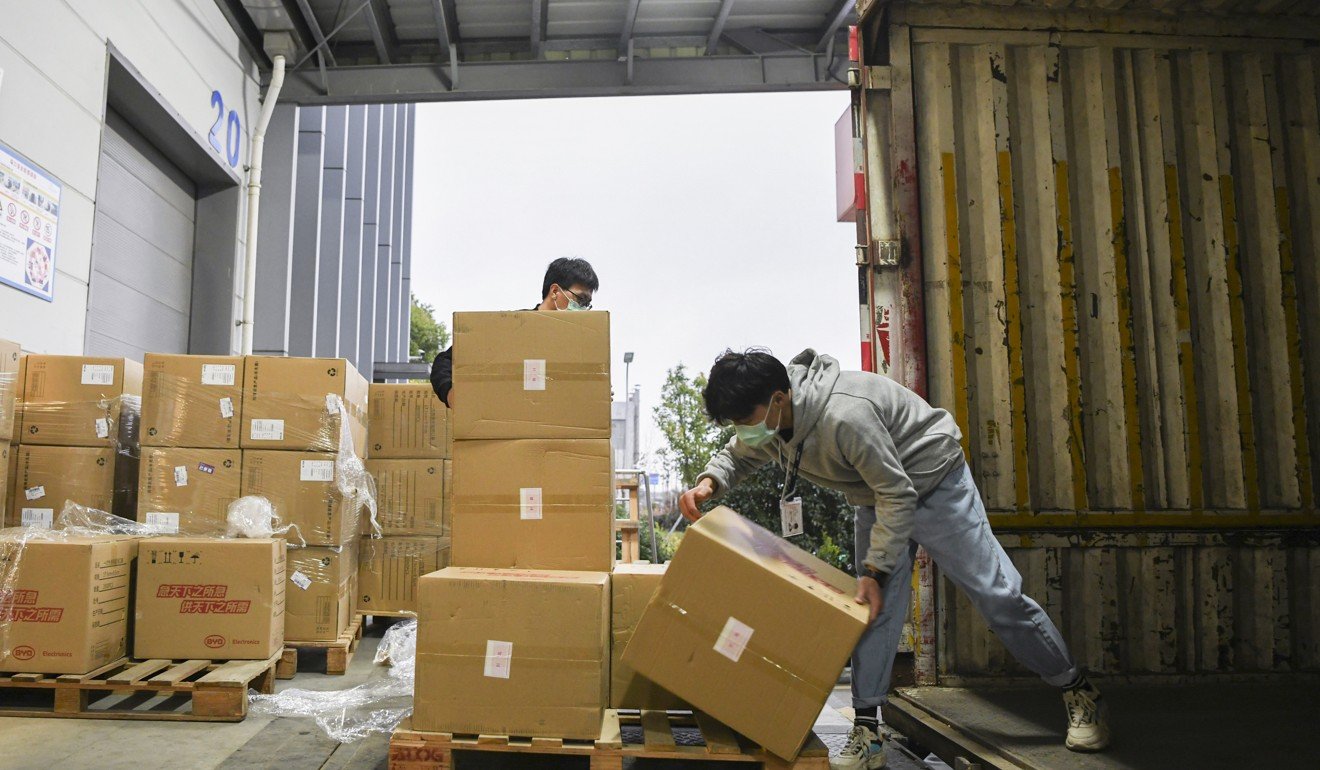
Workers loading boxes of surgical masks donated by China’s BYD, bound for the United States. Photo: Jack Ma Foundation
On Tuesday, a plane from Shanghai landed in the northern Spanish city of Zaragoza, carrying 500,000 masks donated by e-commerce giant Alibaba, AFP reported. (Alibaba owns the South China Morning Post.)

According to a statement, the delivery was part of a donation of 2 million masks and coronavirus test kits to certain countries from Alibaba’s Chinese billionaire founder Jack Ma.

Europe to shut border for month as France braces for 15-day coronavirus lockdown

17 Mar 2020

Xi’s call with Sanchez came a day after one with Italian Prime Minister Giuseppe Conte, in which the Chinese leader similarly pledged to provide Italy with medical support, including teams with expertise in treating Covid-19.

On Tuesday, Italy reported 345 new coronavirus deaths in 24 hours, taking its overall death toll to 2,503.

Spain registered 183 deaths, 53 per cent more than in the previous 24 hours, driving the total number of deaths to 524. More than 2,000 newly infected cases were reported, pushing the total to 11,681.

Elsewhere on Tuesday, France entered a national shutdown, while Belgium, where the EU is headquartered, announced a similar halt to public activities starting on Wednesday.

European Commission President Ursula von der Leyen said all 27 member states have agreed to ban non-EU citizens from visiting the region for the next 30 days. The method of enforcement will be determined by the individual countries, she said.

Source: SCMP

05/03/2020

Direct shipping route links China’s Tianjin port with northern Europe

TIANJIN, March 4 (Xinhua) — German shipping giant Hapag-Lloyd AG launched a direct freight route Wednesday linking north China’s Tianjin port with northern Europe, according to the company’s local branch.

The route is expected to further increase the shipment exported from Tianjin to European ports and European goods will also arrive in Tianjin through the direct route, said Tian Liqiang, with Hapag-Lloyd’s Tianjin branch.

The port of Tianjin, a major link in the Beijing-Tianjin-Hebei region, saw its container throughput rise 8.1 percent year on year in 2019, according to the Tianjin Port Group Co. Ltd.

Headquartered in Hamburg, Hapag-Lloyd AG is a leading global liner shipping company that reaches 600 ports worldwide.

Source: Xinhua

28/02/2020

Coronavirus may make German economy miss growth forecasts, Bundesbank says

FRANKFURT (Reuters) – The German economy may miss growth forecasts this year as the coronavirus epidemic hits demand as well as supply in China, the country’s central bank governor, Jens Weidmann, said on Friday.

Weidmann joined a number of European Central Bank policymakers in saying it was too early to gauge the economic fallout of coronavirus, but he acknowledged the Bundesbank’s prediction of a 0.6% GDP expansion this year, which had already been halved from the previous forecast, may be out of date.

“All in all, economic growth this year could come in slightly lower than our experts estimated in December,” Weidmann said.

China is Germany’s top source of imports and its third-largest export market.

Investors were ramping up expectations for an ECB rate cut as soon as June on fears that coronavirus, now spreading to a number of European countries, could tip the world economy into recession.

Speaking in Brussels, Lithuania’s central bank governor, Vitas Vasiliauskas, said he did not expect ECB policymakers to take any action when they met on March 12, but that they could call an emergency meeting if needed.

Weidmann merely acknowledged that the latest events were lengthening the odds on a rate increase, previously expected for 2022. But he said the ECB should “not lose sight of the exit” from its ultra-easy policy of massive bond purchases and negative rates.

“The Governing Council must not lose sight of the exit from loose monetary policy,” he said. “For the very loose monetary policy is also associated with risks and side effects.”

He also criticised the notion of raising the ECB’s inflation target, saying its current formulation as a rate of price growth “below but close to 2%” was “understandable, forward-looking and realistic”.

Source: Reuters

14/02/2020

U.S., China, Russia making world more dangerous – German president

MUNICH (Reuters) – Germany’s president took an indirect swipe at U.S. President Donald Trump on Friday in accusing Washington, China and Russia of stoking global mistrust and insecurity with a “great powers” competition” that could threaten a new nuclear arms race.

In opening remarks at the annual Munich Security Conference, German President Frank-Walter Steinmeier deplored the three big powers’ approach to global affairs and, without naming Trump, took issue with his vow to “make America great again”.

“‘Great again’ – even at the expense of neighbours and partners,” quipped Steinmeier, a former Social Democrat foreign minister whose comments on foreign policy carry authority.

As foreign minister in 2014, he was central to the so-called “Munich consensus” when German leaders said Berlin was ready to assume more responsibility in global affairs. Steinmeier pressed that point again on Friday, but not before bemoaning the foreign policy approaches of Russia, China and the United States.

“Russia…has made military force and the violent shifting of borders on the European continent the means of politics once again,” he said in the text of a speech for delivery at the opening of the conference.

“China…accepts international law only selectively where it does not run counter to its own interests,” Steinmeier said.

“And our closest ally, the United States of America, under the present administration itself, rejects the idea of an international community.”

The upshot is “more mistrust, more armament, less security…all the way to a new nuclear arms race,” he said.

In response, he said, Germany should raise defence spending to contribute more to European security and to maintain its alliance with the United States, recognising that U.S. interests were gravitating away from Europe toward Asia.

He also called for a European policy towards Russia “that is not limited to condemning statements and sanctions alone”.

Europe, he added, “must find its own balance with China between intensifying competition between systems and the need for cooperation.”

Source: Reuters

09/12/2019

China Focus: Xinjiang, an emerging investment hotspot

URUMQI, Dec. 8 (Xinhua) — Rich in resources but remote, Xinjiang in China’s far west has become a magnet for investors for its unique position on the Silk Road.

In a workshop of the Amer International Group in Urumqi, capital of Xinjiang Uygur Autonomous Region, workers are busy adjusting and packing laptops.

Recently, Amer sent the first batch of 2,000 laptops it produced for the German company TrekStor to the European market via China-Europe freight trains.

Headquartered in the southern Chinese city of Shenzhen, Amer invested 20 billion yuan (around 2.8 billion U.S. dollars) to build an industrial park in Xinjiang in 2018. So far, the industrial park has produced and exported around 1.5 million mobile phones, according to Wang Wenyin, the founder and chairman of Amer International Group.

“We saw Xinjiang’s geographical advantages, so we established the industrial park and cooperated with our counterparts in South and Central Asia in the fields of smartphones and IT high-end manufacturing,” Wang said.

Amer International Group is among a growing number of enterprises that have been attracted by Xinjiang in recent years, as trains and planes have made Xinjiang better connected than ever before.

As China’s key trade gateway to Central and West Asia, the remote region’s position as the heart of the Belt and Road Initiative is unmistakable. In 2013, China proposed the BRI, which opened up new space for the world economy, spurring trade and economic growth and stimulating investment and creating jobs worldwide.

Urumqi Customs saw the number of China-Europe freight trains skyrocket to 5,743 in the first 10 months this year, up 53.68 percent year on year, outnumbering the total of 2018.

To attract more investors, the local government has gone to great lengths creating a more friendly business environment, such as cutting the time required for starting a business and lowering the entry threshold for products.

Up to now, Xinjiang has had more than 1.8 million market entities including 359,000 enterprises, up 18 percent year on year.

Foreign and domestic business giants including German chemical giant BASF and China’s real estate conglomerates Wanda Group have also invested in the region.

Lai Naixiang, head of Kashgar Oumeisheng Energy Technology, a home appliance manufacturer, moved his business from Shenzhen to Kashgar in southern Xinjiang in 2017.

“We chose to settle in Kashgar because of the great market potential in adjacent Central Asian countries as well as Xinjiang’s lower electricity prices and preferential tax policy,” he said.

Last year, the company exported electric kettles worth more than 16 million yuan to Kyrgyzstan and Tajikistan.

Foreign trade in Xinjiang has seen booming growth. The region recorded around 131.5 billion yuan in imports and exports in the first 10 months of this year, up 28 percent year on year.

In the first 10 months, Kazakhstan topped the list of Xinjiang’s major trade partners, with trade volume between the two growing by 28.2 percent to 60.2 billion yuan.

Xinjiang’s trade with Kyrgyzstan, Australia, Pakistan, Britain, Argentina and Vietnam also showed fast growth, according to the local customs authorities.

“With further Belt and Road construction, Xinjiang will get more impetus in economic and social development. I see great potential in the region,” Wang said.

Source: Xnhua

23/11/2019

Germany’s BASF starts building $10-billion petrochemical project in China

BEIJING (Reuters) – German chemical giant BASF (BASFn.DE) has begun construction of its $10-billion (£7.8 billion) integrated petrochemicals project in China’s southern province of Guangdong, the company said in a statement on Saturday.
The project based in the city of Zhanjiang will be China’s first wholly foreign-owned chemicals complex, for which a framework agreement was signed in January.
It will primarily produce engineering plastics and thermoplastic polyurethane (TPU), and some petrochemical products widely used in automotive, electronics and new energy vehicles industries.
The project’s first phase is expected to be launched in 2022, with production capacity of 60,000 tonnes per year (tpy), taking BASF’s total capacity of engineering plastics and TPU to 290,000 tpy in the Asia-Pacific region.
The entire project is planned to be completed by 2030, the company said, making it the third-largest BASF site worldwide, following Ludwigshafen in Germany and Antwerp in Belgium.
BASF plans to employ a comprehensive smart manufacturing concept at the project, deploying automated packaging, high-tech control systems and automated guided vehicles, it added.
“(The project) will form a solid foundation for a world-class industrial cluster in Zhanjiang and establish stronger business connections between South China and other Asian countries,” Stephan Kothrade, a BASF regional official in China, said in the statement.
The project is “a signal showing China’s efforts of further opening-up are taking effect,” Chinese Premier Li Keqiang said, according to a central government website.
China would treat enterprises with all types of ownership structures, as well as domestic and foreign firms, equally and without discrimination, he added.
Source: Reuters
Law of Unintended Consequences

continuously updated blog about China & India

ChiaHou's Book Reviews

continuously updated blog about China & India

What's wrong with the world; and its economy

continuously updated blog about China & India