Archive for ‘Great Hall of the People’

04/06/2019

Tiananmen Square: What happened in the protests of 1989?

File photo of protestersImage copyright AFP
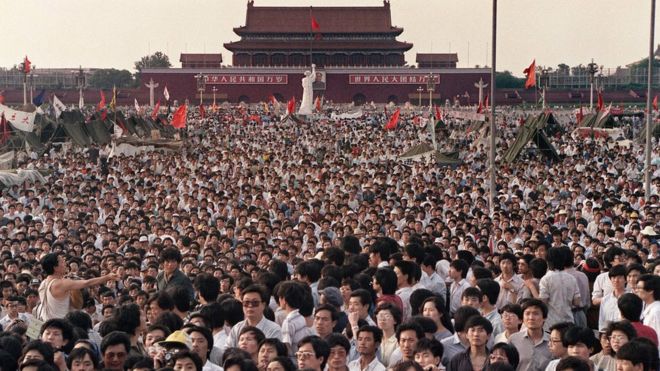
Image caption By early June 1989, huge numbers had gathered in Tiananmen Square

Thirty years ago, Beijing’s Tiananmen Square became the focus for large-scale protests, which were crushed by China’s Communist rulers.

The events produced one of the most iconic photos of the 20th Century – a lone protester standing in front of a line of army tanks.

What led up to the events?

In the 1980s, China was going through huge changes.

The ruling Communist Party began to allow some private companies and foreign investment.

Leader Deng Xiaoping hoped to boost the economy and raise living standards.

However, the move brought with it corruption, while at the same time raising hopes for greater political openness.
Protesters in Tiananmen SquareImage copyright GETTY IMAGES
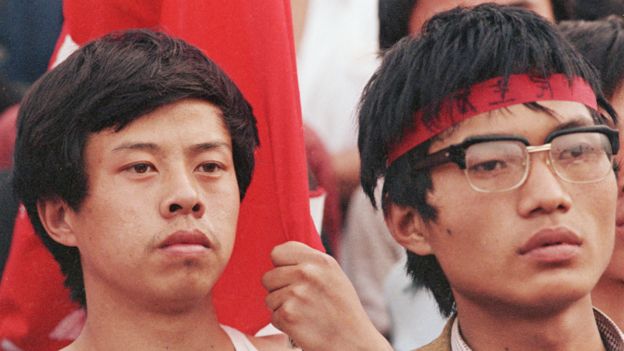
Image caption Protesters in Tiananmen Square, 1989

The Communist Party was divided between those urging more rapid change and hardliners wanting to maintain strict state control.

In the mid-1980s, student-led protests started.

Those taking part included people who had lived abroad and been exposed to new ideas and higher standards of living.

How did the protests grow?

In spring 1989, the protests grew, with demands for greater political freedom.

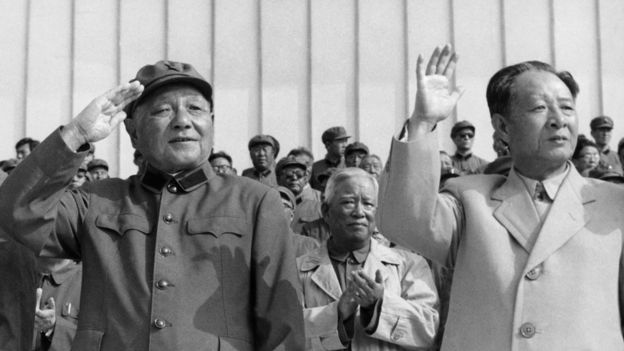
Protesters were spurred on by the death of a leading politician, Hu Yaobang, who had overseen some of the economic and political changes.
Archive picture of Deng and HuImage copyrigh AFP
Image caption Deng Xiaoping (left) with Hu Yaobang

He had been pushed out of a top position in the party by political opponents two years earlier.

Tens of thousands gathered on the day of Hu’s funeral, in April, calling for greater freedom of speech and less censorship.

In the following weeks, protesters gathered in Tiananmen Square, with numbers estimated to be up to one million at their largest.

The square is one of Beijing’s most famous landmarks.

It is near the tomb of Mao Zedong, the founder of modern China, and the Great Hall of the People, used for Communist Party meetings.

What was the government’s response?

At first, the government took no direct action against the protesters.

Party officials disagreed on how to respond, some backing concessions, others wanting to take a harder line.

The hardliners won the debate, and in the last two weeks of May, martial law was declared in Beijing.

On 3 to 4 June, troops began to move towards Tiananmen Square, opening fire, crushing and arresting protesters to regain control of the area.

Who was Tank Man?

On 5 June, a man faced down a line of tanks heading away from the square.

He was carrying two shopping bags and was filmed walking to block the tanks from moving past.

"Tank Man" in BeijingImage copyright GETTY IMAGES

He was pulled away by two men.

It’s not known what happened to him but he’s become the defining image of the protests.

How many people died in the protests?

No-one knows for sure how many people were killed.

At the end of June 1989, the Chinese government said 200 civilians and several dozen security personnel had died.

Other estimates have ranged from hundreds to many thousands.

In 2017, newly released UK documents revealed that a diplomatic cable from then British Ambassador to China, Sir Alan Donald, had said that 10,000 had died.

Do people in China know what happened?

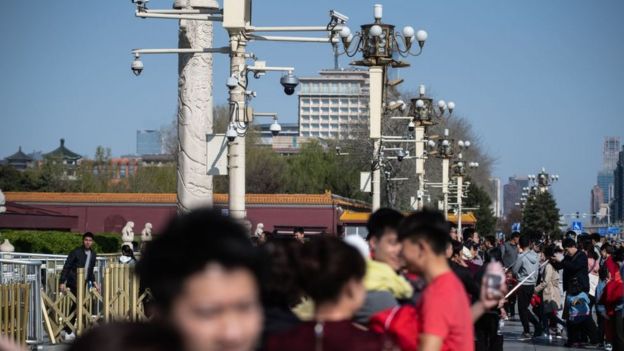
Discussion of the events that took place in Tiananmen Square is highly sensitive in China.
View of Tiananmen SquareImage copyright GETTY IMAGES
Image caption Tiananmen Square now – full of tourists and surveillance cameras

Posts relating to the massacres are regularly removed from the internet, tightly controlled by the government.

So, for a younger generation who didn’t live through the protests, there is little awareness about what happened.

Source: The BBC
01/05/2019

Chinese President Xi Jinping’s overtures to Japan’s new emperor set tone as G20 summit in Osaka nears

  • Xi’s message talks of promoting ‘peaceful development’ as Reiwa era begins in Japan
  • Analysts see diplomacy as latest steps towards bringing an end to bitter rivalry
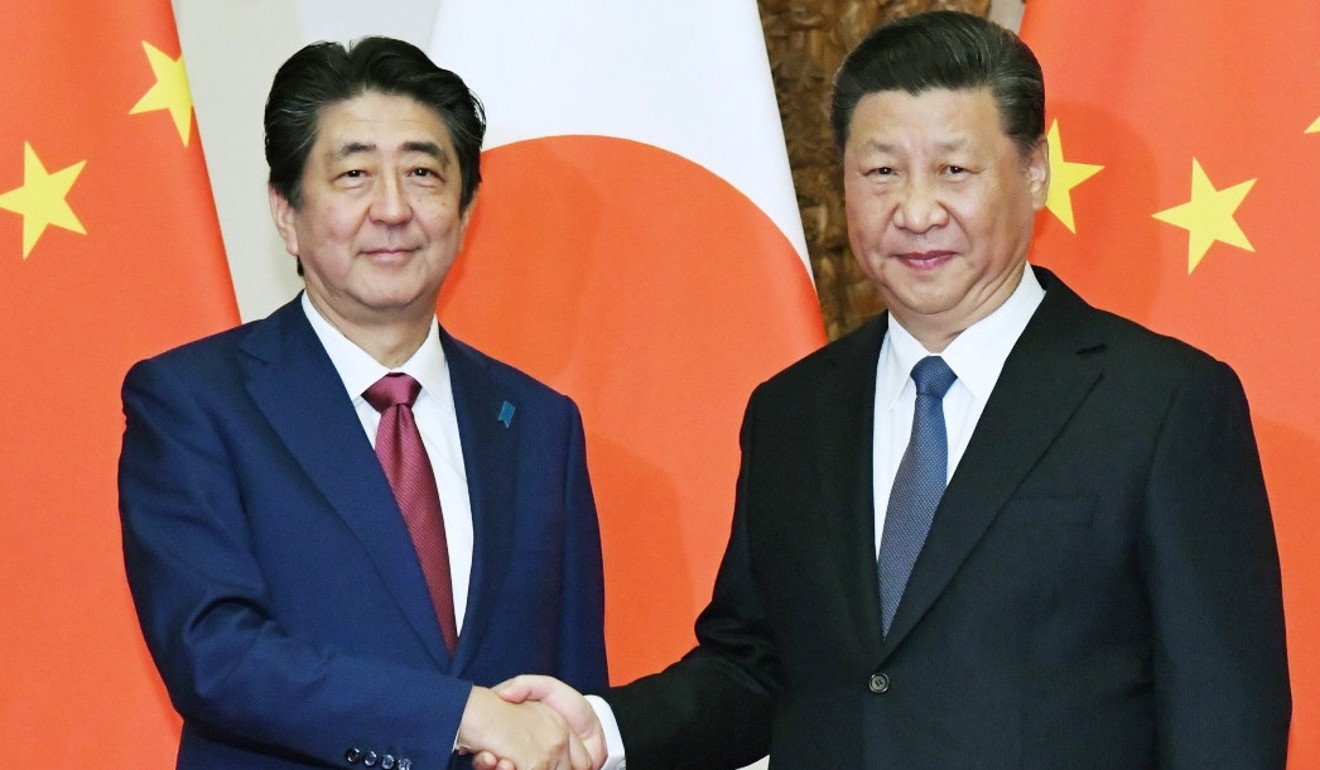
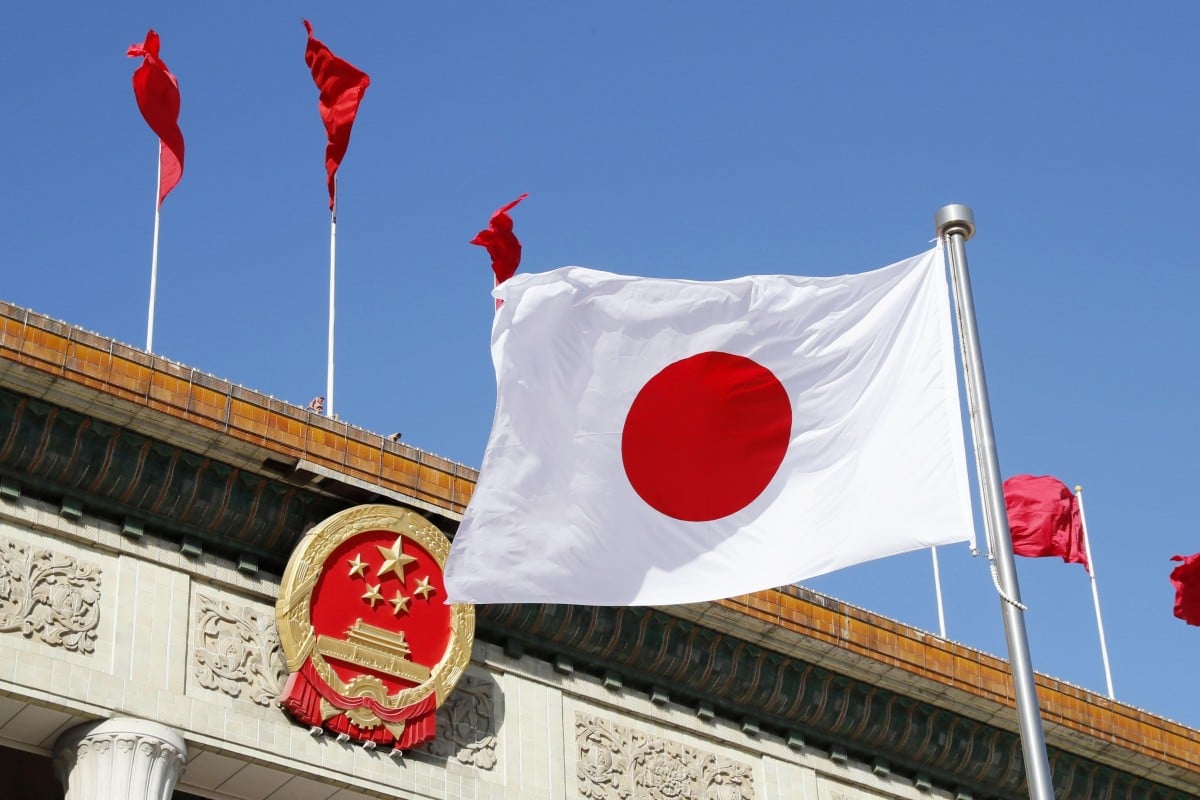
The Japanese flag flies at the Great Hall of the People in Beijing on October to mark the visit of Japanese Prime Minister Shinzo Abe to China. Photo: Kyodo
Chinese President Xi Jinping congratulated Emperor Naruhito on his ascent to the throne of Japan in an effort to strengthen China’s ties with its neighbour and competitor as Beijing’s trade dispute with the United States went on.
Xi sent greetings on Wednesday in which the president stressed the importance of relations between Beijing and Tokyo, China’s state-run Xinhua news agency reported.
The two countries should “work together to promote peaceful development and create a bright future for bilateral relations”, Xi said.
The president also sent a message to Akihito, now Japan’s emperor emeritus, and “expressed his greetings and wishes”, Xinhua said.
Akihito, 85, relinquished the throne to his son at midnight on Tuesday, bringing the Heisei era that spanned his 30-year reign to an end.

Naruhito took the Chrysanthemum Throne to begin the Reiwa era with a pledge to become a “symbol of unity”.

Xi’s message came as China and Japan tried to repair relations damaged by disputes over the East China Sea and the bitter legacy of the second world war.

Washington was locked in a trade tariff war with Beijing, and President Donald Trump’s America First policy had prompted fears about the US’ commitment to Asia at the highest levels of Japanese government. These have pushed Beijing and Tokyo closer and, in October, Japanese Prime Minister Shinzo Abe visited Beijing.

China set to appoint new ambassador to Japan, as Xi Jinping prepares for June visit

Xi was expected to attend a Group of 20 summit to be held in Osaka in June. A source said officials were considering whether Xi would dovetail a state visit to Japan with the summit.

Felix Wiebrecht, a China researcher at the Chinese University of Hong Kong, said in the international environment China was more willing to put a deep-seated rivalry aside and take Japan as a partner.

“Facing increasing tensions with the US, China is naturally turning towards other potential opportunities for cooperation,” Wiebrecht said.

“Xi is indeed very likely to visit Japan this year since it seems that both he and Abe are interested in strengthening their cooperation. A visit this year could be seen as a culmination in normalising their relationship and comes at the right time for China as its conflict with the US intensifies”.

Ryo Hinata-Yamaguchi, a visiting professor at Pusan National University in South Korea and an adjunct fellow at the Pacific Forum foreign policy research institute, said Xi’s message could be seen as Beijing’s expectation on Tokyo to keep relations positive.

“[But] this would raise questions in Japan, particularly regarding regional and bilateral security issues, as well as the trade issues between the US and China,” he said.

As Japan prepares to mark end of an era, a look back at how China started the system

“The big question is whether China – as well as the US – expects Japan to work as some kind of mediator between Beijing and Washington, causing dilemmas for the Japanese government”.

Some observers remarked on the possibility of sideline meeting between the two leaders at Osaka.

“Xi could meet with Abe [at G20] in a bilateral context too,” Zhang Baohui director of the Centre for Asian Pacific Studies at Lingnan University in Hong Kong, said.

He also felt that Xi may make a separate state visit to Japan, after the G20 meeting closed.

“Japan is reportedly interested in having a second and separate visit by Xi later in the year … The Japanese efforts are part of a broader attempt by the Abe administration to improve relations with China,” Zhang said.

“A separate state visit would cement the full recovery of Sino-Japanese relations since the 2012 Diaoyu Islands dispute,” Zhang said.

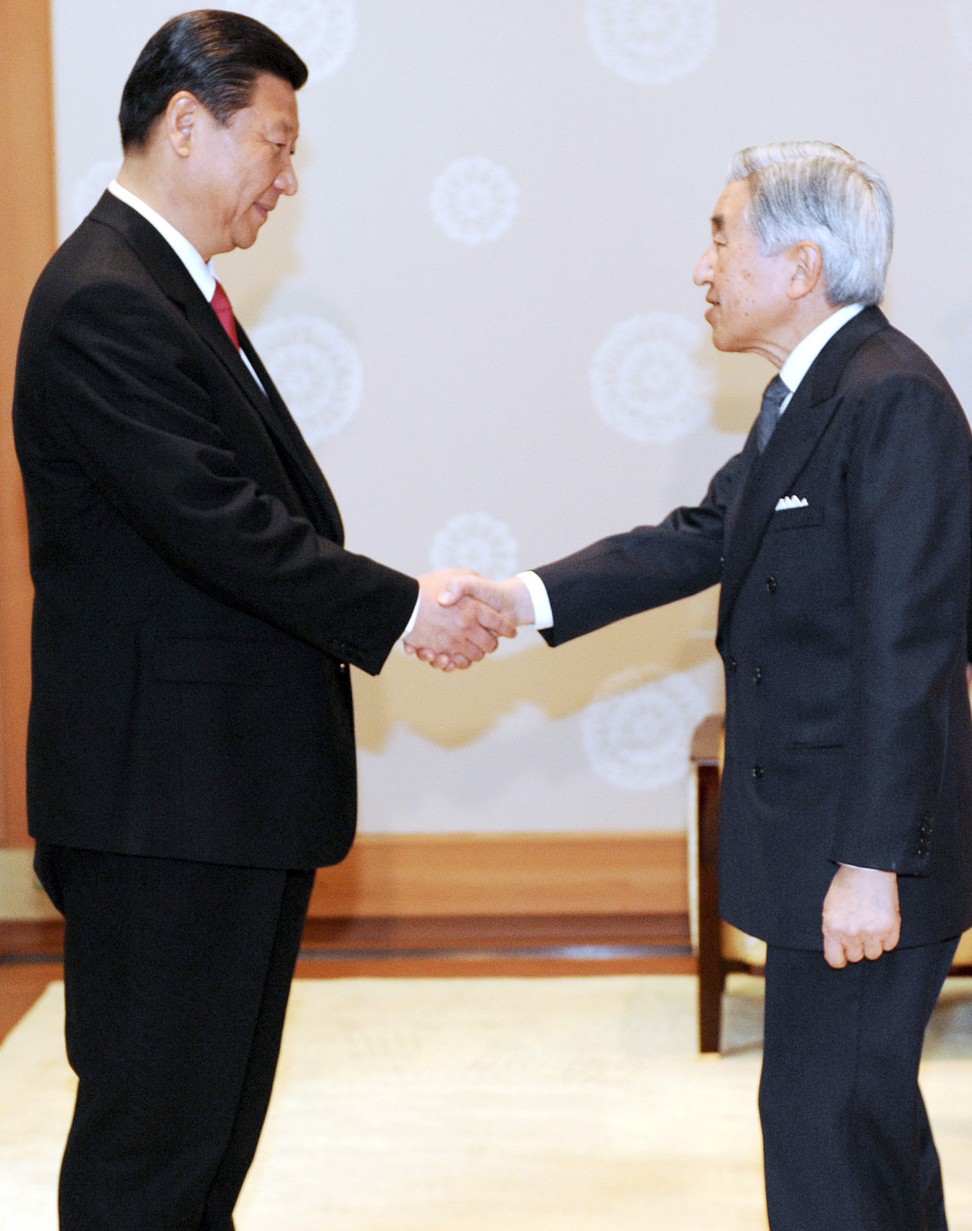
Xi Jinping, then Chinese Vice-President, meets Emperor Akihito in Tokyo in December 2009. Photo: Xinhua

Japan and China both claim the territorial rights over the Senkaku Islands – also known as the Diaoyu Islands – in the East China Sea.

In 2012, Japanese government purchased three of the disputed islands from private owners, which prompted large-scale protests in China. In the following year, Beijing set up the East China Sea Air Defense Identification Zone which included the islands, requiring all aircraft entering the zone to file a flight plan, further intensifying the conflict between the two countries.

Efforts this summer to intensify diplomacy “should bring greater stability to the East China Sea and may even lead to greater Sino-Japanese cooperation on regional issues like economic integration”, Zhang said.

“But Japan’s concern for a rising China and China’s expanding maritime activities in the East China Sea will continue,” Zhang added, noting that Japan has also expanded its military capabilities in disputed areas such as the South China Sea.

Chinese President Xi Jinping and Japanese Prime Minister Shinzo Abe are likely to continue their diplomacy during and after June’s G20 summit in Osaka. Photo: EPA
29/04/2019

China to hold gathering to mark centenary of May Fourth Movement

BEIJING, April 28 (Xinhua) — China will hold a gathering to mark the centenary of the May Fourth Movement at 10:30 a.m. on Tuesday at the Great Hall of the People in Beijing.

President Xi Jinping, also general secretary of the Communist Party of China Central Committee and chairman of the Central Military Commission, will attend the event and deliver an important speech.

The event will be broadcast live by China Media Group and on http://www.xinhuanet.com. It will also be rebroadcast simultaneously on major news websites including people.com.cn, cctv.com and china.com.cn as well as on news apps run by People’s Daily, Xinhua News Agency and China Central Television.

Source: Xinhua

Note: https://en.wikipedia.org/wiki/May_Fourth_Movement – (May 1919, student protest that resulted in massacre).

11/04/2019

Xi meets with Myanmar’s commander-in-chief of defense services

CHINA-BEIJING-XI JINPING-MYANMAR-MEETING (CN)

Chinese President Xi Jinping (R) meets with Myanmar’s Commander-in-Chief of Defense Services Min Aung Hlaing at the Great Hall of the People in Beijing, capital of China, April 10, 2019. (Xinhua/Li Gang)

BEIJING, April 10 (Xinhua) — Chinese President Xi Jinping met with Myanmar’s Commander-in-Chief of Defense Services Min Aung Hlaing at the Great Hall of the People in Beijing Wednesday.

Noting the long-standing “Paukphaw” (fraternal) friendship between China and Myanmar, Xi spoke of the sound development of bilateral relations at present, the expanding exchanges and cooperation in various fields and at various levels, and new progress in the Belt and Road cooperation.

China attaches great importance to China-Myanmar relations, Xi said, noting that no matter how the international situation changes, China is willing as always to strengthen strategic communication with Myanmar, deepen mutually beneficial cooperation, and constantly enrich the China-Myanmar comprehensive strategic cooperative partnership, so as to bring more tangible benefits to the two peoples and contribute joint efforts to regional stability and prosperity.

Xi said China-Myanmar military cooperation is an important part of the comprehensive strategic cooperative partnership between the two countries.

The armed forces of the two countries should deepen practical exchanges and cooperation, and work together to build a military-to-military relationship based on mutual trust and benefit and devoted to safeguarding the common security and development interests of the two countries, Xi said.

Xi said China supports Myanmar’s peace process and pays attention to the development of situation in northern Myanmar. He expressed the hope that Myanmar will work with China to further strengthen border management and jointly safeguard border security and stability.

Noting the long-standing traditional friendship between Myanmar and China and the sound development of bilateral and military-to-military ties, Min Aung Hlaing said Myanmar appreciates China’s long-term and valuable assistance to the national and military development of Myanmar and the support to its peace process.

He said Myanmar welcomes, supports and stands ready to actively participate in the Belt and Road cooperation, strengthen practical cooperation with China in various fields, and take practical measures to safeguard stability in the Myanmar-China border areas.

Li Zuocheng, member of China’s Central Military Commission (CMC) and chief of staff of the Joint Staff of the CMC, and other officials were present at the meeting.

Source: Xinhua

03/03/2019

Beijing chokes on dense smog as China’s political heavyweights meet

  • Capital issues orange alert as delegates arrive for one of the year’s biggest gatherings
  • All construction must stop, and elderly and children advised to stay indoors

News

Beijing chokes on dense smog as China’s political heavyweights meet

3 Mar 2019

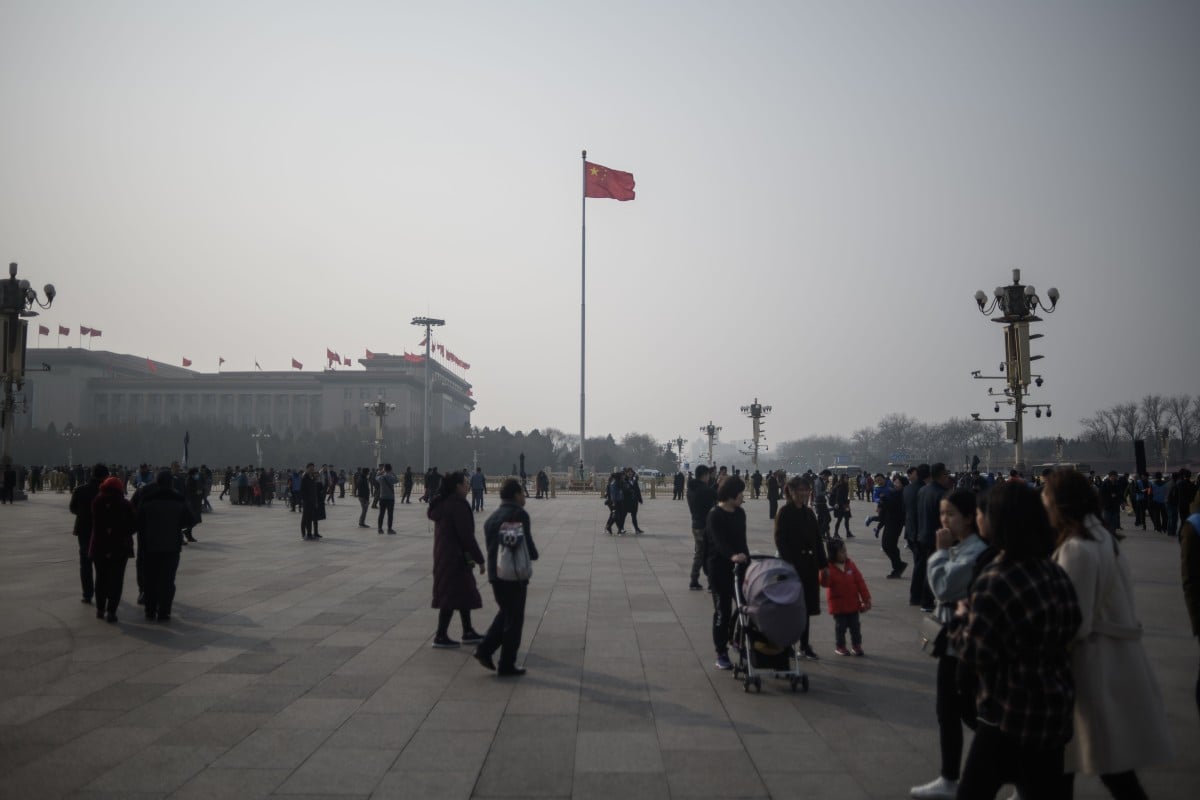
An orange pollution alert will stay in place in Beijing throughout Sunday and Monday. Photo: AFP

Heavy smog blanketed Beijing on Sunday as thousands of delegates started arriving in the Chinese capital for one of the annual highlights on the country’s political calendar.

The pollution descended on Friday night, prompting authorities on Saturday to issue an orange alert, the second-highest smog warning in the four-tier system.

The alert – which advises elderly people and children to stay indoors – will remain in place throughout Sunday, the first day of the Chinese People’s Political Consultative Conference (CPPCC), and Monday.

Conditions are expected to improve by Tuesday, when the National People’s Congress starts.

“Due to bad weather, there will be heavy regional pollution in the Beijing-Tianjin-Hebei region that will persist and affect a large area,” the Beijing Municipal Environmental Monitoring Centre said.

Under the orange alert, all construction work in the city must stop, some factories have to halt production, and all fireworks and outdoor barbecues are banned.

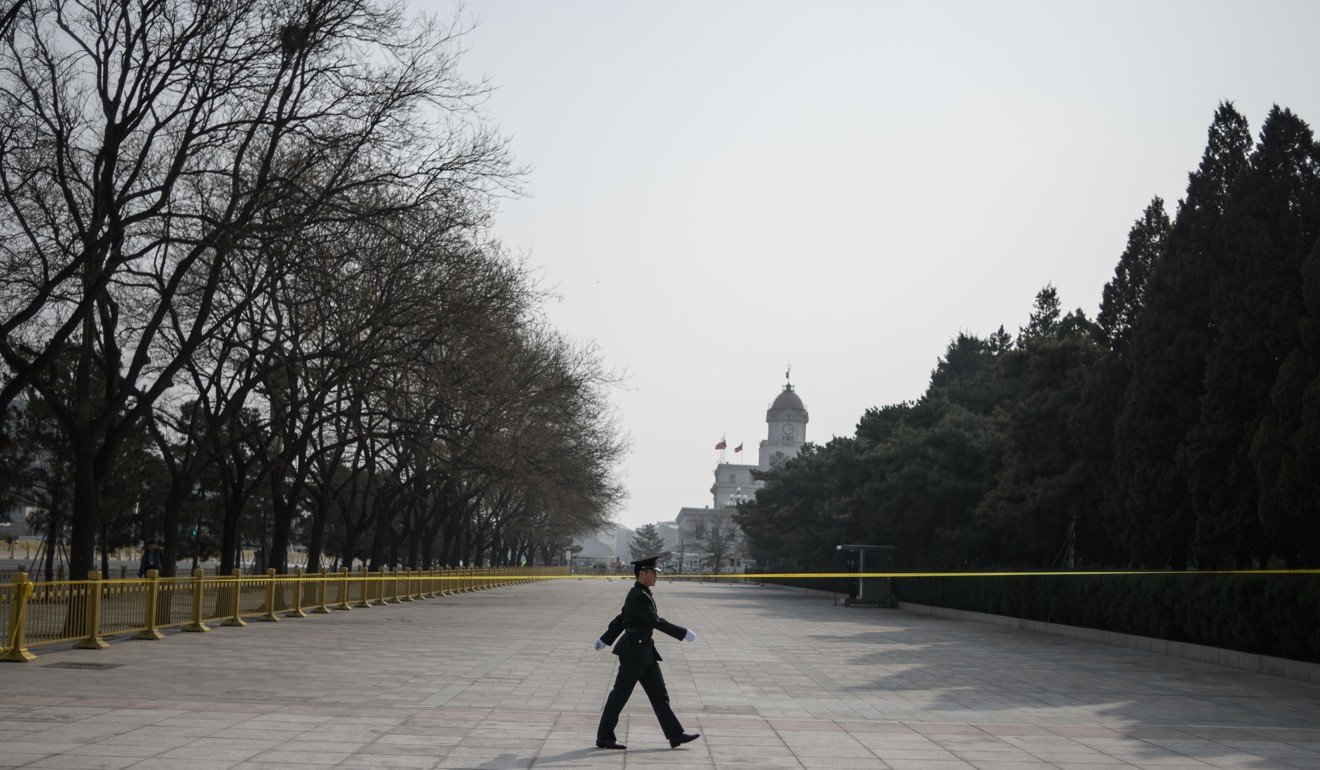
A Chinese paramilitary police officer patrols in front of the Great Hall of the People on Saturday on the eve of the opening session of the Chinese People’s Political Consultative Conference in Beijing. Photo: AFP
Source: SCMP
21/02/2019

Xi meets Chang’e-4 mission representatives

CHINA-BEIJING-XI JINPING-CHANG'E-4 MISSION-REPRESENTATIVES-MEETING (CN)

Chinese President Xi Jinping, also general secretary of the Communist Party of China Central Committee and chairman of the Central Military Commission, delivers a speech as he meets representatives of space scientists and engineers who participated in the research and development of the Chang’e-4 mission at the Great Hall of the People in Beijing, capital of China, Feb. 20, 2019. (Xinhua/Ju Peng)

BEIJING, Feb. 20 (Xinhua) — Chinese President Xi Jinping met representatives of space scientists and engineers who participated in the research and development of the Chang’e-4 mission at the Great Hall of the People in Beijing Wednesday afternoon.

Xi, also general secretary of the Communist Party of China (CPC) Central Committee and chairman of the Central Military Commission, noted that there is no end for space exploration.

Xi called on science and technology workers and space engineers in China to ride on the wave of the Chang’e-4 mission to achieve the general goal of China’s lunar project, make more efforts to push forward the international aerospace cause and bring more Chinese wisdom, solutions and force to the peaceful use of space and the building of a community with a shared future for humanity.

Members of the Standing Committee of the Political Bureau of the CPC Central Committee Li Keqiang, Li Zhanshu, Wang Yang, Wang Huning, Zhao Leji and Han Zheng also attended the meeting.

Xi shook hands with the scientists and engineers, inquired about their work and life and took pictures with them.

In a speech addressing the meeting, Xi first extended his sincere regards to all those who have made historic contributions to the country’s space undertakings and expressed warm congratulations to all those who have contributed to the Chang’e-4 mission eminently.

“Your outstanding feats achieved in mounting the science and technology peak and exploring the universe’s mysteries have set a model for the whole Party, the whole armed forces and people of all ethnic groups in China to strive for a new era and start a new journey, for which our country and people thank you,” Xi said.

“Five years ago, we celebrated the success of the Chang’e-3 mission. Five years later, we are here to celebrate the success of the Chang’e-4 mission,” he said.

He pointed out that the Chang’e-4 mission, by adhering to independent, collaborative and open innovations, has realized the first-ever patrol and exploration on the far side of the moon by a human spacecraft and engraved Chinese “footprints” there for the first time.

“It is another vivid practice of exploring to establish a new institution that can pool the resources of the whole country,” Xi said.

“Experience tells us that great undertakings begin with dreams, and dreams are the source of vitality. China is a nation that pursues dreams bravely. The CPC Central Committee’s decision to implement the lunar exploration project is to pursue the nation’s unyielding dream of flying into the sky and reaching for the moon,” he noted.

Each bold idea and its successful implementation in lunar exploration is a full demonstration of the human capacity to gain knowledge of and utilize a celestial body, he said.

“In the journey of building a great modern socialist country and realizing the great rejuvenation of the Chinese nation, every industry and every person should dream and strive courageously and fulfill their dreams with arduous and continuous efforts, step by step and baton by baton just like in a relay race,” he emphasized.

“Experience tells us that great undertakings are based on innovation, and innovation determines the future. It won’t be a smooth path to build a leading nation in science and technology, and only innovation can help gain advantages,” he said.

“The mission has made multiple innovations come true and filled a series of international and domestic gaps, which has fully displayed the innovative spirit just as making the first move in chess or taking the initiative in battle,” he added.

China should have a grasp of the general trend of the science and technology development in the world, foster respect for science and focus on strategic, basic and pioneering sectors, said Xi.

China should shore up its weakness in certain areas, keep pace with the leaders in some areas, and strive to lead in other areas, aim for significant breakthroughs in core and key technologies, improve the overall efficiency of the national innovation system, boost science and technology strength and innovation ability, in a bid to earn itself a spot in the global hi-tech sector, he said.

“Experience tells us that great undertakings succeed in solid work,” Xi noted. He said China need to encourage more prominent scientists, leading talent, young scientists and innovation teams to lead the trend and work hard to realize the value of life by contributing to the nation’s great undertakings.

Xi pointed out that exploring the vast universe is a common dream of all humankind. China has been actively advancing international space cooperation and carried out productive cooperation with multiple countries and international organizations. The complete success of the Chang’e-4 mission, for instance, includes contributions of many countries.

China is willing to work with countries around the world and follow the principle of achieving shared growth through discussion and collaboration, so as to deepen the international exchanges on basic scientific research, boost big science projects and step up opening-up and cooperation to enhance innovation ability and push forward the development of science.

The Chang’e-4 mission had two launches. The relay satellite, named Queqiao, meaning Magpie Bridge, was launched on May 21, 2018. The Chang’e-4 probe, launched from the Xichang Satellite Launch Center in southwest China on Dec. 8, 2018, touched down on the far side of the moon on Jan. 3.

Scientific research involving multiple countries and international organizations has been carried out.

The complete success of Chang’e-4 mission marks the first-ever international organizations, patrol and exploration on the far side of the moon by a spacecraft, the first communication link between Earth and the far side of the moon and the first footprints there in the history of lunar exploration, which unveils its mysteries and opens a new chapter in mankind’s exploration of the universe.

Source: Xinhua

Law of Unintended Consequences

continuously updated blog about China & India

ChiaHou's Book Reviews

continuously updated blog about China & India

What's wrong with the world; and its economy

continuously updated blog about China & India