Archive for ‘guangdong province’

02/07/2019

China Focus: China starts implementing tougher vehicle emission standards

BEIJING, July 1 (Xinhua) — Several provincial-level regions on Monday started implementing the “China VI” vehicle emission standards ahead of schedule to ramp up efforts against a major source of air pollution.

Sales and registrations of new vehicles in regions including Beijing, Shanghai, Tianjin, Hebei Province and Guangdong Province now have to comply with what is believed to be one of the world’s strictest rules on automobile pollutants.

In Beijing, all new buses and other heavy-duty diesel vehicles shall follow the new emission rules, while all new vehicles are expected to follow suit starting Jan. 1, 2020.

All existing vehicles on the roads are obliged to meet the previous “China V” emission standards.

According to official data, emissions from some 6.2 million vehicles were responsible for 45 percent of Beijing’s concentration of small, breathable particles known as PM2.5, a key indicator of air pollution.

Compared with the “National V” standards, the new rules demand substantially fewer pollutants such as nitrogen oxides and particulate matters and introduce limits on particulate number and ammonia.

The new emission standards were initially set to take effect nationwide from July 1, 2020. A three-year action plan on air pollution control released last July urged early implementation in major heavily-polluted areas, the Pearl River Delta region, Sichuan Province and Chongqing Municipality.

Automakers and the market have been preparing for the tougher rules.

Manufacturers have completed the development of most “China VI” models and have entered the stage of mass production and sales, said Liu Youbin, a spokesperson with the Ministry of Ecology and Environment.

By June 20, 99 light vehicle makers had unveiled environmental protection information of 2,144 new models and 60 heavy-duty vehicle manufacturers unveiled information on 896 green models, Liu said.

“The market has basically accomplished a smooth transition,” Liu said.

Li Hong, an official with the China Association of Automobile Manufacturers (CAAM), said roll-outs of “China VI” vehicles as well as preferential tax and fee policies would boost China’s auto market.

“The production and sales of new energy vehicles (NEVs) will continue its relatively fast growth,” Li said.

Car sales in China continued to drop in May, with about 1.913 million vehicles sold, down by 16.4 percent year on year, CAAM showed. Bucking the trend, sales of NEVs kept growing that month, edging up 1.8 percent year on year.

China saw robust sales growth of NEVs in the first four months this year with 360,000 NEVs sold, surging by 59.8 percent from the same period a year earlier.

Chinese authorities have announced that the tax exemptions on NEV purchases will continue through 2020 to boost the country’s green development and retain a strong domestic market.

Source: Xinhua
01/07/2019

Crunch time as gaokao exam season starts for China’s university hopefuls

  • Annual tests still an academic pressure cooker for students wanting to get into the nation’s top universities, despite efforts to change the system
  • The gruelling exam is the sole criteria for admission to university in China
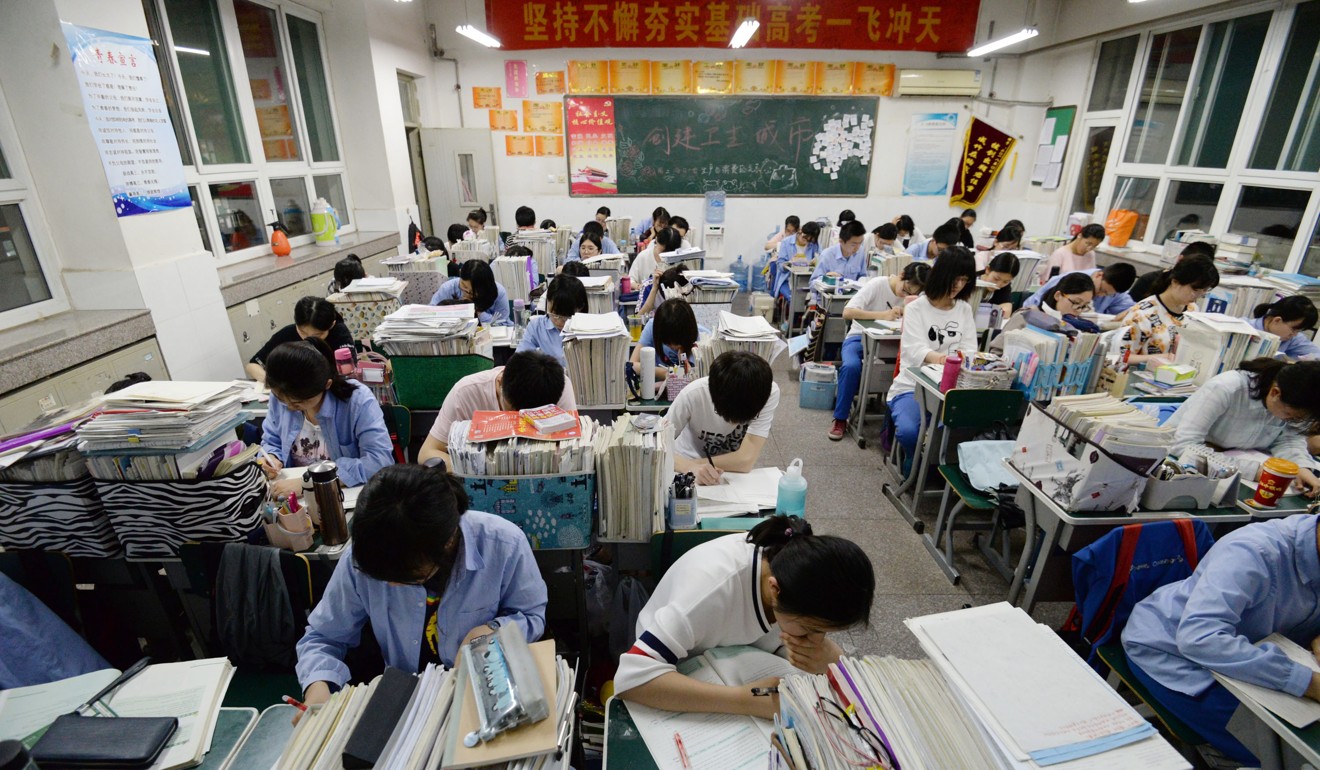
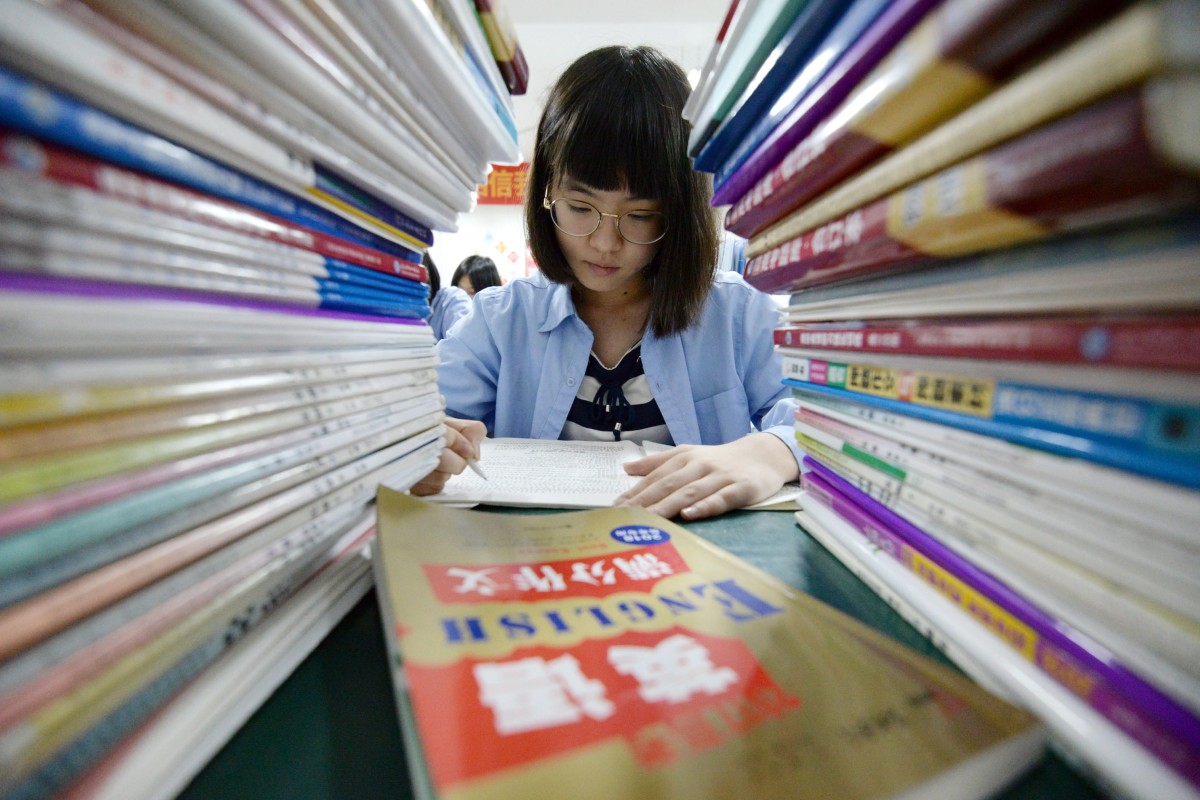
After months of study, China’s high school students are about to be put to the test in the annual “university entrance examinations which begin on Friday. Photo: EPA-EFE
For the past six months, the life of 18-year-old Shanghai student Xiao Qing has revolved around preparation for one of China’s annual rites of passage.
Every day at school, from 7.20am to 5.30pm, the final-year secondary school student in Changning district has studied previous test papers for the gaokao, officially known as the National Higher Education Entrance Examination.
“Sometimes I feel my bottom hurts from sitting for so many hours,” she said. “We feel like we are test machines.”
Xiao Qing will put all of that preparation to the real test from Friday, when over two to three days she will be among more than 10 million people trying to qualify for one of the spots at a Chinese university.
Most students get just one shot at the gaokao, the sole criteria for admission to university in China. It’s a gruelling process that has been criticised over the years as too focused on rote learning, putting too much pressure on students and privileging applicants living near the best universities.
Education authorities have gone some way to try to address these problems. In 2014, the Ministry of Education started letting students choose half of their subjects to introduce some flexibility into the system.

Apart from the compulsory subjects of Chinese, mathematics and English, students are now supposed to be able to choose any three of six other subjects: physics, chemistry, biology, politics, history and geography.

Previously, secondary school students had been split strictly into liberal arts or science majors in a system that was introduced in 1952 and revived in 1977 after being suspended during the Cultural Revolution.

Last go at exam success for China’s ‘gaokao grandpa’

Wen Dongmao, a professor from Peking University’s Graduate School of Education, said the changes expanded the opportunity for students to follow their interests.

“The new gaokao gives students plenty of choices of subjects to learn and to be evaluated on. I think people should choose which subject to learn based on what they are interested in,” Wen said.

Gaokao reform is designed according to some methods by overseas universities, like American and Hong Kong schools. Its direction is right, but there will be inevitable problems brought by it.”

One of the problems is the uneven implementation of the changes throughout the country, with just 14 of China’s 31 provinces, municipalities and autonomous regions having introduced them.

In the eastern province of Anhui, for example, the reforms were supposed to go in effect from September last year but were postponed without reason, news portal Caixin.com reported.

The report quoted a teacher from Hefei No 1 Middle School in the provincial capital as saying the school was not ready for the changes.

Is the university entrance exam in China the worst anywhere?

“Shanghai and Zhejiang are economically advanced and we are not at that level,” he was quoted as saying. “It’s a big challenge for us to manage so many students’ choices of gaokao subjects.”

In neighbouring Jiangxi province, a high school history teacher said many places opposed the reform mainly “because of the shortage of resources”.

“It’s hard to roll out gaokao reform because we don’t have enough teachers or classrooms to handle the students’ various choices of subjects. Students can choose three out of six courses and that means there are 20 potential combinations,” the teacher was quoted as saying.

Chinese high school students study late into the night for the National Higher Education Entrance Examination. Photo: EPA-EFE

In addition, the system allows students to take the tests in more than one year and submit the highest scores when applying to universities.

“I heard from teachers in other provinces that students will take the tests of the selected subjects again and again for fear that other students will overtake them. That’s exhausting and will just put more burden on the students,” the Jiangxi teacher said.

He also said the gaokao process put extra pressure on teachers who feared the tests would push students to extremes. One of his students contemplated jumping from a bridge after she thought she had done poorly in the Chinese section of the exam.

“She called me, saying she felt it was the end of the world. I was shocked and hurried to the bridge,” he was quoted as saying. He spoke to her for more than an hour about before the girl came down, going on to get a decent score.

Critics also say the system is weighted in favour of students in bigger cities such as Beijing, Tianjin and Shanghai, home to the country’s top universities.

China private education industry is booming despite economic slowdown

Li Tao, an academic from the China Rural Development Institute at Northeast China Normal University in Changchun, Jilin province, said about 20-25 per cent of gaokao candidates from Beijing, Tianjin and Shanghai were admitted to China’s elite universities, compared with just 5 or 6 per cent in places like Sichuan, Henan and Guangdong.

Li said that was because the top universities were funded by local governments and gave preference to applicants from those areas.

“To make it fairer, the Ministry of Education has insisted over the years that elite universities cannot have more than 30 per cent of incoming students from the area in which it is located,” he said.

Despite these challenges, gaokao was still a “fair” way to get admitted to university in China, Li said.

Gaokao is the fairest channel to screen applicants on such a large scale, to my knowledge,” he said. “It does not check your family background and every student does the same test paper [if they are from the same region]. Its score is the only factor in evaluating a university applicant.”

Fake nursing degree scandal prompts China-wide fraud check

In Shanghai, as the clock ticks closer to the gaokao test day, Xiao Qing said she was feeling the pressure.

She said she would keep up her test prep to ensure she got the score she needed to study art in Beijing.

“I am trying my utmost and don’t want to regret anything in the future,” she said.

At the same time, she is not pinning her entire life on it.

“Life is a long journey and it is not decided solely by gaokao,” she said.

“I don’t agree with my classmates that life will be easy after gaokao. I think we still need to study hard once we get to university.”

Source: SCMP

08/06/2019

China, India vow to enhance mutual trust, expand cooperation

NEW DELHI, June 8 (Xinhua) — A delegation of the Communist Party of China (CPC) concluded its four-day visit to India on Saturday, and both sides pledged to enhance mutual trust and boost cooperation in various fields.

During the visit, head of the CPC delegation Li Xi, who is a member of the Political Bureau of the CPC Central Committee and the secretary of the CPC Guangdong Provincial Committee, met with Indian External Affairs Minister S. Jaishankar, National General Secretary of the Bharatiya Janata Party Ram Madhav, President of Indian National Congress Rahul Gandhi, and Gujarat Chief Minister Vijay Rupani, and also attended the Guangdong-Gujarat economic and trade exchange activities.

Li said that under the guidance of the leaders of both countries, China-India relations have shown a strong momentum of development, adding that his visit is aimed at implementing the important consensus of the leaders, enhancing mutual trust and expanding pragmatic cooperation.

Li introduced China’s firm position, confidence and determination on China-U.S. trade frictions.

China and India share common interests in promoting world multi-polarization, economic globalization, and maintaining multilateralism, said Li, adding that China is willing to work with India to jointly meet challenges and share development opportunities.

Li briefed the Indian side about the historic achievements and changes that have been making in China since the founding of the People’s Republic of China in 1949 and over 40 years of implementing the reform and opening-up policy, especially after the 18th CPC National Congress in 2012.

The CPC is willing to exchange experiences in governance with the major political parties in India and consolidate the political foundation of China-India relations, said the senior official.

Guangdong Province hopes to deepen exchanges and cooperation with India’s local governments so as to continuously inject momentum into the closer development partnership between China and India, he added.

The Indian side, speaking highly of the significance of Li’s visit, said it would help maintain the good momentum of the bilateral relations.

They expressed their willingness to maintain high-level exchanges with China, strengthen exchanges and cooperation with the government, political parties and localities, and continuously enhance understanding and mutual trust to promote the continuous development of India-China relations and jointly promote world peace, stability and prosperity.

Source: Xinhua

05/06/2019

African swine fever virus is now ‘endemic’ in China’s Tibet and Xinjiang regions, making its eradication harder, UN says

  • The virus that causes the African swine fever is now endemic in Tibet and Xinjiang, the United Nations’ Food & Agriculture Organisation said
  • Diseases that are endemic, or generally present, are harder to stamp out
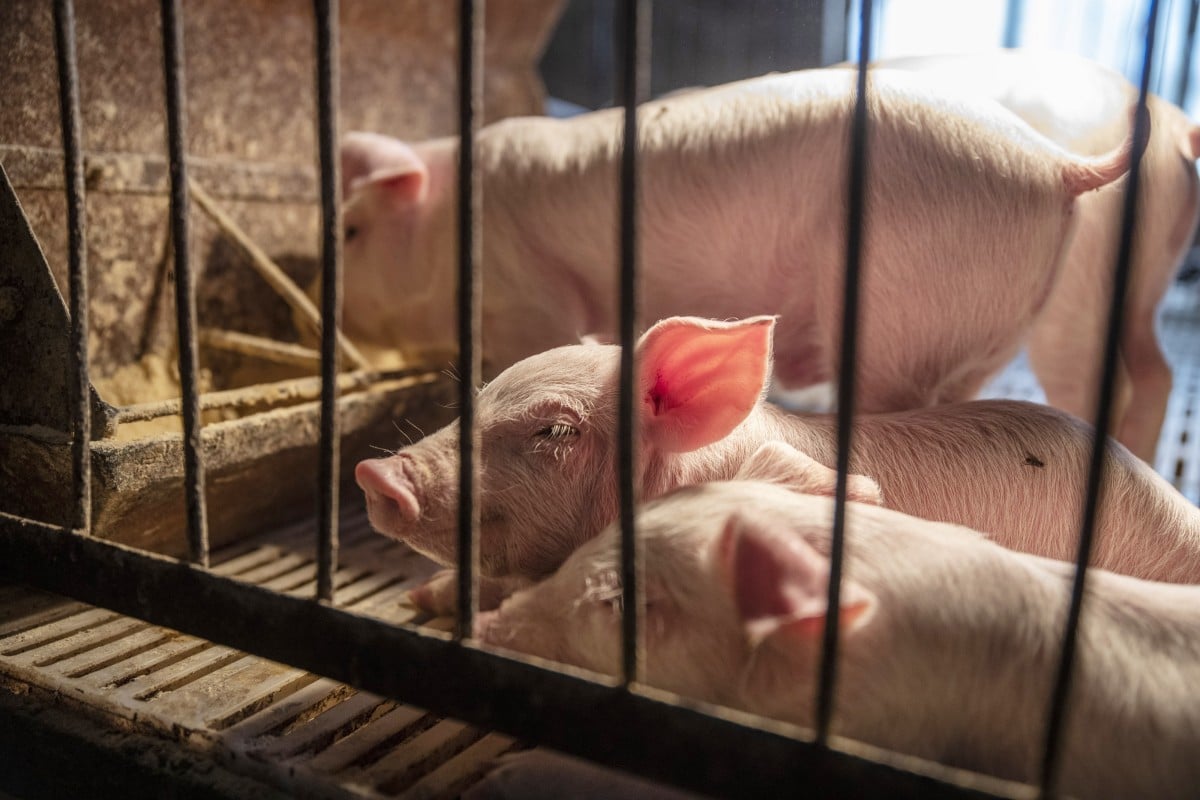
Piglets are kept in pens at a pig farm in Langfang in Hebei province on Monday, April 1, 2019. Photo: Bloomberg
China’s attempts to control African swine fever have been insufficient to stem further spread of the disease, with the deadly pig contagion now endemic in two regions, a United Nations group said.
The virus that causes the disease is entrenched among pig populations in the autonomous regions of Tibet and Xinjiang, the Food & Agriculture Organisation (FAO) in Rome said in a report Thursday.
Diseases that are endemic, or generally present, are more difficult to stamp out by quarantining and culling diseased and vulnerable livestock.

About 20 per cent of China’s pig inventories may have been culled in the first few months of 2019 amid fears of African swine fever spreading more rapidly, according to the FAO, which is monitoring the disease in cooperation with local authorities and China’s Ministry of Agriculture and Rural Affairs.

China’s pig production will drop by 134 million heads, or 20 per cent, in 2019, the US Department of Agriculture said last month.

“While official sources confirm a rapid spread of the disease, both the speed and severity of the spread could prove more pronounced than currently assumed,” the FAO said in its report. A government investigation in seven provinces found “irrational culling of sows on breeding farms in February, reducing the sector’s core production capacity.”

Thailand launches crackdown to keep out African swine fever

Since the first cases were reported last August, 130 outbreaks have been detected in 32 provinces, autonomous regions, municipalities and special administrative regions across the nation, which raises half the world’s pigs.

SCMP Graphics
SCMP Graphics

The FAO report found:

  • In Jilin province, swine inventory fell 28 per cent from the previous year, with some reports pointing to a larger drop In Shandong province, sow numbers fell 41 per cent from July 2018 to February 2019
  • In Guangdong province, hog inventories slumped 20 per cent from a year earlier and pig-feed sales fell 10 per cent to 50 per cent
  • Production of fresh and frozen meat by meatpackers plunged 17 per cent in January and February, compared with the same months in 2018
  • Source: SCMP
25/05/2019

Across China: “Sino-British Street” seeks rejuvenation

SHENZHEN, May 25 (Xinhua) — A southern Chinese trade hub boasting special links with Hong Kong is hoping the enhanced efforts to build the g will revitalize its tourism industry and local economy.

Chung Ying Street, or “Sino-British Street,” straddles the Hong Kong Special Administrative Region and the mainland city of Shenzhen and has been a special zone where local residents from both sides are allowed to cross the border freely.

It was once a boomtown popular among mainland visitors, who entered with a special permit to snatch duty-free goods from Hong Kong, but fell into decline after travel to Hong Kong was made easier for mainlanders.

The street derived from a small village, which was divided by the “Sino-British” borderline after Hong Kong became a British colony in the 19th century.

Sha Jintao, a 73-year-old resident, remembers how the street became a boomtown as China opened up and tightened links between the mainland and Hong Kong.

“When I was a child, there were only a few farmers and fishermen living on the mainland side of the street, while the Hong Kong side bustled with shops and businesses,” Sha said.

But as Shenzhen rose as a forefront of China’s reform and opening up starting in the late 1970s, the street became the center of changes. New shops and factories propped up with the inflow of Hong Kong investments, and the fancy commodities from its Hong Kong stores wooed in large numbers of mainland tourists.

Historical records show the number of tourists flocking into the 250-meter-long street peaked at 100,000 a day in the 1980s. As many as 89 jewelry stores opened in its heyday and sold 5 tonnes of gold jewelry in half a year.

SURVIVAL CRISIS

The heyday was however short-lived. After Hong Kong returned to the motherland in 1997, the street began to lose its appeal, as shopping in Hong Kong was made much easier for mainland tourists. Its daily visitors dropped below 10,000 after 2003, when mainlanders were allowed to independently travel to Hong Kong.

Many stores closed due to a loss of customers, and some survived by selling fake jewelry, winning the street much notoriety, recalled Sha, who then headed the local neighborhood committee.

Sha said the ephemeral boom was limited to the era when most Chinese had limited access to the outside world, so as the country opened its door wider, the street’s function as a “window” faced an inevitable doom.

“Now with a smartphone, a consumer could easily buy goods from across the globe,” he said, referring to China’s cross-border e-commerce boom. “So if is just for the purpose of shopping, why take the trouble of traveling to the Chung Ying Street?”

The street is now more of a cultural site, dotted with relics and museums displaying its history, but locals are hopeful that the ongoing construction of the Guangdong-Hong Kong-Macao Greater Bay Area will usher in another golden era for their neighborhood.

China has planned to turn the greater bay area, which encompasses Hong Kong, Macao and nine cities in Guangdong Province, into the world’s largest bay area in terms of GDP by 2030.

Earlier this month, the city government of Shenzhen said it will upgrade its ports with Hong Kong to boost the greater bay area development. The Shatoujiao Subdistrict, where the Chung Ying Street is located, was reserved for a new cooperation zone featuring tourism and consumption.

Optimism is running high in the community. New industries like artificial intelligence (AI), health and high-end shipping service have taken root in Yantian District, which administers Shatoujiao, and Sha is buzzing around to connect business people from Hong Kong and Shenzhen.

“Shatoujiao and its Chung Ying Street have boasted the one-of-the-kind advantage in Shenzhen-Hong Kong cooperation. We’ll work hard to turn the blueprint of the greater bay area into a reality here,” said Chen Qing, party secretary of Yantian.

Source: Xinhua

17/05/2019

Chinese police detain driver after three pedestrians are mowed down at roadside

  • Police in Shenzhen look for clues to accident in driver’s medical records
  • Motorist complains of ‘sudden attack’ at time of accident
Police in Shenzhen, Guangdong province, are investigating a driver’s medical history after a fatal accident on Thursday. Photo: Weibo
Police in southern China have detained a motorist after three people were killed and seven injured in a car accident on Thursday night.
Officers said a car went out of control and struck pedestrians on a road in Nanshan district in Shenzhen, Guangdong province, at about 7.20pm. The 23-year-old driver, surnamed Liu, was taken into custody.
In a statement online, the Shenzhen public security bureau said blood and urine tests showed the driver was sober and drug-free. They said medicine for epilepsy was found in the vehicle.
Two dead, six injured in Japan after bus drives through pedestrians in Kobe

During questioning, Liu told officers he lost control of car because he had had “a sudden attack”, but did not elaborate.

Police said they were examining Liu’s medical records.

In China, people with epilepsy are not allowed to apply for a driving licence, according to regulations from the Ministry of Public Security.

Source: SCMP

02/05/2019

China, Thailand to hold joint naval training

ZHANJIANG, Guangdong, May 1 (Xinhua) — China and Thailand’s naval forces will hold their joint training, code-named Blue Commando-2019, starting on Thursday.

The fleet of Thai forces arrived at the port city of Zhanjiang, south China’s Guangdong Province on Wednesday.

They were welcomed by the navy of the Southern Theater Command of the Chinese People’s Liberation Army.

The drill will be held both on land and at sea, as Chinese and Thai fleets and marines will train on subjects including fleet defense, landing, live-fire attacks and marine rescue.

Source: Xinhua

01/05/2019

China sentences second Canadian to death

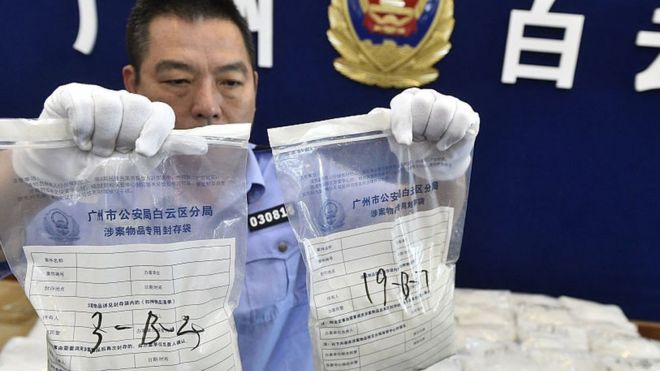
The police officer shows the seized crystal meth on May 18, 2016 in Guangzhou, Guangdong Province of China.Image copyright GETTY IMAGES
Image caption The court said the Canadian was the leader of a drug production and trafficking ring (file pic)

A court in China has sentenced a Canadian citizen to death for producing and trafficking methamphetamine.

Fan Wei is the second Canadian to be sentenced to death this year. Ten others, including five foreigners, were also sentenced on Tuesday.

Relations between Canada and China have been tense since the December arrest of a Huawei executive in Vancouver.

Canada has accused Beijing of arbitrarily applying the death penalty, and have requested clemency for Mr Fan.

In January, another Canadian, Robert Lloyd Schellenberg, had a 15-year jail term increased to a death sentence – prompting condemnation from Canadian Prime Minister Justin Trudeau.

Beijing rejected his comments, saying that Canada was practising “double standards”.

On Tuesday, Foreign Minister Chrystia Freeland told journalists that Canada is “very concerned” by this latest death sentence.

“Canada stands firmly opposed to the death penalty everywhere around the world,” she said.

“We think that this is a cruel and inhumane punishment, which we think should not be used in any country. We are obviously particularly concerned when it is applied to Canadians.”

Global Affairs Canada said in a statement that the country “has raised our firm opposition to the death penalty with China, and will continue to do so”.

The diplomatic agency said representatives attended the 30 April verdict and sentencing trial for Mr Fan, and have called on China to grant clemency to him.

The latest case is likely to further inflame the months-long diplomatic row which started when Meng Wanzhou, the daughter of Huawei’s founder, was arrested in Vancouver on the request of US authorities.

Two other Canadian citizens, former diplomat Michael Kovrig and businessman Michael Spavor, are also being held by China and face accusations of harming national security.

The Jiangmen Intermediate People’s Court in southern Guangdong province said that Fan Wei was the leader of the drugs ring. Another suspect, Wu Ziping, whose nationality was not made clear, was also given a death sentence.

Nine others, including an American and four Mexicans, were given jail terms.

All were detained in 2012 and the trial took place in 2013.

Drug-dealing is punishable by death in China, and at least a dozen foreigners have been executed for drug-related offences. Many more are on death row.

However, the execution of Westerners is less common. One of the most high-profile cases involved British man Akmal Shaikh, who was executed in 2009 despite claims he was mentally ill and an appeal for clemency from the UK prime minister.

Source: The BBC

07/04/2019

Opera on “The Long March” to be restaged at China’s prime theater for Army Day

BEIJING, April 6 (Xinhua) — An opera dedicated to the epic Long March led by the Communist Party of China will return to the National Center for the Performing Arts (NCPA) in Beijing for this year’s Army Day, which falls on Aug. 1.

“The Long March” will be performed in Guangzhou, capital of Guangdong Province, in south China, at the end of May.

The six-act opera is an original NCPA production that debuted in 2016 to mark the 80th anniversary of the victory of the Long March.

The Long March was a military maneuver carried out by the Chinese Workers’ and Peasants’ Red Army from 1934 to 1936. During this period, they left their bases and marched through rivers, mountains and arid grassland to break the siege of Kuomintang forces and continue to fight Japanese aggressors. Many marched as far as 12,500 kilometers.

Source: Xinhua

17/03/2019

Large indoor ski resort to open in southern China

GUANGZHOU, March 16 (Xinhua) — A 75,000 square-meter indoor ski resort will open in China’s warm south on June 15 amid the growing popularity of winter sports.

The ski park, located in Guangdong province’s capital Guangzhou, will be three times the size of the famous Ski Dubai and be able to accommodate over 3,000 customers at the same time, said Li Wanxiong, general manager of the project.

Li said the resort was building four ski slopes with different difficulty levels, with the longest one measuring 460 meters. The biggest vertical drop of the slopes will be 66 meters.

Tourists can also enjoy a variety of ice and snow activities, such as ice sculptures and bumper cars on ice, he added.

As the host of the 2022 Winter Olympics and Paralympics, China is seeing an explosive growth in winter tourism and sports.

About 197 million visits were made by Chinese travelers for ice and snow activities in the 2017-2018 winter, a year-on-year increase of 16 percent, according to the Ministry of Culture and Tourism.

Last August, construction started on a 227,000-square-meter indoor ski resort in Shanghai and is expected to open in 2022.

Source: Xinhua

Law of Unintended Consequences

continuously updated blog about China & India

ChiaHou's Book Reviews

continuously updated blog about China & India

What's wrong with the world; and its economy

continuously updated blog about China & India