09/04/2020
TOKYO (Reuters) – Uncertainty over Japan’s economic outlook is “extremely high” as the coronavirus pandemic hits output and consumption, central bank Governor Haruhiko Kuroda said, stressing his readiness to take additional monetary steps to prevent a deep recession.
While aggressive central bank actions across the globe have eased financial market tensions somewhat, corporate funding strains were worsening, Kuroda told a quarterly meeting of the Bank of Japan’s regional branch managers on Thursday.
“The spread of the coronavirus is having a severe impact on Japan’s economy through declines in exports, output, demand from overseas tourists and private consumption,” he said.
Japan recorded 503 new coronavirus infections on Wednesday – its biggest daily increase since the start of the pandemic – as a state of emergency took effect giving governors stronger legal authority to urge people to stay home and businesses to close.
In contrast to stringent lockdowns in some countries, mandating fines and arrests for non-compliance, enforcement will rely more on peer pressure and a deep-rooted Japanese tradition of respect for authority.
The balancing act underscores the difficulty authorities have in trying to contain the outbreak without imposing a mandatory lockdown that could deal a major blow to an economy already struggling to cope with the virus outbreak.
Hideaki Omura, the governor of the central Japan prefecture of Aichi, said he would declare a state of emergency for his prefecture on Friday.
Omura said Aichi, which includes the city of Nagoya and hosts Toyota Motor Corp, was talking with the central government about being included in the national state of emergency as well, but felt he could not wait any longer to restrict movement.
“Looking at things the past week and watching the situation – the rise in patients, the number without any traceable cause – we judged that it was a very dangerous situation and wanted to make preparations,” he told a news conference.
Even with less stringent restrictions compared with other countries, analysts polled by Reuters expect Japan to slip into a deep recession this year as the virus outbreak wreaks havoc on business and daily life.
Shares of Oriental Land Co (4661.T) fell on Thursday after the operator of Tokyo Disneyland said it would keep the amusement park shut until mid-May.
Entertainment facility operator Uchiyama Holdings (6059.T) said it was closing 43 karaoke shops and 11 restaurants until May 6.
“For the time being, we won’t hesitate to take additional monetary easing steps if needed, with a close eye on developments regarding the coronavirus outbreak,” Kuroda said.
Kuroda’s remarks highlight the strong concern policymakers have over the outlook for Japan’s economy and how companies continue to struggle to generate cash, despite government and central bank promises to flood the economy with funds.
At its policy meeting later this month, the BOJ is likely to make a rare projection that the world’s third-largest economy will shrink this year, sources have told Reuters.
The BOJ eased monetary policy in March by pledging to boost purchases of assets ranging from government bonds, commercial paper, corporate bonds and trust funds investing in stocks.
The government also rolled out a nearly $1 trillion stimulus package to soften the economic blow.
Source: Reuters
Posted in aggressive, Aichi, Amusement park, Arrests, authority, balancing act, branch managers, businesses, capex, Central bank, Central government, close, consumption, coronavirus, Coronavirus pandemic, corporate funding, countries, daily increase, declines, deep-rooted, demand, eased, economy, enforcement, exports, extreme, extremely, faces, financial market, globe, governor, head, Head of Japan, high, hits, infections, Japan’s, Japanese, karaoke shops, legal authority, lockdowns, mandating fines, monetary steps, non-compliance, Oriental Land Co (4661.T), outlook, output, overseas, pandemic, peer pressure, People, prevent, private, quarterly meeting, Recession, regional, rely, respect, restaurants, Reuters, severe impact, spread, spreads, state of emergency, stay home, strains, tensions, Thursday, Tokyo, Tokyo Disneyland, tourists, tradition, Uchiyama Holdings (6059.T), Uncategorized, uncertainty, Wednesday, worsening |
Leave a Comment »
12/12/2019
- Wang Fuman became an internet sensation after he was pictured with his head encrusted in ice after freezing trek to school
- Life has improved since then, but his dad says they are still struggling to make ends meet
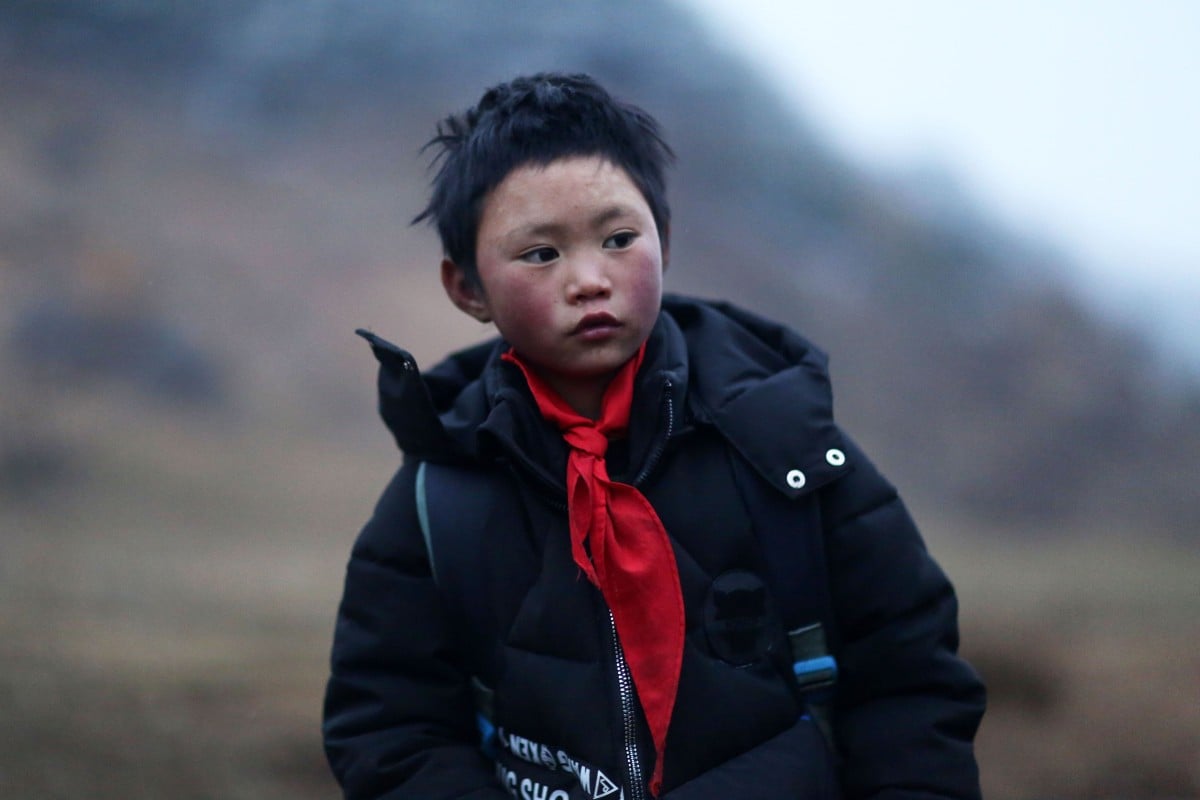
Nine-year-old Wang Fuman’s family has now moved from their mud hut to a two-storey home. Photo: AFP
The father of the “Ice Boy” – who became an internet sensation after he was pictured with his head covered in icicles following a freezing trek to school in southwest China – has spoken out about being rejected for a poverty alleviation scheme.
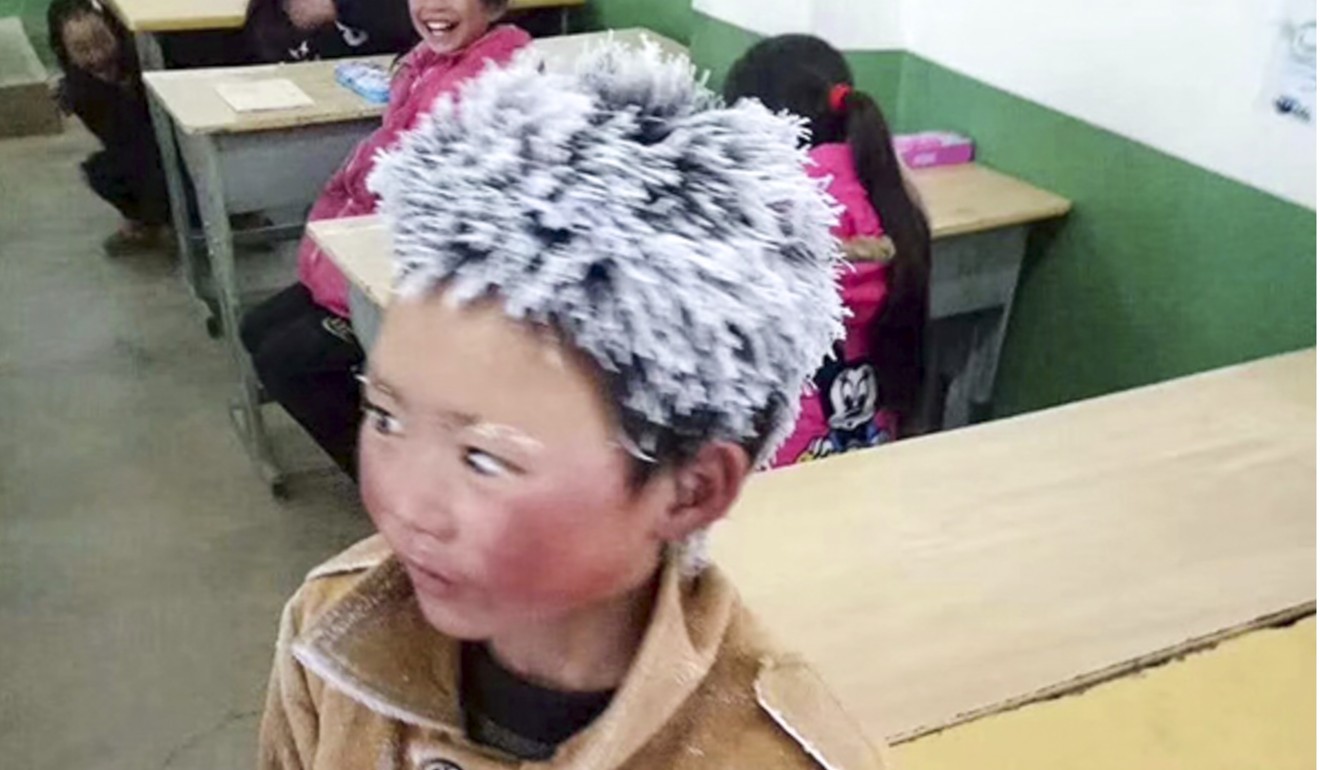
Wang Gangkui’s son, Wang Fuman, was eight when a photo of him taken by a teacher went viral on social media in January last year. It showed the little boy with his hair and eyebrows covered in ice and his cheeks ruddy from the cold after he had walked for over an hour from his home in thin clothing and no hat along treacherous mountain paths.
The plight of the impoverished primary school pupil from Ludian county, a poor area in Zhaotong, Yunnan province, touched hearts across China, with many people expressing sympathy online for the hardships the boy, and other children like him, endured to get to school. Donations of money, warm clothes and heating flooded in.
The photo of Wang Fuman arriving at school with his hair and eyebrows covered in ice went viral last year. Photo: news.163.com
But according to his 30-year-old father, the family is still struggling to make ends meet. He said his application for the assistance scheme had been turned down for the past five years without a satisfactory explanation.
“It’s unfair and unjust that my application wasn’t approved,” Wang Gangkui said on Thursday. “There are allegations in media reports that I have various assets, and they’re just not true. And neither am I trying to take advantage of my son’s fame,” he said.
Families approved for the means-tested scheme, a nationwide programme that is administered at the local level, are given benefits ranging from subsidies to vocational training and job opportunities.
Geng Tao, the party secretary of Zhuanshanbao village, told China News Service on Monday that the Wang family did not meet the eligibility criteria for the programme, citing their two-storey house with a total area of 160 sq metres.
Wang was responding to criticism from internet users after he posted his complaint on social media app Jinri Toutiao on Sunday, a post he later deleted. Some accused him of taking advantage of his son’s fame to get access to government aid, claiming the family was being “greedy” as they were already doing better than others in the region because of the donations they received last year.
State media also weighed in, with Beijing News saying in an editorial on Tuesday that “the authorities should not be influenced by public sentiment towards the Ice Boy and should look at the family’s real situation when assessing if they are in need or not”.
Wang acknowledged that the media attention and subsequent donations from the public had eased the family’s situation, but said they only received a small share.
“There were a lot of donations, but most of them went to the school and were shared among all the pupils and their families here,” he said. “Our family only received a small amount of money.”
After Fuman’s photo went viral, the Ludian county education authorities said there were many “Ice Boys” in the area, and all donations received had been distributed to local families in need, according to China News Service.
A local charity organisation received more than 300,000 yuan (US$42,500) in donations from the public, and said the money was shared among pupils at the Zhuanshanbao primary school, with Fuman receiving just 500 yuan.
Life has improved for Fuman and his family since the photo was taken. He was a
– a term used to describe youngsters from poor families whose parents work in cities away from home, leaving them in the care of relatives. His parents have now returned to their hometown and his father works nearby at a construction site in Zhaotong, earning 3,000 yuan a month – a relatively high salary for the area. But he is the breadwinner for the family of five – his wife, Lu Dafeng, and their two children, Fuman and their 11-year-old daughter Wang Fumei, as well as his mother.
They moved out of their mud hut into the two-storey home, and with the donated funds, Fuman’s primary school was renovated and now has a dormitory equipped with heating. Fuman stays at the school during the week and returns to his home – a 20-minute walk away – on the weekend.
Wang Gangkui said his wife and mother could not apply for jobs designated as “public welfare” positions – such as a street cleaner post offering 500 yuan a month – because they were not recognised as a family in need under the scheme.
He also dismissed media reports that he had two cars, saying he had a second-hand van worth no more than 3,000 yuan. He said reports that his family also had cattle were not true.
Instead, he said he was paying off a loan of tens of thousands of yuan that he took out to build the family’s new house.
There were an estimated 16.6 million people living in poverty in rural China at the end of 2018, about 14 million fewer than a year earlier, according to official data. The ruling Communist Party set the ambitious target of eliminating extreme poverty in China by the end of 2020, and claims that more than 700 million people have already been lifted out of poverty over the past four decades.
Posted in ‘Ice Boy’, China News Service, China’s, Critics, donations, encrusted in ice, Family, father, flooded, freezing tre, head, heating, money, mud hut, poverty assistance scheme, responds, school, The Beijing News, two-storey home, Uncategorized, warm clothes, Yunnan Province |
Leave a Comment »



 CHINDIA ALERT: You'll be living in their world, very soon