Archive for ‘Hefei’

19/02/2020

Xinhua Headlines: Traditional Chinese medicine offers oriental wisdom in fight against novel virus

Traditional Chinese medicine has never missed a single fight against epidemics throughout Chinese history. After over 2,000 years, the long-tested oriental wisdom is still making its due contributions to the well-being of Chinese people.

by Xinhua writers Cao Bin, Zhang Yujie, Wu Zhonghao and Wang Haiyue

WUHAN, Feb. 18 (Xinhua) — Another 1,701 patients infected with the novel coronavirus (COVID-19) were discharged from hospitals Monday, bringing the total number of discharged patients in China to over 12,000 since the epidemic.

When scrutinizing the commonalities of those people, the contributions of traditional Chinese medicine (TCM) can not go unnoticed.

“Western medicine offers important life-supporting measures such as respiratory and circulatory assistance, while TCM focuses on improving patients’ physical conditions and immune function. They complement each other,” said Zhang Boli, an academician of the Chinese Academy of Engineering.

Zhang Boli, an academician of the Chinese Academy of Engineering, speaks during an interview with Xinhua about the effect of integrated treatment with traditional Chinese medicine (TCM) and Western medicine at Jiangxia temporary hospital in Wuhan, capital city of central China’s Hubei Province, Feb. 14, 2020. (Xinhua/Cheng Min)

Last Friday, the first phase of a sports center-turned hospital began operation in Wuhan, the epicenter of the COVID-19 outbreak. It is the city’s first TCM-oriented temporary hospital. A total of 800 patients will receive treatment there once the second phase is completed.

The medical team of 209 doctors and nurses from 20 TCM hospitals in five provinces led by Zhang have since been carrying out TCM clinical treatment and research at the hospital.

The recommended TCM treatment plan includes multiple herbal prescriptions targeting fever, heavy coughing, loss of appetite, nausea, vomiting, diarrhea, shortness of breath and tiredness.

A specific chapter detailing TCM treatment during a patient’s medical observation, clinical treatment and recovery was included in the latest version of the COVID-19 diagnosis and treatment scheme released by the National Health Commission.

A pharmacist weighs Chinese herbal medicines for patients infected with the novel coronavirus at Anhui Provincial Hospital of Traditional Chinese Medicine in Hefei, east China’s Anhui Province, Feb. 18, 2020. (Xinhua/Bai Bin)

Wuhan’s coronavirus control headquarters have since ordered integrated treatment of TCM and Western medicine, especially among non-critical patients, and observation of TCM’s curative effects at designated hospitals.

Statistics show that 2,220 medics from TCM hospitals and institutions across China have been sent to aid the epidemic fight in Hubei so far. Over 75 percent of COVID-19 patients are receiving TCM treatment in Hubei and over 90 percent in other parts of China.

A medical worker tests the pulse of a patient infected with the novel coronavirus at the Affiliated Hospital of Jiangxi Traditional Chinese Medicine University in Nanchang, east China’s Jiangxi Province, Feb. 18, 2020. (Xinhua/Hu Chenhuan)

On Feb. 6 alone, 23 patients in Hubei were discharged after receiving integrated treatment of TCM and Western medicine.

Zhang said patients with mild symptoms showed obvious improvement after TCM treatment, and for critical patients, TCM decreased their lung exudation, stabilized blood oxygen saturation and reduced respiratory support and antibiotic use.

TCM has never missed a single fight against epidemics throughout Chinese history. TCM classics have provided sufficient evidence of how TCM cured epidemic diseases such as smallpox over the past several thousand years.

The 2003 SARS fight was a recent example. TCM offered timely and effective solutions to the treatment and recuperation of SARS patients.

“Compared with Western medicine, TCM offers highly varied prescriptions to each and every patient based on their unique conditions during different stages of the disease, which is more flexible and targeted,” said Xiong Jibai, a TCM expert and consultant to the coronavirus treatment group of neighboring Hunan Province.

Hunan has sent hundreds of medical workers to help fight the epidemic in the city of Huanggang, one of the hardest-hit cities in Hubei.

Zeng Puhua, vice president of the affiliated hospital of Hunan Academy of Traditional Chinese Medicine, has been working around the clock in the SARS treatment-model hospital of Huanggang since late January.

“Clinical experience has repeatedly proven that TCM plays an active and effective role in the treatment of pneumonia-related epidemics,” he said.

According to Hunan’s health commission, TCM was used in the treatment of nearly 95 percent of the admitted patients. Among the discharged, over 90 percent underwent integrated treatment of TCM and Western medicine.

Cured novel coronavirus pneumonia patients, who have received integrated treatment with traditional Chinese medicine (TCM) and Western medicine, are discharged from a hospital in Wuhan, central China’s Hubei Province, Feb. 6, 2020. (Xinhua/Wang Yuguo)

In the city of Bozhou, eastern China’s Anhui Province, TCM has shortened the course of treatment and reduced medical expenses for seven discharged COVID-19 patients taking herbal soups or capsules.

“Patients showed quickened fever reduction after using TCM, and obvious alleviation of certain symptoms such as coughing, tiredness and loss of appetite. Some critical patients became non-critical,” said Zhang Nianzhi, a chief doctor at the respiratory medicine department of Anhui Provincial Hospital of TCM.

Discharged patients are required to stay home for another 14 days. Zhang said a 14-day herbal compound treatment based on TCM theories is prescribed to help them restore their pre-illness state.

Zhang has planned to include 100 discharged patients into the herbal compound treatment group, to follow their symptoms, physical and chemical indicators, CT results and living quality for one year. Thirty patients have so far been taking the prescription.

Non-drug treatment such as cupping, acupuncture and scraping is another feature of TCM, which can help patients recover more effectively after being discharged from hospitals, said Tong Xiaolin, an academician of Chinese Academy of Sciences and head of the treatment group of the state administration of TCM.

Source: Xinhua
22/09/2019

World Manufacturing Convention highlighting 5G applications

HEFEI, Sept. 21 (Xinhua) — Chinese top telecom operators have shown their latest achievements in 5G applications at the World Manufacturing Convention 2019 in Hefei, capital of eastern China’s Anhui Province, according to the organizer.

The operators, including China Unicom and China Mobile, showcased 5G applications in education, health and other fields.

“China Unicom has focused on 5G applications in finance. We will also provide 5G communication services for the 2022 Beijing Olympic Winter Games,” said Tao Xian, industry director of China Unicom Anhui branch.

The World Manufacturing Convention 2019 opened Friday in Hefei, setting a platform for industry insiders to showcase cutting-edge technologies and develop business contacts.

The four-day event brings together more than 4,000 representatives from over 60 countries and regions, including senior managers from Global Fortune 500 companies, said the organizing committee.

Source: Xinhua

01/07/2019

Crunch time as gaokao exam season starts for China’s university hopefuls

  • Annual tests still an academic pressure cooker for students wanting to get into the nation’s top universities, despite efforts to change the system
  • The gruelling exam is the sole criteria for admission to university in China
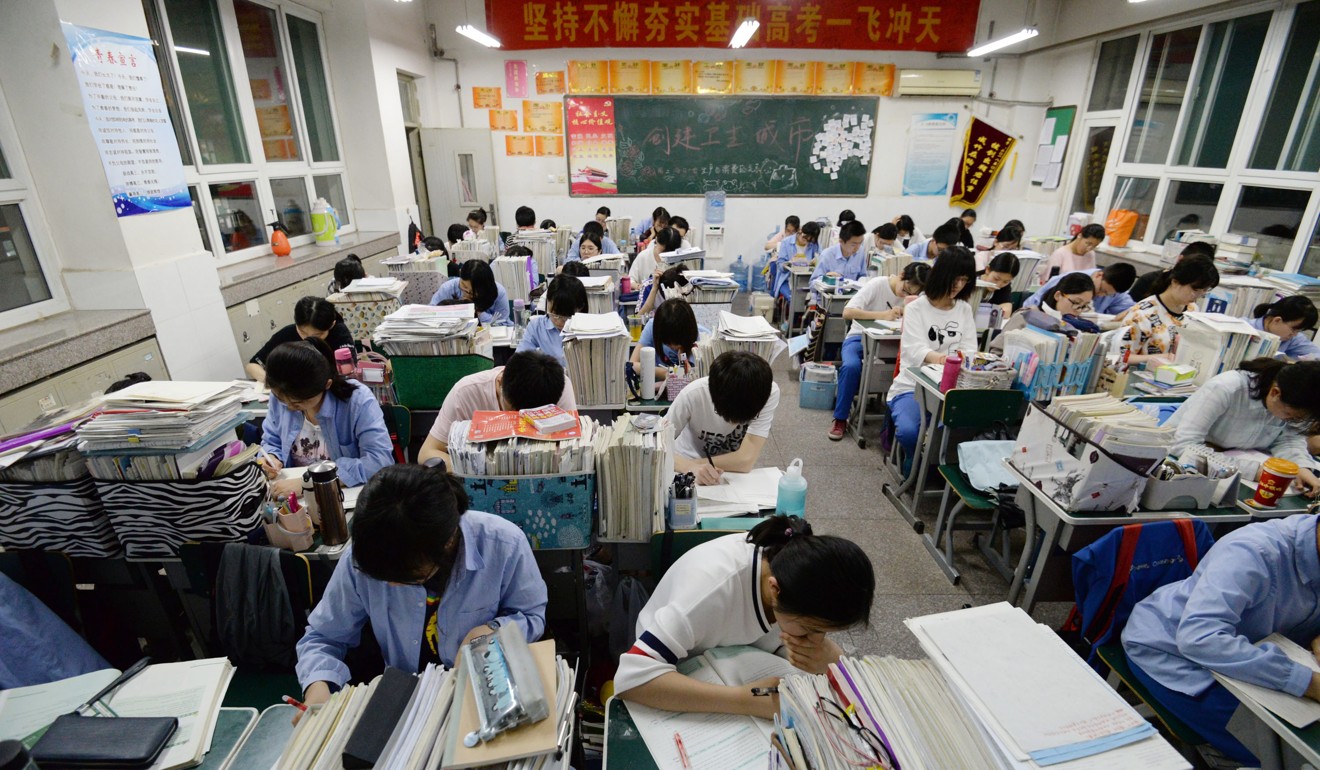
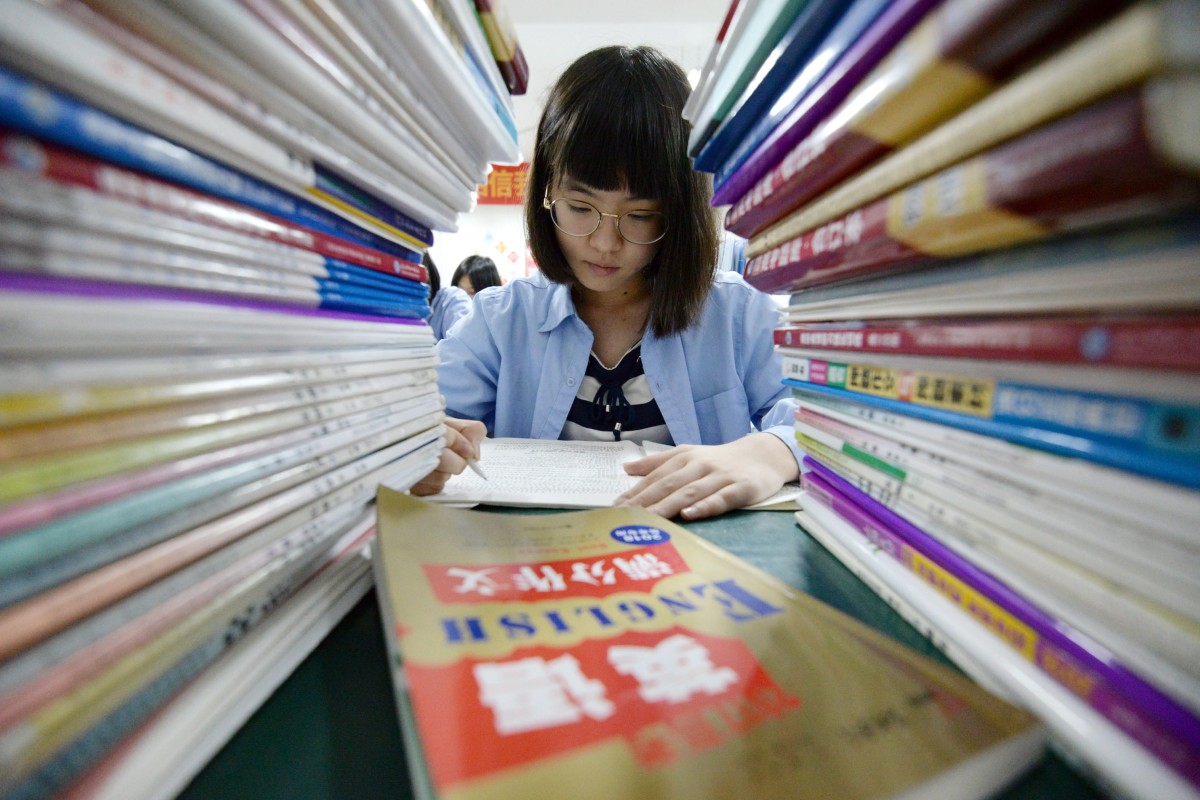
After months of study, China’s high school students are about to be put to the test in the annual “university entrance examinations which begin on Friday. Photo: EPA-EFE
For the past six months, the life of 18-year-old Shanghai student Xiao Qing has revolved around preparation for one of China’s annual rites of passage.
Every day at school, from 7.20am to 5.30pm, the final-year secondary school student in Changning district has studied previous test papers for the gaokao, officially known as the National Higher Education Entrance Examination.
“Sometimes I feel my bottom hurts from sitting for so many hours,” she said. “We feel like we are test machines.”
Xiao Qing will put all of that preparation to the real test from Friday, when over two to three days she will be among more than 10 million people trying to qualify for one of the spots at a Chinese university.
Most students get just one shot at the gaokao, the sole criteria for admission to university in China. It’s a gruelling process that has been criticised over the years as too focused on rote learning, putting too much pressure on students and privileging applicants living near the best universities.
Education authorities have gone some way to try to address these problems. In 2014, the Ministry of Education started letting students choose half of their subjects to introduce some flexibility into the system.

Apart from the compulsory subjects of Chinese, mathematics and English, students are now supposed to be able to choose any three of six other subjects: physics, chemistry, biology, politics, history and geography.

Previously, secondary school students had been split strictly into liberal arts or science majors in a system that was introduced in 1952 and revived in 1977 after being suspended during the Cultural Revolution.

Last go at exam success for China’s ‘gaokao grandpa’

Wen Dongmao, a professor from Peking University’s Graduate School of Education, said the changes expanded the opportunity for students to follow their interests.

“The new gaokao gives students plenty of choices of subjects to learn and to be evaluated on. I think people should choose which subject to learn based on what they are interested in,” Wen said.

Gaokao reform is designed according to some methods by overseas universities, like American and Hong Kong schools. Its direction is right, but there will be inevitable problems brought by it.”

One of the problems is the uneven implementation of the changes throughout the country, with just 14 of China’s 31 provinces, municipalities and autonomous regions having introduced them.

In the eastern province of Anhui, for example, the reforms were supposed to go in effect from September last year but were postponed without reason, news portal Caixin.com reported.

The report quoted a teacher from Hefei No 1 Middle School in the provincial capital as saying the school was not ready for the changes.

Is the university entrance exam in China the worst anywhere?

“Shanghai and Zhejiang are economically advanced and we are not at that level,” he was quoted as saying. “It’s a big challenge for us to manage so many students’ choices of gaokao subjects.”

In neighbouring Jiangxi province, a high school history teacher said many places opposed the reform mainly “because of the shortage of resources”.

“It’s hard to roll out gaokao reform because we don’t have enough teachers or classrooms to handle the students’ various choices of subjects. Students can choose three out of six courses and that means there are 20 potential combinations,” the teacher was quoted as saying.

Chinese high school students study late into the night for the National Higher Education Entrance Examination. Photo: EPA-EFE

In addition, the system allows students to take the tests in more than one year and submit the highest scores when applying to universities.

“I heard from teachers in other provinces that students will take the tests of the selected subjects again and again for fear that other students will overtake them. That’s exhausting and will just put more burden on the students,” the Jiangxi teacher said.

He also said the gaokao process put extra pressure on teachers who feared the tests would push students to extremes. One of his students contemplated jumping from a bridge after she thought she had done poorly in the Chinese section of the exam.

“She called me, saying she felt it was the end of the world. I was shocked and hurried to the bridge,” he was quoted as saying. He spoke to her for more than an hour about before the girl came down, going on to get a decent score.

Critics also say the system is weighted in favour of students in bigger cities such as Beijing, Tianjin and Shanghai, home to the country’s top universities.

China private education industry is booming despite economic slowdown

Li Tao, an academic from the China Rural Development Institute at Northeast China Normal University in Changchun, Jilin province, said about 20-25 per cent of gaokao candidates from Beijing, Tianjin and Shanghai were admitted to China’s elite universities, compared with just 5 or 6 per cent in places like Sichuan, Henan and Guangdong.

Li said that was because the top universities were funded by local governments and gave preference to applicants from those areas.

“To make it fairer, the Ministry of Education has insisted over the years that elite universities cannot have more than 30 per cent of incoming students from the area in which it is located,” he said.

Despite these challenges, gaokao was still a “fair” way to get admitted to university in China, Li said.

Gaokao is the fairest channel to screen applicants on such a large scale, to my knowledge,” he said. “It does not check your family background and every student does the same test paper [if they are from the same region]. Its score is the only factor in evaluating a university applicant.”

Fake nursing degree scandal prompts China-wide fraud check

In Shanghai, as the clock ticks closer to the gaokao test day, Xiao Qing said she was feeling the pressure.

She said she would keep up her test prep to ensure she got the score she needed to study art in Beijing.

“I am trying my utmost and don’t want to regret anything in the future,” she said.

At the same time, she is not pinning her entire life on it.

“Life is a long journey and it is not decided solely by gaokao,” she said.

“I don’t agree with my classmates that life will be easy after gaokao. I think we still need to study hard once we get to university.”

Source: SCMP

17/06/2019

Polar bear’s fur inspires Chinese breakthrough in super insulator for space

  • Synthetic material that mimics and improves on nature could be used in China’s hypersonic space plane
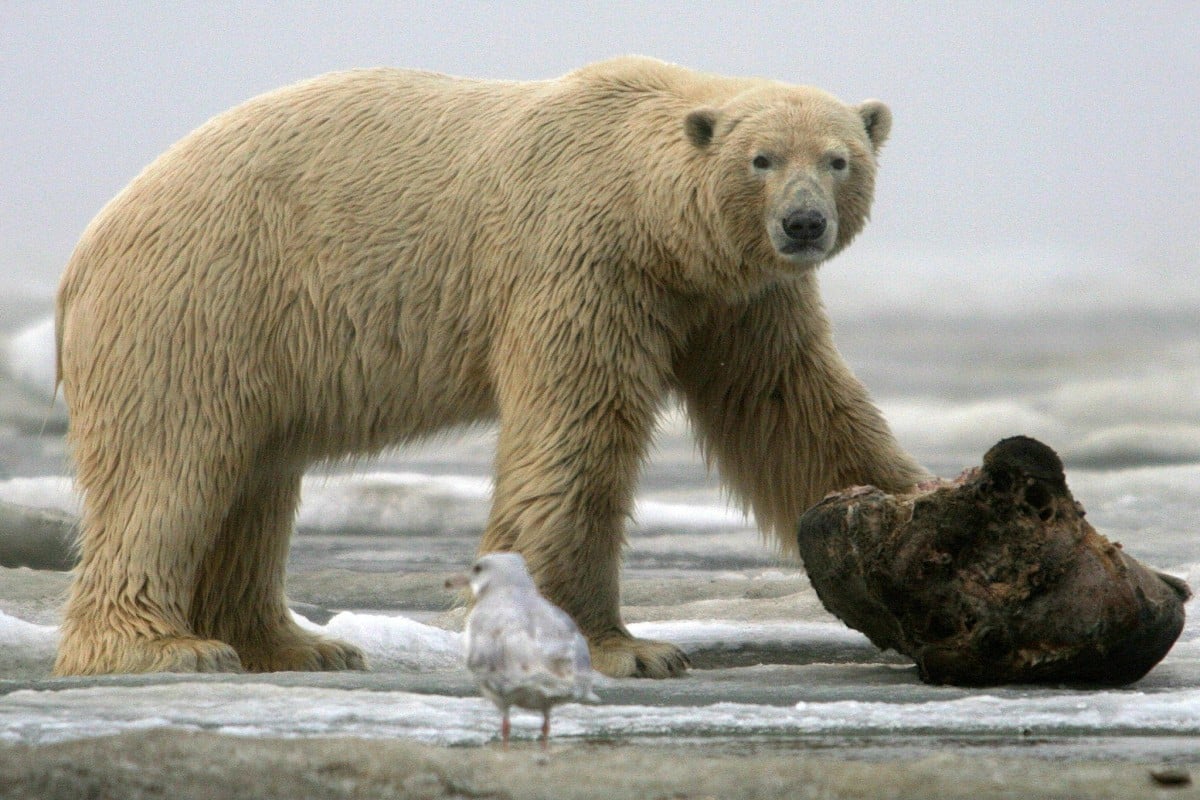
Chinese researchers have developed a super insulator based on the unique properties of polar bear fur. Photo: TNS
What can withstand heat of more than 1,000 degrees Celsius (1,832 Fahrenheit), maintain its elasticity in extreme cold, and dry almost instantly after being submerged in water?
The answer is a new synthetic fur which has been developed by Chinese scientists, who set out to mimic – and improve upon – the unique properties of the polar bear’s coat.

The team, led by Professor Yu Shuhong, was at first simply curious to know what made the polar bear so comfortable and successful in the unforgiving environment of the Arctic.

In their laboratory in Hefei, in the southeastern province of Anhui, they studied polar bear hair with a high-definition microscope and found a unique difference compared to the hair of human beings and other mammals.
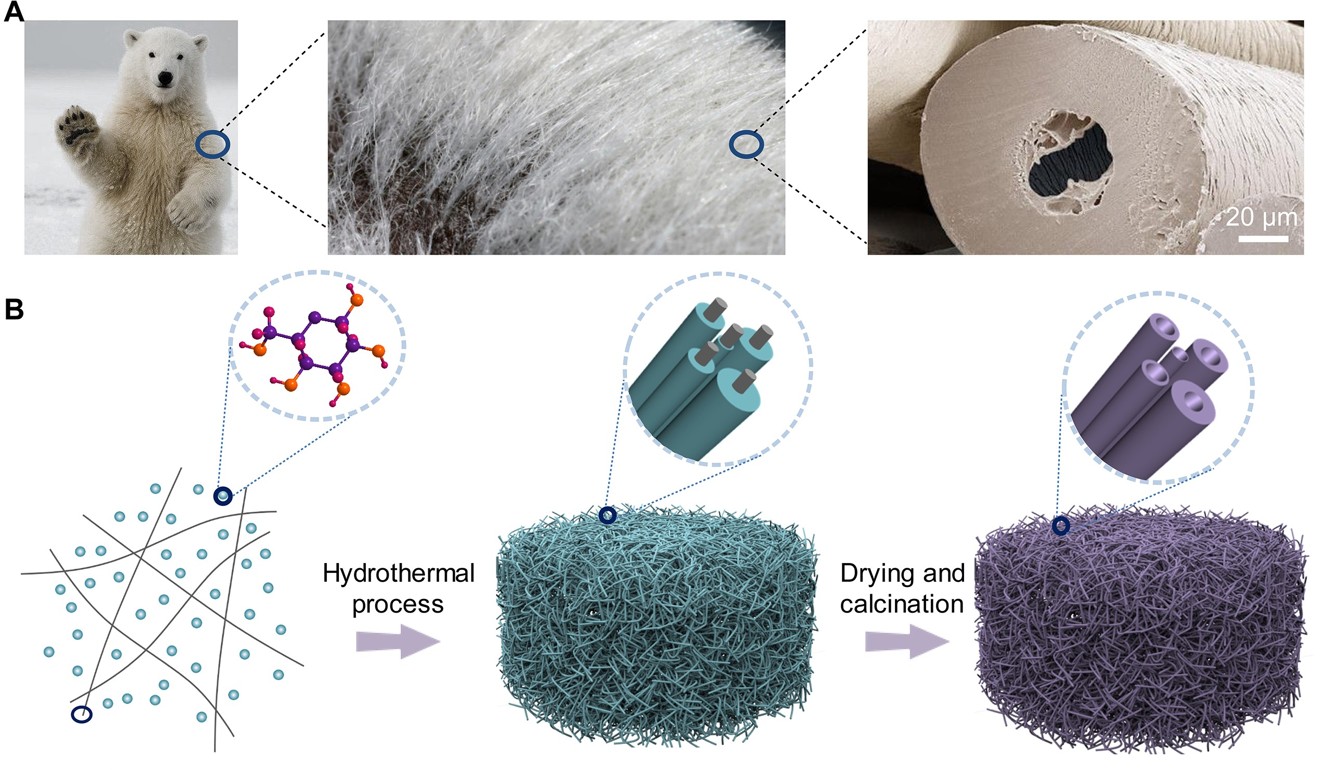
Chinese researchers have wrapped a carbon material around a nanowire, which is then removed, to mimic a polar bear’s unique hollow hair, which could have applications for the aerospace industry. Photo: Handout

It was hollow inside. What’s more, they observed the tubelike hairs intertwined with one another, forming a random network like a bird’s nest. Using theoretical models on a powerful computer, the researchers confirmed that the structure was an efficient heat insulator.

The only drawback was its fragility and – according to their research paper in the latest issue of online science journal Chem – the researchers have managed to develop a synthetic version strong enough to withstand being pressed one million times during testing.

The new material was lighter than any heat insulation product in use today, with one cubic metre weighing just 8kg (17.6lbs) and might have applications in many areas, including the hypersonic space plane, under development in China for low-cost transport between space station and Earth, the researchers said.

Liu Jianwei, professor with the chemistry department at the University of Science and Technology of China and a co-author of the paper, said several research institutes and aerospace companies had been in contact to discuss the possibility of mass production.

“It is a super-strong, super-light heat insulator that can be used in hostile environments,” Liu said.

“To find a new material that can be used in critical engineering projects, we needed to make it stronger. We needed to surpass nature.”

Chinese university is first to build and test own hypersonic plane
The researchers replaced the organic substance of the hair with a carbon material and used it to coat a long, fine thread known as a nanowire which was then removed through a series of physical and chemical processes, leaving a dark-coloured, spongy “fur” about the size of a thumb.
According to their study, the new material outperformed natural polar bear hair in nearly all aspects from physical strength to heat insulation. The next challenge is to develop a process that can produce the material at a scale suitable for industrial use.
At the moment, the thumb-sized sample takes about a week to form and, said Liu, there were still some issues to be resolved before it could be mass produced, including building processing equipment at a much larger scale than what is available in the laboratory. Another challenge will be to simplify and speed up the manufacturing process.
Source: SCMP
29/04/2019

China’s quest for clean energy heats up with groundbreaking ‘artificial sun’ project

    • Fusion reactor built by Chinese scientists in eastern Anhui province has notched up a series of research firsts
    • There are plans to build a separate facility that could start generating commercially viable fusion power by 2050, official says
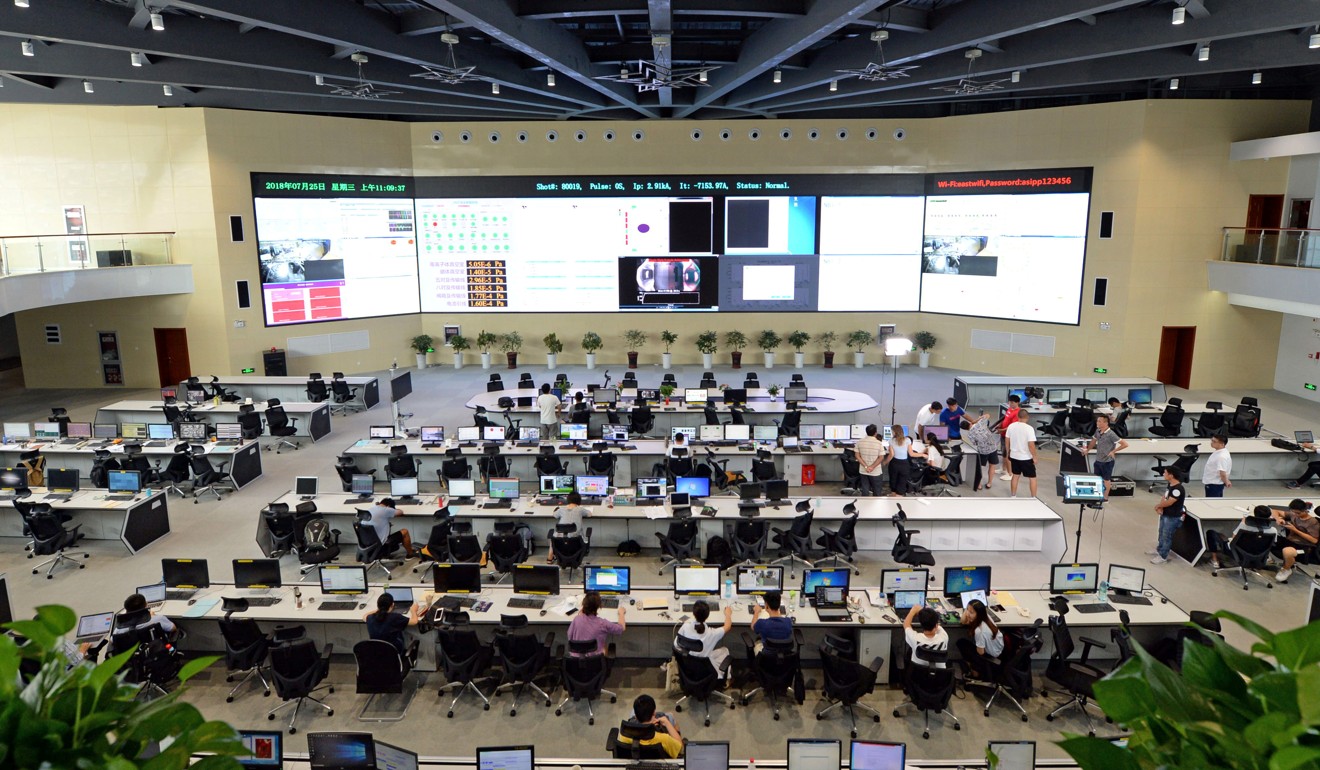
    The Experimental Advanced Superconducting Tokamak (EAST) device – or “artificial sun” – in Hefei, Anhui province. Photo: AFP/Chinese Academy of Sciences
    The Experimental Advanced Superconducting Tokamak (EAST) device – or “artificial sun” – in Hefei, Anhui province. Photo: AFP/Chinese Academy of Sciences
    A groundbreaking fusion reactor built by Chinese scientists is underscoring Beijing’s determination to be at the core of clean energy technology, as it eyes a fully functioning plant by 2050.
    Sometimes called an “artificial sun” for the sheer heat and power it produces, the doughnut-shaped Experimental Advanced Superconducting Tokamak (EAST) that juts out on a spit of land into a lake in eastern Anhui province, has notched up a succession of research firsts.
    In 2017 it became the world’s first such facility to sustain certain conditions necessary for nuclear fusion for 
    longer than 100 seconds

    , and last November hit a

    personal-best temperature

    of 100 million degrees Celsius (212 million Fahrenheit) – six times as hot as the sun’s core.

    Such mind-boggling temperatures are crucial to achieving fusion reactions, which promise an inexhaustible energy source.

    EAST’s main reactor stands within a concrete structure, with pipes and cables spread outward like spokes connecting to a jumble of censors and other equipment encircling the core. A red Chinese flag stands on top of the reactor.

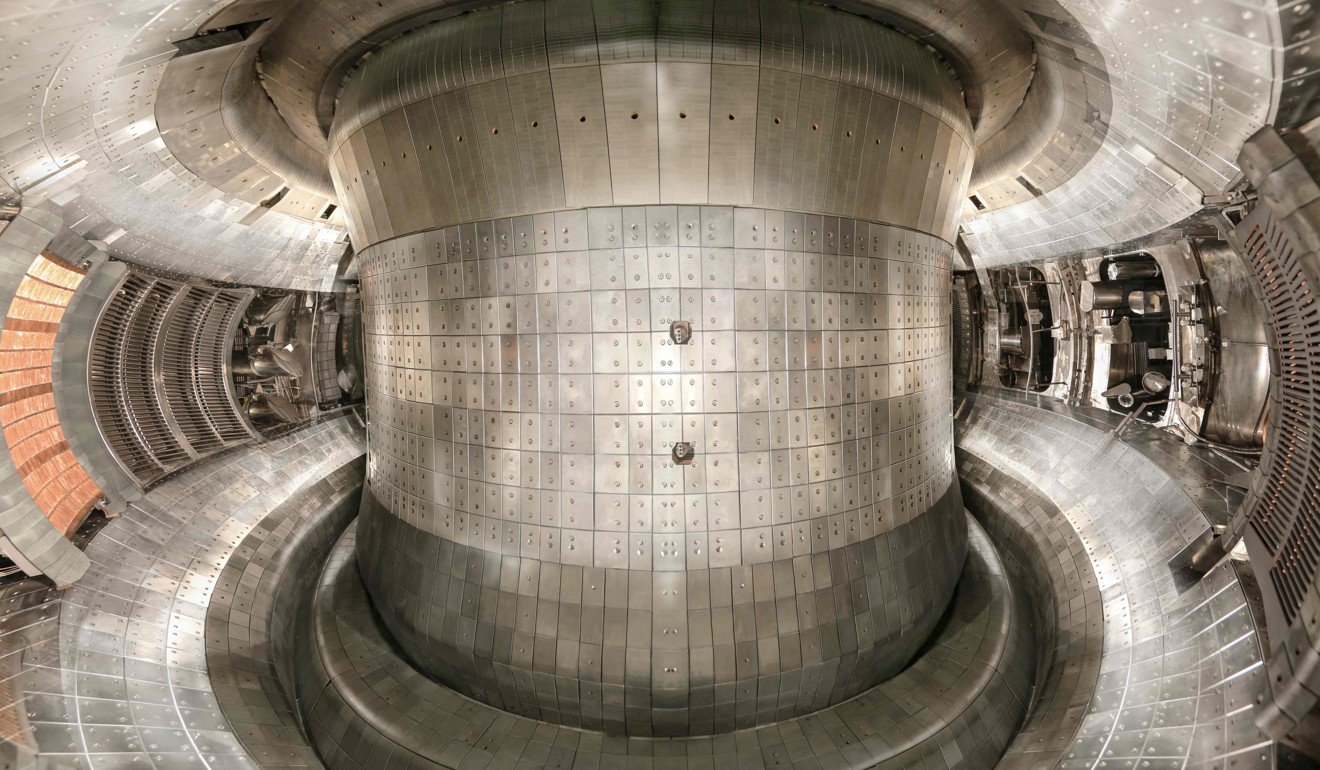
    A vacuum vessel inside the fusion reactor, which has achieved a temperature of 100 million degrees Celsius – six times as hot as the sun’s core. Photo: AFP/Chinese Academy of Sciences
    A vacuum vessel inside the fusion reactor, which has achieved a temperature of 100 million degrees Celsius – six times as hot as the sun’s core. Photo: AFP/Chinese Academy of Sciences

    “We are hoping to expand international cooperation through this device [EAST] and make Chinese contributions to mankind’s future use of nuclear fusion,” said Song Yuntao, a top official involved in the project, on a recent tour of the facility.

    China is also aiming to build a separate fusion reactor that could begin generating commercially viable fusion power by mid-century, he added.

    Some 6 billion yuan (US$891.5 million) has been promised for the ambitious project.

    EAST is part of the International Thermonuclear Experimental Reactor (ITER) project, which seeks to prove the feasibility of fusion power.

    Funded and run by the European Union, India, Japan, China, Russia, South Korea and the United States, the multibillion-dollar project’s centrepiece will be a giant cylindrical fusion device, called a tokamak.

    Now under construction in Provence in southern France, it will incorporate parts developed at the EAST and other sites, and draw on their research findings.

    China is “hoping to expand international cooperation” through EAST. Photo: Reuters
    China is “hoping to expand international cooperation” through EAST. Photo: Reuters

    Fusion is considered the Holy Grail of energy and is what powers our sun.

    It merges atomic nuclei to create massive amounts of energy – the opposite of the fission process used in atomic weapons and nuclear power plants, which splits them into fragments.

    Unlike fission, fusion emits no greenhouse gases and carries less risk of accidents or the theft of atomic material.

    But achieving fusion is both extremely difficult and prohibitively expensive – the total cost of ITER is estimated at 20 billion (US$22.3 billion).

    Wu Songtao, a top Chinese engineer with ITER, conceded that China’s technical capabilities on fusion still lag behind more developed countries, and that US and

    Japanese tokamaks have achieved more valuable overall results.

    But the Anhui test reactor underlines China’s fast-improving scientific advancement and its commitment to achieve yet more.

    China’s capabilities “have developed rapidly in the past 20 years, especially after catching the ITER express train”, Wu said.

    In an interview with state-run Xinhua news agency in 2017, ITER’s director general Bernard Bigot lauded China’s government as “highly motivated” on fusion.

    “Fusion is not something that one country can accomplish alone,” Song said.

    “As with ITER, people all over the world need to work together on this.”

Source: SCMP

13/04/2019

China targets nuclear fusion power generation by 2040

HEFEI, China (Reuters) – China aims to complete and start generating power from an experimental nuclear fusion reactor by around 2040, a senior scientist involved in the project said, as it works to develop and commercialize a game-changing source of clean energy.

China is preparing to restart its stalled domestic nuclear reactor program after a three-year moratorium on new approvals, but at a state laboratory in the city of Hefei, in China’s Anhui province, scientists are looking beyond crude atom-splitting in order to pursue nuclear fusion, where power is generated by combining nuclei together, an endeavor likened by skeptics to “putting the sun in a box”.

While nuclear fusion could revolutionize energy production, with pilot projects targeting energy output at 10 times the input, no fusion project has up to now created a net energy increase. Critics say commercially viable fusion always remains fifty years in the future.

China has already spent around 6 billion yuan ($893 million) on a large doughnut-shaped installation known as a tokamak, which uses extremely high temperatures to boil hydrogen isotopes into a plasma, fusing them together and releasing energy. If that energy can be utilized, it will require only tiny amounts of fuel and create virtually no radioactive waste.

Song Yuntao, deputy director of the Institute of Plasma Physics at the Hefei Institute of Physical Science, said on Thursday that while technological challenges remain immense, the project has been awarded another 6 billion yuan in funding, and new construction plans are underway.

“Five years from now, we will start to build our fusion reactor, which will need another 10 years of construction. After that is built we will construct the power generator and start generating power by around 2040,” he said at the site, built on a leafy peninsula jutting into a lake.

China has been researching fusion since 1958, but at the current stage, it is still more about international cooperation than competition, Song said. The country is a member of the 35-nation ITER project, a 10-billion euro ($11.29 billion) fusion project under construction in France.

China is responsible for manufacturing 9 percent of ITER’s components, and is playing a major role in core technologies like magnetic containment, as well as the production of components that can withstand temperatures of over 100 million degrees Celsius (180 million degrees Fahrenheit).

ITER is scheduled to generate first plasma by 2025. A demonstration reactor will then be built, with the aim of creating 500 megawatts of power from just 50 megawatts of input, a tenfold return on energy.

Despite the critics who say dependable fusion energy is unrealistic, Song said he was confident breakthroughs are being made.

“Because we have a lot of technology now, a lot of challenges in plasma physics have been overcome, and I think this will speed up the entire process,” he said.

($1 = 6.7188 yuan)

($1 = 0.8859 euros)

Source: Reuters

Law of Unintended Consequences

continuously updated blog about China & India

ChiaHou's Book Reviews

continuously updated blog about China & India

What's wrong with the world; and its economy

continuously updated blog about China & India