27/10/2019
LANZHOU, Oct. 26 (Xinhua) — Dunhuang Academy China and Peking University have signed an agreement to establish a research center for Dunhuang studies, aiming to nurture more high-level research talent in the area.
Rong Xinjiang, a professor with Peking University, and Zhao Shengliang, the head of the Dunhuang Academy, will be the directors of the new center.
With a focus on the documents of Dunhuang and grottoes art, Dunhuang studies is an emerging interdisciplinary subject that covers areas such as history, geography, archeology and art.
The Dunhuang Academy, located in northwest China’s Gansu Province, administers the Mogao Grottoes, a renowned UNESCO World Heritage site that showcases the cultural integration and mutual learning among different civilizations along the ancient Silk Road.
The Mogao Grottoes are home to a priceless collection of Buddhist artwork — more than 2,000 colored sculptures and 45,000 square meters of murals — in 735 caves carved along a cliff by ancient worshippers.
Peking University is a pioneer of Dunhuang studies in China, with scholars of its predecessor beginning research in the area in the early 20th century.
Source: Xinhua
Posted in archeology, Art, Buddhist artwork, China alert, cultural integration, different civilizations, Dunhuang, Dunhuang Academy China, establishes, Gansu Province, geography, grottoes art, History, Lanzhou, Peking University, Research Center, studies, Uncategorized, unesco world heritage site |
Leave a Comment »
20/10/2019
A visitor views an exhibit at the Erlitou Relic Museum in Luoyang, central China’s Henan Province, Oct. 19, 2019. The Erlitou Relic Museum, which exhibits the history of ancient China’s first recorded dynasty of Xia (2070-1600 B.C.), opened Saturday in Luoyang. It exhibits over 2,000 items, including bronze wares, pottery wares and jade wares. Covering an area of 32,000 square meters, the museum exhibits the history of the Xia Dynasty, the first dynasty recorded in ancient China. Construction of the museum cost 630 million yuan (about 89 million U.S. dollars). The Erlitou Relics date back to 3,500 to 3,800 years ago in ancient China’s late Xia or early Shang (1600-1046 B.C.) dynasties. (Xinhua/Li An)
ZHENGZHOU, Oct. 19 (Xinhua) — The Erlitou Relic Museum opened Saturday in Luoyang city in central China’s Henan Province, unveiling the history and culture of ancient China’s first recorded dynasty of Xia (2070-1600 B.C.).
Covering an area of 32,000 square meters, the museum exhibits over 2,000 items, including bronze wares, pottery wares and jade wares.
Construction of the museum cost 630 million yuan (about 89 million U.S. dollars).
The Erlitou Relics date back to 3,500 to 3,800 years ago in ancient China’s late Xia or early Shang (1600-1046 B.C.) dynasties.
Discovered in 1959 in Luoyang by historian Xu Xusheng, Erlitou was identified by Chinese archaeologists as the relics of the capital city of the middle and late Xia Dynasty.
Over the past 60 years, archaeologists have excavated over 10,000 items out of a total area of 40,000 square meters from the site.
Zhao Haitao from the Chinese Academy of Social Sciences (CASS) Erlitou archaeological team, said that China’s earliest palace complex, bronze ware workshop and urban road network were all found at the site.
The museum has three display areas where visitors can experience and better understand the archaeological achievements of the Xia Dynasty, and probe into the history and culture of the Xia Dynasty via various kinds of projects, such as virtual reality, embossment and sand tables.
Li Boqian, a professor with the School of Archaeology and Museology of Peking University, said the Erlitou Relic Museum presents daily utensils, manufacturing tools and decorations for visitors to understand the social development, history and culture of the Xia Dynasty.
The museum will help people around the world learn about ancient Chinese history and culture, said Liu Yuzhu, director of China’s National Cultural Heritage Administration, at the opening ceremony.
In addition, the museum will become a demonstration site for the protection, preservation and exhibition of China’s major cultural heritage sites and a research center for the origin of Chinese civilization.
Source: Xinhua
Posted in bronze ware workshop, Central China, Chinese Academy of Social Sciences (CASS), Chinese civilization, cultural heritage sites, Culture, decorations, demonstration site, dynasty of Xia, early Shang, Erlitou Relic Museum, exhibition, Henan province, History, Luoyang, manufacturing tools, National Cultural Heritage Administration, opening ceremony, opens, origin, palace complex, Peking University, preservation, protection, Research Center, School of Archaeology and Museology, social development, Uncategorized, urban road network, utensils, visitors, Xia Dynasty |
Leave a Comment »
27/08/2019
Huang Kunming, a member of the Political Bureau of the Communist Party of China (CPC) Central Committee and head of the Publicity Department of the CPC Central Committee, addresses a seminar on expositions on historical sciences made by Xi Jinping, general secretary of the CPC Central Committee, in Beijing, capital of China, Aug. 26, 2019. (Xinhua/Yao Dawei)
BEIJING, Aug. 26 (Xinhua) — A seminar on expositions on historical sciences made by Xi Jinping, general secretary of the Communist Party of China (CPC) Central Committee, was held Monday in Beijing.
Xi’s expositions on historical sciences, which embody a deep understanding of history and historical sciences by contemporary Chinese Communists, are an important guideline to be followed by China’s historical research in the new era, said Huang Kunming, a member of the Political Bureau of the CPC Central Committee and head of the Publicity Department of the CPC Central Committee, when addressing the seminar.
He said Marxism should be firmly upheld to offer guidance and called for efforts to facilitate the building of discipline, and academic and discourse systems of history research with Chinese characteristics.
Huang stressed the importance of combining research and education, taking a clear-cut stand to oppose historical nihilism, and guiding people to establish a correct view of the history, nation, country, and culture.
The seminar, hosted by the Chinese history research institute under the Chinese Academy of Social Sciences, was attended by over 150 historians from across the country.
Source: Xinhua
Posted in Beijing, Chinese Academy of Social Sciences, Chinese Characteristics, Chinese history research institute, Country, Culture, general secretary of the Communist Party of China (CPC) Central Committee, historians, historical sciences, History, history research, Marxism, nation, Political Bureau of the CPC Central Committee, Publicity Department of the CPC Central Committee, Seminar, Uncategorized, Xi JinPing, Xi's expositions |
Leave a Comment »
01/07/2019
- Annual tests still an academic pressure cooker for students wanting to get into the nation’s top universities, despite efforts to change the system
- The gruelling exam is the sole criteria for admission to university in China
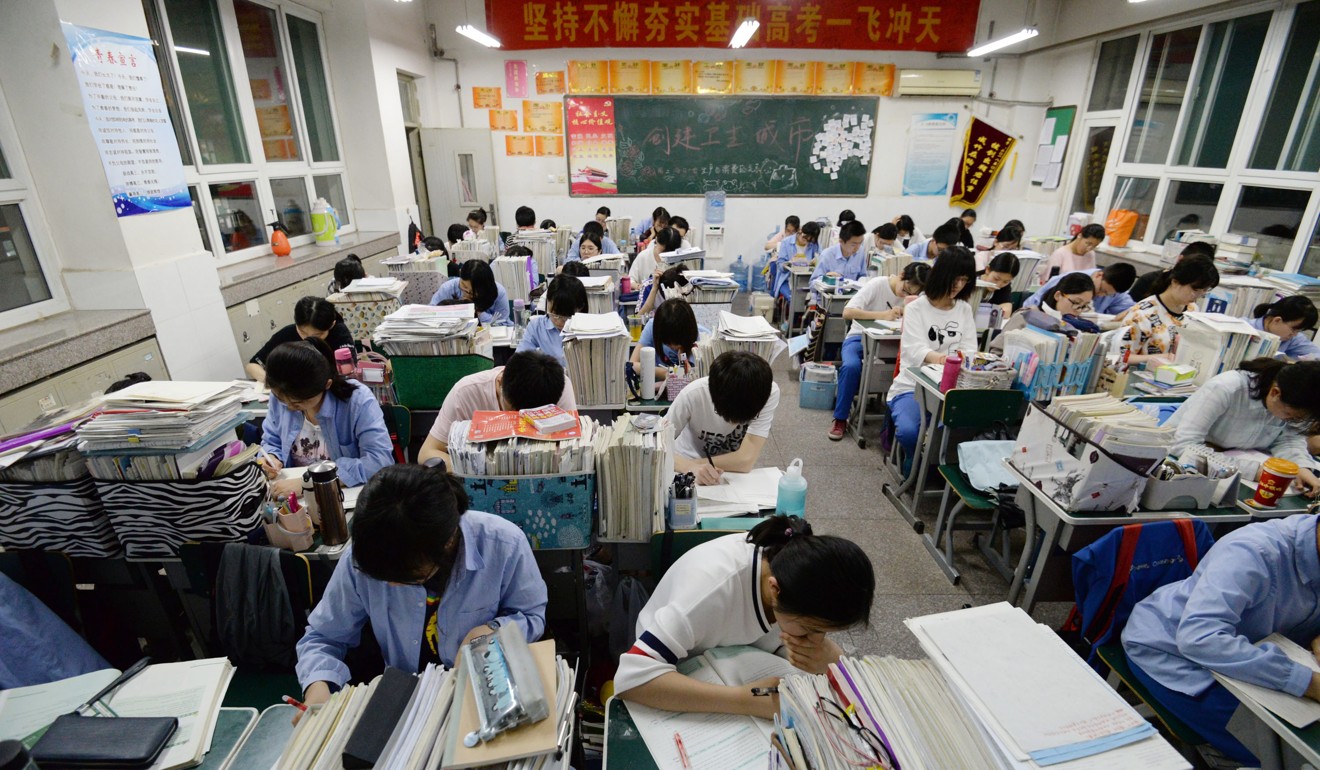
After months of study, China’s high school students are about to be put to the test in the annual “university entrance examinations which begin on Friday. Photo: EPA-EFE
For the past six months, the life of 18-year-old Shanghai student Xiao Qing has revolved around preparation for one of China’s annual rites of passage.
Every day at school, from 7.20am to 5.30pm, the final-year secondary school student in Changning district has studied previous test papers for the gaokao, officially known as the National Higher Education Entrance Examination.
“Sometimes I feel my bottom hurts from sitting for so many hours,” she said. “We feel like we are test machines.”
Xiao Qing will put all of that preparation to the real test from Friday, when over two to three days she will be among more than 10 million people trying to qualify for one of the spots at a Chinese university.
Most students get just one shot at the gaokao, the sole criteria for admission to university in China. It’s a gruelling process that has been criticised over the years as too focused on rote learning, putting too much pressure on students and privileging applicants living near the best universities.
Education authorities have gone some way to try to address these problems. In 2014, the Ministry of Education started letting students choose half of their subjects to introduce some flexibility into the system.
Apart from the compulsory subjects of Chinese, mathematics and English, students are now supposed to be able to choose any three of six other subjects: physics, chemistry, biology, politics, history and geography.
Previously, secondary school students had been split strictly into liberal arts or science majors in a system that was introduced in 1952 and revived in 1977 after being suspended during the Cultural Revolution.
Last go at exam success for China’s ‘gaokao grandpa’
Wen Dongmao, a professor from Peking University’s Graduate School of Education, said the changes expanded the opportunity for students to follow their interests.
“The new gaokao gives students plenty of choices of subjects to learn and to be evaluated on. I think people should choose which subject to learn based on what they are interested in,” Wen said.
“Gaokao reform is designed according to some methods by overseas universities, like American and Hong Kong schools. Its direction is right, but there will be inevitable problems brought by it.”
One of the problems is the uneven implementation of the changes throughout the country, with just 14 of China’s 31 provinces, municipalities and autonomous regions having introduced them.
In the eastern province of Anhui, for example, the reforms were supposed to go in effect from September last year but were postponed without reason, news portal Caixin.com reported.
The report quoted a teacher from Hefei No 1 Middle School in the provincial capital as saying the school was not ready for the changes.
Is the university entrance exam in China the worst anywhere?
“Shanghai and Zhejiang are economically advanced and we are not at that level,” he was quoted as saying. “It’s a big challenge for us to manage so many students’ choices of gaokao subjects.”
In neighbouring Jiangxi province, a high school history teacher said many places opposed the reform mainly “because of the shortage of resources”.
“It’s hard to roll out gaokao reform because we don’t have enough teachers or classrooms to handle the students’ various choices of subjects. Students can choose three out of six courses and that means there are 20 potential combinations,” the teacher was quoted as saying.
Chinese high school students study late into the night for the National Higher Education Entrance Examination. Photo: EPA-EFE
In addition, the system allows students to take the tests in more than one year and submit the highest scores when applying to universities.
“I heard from teachers in other provinces that students will take the tests of the selected subjects again and again for fear that other students will overtake them. That’s exhausting and will just put more burden on the students,” the Jiangxi teacher said.
He also said the gaokao process put extra pressure on teachers who feared the tests would push students to extremes. One of his students contemplated jumping from a bridge after she thought she had done poorly in the Chinese section of the exam.
“She called me, saying she felt it was the end of the world. I was shocked and hurried to the bridge,” he was quoted as saying. He spoke to her for more than an hour about before the girl came down, going on to get a decent score.
Critics also say the system is weighted in favour of students in bigger cities such as Beijing, Tianjin and Shanghai, home to the country’s top universities.
China private education industry is booming despite economic slowdown
Li Tao, an academic from the China Rural Development Institute at Northeast China Normal University in Changchun, Jilin province, said about 20-25 per cent of gaokao candidates from Beijing, Tianjin and Shanghai were admitted to China’s elite universities, compared with just 5 or 6 per cent in places like Sichuan, Henan and Guangdong.
Li said that was because the top universities were funded by local governments and gave preference to applicants from those areas.
“To make it fairer, the Ministry of Education has insisted over the years that elite universities cannot have more than 30 per cent of incoming students from the area in which it is located,” he said.
Despite these challenges, gaokao was still a “fair” way to get admitted to university in China, Li said.
“Gaokao is the fairest channel to screen applicants on such a large scale, to my knowledge,” he said. “It does not check your family background and every student does the same test paper [if they are from the same region]. Its score is the only factor in evaluating a university applicant.”
Fake nursing degree scandal prompts China-wide fraud check
In Shanghai, as the clock ticks closer to the gaokao test day, Xiao Qing said she was feeling the pressure.
She said she would keep up her test prep to ensure she got the score she needed to study art in Beijing.
“I am trying my utmost and don’t want to regret anything in the future,” she said.
At the same time, she is not pinning her entire life on it.
“Life is a long journey and it is not decided solely by gaokao,” she said.
“I don’t agree with my classmates that life will be easy after gaokao. I think we still need to study hard once we get to university.”
Source: SCMP
Posted in academic pressure cooker, Anhui province, Annual tests, Beijing, Biology, Caixin.com, Changchun, chemistry, China Rural Development Institute, China’s university hopefuls, Chinese, Crunch time, Cultural Revolution, English, gaokao, gaokao exam season, geography, Graduate School of Education, guangdong province, Hefei, Henan province, History, Jiangxi Province, Jilin, liberal arts, mathematics, Ministry of Education, National Higher Education Entrance Examination, nation’s top universities, Northeast China Normal University, Peking University, physics, Politics, Science, Shanghai, sichuan province, Tianjin, Uncategorized, zhejiang province |
Leave a Comment »
28/05/2019
- Asia has a rich but largely forgotten history of acceptance of queer relationships
- It was not until the colonial era that sexual and gender diversity came to be seen as a sin
An LGBT pride parade in support of Taiwan’s same-sex marriage law. Photo: Reuters
A
nyone reading the headlines about
legalisation of same-sex marriage
would get the impression this was Asia’s first taste of marriage equality. They would be quite wrong.
While Taiwan may be the first jurisdiction in Asia to legalise the modern form of same-sex marriage, such unions have been recognised across the region in various guises for centuries.
It may be true that Asia does not have a great reputation among the
community, but it does have a rich history of acceptance of sexual and gender diversity – one that has largely been forgotten.
When Europeans first encountered Chinese society, they praised many aspects of it, from its efficient government to the sophisticated lifestyles of the upper-class. But they were shocked and repulsed about one aspect of Chinese society: the “abominable vice of sodomy”.
Opinion: Three lessons for Hong Kong from Taiwan’s LGBT journey
One Portuguese Dominican friar, Gaspar da Cruz, even wrote an apocalyptic tract which portrayed China as the new Sodom – beset by earthquakes, floods, and other natural disasters due to their acceptance of that “filthy abomination, which is that they are so given to the accursed sin of unnatural vice”, that is, sodomy.
Southern China, in particular, was known for a widespread acceptance of homosexual relationships. Shen Defu, a Chinese writer during the Ming dynasty, wrote that it was common for men of all social classes in Fujian province to take male lovers. While men generally took on these lovers while maintaining respectable marriages to women, there were some men who took their lover-relationships to a quasi-marriage level. The older man would be considered qixiong (adoptive older brother) and the younger qidi(adoptive younger brother).
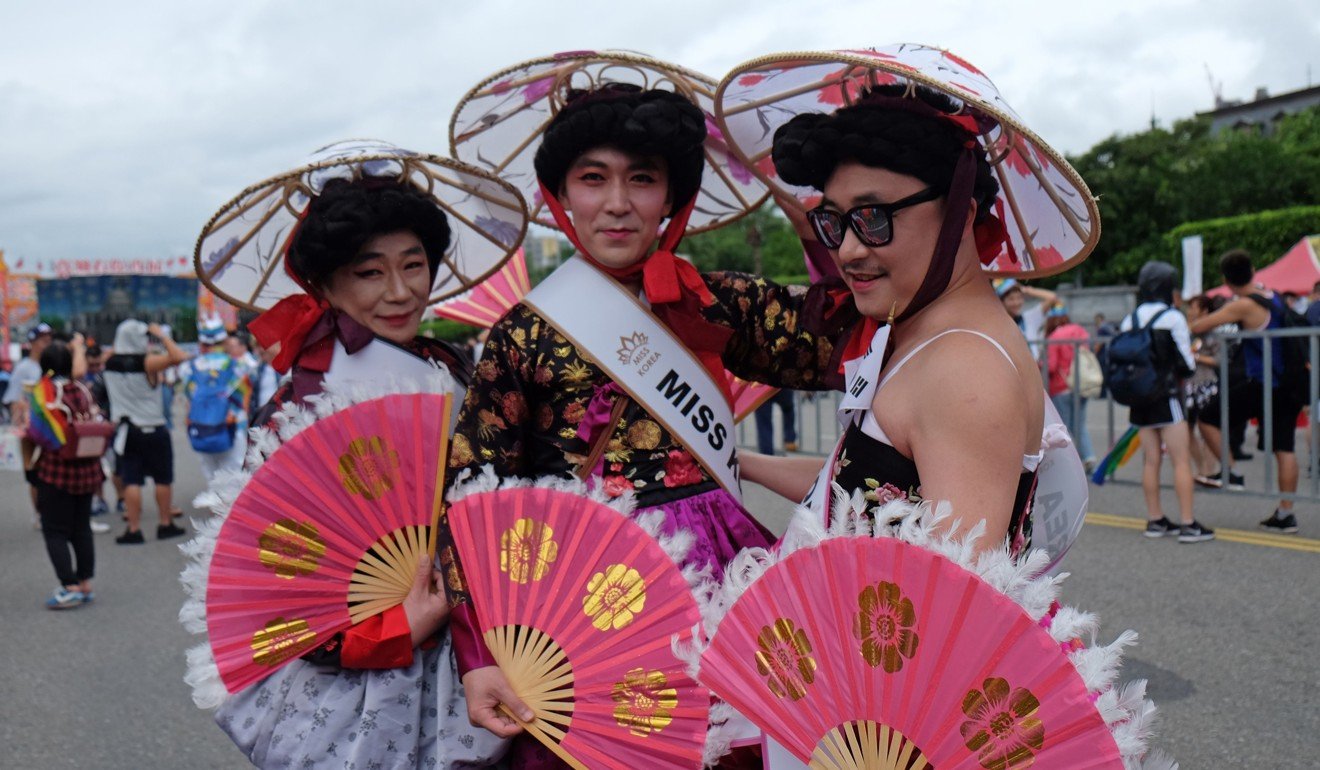
South Korean men take part in Taiwan’s annual LGBT pride parade in Taipei. Photo: AFP
Bret Hinsch, a professor of history in Taiwan, describes the ceremony based on the narration of a Chinese playwright, Li Yu (1610-1680): “Two men sacrifice a carp, a rooster, and a duck. They then exchange their exact times of birth, smear each other’s mothers with the blood of their sacrifices, and then swear eternal loyalty to one another.
The ceremony concludes with feasting on the sacrificial victims …. The younger qidi would move into the qixiong’s household. There he would be treated as a son-in-law by his husband’s parents. Throughout the marriage, many of which lasted for 20 years, the qixiong would be completely responsible for his younger husband’s upkeep.
The marriage would typically dissolve after a number of years so that the younger man could find a bride to marry to procreate and further the family lineage. The elder man was expected to pay the bride a price for the younger man.
These forms of gay “marriage” were prevalent enough in Fujian that there was even a patron deity of homosexuality, the rabbit. Many Han people from Fujian migrated to Taiwan starting in the 17th century; they now make up 80 per cent of the population.
Explained: gay rights, LGBTQ and same-sex marriage in Asia
Most literary accounts of homosexual relationships in China involve men, and there is a lively debate among scholars as to whether women enjoyed the same freedom.
Nevertheless, the most documented of female “quasi-marriages” are the “Golden Orchid Associations” in Guangdong. (Around 15 per cent of Taiwan’s population is Hakka, which historians trace specifically to Han migrants from Guangdong and surrounding areas.) The Golden Orchid Society was a movement based in Guangdong that lasted from the late Qing dynasty until the early 1900s. It provided a “sisterhood” alternative to women who did not want to get married for various reasons.
To announce her intentions, one woman would offer another gifts of peanut candy, dates and other goods. If the recipient accepted the gift, it was a signal she had accepted the proposal. They would swear an oath to one another, where sometimes one woman was designated “husband” and the other “wife”.
A couple kiss as they celebrate Taiwan’s legalisation of same-sex marriage. Photo: Reuters
Hinsch describes the ceremony in this way: “After an exchange of ritual gifts, the foundation of the Chinese marriage ceremony, a feast attended by female companions served to witness the marriage. These married lesbian couples could even adopt female children, who in turn could inherit family property from the couple’s parents.”
While these “marriages” are not equivalent to the same-sex marriages of today, they nevertheless are historical precedents for what is now happening in Taiwan.
And China is far from being the only country in Asia with a queer history – Southeast Asia’s LGBTQ history is even richer.
Why some members of Singapore’s LGBT community prefer life in the shadows
In the early modern period, marriages between two people of the same assigned sex but who identified as different genders, were fairly normal in many parts of Southeast Asia. We know this primarily from the records Europeans kept when they landed on Asian shores.
For instance, here is a letter by a Portuguese missionary, Antonio de Paiva, to his Catholic bishop in 1544 about his observations of the Bugis people in what is now
: “Your lordship will know that the priests of these kings are generally called bissus. They grow no hair on their beards, dress in a womanly fashion, and grow their hair long and braided; they imitate [women’s] speech because they adopt all of the female gestures and inclinations. They marry and are received, according to the custom of the land, with other common men, and they live indoors, uniting carnally in their secret places with the men whom they have for husbands …”
After this scandalised description, the author concludes with amazement that the Christian god, who had destroyed “three cities of Sodom for the same sin”, had not yet destroyed such “wanton people” who were “encircled by evil”.
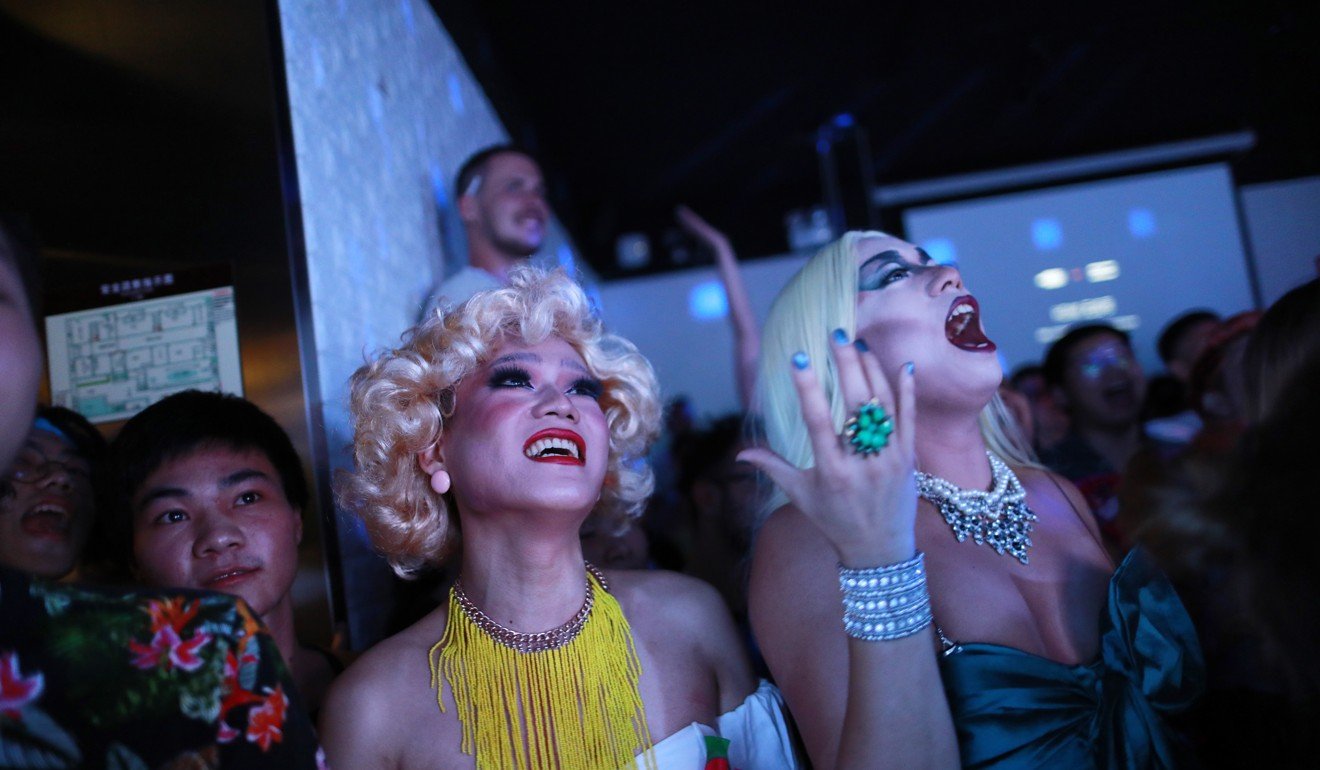
Drag queens at a gay nightclub in Beijing. Despite its reputation, Asia has a long history of accepting diversity. Photo: EPA
Dating as far back as the 13th century, bissu have traditionally served as council to kings and guarded sacred manuscripts. They are considered a fifth gender within the Bugis’ gender-system: oroané (male men), makkunrai (female women), calabai (male women), calalai (female men), and bissu, who were neither male nor female (or both).
Brunei’s LGBT residents face up to new death by stoning law against gay sex
Today, their ranks have thinned – in one area, the population has dwindled to just six people – but the tradition remains, and they still perform important blessings. Contemporary bissu are typically male-bodied individuals who adopt feminine and masculine elements in their appearance. Although in the past bissu were married men, today they are required to be celibate.
In pre-Islamic Bugis culture, bissu were accorded priestly honours and tasked with mediating between the gods and people precisely because of, not in spite of, their gender. According to professor Halilintar Lathier, an Indonesian anthropologist, Bugis culture “perceived the upper world as male and this world as female, and therefore only a meta-gender would be able to become an intermediary”.
This pattern of a “gender-expansive” priest able to marry others of the same sex recurs throughout Southeast Asia.
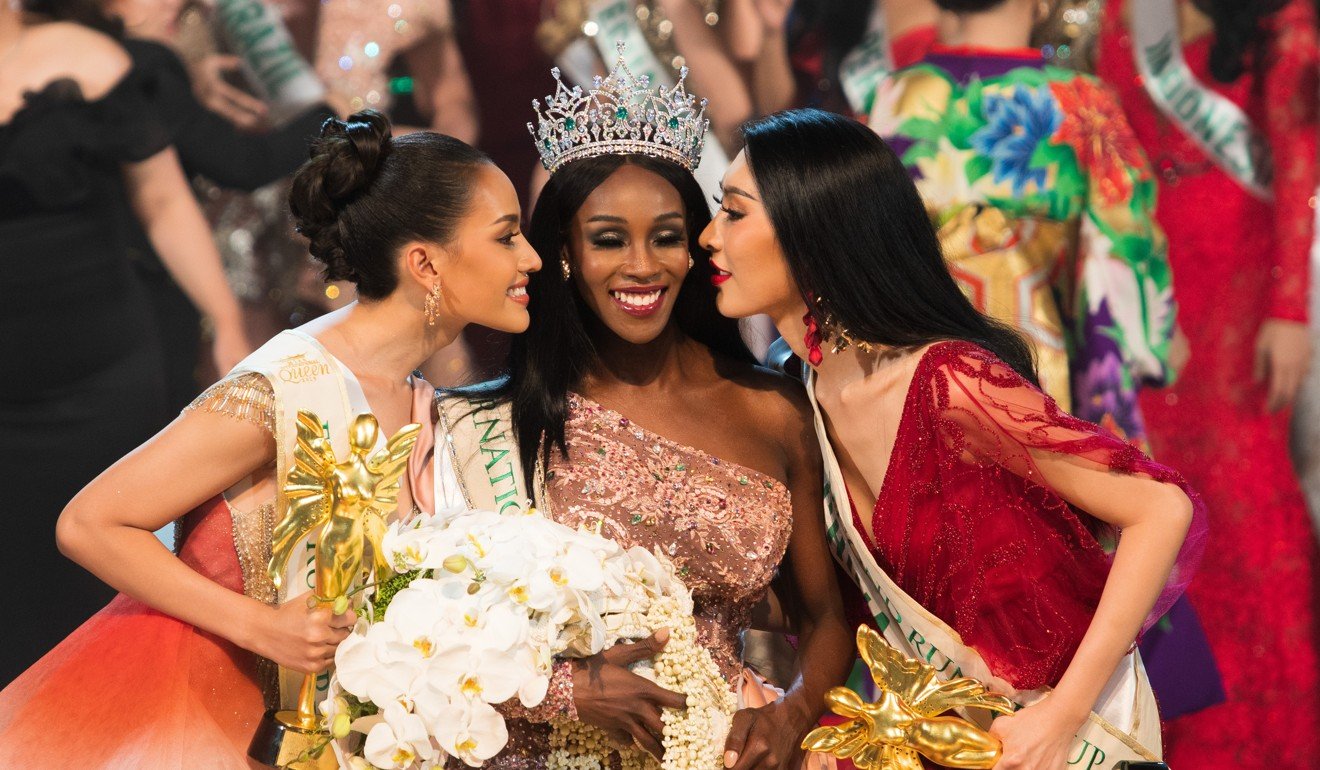
A transgender beauty contest in Pattaya, Thailand. Despite its reputation, Asia has a long history of accepting diversity. Photo: Handout
To the west of South Sulawesi is Borneo, a large island that contains all of Brunei and parts of Indonesia and
. Borneo is home to many indigenous communities, including the Iban. The Iban historically respected manang bali, who were typically male-bodied shamans who adopted feminine dress and demeanour, and who took men as their husbands. Manang bali were mediators and held roles of great ritual importance; they were typically wealthy village chiefs known for their healing arts.
West of Borneo is the Malay Peninsula, where there are records from the Malay Annals and Misa Melayu dating as far back as the 15th century about priests, called sida-sida, who served in the palaces of the Malay sultans. They were responsible for safeguarding women in the palace as well as the food and clothing of royalty, and overseeing ritual protocol. The sida-sida undertook “androgynous behaviour” such as wearing women’s clothing and doing women’s tasks. A Malay anthropologist in the 1950s, Shamsul A.B., recalls seeing male-bodied sida-sida in the royal palace in his childhood, who were believed by the population to either be celibate and asexual, or attracted to men. Michael Peletz, an anthropologist and author of Gender Pluralism in Southeast Asia, notes that based on the evidence, it is “highly likely” that sida-sida involved both male- and female-bodied people who were involved in transgender practices, and who engaged in sexual relationships with people of the same and opposite sex.
How a gay student’s suicide is helping Japan’s LGBT community speak up
Northeast of Malaysia is the
, where pre-colonial communities were religiously led by babylan: women healers and shamans who were responsible for mediating between the gods and people. Male-bodied people (asog, bayog), sometimes considered a third sex, could also hold these roles so long as they comported themselves like women. A 16th century Spanish Catholic manuscript records asog in the following manner:
“Ordinarily they dress as women, act like prudes and are so effeminate that one who does not know them would believe they are women … they marry other males and sleep with them as man and wife and have carnal knowledge.”
Dancers perform at the Shanghai PRIDE opening party. Despite its reputation, Asia has a long history of accepting diversity. Photo: AFP
The Spanish priests saw these asog as “devil-possessed”, particularly because they habitually practised “sodomy” among one another. Due to the Chinese reputation for homosexuality and various Sinophobic attitudes, some even attributed the prevalence of sodomy to the Chinese, whom they said had “infected the natives” and introduced the curse to the “Indians”, although there is no evidence of this.
COLONIAL CURVEBALL
Although these examples relate to the religious arena, anthropologists believe the respect accorded to these ritual specialists were an indicator of a wider societal acceptance of gender and sexual diversity in Southeast Asia – an acceptance that began to be eroded through the introduction of world religions (particularly Christianity), modernity, and colonialism. For example, in Malaysia, Brunei,
, Myanmar and throughout the commonwealth, the British enforced a penal code that legislated against sodomy. More than half of the countries that currently legally prohibit sodomy do so based on laws created by the British.
On gay sex, India has assumed an ancient position. Read the kama sutra
Similarly, after the Chinese were defeated by Western and Japanese imperialists, many Chinese progressives in the early 20th century sought to modernise China, which meant adopting “modern” Western ideas of dress, relationships, science and sexuality.
Concubinage was outlawed, prostitution was frowned upon, and women’s feet were unbound. It also meant importing European scientific understandings of homosexuality as an inverted or perverted pathology. These “scientific ideas” were debunked in the 1960s in the West, but lived on in China, frozen in time, and have only recently begun to thaw with the rise of LGBTQ activists in Asia.
A recent headline on the news from Taiwan read: “First in Asia: marriage equality comes to Taiwan”, as if the recent bill was an unprecedented “first” for Asia and that marriage equality – which, presumably, the headline writer associates with the West – has finally reached Asian shores.
But when we zoom out historically, it is evident that what happened in Taiwan is not so much a novel “breakthrough” for Asia. It is more a reconnection to its queer Chinese and Asian heritage, as well as a rejection of outdated Western ideas that it once adopted.
There is still much more work to be done to advance LGBT rights in Taiwan and the rest of Asia, but perhaps looking backwards in time can help us move forward.
Source: SCMP
Posted in adoptive older brother), adoptive younger brother, anthropologist, Antonio de Paiva, Asia, “Golden Orchid Associations”, “sisterhood” alternative, babylan, Beijing, bissu, Borneo, Bret Hinsch, Brunei, Bugis people, Bugis’ gender-system, calabai (male women), calalai (female men), carnal knowledge, carp, celibate, China alert, Chinese playwright, Chinese progressives, Chinese Society, colonial era, Concubinage, Drag queen, duck, embraced, encountered, Europeans, female “quasi-marriages”, Fujian Province, gay ‘marriage’, gay nightclub, gender diversity, Gender Pluralism in Southeast Asia, Guangdong, Hakka, Han, History, homosexual relationships, Iban, imperialists, Indians, Indonesia, Japanese, jurisdiction, Li Yu (1610-1680), makkunrai (female women), Malay Annals, Malay Peninsula, Malaysia, male lovers, Michael Peletz, Ming Dynasty, Misa Melayu, Myanmar, neither male nor female (or both), oroané (male men), patron deity of homosexuality, Pattaya, perverted, Portuguese missionary, professor of history, Prostitution, qidi, qixiong, queer relationships, rabbit, rooster, sexual and gender diversity, sin, Singapore, Sinophobic attitudes, Sodom, South Korean men, South Sulawesi, southern China, Spanish priests, Taiwan, Taiwan’s law, Thailand, times of birth, transgender beauty contest, Uncategorized, West, Western |
Leave a Comment »
05/03/2019
BEIJING, March 5 (Xinhua) — A sculpture exhibition commemorating the 70th anniversary of the founding of the People’s Republic of China is being held at the National Art Museum of China (NAMOC).
The exhibition, featuring unity of the Chinese nation, showcases history, heroes, lives and culture of ethnicities in China, demonstrating new achievements of China’s modern sculptural arts.
Over 220 sculptures were selected out of 600.
Art featuring national characteristics can have lasting vitality and stand firm in the world of art, said Wu Weishan, the NAMOC director.
The exhibition is running from March 2 to 24.
Source: Xinhua
Posted in China alert, heroes, History, lives and culture of ethnicities, modern sculptural arts, NAMOC director, National Art Museum of China (NAMOC), PRC founding, Uncategorized, Wu Weishan |
Leave a Comment »
10/12/2018
In addition, Chinese State Councillor and Foreign Minister Wang Yi will visit India later this month to launch a forum for high-level exchanges between China and India.
But there is still various sources of friction, including a growing maritime rivalry.
Long Chunxing, a visiting scholar and Southeast Asian affairs specialist at the S. Rajaratnam School of International Studies in Singapore, said the military exchanges would not resolve mistrust but could help prevent differences from escalating into another conflict.
“China’s reluctance to allow India into the Nuclear Suppliers Group and refusal to agree on a US ban to list Masood Azhar as a terrorist have upset India,” Long said, referring to the founder and leader of Jaish e-Mohammed, designated by the United Nations as a terrorist group and active mainly in Pakistan-administered Azad Kashmir.
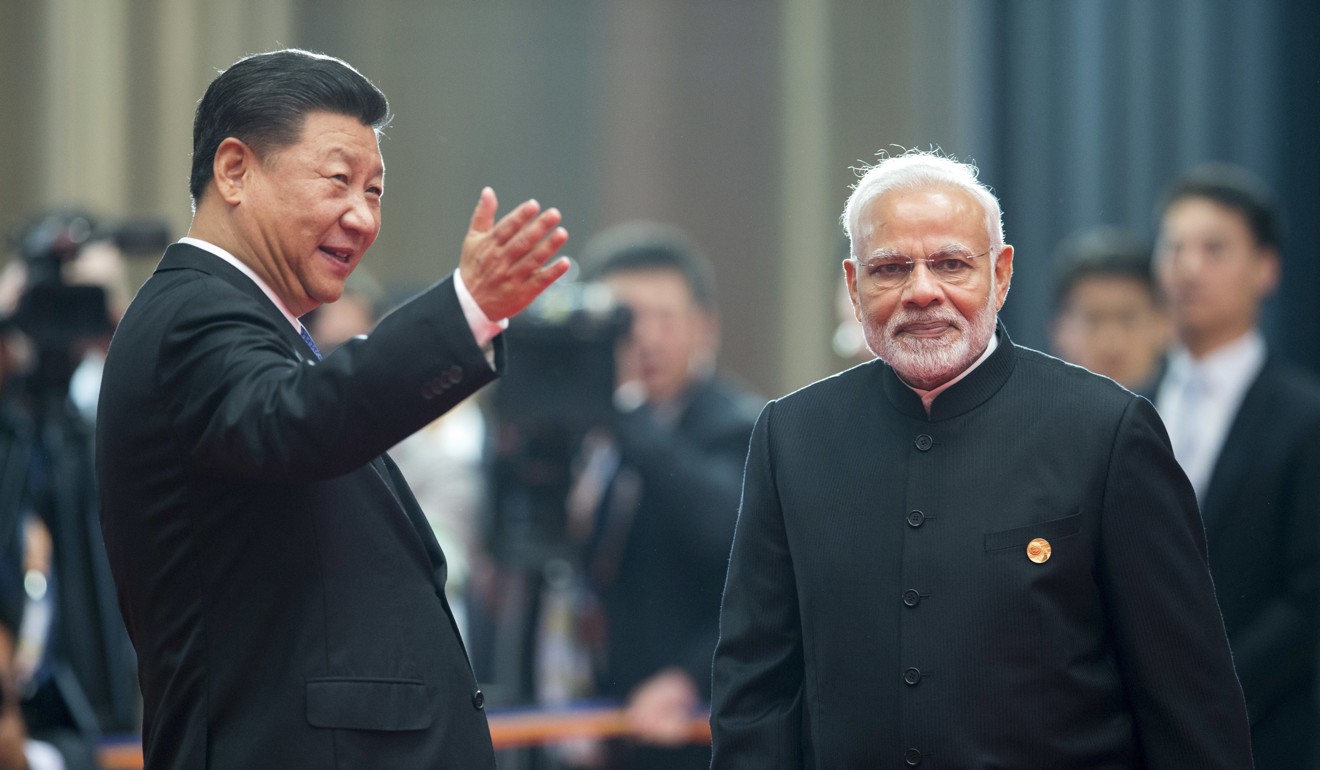
At the same time, China and India are strengthening their capacity to project power at sea.
Indian media reported last week that the Indian Navy was planning to add ships, helicopters and fixed-wing planes, and expand its base in Chennai to bolster its presence in the southern part of the Bay of Bengal.
China, meanwhile, has expanded its military presence in the Indian Ocean to help safeguard its growing interests overseas.
In a report in April, the US-based think tank the Centre for Strategic and International Studies said those interests included defending vital trade routes, particularly for energy supplies.
Collin Koh, a research fellow also at the S. Rajaratnam School of International Studies, said the Indian Navy’s build-up increased the chance of interaction between Indian and foreign forces, including those from China.
Koh said these interactions were generally professional and safe but there was a chance of confrontation.
“The risk of untoward incidents would largely tie in with broader bilateral tensions, such as over the land border issue or if there are upheavals in the neighbouring Indian Ocean littoral states, and it has been reported the People’s Liberation Army Navy [of China] has monitored Indian Navy warships traversing those waters in the South China Sea too,” he said.
But Rajeev Ranjan Chaturvedy, a research associate at the Institute of South Asian Studies at the National University of Singapore, said India’s naval build-up would not directly affect China’s growing military presence.
He also said the Indian navy’s reliability and confidence would grow further in handling regional security challenges.
Posted in China alert, Chindia Alert, distrust, flourish, India alert, military drill, Neighbour conflict, trade relationship, Uncategorized |
Leave a Comment »
07/12/2017
An Indian drone has “invaded China’s airspace and crashed” on its territory, Chinese state media said.Zhang Shuili, deputy director of the western theatre combat bureau, said the incident took place in “recent days”.

He did not give an exact location.
He was quoted in Xinhua news agency as saying that India had “violated China’s territorial sovereignty”.The Indian army said the drone had been deployed on a training mission and developed a technical problem.
Indian army spokesperson Colonel Aman Anand told reporters that they had lost control of the drone which then crossed into Chinese airspace. They alerted their Chinese counterparts soon after, he added.
The two countries saw relations worsen this summer when they became locked in a dispute over a Himalayan plateau.
What was behind the China-India border row?
China ‘racist’ video on India sparks fury
China and India now in water ‘dispute’In remarks carried widely by state media outlets, Mr Zhang said Chinese border forces had conducted “verifications” of the drone.He added that China expresses “our strong dissatisfaction and opposition regarding this matter” and that it would “steadfastly protect the country’s rights and safety”.
Relations between the two countries soured in June when India said it opposed a Chinese attempt to extend a road on the Doklam/Donglang plateau, at the border of China, India and Bhutan.
China and Bhutan have competing claims on the plateau, and India supports Bhutan’s claim.
After weeks of escalating tensions, including heated rhetoric from both sides, the stand-off ended in August when both countries pulled back their troops.
The two nations fought a bitter war over the border in 1962, and disputes remain unresolved in several areas which cause tensions to rise periodically.
Source: China claims Indian drone ‘invaded airspace in crash’ – BBC News
Posted in China alert, Chindia Alert, drone, Foreign invasion, India alert, Military, Neighbour conflict, Politics |
2 Comments »
05/09/2017
Their meeting at the Brics summit in China’s port city of Xiamen came just days after the two countries resolved the three-month border dispute.
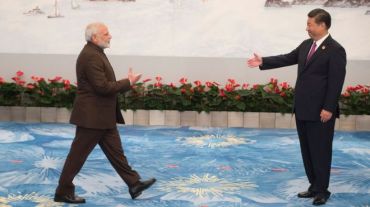
According to Chinese state media, Mr Xi told Mr Modi that “healthy, stable” China-India ties were necessary.
This was Mr Modi’s last engagement before an official visit to Myanmar.
In a meeting that lasted over an hour, Mr Xi called for putting its bilateral relationship with India on the “right track”, reported Xinhua, China’s official news agency. The Doklam border standoff and reported clashes between the Chinese and Indian army had strained diplomatic ties between the two countries.
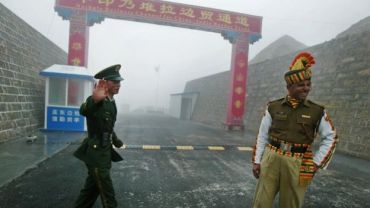
The latest row between the two countries erupted when India opposed China’s attempt to extend a border road through the Doklam plateau.
India and China clash along border
China claims victory in India border row
Why is the India-China border stand-off escalating?
Mr Modi congratulated Mr Xi on a “very successful” execution of the three-day Brics summit, in a show of conciliatory support between the two leaders.
At a media briefing, India’s Foreign Secretary S Jaishankar said that the two countries would move forward with mutual respect. He made a reference to a June meeting between the two leaders, held in Kazakhstan’s capital city of Astana, where both countries reached a consensus that India and China must not allow differences to become disputes.
“Both sides agreed that there should be better communication and co-operation so that such occurrences don’t happen again,” Dr Jaishankar told reporters.
The Brics summit brings together the world’s five large non-Western economies – the other members are Brazil, Russia and South Africa – who are seeking a greater say in world affairs.
Economic ties were the focal point at the three-day gathering which began on Sunday. Both North Korea’s nuclear test and the border standoff between China and India were also discussed.
Source: Xi and Modi mend ties after border standoff – BBC News
Posted in border clash, China alert, Chindia Alert, Economics, History, India alert, Neighbour conflict, Politics |
1 Comment »
24/07/2017
China’s defense ministry on Monday warned India not to harbor any illusions about the Chinese military’s ability to defend its territory, amid a festering border dispute.

The stand-off on a plateau next to the mountainous Indian state of Sikkim, which borders China, has ratcheted up tension between the neighbors, who share a 3,500-km (2,175-mile) frontier, large parts of which are disputed.
“Shaking a mountain is easy but shaking the People’s Liberation Army is hard,” ministry spokesman Wu Qian told a briefing, adding that its ability to defend China’s territory and sovereignty had “constantly strengthened”.
Early in June, according to the Chinese interpretation of events, Indian guards crossed into China’s Donglang region and obstructed work on a road on the plateau.
The two sides’ troops then confronted each other close to a valley controlled by China that separates India from its close ally, Bhutan, and gives China access to the so-called Chicken’s Neck, a thin strip of land connecting India and its remote northeastern regions.India has said it warned China that construction of the road near their common border would have serious security implications.
The withdrawal of Indian border guards was a precondition for resolving the situation, Wu reiterated.
“India should not leave things to luck and not harbor any unrealistic illusions,” Wu said, adding that the military had taken emergency measures in the region and would continue to increase focused deployments and drills.
“We strongly urge India to take practical steps to correct its mistake, cease provocations, and meet China halfway in jointly safeguarding the border region’s peace and tranquillity,” he said.
Speaking later, Chinese Foreign Ministry spokesman Lu Kang said Ajit Doval, India’s national security adviser, would attend a meeting in Beijing this week of security officials from the BRICS grouping that includes Brazil, Russia, India, China and South Africa.
Lu would not be drawn on whether the border issue would be discussed at the meeting, hosted by China’s top diplomat, State Councillor Yang Jiechi, meant to discuss multilateral issues.
“China hopes to maintain the peace and stability of the China-India border area, but certainly will not make any compromise on issues of territorial sovereignty,” Lu said.
Indian Prime Minister Narendra Modi is to visit China early in September for a summit of BRICS leaders.Indian officials say about 300 soldiers from either side are facing each other about 150 meters (yards) apart on the plateau.
They have told Reuters that both sides’ diplomats have quietly engaged to try to keep the stand-off from escalating, and that India’s ambassador to Beijing is leading the effort to find a way for both sides to back down without loss of face.
Chinese state media have warned India of a fate worse than its defeat suffered in a brief border war in 1962. China’s military has held live fire drills close to the disputed area, they said this month.
Source: China warns India not to harbor illusions in border stand-off
Posted in China alert, Chindia Alert, Foreign invasion, GeoPolitics, History, India alert, Neighbour conflict, Politics |
1 Comment »





 CHINDIA ALERT: You'll be living in their world, very soon