Archive for ‘Hong Kong’

10/04/2019

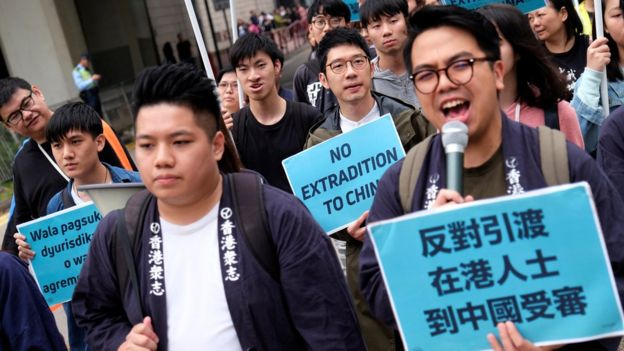
Hong Kong ‘Umbrella’ protesters found guilty of public nuisance

Media caption The “Umbrella Movement” activists said they would continue to strive for democracy

Nine pro-democracy activists in Hong Kong have been found guilty of public nuisance charges for their role in a civil disobedience movement that called for free elections in the city.

Among them are three prominent activists, seen as figureheads of Hong Kong’s pro-democracy movement.

They could be jailed for up to seven years for their part in the “Umbrella Movement” protests of 2014.

Thousands marched demanding the right for Hong Kong to choose its own leader.

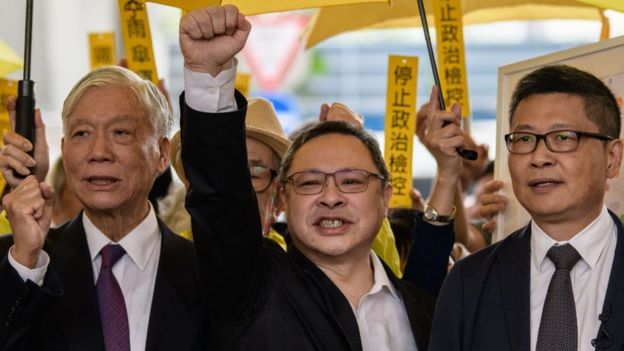
Those convicted include the so-called “Occupy trio” – sociology professor Chan Kin-man, 60, law professor Benny Tai, 54, and Baptist minister Chu Yiu-ming, 75.

They are seen as the founders of the movement that galvanised protesters in their campaign of civil disobedience.

“No matter what happens today… we will persist on and do not give up,” Mr Tai told reporters ahead of the verdict.

Mr Tai, Mr Chan and five others were found guilty of two charges of public nuisance, and Mr Chu and one other of just one charge.

A large crowd gathered outside the court on Thursday to support them. It is not yet clear when they will be sentenced.

Presentational grey line
Chu Yiu-ming, Benny Tai, Chan Kin-manImage copyrightAFP
Chu Yiu-ming, Benny Tai and Chan Kin-man (left to right) were charged under colonial-era laws that carry possible jail terms of up to seven years

Like just another day

By Martin Yip, BBC News Chinese, Hong Kong

The nine defendants walked into the court building looking refreshed and in high spirits. All but one said a few words in what might have been their last hours of freedom before their predicted jail term.

Delivering his verdict, Justice Johnny Chan said the defendants had caused a nuisance – by occupying major roads – leading to injuries among civilians. The nine looked calm and not particularly emotional. They were later released on bail. Benny Tai, Chan Kin-man and Chu Yiu-ming smiled as they passed me, as if it was just another day.

They are yet to say if they will appeal. The court was adjourned for the day as the lawyers are yet to finish their mitigation submissions. The sentences have yet to be announced.

The broader pro-democracy camp already has bad relations with Beijing. Activists and politicians did express their anger but political analysts also warn that people might simply leave the movement out of frustration.

“Some people might feel dispirited and helpless. I hope they can see that other people haven’t given up,” Benny Tai told BBC News Chinese ahead of today’s verdict.

Seventy nine days of sit-in protests have already changed Hong Kong a lot. But today’s verdict might serve more as a reminder that this city remains divided.

Presentational grey line

What has the reaction been?

At the trial Judge Johnny Chan rejected the idea that this would have a substantial impact on society.

“It cannot be reasonably argued that a charge of conspiracy to cause public nuisance would generate a chilling effect in society,” he wrote in his ruling.

But rights groups criticised the ruling, with Humans Rights Watch saying the court was “sending a terrible message”.

“[This] will likely embolden the government to prosecute more peaceful activists, further chilling free expression in Hong Kong,” said researcher Maya Wang in a statement to the BBC.
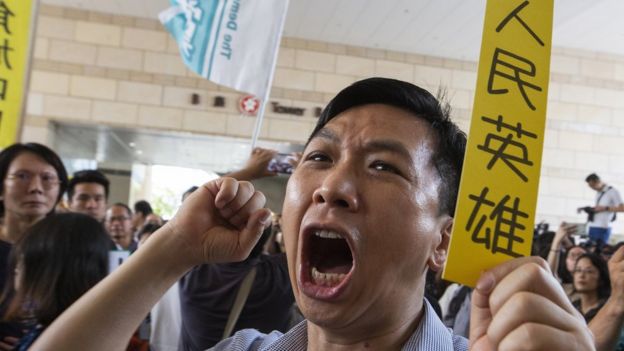
A pro-Democracy activist holds a piece of yellow paper with a slogan in Chinese saying "People"s Hero"Image copyrightEPA
One pro-democracy supporter outside the court held up a sign saying “People’s Hero”

Lord Chris Patten, the last British governor of Hong Kong, released a statement saying that it was “appallingly divisive to use anachronistic common law charges in a vengeful pursuit of political events which took place in 2014”.

This verdict comes after a string of frustrations for pro-democracy activists. In the last few years the courts have removed six lawmakers for changing their swearing in oaths to include protest phrases. Others have also been disqualified from running for office.

What were the protests about?

The protests started in reaction to a decision made by China that it would allow direct elections in 2017, but only from a list of candidates pre-approved by Beijing.

Beijing is highly sensitive about Hong Kong’s status and any calls for more autonomy from China.

The former British colony was handed back in 1997 on condition it would retain “a high degree of autonomy, except in foreign and defence affairs” for 50 years.

Many people in Hong Kong believe they should have the right to elect their own leader.

In 2014, the three activists’ calls for non-violent civil disobedience joined with student-led protests and snowballed into the massive demonstrations.

Tens of thousands of people camped in the streets and demanded the right to fully free leadership elections.
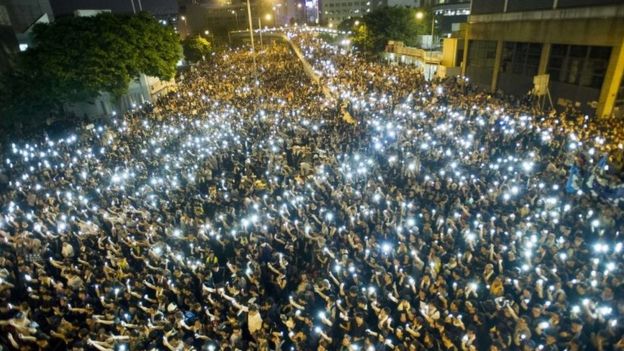
Hong Kong protests (Sept 2014)Image copyrightAFP The pro-democracy protests bought an area of central Hong Kong to a standstill for weeks in 2014

The protests became known as the “Umbrella Movement” after people used umbrellas to shield themselves from pepper spray fired by police to disperse the crowd.

Protesters accused the Chinese government of breaking its promise to allow full democracy in Hong Kong, and of encroaching more and more on the region.

But the number of protesters dwindled to just a few hundred as the weeks dragged on and they ultimately failed to achieve their goal.

Source: The BBC
08/04/2019

Fears over Hong Kong-China extradition plans

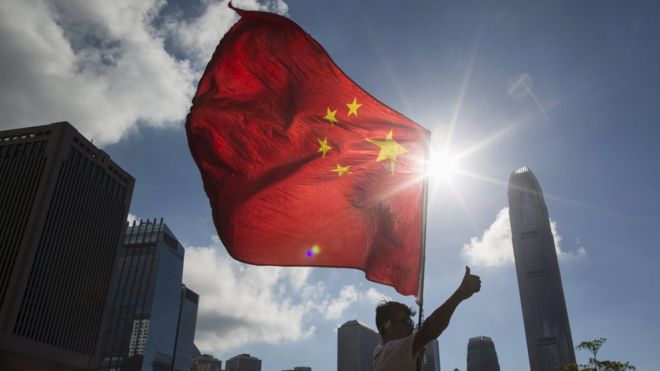
Chinese flag in front of Hong Kong skylineImage copyrightREUTERS
Image captionHong Kong is part of China but has its own judicial system

The Hong Kong government has proposed changes to extradition laws that could allow transferring suspects to mainland China for trial. The move has further fuelled fears of erosion of the city’s judicial independence amid Beijing’s increasing influence.

The Hong Kong government will also consider extradition requests from Taiwan and Macau after the new changes.

Officials say the change is needed so that a murder suspect can be extradited to Taiwan for trial, and that mainland China and Macau must be included in the change to close a “systematic loophole”.

Hong Kong’s leader Carrie Lam has pushed for the amendments to be passed before July.

What are the changes?

The changes will allow for extradition requests from authorities in mainland China, Taiwan and Macau for suspects accused of criminal wrongdoings, such as murder and rape.

The requests will then be decided on a case-by-case basis.

Demonstrators march during a protest to demand authorities scrap a proposed extradition bill with China, in Hong KongImage copyrightREUTERS
Image captionOver 100,000 protesters took to Hong Kong streets to rally against the government’s proposal.

Several commercial offences such as tax evasion have been removed from the list of extraditable offences amid concerns from the business community.

Hong Kong officials have said Hong Kong courts will have the final say whether to grant such extradition requests, and suspects accused of political and religious crimes will not be extradited.

Why is this controversial?

There has been a lot of public opposition, and critics say people would be subject to arbitrary detention, unfair trial and torture under China’s judicial system.

“These amendments would heighten the risk for human rights activists and others critical of China being extradited to the mainland for trial on fabricated charges,” Sophie Richardson of Human Rights Watch said in a statement.

Lam Wing Kee, a Hong Kong bookseller said he was abducted and detained in China in 2015 for selling books critical of Chinese leaders and charged with “operating a bookstore illegally”.

During a recent protest against the government proposal, Mr Lam said he would consider leaving the territory before the proposal was passed.

“If I don’t go, I will be extradited,” he said. “I don’t trust the government to guarantee my safety, or the safety of any Hong Kong resident.”

Though some pro-Beijing politicians eager to defend China, dispute the criticism of its judicial system.

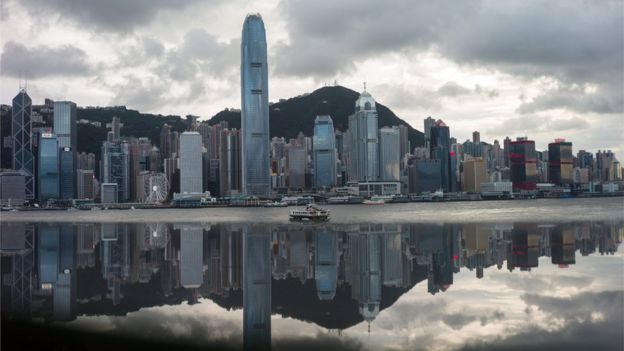
Hong Kong skylineImage copyrightEPA
Image captionHong Kong and China – one country, two systems

The changes have also attracted opposition from the Hong Kong business community over concerns they may not receive adequate protection under Chinese law.

The proposal has already sparked a legal challenge from Hong Kong tycoon Joseph Lau, who was convicted in absentia in a corruption case in Macau in 2014.

Macau’s government has not been able to have Mr Lau extradited because of a lack of extradition agreement between Hong Kong and Macau, but that will become possible if Hong Kong’s legislature decides to amend the extradition laws.

His lawyers argue in a 44-page submission to Hong Kong’s courts that the Macau trial was marred by “serious procedural irregularities that rendered the trial incompatible with internationally mandated standards of fairness”.

Every citizen can request a judicial review like Mr Lau has done, but it’s the High Court that decides whether this will be granted. Most observers say there is little chance Mr Lau’s request will be successful.

Why the change now?

The latest proposal has come after a 19-year-old Hong Kong man allegedly murdered his 20-year-old pregnant girlfriend, while holidaying in Taiwan together in February last year. The man fled Taiwan and returned to Hong Kong last year.

Taiwanese officials have sought help from Hong Kong authorities to extradite the man, but Hong Kong officials say they cannot comply because of a lack of extradition agreement with Taiwan.

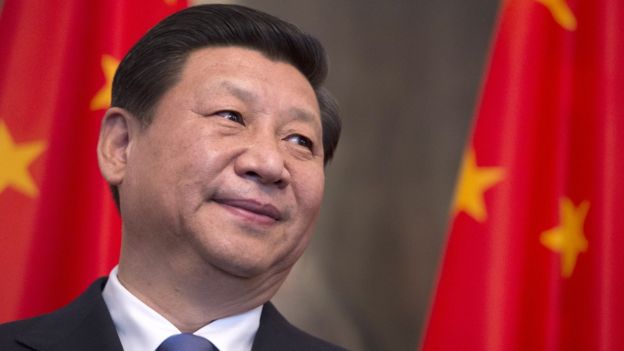
Xi JinpingImage copyrightGETTY IMAGES
Image captionUnder Xi Jinping, Beijing is seeking increasing control over Hong Kong

“Are we happy to see a suspect that has committed a serious offence staying in Hong Kong and we’re unable to deliver justice over the case?” Mrs Lam said on 1 April while responding to media questions.

She added that mainland China and Macau were included in the proposed change to address a “loophole” in current laws.

Isn’t Hong Kong part of China anyway?

A former British colony, Hong Kong is semi-autonomous under the principle of “one country, two systems” after it returned to Chinese rule in 1997.

The city has its own laws and its residents enjoy civil liberties unavailable to their mainland counterparts.

Hong Kong has entered into extradition agreements with 20 countries, including the UK and the US, but no such agreements have been reached with mainland China despite ongoing negotiations in the past two decades.

Critics have attributed such failures to poor legal protection for defendants under Chinese law.

Source: The BBC

19/03/2019

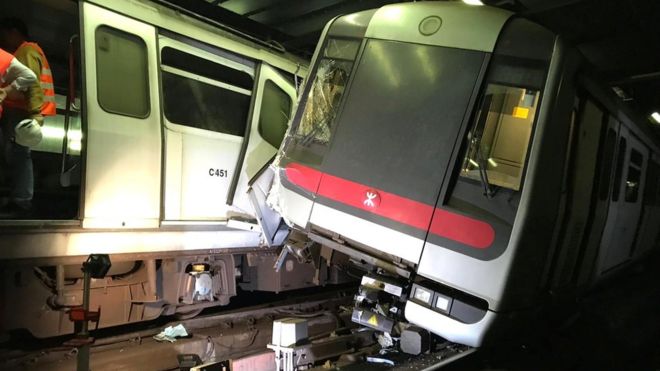
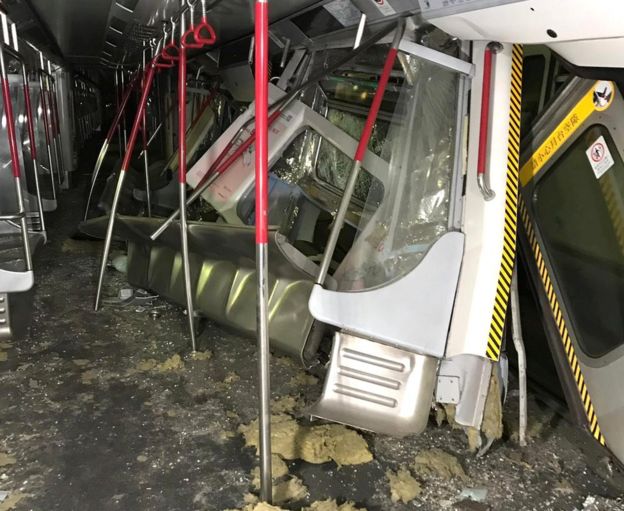
Hong Kong subway trains collide amid new signal system trials

Mass Transit Railway (MTR) trains collide near Central station during a signal system trial in Hong Kong, 18 March 2019Image copyrightREUTERS
Image captionThe collision was said to have involved a “modernised train” and occurred during a signal trial

Two subway trains have collided during a new signal system test in Hong Kong, halting services and threatening travel disruption for millions of commuters.

The incident occurred between the Central and Admiralty stations before the service was open to the public early on Monday morning.

While the trains had no passengers on board, both drivers were taken to hospital.

Rail officials warned that repairs were likely to take “quite a long time”.

Network operator Mass Transit Railway (MTR) said sections of the Tsuen Wan Line had been suspended and urged commuters to avoid the route affected and to use other forms of transport if possible.

MTR Corporation has said a failure with the new signal system was to blame for the crash, Hong Kong’s South China Morning Post newspaper reports.

An investigation has been launched.

Mass Transit Railway (MTR) trains collide near Central station during a signal system trial in Hong Kong, 18 March 2019Image copyrightREUTERS
Image captionNeither of the two trains involved was carrying passengers at the time

Further disruption was caused later on Monday morning when a woman fell on to the tracks at Kowloon Tong station, causing a temporary suspension of service in that area.

Hong Kong’s subway network is used by up to six million people on weekdays, Reuters news agency reports.

Source: The BBC

15/03/2019

Protesters arrested in Hong Kong over proposed China extradition law

HONG KONG (Reuters) – Hong Kong police on Friday arrested five women who staged a protest inside the government’s headquarters over a proposal to allow fugitives to be extradited to mainland China, stoking human rights concerns.

In February, Hong Kong’s Security Bureau submitted a paper to the city’s legislature, proposing amendments to extradition laws that would include granting the city’s leader executive power to send fugitives to jurisdictions not covered by existing arrangements, including mainland China and Taiwan.

The proposal has been strongly opposed by some lawmakers, legal and rights groups who fear such it could be exploited by Beijing’s Communist Party leaders and lead to an erosion of Hong Kong’s judicial independence.

In video footage posted online, the five, who were demanding the extradition amendments be scrapped, rushed into the lobby of government headquarters where they staged a sit-down protest.

“Oppose legalised kidnapping,” the women, including several members of the pro-democracy party Demosisto, shouted. They were later hauled out by police into vehicles.

The Hong Kong government said in a statement a total of nine protesters were “removed” for blocking the lobby of its headquarters, and that a female security guard had been injured in a skirmish. A police spokesman gave no immediate comment.

Since Hong Kong reverted from British to Chinese rule in 1997 with the guarantee that it would enjoy a high degree of autonomy and freedoms not allowed in mainland China, there has been no formal mechanism for the surrender of fugitives to mainland China.

The Hong Kong Bar Association said in a statement that this was not an oversight, but a result of “grave concerns” about China’s legal and judicial system.

It said authorities were “jumping the gun” in seeking to force through such ad hoc rendition arrangements with China without a full consultation.

Some business groups, including the American Chamber of Commerce, expressed “serious reservations” about the proposal in a submission to Hong Kong’s Secretary for Security John Lee, and said they would “undermine perceptions of Hong Kong as a safe and secure haven for international business operations”.

The proposal also seeks to remove legislative oversight on individual extradition requests that may arise by giving the city leader executive authority to make such decisions.

In the February paper, the Security Bureau said “human rights and procedural safeguards” would remain unchanged. Requests in relation “to offences of a political character” shall be refused, the bureau said.

But some critics have expressed concern over how a political offence might be defined.

Demosisto, in a statement, described the proposed extradition reform as “an attempt to prepare to entrap oppositional voices for China”.

A former Chinese deputy minister for public security, Chen Zhimin, told reporters in Beijing this week that more than 300 “fugitives” wanted by mainland authorities were hiding in Hong Kong. He did not give details.

Source: Reuters

07/03/2019

Chinese leaders stress high-quality development

(TWO SESSIONS)CHINA-BEIJING-LI KEQIANG-NPC-PANEL DISCUSSIONS (CN)

Chinese Premier Li Keqiang, also a member of the Standing Committee of the Political Bureau of the Communist Party of China (CPC) Central Committee, joins panel discussions by deputies from Guangxi Zhuang Autonomous Region at the second session of the 13th National People’s Congress in Beijing, capital of China, March 6, 2019. (Xinhua/Ding Lin)

BEIJING, March 6 (Xinhua) — Senior Chinese leaders on Wednesday urged for more efforts to advance high-quality development.

Li Keqiang, Wang Yang and Han Zheng — members of the Standing Committee of the Political Bureau of the Communist Party of China Central Committee — made the remarks at the annual “two sessions” of the country’s top legislative and political advisory bodies.

Joining panel discussions by deputies to the 13th National People’s Congress (NPC) from southwest China’s Guangxi Zhuang Autonomous Region, Premier Li Keqiang stressed following the guidance of Xi Jinping Thought on Socialism with Chinese Characteristics for a New Era as China’s development faces more and graver risks and challenges in 2019.

He called for efforts to keep the economic growth within an appropriate range and promote high-quality development, and urged solid implementation of the planned tax and fee cuts to reduce burden on the real economy.

At the joint panel discussions of political advisors from economy and agriculture sectors, Wang Yang, chairman of the Chinese People’s Political Consultative Conference National Committee, told them to focus on major and difficult tasks, such as high-quality development and supply-side structural reform, and to deepen their investigations and researches. Wang also urged the advisors to guide the people in correctly interpreting the changes in economy and boost their confidence in development.

Vice Premier Han Zheng joined the panel discussions by lawmakers from Hong Kong. He expressed the support to Hong Kong’s bid to build itself into an international innovation and technology hub, and encouraged the people of Hong Kong, especially the youth, to start up businesses and work in the Guangdong-Hong Kong-Macao Greater Bay Area.

Han also joined panel discussions by lawmakers from Macao. He said that Macao will be supported in its efforts to expand new development space, and to develop its tourism and exhibition industries.

Source: Xinhua

03/03/2019

Across China: From imitation to creation, Chinese village paints new life

SHENZHEN, March 2 (Xinhua) — Zhao Xiaoyong was once called “China’s Van Gogh,” as the farmer turned oil painter made over 100,000 replicas of Van Gogh’s work over the past 20 years.

However, he never saw a single authentic piece of the Dutch post-impressionist painter until 2014 when he finally saved enough for a trip to the Netherlands.

The trip inspired him to think over his business and create his own works. “The masterpieces that I saw at the European museums made me realize that I have to develop my own style.”

Zhao is from Dafen, a village known for oil paintings in southern China’s Shenzhen City. Home to 1,200 studios and 8,000 painters, the village produces millions of replicas of Van Gogh, Monet and Picasso that are sold at home and abroad. According to statistics, 80 percent of oil paintings exported from China come from Dafen.

While the market demand for replicas is shrinking, Zhao and other painters in the village are creating their own art styles and attracting tourists.

Neighboring Hong Kong, Shenzhen is one of China’s first special economic zones for the country’s reform and opening drive. The painting industry started in Dafen Village in 1989 when Hong Kong purchasers sought to establish an oil painting base nearby.

Zhao, who quit his job at a craft factory, started learning how to paint from scratch in 1996. He imitated Van Gogh’s works via a painting album, including “sunflowers” and “almond blossoms.”

He sold his first works in 1999 when an American buyer ordered 20 paintings. More orders later came from abroad, prompting Zhao to recruit apprentices.

“My wife and my younger brothers are all my students,” he said with a smile. “I was even called ‘China’s Van Gogh’ in a documentary.”

Zhao and his team worked from 1 p.m. to 3 a.m. painting eight pieces per person every day at most. Prices for the replicas ranged from 200 yuan (30 U.S. dollars) to 3,000 yuan per piece, depending on the size.

In 2008, when the economic recession hit most parts of the world, a drastic reduction of foreign orders forced Zhao to explore the domestic market. Profits kept shrinking after 2012 due to consumers’ diversifying tastes and rising costs.

Since then, many painters in the village have given up making replicas and turned to innovation and creation.

Chen Qiuzhi, who used to paint copies of masterpieces like Zhao, has worked hard to develop his own style, combining Chinese calligraphy with painting. To support him, his wife sold two apartments and had an art center built.

The center, located at the far end of Dafen village, covers an exhibition area of over 3,000 square meters and has become a landmark of Dafen. Some 100 calligraphy works are exhibited at the center with other craftwork.

Ten years of hard work has won him fame, with his works popular in the auction market. Now, one piece of his calligraphy is worth tens of thousands of yuan, almost 100 times the value of replicas he painted in the past. The art center also draws visitors.

“Only by creation can one’s works be remembered,” said Chen.

Today, Dafen has gathered nearly 300 art creators. In 2017, the annual output value of Dafen reached 4.15 billion yuan, among which the original works have accounted for 20 to 30 percent.

From imitation to creation, Dafen Village has been making the transition from a low-end oil painting workshop cluster to an art center, said Liu Yajing, director of the village’s oil painting office.

She said an oil painting museum, a performance theater, a training center and a hotel are being built to develop the village into a tourist resort featuring oil painting production, trade, training and exhibition.

Compared with his Van Gogh replicas, painter Zhao finds his own works hard to sell. But he believes that he will finally be recognized someday in the future.

“Imitation leads me nowhere. I will continue to concentrate on creation for the market and also for my dream as a real artist,” Zhao said.

Source: Xinhua

28/02/2019

HKSAR gov’t sees Greater Bay Area development as golden opportunity

HONG KONG, Feb. 27 (Xinhua) — The financial secretary of China’s Hong Kong Special Administrative Region (HKSAR) government delivered Hong Kong’s annual budget on Wednesday, saying the Guangdong-Hong Kong-Macao Greater Bay Area offers golden opportunities for Hong Kong to explore new directions and open up new horizons.

To support implementation of various measures, the budget, themed “supporting enterprises, safeguarding jobs, stabilizing the economy, strengthening livelihoods,” provides new resources ready for use of about 150 billion HK dollars (about 19.1 billion U.S. dollars), with additional resources earmarked for various purposes.

“This demonstrates our determination to enhance public services, support enterprises, relieve people’s burden and invest for the future,” Financial Secretary of the HKSAR government Paul Chan said.

Under mounting external pressures, Hong Kong’s economic growth moderated from 4.1 percent in the first half of 2018 to 2.1 percent in the second half of the year, with growth for the fourth quarter at a mere 1.3 percent, the lowest since the first quarter of 2016, he said.

Overall, Hong Kong’s economy grew by 3 percent in 2018, at the lower end of the range projected in last year’s Budget but still higher than the trend growth rate of 2.8 percent over the past decade, he added.

Chan forecast a surplus of 58.7 billion HK dollars for 2018-19. Fiscal reserves are expected to reach 1,161.6 billion HK dollars by March 31, 2019; economic growth of 2 to 3 percent in real terms for Hong Kong in 2019.

He said the development of innovation and technology (I&T) will bring huge economic benefits to Hong Kong, adding that sufficient resources, with a commitment of over 100 billion HK dollars has been allocated in this area so far.

More efforts will be made to support scientific research and I&T sectors by developing I&T infrastructure, promoting research and development (R&D), pooling talent, supporting enterprises and promoting reindustrialization.

Talking about national development strategy, Chan emphasized that the Greater Bay Area development and the Belt and Road Initiative are providing rare opportunities for Hong Kong.

Chan said that the outline development plan for the Greater Bay Area, promulgated last week, is a milestone setting out the development directions for the Greater Bay Area up to 2035.

Hong Kong, positioned as international financial, transportation and trade centers as well as an international aviation hub in the Greater Bay Area, will strengthen its roles as a global offshore Renminbi business hub and an international asset and risk management center; and will devote great efforts to develop I&T industries as well as international legal and dispute resolution services, the financial chief said.

Meanwhile, the Belt and Road Initiative will create greater room for Hong Kong’s economic and social development. There has been positive outcomes in areas such as supporting industries in exploring markets, establishing business matching platforms for enterprises and encouraging Hong Kong’s professional services sector to participate in Belt and Road projects.

As for land supply, Chan said, the HKSAR government will ensure that adequate resources are provided to support fully the short, medium and long-term measures to increase land and housing supply.

The estimated public housing production for the next five years is about 100,400 units and the supply of first-hand private residential units is expected to remain at a relatively high level in the coming three to four years at about 93,000 units, according to Chan. (1 U.S. dollar = 7.84 HK dollars)

Source: Xinhua

24/02/2019

China’s military build-up just starting – a lot more to come, expert warns

  • Military watchers can expect ‘something new’ at this year’s National Day parade in October, Professor Jin Canrong tells forum in Hong Kong
  • As tensions rise over Taiwan, Beijing is building a naval and missile force as powerful as any in the world, he says

Beijing’s military build-up just starting – a lot more to come, expert warns

24 Feb 2019

Submarine arms race seen heating up in Indo-Pacific amid China ‘threat’

16 Feb 2019

The US could send more nuclear attack submarines, such as the Virginia-class, to the region. Photo: AFP
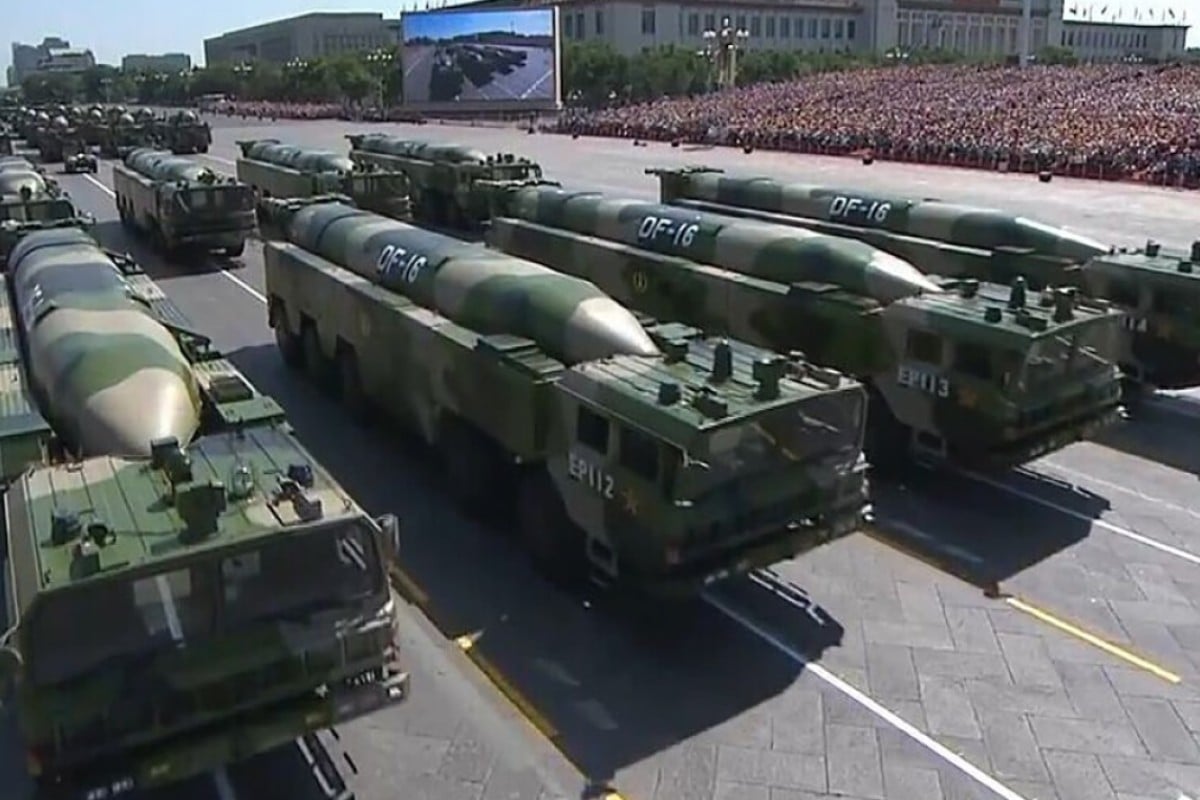
Military vehicles carrying DF-16 ballistic missiles take part in China’s National Day parade. Taiwan says Beijing has such missiles trained on the self-ruled island. Photo: Handout

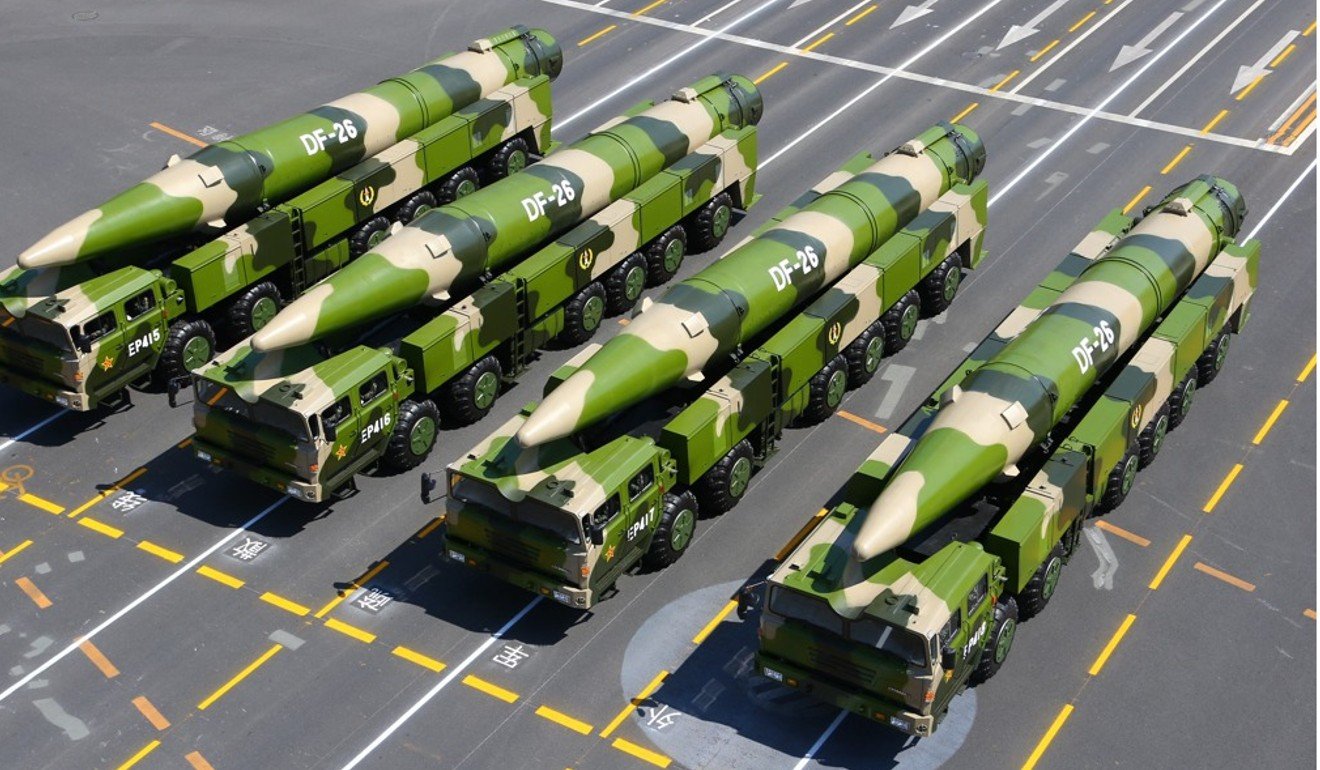
Beijing will show the world “something new” when it rolls out its arsenal of short- to medium-range ballistic missiles at its National Day military parade in October, according to a Chinese expert on international relations.

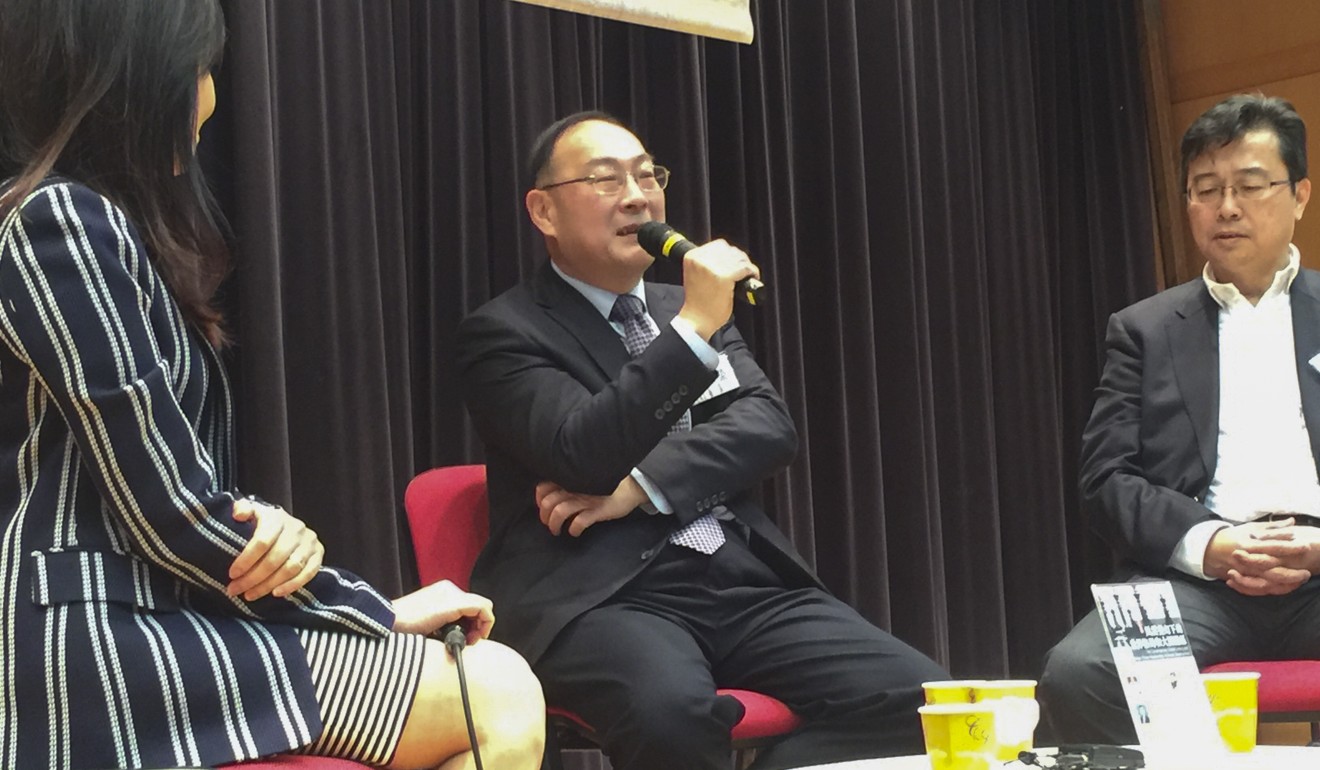
Speaking at a seminar at the University of Hong Kong on Saturday, Professor Jin Canrong, associate dean of the school of international studies at Renmin University in Beijing, said China had made great strides in expanding its military capability, but there was a lot more to come.

US commander pushes for more funding to counter China’s influence in Indo-Pacific

While he did not elaborate on what the “something new” might be, he said the country was gearing up for a possible conflict over Taiwan, the self-ruled island that Beijing regards as a wayward province awaiting reunification.

Over the next five or 10 years, Taiwan could provide the “biggest uncertainty” for Beijing, he said, especially if the United States decided to “ignite” the situation.

Known for being outspoken on sensitive issues, Jin said that while Beijing wanted a peaceful reunification, it was wary of “pro-independence factions [on the island] and right-wing American [politicians] creating trouble”.

In a speech on January 2 to mark the 40th anniversary of Beijing’s call to end military confrontation across the Taiwan Strait, Chinese President Xi Jinping said that “the political division across the strait … cannot be passed on from generation to generation”, apparently signalling his determination to bring it to an end.

Xi said China would not abandon the use of force in reunifying Taiwan, but stressed the military would target only external elements and those seeking independence for the island.

In 2017, Taipei said that it had detected the deployment of DF-16 ballistic missiles on the mainland that were aimed at Taiwan.

Jin said China was rapidly expanding its missile capabilities. The People’s Liberation Army had already stockpiled about 3,000 short- and medium-range missiles, he said, even though it had been using just 15 per cent of its production capacity.

“Just imagine if we were running at 100 per cent,” he said.

Beijing will show the world “something new” when it rolls out its ballistic missiles at its National Day military parade in October, an expert says. Photo: Xinhua

Under its plan for military modernisation China had achieved “great advancements in space, electronics and cyberwarfare”, the academic said, but its achievements to date were only the beginning.

As well as the expansion of its missile force, Beijing was investing heavily in its navy, he said.

Is China about to abandon its ‘no first use’ nuclear weapons policy?

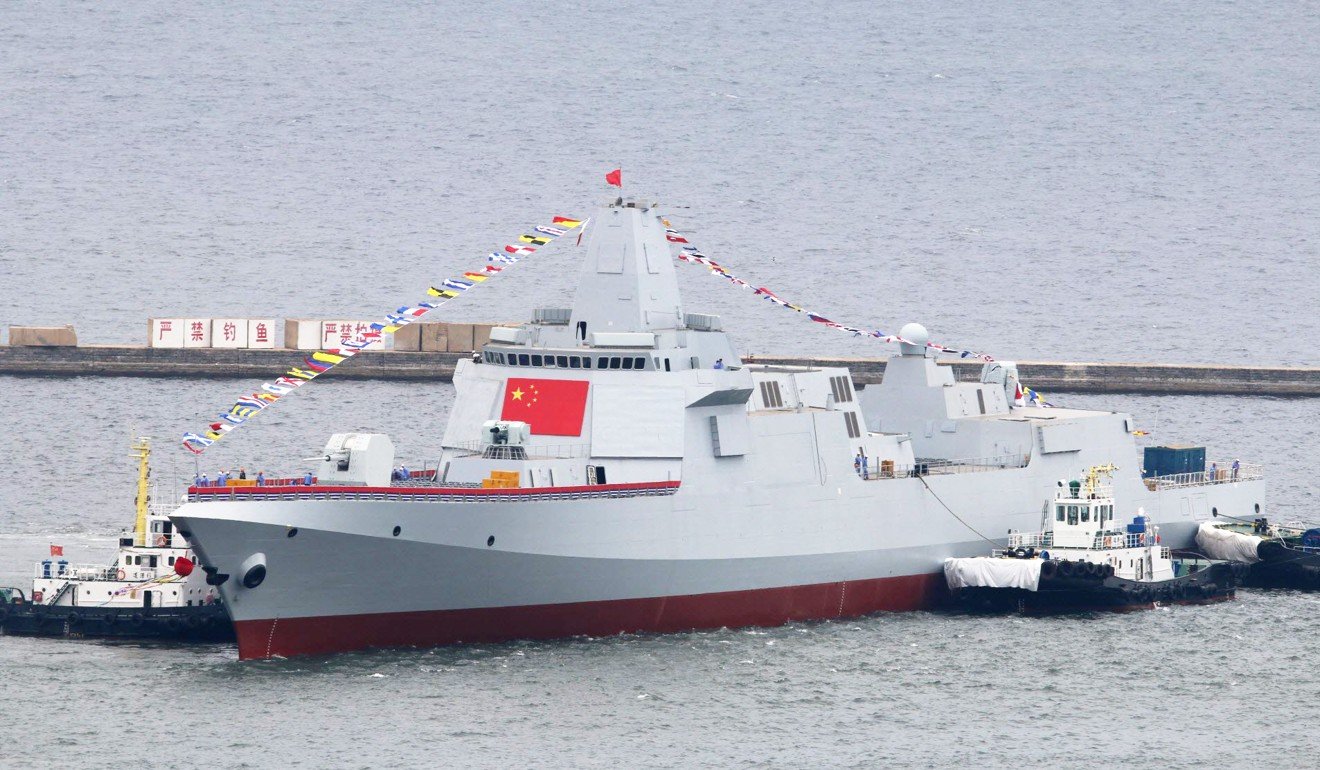
With the deployment of the new Type 055 guided-missile destroyer – which some Chinese military experts have said is as good as anything in the US Navy – the balance of power was shifting, he said.

“For the first time in 500 years, the East has combat equipment that is at least as good as the West’s.”

With the deployment of the new Type 055 guided-missile destroyer, the balance of power between China and the US is shifting, according to Jin Canrong. Photo: Handout

And as the navy continued to modernise and expand, the US might be forced to rethink its position in the region, he said.

“When we have dozens of destroyers and four or five [aircraft] carriers the US will not be able to meddle in Taiwan.”

China’s first aircraft carrier may become test bed for electromagnetic warplane launcher

Jin said that China would also soon have all the scientific, academic and research personnel it needed to achieve its military ambitions.

“China had nearly 30 million university students in 2018, which is twice as many as the US. More than half of them are studying science or engineering,” he said.

“Every year we produce about 4 million science and engineering graduates, while America produces just 440,000.”

Professor Jin Canrong speaks at a forum in Hong Kong. Photo: Handout

Beijing also had the money to support its plans, Jin said. Based on his own calculations, he said China allocated about 1.4 per cent of its gross domestic product to military spending, which was lower than “Germany’s 1.5 per cent”, and less than half the “3 per cent in Britain and France”.

“The tax paid by Chinese smokers is more than enough to cover [the country’s] military expenses,” Jin said.

According to figures from Nato, Britain spent 2.1 of its GDP on defence in 2017, France 1.8 per cent and Germany 1.2 per cent. Both the World Bank and the United Nations put China’s military spending in 2017 at 1.9 per cent of its GDP.

Source: SCMP

23/02/2019

China Airlines pilot punished after he’s filmed sleeping in cockpit

  • Middle-aged man seen taking a nap mid-flight said to be senior pilot with the Taiwanese carrier
  • His co-pilot who took the video has also been reprimanded

China Airlines pilot punished after he’s filmed sleeping in cockpit

23 Feb 2019

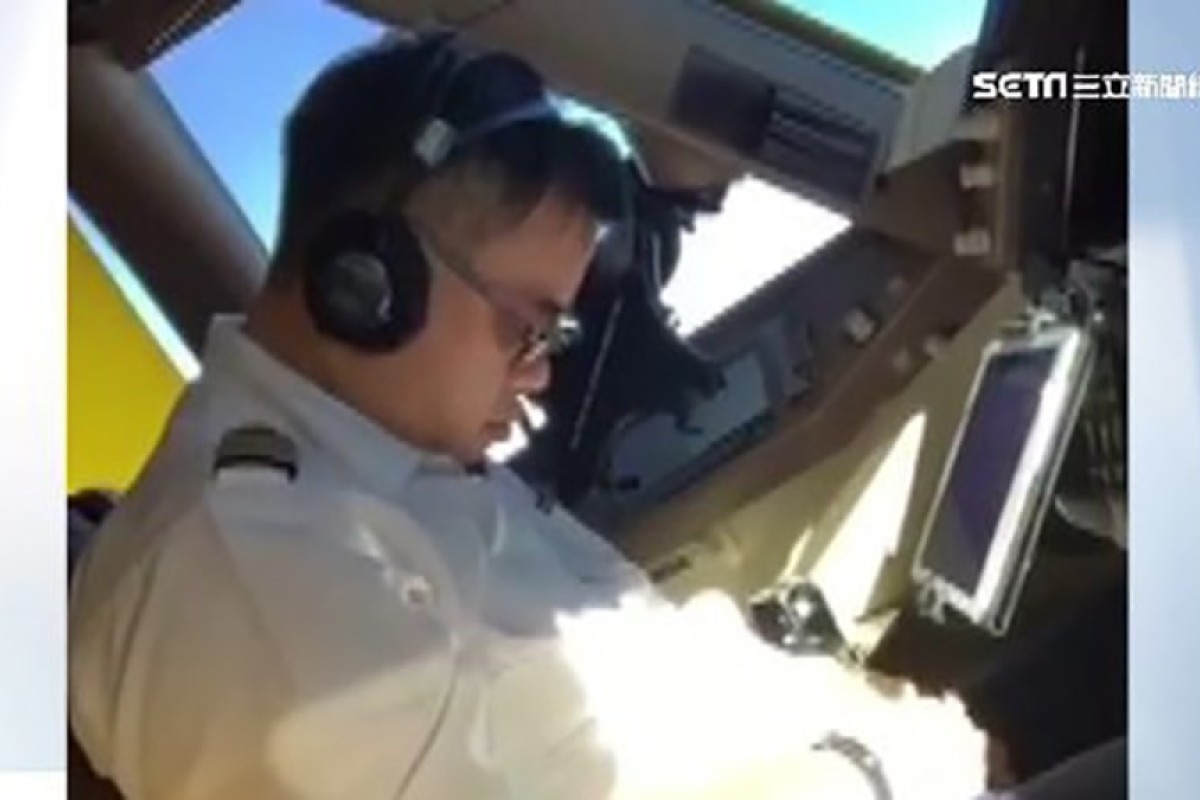
The video shows the pilot in the cockpit with his head down and eyes closed. Photo: setn.com

China Airlines, Taiwan’s biggest carrier, says it has punished a pilot after a video of him taking a nap in the cockpit mid-flight was posted online.

His co-pilot, who filmed the incident, has also been reprimanded, local television station SETN reported.

In the video, a middle-aged man in a pilot uniform and headphones appears to be asleep with his head down and eyes closed while in the cockpit of a Boeing 747.

The footage drew attention after it was shown in a report on Taiwanese TV network EBC on Wednesday. The man was identified as Weng Jiaqi, a senior pilot with almost 20 years of experience who was promoted to chief pilot last year.

Chinese airline Donghai suspends and fines pilot for allowing wife in cockpit

It was unclear when or on which flight the video was filmed, but the airline confirmed that Weng had reported his behaviour and been punished while his co-pilot had been reprimanded for “improper behaviour”, SETN reported.

Weng, who also supervises training, is a short-haul pilot to cities including Hong Kong, Shanghai, Beijing, Guangzhou, Tokyo, Okinawa and Seoul, according to the EBC report.

The China Airlines pilots went on strike on February 8, during the Lunar New Year holiday season. Photo: EPA-EFE
The incident comes after the airline last week reached a deal with the pilots’ union to

end a seven-day strike

over working conditions and benefits that forced the cancellation of more than 200 flights.

But China Airlines told EBC that the video was filmed before the pilots walked off the job.

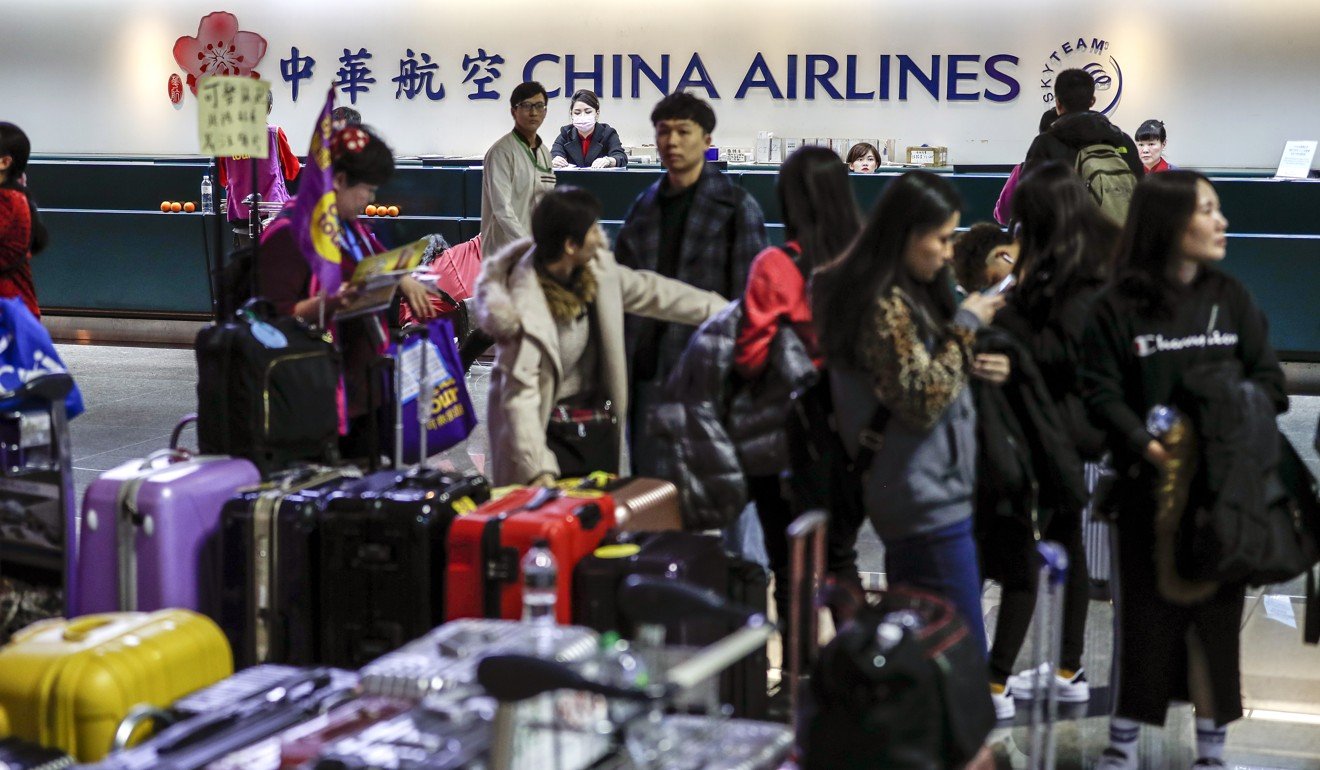
The Taoyuan Union of Pilots began the industrial action on February 8, stranding close to 50,000 passengers and inflicting over NT$500 million (US$16.2 million) in losses on the carrier.

Under a deal signed on February 14, the union agreed not to strike again in the next 3½ years. In return, China Airlines agreed to the union’s main demand to increase the number of pilots on various flights to combat fatigue and improve safety.

Chinese pilots, cabin crew told no more smoking in cockpits on domestic flights

The carrier will roster three pilots on flights of more than eight hours – up from the present two – and will have four pilots on flights over 12 hours, up from three.

China Airlines president Hsieh Shih-chien said the staffing increases were expected to sharply add to the cost of the company’s operations, but the carrier agreed to the terms in the interest of safety.

Source: SCMP

18/02/2019

China applauds ‘positive’ Donald Trump tweet, hopes for US trade war deal ahead of Washington talks

    • Opinion piece in major state media outlets is seen to be part of Beijing’s efforts to reassure its citizens that the tariff war with the United States will soon be over
    • A Chinese delegation led by Vice-Premier Liu He is expected to leave on Tuesday for the American capital after last week’s trade talks in Beijing produced ‘progress’

    China applauds ‘positive’ Donald Trump tweet ahead of Washington talks

    18 Feb 2019

    China and US make ‘progress’ but talks to head to Washington next week

    16 Feb 2019

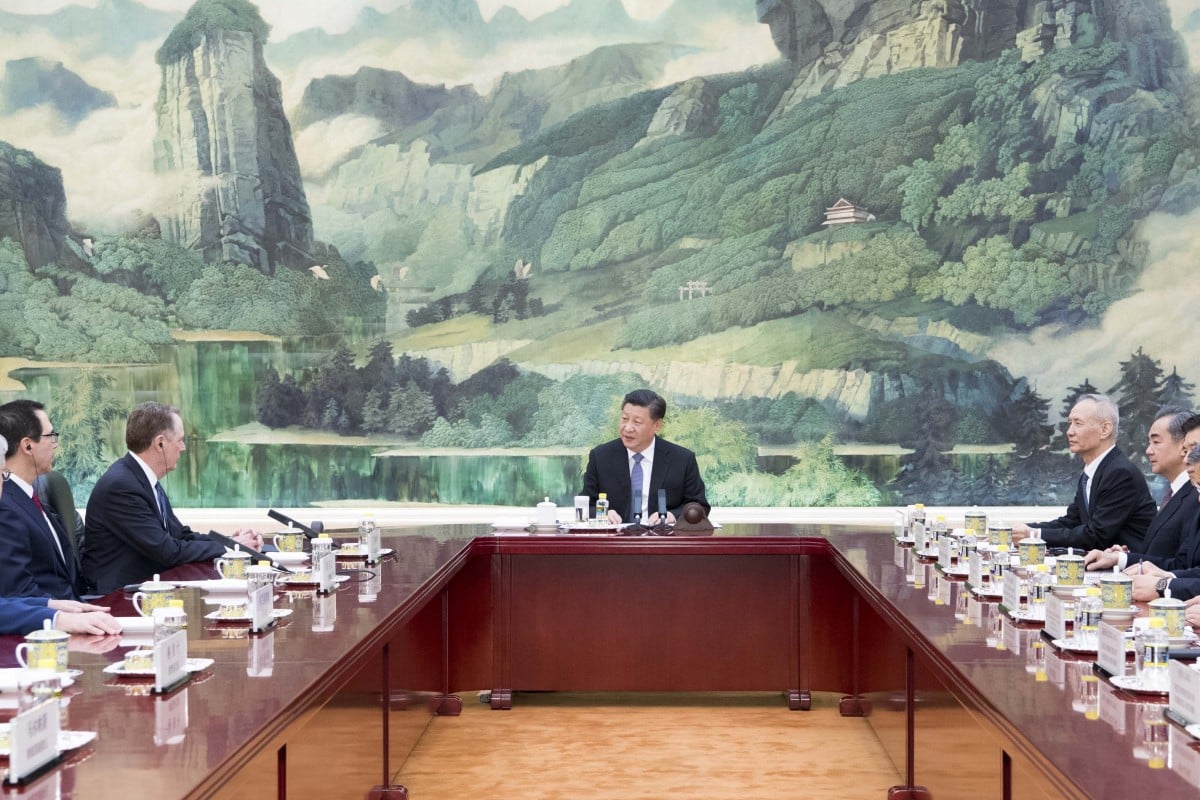
    Chinese President Xi Jinping urged for a “mutually beneficial” trade deal in this week’s talks when he met US trade representative Robert Lighthizer and US Treasury Secretary Steven Mnuchin in Beijing on Friday, according to Xinhua. Photo: Xinhua
    Chinese President Xi Jinping urged for a “mutually beneficial” trade deal in this week’s talks when he met US trade representative Robert Lighthizer and US Treasury Secretary Steven Mnuchin in Beijing on Friday, according to Xinhua. Photo: Xinhua

    A tweet by US President Donald Trump on the ongoing trade war is a “positive” signal, brightening prospects of a deal from this week’s talks in Washington, according to an opinion piece published by China’s major state media outlets on Monday.

    Monday’s opinion piece was published the day before a Chinese delegation led by Vice-Premier Liu He is expected to leave for talks in Washington.

    In the tweet on Sunday, Trump said: “Important meetings and calls on China trade deal, and more, today with my staff. Big progress being made on soooo many different fronts! Our country has such fantastic potential for future growth and greatness on an even higher level!”

    The opinion piece, which was published by the official Xinhua news agency, the People’s Daily and the Global Times under the pseudonym Niu Tanqin, is seen to be part of Beijing’s efforts to reassure its citizens that the trade war with the United States will soon be over.

    It did contrast previous columns on Trump by the same author, who in March last year argued that China dislikes the American president for his “insatiable demands, greediness and lack of trust worthiness”.

    Last week’s trade talks in Beijing produced “progress” ahead of the March 1 deadline, which could see tariffs on US$200 billion worth of Chinese products increased from 10 per cent to 25 per cent if the world’s two largest economies fail to reach a deal.

    The outcome of the talks in Washington, which are likely to be the last before March 1, will largely decide whether China and the United States can reach a pact, likely in the form of a memorandum of understanding, to suspend the tariff battle that has been roiling global markets and clouding growth prospects since last year.

    According to the opinion piece, Trump’s use of “soooo” instead of “so” indicated that the US president was excited when he heard reports from his trade envoys following the talks in Beijing, which Chinese President Xi Jinping attend on Friday.

    Donald J. Trump

    @realDonaldTrump

    Important meetings and calls on China Trade Deal, and more, today with my staff. Big progress being made on soooo many different fronts! Our Country has such fantastic potential for future growth and greatness on an even higher level!

    “The US side is attaching great importance [to the trade talks]. Although Trump is on vacation, he listened to relevant reports and he definitely will make specific instructions,” it added.

    Trump has been upbeat about the prospects of reaching a trade deal with China, and said on Friday at the White House: “It’s going extremely well.”

    Chinese President Xi urged for a “mutually beneficial” trade deal in this week’s talks when he met US trade representative Robert Lighthizer and US Treasury Secretary Steven Mnuchin in Beijing on Friday, according to Xinhua.

    Stocks in China and Hong Kong surged on Monday, partly bolstered by the increased likelihood of a trade deal between China and the United States.

    Monday’s opinion piece fits into the latest official line that an agreement is very likely to end the tariff war after the Global Times said over the weekend that the bilateral trade talks are “sprinting” towards a positive end.

    Donald Trump’s demands ‘good for China’, says economist Jin Keyu

    Meanwhile, reports in China suggest differences between Beijing and Washington still remain over forced technology transfer, intellectual property rights, cyber theft as well as a verification system to ensure China keeps its promises.

    Xi told the US trade envoys that China is willing to “cooperate” but “cooperation has principals”, a statement showing that Beijing will not entertain US demands if it finds such demands violate China’s principals.

    A White House statement on Friday said that “much work remains”, showing gaps still exist.

    Source: SCMP

Law of Unintended Consequences

continuously updated blog about China & India

ChiaHou's Book Reviews

continuously updated blog about China & India

What's wrong with the world; and its economy

continuously updated blog about China & India