Chindia Alert: You’ll be Living in their World Very Soon
aims to alert you to the threats and opportunities that China and India present. China and India require serious attention; case of ‘hidden dragon and crouching tiger’.
Without this attention, governments, businesses and, indeed, individuals may find themselves at a great disadvantage sooner rather than later.
The POSTs (front webpages) are mainly 'cuttings' from reliable sources, updated continuously.
The PAGEs (see Tabs, above) attempt to make the information more meaningful by putting some structure to the information we have researched and assembled since 2006.
WASHINGTON (Reuters) – President Donald Trump said on Wednesday he believes China’s handling of the coronavirus is proof that Beijing “will do anything they can” to make him lose his re-election bid in November.
In an interview with Reuters in the Oval Office, Trump talked tough on China and said he was looking at different options in terms of consequences for Beijing over the virus. “I can do a lot,” he said.
Trump has been heaping blame on China for a global pandemic that has killed at least 60,000 people in the United States according to a Reuters tally, and thrown the U.S. economy into a deep recession, putting in jeopardy his hopes for another four-year term.
The Republican president, often accused of not acting early enough to prepare the United States for the spread of the virus, said he believed China should have been more active in letting the world know about the coronavirus much sooner.
Asked whether he was considering the use of tariffs or even debt write-offs for China, Trump would not offer specifics. “There are many things I can do,” he said. “We’re looking for what happened.”
RELATED COVERAGE
China says it has no interest in meddling in U.S. election
“China will do anything they can to have me lose this race,” said Trump. He said he believes Beijing wants his Democratic opponent, Joe Biden, to win the race to ease the pressure Trump has placed on China over trade and other issues.
“They’re constantly using public relations to try to make it like they’re innocent parties,” he said of Chinese officials.
He said the trade deal that he concluded with Chinese President Xi Jinping aimed at reducing chronic U.S. trade deficits with China had been “upset very badly” by the economic fallout from the virus.
A senior Trump administration official, speaking on condition of anonymity, said on Wednesday that an informal “truce” in the war of words that Trump and Xi essentially agreed to in a phone call in late March now appeared to be over.
The two leaders had promised that their governments would do everything possible to cooperate to contain the coronavirus. In recent days, Washington and Beijing have traded increasingly bitter recriminations over the origin of the virus and the response to it.
However, Trump and his top aides, while stepping up their anti-China rhetoric, have stopped short of directly criticizing Xi, who the U.S. president has repeatedly called his “friend.”
Trump also said South Korea has agreed to pay the United States more money for a defense cooperation agreement but would not be drawn out on how much.
“We can make a deal. They want to make a deal,” Trump said. “They’ve agreed to pay a lot of money. They’re paying a lot more money than they did when I got here” in January 2017.
The United States stations roughly 28,500 troops in South Korea, a legacy of the 1950-53 Korean War that ended in an armistice, rather than a peace treaty.
Trump is leading a triage effort to try to keep the U.S. economy afloat through stimulus payments to individuals and companies while nudging state governors to carefully reopen their states as new infections decline.
Trump sounded wistful about the strong economy that he had enjoyed compared with now, when millions of people have lost their jobs and GDP is faltering.
“We were rocking before this happened. We had the greatest economy in history,” he said.
He said he is happy with the way many governors are operating under the strain of the virus but said some need to improve. He would not name names.
Trump’s handling of the virus has come under scrutiny. Forty-three percent of Americans approved of Trump’s handling of the coronavirus, according to the Reuters/Ipsos poll from April 27-28.
But there was some good coronavirus news, as Gilead Sciences Inc said its experimental antiviral drug remdesivir was showing progress in treating virus victims.
Trump has also seeking an accelerated timetable on development of a vaccine.
“I think things are moving along very nicely,” he said.
At the end of the half-hour interview, Trump offered lighthearted remarks about a newly released Navy video purportedly showing an unidentified flying object.
“I just wonder if it’s real,” he said. “That’s a hell of a video.”
Six animals inoculated with vaccine candidate then exposed to virus did not catch Covid-19 after 28 days
Up to 60 million doses could be produced by Serum Institute of India this year
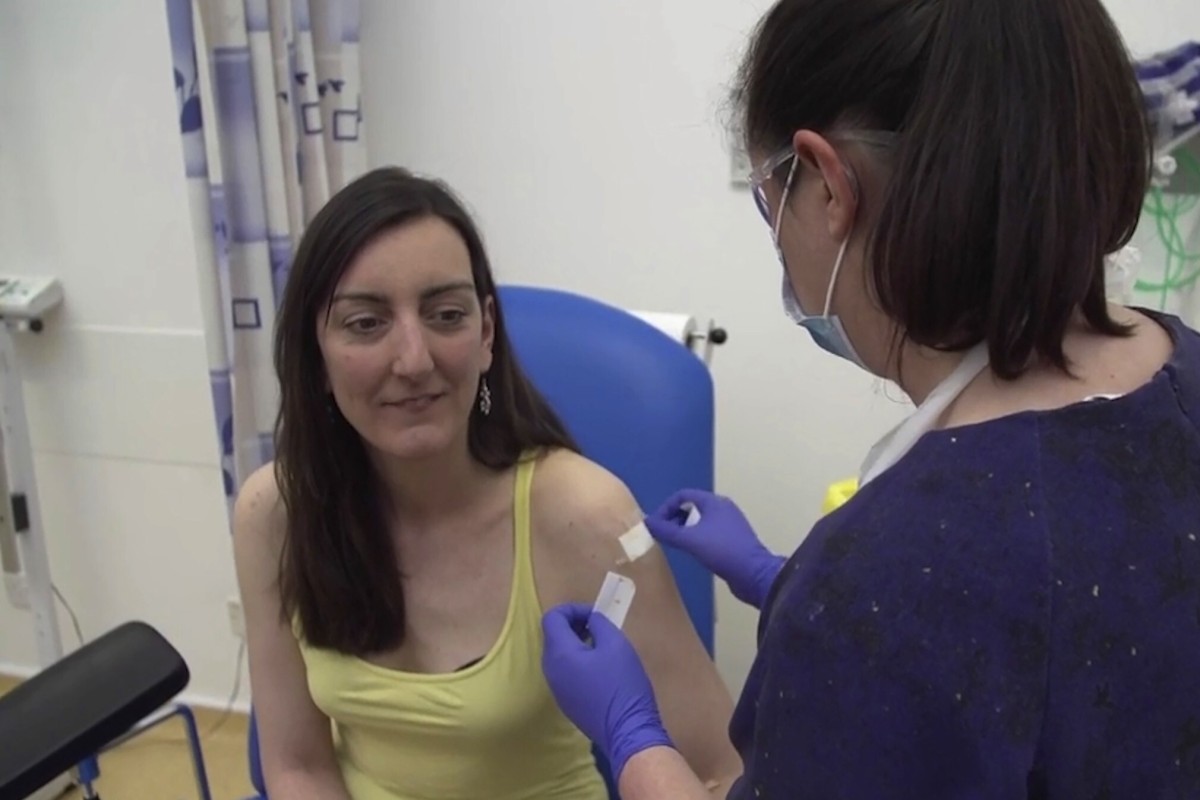
Microbiologist Elisa Granato gets an injection on Thursday as part of the first human trials in Britain for a potential coronavirus vaccine. Photo: University of Oxford via AP
A leading candidate for a Covid-19 vaccine has shown promising results in animal trials, and is expected to see mass production in India within months.
The Serum Institute of India, the world’s largest maker of vaccines by volume, said on Tuesday that it plans this year to produce up to 60 million doses of a potential vaccine developed by the University of Oxford, which is under clinical trial in Britain.
While the vaccine candidate, called “ChAdOx1 nCoV-19”, is yet to be proven to work against Covid-19, Serum decided to start manufacturing it as it had shown success in animal trials and had progressed to tests on humans, Serum Chief Executive Adar Poonawalla said.
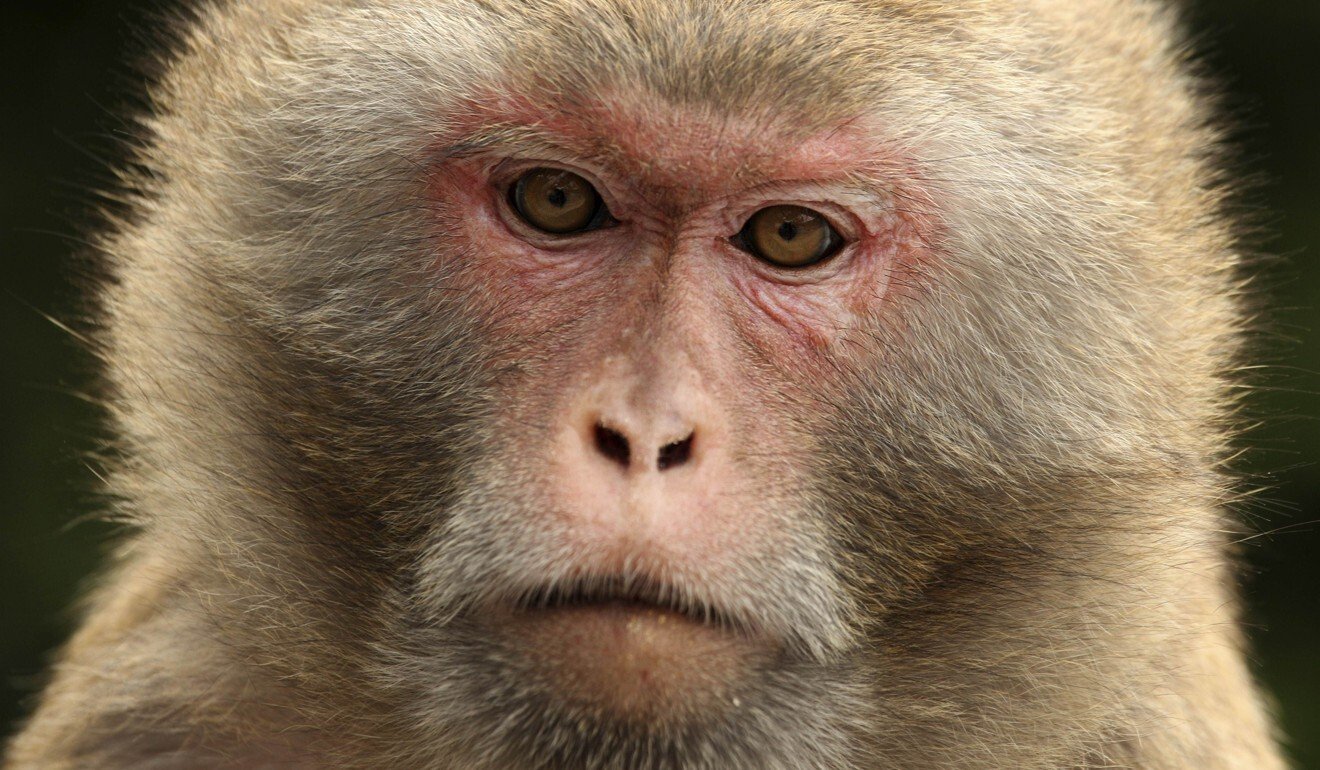
Six rhesus macaque monkeys were inoculated with the vaccine candidate at the National Institutes of Health’s Rocky Mountain Laboratory in Montana last month, according to The New York Times.
Covid-19 vaccine trial starts in Oxford, but remdesivir treatment reportedly flops in China tests
The subjects were exposed afterwards to large quantities of the novel coronavirus, but all six remained healthy after more than 28 days, the newspaper reported, citing researcher Vincent Munster, who conducted the test.
More than 3 million people have been reported to be infected globally and over 210,000 have died from Covid-19, the respiratory disease caused by the coronavirus.
“They are a bunch of very qualified, great scientists [at Oxford] … That’s why we said we will go with this and that’s why we are confident,” Poonawalla told Reuters in a phone interview.
“Being a private limited company, not accountable to public investors or bankers, I can take a little risk and sideline some of the other commercial products and projects that I had planned in my existing facility,” Poonawalla said.
Bill Gates hopes his virus vaccine ‘manufacturing within a year’
27 Apr 2020
As many as 100 potential Covid-19 candidate vaccines are now under development by biotech and research teams around the world, and at least five of these are in preliminary testing in people in what are known as phase one clinical trials.
Poonawalla said he hoped trials of the Oxford vaccine, due to finish in about September, would be successful. Oxford scientists said last week the main focus of initial tests was to ascertain not only whether the vaccine worked but that it induced good immune responses and no unacceptable side effects.
Serum, owned by the Indian billionaire Cyrus Poonawalla, plans to make the vaccine at its two manufacturing plants in the western city of Pune, aiming to produce up to 400 million doses next year if all goes well, Poonawalla said.
“A majority of the vaccine, at least initially, would have to go to our countrymen before it goes abroad,” he said, adding that Serum would leave it to the Indian government to decide which countries would get how much of the vaccine and when.
Rhesus macaque monkeys are often used in animal testing because of their similarity to humans. Photo: AFP
Serum envisages a price of 1,000 rupees (US$14.70) per vaccine, but governments would give it to people without charge, he said.
He said Prime Minister Narendra Modi’s office was “very closely” involved in the vaccine production and the company is hoping the government will help foot the cost of making it.
Over roughly the next five months, Serum will spend some 300 million to 400 million rupees (US$4.4 million to US$5.9 million) on making around 3-5 million doses per month, he said. “[The government] are very happy to share some risk and fund something with us, but we haven’t really pencilled anything down yet,” Poonawalla said.
Coronavirus: clinical trial begins on third vaccine candidate in China
22 Apr 2020
Serum has also partnered with the US biotech firm Codagenix and Austria’s Themis on two other Covid-19 vaccine candidates and plans to announce a fourth alliance in a couple of weeks, he said.
Serum’s board last week also agreed to invest roughly 6 billion rupees (US$8.8 billion) on making a new manufacturing unit to solely produce coronavirus vaccines, Poonawalla said.
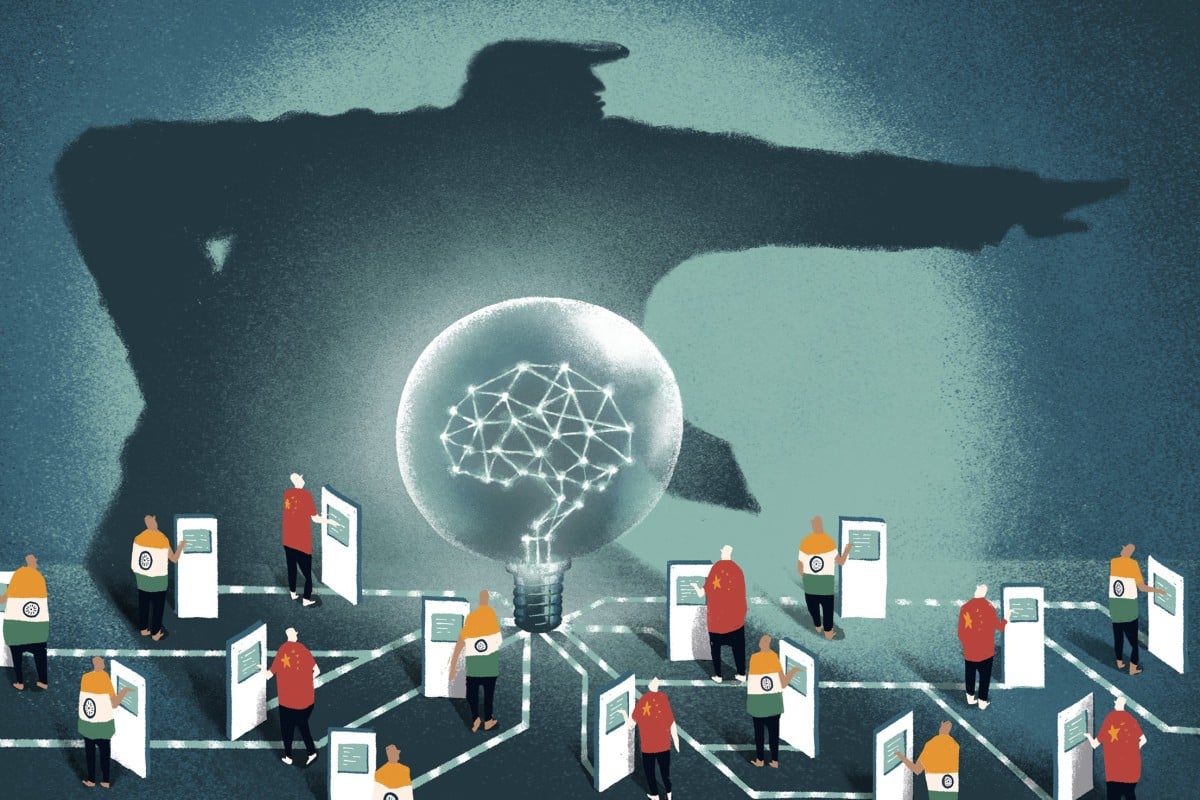
This is the third instalment in a four-part series examining the brewing US-China tech war over the development and deployment of artificial intelligence tech
The US is home to five of the world’s top 10 universities in the AI field, which includes computer vision and machine learning, while China has three
For those Chinese with long-term plans to stay in the US, a major obstacle lies in getting work visas, especially in the current trade war environment. Illustration: Perry Tse
After working in the United States for more than a decade, Zheng Yefeng felt he had hit a glass ceiling. He also saw that the gap in artificial intelligence between China and the US was narrowing.
Last year Zheng, who worked as a researcher at Siemens Healthcare in New Jersey, made a decision that addressed both problems. He accepted an offer to head up the medical research and development team at Tencent’s YouTu artificial intelligence lab in Shenzhen, known as China’s Silicon Valley.
“There was almost no room for promotion if I stayed in the US,” he said, expressing a common dilemma faced by experienced Chinese tech workers in America.
With the US-China trade war leading to tighter scrutiny of Chinese nationals working in the US tech industry, people like Zheng are moving back to China to work in the burgeoning AI sector, especially after Beijing designated AI a national priority. The technology’s varied applications have attracted billions of dollars of venture capital investment, created highly valued start-ups like SenseTime and ByteDance, and sparked a talent war among companies.
That has created an odd symbiotic relationship between the two countries vying for AI supremacy. The US, with its superior higher education system, is the training ground for Chinese AI scientists like Zheng, who obtained a PhD from the University of Maryland after earning bachelor’s and master’s degrees at China’s premier Tsinghua University.
“Many professors in China have great academic ability, but in terms of the number [of top professors], the US is ahead,” said Luo Guojie, who himself accepted an offer from Peking University to become an assistant professor after studying computer science in the US.
Among international students majoring in computer science and maths in US universities, Chinese nationals were the third largest group behind Indians and Nepalese in the 2018-2019 academic year, representing 19.9 per cent, according to the Institute of International Education.
[To build] the best universities is not easy. The university is a free speech space, whereas in China, this is not the case Gunther Marten, a senior official with the European Union delegation to China
The South China Morning Post spoke with several Chinese AI engineers who decided to stay and work in the US after their studies. They only agreed to give their surnames because of the sensitivity of the issues being discussed.
A 25-year-old Beijinger surnamed Lin graduated from one of China’s best engineering schools in the capital before heading to a US university for a master’s degree in computer science in 2017. Like some of his peers, he found the teaching methods in China to be outdated.
“It’s hard to imagine that a final exam of a coding course still asked you to hand write code, instead of running and testing it on a computer,” said Lin, who now works as a software engineer for Google in Silicon Valley.
“Although we still had to take writing tests [in the US], we had many practical opportunities in the lab and could do our own projects,” he added.
A Facebook software engineer surnamed Zhuang had a similar experience at his university in Shanghai.
“Many engineering students [in China] still get old-school textbooks and insufficient laboratory training,” he said. “Engineering practices for AI have been through a fast iteration over the past few decades, which means many Chinese students are not exposed to the most updated knowledge in the field, at least not in the classroom.”
Zhuang also noted out that many classes in China are taught in Chinese, meaning engineering graduates are not fluent in English, the preferred language of the global AI research community.
The US is home to five of the world’s top 10 universities in the AI field, which includes computer vision and machine learning, while China has three. Carnegie Mellon University (CMU) in Pennsylvania ranks No 1 while China’s Tsinghua University is No 2, according to CSrankings, which bases the list on papers published since 2009.
US tech chief: China is threatening US’ lead in global AI race
With its top institutions and an open culture that encourages freedom of speech, including unfettered internet access, the US has become a magnet for the brightest AI students the world over.
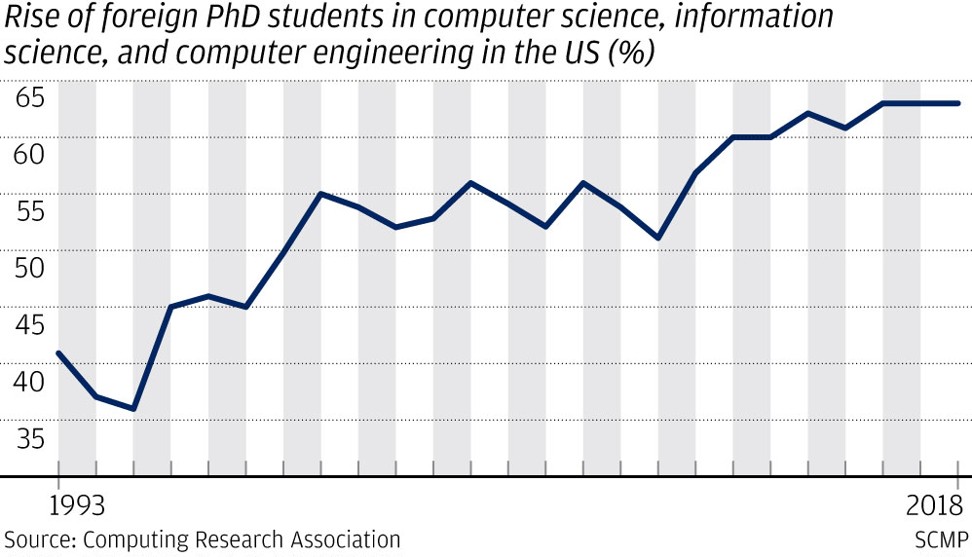
In 2018, 62.8 per cent of PhD degrees and 65.4 per cent of master’s degrees in computer science, information science and computer engineering programmes in the US were granted to “non-resident aliens”, according to a survey by the Computing Research Association.
“[To build] the best universities is not easy,” Gunther Marten, a senior official with the European Union delegation to China, said on the sidelines of the World Internet Conference in Wuzhen in October. “The university is a free speech space, whereas in China, this is not the case.”
When these US-educated AI scientists finish studying, most take advantage of a rule allowing them to stay in the country for three years to gain work experience.
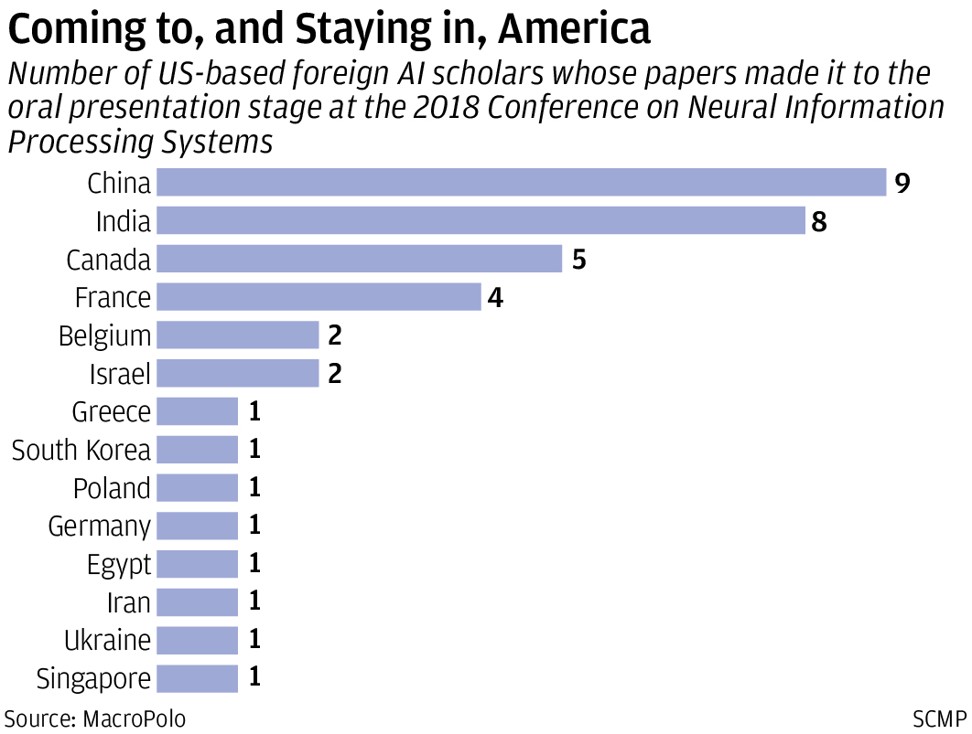
Of the foreign nationals taking part in last year’s Conference on Neural Information Processing Systems (NIPS), a major machine learning event for AI professionals, 87 per cent of those whose papers made it to the oral presentation stage went to work for American universities or research institutes after earning their PhD, according to MacroPolo, a think tank under the Paulson Institute.
“China has many great universities and companies, especially in certain subfields of AI such as computer vision, but many people remain hesitant to move to China due to the political environment, quality of life concerns and workplace issues,” said Remco Zwetsloot, a research fellow at Georgetown University’s Center for Security and Emerging Technology (CSET).
China’s PhD students miserable, yet hopeful: survey
Some of the US-trained Chinese AI engineers told the Post they were scared off by China’s “996” working culture: 9am to 9pm, six days a week. Tech firms in China typically expect their employees to work long hours to prove their dedication.
Lin, the Beijinger who now works for Google, used to be an intern at one of China’s largest internet giants. “I worked from the time I woke up until going to bed,” he said, “At Google, I’ve been confused because many people here only work till 5pm but Google is still a global leader.” Lin said he would be happy to return to China if the 996 work culture eases.
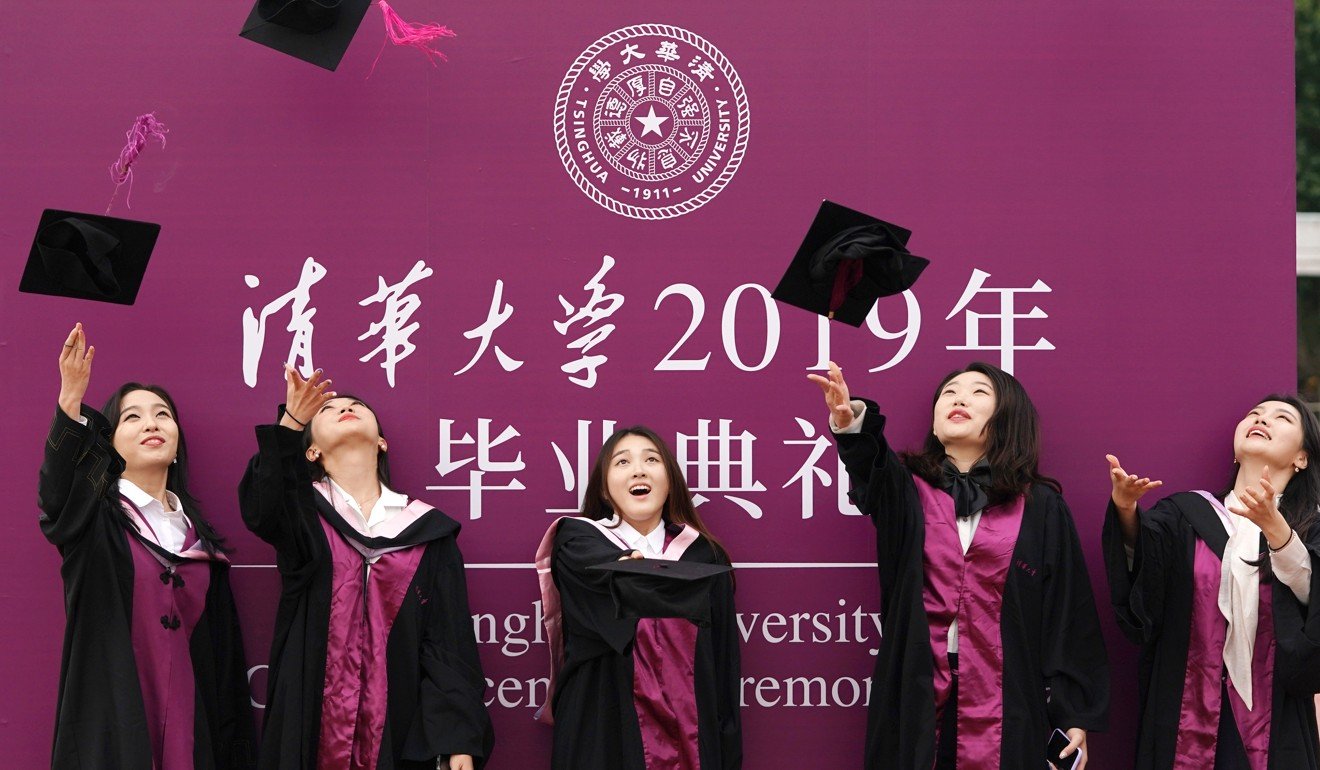
Graduates throw their caps in the air as they pose for a group photo during the 2019 commencement ceremony of Tsinghua University in Beijing. Tsinghua ranks as China’s top university for AI. Photo: Xinhua
Chen, a female postgraduate student at Carnegie Mellon, who recently accepted a job offer from Google, once interned at Beijing-based AI unicorn SenseTime, where she worked from 10am to between 8pm and 10pm most days.
A SenseTime spokesperson said the company has adopted flexible working hours for its employees.
Besides a better work-life balance, Chinese graduates look for jobs in Silicon Valley because of the higher pay.
“If you include pre-tax income, many of us get offers that pay more than 1 million yuan (US$142,000) a year but in China the salaries offered to the best batch of fresh undergraduates are about 200,000 to 300,000 yuan (US$28,000 to US$43,000),” Chen said.
Still, for those Chinese with long-term plans to stay in the US, a major obstacle lies in getting work visas, especially in the current trade war environment. Most AI-related workers are on H-1B visas that allow US companies to employ non-US nationals with expertise in specialised fields such as IT, finance and engineering.
However, the number of non-immigrant H-1B visas granted has started to fall since 2016, when it peaked at 180,000, according to the US Department of State, and US tech companies have complained that a policy shift by the Trump administration has made the approval process longer and more complicated.
In 2017, President Donald Trump requested an overhaul of the H-1B visa programme, saying he did not want it to enable US tech companies to hire cheaper foreign workers at the expense of American jobs. He also wants to give priority to highly skilled people and restrict those wanting to move to the US because of family connections.
Science graduates from overseas countries can stay in the US with their student visas for up to three years while competing for the hard to get work visas, which are granted based on undisclosed mechanisms. Overseas students already working in the US can apply for so-called green cards, which offer permanent residency.
After working for a major US tech company for almost three years on a student visa, one Chinese software engineer, who spoke to the Post on condition of anonymity, said she was relocated to the US firm’s Beijing office last year after failing to obtain a H-1B work visa.
“While there might be individual cases, it seems like the current tensions have not – at least as of a few months ago – led to noticeable changes in the overall number of Chinese students staying in the US after graduating,” said CSET’s Zwetsloot.
Some Chinese AI scientists use Twitter to announce their decision to stay. Chen Tianqi, who just obtained a PhD at the University of Washington in Seattle, and Jun-Yan Zhu, a CMU and UC Berkeley alumnus currently working at Adobe, each tweeted that they would join Carnegie Mellon as assistant professors next year.
To achieve the goal of turning China into “the world’s primary AI innovation centre” by 2030, according to a 2017 blueprint issued the State Council, the central government has stepped up efforts to attract US-educated talent.
The Thousand Talents Plan has seen more than 6,000 overseas Chinese students and academics return since its was established in 2008, but because of escalating tensions with the US, Beijing has played down the initiative.
Longer term, Beijing’s willingness to invest significant sums into the AI sector could see more Chinese return for the better employment opportunities. Between 2013 and the first quarter of 2018, China attracted 60 per cent of global investment in AI, according to a Tsinghua University report.
China’s spending on AI may be far lower than people think
Chinese authorities are investing heavily in the sector, with the city of Shanghai setting up a 10 billion yuan (US$142 million) AI fund in August and Beijing city government announcing in April it would provide a 340 million yuan (US$48 million) grant to the Beijing Academy of Artificial Intelligence.
“More and more senior people like me have come back, and some start their own businesses,” said Zheng, the Siemens Healthcare researcher who joined Tencent. “It’s easier for Chinese to seek venture capital in China than in other countries.”
WASHINGTON (Reuters) – U.S. President Donald Trump on Friday said he thinks a trade deal between the United States and China will be signed by the time the Asia-Pacific Economic Cooperation meetings take place in Chile on Nov. 16 and 17.
RELATED COVERAGE
China says will work with the U.S. to address each other’s core concerns
Chinese Vice Premier Liu He will provide Beijing’s perspective on the progress of the talks in a speech on Saturday, according to a tweet from editor-in-chief of the Global Times, a tabloid published by the People’s Daily of China’s ruling Communist Party.
“I think it will get signed quite easily, hopefully by the summit in Chile, where President Xi and I will both be,” Trump told reporters at the White House, without providing details.
“We’re working with China very well,” Trump also said.
The White House has announced that China agreed to buy up to $50 billion of U.S. farm products annually, as part of the first phase of a trade deal, although China seems slow to follow through.
The so-called phase 1 deal was unveiled at the White House last week during a visit by vice premier He as part of a bid to end a tit-for-tat trade war between Beijing and Washington that has roiled markets and hammered global growth. U.S. officials said a second phase of negotiations could address thornier issues like forced technology transfer and non-financial services issues.




 CHINDIA ALERT: You'll be living in their world, very soon