Chindia Alert: You’ll be Living in their World Very Soon
aims to alert you to the threats and opportunities that China and India present. China and India require serious attention; case of ‘hidden dragon and crouching tiger’.
Without this attention, governments, businesses and, indeed, individuals may find themselves at a great disadvantage sooner rather than later.
The POSTs (front webpages) are mainly 'cuttings' from reliable sources, updated continuously.
The PAGEs (see Tabs, above) attempt to make the information more meaningful by putting some structure to the information we have researched and assembled since 2006.
The statement, issued on 27 April but only reported this week, singles out stadiums, exhibition centres, museums and theatres as public facilities where it’s especially important to ban plagiarism.
“City constructions are the combination of a city’s external image and internal spirit, revealing a city’s culture,” the government statement says.
It calls for a “new era” of architecture to “strengthen cultural confidence, show the city’s features, exhibit the contemporary spirit, and display the Chinese characteristics”.
Image copyright STR / AFP / GETTYImage caption – Not the Arc de Triomphe, but a college gate in Wuhan
The guidelines on “foreign” architecture were mostly welcomed on Chinese social media.
“The ban is great,” wrote a Weibo user, according to state media the Global Times. “It’s much better to protect our historical architectures than build fake copycat ones.”
Another recalled seeing an imitation White House in Jiangsu province. “It burned my eyes,” she said.
Image copyright OLIVIER CHOUCHANA / GETTYImage caption Thames Town, an English-themed town near Shanghai, pictured in 2008
In 2013, the BBC visited “Thames Town”, an imitation English town in Songjiang in Shanghai.
The town features cobbled streets, a medieval meeting hall – even a statue of Winston Churchill – and was a popular spot for wedding photos.
“Usually if you want to see foreign buildings, you have to go abroad,” said one person. “But if we import them to China, people can save money while experiencing foreign-style architecture.”
Image copyright WANG ZHAO / GETTYImage caption – Raffles City, Chongqing, in 2019 – mimicking the Marina Bay Sands hotel in Singapore
China, of course, is not the only country to borrow – or copy – other countries’ designs.
Las Vegas in the US revels in its imitations of iconic foreign architecture including the Eiffel Tower and Venetian canals.
Thailand also has developments that mimic the Italian countryside and charming English villages, mainly aimed at domestic tourists.
At least six people are dead and 28 remain missing after a hotel being used as a coronavirus quarantine facility in the Chinese city of Quanzhou collapsed on Saturday.
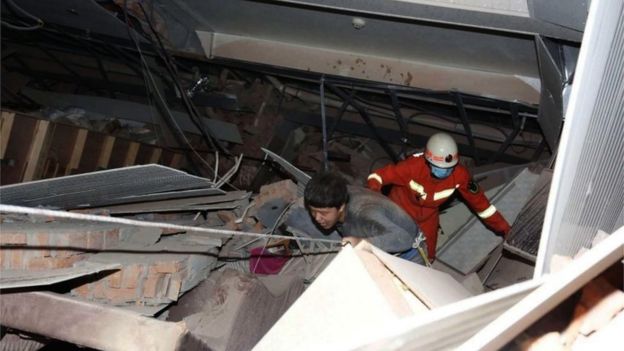
Rescue workers are still searching the rubble of the five-storey Xinjia Hotel in the southern province of Fujian.
Seventy-one people were in the building when it collapsed and dozens have been rescued, authorities say.
It is not clear what caused the collapse on Saturday evening.
Image copyright GETTY IMAGESImage caption Rescue workers continued to search for survivors on Sunday
State media say the hotel was being used as a quarantine facility monitoring people who had had close contact with coronavirus patients. It’s reported 58 of the 71 people in the building were under quarantine.
The building’s first floor had been undergoing renovation since before the Lunar New Year, the official Xinhua news agency said, adding that police had summoned the building’s owner.
The hotel reportedly opened in 2018 and had 80 guest rooms.
The city of Quanzhou has recorded 47 cases of the virus, which first emerged in the city of Wuhan, about 1,000km away.
Image copyright EPAImage caption The hotel reportedly had 80 guest rooms
One woman told the Beijing News website that relatives including her sister had been under quarantine there.
“I can’t contact them, they’re not answering their phones,” she said.
“I’m under quarantine too [at another hotel] and I’m very worried, I don’t know what to do. They were healthy, they took their temperatures every day, and the tests showed that everything was normal.”
As of Friday, Fujian province had 296 confirmed cases of coronavirus. Meanwhile 10,819 people have been placed under observation because they have been in close contact with someone infected.
The number of new reported cases in China dropped on Saturday to 44, down from 99 the previous day.
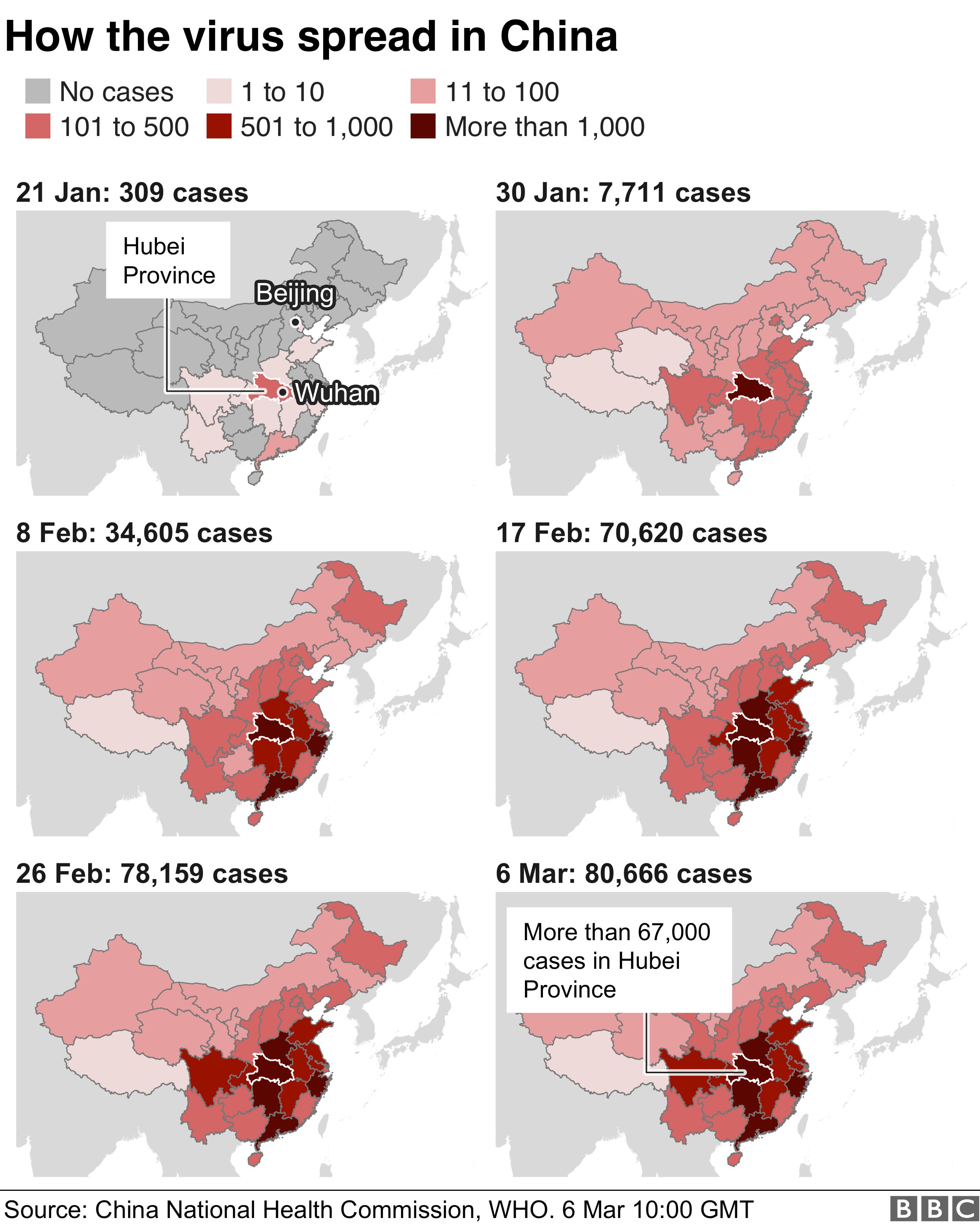
The World Health Organization says more than 101,000 people worldwide have now contracted the virus. More than 80,000 of them are in China.
About 3,500 people have died – the majority in the Chinese province of Hubei where the outbreak originated.
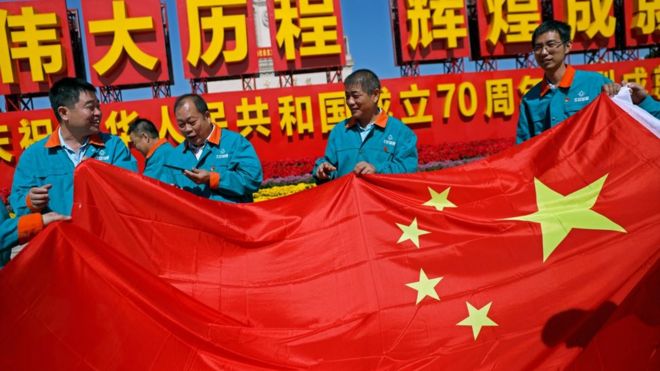
Image copyright EPAImage caption China is getting dressed up for its big birthday party
One week from now, the People’s Republic of China will mark its 70th anniversary with celebrations on a scale not seen in China in decades.
Beijing is pulling out all stops and 1 October will be flush with fireworks, fanfare and a huge military parade.
To ensure it goes smoothly, authorities have been ramping up security in the capital – and online – for weeks.
But with yet more protests expected in Hong Kong, the territory might just rain on China’s parade.
What is it all about?
The birth of modern China was declared on 1 October 1949, after the communists under Mao Zedong won the civil war that followed World War Two.
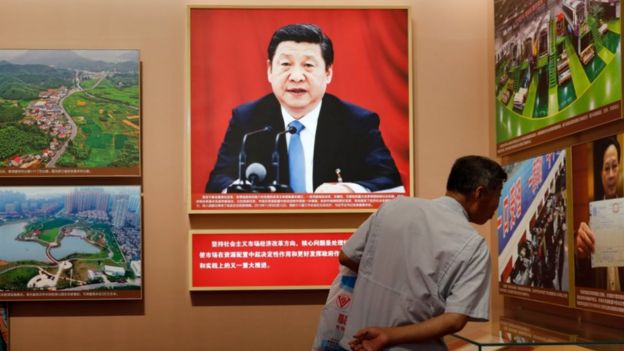
Image copyright EPAImage caption Exhibitions are highlighting the achievements of the Communist Party
The date is marked every year, but celebrations for this 70th anniversary are expected to eclipse previous events.
It’s the first big anniversary since China has emerged as a global power. While 10 years ago China was a superpower in the making, it is now the world’s second largest economy, almost eye-to-eye with the United States.
What to expect?
The main celebrations will take place in the capital, Beijing, where there will be a grand military parade with “advanced weapons” on display, followed by a “mass pageant”.
President Xi Jinping – considered the most powerful Chinese leader since Mao – will address the Chinese people. His speech is expected to celebrate China’s rapid growth and which will be closely watched for any indication of the country’s direction in the coming years.
The president will also hand out honours for contributions to the country and in the evening there will be a grand gala and fireworks show.
All official Chinese celebrations are carefully choreographed and the success of this one is particularly important to the government.
The Dos and Don’ts
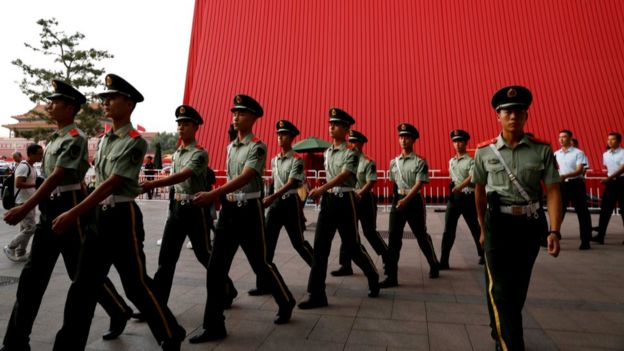
The parade – open to invited guests only – will take place around Tiananmen Square in central Beijing. The surrounding area will be practically under lockdown, and in fact has been so several times already.
During rehearsals leading up to the big day, hotels near Tiananmen Square told guests that for several hours each day, no-one would be able to leave the hotel or return to it should they be out, leading to much travel chaos and rebookings.
Many shops and restaurants in the centre are also closed or have shortened hours and some subway stations are temporarily shut.
Image copyright EPAImage caption Security is tight ensure the party goes to plan
Trains to Beijing are running numerous safety checks on their passengers and vehicles going into the city are also being tightly watched.
On the big day itself, areas around Tiananmen Square will be blocked and guarded. Local residents will need to identify themselves if they want to pass.
To ensure the sun will shine brightly on the celebration in notoriously polluted Beijing, several coal plants and construction sites in and around the city have been ordered to stop work for the duration.
There’s also a ban on any low-flying aerial vehicles in place. That means anything from light aircraft to drones, balloons and even racing pigeons.
Censorship galore
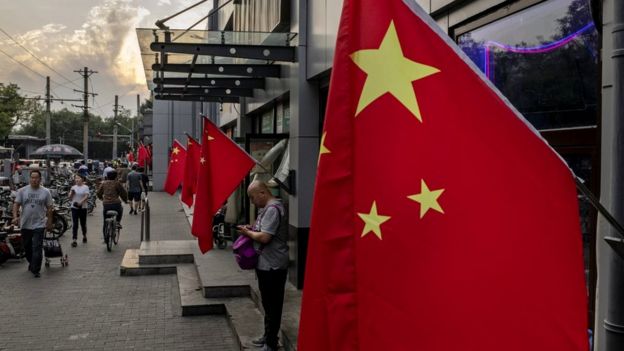
Across much of the city centre, there are national flags set up at every door. Voluntary inspectors are monitoring the streets and locals have told the BBC they’re being questioned after having even brief conversations with foreigners
One person said she was asked by an inspector: “Who were those foreigners? Why were they here?”
The tight control naturally extends online as well. Popular social media platform Weibo said it was deleting content that “distorts” or “insults” the country’s history ahead of the anniversary.
Image copyright GETTY IMAGESImage caption Every house and every shop is sporting a national flag
Chinese journalists are always expected to toe the party line anyway, but starting in October they will have to pass an extra test to prove they are versed particularly in Xi Jinping’s teachings, officially called Xi Jinping Thought on Socialism with Chinese Characteristics, which has been written into the constitution.
Whether or not they pass the exam will then determine whether they’ll be accredited as journalists.
“The fundamental point with this ‘training’ and indoctrination process isn’t so much about the content,” David Bandurski of China Media Watch told the BBC.
“It is about reinforcing the message and understanding among journalists that they work, first and foremost, for the Chinese Communist Party, and serve its agenda.”
So not only will the events be choreographed – the domestic coverage of them will also be tightly guarded.
What about Hong Kong?
Despite Beijing’s determination to let its achievements shine on 1 October, there’s a good chance Hong Kong will pull focus.
Anti-Beijing protests always take place in Hong Kong on China’s National Day, but this time, the activists know that the world is watching.
Anti-government protests have rocked the city for months and the situation shows no sign of dying down.
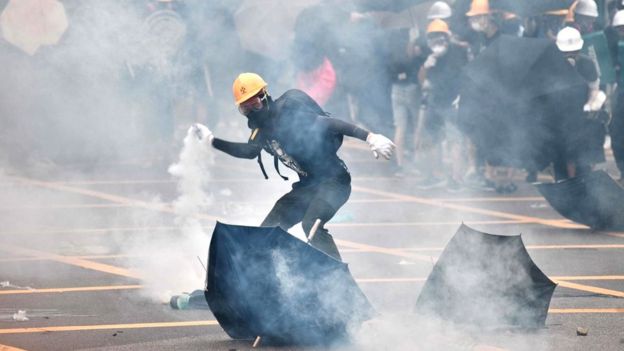
Clashes between police and activists have been becoming increasingly violent, with police using tear gas and activists storming parliament.
Image copyright AFPImage caption The protests have often escalated into violent clashes
That means two things for 1 October: official celebrations in the territory are being toned down to avoid clashes – the annual fireworks display has been cancelled – while at the same time, activists are planning to step up their protests.
On Sunday 29 September, a “Global Anti Totalitarianism March” is scheduled to take place at various locations around the world in support of Hong Kong.
On 1 October itself, a march in central Hong Kong is planned with everyone asked to wear black.
If the past weeks’ demonstrations are anything to go by, the smiles and celebrations in Beijing will be competing for media space with pictures of tear gas and angry young protesters in Hong Kong.
Superstitious medical student, 23, said it was customary in her hometown to throw money for good luck
Cousin’s child had fallen ill on flight from Jiangxi to Sichuan, she said
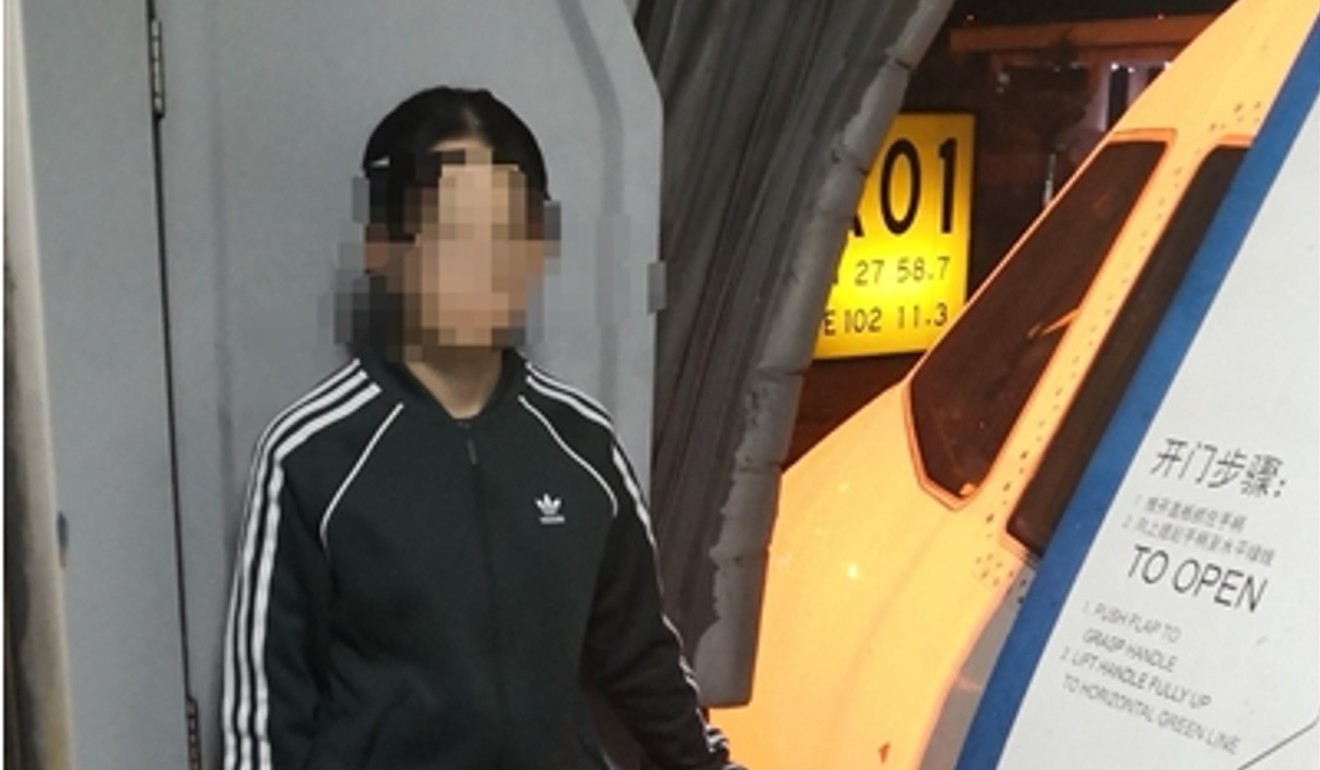
A woman was fined for tossing coins onto the apron at an airport in Sichuan province. Photo: Weibo
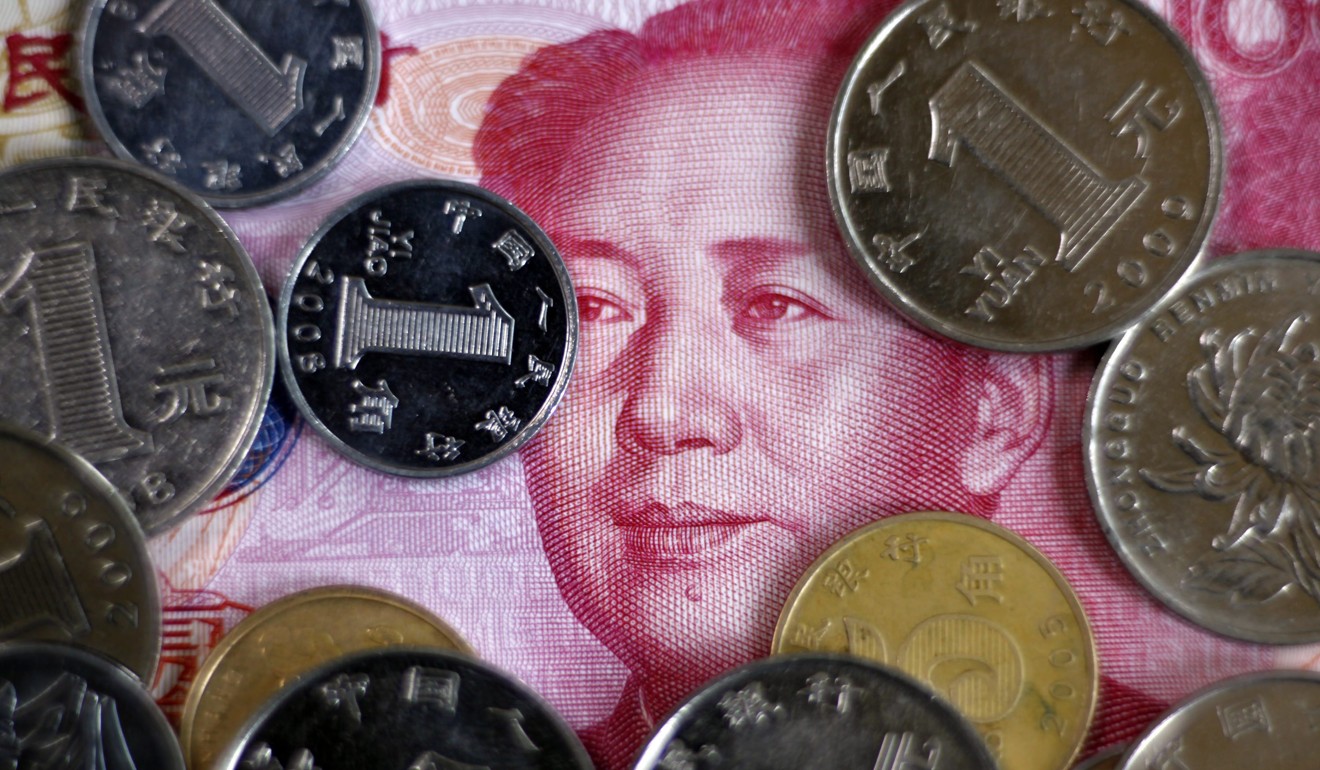
A woman who threw coins onto the parking apron at an airport in southwest China in the superstitious belief it might cure her cousin’s baby’s diarrhoea was instead fined 200 yuan (US$28), local media reported.
The incident happened on September 5, as the woman, surnamed Wang, and a group of her relatives arrived in Xichang, Sichuan province, after flying from Nanchang, Jiangxi province, to attend a family wedding, the Chengdu Business News reported on Friday.
Wang, 23, dropped the coins through the gap between the aircraft and the jet bridge as she and her family were disembarking.
Police said the medical student was shocked when she realised the trouble she had caused. Photo: Weibo
Although no one spotted what she had done at the time, airport workers later found three coins on the ground while conducting a security check and reported the matter to the police.
Officers reviewed footage from the airport’s surveillance cameras and identified Wang as the guilty party and went to see her at her hotel the following morning, the report said.
Wang said that during the flight her cousin’s baby had suffered from diarrhoea and that it was customary in her hometown to toss coins in the hope it would bring the child good luck.
“She said she didn’t realise her action could have had a very serious outcome,” a police officer was quoted as saying, adding that Wang appeared shocked when she realised the trouble she had caused.
However, as her actions had not resulted in any delays to flights or created any other problems, she was charged only with a minor offence.
Many Chinese think tossing coins before a flight will bring them good luck. Photo: EPA
Wang, who recently completed a bachelor’s degree in medicine and was preparing to sit a graduate school entrance examination, was worried the incident might have an impact on her future education and job prospects, the officer said.
More than 5,000 people commented on the story on news portal 163.com, with one asking: “You are so superstitious, how can you treat patients?”
In recent years there have been numerous reports of Chinese travellers causing delays and being punished for tossing coins onto airport runways and even into aircraft engines.
In April, a woman was detained for throwing six coins as she was about to board a plane in southern China in the hope it would guarantee her a safe trip.
SHENZHEN, March 2 (Xinhua) — Zhao Xiaoyong was once called “China’s Van Gogh,” as the farmer turned oil painter made over 100,000 replicas of Van Gogh’s work over the past 20 years.
However, he never saw a single authentic piece of the Dutch post-impressionist painter until 2014 when he finally saved enough for a trip to the Netherlands.
The trip inspired him to think over his business and create his own works. “The masterpieces that I saw at the European museums made me realize that I have to develop my own style.”
Zhao is from Dafen, a village known for oil paintings in southern China’s Shenzhen City. Home to 1,200 studios and 8,000 painters, the village produces millions of replicas of Van Gogh, Monet and Picasso that are sold at home and abroad. According to statistics, 80 percent of oil paintings exported from China come from Dafen.
While the market demand for replicas is shrinking, Zhao and other painters in the village are creating their own art styles and attracting tourists.
Neighboring Hong Kong, Shenzhen is one of China’s first special economic zones for the country’s reform and opening drive. The painting industry started in Dafen Village in 1989 when Hong Kong purchasers sought to establish an oil painting base nearby.
Zhao, who quit his job at a craft factory, started learning how to paint from scratch in 1996. He imitated Van Gogh’s works via a painting album, including “sunflowers” and “almond blossoms.”
He sold his first works in 1999 when an American buyer ordered 20 paintings. More orders later came from abroad, prompting Zhao to recruit apprentices.
“My wife and my younger brothers are all my students,” he said with a smile. “I was even called ‘China’s Van Gogh’ in a documentary.”
Zhao and his team worked from 1 p.m. to 3 a.m. painting eight pieces per person every day at most. Prices for the replicas ranged from 200 yuan (30 U.S. dollars) to 3,000 yuan per piece, depending on the size.
In 2008, when the economic recession hit most parts of the world, a drastic reduction of foreign orders forced Zhao to explore the domestic market. Profits kept shrinking after 2012 due to consumers’ diversifying tastes and rising costs.
Since then, many painters in the village have given up making replicas and turned to innovation and creation.
Chen Qiuzhi, who used to paint copies of masterpieces like Zhao, has worked hard to develop his own style, combining Chinese calligraphy with painting. To support him, his wife sold two apartments and had an art center built.
The center, located at the far end of Dafen village, covers an exhibition area of over 3,000 square meters and has become a landmark of Dafen. Some 100 calligraphy works are exhibited at the center with other craftwork.
Ten years of hard work has won him fame, with his works popular in the auction market. Now, one piece of his calligraphy is worth tens of thousands of yuan, almost 100 times the value of replicas he painted in the past. The art center also draws visitors.
“Only by creation can one’s works be remembered,” said Chen.
Today, Dafen has gathered nearly 300 art creators. In 2017, the annual output value of Dafen reached 4.15 billion yuan, among which the original works have accounted for 20 to 30 percent.
From imitation to creation, Dafen Village has been making the transition from a low-end oil painting workshop cluster to an art center, said Liu Yajing, director of the village’s oil painting office.
She said an oil painting museum, a performance theater, a training center and a hotel are being built to develop the village into a tourist resort featuring oil painting production, trade, training and exhibition.
Compared with his Van Gogh replicas, painter Zhao finds his own works hard to sell. But he believes that he will finally be recognized someday in the future.
“Imitation leads me nowhere. I will continue to concentrate on creation for the market and also for my dream as a real artist,” Zhao said.
NEW DELHI (Reuters) – A hotel that caught fire in the Indian capital on Tuesday, killing 17 people, passed safety checks 14 months ago, but an investigation has revealed breaches of regulations, such as faulty alarms, prompting a mass reinspection of other hotels.
Poorly enforced regulations lead to thousands of deaths in fires across India every year and officials in New Delhi say an overstretched fire service is hampering safety efforts.
The Hotel Arpit Palace passed a fire safety check in December 2017, but a copy of the initial police investigation seen by Reuters showed several breaches of fire regulations, including a lack of signs to guide guests to exits and fire alarms that did not work.
Delhi’s fire service, which is responsible for safety inspections as well as fighting fires, is now reviewing certificates issued to more than 1,500 hotels in one of India’s tourist hubs, a senior fire official told Reuters.
But stretched resources mean the re-inspection process could take months.
“Fire officers have to do a lot of work,” said Vipin Kental, Delhi’s chief fire officer. “We have to be inspectors and fight fires. We do not have the manpower.”
The city has around 1,700 firefighters, he said, which is less than an eighth of the number in New York, a city with less than half of Delhi’s population.
PREVENTABLE TRAGEDY
The fire is believed to have begun on the hotel’s first floor, spreading quickly through wood-panelled corridors, police say. Among the dead were members of a wedding party from Kerala and a two Buddhist pilgrims from Myanmar.
“From the outside, the building looked intact, but inside everything was completely charred,” a police officer told Reuters.
Two of the 17 died after jumping out of windows in desperation after failing to find emergency exits, added the officer, who declined to be named as he is not authorised to talk to the media.
“Fire preparedness is a matter of shockingly low priority in most parts of the country,” said an editorial in the Indian Express, one of the country’s leading newspapers.
A 2018 study by India’s home ministry that found the country had just 2,000 of more than 8,500 fire stations it needs.
More than 17,000 people died in fires in 2015, according to data from the ministry, the last year for which figures are available, one of the largest causes of accidental death in India.
Fire safety is an issue for shanty towns and some of the country’s most expensive real estate.
A day after the Arpit Palace disaster, more than 250 makeshift homes were destroyed in a slum in Paschim Puri, a poor area of New Delhi, though no one was killed.
In 2017, 14 people were killed during a birthday party at a high-end bar in India’s financial capital Mumbai.
In several upscale neighbourhoods in Delhi, police shut hundreds of shops and restaurants last year for trading on floors meant for residential use, though many continue to operate illegally, residents say.
By the boarded-up Arpit Palace in the Karol Bagh area of New Delhi, wires from adjacent hotels still trail across the street, though staff there told Reuters they were complying with fire regulations.
Adding to the safety problems, poorly paid staff in the hotel and restaurant industries are often unable to help guests when fires break out, Kental said.
“They are not trained. They don’t know what to do in the event of a fire,” he said.
Weeks after some of China’s upmarket hotels were exposed for using the same soiled towels to clean drinking cups and toilets, officials have uncovered another hygiene issue at a mid-price hotel in the country’s northern province of Shanxi.
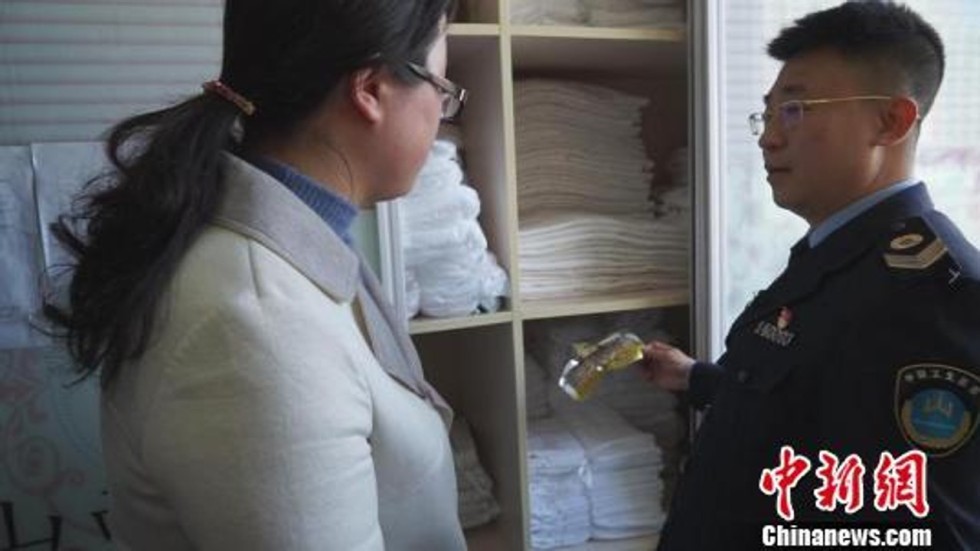
Health officials from the provincial capital of Taiyuan found disinfected towels stored with shoes and half-consumed snacks during an inspection on Tuesday.
According to the China News Service, the inspection found a number of hotels did not follow hygiene rules to sterilise customer utensils and were also not monitoring air, water, light and noise levels as required.
The health inspectors highlighted the case of one hotel in the downtown area, part of the Jinjiang Inn franchise, where clean towels were found stored in the same small room as the rubbish bins. Regulations require that towel cabinets are not placed with other items.
Inside the towel cabinet were a box of men’s shoes, half a pack of melon seeds and personal cosmetic products that belonged to hotel employees, the officials said.
“These items are probably not clean and can’t be stored with things that have already been cleaned; otherwise there will be cross-contamination,” an inspector was quoted as saying.
Officials also found items in the hotel’s sterilising room which should not have been there, and two employees working in the sterile area without the mandatory health certificate.
Last month Huazong, an online celebrity in China, uploaded a video in which some cleaners at five-star hotels were seen using the same towel to clean a bathroom mirror, basin, toilet and drinking cups.
Amid the uproar caused by the video, a commenter on Weibo, China’s Twitter-like service, wrote, “Hygiene problems exist in expensive hotels. I dare not imagine how bad the situation is in other hotels?”


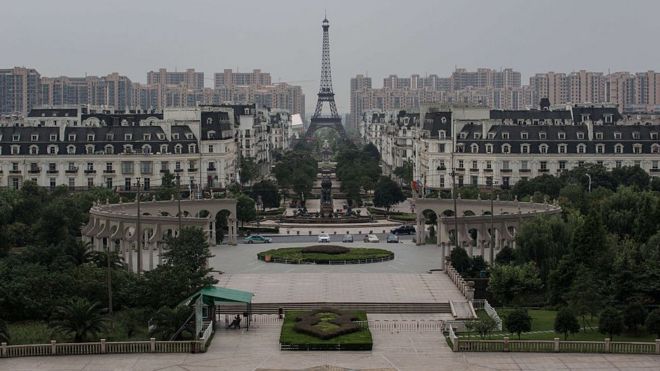 Image copyright GUILLAUME PAYEN / GETTY
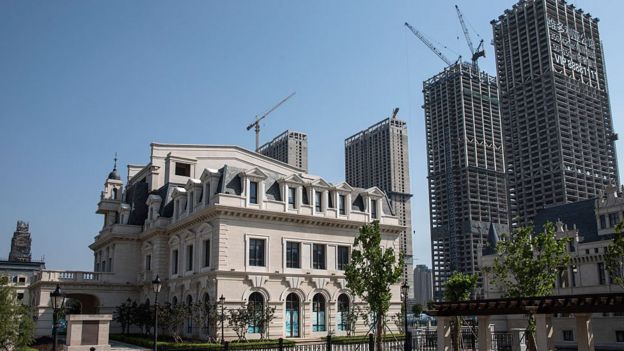 Image copyright THIERRY FALISE / GETTY
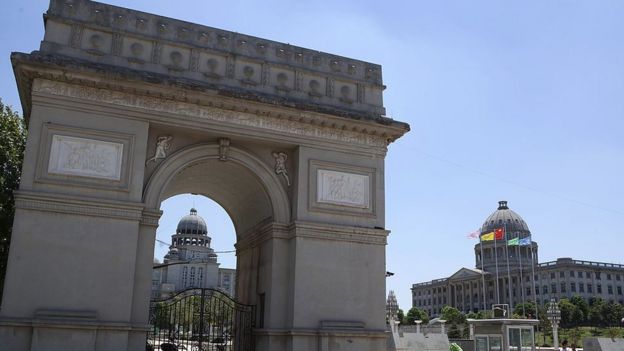 Image copyright STR / AFP / GETTY
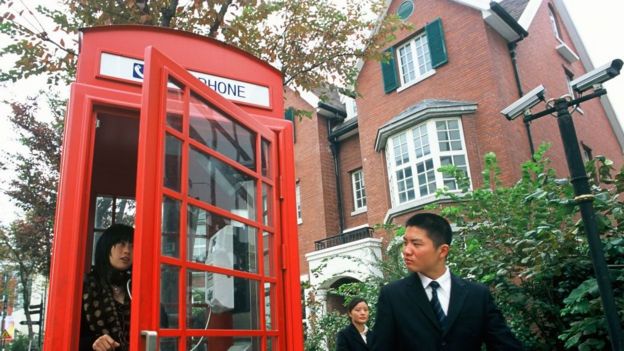 Image copyright OLIVIER CHOUCHANA / GETTY
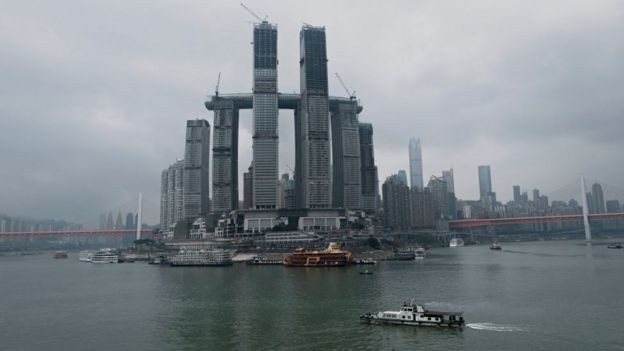 Image copyright WANG ZHAO / GETTY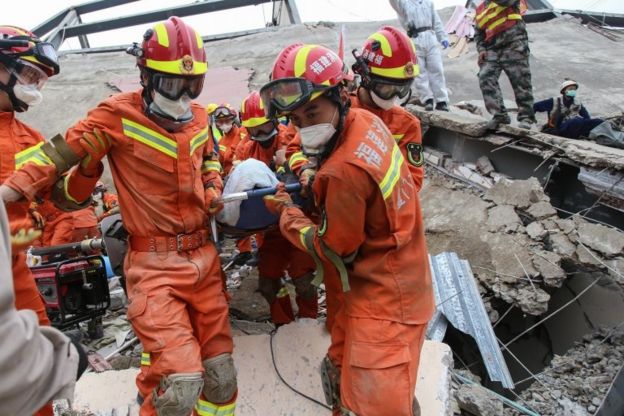









 CHINDIA ALERT: You'll be living in their world, very soon

3