Archive for ‘hubei province’

24/05/2019

Chinese police arrest 20 over pornographic live-streaming app that attracted 1 million users

  • Streaming platform Huahua earned US$2.3 million in profit in five months, according to media report
  • Final two suspects arrested in Philippines, police say
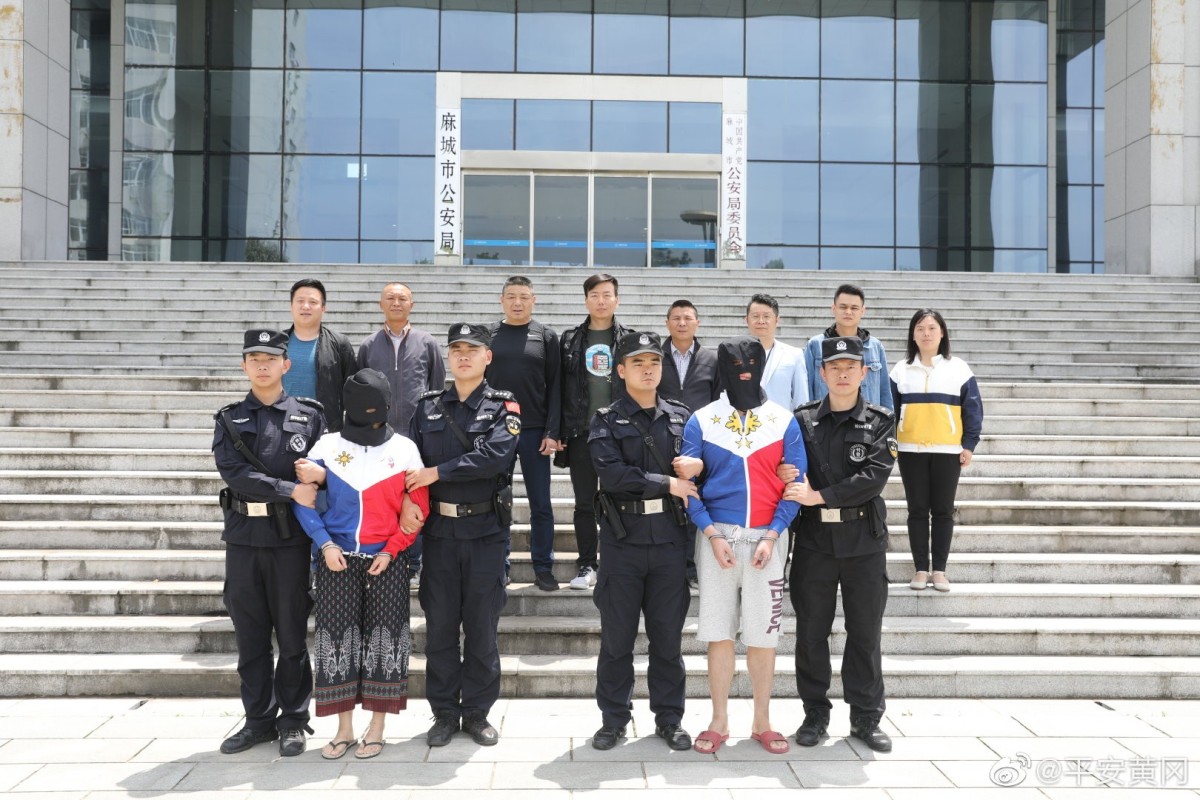
Chinese police with the last two principal suspects in the Philippines on April 26. Photo: Weibo
Chinese police have arrested 20 people from a cross-border group accused of operating illegal live streaming platforms to broadcast pornographic content, according to mainland online news outlet The Paper.
After an investigation lasting over a year, police in Macheng in central China’s Hubei province said they arrested the last two main suspects, a man surnamed Hong and a woman surnamed Li, in the Philippines on April 26.
Their 
live-streaming

platform, which was initially called Huahua, had more than 900,000 registered users, earning the group 16 million yuan (US$2.3 million) in profit in five months from November 2017, according to the report.

The Chinese government announced in February 2018 it was 
launching a campaign

against pornographic and illegal publications to foster a healthy online environment.The next month, Macheng police received a tip-off that people were distributing QR codes to download Huahua in chat groups on the popular Chinese messaging app QQ.

On the Huahua platform, live streamers gave erotic performances, with the most popular streamers drawing more than 2,000 viewers at a time and users able to make requests by paying up to almost 2,000 yuan (US$290).

The group had a structure and rules designed to avoid the police’s attention, the report said. Members did not know each other’s identities and each had only one point of contact.

Some recruited streamers, others promoted the app on social platforms to attract traffic, and members in Mongolia laundered money with foreign bank accounts, while the app’s appearance and servers were changed several times, the report said.

After 18 people were arrested by April 2018 across the country, including in Shanghai and Guangdong, the No 1 suspect, the Mongolia-based Hong, fled to South Korea then to the Philippines, where he met Li and they built a similar app, according to the report.

The report said Hong had owned a company in Shanghai focusing on developing video games before turning to pornographic live streaming to make money quickly when the gaming business struggled.

Source: SCMP

21/05/2019

China’s green efforts hit by fake data and corruption among the grass roots

  • Local officials have devised creative ways to cover up their lack of action on tackling pollution
  • Falsified monitoring information risks directing clean-up efforts away from where they are needed most
China’s efforts to cut pollution are being hampered by local officials who use creative methods to hide their lack of action. Photo: Simon Song
China’s notoriously lax local government officials and polluting companies are finding creative ways to fudge their environmental responsibilities and outsmart Beijing’s pollution inspectors, despite stern warnings and tough penalties.
Recent audit reports covering the past two years released by the environment ministry showed its inspectors were frequently presented with fake data and fabricated documents, as local officials – sometimes working in league with companies – have devised multiple ways to cheat and cover up their lack of action.
Local governments have been under pressure to meet environmental protection targets since Chinese President Xi Jinping made it one of his top three policy pledges in late 2017.
The performance of leading local officials is now partly assessed by how good a job they have done in cleaning up China’s much depleted environment.
According to the reports released this month by the Ministry of Ecology and Environment, pollution inspectors have found evidence in a number of city environmental protection bureaus of made-up meeting notes and even instructions to local companies to forge materials.
Cao Liping, director of the ministry’s ecology and environment law enforcement department, said many of the cases uncovered were the result of officials failing to act in a timely manner.
“In some places, local officials didn’t really do the rectification work. When the inspections began, they realised they didn’t have enough time, so they made up material,” he said.
China ‘still facing uphill struggle in fight against pollution’

While some officials are covering up their inaction, others are actively corrupt. According to Guangzhou’s Southern Weekend, since 2012 there have been 63 cases involving 118 people in the environment protection system involved in corruption.

In the southwest province of Sichuan, 32 current and former employees of Suining city’s environmental protection bureau were found to be corrupt, raking in illicit income of 6.32 million yuan (US$900,000).

Fabricated notes

The party committee of Bozhou district in Zunyi, Guizhou province in southern China, was found to have fabricated notes for 10 meetings – part of the work requirement under the new environmental targets – in a bid to cheat the inspectors.

The case was flagged by the environment ministry in a notice issued on May 10, which said party officials in Bozhou lacked “political consciousness … the nature of this case is very severe”.
Watering down results
Environmental officials in Shizuishan, in the northwest region of Ningxia, tried to improve their results in December 2017 by ordering sanitation workers to spray the building of the local environmental protection bureau with an anti-smog water cannon.
The intention was to lower the amount of pollutant particles registered by the building’s monitoring equipment.
The scheme may have gone undetected if the weather had been warmer but the next day a telltale layer of ice covered the building and the chief and deputy chief of the environmental station in the city’s Dawokou district were later penalised for influencing the monitoring results.
1 million dead, US$38 billion lost: the price of China’s air pollution
Similar tactics were deployed in Linfen, in the northern province of Shanxi in March 2017, when former bureau chief Zhang Wenqing and 11 others were found to have altered air quality monitoring data during days of heavy pollution.
The monitoring machine was blocked and sprayed with water to improve the data and Zhang was also found to have paid another person to make sure the sabotage was not captured by surveillance camera.
According to the environment ministry, six national observation stations in Linfen were interfered with more than 100 times between April 2017 and March 2018. In the same period, monitoring data was seriously distorted on 53 occasions.
Zhang was sentenced to two years in prison in May last year for destroying information on a computer.
Bad company
A ministry notice on May 11 flagged collusion by local officials and businesses in Bozhou in southeast China’s Anhui province. Companies were given advance notice of environmental inspections, with instructions to make up contracts and temporarily suspend production in a bid to deceive inspectors.
In Henan province, central China, inspectors found a thermal power company had been using a wireless mouse to interfere with the sealed automatic monitoring system. They were able to remotely delete undesirable data, eliminating evidence of excessive emissions, and only provided selective data to the environment bureau.
Officials in Shandong reprimanded for failing to cut pollution
In another case, from 2017, an environmental inspection group in Hubei province, central China, found a ceramics company had been working with the data monitoring company to alter automatically collected data on sulphur dioxide emissions.
Criminal offence
Cao said that while the cheating by grass-roots officials was serious, the involvement of companies in falsifying data was a major issue that made the work of inspectors even harder.
“Some fraudulent methods are hidden with the help of high technology, so it’s hard for us to obtain evidence. Besides, the environment officials are not totally familiar with these technologies,” he said.
The environment ministry was working on solutions to the problems, he said, adding that falsifying monitoring data was now a criminal offence.
Fake data was particularly serious, he said, because it could directly influence his department’s decisions about where to deploy resources.

Wang Canfa, an environmental law expert at the China University of Political Science and Law, said the problem of fake data could damage the government’s credibility but also prevent it from taking measures in time.

“If the water pollution or air pollution is severe in one place but the local government has said it’s not a big deal, then the investment needed to control the situation might go to other places,” he said.

Zhou Ke, a professor of environment and resources law at Renmin University, said there was an incentive for local officials to cheat because the inspection results were directly related to their career prospects.

Officials ended up cheating or forging materials to protect local interests or their own political achievements, he said.

Source: SCMP

20/04/2019

Indian foreign secretary heads to China for talks amid tense relations

  • Vijay Keshav Gokhale is expected to meet Chinese deputy foreign minister Kong Xuanyou and Foreign Minister Wang Yi during two-day visit
  • Beijing’s refusal to sanction a Pakistani militant leader and its belt and road push in the disputed Kashmir region have strained ties
Indian Foreign Secretary Vijay Keshav Gokhale will visit China as part of “regular exchanges” between the two countries. Photo: AFP
Indian Foreign Secretary Vijay Keshav Gokhale will travel to Beijing on Sunday amid tensions between India and China over Beijing’s refusal to sanction a Pakistani militant leader and its infrastructure push in the disputed Kashmir region.
Gokhale’s two-day visit is part of “regular exchanges” between the two nations, the Indian embassy in Beijing said on Saturday.
During his stay, Gokhale is expected to meet Chinese deputy foreign minister Kong Xuanyou and Foreign Minister Wang Yi.

He will return to India on Monday, three days before the second Belt and Road Forum begins in the Chinese capital. Forty foreign leaders will attend the summit on Beijing’s global trade and infrastructure scheme, the “Belt and Road Initiative”, but India is not taking part.

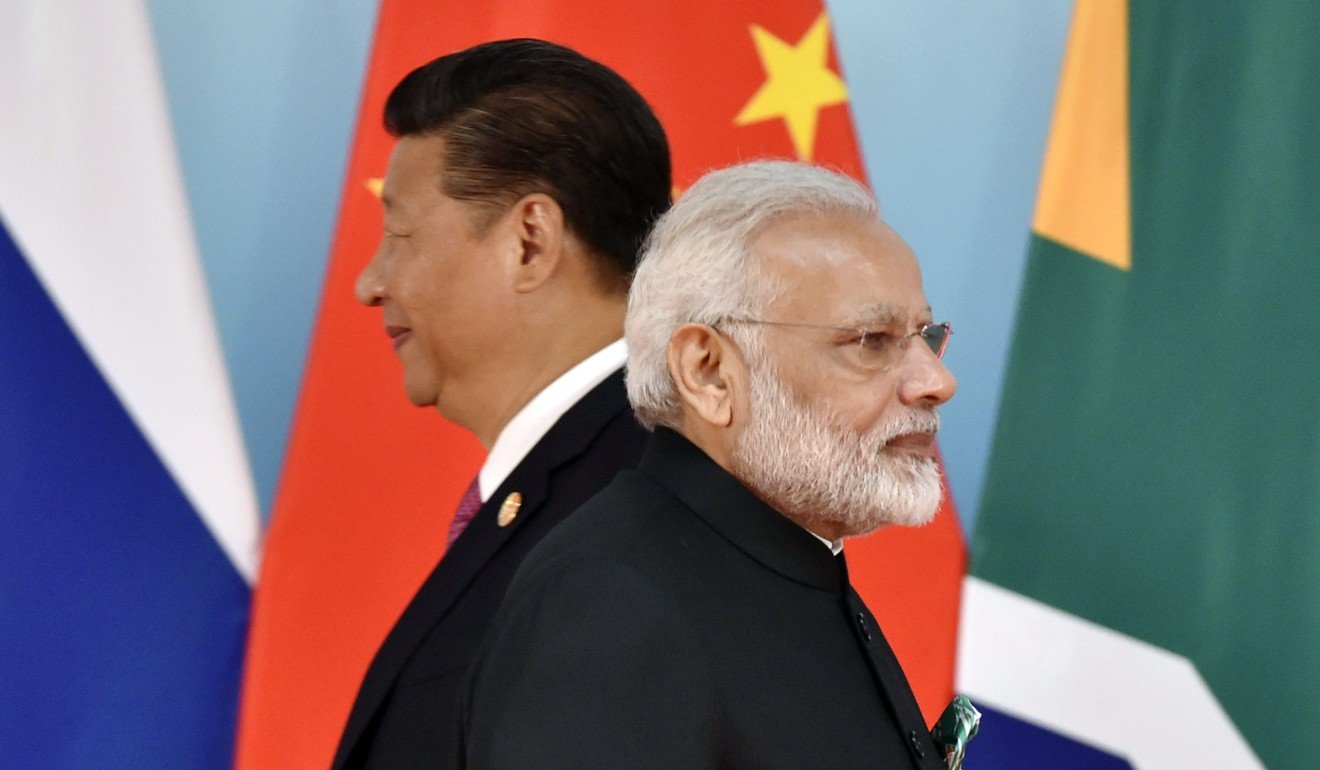
Wang on Friday called on India, and other countries sceptical of the initiative, to join up, dismissing claims that it is a geopolitical tool. He also said China was ready to hold a leaders’ summit with India like the informal meeting held between Chinese President Xi Jinping and Indian Prime Minister Narendra Modi in Wuhan, Hubei province last year.

A summit between Xi Jinping (left) and Narendra Modi in Wuhan last year was seen as a breakthrough in China-India relations after the Doklam border dispute. Photo: AFP

Gokhale visited Beijing in February last year, and the Wuhan summit happened two months later. That meeting was seen as a breakthrough in the

China-India relationship

after a 73-day military stand-off over the Doklam plateau.

But the progress was overshadowed in February after a terror strike on Indian security forces in the Jammu and Kashmir province, which killed 40 Indian soldiers. The Pakistan-based Jaish-e-Mohammed group claimed responsibility for the attack. India has long wanted to designate its leader, Masood Azhar, as a terrorist under international law, but China has opposed the move.

During a visit to Pakistan in March, Kong said Beijing and Islamabad were all-weather strategic partners and would support each other on issues to do with their core interests.

What ‘Wuhan spirit’? Kashmir suicide attack reopens Modi’s China wound

Wang Dehua, head of the Institute for South and Central Asia Studies at the Shanghai Municipal Centre for International Studies, said China and India were looking to prevent their bilateral relations from deteriorating further.

“Both nations will elaborate on their stance on this matter, and China will probably deliver a message that the China-India relationship should not be affected by the dispute over Masood Azhar,” he said. “The positive sentiment out of Wuhan has been affected, and the two sides are seeking ways to continue the spirit of that informal summit.”

Du Youkang, director of Fudan University’s Pakistan Study Centre in Shanghai, said preparations for another informal summit of the nations’ leaders would only begin after India’s general election was over. Polling is being held in seven phases ending on May 19.

Gokhale’s trip would mainly be a chance to see how the two nations can push forward bilateral ties amid their disputes, Du said.

In addition to Azhar, India is also dismayed that some of China’s belt and road projects pass through the Pakistan-administered section of the disputed Kashmir region.

But Wang told reporters on Friday that the initiative did not target any third country, and that relations between China and India had improved after the Wuhan summit.

Source: SCMP

22/03/2019

Seven dead after man drives car into crowd in central China

  • Motorist kills six as he ploughs into passers-by, before being shot dead by police
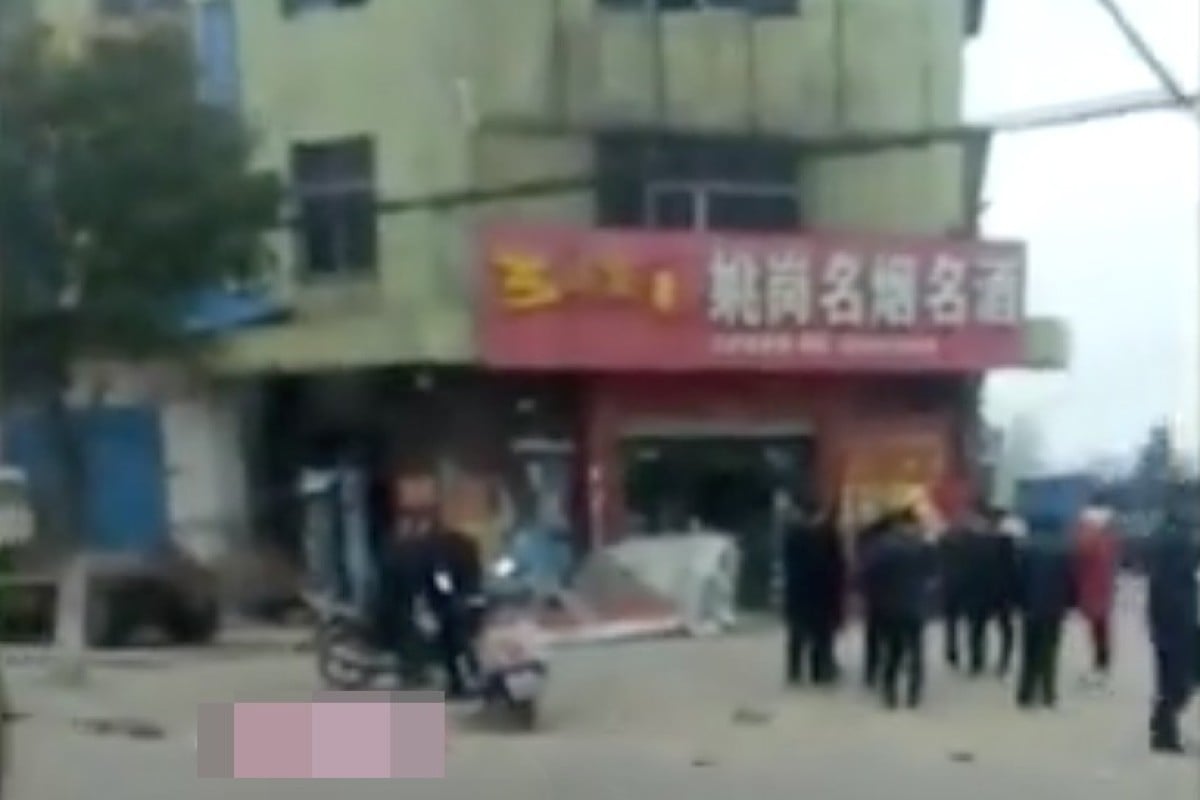
A man drove a car into a crowd on Friday morning, killing six and injuring seven in Hubei province. Photo: Thepaper.cn
Police in central China shot dead a man who drove a car into a crowd on Friday morning, killing six and wounding six others, including children, Chinese media reported.
The police received calls at around 6am about someone driving into pedestrians in the township of Taiping in Hubei province. Officers shot the driver dead, taking the death toll to seven.
The Zaoyang municipal government, which administers Taiping, said the motorist was 44-year-old restaurant owner Cui Lidong.

A police investigation into the incident was under way.

A video published by news portal Thepaper.cn shows several people lying on the ground as an ambulance arrives at the scene.

One witness identified only as Wang said the car ploughed randomly into pedestrians and other vehicles, the Beijing News reported.

Another witness said: “There were bodies everywhere on the street.”

The reports prompted debate online about whether the incident was yet another case of “revenge on society”, where the suspect lashes out at the public to settle personal scores or draw attention to a dispute.

There have been several such revenge cases in recent years, including car crashes, knife attacks and bombings in which the victims were mostly pedestrians or schoolchildren.

In March, police in Tangshan, Hebei province, arrested a man for attacking several pupils outside a primary school. In September 2018, a driver crashed a car into a crowd in central China before attacking pedestrians with a knife and shovel, killing 11 and wounding 44.

Source: SCMP

10/03/2019

Wuhan to invest 40 bln yuan in high-tech infrastructure

WUHAN, March 9 (Xinhua) — The city of Wuhan, capital of central China’s Hubei Province, will invest 40 billion yuan (about 6 billion U.S. dollars) to provide key support to the development of high-tech infrastructure by 2022, local authorities said.

The province and its capital will forge ahead with high-tech industries by raising a 10-billion-yuan fund per year for major projects, platforms, industrial parks, equipment and talent teams, from 2019 to 2022.

So far, a research facility of precise gravity measurement, a national major science and technology infrastructure, is under construction in the Huazhong University of Science and Technology in Wuhan.

In the past few years, the city has completed a pulsed high magnetic field facility and opened China’s first national bio-safety level four lab, which requires the highest level of biological safety.

Wuhan will work with universities, institutes and enterprises to achieve great breakthroughs in various fields including integrated electromagnetic energy, optoelectronics, microelectronics, geomatics, and new materials, as well as build national laboratories.

Data released at the city’s science and technology conference for 2019 on Friday showed that the value added of the hi-tech industries in Wuhan exceeded 300 billion yuan last year, accounting for 20.56 percent of the city’s gross domestic product.

With 3,536 high-tech enterprises in total, the city is making efforts to build itself into a tech hub of the country.

Source: Xinhua

24/02/2019

Electricians dispatched to repair high voltage wire to ensure post-holiday travel peak in China’s Wuhan

CHINA-WUHAN-ELECTRICIAN-RUSH REPAIR (CN)

Aerial photo taken on Feb. 12, 2019 shows emergency worker Dong Jinbing (L) inspecting the high voltage wire with his workmate Wang Wensheng on the power transmission tower in the mountain area of Wuhan, capital of central China’s Hubei Province.

A team of electricians was dispatched to repair a high voltage wire that was broken due to thick layer of ice accumulation. After one day’s work on the over 40-meter-high power transmission tower in bad weather condition, the team succeeded in fixing the failed power system that lowered the trains’ speed causing delay during the post-holiday travel peak. This year’s Spring Festival travel rush started on Jan. 21 and will last till March 1, with railway trips expected to hit 413 million in total, up 8.3 percent. (Xinhua/Xiao Yijiu)

Law of Unintended Consequences

continuously updated blog about China & India

ChiaHou's Book Reviews

continuously updated blog about China & India

What's wrong with the world; and its economy

continuously updated blog about China & India