Archive for ‘Hunan Province’

31/03/2020

Rail repair underway after train derails in central China

CHANGSHA, March 30 (Xinhua) — Railway repair is well underway after a train derailed in the city of Chenzhou in central China’s Hunan Province Monday that killed one and injured 127.

The accident happened in Yongxing County at 11:40 a.m. when the train ran into a landslide, leaving five carriages derailed. The power generation car caught on fire.

The fire has been put out and all of the injured have been sent to hospital, with four in serious condition, local authorities said.

There were 691 people on board the train when the derailment occurred, rescuers said. Except for those injured that were sent to hospital, other passengers took shelter in a nearby primary school until buses were sent to deliver them to a high-speed railway station.

“We volunteered to cook noodles and dress the wounds of several hundred passengers in the school until they were picked up,” said Liu Guijiao, a local villager.

He Zhiwen from China Railway Guangzhou Group told Xinhua that about 380 meters of tracks need repair. The engineering department has prepared 450 meters of tracks and 1,600 railroad ties.

Carriages will be removed after the repairs are completed, but the time for the traffic to resume has not been decided yet.

He said over 1,000 workers have been sent along with seven excavators, six railcars, two large tampers and three relief trains.

“We will try our best to resume traffic as soon as possible,” said an engineer on site.

The train, T179, was running from the city of Jinan, east China’s Shandong Province, to Guangzhou in south China’s Guangdong Province.

The group said 88 trains on the southern section of the Beijing-Guangzhou railway have been affected, including 54 suspensions, 22 returns and 12 detours.

Source: Xinhua

21/02/2020

Coronavirus: China’s car sales collapse, as officials warn of sharp trade decline to come

  • China Passenger Car Association said sales fell to just 4,909 units in the first 16 days of February, from 59,930 in the first quarter of 2019
  • The growth rate for China’s imports and exports is expected to decline sharply in the January-February period
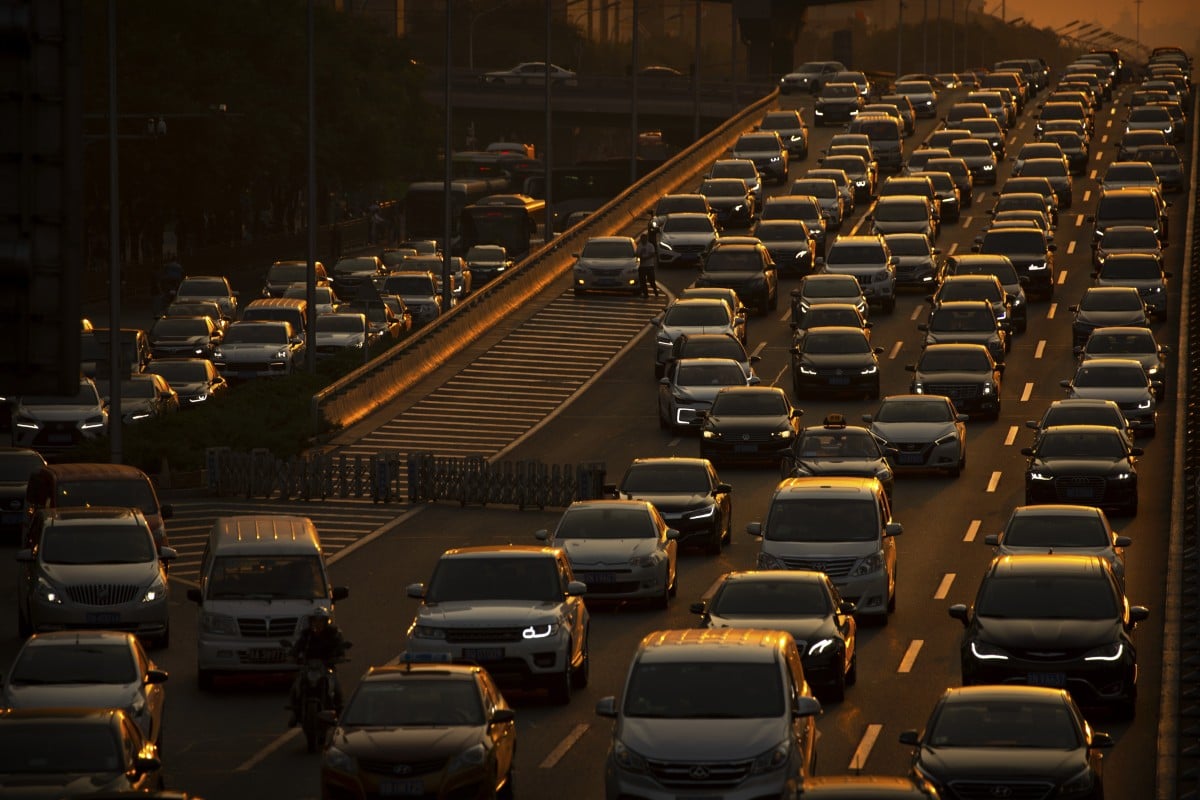
Commuters make their way along an expressway during rush hour in Beijing. Photo: AP

A 92 per cent drop in car sales in China in the first half of February provided the first real indicator of the economic impact of the coronavirus epidemic, with officials also warning of a sharp decline in Chinese exports and imports for the first two months of the year.

The China Passenger Car Association (CPCA) on Friday said that sales dropped to just 4,909 units in the first 16 days of the month, down from 59,930 vehicles in the same period a year earlier.

“Very few dealerships opened in the first weeks of February and they have had very little customer traffic,” said the CPCA.

China’s car market is likely to see sales slide more than 10 per cent in the first half of the year due to the outbreak, and around 5 per cent for the whole year, provided the virus is effectively contained before April, the country’s top industry body, the China Association of Automobile Manufacturers (CAAM), said last week.

Chinatowns around the world feel effects of coronavirus fears
The sector was already under pressure from the cooling economy, with car sales falling 3 per cent in 2018 in the first sales contraction since the 1990s, and 8.2 per cent in 2019, CAAM said.
“We must firmly believe that China’s auto market still has great development space and potential, and the automobile consumption demand is still strong,” Wang Bin, vice-director of the commerce market operation department at the commerce ministry, said on Thursday.
To stabilise the market, in which more than 25 million vehicles were sold last year, China’s commerce ministry said it will introduce more measures to boost consumption.
Li Xingqian, head of foreign trade at the Ministry of Commerce, said the growth rate for China’s exports and imports would decline sharply in the January-February period due to a collapse in logistics and the delayed start of work following the extended Lunar New Year holiday, which was aimed at controlling the coronavirus outbreak.
“The impact of the epidemic on the first quarter is here objectively, should not be underestimated, but [growth] is still within the tolerable range,” he said on Friday. “As the prevention and control [measures] achieve new staged results, foreign trade will inevitably resume its growth. China’s foreign trade development is expected to remain within a reasonable range throughout the year.”
China cancelled the release of its January trade data, with the General Customs Administration of China saying it will combine January and February’s data in an effort to remove seasonal volatility from the Lunar New Year period. Statistics will be released in early March.
Trade is traditionally volatile over the first two months of the year in China. Shipments are heavily affected by the Lunar New Year break, with this volatility to be exacerbated by the coronavirus outbreak, which causes the disease officially known as Covid-19.

Zong Changqing, head of the commerce ministry’s foreign investment department, also conceded the virus could hit inward investment over the entire first quarter of 2020. Zong claimed the impact would only be temporary, and that China remained an attractive environment for foreign investment.

Foreign direct investment (FDI) in China in 2019 rose 5.8 per cent from a year earlier to 941.5 billion yuan (US$134 billion), according to the commerce ministry. FDI in China also saw a steady year-on-year increase of 4 per cent last month, compared with a growth of 4.8 per cent registered in January 2019.

The impacts of the outbreak on foreign investment have begun to show, and are expected to become greater in February and March. Zong Changqing

“The impacts of the outbreak on foreign investment have begun to show, and are expected to become greater in February and March,” Zong said.

He confirmed that the ministry asked local authorities in Shandong province to push all 32 South Korean-owned car parts companies to restart production by the end of last week to keep the global supply chain stable.

He also said that over 80 per cent of key foreign-owned enterprises in Shanghai, Shandong and Hunan province had reopened, with most regions expected to restore production by the end of February, provided the spread of the virus is contained.

However, a survey by the American Chamber of Commerce in Shanghai, released earlier this week, found that in the vast majority of cases, factories that have reopened are running at a fraction of their production capacity.

Source: SCMP

19/02/2020

Xinhua Headlines: Traditional Chinese medicine offers oriental wisdom in fight against novel virus

Traditional Chinese medicine has never missed a single fight against epidemics throughout Chinese history. After over 2,000 years, the long-tested oriental wisdom is still making its due contributions to the well-being of Chinese people.

by Xinhua writers Cao Bin, Zhang Yujie, Wu Zhonghao and Wang Haiyue

WUHAN, Feb. 18 (Xinhua) — Another 1,701 patients infected with the novel coronavirus (COVID-19) were discharged from hospitals Monday, bringing the total number of discharged patients in China to over 12,000 since the epidemic.

When scrutinizing the commonalities of those people, the contributions of traditional Chinese medicine (TCM) can not go unnoticed.

“Western medicine offers important life-supporting measures such as respiratory and circulatory assistance, while TCM focuses on improving patients’ physical conditions and immune function. They complement each other,” said Zhang Boli, an academician of the Chinese Academy of Engineering.

Zhang Boli, an academician of the Chinese Academy of Engineering, speaks during an interview with Xinhua about the effect of integrated treatment with traditional Chinese medicine (TCM) and Western medicine at Jiangxia temporary hospital in Wuhan, capital city of central China’s Hubei Province, Feb. 14, 2020. (Xinhua/Cheng Min)

Last Friday, the first phase of a sports center-turned hospital began operation in Wuhan, the epicenter of the COVID-19 outbreak. It is the city’s first TCM-oriented temporary hospital. A total of 800 patients will receive treatment there once the second phase is completed.

The medical team of 209 doctors and nurses from 20 TCM hospitals in five provinces led by Zhang have since been carrying out TCM clinical treatment and research at the hospital.

The recommended TCM treatment plan includes multiple herbal prescriptions targeting fever, heavy coughing, loss of appetite, nausea, vomiting, diarrhea, shortness of breath and tiredness.

A specific chapter detailing TCM treatment during a patient’s medical observation, clinical treatment and recovery was included in the latest version of the COVID-19 diagnosis and treatment scheme released by the National Health Commission.

A pharmacist weighs Chinese herbal medicines for patients infected with the novel coronavirus at Anhui Provincial Hospital of Traditional Chinese Medicine in Hefei, east China’s Anhui Province, Feb. 18, 2020. (Xinhua/Bai Bin)

Wuhan’s coronavirus control headquarters have since ordered integrated treatment of TCM and Western medicine, especially among non-critical patients, and observation of TCM’s curative effects at designated hospitals.

Statistics show that 2,220 medics from TCM hospitals and institutions across China have been sent to aid the epidemic fight in Hubei so far. Over 75 percent of COVID-19 patients are receiving TCM treatment in Hubei and over 90 percent in other parts of China.

A medical worker tests the pulse of a patient infected with the novel coronavirus at the Affiliated Hospital of Jiangxi Traditional Chinese Medicine University in Nanchang, east China’s Jiangxi Province, Feb. 18, 2020. (Xinhua/Hu Chenhuan)

On Feb. 6 alone, 23 patients in Hubei were discharged after receiving integrated treatment of TCM and Western medicine.

Zhang said patients with mild symptoms showed obvious improvement after TCM treatment, and for critical patients, TCM decreased their lung exudation, stabilized blood oxygen saturation and reduced respiratory support and antibiotic use.

TCM has never missed a single fight against epidemics throughout Chinese history. TCM classics have provided sufficient evidence of how TCM cured epidemic diseases such as smallpox over the past several thousand years.

The 2003 SARS fight was a recent example. TCM offered timely and effective solutions to the treatment and recuperation of SARS patients.

“Compared with Western medicine, TCM offers highly varied prescriptions to each and every patient based on their unique conditions during different stages of the disease, which is more flexible and targeted,” said Xiong Jibai, a TCM expert and consultant to the coronavirus treatment group of neighboring Hunan Province.

Hunan has sent hundreds of medical workers to help fight the epidemic in the city of Huanggang, one of the hardest-hit cities in Hubei.

Zeng Puhua, vice president of the affiliated hospital of Hunan Academy of Traditional Chinese Medicine, has been working around the clock in the SARS treatment-model hospital of Huanggang since late January.

“Clinical experience has repeatedly proven that TCM plays an active and effective role in the treatment of pneumonia-related epidemics,” he said.

According to Hunan’s health commission, TCM was used in the treatment of nearly 95 percent of the admitted patients. Among the discharged, over 90 percent underwent integrated treatment of TCM and Western medicine.

Cured novel coronavirus pneumonia patients, who have received integrated treatment with traditional Chinese medicine (TCM) and Western medicine, are discharged from a hospital in Wuhan, central China’s Hubei Province, Feb. 6, 2020. (Xinhua/Wang Yuguo)

In the city of Bozhou, eastern China’s Anhui Province, TCM has shortened the course of treatment and reduced medical expenses for seven discharged COVID-19 patients taking herbal soups or capsules.

“Patients showed quickened fever reduction after using TCM, and obvious alleviation of certain symptoms such as coughing, tiredness and loss of appetite. Some critical patients became non-critical,” said Zhang Nianzhi, a chief doctor at the respiratory medicine department of Anhui Provincial Hospital of TCM.

Discharged patients are required to stay home for another 14 days. Zhang said a 14-day herbal compound treatment based on TCM theories is prescribed to help them restore their pre-illness state.

Zhang has planned to include 100 discharged patients into the herbal compound treatment group, to follow their symptoms, physical and chemical indicators, CT results and living quality for one year. Thirty patients have so far been taking the prescription.

Non-drug treatment such as cupping, acupuncture and scraping is another feature of TCM, which can help patients recover more effectively after being discharged from hospitals, said Tong Xiaolin, an academician of Chinese Academy of Sciences and head of the treatment group of the state administration of TCM.

Source: Xinhua

26/01/2020

Xinhua Headlines: Quiet and busy — Lunar New Year’s Eve in Wuhan, center of coronavirus fight

The Lunar New Year’s Eve in Wuhan, ground zero of the novel coronavirus outbreak in central China, is nothing but special. Behind the seemingly quiet streets, people in all walks of life are racing against time to fight against the invisible enemy.

WUHAN, Jan. 25 (Xinhua) — There were far fewer cars on the streets and bustling crowds were not seen in the shopping malls in the central Chinese city of Wuhan on Jan. 24 — the Eve of the Chinese Lunar New Year.

The scene was quite different from the occasion in the previous years because of the novel coronavirus that has claimed over 40 lives and infected over a thousand nationwide. With a population of over 10 million, Wuhan, the capital city of Hubei Province, is the center of the epidemic.

Photo taken on Jan. 24, 2020 shows a medical aid team of Army Medical University leaving for Wuhan in southwest China’s Chongqing. On the Chinese Lunar New Year’s Eve, a group of 150 medical workers from the Army Medical University left for Wuhan, the center of the novel coronavirus (2019-nCoV) outbreak, to provide medical aid. (Xinhua)

Yang Yingchen, a volunteer of the Red Cross Society of China’s Wuhan branch, had a busy day answering calls.

“People from across the nation called to check on accounts and addresses to make donations,” said Yang. “Many would say ‘Come on, Wuhan’ to us, which makes me feel especially warm and deeply moved.”

Chen Li, a doctor in a Wuhan hospital, spent the Chinese Lunar New Year’s Eve at home to quarantine herself. She is a little bit worried about having had contact with infected patients, but luckily she has no signs of symptoms for the time being.

“Before joining the fight against the epidemic, I had sent my four-year-old son to my parents. I has disinfected all the articles in my house,” she said.

Chen’s husband is at the forefront of the fight against the epidemic. “We haven’t seen each other for over a week,” said Chen. On Saturday morning, she put on protective clothing again and returned to work.

“Actually, I can’t be isolated for too long. There’s still a lot of work to be done,” she said. “I just don’t know when I can see my boy again.”

Aerial photo taken on Jan. 24, 2020 shows mechanical equipment working at the construction site of a special hospital in the Caidian District of western suburb of Wuhan, central China’s Hubei Province. The central China metropolitan of Wuhan will follow Beijing’s SARS treatment model to build a special hospital for admitting patients infected in the outbreak of pneumonia caused by the novel coronavirus. (Xinhua/Xiao Yijiu)

The virus had resulted in 41 deaths in China by the end of Friday, mostly in Wuhan, according to the National Health Commission. Nationwide, a total of 1,287 cases were confirmed, including 237 in critical condition.

Confirmed cases were also reported in China’s Hong Kong, Macao and Taiwan, as well as Thailand, Japan, the Republic of Korea, the United States, Vietnam, Singapore, Nepal and France.

Wuhan is following Beijing’s SARS treatment model in 2003 to build a makeshift hospital with a capability of 1,000 beds for admitting infected patients. Construction on the facility began Thursday night. It will be completed and put into use prior to Feb. 3, less than 10 days away.

“It’s going to be another all-nighter. We need to speed up work and complete the hospital as soon as possible,” said Lyu Jun, a young truck driver at the construction site. This is his first Spring Festival away from home.

For ordinary people, this year’s Lunar New Year’s Eve lacks some gatherings but is still a time to extend greetings and wishes.

Yin Yeqiong, from Hunan Province, refunded her tickets back home after much debate. “I had it in my mind to still go home, but finally decided to stay in Wuhan,” she said. “Our stay will help reduce panic in other places.”

Liu Jie, a dough sculptor, put on a New Year costume and watched the Spring Festival Gala with his family. “We’re now at a critical period, so I texted New Year wishes to friends and relatives this year. I believe this is the best way,” he said.

Liu Jiapeng, a children’s book editor, stayed in Wuhan during the Spring Festival for the past four decades. “I always stayed with my family, and we would have every meal together,” said Liu. “But this year, I haven’t had one meal with them.”

On the day of the Lunar New Year’s Eve, he and his wife bought some goods for their parents, brought them to their house and briefly chatted. As they were waiting for the elevator, Liu looked back and saw his father standing at the windowsill, watching them leave.

Medical workers of Army Medical University assemble before leaving for Wuhan in southwest China’s Chongqing, Jan. 24, 2020. On the Chinese Lunar New Year’s Eve, a group of 150 medical workers from the Army Medical University left for Wuhan, the center of the novel coronavirus (2019-nCoV) outbreak, to provide medical aid. (Xinhua)

China is mobilizing medical resources nationwide to aid Wuhan and control the epidemic. Doctors, nurses and experts from across the nation have been selected to join the battle, and manufacturers have restarted their plants to produce medical consumables that have been running short in many places.

A national research team of 14 experts, headed by renowned respiratory scientist Zhong Nanshan, has been set up to help prevent and control the outbreak on Friday.

“This is going to be an unforgettable Spring Festival,” said Chen Ying, a writer. “Because I feel that at this moment, there are so many families that I do not know, in every corner of this city, praying for our home.”

“My New Year wish is simple,” said Liu Jie. “I hope the virus will soon be conquered and everyone in Wuhan and the whole nation would be safe and healthy.”

Source: Xinhua

25/01/2020

French citizens to be bused out of Wuhan to escape coronavirus, consulate says

  • Evacuation plan outlined in email as diplomats look for ways to protect foreign nationals
  • Paris earlier reports three cases on its soil – the first to be identified in Europe
The French consulate in Wuhan is planning to evacuate French nationals from the city to escape the deadly coronavirus. Photo: AFP
Foreign diplomats in Wuhan are scrambling to assess the situation in the coronavirus
-plagued city, with French officials planning to evacuate French nationals trapped by the Chinese government’s lockdown.
The plan would allow French people who want to leave Wuhan, the capital of Hubei province, to travel by bus to Changsha in neighbouring Hunan province, according to an email seen by the South China Morning Post.
“The consulate general, in collaboration with local authorities, plans to set up a bus service to allow French nationals … and their Chinese and foreign spouses and children to travel from Wuhan to Changsha,” it said.
The email, sent by the French consulate, also asked anyone who received it to pass the notice on to other French nationals. It was not clear which bodies received the email and the date of the planned evacuation was not specified.

The consulate could not be reached for comment on Saturday.

France, the United States, Britain and South Korea all have consulates in Wuhan, according to China’s foreign ministry.

The South Korean consulate said in a post on its website that it would suspend all visa applications “indefinitely until further notice”.

A diplomatic source said several foreign embassies in China were considering plans to evacuate their nationals from Wuhan.

First coronavirus case ‘had no links to seafood market’

25 Jan 2020

It is not known how many foreigners remain in the city, which has a population of about 11 million and has been under a government-imposed lockdown since Thursday morning.

French Foreign Minister Jean-Yves Le Drian said in a statement on Friday that Paris was monitoring the crisis and “can increase the power [to respond] if necessary”.

There have so far been three confirmed cases of the new coronavirus in France, in Paris and Bordeaux.

French Foreign Minister Jean-Yves Le Drian said on Friday that Paris was monitoring the crisis in China. Photo: AFP
The US said earlier that most of its consulate staff and their families had been pulled out of Wuhan.

An emailed inquiry to the British consulate in the city received only an automated reply, saying: “Wuhan is now in crisis mode. We may not be able to answer your emails for some time.”

The consulate would be closed for the Lunar New Year holiday until January 31, it said.

Meanwhile, British citizen Kharn Lambert told the BBC on Thursday how he had been “trapped” in Wuhan.

The PE teacher said he was afraid to leave his house for fear of catching the deadly virus.

“If you saw the street behind me at night time where I normally live … if I show you out there now, it’s dead,” he said.

More than 1,280 confirmed cases have been reported across China, of which more than 700 were in Hubei, according to local government figures released on Saturday.

The death toll in Hubei stands at 39, with two other fatalities reported in the provinces of Hebei and Heilongjiang.

Tens of millions of people in Hubei are effectively on lockdown since a travel ban was imposed on most of the province.

Flights, trains, buses and ferries connecting Wuhan to other cities in Hubei have been suspended. Rail authorities in Wuhan, which is a hub for several major high-speed lines, said operations at 61 stations and more than 400 train services had been suspended until further notice.

Source: SCMP

13/11/2019

Two endangered Chinese finless porpoises found dead in Yangtze River as species struggles for survival

  • Remains of two of river’s estimated 1,012 porpoises found in less than a week
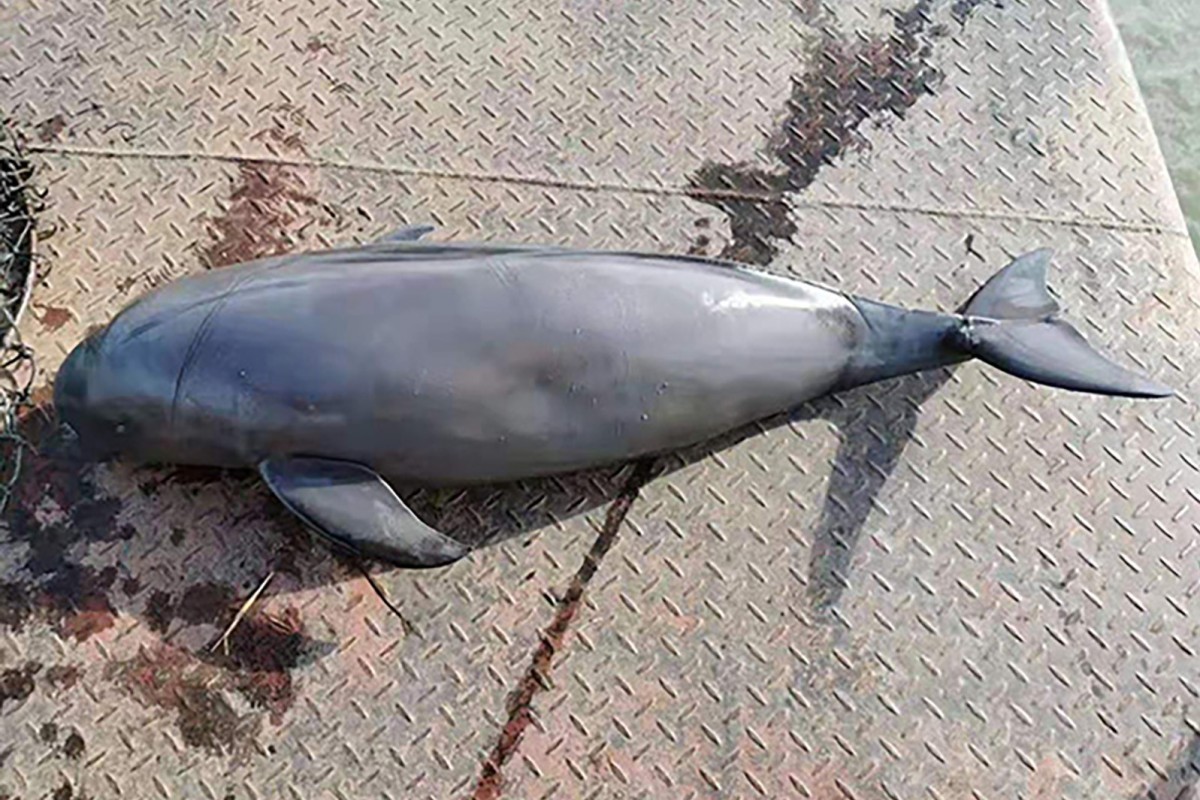
The finless porpoise found dead in the Yangtze River in Hubei on Monday was the second fatality in a week. Photo: 163.com

Two endangered finless porpoises have been found dead in the Yangtze River in the space of a week, according to mainland Chinese media reports.

One was found on Monday in Jiayu county, central Hubei province, four days after the remains of another were recovered from Dongting Lake, a tributary of the Yangtze in central Hunan province, news website Thepaper.cn reported.

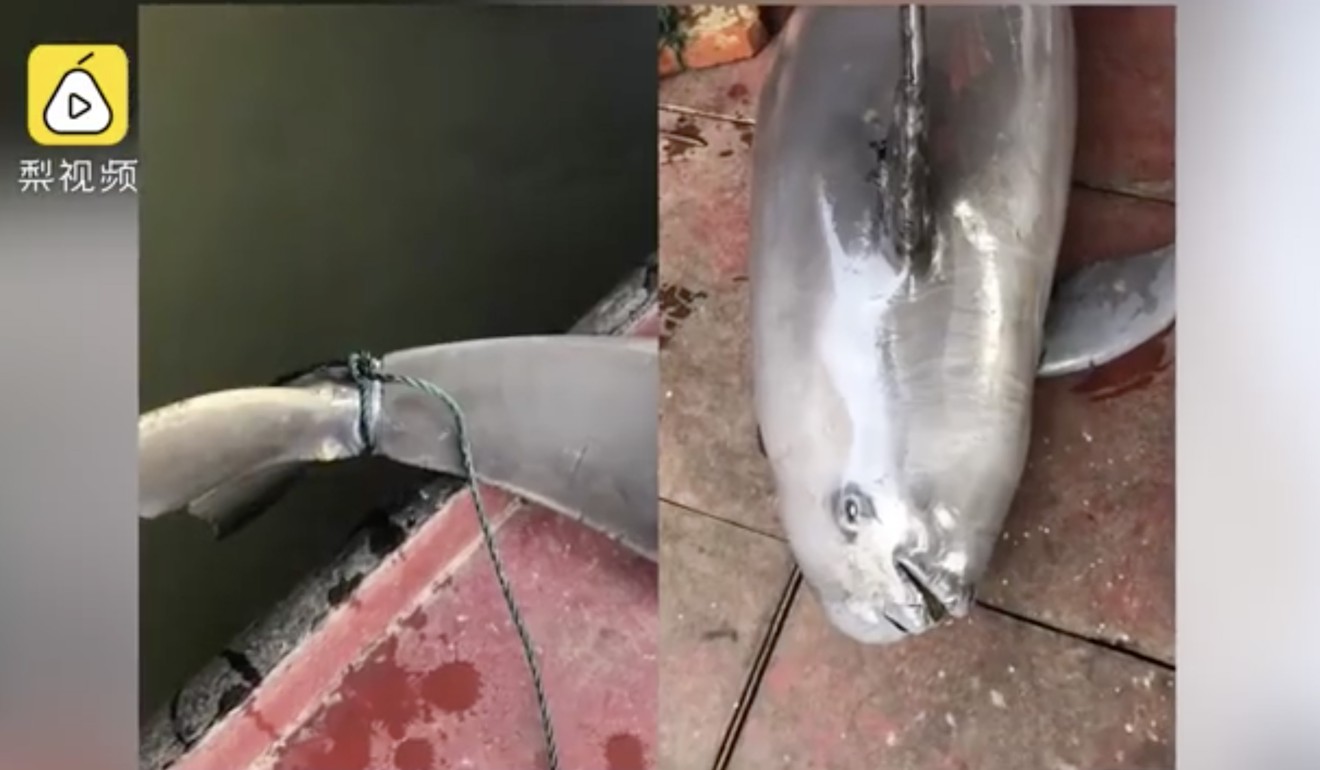
The Dongting Lake carcass was tied with a rope and weighted with bricks, and authorities in Hunan said the creature became tangled in a fishing net. The Hubei death is under investigation.

The Yangtze’s finless porpoises are “extremely endangered”, the Ministry of Agriculture and Rural Affairs said in a 2016 action plan to protect the species. Last year, vice-minister Yu Kangzhen said surveys showed there were about 1,012 of the animals in the river.

The tail of a dead finless porpoise pulled from Dongting Lake in Hunan appears to have been tied to weights. Photo: Pear Video

In 2017, China raised its protection for the mammals to its highest level because of the critical dangers they faced. Experts said that as the river’s “flagship” species, the porpoise was an indicator for the Yangtze’s ecology.

The porpoise discovered in Hubei was small and it had suffered superficial wounds, investigators were quoted as saying. They estimated that it was found soon after its death.

Xiaoxiang Morning Post quoted fisheries authorities in Yueyang, near Dongting Lake, as saying the porpoise in Hunan was found with weights around its tail.

Two porpoise carcasses found on separate Hong Kong shores
Officials said the fishermen who set the net feared they would be blamed for the creature’s death and tied bricks to its tail to sink it.

Other fishermen who witnessed the incident told the authority, leading to the discovery of the body, the report said. The investigation is ongoing and the suspects are still at large.

A fishing authority spokesman told the newspaper that the porpoise’s death showed the difficulty of balancing conservation with the livelihoods of fishermen.

“It’s difficult to figure out a good model to protect the porpoises without affecting fishermen’s business,” he said.

In mainland China, finless porpoises are referred to as “giant pandas in water” because of their endangered status. Their numbers fell from 2,700 in 1991 to 1,800 in 2006, and there were 1,045 finless porpoises in 2012, according to agriculture ministry data.

Source: SCMP

31/10/2019

‘Scary’ glass bridges shut in Chinese province

Aerial view photo shows tourists visiting on the glass-bottom bridge at Zhangjiajie Grand Canyon on August 20, 2016Image copyright GETTY IMAGES
Image caption This bridge in Zhangjiajie was the longest and tallest glass bottomed bridge in the world when it opened

A Chinese province has shut all 32 of its glass attractions – including bridges, walkways and viewing decks – as safety checks are carried out.

The attractions, spread across 24 sites in Hebei province, have been shut since March 2018, said state media CCTV.

The move had not previously been widely reported.

China has seen a flurry of glass attractions spring up across the country – but there have been accidents and at least two deaths.

There are an estimated 2,300 glass bridges in China. According to state media outlet ECNS, there are also an “undetermined number of glass walkways or slides”.

The glass attractions are an attempt to attract thrill-seeking tourists and capitalise on China’s growing domestic tourism.

The Zhangjiajie bridge in Hunan province – which was the highest and longest glass-bottomed bridge in the world when it opened in 2016 – arguably kicked off the craze.

But earlier this year, one tourist died and six others were injured after they fell off a glass slide in Guangxi province.

Rain had made the glass extra slippery, causing the man to crash through the guardrail, and fly off the slide. He died from severe head injuries.

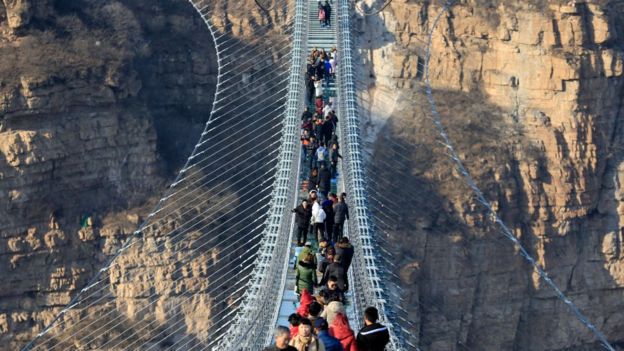
The Hongyagu glass bridge – which until May this year held the title of world’s longest glass bridge – was among those shut in Hebei province.

Tourists walk on the glass-bottomed suspension bridge at Hongyagu Scenic Area on December 26, 2017 in Pingshan, Hebei Province of China.Image copyright GETTY IMAGES
Image caption The Hongyagu bridge in Hebei province

The closures have not just affected Hebei province – across the country, a number have been shut.

Earlier this year, the government called for local tourism authorities to carry out “comprehensive safety assessments” of glass bridge projects.

On social media site Weibo, many applauded the closures, with one saying it was “about time safety was addressed”.

Others criticised the sheer number of glass bridges built over the past few years.

Media caption Thousands wobble over the world’s longest glass bridge in Hebei province, China

“I don’t really understand why there are so many glass bridges recently. It’s a waste of money,” said one commenter.

The death in Guangxi province was not the only glass attraction fatality. In 2017, a tourist died after an accident on a glass slide in Hubei.

And in 2016, someone was injured after being hit by falling rocks while walking on a glass walkway in the city of Zhangjiajie.

In 2015, a glass skywalk in Henan province cracked despite being open for only two weeks, sending tourists fleeing.


Source: The BBC

27/10/2019

China’s secret ‘women only’ language

Young Chinese girls in Hunan province used Nushu, a language that no men could read, to communicate with one another. Now a new film aims to tell us more about it
2011, SNOW FLOWER AND THE SECRET FAN
 Gianna Jun and Binbing Li, in the film Snow Flower and the Secret Fan. Photograph: Fox Searchlight Pictures/Sportsphoto Ltd/Allstar

decade ago Chinese-American author Lisa See was researching an article on footbinding when she found a reference to Nushu, the world’s only “women’s writing”. Though the origins were murky, the script revealed a culture of women’s relationships and sparked the idea for her novel, Snow Flower and the Secret Fan, the film of which, co-produced by Rupert Murdoch’s wife Wendi Deng, is released tomorrow.

After having their feet bound at around the age of seven, girls in Jiangyong County in Hunan province would live indoors – first in the “women’s chamber” of their own homes, and later in the homes of their husband’s family. To ease their isolation and offer support in their pain, girls from the same village were brought together as “sworn sisters” until their weddings. But a more serious relationship, almost akin to marriage and expected to last for life, could be arranged between two girls by a matchmaker, with a formal contract, if the pair shared enough of the same “characters” (being born on the same day, for example). In See’s book she writes: “A laotong relationship is made by choice for the purpose of emotional companionship and eternal fidelity. A marriage is not made by choice and has only one purpose — to have sons.”

Women used Nushu – a script unique to the area – to write to their laotongs after they “married out” into different villages. Yet until the 1960s few outside the province knew about it, and no men could read it, says See. “In the mid-60s an old woman fainted in a station,” she says. “The police went through her things to see who she was and found a piece of paper with what looked like a code, so she was arrested on suspicion of being a spy.” In the midst of the cultural revolution, the experts who finally identified the script were sent to labour camps, not emerging to study the writing until the 80s. Following the success of See’s book, the film aims to allow people to learn more.

Source:The Guardian

23/10/2019

China Focus: Third-generation hybrid rice achieves high yields in China

(Eyesonsci)CHINA-HUNAN-THIRD-GENERATION-HYBRID RICE (CN)

Photo taken on Oct. 22, 2019 shows Yuan Longping (C), the “father of hybrid rice”, at an appraisal meeting in central China’s Hunan Province. The third-generation hybrid rice developed by Yuan Longping, the “father of hybrid rice,” and his team underwent its first public yield monitoring from Monday to Tuesday and achieved high output. The final yield of the tested variety, G3-1S/P19, came to 1,046.3 kg per mu (about 667 square meters), based on two plots of land in Qingzhu Village under the city of Hengyang in Hunan. (Xinhua/Chen Zeguo)

CHANGSHA, Oct. 22 (Xinhua) — The third-generation hybrid rice developed by Yuan Longping, the “father of hybrid rice,” and his team underwent its first public yield monitoring from Monday to Tuesday and achieved high output.

The final yield of the tested variety, G3-1S/P19, came to 1,046.3 kg per mu (about 667 square meters), based on two plots of land in Qingzhu Village under the city of Hengyang in central China’s Hunan Province.

Experts agreed that the rice has a stout stem, fertilizer tolerance, lodging resistance, large spike and more grains.

“One of the most important characteristics of the third-generation hybrid rice is that it has a shorter growing period,” said Qian Qian, deputy director of the China National Rice Research Institute.

Qian said some previous high-yielding hybrid rice varieties in China took 160 to even 180 days from sowing to harvesting, while the figure was shortened to around 125 days for the new variety.

“A shorter growth period can reduce the use of pesticides and fertilizers, thus reducing cost and improving production efficiency,” Qian said.

Unlike the previous two generations that required a large amount of water and fertilizers as well as demanding growing conditions and technological support, the third-generation hybrid rice is easier to be cultivated by ordinary farmers.

The soil, altitude and climate of the test site were not “ideal conditions” carefully selected beforehand but were close to the paddies of ordinary farmers, according to Zhao Bingran with Hunan hybrid rice research center.

The whole process was organized by the Hunan Society of Agronomy under the supervision of experts from the Chinese Academy of Agricultural Sciences, the China National Rice Research Institute, Hunan’s agriculture and rural affairs department and multiple Chinese universities.

At present, China’s average yield of rice is about 500 kg per mu. Ordinary farmers can produce 600 kg to 700 kg of rice per mu by growing some excellent second-generation hybrid rice varieties, said Li Xinqi, a researcher with Hunan hybrid rice research center.

“However, under the same planting conditions and environment, the yield of the third-generation hybrid rice could reach 800 kg per mu,” Li added.

China now feeds around 20 percent of the world’s population with less than 9 percent of the world’s arable land.

Yuan, who developed the world’s first hybrid rice in the 1970s, has set multiple world records in hybrid rice yields in previous years, making great contributions to the food security of China and the world.

“We hope to promote the planting of 100 million mu of the third-generation hybrid rice in China in the short term and increase grain production by 20 billion kg, and apply the technology into the research of sea rice,” Li said. “In the medium and long term, we hope to increase the planting area of hybrid rice by 70 percent worldwide.”

At present, Yuan’s team has nine third-generation hybrid rice combinations under trial, which are expected to achieve commercial seed production in the following three to four years.

“The third-generation hybrid rice has the comprehensive strength to promote a greener and more sustainable development of China’s rice production with higher quality and yield,” Yuan said.

Source: Xinhua

10/09/2019

Chinese parents struggle with Teacher’s Day gift etiquette

  • Expensive presents are officially discouraged but have become the norm at many schools on day of appreciation for educators
Students at Yangzhou Technical Vocational College form the Chinese characters for “Hello Teacher” to mark China’s Teachers’ Day. Photo: Handout

Despite a decade of official discouragement, parents in China have been struggling with one of the biggest dilemmas of the school year – how to mark the country’s annual Teacher’s Day.

Ellen Yuan agonised for a day and a night before sending her son off to kindergarten on Tuesday with a 1,000 yuan (US$140) gift card in his bag for the teacher.

It was the boy’s second week of attendance and Yuan had given no thought to any Teacher’s Day obligations –until she learned that several of her friends had been busy over the weekend preparing gifts for their children’s teachers.

“It makes me feel that I am being a drag on my son if I don’t do so,” said Yuan, who works for a foreign company in Shanghai.

Respecting teachers has traditionally been a fundamental social norm in China but gift giving on the special day for educators has gone beyond an expression of appreciation by their students, as parents have taken over with ever more expensive gifts – and sometimes cash – which they hope will mean their kids are well taken care of while at school.

What gift, how expensive it should be, and how to deliver it have become the biggest questions for many parents in the run-up to September 10 each year, even though the education ministry and its subordinate bodies have repeatedly issued directives over the past decade to ban teachers accepting gifts.

Yuan said one of her friends had bought a body care set worth more than 600 yuan for each of her child’s three teachers, another had bought an 800 yuan gift card, while a third had given the head teacher a 1,000 yuan bottle of perfume.

Some parents had delivered the presents directly to the school, while others had asked their children to take the gifts to their teachers. Yuan’s plan was to message the teacher and tell her to take the gift card from her son’s bag.

“I know it’s bad. I don’t want my kid to know that,” Yuan said.

Hundreds of teachers protest in China over poor pay
The question of whether parents should give gifts on Teacher’s Day was one of the hottest topics on Weibo, China’s Twitter-like social media platform, attracting more than 15 million views as of Tuesday afternoon.
“Of course we should not, but I don’t dare to ignore it,” one user said, winning more than 10,000 likes.
Chu Zhaohui, a researcher at the National Institute of Education Sciences, said the gift-giving trend had been partly driven by a “keeping up with the Joneses” mentality.
“Everybody has given a gift. Would my child be specially treated if I don’t? This is a common concern,” Chu said. As a result, the purpose of gift giving on Teacher’s Day had become about protecting the children’s interests instead of a sincere expression of gratitude, he said.

But not every teacher gets presents – with gifts usually reserved for those teaching the “main subjects” of mathematics, Chinese and English, which count the most in high school and college entrance examinations.

Emily Shen, an English teacher from a middle school in Hangzhou, in the eastern province of Zhejiang, said she also prepared gifts for the teachers of her two kids. “Some chocolate for them to take to school. And I myself would give a gift card to each of those who teach the main subjects,” she said.

Zhuang Ke, a music teacher at a primary school in Jiaxing, also in Zhejiang province, admitted she was embarrassed by the parents’ different treatment of teachers of “less important” subjects like her’s. “It’s always nice to receive presents. But teachers who teach music, art and PE are often forgotten,” she said.

Chinese kindergarten teacher fired for hot sun punishment

State broadcaster CCTV said in a commentary on its website on Sunday that “all forms of behavior that attempt to ruin normal teaching order and interfere in equality by sending gifts should be resolutely abandoned”. A similar message was run by a series of official media outlets at local level.

“The most fundamental way to stop parents from sending gifts is to treat the students equally and fairly every day, so that parents conclude it makes no difference whether they give a gift,” Rednet.cn, the official news portal of Hunan province, said on Monday.

Although some teachers have made it explicit to students that they will refuse presents on Teacher’s Day, Yuan said her son’s teacher accepted the gift, as did the teachers of her three friends’ children.

Source: SCMP

Law of Unintended Consequences

continuously updated blog about China & India

ChiaHou's Book Reviews

continuously updated blog about China & India

What's wrong with the world; and its economy

continuously updated blog about China & India